
Spatial–Temporal Evolution and Driving Factors of Carbon Emissions in Shrinking Cities: A Case Study of the Three Northeastern Provinces in China


Abstract
1. Introduction
- (1)
- To investigate the spatial–temporal evolution patterns and characteristics of carbon emissions in 34 shrinking cities of the three northeastern provinces in China;
- (2)
- To reveal the spatial clustering patterns of carbon emissions and clarify the spatial correlations between the degree of urban shrinkage and carbon emission dynamics;
- (3)
- To identify the key driving factors underlying the spatial–temporal heterogeneity of carbon emissions, and to elucidate the pathways and interaction effects through which population scale, industrial restructuring, and institutional constraints influence such heterogeneity;
- (4)
- Building upon the above analyses, to assess the low-carbon potential of shrinking cities and propose targeted transition policies.
2. Materials and Methods
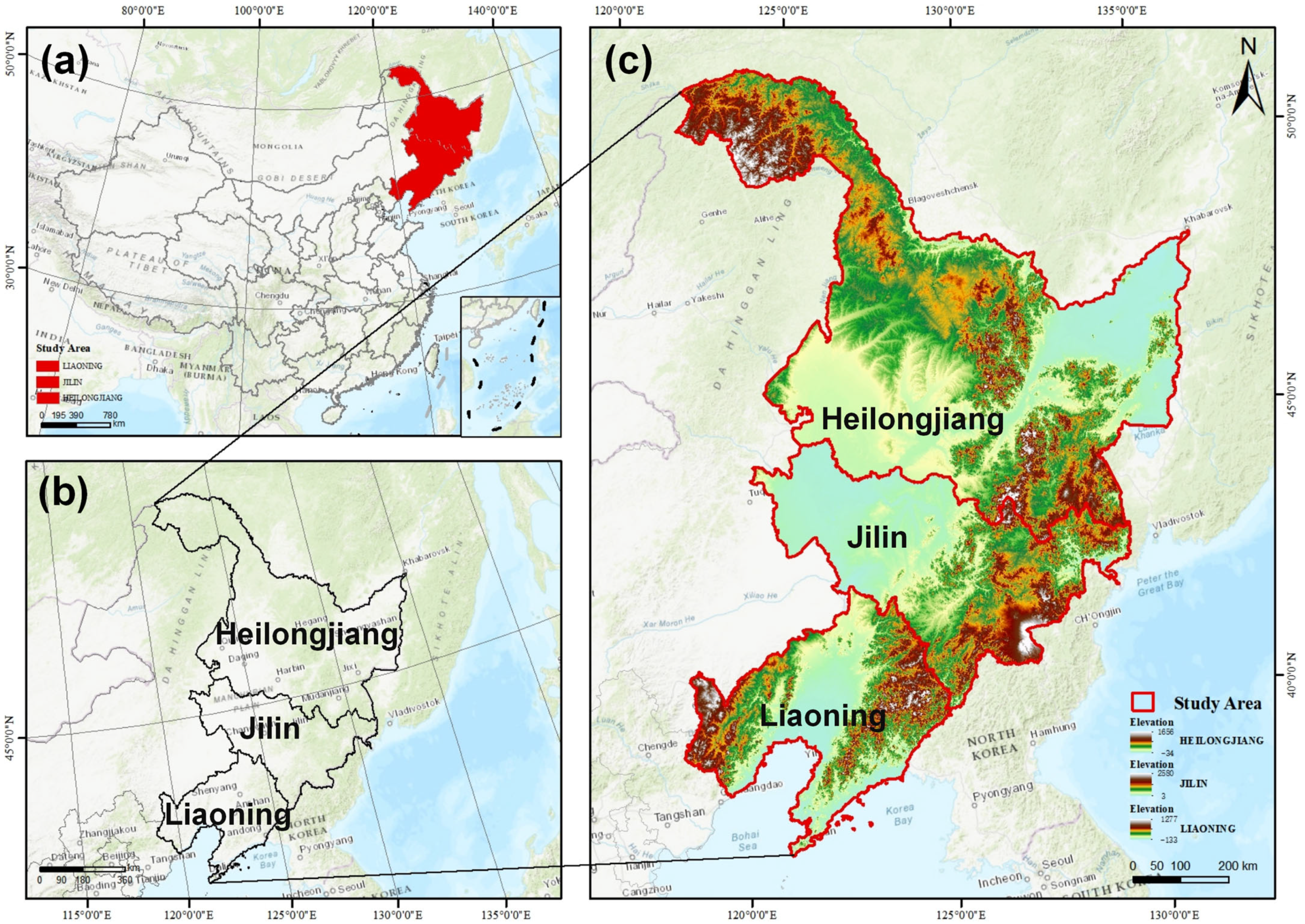
2.1. Study Area
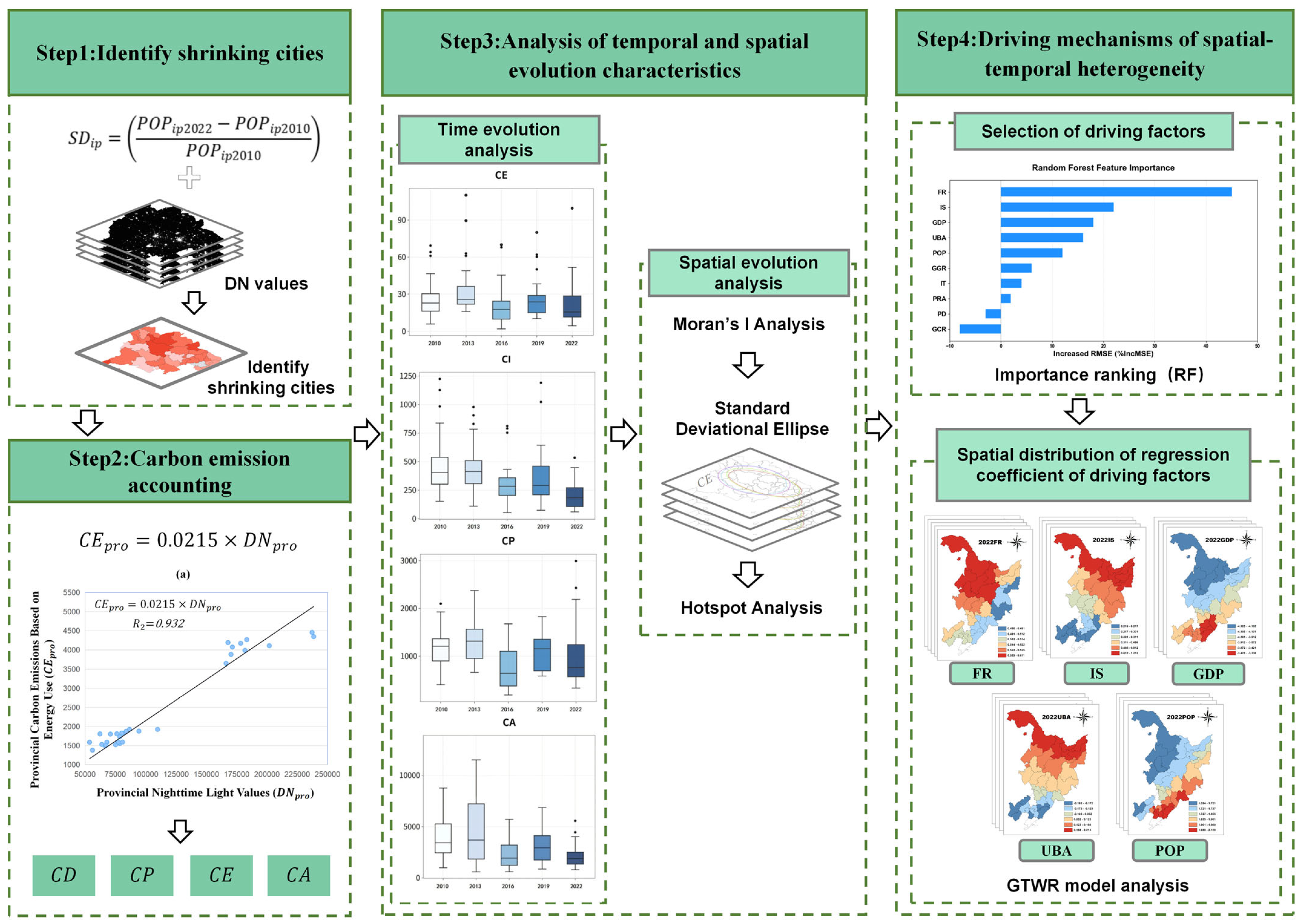
2.2. Research Framework
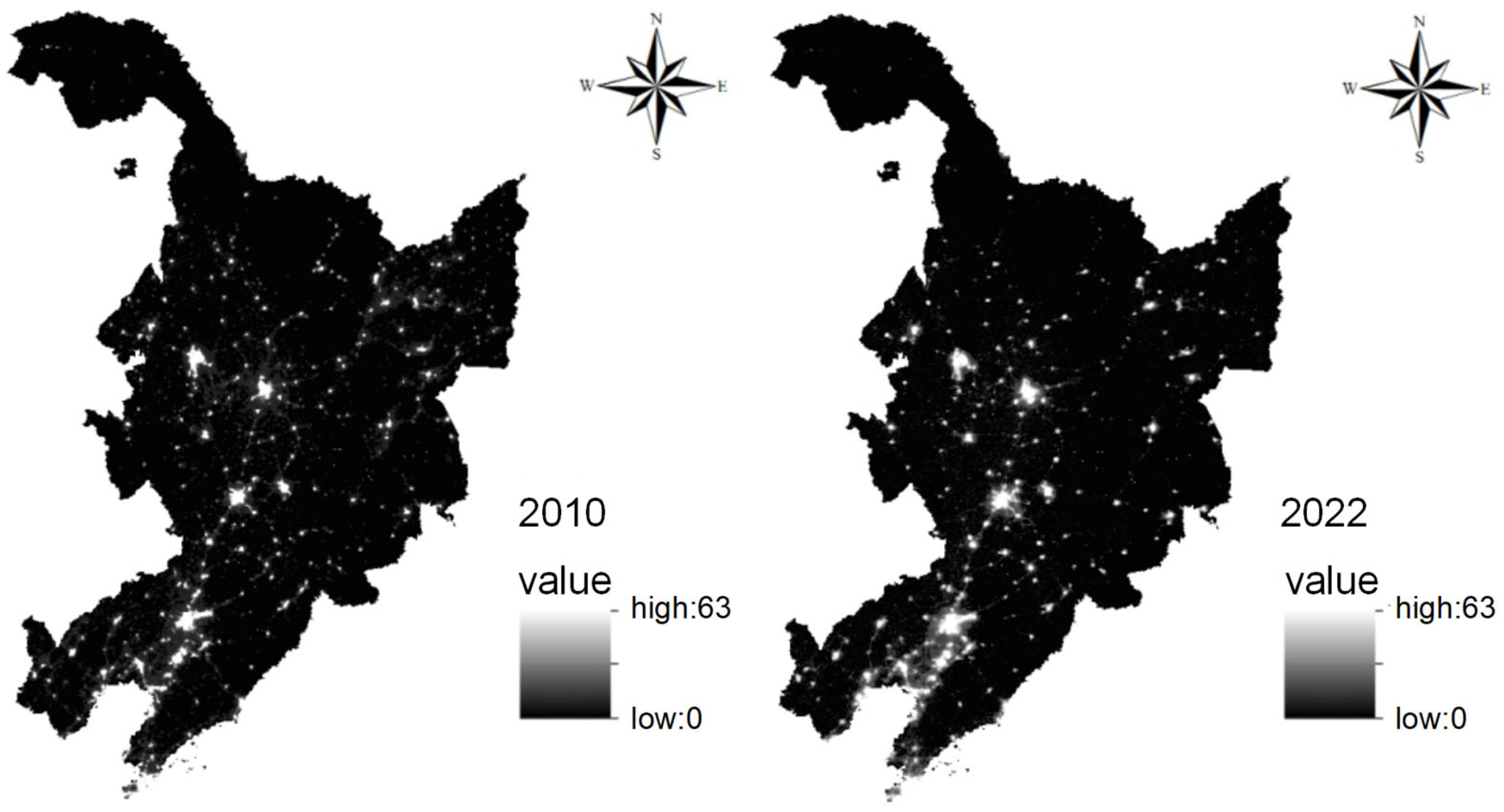
2.3. Data Selection and Collection
2.4. Research Methodology
2.4.1. Methods for Identifying Shrinking Cities
Definition of Shrinking Cities and Urban Shrinkage Degree
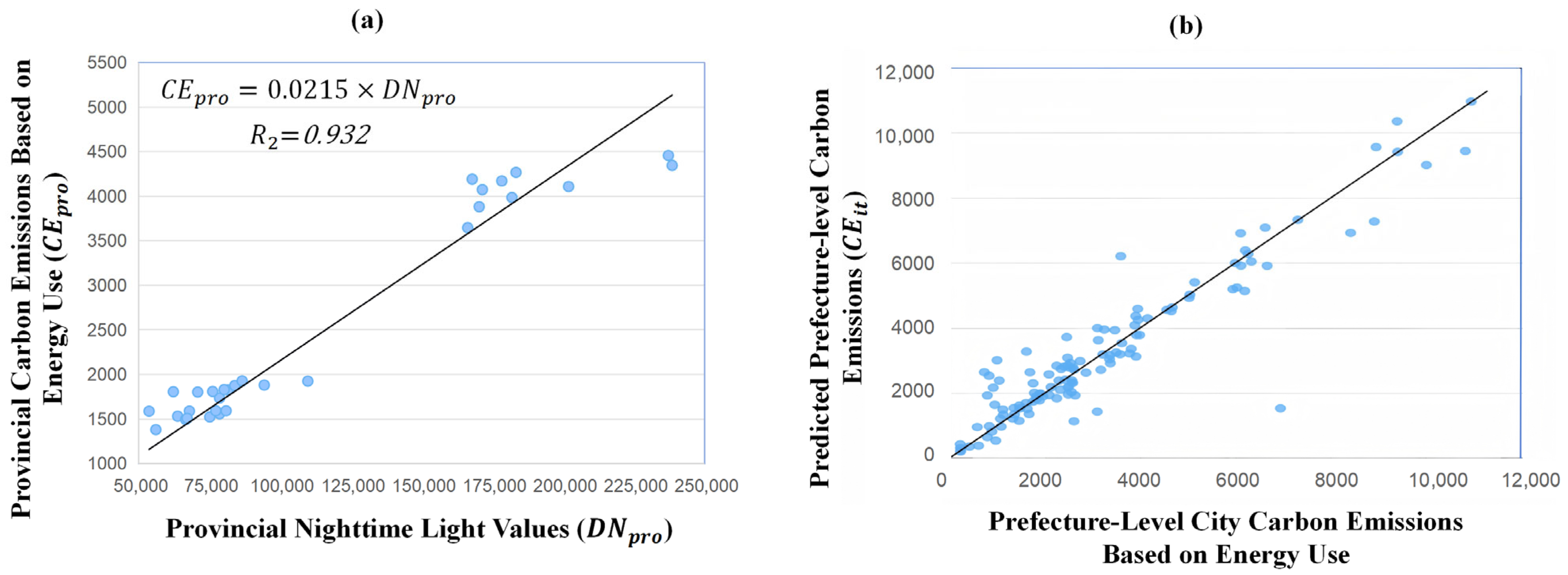
Validation of Nighttime Light Data
2.4.2. Methods for Regional Carbon Emissions Accounting
2.4.3. Methods for Analyzing Spatial–Temporal Evolution and Driving Factors
Standard Deviational Ellipse (SDE)
Moran’s I
Hotspot Analysis
Random Forest (RF) Model
Geographically and Temporally Weighted Regression (GTWR) Model
3. Results
3.1. Data Results
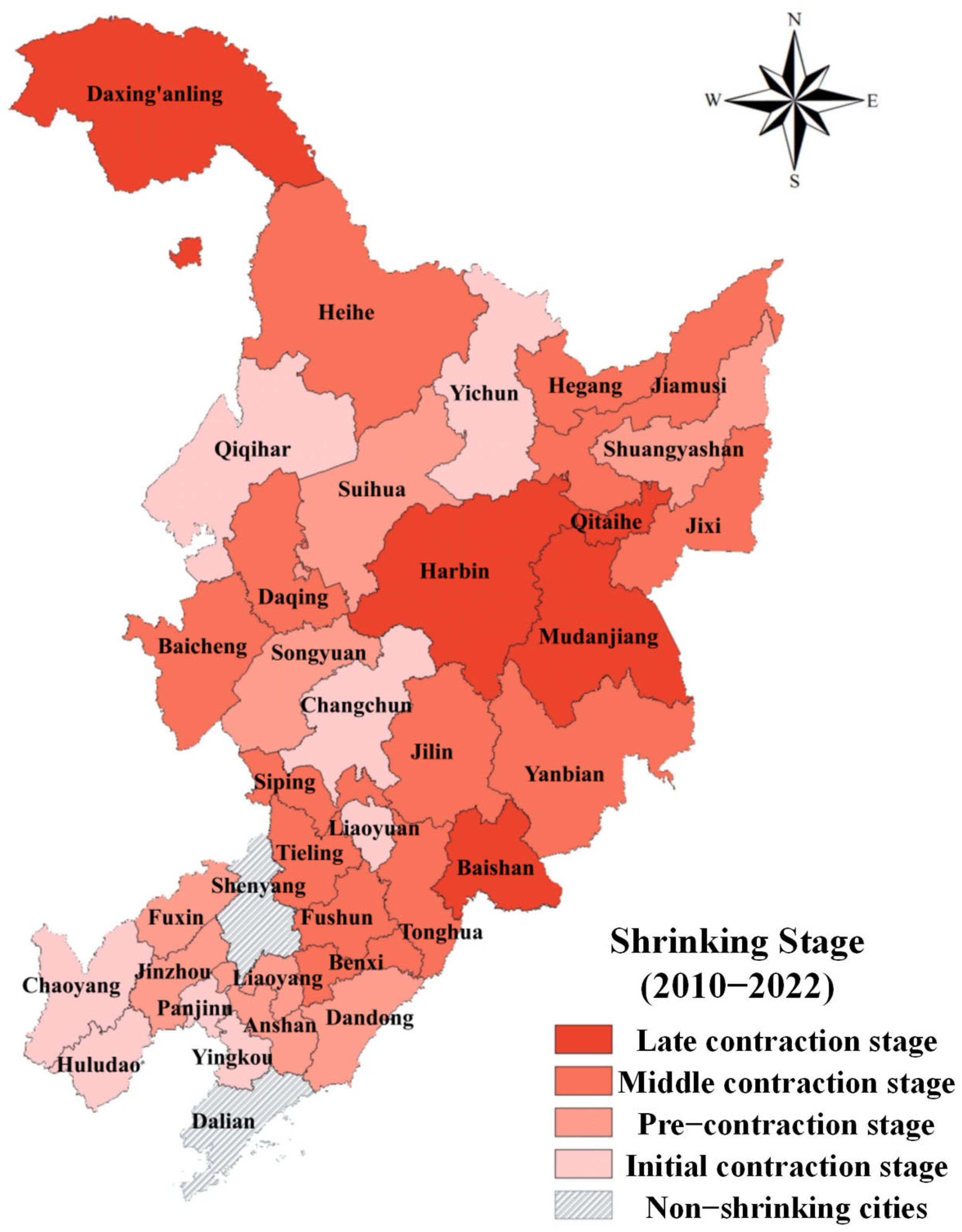
3.1.1. Results of Urban Shrinkage Degree Model Identification
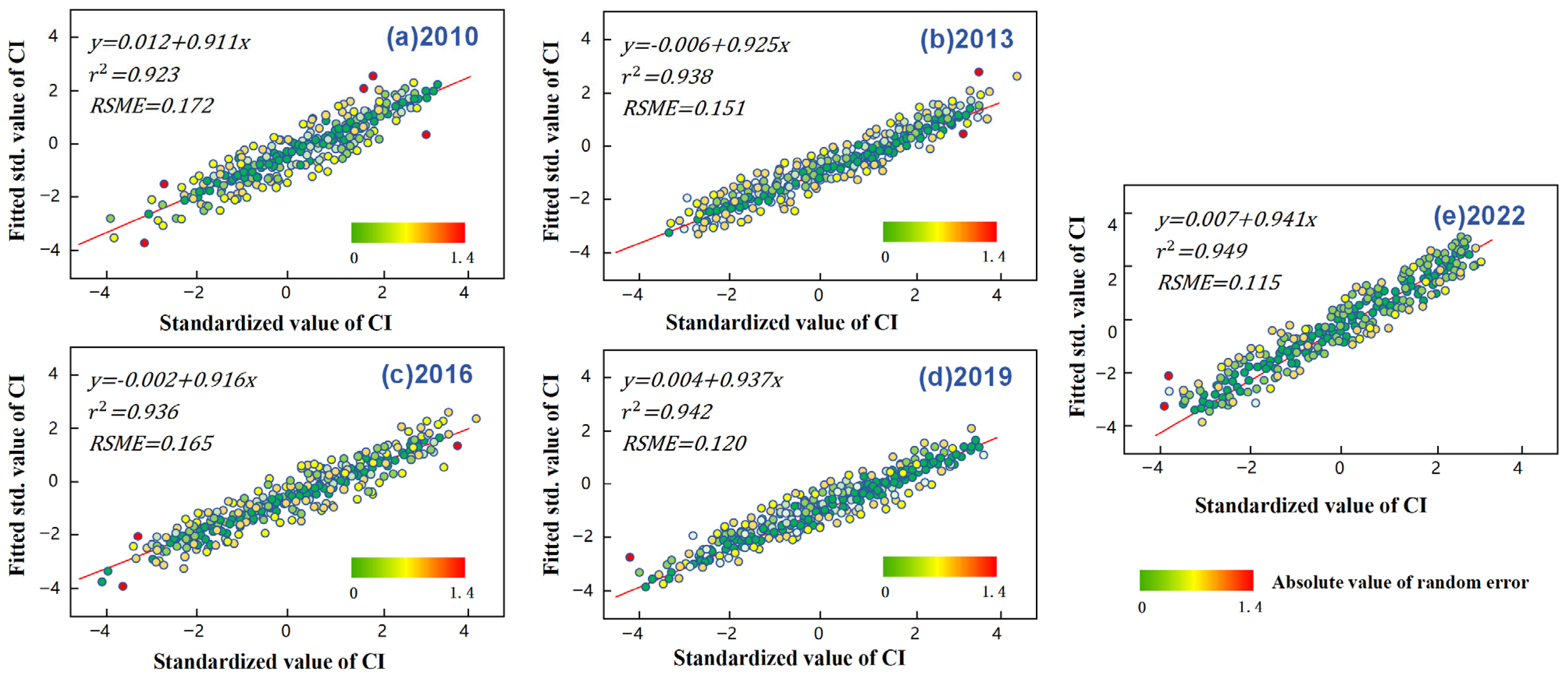
3.1.2. Validation Results of Nighttime Light Data
3.1.3. Simulation Results of Carbon Emissions from Energy
3.2. Temporal Evolution Characteristics
3.3. Spatial Evolution Characteristics
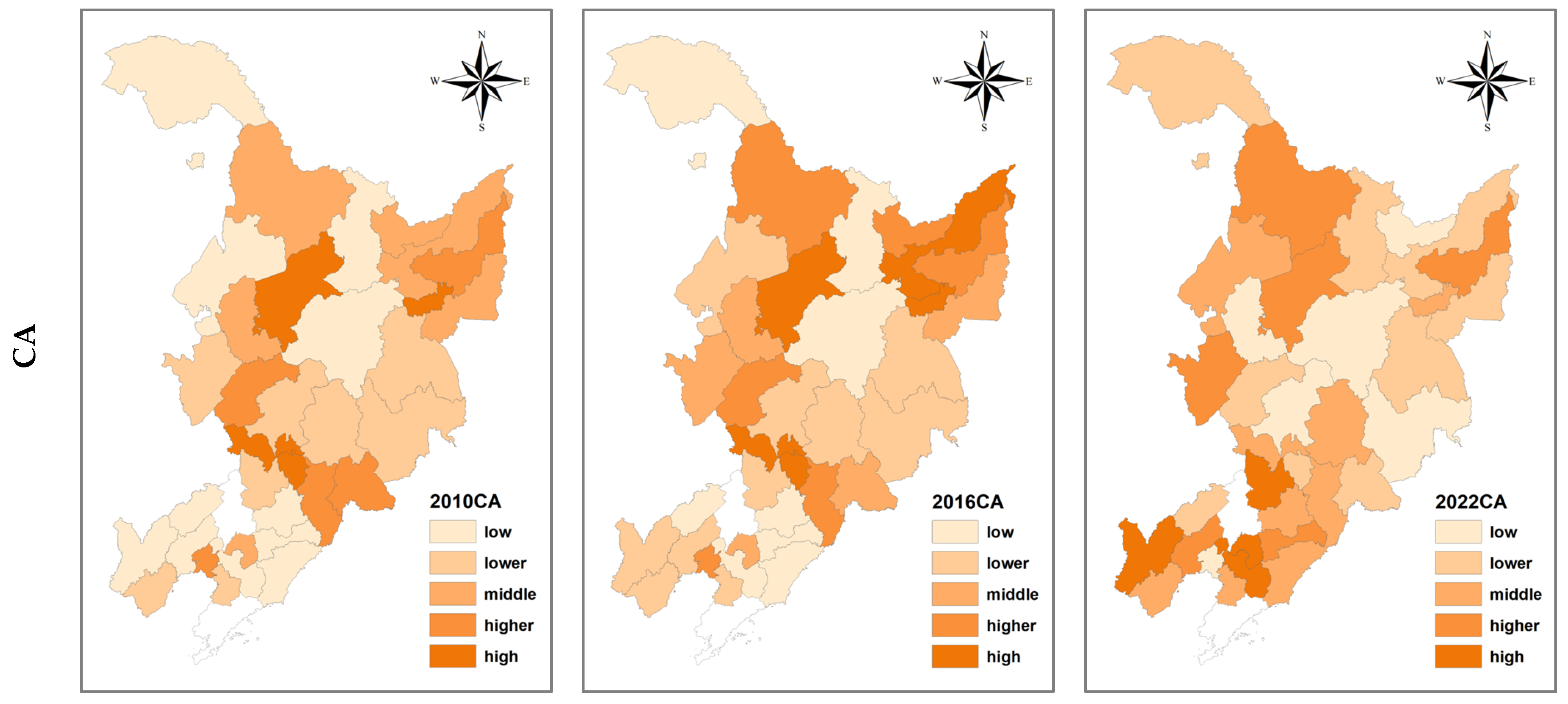
3.3.1. Spatial Distribution Pattern of Carbon Emissions
3.3.2. Moran’s I-Spatial Correlation and Aggregation Analysis of Carbon Emissions
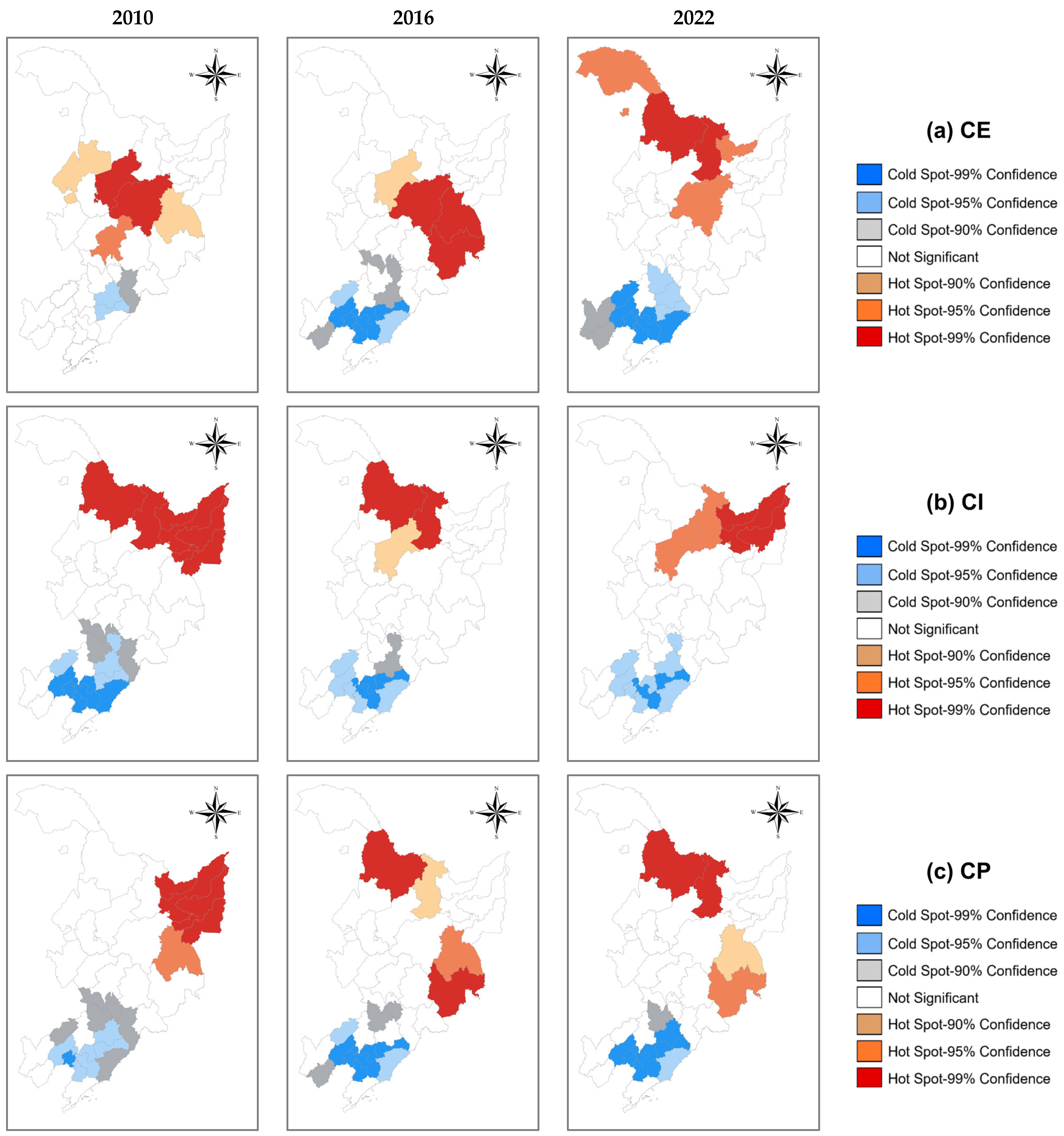
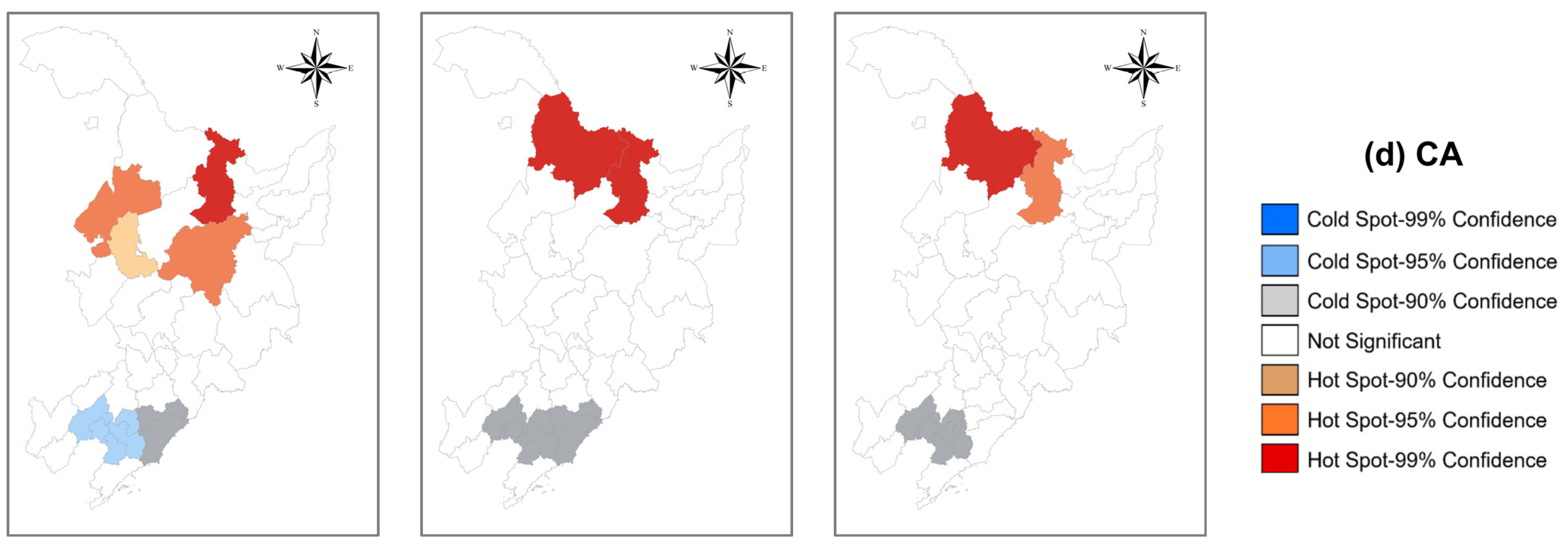
3.3.3. Coldspot and Hotspot Analysis—Spatial Heterogeneity in Data Distribution
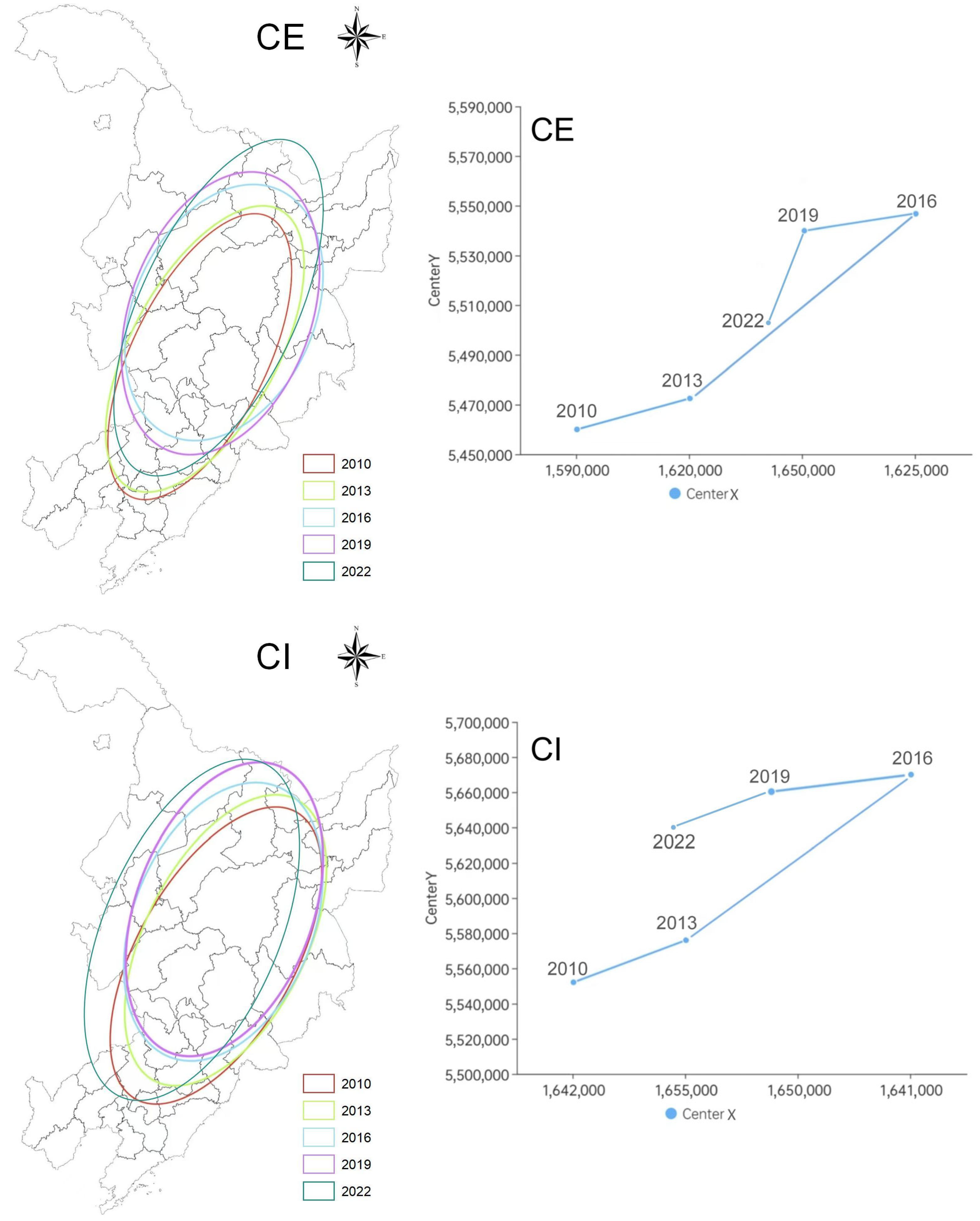
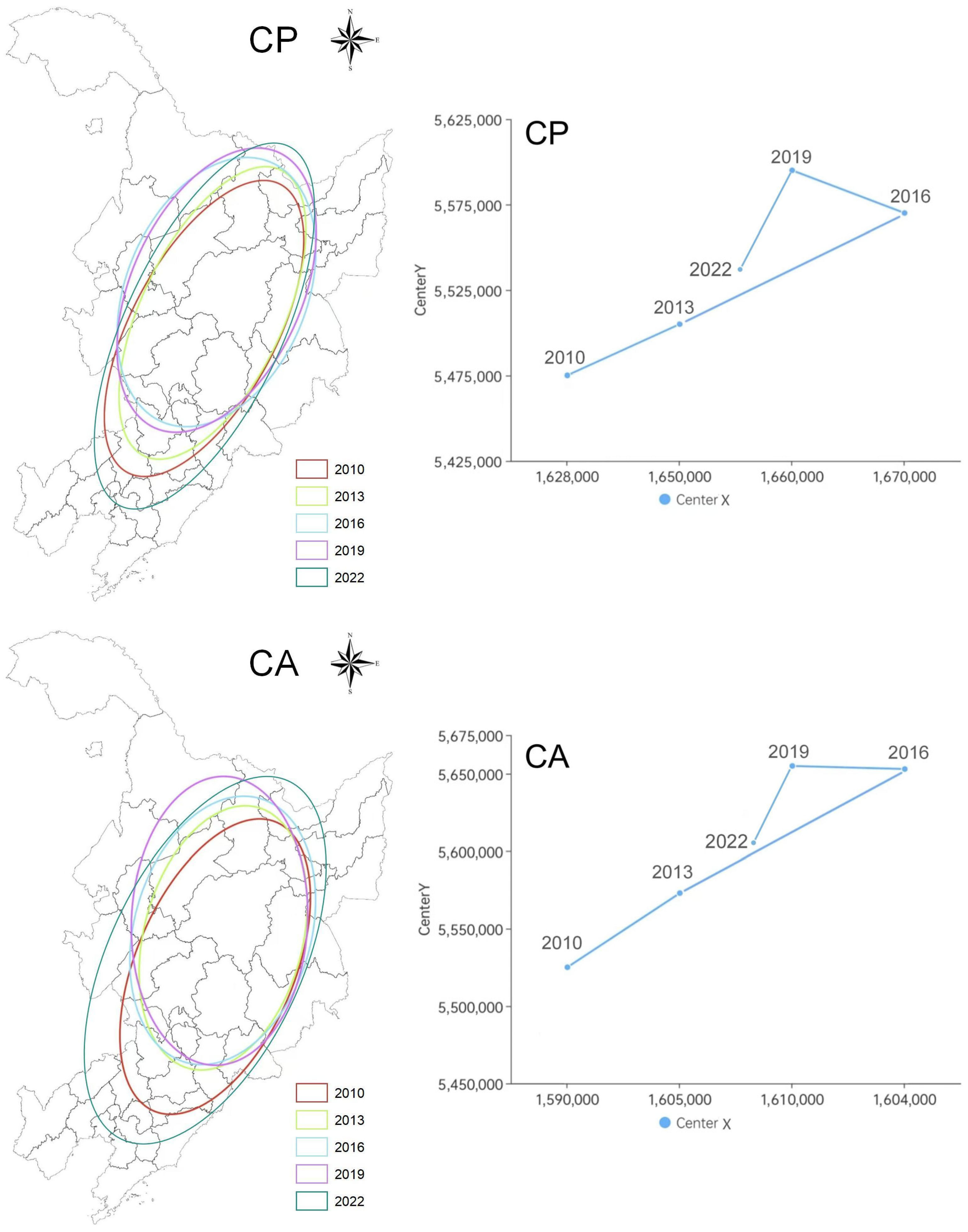
3.3.4. SDE—Directional Distribution and Spatial Dispersion of Spatial Data
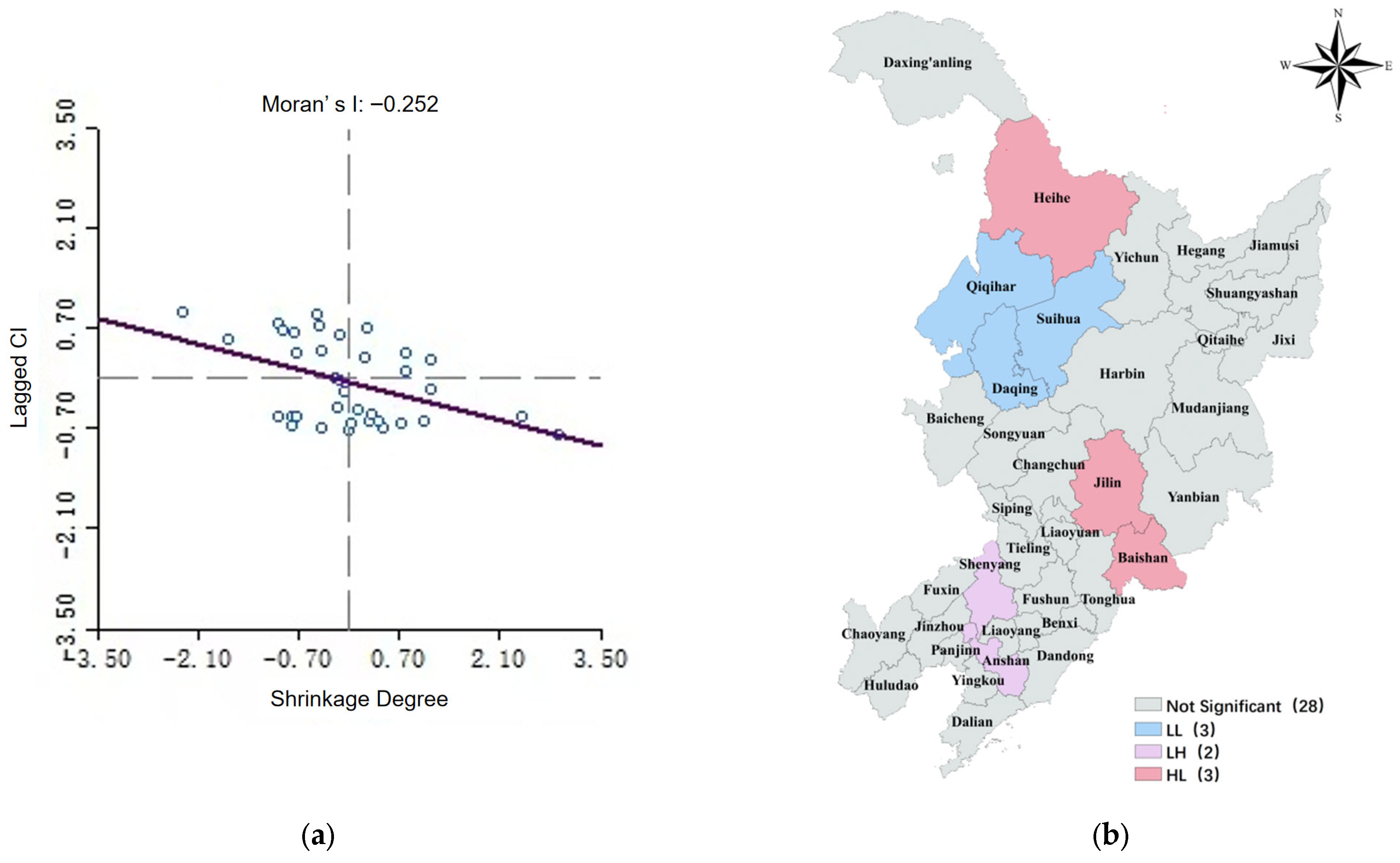
3.3.5. The Spatial Correlation Between Urban Shrinkage and Carbon Emissions
3.4. Drivers of Spatial–Temporal Heterogeneity in Carbon Emissions
3.4.1. Model Variables
3.4.2. Spatial–Temporal Heterogeneity of Drivers
4. Discussion
4.1. The Importance of Identifying Shrinking Cities
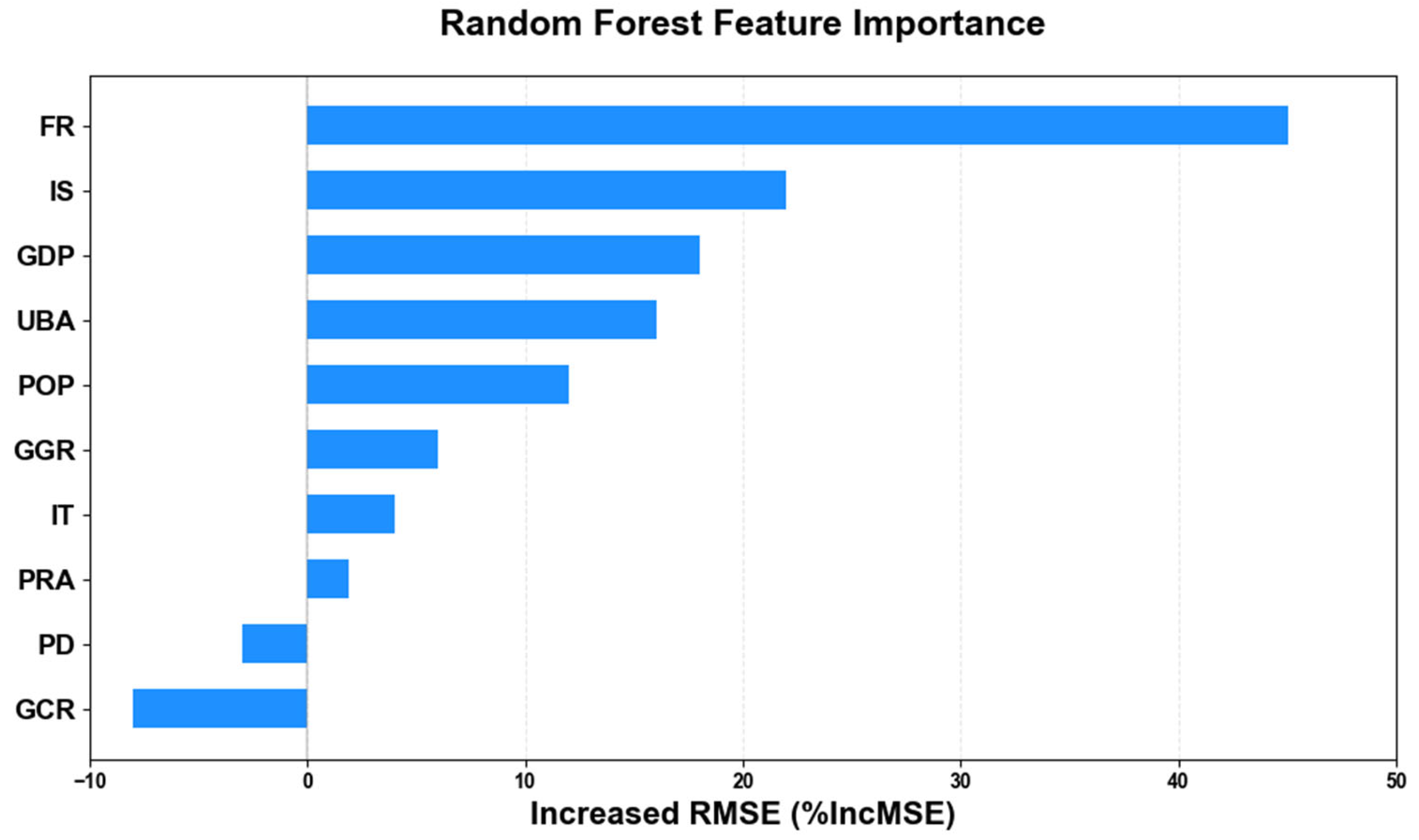
4.2. The Driving Factors of Carbon Emissions in Shrinking Cities
4.3. Carbon Emission Driving Mechanisms Under the Triple Effects
4.3.1. Scale Effect (Passive Reduction in Economic Scale)
4.3.2. Structure Effect (Volatility Effect of Structural Transformation)
4.3.3. Lock-In Effect (Spatial and Institutional Carbon Lock-In)
4.4. Limitations and Future Research Directions
5. Conclusions and Policy Recommendations
5.1. Conclusions
- (1)
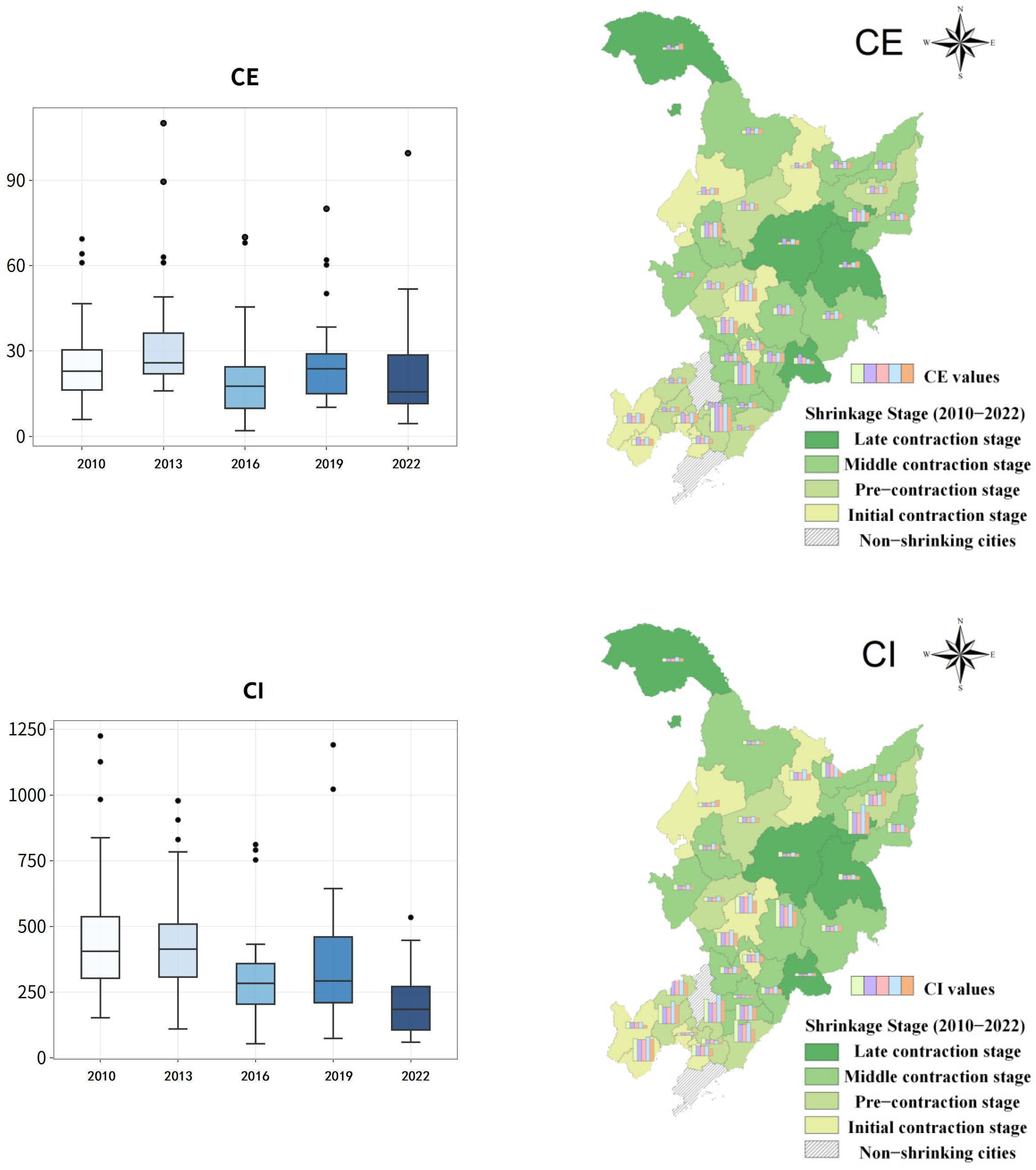
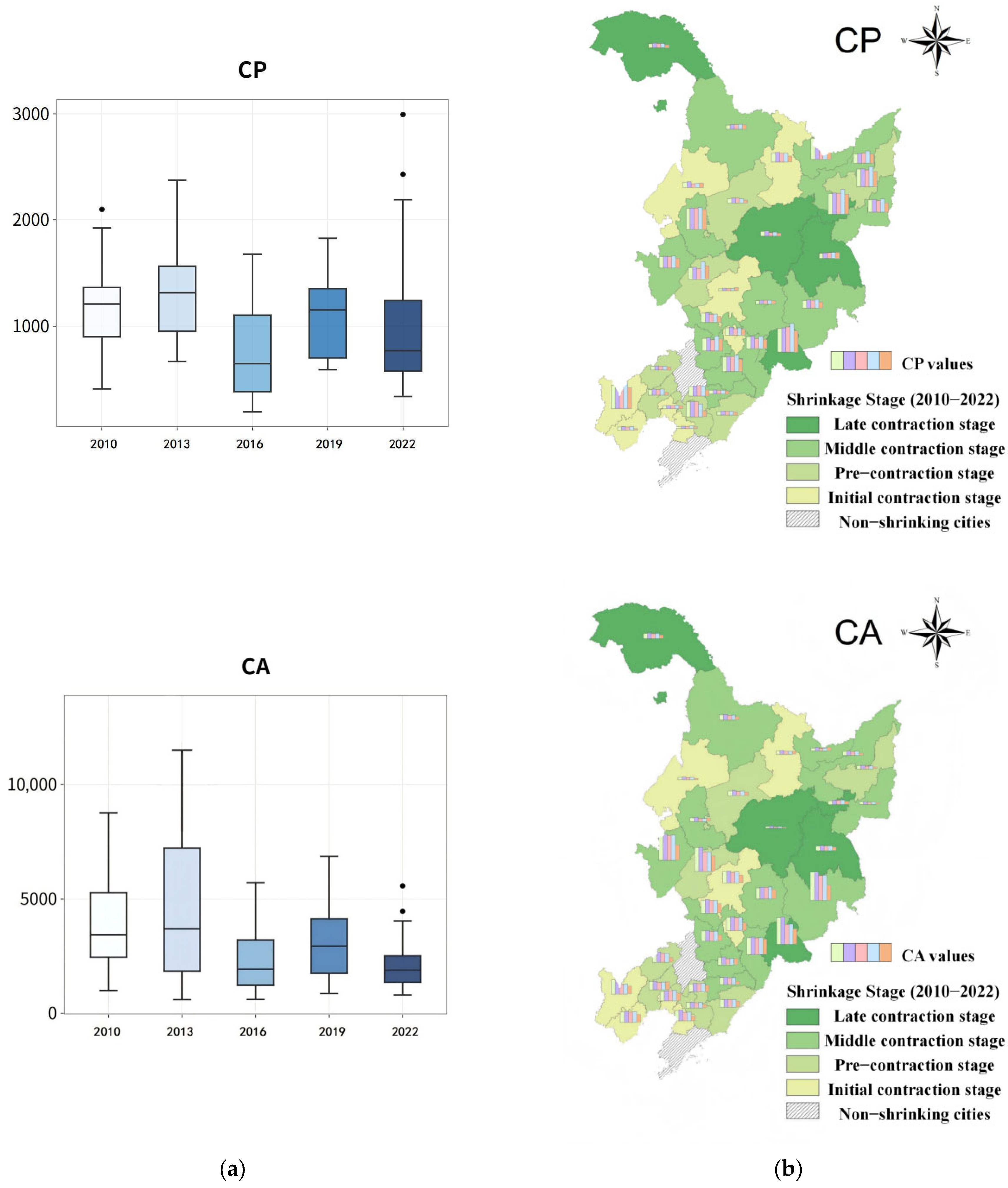
- On the temporal scale, we observed significant fluctuations in total CE and carbon intensities related to economy, population, and space (CI, CP, CA) during the study period. Specifically, CE and CP showed considerable volatility, while CI and CA demonstrated a gradual declining trend. Importantly, our analysis of the 2019–2022 period reveals that the pandemic shock exerted notable impacts on carbon emissions. These findings indicate that carbon emissions during urban shrinkage exhibit non-stationary characteristics over time, influenced by multiple factors, and reveal the complex interactive relationship between socio-economic development and carbon emissions in shrinking cities.
- (2)
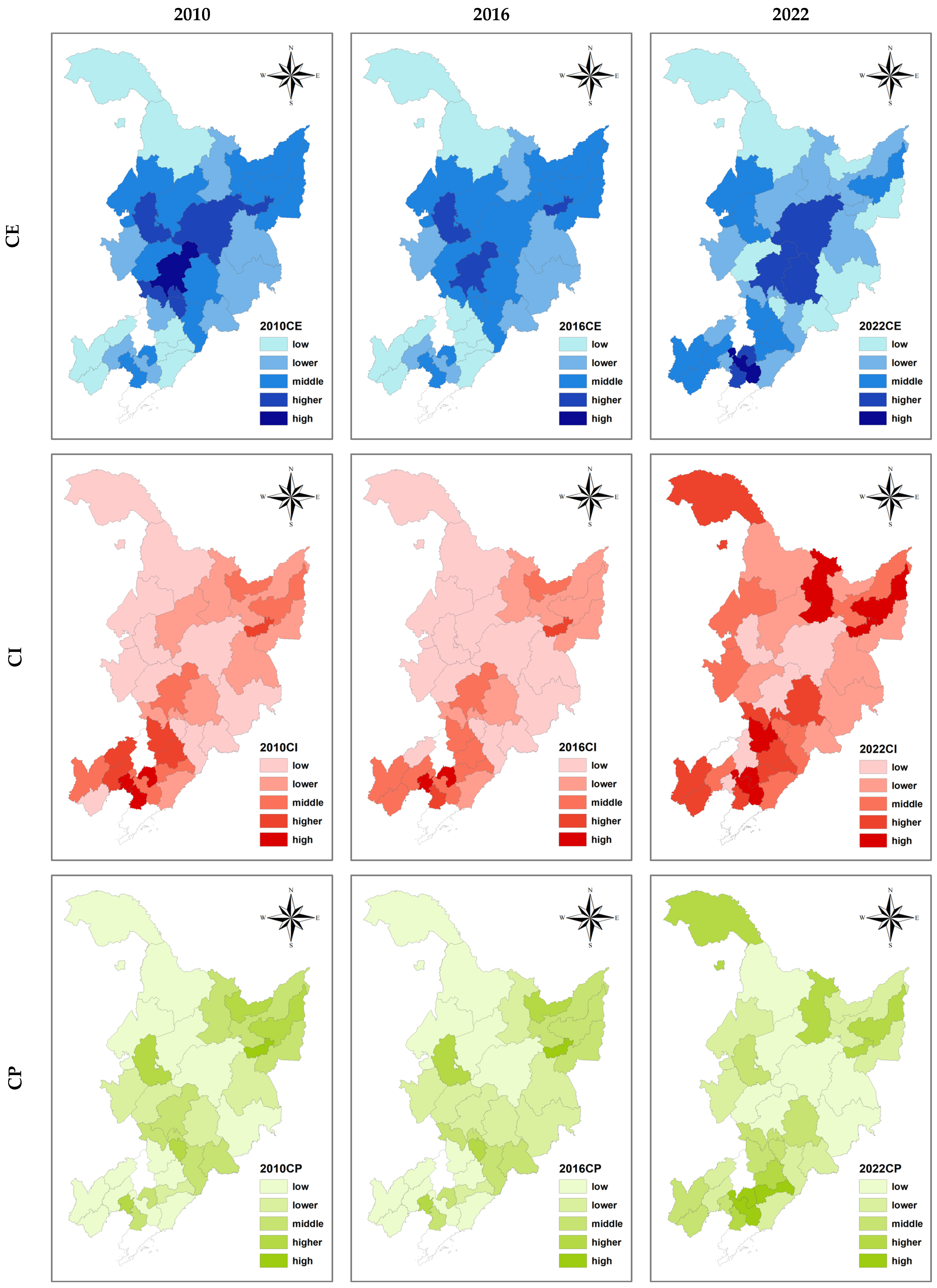
- On the spatial scale, employing spatial analytical methods including Moran’s I, hotspot analysis, and standard deviational ellipse, we identified significant spatial clustering of carbon emissions during the study period. This clustering was characterized by a distinct regional differentiation pattern of “north high-south low”. Notably, the Moran’s I value of CI demonstrated a clear declining trend, accompanied by a contraction in the spatial extent of CI hot- and coldspots, indicating a gradual weakening of CI’ s spatial clustering. To further analyze the spatial correlation pattern between CI and SD, bivariate spatial autocorrelation (LISA) analysis revealed a significant negative spatial correlation between CI and SD, with HL-type (High–Low) and LH-type (Low–High) clusters being the predominant spatial association types. This finding contrasts with the conventional view that shrinking cities universally exhibit “high-carbon lock-in” characteristics, highlighting the multifaceted nature and spatial heterogeneity of the impact of urban shrinkage on carbon emissions.
- (3)
- To further investigate the driving factors behind this spatial heterogeneity in carbon emissions, this study integrated RF and GTWR models. The results indicate that the spatial–temporal heterogeneity of carbon emissions is the outcome of a triple effect: Scale Effect Dominates Passive Emission Reduction: the contraction of economic scale is the primary driver of carbon emission reduction in shrinking cities. Fluctuations in Industrial Restructuring Exacerbate Spatial–Temporal Heterogeneity: over-reliance on secondary industries creates significant path dependence and barriers to transformation, intensifying spatial–temporal variations in emissions. Lock-in Effect Constrains Low-Carbon Transition: dual spatial and institutional lock-in constitute the key mechanism behind the “shrinkage-high carbon” paradox, leading to regional vicious cycles and carbon lock-in traps.
5.2. Policy Recommendations
- (1)
- Implement differentiated low-carbon transition paths and accurately align with urban shrinkage stages. Research findings indicate a close correlation between carbon emission evolution characteristics and urban shrinkage phases. For the middle-contraction-stage cities, the focus should be on “seeking progress while maintaining stability” through scientifically assessing industrial transition risks, systematically phasing out high-carbon industries, and cultivating replacement industries. For the late-contraction-stage cities, the emphasis should be on “quality improvement and efficiency enhancement” by upgrading energy system efficiency and strengthening carbon sequestration capacity. This approach effectively enhances urban emission reduction efficiency while mitigating potential risks during the transition process.
- (2)
- Construct a regional carbon emission reduction resilience system to cope with sudden external shocks. Research shows that the “decline-rebound-adjustment” fluctuation in carbon emission indicators during the pandemic verifies the necessity of establishing such a resilience system. It is recommended to establish a regional carbon emission monitoring and early warning system, develop graded and categorized emergency response plans, and enhance the overall carbon reduction resilience and sustainable development capacity of shrinking cities through measures such as building a diversified industrial system and optimizing energy reserves.
- (3)
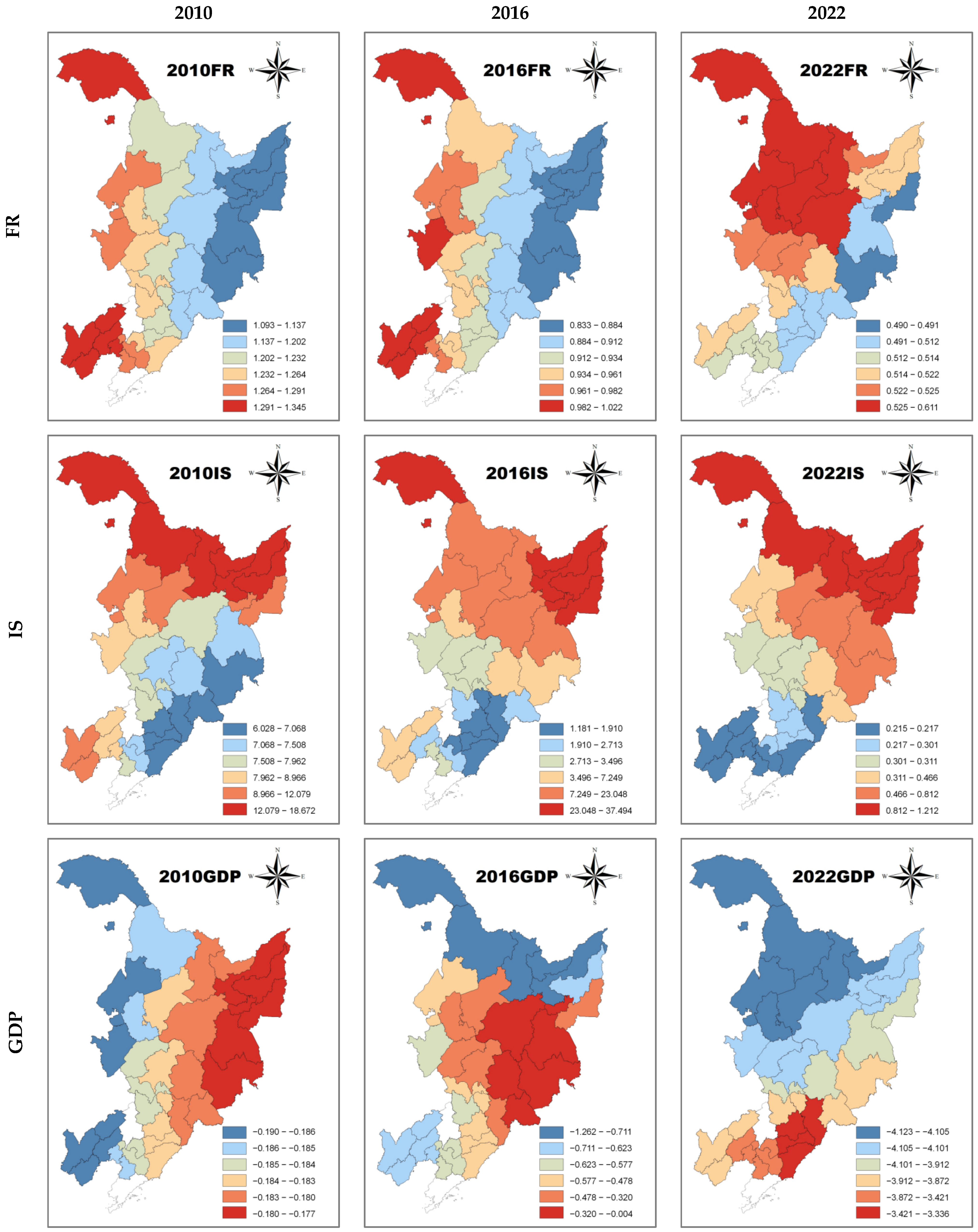
- Take industrial structure upgrading as the core and strengthen fiscal support to alleviate the “high-carbon lock-in” effect. The paper shows that IS and FR dominate the spatial heterogeneity of carbon emissions. It is recommended to promote the transformation of traditional heavy industries toward low-consumption and high-efficiency models, leveraging digital and green technologies for empowerment; increase fiscal and tax support for new energy and other emerging industries, cultivate low-carbon clusters, and alleviate the “high-carbon lock-in” effect.
- (4)
- Promote multi-stakeholder collaborative development in carbon emission governance to break free from single-path dependence on government finance. At present, governance relies on government investment. In the future, it is necessary to shift to a collaborative model of “government-market-society”. Through policies such as establishing special funds and implementing differentiated taxation, diverse stakeholders can be guided to participate in carbon emission governance.
- (5)
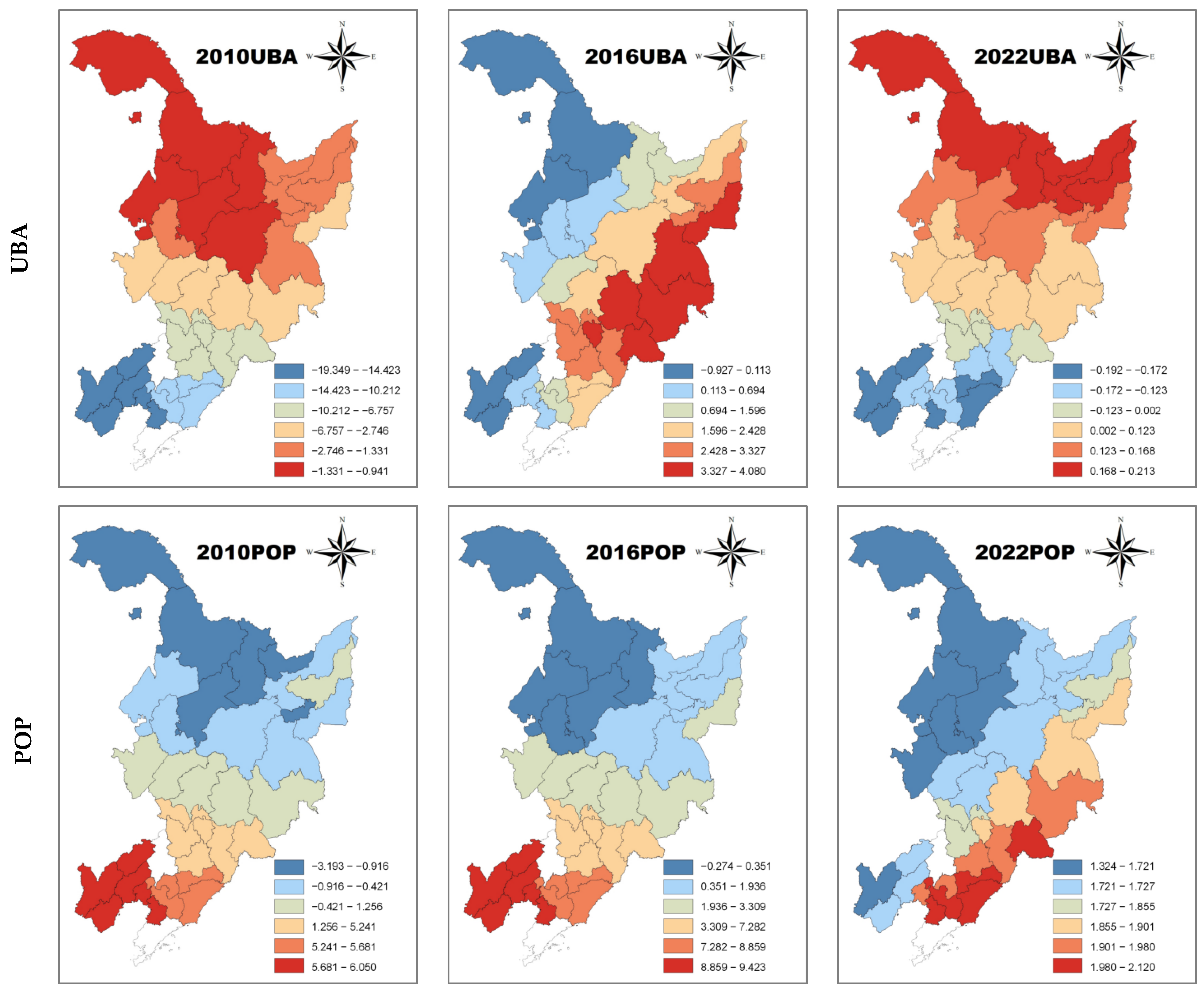
- Formulate zoned and classified refined control strategies for cold–hot zones to achieve regional coordinated development. The results of the GTWR model indicate that the spatial heterogeneity of carbon emissions is influenced by multidimensional factors such as economy, population, and society. Based on the spatial heterogeneity characteristics of carbon emissions, the recommendations are as follows: build cross-departmental governance platforms and integrate monitoring and evaluation systems; strengthen industrial emission reduction technologies in northern hotspot areas; explore ecological compensation in southern coldspot areas; and implement zoned precision strategies.
Author Contributions
Funding
Institutional Review Board Statement
Informed Consent Statement
Data Availability Statement
Acknowledgments
Conflicts of Interest
References
- International Energy Agency (IEA). Data and Statistics. International Energy Agency. 2024. Available online: https://www.iea.org/data-and-statistics (accessed on 25 April 2025).
- Wang, S.; Shi, C.; Fang, C.; Feng, K. Examining the Spatial Variations of Determinants of Energy-Related CO2 Emissions in China at the City Level Using Geographically Weighted Regression Model. Appl. Energy 2019, 235, 95–105. [Google Scholar] [CrossRef]
- Chen, Y.; Tao, R.; Ma, Q.; Wang, M. Shrinking Cities in China’s Urban Network: A Data-Driven Exploration of Migration and Investment Flows. Appl. Geogr. 2025, 180, 103644. [Google Scholar] [CrossRef]
- Liu, X.; Wang, M.; Qiang, W.; Wu, K.; Wang, X. Urban Form, Shrinking Cities, and Residential Carbon Emissions: Evidence from Chinese City-Regions. Appl. Energy 2020, 261, 114499. [Google Scholar] [CrossRef]
- Luo, Y.; Fang, S.; Wu, H.; Zhou, X.; He, Z.; Gao, L. Spatial and Temporal Evolution of Habitat Quality and Its Shrinkage Effect in Shrinking Cities: Evidence from Northeast China. Ecol. Indic. 2024, 161, 111919. [Google Scholar] [CrossRef]
- Zhu, E.; Qi, Q.; Chen, L.; Wu, X. The Spatial-Temporal Patterns and Multiple Driving Mechanisms of Carbon Emissions in the Process of Urbanization: A Case Study in Zhejiang, China. J. Clean. Prod. 2022, 358, 131954. [Google Scholar] [CrossRef]
- Wang, Z.; Zhu, C. Does Urban Sprawl Lead to Carbon Emission Growth? —Empirical Evidence Based on the Perspective of Local Land Transfer in China. J. Clean. Prod. 2024, 455, 142319. [Google Scholar] [CrossRef]
- Feng, X.; Wang, S.; Li, Y.; Yang, J.; Lei, K.; Yuan, W. Spatial Heterogeneity and Driving Mechanisms of Carbon Emissions in Urban Expansion Areas: A Research Framework Coupled with Patterns and Functions. Land Use Policy 2024, 143, 107209. [Google Scholar] [CrossRef]
- März, S.; Bierwirth, A.; Hauptstock, D. Rethink the Target: Drivers, Barriers and Path Dependencies for a Low-Carbon-Transition in Shrinking Cities; the Case of Oberhausen. In Proceedings of the Rethink, Renew, Restart ECEEE 2013 Summer Study, Toulon Hyères, France, 3–8 June 2013; Lindström, T., Ed.; Council for an Energy Efficient Economy: Wuppertal, Germany, 2013; pp. 783–793. [Google Scholar]
- Yang, S.; Yang, X.; Gao, X.; Zhang, J. Spatial and Temporal Distribution Characteristics of Carbon Emissions and Their Drivers in Shrinking Cities in China: Empirical Evidence Based on the NPP/VIIRS nighttime lighting index. J. Environ. Manag. 2022, 322, 116082. [Google Scholar] [CrossRef]
- Guo, Y.; Jia, J.; Li, L.; Hu, M.; Wu, G. Spatio-Temporal Pattern and Influencing Factors of Carbon Emissions in the Middle Reaches of the Yellow River from the Perspective of Urban Shrinkage. Acta Ecol. Sin. 2023, 44, 903–914. [Google Scholar] [CrossRef]
- Xin, Y.; Lu, Y.; Lu, L. The Influence of Population Growth and Shrinkage on Carbon Emission Intensity in Old Industrial Cities of China. Geogr. Res. 2024, 43, 558–576. [Google Scholar] [CrossRef]
- He, X.; Gao, W.; Guan, D.; Zhou, L. Nonlinear Mechanisms of CO2 Emissions in Growing and Shrinking Cities: An Empirical Study on Integrated Effects of Aging and Industrial Structure in Japan. J. Clean. Prod. 2024, 462, 142665. [Google Scholar] [CrossRef]
- Guo, S.; Tian, T.; Gong, B.; Wan, Y.; Zhou, J.X.; Wu, X. Urban Shrinkage and Carbon Emissions: Demand-Side Accounting for Chinese Cities. Appl. Energy 2025, 384, 125501. [Google Scholar] [CrossRef]
- Liu, Y.; He, S.; Jiang, Y.; Luo, X.; Yuan, J. Spatial-Temporal Decomposition of Carbon Emissions in China’s Four Major Urban Agglomerations. Clim. Change Res. 2024, 20, 231–241. [Google Scholar] [CrossRef]
- Chen, F.; Zhang, J.; Ren, J.; Xiang, Y.; Li, Q. Spatiotemporal Variations and Influencing Factors of Carbon Emissions in the Yellow River Basin Based on LMDI Model. J. Earth Environ. 2022, 13, 418–427. [Google Scholar] [CrossRef]
- Zhang, J.; Fu, M.; Wang, L.; Liang, Y.; Tang, F.; Li, S.; Wu, C. Impact of Urban Shrinkage on Pollution Reduction and Carbon Mitigation Synergy: Spatial Heterogeneity and Interaction Effects in Chinese Cities. Land 2025, 14, 537. [Google Scholar] [CrossRef]
- Li, Z.; Wang, F.; Kang, T.; Wang, C.; Chen, X.; Miao, Z.; Zhang, L.; Ye, Y.; Zhang, H. Exploring Differentiated Impacts of Socioeconomic Factors and Urban Forms on City-Level CO2 Emissions in China: Spatial Heterogeneity and Varying Importance Levels. Sustain. Cities Soc. 2022, 84, 104028. [Google Scholar] [CrossRef]
- Zhang, L.; Wang, L.; Zhang, X.; Liu, S.; Sun, P.; Wang, T. The Basic Principle of Random Forest and Its Applications in Ecology—A Case Study of Pinus yunnanensis. Acta Ecol. Sin. 2014, 34, 10–5846. [Google Scholar]
- Han, F.; Gao, F.; He, B.; Cao, Y.; Yao, X. Exploring the Spatial and Temporal Trajectories of Land Use Carbon Emissions and Influencing Factors in the Aksu River Basin from 1990 to 2020. Environ. Sci. 2024, 45, 3297–3307. [Google Scholar]
- Wu, L. Connotation and Causes of Urban Shrinkage—The Influence Mechanisms of Urban Shrinkage and Regional Collapse. Adv. Soc. Sci. 2024, 13, 11028. [Google Scholar] [CrossRef]
- Wiechmann, T. Errors Expected—Aligning Urban Strategy with Demographic Uncertainty in Shrinking Cities. Int. Plan. Stud. 2008, 13, 431–446. [Google Scholar] [CrossRef]
- Haase, A.; Rink, D.; Grossmann, K.; Bernt, M.; Mykhnenko, V. Conceptualizing Urban Shrinkage. Environ. Plan. A 2014, 46, 1519–1534. [Google Scholar] [CrossRef]
- Zhang, Y.; Fu, Y.; Kong, X.; Zhang, F. Prefecture-Level City Shrinkage on the Regional Dimension in China: Spatiotemporal Change and Internal Relations. Sustain. Cities Soc. 2019, 47, 101490. [Google Scholar] [CrossRef]
- Häußermann, H.; Siebel, W. Die Schrumpfende Stadt und die Stadtsoziologie. In Soziologische Stadtforschung; VS Verlag für Sozialwissenschaften: Wiesbaden, Germany, 2020; pp. 78–94. [Google Scholar]
- Guan, D.; He, X.; Hu, X. Quantitative Identification and Evolution Trend Simulation of Shrinking Cities at the County Scale, China. Sustain. Cities Soc. 2021, 65, 102611. [Google Scholar] [CrossRef]
- Guo, F.; Qu, X.; Ma, Y.; Tong, L. Spatiotemporal pattern evolution and influencing factors of shrinking cities: Evidence from China. Cities. 2021, 119, 103391. [Google Scholar] [CrossRef]
- Guo, W.; Li, Y.; Li, P.; Zhao, X.; Zhang, J. Using a combination of nighttime light and MODIS data to estimate spatiotemporal patterns of CO2 emissions at multiple scales. Sci. Total Environ. 2022, 848, 157630. [Google Scholar] [CrossRef]
- Yang, X.; Li, J. International research on urban shrinkage and its implications for China. Qilu J. 2023, 14, 110–123. [Google Scholar] [CrossRef]
- Meng, X.; Xie, Y.; Crooks, A.; Wu, J.; Welsh, H.K.; Zeng, S. Examining spatial expansion and stemming strategies of urban shrinkage: Evidence from Detroit, USA. npj Urban Sustain. 2025, 5, 52. [Google Scholar] [CrossRef]
- Zhang, X.; Zhang, Q.; Zhang, X.; Gu, R. Spatial-temporal evolution pattern of multidimensional urban shrinkage in China and its impact on urban form. Appl. Geogr. 2023, 159, 103062. [Google Scholar] [CrossRef]
- Zhang, S.; Long, S.; Cai, E.; Ma, J.; Li, L. Identification and evolutionary pattern analysis of shrinking cities in China from 2000 to 2020. Areal Res. Dev. 2025, 44, 62–69. [Google Scholar] [CrossRef]
- Chen, X.; Lang, W.; Yuan, Y.; Yuan, X.; Yan, G.; Hou, X. Conceptualizing the nexus between spatiotemporal shrinkage patterns of natural cities and driving mechanisms: Insights into urban shrinkage in Northeast China. Cities 2024, 152, 105179. [Google Scholar] [CrossRef]
- Yang, Y.; Wu, J.; Wang, Y.; Huang, Q.; He, C. Quantifying Spatiotemporal Patterns of Shrinking Cities in Urbanizing China: A Novel Approach Based on Time-Series Nighttime Light Data. Cities 2021, 118, 103346. [Google Scholar] [CrossRef]
- Wang, Q.; Xin, Z.; Niu, F. Analysis of the Spatio-Temporal Patterns of Shrinking Cities in China: Evidence from Nighttime Light. Land 2022, 11, 871. [Google Scholar] [CrossRef]
- Tripathy, B.R.; Tiwari, V.; Pandey, V.; Elvidge, C.D.; Rawat, J.S.; Sharma, M.P. Estimation of Urban Population Dynamics Using DMSP-OLS Night-Time Lights Time Series Sensors Data. IEEE Sensors J. 2017, 17, 1013–1020. [Google Scholar] [CrossRef]
- Elvidge, C.D.; Imhoff, M.L.; Bough, K.E.; Hobson, V.R.; Nelson, I.; Safran, J.; Dietz, J.B.; Tuttle, B.T. Night-Time Lights of the World: 1994–1995. ISPRS J. Photogramm. Remote Sens. 2001, 56, 81–99. [Google Scholar] [CrossRef]
- GB/T 2589-2020; General Rules for Calculation of the Comprehensive Energy Consumption. State Administration for Market Regulation, Standardization Administration of China: Beijing, China, 2020.
- Zhang, T.; Ding, D.; Wang, G. Deciphering the Spatiotemporal Dynamics and Driving Mechanisms of Carbon Emissions in China’s Greater Bay Area: Insights from Interpretable Machine Learning. Sustain. Cities Soc. 2025, 133, 106840. [Google Scholar] [CrossRef]
- Zhang, A.; Deng, R. Spatial-Temporal Evolution and Influencing Factors of Net Carbon Sink Efficiency in Chinese Cities under the Background of Carbon Neutrality. J. Clean. Prod. 2022, 365, 132547. [Google Scholar] [CrossRef]
- Xie, M.; Feng, Z.; Wang, S.; Wang, S.; Chang, X. Spatiotemporal Patterns and Nonlinear Drivers of Carbon Emission Intensity under Urban Shrinkage and Growth: A Machine Learning Approach with Interpretability. Sustain. Cities Soc. 2025, 130, 106593. [Google Scholar] [CrossRef]
- IPCC. 2006 IPCC Guidelines for National Greenhouse Gas Inventories; Institute for Global Environmental Strategies (IGES): Kanagawa, Japan, 2006. [Google Scholar]
- Su, Y.; Chen, X.; Ye, Y.; Wu, Q.; Zhang, H.; Huang, N.; Kuang, Y. The Characteristics and Mechanisms of Carbon Emissions from Energy Consumption in China Using DMSP/OLS Night Light Imageries. Acta Geogr. Sin. 2013, 68, 1513–1526. [Google Scholar] [CrossRef]
- Nong, K.; Lin, J.; Sun, D. Spatiotemporal Patterns, Effects, and the Interactive Driving Mechanisms of Urban Sustainability Based on the Eco-Efficiency Framework: Evidence from Chinese Prefecture-Level Cities. Environ. Sustain. Indic. 2024, 23, 100391. [Google Scholar] [CrossRef]
- Xiao, Y.; Rao, X.; Chang, M.; Chen, L.; Huang, H. Assessment of Urban Flood Resilience and Obstacle Factors Identification: A Case Study of Three Major Urban Agglomerations in China. Ecol. Indic. 2025, 176, 113659. [Google Scholar] [CrossRef]
- Wang, G.; Deng, X.; Wang, J.; Zhang, F.; Liang, S. Carbon Emission Efficiency in China: A Spatial Panel Data Analysis. China Econ. Rev. 2019, 56, 101313. [Google Scholar] [CrossRef]
- Sun, L.; Wang, Q.; Zhou, P.; Cheng, F. Effects of Carbon Emission Transfer on Economic Spillover and Carbon Emission Reduction in China. J. Clean. Prod. 2016, 112, 1423–1442. [Google Scholar] [CrossRef]
- Hornung, R.; Boulesteix, A.L. Interaction Forests: Identifying and Exploiting Interpretable Quantitative and Qualitative Interaction Effects. Comput. Stat. Data Anal. 2022, 171, 107460. [Google Scholar] [CrossRef]
- Huang, B.; Wu, B.; Barry, M. Geographically and Temporally Weighted Regression for Modeling Spatio-Temporal Variation in House Prices. Int. J. Geogr. Inf. Sci. 2010, 24, 383–401. [Google Scholar] [CrossRef]
- Sun, P.; Peng, Y.; Zhou, X. Research on Urban Shrinkage Effects in Northeast China from the Perspective of Intensive Land Use. Geogr. Res. 2023, 42, 106–122. [Google Scholar] [CrossRef]
- Zheng, H. “Dual Carbon” Targets and the Driving Effects of Carbon Emissions in Shrinking Industrial Cities in Northeast China-A Case Study of Heilongjiang Province. China Collect. Econ. 2023, 12, 35–38. [Google Scholar] [CrossRef]
- Le Quéré, C.; Jackson, R.B.; Jones, M.W.; Smith, A.J.P.; Abernethy, S.; Andrew, R.M.; De-Gol, A.J.; Willis, D.R.; Shan, Y.; Canadell, J.G.; et al. Temporary Reduction in Daily Global CO2 Emissions during the COVID-19 Forced Confinement. Nat. Clim. Chang. 2020, 10, 647–653. [Google Scholar] [CrossRef]
- He, G.; Pan, Y.; Tanaka, T. The Short-Term Impacts of COVID-19 Lockdown on Urban Air Pollution in China. Nat. Sustain. 2020, 3, 1005–1011. [Google Scholar] [CrossRef]
- Zheng, B.; Geng, G.; Ciais, P.; Davis, S.J.; Martin, R.V.; Meng, J.; Wu, N.; Chevallier, F.; Broquet, G.; Boersma, F.; et al. Satellite-Based Estimates of Decline and Rebound in China’s CO2 Emissions during COVID-19 Pandemic. Sci. Adv. 2020, 6, eabd4998. [Google Scholar] [CrossRef]
- Li, R.; Li, S. Carbon Emission Post-Coronavirus: Continual Decline or Rebound? Struct. Change Econ. Dyn. 2021, 57, 57–67. [Google Scholar] [CrossRef]
- Liu, X.; Jin, X.; Luo, X.; Zhou, Y. Multi-Scale Variations and Impact Factors of Carbon Emission Intensity in China. Sci. Total Environ. 2023, 857, 159403. [Google Scholar] [CrossRef]
- Song, Y.; He, W.; Zeng, J. Exploration of Spatio-Temporal Evolution and Threshold Effect of Shrinking Cities. Land 2023, 12, 1474. [Google Scholar] [CrossRef]
- Fan, Z.; Chen, Y. Smart Shrinkage of Chinese Cities: Concept, Development Status and Optimization Path. Popul. Soc. 2025, 2, 43–53. [Google Scholar]
- Zhou, Y.; Li, C.; Zheng, W.; Rong, Y.; Liu, W. Identification of urban shrinkage using NPP-VIIRS nighttime light data at the county level in China. Cities 2021, 118, 103373. [Google Scholar] [CrossRef]
- Zheng, Y.; He, Y.; Zhou, Q.; Wang, H. Quantitative Evaluation of Urban Expansion using NPP-VIIRS Nighttime Light and Landsat Spectral Data. Sustain. Cities Soc. 2022, 76, 103338. [Google Scholar] [CrossRef]
- Zhao, Y. Research on the Impact of Urban Shrinkage on Urban Economy Development—On the Regulatory Role of Digital Economy. E-Commerce Rev. 2024, 13, 1644–1656. [Google Scholar]
- Wu, K.; Liu, X.; Yao, C. The mechanisms of industrial transformation on the evolutionary trajectory of growth and shrinkage in Chinese resource-based cities. J. Nat. Resour. 2023, 38, 109–125. [Google Scholar] [CrossRef]
- Wu, Y.; Zhang, Q. The Confrontation and Symbiosis of Green and Development: Coupling Coordination Analysis between Carbon Emissions and Spatial Development in Urban Agglomerations of China. Sustain. Cities Soc. 2024, 106, 105391. [Google Scholar] [CrossRef]



| Energy Type | Conversion Coefficient to Standard Coal (kgce/kg) | Carbon Emission Coefficient (kg/kgce) |
|---|---|---|
| Raw Coal | 0.7143 | 0.7559 |
| Coke | 0.9714 | 0.855 |
| Crude Oil | 1.4286 | 0.5857 |
| Gasoline | 1.4714 | 0.5538 |
| Kerosene | 1.4714 | 0.5714 |
| Diesel Oil | 1.4571 | 0.5921 |
| Fuel Oil | 1.4286 | 0.6185 |
| Natural Gas | 1.33 | 0.4483 |
| Heat | 34.12 * | 0.67 |
| Electricity | 0.345 | 0.272 |
| City | Shrinkage Degree (SD) | City | Shrinkage Degree (SD) |
|---|---|---|---|
| Harbin | −10.56% | Dandong | −3.52% |
| Qiqihar | −1.86% | Jinzhou | −4.83% |
| Jixi | −9.02% | Yingkou | −2.00% |
| Hegang | −6.81% | Fuxin | −4.52% |
| Shuangyashan | −3.76% | Liaoyang | −4.91% |
| Daqing | −5.44% | Panjin | −0.99% |
| Yichun | −2.09% | Tieling | −5.21% |
| Jiamusi | −9.09% | Chaoyang | −1.27% |
| Qitaihe | −16.30% | Huludao | −2.13% |
| Mudanjiang | −10.54% | Changchun | −1.81% |
| Heihe | −5.56% | Jilin | −6.77% |
| Suihua | −3.67% | Siping | −6.03% |
| Daxing’anling | −18.55% | Liaoyuan | −0.98% |
| Shenyang | 4.97% | Tonghua | −7.64% |
| Dalian | 2.10% | Baishan | −10.17% |
| Anshan | −3.41% | Songyuan | −4.70% |
| Fushun | −6.43% | Baicheng | −7.28% |
| Benxi | −6.53% | Yanbian | −8.80% |
| Year | 2010 | 2013 | 2016 | 2019 | 2022 |
|---|---|---|---|---|---|
| CE | 0.212 ** | 0.403 *** | 0.420 *** | 0.478 ** | 0.344 ** |
| (2.6448) | (2.4944) | (2.7334) | (2.9126) | (2.12) | |
| CI | 0.557 *** | 0.365 *** | 0.347 *** | 0.356 *** | 0.333 *** |
| (6.77) | (4.947) | (4.723) | (6.715) | (6.182) | |
| CP | 0.328 *** | 0.366 *** | 0.376 *** | 0.368 ** | 0.307 *** |
| (4.126) | (4.792) | (4.93) | (2.234) | (2.18) | |
| CA | 0.054 ** | 0.115 ** | 0.129 ** | 0.157 ** | 0.066 *** |
| (2.198) | (2.329) | (2.462) | (2.18) | (2.35) |
| Aspect | Variable | Variable Description | Unit |
|---|---|---|---|
| Population | Permanent Population (POP) | Year-end permanent population within city administrative areas | 104 persons |
| Population Density (PD) | Ratio of total population to built-up area | persons/km2 | |
| Economy | Gross Domestic Product (GDP) | Total economic output of the city | 108 yuan |
| Economic Growth Rate (GGR) | Annual GDP growth rate of the city | % | |
| Fiscal Revenue (FR) | Total local fiscal revenue | 108 yuan | |
| Secondary Industry (IS) | Proportion of secondary industry output in GDP | % | |
| Tertiary Industry (IT) | Proportion of tertiary industry output in GDP | % | |
| Society | Per Capita Road Area (PRA) | Average road area per capita in the city | m2/person |
| Green Coverage Rate (GCR) | Proportion of green area in built-up area | % | |
| Urban Built-up Area (UBA) | Total built-up area within city boundaries | km2 |
| Model | AICc | ||
|---|---|---|---|
| OLSs | 0.896 | 0.007 | 8140.257 |
| GTWR | 0.928 | 0.120 | 540.137 |
Disclaimer/Publisher’s Note: The statements, opinions and data contained in all publications are solely those of the individual author(s) and contributor(s) and not of MDPI and/or the editor(s). MDPI and/or the editor(s) disclaim responsibility for any injury to people or property resulting from any ideas, methods, instructions or products referred to in the content. |
© 2025 by the authors. Licensee MDPI, Basel, Switzerland. This article is an open access article distributed under the terms and conditions of the Creative Commons Attribution (CC BY) license (https://creativecommons.org/licenses/by/4.0/).
Share and Cite
Zhao, Y.; Xu, Y.; Zhou, J.; Zhao, W. Spatial–Temporal Evolution and Driving Factors of Carbon Emissions in Shrinking Cities: A Case Study of the Three Northeastern Provinces in China. Atmosphere 2025, 16, 1367. https://doi.org/10.3390/atmos16121367
Zhao Y, Xu Y, Zhou J, Zhao W. Spatial–Temporal Evolution and Driving Factors of Carbon Emissions in Shrinking Cities: A Case Study of the Three Northeastern Provinces in China. Atmosphere. 2025; 16(12):1367. https://doi.org/10.3390/atmos16121367
Chicago/Turabian StyleZhao, Yuyi, Yueyan Xu, Jiuyan Zhou, and Wenjun Zhao. 2025. "Spatial–Temporal Evolution and Driving Factors of Carbon Emissions in Shrinking Cities: A Case Study of the Three Northeastern Provinces in China" Atmosphere 16, no. 12: 1367. https://doi.org/10.3390/atmos16121367
APA StyleZhao, Y., Xu, Y., Zhou, J., & Zhao, W. (2025). Spatial–Temporal Evolution and Driving Factors of Carbon Emissions in Shrinking Cities: A Case Study of the Three Northeastern Provinces in China. Atmosphere, 16(12), 1367. https://doi.org/10.3390/atmos16121367