Article

Spatiotemporal Characteristics of Parallel Stacked Structure Signals in VLF Electric Field Observations from CSES-01 Satellite


1
Institute of Intelligent Emergency Information Processing, Institute of Disaster Prevention, Langfang 065201, China
2
National Institute of Natural Hazards, Ministry of Emergency Management of China, Beijing 100085, China
3
School of Emergency Technology and Management, Institute of Disaster Prevention, Langfang 065201, China
4
School of Computer Science and Engineering, Institute of Disaster Prevention, Langfang 065201, China
*
Authors to whom correspondence should be addressed.
Atmosphere 2025, 16(10), 1198; https://doi.org/10.3390/atmos16101198
Submission received: 21 August 2025 / Revised: 14 October 2025 / Accepted: 16 October 2025 / Published: 17 October 2025
(This article belongs to the Special Issue Research and Space-Based Exploration on Space Plasma)

Abstract

This study reports, for the first time, the discovery and systematic characterization of a distinct electromagnetic phenomenon—the parallel stacked structure signal—in the VLF band using CSES-01 satellite electric field data. Its main contribution lies in defining this novel signal, characterized by transversely aligned and longitudinally clustered high-energy regions, and revealing its unique spatiotemporal patterns. We find these signals exhibit a pronounced Southern Hemisphere mid-to-high latitude preference (40° S–65° S), a strong seasonal dependence (peak in winter and autumn), and a remarkable nightside dominance (86.4%). Analysis shows these patterns are not primarily governed by routine solar (F10.7) or geomagnetic (SME) activity, indicating a more complex generation mechanism. This work provides a foundational classification and analysis, offering a new and significant observable for future investigations into space weather and Lithosphere–Atmosphere–Ionosphere Coupling processes.

1. Introduction

Dynamic monitoring of geospace electromagnetic environment serves as one of the core technical pathways for revealing the Lithosphere–Atmosphere–Ionosphere Coupling (LAIC) mechanism [1,2]. In recent years, with breakthrough progress in satellite electromagnetic observation technologies—particularly the widespread application of high-precision and high spatiotemporal resolution detection methods—VLF (Very Low Frequency) electromagnetic radiation anomalies associated with natural phenomena like solar magnetic storms, substorms, solar activities, and earthquakes have gradually become an important research direction for exploring precursor signals of characteristic events [3,4]. Power Spectral Density (PSD) data transforms time-domain signals into time-frequency data, clearly displaying signal intensity variations across time and frequency domains. Compared to traditional time-domain analysis methods, PSD analysis can reveal time-frequency characteristics of signals and facilitate comprehensive analysis of spatial events by integrating multiple factors [5,6,7].
Research shows that certain characteristic events exhibit unique PSD features in specific frequency bands. For example, before earthquakes occur, spatial electromagnetic fields often display significant PSD variations [8,9,10]. In 2020, analysis of DEMETER satellite data revealed notable PSD enhancement in the 300–800 Hz frequency range prior to the 2010 Sumatra M7.8 earthquake [11]. Further investigation by Xia et al. on the spectral broadening of NWC transmitter signals demonstrated that broadening primarily occurs in VLF and HF bands during nighttime, with its intensity and frequency width showing positive correlation with NWC wave amplitude and negative correlation with background electron density [12]. Catania et al. conducted a comprehensive PSD analysis of 233 broadband stations in the Italian seismic network, revealing distinct spatial distribution characteristics of noise power in the 0.025–30 Hz range: low-frequency bands (0.025–1.2 Hz) are predominantly influenced by natural sources (ocean waves, meteorological phenomena) showing regional consistency, while high-frequency bands (1.2–30 Hz) are mainly affected by anthropogenic sources, exhibiting stronger spatial variability in highly industrialized areas such as the Po Valley [13].
Additionally, numerous scholars and research teams have extensively studied various waveform characteristics in satellite data, including: whistler waves with whistler features [14,15,16,17]; power line harmonic radiation exhibiting horizontal line patterns [18]; and quasi-periodic radiation with five morphological types [19]. These characteristics provide important bases for identifying and classifying spatial events while opening new perspectives for understanding their physical mechanisms and evolutionary patterns. Therefore, systematic statistical analysis of anomalous regions in VLF power spectrograms is crucial [20,21,22], as it can enhance correlation prediction capabilities for spatial characteristic events, with broad application prospects in space weather warning, seismic precursor monitoring, and prevention of hazardous space events.

2. Data Sources and Signal Structure Characteristics

China Seismo-Electromagnetic Satellite (CSES-01) [23,24], successfully launched on 2 February 2018, represents a significant milestone in China’s space-based electromagnetic environment monitoring capabilities. As the nation’s first dedicated scientific satellite for detecting ionospheric disturbances caused by earthquakes and other natural events, Zhangheng-1 not only fills a domestic gap in this field but also provides crucial data support for global space physics research. The satellite carries eight types of payloads capable of acquiring multi-dimensional data including global electromagnetic fields, plasma parameters, and high-energy particle measurements. Numerous research teams [25,26,27,28] have utilized CSES-01 data to investigate spatial electromagnetic fields, confirming the reliability of these datasets while providing substantial data support for advancements in this research domain.
The Electric Field Detector (EFD) [29,30,31] serves as one of CSES-01’s core payloads. It employs high-precision titanium alloy spherical probe sensors (6 cm radius) and dual-probe measurement technology to synchronously capture three-component ionospheric electric fields (Ex, Ey, Ez) through precise potential difference calculations between spatial points. The EFD covers frequency bands from ULF (DC-16 Hz) to HF (18 kHz–3.5 MHz), specifically divided into ULF, ELF (6 Hz–2.2 kHz), VLF (1.8 kHz–20 kHz), and HF bands. This multi-band, high-sampling-rate capability allows the EFD to detect weak electromagnetic signals and track their dynamic evolution during solar activities, magnetic storms, and seismic events. It thereby provides high-precision, reliable data for studying the spatiotemporal distribution of VLF electromagnetic signals.
We have identified recurrent high-energy regions in the 2019 VLF-band power spectral density (PSD) images that exhibit a “laterally parallel and longitudinally clustered” pattern. These features, referred to as parallel stacked structural signals, provide new insights for investigating spatial electromagnetic anomalies. In terms of data processing, a logarithmic transformation was first applied to the electric field PSD data to mitigate its wide dynamic range, which spans several orders of magnitude. This step significantly improves data manageability and facilitates better visualization. Subsequently, the 2D data underwent 90° counterclockwise rotation to better reveal spatial distribution features of PSD images [32], as illustrated in Figure 1.
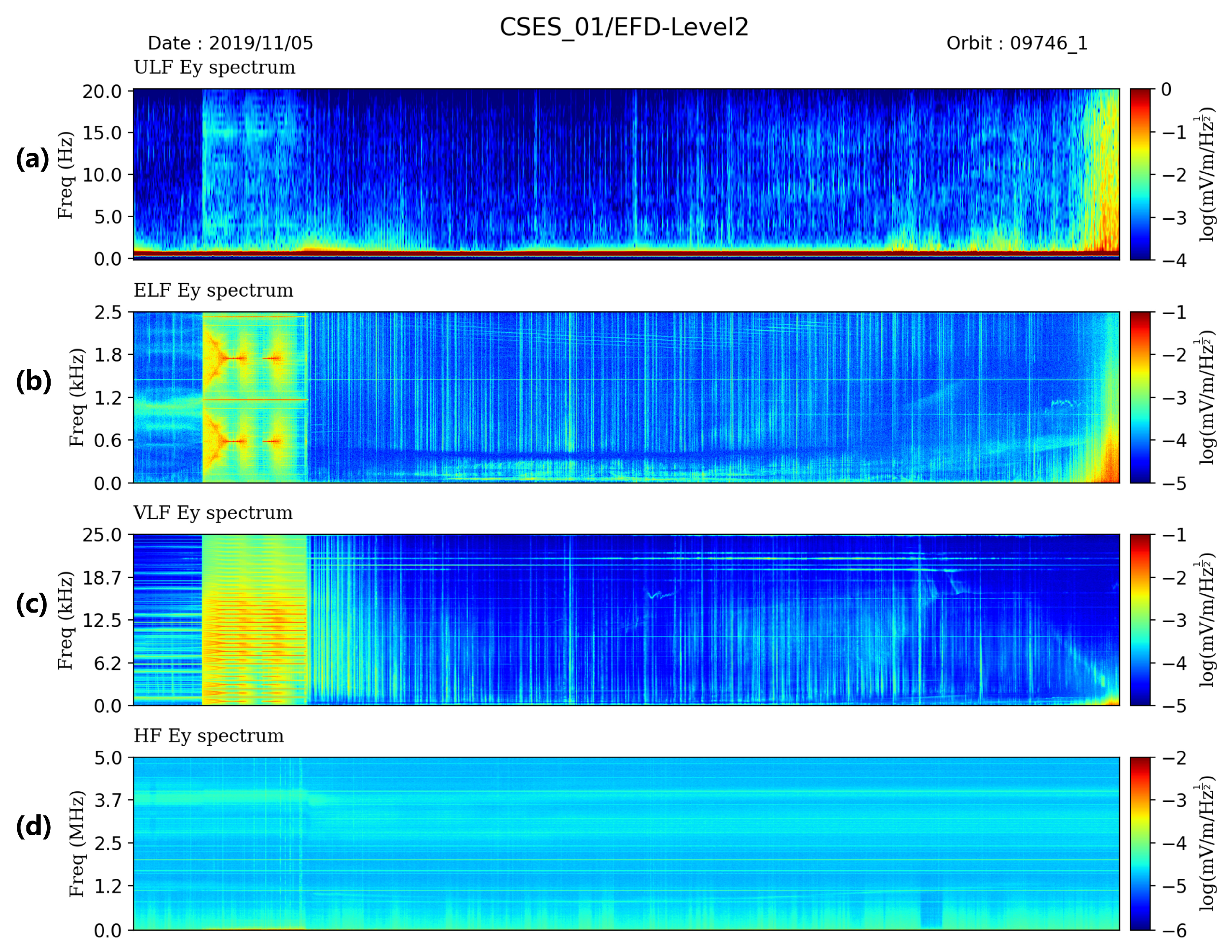
Figure 1 and Figure 2 demonstrate that among the three components (X, Y, Z) and four frequency bands of the power spectral images, the parallel stacked structure signal exhibit approximately identical spatial distribution ranges across the three components of the same dataset. However, these signals appear more comprehensive and prominent in the VLF-band Y-component compared to other frequency bands and components. This discrepancy may be attributed to the spatial orientation of electric field components and their coupling mechanisms with external electromagnetic interference. Therefore, the power spectral images of the VLF-band Y-component were selected as the primary research subject for statistical analysis of their spatial distribution characteristics, aiming to reveal the spatiotemporal evolution patterns and underlying physical mechanisms of parallel stacked structure signal.
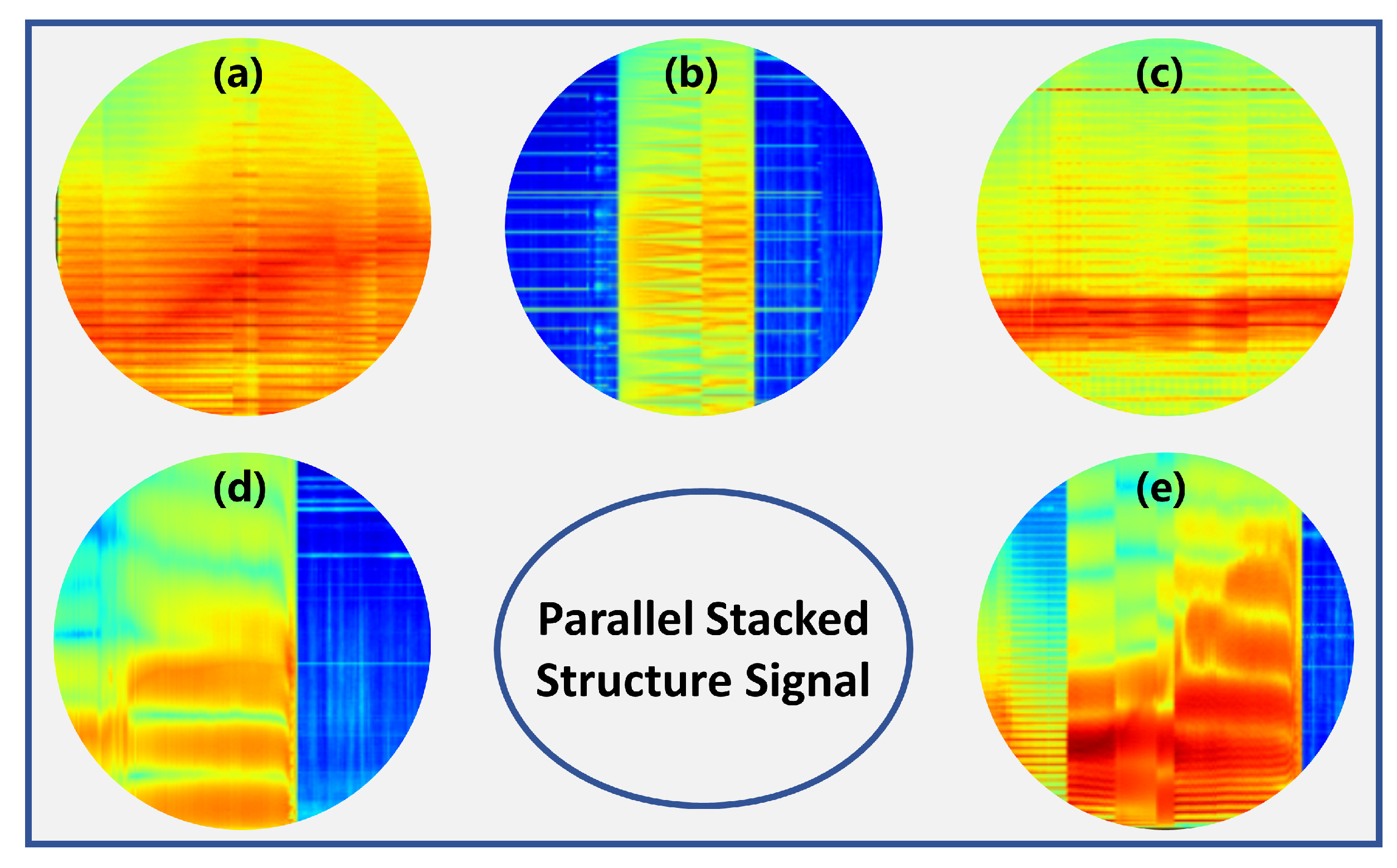
The parallel stacked structure signal represents a type of high-energy region widely distributed in VLF-band power spectral density images, characterized by laterally parallel and longitudinally clustered features. Based on morphological characteristics, these signals can be classified into five major categories as listed in Table 1 (see also Figure 3).
These distinct signal morphologies not only illustrate the varied distribution of electromagnetic radiation energy in the time-frequency domain, but also likely point to diverse underlying physical causes and evolutionary processes. The observed complexity, particularly with the emergence of composite structures, highlights that parallel stacked structure signals in real-world observations frequently exhibit intricate, mixed characteristics. This foundational morphological classification provides an essential basis for subsequent in-depth research into their formation and underlying mechanisms.

3. Feature Analysis

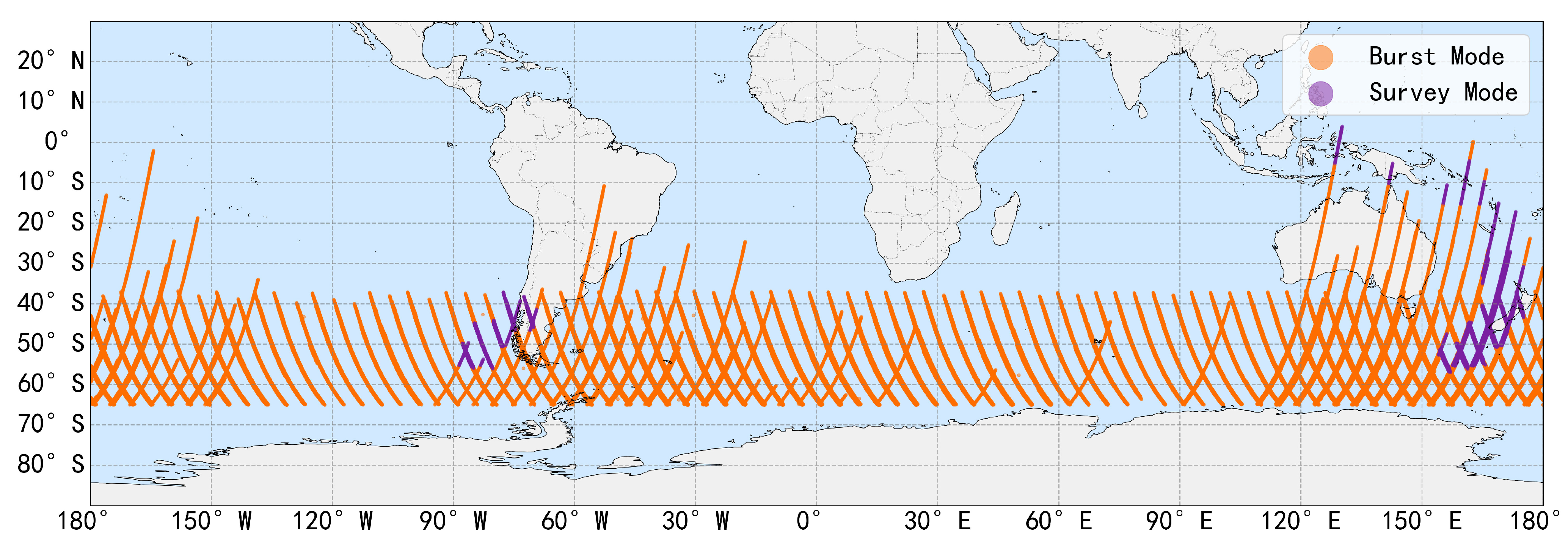
From 1 March 2019 to 29 February 2020, CSES-01 collected a total of 10,361 valid half-orbits of VLF-band electric field data. Following the methodology described in Section 2, statistical analysis of the Y-component power spectral density plots identified 1465 images containing parallel stacked structure signals, accounting for approximately 14.14% of the total. The spatial distribution characteristics of these signals were statistically analyzed and are presented in Figure 4. Note that since CSES-01 and other low-Earth-orbit satellites lack data coverage in high-latitude regions beyond 65°, this statistical analysis is limited to latitudes within ±65°.
The CSES-01 payload operates within latitude ranges of [−65°, 65°] in two modes [33]: survey mode (primarily over Chinese territory and two major international seismic belts) and burst mode (other regions). To verify that parallel stacked structure signals are not mode-specific phenomena, the plotted trajectories are color-coded by operation mode. The results indicate that these signals exist in both modes, and their global distribution is highly uneven, mainly concentrated in the mid to high latitudes of the southern hemisphere (40° S–65° S), particularly near the waters of southern South America, and across the South Atlantic and South Indian Oceans, to southern Australia. Only sporadic trajectories appear in the Northern Hemisphere, potentially related to hemispheric asymmetries in Earth’s magnetic field distribution and ionospheric characteristics. In high-latitude regions approaching the poles, concentrated geomagnetic field lines facilitate solar particle penetration and ionospheric current systems, making these areas more susceptible to auroral and magnetic storm effects that generate distinct VLF-band high-energy regions.
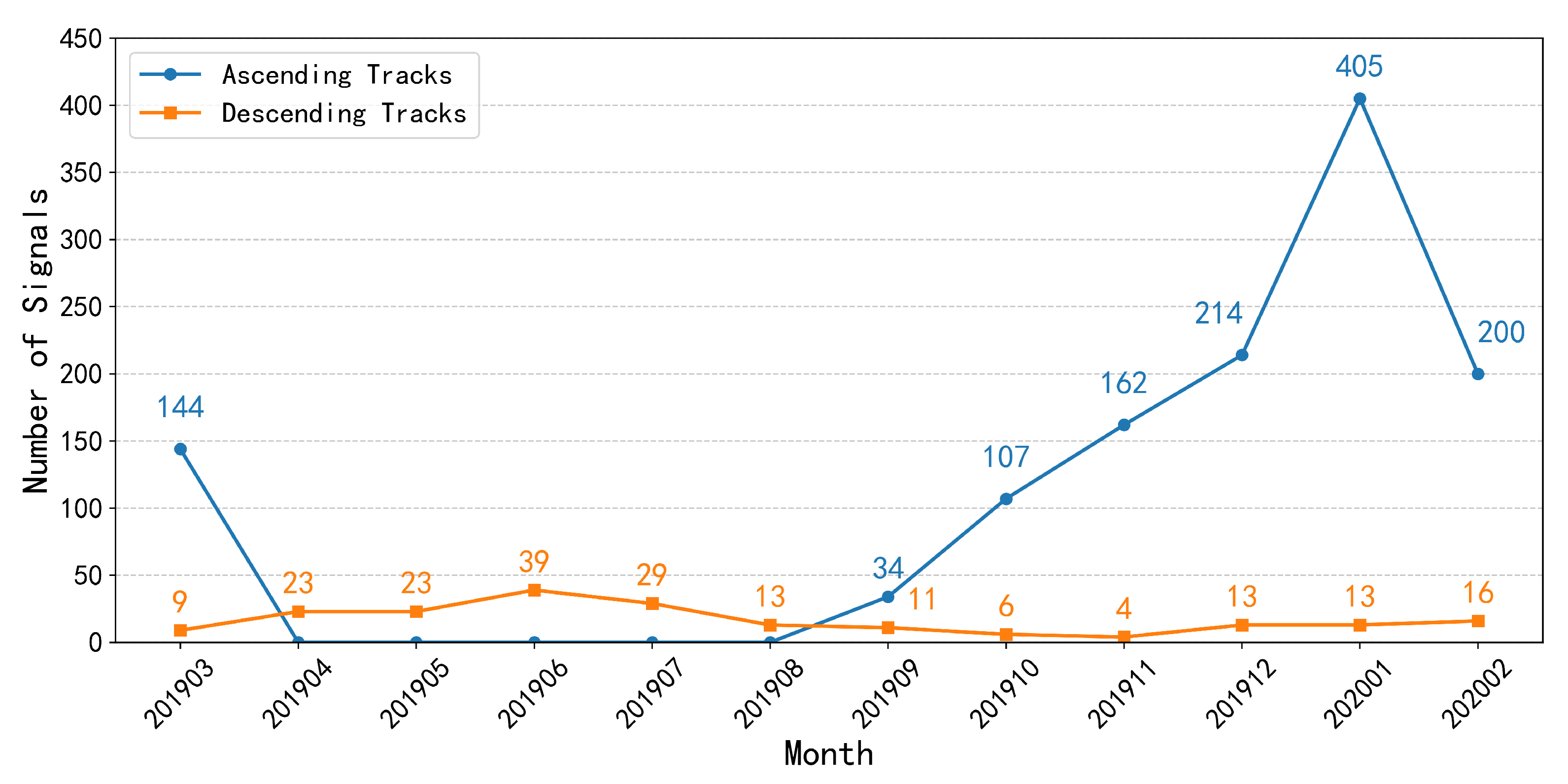
Monthly statistics of parallel stacked structure signals by ascending/descending orbits are shown in Figure 5 (blue/orange lines, respectively). The 1465 detected signals exhibit strong seasonal variations and day-night asymmetry: 1266 (86.4%) occurred on ascending (nightside) orbits versus 199 (13.6%) on descending (dayside) orbits.
Temporally, signals concentrated in two periods: March 2019 (144 events) and October 2019–January 2020 (107–405 events/month), peaking at 405 events in January 2020. Remarkably, April–August 2019 showed continuous zero detection. Nightside signals in January 2020 (405 events) outnumbered dayside signals (13 events) by a factor of 31. Similarly large differences were observed in November–December 2019 (162–214 nightside events vs. 4–13 dayside events). Dayside signals remained low (10–39 events/month) but were relatively more frequent during April-August when nightside signals completely disappeared.
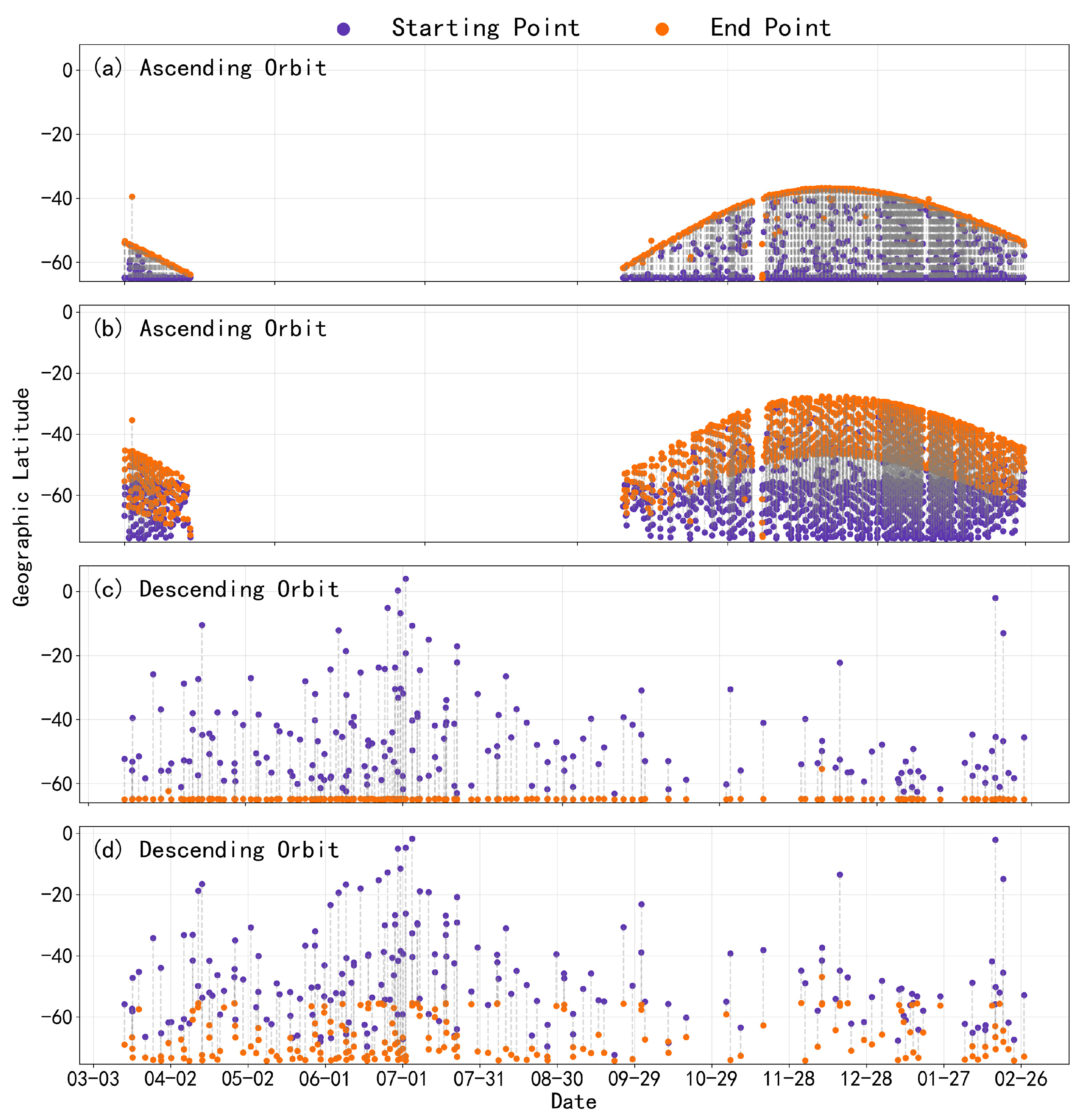
Figure 6 displays the distribution of parallel stacked structure signals by start and end latitudes across different orbit types, with purple and orange dots representing the signal’s starting and ending latitudes, respectively. The data are chronologically ordered to facilitate observation of latitudinal distribution frequency and temporal variations in span width. Subplots (a) and (b) present the geographic and geomagnetic latitude distributions of signal start/end points for ascending orbits, while subplots (c) and (d) show the corresponding distributions for descending orbits.
Analysis of Figure 6 reveals distinct temporal patterns in the latitudinal distributions. The starting latitudes exhibit significant fluctuations, whereas the ending latitudes remain relatively stable. This pattern suggests that the onset of the Parallel Stacked Structure Signal is more susceptible to external disturbances than its termination. Gray dashed lines connecting adjacent orbits illustrate the spatial extent of the signals over time. These connections vary in length, with short spans corresponding to compact signal regions and extended spans indicating larger ones. Specifically, the ascending orbit data (Subplots a,b) dominate the dataset, primarily clustering in mid-to-high latitudes with tightly distributed start/end points concentrated in two periods: early March and post-September. The post-September data forms a distinct arch-like structure with smooth trends and minimal inter-point variations. Notably, the latitudinal span variations in parallel stacked structure signals exhibit approximate symmetry after translation, with consistent distribution patterns between geographic and geomagnetic latitudes.
In contrast, descending orbit signals (Subplots c,d) demonstrate more scattered starting latitudes without coherent structures, along with occasional large fluctuations. Some descending orbit data exhibit broad latitudinal spans, indicating fewer but spatially extensive signal occurrences during these periods.
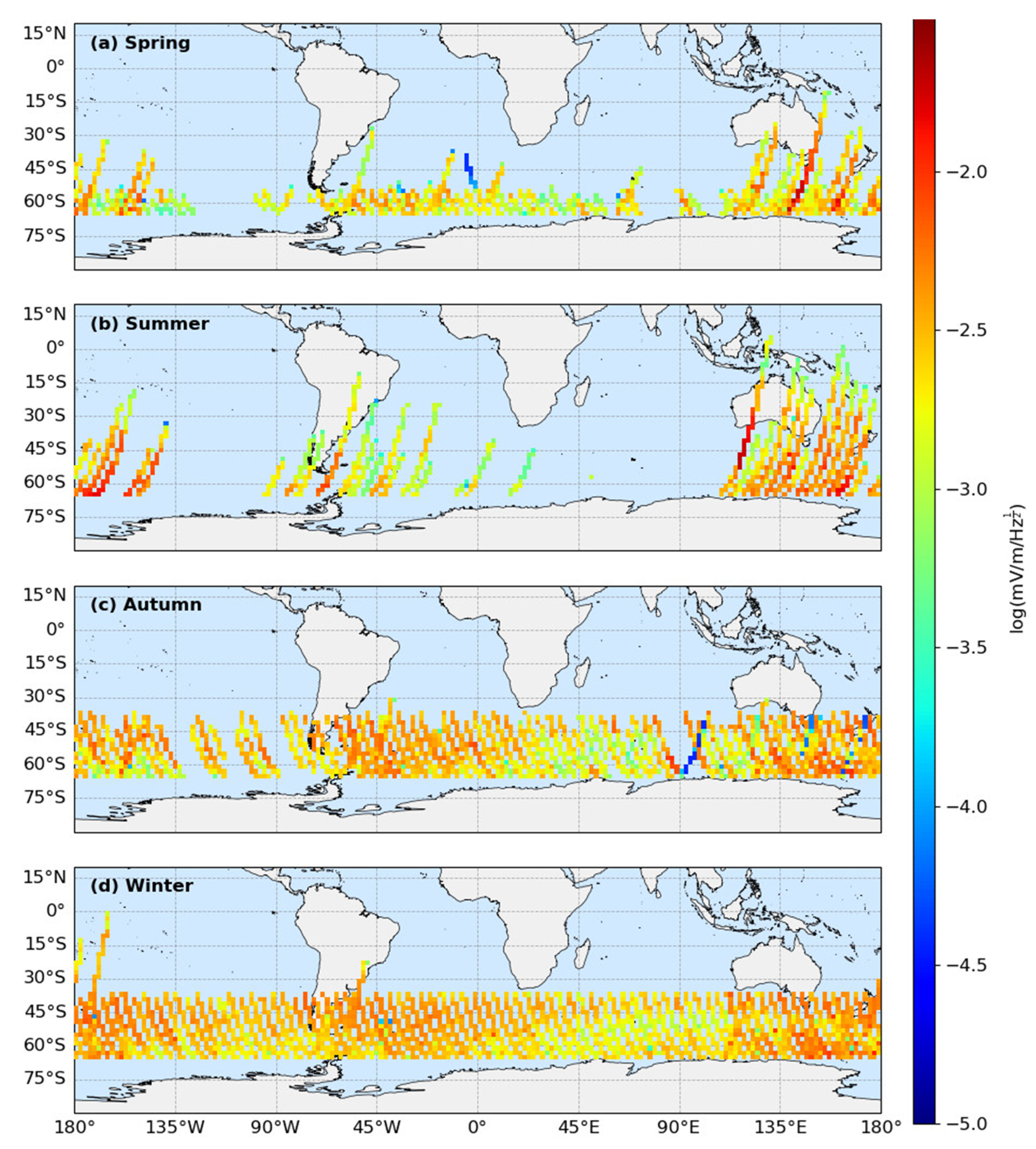
To better characterize the power spectral density (PSD) variations in parallel stacked structure signals, we divided the signal regions into 2° × 2° grid cells. For each cell, we averaged the annually recorded PSD data and applied logarithmic transformation. The results are presented in Figure 7, showing the seasonal distributions of parallel stacked structure signal PSD during spring (March–May), summer (June–August), autumn (September–November), and winter (December–February).
In spring, the parallel stacked structure signals are primarily distributed in the mid- to high-latitude regions of the Southern Hemisphere (between 55° S and 65° S). Scattered signal enhancements are also observed in lower latitudes of the Southern Hemisphere. Longitudinally, the signals exhibit a relatively concentrated distribution, mainly within two longitudinal sectors: one spanning from 130° W to 115° E (crossing the 180° meridian), and another from 100° W to 70° E (crossing the 0° meridian). Overall, the spatial extent of the signals remains limited. In summer, the signal distribution undergoes further changes. The signals weaken in the high-latitude Southern Hemisphere and shift toward lower latitudes, exhibiting a more scattered pattern. In the Northern Hemisphere, only localized enhancements are detected, and the overall signal intensity is significantly lower than that in the Southern Hemisphere. Longitudinally, the signals remain concentrated within two sectors: from 140° W to 180° to 110° E, and from 100° W to 20° W. Compared to spring, the latitudinal extent of the signal regions expands toward lower latitudes, while the longitudinal coverage becomes narrower. During autumn, the parallel stacked structure signals in the mid- to high-latitude regions of the Southern Hemisphere intensify again, with the distribution expanding mainly between 40° S and 65° S. The PSD signals are more uniformly distributed, and the longitudinal extent almost covers all longitudes, indicating a significant expansion compared to summer. In contrast to spring and summer, the signal distribution in autumn is more spatially continuous, and the signal strength is moderately enhanced. Winter is the season with the most prominent signals. Strong enhancements are observed in the high-latitude regions of the Southern Hemisphere, with PSD values generally higher than in other seasons. The signal regions are nearly uninterrupted across all longitudes. Compared to autumn, the winter signals are more intense and concentrated, marking the most active phase of signal occurrence.
Analysis of the parallel stacked structure signal PSD across four seasons reveals distinct seasonal variations. The signals are strongest and most extensive in Southern Hemisphere high-latitude regions during winter and autumn. In contrast, spring shows a broader but less intense distribution, while summer is characterized by a weakening and latitudinal shift in signals toward lower latitudes in the Southern Hemisphere. Notably, Northern Hemisphere low-latitude signals remain consistently weak throughout all seasons.

4. Influence of Geomagnetic and Solar Activity

Analysis of the parallel stacked structure signal PSD across four seasons reveals distinct seasonal variations. The signals predominantly concentrate in Southern Hemisphere high-latitude regions during winter and autumn. In contrast, spring exhibits expanded spatial coverage, while summer demonstrates enhanced signal activity in Southern Hemisphere low-latitude regions. Notably, Northern Hemisphere low-latitude signals remain consistently weak throughout all seasons.
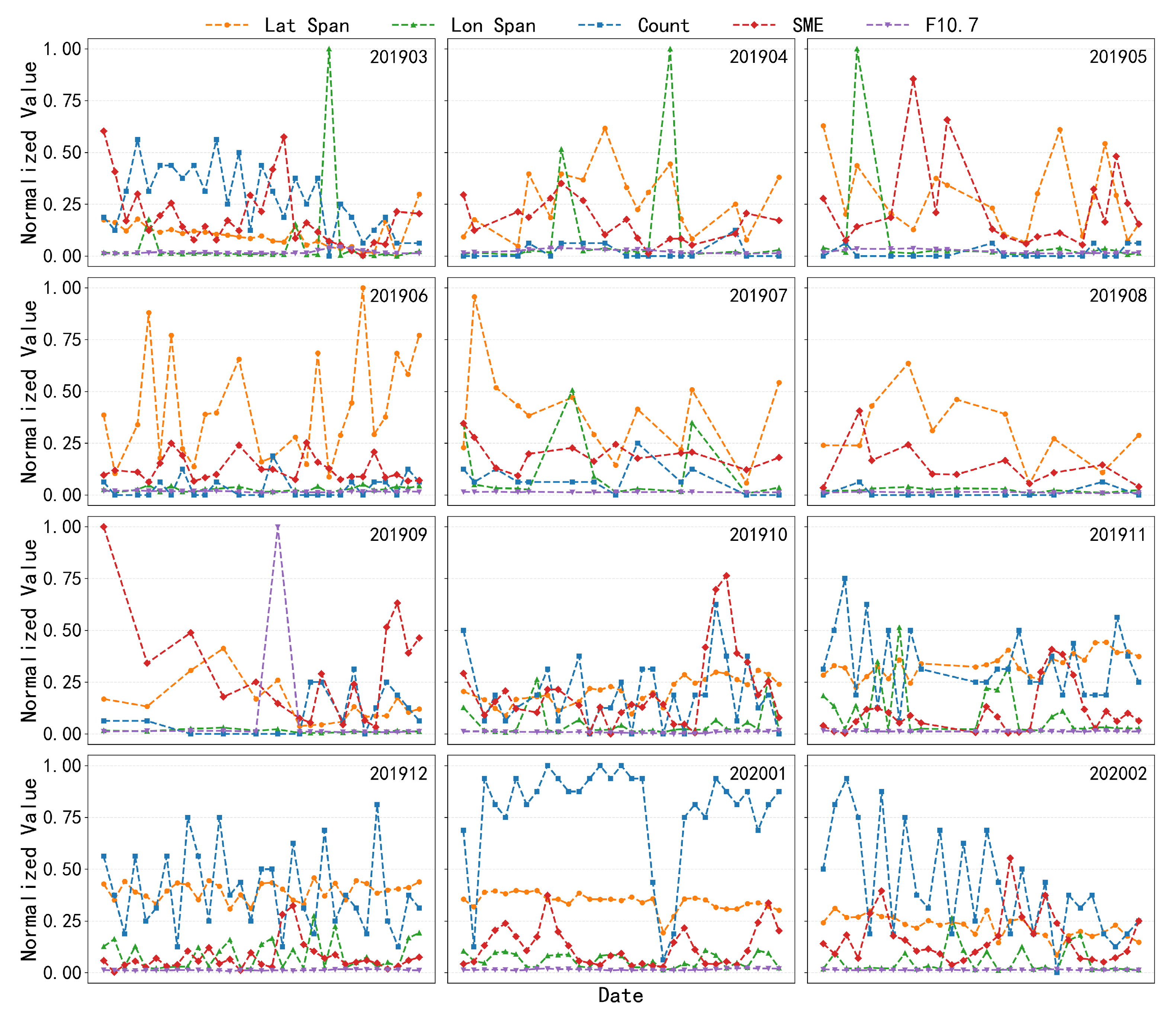
To further investigate the formation mechanisms of parallel stacked structure signals, we conducted statistical analyses of daily signal occurrence counts (Count), latitudinal span (Lat Span), and longitudinal span (Lon Span) during the study period. These parameters were compared with contemporaneous geomagnetic activity (SME index) and solar activity (F10.7 solar radio flux) indices. The SME index was obtained from SuperMAG [34] (https://supermag.jhuapl.edu/ (accessed on 1 July 2025)), a global geomagnetic field monitoring network, while F10.7 data were sourced from the Canadian Space Weather Forecast Centre (https://www.spaceweather.gc.ca/ (accessed on 1 July 2025)). All parameters were normalized by dividing daily averages by their annual maximum absolute values to facilitate comparative trend analysis [35], with monthly characteristics presented in Figure 8.
Results demonstrate generally weak correlation between signal occurrence and SME index. Most months lacked synchronous variations—for instance, November 2019 and December–January showed high signal counts despite stable SME fluctuations. Even October’s pronounced SME increase elicited only a modest or limited increase in global signal counts, suggesting magnetospheric disturbances likely play a secondary “modulatory” role rather than being the primary driver. This interpretation is reinforced by June-August 2019 observations, where elevated SME activity coincided with low signal occurrence, further negating a simple linear relationship.
Spatial extension metrics (Lat Span/Lon Span) similarly showed no stable correspondence with SME or F10.7 indices. While June-July maintained extended latitudinal spans, both signal counts and longitudinal coverage remained low. September–October witnessed repeated latitudinal expansions despite minimal F10.7 variations, even during concurrent SME enhancements.
The normalized F10.7 index exhibited relatively flat trends throughout, displaying no consistent relationship with signal occurrence or spatial scales. Given its inherent diurnal stability and limited variability, these results imply either indirect solar influence or the necessity of incorporating additional solar activity indicators for comprehensive analysis.

5. Discussion

Through systematic analysis of VLF-band electric field observations from CSES-01, we demonstrate that the Parallel Stacked Structure Signal exhibits distinct spatiotemporal patterns. These patterns not only reflect the complex variations in the space electromagnetic environment but also provide an important foundation for understanding the generation mechanisms of electromagnetic anomalies.
In terms of spatial distribution, the concentration of parallel stacked structure signals in the mid- to high-latitude regions of the Southern Hemisphere (between 40° S and 65° S) is a noteworthy phenomenon. Temporally, the signals show pronounced seasonal variation and day–night asymmetry, with a significantly higher occurrence frequency on the nightside (ascending orbit) compared to the dayside (descending orbit). This may be related to the lower background electron density in the nightside ionosphere, where weak electromagnetic disturbances are more easily detected. Regarding seasonal variation, the occurrence frequency of signals is higher in winter and autumn and lowest in summer. This trend resembles the seasonal pattern of geomagnetic activity. Moreover, near the equinoxes (March and November), a secondary peak in signal frequency is often observed, which aligns with previous findings that geomagnetic activity tends to be stronger in the Southern Hemisphere during winter and is enhanced near equinoctial seasons [36,37].
A comparative analysis between the signal characteristics and the geomagnetic activity index (SME) reveals a certain degree of correlation during specific periods. For example, in March and November, increases in the SME index generally coincide with higher signal occurrence frequencies, suggesting that magnetospheric disturbances may contribute to the triggering or intensification of these signal structures under certain conditions. However, this correlation is not consistently observed. Further analysis of the variations in latitudinal and longitudinal extent indicates that the spatial distribution of the signal structures also shows only limited correspondence with SME values, implying that magnetospheric disturbances are not the sole determining factor in signal generation. In contrast, the solar activity index (F10.7) exhibits virtually no correlation with the temporal evolution of the parallel stacked structure signals. The F10.7 index remains relatively stable throughout the year and does not show significant variations corresponding to anomalous signal activity.
While geomagnetic activity may provide external disturbance conditions for the formation of parallel stacked structure signals, their generation still requires specific background ionospheric conditions, such as enhanced plasma instabilities or localized electric field perturbations. Solar activity likely plays an indirect, modulatory role in this process. The formation mechanism of these signals probably results from the coupling between external disturbances and internal conditions, exhibiting significant regional and temporal variability.
It should be noted that this study has several limitations. First, due to satellite orbital constraints, the lack of high-latitude (>65°) data may affect a comprehensive understanding of polar region signal activity. Second, a deeper interpretation of the signal generation mechanism requires additional numerical simulations and theoretical analyses to fully elucidate the observed characteristics.
In summary, the occurrence of parallel stacked structure signals likely stems from the combined effects of multiple space physics processes. Their unique spatiotemporal distribution patterns not only reflect the complex variations in Earth’s space environment but also provide new observational perspectives for studying magnetosphere-ionosphere coupling processes. These findings hold significant scientific value and demonstrate potential applications in space weather monitoring and seismic precursor identification.

6. Conclusions

Based on a systematic analysis of VLF-band electric field data from CSES-01 covering March 2019 to February 2020, the following main conclusions are drawn:
(1)
Among 10,361 valid half-orbit datasets, 1465 images (14.14%) exhibited parallel stacked structure signals. These signals occurred predominantly during ascending (nightside) orbits (86.4%), indicating a clear day–night asymmetry.
(2)
Spatially, the signals were concentrated in the mid- to high-latitude regions of the Southern Hemisphere (40°S–65°S), mainly over the southern tip of South America, the South Atlantic and Indian Oceans, and the southern waters near Australia.
(3)
The signals showed pronounced seasonal variation, with the highest frequency in winter (December–February) and autumn (September–November), and the lowest in summer (June–August), consistent to some extent with seasonal geomagnetic activity patterns.
(4)
Temporal comparisons with geophysical indices revealed partial correlation between signal occurrence and the SME index in specific months (e.g., March and November), while the F10.7 solar activity index showed no significant relationship with either the frequency or spatial distribution of the signals.

Author Contributions

Conceptualization and methodology, Z.L.; algorithm implementation, B.H.; data analysis and conclusion, J.H.; software and investigation, Y.Z.; visualization, K.Z.; project administration, K.P.; formal analysis, W.L. All authors have read and agreed to the published version of the manuscript.

Funding

This research was funded by the Graduate Science and Technology Innovation Program of China Institute of Disaster Prevention (No. ZY20250333), the National Key R&D Program of China (International Science and Technology Cooperation Projects) (No. 2023YFE17300), and the DRAGON-6 international cooperation project (No. 95407).

Institutional Review Board Statement

Not applicable.

Informed Consent Statement

Not applicable.

Data Availability Statement

Publicly available datasets were analyzed in this study. The CSES Satellite electric field data can be found here: https://www.leos.ac.cn/ (accessed on 1 July 2025).

Acknowledgments

The authors gratefully acknowledge the China National Space Administration and China Earthquake Administration for providing CSES-01 satellite data (available at https://www.leos.ac.cn), and appreciate the data maintenance support from the National Institute of Natural Hazards, Ministry of Emergency Management of China.

Conflicts of Interest

The authors declare no conflicts of interest.

References

  1. Pulinets, S.; Ouzounov, D. Lithosphere–Atmosphere–Ionosphere Coupling (Laic) Model—An Unified Concept for Earthquake Precursors Validation. J. Asian Earth Sci. 2011, 41, 371–382. [Google Scholar] [CrossRef]
  2. De Santis, A.; Marchetti, D.; Pavón-Carrasco, F.J.; Cianchini, G.; Perrone, L.; Abbattista, C.; Alfonsi, L.; Amoruso, L.; Campuzano, S.A.; Carbone, M.; et al. Precursory Worldwide Signatures of Earthquake Occurrences on Swarm Satellite Data. Sci. Rep. 2019, 9, 20287. [Google Scholar] [CrossRef] [PubMed]
  3. Zhao, S.; Chen, Z.; Shen, X.; Zeren, Z. Investigation of Vlf Transmitter Signals in the Ionosphere by Zh-1 Observations and Full-Wave Simulation. J. Geophys. Res. Space Phys. 2019, 124, 4697–4709. [Google Scholar] [CrossRef]
  4. Ni, B.; Hua, M.; Gu, X.; Fu, S.; Xiang, Z.; Cao, X.; Ma, X. Artificial Modification of Earth’s Radiation Belts by Ground-Based Very-Low-Frequency (Vlf) Transmitters. Sci. China Earth Sci. 2022, 65, 391–413. [Google Scholar] [CrossRef]
  5. Sato, H. Power Spectra of Random Heterogeneities in the Solid Earth. Solid Earth 2019, 10, 275–292. [Google Scholar] [CrossRef]
  6. Sato, H.; Emoto, K. Propagation of a Vector Wavelet through Von Kármán-Type Random Elastic Media: Monte Carlo Simulation by Using the Spectrum Division Method. Geophys. J. Int. 2023, 234, 1655–1680. [Google Scholar] [CrossRef]
  7. Ganefianto, G.; Nakahara, H.; Nishimura, T. Scattering Strength at Active Volcanoes in Japan as Inferred from the Peak Ratio Analysis of Teleseismic P Waves. Earth Planets Space 2021, 73, 207. [Google Scholar] [CrossRef]
  8. Yang, M.; Zhang, X.; Zhong, M.; Guo, Y.; Qian, G.; Liu, J.; Yuan, C.; Li, Z.; Wang, S.; Zhai, L.; et al. Spatio–Temporal Evolution of Electric Field, Magnetic Field and Thermal Infrared Remote Sensing Associated with the 2021 Mw7.3 Maduo Earthquake in China. Atmosphere 2024, 15, 770. [Google Scholar] [CrossRef]
  9. Manglik, A.; Suresh, M.; Babu, M.D.; Pavankumar, G. Pre- and Coseismic Electromagnetic Signals of the Nepal Earthquake of 03 November 2023. Earth Planets Space 2024, 76, 173. [Google Scholar] [CrossRef]
  10. Igel, J.K.H.; Klaasen, S.; Noe, S.; Nomikou, P.; Karantzalos, K.; Fichtner, A. Challenges in Submarine Fiber-Optic Earthquake Monitoring. J. Geophys. Res. Solid Earth 2024, 129, e2024JB029556. [Google Scholar] [CrossRef]
  11. Zeren, Z.; Hu, Y.; Piersanti, M.; Shen, X.; De Santis, A.; Yan, R.; Yang, Y.; Zhao, S.; Zhang, Z.; Wang, Q. The Seismic Electromagnetic Emissions during the 2010 Mw 7.8 Northern Sumatra Earthquake Revealed by Demeter Satellite. Front. Earth Sci. 2020, 8, 572393. [Google Scholar] [CrossRef]
  12. Xia, Z.; Chen, L.; Zhima, Z.; Parrot, M. Spectral Broadening of Nwc Transmitter Signals in the Ionosphere. Geophys. Res. Lett. 2020, 47, e2020GL088103. [Google Scholar] [CrossRef]
  13. Catania, M.; Figlioli, A.; Vitale, G.; D’aLessandro, A. Seismic Noise Characterization of Broad-Band Stations in the Italian Region Using Power Spectral Density: A Frequency, Spatial and Statistical Analysis. Geophys. J. Int. 2025, 242, ggaf168. [Google Scholar] [CrossRef]
  14. Lu, C.; Zeren, Z.; Yang, D.; Sun, X.; Lü, F.; Ran, Z.; Shen, X. Lightweight Automatic Detection Model for Lightning Whistle Waves Based on Improved Yolov5. Chin. J. Space Sci. 2024, 44, 458–473. [Google Scholar] [CrossRef]
  15. Yu, Y.; Feng, J.; Yuan, J.; Wang, Q.; Yang, D.; Zeren, Z.; Shen, X. Diffusion State Recognition Algorithm for Lightning Whistler Waves of China Seismo-Electromagnetic Satellite. Prog. Geophys. 2022, 37, 541–550. [Google Scholar]
  16. Yuan, J.; Wang, Q.; Yang, D.; Liu, Q.; Zhima, Z.; Shen, X. Automatic Recognition Algorithm of Lightning Whistlers Observed by the Search Coil Magnetometer Onboard the Zhangheng-1 Satellite. Chin. J. Geophys. 2021, 64, 3905–3924. [Google Scholar]
  17. Yuan, J.; Wang, Z.; Zeren, Z.; Wang, Z.; Feng, J.; Shen, X.; Wu, P.; Wang, Q.; Yang, D.; Wang, T. Automatic Recognition Algorithm of the Lightning Whistler Waves by Using Speech Processing Technology. Chin. J. Geophys. 2022, 65, 882–897. [Google Scholar]
  18. Han, Y.; Liu, Q.; Huang, J.; Li, Z.; Yan, R.; Yuan, J.; Shen, X.; Xing, L.; Pang, G. Automatic Extraction of Vlf Constant-Frequency Electromagnetic Wave Frequency Based on an Improved Vgg16-Unet. Radio Sci. 2024, 59, 1–14. [Google Scholar] [CrossRef]
  19. Ran, Z.; Lu, C.; Hu, Y.; Yang, D.; Sun, X.; Zhima, Z. Automatic Detection of Quasi-Periodic Emissions from Satellite Observations by Using Detr Method. Remote Sens. 2024, 16, 2850. [Google Scholar] [CrossRef]
  20. Michel, P.; Nĕmec, F.; Santolík, O. Statistical Analysis of Vlf Radio Emissions Triggered by Power Line Harmonic Radiation and Observed by the Low-Altitude Satellite Demeter. J. Geophys. Res. Space Phys. 2014, 119, 5744–5754. [Google Scholar]
  21. Parrot, M.; Němec, F.; Cohen, M.B.; Gołkowski, M. On the Use of Elf/Vlf Emissions Triggered by Haarp to Simulate Plhr and to Study Associated Mlr Events. Earth Planets Space 2022, 74, 4. [Google Scholar] [CrossRef]
  22. Wu, J.; Wang, Z.; Zhang, J.; Yue, C.; Xie, L. Conjugate Observations of Power Line Harmonic Radiation Onboard Demeter. Earth Planets Space 2023, 75, 66. [Google Scholar] [CrossRef]
  23. Shen, X.; Zhang, X.; Yuan, S.; Wang, L.; Cao, J.; Huang, J.; Zhu, X.; Piergiorgio, P.; Dai, J. The State-of-the-Art of the China Seismo-Electromagnetic Satellite Mission. Sci. China Technol. Sci. 2018, 61, 634–642. [Google Scholar] [CrossRef]
  24. Shen, X.; Zong, Q.-G.; Zhang, X. Introduction to Special Section on the China Seismo-Electromagnetic Satellite and Initial Results. Earth Planet. Phys. 2018, 2, 439–443. [Google Scholar] [CrossRef]
  25. Pignalberi, A.; Pezzopane, M.; Coco, I.; Piersanti, M.; Giannattasio, F.; De Michelis, P.; Tozzi, R.; Consolini, G. Inter-Calibration and Statistical Validation of Topside Ionosphere Electron Density Observations Made by Cses-01 Mission. Remote Sens. 2022, 14, 4679. [Google Scholar] [CrossRef]
  26. Spogli, L.; Sabbagh, D.; Regi, M.; Cesaroni, C.; Perrone, L.; Alfonsi, L.; Di Mauro, D.; Lepidi, S.; Campuzano, S.A.; Marchetti, D.; et al. Ionospheric Response over Brazil to the August 2018 Geomagnetic Storm as Probed by Cses-01 and Swarm Satellites and by Local Ground-Based Observations. J. Geophys. Res. Space Phys. 2021, 126, e2020JA028368. [Google Scholar]
  27. Zhou, B.; Yang, Y.; Zhang, Y.; Gou, X.; Cheng, B.; Wang, J.; Li, L. Magnetic Field Data Processing Methods of the China Seismo-Electromagnetic Satellite. Earth Planet. Phys. 2018, 2, 455–461. [Google Scholar] [CrossRef]
  28. Conti, L.; Picozza, P.; Sotgiu, A. A Critical Review of Ground Based Observations of Earthquake Precursors. Front. Earth Sci. 2021, 9, 676766. [Google Scholar] [CrossRef]
  29. Huang, J.; Lei, J.; Li, S.; Zeren, Z.; Li, C.; Zhu, X.; Yu, W. The Electric Field Detector (Efd) Onboard the Zh-1 Satellite and First Observational Results. Earth Planet. Phys. 2018, 2, 469–478. [Google Scholar] [CrossRef]
  30. Diego, P.; Bertello, I.; Candidi, M.; Mura, A.; Vannaroni, G.; Badoni, D. Plasma and Fields Evaluation at the Chinese Seismo-Electromagnetic Satellite for Electric Field Detector Measurements. IEEE Access 2017, 5, 3824–3833. [Google Scholar] [CrossRef]
  31. Diego, P.; Bertello, I.; Candidi, M.; Mura, A.; Coco, I.; Vannaroni, G.; Ubertini, P.; Badoni, D. Electric Field Computation Analysis for the Electric Field Detector (Efd) on Board the China Seismic-Electromagnetic Satellite (Cses). Adv. Space Res. 2017, 60, 2206–2216. [Google Scholar] [CrossRef]
  32. Li, X.; Li, Z.; Huang, J.; Yang, X.; Li, W.; Huo, Y.; Song, J.; Yang, R. Detection Method and Application of Nuclear-Shaped Anomaly Areas in Spatial Electric Field Power Spectrum Images. Remote Sens. 2024, 16, 726. [Google Scholar] [CrossRef]
  33. Alfonsi, L.; Ambroglini, F.; Ambrosi, G.; Ammendola, R.; Assante, D.; Badoni, D.; Belyaev, V.A.; Burger, W.J.; Cafagna, A.; Cipollone, P.; et al. The Hepd Particle Detector and the Efd Electric Field Detector for the Cses Satellite. Radiat. Phys. Chem. 2017, 137, 187–192. [Google Scholar] [CrossRef]
  34. Gjerloev, J.W. The Supermag Data Processing Technique. J. Geophys. Res. Space Phys. 2012, 117. [Google Scholar] [CrossRef]
  35. Luo, X.; Kang, G.; Gao, G.; Sun, Y. Wavelet Analysis of Geomagnetic Activity Index and Solar Activity. J. Yunnan Univ. Nat. Sci. Ed. 2014, 36, 524–529. [Google Scholar]
  36. Li, B.; Cui, R.; Weng, L. Seasonal Variations of Global Ionospheric N M F 2 and H M F 2. Chin. J. Space Sci. 2024, 44, 60–70. [Google Scholar] [CrossRef]
  37. Yong, J.; Peng, J.; Zhao, K.; Ding, L.; Rushi, L.A.N. The Geomagnetic Activity and Seasonal Variations of Upward Ions in the Polar Ionosphere: A Statistical Analysis. Trans. Atmos. Sci 2017, 40, 132–137. [Google Scholar]
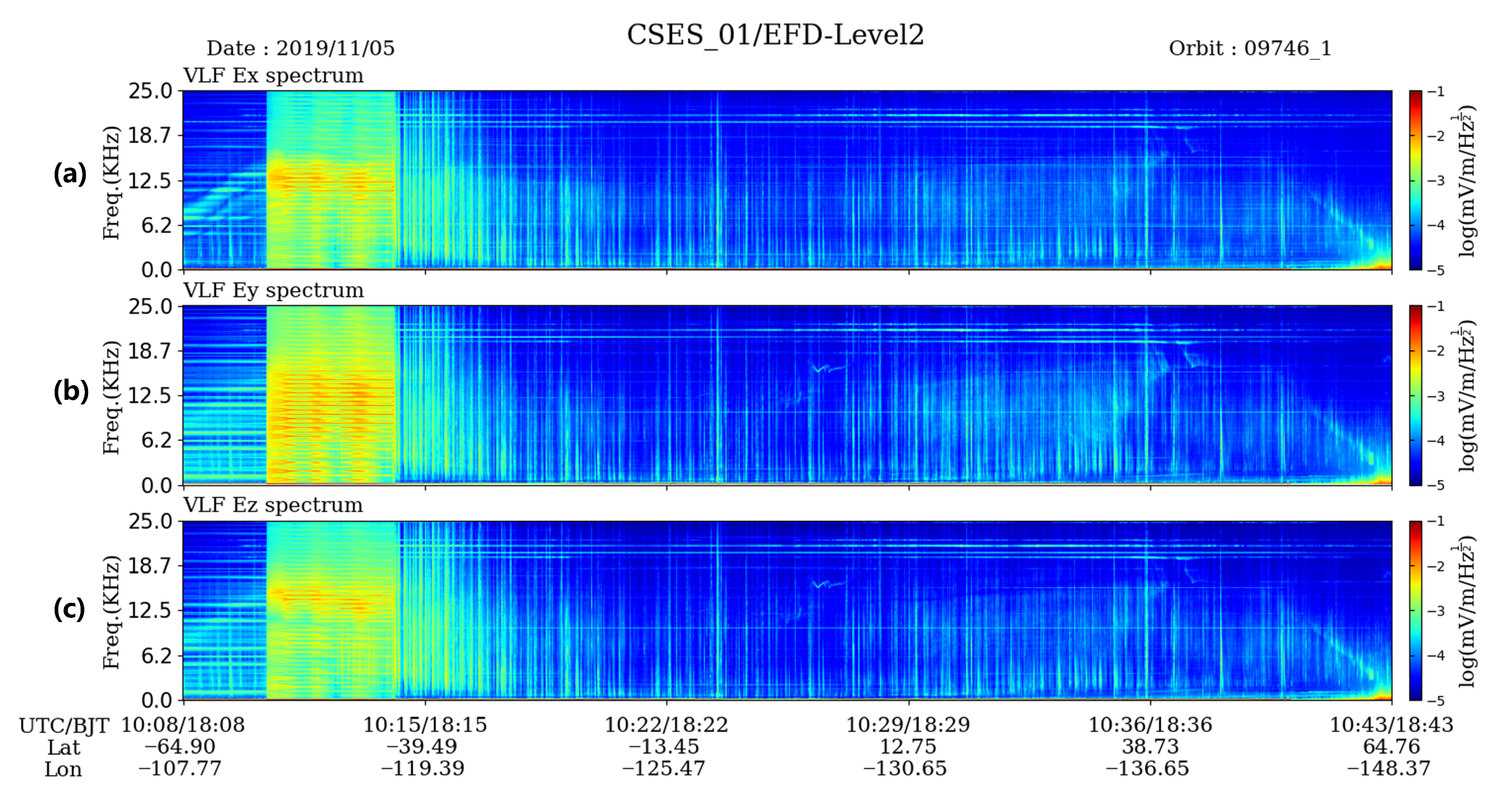
Figure 1. VLF spatial electric field power spectral density map recorded from 10:08 to 10:43 UTC on 5 November 2019. (a) X component; (b) Y component; (c) Z component.
Atmosphere 16 01198 g001
Figure 2. VLF spatial electric field power spectral density map recorded from 10:08 to 10:43 UTC on 5 November 2019. (a) ULF; (b) ELF; (c) VLF; (d) HF.
Atmosphere 16 01198 g002
Figure 3. Example of parallel stacked structure signal types. (a) Layered structure; (b) Triangular extended layered structure; (c) Rope-like structure; (d) Thick-layered structure; (e) Composite parallel stacked structure.
Atmosphere 16 01198 g003
Figure 4. Spatial distribution of satellite orbits with parallel stacked structure signals.
Atmosphere 16 01198 g004
Figure 5. Monthly statistics of parallel stacked structure signals.
Atmosphere 16 01198 g005
Figure 6. The latitude distribution map of the starting and ending points of the parallel stacked structure signal. (a) Geographical latitude distribution of the starting and ending points of ascending orbit; (b) Distribution of geomagnetic latitude at the starting and ending points of ascending orbit; (c) Geographical latitude distribution of the starting and ending points of descent; (d) Distribution of geomagnetic latitude at the starting and ending points of descending orbit.
Atmosphere 16 01198 g006
Figure 7. Four season variation in PSD for parallel stacked structure signals. (a) Spring; (b) Summer; (c) Autumn; (d) Winter.
Atmosphere 16 01198 g007
Figure 8. Variations in the latitudinal and longitudinal extent, occurrence frequency, and normalized values of the SME index and F10.7 index of the parallel stacked structure signals during the study period.
Atmosphere 16 01198 g008
Table 1. Classification of Signal Morphology Features of Parallel Stacked Structure Signal.
TypeCharacteristicExample
Layered structureThis type of image has multiple regular parallel high-energy stripes, presenting a highly ordered layered structure.Figure 3a
Triangular extended layered structureThis type of image maintains the parallel structure of the subject while significantly triangulating the starting and ending points of its layered structure.Figure 3b
Rope like structureThe parallel overlapping stripes of this type of image present a rope like shape with a certain degree of curvature, and the rope like regions often have higher energy compared to other layered regions.Figure 3c
Thick layered structureThe layered structure of this type of image has thick stripes, but this phenomenon is not common in statistics.Figure 3d
Composite parallel stacked structureThis structure combines four other morphological features, with regular parallel stripes as the main body, and features such as overlapping triangulated extensions or wide layer stripes appearing locally.Figure 3e
Disclaimer/Publisher’s Note: The statements, opinions and data contained in all publications are solely those of the individual author(s) and contributor(s) and not of MDPI and/or the editor(s). MDPI and/or the editor(s) disclaim responsibility for any injury to people or property resulting from any ideas, methods, instructions or products referred to in the content.