Article

The Effect of Anthropogenic Heat and Moisture on Local Weather at Industrial Heat Islands: A Numerical Experiment

by
Parthasarathi Mishra
1,
Srinivasa Ramanujam Kannan
1 and
Chandrasekar Radhakrishnan
2,*
1
School of Mechanical Sciences, IIT Bhubaneswar, Bhubaneswar 752050, Odisha, India
2
Cooperative Institute for Research in the Atmosphere (CIRA), Colorado State University, Fort Collins, CO 80523, USA
*
Author to whom correspondence should be addressed.
Atmosphere 2022, 13(2), 357; https://doi.org/10.3390/atmos13020357
Submission received: 27 January 2022 / Revised: 14 February 2022 / Accepted: 17 February 2022 / Published: 20 February 2022

Abstract

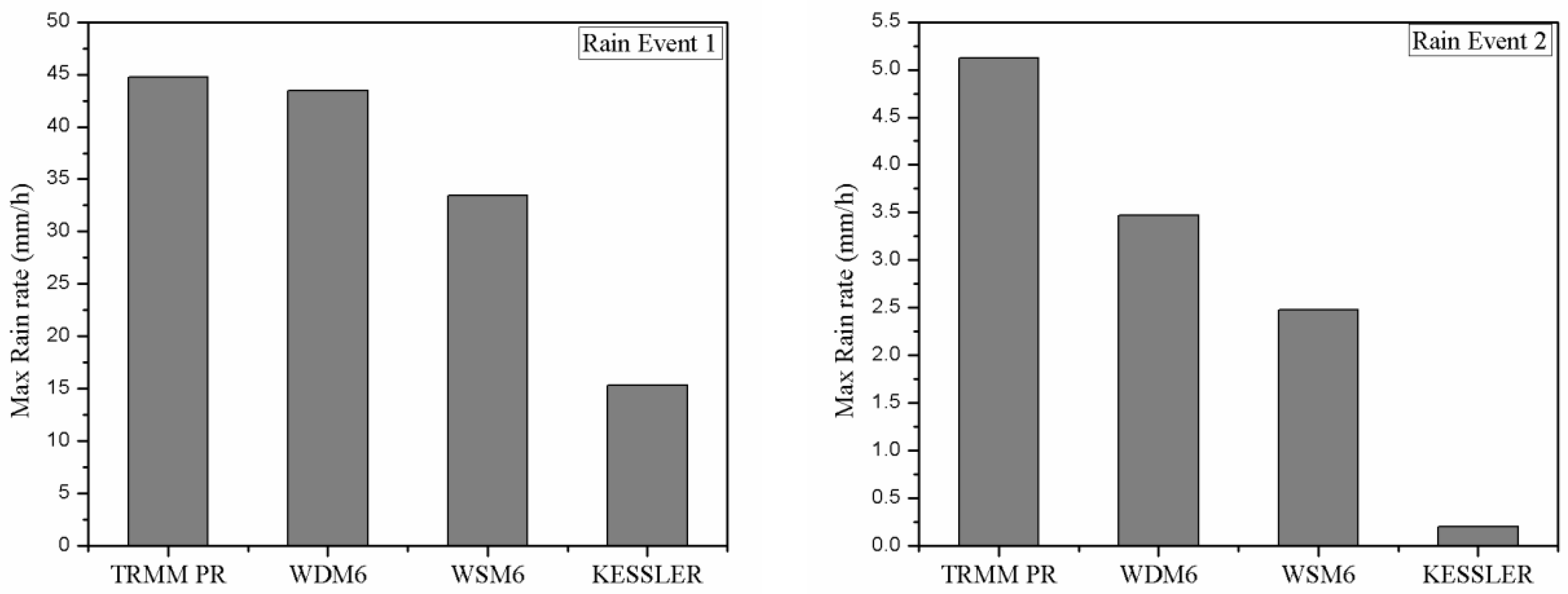
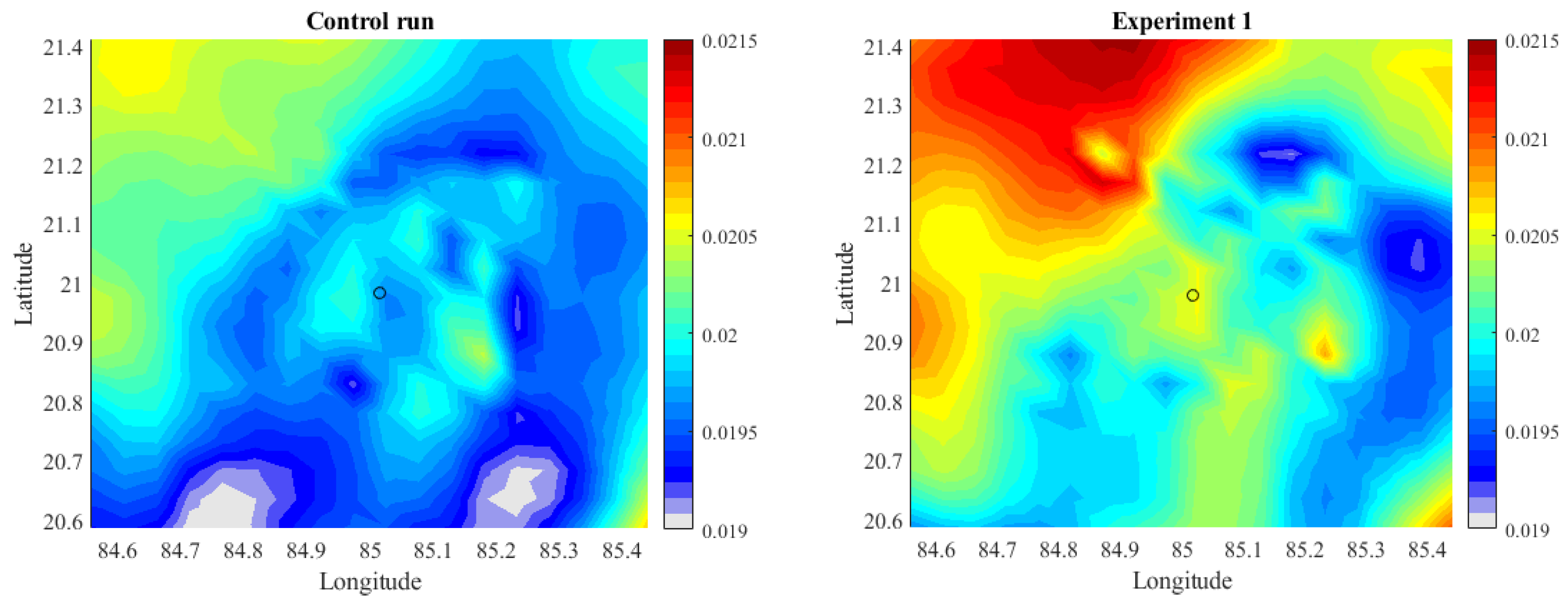
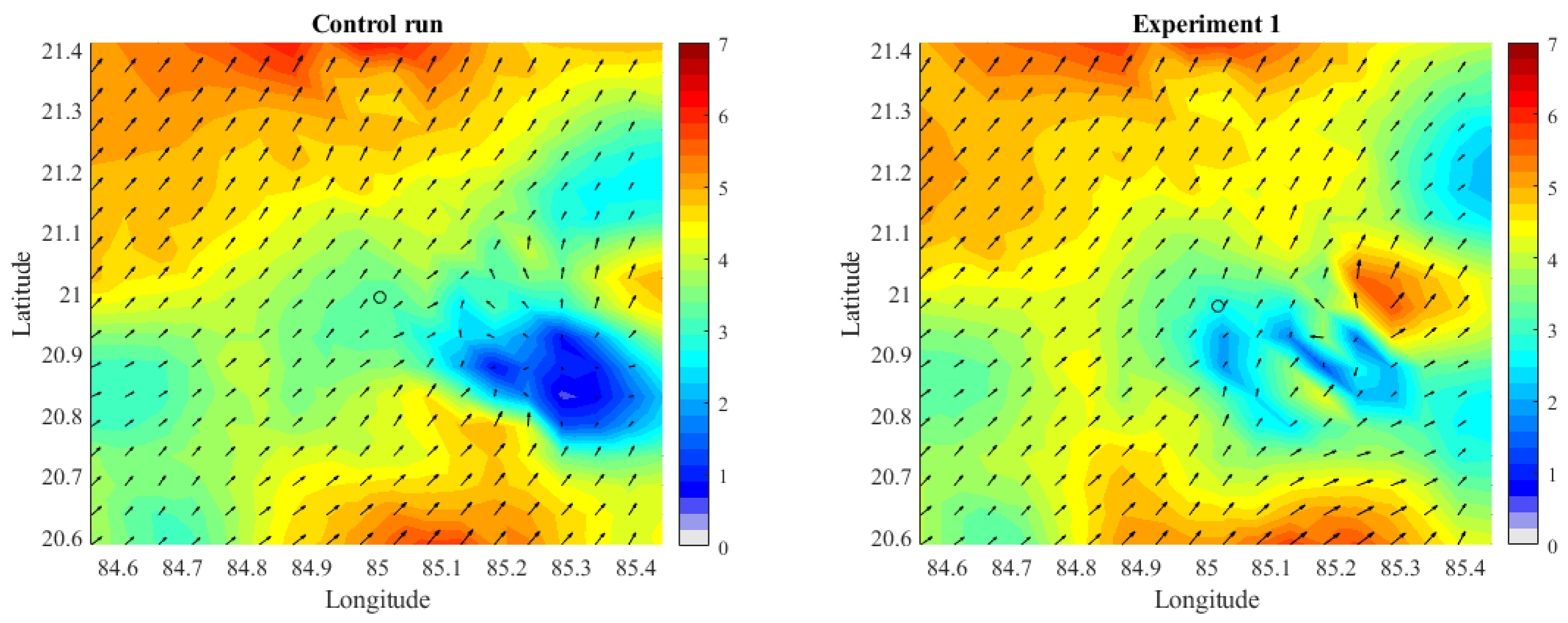
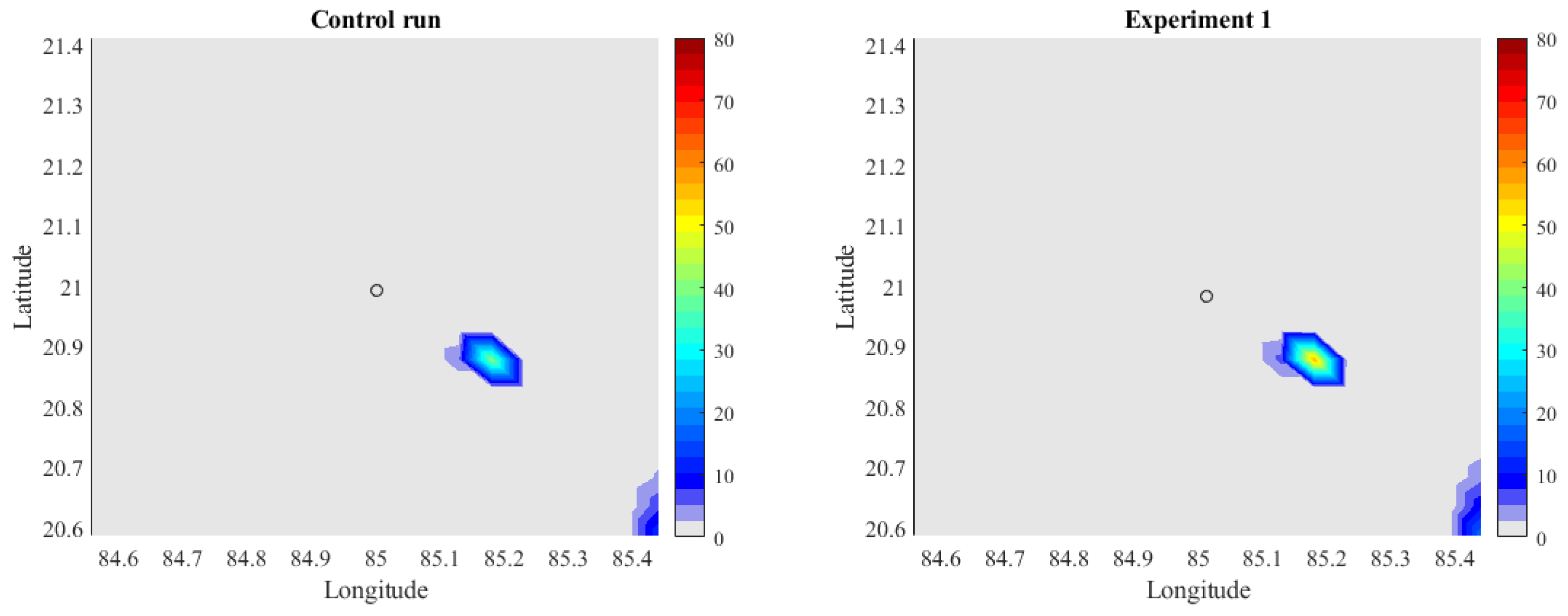
The current study addresses the role of heat and moisture emitted from anthropogenic sources on the local weather with the aid of numerical weather prediction (NWP). The heat and moisture emitted by industries to the atmosphere are considered main sources in this study. In order to understand the effect of heat and moisture on local weather, the study is conducted to capture the impact of heat with no moisture change. The results are compared against a control run case without perturbation and also against the case where both heat and moisture are perturbed with temperature as a single parameter. The Angul district in Odisha that houses over 4000 industries is considered our study region. The numerical simulations are performed using the mesoscale Weather Research and Forecasting (WRF) model for two rain events, namely a light rain case and a heavy rain case, with different physics options available in the WRF model. The WRF simulated maximum rainfall rate using various microphysics schemes are compared with the Tropical rainfall measuring mission (TRMM) observations for validation purposes. Our study shows that the WDM6 double moment microphysics scheme is better in capturing rain events. The TRMM-validated WRF simulation is considered a reference state of the atmosphere against which comparisons for the perturbed case are made. The surface temperature is perturbed by increasing it by 10 K near the industrial site and exponentially decreasing it with height up to the atmospheric boundary layer. A numerical experiment represents heating without addition of moisture by recalculating the relative humidity (RH) corresponding to the perturbed temperature. The perturbed temperature affects sensible heat (SH) and latent heat (LH) parameters in the numerical experiment. From the results of the numerical investigation, it is found that the near-surface rainfall rate increases locally in a reasonable manner with the addition of sensible heat to the atmosphere. A comparison against the case where moisture is added shows that enhanced rainfall is more sensitive to sensible and latent heat than sensible heat alone.
Keywords: anthropogenic heat; moisture; rain rate; microphysics; WRF; TRMM anthropogenic heat; moisture; rain rate; microphysics; WRF; TRMM