Review

Ubiquitination, Biotech Startups, and the Future of TRIM Family Proteins: A TRIM-Endous Opportunity

1
PhD Programme in Molecular Biomedicine, Department of Life Sciences, University of Trieste, Via E. Weiss 2, 34128 Trieste, Italy
2
Laboratory of Regulatory and Functional Genomics, Fondazione IRCCS Casa Sollievo della Sofferenza, Viale Cappuccini 1, 71013 San Giovanni Rotondo, Italy
3
Department of Molecular Medicine and Medical Biotechnology, University of Naples Federico II, Via S. Pansini 5, 80131 Naples, Italy
*
Author to whom correspondence should be addressed.
Cells 2021, 10(5), 1015; https://doi.org/10.3390/cells10051015
Submission received: 5 April 2021 / Revised: 20 April 2021 / Accepted: 21 April 2021 / Published: 25 April 2021
(This article belongs to the Special Issue Cellular Function of TRIM E3 Ubiquitin Ligases in Health and Disease)

Abstract

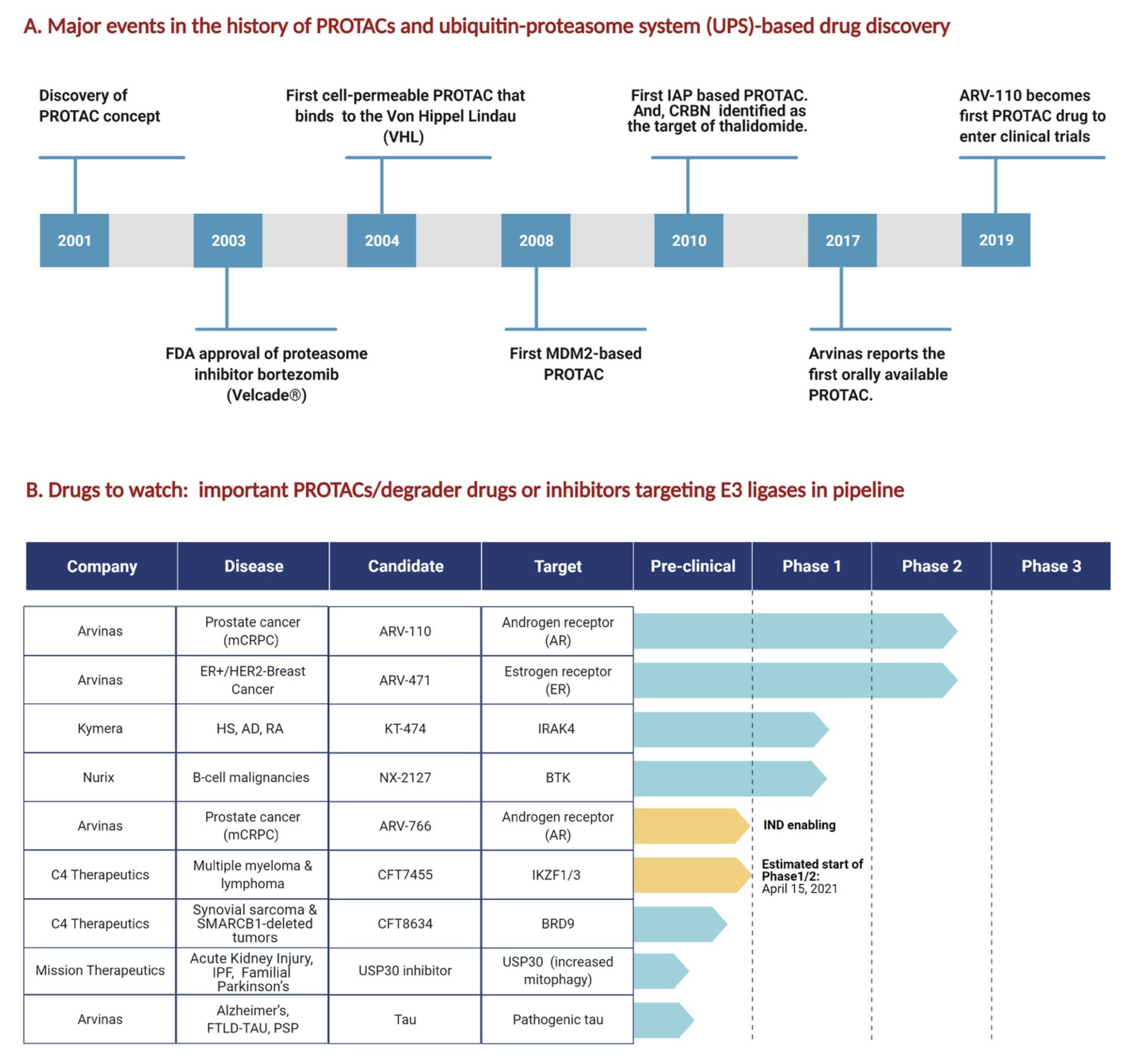
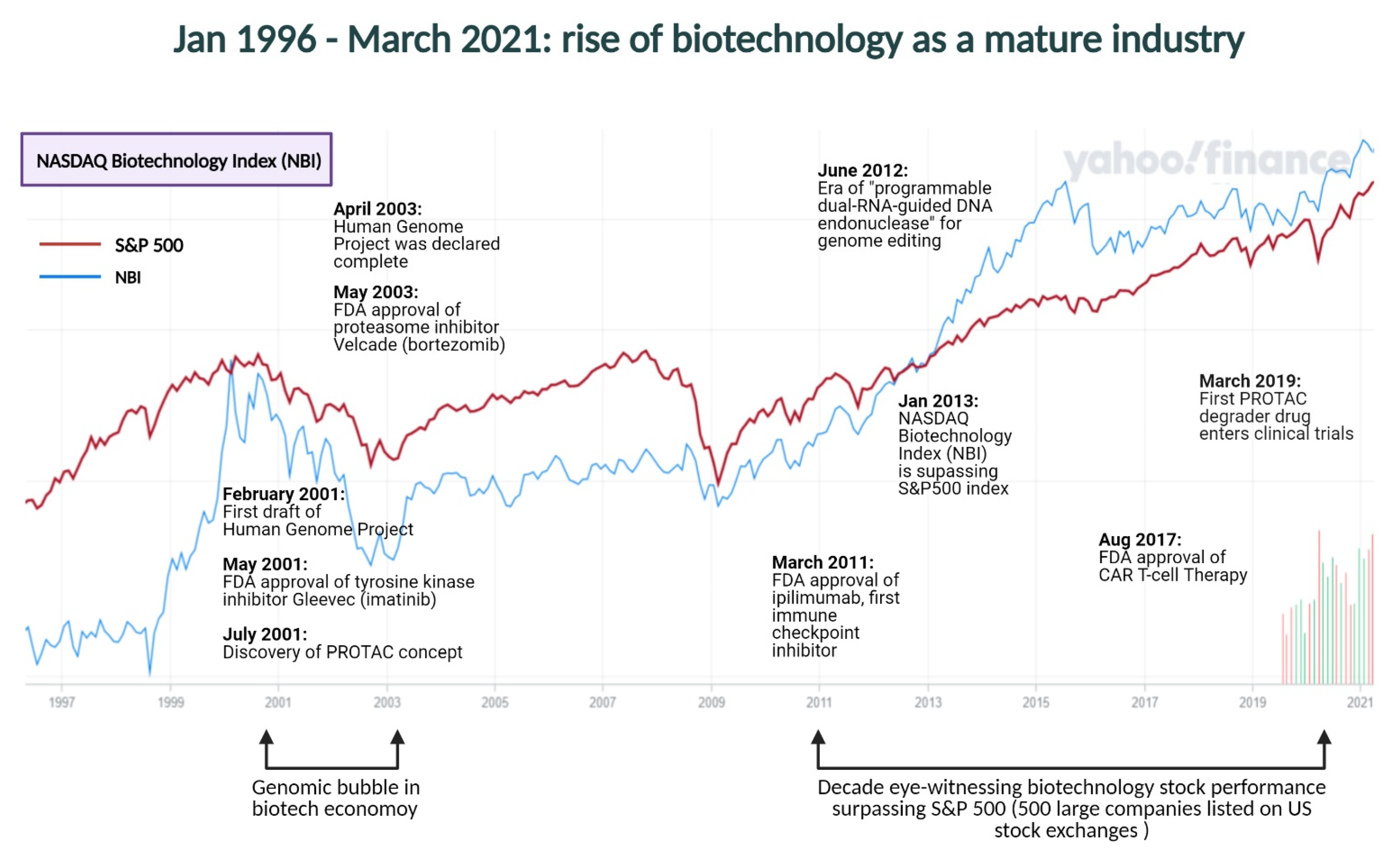
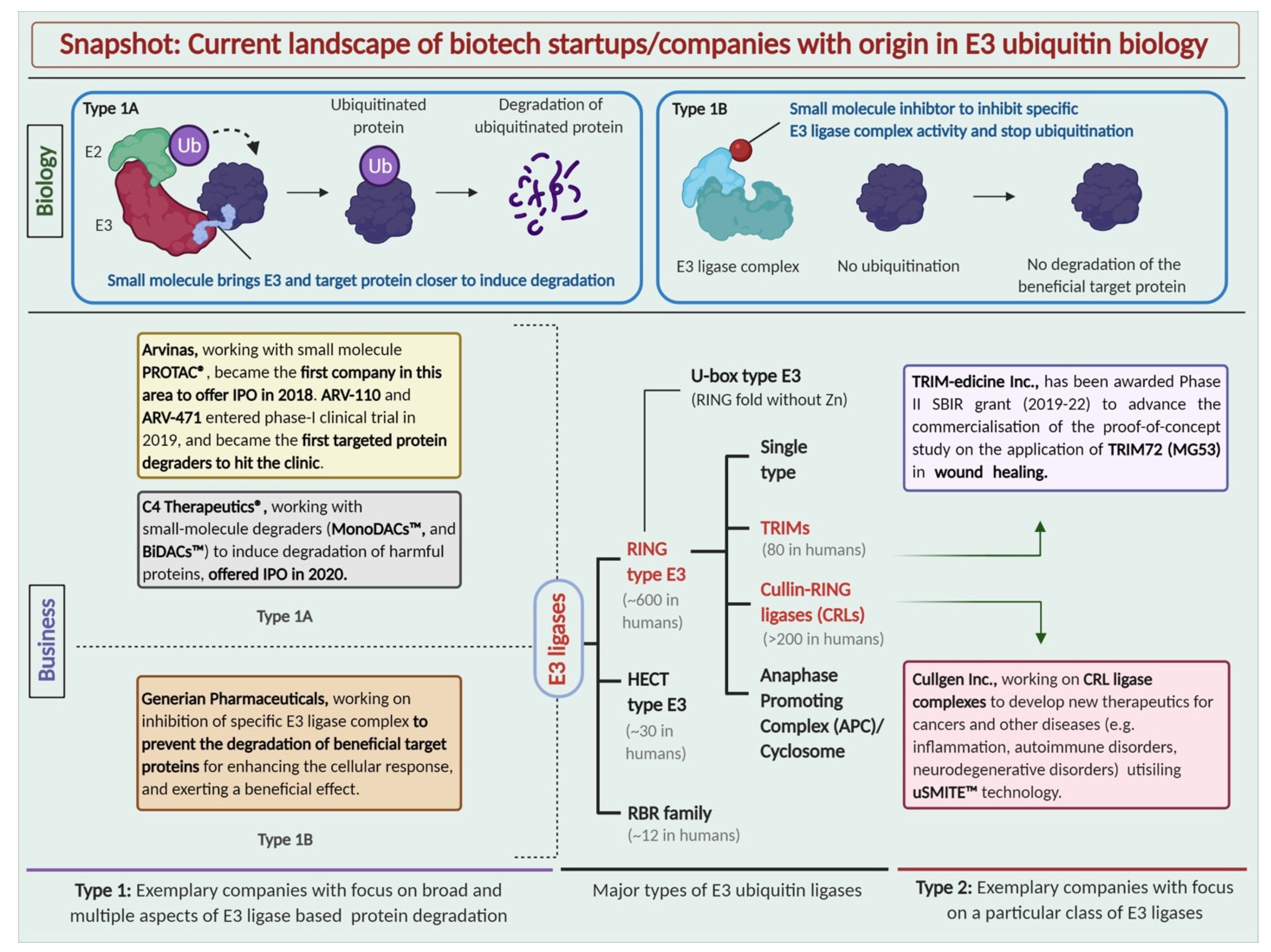
Ubiquitination is a post-translational modification that has pivotal roles in protein degradation and diversified cellular processes, and for more than two decades it has been a subject of interest in the biotech or biopharmaceutical industry. Tripartite motif (TRIM) family proteins are known to have proven E3 ubiquitin ligase activities and are involved in a multitude of cellular and physiological events and pathophysiological conditions ranging from cancers to rare genetic disorders. Although in recent years many kinds of E3 ubiquitin ligases have emerged as the preferred choices of big pharma and biotech startups in the context of protein degradation and disease biology, from a surface overview it appears that TRIM E3 ubiquitin ligases are not very well recognized yet in the realm of drug discovery. This article will review some of the blockbuster scientific discoveries and technological innovations from the world of ubiquitination and E3 ubiquitin ligases that have impacted the biopharma community, from biotech colossuses to startups, and will attempt to evaluate the future of TRIM family proteins in the province of E3 ubiquitin ligase-based drug discovery.
Keywords: ubiquitination; E3 ligases; TRIM family; startups; drug discovery ubiquitination; E3 ligases; TRIM family; startups; drug discovery