Next Article in Journal
Responses of Soil Water Conservation Capacity to Artificial Grassland Establishment Along a Restoration Chronosequence in Alpine Meadows
Previous Article in Journal
Assessing the Impact of Water Stress on Neofusicoccum parvum in Table Grapes Using Proximal Sensing Technologies
Previous Article in Special Issue
Heterologous Expression of Potato StCML19 Enhances Drought Tolerance in Transgenic Arabidopsis
 
 
Due to scheduled maintenance work on our servers, there may be short service disruptions on this website between 11:00 and 12:00 CEST on March 28th.
Article

Microtubule Dynamics Modulate Cold-Responsive Gene Expression in Brassica rapa
1
State Key Laboratory of Aridland Crop Science, Gansu Agricultural University, Lanzhou 730070, China
2
Agricultural Research Institute, Tibet Academy of Agriculture and Animal Husbandry Sciences, Lasa 850030, China
*
Authors to whom correspondence should be addressed.
Agronomy 2026, 16(7), 698; https://doi.org/10.3390/agronomy16070698
Submission received: 21 January 2026 / Revised: 11 March 2026 / Accepted: 24 March 2026 / Published: 26 March 2026

Abstract

Winter rapeseed (Brassica rapa L.) is an important crop for vegetable oil production in China. However, its productivity is frequently threatened by severe cold waves during winter. To investigate the role of the microtubule cytoskeleton in cold adaptation of winter rapeseed, a microtubule stabilizer paclitaxel (Tax) and a microtubule depolymerizer colchicine (Col) were sprayed on winter rapeseed and transgenic proBrAFP1 Arabidopsis, respectively. The mRNA levels of cold-induced genes, along with cell membrane stability, antioxidant enzyme activities, and hormone levels were assessed under cold stresses of 4 °C and −4 °C. The results showed that low temperature significantly activated the proBrAFP1 promoter activity and increased the mRNA levels of core cold signaling pathway genes, such as C-REPEAT BINDING FACTORS (CBFs), Cyclic Nucleotide-Gated Channel (CNGC), OPEN STOMATA 1 (OST1) and Inducer of CBF EXPRESSION 1 (ICE1). Notably, under low-temperature stress, exogenous application of the microtubule stabilizer Tax markedly suppressed proBrAFP1-driven reporter activity in transgenic Arabidopsis, with consistent inhibition observed across both stem and leaf tissues; meanwhile, the Tax application alleviated reactive oxygen species (ROS) accumulation and mitigated membrane damage. In contrast, under the same low-temperature stress, the Col treatment exacerbated oxidative stress, enhanced lipid peroxidation, and elevated membrane damage. Collectively, these findings establish that microtubule regulators play indispensable roles in the cold stress response of winter rapeseed. It provides new insights into the mechanism by which plant microtubule cytoskeleton regulators mediate the cold response.

1. Introduction

Winter rapeseed is the largest domestic source of vegetable oil in China [1]. However, its current self-sufficiency rate is approximately 32%, highlighting a significant gap between domestic supply and demand. Ensuring an adequate supply of edible vegetable oil is a core task of the national food security strategy [2]. In this context, increasing domestic oilseed production is crucial, and expanding winter rapeseed cultivation on winter fallow land is a key strategy to improve self-sufficiency.
Cold stress severely restricts the growth and development of winter rapeseed, especially in the northwest of China. In these regions, extremely low-temperature events occur frequently in winter, which can cause continuous low-temperature stress during the seedling stage and overwintering period, significantly reducing the yield and quality of winter rapeseed [3]. When plants are exposed to temperatures below −10 °C, it can cause cellular metabolic dysfunction and physiological injury. This is accompanied by enhanced lipid peroxidation and excessive accumulation of reactive oxygen species (ROS), such as hydrogen peroxide (H2O2) and superoxide anions (O2). Elevated ROS levels can oxidize membrane lipids and proteins, thereby disrupting membrane integrity [4]. As a result, the cell membrane becomes brittle and rigid, accompanied by a significant reduction in flexibility and fluidity. These alterations may result in the formation of membrane cracks and pores, protein denaturation, loss of selective permeability, leakage of intracellular solutes [5], cytoskeletal reorganization, and impaired photosynthetic activity, collectively causing severe deterioration of physiological function [6,7]. The genetic mechanisms underlying cold resistance in winter rapeseed are highly complex and not yet well understood.
The cytoskeleton, a dynamic biopolymer scaffold present in all eukaryotic cells, plays multiple roles through precisely regulated interactions among its three filamentous components: actin filaments, intermediate filaments [8], and microtubules. As core elements of the cytoskeleton, microtubules exhibit kinetic instability that is closely associated with plant stress tolerance. Studies have shown that subzero temperatures cause membrane solidification and reduce lipid fluidity, thereby triggering the rearrangement of microtubules and microfilaments [9]. This process is subsequently followed by the activation of ion channels in the plasma membrane, leading to Ca2+ influx and a rapid rise in cytosolic Ca2+ levels, which in turn activates downstream low-temperature signaling [10]. Among these pathways, the ICE1–CBF–COR cascade constitutes the core of the cold signal transduction network [11]. CBF transcription factors (e.g., C-repeat Binding Factor 1, CBF1, and C-repeat Binding Factor 3, CBF3) enhance plant adaptation to low temperatures by regulating the expression of downstream cold-responsive genes such as BrAFP1, which encodes an antifreeze protein [12]. However, the mechanism underlying how cytoskeletal regulators affect the cold resistance in plants by regulating the transcriptional activity of the CBF-COR pathway remains unclear at present.
In this study, the role of the cytoskeleton in cold adaptation in winter rapeseed was investigated. We applied the microtubule-stabilizing agent paclitaxel (Tax) and the destabilizing agent colchicine (Col) to winter rapeseed and proBrAFP1::GUS transgenic Arabidopsis thaliana. Furthermore, we analyzed the expression of BrAFP1 and key cold-signaling pathway genes in both transgenic lines and winter rapeseed. In addition, we examined the physiological and biochemical responses of winter rapeseed under different temperature conditions, with a particular focus on hormonal content and oxidative status.

2. Materials and Methods

2.1. Planting and Treatment of Rapeseed

Two winter rapeseed varieties were supplied by Gansu Agricultural University: Longyou 7 (L7), a strongly freeze-tolerant line showing 99% overwinter survival at temperatures lower than −10 °C, and Tianyou 4 (T4), a freezing-susceptible line with ~52% survival under the same field threshold [13,14]. Uniformly sized and healthy seedlings were selected and planted in pots containing a substrate composed of nutrient soil blended with vermiculite at a 3:1 (v/v) ratio. The nutrient substrate was primarily formulated from peat, coconut coir, and leaf mold (leaf-derived compost) and was rich in organic matter, with carbon, hydrogen, and oxygen as the principal constituent elements; it also contained smaller amounts of macronutrients (N, P, and K) and trace micronutrients. Plants were maintained in a growth chamber (model HYR-1050E-3R, manufactured by Shaanxi Huayi Instrument Co., Ltd., Xi’an, Shaanxi, China) under controlled conditions (20 °C; a 16/8 h light–dark cycle; irradiance of 350 μmol photons m−2 s−1). Plants at the 5- to 6-leaf stage were treated by spraying either a microtubule-stabilizing compound (Tax), a microtubule-disassembling reagent (Col), or distilled water as the mock treatment (CK) [15,16]. Following application, plants were kept at 20 °C for 10 h to allow chemical action prior to cold exposure. Subsequently, the treated plants were divided into three groups, and each group consisted of 10 plants. Two groups were transferred to artificial climate chambers and subjected to cold stress at 4 °C and −4 °C for 24 h, respectively, while the CK group was maintained at room temperature (20 °C).

2.2. Planting and Treatment of Arabidopsis thaliana

Seeds from the wild type (WT) and homozygous T3 AFP1 transgenic Arabidopsis lines (T3-5 and T3-7) were used. The seeds were soaked in 75% ethanol for 1 min, followed by treatment with 50% NaClO for 5 min and then rinsed thoroughly with sterile water until no residual NaClO remained. Seedlings were cultivated in a 3:1 mixture of nutrient soil and vermiculite and were maintained under controlled conditions (20 °C, 180 μmol photons m−2 s−1 light intensity, 70% relative humidity, and a 16 h light/8 h dark photoperiod). At 7 days post-germination, the seedlings were transferred to the treatment solution containing 50 μM Tax or 400 μM Col, or purified water (control) and incubated in the corresponding solution for 10 h. Subsequently, the seedlings were gently transferred onto thoroughly moistened filter paper and kept in the dark at 4 °C for 24 h, followed by GUS histochemical staining. At 21 days post-germination, the seedlings were sprayed with 50 μM Tax or 400 μM Col, or purified water (control). After the treatment, the plants were divided into two groups and kept in the dark at 4 °C and 20 °C for 24 h, respectively [7]. Three independent biological replicate samples were collected from each treatment group for subsequent quantitative reverse transcription–polymerase chain reaction (qRT-PCR) [17].

2.3. Promoter–Reporter Plasmid Assembly and Arabidopsis Transformation

To construct the promoter–reporter cassette, primer pairs pSP-F and pSP-R were designed using Primer Premier 5 software to amplify a 1332 bp region upstream of BrAFP1. Restriction sequences for BamHI and HindIII were appended to the primers (indicated by underlining in the original primer design), and all oligonucleotide information is provided in Supplementary Table S1. Genomic DNA from L7 leaves served as template for PCR amplification of the promoter fragment. In parallel, the TWV1-GUS plasmid was digested with HindIII and BamHI; the linear backbone was purified and then ligated with the amplified insert to generate the proBrAFP1::GUS construct.
The verified recombinant plasmid was introduced into Agrobacterium tumefaciens GV3101 by the freeze–thaw method, and transformants were cultured in liquid LB medium as described previously [18]. Arabidopsis thaliana plants were transformed using the floral-dip method [19]. Briefly, Agrobacterium cells were harvested by centrifugation and resuspended in infiltration buffer supplemented with 5% (w/v) sucrose and 0.01% (v/v) Silwet L-77, after which flowering plants were dipped for transformation. T3 seeds were collected and surface-sterilized with 3% (v/v) sodium hypochlorite, and transformants were selected on MS agar medium containing hygromycin (20 mg L−1). For germination synchronization, plates were stratified at 4 °C in darkness for 2–3 days and then transferred to long-day conditions (16 h light/8 h dark) at 20 °C. Hygromycin-resistant seedlings were transplanted to soil and advanced to subsequent generations. Transgene-positive lines were confirmed by PCR amplification of the hygromycin phosphotransferase (HPT) marker from CTAB-extracted genomic DNA using primers hpt-F and hpt-R (Supplementary Table S1). Homozygous reporter lines in the T3 generation (T3-5 and T3-7) were obtained through successive hygromycin selection and PCR verification.

2.4. RNA Isolation and qRT-PCR

Leaf RNA was prepared from three independent biological samples using the SteadyPure Plant RNA Extraction Kit (Accurate Biotechnology; Hunan, China), following the supplier’s protocol with minor adjustments. First-strand cDNA was synthesized using an M-MLV reverse transcription kit (Accurate Biotechnology; Hunan, China; AG11706) to provide templates for downstream amplification. Quantitative PCR was carried out with a SYBR Green master mix containing ROX reference dye (Accurate Biology; Hunan, China; AG11718). Relative transcript abundance was calculated with the comparative Ct strategy (2−ΔΔCt) [7,20]. In this study, where threshold cycle (Ct) is defined as the fractional cycle number at which the amount of amplified target reaches a fixed threshold, ΔCt is defined as the Ct difference between the target transcript and the internal reference within a given sample or treatment. ΔΔCt then reflects the difference between these ΔCt values across two samples or conditions, and 2−ΔΔCt provides an estimate of the relative change (fold difference) in gene expression. Each treatment was evaluated using three independent biological samples, with four technical repeats performed for every sample. The tubulin gene served as the normalization control for Arabidopsis thaliana, whereas Actin was used for Brassica rapa. All qRT-PCR primers were designed using Primer Premier 5 and synthesized by Xi’an Qingke Biotechnology; sequences are listed in Supplementary Table S1.

2.5. Endogenous Hormone Determination by HPLC

Phytohormones were quantified using high-performance liquid chromatography (HPLC) with a UV-Vis detector for detection. The chromatograms were processed using Agilent ChemStation for data analysis and interpretation. Briefly, 0.10 g of winter rapeseed (T4 and L7) leaf tissue was powdered in liquid nitrogen and combined with 6 mL of prechilled extraction solvent (propanol:H2O:HCl, 2:1:0.002, v/v/v). Samples were mixed in an ice bath (100 rpm, 30 min). Next, 2 mL of HPLC-grade dichloromethane was added, the mixture was vortexed (10 s), and then shaken again on ice (100 rpm, 30 min). Phase separation was achieved by centrifugation (13,000 rpm, 6 min, 4 °C). The supernatant was transferred to a clean 15 mL tube and evaporated to dryness under nitrogen at room temperature. Residues were reconstituted with 400 μL of 80% methanol, mixed, and clarified by centrifugation (13,000 rpm, 15 min, 4 °C). The resulting supernatant was withdrawn using a syringe needle, passed through a 0.22 μm membrane filter, and placed into vials for HPLC injection. Authentic standards were purchased from Yuanye Bio-Technology Co., Ltd. (Shanghai, China) with a stated purity of ≥98%. A mixed standard solution containing five endogenous plant hormones zeatin (ZT), gibberellin (GA3), auxin (IAA), abscisic acid (ABA), and salicylic acid (SA) was prepared by serial dilution of the corresponding stock standards to final concentrations of 1, 5, 10, 25, and 50 µg mL−1. Calibration curves were constructed by plotting peak area (y) versus concentration (x); the regression equations (y = ax + b) and coefficients of determination (R2) for each hormone are provided in Table 1 [21,22].
Chromatographic separation used an Agilent ZORBAX SB-C18 column (Agilent Technologies, Santa Clara, CA, USA) (5 μm, 4.6 mm × 250 mm). Detection was performed at 254 nm. The mobile phase consisted of methanol and 0.1% phosphoric acid in water, delivered at 1.0 mL min−1. Column temperature was controlled at 30 °C, while detection occurred at ambient temperature; the autosampler injection volume was 10 μL.

2.6. Physiological and Biochemical Measurements

Cell membrane injury was evaluated via relative electrolyte leakage (REL) using a published protocol with minor modifications [23]. Soluble protein and antioxidant enzymes activities (superoxide dismutase, SOD; peroxidase, POD; catalase, CAT; ascorbate peroxidase, APX) and ROS (H2O2 and O2) accumulation were quantified by UV–visible spectrophotometric assays. In detail, samples were homogenized using 1 mL of 0.05 mol/L phosphate-buffered saline extraction buffer (pH 7.8), and the supernatant was centrifuged at 4 °C for 10 min at 12,000 rpm and used for the activities of SOD, POD, CAT, and APX, as well as the contents of H2O2 and O2 analysis using Thermo Multiscan FC. Protein concentration was assessed using the Coomassie Brilliant Blue G-250 dye binding method [24]. Lipid peroxidation was estimated by determining malondialdehyde (MDA) content according to a previous study [23]. A total of 0.2 g samples were homogenized in 20% TCA containing 0.67% TBA, centrifuged (12,000 rpm, 20 min, 4 °C), and absorbance measured at 450, 532, and 600 nm; MDA = 6.45 × (A532 − A600) − 0.56 × A450.

2.7. Histochemical Staining Procedures

Reactive oxygen species were visualized by histochemical staining using 3,3′-diaminobenzidine (DAB, 0.5 mg/mL) for H2O2 and nitro blue tetrazolium (NBT, 0.5 mg/mL) for O2. Samples were incubated in the respective staining solutions at 25 °C for 16 h and then cleared in 75% ethanol as described previously [25]. GUS activity was detected with a commercial staining kit (Coolaber, Beijing, China; SL7160) according to the supplier’s protocol. Trypan blue staining was performed using a modified procedure based on an established method [26]. Leaf discs (0.5 cm in diameter) were excised from fully expanded true leaves of 21-day-old winter rapeseed plants and transferred into 15 mL centrifuge tubes containing 5 mL of trypan blue staining solution prepared from ethanol, trypan blue, phenol, glycerol, lactic acid, and distilled water mixed at the indicated ratios. After standing for 10 min to allow dye penetration, the tubes were briefly heated to boiling for 2–3 min. Samples were then cooled to ambient temperature, washed thoroughly with sterile water, and cleared by incubating in chloral hydrate (2.5 g mL−1) for 1–2 days. Stained tissues were examined with a stereomicroscope and preserved in 60% glycerol at 4 °C.

2.8. Statistical Treatment and Figure Preparation

Data were processed using SPSS 19.0. Differences among treatments were evaluated by one-way ANOVA followed by LSD and Duncan’s multiple range comparisons at a significance threshold of 0.05. Results are presented as mean values with standard errors. Graphs were generated using Origin 8.0, and final figure layouts were assembled using Adobe Illustrator 29.0 (Adobe, CA, USA).

3. Results

3.1. The Effect of Cytoskeleton Assembly and Disassembly Modulation on BrAFP1 Gene Expression and Promoter Activity

The transgenic lines were treated with Tax or Col as microtubule stabilizers and destabilizers, respectively, followed by incubation in GUS staining solution for histochemical GUS analysis. At room temperature (20 °C), the color of stems and leaves in the Tax-treated group did not differ significantly from that of the control group, whereas the stems and leaves in the Col-treated group exhibited a darker pigmentation compared to the control (Figure 1A–C). At low temperature, the Col-treated samples showed no significant color change relative to the control, while the Tax-treated group displayed markedly lighter stem and leaf tissues (Figure 1A–C), along with a marked downregulation of GUS gene expression (Figure 1E). At room temperature, the transcriptional level of BrAFP1 in leaves of winter rapeseed following Col treatment was significantly upregulated. In contrast, under low-temperature conditions, the BrAFP1 gene exhibited a markedly downregulated expression in L7 in response to Col treatment (Figure 1D). It is worth noting that the expression pattern of BrAFP1 detected by qRT-PCR and GUS staining is different. This phenomenon may be attributed to post-translational modifications of proteins. These findings suggest that cytoskeleton dysregulation affects the expression of the BrAFP1 gene and its promoter activity under low-temperature conditions.

3.2. Effects of Cytoskeleton Assembly and Disassembly Agents on the Expression of Cold Responsive Genes

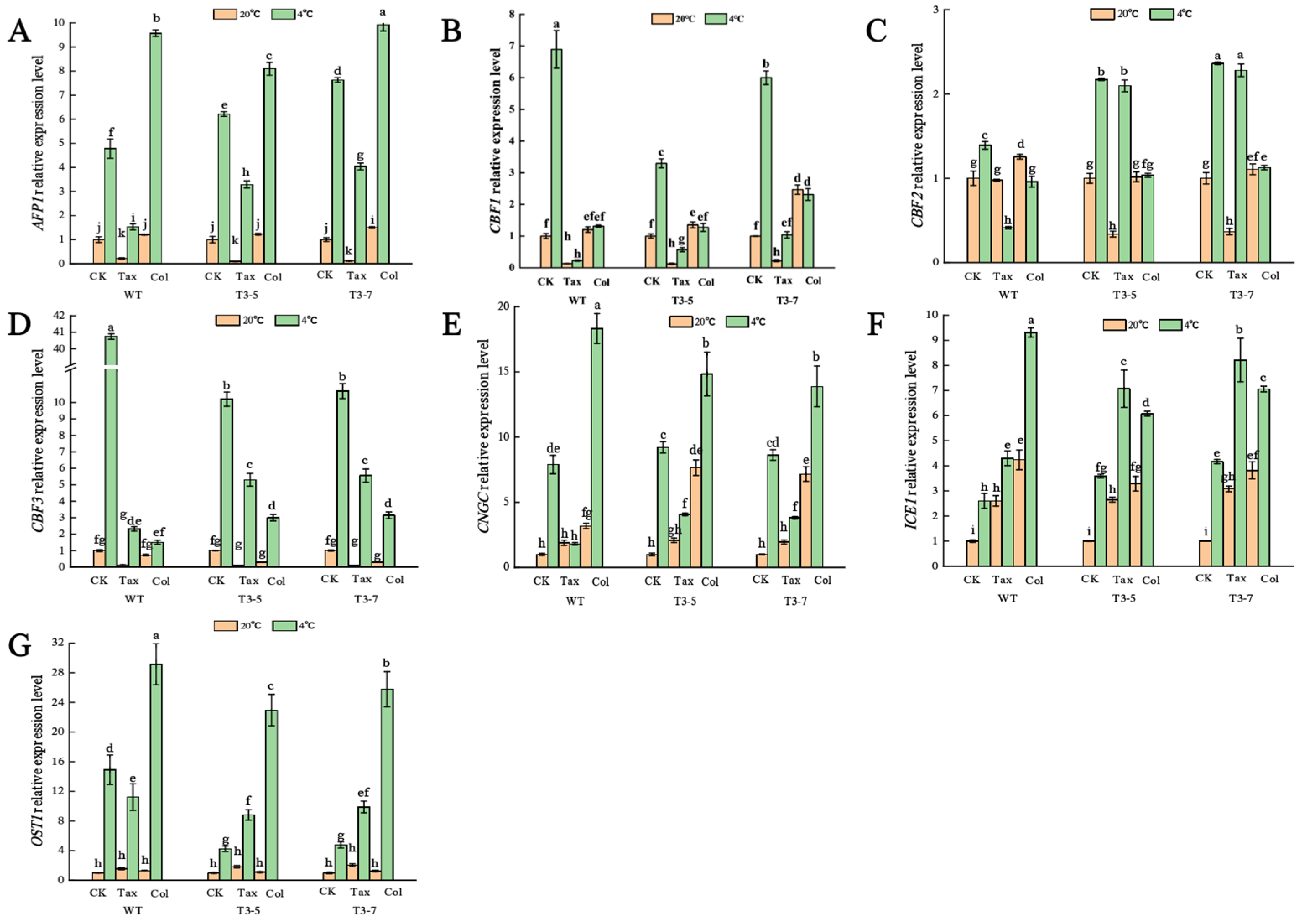
At room temperature, the expression levels of AFP1 and CBF2 in T3-5 plants treated with Col were comparable to those in the control group, but there was a significant difference at 4 °C. In the case of CBF3, the expression levels in T3-5 and T3-7 plants treated with Col at room temperature were even lower than those in the control group. The expression levels of CBF1, CNGC, and ICE1 in transgenic plants treated with Col were significantly increased compared to the control, whereas the expression levels of AFP1, CBF1, CBF2, and CBF3 in transgenic plants treated with Tax exhibited a significant decrease (Figure 2). At low temperature, the expression levels of genes other than OST1 in Tax-treated transgenic plants were significantly higher than those in WT plants (Figure 2). These results indicate that low temperature enhances the expression trends of these cold-responsive genes in transgenic plants.
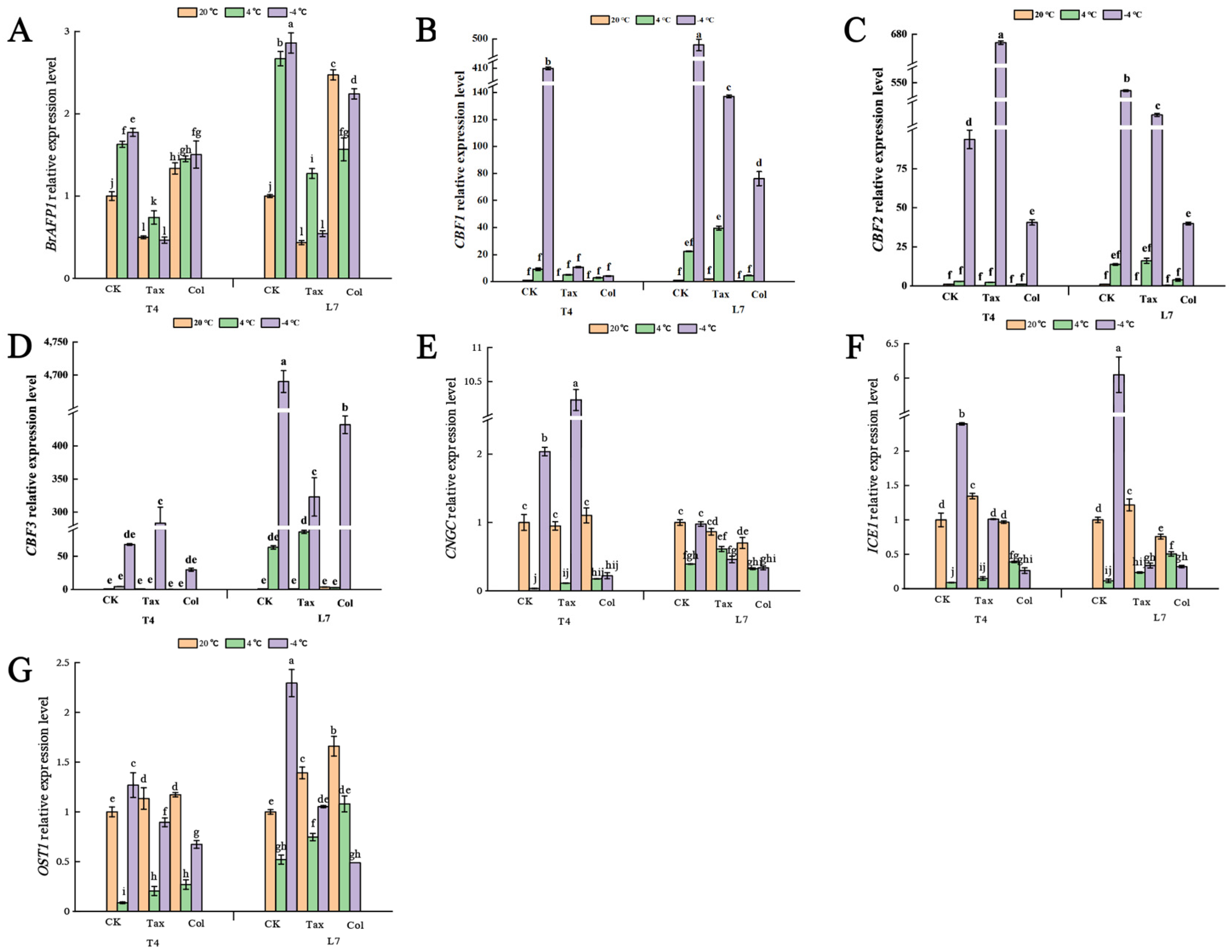
At room temperature, Col application markedly elevated AFP1 and OST1 transcript abundance in both T4 and L7 relative to the untreated control (Figure 3). In contrast, Tax treatment significantly reduced AFP1 expression in the two cultivars (Figure 3). The expression levels of AFP1, CBF1, CBF2, CBF3, CNGC, ICE1, and OST1 in L7 treated with Col and Tax were significantly reduced under cold stress. In contrast, in T4 treated with Col and Tax, only AFP1, CBF1, ICE1 and OST1 exhibited significantly reduced levels (Figure 3). This indicates that there are different gene expression patterns among different varieties.

3.3. Effects of Cytoskeleton Assembly and Disassembly Agents on Endogenous Hormones in Winter Rapeseed

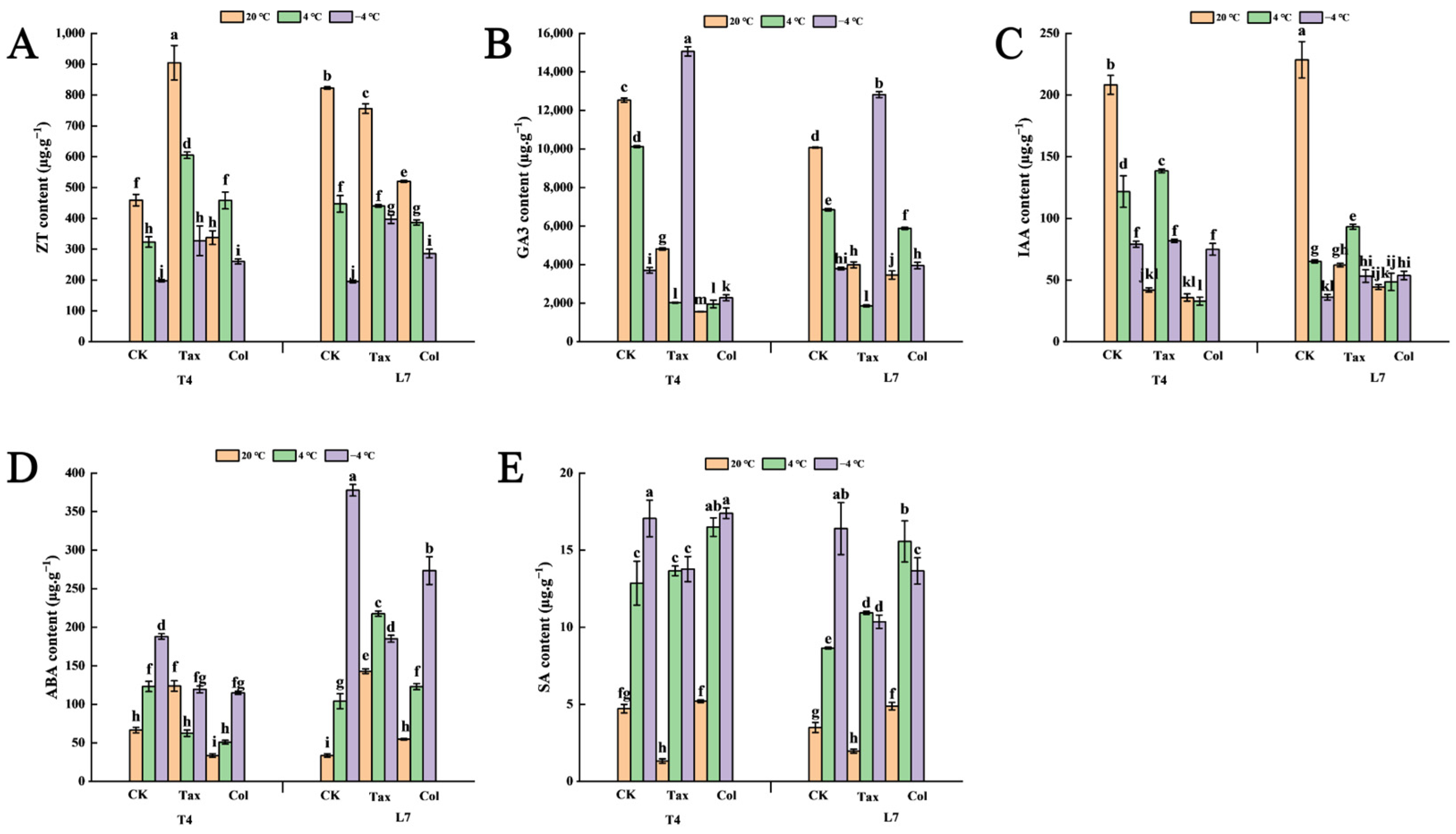
At low temperatures, the levels of ZT, GA3, and IAA in untreated winter rapeseed leaves decreased significantly compared with those at room temperature. However, the ZT level was higher in Col-treated T4 and L7 plants at −4 °C than that in the control plants, and was also elevated in T4 plants at 4 °C. The level of IAA in Col-treated T4 plants at −4 °C did not differ significantly from that in the control plants under the same low temperature (Figure 4A–C). It is noteworthy that GA3 content in T4 and L7 leaves treated with Tax significantly decreased at 4 °C (Figure 4B). Cold stress resulted in a significant increase in ABA and SA levels in untreated winter rapeseed leaves (Figure 4D,E). However, the level of ABA in Tax-treated L7 at 4 °C was higher than that in the control plants (Figure 4D). The SA content in Tax-treated T4 showed no significant difference compared with the untreated control plants. Interestingly, there was an increase in SA content at 4 °C in Tax-treated L7 (Figure 4E). These findings indicate that the microtubule stabilizer Tax promotes the accumulation of ZT, GA3, and IAA in winter rapeseed. In contrast, enhanced microtubule depolymerization, resulting from Col treatment, appears to suppress this accumulation.

3.4. Effects of Cytoskeleton Assembly and Disassembly Agents on Oxidative Status in Winter Rapeseed

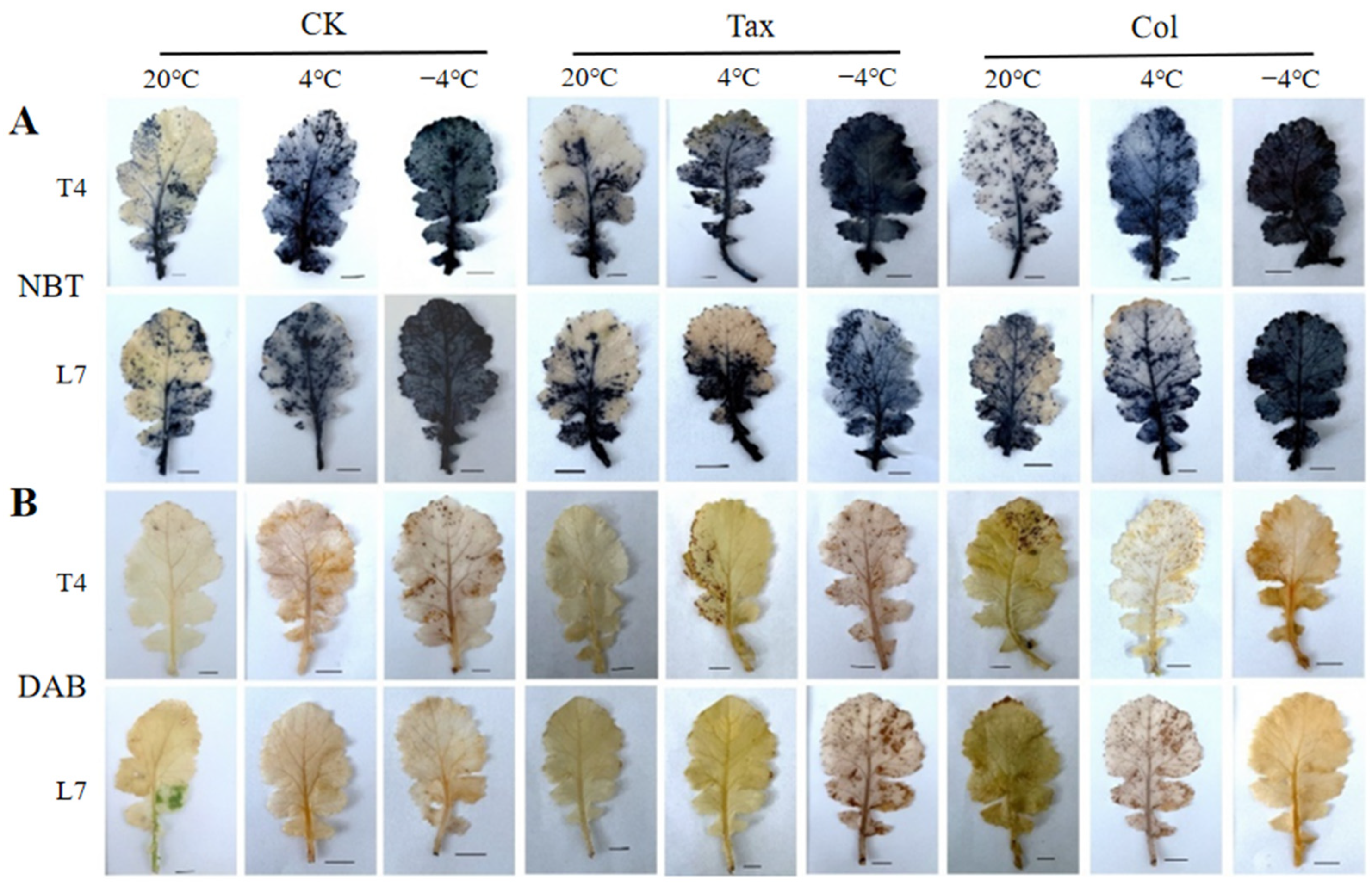
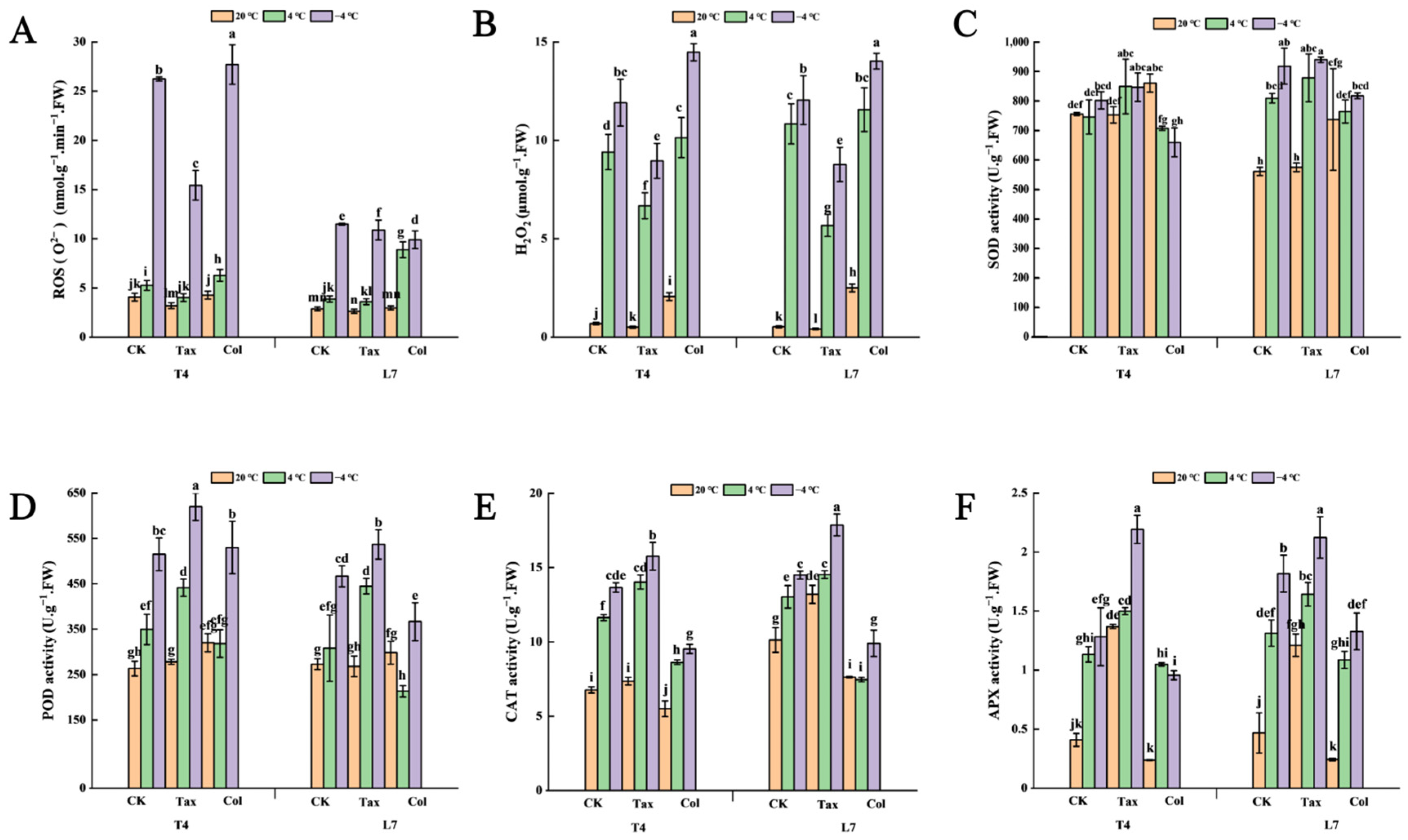
NBT histochemical staining showed that applying Col at 20 °C caused a modest rise in superoxide (O2) signal in winter rapeseed leaves. When plants were subsequently exposed to chilling conditions, the intensity of the O2 staining increased further, indicating greater superoxide accumulation under low temperature. Conversely, application of Tax produced a slight reduction in O2 concentration in leaf tissue compared with the untreated control (Figure 5A). The DAB staining indicates that Col treatment resulted in higher accumulation of H2O2 in winter rapeseed leaves than that in untreated plants under cold stress, while Tax treatment significantly decreased H2O2 levels (Figure 5B). Consistently, the determination results of O2 and H2O2 content in winter rapeseed leaves further confirmed the above results (Figure 6A,B).
At low temperatures, the activities of SOD, POD, CAT, and APX in Tax-treated T4 and L7 were significantly higher compared to those at room temperature (Figure 6C–F), whereas the activities of CAT and APX in Col-treated T4 and L7 were significantly higher compared to those at room temperature (Figure 6E,F). At room temperature, Tax treatment had no significant effect on SOD and POD activities in winter rapeseed leaves compared to untreated plants (Figure 6C,D), but Tax treatment significantly increased CAT and APX activities (Figure 6E,F). Additionally, the activities of CAT and APX in Col-treated winter rapeseed leaves were lower than those observed in untreated plants. Furthermore, we also found that activities of these four enzymes continuously increased as temperatures gradually decreased in Tax-treated L7 (Figure 6C–F). These findings suggest that the microtubule stabilizer Tax plays a critical role in maintaining oxidative homeostasis in winter rapeseed cells under low-temperature stress.

3.5. Effects of Cytoskeleton Assembly and Disassembly Agents on Osmotic Adjustment in Winter Rapeseed

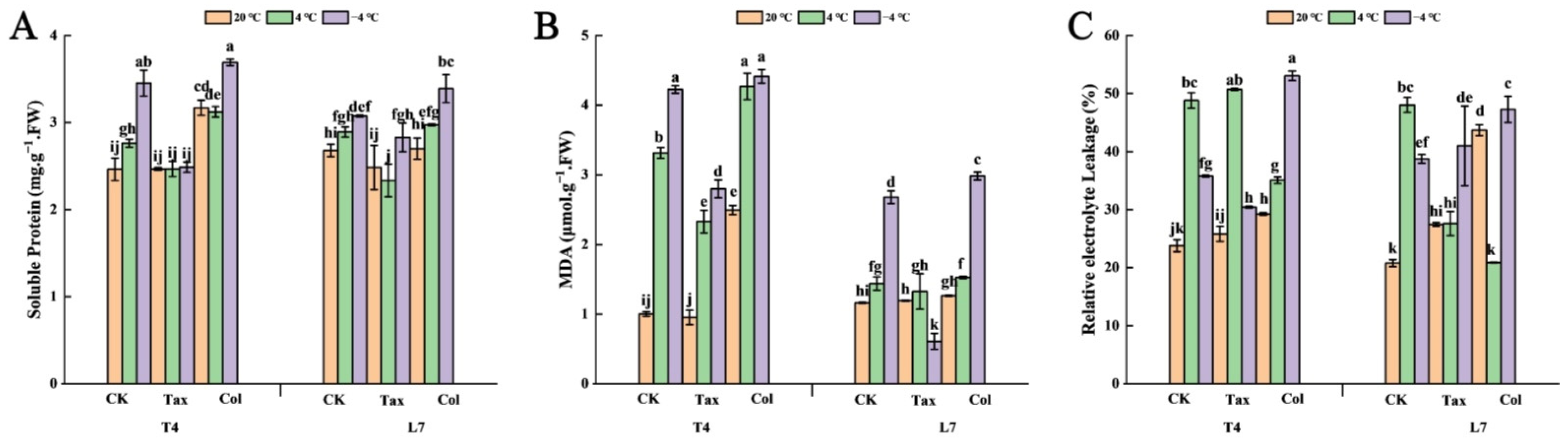
Under low-temperature stress, the levels of soluble protein, MDA, and REL in untreated winter rapeseed plants increased significantly. In contrast, these physiological indicators decreased significantly following the application of the Tax stabilizer, whereas they increased significantly following the application of Col stabilizer. These findings suggest that the microtubule stabilizer Tax may exert a protective effect against low-temperature-induced damage. In addition, interestingly, under low-temperature stress, the soluble protein content, MDA, and REL in L7 following Col treatment were significantly lower than those in T4 (Figure 7A–C). This factor may contribute to the stronger cold tolerance observed in L7 relative to T4.

3.6. Effects of Cytoskeleton Assembly and Disassembly Agents on the Cell Viability of Winter Rapeseed

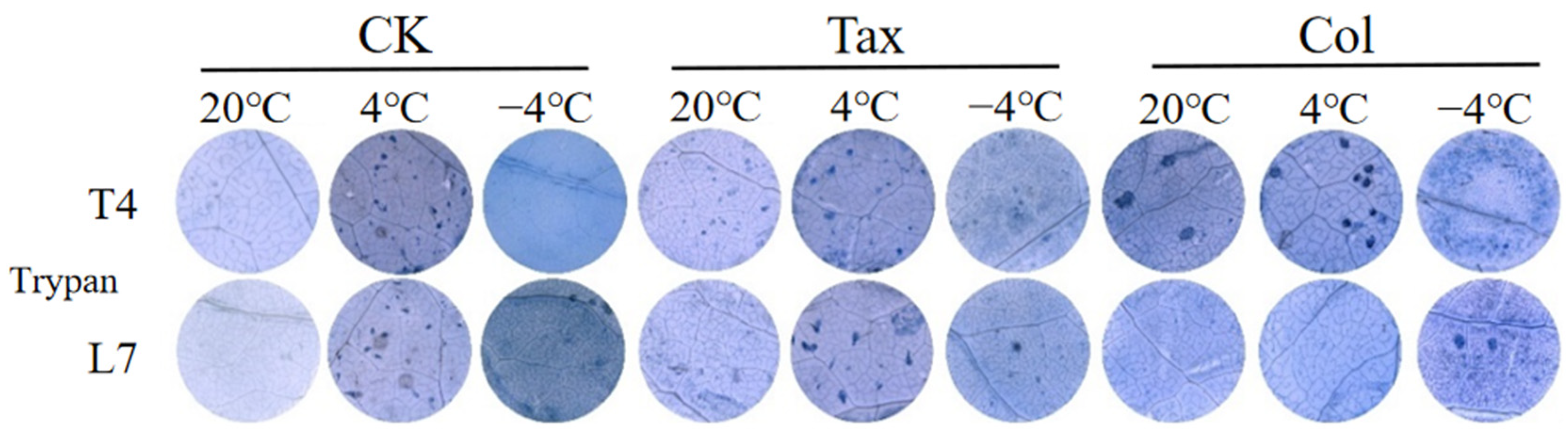
Trypan blue staining was used to assess how Col and Tax exposure influenced winter rapeseed leaf tissues (Figure 8). Under ambient conditions (20 °C), the number of blue-stained spots on the leaves treated with the microtubule stabilizer Tax was similar to that of the control (CK); after treatment with the microtubule destabilizer Col, the number of blue-spots on the leaves of winter rapeseed significantly increased. At low temperature (4 and −4 °C), compared with the control (CK), the number of blue-stained spots on the leaves treated with Tax did not change significantly, whereas the number and area of blue-stained spots on the leaves treated by Col increased significantly. These results indicate that the microtubule stabilizer Tax can mitigate the damage and mortality of mesophyll cells induced by low temperatures.

4. Discussion

4.1. The Influence of Cytoskeletal Stability on Cold Response Genes

The CBF signaling module constitutes a core component of plant cold-response networks, acting as a major transcriptional hub that activates a broad range of low-temperature-induced genes [12]. CBFs function as transcription factors that bind to the cis-regulatory elements of cold-responsive (COR) genes, thereby activating their expression. These COR genes encode proteins such as AFPs, late embryogenesis abundant (LEA) proteins, and other molecules that enhance cellular stability under stress conditions, with BrAFP1 being one of the prominent targets within this regulon [27]. In parallel, Cyclic Nucleotide-Gated Channels (CNGCs) located at the plasma membrane facilitate Ca2+ influx, thereby supporting Ca2+-dependent second-messenger signaling and contributing substantially to cold-stress signal relay [28]. During freezing exposure, BrAFP1 accumulates in aerial tissues of winter rapeseed, including stems and leaves, and exhibits strong affinity for ice-crystal surfaces [27]. By adsorbing to developing crystals, the protein suppresses recrystallization and limits crystal enlargement, which helps reduce ice-induced mechanical disruption. This inhibition of large-crystal formation is expected to preserve membrane integrity and protect cellular macromolecules by lowering the physical stress imposed by expanding ice structures within plant tissues [29]. After plants sense cold stress, the calcium channel protein CNGC located on the cell membrane senses the cold signal, thereby regulating calcium ion influx and further transmitting the cold signal to the nucleus [28]. The ICE1-CBF-COR pathway is the core of the cold signal transduction network, which activates downstream COR genes and endows plants with cold adaptation characteristics [12]. BrAFP1 is a member of COR gene family in the Brassica rapa. In this study, the microtubule stabilizer and microtubule depolymerizer were applied to winter rapeseed and transgenic proBrAFP1 Arabidopsis. The results of transcriptional activity analysis of the BrAFP1 promoter under treatment with a microtubule stabilizer and a microtubule depolymerizer indicated that application of the microtubule destabilizer at room temperature activates the BrAFP1 promoter, thereby enhancing the accumulation of induced BrAFP1 transcripts (Figure 1). At low temperatures, the addition of the microtubule stabilizer inhibited the activation of the BrAFP1 promoter and the expression of CBF genes (Figure 2 and Figure 3). These findings suggest that the dynamic changes of microtubules may serve as a key regulatory node for sensing and transducing environmental temperature signals, thereby regulating the expression of key genes in the cold response pathway. However, there is limited direct evidence regarding the impact of microtubule-targeting agents, such as Tax and Col, on the expression of specific cold-responsive genes like BrAFP1. Although previous studies have shown that microtubule stability is involved in the low-temperature signal transduction [9], the specific molecular mechanism by which it regulates the expression of key COR genes at the transcriptional level remains unclear and requires further in-depth analysis.

4.2. The Influence of Cytoskeletal Stability on Hormonal Regulation

Plant growth and development are coordinately regulated by endogenous and exogenous factors. As central endogenous signaling molecules, plant hormones govern developmental programs and orchestrate low-temperature stress responses [30,31]. ABA is a central phytohormone that orchestrates the trade-off between growth and stress tolerance in plants. ABA can activate a suite of stress-responsive pathways, thereby markedly improving plant survival and resilience to abiotic stresses. As a master regulator of cold adaptation, ABA coordinately modulates transcriptional, post-translational, and metabolic components of the cold tolerance network. Numerous studies indicate that exposure to chilling or freezing conditions promotes ABA accumulation within plant tissues, and this elevation is commonly associated with enhanced capacity to withstand subsequent cold stress [32]. In this study, when the microtubule stabilizer Tax was applied under low-temperature conditions, the ABA levels in both winter rapeseed cultivars were significantly decreased compared with the untreated plants (Figure 4D). There is evidence confirming that SA can significantly alleviate the physiological damage caused by abiotic stress by promoting the accumulation of osmoprotective substances, enhancing the activity of the antioxidant system, and activating secondary metabolic pathways, thereby maintaining intracellular homeostasis and improving the stress tolerance of plants [33]. In this study, we found that under low-temperature stress at 4 °C, exogenous spraying of the microtubule stabilizer Tax significantly increased the endogenous SA level in winter rapeseed (Figure 4E), thereby enhancing its cold resistance. It indicates that microtubule stabilization enhances plant cold resistance by positively regulating the cold stress response pathway. In addition, Tax treatment significantly enhanced the accumulation of ZT, GA3, and IAA in winter rapeseed leaves under low-temperature stress (Figure 4A–C), further supporting the hypothesis that microtubule stabilization promotes cold tolerance.

4.3. The Influence of Cytoskeletal Stability on Oxidative Homeostasis

Low temperature can lead to a significant increase in ROS-induced oxidative damage, thereby activating the antioxidant system to maintain cellular homeostasis [34]. NBT staining on leaf surfaces can serve as an indicator of the location where O2 is generated and accumulates; the brown precipitate produced by DAB staining is widely used as a histochemical marker for the accumulation of H2O2 in tissues [25]. In this study, we found that the treatment with the microtubule stabilizer Tax significantly reduced the accumulation of O2 and H2O2 in winter rapeseed leaves, and increased the activities of antioxidant enzymes such as SOD, POD, CAT, and APX (Figure 6). This result is consistent with the staining results of NBT and DAB (Figure 5). These findings indicate that microtubule stabilizers can effectively alleviate the accumulation of ROS induced by low-temperature stress and ROS-mediated oxidative damage in plants by enhancing the activities of key antioxidant enzymes, thereby preserving the cellular metabolic homeostasis and structural integrity [35]. In contrast, the microtubule destabilizer Col led to an increase in ROS levels and a decrease in antioxidant enzymes activities at low temperatures (Figure 6).

4.4. The Influence of Cytoskeletal Stability on Osmotic Regulation and Membrane Integrity

Trypan blue staining is widely employed to assess cellular viability, as the dye preferentially penetrates and labels dead or membrane-compromised cells, enabling rapid visualization of tissue injury. Dead cells take up the dye and appear blue [36]. Osmotic adjustment substances can maintain cellular water homeostasis and protecting the membrane system, and they are also affected by the cytoskeleton [37]. In this study, the treatment with the stabilizer Tax significantly reduced soluble protein content, MDA, and REL in winter rapeseed leaves under low temperatures (Figure 7), indicating enhanced cell membrane integrity and osmotic regulation ability. However, treatment with the destabilizer Col significantly increased the levels of soluble protein, MDA, and REL (Figure 7), indicating more severe cell membrane damage. This indicates that the dynamic instability of microtubules may compromise the integrity of the cell membrane system and impair its capacity to adapt to cold stress. This finding was further validated by Trypan blue staining, which demonstrated that Tax effectively mitigated cell death at low temperatures.

5. Conclusions

This study emphasizes the role of microtubule dynamics in the cold tolerance of winter rapeseed. Treatments with the microtubule stabilizer Tax and the destabilizer Col significantly influence the expression of cold-responsive genes, such as BrAFP1 and CBFs, under low-temperature stress. Tax inhibited the activation of the BrAFP1 promoter and CBF genes, and Col treatment enhanced BrAFP1 expression, highlighting the regulatory impact of microtubule stability on the cold signaling pathway. Furthermore, stabilization of microtubules increases antioxidant enzyme activities and reduces ROS accumulation, thereby alleviating oxidative damage and maintaining cellular integrity. These findings suggest that microtubule stability is a key modulator of cold stress responses. This study will offer valuable insights into potential strategies for enhancing cold tolerance in plants.

Supplementary Materials

The following supporting information can be downloaded at: https://www.mdpi.com/article/10.3390/agronomy16070698/s1, Supplementary Table S1. All primers used in this study.

Author Contributions

The work presented here was carried out in collaboration among all authors. X.Z., Investigation, Formal analysis, Writing—original draft, and Conceptualization; X.D., Investigation, Data curation, Methodology, and Visualization; J.W. (Jiaping Wei) and G.Z., Writing—review and editing, Visualization, Validation, and Software; Q.L., Y.F., Z.W., and J.C., Formal analysis, Investigation, Validation, and Software; J.W. (Jinxiong Wang) and Z.L., Funding acquisition, Resources, Project administration, and Conceptualization. All authors have read and agreed to the published version of the manuscript.

Funding

The research was supported by the National Natural Science Foundation of China (32360520), the Gansu Provincial Science Foundation Major Project (23JRRA1408), the Gansu Provincial Modern Cold and Arid Agriculture Industry Technology System (GSARS09), and the Nyingchi Science and Technology Program Project (LZZX-04).

Data Availability Statement

The original contributions presented in this study are included in the article/Supplementary Material. Further inquiries can be directed to the corresponding authors.

Conflicts of Interest

The authors declare no competing financial interests.

References

  1. Fell, D.A.; Taylor, D.C.; Weselake, R.J.; Harwood, J.L. Metabolic Control Analysis of triacylglycerol accumulation in oilseed rape. Biosystems 2023, 227–228, 104905. [Google Scholar] [CrossRef]
  2. Liao, B. A critical review on self-supply bottom line and developmental road-map for oilseed products in China under the grand-food security strategy. Chin. J. Oil Crop Sci. 2024, 46, 1–6. (In Chinese) [Google Scholar]
  3. Xu, Y.; Zeng, X.; Wu, J.; Zhang, F.; Li, C.; Jiang, J.; Wang, Y.; Sun, W. iTRAQ-Based Quantitative Proteome Revealed Metabolic Changes in Winter Turnip Rape (Brassica rapa L.) under Cold Stress. Int. J. Mol. Sci. 2018, 19, 3346. [Google Scholar] [CrossRef] [PubMed]
  4. Gill, S.S.; Tuteja, N. Reactive oxygen species and antioxidant machinery in abiotic stress tolerance in crop plants. Plant Physiol. Biochem. 2010, 48, 909–930. [Google Scholar] [CrossRef]
  5. Arora, R. Mechanism of freeze-thaw injury and recovery: A cool retrospective and warming up to new ideas. Plant Sci. 2018, 270, 301–313. [Google Scholar] [CrossRef] [PubMed]
  6. Lui, M.; Ma, H.; Zheng, X.; Li, L.; Liu, C. Research progress on characteristics of antifreeze proteins from plants and its application in frozen dough. J. Henan Univ. Technol. (Nat. Sci. Ed.) 2021, 42, 115–122. [Google Scholar]
  7. Dong, X.; Liu, Z.; Mi, W.; Xu, C.; Xu, M.; Zhou, Y.; Zhen, G.; Cao, X.; Fang, X.; Mi, C. Overexpression of BrAFP1 gene from winter rapeseed (Brassica rapa) confers cold tolerance in Arabidopsis. Plant Physiol. Biochem. 2020, 155, 338–345. [Google Scholar] [CrossRef]
  8. Schaedel, L.; Lorenz, C.; Schepers, A.V.; Klumpp, S.; Köster, S. Vimentin intermediate filaments stabilize dynamic microtubules by direct interactions. Nat. Commun. 2021, 12, 3799. [Google Scholar] [CrossRef]
  9. Shomo, Z.D.; Li, F.; Smith, C.N.; Edmonds, S.R.; Roston, R.L. From sensing to acclimation: The role of membrane lipid remodeling in plant responses to low temperatures. Plant Physiol. 2024, 196, 1737–1757. [Google Scholar] [CrossRef]
  10. Iqbal, Z.; Memon, A.G.; Ahmad, A.; Iqbal, M.S. Calcium Mediated Cold Acclimation in Plants: Underlying Signaling and Molecular Mechanisms. Front. Plant Sci. 2022, 13, 855559. [Google Scholar] [CrossRef]
  11. Gao, W.; He, M.; Liu, J.; Ma, X.; Zhang, Y.; Dai, S.; Zhou, Y. Overexpression of Chrysanthemum lavandulifolium ClCBF1 in Chrysanthemum morifolium ‘White Snow’ improves the level of salinity and drought tolerance. Plant Physiol. Biochem. 2018, 124, 50–58. [Google Scholar] [CrossRef]
  12. Hwarari, D.; Guan, Y.; Ahmad, B.; Movahedi, A.; Min, T.; Hao, Z.; Lu, Y.; Chen, J.; Yang, L. ICE-CBF-COR signaling cascade and its regulation in plants responding to cold stress. Int. J. Mol. Sci. 2022, 23, 1549. [Google Scholar] [CrossRef]
  13. Zeng, X.; Xu, Y.; Jiang, J.; Zhang, F.; Ma, L.; Wu, D.; Wang, Y.; Sun, W. iTRAQ-Based Comparative Proteomic Analysis of the Roots of TWO Winter Turnip Rapes (Brassica rapa L.) with Different Freezing-Tolerance. Int. J. Mol. Sci. 2018, 19, 4077. [Google Scholar] [CrossRef]
  14. Dong, X.; Wang, J.; Wei, J.; Zheng, G.; Wu, Z.; Cui, J.; Yang, X.; Li, B.; Zhu, S.; Sa, E.; et al. Effects of Ca2+ signaling inhibition on cold acclimation in winter rapeseed. Plant Stress 2025, 16, 100839. [Google Scholar] [CrossRef]
  15. Baskin, T.I.; Wilson, J.E.; Cork, A.; Williamson, R.E. Morphology and Microtubule Organization in Arabidopsis Roots Exposed to Oryzalin or Taxol. Plant Cell Physiol. 1994, 35, 935–942. [Google Scholar] [CrossRef]
  16. Pickett-Heaps, J.D. The effects of colchicine on the ultrastructure of dividing plant cells, xylem wall differentiation and distribution of cytoplasmic microtubules. Dev. Biol. 1967, 15, 206–236. [Google Scholar] [CrossRef]
  17. Wang, S.; Zhang, S.; Sun, C.; Xu, Y.; Chen, Y.; Yu, C.; Qian, Q.; Jiang, D.A.; Qi, Y. Auxin response factor (OsARF12), a novel regulator for phosphate homeostasis in rice (Oryza sativa). New Phytol. 2014, 201, 91–103. [Google Scholar] [CrossRef] [PubMed]
  18. Wang, S.; Liu, S.; Wang, R.; Zhang, Z.; Xu, N.; Li, Q.; Zhao, Z. Enhanced Agrobacterium-Mediated Transformation in Chinese Cabbage via Tenoxicam, Phytohormone Optimization, and Visual Reporters. Plants 2025, 14, 3802. [Google Scholar] [CrossRef]
  19. Ali, I.; Sher, H.; Ali, A.; Hussain, S.; Ullah, Z. Simplified floral dip transformation method of Arabidopsis thaliana. J. Microbiol. Methods 2022, 197, 106492. [Google Scholar] [CrossRef]
  20. Trick, A.Y.; Chen, F.E.; Schares, J.A.; Freml, B.E.; Lor, P.; Yun, Y.; Wang, T.H. High resolution estimates of relative gene abundance with quantitative ratiometric regression PCR (qRR-PCR). Analyst 2021, 146, 6463–6469. [Google Scholar] [CrossRef]
  21. Hashiguchi, T.; Hashiguchi, M.; Tanaka, H.; Fukushima, K.; Gondo, T.; Akashi, R. Quantitative analysis of seven plant hormones in Lotus japonicus using standard addition method. PLoS ONE 2021, 16, e0247276. [Google Scholar] [CrossRef]
  22. Wang, W.; Song, X.; Wang, D.; Ma, Y.; Shan, Y.; Ren, X.; Hu, H.; Wu, C.; Yang, J.; Ma, Y. Simultaneous determination of five plant hormones in cotton leaves using QuEChERS combined with HPLC–MS/MS. J. Cotton Res. 2024, 7, 18. [Google Scholar] [CrossRef]
  23. Hatsugai, N.; Katagiri, F. Quantification of Plant Cell Death by Electrolyte Leakage Assay. Bio-Protocol 2018, 8, e2758. [Google Scholar] [CrossRef]
  24. Bernacki, M.J.; Czarnocka, W.; Zaborowska, M.; Różańska, E.; Labudda, M.; Rusaczonek, A.; Witoń, D.; Karpiński, S. EDS1-Dependent Cell Death and the Antioxidant System in Arabidopsis Leaves is Deregulated by the Mammalian Bax. Cells 2020, 9, 2454. [Google Scholar] [CrossRef] [PubMed]
  25. Soltabayeva, A.; Sagi, M. Determination of ROS Generated by Arabidopsis Xanthine Dehydrogenase1 (AtXDH1) Using Nitroblue Tetrazolium (NBT) and 3,3′-Diaminobenzidine (DAP). Methods Mol. Biol. 2024, 2798, 65–77. [Google Scholar] [PubMed]
  26. Mohana, S.; Mohammed, R.A.; Narasimha, G. Characterization of Transformed Plants by GUS Assay. Methods Mol. Biol. 2025, 2973, 283–286. [Google Scholar]
  27. Dong, X.; Liu, Z.; Wei, J.; Zheng, G.; Li, H.; Wang, Y.; Tian, H.; Cui, J.; Wu, Z.; Cao, X.; et al. The BrAFP1 promoter drives gene-specific expression in leaves and stems of winter rapeseed (Brassica rapa L.) under cold induction. Plant Sci. 2023, 331, 111669. [Google Scholar] [CrossRef] [PubMed]
  28. Peng, Y.; Ming, Y.; Jiang, B.; Zhang, X.; Fu, D.; Lin, Q.; Zhang, X.; Wang, Y.; Shi, Y.; Gong, Z.; et al. Differential phosphorylation of Ca2+-permeable channel Cyclic Nucleotide-Gated Channel 20 modulates calcium-mediated freezing tolerance in Arabidopsis. Plant Cell 2024, 36, 4356–4371. [Google Scholar] [CrossRef]
  29. Liu, Z.; Dong, X.; Ma, L.; Sun, W.; Yang, G.; Fang, Y.; Wu, J.; Li, X. Separation and identification of Brassica rapa BrAFP and its gene cloning and expression under freezing stress. Plant Breed. 2019, 138, 193–201. [Google Scholar] [CrossRef]
  30. Raza, A.; Charagh, S.; Najafi-Kakavand, S.; Abbas, S.; Shoaib, Y.; Anwar, S.; Sharifi, S.; Lu, G.; Siddique, K.H.M. Role of phytohormones in regulating cold stress tolerance: Physiological and molecular approaches for developing cold-smart crop plants. Plant Stress 2023, 8, 100152. [Google Scholar] [CrossRef]
  31. Ghorbel, M.; Brini, F. Hormone mediated cell signaling in plants under changing environmental stress. Plant Gene 2021, 28, 100335. [Google Scholar] [CrossRef]
  32. Li, C.; Pan, Y.; Cui, J.; Lu, X.; Yu, W. Mechanism of ABA in Plants Exposed to Cold Stress. Agronomy 2025, 15, 403. [Google Scholar] [CrossRef]
  33. Tian, J.; Ma, Y.; Chen, Y.; Chen, X.; Wei, A. Plant hormone response to low-temperature stress in cold-tolerant and cold-sensitive varieties of Zanthoxylum bungeanum Maxim. Front. Plant Sci. 2022, 13, 847202. [Google Scholar] [CrossRef] [PubMed]
  34. Abhijith Shankar, P.S.; Parida, P.; Bhardwaj, R.; Yadav, A.; Swapnil, P.; Seth, C.S.; Meena, M. Deciphering molecular regulation of reactive oxygen species (ROS) and reactive nitrogen species (RNS) signalling networks in Oryza genus amid environmental stress. Plant Cell Rep. 2024, 43, 185. [Google Scholar] [CrossRef]
  35. Wei, Y.; Chen, H.; Wang, L.; Zhao, Q.; Wang, D.; Zhang, T. Cold acclimation alleviates cold stress-induced PSII inhibition and oxidative damage in tobacco leaves. Plant Signal. Behav. 2022, 17, 2013638. [Google Scholar] [CrossRef]
  36. Strober, W. Trypan Blue Exclusion Test of Cell Viability. Curr. Protoc. Immunol. 2015, 111, A3.B.1–A3.B.3. [Google Scholar] [CrossRef]
  37. Sharma, A.; Shahzad, B.; Kumar, V.; Kohli, S.K.; Sidhu, G.P.S.; Bali, A.S.; Handa, N.; Kapoor, D.; Bhardwaj, R.; Zheng, B. Phytohormones Regulate Accumulation of Osmolytes Under Abiotic Stress. Biomolecules 2019, 9, 285. [Google Scholar] [CrossRef] [PubMed]
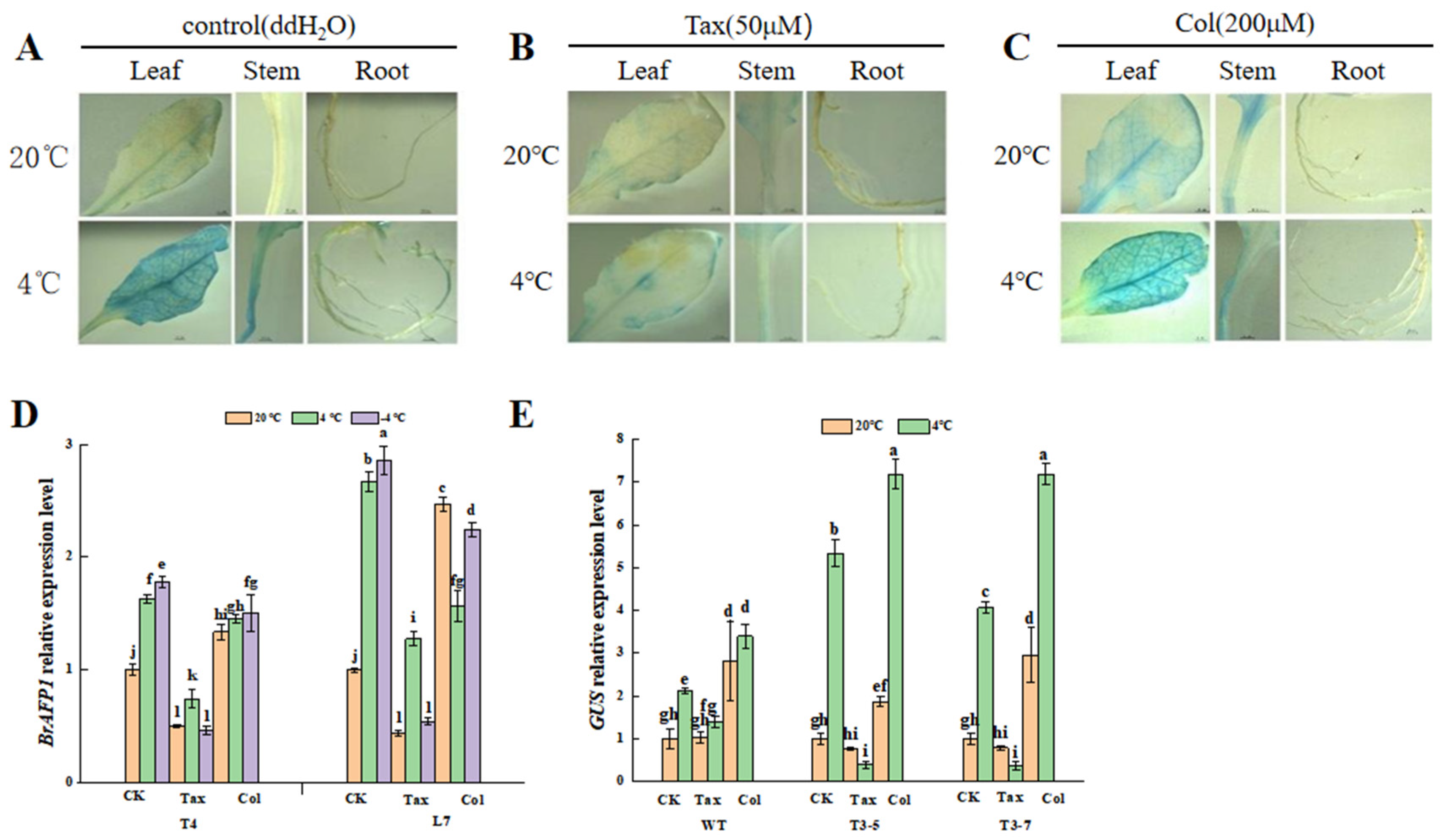
Figure 1. Histochemical GUS staining of pBrAFP1 transgenic Arabidopsis seedlings. AFP1 transcript abundance was determined in leaf, stem, and root tissues following treatment with control (A) ddH2O, (B) microtubule-stabilizing agent paclitaxel (Tax) (50 μM), and (C) destabilizing agent colchicine (Col) (400 μM). The expression levels of BrAFP1 in winter rapeseed varieties T4 and L7 leaf tissues treated with ddH2O, Tax (50 μM), and Col (400 μM) (D); GUS transcript abundance was determined in leaf tissues of WT and transgenic Arabidopsis (T3-5 and T3-7) after treatment with ddH2O, Tax (50 μM), or Col (400 μM) (E). Data are presented as mean ± SD based on four independent biological replicates, with statistical significance defined at p < 0.05. Distinct lowercase letters denote groups that differ significantly.
Agronomy 16 00698 g001
Figure 2. Influence of cytoskeleton agents on the cold-responsive genes in transgenic Arabidopsis thaliana. The expression levels of (A) Antifreeze Protein 1 (AFP1), (B) C-repeat Binding Factor 1 (CBF1), (C) C-repeat Binding Factor 2 (CBF2), (D) C-repeat Binding Factor 3 (CBF3), (E) Cyclic Nucleotide-Gated Channel (CNGC), (F) Inducer of CBF Expression 1 (ICE1), and (G) OPEN STOMATA 1 (OST1) in transgenic Arabidopsis thaliana. Distinct lowercase letters denote groups that differ significantly.
Agronomy 16 00698 g002
Figure 3. Influence of cytoskeleton agents on the transcription of cold stress-associated genes in winter rapeseed. The expression levels of (A) Brassica rapa L. Antifreeze Protein 1 (BrAFP1), (B) C-repeat Binding Factor 1 (CBF1), (C) C-repeat Binding Factor 2 (CBF2), (D) C-repeat Binding Factor 3 (CBF3), (E) Cyclic Nucleotide-Gated Channel (CNGC), (F) Inducer of CBF Expression 1 (ICE1), and (G) OPEN STOMATA 1 (OST1) were measured. Distinct lowercase letters denote groups that differ significantly.
Agronomy 16 00698 g003
Figure 4. Influence of cytoskeleton agents on the endogenous hormone contents of winter rapeseed. (A) Zeatin (ZT), (B) gibberellin (GA3), (C) auxin (IAA), (D) abscisic acid (ABA), and (E) salicylic acid (SA). Distinct lowercase letters denote groups that differ significantly.
Agronomy 16 00698 g004
Figure 5. Influence of cytoskeleton agents on oxidation state of winter rapeseed. The (A) nitro blue tetrazolium (NBT) and (B) 3,3′-diaminobenzidine (DAB) staining in the leaves of L7 and T4 under different temperatures after treatment with cytoskeleton agents Tax and Col. Scale bar = 1 cm.
Agronomy 16 00698 g005
Figure 6. Influence of cytoskeleton agents on oxidation state of winter rapeseed. The accumulation of (A) superoxide anions (O2−) and (B) hydrogen peroxide (H2O2), as well as the changes in the activities of (C) superoxide dismutase (SOD), (D) peroxidase (POD), (E) catalase (CAT), and (F) ascorbate peroxidase (APX), were evaluated in the leaves of L7 and T4 under multiple temperature regimes following treatment with the microtubule-stabilizing agent paclitaxel (Tax) and the destabilizing agent colchicine (Col). Distinct lowercase letters denote groups that differ significantly.
Agronomy 16 00698 g006
Figure 7. Influence of cytoskeleton-targeting compounds on osmotic adjustment-related indicators in winter rapeseed. Soluble protein (A), malondialdehyde (MDA; (B)), and relative electrolyte leakage (REL; (C)) were measured in leaves of L7 and T4 following Tax or Col treatment under different temperature conditions. Distinct lowercase letters denote groups that differ significantly.
Agronomy 16 00698 g007
Figure 8. Trypan blue-treated leaves were imaged to visualize cell-death-associated staining patterns. The scale corresponds to 2 mm.
Agronomy 16 00698 g008
Table 1. Linear relationship of different plant hormones.
Plant HormoneCalibration CurveR2Linear Range (µg/mL)
ZTy = 0.7183x + 0.4560.99981–50
GA3y = 0.3894x + 0.1320.99971–50
IAAy = 6.7502x + 2.8920.99971–50
ABAy = 1.3178x + 0.0020.99951–50
SAy = 20.763x + 0.00210.99851–50
Disclaimer/Publisher’s Note: The statements, opinions and data contained in all publications are solely those of the individual author(s) and contributor(s) and not of MDPI and/or the editor(s). MDPI and/or the editor(s) disclaim responsibility for any injury to people or property resulting from any ideas, methods, instructions or products referred to in the content.