Review

The Regulation Effects and Associated Physiological Mechanisms of Exogenous Melatonin on Sorghum Under Drought Stress


1
Joint International Research Laboratory of Agriculture and Agri-Product Safety, Ministry of Education of China, Yangzhou University, Yangzhou 225009, China
2
Zhongshan Biological Breeding Laboratory/Jiangsu Key Laboratory of Crop Genomics and Molecular Breeding, Agricultural College, Yangzhou University, Yangzhou 225009, China
3
Jiangsu Co-Innovation Center for Modern Production Technology of Grain Crops, Agricultural College, Yangzhou University, Yangzhou 225009, China
4
Station for Popularizing Animal Husbandry Technique of Linxian, Lvliang 033200, China
5
College of Forestry and Grassland, Nanjing Forestry University, Nanjing 210037, China
6
College of Agricultural Studies, Sudan University of Science and Technology, Khartoum 11113, Sudan
*
Author to whom correspondence should be addressed.
These authors contributed equally to this work.
Agronomy 2026, 16(2), 248; https://doi.org/10.3390/agronomy16020248
Submission received: 28 November 2025 / Revised: 4 January 2026 / Accepted: 19 January 2026 / Published: 20 January 2026

Abstract

Sorghum (Sorghum bicolor L.) is a vital crop for both grain production and forage, playing a critical role in ensuring global food security and sustainable livestock production. Drought stress represents one of the most severe abiotic constraints in sorghum cultivation, adversely affecting plant growth and development, and ultimately leading to significant reductions in yield and quality. Melatonin has emerged as a multifaceted plant growth regulator that enhances plant growth and confers tolerance to various abiotic stresses. It actively participates in regulating key physiological processes, including seed germination, seedling establishment, cellular development, and metabolic homeostasis. This review synthesizes current knowledge on the impacts of drought stress on sorghum growth and physiological metabolism, with a specific focus on the protective role of melatonin under water-deficit conditions. The underlying physiological and molecular mechanisms are comprehensively discussed, encompassing ion homeostasis, nutrient metabolism, reactive oxygen species (ROS) scavenging, photosynthetic efficiency, energy metabolism, phytohormone crosstalk, signal transduction, and associated gene expression. Finally, we outline future research directions to advance our understanding of melatonin-mediated drought tolerance in sorghum, providing insights for breeding drought-resilient varieties and developing high-yielding cultivation strategies.

1. Introduction

Abiotic stresses, such as drought, extreme temperatures, salinity, and heavy metal contamination, pose significant challenges to plant survival. Drought stress, in particular, represents one of the most critical constraints on plant physiology and is a major factor governing the composition and dynamics of arid and semi-arid ecosystems [1]. In the context of ongoing global climate change, the escalating frequency of extreme droughts has led to a steady increase in drought-impacted agricultural land worldwide. This expansion poses a severe threat to water security and exacerbates the disparity between the availability and demand for agricultural water. Drought stress impairs water uptake by the root system, causing water deficit and cellular collapse in subterranean tissues, which subsequently disrupts the normal growth and development of aerial plant parts. Furthermore, it accelerates leaf transpiration water loss, leading to plant dehydration and, in severe cases, mortality. Therefore, drought stands as a principal limiting factor for sustainable agricultural production and the success of ecological conservation initiatives.
Sorghum (Sorghum bicolor L.) ranks among the world’s top five cereal crops and serves as a key resource for both food and feed production [2]. With a long history of cultivation, extensive planting area, and high total output, it is utilized in diverse applications including food, liquor brewing, animal feed, and biofuel. As a C4 crop, sorghum demonstrates strong resistance to drought, salinity, and poor soil conditions, making it well-adapted to arid and semi-arid regions and valuable in agricultural land management systems [3]. In China, sorghum is primarily cultivated in areas such as the Qinling Mountains, north of the Yellow River, and regions beyond the Great Wall [4]. However, seasonal and intermittent droughts frequently affect these production zones, particularly during germination and early seedling growth. Such drought stress can significantly impede seed germination and hinder the proper morphological establishment of sprouts. At present, drought during the sprouting stage has become a major constraint to seedling establishment and subsequent growth in sorghum [5], presenting an urgent challenge that requires prompt attention from the agricultural research community.
Melatonin (N-acetyl-5-methoxytryptamine), identified in plants in 1995, functions as a multifunctional molecule that critically influences plant growth, development, and defense against environmental stresses [6]. The biosynthetic pathway of melatonin converges with that of the auxin indole-3-acetic acid (IAA) at their common precursor, tryptophan, underscoring a significant metabolic node that may facilitate cross-talk between these signaling molecules [7]. Biogenesis of melatonin from tryptophan typically involves four enzymatic steps—tryptophan → tryptamine → serotonin → N-acetylserotonin → melatonin—though the participation of at least six enzymes allows for flexibility in route synthesis [8]. Functioning as a critical indoleamine, melatonin participates in a spectrum of developmental processes such as seed germination, seedling establishment, and root and shoot organogenesis [9] and acts as a key modulator of molecular physiology underpinning stress resilience [10]. Empirical evidence indicates that melatonin application significantly elevates the germination rate of cotton seeds under drought stress and augments seedling adaptive capacity [11]. Research by Bai et al. further revealed that exogenous melatonin promotes biomass accumulation in cotton plants and enriches nutrient reserves in seeds, thereby improving germination vigor and reducing yield losses under subsequent stress conditions [12]. In sorghum, melatonin treatment (100–800 μmol·L−1) has been shown to attenuate aluminum-induced toxicity, and under saline stress, it enhances antioxidant enzyme activities, diminishes ROS overload, and suppresses membrane peroxidation, leading to improved salt tolerance in wheat seedlings [13,14]. A synthesis by Bhowal et al. highlights melatonin’s role in amplifying photosynthetic efficiency, antioxidant enzyme activity, metabolic regulation, and gene expression, all contributing to optimized plant growth and yield [15]. Despite established roles of melatonin in promoting crop growth and abiotic stress resistance, a comprehensive understanding of its principal physiological mechanisms remains an active area of investigation.
Drought stress critically impairs sorghum traits ranging from seed germination and seedling establishment to ultimate yield and quality. This review focuses on the regulatory function of melatonin in enhancing sorghum drought tolerance, elucidating the underlying physiological mechanisms. The analysis offers theoretical insights for developing sustainable cultivation strategies for drought-resistant sorghum.

2. Effect of Drought Stress on Agronomic Traits in Sorghum

2.1. Effect of Drought Stress on Seed Germination

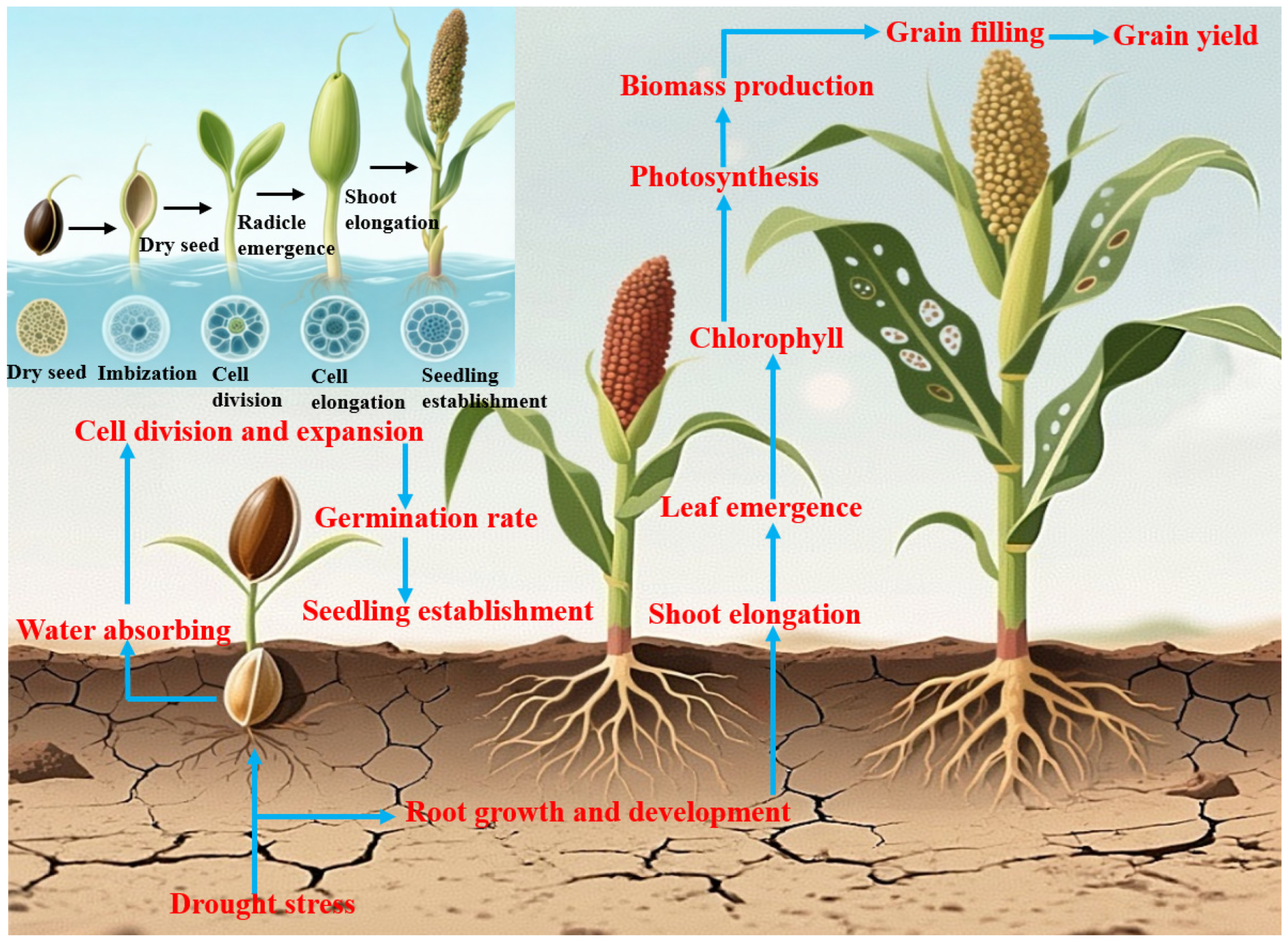
Drought stress, characterized by its varying intensity and duration, can critically impact sorghum throughout its growth cycle. The germination stage is especially vulnerable, as water deficit directly impedes the physiological processes essential for successful seedling establishment. Seed germination involves several sequential stages: imbibition, respiration, light-mediated regulation, reserve mobilization, and the action of growth regulators that promote embryonic axis development into a seedling [16]. The initiation of germination is contingent upon adequate water uptake; however, drought stress restricts water absorption, thereby reducing cellular expansion and turgor pressure in the sorghum seed. This impairment disrupts critical metabolic activities, including cell division and elongation, ultimately suppressing the growth of the radicle, hypocotyl, and embryo (Figure 1) [14,15]. Studies have demonstrated that under both mild and severe drought conditions, the length of the germ layer and mesocotyl are significantly reduced, reflecting poor tissue elongation. These morphological constraints contribute to suboptimal seed emergence and weak seedling establishment, highlighting sorghum’s susceptibility to water scarcity during early developmental phases.
In addition to morphological inhibition, drought stress triggers complex physiological and biochemical responses. Under osmotic stress induced by polyethylene glycol (PEG), sorghum seeds exhibit declined germination performance, though the crop shows relatively higher drought tolerance compared to other cereals such as maize. This resilience can be partially attributed to adaptive metabolic adjustments, including the accumulation of osmolytes (e.g., proline and soluble sugars) and enhanced antioxidant enzyme activities (e.g., catalase and superoxide dismutase), which help mitigate oxidative damage and maintain cellular homeostasis under low water potential [17].

2.2. Effect of Drought Stress on Root Development

Upon germination, the primary root of sorghum emerges first, penetrating the seed coat to initiate vertical growth. A robust root system is critical for subsequent plant development, as it facilitates water and nutrient uptake, anchorage, and resource assimilation. However, root function—especially its absorptive capacity—is highly vulnerable to drought stress during early development. Under low soil moisture conditions, roots may undergo suberization (cork formation), which impairs hydraulic conductivity and reduces root vigor. Water limitation also weakens the plant’s capacity to absorb moisture, delaying germination and reducing seedling emergence. The mesocotyl and germ—key structures for successful emergence—fail to function optimally under water scarcity, further compromising establishment. Early sorghum growth under drought is characterized by delayed germination, poor seedling emergence, an elevated root-to-shoot ratio, and increased osmotic potential, reflecting adaptive adjustments to water deficit [18]. Sorghum genotypes exhibit significant variability in root system architecture under drought. Tolerant genotypes often develop deeper roots with higher length density in subsurface layers (30–90 cm), enhancing access to soil moisture [19].

2.3. Effect of Drought Stress on Plant Growth

Following partial emergence of the population, both plant height and aboveground dry weight of sorghum are significantly reduced during the seedling stage (Figure 1). This impairment is primarily attributed to weakened seedling growth under soil water deficit, which restricts cellular expansion and division. As drought persists into the reproductive stage, the growth rate and biomass accumulation are further suppressed. Water scarcity during this phase disrupts key physiological processes, including photosynthesis and assimilate partitioning, leading to inadequate nutrient translocation to developing grains [19]. During later growth stages, drought stress induces more severe consequences, including male sterility, impaired grain filling, significant yield loss, and reduced quality [20,21]. These effects are particularly pronounced when drought coincides with critical developmental events such as panicle development and flowering. The emergence of new leaves and spike development—key characteristics of sorghum’s later growth phases—are also markedly inhibited under moisture-limited conditions [22]. Habyarimana et al. emphasized that drought negatively affects photosynthetic efficiency, reduces chlorophyll content, delays the translocation of photoassimilates, and limits soil nutrient uptake, collectively contributing to declines in both grain yield and quality (Figure 1) [23]. Additionally, drought alters stomatal conductance, water-use efficiency, and hormonal balance, further constraining growth and productivity under stress conditions.

3. Regulatory Effects of Melatonin on Sorghum Growth Under Drought Stress

Research has demonstrated that melatonin plays a critical role in enhancing drought tolerance in sorghum by improving seed germination and supporting early seedling growth [9,24]. As a key signaling molecule, melatonin helps sorghum perceive environmental stress cues and activate downstream defense mechanisms. It regulates a range of physiological processes, including enhancing antioxidant enzyme activities, maintaining osmotic balance, and protecting photosynthetic systems, which collectively alleviate the adverse effects of drought stress. Studies have shown that exogenous application of melatonin significantly improves germination rates and promotes root and shoot growth under drought conditions in sorghum, highlighting its potential as a natural biostimulant for enhancing crop resilience in water-limited environments [24].

3.1. Regulation of Seed Germination by Melatonin Under Drought Stress

Seed germination is a critical phase in plant establishment, serving as the foundation for root development, seedling growth, and nutrient accumulation, which ultimately supports subsequent vegetative and reproductive stages. This stage is highly sensitive to environmental cues, particularly water availability. Studies have demonstrated that exogenous melatonin application significantly improves the germination rate of sorghum under drought stress. The effect of melatonin on germination follows a concentration-dependent pattern, with low to moderate concentrations enhancing germination while higher concentrations may suppress it. In sorghum, the optimal germination rate was observed at 180 μmol·L−1 melatonin, beyond which germination declined [25]. Melatonin, an indoleamine-derived signaling molecule, regulates seed germination and dormancy by modulating physiological and molecular responses. Under water-limited conditions, melatonin promotes cell division and expansion in the embryo while dynamically balancing the biosynthesis and catabolism of key phytohormones. Specifically, melatonin downregulates abscisic acid (ABA) biosynthesis genes (e.g., NCEDs) and upregulates ABA catabolism genes (e.g., CYP707As), leading to reduced ABA levels and alleviation of ABA-mediated germination inhibition. Concurrently, melatonin enhances gibberellic acid (GA) biosynthesis, shifting the ABA/GA ratio toward germination promotion [26].

3.2. Regulation of Root Development by Melatonin Under Drought Stress

The embryonic root, which emerges following seed imbibition and rupture of the seed coat, establishes the primary root system critical for early seedling development. Root longevity—a key trait influencing water and nutrient uptake efficiency—is significantly reduced under drought, with root lifespan under water deficit conditions being approximately 50% shorter than under well-watered conditions. Root diameter also strongly influences longevity, with thicker roots often exhibiting greater persistence under stress [26]. Sorghum, a cereal crop with a fibrous root system, develops adventitious roots that spread laterally to form an extensive nutrient-foraging network. Exogenous melatonin application has been shown to increase the diameter of adventitious roots, enhancing their ability to penetrate compacted soil layers and thereby improving drought tolerance [27]. Additionally, melatonin extends the lifespan of lateral roots and root hairs under water scarcity, while simultaneously promoting root hair proliferation. These morphological changes collectively enhance the plant’s capacity to absorb water and nutrients, leading to improved seedling survival rates under stressful conditions [28].

3.3. Regulation of Plant Growth by Melatonin Under Drought Stress

Under drought conditions, the application of melatonin has been shown to positively influence both agronomic traits and physiological processes in sorghum. In terms of growth performance, exogenous melatonin spraying enhances plant height and biomass accumulation, contributing to more robust plant architecture under water-limited environments. Physiologically, melatonin treatment alleviates drought-induced structural damage to leaves and strengthens the plant’s antioxidant capacity, thereby reducing oxidative stress and supporting cellular integrity [28].
Melatonin also plays a significant role in reproductive development and senescence regulation. In forage sorghum, it promotes reproductive growth during later developmental stages and delays leaf senescence, helping maintain leaf greenness under drought stress. This preservation of photosynthetic tissue supports greening ability and ultimately increases forage yield [28]. For grain sorghum, melatonin application mitigates the negative impacts of water deficit on population establishment and grains per plant. It significantly improves grain moisture content, likely through enhanced root growth that boosts water uptake capacity and reduces moisture loss during grain filling [29]. At the metabolic level, melatonin upregulates key genes involved in carbon and nitrogen metabolism, leading to improved nitrogen accumulation during grain filling under drought conditions. This metabolic regulation contributes to better grain quality, as melatonin application increases protein and dietary fiber content while effectively reducing the loss of fats, fatty acids, and essential mineral elements [30].

4. Physiological Mechanisms of Melatonin Regulation of Sorghum Growth Under Drought Stress

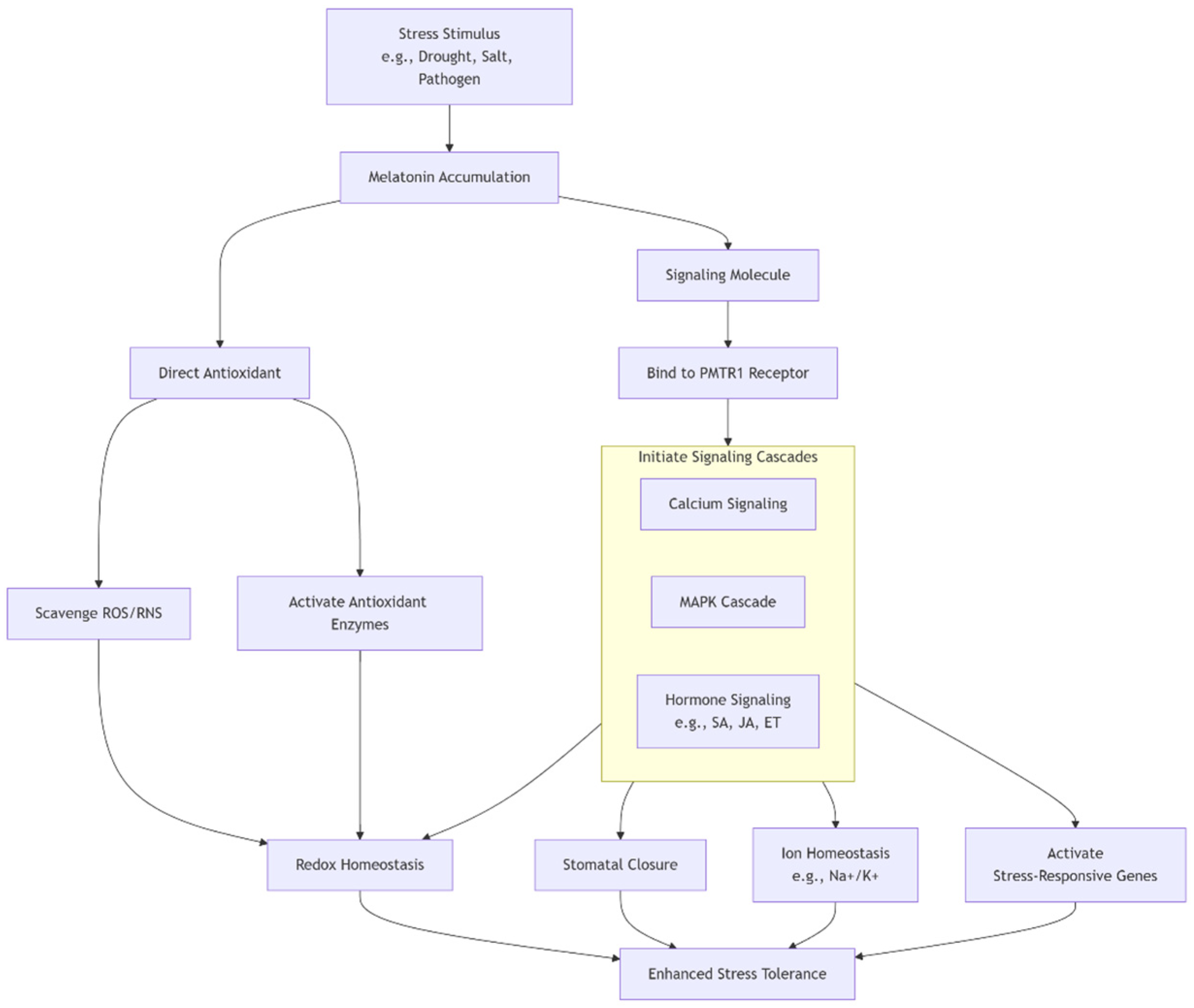
Drought stress significantly constrains plant growth and development by disrupting a range of physiological and metabolic pathways. As illustrated in Figure 2, melatonin alleviates these adverse effects in sorghum through multi-level regulation, including ion homeostasis, nutrient assimilation, reactive oxygen species (ROS) scavenging, photosynthetic efficiency, energy metabolism, hormonal balance, and amino acid metabolism.

4.1. Ion Metabolism

Ionic homeostasis is fundamental to plant health, as it ensures optimal physiological function by regulating the balance of essential ions within tissues. Abiotic stresses, such as drought, significantly disrupt nutrient uptake and utilization, leading to metabolic dysfunction. For instance, under drought conditions, sodium (Na+) levels increase markedly in both root and shoot tissues, while the concentrations of potassium (K+) and calcium (Ca2+) decline. The excessive accumulation of Na+ impairs the structural and functional integrity of photosystem II (PSII), thereby inhibiting photosynthetic efficiency. Moreover, elevated Na+ disturbs K+ homeostasis, which compromises the synthesis of antioxidant enzymes and damages cellular membranes, ultimately inducing ionic toxicity [31].
Melatonin (MT) has been demonstrated to mitigate drought-induced ionic imbalance in various plant species. Exogenous application of MT significantly reduces Na+ accumulation in roots and aerial parts while enhancing the uptake and retention of K+ and Ca2+. Beyond its well-known role as a potent antioxidant, melatonin acts as an effective biostimulant that modulates ion transporter activity and stabilizes ion homeostasis under stress conditions. These regulatory functions collectively alleviate ionic stress and improve plant resilience [32].
Exogenous melatonin application plays a multifaceted role in mitigating ionic imbalance under abiotic stress. It significantly reduces the Na+/K+ ratio by modulating the expression of key ion transporters, including upregulating the K+ channel gene (SKOR) and the Na+/H+ antiporter (SOS1), while also enhancing the activity of plasma membrane H+-ATPase in root cells. This coordinated action promotes Na+ efflux and K+ retention, thereby reducing cytosolic Na+ toxicity [33]. The practical effect of melatonin under salt or drought stress includes the compartmentalization of Na+ into vacuoles and its active efflux from the cytoplasm, accompanied by increased accumulation of K+ and Ca2+, which collectively help restore the ionic balance and electrochemical gradients across the plasma membrane [34]. Additionally, melatonin alleviates oxidative stress by reducing the accumulation of hydrogen peroxide (H2O2) and malondialdehyde (MDA), a marker of membrane lipid peroxidation. Evidence also supports the involvement of melatonin-induced Ca2+ signaling in enhancing stress adaptation, further underscoring melatonin’s role as a key regulator of ion homeostasis under adverse conditions [35].

4.2. Nutrient Metabolism

Mineral uptake represents a critical adaptive mechanism that enables plants to withstand environmental stress. As an essential macronutrient, potassium plays a pivotal role in numerous physiological and biochemical processes within plants. It is involved in the regulation of water status, turgor pressure, and the translocation of photosynthetic products, thereby supporting overall plant development [36]. Under drought stress, exogenous application of melatonin has been shown to significantly elevate nutrient concentrations in sorghum seeds, with notable increases in potassium and silicon content. However, this nutritional enhancement may coincide with slower plant growth and reduced biomass accumulation under water-deficient conditions, primarily due to compromised nutrient uptake and assimilation [37].
Drought stress generally impairs nutrient acquisition in sorghum. Nonetheless, treatment with exogenous melatonin alleviates the adverse effects of soil moisture deficit on nutrient solubility and mobility, thereby improving root absorption capacity. This intervention enhances root hydraulic conductivity and promotes the translocation of nutrients from roots to shoots [38]. Although drought stress markedly restricts the uptake of nitrogen and phosphorus, melatonin application elevates internal nutrient levels, augments photosynthetic efficiency, and stimulates carbohydrate synthesis, thereby increasing energy availability for growth processes [39].

4.3. Reactive Oxygen Species Metabolism

Under normal physiological conditions, plants maintain reactive oxygen species (ROS) at low levels through efficient antioxidant systems, including both enzymatic and non-enzymatic components. However, under salt or drought stress, ROS production often exceeds the scavenging capacity of these systems, leading to oxidative stress that damages cellular structures [40]. Studies have shown that melatonin treatment enhances the activity of key antioxidant enzymes such as superoxide dismutase (SOD), peroxidase (POD), and catalase (CAT) under drought conditions (Figure 2). This elevated enzymatic activity strengthens the antioxidant capacity of seedlings experiencing water deficit [41]. In addition to these enzymes, melatonin upregulates components of the ascorbate-glutathione (AsA-GSH) cycle, including ascorbate peroxidase (APX), monodehydroascorbate reductase (MDHAR), and dehydroascorbate reductase (DHAR). As a result, the levels of ascorbic acid (AsA) and glutathione (GSH) increase significantly—by 16.35% and 91.49%, respectively, compared to drought-stressed plants without melatonin treatment. The boost in SOD activity serves as a critical first line of defense against oxidative damage under drought conditions. Meanwhile, the coordinated action of the AsA-GSH cycle efficiently neutralizes superoxide (O2) and other ROS, thereby minimizing oxidative injury [42,43,44]. In sorghum, drought stress disrupts metabolic homeostasis and elevates ROS production, which in turn induces membrane lipid peroxidation and accelerates cell senescence. Application of exogenous melatonin under drought conditions significantly increases antioxidant enzyme activity, reduces membrane lipid peroxidation, and helps preserve cellular membrane integrity. This collective action enhances the plant’s ability to withstand drought-induced oxidative damage [45].
Exogenous melatonin enhances plant tolerance to abiotic stress by activating the antioxidant enzyme system, which promotes the scavenging of reactive oxygen species (ROS) and reduces oxidative damage to the cytoplasmic membrane. Under stress conditions, overproduction of ROS induces membrane lipid peroxidation, leading to the formation of malondialdehyde (MDA)—a toxic compound that promotes cross-linking and aggregation of proteins and nucleic acids, ultimately disrupting membrane integrity [46]. Consequently, leakage of cellular electrolytes increases, as reflected by elevated relative electrical conductivity. Key antioxidants such as catalase (CAT) and glutathione (GSH) play vital roles in maintaining redox homeostasis, and variations in their levels serve as reliable indicators of ROS accumulation under environmental stresses [47]. Studies have shown that both drought and salt stress can induce a moderate increase in CAT activity, which is linked to H2O2 accumulation under such conditions. Moreover, melatonin application further stimulates the activity of major antioxidant enzymes, including superoxide dismutase (SOD), peroxidase (POD), CAT, and glutathione reductase (GR), while enhancing the recycling of non-enzymatic antioxidants. This coordinated response strengthens the overall antioxidant capacity, improving plant survival under drought conditions [48].

4.4. Photosynthesis and Energy Metabolism

High photosynthetic efficiency is a key characteristic of sorghum (Sorghum bicolor), a C4 plant renowned for its exceptional capacity for carbon fixation and biomass accumulation. Under optimal conditions, sorghum produces biomass that is 1.5 to 2 times greater than that of silage maize, underscoring its high light-use efficiency. Chlorophyll and carotenoids, as essential photosynthetic pigments, play a critical role in absorbing and transferring light energy, thereby directly influencing photosynthetic performance [49]. However, under drought stress, chlorophyll biosynthesis is inhibited while degradation accelerates, leading to a marked decline in chlorophyll content and a reduction in the functional integrity of the photosynthetic apparatus. This impairment negatively affects the light-response system and compromises overall photosynthetic efficiency [50]. Studies have shown that drought stress causes significant reductions in photosynthetic parameters, chlorophyll content, sugar levels, and ultimately yield across multiple sorghum varieties, with the extent of damage increasing with the duration of stress [51].
Exogenous application of melatonin has been demonstrated to effectively mitigate these adverse effects. Treatment with melatonin significantly increases the content of photosynthetic pigments in sorghum seedlings under drought conditions [52]. This protective effect is attributed to melatonin’s role in enhancing the ascorbate-glutathione (AsA-GSH) cycle within chloroplasts, which improves reactive oxygen species (ROS) scavenging capacity, reduces oxidative damage, and helps maintain chloroplast ultrastructure [53]. Additionally, melatonin supports photosynthetic function by regulating stomatal behavior—partially closing stomata to reduce water loss while maintaining CO2 uptake—and by stabilizing photosystem II (PSII) and photosystem I (PSI) structures [54]. Furthermore, it aids the recovery of the photosynthetic apparatus after rehydration and promotes restorative plant growth [55]. These findings collectively indicate that melatonin application enhances photosynthetic duration, area, and capacity under drought stress, primarily by protecting the photosynthetic machinery from oxidative injury and optimizing light-use efficiency. Therefore, using melatonin to sustain leaf photosynthesis represents a promising strategy for improving sorghum’s adaptation to water-limited environments.
Under drought stress, melatonin-treated plants showed reduced stomatal length, width, area, and the number of stomata compared to the control group [56]. This reduction might be attributed to the accumulation of abscisic acid, which promotes stomatal closure, minimizes water loss, and lessens the detrimental effects of drought. In conclusion, mela-tonin appears to enhance the utilization of photosynthetic pigments, mitigate the adverse impacts of drought stress, increase chlorophyll and carotenoid content, and contribute to improved photosynthetic gas exchange values [57].

4.5. Hormone Metabolism

Melatonin plays a multifaceted role in regulating gene expression, particularly in response to abiotic stress in cereal crops [58,59]. This regulation significantly influences cell growth, stress adaptation, and hormone signaling, underscoring the importance of melatonin in plant development [60,61]. Moreover, melatonin interacts with phytohormone signaling pathways and modulates sorghum growth by affecting the synthesis of hormones such as indole-3-acetic acid (IAA), abscisic acid (ABA), and gibberellins (GAs). Previous studies have shown that melatonin participates in ABA-regulated stress responses and may also interact with other phytohormones, including gibberellins and cytokinins (CTK), to regulate nutrient uptake and homeostasis in cereal crops under stress conditions [10].
The biosynthesis of melatonin in plants follows a distinct pathway starting from the amino acid tryptophan and proceeding through serotonin via several enzymatic steps [62]. Specifically, tryptophan is converted to tryptamine by tryptophan decarboxylase (TDC) and then to serotonin by tryptamine 5-hydroxylase (T5H) [63]. Serotonin is subsequently acetylated by serotonin N-acetyltransferase (SNAT) and methylated by N-acetylserotonin methyltransferase (ASMT) to yield melatonin. This pathway highlights how melatonin functions as a key molecule within a complex signaling network that enhances stress resilience through interactions with phytohormone pathways. Understanding the mechanisms of melatonin biosynthesis, perception, and signaling is essential for realizing its potential to improve stress adaptation and crop resilience [64,65]. Previous research has demonstrated that melatonin can alleviate drought stress, with most studies focusing on its effects on morphological and physiological traits under drought conditions [66,67]. However, investigations into the regulation of genes through melatonin–drought interactions remain limited. As indicated in the preceding subsections, melatonin-treated plants generally exhibit greater biomass (height and weight) and improved photosynthetic performance. Numerous experiments have also confirmed that exogenous melatonin enhances drought tolerance in sorghum. Furthermore, transcriptomic analysis conducted by our team revealed 1571 and 5497 melatonin-induced differentially expressed genes (DEGs) in control and treated groups, respectively. These DEGs were primarily enriched in pathways related to phytohormone signaling, MAPK signaling, photosynthesis, and nitrogen metabolism (unpublished data).

4.6. Signaling and Gene Expression

Advances in high-throughput sequencing have increasingly revealed that melatonin significantly influences plant signaling by modulating primary metabolites, transcriptomes, and proteomes. For instance, in Arabidopsis, it has identified 1308 differentially expressed genes (DEGs) under melatonin treatment—566 upregulated and 742 downregulated [68]. Similarly, Shi et al. reported 457 DEGs in rice, with 191 upregulated and 266 downregulated [69]. Gene ontology (GO) analysis further demonstrated that melatonin enhances key metabolic pathways, including nitrogen metabolism, hormone metabolism, amino acid metabolism, antioxidant activity, and other phytohormonal pathways [70,71]. These findings support a hypothetical model of melatonin-mediated signaling in Arabidopsis thaliana under drought conditions.
Under various stress conditions, endogenous melatonin levels increase rapidly, triggering hormonal signaling that upregulates stress-related transcription factors and their downstream genes. This process activates both the abscisic acid (ABA) signaling pathway and the mitogen-activated protein kinase (MAPK) cascade, collectively improving drought tolerance (Figure 2).
(1)
ABA Signaling Pathway: The expression of stress-responsive genes in plants is largely regulated via an ABA-dependent pathway. ABA receptors are localized in multiple cellular compartments, including the nucleus, cytoplasm, chloroplast membrane, and plasma membrane. Under drought conditions, ABA is synthesized in roots and transported to leaves. Key enzymes in ABA biosynthesis—such as zeaxanthin epoxidase (ZEP), aldehyde oxidase (AAO3), 9-cis-epoxycarotenoid dioxygenase 3 (NCED3), and molybdenum cofactor sulfurylase (MCSU)—are upregulated, leading to ABA accumulation [72,73]. The core ABA signaling module consists of PYR/PYL/RCAR receptors, type 2C protein phosphatases (PP2Cs), and SNF1-related protein kinases 2 (SnRK2s). ABA binding induces a conformational change in PYR/PYL/RCAR, inhibiting PP2C activity and releasing SnRK2s. Activated SnRK2s then phosphorylate transcription factors such as ABF, which promotes the expression of osmotic stress-responsive genes like DREB2A [74,75,76]. In drought-tolerant varieties, this pathway enhances antioxidant defense and stomatal regulation, mitigating drought effects [77,78].
(2)
MAPK signaling pathway: The MAPK cascade—comprising MAPKKK, MAPKK, and MAPK—is a conserved signaling module that regulates diverse processes, including stress responses. Activated by receptors such as GPCRs or histidine kinases, MAPKKKs phosphorylate MAPKKs, which in turn activate MAPKs by phosphorylating threonine and tyrosine residues. Downstream targets include transcription factors, cytoskeletal proteins, and kinases that collectively orchestrate drought adaptation [79,80]. Under drought stress, ABA enhances the expression of MAPKKK18, which influences stomatal signaling [81,82]. In Arabidopsis, drought induces AtMEKK1 and AtMPK3, while in rice, OsMAPK5 and OsMSRMK2 are activated. The ABA-activated MAP3K18 kinase interacts with SnRK2.6 and PP2C, contributing to stomatal closure and improving water retention [83,84].

5. Conclusions and Prospects

Drought stress impairs crop development from seed germination through the reproductive stage, affecting both underground root architecture and above-ground growth. It disrupts morphological traits as well as internal physiological processes. Exogenous melatonin application has been demonstrated to alleviate drought-induced impairments such as impaired seed imbibition and radicle emergence, thereby promoting seedling establishment. Furthermore, melatonin modulates root system development under drought conditions by influencing the diameter of primary and lateral roots, increasing root surface area and length, and extending root longevity. These adaptations enhance water and nutrient uptake efficiency under moisture deficit, ultimately improving crop yield and quality under drought stress.
Melatonin plays a significant role in regulating ion homeostasis and nutrient metabolism in plants subjected to drought. Treatment with melatonin induces transcriptional reprogramming, altering the expression of genes involved in nitrogen assimilation, carbohydrate metabolism, and photosynthetic efficiency. For example, in sorghum, melatonin upregulates genes related to nitrogen uptake and photosynthesis, while downregulating certain sugar-metabolism-related genes, collectively enhancing drought resilience. Additionally, melatonin influences cuticular wax biosynthesis, modulates stomatal behavior, and fine-tunes carbon and nitrogen metabolic pathways, contributing to improved stress adaptation.
Despite its recognized efficacy in mitigating abiotic stress, several aspects of melatonin-mediated drought tolerance require deeper investigation. First, the effects of exogenous melatonin on root system architecture under drought—such as root number, surface area, single-root diameter, root tip development, and root exudate composition—remain underexplored. Current studies predominantly focus on shoot-related traits, leaving a critical gap in understanding below-ground adaptations. Second, while most research examines melatonin under single-stress conditions, field environments often involve combined stresses, such as drought coupled with heat, pathogen pressure, or salinity. Future work should explore the physiological and molecular mechanisms by which melatonin regulates crop responses to these complex stress scenarios, which will be essential for optimizing its application in sustainable agriculture.

Author Contributions

Conceptualization, G.Z. (Guanglong Zhu) and H.W.; methodology, H.W.; software, W.B.; validation, H.W., W.B. and Z.R.; formal analysis, H.H.; investigation, H.W.; resources, G.Z. (Guisheng Zhou); data curation, I.A.; writing—original draft preparation, G.Z. (Guanglong Zhu) and H.W.; writing—review and editing, G.Z. (Guanglong Zhu) and G.Z. (Guisheng Zhou); visualization, M.E.H.I.; supervision, G.Z. (Guisheng Zhou); project administration, G.Z. (Guanglong Zhu); funding acquisition, G.Z. (Guanglong Zhu) and G.Z. (Guisheng Zhou). All authors have read and agreed to the published version of the manuscript.

Funding

The research was funded by China National Key Research and Development Program (2022YFE0113400), Jiangsu Provincial Fund for Realizing Carbon Emission Peaking and Neutralization (BE2022305), “Zhongshan Biological Breeding Laboratory” Program (ZSBBL-KY2023-03-05-04), Postgraduate Research & Practice Innovation Program of Jiangsu Province (SJCX24_2272), “Qinglan Project” Talent program of Yangzhou University (2024).

Data Availability Statement

The original contributions presented in the study are included in the article, further inquiries can be directed to the corresponding author.

Conflicts of Interest

The authors declare no conflicts of interest.

References

  1. Ahuja, I.; de Vos, R.C.; Bones, A.M.; Hall, R.D. Plant molecular stress responses face climate change. Trends Plant Sci. 2010, 15, 664–674. [Google Scholar] [CrossRef]
  2. Ananda, G.K.S.; Myrans, H.; Norton, S.L.; Gleadow, R.; Furtado, A.; Henry, R.J. Wild sorghum as a promising resource for crop improvement. Front. Plant Sci. 2020, 11, 1108. [Google Scholar] [CrossRef] [PubMed]
  3. Li, S.G.; Liu, M.; Liu, F.; Zou, J.Q.; Lu, X.C.; Diao, X.M. Current status and future prospective of sorghum production and seed industry in China. Sci. Agric. Sin. 2021, 54, 471–482. (In Chinese) [Google Scholar]
  4. Kang, X.M.; Gao, W.; Cui, B.; Abd El-Aty, A.M. Structure and genetic regulation of starch formation in sorghum (Sorghum bicolor (L.) Moench) endosperm: A review. Int. J. Biol. Macromol. 2023, 239, 124315. [Google Scholar] [CrossRef]
  5. Yan, S.X.; Lu, Y.H.; Wang, L.; Wang, D.Q.; Wang, H.Y.; Zhao, L. Germplasm formation and development of Baijiu-making sorghum in the southwest of China. China Brew. 2017, 36, 17–21. (In Chinese) [Google Scholar]
  6. Kunz, C.F.; Vries, S.D.; Vries, J.D. Plant terrestrialization: An environmental pull on the evolution of multi-sourced streptophyte phenolics. Philos. Trans. R. Soc. B 2024, 379, 20230358. [Google Scholar] [CrossRef]
  7. Fan, J.; Xie, Y.; Zhang, Z.; Chen, L. Melatonin: A multifunctional factor in plants. Int. J. Mol. Sci. 2018, 19, 1528. [Google Scholar] [CrossRef]
  8. Khan, T.A.; Fariduddin, Q.; Nazir, F.; Saleem, M. Melatonin in business with abiotic stresses in plants. Physiol. Mol. Biol. Plants 2020, 26, 1931–1944. [Google Scholar] [CrossRef] [PubMed]
  9. Ostmeyer, T.J.; Bahuguna, R.N.; Kirkham, M.B.; Bean, S.; Jagadish, S.V.K. Enhancing sorghum yield through efficient use of nitrogen-challenges and opportunities. Front. Plant Sci. 2022, 13, 845443. [Google Scholar] [CrossRef]
  10. Kunz, C.F.; Goldbecker, E.S.; Vries, J.D. Functional genomic perspectives on plant terrestrialization. Trends Genet. 2025, 41, 617–629. [Google Scholar] [CrossRef]
  11. Wang, N.N.; Luo, X.M.; Wang, Z.; Liu, J.G. Mitigating effect of exogenous melatonin on salt and drought stress in Cyperus esculentus L. during the tillering stage. Agronomy 2024, 14, 1009. [Google Scholar] [CrossRef]
  12. Bai, Y.D.; Xiao, S.; Zhang, Z.C.; Zhang, Y.J.; Sun, H.C.; Zhang, K.; Wang, X.D.; Bai, Z.Y.; Li, C.D.; Liu, L.T. Melatonin improves the germination rate of cotton seeds under drought stress by opening pores in the seed coat. PeerJ 2020, 8, e9450. [Google Scholar] [CrossRef]
  13. Khan, A.; Numan, M.; Khan, A.L.; Lee, I.J.; Imran, M.; Asaf, S.; Al-Harrasi, A. Melatonin: Awakening the defense mechanisms during plant oxidative stress. Plants 2020, 9, 407. [Google Scholar] [CrossRef]
  14. Su, X.L.; Shu, X.; Wang, X.Y.; Xiong, Y.L.; Xiong, Y.; Liu, W.; Ma, X. Effects of exogenous melatonin on seed germination and seedling growth of Elymus sibiricus under NaCl stress. Pratacult. Sci. 2023, 40, 2595–2606. (In Chinese) [Google Scholar] [CrossRef]
  15. Bhowal, B.; Bhattacharjee, A.; Goswami, K.; Sanan-Mishra, N.; Singla-Pareek, S.L.; Kaur, C.; Sopory, S. Serotonin and melatonin biosynthesis in plants: Genome-Wide identification of the genes and their expression reveal a conserved role in stress and development. Int. J. Mol. Sci. 2021, 22, 11034. [Google Scholar] [CrossRef]
  16. Queiroz, M.S.; Oliveira, C.E.; Steiner, F.; Zuffo, A.M.; Zoz, T.; Vendruscolo, E.P.; Silva, M.V.; Mello, B.F.F.R.; Cabral, R.C.; Menis, F.T. Drought stresses on seed germination and early growth of maize and sorghum. J. Agric. Sci. 2019, 11, 310–318. [Google Scholar] [CrossRef]
  17. Hwang, O.J.; Back, K. Molecular regulation of antioxidant melatonin biosynthesis by brassinosteroid acting as an endogenous elicitor of melatonin induction in rice seedlings. Antioxidants 2022, 11, 918. [Google Scholar] [CrossRef] [PubMed]
  18. Chen, F.; Li, Y.H.; Zia-ur-Rehman, M.; Hussain, S.M.; Qayyum, M.F.; Rizwan, M.; Alharby, H.F.; Alabdallah, N.M.; Alharbi, B.M.; Ali, S. Combined effects of zinc oxide nanoparticles and latonin on wheat growth, chlorophyll contents, cadmium (Cd) and zinc uptake under Cd stress. Sci. Total Environ. 2023, 864, 161061. [Google Scholar] [CrossRef] [PubMed]
  19. Tsuji, W.; Inanaga, S.; Araki, H.; Morita, S.; An, P.; Sonobe, K. Development and distribution of root system in two grain sorghum cultivars originated from Sudan under drought stress. Plant Prod. Sci. 2005, 8, 553–562. [Google Scholar] [CrossRef]
  20. Craufurd, P.Q.; Peacock, J.M. Effect of heat and drought stress on sorghum (Sorghum bicolor). ii. Grain yield. Exp. Agr. 1993, 29, 77–86. [Google Scholar] [CrossRef]
  21. de Almeida, J.A.S.; de Azevedo, T.V.L.G.; Salomon, M.V.; Medina, P.F. Water stress in germination, growth and development of coffee cultivars. J. Seed Sci. 2018, 40, 82–89. [Google Scholar] [CrossRef]
  22. Maduraimuthu, D.; Gowsiga, S.; Govindaraj, M.; Habyarimana, E.; Senthil, A.; Thavaprakaash, N.; Jeyakumar, P.; Kokilavani, J.; Chellammal, C. Impact of root architecture and transpiration rate on drought tolerance in stay-green sorghum. Crop Sci. 2023, 64, 2612–2629. [Google Scholar] [CrossRef]
  23. Habyarimana, E.; Laureti, D.; De Ninno, M.; Lorenzoni, C. Performance of biomass sorghum (Sorghum bicolor L. Moench) under different water regimes in Mediterranean region. Ind. Crops Prod. 2004, 20, 23–28. [Google Scholar] [CrossRef]
  24. Nie, M.E.; Ning, N.; Chen, J.; Zhang, Y.Z.; Li, S.S.; Zheng, L.; Zhang, H.P. Melatonin enhances salt tolerance in sorghum by modulating photosynthetic performance, osmoregulation, antioxidant defense, and ion homeostasis. Open Life Sci. 2023, 18, 0734. [Google Scholar] [CrossRef]
  25. Kapanigowda, M.H.; Perumal, R.; Djanaguiraman, M.; Aiken, R.M.; Tesso, T.; Prasad, P.V.V.; Little, C.R. Genotypic variation in sorghum [Sorghum bicolor (L.) Moench] exotic germplasm collections for drought and disease tolerance. SpringerPlus 2013, 2, 650. [Google Scholar] [CrossRef] [PubMed]
  26. Liu, Z.; Dai, H.; Hao, J.; Li, R.; Pu, X.; Guan, M.; Chen, Q. Current research and future directions of melatonin’s role in seed germination. Stress Biol. 2023, 3, 53. [Google Scholar] [CrossRef]
  27. Altaf, M.A.; Shahid, R.; Ren, M.X.; Mora-Poblete, F.; Arnao, M.B.; Naz, S.; Anwar, M.; Altaf, M.M.; Shahid, S.; Shakoor, A.; et al. Phytomelatonin: An overview of the importance and mediating functions of melatonin against environmental stresses. Physiol. Plant. 2021, 172, 820–846. [Google Scholar] [CrossRef]
  28. Ndlovu, E.; van Staden, J.; Maphosa, M. Morpho-physiological effects of moisture, heat and combined stresses on Sorghum bicolor [Moench (L.)] and its acclimation mechanisms. Plant Stress 2021, 2, 100018. [Google Scholar] [CrossRef]
  29. Ngara, R.; Goche, T.; Swanevelder, D.Z.H.; Chivasa, S. Sorghum’s whole-plant transcriptome and proteome responses to drought stress: A review. Life 2021, 11, 704. [Google Scholar] [CrossRef]
  30. Jahan, M.S.; Guo, S.R.; Baloch, A.R.; Sun, J.; Shu, S.; Wang, Y.; Ahammed, G.J.; Kabir, K.; Roy, R. Melatonin alleviates nickel phytotoxicity by improving photosynthesis, secondary metabolism and oxidative stress tolerance in tomato seedlings. Ecotoxicol. Environ. Saf. 2020, 197, 110593. [Google Scholar] [CrossRef]
  31. Wang, L.; Tanveer, M.; Wang, H.L.; Arnao, M.B. Melatonin as a key regulator in seed germination under abiotic stress. J. Pineal Res. 2024, 76, e12937. [Google Scholar] [CrossRef]
  32. Nie, M.E.; Ning, N.; Zhang, Y.Z.; Li, S.S.; Fan, X.Q.; Liu, Q.S.; Zhang, H.P. The Physiological mechanisms and alleviating effect of melatonin on sorghum seed germination under salt stress. Seed 2023, 42, 31–40. (In Chinese) [Google Scholar] [CrossRef]
  33. Bo, Y.; Xing, Y.; Wang, Y.; Gu, W.; Jiang, X.; Yu, J.; Shi, X.; Liu, C.; Liu, C.; Zhou, Y. Exogenous melatonin modulates photosynthesis and antioxidant systems for improving drought tolerance of sorghum seedling. Curr. Issues Mol. Biol. 2024, 46, 9785–9806. [Google Scholar] [CrossRef]
  34. Bose, S.K.; Howlader, P. Melatonin plays multifunctional role in horticultural crops against environmental stresses: A review. Environ. Exp. Bot. 2020, 176, 104063. [Google Scholar] [CrossRef]
  35. Cao, L.; Qin, B.; Gong, Z.P.; Zhang, Y.X. Melatonin improves nitrogen metabolism during grain filling under drought stress. Physiol. Mol. Biol. Plants 2022, 28, 1477–1488. [Google Scholar] [CrossRef]
  36. Arnao, M.B.; Hernández-Ruiz, J. Melatonin: Plant growth regulator and/or biostimulator during stress? Trends Plant Sci. 2014, 19, 789–797. [Google Scholar] [CrossRef] [PubMed]
  37. Naghizadeh, M.; Kabiri, R.; Hatami, A.; Oloumi, H.; Nasibi, F.; Tahmasei, Z. Exogenous application of melatonin mitigates the adverse effects of drought stress on morpho-physiological traits and secondary metabolites in Moldavian balm (Dracocephalum moldavica). Physiol. Mol. Biol. Plants 2019, 25, 881–894. [Google Scholar] [CrossRef]
  38. Yan, F.Y.; Wei, H.M.; Li, W.W.; Liu, Z.H.; Tang, S.; Chen, L.; Ding, C.Q.; Jiang, Y.; Ding, Y.F.; Li, G.H. Melatonin improves K+ and Na+ homeostasis in rice under salt stress by mediated nitric oxide. Ecotoxicol. Environ. Saf. 2020, 206, 111358. [Google Scholar] [CrossRef]
  39. Zhang, P.F.; Liu, L.; Wang, X.; Wang, Z.Y.; Zhang, H.; Chen, J.T.; Liu, X.Y.; Wang, Y.B.; Li, C.F. Beneficial effects of exogenous melatonin on overcoming salt stress in sugar beets (Beta vulgaris L.). Plants 2021, 10, 886. [Google Scholar] [CrossRef] [PubMed]
  40. Liu, J.; Shabala, S.; Zhang, J.; Ma, G.H.; Chen, D.D.; Shabala, L.; Zeng, F.R.; Chen, Z.H.; Zhou, M.X.; Venkataraman, G.; et al. Melatonin improves rice salinity stress tolerance by NADPH oxidase-dependent control of the plasma membrane K+ transporters and K+ homeostasis. Plant Cell Environ. 2020, 43, 2591–2605. [Google Scholar] [CrossRef] [PubMed]
  41. Kiremit, M.S.; Öztürk, E.; Arslan, H.; Subrata, B.A.G.; Akay, H.; Bakirova, A. Effects of melatonin, proline, and salicylic acid on seedling growth, photosynthetic activity, and leaf nutrients of sorghum under salt stress. Plant Direct. 2023, 8, e574. [Google Scholar] [CrossRef] [PubMed]
  42. Hasanuzzaman, M.; Bhuyan, M.B.; Nahar, K.; Hossain, M.S.; Mahmud, J.A.; Hossen, M.S.; Masud, A.A.C.; Mounita; Fujita, M. Potassium: A vital regulator of plant responses and tolerance to abiotic stresses. Agronomy 2018, 8, 31. [Google Scholar] [CrossRef]
  43. Alharbi, K.; Alnusairi, G.S.H.; Alnusaire, T.S.; Alghanem, S.M.S.; Alsudays, I.M.; Alaklabi, A.; Soliman, M.H. Potassium silica nanostructure improved growth and nutrient uptake of sorghum plants subjected to drought stress. Front. Plant Sci. 2024, 15, 1425834. [Google Scholar] [CrossRef]
  44. Cakmak, I. Enrichment of cereal grains with zinc: Agronomic or genetic biofortification? Plant Soil. 2008, 302, 1–17. [Google Scholar] [CrossRef]
  45. Morales, F.; Abadía, A.; AbadÞa, J. Photoprotection, Photoinhibition, Gene Regulation, and Environment; Springer: Berlin/Heidelberg, Germany, 2008; Volume 21, pp. 65–85. [Google Scholar] [CrossRef]
  46. Ahmad, R.; Alsahli, A.A.; Alansi, S.; Altaf, M.A. Exogenous melatonin confers drought stress by promoting plant growth, photosynthetic efficiency and antioxidant defense system of pea (Pisum sativum L.). Sci. Hortic. 2023, 322, 112431. [Google Scholar] [CrossRef]
  47. Ostrovskaya, L.K.; Truch, V.V.; Mikhailik, O.M. Superoxide dismutase activation in response to lime-induced chlorosis. New Phytol. 1990, 114, 39–45. [Google Scholar] [CrossRef]
  48. Khan, Z.; Jan, R.; Asif, S.; Farooq, M.; Jang, Y.H.; Kim, E.G.; Kim, N.; Kim, K.M. Exogenous melatonin induces salt and drought stress tolerance in rice by promoting plant growth and defense system. Sci. Rep. 2024, 14, 1214. [Google Scholar] [CrossRef]
  49. Ding, F.; Wang, G.; Zhang, S. Exogenous melatonin mitigates methyl viologen-triggered oxidative stress in poplar leaf. Molecules 2018, 23, 2852. [Google Scholar] [CrossRef]
  50. Ball, L.; Accotto, G.P.; Bechtold, U.; Creissen, G.; Funck, D.; Jimenez, A.; Kular, B.; Leyland, N.; Mejia-Carranza, J.; Reynolds, H.; et al. Evidence for a direct link between glutathione biosynthesis and stress defense gene expression in Arabidopsis. Plant Cell 2004, 16, 2448–2462. [Google Scholar] [CrossRef]
  51. Pan, Y.; Wu, L.J.; Yu, Z.L. Effect of salt and drought stress on antioxidant enzymes activities and SOD isoenzymes of liquorice (Glycyrrhiza uralensis Fisch). Plant Growth Regul. 2006, 49, 157–165. [Google Scholar] [CrossRef]
  52. Ahmad, S.; Kamran, M.; Ding, R.X.; Meng, X.P.; Wang, H.Q.; Ahmad, I.; Fahad, S.; Han, Q.F. Exogenous melatonin confers drought stress by promoting plant growth, photosynthetic capacity and antioxidant defense system of maize seedlings. PeerJ 2019, 7, e7793. [Google Scholar] [CrossRef]
  53. Zhang, D.; Wang, N.; Li, C. Sweet sorghum—A high-efficiency and quality forage crop. Biotechnol. Bull. 2019, 35, 2–8. [Google Scholar] [CrossRef]
  54. Ohnishi, N.; Wacera, W.F.; Sakamoto, W. Photosynthetic responses to high temperature and strong light suggest potential post-flowering drought tolerance of sorghum japanese landrace takakibi. Plant Cell Physiol. 2019, 60, 2086–2099. [Google Scholar] [CrossRef]
  55. Ortiz, D.; Salas-Fernandez, M.G. Dissecting the genetic control of natural variation in sorghum photosynthetic response to drought stress. J. Exp. Bot. 2022, 73, 3251–3267. [Google Scholar] [CrossRef]
  56. Xu, Z.Z.; Zhou, G.S. Responses of leaf stomatal density to water status and its relationship with photosynthesis in a grass. J. Exp. Bot. 2008, 59, 3317–3325. [Google Scholar] [CrossRef]
  57. Liang, J.; Hu, Z.Y.; Xie, Z.M.; Ma, L.F.; Chen, Y.; Fang, Z.G. Exogenous melatonin alleviates the physiological effects of drought stress in sweet sorghum seedlings. Acta Pratacult. Sin. 2023, 32, 206–215. (In Chinese) [Google Scholar] [CrossRef]
  58. Zhao, C.F.; Wang, C.G.; Li, H.J.; Zheng, X.H.; Yang, M.; Zhang, R.H. Effects of exogenous melatonin on photosynthesis of maize leaves under drought stress and rewatering. Acta Ecol. Sin. 2021, 41, 1431–1439. (In Chinese) [Google Scholar] [CrossRef]
  59. Sun, C.L.; Liu, L.J.; Wang, L.X.; Li, B.H.; Jin, C.W.; Lin, X.Y. Melatonin: A master regulator of plant development and stress responses. J. Integr. Plant Biol. 2021, 63, 126–145. [Google Scholar] [CrossRef]
  60. Tiwari, R.K.; Lal, M.K.; Kumar, R.; Chourasia, K.N.; Naga, K.C.; Kumar, D.; Das, S.K.; Zinta, G. Mechanistic insights on melatonin-mediated drought stress mitigation in plants. Physiol. Plant. 2021, 172, 1212–1226. [Google Scholar] [CrossRef] [PubMed]
  61. Chen, J.Q.; Qin, H.; Zhang, B.F.; Mao, W.H.; Lou, L.P.; Shen, C.F.; Mao, J.D.; Lin, Q. Development of melatonin nano-delivery systems to reduce cadmium accumulation in rice (Oryza sativa L.) seedlings: Insights from photosynthetic efficiency, antioxidative response and gene expression. Environ. Exp. Bot. 2022, 196, 104822. [Google Scholar] [CrossRef]
  62. Sakouhi, L.; Kadri, O.; Werghi, S.; Massoud, M.B.; Kharbech, O.; Murata, Y.; Chaoui, A. Seed pretreatment with melatonin confers cadmium tolerance to chickpea seedlings through cellular redox homeostasis and antioxidant gene expression improvement. Environ. Sci. Pollut. Res. 2023, 30, 73612–73627. [Google Scholar] [CrossRef]
  63. Liu, G.F.; Hu, Q.; Zhang, X.; Jiang, J.F.; Zhang, Y.; Zhang, Z.X. Melatonin biosynthesis and signal transduction in plants in response to environmental conditions. J. Exp. Bot. 2022, 73, 5818–5827. [Google Scholar] [CrossRef]
  64. Kong, M.M. Study on the Molecular Mechanism of Melatonin and Its Chemical Structure Analogues Inducing Plant Disease Resistance and Its Antibacterial Effect. Ph.D. Thesis, Nanjing Agricultural University, Nanjing, China, 2021. [Google Scholar]
  65. Qiao, Y.J.; Ren, J.H.; Yin, L.N.; Liu, Y.J.; Deng, X.Q.; Liu, P.; Wang, S.W. Exogenous melatonin alleviates PEG-induced short-term water deficiency in maize by increasing hydraulic conductance. BMC Plant Biol. 2020, 20, 218. [Google Scholar] [CrossRef]
  66. Malik, Z.; Afzal, S.; Dawood, M.; Abbasi, G.H.; Khan, M.I.; Kamran, M.; Zhran, M.; Hayat, M.T.; Aslam, M.N.; Rafay, M. Exogenous melatonin mitigates chromium toxicity in maize seedlings by modulating antioxidant system and suppresses chromium uptake and oxidative stress. Environ. Geochem. Health 2022, 44, 1451–1469. [Google Scholar] [CrossRef]
  67. Wang, D.; Chen, Q.Y.; Chen, W.W.; Guo, Q.G.; Xia, Y.; Wang, S.M.; Jing, D.L.; Liang, G.L. Physiological and transcription analyses reveal the regulatory mechanism of melatonin in inducing drought resistance in loquat (Eriobotrya japonica Lindl.) seedlings. Environ. Exp. Bot. 2021, 181, 104291. [Google Scholar] [CrossRef]
  68. Huang, B.; Chen, Y.E.; Zhao, Y.Q.; Ding, C.B.; Liao, J.Q.; Hu, C.; Zhou, L.J.; Zhang, Z.W.; Yuan, S.; Yuan, M. Exogenous melatonin alleviates oxidative damages and protects photosystem II in maize seedlings under drought stress. Front. Plant Sci. 2019, 10, 677. [Google Scholar] [CrossRef] [PubMed]
  69. Shi, H.; Jian, C.; Ye, T.T.; Tan, D.X.; Reiter, R.J.; Zhang, H.; Liu, R.Y.; Chan, Z.L. Comparative physiological, metabolomic, and transcriptomic analyses reveal mechanisms of improved abiotic stress resistance in bermudagrass [Cynodon dactylon (L). Pers.] by exogenous melatonin. J. Exp. Bot. 2015, 66, 681–694. [Google Scholar] [CrossRef]
  70. Liang, C.Z.; Zheng, G.Y.; Li, W.Z.; Wang, Y.Q.; Hu, B.; Wang, H.R.; Wu, H.K.; Qian, Y.W.; Zhu, X.G.; Tan, D.X.; et al. Melatonin delays leaf senescence and enhances salt stress tolerance in rice. J. Pineal Res. 2015, 59, 91–101. [Google Scholar] [CrossRef]
  71. Arnao, M.B.; Hernández-Ruiz, J. Melatonin and its relationship to plant hormones. Ann. Bot. 2017, 121, 195–207. [Google Scholar] [CrossRef] [PubMed]
  72. Reiter, R.J.; Tan, D.X.; Rosales-Corral, S.; Galano, A.; Zhou, X.J.; Xu, B. Mitochondria: Central organelles for melatonin’s antioxidant and anti-aging actions. Molecules 2018, 23, 509. [Google Scholar] [CrossRef]
  73. Zhou, K.F. Study on the Effects of Low Temperature Stress on Physiological and Biochemical and Hormone Metabolism Related Genes of Jiashi Melon. Master’s Thesis, Shihezi University, Shihezi, China, 2021. [Google Scholar]
  74. Soma, F.; Takahashi, F.; Yamaguchi-Shinozaki, K.; Shinozaki, K. Cellular phosphorylation signaling and gene expression in drought stress responses: ABA-Dependent and ABA-Independent regulatory systems. Plants 2021, 10, 756. [Google Scholar] [CrossRef]
  75. Priya, M.; Dhanker, O.P.; Siddique, K.H.M.; HanumanthaRao, B.; Nair, R.M.; Pandey, S.; Singh, S.; Varshney, R.K.; Prasad, P.V.V.; Nayyar, H. Drought and heat stress-related proteins: An update about their functional relevance in imparting stress tolerance in agricultural crops. Theor. Appl. Genet. 2019, 132, 1607–1638. [Google Scholar] [CrossRef] [PubMed]
  76. Guo, J.J.; Yang, X.H.; Weston, D.J.; Chen, J.G. Abscisic acid receptors: Past, present and future. J. Integr. Plant Biol. 2011, 53, 469–479. [Google Scholar] [CrossRef]
  77. Fujii, H.; Zhu, J.K. Arabidopsis mutant deficient in 3 abscisic acid-activated protein kinases reveals critical roles in growth, reproduction, and stress. Proc. Natl. Acad. Sci. USA 2009, 106, 8380–8385. [Google Scholar] [CrossRef]
  78. Vlad, F.; Rubio, S.; Rodrigues, A.; Sirichandra, C.; Belin, C.; Robert, N.; Leung, J.; Rodriguez, P.L.; Lauriere, C.; Merlot, S. Protein phosphatases 2C regulate the activation of the Snf1-Related Kinase OST1 by abscisic acid in Arabidopsis. Plant Cell 2009, 21, 3170–3184. [Google Scholar] [CrossRef] [PubMed]
  79. Kim, J.S.; Mizoi, J.; Yoshida, T.; Fujita, Y.; Nakajima, J.; Ohori, T.; Todaka, D.; Nakashima, K.; Hirayama, T.; Shinozaki, K.; et al. An ABRE promoter sequence is involved in osmotic stress-responsive expression of the DREB2A gene, which encodes a transcription factor regulating drought-inducible genes in Arabidopsis. Plant Cell Physiol. 2011, 52, 2136–2146. [Google Scholar] [CrossRef] [PubMed]
  80. Jiang, M.; Wen, F.; Cao, J.M.; Li, P.; She, J.; Chu, Z.Q. Genome-wide exploration of the molecular evolution and regulatory network of mitogen-activated protein kinase cascades upon multiple stresses in Brachypodium distachyon. BMC Genom. 2015, 16, 228. [Google Scholar] [CrossRef]
  81. Danquah, A.; de Zelicourt, A.; Boudsocq, M.; Neubauer, J.; Frey, N.F.D.; Leonhardt, N.; Pateyron, S.; Gwinner, F.; Tamby, J.P.; Ortiz-Masia, D.; et al. Identification and characterization of an ABA-activated MAP kinase cascade in Arabidopsis thaliana. Plant J. 2015, 82, 232–244. [Google Scholar] [CrossRef]
  82. Mitula, F.; Tajdel, M.; Cie’sla, A.; Kasprowicz-Maluski, A.; Kulik, A.; BabulaSkowronska, D.; Michalak, M.; Dobrowolska, G.; Sadowski, J.; Ludwików, A. Arabidopsis ABA-activated kinase MAPKKK18 is regulated by protein phosphatase 2C ABI1 and the ubiquitin-proteasome pathway. Plant Cell Physiol. 2015, 56, 2351–2367. [Google Scholar] [CrossRef]
  83. Li, F.J.; Li, M.Y.; Wang, P.; Cox, K.L.; Duan, L.S.; Dever, J.K.; Shan, L.B.; Li, Z.H.; He, P. Regulation of cotton (Gossypium hirsutum) drought responses by mitogenactivated protein (MAP) kinase cascade-mediated phosphorylation of Gh WRKY 59. New Phytol. 2017, 215, 1462–1475. [Google Scholar] [CrossRef]
  84. Cerda, A.; Alvarez, M.J. Insights into molecular links and transcription networks integrating drought stress and nitrogen signaling. New Phytol. 2023, 241, 560–566. [Google Scholar] [CrossRef] [PubMed]
Figure 1. Effects of drought stress on seed germination and plant growth in sorghum. Drought stress severely impairs seed water uptake, inhibiting cellular division and expansion during germination, which leads to reduced germination rates and poor seedling establishment. At the seedling stage, root development is significantly constrained, resulting in diminished root system architecture (e.g., reduced total root length and surface area) and weakened root vigor. This restricts the plant’s capacity to absorb water and nutrients, subsequently impairing shoot elongation and leaf emergence. As drought persists, chlorophyll degradation accelerates, photosynthetic efficiency declines, and assimilate accumulation is reduced, ultimately compromising grain filling and yield.
Agronomy 16 00248 g001
Figure 2. Physiological mechanisms of melatonin in regulating sorghum growth under drought stress. Drought stress triggers the accumulation of melatonin in sorghum plants. Melatonin enhances stress tolerance through a multi-level regulatory network: it directly activates antioxidant enzymes such as superoxide dismutase (SOD), catalase (CAT), and peroxidase (POD) to scavenge reactive oxygen species (ROS) and maintain cellular redox homeostasis. Simultaneously, melatonin can bind to putative receptors (e.g., PMTR1) and initiate downstream signaling cascades. These cascades modulate physiological processes including stomatal closure, ion homeostasis, and the expression of stress-responsive genes, collectively improving the plant’s resilience to drought conditions.
Agronomy 16 00248 g002
Disclaimer/Publisher’s Note: The statements, opinions and data contained in all publications are solely those of the individual author(s) and contributor(s) and not of MDPI and/or the editor(s). MDPI and/or the editor(s) disclaim responsibility for any injury to people or property resulting from any ideas, methods, instructions or products referred to in the content.