Can the Application of Microbial Inocula Allow for Reducing Phosphate Fertilisation Rates in Open Field Tomato Crops?

 , , ,
, , ,  and
and 
Abstract
1. Introduction
2. Materials and Methods
2.1. Field Trial Set Up
2.2. Field Trials Measurements
2.3. Rhizobox Experiment
2.4. Rhizobox Experiment Measurements
2.5. Statistical Analysis
3. Results
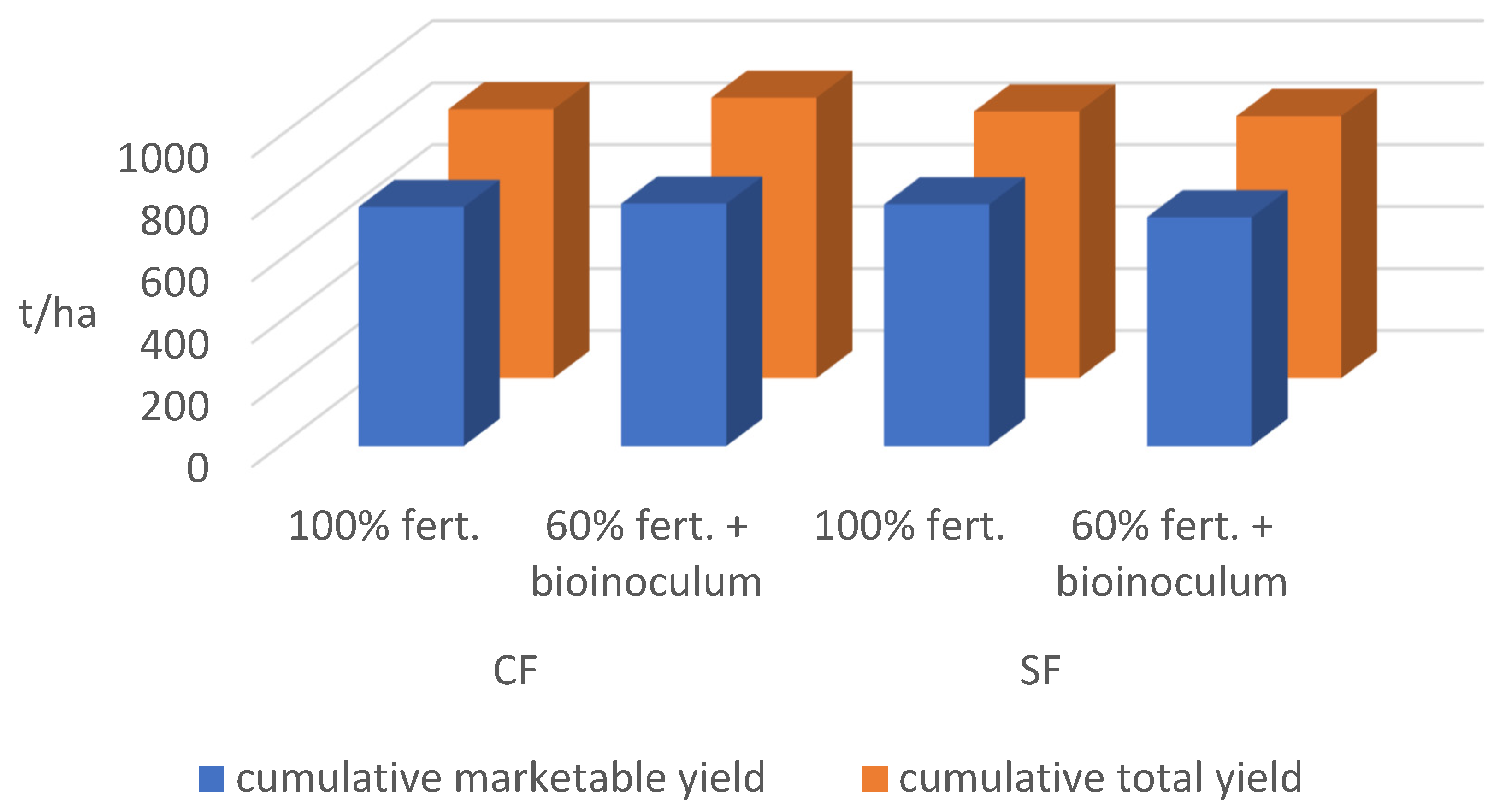
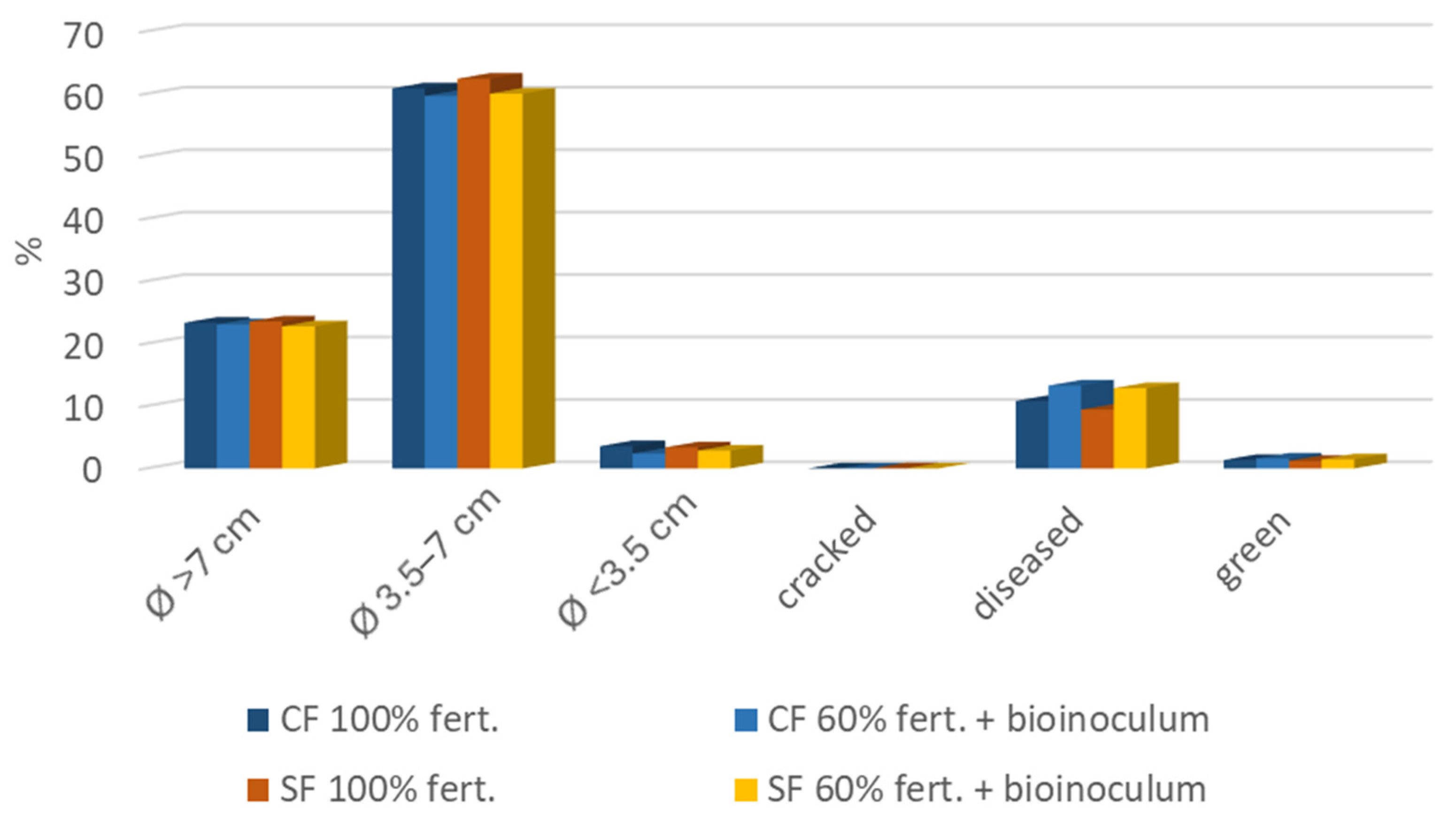
3.1. Effect of the Integration of the Bacterial Consortium in the Fertilisation Management on Agronomic Performance of Tomato Plants Under Open Field Cultivation
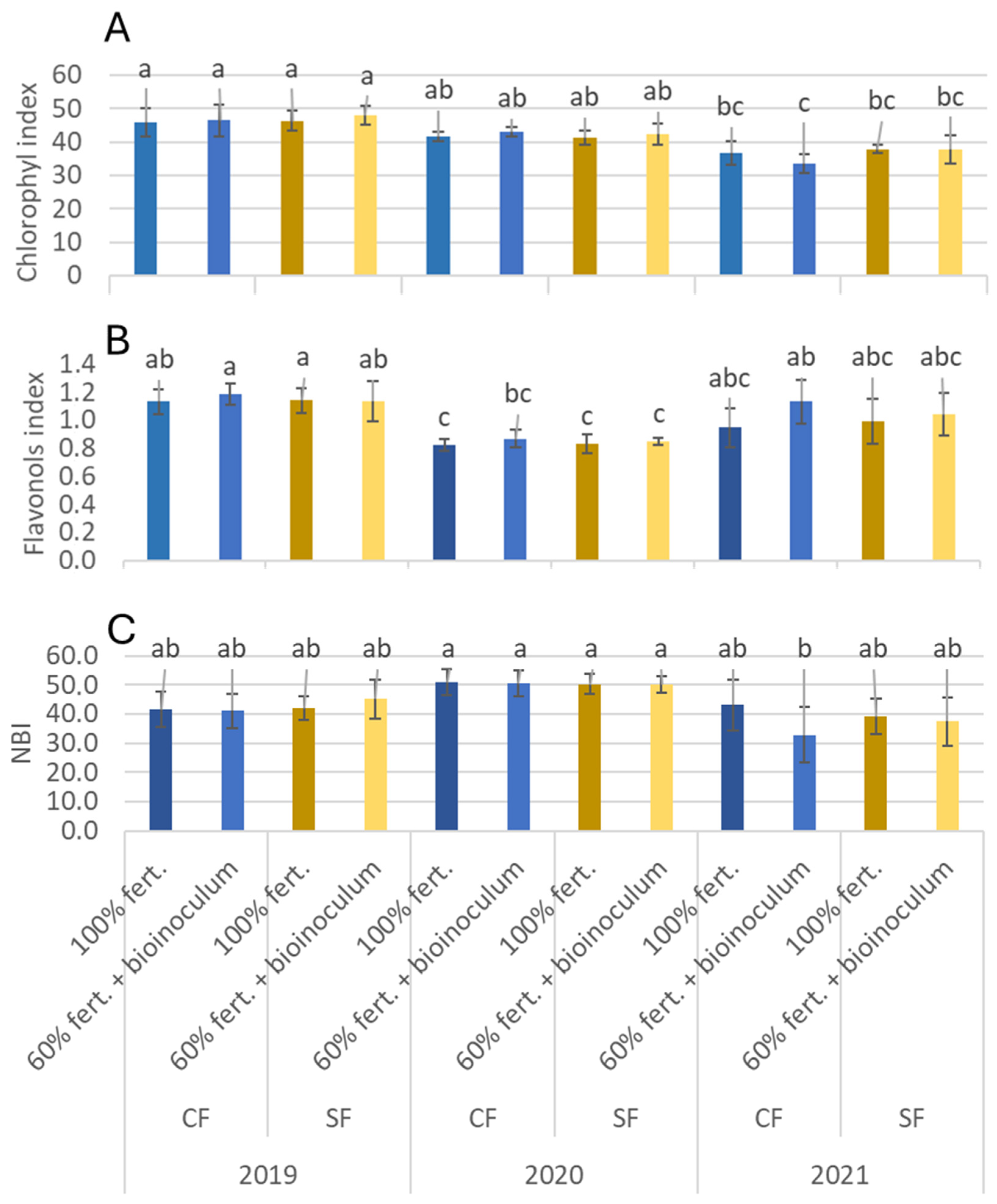
3.2. Effect of the Integration of the Bacterial Consortium in the Fertilisation Management on the Physiology of Tomato Plants
3.3. Effect of the Inoculation with the Bacterial Consortium on Plant Growth and Root Architecture of Tomato Plants and on Rhizosphere Bacterial Activity
4. Discussion
5. Conclusions
Supplementary Materials
Author Contributions
Funding
Data Availability Statement
Conflicts of Interest
References
- Ritchie, H.; Roser, M.; Rosado, P. Fertilizers. Our World in Data. 2022. Available online: https://ourworldindata.org/fertilizers (accessed on 20 October 2025).
- Kazakova, I.V. Features of the Formation of global and domestic markets for mineral fertilizers. Econ. Forecast. 2015, 2, 104–118. [Google Scholar]
- Ulen, B.; Bechmann, M.; Fölster, J.; Jarvie, H.P.; Tunney, H. Agriculture as a phosphorus source for eutrophication in the north-west European countries, Norway, Sweden, United Kingdom and Ireland: A review. Soil Use Manag. 2007, 23, 5–15. [Google Scholar] [CrossRef] [Scilit]
- Adomaitis, T.; Vaisvila, Z.; Mazvila, J.; Staugaitis, G.; Fullen, M.A. Influence of mineral fertilizer on nitrogen leaching. Acta Agric. Scand. B Soil Plant Sci. 2008, 58, 199–207. [Google Scholar] [CrossRef] [Scilit]
- Bharathi, M.J.; Anbarasu, M.; Raghu, R.; Subramanian, E. Assessment of soil microbial diversity and soil enzyme activities under inorganic input sources on maize and rice ecosystems. Saudi J. Biol. Sci. 2024, 31, 103978. [Google Scholar] [CrossRef] [Scilit]
- Malusà, E.; Pinzari, F.; Canfora, L. Efficacy of biofertilizers: Challenges to improve crop production. In Microbial Inoculants in Sustainable Agricultural Productivity; Singh, D.P., Singh, H.B., Prabha, R., Eds.; Springer: New Delhi, India, 2016; Volume 2, pp. 17–40. [Google Scholar] [CrossRef] [Scilit]
- Sun, W.L.; Zhao, Y.G.; Yang, M. Microbial fertilizer improving the soil nutrients and growth of reed in degraded wetland. IOP Conf. Ser. Earth Environ. Sci. 2017, 69, 012062. [Google Scholar] [CrossRef] [Scilit]
- Angulo, J.; Martinez, M.M.; Ortega-Blu, R.; Fincheira, P. Combined effects of chemical fertilization and microbial inoculant on nutrient use efficiency and soil quality indicators. Sci. Agropecu. 2020, 11, 375–380. [Google Scholar] [CrossRef] [Scilit]
- Vassileva, M.; Mocali, S.; Canfora, L.; Malusà, E.; García del Moral, L.F.; Martos, V.; Flor-Peregrin, E.; Vassilev, N. Safety level of microorganism-bearing products applied in soil–plant systems. Front. Plant Sci. 2022, 13, 862875. [Google Scholar] [CrossRef] [Scilit]
- Manfredini, A.; Malusà, E.; Costa, C.; Pallottino, F.; Mocali, S.; Pinzari, F.; Canfora, L. Current methods, common practices, and perspectives in tracking and monitoring bioinoculants in soil. Front. Microbiol. 2021, 12, 698491. [Google Scholar] [CrossRef] [Scilit] [PubMed]
- Hartmann, A.; Schmid, M.; van Tuinen, D.; Berg, G. Plant-driven selection of microbes. Plant Soil 2009, 321, 235–257. [Google Scholar] [CrossRef] [Scilit]
- Singh, M.; Jha, S.; Pathak, D.; Maisnam, G. Advancing biofertilizers: The evolution from single-strain formulations to synthetic microbial communities (SynCom) for sustainable agriculture. Discov. Plants 2025, 2, 226. [Google Scholar] [CrossRef] [Scilit]
- European Union. Regulation (EU) 2019/1009 of the European Parliament and of The Council of 5 June 2019 Laying down Rules on the Making Available on the Market of EU Fertilising Products and Amending Regulations (EC) No 1069/2009 and (EC) No 1107/2009 and Repealing Regulation (EC) No 2003/2003. Official Journal of the European Union, L 170, 1–114. Available online: https://eur-lex.europa.eu/eli/reg/2019/1009/oj/eng (accessed on 20 October 2025).
- Choi, K.H.; Dobbs, F.C. Comparison of two kinds of Biolog Microplates (GN and ECO) in their ability to distinguish among aquatic microbial communities. J. Microbiol. Methods 1999, 36, 203–213. [Google Scholar] [CrossRef] [Scilit]
- Gomez, E.; Ferreras, L.; Toresani, S. Soil bacterial functional diversity as influenced by organic amendment application. Bioresour. Technol. 2006, 97, 1484–1489. [Google Scholar] [CrossRef] [Scilit] [PubMed]
- Chaudhary, P.; Singh, S.; Chaudhary, A.; Sharma, A.; Kumar, G. Overview of biofertilizers in crop production and stress management for sustainable agriculture. Front. Plant Sci. 2022, 13, 930340. [Google Scholar] [CrossRef] [Scilit] [PubMed]
- Trivedi, P.; Schenk, P.M.; Wallenstein, M.D.; Singh, B.K. Tiny microbes, big yields: Enhancing food crop production with biological solutions. Microb. Biotechnol. 2017, 10, 999–1003. [Google Scholar] [CrossRef] [Scilit] [PubMed]
- Ozanne, P.G.; Kirkton, D.J.; Shaw, T.C. The loss of phosphorus from sandy soils. Aust. J. Agric. Res. 1961, 12, 409–423. [Google Scholar] [CrossRef] [Scilit]
- Adesemoye, A.O.; Torbert, H.A.; Kloepper, J.W. Enhanced plant nutrient use efficiency with PGPR and AMF in an integrated nutrient management system. Can. J. Microbiol. 2008, 54, 876–886. [Google Scholar] [CrossRef] [Scilit]
- Saini, V.K.; Bhandari, S.C.; Tarafdar, J.C. Comparison of crop yield, soil microbial C, N and P, N-fixation, nodulation and mycorrhizal infection in inoculated and non-inoculated sorghum and chickpea crops. Field Crops Res. 2004, 89, 39–47. [Google Scholar] [CrossRef] [Scilit]
- Yagmur, B.; Gunes, A. Evaluation of the Effects of Plant Growth Promoting Rhizobacteria (PGPR) on yield and quality parameters of tomato plants in organic agriculture by Principal Component Analysis (PCA). Gesunde Pflanz. 2021, 73, 219–228. [Google Scholar] [CrossRef] [Scilit]
- Adesemoye, A.O.; Torbert, H.A.; Kloepper, J.W. Plant Growth-Promoting Rhizobacteria allow reduced application rates of chemical fertilizers. Microb. Ecol. 2009, 58, 921–929. [Google Scholar] [CrossRef] [Scilit]
- Wen, Z.; White, P.J.; Shen, J.; Lambers, H. Linking root exudation to belowground economic traits for resource acquisition. New Phytol. 2021, 233, 1620–1635. [Google Scholar] [CrossRef] [Scilit]
- Lugtenberg, B.; Kamilova, F. Plant-Growth-Promoting Rhizobacteria. Annu. Rev. 2009, 63, 541–556. [Google Scholar] [CrossRef] [Scilit]
- Schoebitz, M.; Simonin, H.; Poncelet, D. Starch filler and osmoprotectants improve the survival of rhizobacteria in dried alginate beads. J. Microencapsul. 2012, 29, 532–538. [Google Scholar] [CrossRef] [Scilit]
- Awasthi, A.; Singh, M.; Soni, S.K.; Singh, R.; Kalra, A. Biodiversity acts as insurance for productivity of bacterial communities under abiotic perturbations. ISME J. 2014, 8, 2445–2452. [Google Scholar] [CrossRef] [Scilit]
- Cirillo, V.; Romano, I.; Woo, S.L.; Di Stasio, E.; Lombardi, N.; Comite, E.; Pepe, O.; Ventorino, V.; Maggio, A. Inoculation with a microbial consortium increases soil microbial diversity and improves agronomic traits of tomato under water and nitrogen deficiency. Front. Plant Sci. 2023, 14, 1304627. [Google Scholar] [CrossRef] [Scilit]
- Chen, K.-N.; Chen, C.-Y.; Lin, Y.-C.; Chen, M.-J. Formulation of a novel antagonistic bacterium based biopesticide for fungal disease control using microencapsulation techniques. J. Agric. Sci. 2013, 5, 153. [Google Scholar]
- Grzegorczyk, M.; Kancelista, A.; Łaba, W.; Piegza, M.; Witkowska, D. The effect of lyophilization and storage time on the survival rate and hydrolytic activity of trichoderma strains. Folia Microbiol. 2018, 63, 433–441. [Google Scholar] [CrossRef] [Scilit]
- Azaroual, S.E.; El Mernissi, N.; Zeroual, Y.; Bouizgarne, B.; Meftah-Kadmiri, I. Effect of Bacillus spp. strains on wheat nutrient assimilation and bioformulation by new spray drying approach using natural phosphate powder. Dry. Technol. 2021, 40, 2630–2644. [Google Scholar] [CrossRef] [Scilit]
- Han, H.S.; Lee, K.D. Phosphate and potassium solubilizing bacteria effect on mineral uptake, soil availability and growth of eggplant. Res. J. Agric. Biol. Sci. 2005, 1, 176–180. [Google Scholar]
- Nannipieri, P.; Ascher, J.; Ceccherini, M.T.; Landi, L.; Pietramellara, G.; Renella, G. Microbial diversity and soil functions. Eur. J. Soil Sci. 2017, 68, 12–26. [Google Scholar] [CrossRef] [Scilit]
- Saleem, M.; Hu, J.; Jousset, A. More than the sum of its parts: Microbiome biodiversity as a driver of plant growth and soil health. Annu. Rev. Ecol. Evol. Syst. 2019, 50, 145–168. [Google Scholar] [CrossRef] [Scilit]
- Susič, N.; Žibrat, U.; Sinkovič, L.; Vončina, A.; Razinger, J.; Knapič, M.; Sedlar, A.; Širca, S.; Stare, B.G. From genome to field—Observation of the multi-modal nematicidal and plant growth-promoting effects of Bacillus firmus I-1582 on tomatoes using hyperspectral remote sensing. Plants 2020, 9, 592. [Google Scholar] [CrossRef] [Scilit]
- Shen, G.; Ju, W.; Liu, Y.; Guo, X.; Zhao, W.; Fang, L. Impact of urea addition and Rhizobium inoculation on plant resistance in metal contaminated soil. Int. J. Environ. Res. Public Health 2019, 16, 1955. [Google Scholar] [CrossRef] [Scilit]
- Hussain, M.; Asgher, Z.; Tahir, M.; Ijaz, M.; Shahid, M.; Ali, H.; Sattar, A. Bacteria in combination with fertilizers improve growth, productivity and net returns of wheat (Triticum aestivum L.). Pak. J. Agric. Sci. 2016, 53, 633–645. [Google Scholar] [CrossRef] [Scilit]
- Palacio-Rodríguez, R.; Nava-Reyes, B.; Sánchez-Galván, H.; Quezada-Rivera, J.J.; Sáenz-Mata, J. Effect of Plant Growth-Promoting Rhizobacteria inoculation on tomato under commercial shade-house conditions. Rev. Mex. Cienc. Agric. 2022, 13, 231–242. [Google Scholar] [CrossRef] [Scilit]
- Grover, M.; Bodhankar, S.; Sharma, A.; Sharma, P.; Singh, J.; Nain, L. PGPR mediated alterations in root traits: Way toward sustainable crop production. Front. Sustain. Food Syst. 2021, 4, 618230. [Google Scholar] [CrossRef] [Scilit]
- Pii, Y.; Mimmo, T.; Tomasi, N.; Terzano, R.; Cesco, S.; Crecchio, C. Microbial interactions in the rhizosphere: Beneficial influences of plant growth-promoting rhizobacteria on nutrient acquisition process. A review. Biol. Fertil. Soils 2015, 51, 403–415. [Google Scholar] [CrossRef] [Scilit]
- Rehan, M.; Al-Turki, A.; Abdelmageed, A.H.A.; Abdelhameid, N.M.; Omar, A.F. Performance of Plant-Growth-Promoting Rhizobacteria (PGPR) isolated from sandy soil on growth of tomato (Solanum lycopersicum L.). Plants 2023, 12, 1588. [Google Scholar] [CrossRef] [Scilit] [PubMed]
- Tang, L.; Shi, Y.; Zhang, Y.; Yang, D.; Guo, C. Effects of Plant-Growth-Promoting Rhizobacteria on soil bacterial community, soil physicochemical properties, and soil enzyme activities in the rhizosphere of alfalfa under field conditions. Diversity 2023, 15, 537. [Google Scholar] [CrossRef] [Scilit]
- Trabelsi, D.; Mhamdi, R. Microbial inoculants and their impact on soil microbial communities: A Review. BioMed Res. Int. 2013, 2013, 863240. [Google Scholar] [CrossRef] [Scilit]
- Aloo, B.N.; Makumba, B.A.; Mbega, E.R. The potential of Bacilli rhizobacteria for sustainable crop production and environmental sustainability. Microbiol. Res. 2019, 219, 26–39. [Google Scholar] [CrossRef] [Scilit]
- Miljaković, D.; Marinković, J.; Balešević-Tubić, S. The Significance of Bacillus spp. in Disease Suppression and Growth Promotion of Field and Vegetable Crops. Microorganisms 2020, 8, 1037. [Google Scholar] [CrossRef] [Scilit] [PubMed]
- Zutter, N.; Ameye, M.; Bekaert, B.; Verwaeren, J.; Gelder, L.; Audenaert, K. Uncovering new insights and misconceptions on the effectiveness of phosphate solubilizing rhizobacteria in plants: A meta-analysis. Front. Plant Sci. 2022, 13, 858804. [Google Scholar] [CrossRef] [Scilit]
- Grady, E.N.; MacDonald, J.; Liu, L.; Richman, A.; Yuan, Z.-C. Current knowledge and perspectives of Paenibacillus: A review. Microb. Cell Factories 2016, 15, 203. [Google Scholar] [CrossRef] [Scilit] [PubMed]
- Vitali, F.; Trzciński, P.; Manfredini, A.; Olimi, E.; Bigiotti, G.; Ptaszek, M.; Sas-Paszt, L.; Bickel, S.; Berg, G.; Canfora, L.; et al. Combined genomic and phenomic analyses reveals multifunctionality of Paenibacillus polymyxa K16 for plant’s nutrition, growth and health. Sci. Rep. 2025, 15, 33487. [Google Scholar] [CrossRef] [Scilit]
- Gupta, R.S.; Patel, S.; Saini, N.; Chen, S. Robust demarcation of 17 distinct Bacillus species clades, proposed as novel Bacillaceae genera, by phylogenomics and comparative genomic analyses: Description of Robertmurraya kyonggiensis sp. nov. and proposal for an emended genus Bacillus limiting it only to the members of the subtilis and Cereus clades of species. Int. J. Syst. Evol. Microbiol. 2020, 70, 5753–5798. [Google Scholar] [CrossRef] [Scilit]
- Trivedi, P.; Pandey, A. Plant growth promotion abilities and formulation of Bacillus megaterium strain B 388 (MTCC6521) isolated from a temperate Himalayan location. Indian J. Microbiol. 2008, 48, 342–347. [Google Scholar] [CrossRef] [Scilit] [PubMed]
- Nascimento, F.X.; Hernández, A.G.; Glick, B.R.; Rossi, M.J. Plant growth-promoting activities and genomic analysis of the stress-resistant Bacillus megaterium STB1, a bacterium of agricultural and biotechnological interest. Biotechnol. Rep. 2020, 25, e00406. [Google Scholar] [CrossRef] [Scilit]
- Paul, S.; Chakraborty, A.P. Priestia flexa—A Phosphate-Solubilizing and IAA-Producing Actinobacterium from the Rhizosphere of Oryza sativa Showing In Vitro Antagonism Against Bipolaris oryzae. In Recent Trends and Applications in Plants, Microbes and Agricultural Sciences (APMAS 2023); Roy, S., Mathur, P., Chowdhury, M., Bhandari, J.B., Eds.; Springer: Cham, Switzerland, 2023. [Google Scholar] [CrossRef] [Scilit]
- Stępień, A.; Wojtkowiak, K.; Kolankowska, E. Effect of Commercial Microbial Preparations Containing Paenibacillus azotofixans, Bacillus megaterium and Bacillus subtilis on the Yield and Photosynthesis of Winter Wheat and the Nitrogen and Phosphorus Content in the Soil. Appl. Sci. 2022, 12, 12541. [Google Scholar] [CrossRef] [Scilit]



| Year | Fertiliser Type | Treatment | Total Yield (t/ha) | Effect Size | Marketable Yield (t/ha) | Effect Size |
|---|---|---|---|---|---|---|
| 2018 | CF | 100% fert. | 179.06 ± 29.9 d | 0.33 | 167.90 ± 31.7 c | 0.48 |
| 60% fert. + bioinoculum | 196.66 ± 68.7 cd | 155.48 ± 18.9 c | ||||
| SF | 100% fert. | 160.08 ± 8.4 d | 1.23 | 148.75 ± 9.7 c | 0.82 | |
| 60% fert. + bioinoculum | 202.28 ± 47.8 cd | 164.85 ± 26.0 c | ||||
| 2019 | CF | 100% fert. | 282.29 ± 37.9 abc | 0.65 | 275.00 ± 35.6 a | 0.64 |
| 60% fert. + bioinoculum | 308.87 ± 43.3 ab | 300.23 ± 42.7 a | ||||
| SF | 100% fert. | 334.61 ± 51.90 a | 1.26 | 326.29 ± 49.8 a | 1.36 | |
| 60% fert. + bioinoculum | 282.80 ± 26.6 abc | 272.92 ± 24.7 ab | ||||
| 2020 | CF | 100% fert. | 192.78 ± 62.6 cd | 0.32 | 145.10 ± 47.4 c | 0.24 |
| 60% fert. + bioinoculum | 209.81 ± 40.4 bcd | 155.89 ± 42.9 c | ||||
| SF | 100% fert. | 175.47 ± 40.5 d | 0.54 | 133.84 ± 40.3 c | 0.59 | |
| 60% fert. + bioinoculum | 156.88 ± 27.7 d | 112.90 ± 29.9 c | ||||
| 2021 | CF | 100% fert. | 213.72 ± 6.4 bcd | 1.02 | 183.78 ± 17.9 c | 0.55 |
| 60% fert. + bioinoculum | 189.73 ± 32.4 cd | 171.07 ± 27.2 c | ||||
| SF | 100% fert. | 190.39 ± 25.3 cd | 0.41 | 171.82 ± 24.0 c | 0.50 | |
| 60% fert. + bioinoculum | 204.00 ± 40.2 cd | 187.94 ± 38.6 bc |
| Treatment | Total Root Length (mm) | Root Diameter (mm) | Root Volume (cm3) | Number of Root Tips |
|---|---|---|---|---|
| Complex fertiliser | ||||
| 100% fert. | 6405 ± 1240 a | 0.26 ± 0.01 a | 3.34 ± 0.45 a | 32724 ± 5720 a |
| 60% fert. + bioinoculum | 5181 ± 1797 a | 0.24 ± 0.01 a | 2.35 ± 1.00 a | 45387 ± 13144 a |
| Simple fertiliser | ||||
| 100% fert. | 4973 ± 739 a | 0.26 ± 0.02 a | 2.57 ± 0.49 a | 36059 ± 15466 a |
| 60% fert. + bioinoculum | 4894 ± 822 a | 0.25 ± 0.03 a | 2.44 ± 0.39 a | 35668 ± 9389 a |
| Treatment | Shoots d.w. (g) | Roots d.w. (g) | Shoot/Roots d.w. (g) |
|---|---|---|---|
| Complex fertiliser | |||
| 100% fert. | 8.04 ± 0.42 a | 2.82 ± 0.28 a | 2.85 ± 0.33 a |
| 60% fert. + bioinoculum | 8.24 ± 1.79 a | 2.94 ± 1.01 a | 2.80 ± 0.63 a |
| Simple fertiliser | |||
| 100% fert. | 8.85 ± 1.59 a | 2.80 ± 0.83 a | 3.16 ± 0.76 a |
| 60% fert. + bioinoculum | 7.37 ± 0.82 a | 2.77 ± 0.50 a | 2.66 ± 0.68 a |
| Treatment | AWCD | H Index |
|---|---|---|
| Complex fertiliser | ||
| 100% fert. | 1.18 ± 0.04 b | 3.07 ± 0.12 a |
| 60% fert. + bioinoculum | 1.42 ± 0.09 a | 3.21 ± 0.05 a |
| Simple fertiliser | ||
| 100% fert. | 1.50 ± 0.03 a | 3.25 ± 0.09 a |
| 60% fert. + bioinoculum | 1.38 ± 0.04 a | 2.99 ± 0.33 a |
Disclaimer/Publisher’s Note: The statements, opinions and data contained in all publications are solely those of the individual author(s) and contributor(s) and not of MDPI and/or the editor(s). MDPI and/or the editor(s) disclaim responsibility for any injury to people or property resulting from any ideas, methods, instructions or products referred to in the content. |
© 2026 by the authors. Licensee MDPI, Basel, Switzerland. This article is an open access article distributed under the terms and conditions of the Creative Commons Attribution (CC BY) license.
Share and Cite
Kowalski, A.; Trzciński, P.; el Meziane, A.; Sas-Paszt, L.; Malusà, E. Can the Application of Microbial Inocula Allow for Reducing Phosphate Fertilisation Rates in Open Field Tomato Crops? Agronomy 2026, 16, 170. https://doi.org/10.3390/agronomy16020170
Kowalski A, Trzciński P, el Meziane A, Sas-Paszt L, Malusà E. Can the Application of Microbial Inocula Allow for Reducing Phosphate Fertilisation Rates in Open Field Tomato Crops? Agronomy. 2026; 16(2):170. https://doi.org/10.3390/agronomy16020170
Chicago/Turabian StyleKowalski, Artur, Paweł Trzciński, Aya el Meziane, Lidia Sas-Paszt, and Eligio Malusà. 2026. "Can the Application of Microbial Inocula Allow for Reducing Phosphate Fertilisation Rates in Open Field Tomato Crops?" Agronomy 16, no. 2: 170. https://doi.org/10.3390/agronomy16020170
APA StyleKowalski, A., Trzciński, P., el Meziane, A., Sas-Paszt, L., & Malusà, E. (2026). Can the Application of Microbial Inocula Allow for Reducing Phosphate Fertilisation Rates in Open Field Tomato Crops? Agronomy, 16(2), 170. https://doi.org/10.3390/agronomy16020170