Article

Deciphering the Mechanisms Underlying Enhanced Drought Tolerance in Autotetraploid Apple ‘Redchief’: Physiological, Biochemical, Molecular, and Anatomical Insights

by
Monika Działkowska
,
Danuta Wójcik
*,
Krzysztof Klamkowski
,
Agnieszka Marasek-Ciołakowska
and
Małgorzata Podwyszyńska
The National Institute of Horticultural Research, Konstytucji 3 Maja 1/3 Str., 96-100 Skierniewice, Poland
*
Author to whom correspondence should be addressed.
Agronomy 2026, 16(2), 139; https://doi.org/10.3390/agronomy16020139
Submission received: 18 December 2025 / Revised: 31 December 2025 / Accepted: 1 January 2026 / Published: 6 January 2026

Abstract

It is generally believed that plant polyploids exhibit greater tolerance to abiotic stress conditions than their diploid counterparts. The aim of the present research was to investigate the mechanisms underlying enhanced drought tolerance in the autotetraploid apple ‘Redchief’ as compared to its diploid counterpart. The study was conducted on potted plants over two growing seasons, and simulated drought conditions were induced by limiting or withholding irrigation. Under drought stress, the responses of the clone ‘Redchief’ 4x-25 and its diploid counterpart were compared at physiological, biochemical, and molecular levels. In addition, changes in leaf anatomical structure, stomatal characteristics, and parameters related to growth dynamics were examined in drought-challenged plants. The results indicate that apple tetraploids have a greater ability to adapt to water-deficit conditions than diploids. Under drought stress, apple tetraploids exhibited better physiological and biochemical parameters and maintained a greater capacity for continued growth than diploids. We propose that the primary mechanism underlying the increased drought tolerance in apple tetraploids is a faster and more efficient activation of antioxidant defenses and proline accumulation compared to diploids. The high plasticity of anatomical traits in apple tetraploids in response to adverse environmental conditions was also demonstrated.

1. Introduction

The apple tree (Malus × domestica Borkh.) is the third most widely cultivated fruit crop worldwide, with Poland being the leading producer and exporter in the European Union and the fourth largest producer globally (Food and Agriculture Organization of the United Nations, FAO, https://www.fao.org/faostat/, accessed on 31 October 2025). A major threat to apple cultivation in Poland is the ongoing change in weather patterns observed over many years, particularly the rise in average temperatures and the increased frequency and duration of dry periods. Low annual precipitation, high evapotranspiration, and limited river inflow from outside the country contribute to Poland having one of the lowest water balances in Europe (https://joint-research-centre.ec.europa.eu/european-and-global-drought-observatories_en, accessed on 31 October 2025).
Drought poses a serious threat to food security. It is estimated that among all environmental and biological stressors, soil water deficiency is the leading cause of annual crop losses, surpassing those caused by plant pathogens [1]. Water deficiency impairs physiological processes in plants, including transpiration and photosynthesis [1,2]. A reduction in gas exchange decreases carbon dioxide uptake, restricts sugar synthesis, and ultimately leads to lower yields [3,4]. Water deficiency induces osmotic stress and increases the production of reactive oxygen species (ROS), leading to peroxidation of macromolecules (lipids, proteins, and nucleic acids) and damage to cellular membrane structures [3,5]. Changes in hormonal balance, including decreased levels of auxins, gibberellins, and cytokinins, and increased production of abscisic acid (ABA), result in reduced shoot elongation, smaller leaf number and size, and limited stem extension [3,6,7]. Drought strongly disturbs the key stages of plant sexual reproduction, affecting the timing of flowering, gametophyte development, pollination, and seed formation [8].
To cope with the consequences of drought stress, plants activate a range of mechanisms to prevent cellular water loss and maintain optimal water supply to vital organs [1]. Among these mechanisms is the accumulation of osmolytes, such as soluble sugars and proteins, sugar alcohols, proline, and glycine betaine, which help maintain cell turgor and sustain metabolic activity under water-deficit conditions [9]. The harmful effects of oxidative stress in plants are mitigated by a complex antioxidant system that includes antioxidant enzymes (such as superoxide dismutase, catalase, and enzymes from the ascorbate-glutathione pathway) and phenolic compounds acting as non-enzymatic free-radical scavengers [3,10].
Aquaporins (AQPs) and dehydrins (DHNs) are also postulated to be involved in plant response to drought stress [11,12]. AQPs are a large superfamily of integral membrane proteins that function as selective channels responsible for the bidirectional movement of water and other molecules across the cell membrane [11,13]. Among AQP subfamilies, plasma membrane intrinsic proteins (PIPs) and tonoplast intrinsic proteins (TIPs) are particularly specialized in water transport [11]. DHNs, members of Group II of the late embryogenesis abundant (LEA) proteins, are characterized by high hydrophilicity and thermostability [12,14]. Due to their structural and physicochemical properties, DHNs protect proteins and plasma membranes from damage caused by water loss, and help stabilize DNA conformations [12,14].
ABA is a key phytohormone that regulates plant adaptation to abiotic stress factors [6,15]. It rapidly accumulates in response to drought and regulates various metabolic changes via ABA-dependent gene expression [15]. ABA-mediated drought responses include stomatal closure, root growth maintenance, osmoprotectant accumulation, and DHN synthesis regulation [6].
The activation of plant responses to adverse environmental conditions is mediated by proteins that act as transcription factors (TFs), which regulate the expression of appropriate stress-responsive genes [16,17]. TF families involved in plant responses to drought stress include ERF/DREB, MYB, WRKY, bHLH, and NAC, most of which act in an ABA-dependent manner, with some acting independently [16,17,18,19].
The mechanisms of plant adaptation to water-deficit conditions include changes in leaf anatomy and stomatal characteristics aimed at minimizing water loss through transpiration and optimizing gas exchange [4,20]. In addition, the root system undergoes morphological changes that enhance its ability to absorb water and nutrients during drought [7,21].
Polyploidy, or whole-genome duplication (WGD), is a phenomenon of great significance in plant evolution and is considered a major factor in evolutionary diversification [22]. Sudden multiplication of an entire set of chromosomes can lead to genomic instability, chromosomal and point mutations, mitotic and meiotic abnormalities, significant modifications in gene expression, and epigenetic regulation [23,24]. Although polyploidization leads to significantly enhanced genetic diversity, it also has great potential for crop plant breeding [25,26]. Genetic changes triggered by WGD result in phenotypic differences, including modifications of cytological, biochemical, physiological, and developmental traits [27]. In many cases, polyploids exhibit superior traits compared to their diploid counterparts, often displaying larger plant organs (leaves, flowers, fruits, and seeds), higher concentrations of bioactive compounds, and increased biomass and vigor, which contribute to higher yields [25,26,28]. The advantages of polyploids include increased adaptability to biotic and abiotic stress factors, including drought [28,29,30].
In recent years, novel apple autotetraploids have been developed, mainly using in vitro techniques, at several research centers worldwide [31,32,33], including the National Institute of Horticultural Research (NIHR) in Skierniewice, Poland [34]. ‘Redchief’ was one of the apple cultivars for which numerous autotetraploid clones were obtained at NIHR [34]. Compared with diploids, ‘Redchief’ autotetraploids exhibit phenotypic features typical of apple polyploids, including reduced growth vigor, thicker leaves with altered shape, higher chlorophyll content, larger stomata, and lower stomatal density [35]. Moreover, tetraploids produced larger pollen grains; however, their viability and germination were reduced [35].
Studies on apple tetraploids have shown that they exhibit increased tolerance to diseases such as Alternaria leaf spot and anthracnose caused by Colletotrichum gloeosporioides [36], apple scab [37], and fire blight [38]. After inoculation with A. alternata and C. gloeosporioides, autotetraploid clones of the apple cultivars ‘Hanfu’ and ‘Gala’ showed higher expression levels of disease resistance-related genes CERK1, PR1, WRKY29, CDPK, and MPK4 [36]. Increased levels of resistance to apple scab were demonstrated for the autotetraploid clones of the apple cultivar ‘Free Redstar’ [37]. Additionally, for these tetraploids, it was shown that after inoculation with Venturia inaequalis spores, the tetraploids showed higher levels of expression of the PR1, WRKY29, CDPK, and MPK4 genes than diploids of this cultivar [37].
In studies by Zhang et al. [39] and Xue et al. [32], tetraploid forms of the apple cultivars ‘Gala’ and ‘Hanfu’ demonstrated enhanced tolerance to drought and salt stress. Under stress conditions, tetraploid ‘Gala’ and ‘Hanfu’ maintained higher relative water content (RWC) and chlorophyll fluorescence while accumulating lower levels of malondialdehyde (MDA) and proline than diploids [32,39]. Drought stress led to reduced expression of the aquaporin genes MdPIP1;1 and MdTIP1;1 in tetraploid compared with diploid ‘Hanfu’ and ‘Gala’ [39]. In contrast, the same autotetraploids exposed to salt stress exhibited increased expression levels of these aquaporin genes compared with diploids [32].
Preliminary studies on the drought tolerance of apple tetraploids developed at the NIHR showed that the autotetraploid forms of ‘Redchief’, ‘Free Redstar’, and ‘Pristine’ exhibited better adaptability to water scarcity conditions than their diploid counterparts ([35], unpublished data). Wójcik et al. [35] demonstrated that under limited water supply, the plants of autotetraploid clone ‘Redchief’ 4x-25 exhibited better growth parameters, leaf water potential, and gas exchange rates than diploid plants of this cultivar. Furthermore, in plants subjected to drought stress, the expression of APX (ascorbate peroxidase gene) was higher in tetraploids than in diploids [35].
The present study aimed to investigate the mechanisms underlying increased drought tolerance in the autotetraploid clone 4x-25 of the apple cultivar ‘Redchief’. The responses of tetraploid and diploid plants to water deficiency were compared in terms of physiological and biochemical parameters, stress-related gene expression, plant growth, and leaf anatomical structure.

2. Materials and Methods

2.1. Plant Material

The research was conducted on two forms of the apple cultivar ‘Redchief’ differing in ploidy level: a diploid standard cultivar and its autotetraploid clone 4x-25. The clone ‘Redchief’ 4x-25 was selected for further study based on preliminary evaluation, which revealed its elevated level of resistance to biotic and abiotic stresses [36,37,39]. The ploidy level of ‘Redchief’ 4x-25 was confirmed using flow cytometry several times at the stages of in vitro propagation and ex vitro cultivation [34].
For this study, ‘Redchief’ plants of both ploidy levels were grafted onto M.9 rootstock in early spring. After one month of storage in a cold chamber (4 °C), the grafts were planted in pots filled with a mixture of soil substrate and sand at a ratio of 4:1 and placed in a greenhouse. For fertilization, the slow-release fertilizer Osmocote Exact 5–6 M Standard (ICL Specialty Fertilizers, ICL Group, Tel Aviv, Israel) was used.

2.2. Water Stress Induction and Measurements of Physiological Parameters

The experiments were conducted in 2022 (Experiment I) and 2023 (Experiment II). For the drought trials, the plants were placed under a transparent cover to protect them from rain. The plants were divided into two groups: a control group (optimally irrigated) and a drought-stressed group. Each experimental combination (control and stressed) included nine plants (Experiment I) or 6–8 plants (Experiment II) per genotype. A drip irrigation system was used to water plants. The moisture content and water potential of the substrate were monitored using dielectric probes (Teros 12 and MPS-6, METER, Pullman, WA, USA). Control plants (optimal irrigation) were irrigated to maintain a substrate water potential of approximately −10 kPa.

2.2.1. Experiment I: 2-Step Stress Induction

Experiment I was performed on 1-year-old plants. Stress was initially induced by limiting irrigation for 11 days, reducing the substrate water potential to below −30 kPa. Subsequently, the plants were subjected to severe stress by completely stopping irrigation for an additional 12 days. In total, the drought period lasted 23 days, after which the plants were irrigated optimally, as were the control plants.
Leaf water potential was analyzed using psychrometric chambers (Wescor, Logan, UT, USA). Measurements were taken on five leaves per experimental combination at two time points: 11 days after the induction of drought and on the final day of stress (day 23).
Gas exchange (transpiration and CO2 exchange) was measured using a portable LCpro+ photosynthesis measurement system (ADC BioScientific Ltd., Hoddesdon, UK). Measurements were conducted on eight young, fully expanded leaves from each combination, three times during the experiment: after 11 and 21 days of drought, and on the final day of stress (day 23). During the analysis, temperature, CO2 concentration, and irradiance in the cuvette were maintained under ambient conditions.
Leaf chlorophyll content and photosynthetic apparatus efficiency were assessed four times: before stress induction, after 11 and 21 days of drought, and on the final day of stress (day 23). The measurements were taken from ten young, fully developed leaves from each combination. Chlorophyll content was estimated using an optical method with a CCM-200 Plus chlorophyll meter (Opti-Sciences Inc., Hudson, NH, USA), with three measurements taken for each leaf. Chlorophyll a fluorescence was measured using a MINI PAM fluorimeter (Walz, Fehraltorf, Switzerland). Maximal photochemical efficiency was evaluated by determining the maximum quantum yield of photosystem II (Fv/Fm).
During Experiment I, leaves were collected from the stressed plants for biochemical and molecular analyses.

2.2.2. Experiment II: 1-Step Stress Induction

In Experiment II, two-year-old trees were used to facilitate physiological measurements. Their larger size and more developed canopy provided a sufficient number of intact, fully developed leaves, which is particularly important under drought conditions when leaf quality often deteriorates. This approach improved the feasibility and reliability of measurements, including leaf water potential and gas exchange, and allowed more robust comparisons of growth-related parameters.
Drought was induced by completely withholding irrigation for 14 days, and then the plants were irrigated optimally as control plants. Leaf water potential and gas exchange were analyzed at two time points: after 4 and 9 days of drought. Leaf chlorophyll content and chlorophyll fluorescence were measured before stress induction and after 4, 9, and 14 days of drought. Physiological parameters were assessed using the same methodology as that used in Section 2.2.1.

2.3. Assessment of Growth Parameters

Drought-induced changes in plant growth parameters were assessed in Experiment II. The parameters were measured before the induction of water stress, at the end of the stress period, and at the end of plant growth (approx. 2.5 months after the end of drought). The length and diameter of the main shoot, as well as the length of the lateral shoots, were measured in both stressed and optimally irrigated plants of both genotypes.

2.4. Biochemical Analyses

The biochemical analyses performed in Experiment I included the assessment of antioxidant enzyme activity: peroxidase (POD), superoxide dismutase (SOD), and catalase (CAT). The proline and malondialdehyde (MDA) contents, indicators of osmotic stress and cell membrane damage, respectively, were also analyzed. Leaves from plants subjected to drought stress were sampled at five time points: before drought induction (day 0); 11, 15, and 18 days after water stress induction; and on the final day of drought (day 23). On each date, one or two young and fully extended leaves were collected from a single apple tree. One sample (biological replicate) consisted of leaves taken from three plants. Each experimental combination was represented by three biological replicates. For each leaf sample, 100 mg was weighed, immediately frozen, and ground in liquid nitrogen.
The ground plant material was homogenized in 1 mL of 0.05 M phosphate buffer (pH 7.0), centrifuged at 4 °C at 2800 rpm for 10 min, and then left overnight at approximately 4 °C. Soluble protein content was determined using the Bradford method [40]. The results were referenced against a calibration curve prepared using bovine serum albumin (BSA) and expressed in milligrams per gram of plant tissue.
POD activity was determined using the modified method of Lück [41]. SOD activity was measured spectrophotometrically using the cytochrome method [42], and CAT activity was assessed spectrophotometrically following the method described by Aebi [43]. The enzyme activity was normalized to the protein content of each sample (specific activity).
Proline content in the samples was determined following the method described by Bates et al. [44]. The proline concentrations were calculated using a six-point standard curve prepared using a standard solution. MDA levels were determined using the method described by Heath and Packer [45] based on their reaction with thiobarbituric acid (TBA).

2.5. Gene Expression Analysis

Molecular analyses were performed in Experiment I. Plant material for gene expression studies was collected in the same manner as that for biochemical analyses. The collected leaf samples were immediately placed in liquid nitrogen, ground in liquid nitrogen, and stored in a low-temperature freezer (−80 °C) for further analysis.
RNA was isolated from plant material using a commercial Plant/Fungi Total RNA Purification Kit (Norgen Biotek Corp., Thorold, ON, Canada), following the manufacturer’s instructions. Total RNA preparations were treated with DNase (Promega, Madison, WI, USA) and subsequently purified from the reaction mixture using an RNeasy Mini Kit (Qiagen, Hilden, Germany), according to the RNA cleanup protocol. One microgram of RNA was reverse transcribed using the AffinityScript qPCR cDNA Synthesis Kit (Agilent Technologies, Santa Clara, CA, USA).
Twenty-four genes related to the response of apple to abiotic stress were selected for the analysis. These included genes encoding antioxidant enzymes (superoxide dismutase, catalase, ascorbate peroxidase, and glutathione peroxidase; SOD, CAT, APX, and GPX, respectively), aquaporins (TIP1;1, PIP1;1, PIP2;1, and PIP2;3), LEA proteins (LEA6, DHN1, DHN6), transcription factors (MYB4, MYB121, DREB2, DREB4, DREB76, WRKY42, WRKY76, and NAC39), enzymes of the phenylpropanoid pathway: phenylalanine ammonia lyase (PAL_, chalcone synthase (CHS), dihydroflavonol 4-reductase (DFR), and anthocyanidin synthase (ANS), and 9-cis-epoxycarotenoid dioxygenase (NCED2), a key enzyme in abscisic acid (ABA) biosynthesis. Primers for expression profiling were designed based on cDNA sequences obtained from GenBank (NCBI, National Center for Biotechnology Information; http://www.ncbi.nlm.nih.gov) using the Primer3 program (online version 0.4.0, https://bioinfo.ut.ee/primer3-0.4.0/) or sourced from the literature [14,38,46,47,48,49,50,51,52,53]. Detailed information regarding the primers used is provided in Table S1.
Real-time PCR was performed using the fluorescent dye SYBR Green (KAPA SYBR Fast qPCR Master Mix Kit; KAPA Biosystems, Amsterdam, The Netherlands) on a Rotorgene 6000 (Corbett Research, Bath, UK). Amplification reactions were carried out in a 20 μL reaction mixture containing 2 μL of 10-fold diluted single-stranded cDNA template, 1× qPCR Master Mix, and 200 nM of each primer. The thermal cycling profile consisted of initial denaturation at 95 °C for 3 min, followed by 45 cycles of denaturation at 95 °C for 3 s, primer annealing for 20 s at the optimal temperature for each primer, and extension at 72 °C for 1 s. At the end of each PCR, a melting curve analysis of the amplification products was performed in the temperature range 72–95 °C, with a temperature increase of 1 °C every 5 s. The analysis was performed in three biological replicates, and each real-time PCR reaction was conducted in three technical replicates. Transcript levels were calculated based on a standard curve method [54] with a correlation coefficient of >0.99. Gene expression levels were expressed as the relative amount of mRNA normalized to the reference gene encoding actin (AC11) [53]. The data analysis was performed with the use of the Rotor-Gene 6000 Series Software 1.7 (Corbett Research, Bath, UK).

2.6. Assessment of Leaf Anatomical Structure and Stomata Length and Density

Changes in stomatal characteristics and leaf anatomical structure resulting from drought stress were assessed in Experiment II. Leaf anatomical analysis was performed for three leaves (5th leaf from the tip of the shoot) from control and stressed plants of both genotypes after 14 days of drought (on the last day of stress). Leaf fragments (10 × 15 mm) were fixed in chromoacetoformalin (CrAF) for 48 h at room temperature, dehydrated in a graded series of ethanol concentrations (70, 80, 90, and 100%), and embedded in paraffin according to the method described by Marasek-Ciolakowska et al. [55]. The fixed tissues were cut into 10 µm sections on a rotary microtome (Leica, Wetzlar, Germany) and stained with 1% aqueous safranin solution and 1% fast green (prepared in 95% ethanol). For each genotype, the thickness of the leaves, abaxial and adaxial epidermal layers, and palisade and spongy mesophyll was measured under an Eclipse 80i light microscope (Nikon, Tokyo, Japan) using an image analysis system (NIS-Elements Basic Research). Three replicates, with 30 measurements, were performed for each genotype.
Stomatal length and density were assessed before drought induction (day 0) and on the last day of stress induction (day 14) using a VHX-7000N digital microscope (Keyence, Osaka, Japan). For each genotype, the length of 50 stomata from three leaves was measured. Stomatal density, defined as the number of stomata per 1 mm2, was calculated using five leaves per genotype.

2.7. Statistical Analyses

The data obtained were subjected to statistical analysis with the use of Statistica 13.1 (StatSoft Inc., Tulsa, OK, USA).
Gas exchange measurements were performed on eight leaves per experimental combination, with each leaf considered as a biological replicate (n = 8). CCI and chlorophyll fluorescence measurements were performed on 10 leaves (n = 10).
Biochemical and gene expression analyses were conducted using three biological replicates (n = 3). For gene expression analyses, three technical replicates were performed per biological sample, and their mean was used as a single biological replicate for statistical analysis. To stabilize variance, the Box–Cox data transformation [56] was applied to gene expression data when necessary.
Stomatal characteristics and leaf anatomical analyses were performed on three leaves per combination (n = 3), with 50 stomata observed and 30 measurements of each anatomical parameter taken per leaf.
Data were subjected to analysis of variance (ANOVA), and statistical differences among means were evaluated using Duncan’s multiple range test at p < 0.05.

3. Results

3.1. Physiological Parameters

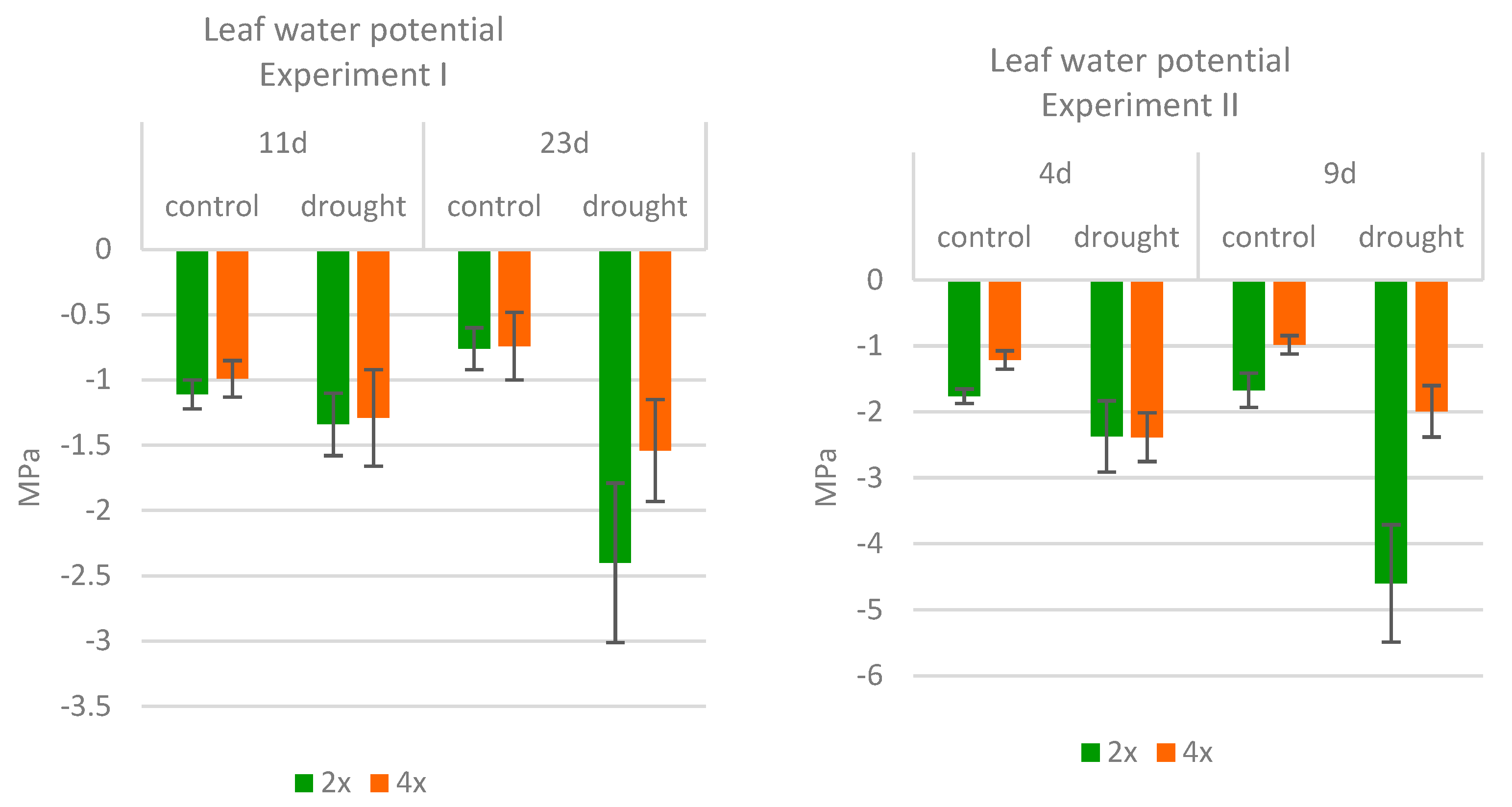
Under water deficit conditions, all physiological parameters declined in both diploid (2x) and tetraploid (4x) ‘Redchief’ plants, however tetraploids maintained higher parameter values than diploids. Differences in drought response between the two genotypes became evident as the stress intensified (Figure 1). In Experiment I, after 23 days of water deficiency, the leaf water potential of diploids decreased by 1.64 MPa, while that of tetraploids decreased by 0.80 MPa, as compared with the optimally irrigated control. In Experiment II, by the 9th day of drought, leaf water potential decreased by 2.93 MPa in diploids and 1.01 MPa in tetraploids relative to the control (Figure 1).
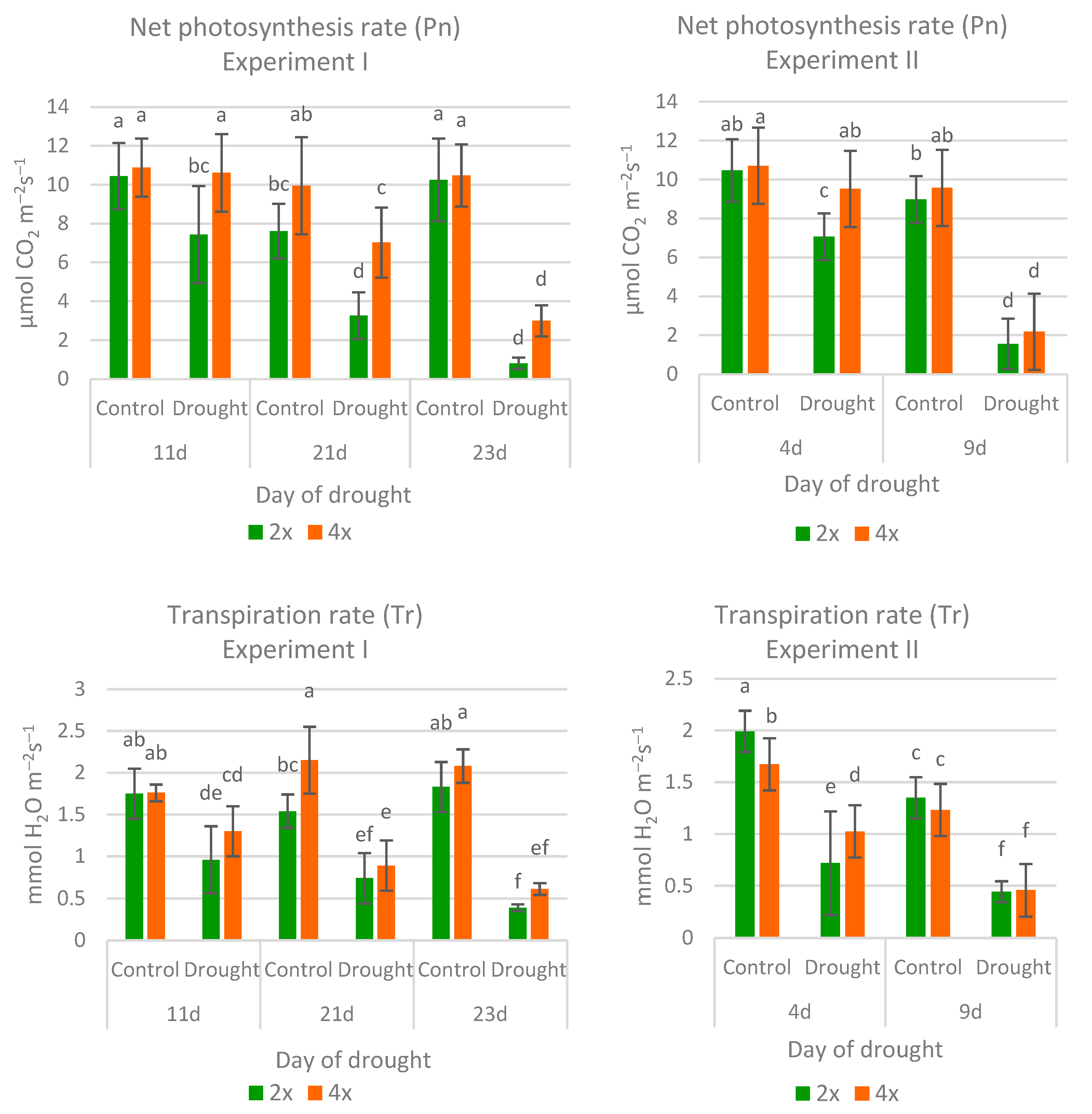
In drought-stressed diploid plants, the net photosynthesis rate (Pn) decreased significantly starting from the first measurement time point (day 11 or day 4 of Experiment I or II, respectively). In tetraploids subjected to drought, a significant decrease in Pn occurred later than that in diploids, appearing on day 21 of Experiment I and day 9 of Experiment II, respectively (Figure 2). Transpiration rate (Tr) significantly decreased in drought-stressed diploid and tetraploid plants from the earliest measurement time points, although the reduction was smaller in the tetraploids. (Figure 2).
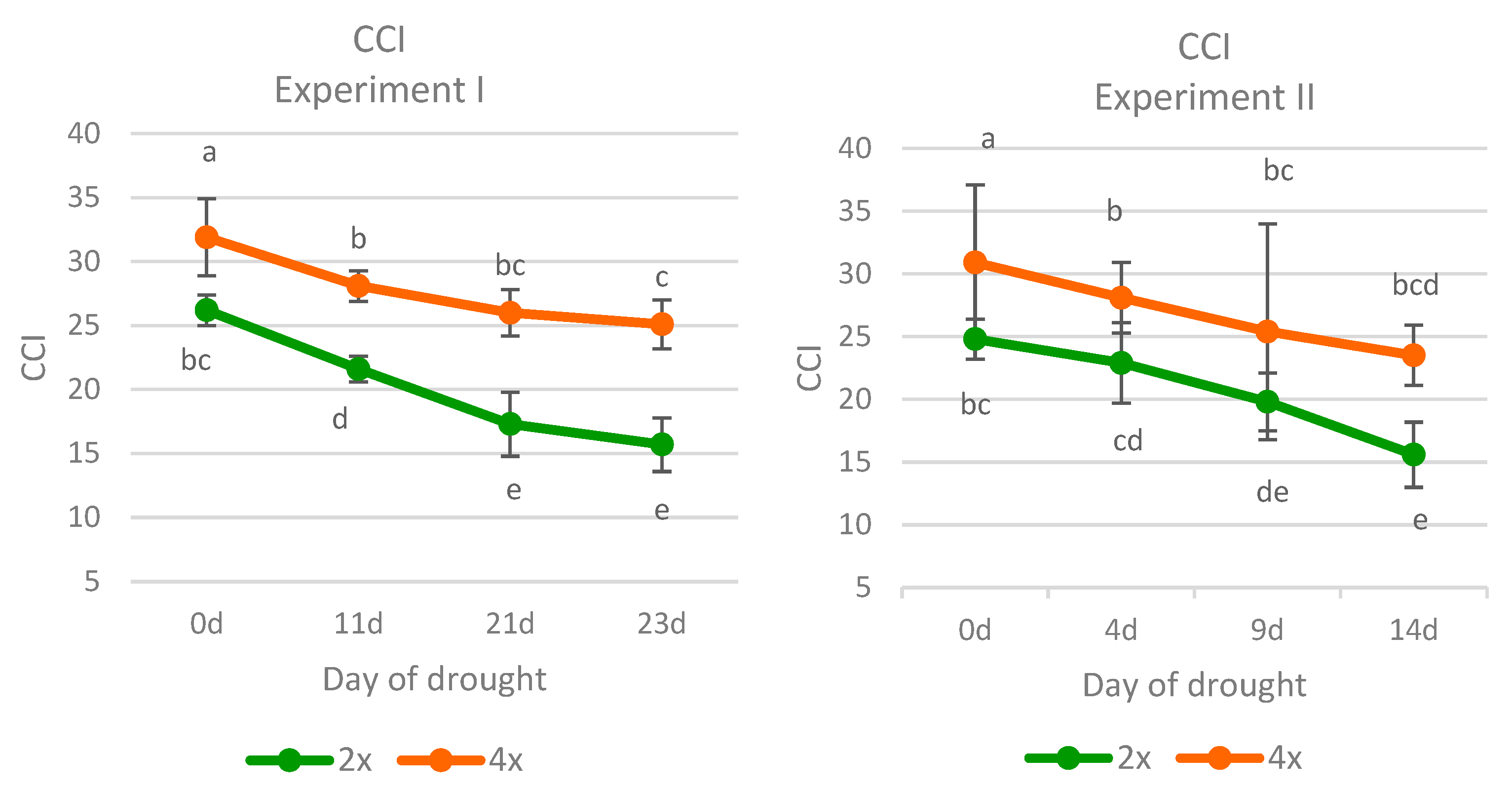
In general, tetraploid apple plants exhibit a higher chlorophyll content index (CCI) than diploids. The water deficit led to a decrease in chlorophyll content in both genotypes (Figure 3). Significantly elevated chlorophyll levels in tetraploids persisted throughout the stress period (Figure 3).
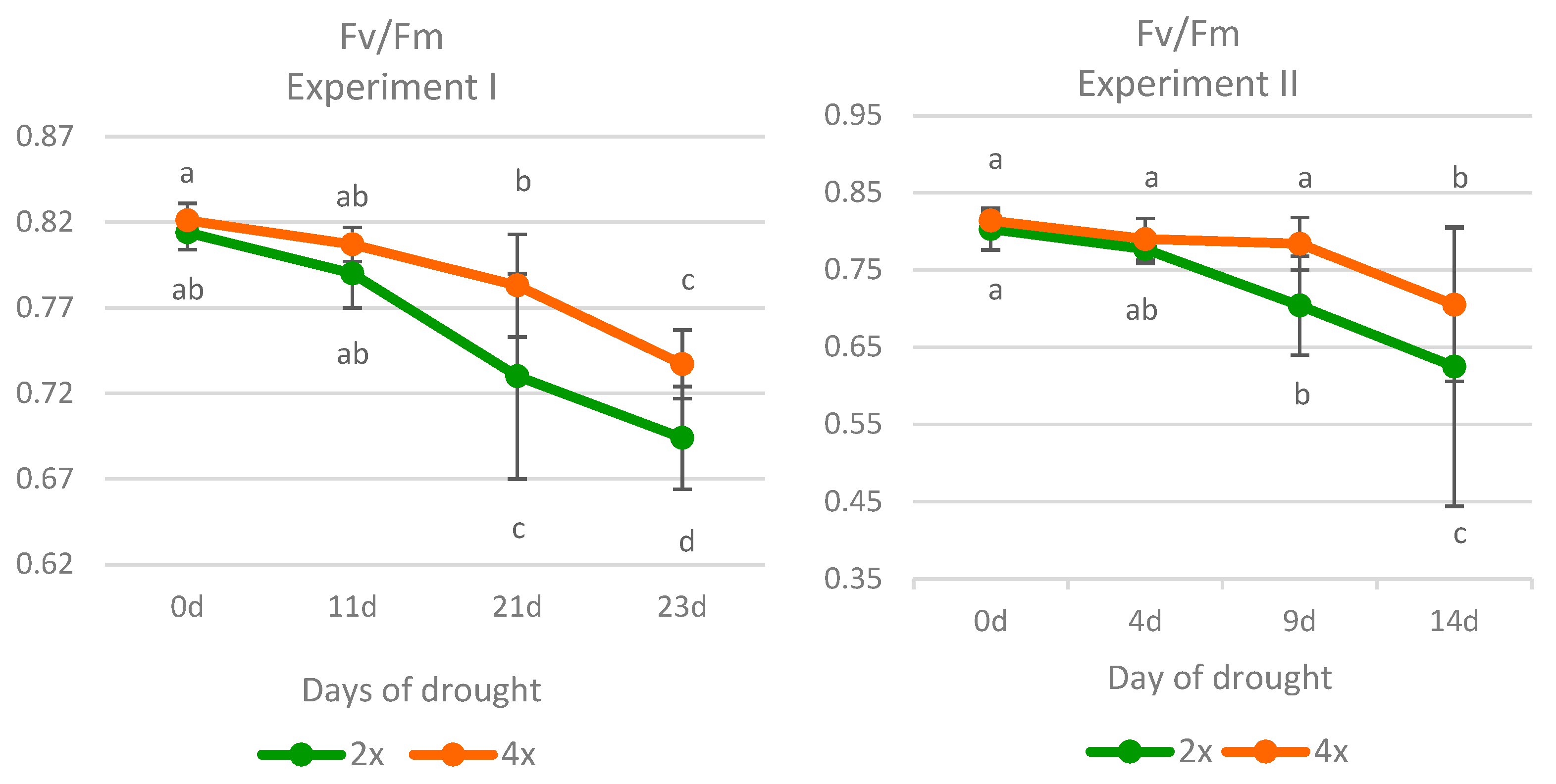
At the beginning of the experiments, both diploids and tetraploids showed optimal values for maximum photochemical efficiency of photosystem II (Fv/Fm ≈ 0.82). As drought stress progressed, a decline in the Fv/Fm parameter was observed in the stressed plants. Throughout both experiments, this decline was more pronounced in diploids than in tetraploids (Figure 4).

3.2. Growth Parameters

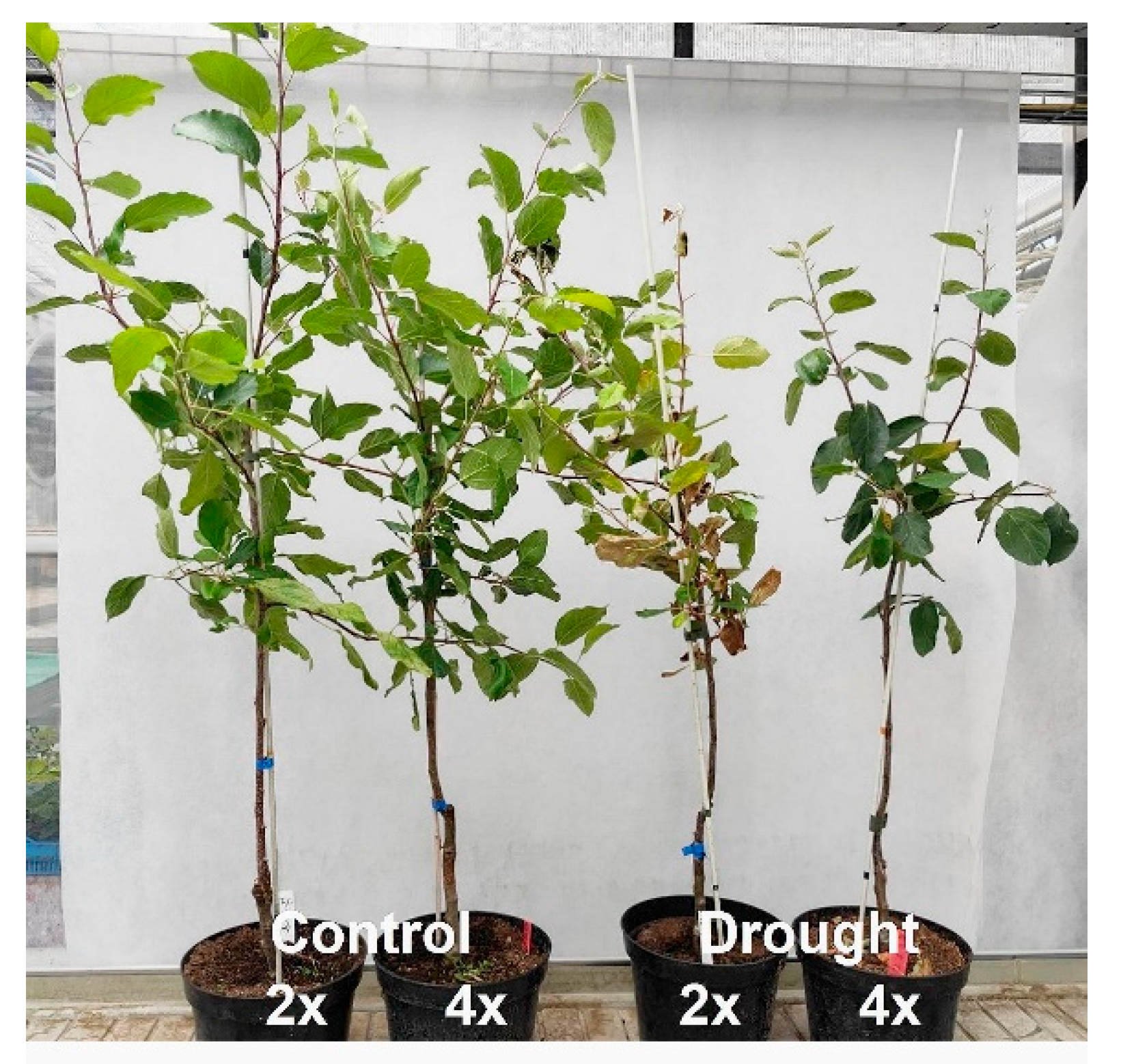
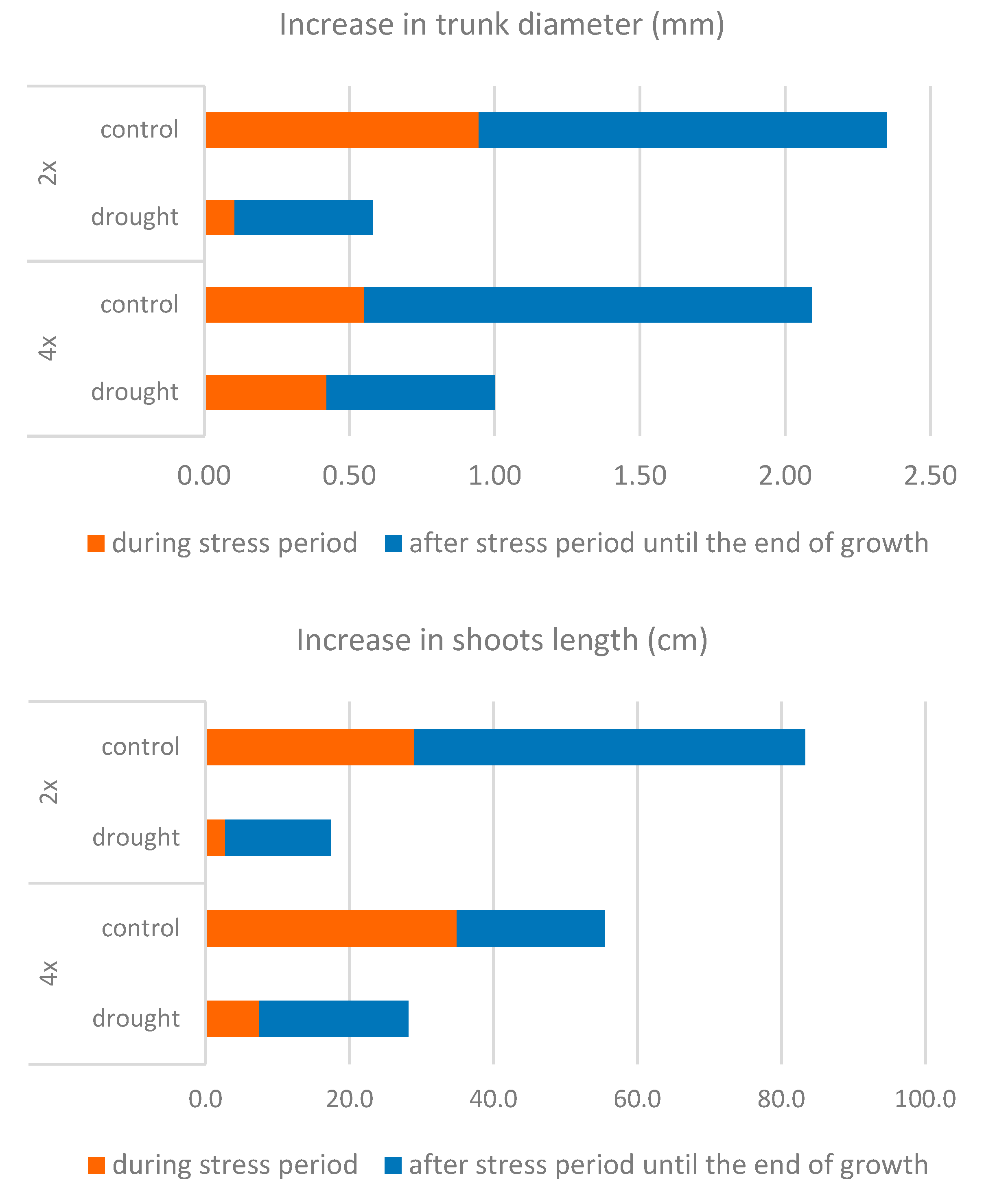
In general, the growth of tetraploids is weaker than that of diploids, which is indicated by data regarding shoot elongation and stem diameter in optimally irrigated plants (Table S2, Figure 5 and Figure 6). Under drought conditions, growth reduction was more pronounced in diploids than in tetraploids (Table S2, Figure 5 and Figure 6). Compared to irrigated plants, in plants subjected to 14 days of water deficit, the growth of the main shoot diameter decreased by 89% in diploids and 24% in tetraploids, and shoot elongation was reduced by 91% in diploids and by 79% in tetraploids (Table S2, Figure 5). During the post-drought growth phase, shoot elongation in diploids remained 73% lower in previously stressed plants than in controls, whereas tetraploids showed no effect of prior drought, with similar shoot elongation in stressed and control plants (Figure 5). During this period, previously stressed plants showed a smaller increase in shoot thickness than controls, with similar effects in diploids and tetraploids (Figure 5).

3.3. Biochemical Parameters

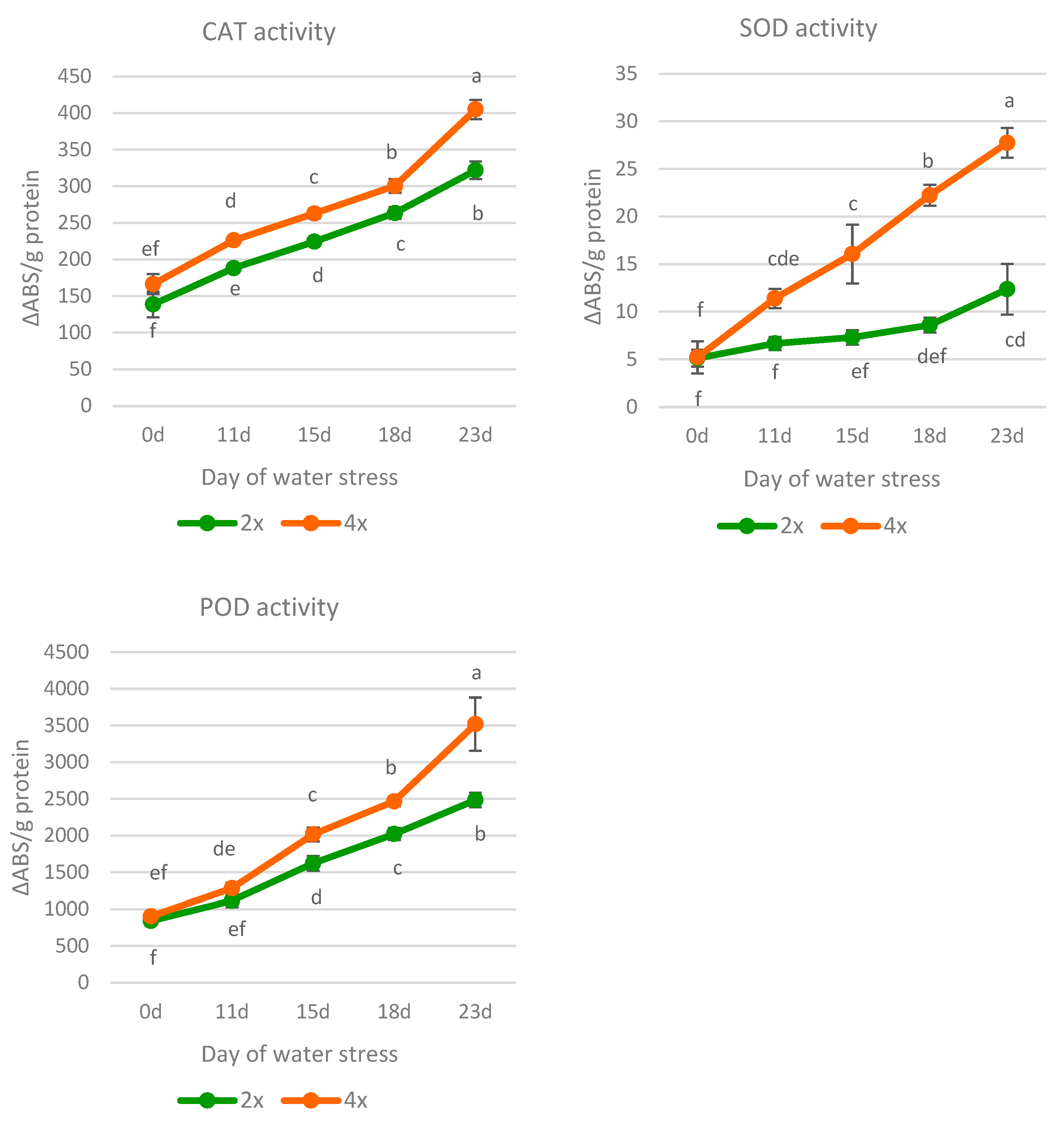
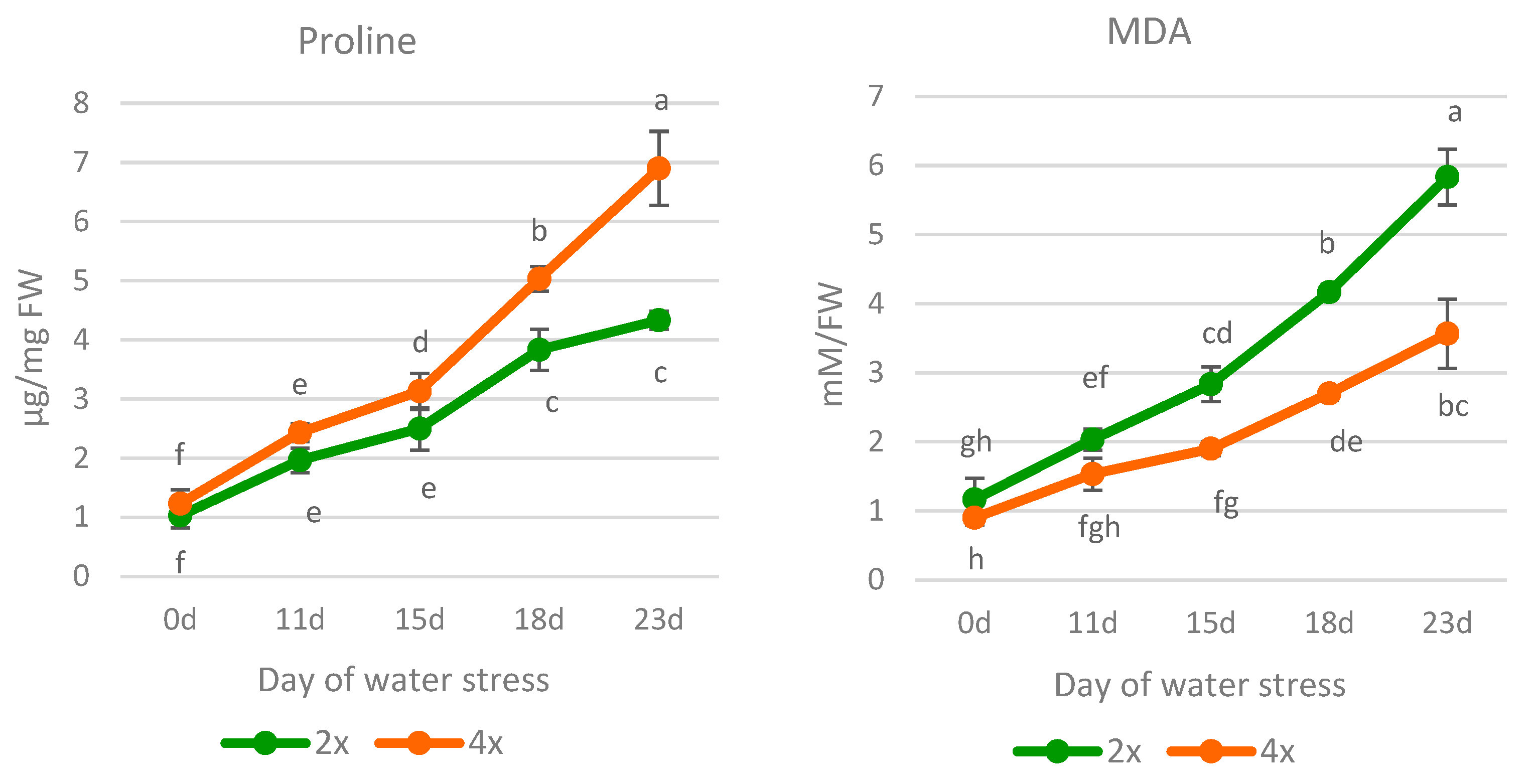
The activity of antioxidant enzymes and proline and malondialdehyde (MDA) contents gradually increased under water stress, reaching their highest values in both ploidy forms on the last day of drought. However, tetraploids exhibited a much greater increase in antioxidant enzyme activity, resulting in significantly higher catalase (CAT), superoxide dismutase (SOD), and peroxidase (POX) activity at all time points (Figure 7 and Figure 8). On the last day of drought, SOD activity increased five-fold in tetraploids and 2.5-fold in diploids compared to pre-drought levels (Figure 7). A similar trend was observed for proline content; by the last day of drought, proline levels were nearly seven times higher in tetraploids and just over four times higher in diploids than in day zero (Figure 8).
In contrast, the dynamics of increase in MDA content were significantly greater in diploids (Figure 8), with levels rising nearly six-fold by the final day of the experiment compared to pre-stress values, while in tetraploids, the increase was 3.5-fold.

3.4. Gene Expression Analysis

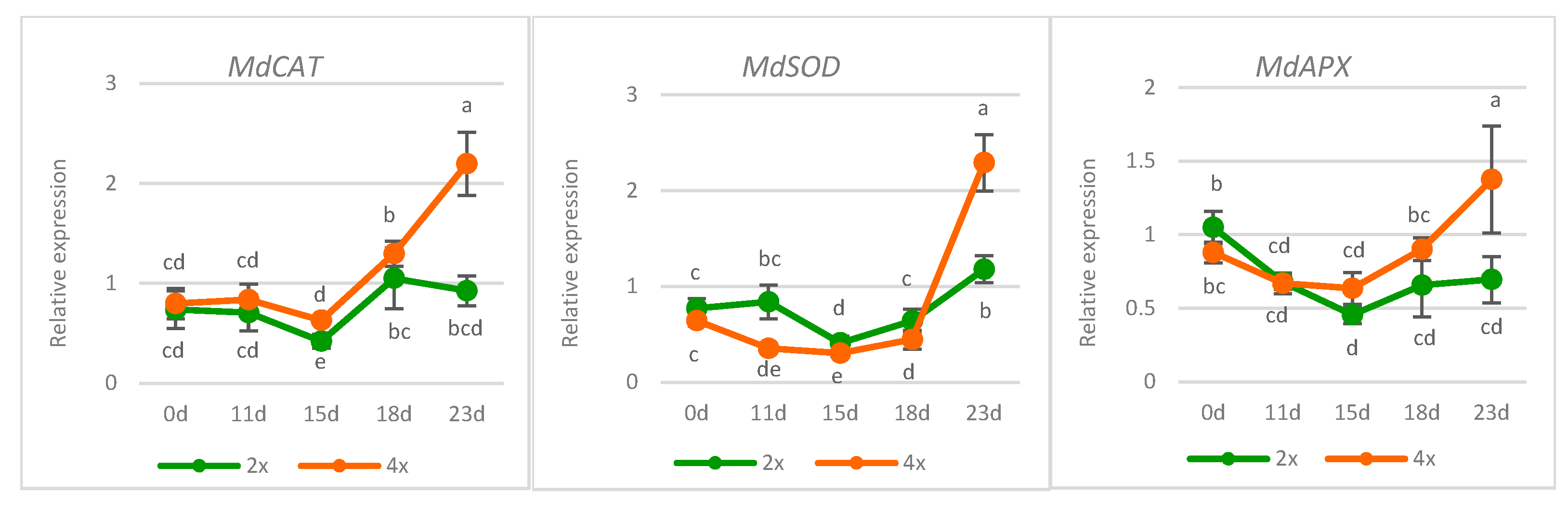
Changes in the expression of genes encoding antioxidant enzymes catalase, superoxide dismutase, ascorbate peroxidase, and glutathione peroxidase (MdCAT, MdSOD, MdAPX, and MdGPX, respectively) were similar in tetraploids and diploids until the 18th day of drought stress (Figure 9). However, on day 23, the expression levels of these genes were higher in the tetraploids than in the diploids. These differences were statistically significant for MdCAT, MdSOD, and MdAPX (Figure 9) but not for MdGPX (Figure S1).
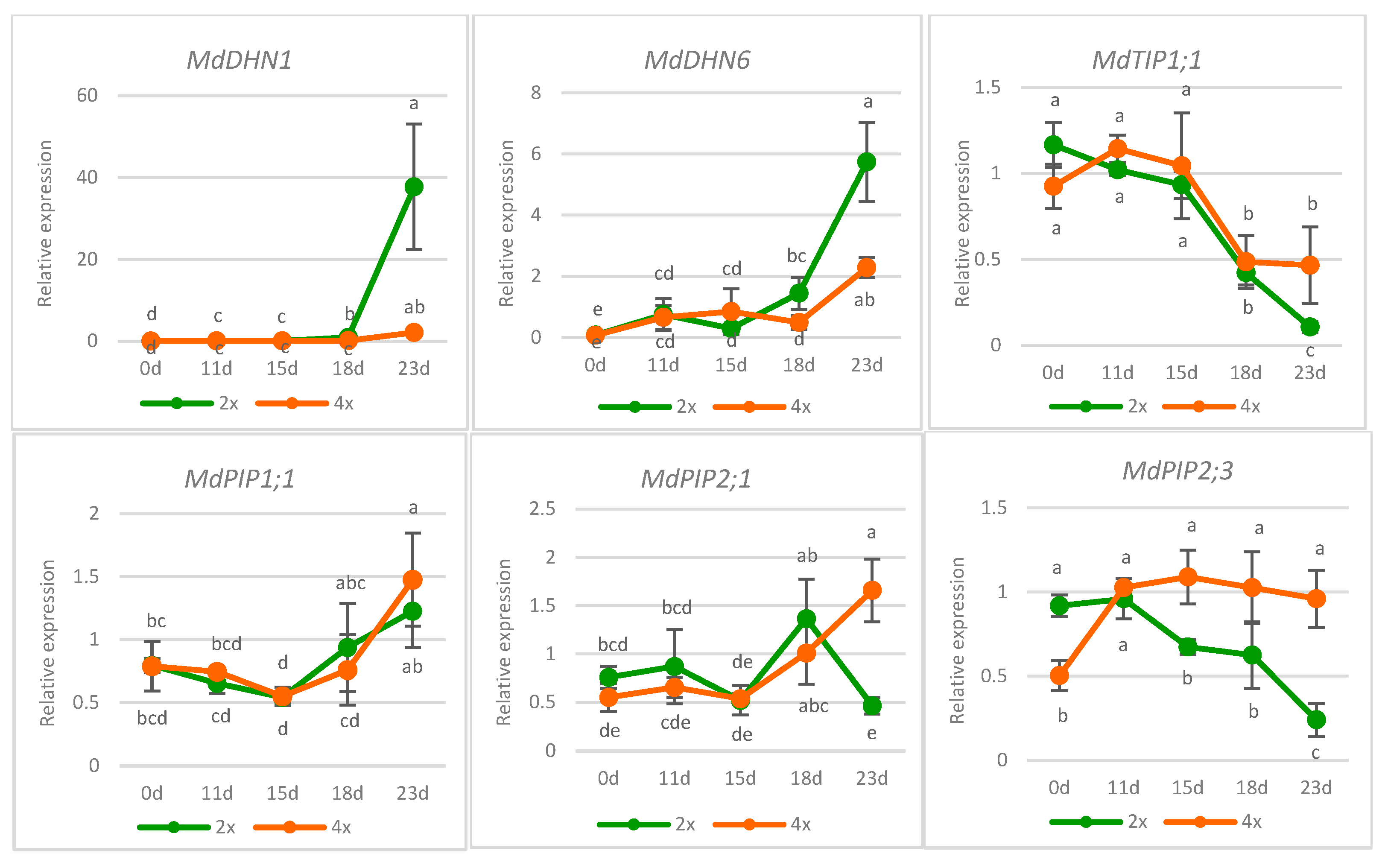
The expression of MdDHN1 and MdDHN6, which encode dehydrins, remained similar between the two genotypes until day 18 of drought (Figure 10). On the final day of the experiment (day 23), a substantial increase in mRNA levels of these genes was observed in diploid plants. On day 23, the expression levels of MdDHN1 and MdDHN6 in diploids were approximately 1000-fold and 80-fold higher, respectively, than their levels at the beginning of the experiment (day zero). In tetraploids, over the same period, the level of MdDHN1 transcript increased approximately 80-fold, while MdDHN6 increased 32-fold. The expression levels of MdLEA6 did not differ between diploids and tetraploids throughout the drought period (Figure S1).
The expression patterns of the analyzed aquaporin-encoding genes during drought were diverse. MdTIP1;1 expression decreased, whereas MdPIP1;1 expression increased throughout the experiment, with similar expression levels in both diploid and tetraploid plants (Figure 10). Regarding MdPIP2 genes, MdPIP2;1 mRNA levels remained similar in diploids and tetraploids up to day 18 of the experiment (Figure 10). However, from day 18 to the end of the drought, MdPIP2;1 expression in tetraploids increased by over 60%, whereas in diploids, it decreased nearly threefold. During the stress period, an increase in MdPIP2;3 expression was observed in tetraploids, but a decrease in diploids (Figure 10). On the last day of the experiment, the mRNA concentration of this gene was fourfold higher in the tetraploid plants than in the diploids.
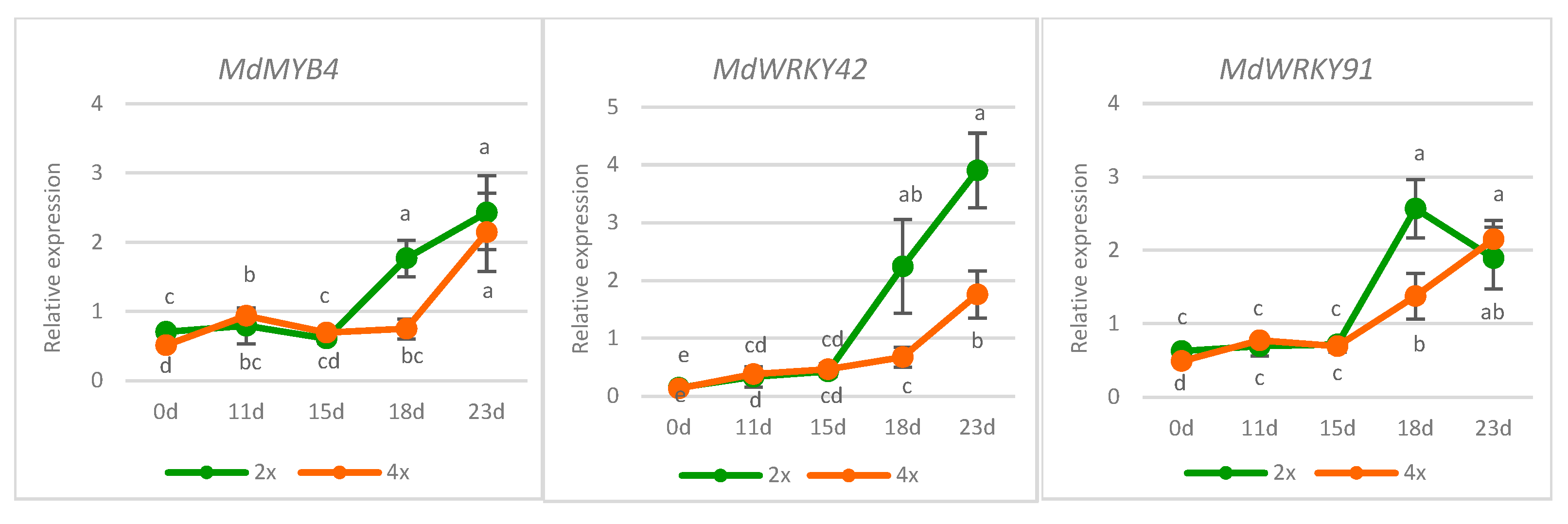
The expression of most genes encoding transcription factors increased in drought-challenged plants of both genotypes (Figure 9 and Figure S1). Significant differences in expression levels between diploids and tetraploids were observed only for some of the genes studied. Higher expression in diploids than in tetraploids was noted for MdWRKY42 on days 18 and 23 and for MdWRKY91 and MdMYB4 only on the 18th day of drought (Figure 11).
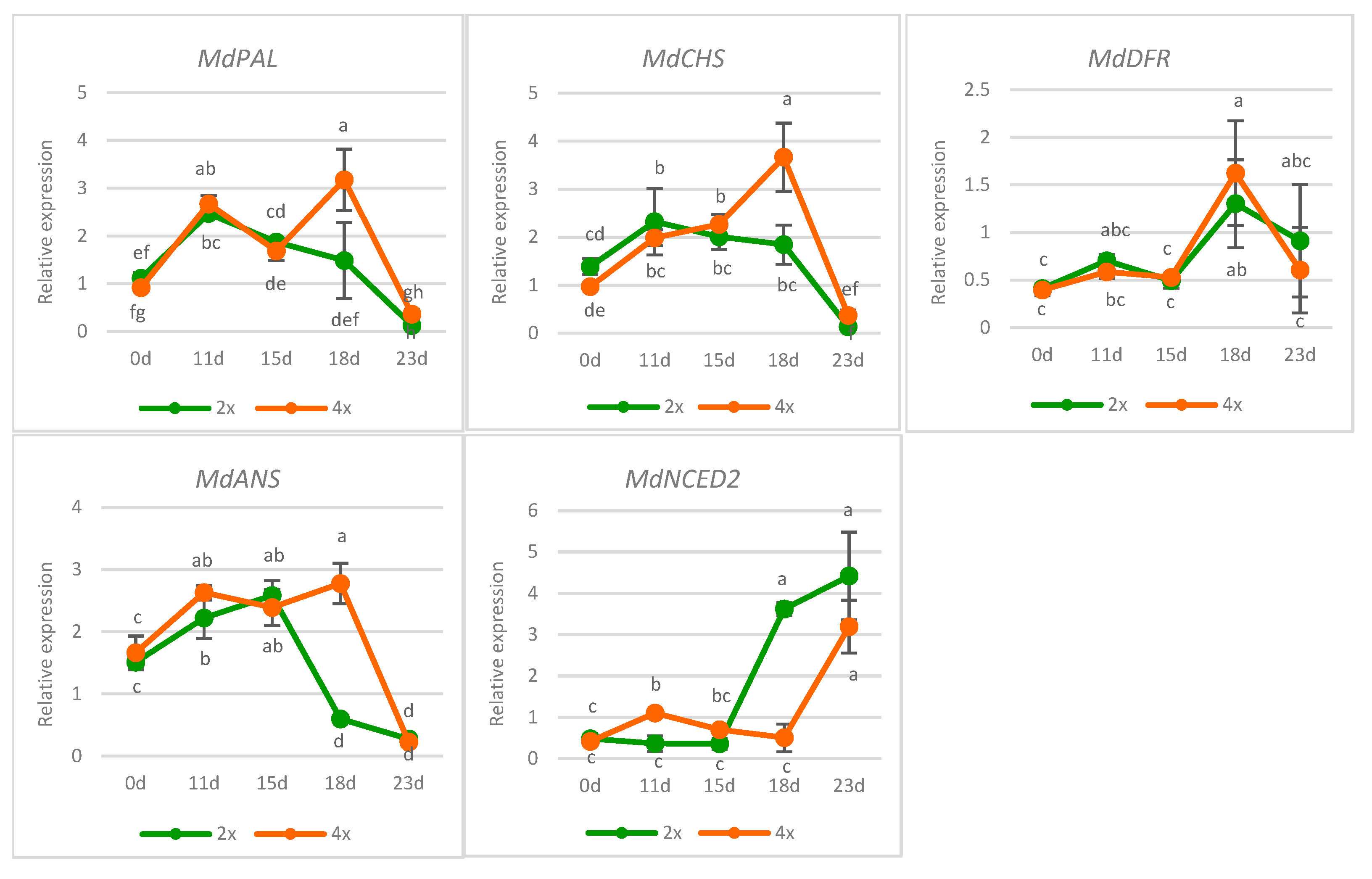
The expression of genes encoding enzymes in the phenylpropanoid pathway (phenylalanine ammonia lyase (PAL), chalcone synthase (CHS), dihydroflavonol 4-reductase (DFR), and anthocyanidin synthase (ANS) initially increased in plants subjected to water scarcity. However, under prolonged drought stress, a decline in the expression of these genes was observed (Figure 12). In tetraploids, the highest expression levels of MdPAL, MdCHS, and MdANS were recorded on the 18th day of drought, with a decline noted on day 23. The diploids showed an earlier reduction in MdPAL and MdCHS expression starting on the 15th day of drought, and a decrease in MdANS expression was observed after 18 days of stress (Figure 12). For DFR, no significant differences in expression levels or patterns were observed between the two genotypes (Figure 12).
The mRNA level of the MdNCED2 gene encoding 9-cis-epoxycarotenoid dioxygenase, a key enzyme in abscisic acid (ABA) biosynthesis, did not increase significantly at the beginning of the experiment. In diploids, a significant (10-fold) increase in MdNCED2 expression was observed on the 18th day of drought stress (Figure 12). In tetraploids, this response was delayed, with a significant increase (more than 6-fold) occurring on the 23rd day of drought (Figure 12).

3.5. Leaf Anatomical Structure

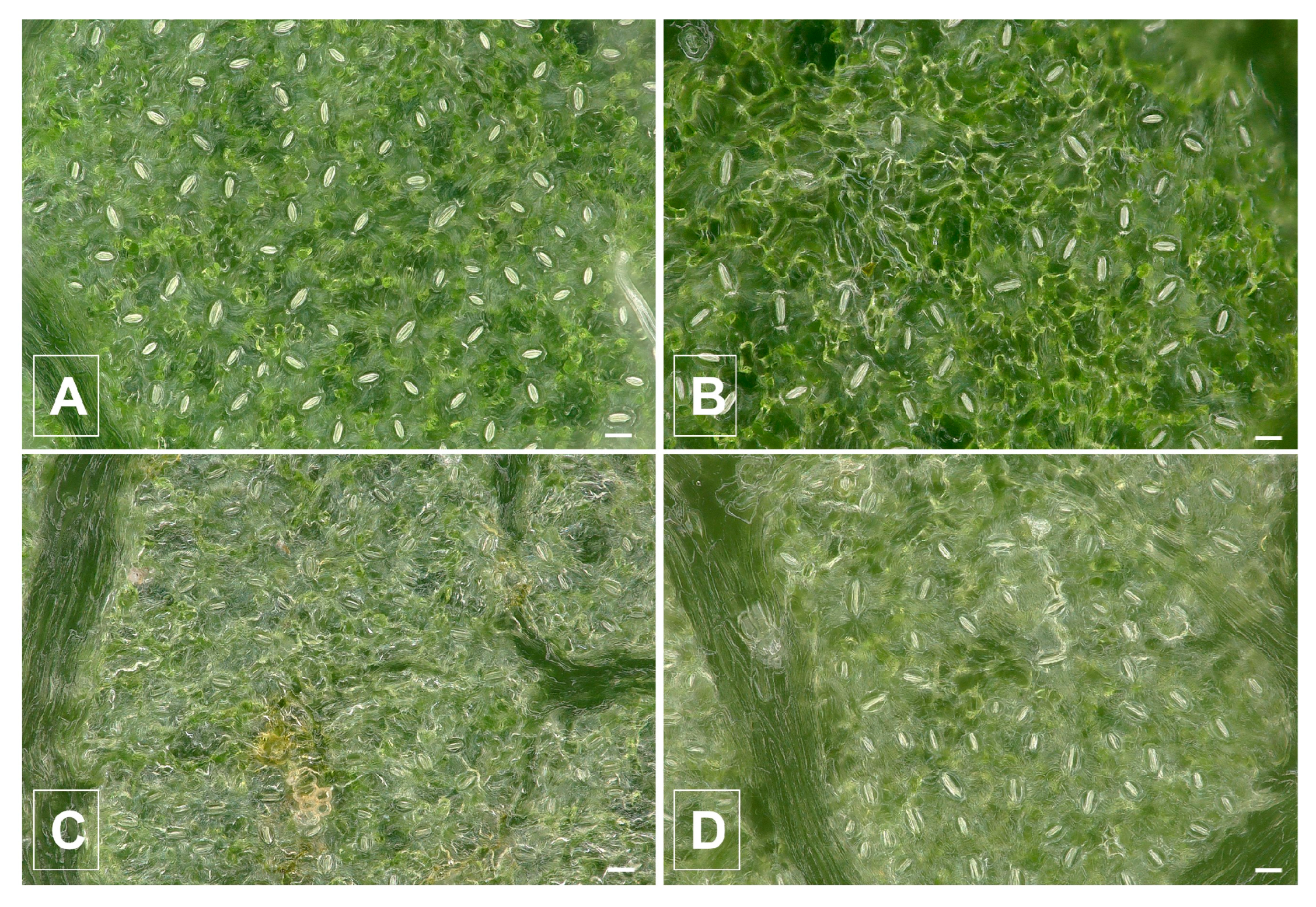
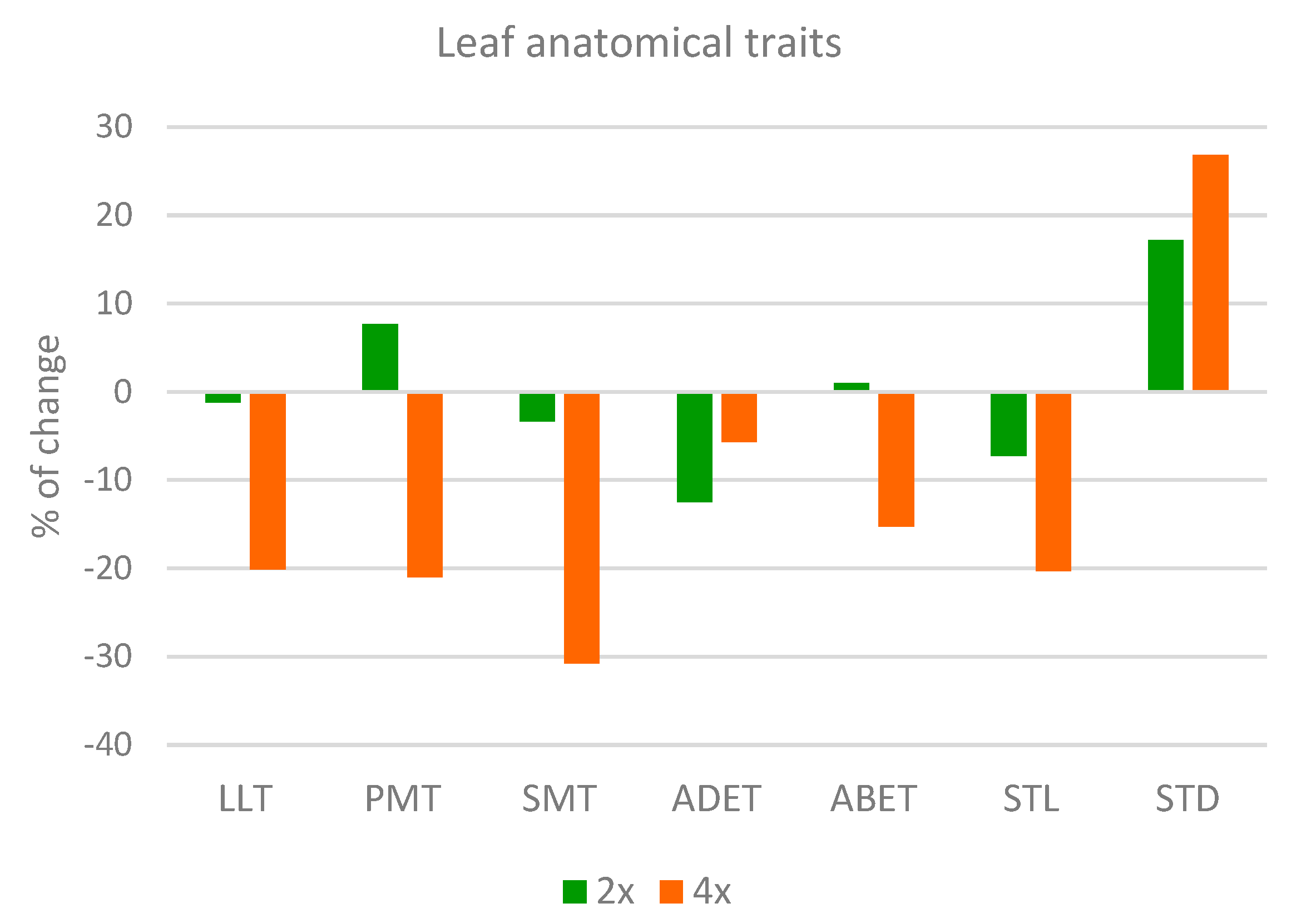
As observed in polyploids of other plant species, the stomata of tetraploid ‘Redchief’ were longer, whereas stomatal density was lower than in diploids (Table S3, Figure 13). During the 14-day drought period, stomatal length decreased, and stomatal density increased in both genotypes (Table S3, Figure 13 and Figure 14). However, the reduction in stomatal size was statistically significant in tetraploids but not in diploids (Table S3). The increase in stomatal density during drought was statistically significant in both genotypes, amounting to 17% and 27% in the diploids and tetraploids, respectively.
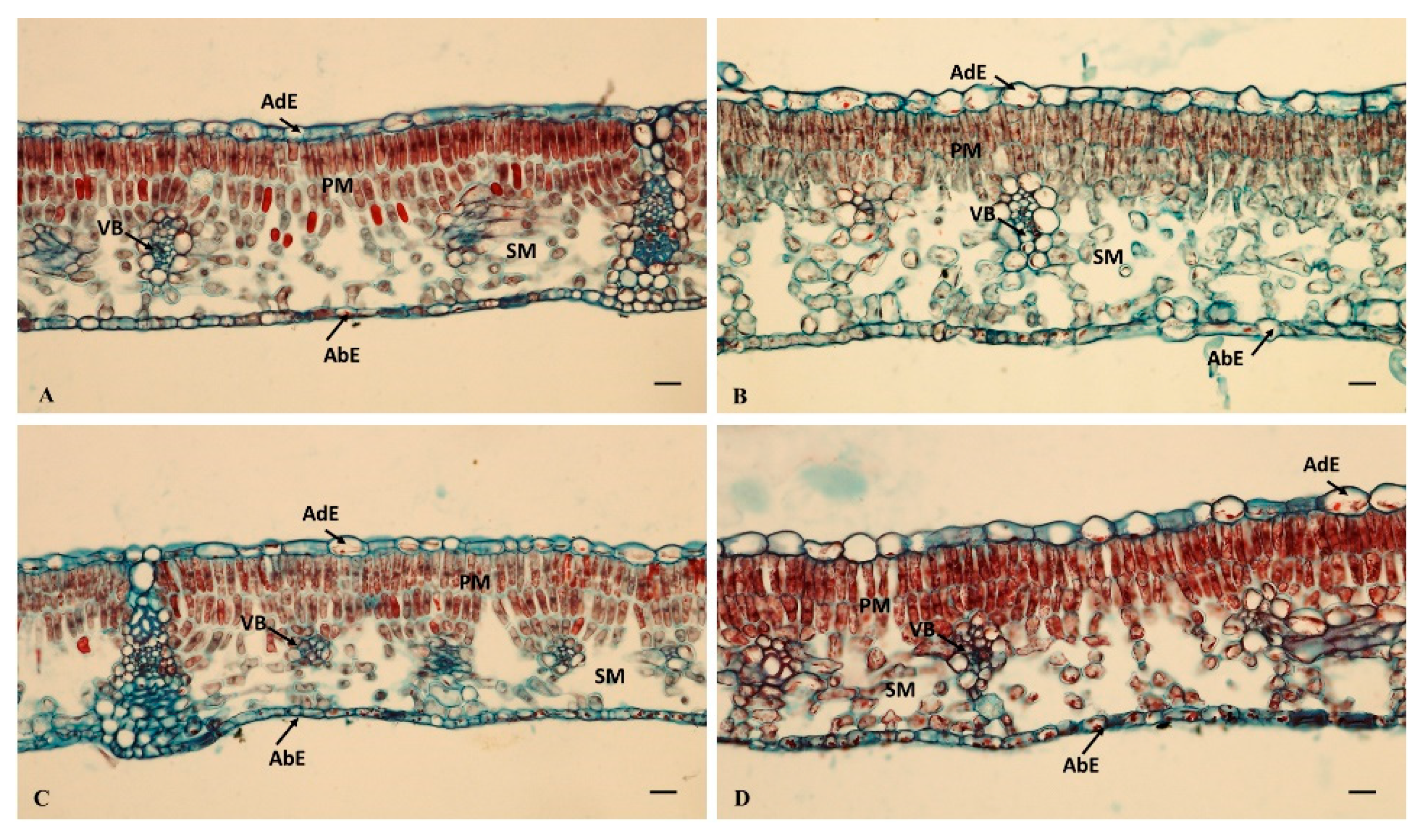
Microscopic observations showed that both epidermis and mesophyll layers in the leaves of ‘Redchief’ tetraploids were thicker than those in diploids (Table S4). The effects of drought on leaf anatomical structure varied between diploids and tetraploids. In tetraploids, a significant reduction in overall leaf thickness was observed, which was associated with a decrease in the thickness of the epidermis and both mesophyll layers (Table S4, Figure 14 and Figure 15). In diploids, no significant change in total leaf thickness was detected in drought-stressed plants compared to control plants. However, a slight reduction in the thickness of the spongy mesophyll and adaxial epidermis was observed, whereas the thickness of the palisade mesophyll layer was increased (Table S4, Figure 14 and Figure 15).

4. Discussion

Many studies have indicated that polyploid plants exhibit greater tolerance to stress conditions caused by both biotic and abiotic factors than their diploid counterparts [26,30]. Similar observations have been made for tetraploid apple genotypes that exhibit increased resistance to various diseases and salinity [32,36,37,57]. In the context of drought stress, the elevated level of tolerance to water deficit conditions in tetraploid forms of ‘Gala’ and ‘Hanfu’ was shown by Zhang et al. [39]. Preliminary findings indicating enhanced drought tolerance of the tetraploid clone ‘Redchief’ 4x-25 were presented in our previous paper [35]. In the present study, we aimed to identify the mechanisms underlying increased drought tolerance in this tetraploid apple clone.
The obtained results confirmed our earlier observations, indicating that the tetraploid ‘Redchief’ 4x-25 exhibited enhanced drought tolerance compared to the diploid form of this cultivar. Under drought conditions, tetraploids maintained higher gas exchange, Fv/Fm ratio, and chlorophyll content index (CCI), as well as less negative leaf water potential, compared with diploids. Moreover, the drought-induced growth inhibition was lower in tetraploids than in diploids. In tetraploid seedlings of the apple cultivars ‘Gala’ and ‘Hanfu’, the elevated drought tolerance was evidenced by higher relative water content (RWC) and delayed leaf wilting under drought conditions compared to diploid forms of these cultivars [39]. Similarly, in drought-challenged diploid and tetraploid citrus rootstocks, drought symptoms such as wilting and yellowing of leaves were observed later in tetraploids than in diploids; moreover, tetraploids showed higher RWC values [58].
According to Tardieu et al. [2], transpiration and plant growth are the main indicators of stress intensity. A plant’s tolerance to drought depends on its ability to buffer water and carbon status in the short term and to subsequently stabilize physiological functions over an extended period, thereby enabling efficient management of limited water reserves [2]. These processes are under hormonal control and are regulated at the molecular level by transcription factors, small RNAs, and changes in chromatin status [2]. Considering that the ability to maintain physiological processes, such as gas exchange and water potential, serves as an excellent indicator of drought tolerance in plants, we can conclude that the tetraploid clone ‘Redchief’ 4x-25 is more drought-tolerant than its diploid counterpart.
By analyzing the results of our biochemical and molecular studies, we propose that the main mechanism underlying increased drought resistance in apple tetraploids is rapid and efficient activation of antioxidant defenses. Although the activities of antioxidant enzymes and the expression of their genes were similar in diploids and tetraploids before stress induction, they were significantly higher in tetraploids under drought conditions. Moreover, malondialdehyde (MDA) levels under stress were lower in tetraploids than in diploids, indicating less damage to biological membranes caused by oxidative stress. The results of the study by Li et al. [59] on the mechanism of drought tolerance in apple rootstocks clearly suggest that increased activity of the antioxidant system during drought may contribute to enhanced drought resistance. Under drought conditions, the genotype with a high level of drought tolerance exhibited higher antioxidant enzyme activity and higher expression levels of genes encoding these enzymes than the susceptible genotype [59]. Similarly, in octoploid broomcorn millet, a stronger antioxidant capacity than that in tetraploids has been found to be the main mechanism of increased tolerance to salt stress [60].
Based on the results obtained, another mechanism contributing to the increased drought tolerance of apple tetraploids is the more intense accumulation of proline under water-limited conditions compared to diploids. Proline (Pro), along with glycine betaine (GB), is one of the most common osmoprotectants that are accumulated in plants under abiotic stress [9]. The accumulation of Pro under stress conditions is crucial for maintaining cellular turgor, stabilizing cell membranes, and protecting macromolecules from drought-induced damage [9,61]. Pro has also been implicated in protecting cells against ROS accumulation and is now considered a major non-enzymatic antioxidant [9,61]. Pro accumulation is often used as an indicator of plant resistance to various environmental stresses, particularly abiotic ones. Zhang et al. [62] and Zegaoui et al. [63] demonstrated that drought-tolerant alfalfa and cowpea plants accumulate more Pro under stress conditions than sensitive plants. Similarly, Zhang et al. [39] reported higher proline levels in tetraploid ‘Gala’ and ‘Hanfu’ apples subjected to drought than in their diploid counterparts. The elevated proline content in apple tetraploids under drought stress provides greater protection against turgor loss and other adverse effects of water deficiency than in diploids.
The efficient activation of defense mechanisms observed in tetraploids may be due to dynamic changes in gene expression that contribute to high functional plasticity [30,64,65]. As they adapt to changing environmental conditions, polyploids can utilize additional gene copies and form a more flexible stress response system [65,66].
Among the studied genes, those encoding AQPs exhibited great diversity in their transcriptional response to drought, showing both up- and downregulation. It was previously demonstrated that under abiotic stress conditions, significant variations in the expression of individual aquaporin genes were observed, with the most pronounced fluctuations being observed in genes from the PIP subfamily [11]. Changes in the abundance and activity of AQPs under varying environmental conditions can alter membrane water permeability and influence plant adaptation to drought [11]. Bassett et al. [67] reported that MdPIP2;5 was upregulated in apple roots during simulated drought, whereas MdPIP2;4 was downregulated. In our study, MdTIP1;1 expression in the leaves of drought-stressed plants decreased, while MdPIP1;1 expression increased; however, no differences in the expression levels of these genes were observed between the diploid and tetraploid forms of the apple cultivar ‘Redchief’. This contrasts with the findings of Zhang et al. [39], who reported a strong upregulation of MdTIP1;1 and MdPIP1;1 under drought stress in the leaves of both diploid and tetraploid forms of the apple cultivars ‘Hanfu’ and ‘Gala’, with lower expression levels observed in autotetraploids than in diploids. However, it should be noted that Zhang et al. [39] conducted their experiment on seedlings under controlled laboratory conditions, whereas our study was performed on one-year-old trees grafted onto rootstocks. Additionally, the method of drought induction and the duration of gene expression monitoring differed significantly between the two studies.
According to Liu et al. [46], MdPIP2;1 is involved in the response of apple to drought stress, and its expression in transgenic Arabidopsis thaliana conferred enhanced drought tolerance. In our study, two MdPIP2 genes, MdPIP2;1, and especially MdPIP2;3, were expressed at higher levels in drought-stressed tetraploid than in diploid ‘Redchief’, suggesting their potential involvement in the mechanism underlying increased drought tolerance in tetraploids.
Phenolic compounds are known to contribute significantly to plant resistance to environmental stress factors. Besides acting as non-enzymatic free-radical scavengers, they are also postulated to mitigate the harmful effects of UV-B radiation, which often accompanies drought stress, thereby contributing to the protection of photosynthetic machinery [3,68]. In addition, they function as regulatory molecules in signal transduction pathways [10]. Many studies have shown that in plants growing under water deficiency, increased production and accumulation of diverse phenolic compounds are observed, as well as increased transcriptional activity of phenylpropanoid pathway genes, such as PAL, CHS, CHI, DFR, F3H, FLS, and others [3,68,69].
In both forms of ‘Redchief’, induction of all tested genes in the phenylpropanoid pathway was detected in the first phase of drought; however, under prolonged stress (day 23 of Experiment I), a sharp decline in the expression of all tested genes was observed. A similar response has been reported in Achillea pachycephala [69] and Vitis vinifera [70] under long-term drought stress, suggesting that phenolic compound accumulation may follow different trends during prolonged stress than during the early stages. In A. pachycephala, by day 21 of stress, the expression of CHI, CHS, F3H, F’3H, and F3’5H had decreased significantly compared to day 14, with flavonoid levels showing a marked decline by day 28. In grapevines exposed to drought for two weeks, a reduction in total phenolic compounds was observed in both the roots and leaves [70]. The authors suggested that this decrease in phenolic content may result from a reduction in available carbon in the leaves due to limited photosynthesis under drought conditions. In tetraploid ‘Redchief’, high expression of phenolic biosynthesis genes persisted longer than in diploids; this may indicate that prolonged synthesis of phenolic compounds in apple tetraploids may play a role in their increased drought tolerance. Further studies on the level and composition of phenolics in diploid and tetraploid apple trees during drought would provide valuable insights into the regulation of their biosynthesis under stress conditions.
Along with the downregulation of phenylpropanoid pathway genes, other defense mechanisms were activated in apple ‘Redchief’ under prolonged drought. In the final stages of stress (day 23), a dramatic increase in MdDHN1 and MdDHN6 expression was observed in diploid ‘Redchief’, a response not detected in tetraploids at the same time point. Liang et al. [14] reported that out of nine dehydrin genes identified in apple, six (including MdDHN1 and MdDHN6) are induced by drought, low temperature, and abscisic acid (ABA) treatment. Our results confirmed the involvement of DHN1 and MdDHN6 in apple response to drought stress. Because MdDHNs were upregulated in diploids earlier than in tetraploids, we postulate that these genes are activated in plants in response to severe declines in physiological function resulting from drought. Increased expression of DHNs in diploids under severe dehydration conditions may reflect an enhanced activation of protective mechanisms aimed at stabilizing protein structures, genetic material, and cell membranes. Since this transcriptional response is induced later in tetraploids, it may suggest that drought-related damage to cells develops more slowly in tetraploids than in diploids.
In ‘Redchief’ diploids, the increase in DHN gene transcripts is preceded by a spike in the expression of the MdNCED2 gene (on day 18 of the experiment), which encodes one of the key enzymes involved in the regulation of ABA biosynthesis [15,71]. Xia et al. [71] cloned two NCED genes from Malus prunifolia and demonstrated that MpNCED2 is specifically induced by drought. This finding was confirmed in our study for Malus × domestica.
Since ABA regulates plant responses to stress, particularly abiotic stresses, we conclude that the increased expression of MdNCED2, reflecting activation of ABA biosynthesis, may indicate an earlier induction of ABA-dependent defense mechanisms against dehydration in the diploid genotype compared to the tetraploid. The mechanisms activated by ABA include, among others, the synthesis of DHNs and transcription factors, such as WRKY and MYB, that initiate subsequent stress-response cascades.
The expression of all tested genes encoding transcription factors belonging to diverse families was upregulated in drought-stressed plants, which confirms their role in the apple’s response to water scarcity. Three of these genes, MdWRKY42, MdWRKY91, and MdMYB4, showed higher expression in diploid plants than in tetraploids under prolonged drought stress (on day 18 and/or 23 of drought). In apple trees, up to 127 WRKY TFs have been identified, of which 15 contain ABA-responsive element (ABRE) cis-elements [48,49,72]. Meng et al. [49] identified 10 candidate genes, including MdWRKY91, which are involved in the response to water stress (waterlogging and drought stress). Our study showed that, besides MdWRKY91, MdWRKY42 was also induced in apples under water-deficient conditions. MYB4 and MYB121 TFs have previously been shown to play a role in apple response to abiotic stress factors [17,47,73]. Wu et al. [73] reported that the MdMYB4 promoter contains an ABRE cis-element and its expression is strongly induced in response to osmotic, salt, and cold stress. Cao et al. [47] showed that MdMYB121 was induced by abiotic stress factors as well as ABA treatment. Overexpression of MdMYB121 in transgenic tomato and apple plants has also been found to enhance tolerance to multiple abiotic stressors [47]. Our results confirmed that both MdMYB4 and MdMYB121 are upregulated in response to drought, MdMYB4 being induced in plants exposed to prolonged dehydration, and MdMYB121 at the onset of drought.
NAC and DREB TFs analyzed in our study were also upregulated in response to drought, but their expression levels were comparable in apple diploids and tetraploids. MdDREB2, MdDREB6, and MdDREB76, isolated from various Malus species, have been postulated to improve drought tolerance in transgenic plants [17,50,74,75]. Sharma et al. [75] showed that overexpression of MdDREB76 in transgenic tobacco induced antioxidant enzymes and regulated stress-responsive genes under salt and drought stress. Among NAC TFs, MdNAC1 and MdNAC143 were found to enhance drought tolerance in apples [17]; however, recent findings suggest that NAC TFs are negative modulators of drought-responsive DREB genes [19]. Our results suggest that the studied DREB and NAC genes may also be involved in the response of apples to dehydration.
Bai et al. [76] postulated that the anatomical and morphological features of leaves are among the main factors determining drought tolerance in apple trees. The authors compared various physiological and anatomical parameters and the response to water stress in two apple cultivars differing in their drought tolerance and demonstrated that in the tolerant cultivar ‘Honeycrisp,’ the leaves and cuticles were thicker and the palisade mesophyll cells were longer than those in the less drought-tolerant cultivar ‘Yanfu 3’. The authors suggested that these features are crucial for maintaining high photosynthetic efficiency during drought. A similar mechanism may underlie the increased drought tolerance observed in ‘Redchief’ tetraploids, which have thicker leaves and individual layers of epidermis and mesophyll than the diploids of the same cultivar. According to Yavas et al. [20], thick mesophyll tissue layers provide substantial water storage capacity, and thick leaf epidermis protects against water loss. Other traits that may contribute to the increased drought tolerance of tetraploid ‘Redchief’ include lower stomatal density and greater stomatal length compared with diploids. According to McGoey et al. [77], when stomatal density is low, the total pore space on a leaf can be reduced even if the stomata are larger.
The mechanisms of plant adaptation to water scarcity include a reduction in leaf area and number, leaf rolling, increased cuticle deposition, and changes in leaf anatomy and stomatal size, density, and distribution [20,78]. Plant responses to drought may involve either an increase or a decrease in leaf thickness, which is associated with changes in the number and size of palisade and spongy mesophyll cells, as well as the thickness of the epidermis. The nature of the observed changes depends on the plant species, adaptive mechanisms, and intensity of the stress [20,79,80]. For example, it has been suggested that stomatal density increases under moderate stress but decreases under severe stress [20,78]. The increased stomatal density observed in some plants during drought may help maintain photosynthesis at a level that supports continued growth under unfavorable conditions [20]. In the apple cultivar ‘Redchief’, we observed significant differences between diploids and tetraploids in their leaf anatomical responses to drought. The large and rapid changes in leaf anatomy, as well as in stomatal number and size, observed in drought-stressed apple tetraploids, indicate their high plasticity of anatomical traits in response to environmental changes, allowing for faster adaptation to adverse conditions. In contrast, maintaining a thick mesophyll layer in diploids may serve as a defense mechanism against drought by providing water storage capacity in the leaves, whereas tetraploids defend themselves against stress by more rapid and effective activation of physiological and biochemical mechanisms.
The tetraploid clone ‘Redchief’ 4x-25 represents a valuable genetic resource for the development of new apple cultivars with enhanced drought tolerance. In general, tetraploid apple genotypes are unsuitable for direct commercial production and are therefore conserved primarily as breeding material. They are most commonly used in crosses with diploid genotypes to generate triploid progeny, which is regarded as the beneficial ploidy level for commercial apple cultivars [81,82]. Currently, triploid apples constitute approximately 10% of cultivated apple varieties and are distinguished by several desirable agronomic traits, including large and attractive fruits, high yield potential, and more regular bearing [81,82,83].
Data on interploid crosses in apples aimed at producing triploid cultivars remain limited. Nevertheless, results from a 40-year breeding program at the All-Russian Institute of Fruit Crop Breeding involving tetraploid apple genotypes have been documented [81,82,84]. This long-term breeding program resulted in more than 42,000 one-year-old apple seedlings and the selection of 18 triploid cultivars, six of which exhibit resistance to apple scab [81,82,84]. Overall, these results highlight the considerable breeding potential of tetraploid apple genotypes and suggest that increased stress tolerance may be expressed in both tetraploid parents and their triploid offspring.

5. Conclusions

Our study provides a deeper understanding of the mechanisms associated with increased drought tolerance in apple tetraploids. The results indicate that apple tetraploids have a greater ability to adapt to water-deficit conditions than diploids. Under drought stress, apple tetraploids exhibited delayed symptoms of stress, as measured by physiological and biochemical parameters, and retained a greater capacity for continued growth than diploids. Based on our analysis, we conclude that the primary mechanism underlying increased drought tolerance in apple tetraploids, compared to diploids, is the faster and more efficient activation of antioxidant defenses and proline accumulation, which allows plants to neutralize the effects of stress over the long term. Based on the expression patterns of genes in the phenylpropanoid pathway, we can also assume that prolonged biosynthesis of phenolic compounds plays a significant role in the increased drought tolerance of apple tetraploids; however, analysis of the level and composition of phenolic compounds is necessary for confirmation. Our findings also suggest the involvement of aquaporins PIP2;1 and PIP2;3 in enhancing the drought tolerance of apple tetraploids. The altered leaf anatomy and stomatal characteristics of apple tetraploids appear to be important components of their elevated drought resistance. Additionally, our results indicate high plasticity of anatomical traits in apple tetraploids in response to adverse environmental conditions.

Supplementary Materials

The following supporting information can be downloaded at: https://www.mdpi.com/article/10.3390/agronomy16020139/s1, Table S1: Primers used for RT-qPCR analysis; Table S2: Growth parameters of diploid (2x) and tetraploid (4x) apple ‘Redchief’ subjected to drought and optimally irrigated, determined before stress, after 14 days of water deficit and at the end of growth; Table S3: Characteristics of stomata traits of diploid (2x) and tetraploid (4x) apple ‘Redchief’ before drought induction and after stress; Table S4: title Anatomical structure of the leaves of diploid (2x) and tetraploid (4x) apple ‘Redchief’ after 14 days of drought; Figure S1: Relative expression of the genes encoding GPX, LEA6 protein, transcription factors MYB121, DREB and NAC in leaves of diploid (2x) and tetraploid (4x) apple ‘Redchief’ subjected to drought, measured before (0 d) and 11, 15, 18 and 23 days after drought induction.

Author Contributions

Conceptualization, M.D., D.W., K.K. and M.P.; investigation, M.D., D.W., A.M.-C. and K.K.; data curation, M.D., D.W., A.M.-C. and K.K.; visualization, D.W. and A.M.-C.; statistical analysis, M.D., D.W. and K.K.; writing—original draft preparation, D.W.; writing—review and editing, M.D., K.K., A.M.-C. and M.P.; supervision, D.W. and M.P.; project administration, D.W.; funding acquisition, D.W. All authors have read and agreed to the published version of the manuscript.

Funding

This research was funded by the Polish Ministry of Agriculture and Rural Development as a grant for Biological Progress in Crop Production (Task No. 49).

Institutional Review Board Statement

Not applicable.

Data Availability Statement

The original contributions presented in this study are included in the article/Supplementary Material. Further inquiries can be directed to the corresponding author.

Conflicts of Interest

The authors declare no conflicts of interest.

Abbreviations

The following abbreviations are used in this manuscript:
ROSReactive oxygen species
ABAAbscisic acid
ABREABA-responsive element
AQPsAquaporins
DHNsDehydrins
PIPsPlasma membrane intrinsic proteins
TIPsTonoplast intrinsic proteins
LEALate embryogenesis abundant
TFsTranscription factors
DREBDehydration-responsive element binding
WGDWhole-genome duplication
NIHRThe National Institute of Horticultural Research
PnNet photosynthesis rate
TrTranspiration rate
RWCRelative water content
CCIChlorophyll content index
CATCatalase
SODSuperoxide dismutase
POXPeroxidase
MDAMalondialdehyde
ProProline
APXAscorbate peroxidase
GPXGlutathione peroxidase
PALPhenylalanine ammonia lyase
CHSChalcone synthase
DFRDihydroflavonol 4-reductase
ANSAnthocyanidin synthase
PMPalisade mesophyll
SMSpongy mesophyll
VBVascular bundle
AbEAbaxial epidermis
AdEAdaxial epidermis
LLTLeaf lamina thickness
PMTPalisade mesophyll thickness
SMTSpongy mesophyll thickness
ADETAdaxial epidermis thickness
ABETAbaxial epidermis thickness
STLStomata length
STDStomata density
SDStandard deviation

References

  1. Gupta, A.; Rico-Medina, A.; Caño-Delgado, A.I. The physiology of plant responses to drought. Science 2020, 368, 266–269. [Google Scholar] [CrossRef] [Scilit]
  2. Tardieu, F.; Simonneau, T.; Muller, B. The Physiological Basis of Drought Tolerance in Crop Plants: A Scenario-Dependent Probabilistic Approach. Annu. Rev. Plant Biol. 2018, 69, 733–759. [Google Scholar] [CrossRef] [Scilit]
  3. Wahab, A.; Abdi, G.; Saleem, M.H.; Ali, B.; Ullah, S.; Shah, W.; Mumtaz, S.; Yasin, G.; Muresan, C.C.; Marc, R.A. Plants’ Physio-Biochemical and Phyto-Hormonal Responses to Alleviate the Adverse Effects of Drought Stress: A Comprehensive Review. Plants 2022, 11, 1620. [Google Scholar] [CrossRef] [Scilit]
  4. Wang, C.; Zhou, X.; Qin, J.; Wang, X.; Yu, H.; Zhu, Q.; Lee, D.; Chen, L. Comprehensive Response Mechanisms of Plants to Water Deficit: A Physiological, Biochemical, Molecular, and Ecological Review. Mol. Soil Biol. 2024, 15, 205–215. [Google Scholar]
  5. Su, L.J.; Zhang, J.H.; Gomez, H.; Murugan, R.; Hong, X.; Xu, D.; Jiang, F.; Peng, Z.Y. Reactive Oxygen Species-Induced Lipid Peroxidation in Apoptosis, Autophagy, and Ferroptosis. Oxid. Med. Cell. Longev. 2019, 2019, 5080843. [Google Scholar] [CrossRef] [Scilit]
  6. Cutler, S.R.; Rodriguez, P.L.; Finkelstein, R.R.; Abrams, S.R. Abscisic acid: Emergence of a core signaling network. Annu. Rev. Plant Biol. 2010, 61, 651–679. [Google Scholar] [CrossRef] [Scilit]
  7. Margay, A.R.; Mehmood, A.; Bashir, L. Review on Hormonal Regulation of Drought Stress Response in Plants. Int. J. Plant Soil Sci. 2024, 36, 902–916. [Google Scholar] [CrossRef] [Scilit]
  8. Qian, D.; Wang, M.; Niu, Y.; Yang, Y.; Xiang, Y. Sexual reproduction in plants under high temperature and drought stress. Cell Rep. 2025, 44, 115390. [Google Scholar] [CrossRef] [Scilit]
  9. Ozturk, M.; Turkyilmaz Unal, B.; García-Caparrós, P.; Khursheed, A.; Gul, A.; Hasanuzzaman, M. Osmoregulation and its actions during the drought stress in plants. Physiol. Plant. 2021, 172, 1321–1335. [Google Scholar] [CrossRef] [Scilit] [PubMed]
  10. Kumar, K.; Debnath, P.; Singh, S.; Kumar, N. An Overview of Plant Phenolics and Their Involvement in Abiotic Stress Tolerance. Stress 2023, 3, 570–585. [Google Scholar] [CrossRef] [Scilit]
  11. Daneliia, G.V.; Yemelyanov, V.V.; Shishova, M.F. The role of water-transporting aquaporins of the PIP and TIP subfamilies in plant development and adaptation to stress factors. Ecol. Genet. 2024, 22, 342–368. [Google Scholar] [CrossRef] [Scilit]
  12. Sun, Z.; Li, S.; Chen, W.; Zhang, J.; Zhang, L.; Sun, W.; Wang, Z. Plant Dehydrins: Expression, Regulatory Networks, and Protective Roles in Plants Challenged by Abiotic Stress. Int. J. Mol. Sci. 2021, 22, 12619. [Google Scholar] [CrossRef] [Scilit] [PubMed]
  13. Sade, N.; Vinocur, B.J.; Diber, A.; Shatil, A.; Ronen, G.; Nissan, H.; Wallach, R.; Karchi, H.; Moshelion, M. Improving plant stress tolerance and yield production: Is the tonoplast aquaporin SlTIP2;2 a key to isohydric to anisohydric conversion? New Phytol. 2009, 181, 651–661. [Google Scholar] [CrossRef] [Scilit] [PubMed]
  14. Liang, D.; Xia, H.; Wu, S.; Ma, F. Genome-wide identification and expression profiling of dehydrin gene family in Malus domestica. Mol. Biol. Rep. 2012, 39, 10759–10768. [Google Scholar] [CrossRef] [Scilit]
  15. Yoshida, T.; Fernie, A.R. Hormonal regulation of plant primary metabolism under drought. J. Exp. Bot. 2024, 75, 1714–1725. [Google Scholar] [CrossRef] [Scilit]
  16. Hrmova, M.; Hussain, S.S. Plant Transcription Factors Involved in Drought and Associated Stresses. Int. J. Mol. Sci. 2021, 22, 5662. [Google Scholar] [CrossRef] [Scilit]
  17. Li, X.; Ma, Z.; Song, Y.; Shen, W.; Yue, Q.; Khan, A.; Tahir, M.M.; Wang, X.; Malnoy, M.; Ma, F.; et al. Insights into the molecular mechanisms underlying responses of apple trees to abiotic stresses. Hortic. Res. 2023, 10, uhad144. [Google Scholar] [CrossRef] [Scilit]
  18. Liu, F.; Xi, M.; Liu, T.; Wu, X.; Ju, L.; Wang, D. The central role of transcription factors in bridging biotic and abiotic stress responses for plants’ resilience. New Crop. 2024, 1, 100005. [Google Scholar] [CrossRef] [Scilit]
  19. Verma, S.; Dubey, N.; Mishra, V.; Kumar, S.; Sharma, R.; Sharma, S.; Sarkar, A.K.; Thakur, A.K. Functional Genomics of Salt and Drought Stress Tolerance in the Temperate Crop Apple (Malus domestica). J. Plant Growth Regul. 2024, 43, 3941–3957. [Google Scholar] [CrossRef] [Scilit]
  20. Yavas, I.; Jamal, M.A.; Din, K.U.; Ali, S.; Hussain, S.; Farooq, M. Drought-Induced Changes in Leaf Morphologyand Anatomy: Overview, Implicationsand Perspectives. Polish J. Environ. Stud. 2024, 33, 1517–1530. [Google Scholar] [CrossRef] [Scilit]
  21. Dinneny, J.R. Developmental responses to water and salinity in root systems. Annu. Rev. Cell Dev. Biol. 2019, 35, 239–257. [Google Scholar] [CrossRef] [Scilit]
  22. Scarpino, S.V.; Levin, D.A.; Meyers, L.A. Polyploid formation shapes flowering plant diversity. Am. Nat. 2014, 184, 456–465. [Google Scholar] [CrossRef] [Scilit]
  23. Soltis, P.S.; Marchant, D.B.; Van de Peer, Y.; Soltis, D.E. Polyploidy and genome evolution in plants. Curr. Opin. Genet. Dev. 2015, 35, 119–125. [Google Scholar] [CrossRef] [Scilit]
  24. Van De Peer, Y.; Mizrachi, E.; Marchal, K. The evolutionary significance of polyploidy. Nat. Rev. Genet. 2017, 18, 411–424. [Google Scholar] [CrossRef] [Scilit]
  25. Touchell, D.H.; Palmer, I.E.; Ranney, T.G. In vitro Ploidy Manipulation for Crop Improvement. Front. Plant Sci. 2020, 11, 517580. [Google Scholar] [CrossRef] [Scilit]
  26. Thriveni, V.; Paul, M.; Voruganti, C.; Kumar, V.V.; Kumar, J.V.; Reddy, B.S.K.; Kumar, M. Impact of Polyploidy on Crop Improvement and Plant Breeding Strategies: A Review. J. Adv. Biol. Biotechnol. 2024, 27, 714–725. [Google Scholar] [CrossRef] [Scilit]
  27. Wendel, J.F.; Lisch, D.; Hu, G.; Mason, A.S. The long and short of doubling down: Polyploidy, epigenetics, and the temporal dynamics of genome fractionation. Curr. Opin. Genet. Dev. 2018, 49, 1–7. [Google Scholar] [CrossRef] [Scilit]
  28. Koziara-Ciupa, M.; Trojak-Goluch, A. The Effect of Polyploidisation on the Physiological Parameters, Biochemical Profile, and Tolerance to Abiotic and Biotic Stresses of Plants. Agronomy 2025, 15, 1918. [Google Scholar] [CrossRef] [Scilit]
  29. Tossi, V.E.; Martínez Tosar, L.J.; Laino, L.E.; Iannicelli, J.; Regalado, J.J.; Escandón, A.S.; Baroli, I.; Causin, H.F.; Pitta-Álvarez, S.I. Impact of polyploidy on plant tolerance to abiotic and biotic stresses. Front. Plant Sci. 2022, 13, 869423. [Google Scholar] [CrossRef] [Scilit] [PubMed]
  30. Li, X.; Zhang, L.; Wei, X.; Datta, T.; Wei, F.; Xie, Z. Polyploidization: A Biological Force That Enhances Stress Resistance. Int. J. Mol. Sci. 2024, 25, 1957. [Google Scholar] [CrossRef] [Scilit] [PubMed]
  31. Sedysheva, G.A.; Gorbacheva, N.G. Estimation of New Tetraploid Apple Forms as Donors of Diploid Gametes for Selection on a Polyploidy Level. Univers. J. Plant Sci. 2013, 1, 49–54. [Google Scholar] [CrossRef] [Scilit]
  32. Xue, H.; Zhang, F.; Zhang, Z.H.; Fu, J.F.; Wang, F.; Zhang, B.; Ma, Y. Differences in salt tolerance between diploid and autotetraploid apple seedlings exposed to salt stress. Sci. Hortic. 2015, 190, 24–30. [Google Scholar] [CrossRef] [Scilit]
  33. Hias, N.; Leus, L.; Davey, M.W.; Vanderzande, S.; Van Huylenbroeck, J.; Keulemans, J. Effect of polyploidization on morphology in two apple (Malus × domestica) genotypes. Hortic. Sci. 2017, 44, 55–63. [Google Scholar] [CrossRef] [Scilit]
  34. Podwyszyńska, M.; Sowik, I.; Machlańska, A.; Kruczyńska, D.; Dyki, B. In vitro tetraploid induction of Malus × domestica Borkh. using leaf or shoot explants. Sci. Hortic. 2017, 226, 379–388. [Google Scholar] [CrossRef] [Scilit]
  35. Wójcik, D.; Marat, M.; Marasek-Ciołakowska, A.; Klamkowski, K.; Buler, Z.; Podwyszyńska, M.; Tomczyk, P.P.; Wójcik, K.; Treder, W.; Filipczak, J. Apple Autotetraploids-Phenotypic Characterisation and Response to Drought Stress. Agronomy 2022, 12, 161. [Google Scholar] [CrossRef] [Scilit]
  36. Chen, M.; Wang, F.; Zhang, Z.; Fu, J.; Ma, Y. Characterization of fungi resistance in two autotetraploid apple cultivars. Sci. Hortic. 2017, 220, 27–35. [Google Scholar] [CrossRef] [Scilit]
  37. Podwyszyńska, M.; Markiewicz, M.; Broniarek-Niemiec, A.; Matysiak, B.; Marasek-Ciolakowska, A. Apple autotetraploids with enhanced resistance to apple scab (Venturia inaequalis) due to genome duplication-phenotypic and genetic evaluation. Int. J. Mol. Sci. 2021, 22, 527. [Google Scholar] [CrossRef] [Scilit]
  38. Podwyszyńska, M.; Sowik, I.; Puławska, J. In vitro testing of apple tetraploids for resistance to fire blight. Acta Hortic. 2020, 1282, 343–350. [Google Scholar] [CrossRef] [Scilit]
  39. Zhang, F.; Xue, H.; Lu, X.; Zhang, B.; Wang, F.; Ma, Y.; Zhang, Z. Autotetraploidization enhances drought stress tolerance in two apple cultivars. Trees-Struct. Funct. 2015, 29, 1773–1780. [Google Scholar] [CrossRef] [Scilit]
  40. Bradford, M.M. A rapid and sensitive method for the quantitation of microgram quantities of protein utilizing the principle of protein-dye binding. Anal. Biochem. 1976, 72, 248–254. [Google Scholar] [CrossRef] [PubMed]
  41. Lűck, H. Methoden der Enzymatischen Analyse; Bergmeyer, H.-U., Ed.; Verlag Chemie, GmbH: Weinheim, Germany, 1962; pp. 895–897. [Google Scholar]
  42. McCord, J.; Fridovich, I. Superoxide dismutase. An enzymic function for erythrocuprein (hemocuprein). J. Biol. Chem. 1969, 244, 6049–6055. [Google Scholar] [CrossRef] [Scilit]
  43. Aebi, H. Catalase in vitro. Methods Enzymol. 1984, 105, 121–126. [Google Scholar] [CrossRef] [Scilit]
  44. Bates, L.S.; Waldren, R.P.; Teare, I.D. Rapid determination of free proline for water-stress studies. Plant Soil 1973, 39, 205–207. [Google Scholar] [CrossRef] [Scilit]
  45. Heath, R.L.; Packer, L. Photoperoxidation in isolated chloroplasts. I. Kinetics and stoichiometry of fatty acid peroxidation. Arch. Biochem. Biophys. 1968, 125, 189–198. [Google Scholar] [CrossRef] [Scilit]
  46. Liu, H.; Yang, L.; Xin, M.; Ma, F.; Liu, J. Gene-Wide Analysis of Aquaporin Gene Family in Malus domestica and Heterologous Expression of the Gene MpPIP2;1 Confers Drought and Salinity Tolerance in Arabidposis thaliana. Int. J. Mol. Sci. 2019, 20, 3710. [Google Scholar] [CrossRef] [Scilit]
  47. Cao, Z.H.; Zhang, S.Z.; Wang, R.K.; Zhang, R.F.; Hao, Y.J. Genome Wide Analysis of the Apple MYB Transcription Factor Family Allows the Identification of MdoMYB121 Gene Confering Abiotic Stress Tolerance in Plants. PLoS ONE 2013, 8, e69955. [Google Scholar] [CrossRef] [Scilit] [PubMed]
  48. Zhang, H.; Yang, L.; Zhou, R.; Zhang, Y.; Wang, Z.; Pang, H.; Bai, T.; Song, S.; Jiao, J.; Wang, M.; et al. Genome Wide Transcriptomic Analysis of WRKY Gene Family Response to Biotic Stresses in Malus × domestica. Am. J. Plant Sci. 2021, 12, 858–885. [Google Scholar] [CrossRef]
  49. Meng, D.; Li, Y.; Bai, Y.; Li, M.; Cheng, L. Genome-wide identification and characterization of WRKY transcriptional factor family in apple and analysis of their responses to waterlogging and drought stress. Plant Physiol. Biochem. 2016, 103, 71–83. [Google Scholar] [CrossRef] [Scilit] [PubMed]
  50. Zhao, T.; Liang, D.; Wang, P.; Liu, J.; Ma, F. Genome-wide analysis and expression profiling of the DREB transcription factor gene family in Malus under abiotic stress. Mol. Genet. Genom. 2012, 287, 423–436. [Google Scholar] [CrossRef] [Scilit]
  51. Li, H.; Ran, K.; Dong, Q.; Zhao, Q.; Shi, S. Cloning, sequencing, and expression analysis of 32 NAC transcription factors (MdNAC) in apple. PeerJ 2020, 8, e8249. [Google Scholar] [CrossRef] [Scilit]
  52. Vergne, E.; Dugé de Bernonville, T.; Dupuis, F.; Sourice, S.; Cournol, R.; Berthelot, P.; Barny, M.A.; Brisset, M.N.; Chevreau, E. Membrane-targeted HrpNEa can modulate apple defense gene expression. Mol. Plant-Microbe Interact. 2014, 27, 125–135. [Google Scholar] [CrossRef] [Scilit]
  53. Perini, P.; Pasquali, G.; Margis-Pinheiro, M.; De Oliviera, P.R.D.; Revers, L.F. Reference genes for transcriptional analysis of flowering and fruit ripening stages in apple (Malus × domestica Borkh.). Mol. Breed. 2014, 34, 829–842. [Google Scholar] [CrossRef] [Scilit]
  54. Larionov, A.; Kraus, A.; Mille, W. A standard curve based method for relative real time PCR data processing. BMC Bioinform. 2005, 6, 62. [Google Scholar] [CrossRef] [Scilit]
  55. Marasek-Ciolakowska, A.; Saniewski, M.; Dziurka, M.; Kowalska, U.; Góraj-Koniarska, J.; Ueda, J.; Miyamoto, K. Formation of the Secondary Abscission Zone Induced by the Interaction of Methyl Jasmonate and Auxin in Bryophyllum calycinum: Relevance to Auxin Status and Histology. Int. J. Mol. Sci. 2020, 21, 2784. [Google Scholar] [CrossRef] [Scilit]
  56. Osborne, J. Improving your data transformations: Applying Box-Cox transformations as a best practice. Pract. Assess. Res. Eval. 2010, 15, 12. [Google Scholar] [CrossRef]
  57. Hias, N.; Svara, A.; Keulemans, J.W. Effect of polyploidisation on the response of apple (Malus × domestica Borkh.) to Venturia inaequalis infection. Eur. J. Plant Pathol. 2018, 151, 515–526. [Google Scholar] [CrossRef] [Scilit]
  58. da Silva Costa, L.; Coelho Filho, M.A.; Araújo da Silva, M.A.; Moreira, A.S.; dos Santos Soares Filho, W.; Freschi, L.; da Silva Gesteira, A. Revisiting Citrus Rootstocks Polyploidy as a Means to Improve Drought Resilience: Sometimes Less Is More. Plant. Cell Environ. 2025, 48, 149–163. [Google Scholar] [CrossRef] [Scilit]
  59. Li, X.-L.; Zhang, J.-K.; Li, M.-J.; Zhou, B.-B.; Zhang, Q.; Wei, Q.-P. Genome-wide analysis of antioxidant enzyme gene families involved in drought and low-temperature responses in apple (Malus domestica). J. Hortic. Sci. 2018, 93, 337–346. [Google Scholar] [CrossRef] [Scilit]
  60. Li, R.; Wang, H.; Gao, Y.; Wang, H.; Yuan, Y.; Yang, Q.; Song, H.; Gao, F.; Chen, H.; Feng, B. Deciphering salt stress adaptation in octoploid broomcorn millet (Panicum miliaceum L.): For sustainable agricultural development in saline-alkaline soils. J. Environ. Manag. 2025, 387, 125713. [Google Scholar] [CrossRef] [Scilit]
  61. Filippou, P.; Bouchagier, P.; Skotti, E.; Fotopoulos, V. Proline and reactive oxygen/nitrogen species metabolism is involved in the tolerant response of the invasive plant species Ailanthus altissima to drought and salinity. Environ. Exp. Bot. 2014, 97, 1–10. [Google Scholar] [CrossRef] [Scilit]
  62. Zhang, C.; Shi, S.; Liu, Z.; Yang, F.; Yin, G. Drought tolerance in alfalfa (Medicago sativa L.) varieties is associated with enhanced antioxidative protection and declined lipid peroxidation. J. Plant Physiol. 2019, 232, 226–240. [Google Scholar] [CrossRef] [Scilit]
  63. Zegaoui, Z.; Planchais, S.; Cabassa, C.; Djebbar, R.; Belbachir, O.A.; Carol, P. Variation in relative water content, proline accumulation and stress gene expression in two cowpea landraces under drought. J. Plant Physiol. 2017, 218, 26–34. [Google Scholar] [CrossRef] [Scilit] [PubMed]
  64. Jackson, S.; Chen, Z.J. Genomic and expression plasticity of polyploidy. Curr. Opin. Plant Biol. 2010, 13, 153–159. [Google Scholar] [CrossRef] [Scilit] [PubMed]
  65. Wei, N.; Cronn, R.; Liston, A.; Ashman, T.L. Functional trait divergence and trait plasticity confer polyploid advantage in heterogeneous environments. New Phytol. 2019, 221, 2286–2297. [Google Scholar] [CrossRef] [Scilit] [PubMed]
  66. Dong, Y.; Hu, G.; Grover, C.E.; Miller, E.R.; Zhu, S.; Wendel, J.F. Parental legacy versus regulatory innovation in salt stress responsiveness of allopolyploid cotton (Gossypium) species. Plant J. 2022, 111, 872–887. [Google Scholar] [CrossRef] [Scilit]
  67. Bassett, C.L.; Baldo, A.M.; Moore, J.T.; Jenkins, R.M.; Soffe, D.S.; Wisniewski, M.E.; Norelli, J.L.; Farrell, R.E. Genes responding to water deficit in apple (Malus × domestica Borkh.) roots. BMC Plant Biol. 2014, 14, 182. [Google Scholar] [CrossRef] [Scilit]
  68. Mechri, B.; Tekaya, M.; Hammami, M.; Chehab, H. Effects of drought stress on phenolic accumulation in greenhouse-grown olive trees (Olea europaea). Biochem. Syst. Ecol. 2020, 92, 104112. [Google Scholar] [CrossRef] [Scilit]
  69. Gharibi, S.; Sayed Tabatabaei, B.E.; Saeidi, G.; Talebi, M.; Matkowski, A. The effect of drought stress on polyphenolic compounds and expression of flavonoid biosynthesis related genes in Achillea pachycephala Rech.f. Phytochemistry 2019, 162, 90–98. [Google Scholar] [CrossRef] [Scilit]
  70. Król, A.; Amarowicz, R.; Weidner, S. Changes in the composition of phenolic compounds and antioxidant properties of grapevine roots and leaves (Vitis vinifera L.) under continuous of long-term drought stress. Acta Physiol. Plant. 2014, 36, 1491–1499. [Google Scholar] [CrossRef] [Scilit]
  71. Xia, H.; Wu, S.; Ma, F. Cloning and expression of two 9-cis-epoxycarotenoid dioxygenase genes during fruit development and under stress conditions from Malus. Mol. Biol. Rep. 2014, 41, 6795–6802. [Google Scholar] [CrossRef] [Scilit]
  72. Lui, S.; Luo, C.; Zhu, L.; Sha, R.; Qu, S.; Cai, B.; Wang, S. Identification and expression analysis of WRKY transcription factor genes in response to fungal pathogen and hormone treatments in apple (Malus domestica). J. Plant Biol. 2017, 60, 215–230. [Google Scholar] [CrossRef] [Scilit]
  73. Wu, R.; Wang, Y.; Wu, T.; Xu, X.; Han, Z. MdMYB4, an R2R3-Type MYB Transcription Factor, Plays a Crucial Role in Cold and Salt Stress in Apple Calli. J. Am. Soc. Hortic. Sci. 2017, 142, 209–216. [Google Scholar] [CrossRef] [Scilit]
  74. Liao, X.; Guo, X.; Wang, Q.; Wang, Y.; Zhao, D.; Yao, L.; Wang, S.; Liu, G.; Li, T. Overexpression of MsDREB6.2 results in cytokinin-deficient developmental phenotypes and enhances drought tolerance in transgenic apple plants. Plant J. 2017, 89, 510–526. [Google Scholar] [CrossRef] [Scilit]
  75. Sharma, V.; Goel, P.; Kumar, S.; Singh, A.K. An apple transcription factor, MdDREB76, confers salt and drought tolerance in transgenic tobacco by activating the expression of stress-responsive genes. Plant Cell Rep. 2019, 38, 221–241. [Google Scholar] [CrossRef] [Scilit]
  76. Bai, T.; Li, Z.; Song, C.; Song, S.; Jiao, J.; Liu, Y.; Dong, Z.; Zheng, X. Contrasting Drought Tolerance in Two Apple Cultivars Associated with Difference in Leaf Morphology and Anatomy. Am. J. Plant Sci. 2019, 10, 709–722. [Google Scholar] [CrossRef]
  77. McGoey, B.V.; Chau, K.; Dickinson, T.A. Stomata Size in Relation to Ploidy Level in North American Hawthorns (Crataegus, Rosaceae). Madroño 2014, 61, 177–193. [Google Scholar] [CrossRef] [Scilit]
  78. Pirasteh-Anosheh, H.; Saed-Moucheshi, A.; Pakniyat, H.; Pessarakli, M. Stomatal responses to drought stress. In Water Stress and Crop Plants: A Sustainable Approach; Ahmad, P., Ed.; John Wiley & Sons, Ltd.: Hoboken, NJ, USA, 2016; pp. 24–40. [Google Scholar] [CrossRef] [Scilit]
  79. Taratima, W.; Ritmaha, T.; Jongrungklang, N.; Maneerattanarungroj, P. Leaf Anatomical Adaptation Under Early Drought Stress of Sugarcane Cultivars–KKU-1999-02 and KKU-1999-03. Acta Agrobot. 2021, 74, 1–11. [Google Scholar] [CrossRef] [Scilit]
  80. Khan, R.; Ma, X.; Hussain, Q.; Chen, K.; Farooq, S.; Asim, M.; Ren, X.; Shah, S.; Shi, Y. Transcriptome and anatomical studies reveal alterations in leaf thickness under long-term drought stress in tobacco. J. Plant Physiol. 2023, 281, 153920. [Google Scholar] [CrossRef] [Scilit] [PubMed]
  81. Sedov, E.N.; Sedysheva, G.A.; Serova, Z.M.; Gorbacheva, N.G.; Melnik, S.A. Breeding assessment of heteroploid crosses in the development of triploid apple varieties. Russ. J. Genet. Appl. Res. 2014, 4, 52–59. [Google Scholar] [CrossRef] [Scilit]
  82. Sedov, E.N.; Sedysheva, G.A.; Makarkina, M.A.; Serova, Z.M. Development of triploid apple cultivars as a priority in selection. Russ. J. Genet. Appl. Res. 2017, 7, 773–780. [Google Scholar] [CrossRef] [Scilit]
  83. Podwyszyńska, M.; Marasek-Ciołakowska, A. Ploidy, genome size, and cytogenetics of apple. In The Apple Genome; Korban, S.S., Ed.; Springer-Nature Publ.: New York, NY, USA, 2021; pp. 47–71. [Google Scholar]
  84. Sedov, E.N.; Yanchuk, T.V.; Korneeva, S.A.; Makarkina, M.A. Russian adaptive apple (Malus × domestica Borkh.) varieties of VNIISPK—Continuity of goals and developed technologies (review). Agric. Biol. 2022, 57, 897–910. [Google Scholar] [CrossRef] [Scilit]
Figure 1. Leaf water potential of control and drought-stressed plants of diploid (2x) and tetraploid (4x) apple ‘Redchief’ after 11 and 23 days of drought in Experiment I and 4 and 9 days of drought in Experiment II.
Agronomy 16 00139 g001
Figure 2. Gas exchange (net photosynthesis and transpiration rate) of diploid (2x) and tetraploid (4x) apple ‘Redchief’ after 11, 21 and 23 days of drought (Experiment I) and 4 and 9 days of drought (Experiment II); data are expressed as mean ± SD (n = 8); bars marked with the same letter do not differ significantly at p ≤ 0.05, Duncan’s test.
Agronomy 16 00139 g002
Figure 3. Chlorophyll content index (CCI) of diploid (2x) and tetraploid (4x) apple ‘Redchief’ during 23 days (Experiment I) and 14 days (Experiment II) of drought; data are expressed as mean ± SD (n = 10); bars marked with the same letter do not differ significantly at p ≤ 0.05, Duncan’s test.
Agronomy 16 00139 g003
Figure 4. The maximal photochemical efficiency of PSII (Fv/Fm) in dark-adapted leaves of diploid (2x) and tetraploid (4x) apple ‘Redchief’ during 23 days (Experiment I) and 14 days (Experiment II) of drought; data are expressed as mean ± SD (n = 10); bars marked with the same letter do not differ significantly at p ≤ 0.05; Duncan’s test.
Agronomy 16 00139 g004
Figure 5. Increase in trunk diameter and shoots length of diploid (2x) and tetraploid (4x) apple cv. ‘Redchief’ after 14 days of drought.
Agronomy 16 00139 g005
Figure 6. Optimally irrigated (control) and drought-stressed diploid (2x) and tetraploid (4x) plants of apple ‘Redchief’ after 23 days of Experiment I.
Agronomy 16 00139 g006
Figure 7. Activity of antioxidant enzymes: catalase (CAT), superoxide dismutase (SOD) and peroxidase (POD) in leaves of diploid (2x) and tetraploid (4x) apple ‘Redchief’ during 23 days of drought; data are expressed as mean ± SD (n = 3); bars marked with the same letter do not differ significantly at p ≤ 0.05, Duncan’s test.
Agronomy 16 00139 g007
Figure 8. Proline and malondialdehyde (MDA) content in leaves of diploid (2x) and tetraploid (4x) apple ‘Redchief’ during 23 days of drought; data are expressed as mean ± SD (n = 3); bars marked with the same letter do not differ significantly at p ≤ 0.05, Duncan’s test.
Agronomy 16 00139 g008
Figure 9. Relative expression of the genes MdCAT, MdSOD, and MdAPX in leaves of diploid (2x) and tetraploid (4x) apple ‘Redchief’ subjected to drought, measured before (0 d) and 11, 15, 18, and 23 days after drought induction; data are expressed as mean ± SD (n = 3); bars marked with the same letter do not differ significantly at p ≤ 0.05, Duncan’s test.
Agronomy 16 00139 g009
Figure 10. Relative expression of the genes encoding DHN proteins and aquaporins in leaves of diploid (2x) and tetraploid (4x) apple ‘Redchief’ subjected to drought, measured before (0 d) and 11, 15, 18, and 23 days after drought induction; data are expressed as mean ± SD (n = 3); bars marked with the same letter do not differ significantly at p ≤ 0.05, Duncan’s test.
Agronomy 16 00139 g010
Figure 11. Relative expression of the genes encoding transcription factors MYB4 and WRKY in leaves of diploid (2x) and tetraploid (4x) apple ‘Redchief’ subjected to drought, measured before (0 d) and 11, 15, 18, and 23 days after drought induction; data are expressed as mean ± SD (n = 3); bars marked with the same letter do not differ significantly at p ≤ 0.05, Duncan’s test.
Agronomy 16 00139 g011
Figure 12. Relative expression of the genes encoding enzymes of phenylpropanoid pathway (MdPAL, MdCHS, MdDFR, and MdANS) and MdNCED2 gene in leaves of diploid (2x) and tetraploid (4x) apple ‘Redchief’ subjected to drought, measured before (0 d) and 11, 15, 18, and 23 days after drought induction; data are expressed as mean ± SD (n = 3), bars marked with the same letter do not differ significantly at p ≤ 0.05, Duncan’s test.
Agronomy 16 00139 g012
Figure 13. Stomata of diploid (A,C) and tetraploid (B,D) apple ‘Redchief’, before stress induction (A,B) and subjected to a 14-day drought (C,D); scale bars = 25 μm.
Agronomy 16 00139 g013
Figure 14. Percentage change in leaf anatomical traits of diploid (2x) and tetraploid (4x) apple cv. ‘Redchief’ after 14 days of drought. LLT, leaf lamina thickness; PMT, palisade mesophyll thickness; SMT, spongy mesophyll thickness; ADET, adaxial epidermis thickness; ABET, abaxial epidermis thickness; STL, stomatal length; STD, stomatal density. Percentage changes in LLT, PMT, SMT, ADET, and ADET were calculated relative to control plants (optimally irrigated), whereas percentage changes in stomatal parameters were calculated relative to measurements performed before drought induction.
Agronomy 16 00139 g014
Figure 15. Leaf cross sections of diploid (A,C) and tetraploid (B,D) apple ‘Redchief’, optimally irrigated (A,B) and subjected to a 14-day drought (C,D). AdE—adaxial epidermis, AbE—abaxial epidermis, PM—palisade mesophyll, SM—spongy mesophyll, VB—vascular bundle; scale bars = 25 μm.
Agronomy 16 00139 g015
Disclaimer/Publisher’s Note: The statements, opinions and data contained in all publications are solely those of the individual author(s) and contributor(s) and not of MDPI and/or the editor(s). MDPI and/or the editor(s) disclaim responsibility for any injury to people or property resulting from any ideas, methods, instructions or products referred to in the content.