Article

Phytic Acid Content of Faba Beans (Vicia faba)—Annual and Varietal Effects, and Influence of Organic Cultivation Practices

1
Institute for Food Chemistry, Hamburg School of Food Science, University Hamburg, Grindelallee 117, 20146 Hamburg, Germany
2
Landesbetrieb Landwirtschaft Hessen, Kölnische Str. 48, 34117 Kassel, Germany
3
Institute of Food and Environmental Research (ILU) e. V., Papendorfer Weg 3, 14806 Bad Belzig, Germany
4
Department of Food Chemistry and Analysis, Institute of Food Technology and Food Chemistry, Technische Universität Berlin, TIB 4/3-1, Gustav-Meyer-Allee 25, 13355 Berlin, Germany
*
Author to whom correspondence should be addressed.
Agronomy 2022, 12(4), 889; https://doi.org/10.3390/agronomy12040889

Submission received: 2 March 2022 / Revised: 28 March 2022 / Accepted: 4 April 2022 / Published: 6 April 2022

Abstract

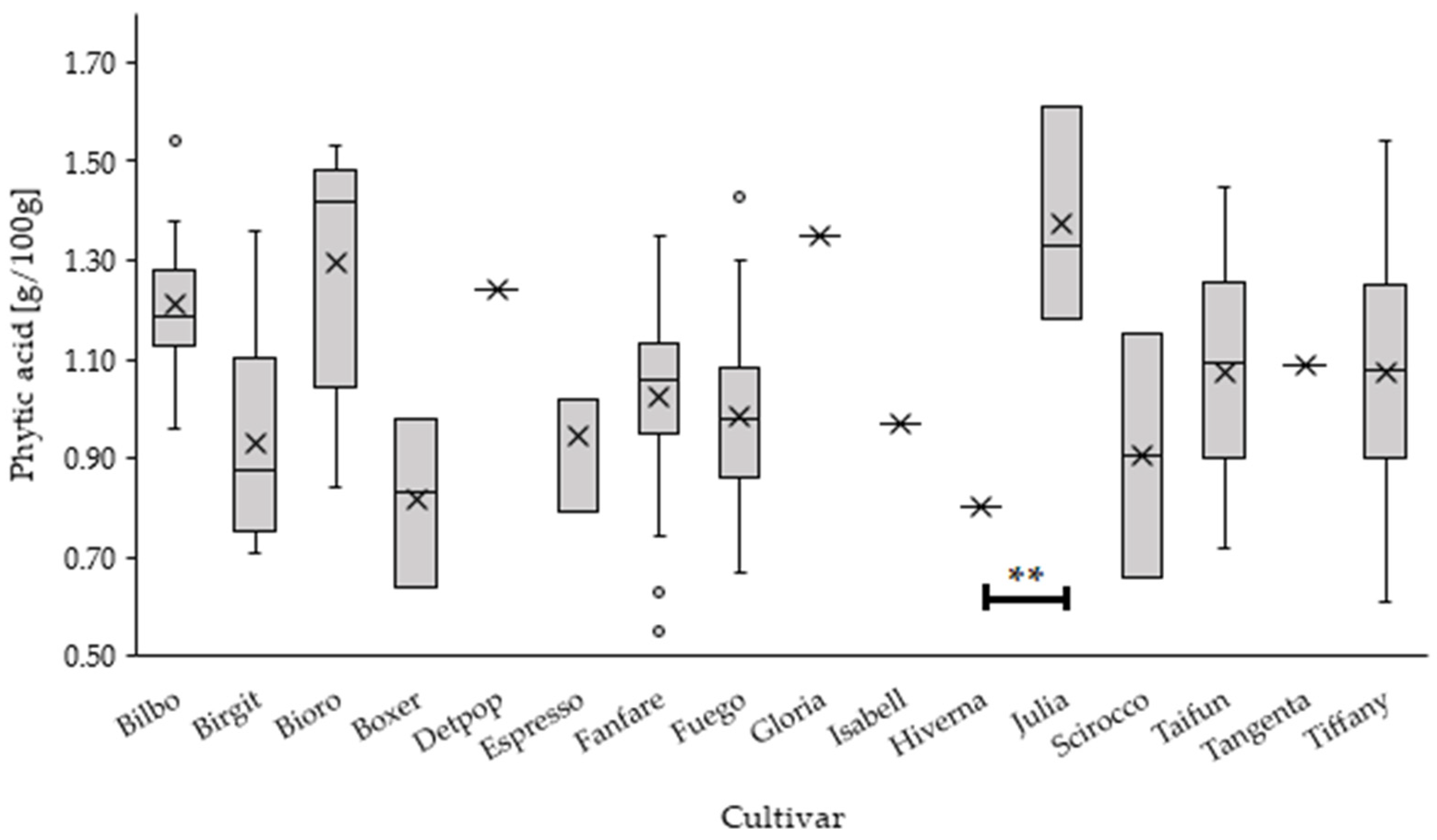
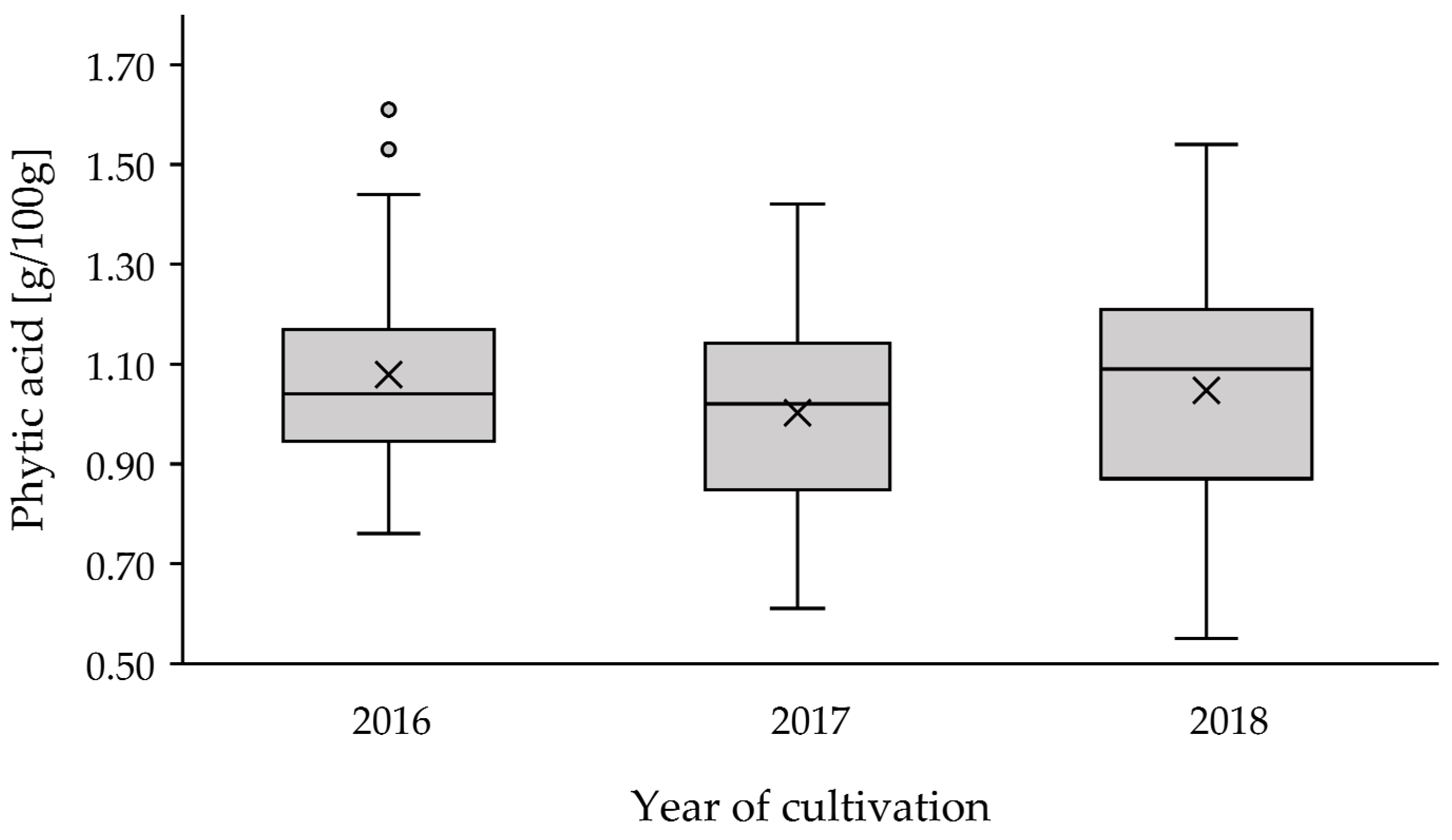
Legumes such as faba beans (Vicia faba) are once again gaining popularity, especially in Europe. This is due to the fact that they are an important source of plant-based proteins for human as well as animal nutrition. In addition to a high protein content, faba beans have a wide range of secondary plant metabolites (SPMs). Some of them, such as phytic acid (PA, inositol hexakisphosphate), are discussed controversially with regard to their role as dietary compounds. As ecophysiological conditions and agronomical practices are well known to alter SPMs in (food) plants, it is hypothesized that the farming system has an impact on the overall SPMs content in plants and there might be a correlation between organically grown bean samples and PA content. Consequently, this study aimed at characterizing the German-wide variation in the PA content of faba beans produced under real cultivation conditions. Influencing factors such as cultivar and use of organic or conventional cultivation have been evaluated in order to reveal dependencies of PA in legumes. All bean samples were obtained from different conventional and organic farms from eleven German federal states over three consecutive cultivation years (2016–2018). However, beans did not show annual effects in PA content. As expected, there were dependencies related to the cultivar. Furthermore, significant differences between conventionally and organically grown beans were found, independent of fungicide or insecticide use.
Keywords: phytic acid; faba beans (Vicia faba); conventional vs. organic cultivation; secondary plant metabolite; legume phytic acid; faba beans (Vicia faba); conventional vs. organic cultivation; secondary plant metabolite; legume