Article

Bioplastic Production in Circular Economy Paths with Glycerol and Whey

by
Héctor H. León Santiesteban
1,
Juan Aguirre Aguilar
1,
Deyanira Ángeles Beltrán
2,
José Luis Contreras Larios
1,
Ricardo Reyes Chilpa
3,*,
Julio C. García Martínez
4 and
Margarita M. González Brambila
1,*
1
Energy Department, Universidad Autónoma Metropolitana-Azcapotzalco, Av. San Pablo # 420, México City 02128, Mexico
2
Basic Sciences Department, Universidad Autónoma Metropolitana-Azcapotzalco, Av. San Pablo # 420, México City 02128, Mexico
3
Chemistry Institute, Universidad Nacional Autónoma de México, Circuito Exterior s/n, Ciudad Universitaria, Coyoacán, México City 04510, Mexico
4
Biophysics Department, Instituto Politécnico Nacional, Prolongación de Carpio y Plan de Ayala s/n, Col. Santo Tomás, Miguel Hidalgo, México City 11340, Mexico
*
Authors to whom correspondence should be addressed.
Catalysts 2026, 16(2), 178; https://doi.org/10.3390/catal16020178
Submission received: 29 December 2025 / Revised: 26 January 2026 / Accepted: 6 February 2026 / Published: 10 February 2026

Abstract

From 1950 to the present, plastic production and use have increased mainly because plastics possess qualities like stability, light weight, versatility, and decreasing production costs. However, most plastics are not biodegradable, and only a small portion is recycled worldwide. Bioplastics serve as an alternative if they are biodegradable and derived from residual materials, promoting a circular economy. PHB is a polymer with characteristics similar to some commercial plastics. It was discovered in the 1920s and has been examined by researchers and engineers since then due to its potential as a biodegradable bioplastic. Some microorganisms can produce PHB under controlled conditions. In this work, PHB production was analyzed using two strains, Bacillus subtilis and Bacillus megaterium, and two byproducts—whey and glycerol—as substrates and varying the culture media compositions. Both byproducts and both strains are suitable for PHB production; the absence of nitrogen and trace element sources enhances PHB yield. Additionally, bacterial growth, substrate uptake, and PHB production were modeled using logistic growth and the Luedeking–Piret models.

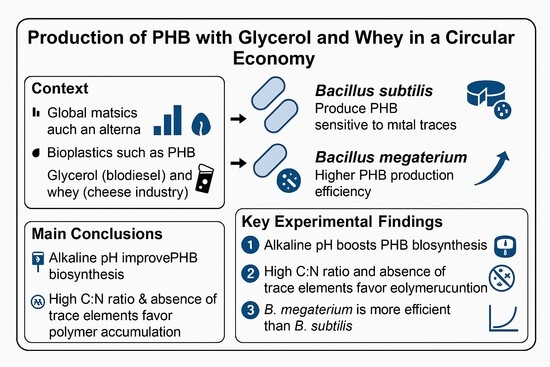
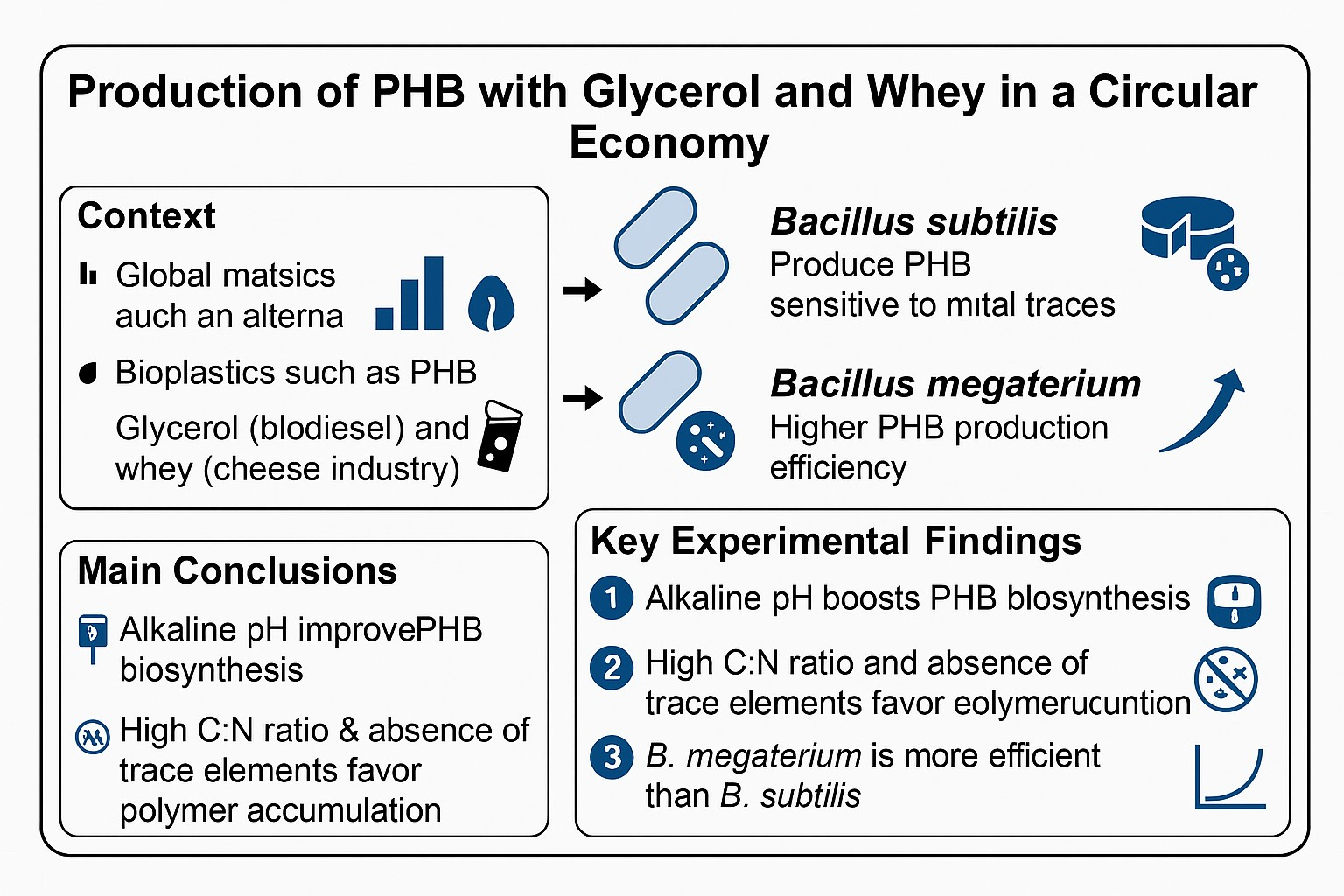
Graphical Abstract

1. Introduction

The annual production of plastics has doubled from 234 million tons (Mt) in 2000 to 460 Mt in 2019. Moreover, in the same period, plastic waste has more than doubled from 156 Mt in 2000 to 353 Mt in 2019 [1].
Some basic actions are needed to reduce the impact of plastic pollution. Some of the most important are:
(1)
To promote circular economy, including the design of reusable and recycled products.
(2)
To increase bioplastics production from renewable feedstocks by utilizing residual byproducts as raw materials [2].
This work examines the use of whey and glycerol as substrates for bioplastic production. Whey is a byproduct of the dairy industry, and glycerol is the main byproduct of biodiesel manufacturing.
Biopolymers produced by microorganisms are easily biodegraded by them and within the digestive systems of higher animals, including humans. PHAs, a type of biopolymer, are natural polyesters made up of various D-hydroxyalkanoic acids, starting with polyhydroxybutyrate (PHB). PHAs are generated by a range of prokaryotes and some eukaryotic organisms, such as plants, animals, and fungi.
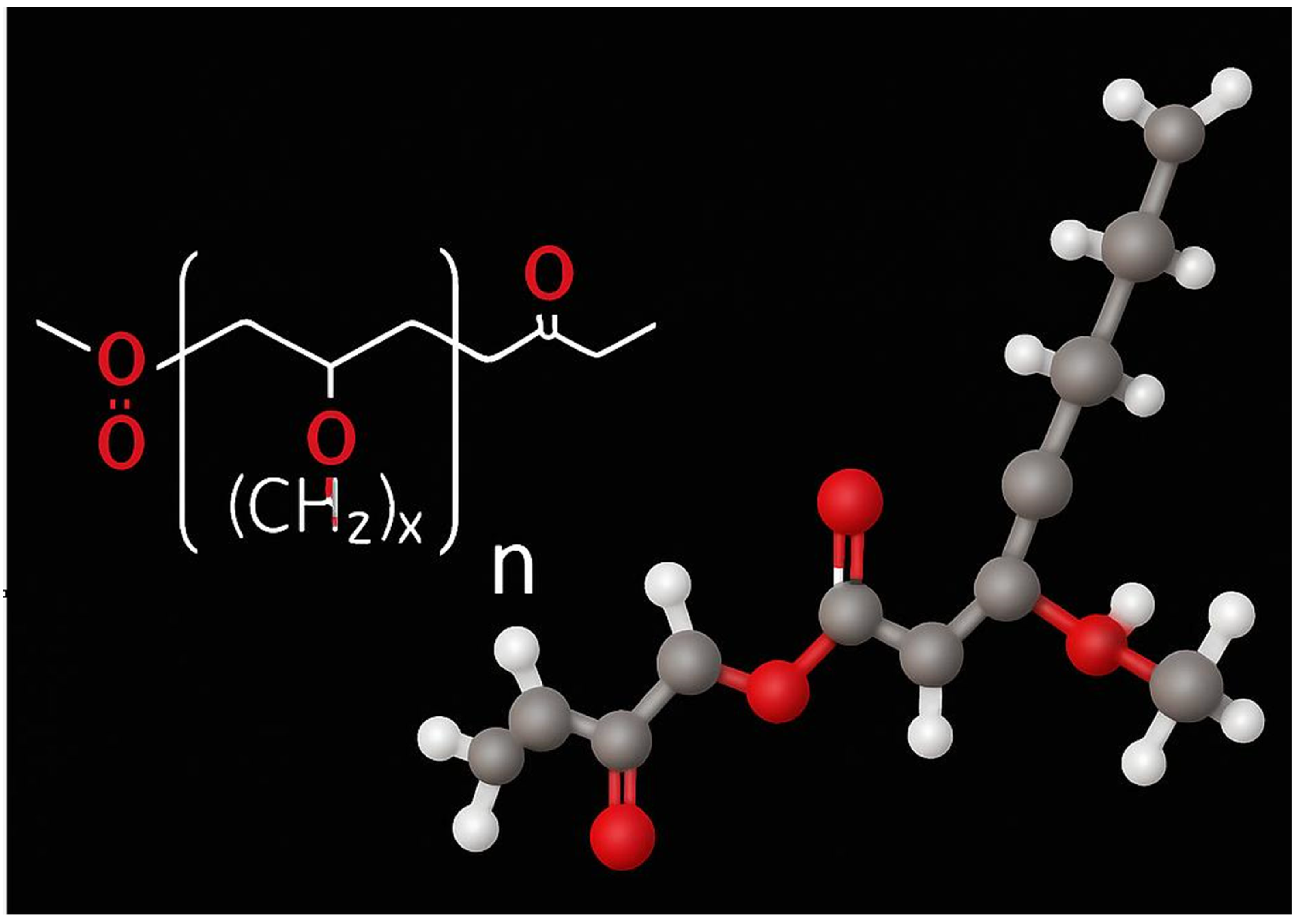
Figure 1 displays the chemical structure diagram of PHAs. Depending on the bacterial strain, carbon source, and growth conditions, molecular weights can vary from tens of thousands to hundreds of thousands [2]. All PHAs originate from renewable materials, are genuinely biodegradable, and exhibit high biocompatibility [3]. They hold great promise for food packaging and compare favorably to plastics like polyethylene and polypropylene.
Some bacterial and fungal species store PHA as a carbon and energy source to survive during starvation conditions. PHA accumulates in cells when there is an excess of a carbon source in the culture medium, but bacterial growth is limited by another nutrient; these limiting nutrients can include nitrogen, sulfur, phosphate, iron, magnesium, potassium, or oxygen [4].
One of the most promising bioplastics is polyhydroxybutyrate (PHB), which belongs to the PHA family of bioplastics, where the molecular weight coefficient x (shown in Figure 1) equals 3. It is a non-toxic polymer produced and stored by certain bacterial and fungal genera, such as Alcaligenes, Azotobacter, Bacillus, Beijerinckia, Pseudomonas, Rhizobium, and Rhodospirillum [5]. The PHB molecules in the cytoplasm are crystalline, forming granules about 0.5 µm in diameter. These granules can be isolated or extracted using solvents. Some researchers believe that PHB has significant potential to replace high-density polyethylene (PE) and polypropylene (PP) due to its chemical and mechanical properties (see Table 1) and with proper disposal practices to establish a fully circular plastic lifecycle [6]. However, its current use is limited by high production costs, low yields, manufacturing technology, and downstream purification challenges. Therefore, it is necessary to study and optimize conditions that enhance its accumulation within cells, develop methods for cell disruption without damaging the PHB molecules, and improve purification from the culture media.
PHB biodegradation occurs within a reasonable timeframe when it contacts degrading microorganisms in biologically active environments, such as soils, freshwater, and aerobic and anaerobic composting [7].
  • Metabolic pathways
The production of PHB using bacteria has been extensively documented in the literature. A variety of raw materials has been reported, including simple sugars like glucose and sucrose, vegetable oils, agro-industrial waste (molasses, whey, fruit peels), crude glycerol, and even methane and methanol.
  • Whey as substrate
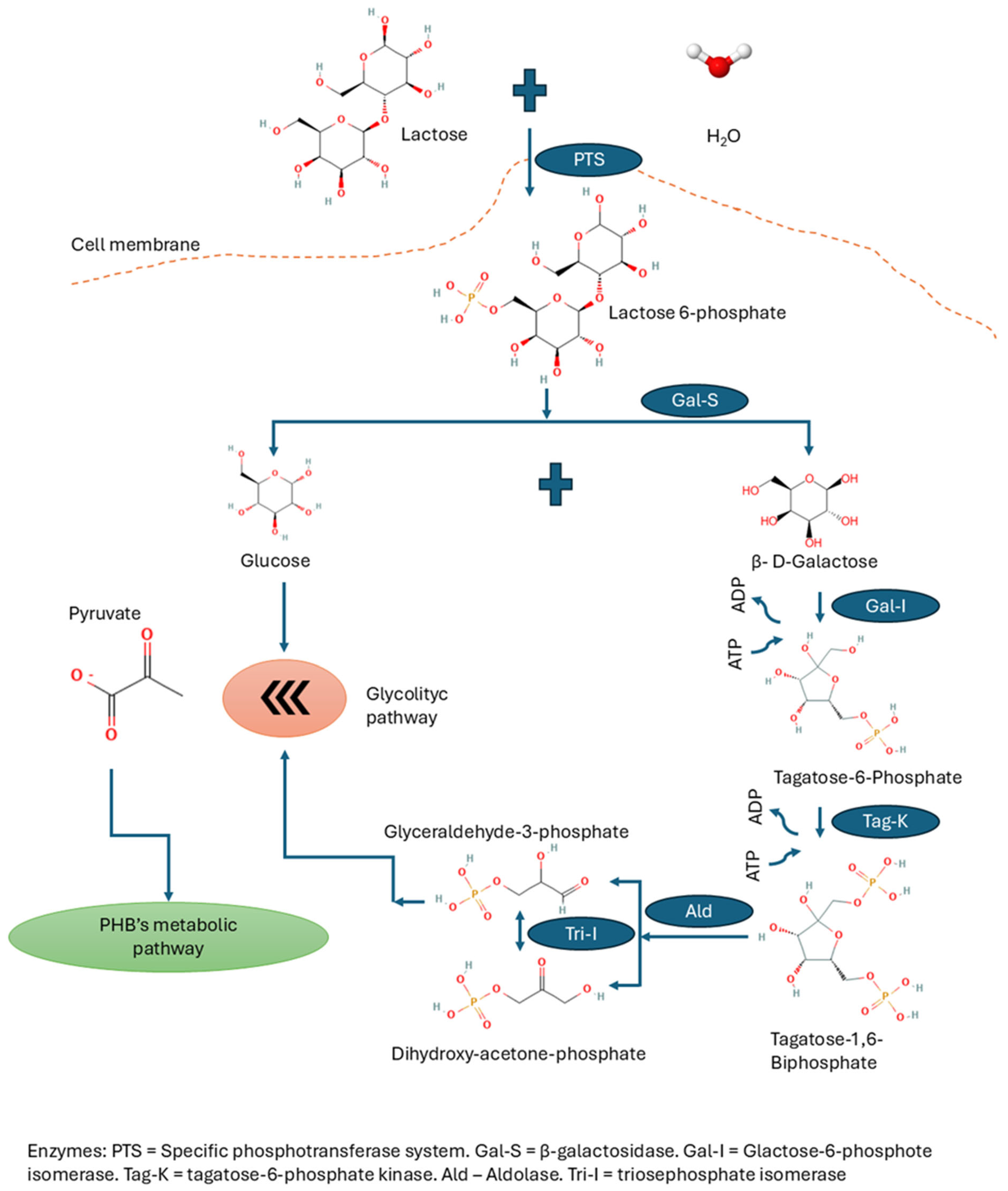
The main compound of whey (excluding water) is lactose. Lactose catabolism begins with the transport of lactose into the cell through the cell’s membrane via a lactose-specific phosphotransferase system [8,9]. Figure 2 illustrates the steps of the lactose metabolic pathway leading to PHB production, including the enzymes that catalyze each reaction.
  • Glycerol as substrate
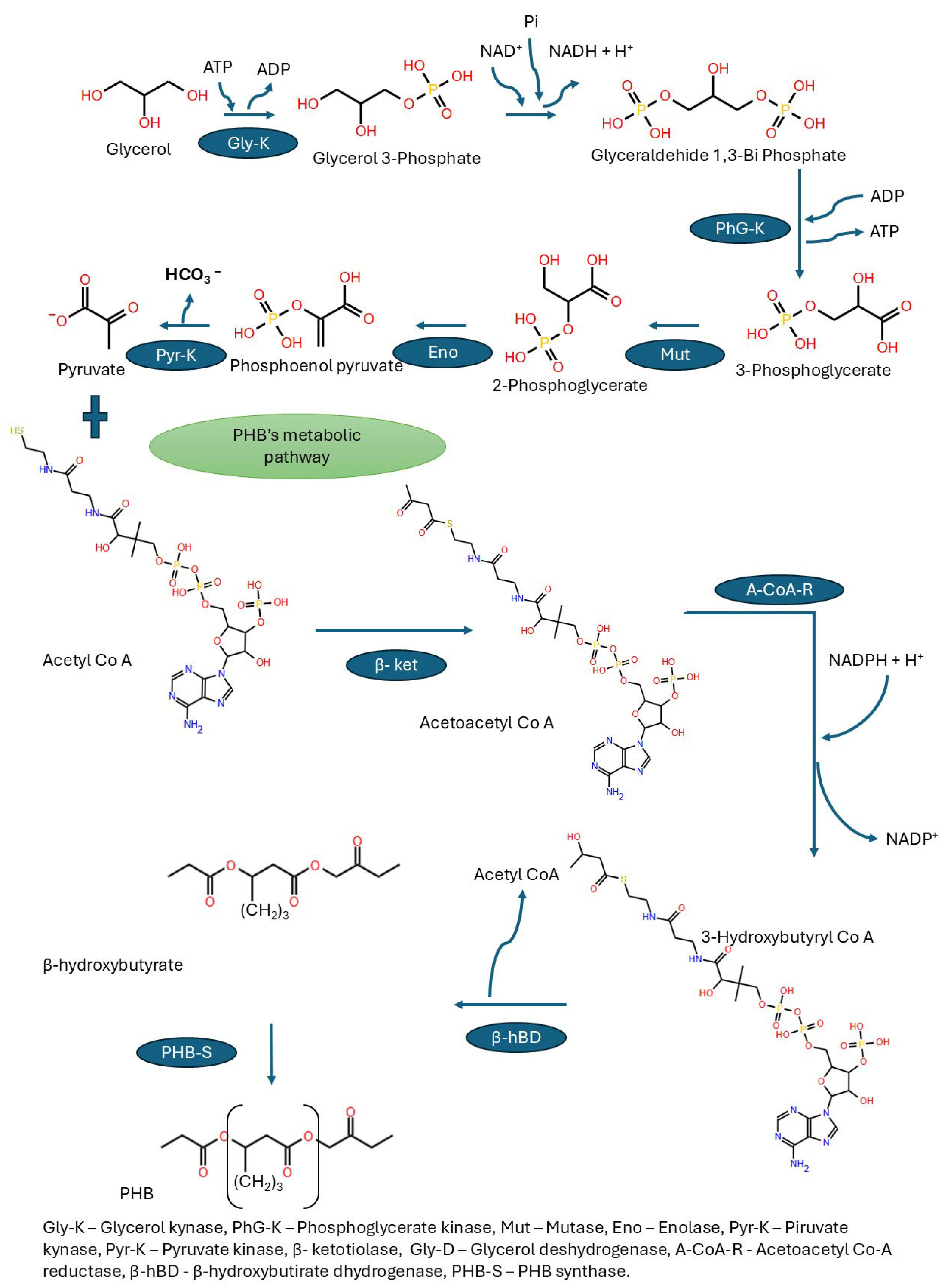
This study examines the production process using crude glycerol, a byproduct of biodiesel manufacturing. The metabolic pathway that converts glycerol to PHB is illustrated in Figure 3 [10].

2. Results and Discussion

2.1. Experiments with Whey

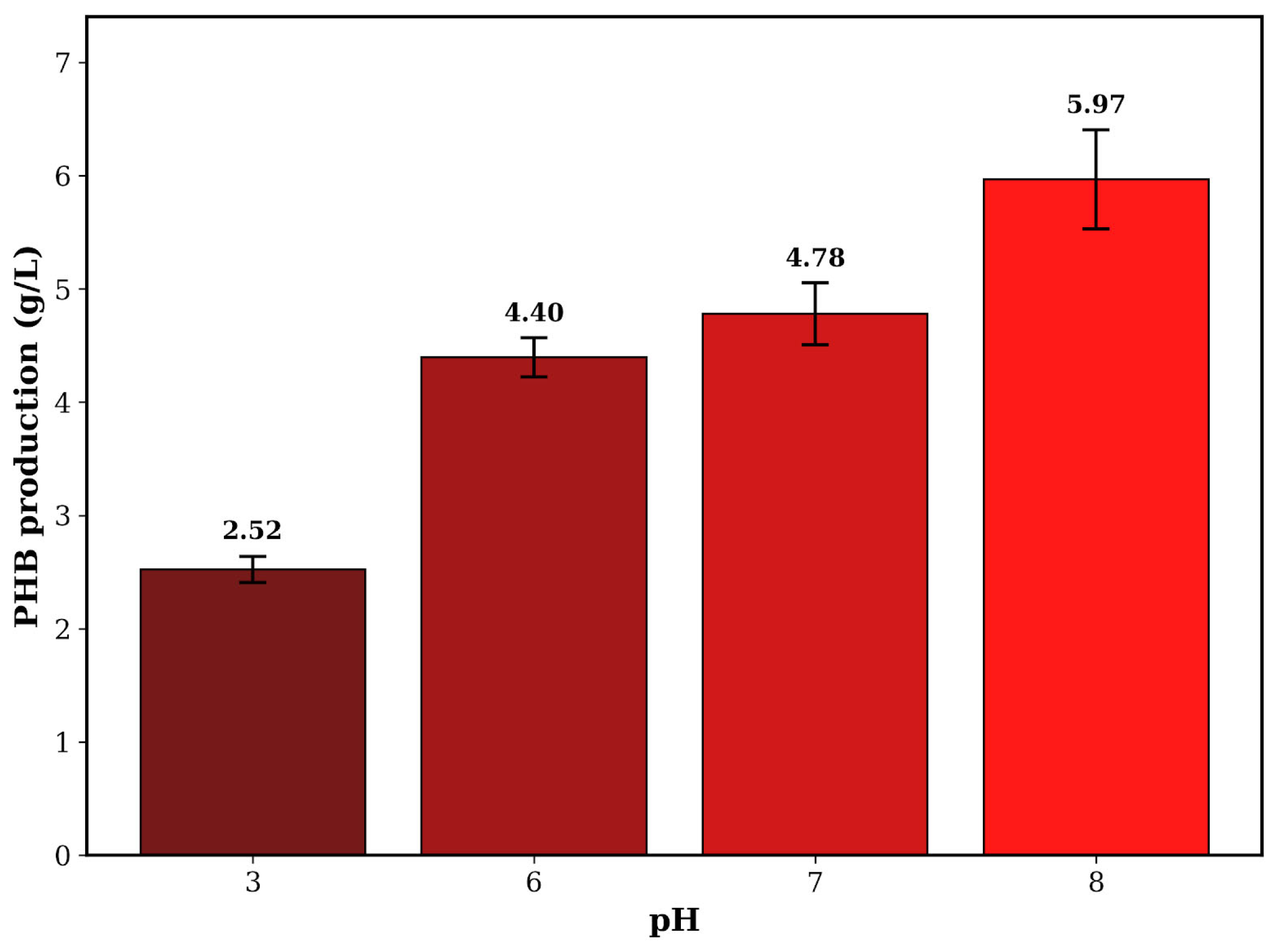
The experimental tests were conducted in triplicate; the results shown in Figure 4 are the averages of the three measurements for each experiment. At a pH level of 8, the production of PHB was 2.35 times higher than at pH 3, 1.35 times higher than at pH 6, and 1.24 times higher than at pH 7. Therefore, a basic pH promotes PHB production because it stresses the cells of Bacillus megaterium.
That makes sense because B. megaterium is a neutrophilic bacterium, and its optimal growth pH ranges from 6.5 to 7.5. However, at acidic pH levels, these bacteria do not accumulate PHB in their cytoplasm. This occurs because low pH levels denature certain enzymes involved in the PHB production pathway, such as β-ketothiolase [β-ket], Acetoacetyl-CoA reductase [A-CoA-R], and β-PHB synthase [PHB-S].
Table 2 presents results from other studies reported in the literature on Bacillus megaterium and various substrates for PHB production. This table shows that one of the key issues researchers aim to address is finding low-cost raw materials or, ideally, residues from other industries such as biodiesel production (glycerol), cacao liquid wastes, and oil palm empty fruit bunches (waste from oil palm cultivation). The PHB concentration observed in this work falls within the same range as reported in other similar studies. The PHB concentration at each hour of the bioreaction is the most comparable variable across different studies.

2.2. Experiments with Glycerol

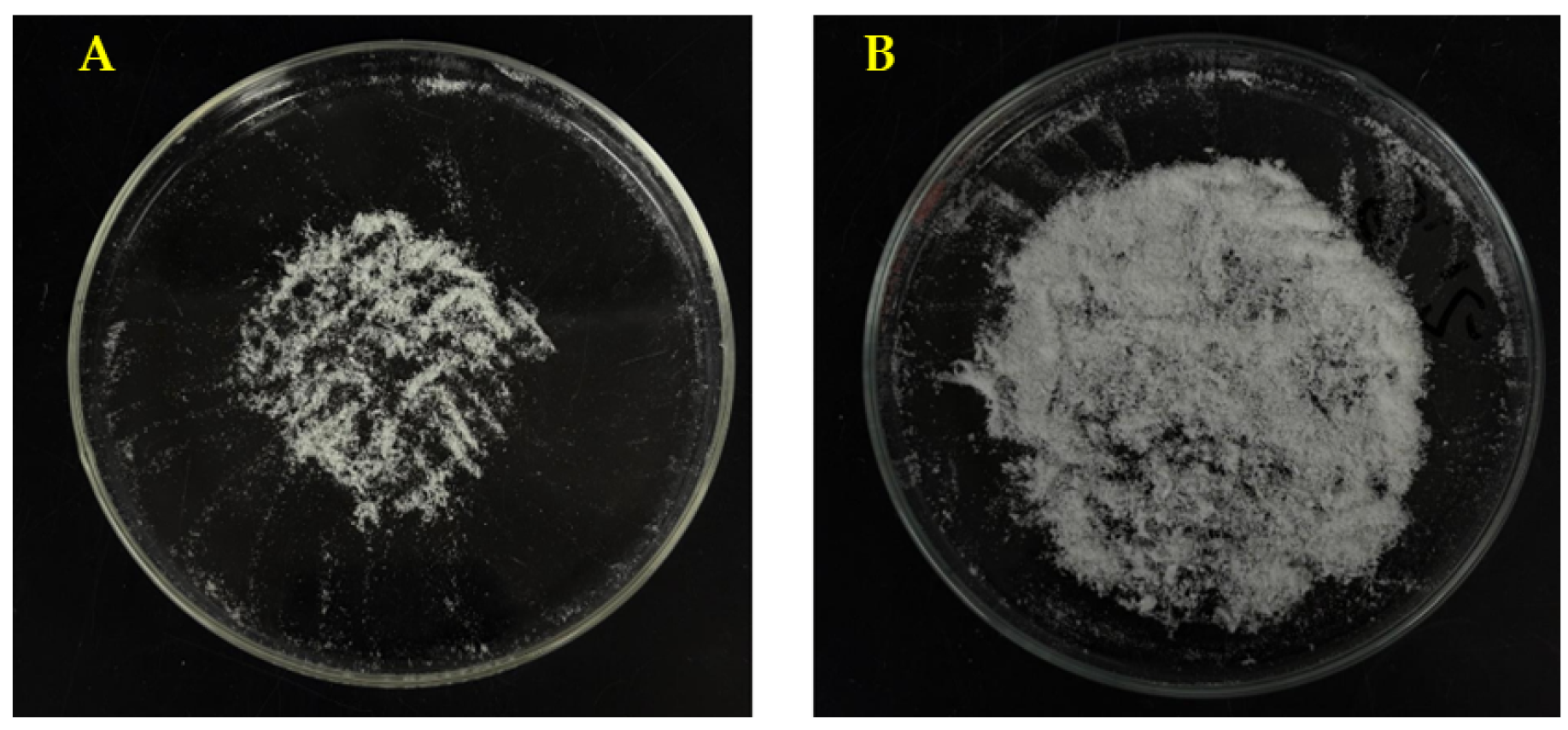
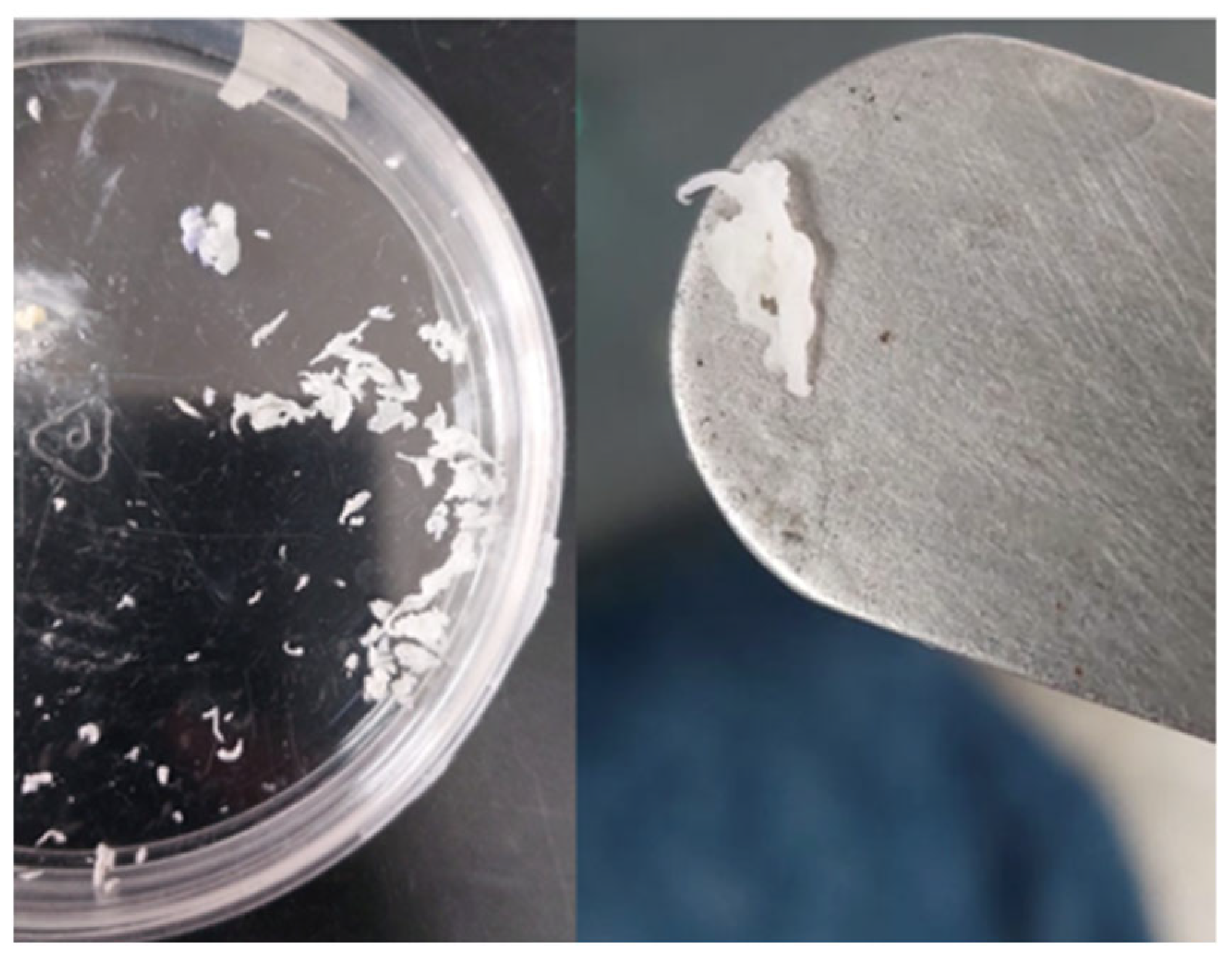
Figure 5 shows solid PHB obtained after the recovery process with B. subtilis [A] and B. megaterium [B]. It can be observed with the naked eye that the amount of PHB obtained with B. megaterium is greater than that obtained with B. subtilis.
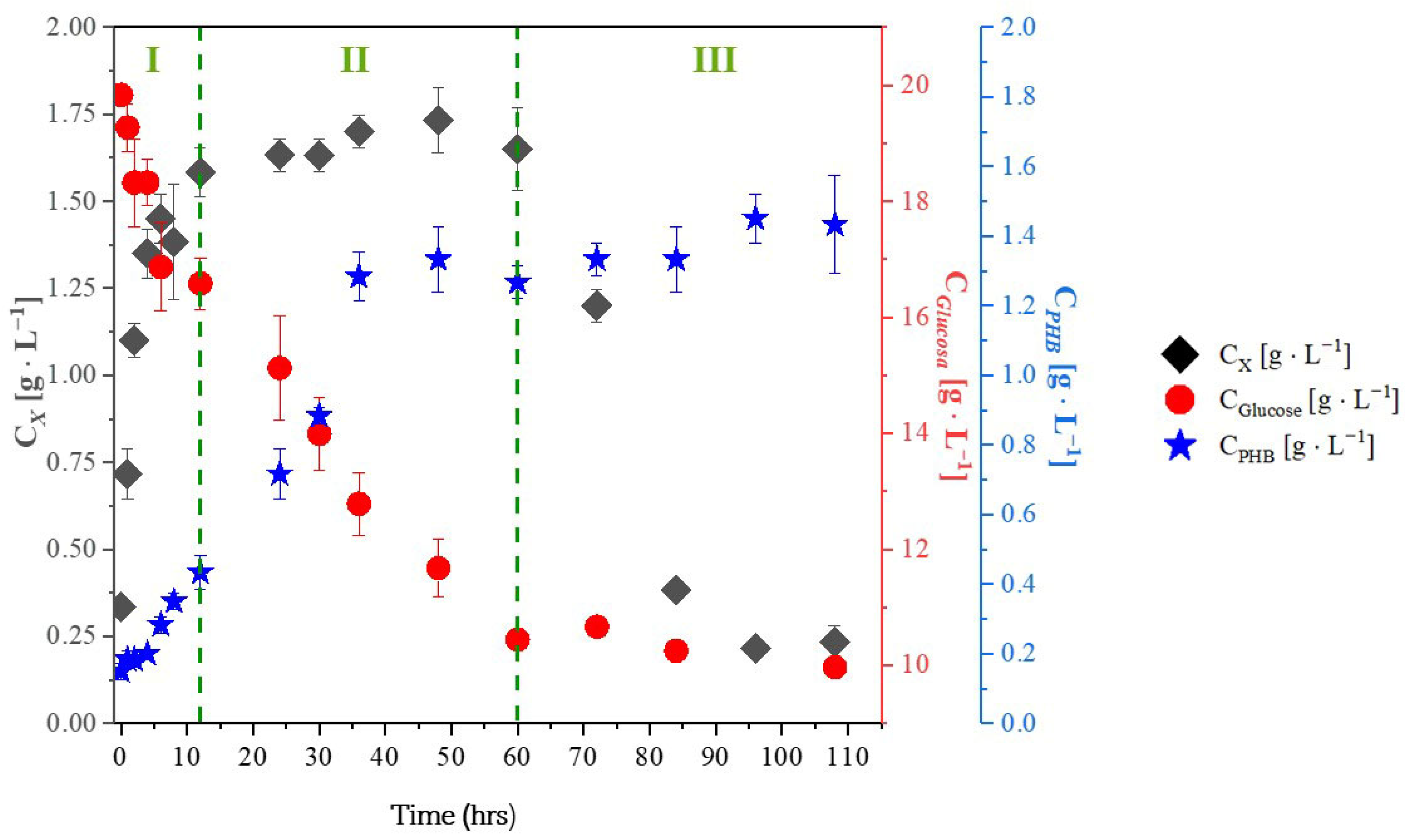
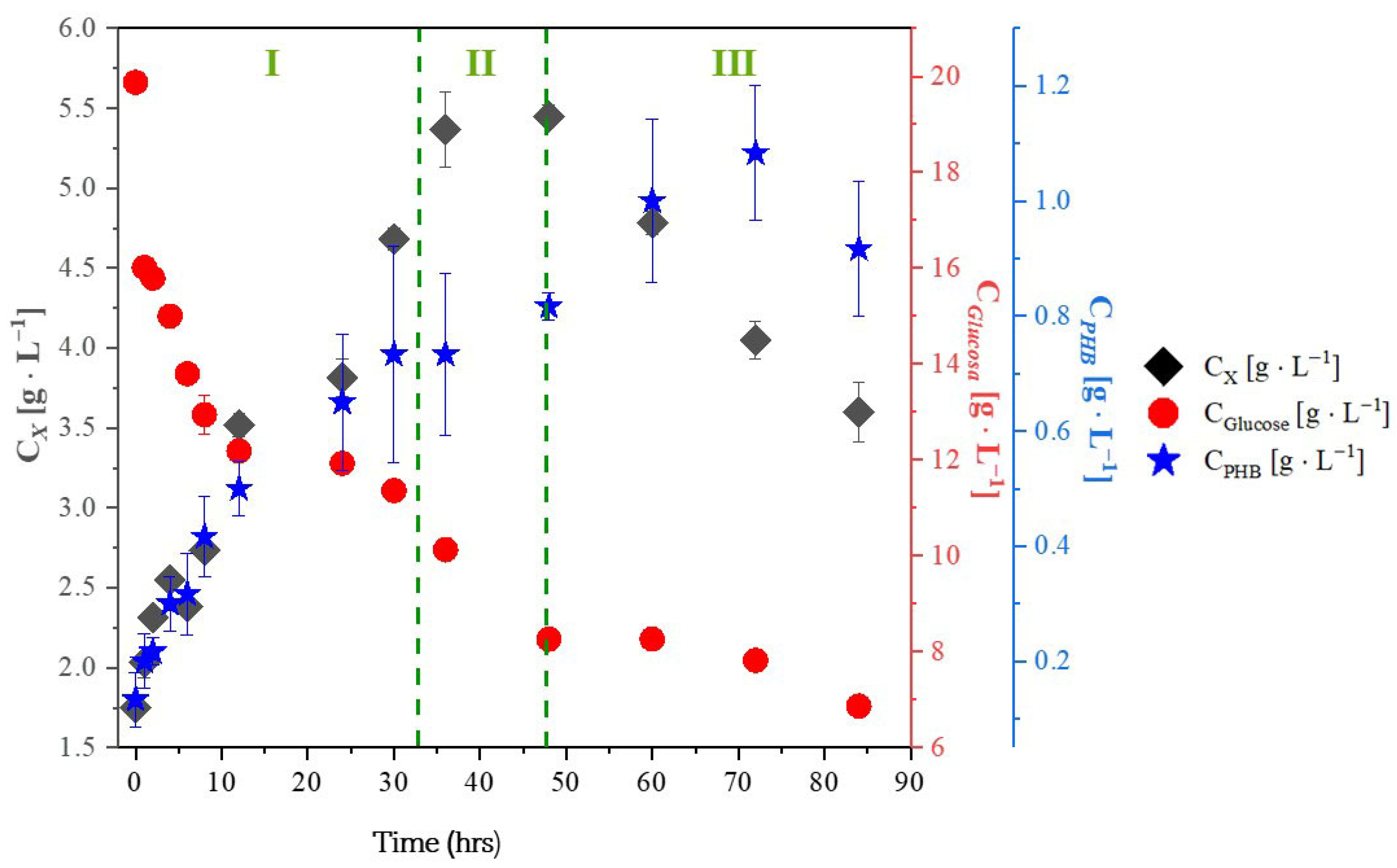
Figure 6 and Figure 7 show the experimental results of glucose consumption, biomass growth, and PHB production with B. subtilis. Figure 6 shows the results of experiments carried out without trace elements, and Figure 7 shows the results with trace elements. As can be seen without trace elements (Figure 6), there are three phases of biomass growth. The first one [I] is the exponential phase from time 0 to 12 h; the stationary phase begins at 12 h and ends at 60 h; then the death phase begins. Glucose is not totally consumed in these experiments; the percentage of glucose consumed at the end of the exponential growth phase [ C S E ]   was 16.4% [Equation (1)], and at the end of the experiment [ C S F ]   , it was 49.6%, calculated with Equation (2), where C S i is the glucose initial concentration, and C S f is the glucose concentration at the end of the exponential growth phase.
The experimental yield coefficient biomass/substrate, calculated at the end of the exponential growth phase, was 0.38 g of cells produced per liter per gram of glucose in the phase [ Y X S E ] ; see Equation (3), where C S f e is the glucose concentration at the end of the exponential growth phase.
Part of the substrate consumed during the stationary growth phase is used to produce PHB, while the rest supports cell maintenance. That is because, even though the biomass stopped increasing at hour 12 of the experiment, the PHB concentration continued to increase quickly until the end of the stationary growth phase and slowly thereafter. The yield coefficient product/substrate calculated at the maximum PHB concentration [ Y P S M ] obtained was: 0.45; see Equation (5), where C P f m is the maximum PHB concentration, and C S f m is the glucose concentration at time equal to maximum PHB concentration.
%   C S E = C S i C S e C S i × 100
%   C S F = C S i C S f C S i × 100
Y X S E = C S f e C S i C S f e
Y P S E = C P f e C S i C S f e
Y P S M = C P f m C S i C S f m
Figure 7 displays the experimental results for B. subtilis in a culture medium with trace elements. The same three growth phases are observed, but the durations of each phase differ from those in the previous case. The exponential growth phase lasts until hour 33 of the experiment. Then, a stationary phase occurs until hour 48, followed by the death phase.
Glucose is not completely consumed in these experiments, but the final concentration is lower than in the previous set. The percentage of glucose used up at the end of the exponential growth phase was 42.8%, and at the end of the experiment, it was 64.8%, as calculated using Equations (1) and (2), respectively.
The yield coefficient of the biomass substrate during the exponential growth phase was 0.34, dropping to 0.14 by the end of the experiment. Conversely, the yield coefficient of the product substrate was 0.07 at the end of the exponential growth phase and increased to 0.45 by the experiment’s conclusion. This is because a major portion of PHB is produced after the exponential growth phase has ended. The yield coefficient of PHB/substrate was 0.22 at the end of the exponential growth phase and rose to 0.61 by the end of the experiment, calculated using the same equations as before.
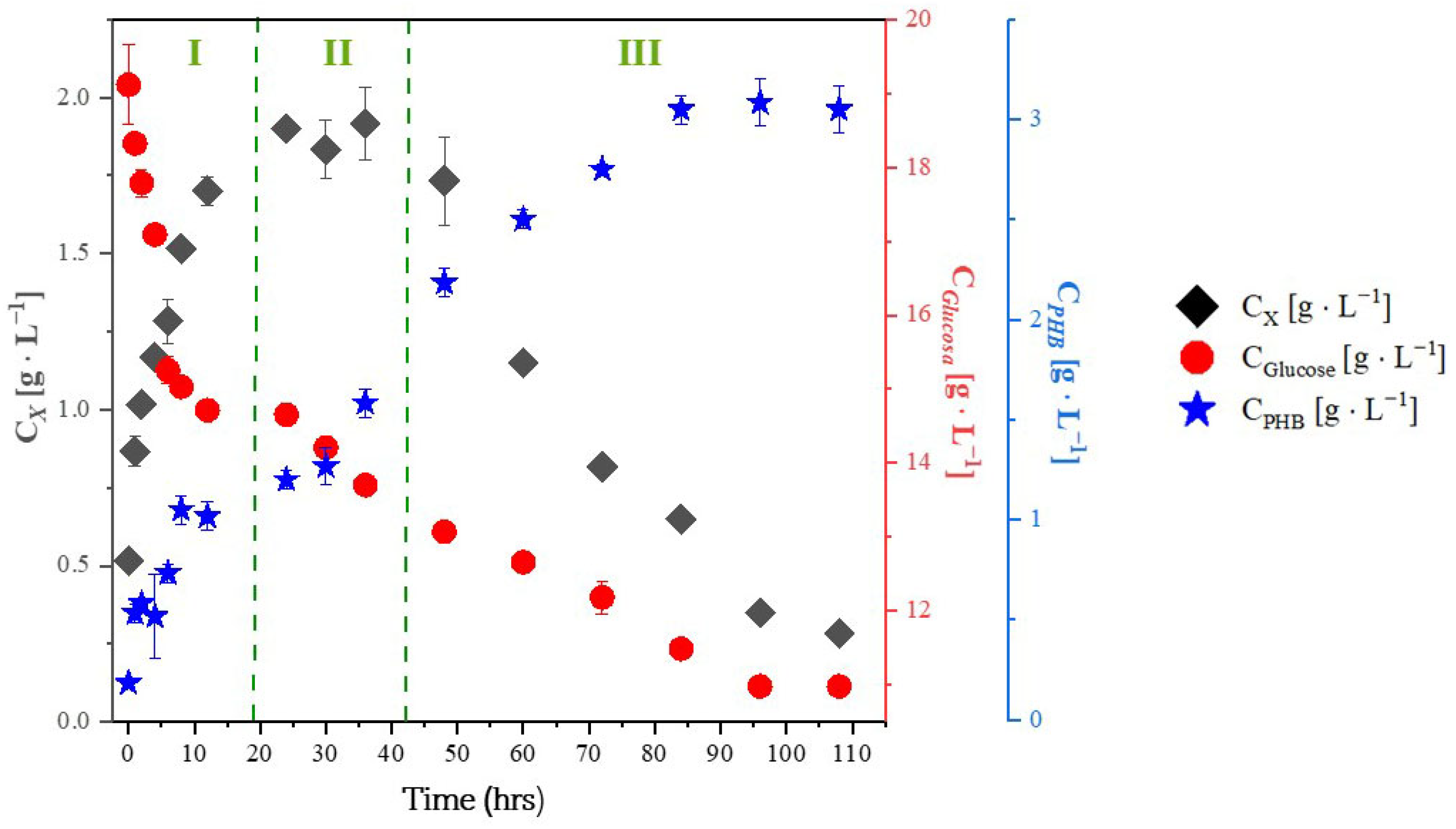
Figure 8 shows the experimental results for B. megaterium in a broth without trace elements. The same three growth phases were observed, with different durations for each. The exponential growth phase ended at hour 18, the stationary phase concluded at hour 40, and the death phase persisted until the end of the experiments.
The maximum biomass concentration was 1.9 g L−1, and the maximum PHB concentration reached was 3.1 g L−1. B. megaterium did not consume all the glucose in the broth; the glucose concentration at the end of the experiment was 11 g L−1. The yield coefficient of biomass/substrate, at the end of the exponential growth phase, was 0.3, and at the end of the experiment, it was 0.026. The yield coefficient product/substrate at the end of the exponential growth phase was 0.2633, and the yield coefficient at the end of the experiment was 0.8.
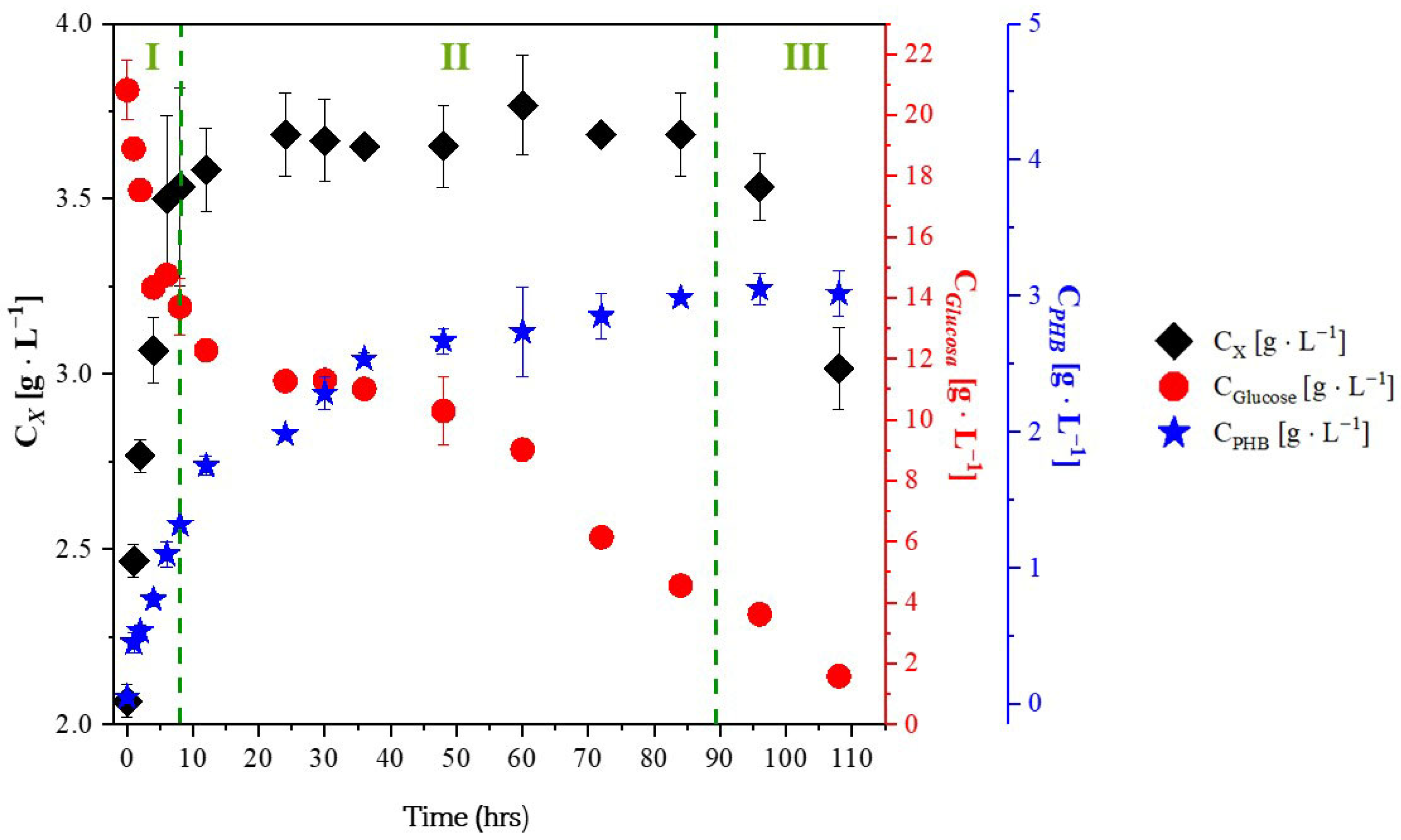
Figure 9 displays the experimental results for B. megaterium in a culture medium with trace elements. In this case, glucose was also not fully consumed. The biomass/substrate yield coefficients at the end of the exponential growth phase and at the end of the experiment were 0.2 and 0.04, respectively. The yield coefficients of PHB substrate at the end of the exponential growth phase and at the end of the experiment were 0.18 and 0.42, respectively.
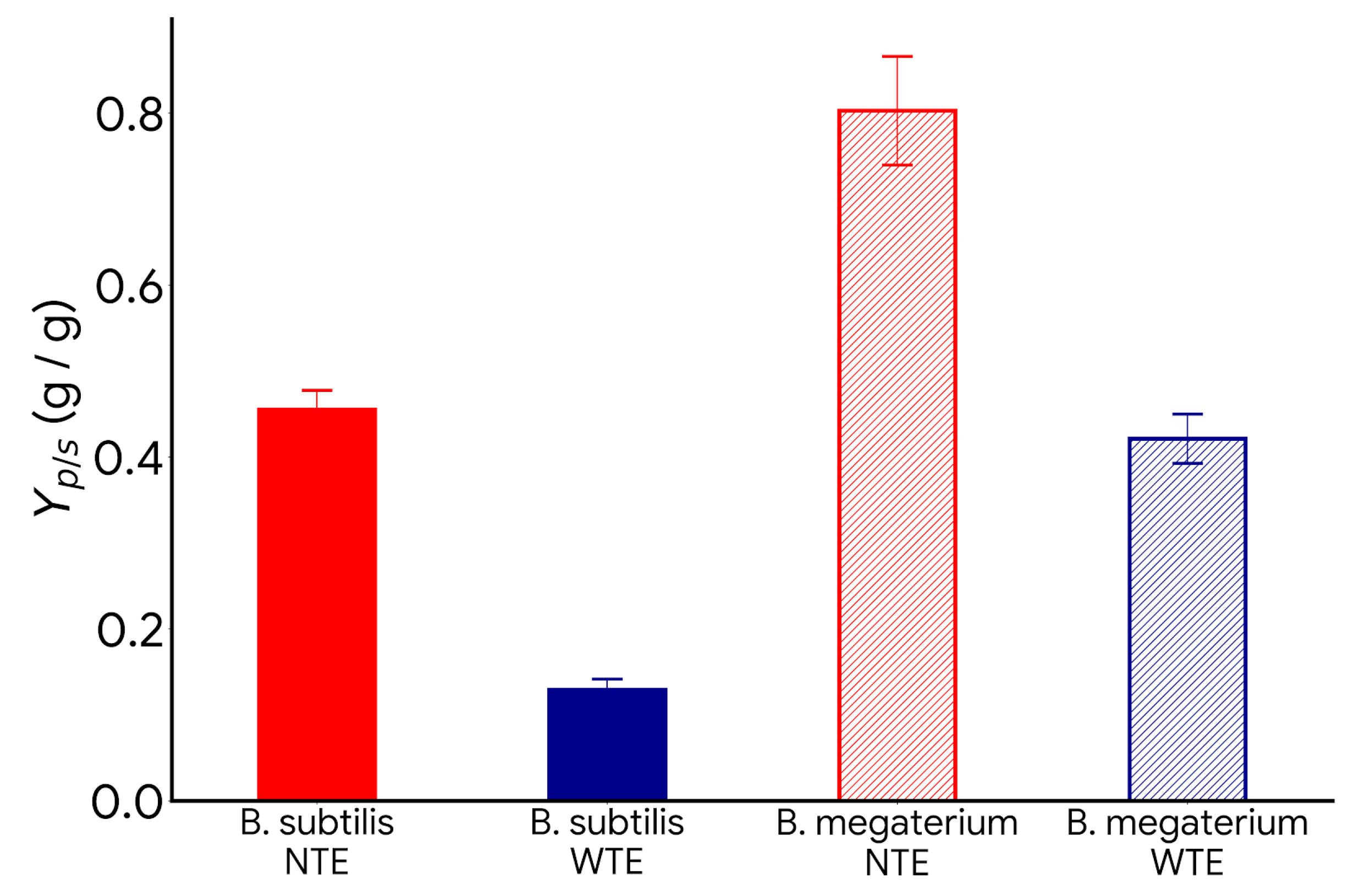
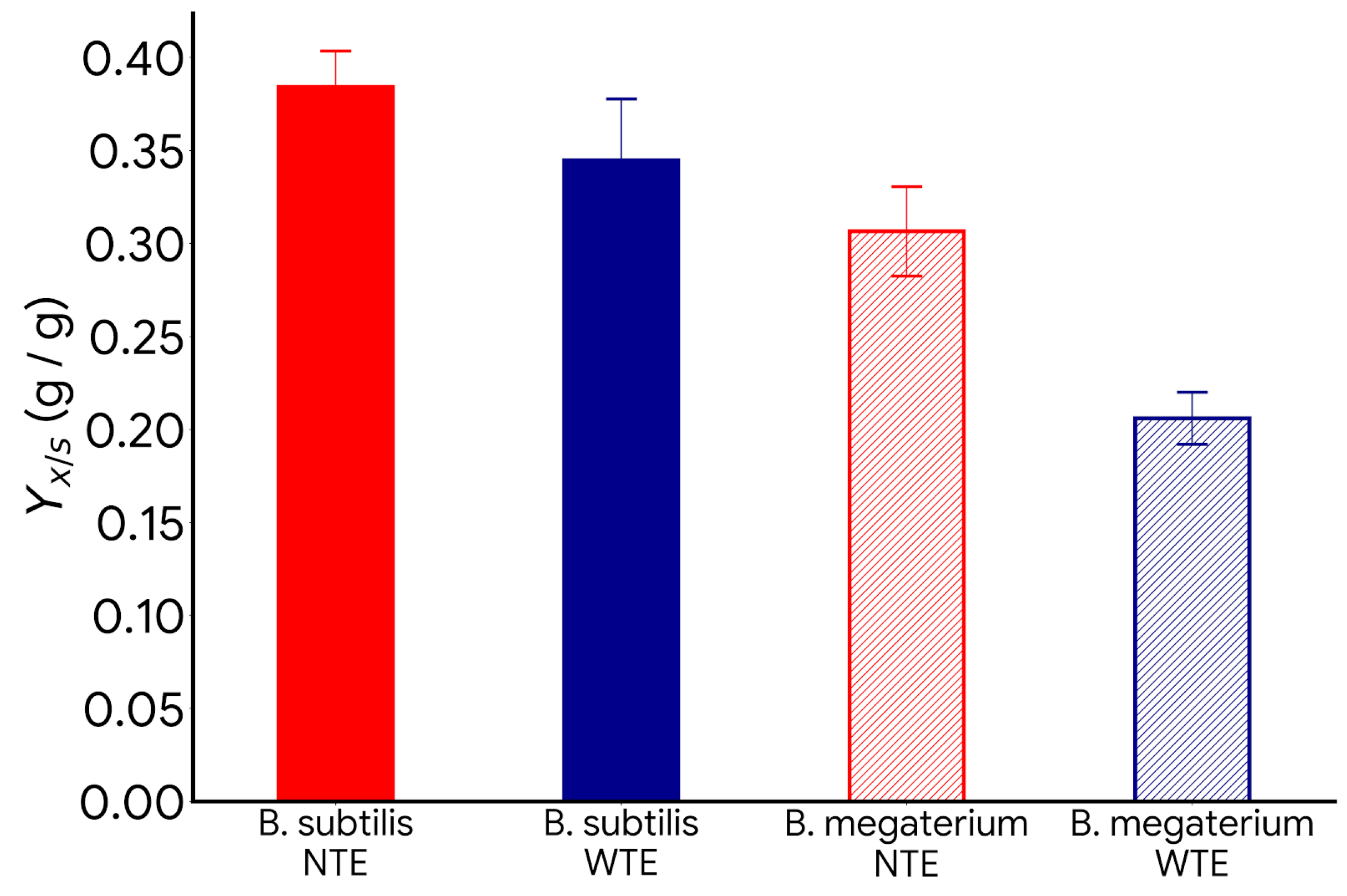
Figure 10 and Figure 11 display the comparison of yield coefficients for biomass/substrate and PHB/substrate, respectively, across the four experiments conducted. In Figure 10, the biomass substrate yield coefficients are depicted in red for the culture medium without trace elements and in blue for the medium with trace elements. As demonstrated, B. subtilis produced more cells per gram of substrate consumed in the medium lacking trace elements than in the one containing them, and it achieved the highest biomass substrate yield coefficient among all the experiments.
The same trend was observed with B. megaterium: the biomass/substrate yield coefficient was higher in media without trace elements compared to those with trace elements. It is important to note that the C:N ratio used in all experiments was significantly higher than the optimal C:N ratio for growth. The optimal C:N ratio for B. subtilis ranges from 8:1 to 11.5:1 [19,20], and for B. megaterium, it ranges from 10:1 to 20:1 [21]. In these experiments, the C:N ratio exceeded 200.
Regarding PHB substrate yield coefficients, B. megaterium growing in a culture medium lacking trace elements produced the highest amount, as shown in Figure 11. In this experiment, PHB production was 1.8 times greater than the production that came in second place (B. subtilis without trace elements), 1.9 times greater than the production of B. megaterium with trace elements, and more than 6 times greater than the production with B. subtilis with trace elements.
In three of the experiments (1, 3, and 4), the amount of substrate used by cells to produce PHB was greater than the amount used for growth. Experiments conducted without TE increased PHB production in both strains. As previously reported by Gómez Cardozo et al. [22], B. megaterium is more efficient at producing PHB than B. subtilis.
To achieve short exponential growth phases and extended stationary phases, PHB production needs to be optimized. Trace element concentration has a greater impact on PHB production than the C:N ratio when the C:N ratio is too high.
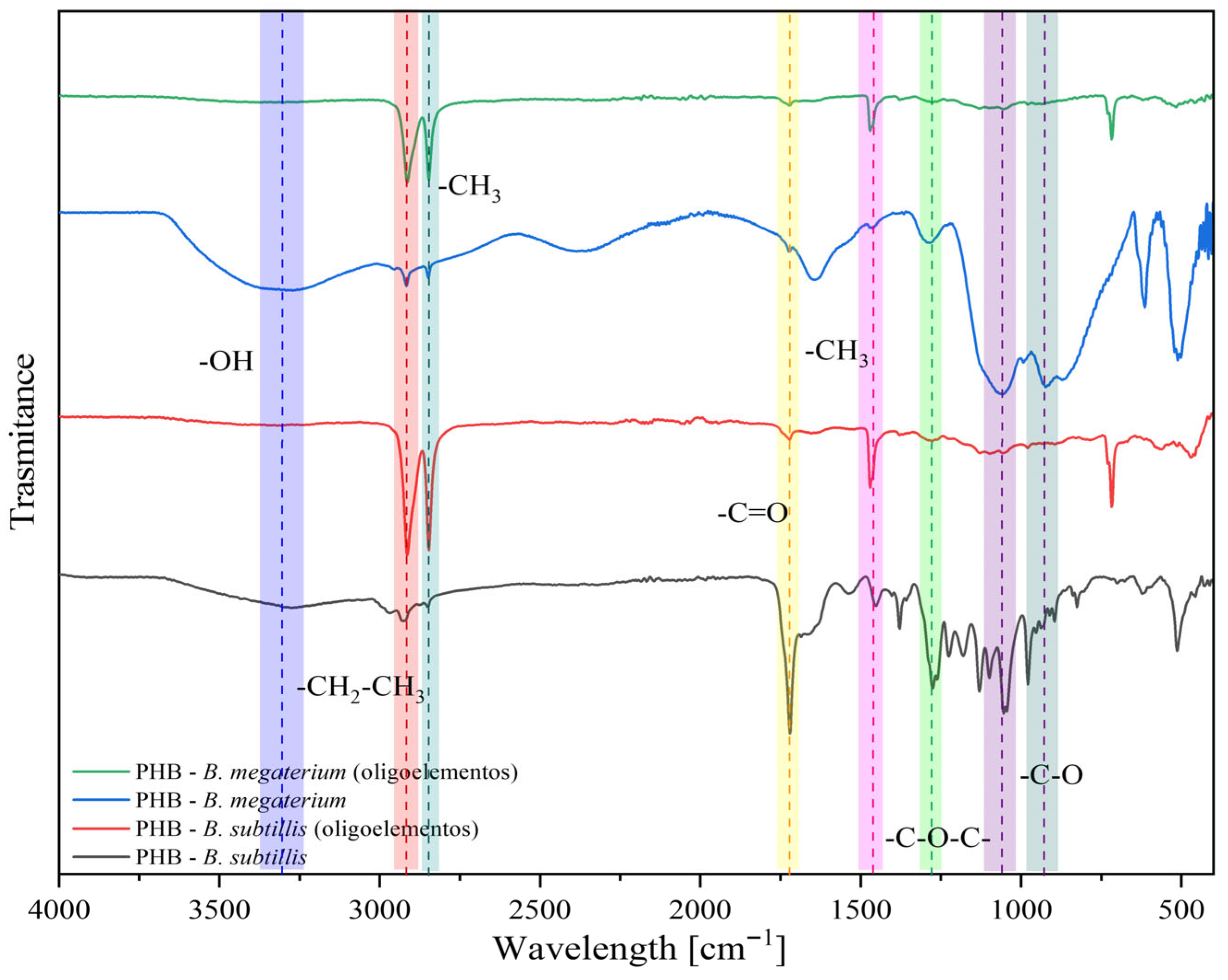
The characterization of PHB was performed by Fourier-transform infrared spectroscopy (FTIR). The characteristic signals of PHB were identified in both Bacillus strains. One of the most important signals is the signal observed in the 1700–1750 cm−1 region, characteristic of the carbonyl group (>C=O) present in PHB, as shown in Figure 12. This signal is very intense in the PHB spectrum produced by B. subtilis. Another characteristic signal was observed in the 1250–1150 cm−1 range, corresponding to esters (C2H7C6). In the 3000–2850 cm−1 range, the characteristic signals of the CH3 and CH2CH2 groups are visible in Figure 12.
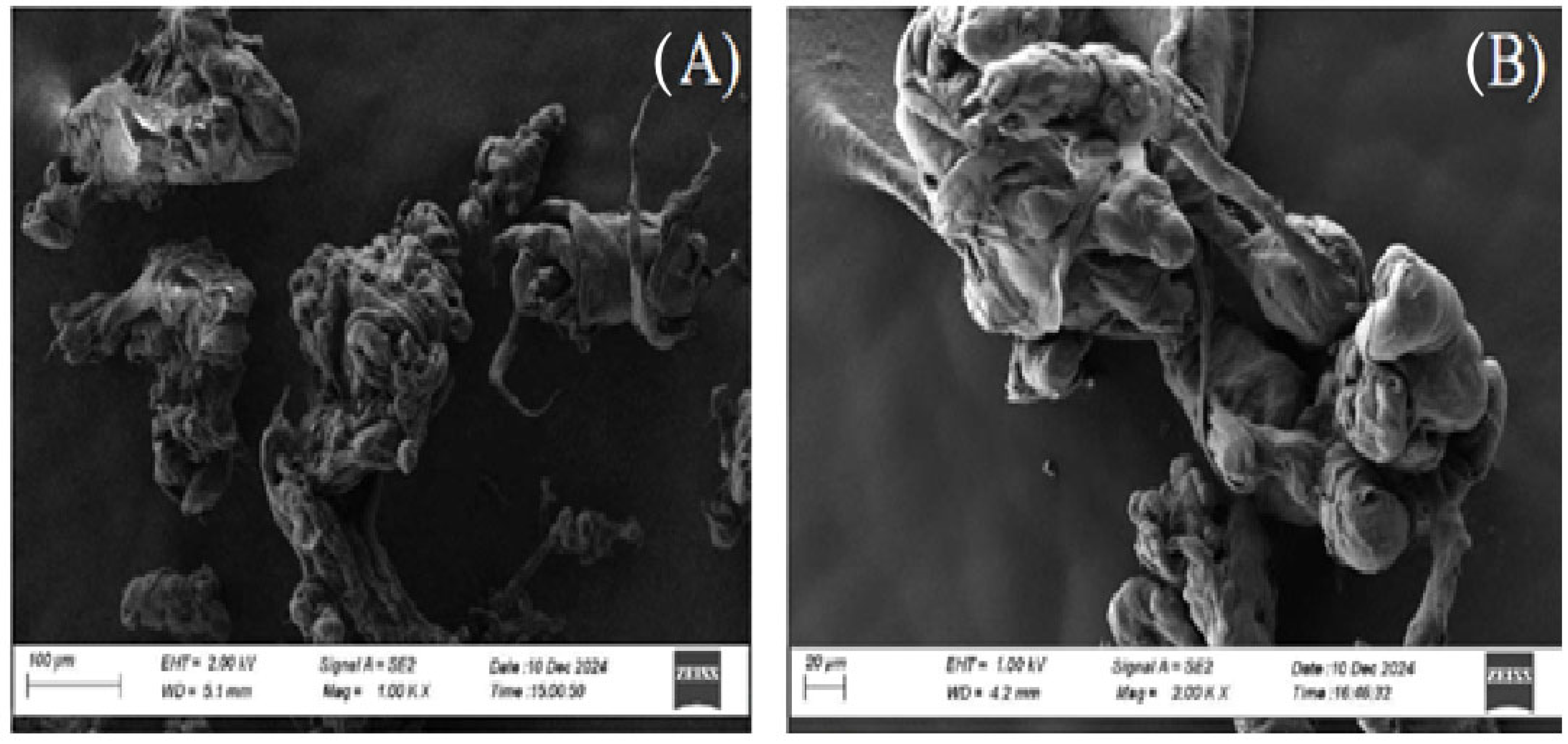
Figure 13 shows the SEM micrographs of the PHB produced, recovered, and purified from both strains, where homogeneous and amorphous masses with smooth textures are observed.
Image A displays PHB from B. megaterium observed at 1000× magnification. Amorphous structures with irregular surfaces and some aggregation are visible. The scale indicates a reference of 100 µm, suggesting that the PHB aggregates are quite large.
Figure 13B displays the PHB produced by B. subtilis, visualized at a magnification over 2000×, showing a morphology with denser, rougher structures. The 20 µm scale indicates that the fragments observed are smaller than those in Figure 13A.

2.3. Material Balance

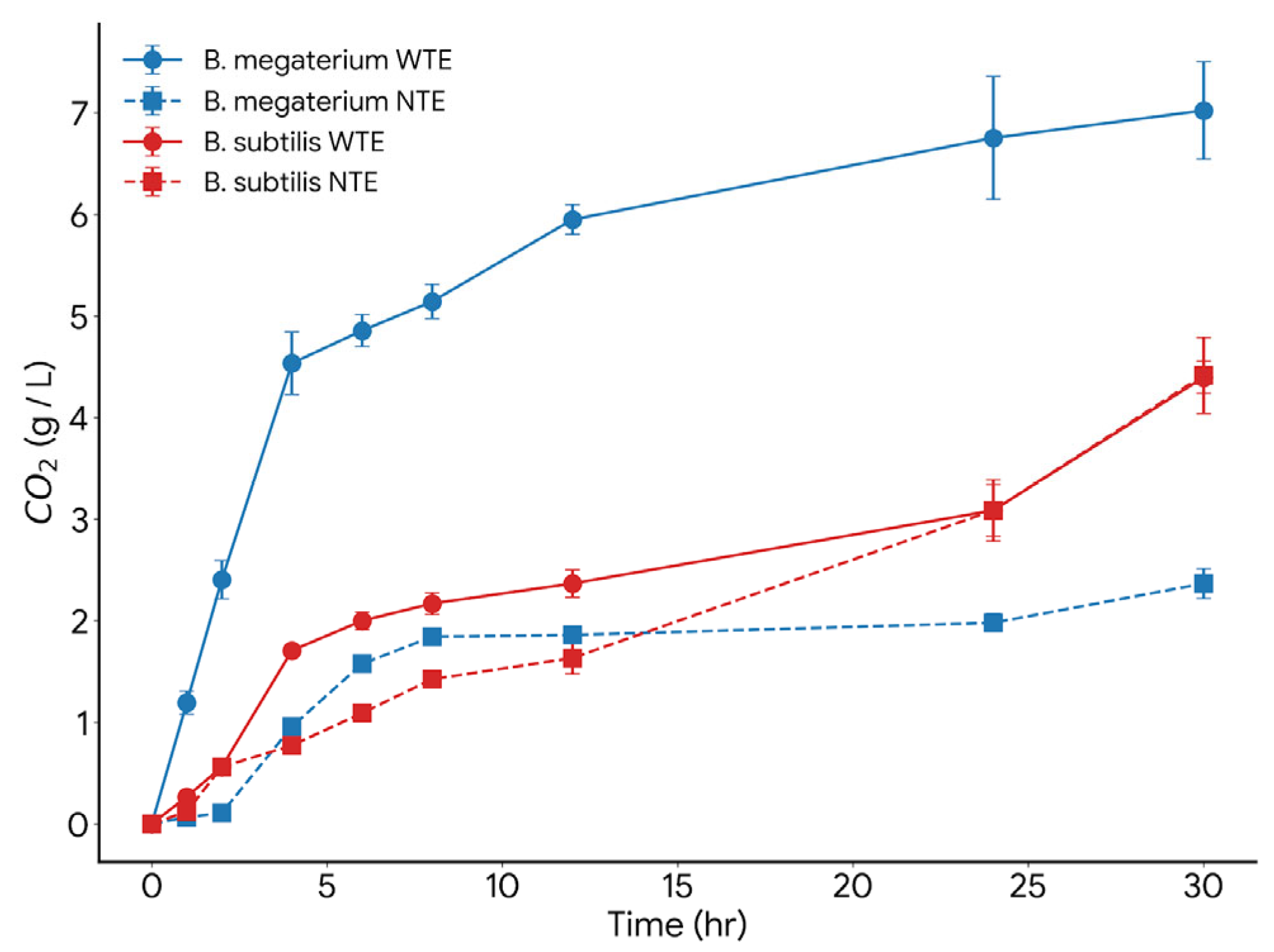
A carbon mass balance was conducted to determine the carbon dioxide produced by cell respiration and to investigate why glycerol was not consumed in the experiments. The initial carbon dioxide concentration in the culture media was set to 0.001 g L−1. This value represents the average CO2 concentration in water at 2440 m altitude, with an atmospheric pressure of 0.77 atm and a temperature of 25 °C, which are the conditions in Mexico City. Figure 14 illustrates the time-dependent carbon dioxide production for each experiment.
The yield coefficients of carbon dioxide to glucose obtained are shown in Table 3 for each experiment, compared with the coefficients reported in the literature [18,23]. All of these values are within the range reported in the literature. Therefore, glycerol was not consumed in the experiments.

2.4. Model

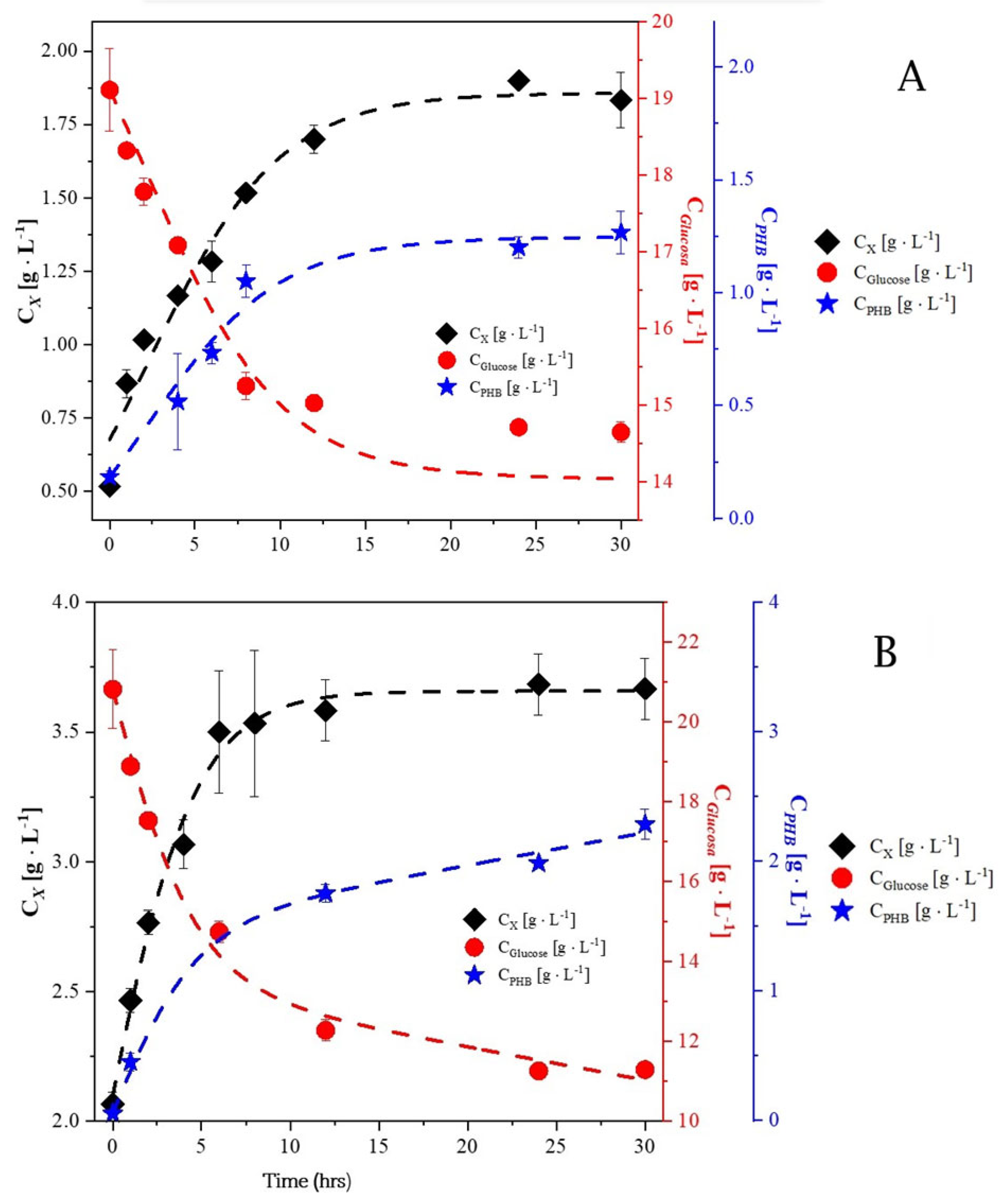
The growth kinetics of B. megaterium and B. subtilis were modeled with the logistic model. The production of PHB for both strains was simulated using the Luedeking–Piret model, with an initial product concentration [PHB] set to zero. Using the experimental results from all batch experiments in the exponential growth phase, kinetic parameters were estimated with the Marquardt non-linear estimation method [24].
Comparisons of model and experimental results for all cases are shown in Figure 15. Graph A shows the results for B. subtilis grown in culture media without trace elements. Graph B shows the results for B. megaterium with trace elements in the culture media. Symbols represent experimental data, and lines represent model results. As shown in both graphs in Figure 15, the model fits the experimental data reasonably well, with parameters obtained using the Marquardt algorithm.
Table 4 shows the model results for parameters related to growth kinetics, PHB production, and substrate consumption using the models outlined in the Model Section. As seen, among the maximum biomass concentration parameters, B. subtilis in a culture medium with trace elements had the highest xmax, followed by B. megaterium with TE, B. megaterium without TE, and B. subtilis without TE. Likewise, the yield coefficients for biomass production per gram of substrate were higher in experiments without TE, probably due to excess carbon relative to nitrogen.
Whie respect to the comparison between the parameters α and β of the Ludeking–Piret model, in all cases, α is greater than β because PHB is produced in the metabolic pathways of glycolysis and the Krebs cycle, which are part of the growth metabolic pathway.
The highest product yield coefficients were achieved without TE in the culture media, and B. megaterium produced more PHB per gram of substrate than B. subtilis.
The absence of trace elements in the culture media, specifically Fe, Mo, and Ni, inhibits the activity of nitrogenase and hydrogenase enzymes, redirecting reductive equivalents to the β-cetocetiolase → acetoacetyl CoA reductase → PHA polymerase pathway, which promotes PHB accumulation. The lack of Mg in the culture media has been shown to increase PHB production by up to 80%. Additionally, omitting trace elements from the culture medium reduces the cost of PHB production. A light, basic pH level, between 7.5 and 8, enhances the activity of the PHA polymerase enzyme because it influences the solubility of certain trace elements, decreasing the activity of some enzymes and increasing the activity of others involved in the PHB production pathway, as demonstrated by the experimental results with whey.

3. Materials and Methods

In this part of the study, Bacillus megaterium was used to produce PHB in the laboratory with whey as the substrate, and both B. megaterium and B. subtilis were employed to produce PHB using glucose and glycerol as carbon sources. Glycerol is a primary byproduct of biodiesel production, while whey is a byproduct of the dairy industry. Some aspects considered were:
  • Pyruvate produces ethanol or lactate under anaerobic conditions in a nutrient-balanced culture medium.
  • Under aerobic conditions, pyruvate is converted into oxaloacetate and enters the Krebs cycle to produce energy and support cell growth, using a nutrient-balanced culture media.
  • PHB production is increased in culture media with excess carbohydrates and a deficiency of nutrients such as nitrogen, phosphorus, oxygen, sulfur, or trace elements. When cells are cultured in media containing excess glucose, sucrose, lipids, glycerol, and other carbon sources, acetyl CoA accumulates. The lack of nitrogen, phosphorus, oxygen, and sulfur halts the synthesis of nucleic acids and proteins, leading to a decrease in cell growth.
  • The excess of NADPH and acetyl Co-A increased the synthesis of 3-hydroxybutyryl-CoA, the monomer of PHB, because high levels of NADPH and NADH inhibit citrate synthase in the TCA cycle, which ensures the availability of acetyl CoA to connect with 3-Phosphoglycerate.
  • Cells form PHB’s conglomerate in the cytoplasm as a future source of carbon and energy.
All experiments took place in the Process Analysis Laboratory at the Metropolitan Autonomous University campus Azcapotzalco. Two raw materials were tested: whey from a cheese factory and glycerol from biodiesel production.
Both Bacillus species were grown in flasks containing culture medium containing 15 g L−1 of meat peptone, 1.5 g L−1 of yeast extract, and 5 g L−1 of NaCl at 30 °C and 150 rpm for 24 h to obtain the inoculum.
  • Experiments with Whey
In the initial set of experiments, whey was used as a source of carbon and energy. Estimates show that for every kilogram of cheese, this industry produces between 9 and 10 L of whey; therefore, Mexico generates about 4000 million liters of whey annually [25].
Whey contains over 90% water, 5% lactose, less than 1% protein, and less than 9.5% fat, along with minerals like calcium, phosphorus, sodium, potassium, and magnesium, plus traces of vitamins, especially B-complex. The overall composition of whey is shown in Table 5 [26].
Equipment: The equipment used in this set of experiments was an incubator Yamato Scientific American IC403WC (Yamato Scientific Co., Ltd., Tokyo, Japan), an autoclave (TOMY SX-500 high-pressure steam sterilizer, TOMY, Tokyo, Japan), a PH meter ST20 Series Pen Merrsc, OHAUS, Parsippany, NJ, USA), a FTIR (Alpha II, Bruker, Germany), a centrifuge (Eppendorf 5910 R, Eppendorf AG, Hamburg, Germany), and a spectrophotometer (Jenway 7305, Jenway, Stafford, UK).
Reagents and Materials: The materials used were whey, NaOH solution 12 M, meat peptone (Bioxon, Mexico), urea (Sigma, Japan), bacteriological agar (Bioxon, Mexico), NaClO solution 5% w/v, chloroform (Meyer, Mexico) solution 1% v/v, and 4 µm filter paper. The whey used was collected from a farm named “La Estancia”, in San Juan del Río, Querétaro.
  • Bioreaction
The whey was sterilized twice at 120 °C for 20 min, then filtered into a Kjeldahl flask to precipitate and remove all proteins.
Culture media was prepared with 0.8 g of meat peptone in 100 mL of deionized water, along with 0.8 g/L of urea solution. This mixture was combined with 30% whey. The solution was sterilized for 20 min at 120 °C. The pH was adjusted using a 1% NaOH solution. Three pH levels (6, 7, and 8) were tested; an additional experiment was performed without pH control.
Bioreactions were performed in flasks inoculated with B. megaterium at 200 rpm stirring, 35 °C, and a sterile airflow of 5 L/min for 48 h at the three tested pH levels.
  • Recovery and washing of PHB
At the end of the bioreaction period, the mixture was centrifuged at 3000 rpm for 20 min. Then, 30 mL of 30% v/v chloroform and 30 mL of 30% v/v NaCl solution were added. This new mixture was placed on an orbital shaker at 150 rpm and 30 °C overnight. Finally, the mixture was centrifuged for 20 min at 3000 rpm. Three phases were observed: the top contained the NaClO solution, the middle contained the cell material, and the bottom contained PHB dissolved in chloroform.
The hypochlorite solution was separated using a pipette, and the other two phases were separated by vacuum filtration. Two volumes of methanol were added to the PHB/chloroform phase, and the mixture was heated at 60 °C for 20 min with gentle stirring. Methanol and chloroform were then evaporated. The resulting solid was dried and weighed (see Figure 16).
The solid samples obtained were analyzed using a UV-Vis spectrophotometer. Afterwards, they were dissolved in 10 mL of concentrated sulfuric acid in test tubes and placed in a water bath for 10 min. The solution was compared with a PHB blank solution in H2SO4 using a spectrophotometer (Jenway 7305, Jenway, Stafford, UK) at 235 nm.
  • Experiments with glycerol
In this set of experiments, glycerol and glucose were used to produce PHB. Experiments with B. megaterium and B. subtilis were carried out. Equipment and reactive materials were the same as in the experiments described in the previous section.
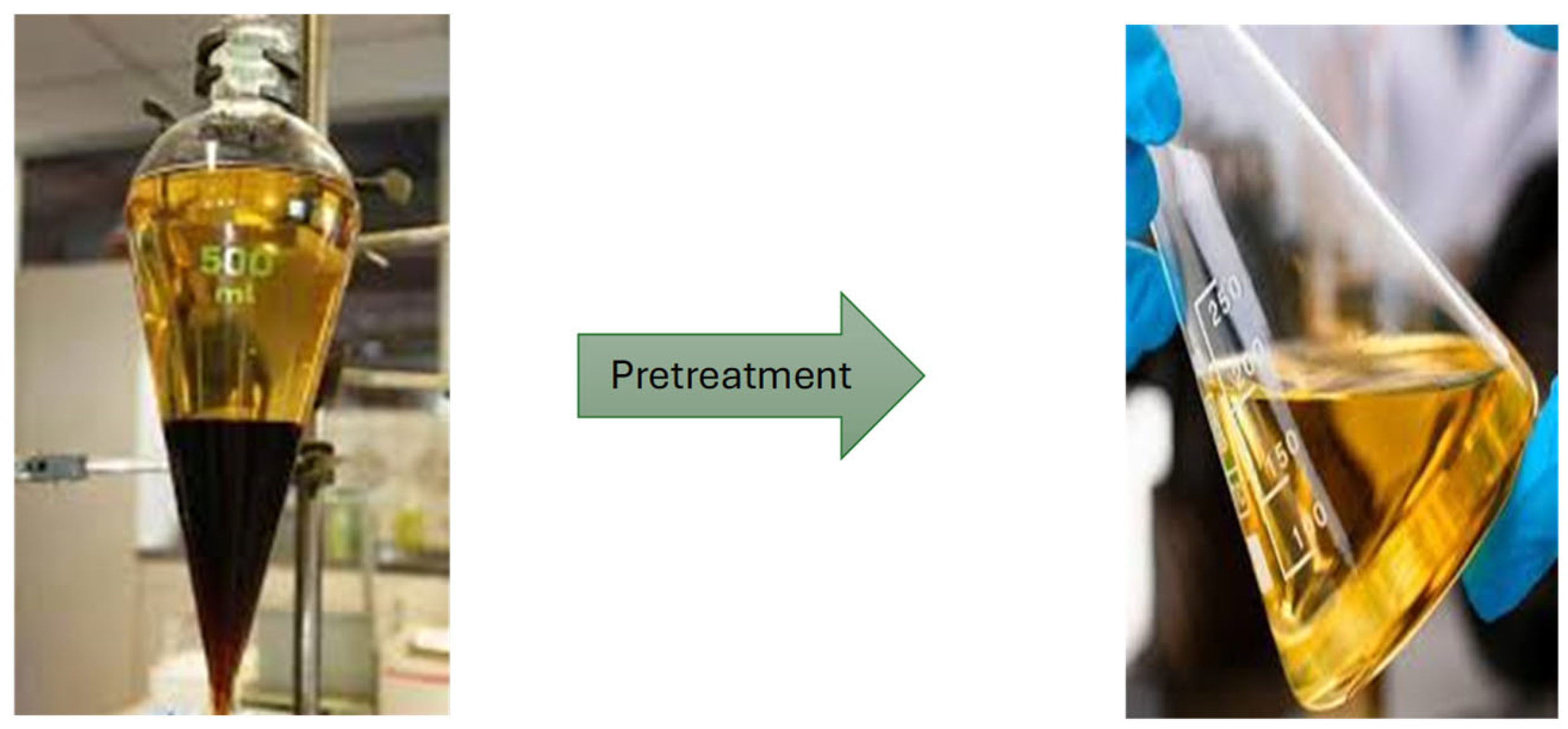
In previous experiments, biodiesel was produced from residual oil collected from the university’s cafeteria. Glycerol generated during biodiesel production was filtered and washed with water, and the water was then evaporated to remove all unwanted compounds. Glycerol was sterilized at 120 °C for 20 min to kill any remaining microorganisms and residual particles (see Figure 17).
  • Bioreaction
The bioreactions with glycerol were conducted using the two Bacillus species. According to the literature, both species can produce PHB. B. megaterium has higher efficiency, but B. subtilis is more sensitive to the composition of the culture media [22].
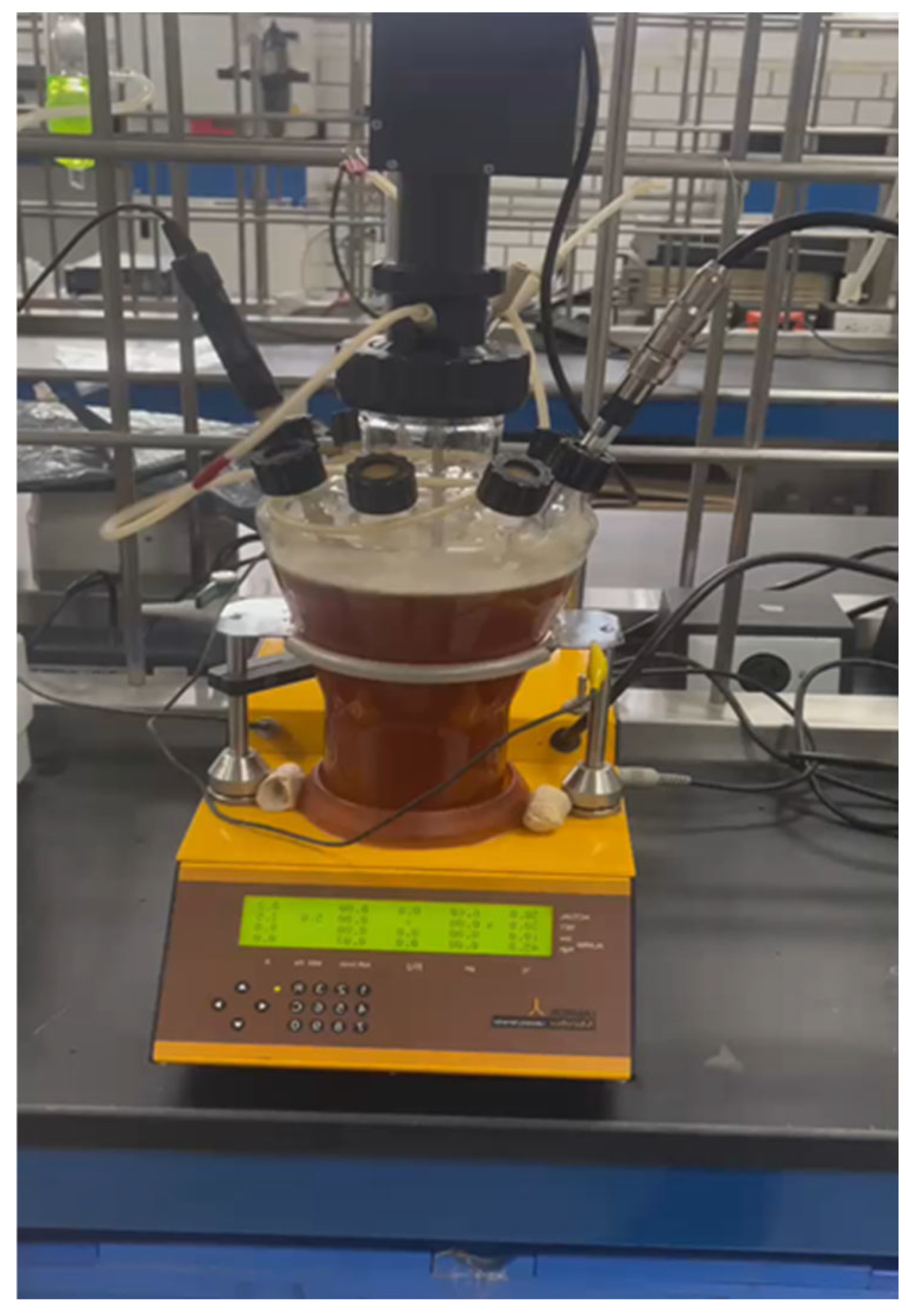
PHB was produced in a Lambda Minifor bioreactor, CZECH REPUBLIC, in fed-batch mode with mixing vibration and a culture media volume of 1.7 L, as shown in Figure 18. The culture media composition and bioreaction conditions are detailed in Table 6. As indicated, the C:N ratio was 210:1.
Two sets of experiments were conducted for each strain: one with trace elements (WTE) in the culture media and one without (NTE). The purpose of the experiments without trace elements was to determine whether the absence of those elements increases cellular stress, resulting in decreased biomass growth and higher PHB production.
  • Recovery of PHB and glucose
Extraction of PHB was performed using chloroform, sodium hypochlorite, and sonication. Initially, biomass was treated with a 5% v/v sodium hypochlorite solution at 30 °C under gentle stirring to break the cell membranes without affecting PHB. Then, the solution was sonicated twice for 30 min at 80% power, with a 10 min pause in between.
The remaining cells were removed by centrifugation at 3500 rpm and 10 °C for 10 min, followed by vacuum filtration. Afterwards, PHB was dissolved in chloroform, and the organic phase was separated using the previously mentioned stirring method. Finally, PHB was precipitated with cold ethanol, recovered by vacuum filtration, and dried at 60 °C until reaching a constant weight.
  • Analysis
Glucose was obtained by centrifugation of the supernatant. Afterwards, the colorimetric reaction of reducing sugars with the DNS reagent was performed. The glucose concentration was determined by spectrophotometric analysis using the Dinitrosalicylic Acid method [27], measuring absorbance at 540 nm. Biomass and PHB were separated and weighed using the dry-weight method at 60 °C.
The PHB obtained was analyzed using Fourier-transform infrared spectroscopy. Spectra were averaged over 8 scans in the wavenumber range 4000–4000 cm−1 at a resolution of 4 cm−1. Additionally, scanning electron microscopy [SEM] was used to evaluate the morphology of PHB.
  • Material Balance
The material balance of the bioreactions was developed to determine the relationship between glucose and glycerol used by cells as sources of carbon and energy. To develop this balance, a general chemical formula of biomass was employed.
The biomass’s chemical formula was developed by other researchers, based on 1 mole of carbon [28,29,30], considering the average elemental composition of many microorganisms as x = C H 1.62 O 0.52 N 0.155 S 0.0017 P 0.012 , with a molecular weight of 24.6 g/C-mol. In a culture medium with a lack of trace nutrients, as in the PHB production, the biomass’s formula is like the PHB’s: C H 1.5 O 0.5 ; in these cases, the molecular weight of the biomass is equal to 21.5 [31].
The following reaction equation depicts the biochemical process for producing PHB in both strains. It encompasses all biochemical reactions within the metabolic pathways shown in Figure 2 and Figure 3, based on 1 mol of carbon [C-mol]. Clearly, this is a significant simplification, as all reactions responsible for converting substrates into biomass and the PHB product are combined into a single reaction, treated as a black box model [30].
As in our experiments, the culture media contained two substrates (glucose and glycerol), both of which were considered.
C H 2 O + C H 2.67 O + C H 1.5 O 0.5 + Y S O 2   O 2 + Y N X   N H 4 2 S O 4   Y S X   C H 1.5 O 0.5 + Y S N N H 3 + Y S C C O 2 + Y S W H 2 O + Y S P H B C H 1.5 O 0.5 + Y G X   C H 1.79 O 0.5 N 0.2 + Y G N N H 3 + Y G C C O 2 + Y G W H 2 O + Y G P H B C H 1.5 O 0.5
where C H 2 O represents the glucose chemical formula on the basis of 1 carbon mol; C H 2.67 O is the formula of glycerol in the same base of 1 C-mol; C H 1.5 O 0.5 is the formula of biomass in the same base, in a culture media with a lack of nitrogen and trace elements; and C H 1.5 O 0.5 is the chemical formula of PHB in the same base.
Y S O 2 is the yield coefficient that represents the oxygen consumed by 1 mol of carbon of glucose consumed by the cells; Y S N is the yield coefficient of ammonium consumed by 1 C-mol of glucose consumed; Y S C is the yield coefficient of carbon dioxide produced by 1 C-mol of glucose consumed; Y S W is the yield coefficient of water produced by 1 C-mol of glucose consumed; and Y S P H B is the yield coefficient of PHB produced by 1 C-mol of glucose consumed.
Y G O 2 is the yield coefficient that represents the oxygen consumed by 1 C-mol of glycerol consumed by the cells; Y G N is the yield coefficient of ammonium consumed by 1 C-mol of glycerol; Y G C is the yield coefficient of carbon dioxide produced by 1 C-mol of carbon of glycerol consumed; Y G W is the yield coefficient of water produced by 1 C-mol of carbon of glycerol consumed; and Y G P H B is the yield coefficient of PHB produced by 1 C-mol of glycerol consumed.
Considering the mass balance equation, the carbon mass balance is calculated as follows: it is the sum of glucose consumed, glycerol consumed, and initial biomass concentrations, minus the PHB produced from glucose and glycerol, minus the biomass generated, and minus the carbon dioxide produced, as shown in the next reaction equation.
C H 2 O + C H 2.67 O + C H 1.5 O 0.5 Y S X   C H 1.5 O 0.5 Y S C C O 2 Y S P H B C H 1.5 O 0.5 Y G X   C H 1.5 O 0.5 Y G C C O 2 Y G P H B C H 1.5 O 0.5 = 0
Experimental results for glucose, glycerol, PHB, and biomass were obtained, and the carbon dioxide concentrations were calculated by mass balance. To assess whether the results were sufficient, the yield coefficients for both strains were compared with those reported in the literature for PHB production. For B. subtilis, the reported yield coefficient CO2/substrate ranges from 0.35 to 0.55 C-mol of CO2 per C-mol of glucose. For B. megaterium, the same yield coefficient ranges from 0.4 to 0.7 C-mol of CO2 per C-mol of glucose [23,32].
  • Model
The growth kinetics of B. megaterium and B. subtilis were modeled using the logistic equation, based on the experimental results for each strain.
The logistic growth model assumes that biomass growth depends on cell biomass; however, this growth is limited by factors that prevent cells from surpassing a maximum population size (see Equation (6)). In these cases, the limiting factors are the lack of nitrogen, and sometimes, trace elements. The initial condition at time = 0 was the biomass initial concentration for each experiment.
d x d t = μ m a x 1 x x m a x x ;                                         x 0 = x i
The production of PHB for both strains was simulated using the Luedeking–Piret model, with an initial product concentration [PHB] set to zero. This is an empirical model used to describe the specific production rate of metabolites. It considers the production rate to be the sum of primary and secondary metabolites; primary metabolites are produced through pathways related to growth, while secondary metabolites are produced through pathways unrelated to growth. Refer to Equation (7), where α is a factor related to the products within growth’s metabolic pathways, and β is a term that represents the rate of product formation independent of cell growth. The initial condition for this equation is that the P (PHB) concentration is zero.
d P d t = α   d x d t + β x ;                               P [ 0 ] = 0
The substrate used for maintenance was modeled with the Pirt model to describe how microorganisms consume energy for growth and maintenance, including cell material turnover and maintaining concentration gradients across cell membranes (see Equation (8)). The initial condition for this equation is that the substrate concentration equals the concentration at time zero.
1 x d S d t = μ Y G + m ;                                                 S 0 = S i
Using the three models, the change in substrate concentration over time results from growth, PHB production, and cell maintenance; see Equation (9).
d S d t = 1 Y x / S d x d t + 1 Y P / S d P d t + m S x

4. Conclusions

This study shows the technical feasibility of using industrial byproducts, especially residual glycerol and cheese whey, in circular economy pathways to produce polyhydroxybutyrate (PHB) through biochemical methods. Based on the experimental results, the following conclusions can be made:
  • Effect of pH on biosynthesis: The pH level of the culture medium was identified as a key factor directly affecting bioproduction yield. PHB production showed a positive correlation with increasing pH within the evaluated range, rising from 2.52 g/L at pH 3 to a maximum at pH 8.
  • Effect of nitrogen and carbon sources: The lack of nitrogen and the excess of carbon sources promote PHB production with B. megaterium and B. subtilis.
  • Effect of trace element deficiency: The absence of trace elements in the culture media increases PHB production and the product-to-substrate yield coefficient.
  • PHB production after the exponential growth phase: In all experiments with glycerol, PHB production continued during the stationary and death phases. This is because trace elements like magnesium and calcium, which are involved in enzyme activity, return more slowly to the metabolic pathways responsible for growth and energy generation.
  • Waste valorization and sustainability: Using glycerol and whey as sources of carbon and nitrogen not only cuts production costs related to pure substrates but also offers a sustainable method for managing agro-industrial waste. This strategy advances the shift toward a circular bioeconomy by converting polluting waste into high-value, biodegradable bioplastics.
  • This work shows that using residual material, suppressing certain trace elements, maintaining a high C:N ratio, and controlling pH can create cost-effective and environmentally friendly processes to produce bioplastics like PHB.

Author Contributions

Conceptualization: M.M.G.B. and H.H.L.S.; methodology: H.H.L.S., J.A.A., D.Á.B., and J.L.C.L.; validation: R.R.C. and J.C.G.M.; formal analysis: M.M.G.B.; investigation: J.A.A., H.H.L.S., and M.M.G.B.; resources: R.R.C.; writing—original draft preparation: M.M.G.B.; writing—review and editing: J.C.G.M., R.R.C., and M.M.G.B. All authors have read and agreed to the published version of the manuscript.

Funding

This research was funded by Secretaría de Ciencia, Humanidades, Tecnología e Innovación (SECIHTI).

Data Availability Statement

The original contributions presented in this study are included in the article. Further inquiries can be directed to the corresponding author(s).

Conflicts of Interest

The authors declare no conflicts of interest.

Abbreviations

The following abbreviations are used in this manuscript:
A-CoA-RAcetoacetyl coenzyme A reductase
ADPAdenosine diphosphate
AldAldolase enzyme
ATPAdenosine triphosphate
Bio-PEBio-based-polyethylene
Bio-PETBio-based polyethylene terephthalate
Bio-PPBio-based-polypropylene
BMBiomass
%   C S E Percentage of glucose consumed at the end of the exponential growth phase
%   C S F Percentage of glucose consumed at the end of the cell death phase
C S i Substrate concentration at time = 0
C S f Substrate concentration at the end of the experiment
C P f e PHB concentration at the end of the exponential growth phase
C P f m Maximum PHB concentration obtained
C S e Substrate concentration at the end of the exponential growth phase
d P d t Specific PHB production rate [gP L−1 h−1]
d S d t Specific substrate consumption rate [gS L−1 h−1]
d x d t Specific growth rate [gx L−1 h−1]
EnoEnolase enzyme
gGram
GAL-IGalactose-6-phosphate isomerase enzyme
Gal-SΒ-galactosidase enzyme
Gly-KGlycerol kinase enzyme
3HB3-hydroxybutyrate
4HB4-hydroxybutyrate
HD3-Hydroxydecanoate
HHc3-Hydroxyhexanoate
3HV3-Hydroxyvalerate
LLiter
MTMillion tons
MutMutase enzyme
NADNicotinamide adenine dinucleotide
NTEWithout trace elements
PProduct [PHB] concentration [g L−1]
PEPolyethylene
PETPolyethylene terephthalate
PPPolypropylene
PHAsPolyhydroxyalkanoates
PHBPolyhydroxybutyrate
PHB-Sβ-PHB synthase enzyme
PhG-KPhosphoglycerate kinase enzyme
PLAPolylactic acid
PTSLactose-specific phosphotransferase system
PVCPolyvinylchloride
SSubstrate concentration [g L−1]
tTime [h]
Tag-KTagatose-6-phosphate kinase enzyme
TCATricarboxylic acid cycle
TETrace elements
Tri-ITriosephosphate isomerase enzyme
x Biomass concentration [g L−1]
x m a x Maximum biomass concentration [g L−1]
Y G Actual growth, maximum yield
Y P S E Yield coefficient PHB/Substrate at the end of the exponential growth phase
Y P S M Yield coefficient of PHB production/substrate at the maximum PHB concentration obtained
Y X S E Yield coefficient of biomass/substrate at the end of the exponential growth phase
Subindex
CCarbon dioxide
eIn the exponential phase of growth
GGlycerol
iInitial, time = 0
NAmmonium sulfate
PHBPolyhydroxybutyrate
SGlucose
wWater
xBiomass
Greek Letters
αA specific constant of maintenance dependent on growth
βA specific constant of maintenance independent of growth
β-ketβ-Keotiolase enzyme
β-hBDβ-hydroxybutirate dehydrogenase enzyme
μ m a x Maximum specific constant growth rate

References

  1. OECD. Global Plastics Outlook. 2022. Available online: https://www.oecd.org/en/publications/global-plastics-outlook_de747aef-en.html (accessed on 6 March 2025).
  2. SciSpace-Paper. Principles of Tissue Engineering; Elsevier: Amsterdam, The Netherlands; Academic Press: Cambridge, MA, USA, 2014; Available online: https://scispace.com/papers/principles-of-tissue-engineering-54fega0nz0 (accessed on 4 March 2025).
  3. Ghanbarzadeh, B.; Almasi, H.; Ghanbarzadeh, B.; Almasi, H. Biodegradable Polymers. In Biodegradation—Life of Science; IntechOpen: Rijeka, Croatia, 2013; Available online: https://www.intechopen.com/chapters/45095 (accessed on 4 March 2025).
  4. Berlanga, M.; Montero, M.; Borrell, J.; Guerrero, R. Rapid spectrofluorometric screening of poly-hydroxyalkanoate-producing bacteria from microbial mats. Int. Microbiol. Off. J. Span. Soc. Microbiol. 2006, 9, 95–102. [Google Scholar]
  5. Aslim, B.; Sağlam, N.; Beyatli, Y. Determination of Some Properties of Bacillus Isolated from Soil. Turk. J. Biol. 2002, 26, 41–48. [Google Scholar]
  6. McAdam, B.; Brennan Fournet, M.; McDonald, P.; Mojicevic, M. Production of Polyhydroxybutyrate (PHB) and Factors Impacting Its Chemical and Mechanical Characteristics. Polymers 2020, 12, 2908. [Google Scholar] [CrossRef]
  7. Brandl, H.; Gross, R.A.; Lenz, R.W.; Fuller, R.C. Pseudomonas oleovorans as a Source of Poly(β-Hydroxyalkanoates) for Potential Applications as Biodegradable Polyesters. Appl. Environ. Microbiol. 1988, 54, 1977–1982. [Google Scholar] [CrossRef]
  8. Strey, J.; Wittchen, K.D.; Meinhardt, F. Regulation of β-Galactosidase Expression in Bacillus megaterium DSM319 by a XylS/AraC-Type Transcriptional Activator. J. Bacteriol. 1999, 181, 3288–3292. [Google Scholar] [CrossRef]
  9. Iskandar, C.F.; Cailliez-Grimal, C.; Borges, F.; Revol-Junelles, A.M. Review of lactose and galactose metabolism in Lactic Acid Bacteria dedicated to expert genomic annotation. Trends Food Sci. Technol. 2019, 88, 121–132. [Google Scholar] [CrossRef]
  10. García, N.G.; Contreras, M.; González Reynoso, O.; Córdova López, J.A. Síntesis y biodegradación de polihidroxialcanoatos: Plásticos de origen microbiano. Rev. Int. Contam. Ambient. 2013, 29, 77–115. [Google Scholar]
  11. Moreno, P.; Yañez, C.; Cardozo, N.S.M.; Escalante, H.; Combariza, M.Y.; Guzman, C. Influence of nutritional and physicochemical variables on PHB production from raw glycerol obtained from a Colombian biodiesel plant by a wild-type Bacillus megaterium strain. New Biotechnol. 2015, 32, 682–689. [Google Scholar] [CrossRef]
  12. Rivas-Castillo, A.M.; Valdez-Calderón, A.; Angeles-Padilla, A.F.; Figueroa-Ocampo, C.B.; Carrillo-Ibarra, S.; Quezada-Cruz, M.; Espinosa-Roa, A.; Pérez-García, B.D.; Rojas-Avelizapa, N.G. PHB production by Bacillus megaterium strain MNSH1-9K-1 using low-cost media. Braz. J. Microbiol. 2024, 55, 245–254. [Google Scholar] [CrossRef]
  13. Faccin, D.J.L.; Rech, R.; Secchi, A.R.; Cardozo, N.S.M.; Ayub, M.A.Z. Influence of oxygen transfer rate on the accumulation of poly(3-hydroxybutyrate) by Bacillus megaterium. Process Biochem. 2013, 48, 420–425. [Google Scholar] [CrossRef][Green Version]
  14. Arrieta, M.P.; Castro-López, M.D.M.; Rayón, E.; Barral-Losada, L.F.; López-Vilariño, J.M.; López, J.; González-Rodríguez, M.V. Plasticized Poly(lactic acid)–Poly(hydroxybutyrate) (PLA–PHB) Blends Incorporated with Catechin Intended for Active Food-Packaging Applications. J. Agric. Food Chem. 2014, 62, 10170–10180. [Google Scholar] [CrossRef]
  15. Zhang, Y.; Sun, W.; Wang, H.; Geng, A. Polyhydroxybutyrate production from oil palm empty fruit bunch using Bacillus megaterium R11. Bioresour. Technol. 2013, 147, 307–314. [Google Scholar] [CrossRef]
  16. López, J.A.; Naranjo, J.M.; Higuita, J.C.; Cubitto, M.A.; Cardona, C.A.; Villar, M.A. Biosynthesis of PHB from a new isolated Bacillus megaterium strain: Outlook on future developments with endospore-forming bacteria. Biotechnol. Bioprocess. Eng. 2012, 17, 250–258. [Google Scholar] [CrossRef]
  17. Naranjo, J.M.; Posada, J.A.; Higuita, J.C.; Cardona, C.A. Valorization of glycerol through the production of biopolymers: The PHB case using Bacillus megaterium. Bioresour. Technol. 2013, 133, 38–44. [Google Scholar] [CrossRef]
  18. RamKumar Pandian, S.; Deepak, V.; Kalishwaralal, K.; Rameshkumar, N.; Jeyaraj, M.; Gurunathan, S. Optimization and fed-batch production of PHB utilizing dairy waste and seawater as nutrient sources by Bacillus megaterium SRKP-3. Bioresour. Technol. 2010, 101, 705–711. [Google Scholar] [CrossRef]
  19. Zhao, Z.M.; Xi, J.T.; Xu, J.F.; Ma, L.T.; Zhao, J. Enhancement of Bacillus subtilis Growth and Sporulation by Two-Stage Solid-State Fermentation Strategy. Processes 2019, 7, 644. [Google Scholar] [CrossRef]
  20. Vehapi, M.; İnan, B.; Kayacan-Cakmakoglu, S.; Sagdic, O.; Özçimen, D. Optimization of Growth Conditions for the Production of Bacillus subtilis Using Central Composite Design and Its Antagonism Against Pathogenic Fungi. Probiotics Antimicrob. Proteins 2023, 15, 682–693. [Google Scholar] [CrossRef]
  21. Liu, J.; Zhao, L.; Ma, D.; Sun, X.; Liu, X.L. Optimization of Solid Fermentation Process of Bacillus megaterium and Its Application in Crop Growth. In Advances in Applied Biotechnology; Liu, H., Song, C., Ram, A., Eds.; Springer: Singapore, 2018; pp. 329–338. [Google Scholar]
  22. Gómez Cardozo, J.R.; Velasco Bucheli, R.; Marín Pareja, N.; Ruíz Villadiego, O.S.; Correa Londoño, G.A.; Mora Martínez, A.L. Fed-batch production and characterization of polyhydroxybutyrate by Bacillus megaterium LVN01 from residual glycerol. DYNA 2020, 87, 111–120. [Google Scholar] [CrossRef]
  23. Iftikhar, N.; Quddus, F.; Nadeem, N.; Ali, I.; Raza, M.U.; Zaid, M. Production of Polyhydroxyalkanoates (pha) by bacillus and pseudomonas on Cheap Carbon Substrates. Braz. Arch. Biol. Technol. 2024, 67, e24230082. [Google Scholar] [CrossRef]
  24. Draper, N.R.; Smith, H. Applied Regression Analysis; John Wiley & Sons: Hoboken, NJ, USA, 1998; 736p. [Google Scholar]
  25. Lizárraga-Chaidez, M.; Mendoza-Sánchez, M.; Abadía-García, L.; García-Pérez, J. The Innocent Environmental Impact of Whey. Epistemus 2023, 17, 88–97. [Google Scholar]
  26. Tang, C.; Xi, T.; Zheng, J.; Cui, X. Chemical Properties of Whey Protein in Protein Powders and Its Impact on Muscle Growth in Athletes: A Review. Nat. Prod. Commun. 2025, 20, 1934578X251326124. [Google Scholar] [CrossRef]
  27. Miller, G.L. Use of Dinitrosalicylic Acid Reagent for Determination of Reducing Sugar. Anal. Chem. 1959, 31, 426–428. [Google Scholar] [CrossRef]
  28. Madron, F.; Veverka, V.; Vaněček, V. Statistical analysis of material balance of a chemical reactor. AIChE J. 1977, 23, 482–486. [Google Scholar] [CrossRef]
  29. Carlson, R.; Morrissey, K.; Doran, P.M. Bioprocess Engineering Principles; Academic Press: Cambridge, MA, USA, 2025; 746p. [Google Scholar]
  30. Nielsen, J.; Villadsen, J.; Lidén, G. Bioreaction Engineering Principles, 2nd ed.; Academic Press: Boston, MA, USA, 2003; 794p. [Google Scholar]
  31. Lee, S.Y.; Choi, J.I. Production of microbial polyester by fermentation of recombinant microorganisms. Adv. Biochem. Eng. Biotechnol. 2001, 71, 183–207. [Google Scholar] [PubMed]
  32. Cardozo, J.R.G.; Bucheli, R.V.; Pareja, N.M.; Villadiego, O.S.R.; Londoño, G.A.C.; Martínez, A.L.M. Producción por lote alimentado y caracterización de polihidroxibutirato por Bacillus megaterium LVN01 a partir de glicerol residual. DYNA 2020, 87, 111–120. [Google Scholar]
Figure 1. Chemical structure of PHAs in 2 and 3D; Catalysts 16 00178 i001 = Atom of carbon, Catalysts 16 00178 i002 = Atom of oxygen, Catalysts 16 00178 i003 = Atom of hydrogen drawn with BIOMODEL [2].
Catalysts 16 00178 g001
Figure 2. Lactose to PHB’s metabolic pathway.
Catalysts 16 00178 g002
Figure 3. Metabolic pathway of glycerol to PHB.
Catalysts 16 00178 g003
Figure 4. PHB concentration obtained experimentally, with whey at different pH levels, and the standard deviation of each one.
Catalysts 16 00178 g004
Figure 5. PHB obtained with (A) Bacillus subtilis, (B) Bacillus megaterium.
Catalysts 16 00178 g005
Figure 6. Experimental results of glucose consumption, biomass growth, and PHB production [g L−1], with B. subtilis without trace elements.
Catalysts 16 00178 g006
Figure 7. Experimental results of glucose consumption, biomass growth, and PHB production [g L−1], with B. subtilis with trace elements.
Catalysts 16 00178 g007
Figure 8. Experimental results of glucose consumption, biomass growth, and PHB production [g L−1], with B. megaterium without trace elements.
Catalysts 16 00178 g008
Figure 9. Experimental results of glucose consumption, biomass growth, and PHB production [g L−1], with B. megaterium with trace elements.
Catalysts 16 00178 g009
Figure 10. Yield coefficients of biomass substrate [Y x/s] at the end of each experiment. Solid bars show coefficients for B. subtilis, and not solid bars for B. megaterium. Red bars are for the no trace elements experiment, and blue bars are for experiments with trace elements in culture media.
Catalysts 16 00178 g010
Figure 11. Yield coefficients for product substrate [Y p/s] at the maximum PHB concentration obtained in each experiment. Solid bars show coefficients for B. subtilis, and not solid bars for B. megaterium. Red bars are for the no trace elements experiment, and blue bars are for experiments with trace elements in culture media.
Catalysts 16 00178 g011
Figure 12. FTIR spectra for different PHB samples produced experimentally.
Catalysts 16 00178 g012
Figure 13. PHB micrography produced by (A) B. megaterium [100 µm], and (B) produced by B. subtilis [20 µm].
Catalysts 16 00178 g013
Figure 14. Evolution of carbon dioxide calculated by mass balance in time for each experiment.
Catalysts 16 00178 g014
Figure 15. Comparison between experimental and model results during the exponential phase (A) for B. subtilis NTE, and (B) for B. megaterium WTE.
Catalysts 16 00178 g015
Figure 16. Solid PHB obtained experimentally.
Catalysts 16 00178 g016
Figure 17. Glycerol before and after the pretreatment process.
Catalysts 16 00178 g017
Figure 18. Bioreactor for PHB production.
Catalysts 16 00178 g018
Table 1. Comparison of properties of PHB and PP.
Property PHB PP
Crystalline melting point (°C)175176
Crystallinity (%)8070
Molecular weight (Da)5 × 1052 × 105
Glass transition temperature (°C)4−10
Density [g/cm3]1.250.905
Flexural modulus (GPa)41.7
Tensile strength (MPa)4038
Extension to break (%)6400
Ultraviolet resistancegoodpoor
Solvent resistancepoorgood
Table 2. PHB production comparison with B. megaterium and different substrates reported.
Microorganism Substrate PHB [g L−1] PHB [g L−1 h−1] Reference
Bacillus megaterium B2Glycerol1.20.11[11]
Bacillus megaterium B2Glycerol1.590.044[12]
Bacillus megaterium B2Cacao liquid wastes11.60.16[13]
Bacillus megaterium DSM32TSaccharose 0.162[13]
Bacillus megaterium S29Glucose5.40.45[14]
Bacillus megaterium R11OPEFB *12.480.26[15]
Bacillus megaterium BBST4Glucose3.30.103[16]
Bacillus megaterium BBST4Glycerol4.80.114[17]
Bacillus megaterium BA-019Molasses4.160.35[18]
Bacillus megateriumWhey5.970.124This work
* OPEFB—Oil palm empty fruit bunch.
Table 3. Yield coefficients of CO2/glucose calculated by carbon mass balance for each experiment set.
Experiment Set Strein and Conditions Yield Coefficient
[C-mol CO2/C-mol Glucose]
Values Reported
[C-mol CO2/C-mol Glucose]
1B. subtilis NTE0.540.3–0.6
2B. subtilis WTE0.490.3–0.6
3B. megaterium NTE0.390.4–0.7
4B. megaterium WTE0.410.3–0.6
Table 4. Model results for kinetic growth. PHB production and substrate consumption of B. subtilis and B. megaterium, with and without trace elements.
B. subtilisB. megaterium
No Trace ElementsWith Trace ElementsNo Trace ElementsWith Trace Elements
Kinetic growth parameters
x0 (gx/L)0.39716±0.06561.800076±0.058310.67537±0.059632.09683±0.05106
xmax (gx/L)1.57173±0.042053.75857±0.058521.85731±0.064343.65795±0.03589
µmax (h−1)0.86199±0.151530.22845±0.027280.25732±0.040340.39183±0.39183
χ20.006770.006590.008610.00396
R20.970340.990840.960630.98871
Kinetic of PHB production parameters
P0 (gPHB/L)0.15±0.0240.13333±0.04710.18333±0.023570.05±0.02357
α (gPHB/gx)0.0168±0.009210.23024±0.0018580.89208±0.089460.92823±0.07818
β (gPHB/(gxh))0.0168±0.0004410.0014±0.0004910.0001855±0.002930.0069±0.00153
χ20.000270.000460.006210.00549
R20.995980.989190.965580.9944
Kinetic of substrate consumption
S0 (gs/L)19.83544±0.14319.87342±0.089519.11392±0.984620.82278±0.9846
YX/S (gx/gS)0.52739 0.386 0.38179 0.41147
YPHB/S (gPHB/gS)0.21538 0.13576 0.55 0.39995
mS (gs/L)0.00153 0.00001 0.001 0.00543
χ20.059791.125240.280860.18093
R20.9870.916210.91860.98795
Table 5. Whey general composition [26].
ComponentConcentration
[% Mass]
Notes
Water≈93Main component
Lactose≈5.1Primary carbohydrate
Proteins≈0.8Includes β-lactoglobulin, α-lactalbumin, glycomacropeptide, serum albumin
Fats0.1–0.4Lower in acid whey
Mineral (ash)≈0.5–0.7Calcium, phosphorus, sodium, potassium, magnesium
VitaminsTracesB-complex, especially riboflavin
Table 6. Culture media composition.
CompoundConcentration
[g L−1]
Concentration
[mol L−1]
Glycerol C3H8O360.00.6516
Glucose C6H12O620.00.1111
Ammonium sulfate [NH4]2SO40.80.00605
Magnesium sulfate MgSO4 · 7 H2O0.20.00081
Trace elements (NulanZa brand) [mL L−1]1
Total carbon 2.4546
Total nitrogen 0.0121
C/N relation 220:1
Initial pH level 7.0
Temperature[°C]30
Agitation3.5 Hz210 rpm
Total volume[L]1.7
Time[hrs.]180
Inoculum volume[L]0.3
Disclaimer/Publisher’s Note: The statements, opinions and data contained in all publications are solely those of the individual author(s) and contributor(s) and not of MDPI and/or the editor(s). MDPI and/or the editor(s) disclaim responsibility for any injury to people or property resulting from any ideas, methods, instructions or products referred to in the content.