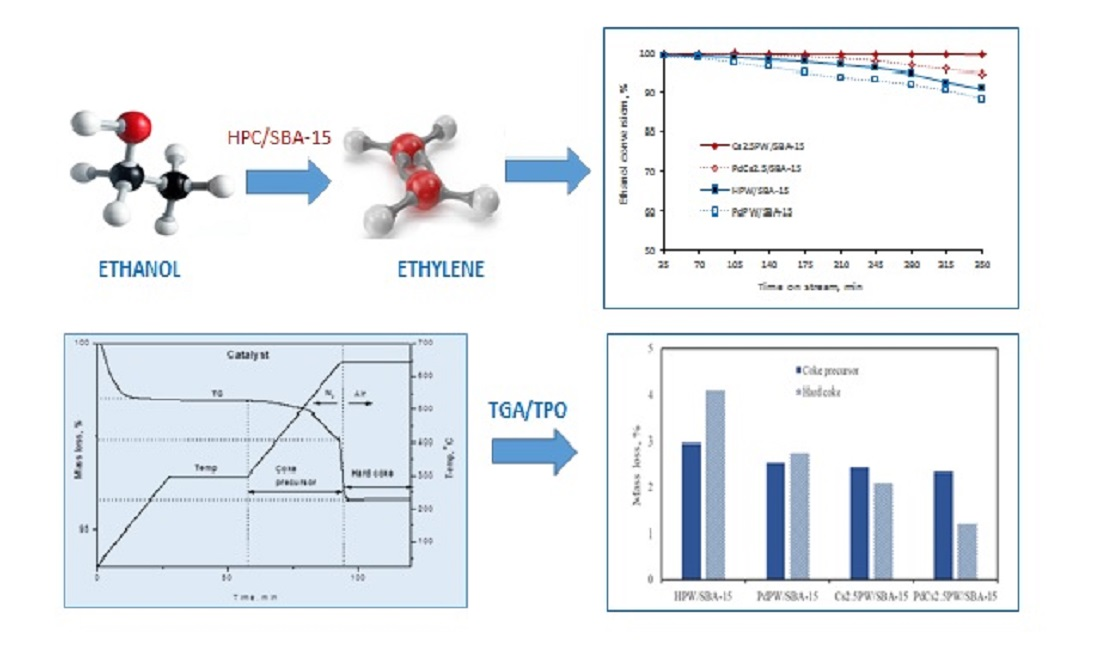
Thermogravimetry Applied for Investigation of Coke Formation in Ethanol Conversion over Heteropoly Tungstate Catalysts






Abstract
Share and Cite
Verdeş, O.; Popa, A.; Borcănescu, S.; Suba, M.; Sasca, V. Thermogravimetry Applied for Investigation of Coke Formation in Ethanol Conversion over Heteropoly Tungstate Catalysts. Catalysts 2022, 12, 1059. https://doi.org/10.3390/catal12091059
Verdeş O, Popa A, Borcănescu S, Suba M, Sasca V. Thermogravimetry Applied for Investigation of Coke Formation in Ethanol Conversion over Heteropoly Tungstate Catalysts. Catalysts. 2022; 12(9):1059. https://doi.org/10.3390/catal12091059
Chicago/Turabian StyleVerdeş, Orsina, Alexandru Popa, Silvana Borcănescu, Mariana Suba, and Viorel Sasca. 2022. "Thermogravimetry Applied for Investigation of Coke Formation in Ethanol Conversion over Heteropoly Tungstate Catalysts" Catalysts 12, no. 9: 1059. https://doi.org/10.3390/catal12091059
APA StyleVerdeş, O., Popa, A., Borcănescu, S., Suba, M., & Sasca, V. (2022). Thermogravimetry Applied for Investigation of Coke Formation in Ethanol Conversion over Heteropoly Tungstate Catalysts. Catalysts, 12(9), 1059. https://doi.org/10.3390/catal12091059