Urinary microRNAs as Prognostic Biomarkers for Predicting the Efficacy of Immune Checkpoint Inhibitors in Patients with Urothelial Carcinoma
by
 ,
,
Yosuke Hirasawa
1 ,
,
Atsushi Satomura
2,3,
Mitsuo Okada
1,
Mieko Utsugi
4,
Hiroki Ogura
1,
Tsuyoshi Yanagi
1,
Yuta Nakamori
1,
Masayuki Takehara
1,
Kokichi Murakami
1,
Go Nagao
1,
Takeshi Kashima
1,
Naoya Satake
1,
Yoriko Ando
2,
Motoki Mikami
2,3,
Mika Mizunuma
2,
Yuki Ichikawa
2,3 and
Yoshio Ohno
1,* 1
Department of Urology, Tokyo Medical University, 6-7-1 Nishi-shinjuku, Shinjuku-ku, Tokyo 160-0023, Japan
2
Craif. Inc., Nagoya 464-0814, Aichi, Japan
3
Institute of Innovation for Future Society, Nagoya University, Nagoya 464-8601, Aichi, Japan
4
The Center for Diversity at Tokyo Medical University, 6-7-1 Nishi-shinjuku, Shinjuku-ku, Tokyo 160-0023, Japan
*
Author to whom correspondence should be addressed.
Cancers 2025, 17(16), 2640; https://doi.org/10.3390/cancers17162640
Submission received: 24 June 2025
/
Revised: 30 July 2025
/
Accepted: 1 August 2025
/
Published: 13 August 2025
(This article belongs to the Special Issue Advancements in “Cancer Biomarkers” for 2025–2026)
Simple Summary
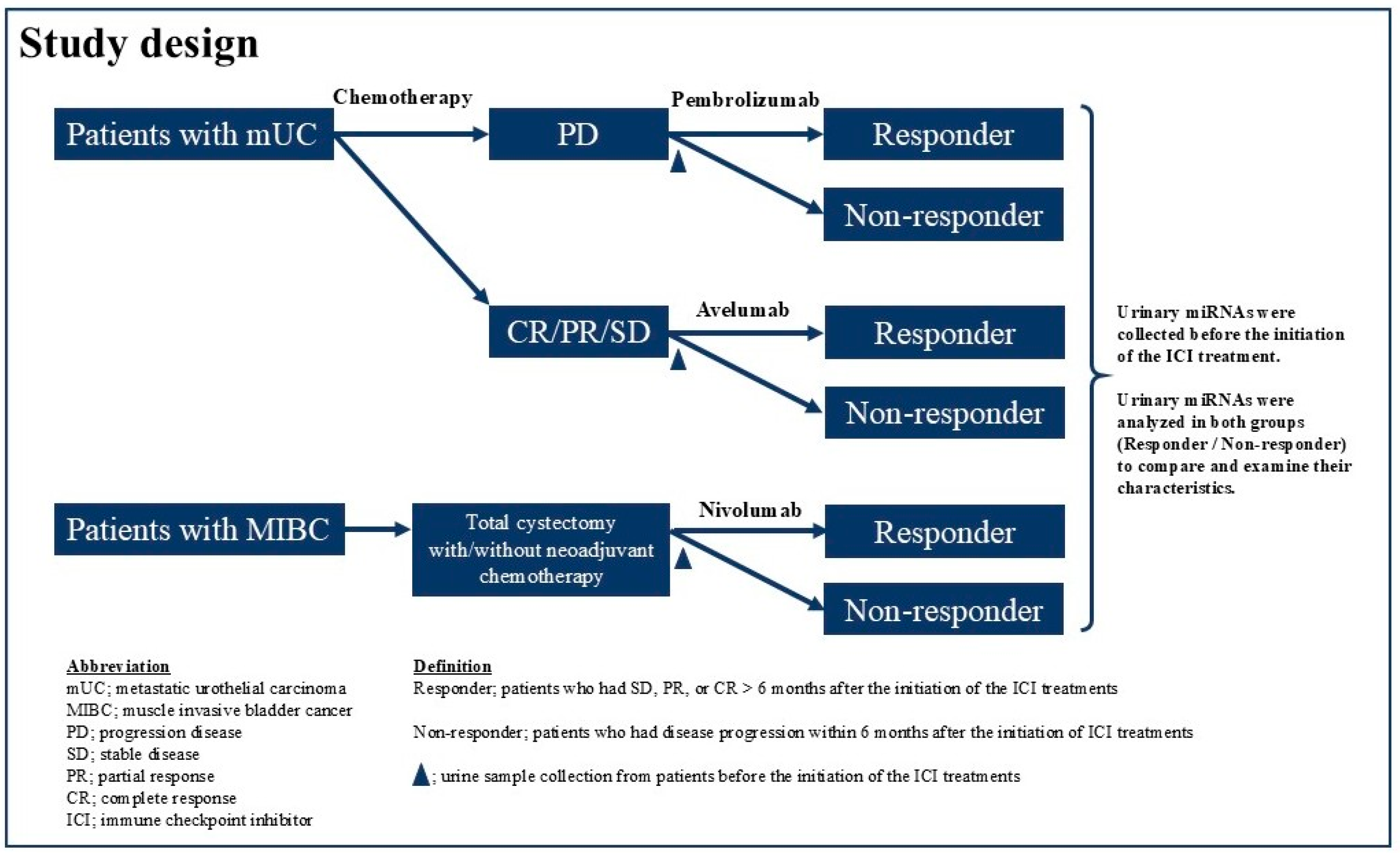
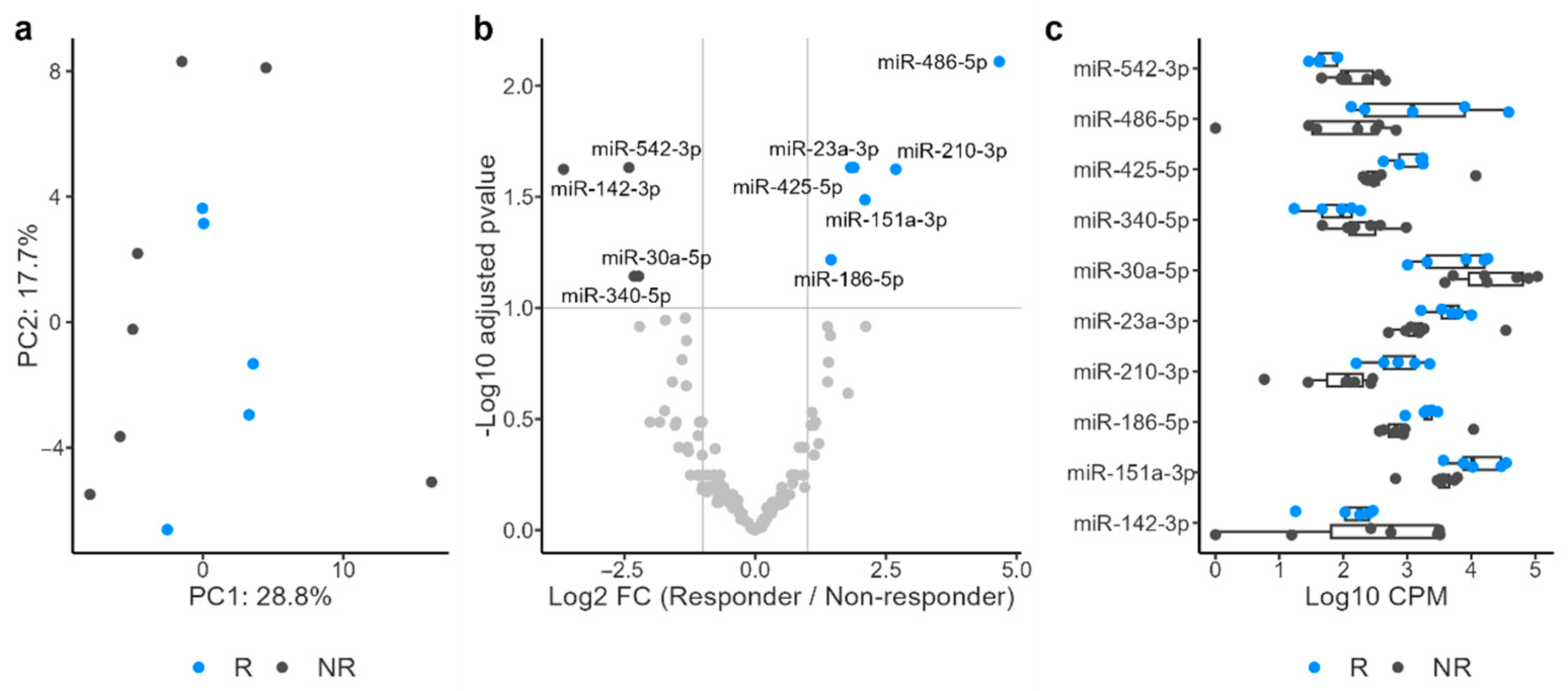
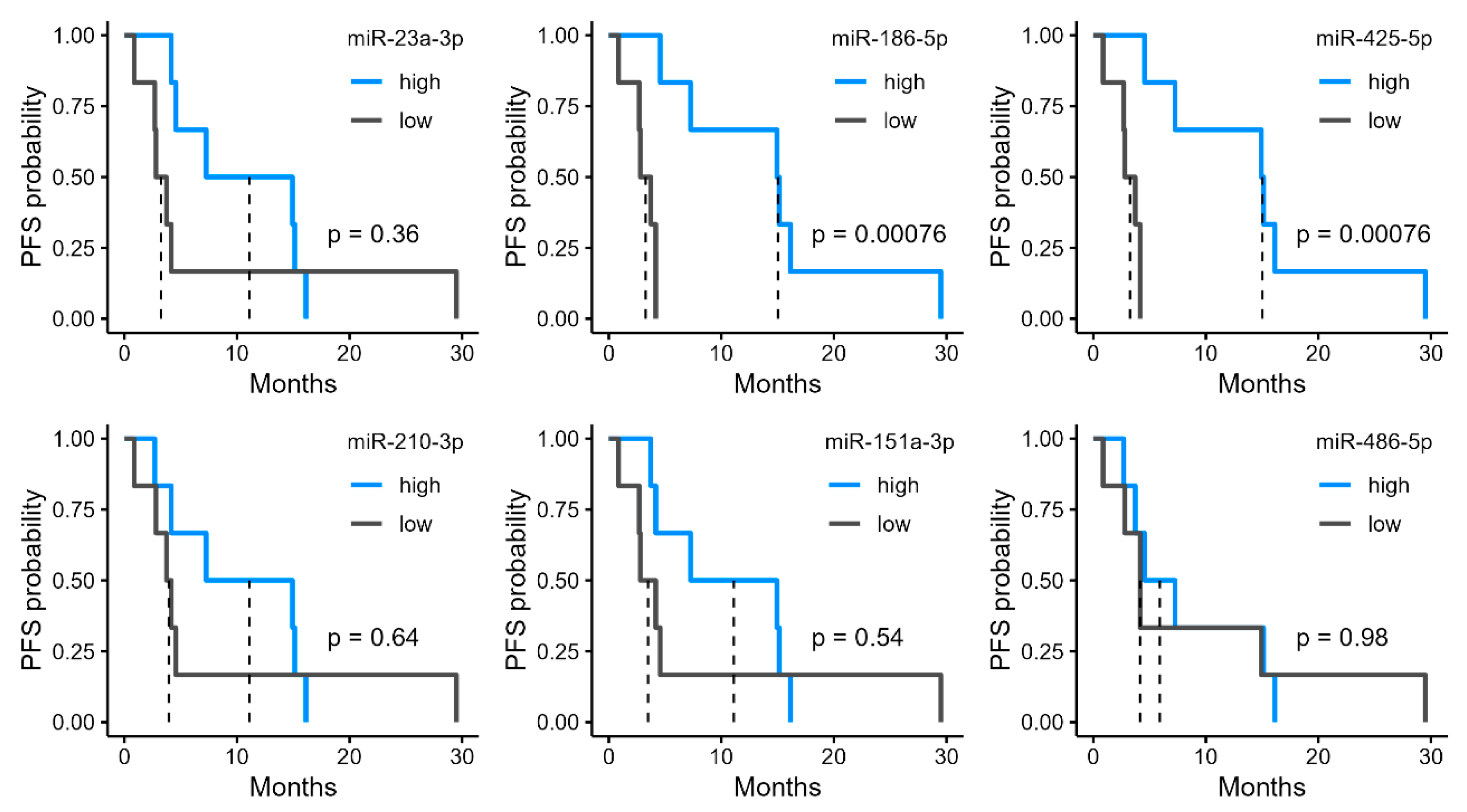
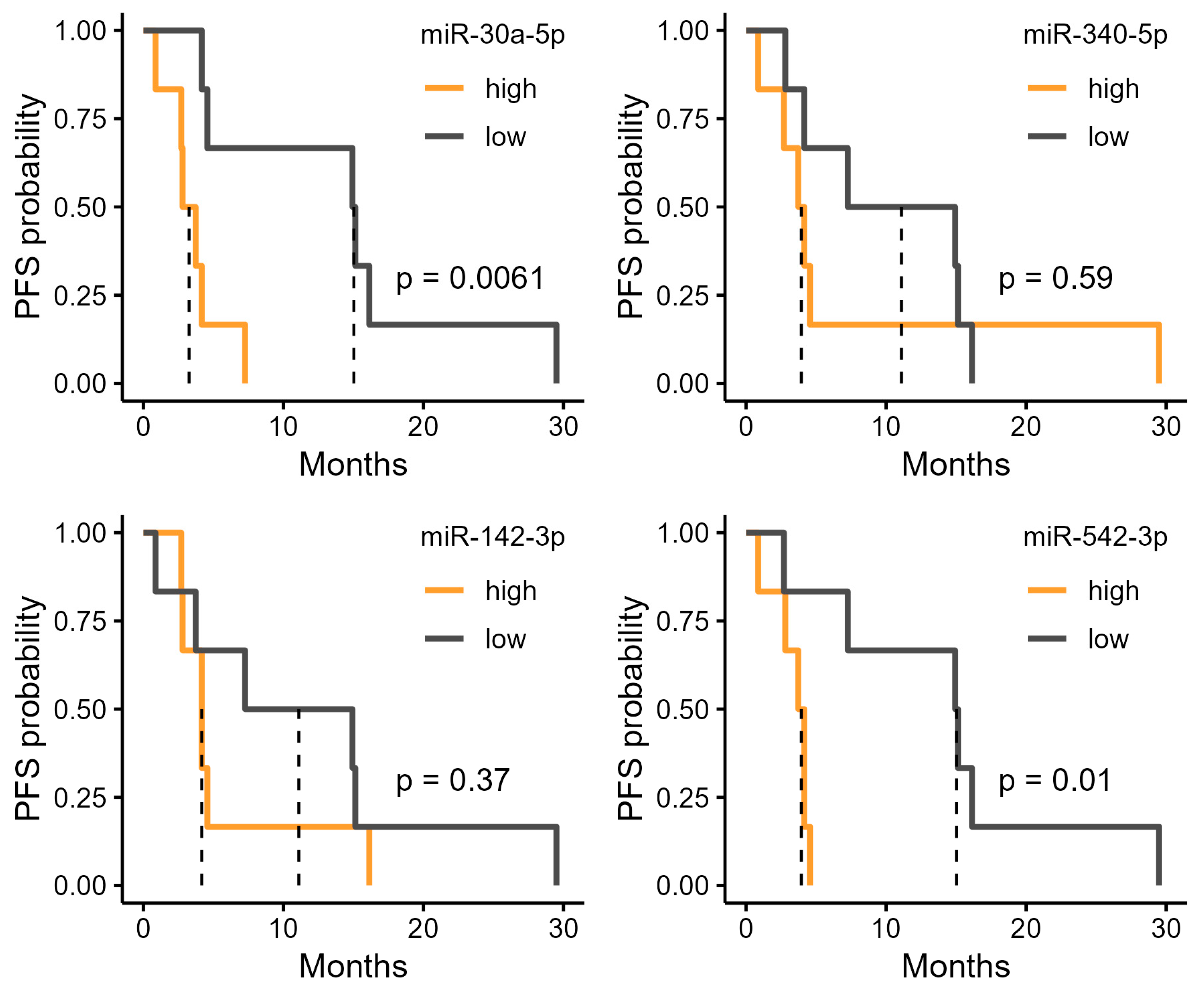
Immune checkpoint inhibitors (ICIs) have transformed urothelial carcinoma (UC) treatment, yet only a minority of patients benefit long-term owing to variable response rates (<25%) and emerging resistance. This study investigates urinary microRNAs (miRNAs) as noninvasive predictive biomarkers for ICI efficacy. Urine samples collected before initiation of ICI were analyzed via next-generation sequencing. Patients were grouped into responders (those with disease control for ≥6 months) or non-responders (those with disease progression within 6 months). Urinary levels of miR 185 5p and miR 425 5p were significantly elevated in responders, correlating with enhanced overall and progression-free survival (p < 0.05). Conversely, miR 30a 5p and miR 542 3p were higher in non-responders, suggesting a potential role in immune resistance. Therefore, these urinary miR 185 5p and miR 425 5p can serve as favorable predictive biomarkers for ICI response, while miR 30a 5p and miR 542 3p could be a signal of resistance for ICI treatment. Furthermore, urine-based miRNA profiling is a promising tool to inform personalized immunotherapy strategies in UC management.
Abstract
Background: Immune checkpoint inhibitors (ICIs) have revolutionized the treatment of urothelial carcinoma (UC); however, their efficacy varies among patients. Identifying reliable biomarkers to predict response to ICIs remains challenging. We aimed to explore urinary microRNAs (miRNAs) as potential biomarkers for predicting ICI efficacy in patients with UC. Methods: We prospectively collected urinary samples from patients with UC before ICI initiation and investigated the predictive value of urinary miRNAs in patients with UC receiving ICIs. The expression levels of these miRNAs in pretreated urine samples were analyzed using next-generation sequencing. The patients were categorized as responders (those with stable disease or better for >6 months) or nonresponders (those who experienced disease progression within 6 months of treatment initiation). Urinary miRNA levels were compared between the groups to assess their potential as predictive biomarkers. Results: Elevated expression of miR-185-5p and miR-425-5p in the responder group was significantly associated with improved overall and progression-free survival in patients with bladder cancer treated with ICIs (p < 0.05). Conversely, higher levels of miR-30a-5p and miR-542-3p in the nonresponder group were correlated with a poorer response to ICIs, suggesting a potential role in immune resistance. Conclusions: miR-185-5p and miR-425-5p can serve as predictive biomarkers of favorable ICI efficacy in bladder cancer, whereas miR-30a-5p and miR-542-3p could be associated with resistance mechanisms. These findings highlight the potential of miRNA-based biomarkers, particularly those found in urine samples, to guide personalized immunotherapeutic strategies for UC treatment.