Evaluation of Bortezomib-BeEAM (2BeEAM) as Chemotherapy Regimen Prior to ASCT in Patients with Mantle Cell Lymphoma
by
 , , ,
, , ,
Fabrizio Huwyler
1,
Rebekka Kunz
1,
Ulrike Bacher
2 ,
,
Michèle Hoffmann
1,
Urban Novak
1,
Michael Daskalakis
2,
Yara Banz
3 and
Thomas Pabst
1,*
1
Department of Medical Oncology, Inselspital, Bern University Hospital, 3010 Bern, Switzerland
2
Department of Hematology and Central Hematology Laboratory, Inselspital, Bern University Hospital, University of Bern, 3010 Bern, Switzerland
3
Institute of Pathology, Inselspital, University of Bern, 3008 Bern, Switzerland
*
Author to whom correspondence should be addressed.
Cancers 2023, 15(7), 2091; https://doi.org/10.3390/cancers15072091
Submission received: 16 January 2023
/
Revised: 20 March 2023
/
Accepted: 28 March 2023
/
Published: 31 March 2023
(This article belongs to the Special Issue Latest Development in B Cell Malignancies)
Simple Summary
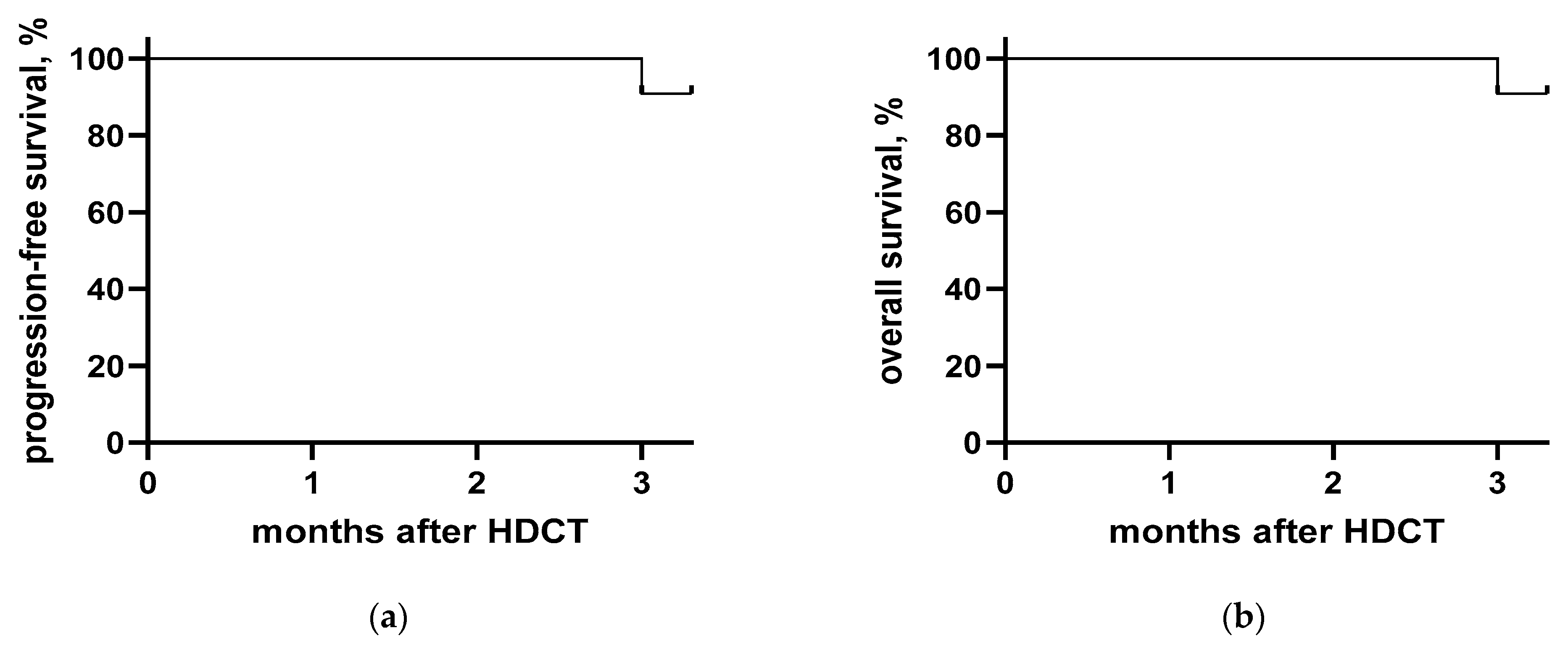
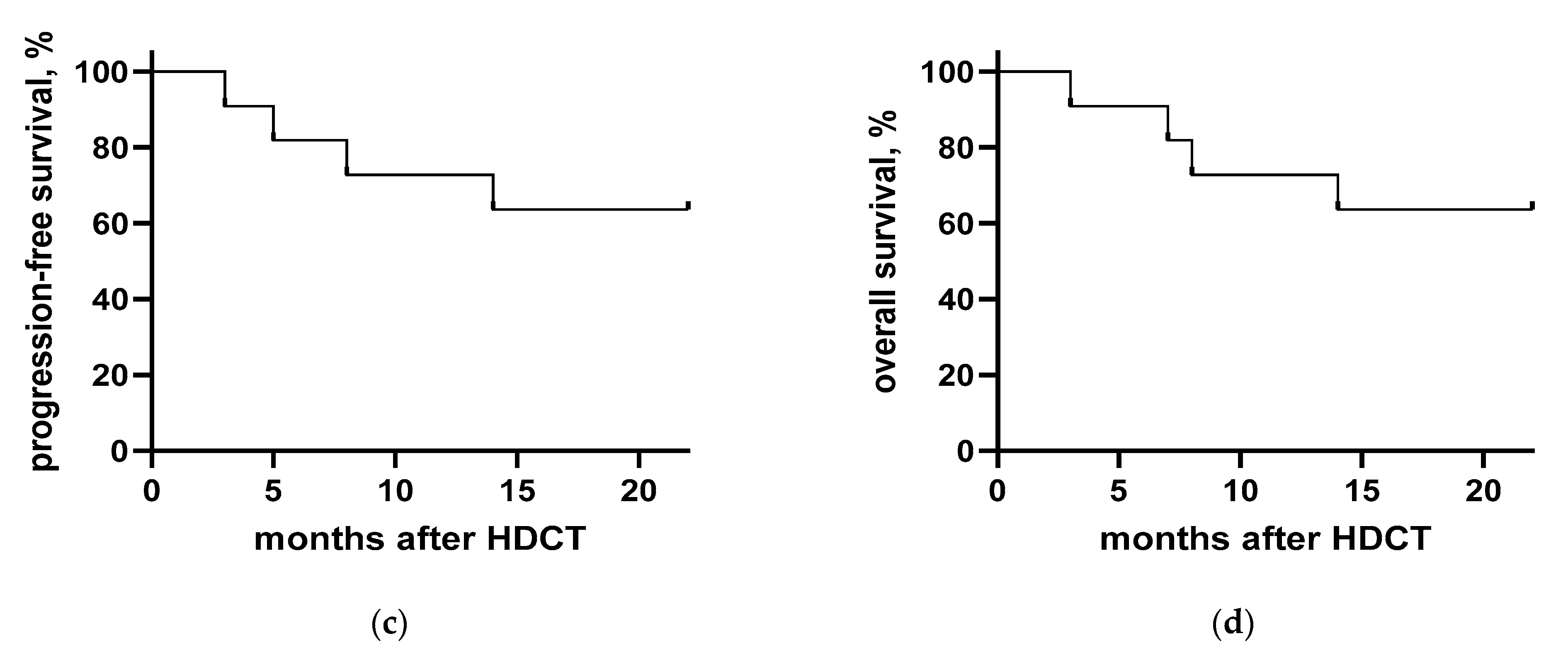
In patients with mantle cell lymphoma (MCL), an effective and safe high-dose chemotherapy regimen as consolidation of first-line treatment prior to ASCT is a matter of ongoing exploration due to unsatisfying outcomes with a relevant rate of relapse in the following course of disease. In our study, we evaluated the use of bortezomib together with standard HDCT of BeEAM (2BeEAM) in 11 patients with an MCL in a single institution study, assessing feasibility, toxicities, and survival rates. More than half of the patients presented with peripheral sensory and/or motor neuropathy. Progression-free survival and overall survival were 64% after a median follow-up time of 22 months. Moreover, 55% of the patients were in complete remission. These findings suggest the addition of bortezomib is associated with substantial toxicities without having a superior benefit in MCL therapy. Thus, we could not identify an obvious clinical benefit compared to standard treatment.
Abstract
(1) Background: First-line therapy in fit MCL patients may comprise high-dose chemotherapy (HDCT) with autologous transplantation to consolidate remission before maintenance treatment. However, optimization of HDCT is an unmet clinical need given the substantial relapse rate of first-line treatment, while the use of bortezomib is a promising candidate to be added to standard HDCT. (2) Methods: We analyzed 11 consecutive patients with MCL who received bortezomib added to standard BeEAM (2BeEAM) HDCT at a single academic institution. We assessed safety, feasibility, toxicities, and survival rates. (3) Results: All patients had stage III or IV disease. We found that six patients (55%) developed new or worsening of preexisting peripheral neuropathy following administration of 2BeEAM HDCT. One patient relapsed within the first six months after HDCT, whereas three patients never reached complete remission. After a median follow-up of 22 months, the PFS was 64% and the OS 64% at the last follow-up assessment. At this time, 55% of patients were in CR. (4) Conclusions: The use of bortezomib added to standard BeEAM HDCT is associated with relevant toxicities, particularly with regards to additional neuropathy. Moreover, the anti-lymphoma efficacy of 2BeEAM HDCT appears to be modest; therefore, other therapeutic options should be evaluated for consolidation in this patient group.