In Vitro Measurement and Mathematical Modeling of Thermally-Induced Injury in Pancreatic Cancer Cells
by
 , , and
Faraz Chamani
1,
Marla M. Pyle
2,
Tej B. Shrestha
2,3,
Jan Sebek
1,
Stefan H. Bossmann
4 ,
,
Matthew T. Basel
2,
Rahul A. Sheth
5 and
Punit Prakash
1,* 1
Department of Electrical and Computer Engineering, Kansas State University, Manhattan, KS 66506, USA
2
Department of Anatomy and Physiology, College of Veterinary Medicine, Kansas State University, Manhattan, KS 66506, USA
3
Nanotechnology Innovation Center of Kansas State (NICKS), Kansas State University, Manhattan, KS 66506, USA
4
Department of Cancer Biology, University of Kansas Medical Center, Kansas City, KS 66160, USA
5
Department of Interventional Radiology, University of Texas MD Anderson Cancer Center, Houston, TX 77030, USA
*
Author to whom correspondence should be addressed.
Cancers 2023, 15(3), 655; https://doi.org/10.3390/cancers15030655
Submission received: 12 December 2022
/
Revised: 16 January 2023
/
Accepted: 18 January 2023
/
Published: 21 January 2023
(This article belongs to the Collection Hyperthermia in Cancer Therapy)
Simple Summary
Thermal therapies, the controlled heating of tissue, are a clinically accepted modality for the treatment of localized cancers and are under investigation as part of treatment strategies for pancreatic cancer. The bioeffects of heating varies as a function of intensity and duration of heating and can vary across tissue types. We report on the measurement of thermal injury parameters for pancreatic cancer cell lines in vitro and assess their suitability for predicting changes in cell viability following heating. The results of this study may contribute to research investigating the use of thermal therapies as part of pancreatic cancer treatment strategies, the development of modeling tools for predictive treatment planning of thermal therapies, and understanding the effects of other energy-based interventions that may involve perturbation of tissue temperature.
Abstract
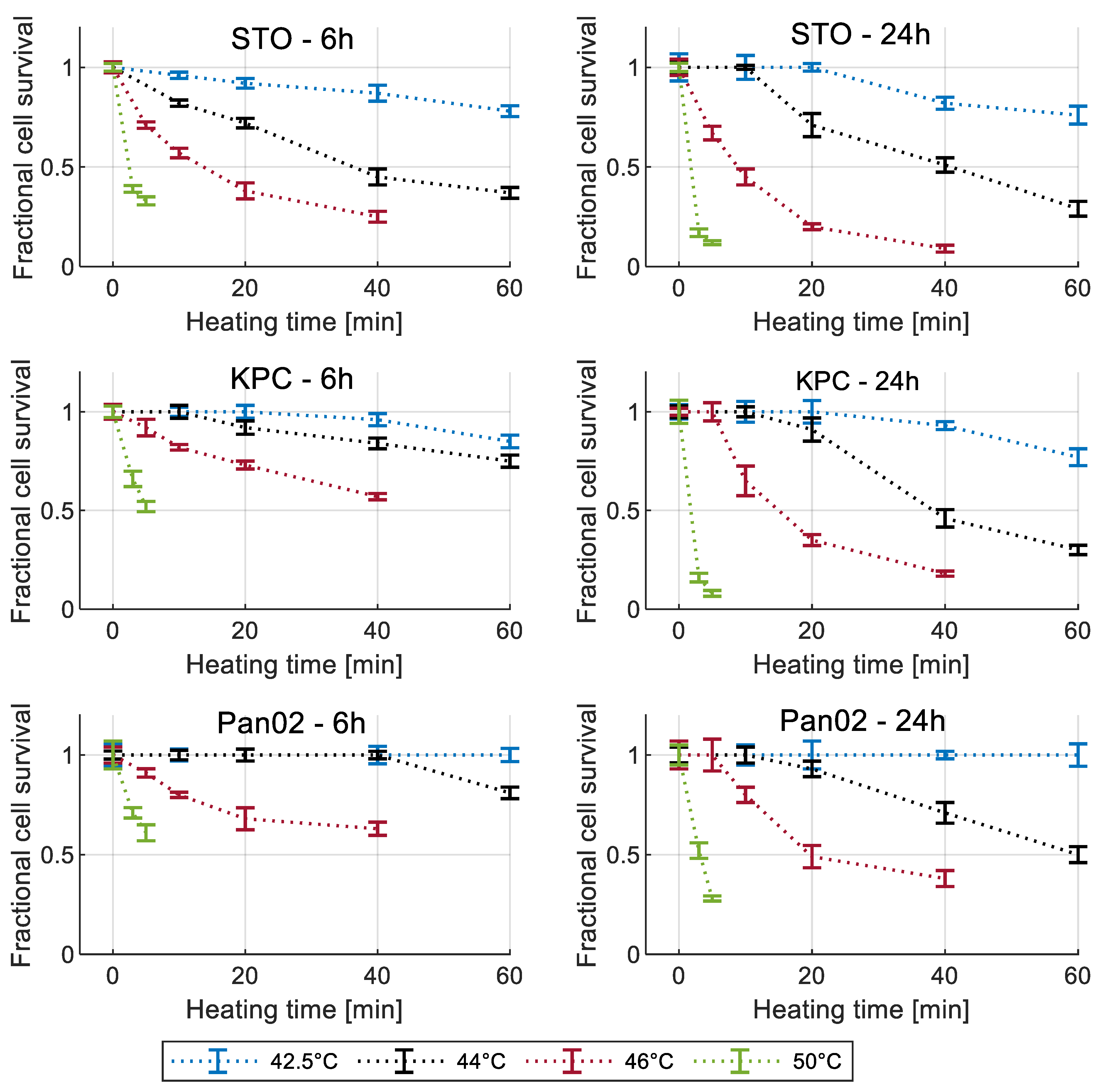
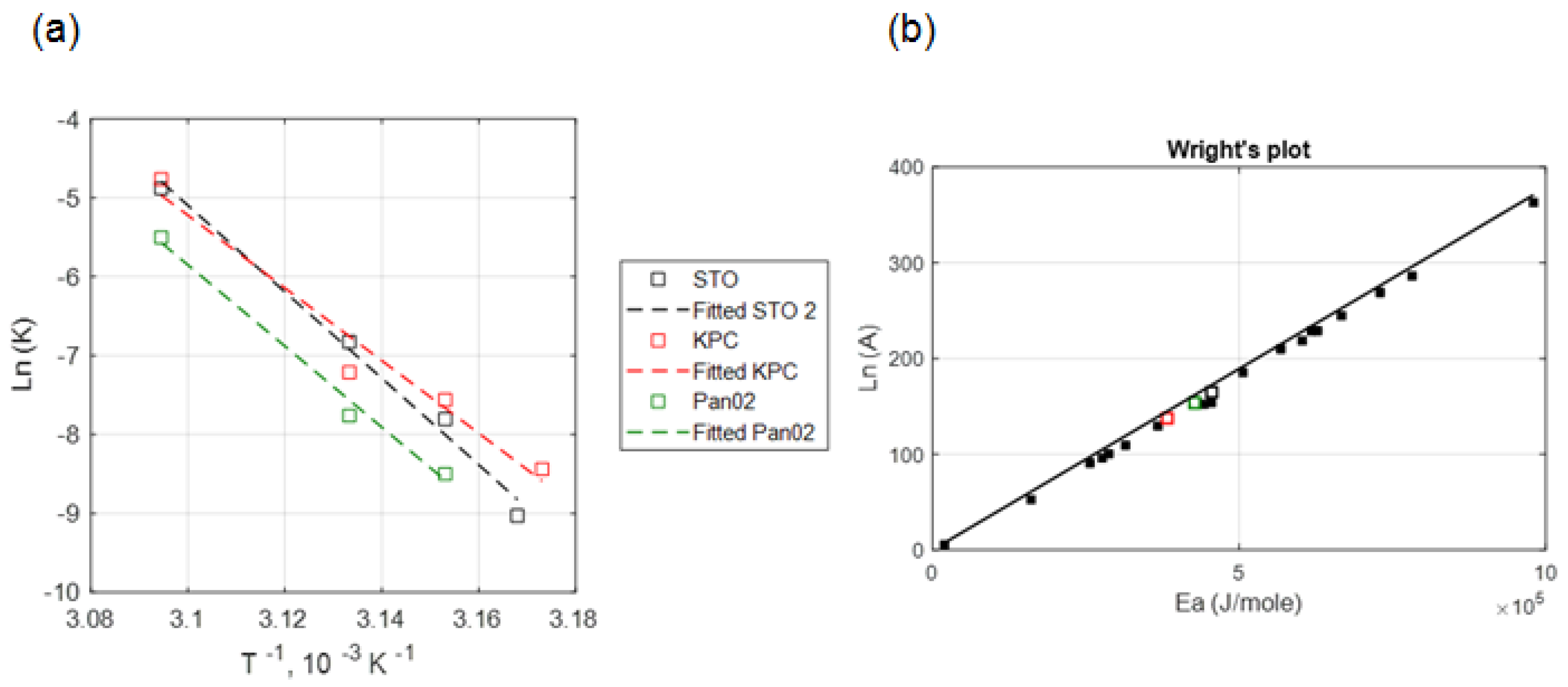
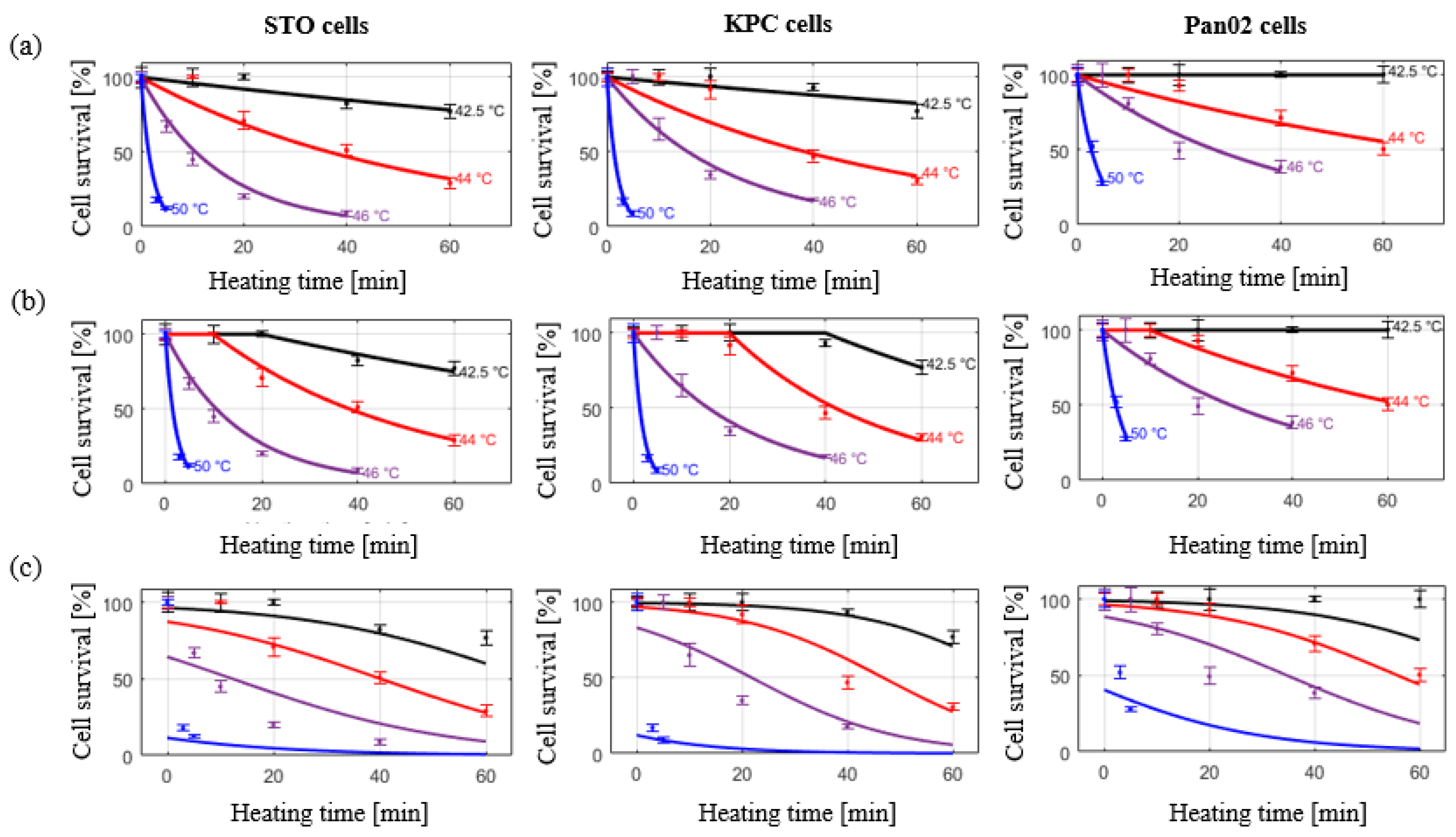
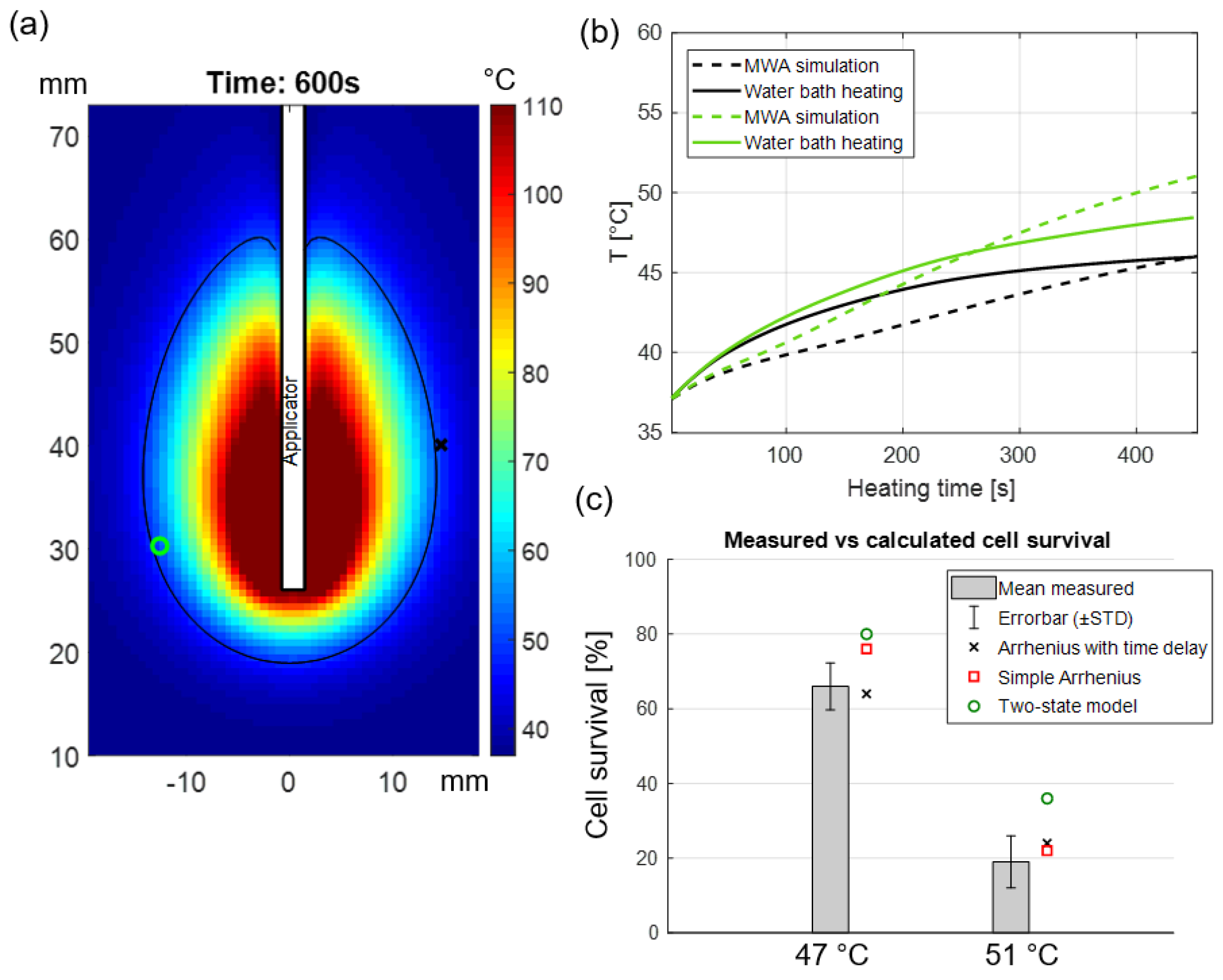
Thermal therapies are under investigation as part of multi-modality strategies for the treatment of pancreatic cancer. In the present study, we determined the kinetics of thermal injury to pancreatic cancer cells in vitro and evaluated predictive models for thermal injury. Cell viability was measured in two murine pancreatic cancer cell lines (KPC, Pan02) and a normal fibroblast (STO) cell line following in vitro heating in the range 42.5–50 °C for 3–60 min. Based on measured viability data, the kinetic parameters of thermal injury were used to predict the extent of heat-induced damage. Of the three thermal injury models considered in this study, the Arrhenius model with time delay provided the most accurate prediction (root mean square error = 8.48%) for all cell lines. Pan02 and STO cells were the most resistant and susceptible to hyperthermia treatments, respectively. The presented data may contribute to studies investigating the use of thermal therapies as part of pancreatic cancer treatment strategies and inform the design of treatment planning strategies.