Mutant C. elegans p53 Together with Gain-of-Function GLP-1/Notch Decreases UVC-Damage-Induced Germline Cell Death but Increases PARP Inhibitor-Induced Germline Cell Death


1
Department of Biological Sciences, Hunter College, City University of New York, New York, NY 10065, USA
2
Macaulay Honors College at Hunter College, City University of New York, New York, NY 10065, USA
3
The Graduate Center, Departments of Biology and Biochemistry, City University of New York, New York, NY 10016, USA
4
Department of Cell and Developmental Biology, Weill Cornell Medical College, New York, NY 10065, USA
*
Author to whom correspondence should be addressed.
Cancers 2022, 14(19), 4929; https://doi.org/10.3390/cancers14194929
Submission received: 29 August 2022
/
Revised: 2 October 2022
/
Accepted: 4 October 2022
/
Published: 8 October 2022
(This article belongs to the Section Cancer Therapy)
Simple Summary
The tumor suppressor gene TP53 is conserved from nematode to human. In humans the TP53 gene is found mutated in a majority of cancers and therefore, the p53-induced cell death pathway is dysfunctional. As such, it is of the utmost importance to determine mechanisms and models to test for ways to induce p53-independent cancer cell death. The small, transparent, nematode C. elegans is a whole animal with a germline stem cell tumor model that presents such an opportunity. We used this model with a well-studied p53 mutant that increases germline tumor size to test for ways to induce p53-independent cell death. Herein, we report that two p53-independent death inducers, a nucleoside analogue and a PARP inhibitor, are capable of inducing C. elegans germline tumor cell death. This suggests new targeted drugs can be tested in this model for p53-independent cancer cell killing.
Abstract
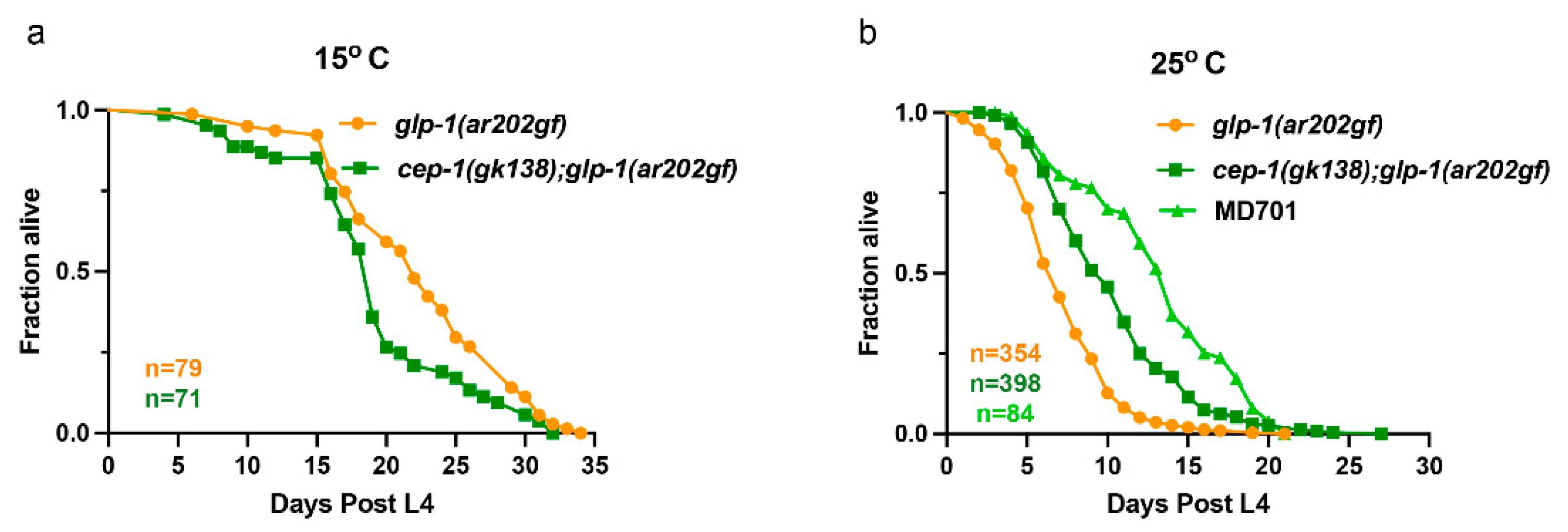
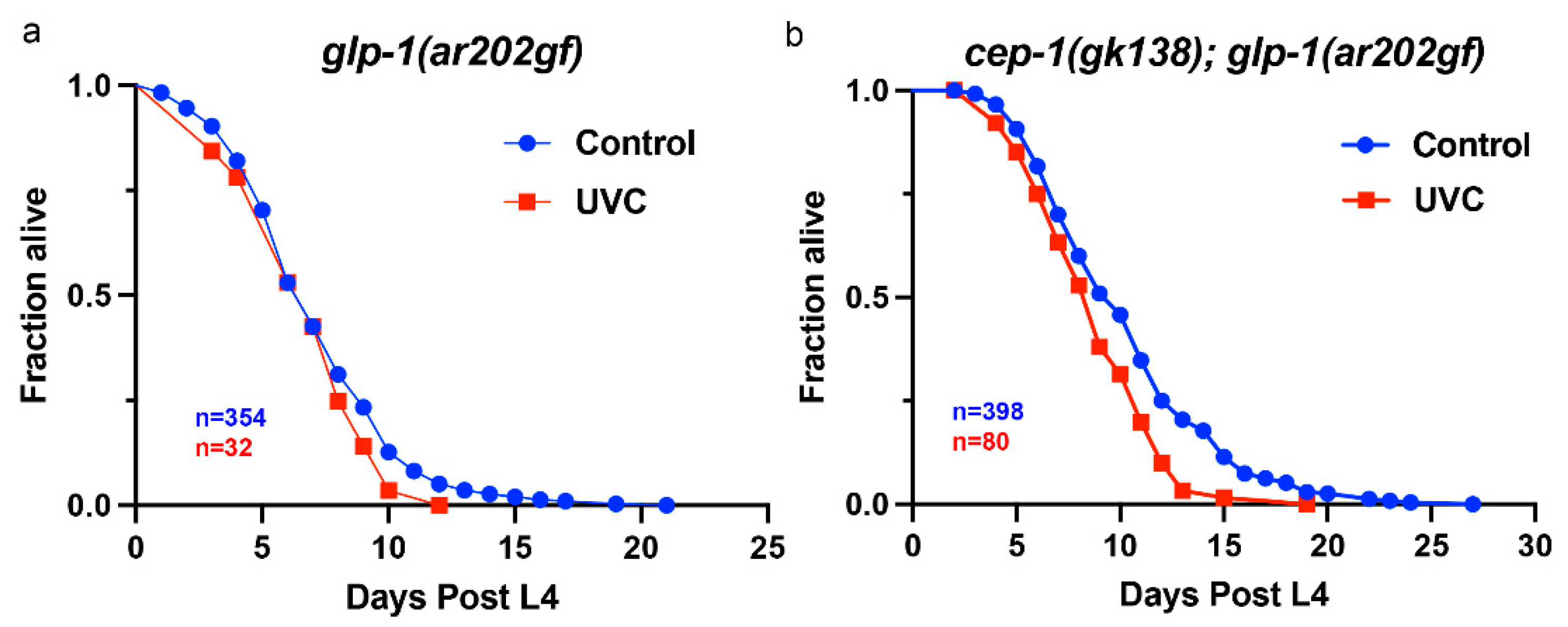
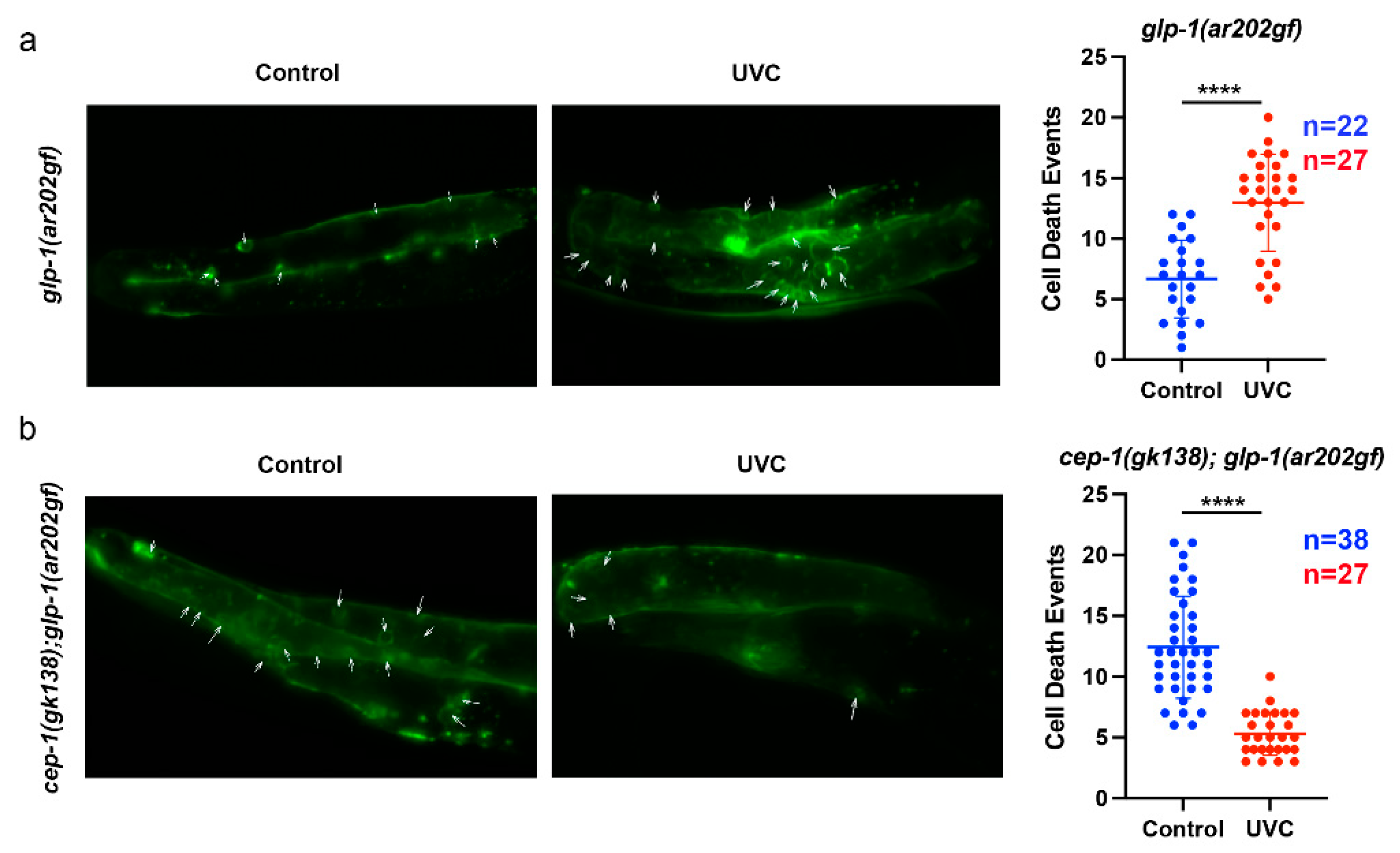
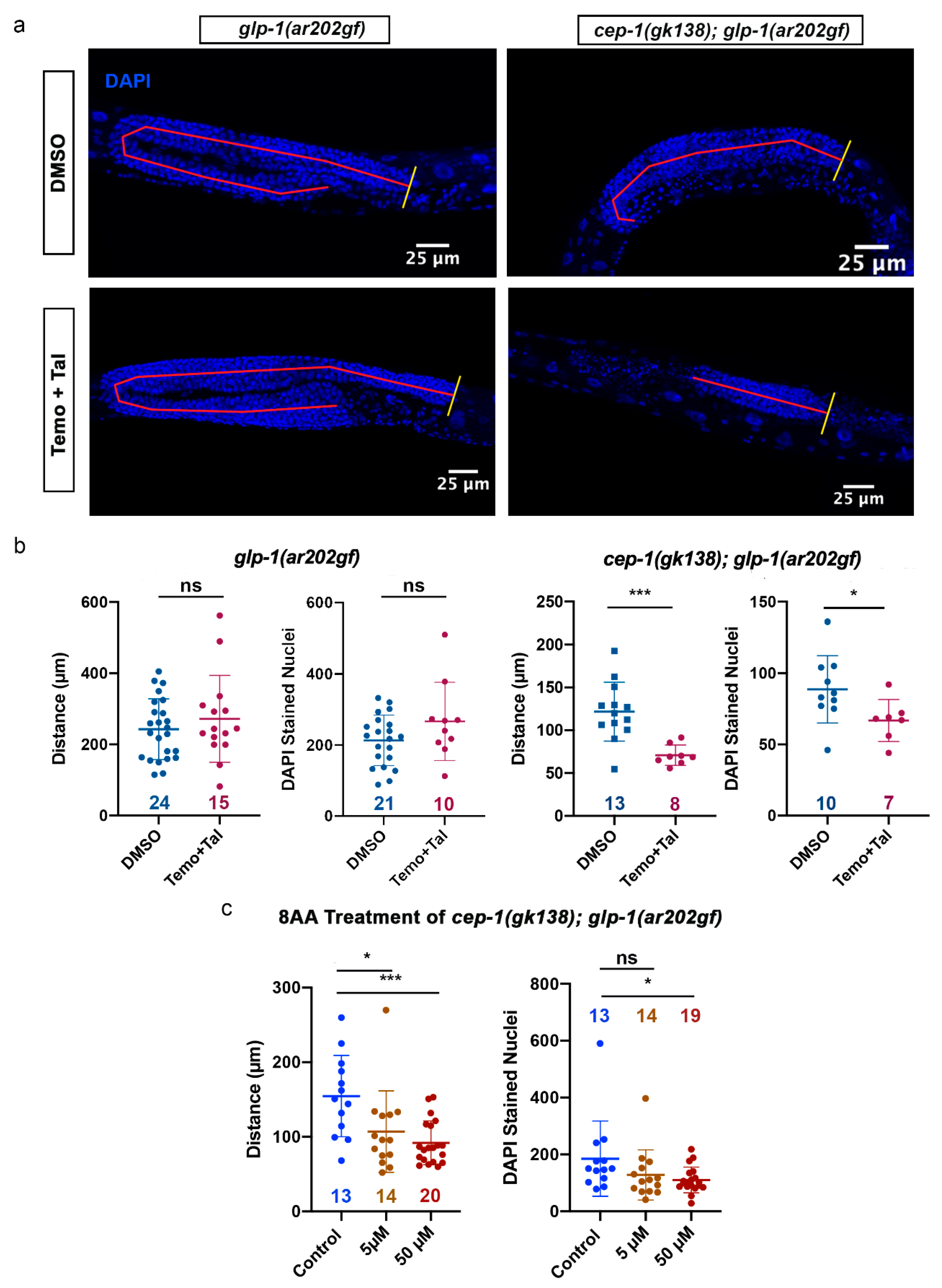
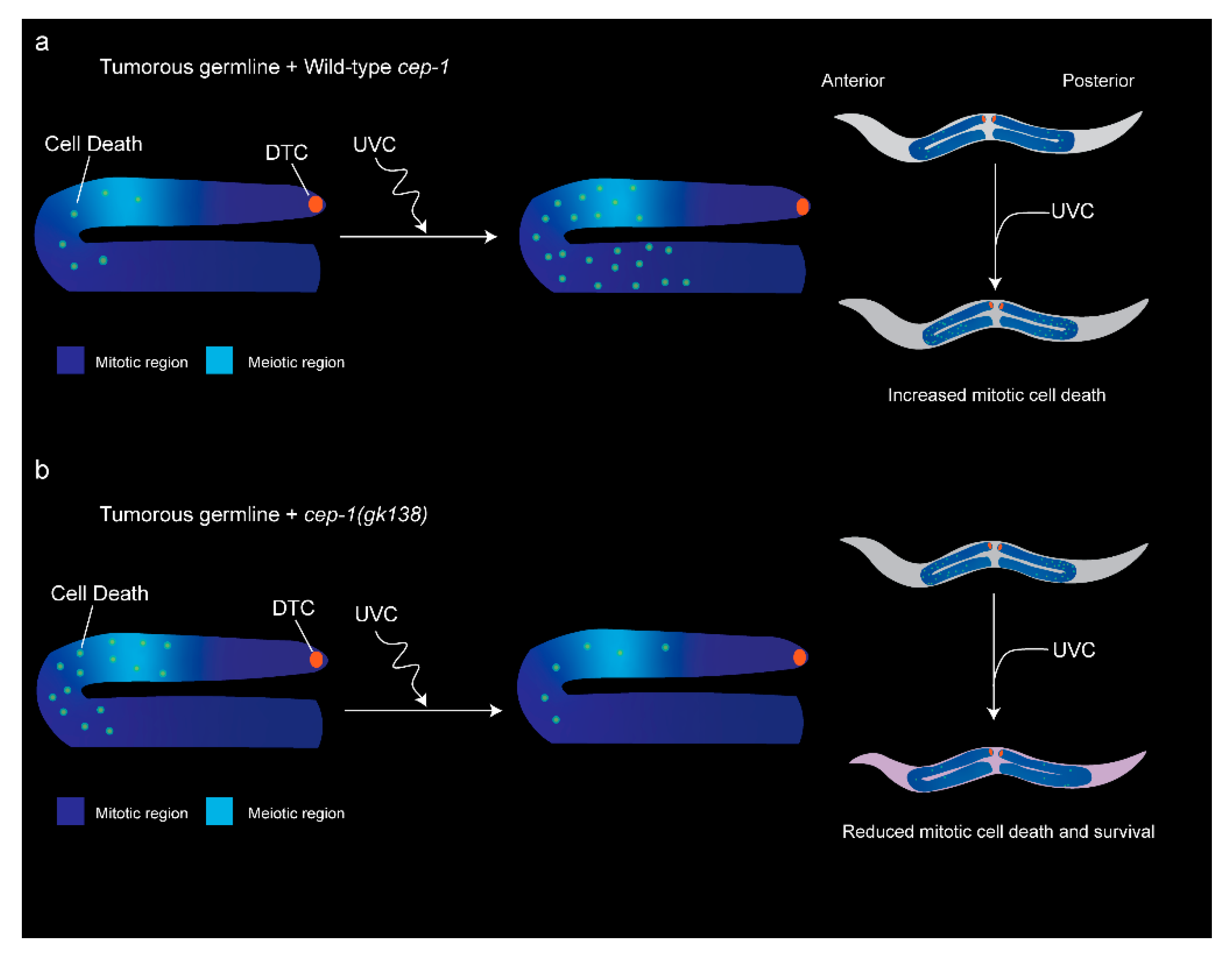
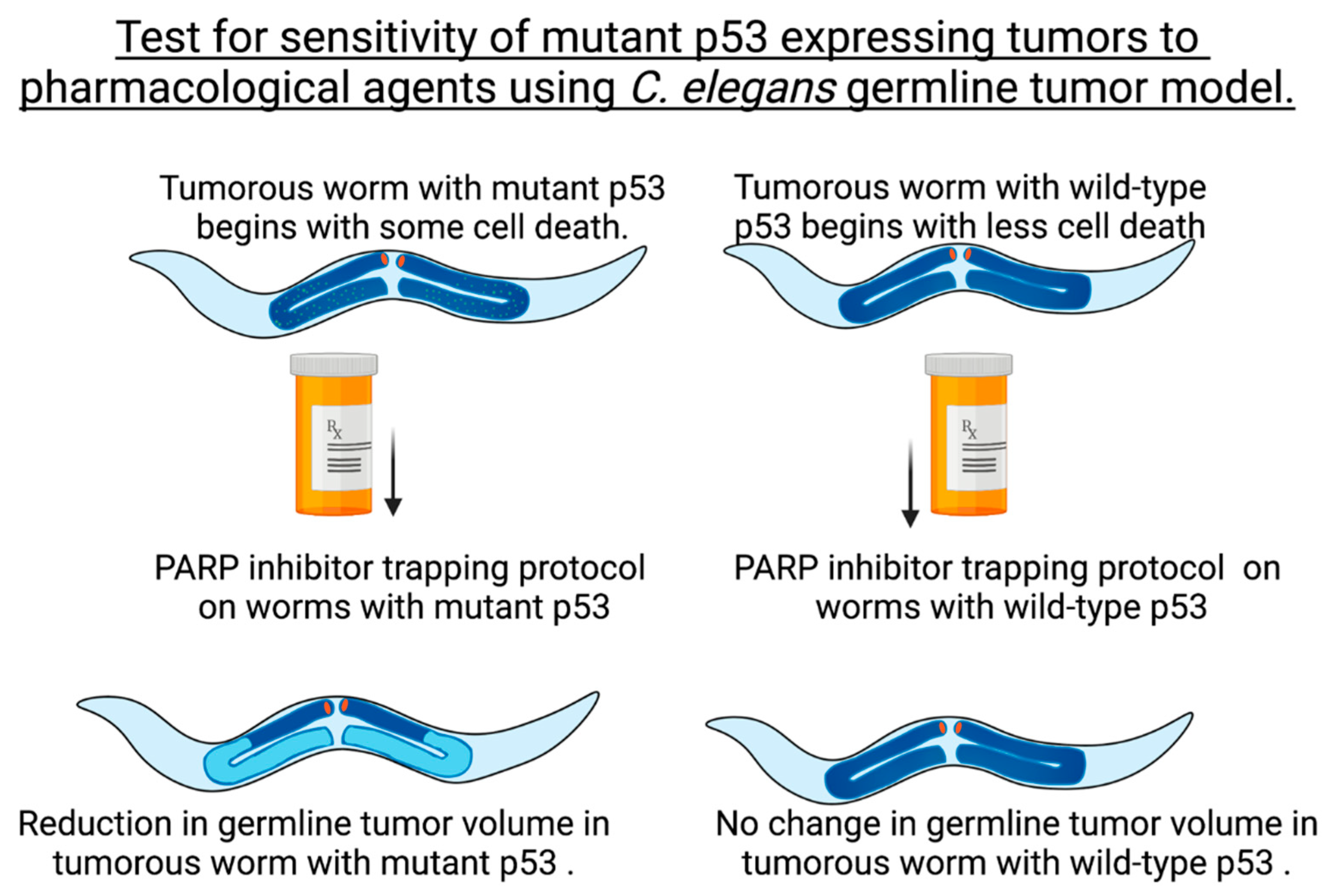
The TP53 gene is mutated in over 50% of human cancers, and the C. elegansp53-1(cep-1) gene encodes the ortholog CEP-1. CEP-1 is activated by ultraviolet type C (UVC)-induced DNA damage and activates genes that induce germline apoptosis. UVC treatment of gain-of-function glp-1(ar202gf)/Notch tumorous animals reduces germline stem cell numbers (and overall tumor size), while UVC treatment of double-mutant cep-1/p53(gk138);glp-1/Notch(ar202gf) increases DNA damage adducts and stem cell tumor volume. We compared UVC-induced mitotic stem cell death and animal lifespans for the two different C. elegans tumorous strains. C. elegans stem cell compartment death has never been observed, and we used engulfed small stem cells, notable by green fluorescent puncta, to count cell death events. We found UVC treatment of glp-1(ar202gf) animals increased stem cell death and increased lifespan. However, UVC treatment of double-mutant cep-1/p53(gk138);glp-1/Notch(ar202gf) animals decreased stem cell death, increased tumor volume, and decreased animal lifespan. There are pharmacological agents that induce p53-independent cell death of human cells in culture; and two notable protocols are the PARP-trapping agents of temozolomide plus talazoparib and the nucleoside analogue 8-amino-adenosine. It is important to determine ways to rapidly test for pharmacological agents able to induce p53-independent cell death. We tested feeding cep-1/p53(gk138);glp-1/Notch(ar202gf) nematodes with either 8-amino-adenosine or temozolomide plus talazoparib and found both were able to decrease tumor volume. This is the first comparison for p53-independent responses in cep-1/p53(gk138);glp-1/Notch(ar202gf) animals and showed UVC DNA damage increased tumor volume and decreased lifespan while PARP inhibition decreased tumor volume.
Keywords:
p53; CEP-1; cancer; DNA damage; PARP inhibitor; lifespan