Article

A Decoupling Design with T-Shape Structure for the Aluminum Nitride Gyroscope


1
Engineering Research Center for Semiconductor Integrated Technology, Institute of Semiconductors, Chinese Academy of Sciences, Beijing 100083, China
2
College of Materials Science and Opto-Electronic Technology, University of Chinese Academy of Sciences, Beijing 100049, China
3
State Key Laboratory of Transducer Technology, Chinese Academy of Sciences, Beijing 100083, China
4
Center of Materials Science and Optoelectronics Engineering, University of Chinese Academy of Sciences, Beijing 100049, China
5
School of microelectronics, University of Chinese Academy of Sciences, Beijing 100049, China
6
Beijing Engineering Research Center of Semiconductor Micro-Nano Integrated Technology, Beijing 100083, China
*
Authors to whom correspondence should be addressed.
Micromachines 2019, 10(4), 244; https://doi.org/10.3390/mi10040244
Submission received: 27 March 2019 / Revised: 8 April 2019 / Accepted: 11 April 2019 / Published: 12 April 2019
(This article belongs to the Special Issue MEMS/NEMS Sensors: Fabrication and Application, Volume II)

Abstract

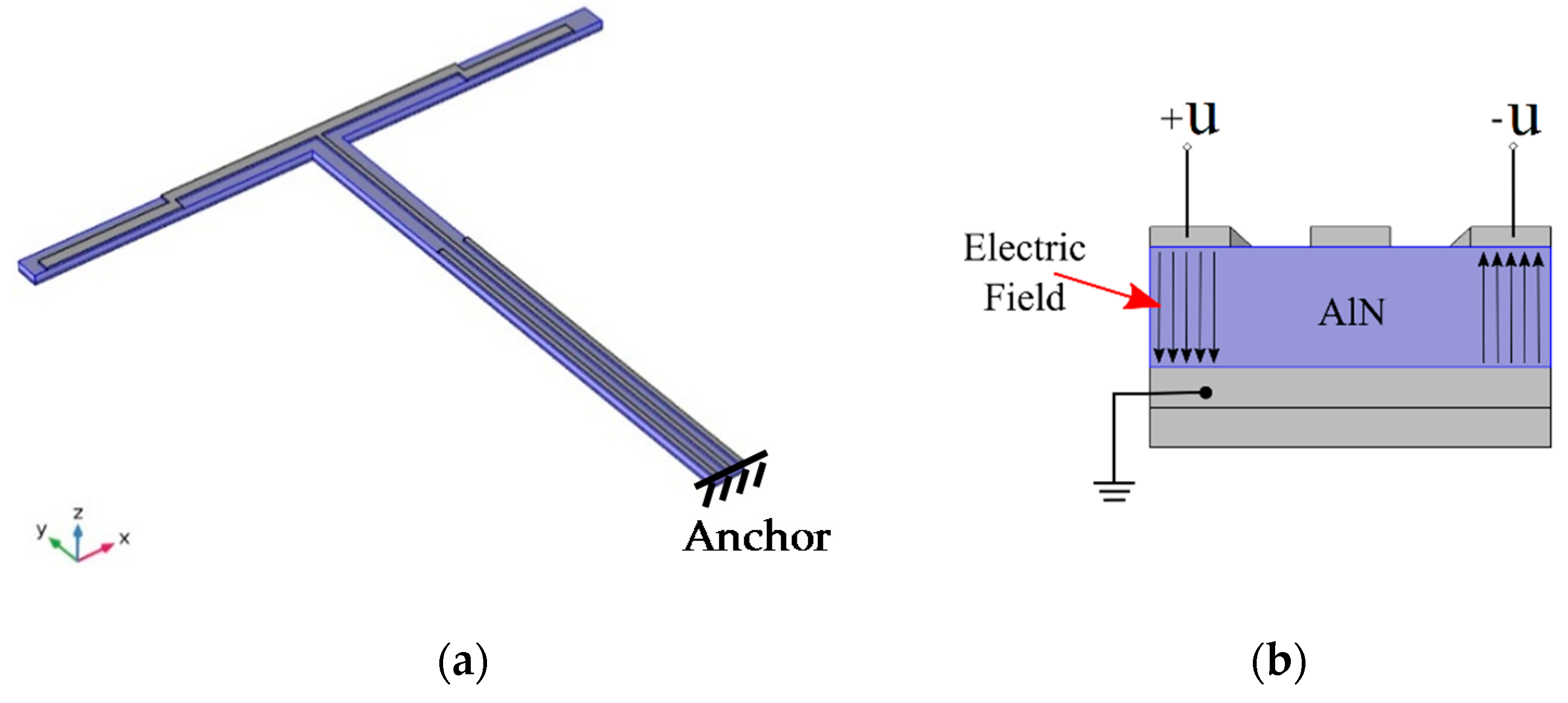
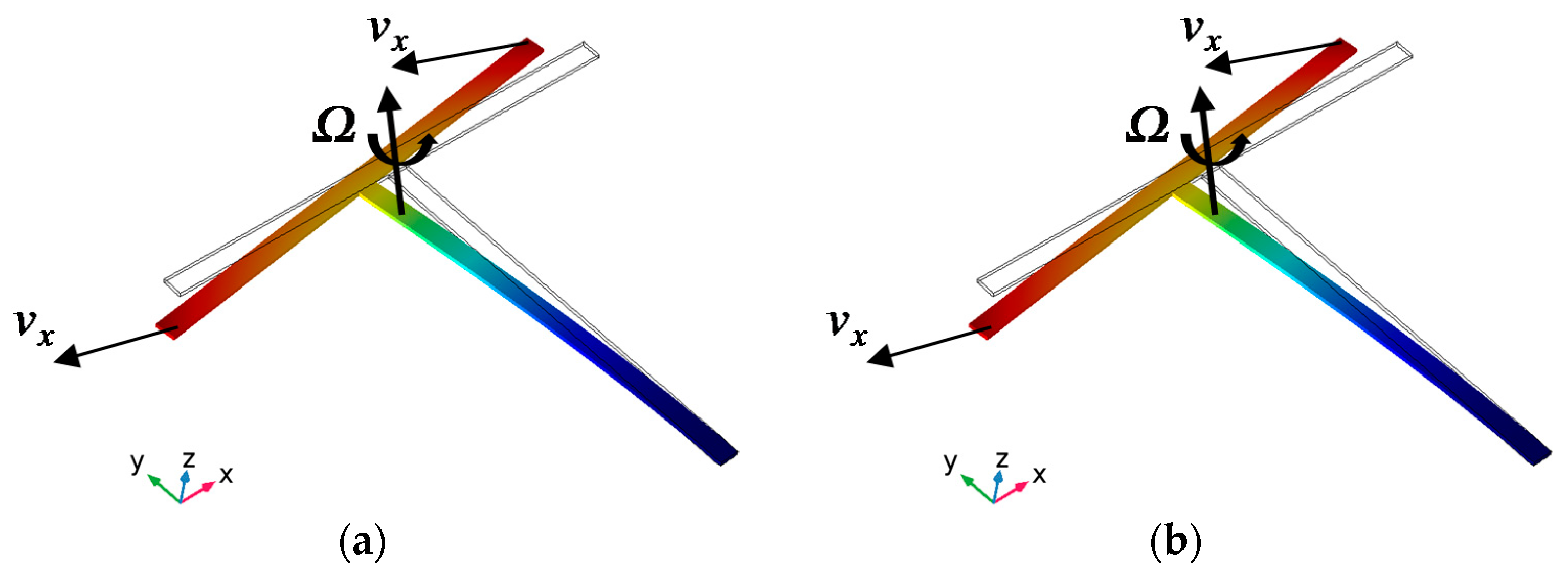
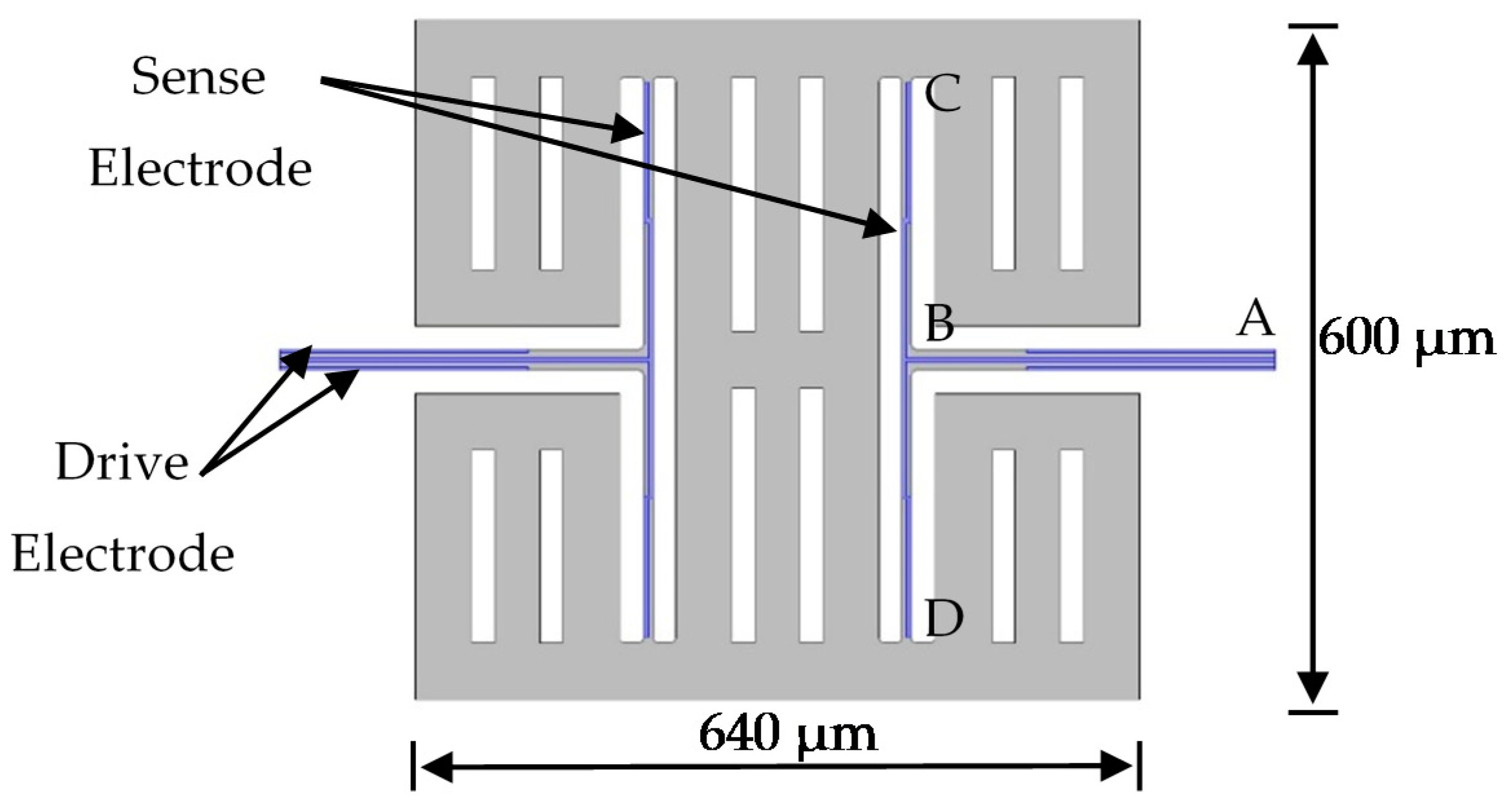
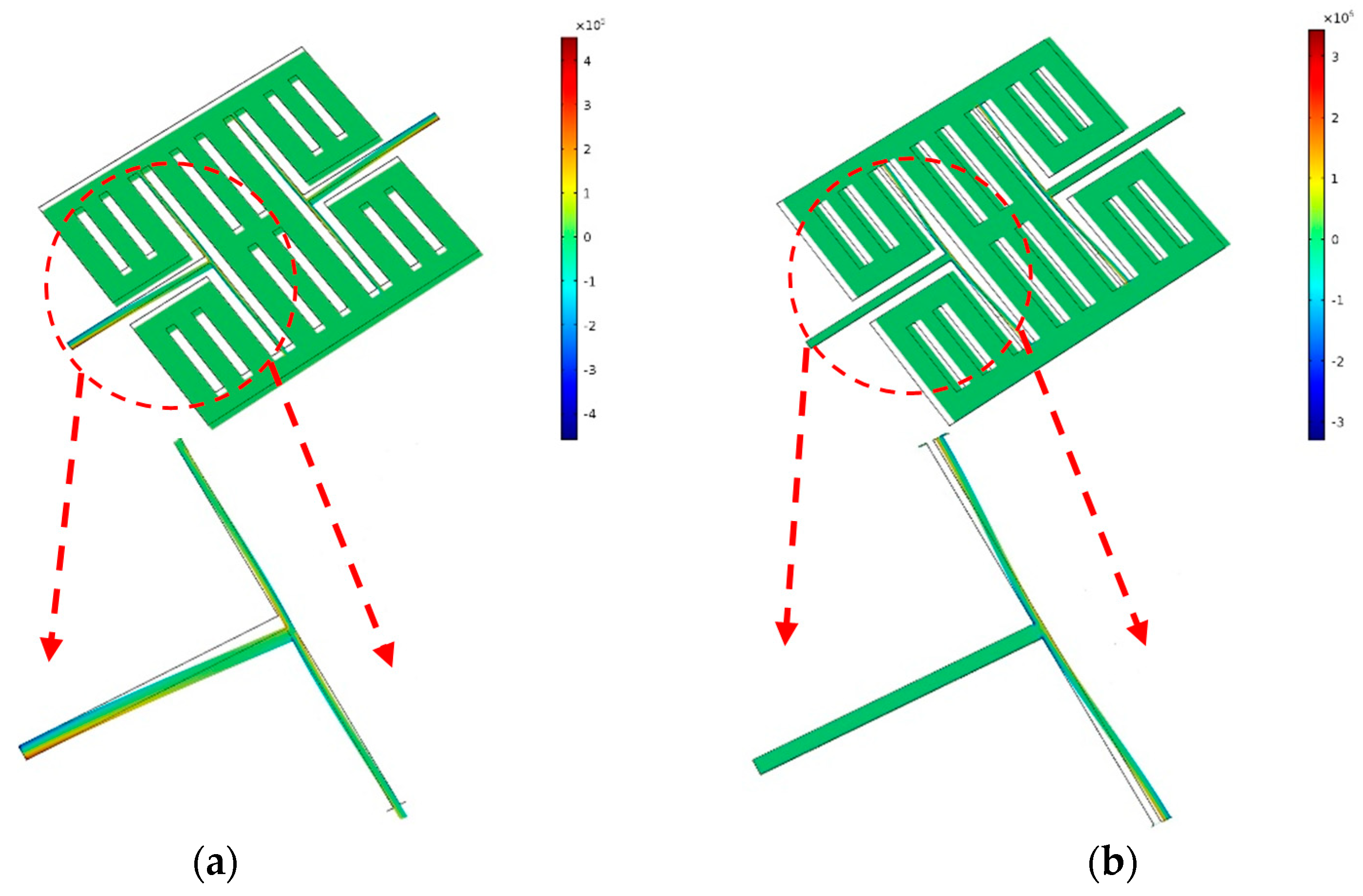
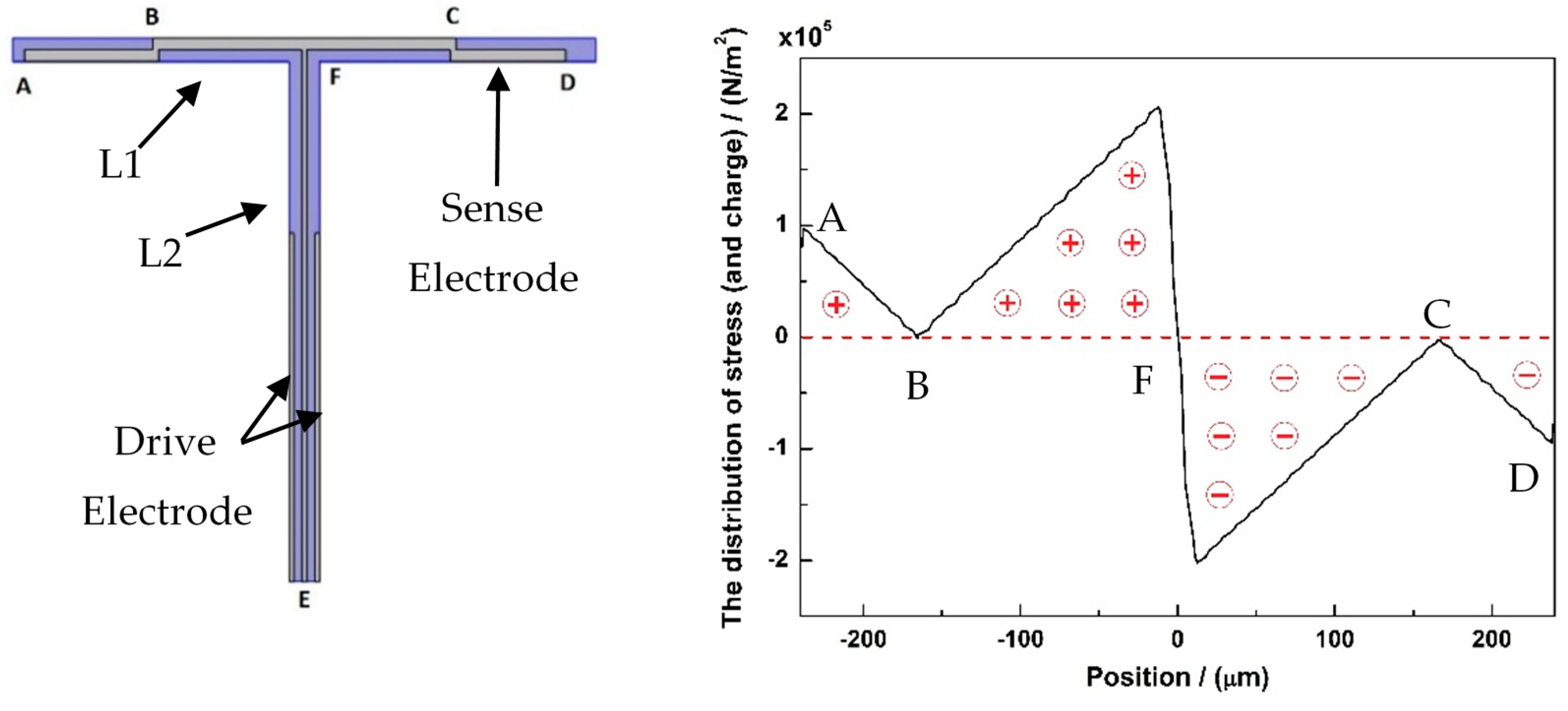
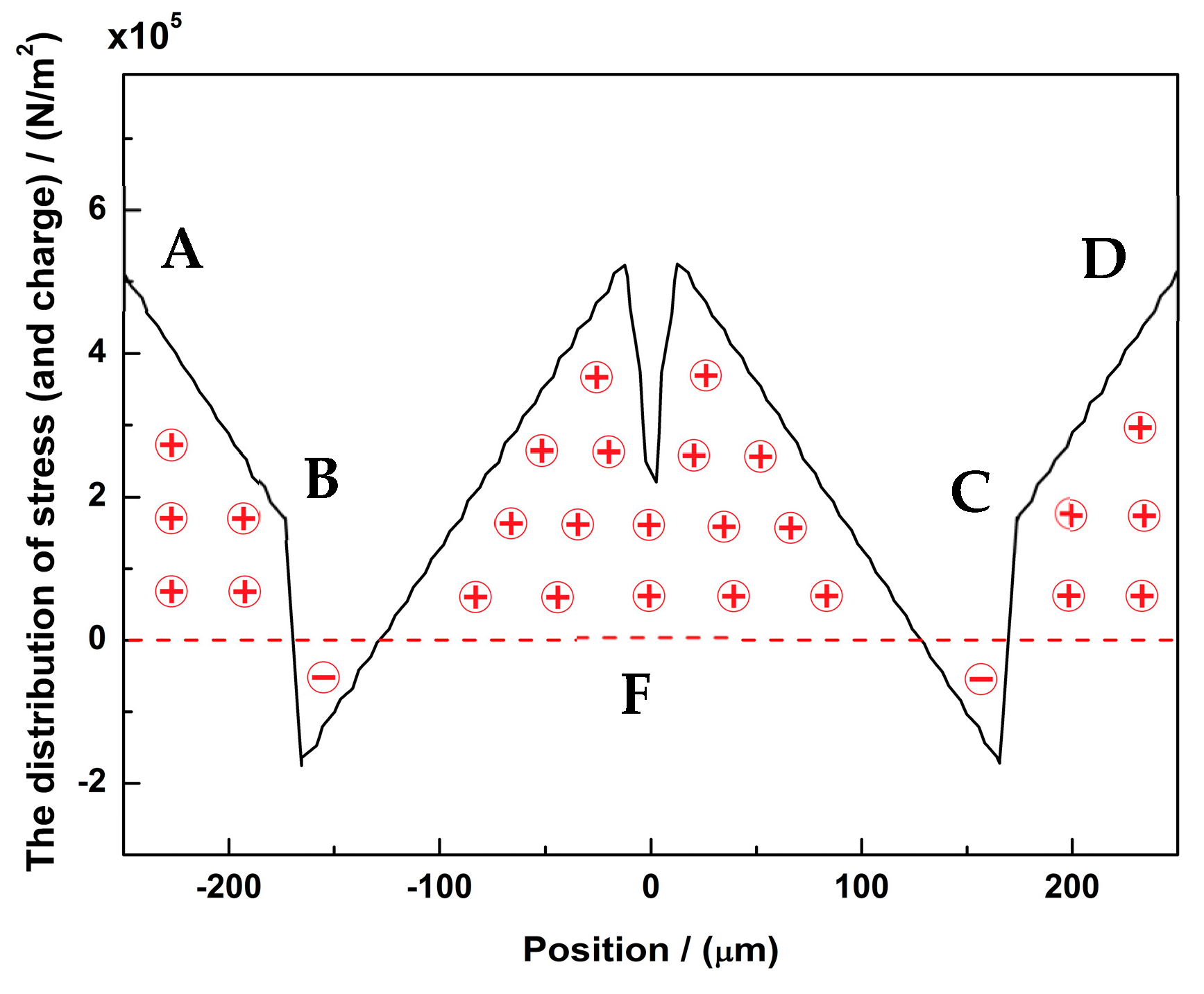
This paper reports a novel design for the decoupling of microelectromechanical systems (MEMS) gyroscopes. The MEMS gyroscope is based on piezoelectric aluminum nitride (AlN) film, and the main structure is a mass hung by T-shape beams. A pair of parallel drive electrodes are symmetrically placed on the surface of the vertical bar for driving the oscillating mass. A serpentine sense electrode is placed on the lateral bar. When the gyroscope is oscillating in drive mode, charges with equal quantity and opposite sign will be polarized and distributed symmetrically along the lateral bar. These charges neutralize each other at the sense electrode. Therefore, no coupling signals can be detected from the sense electrode. This design can realize the decoupling between the drive mode and sense mode. In this work, the T-shape decoupled structure was designed as the key component of an AlN piezoelectric gyroscope and the whole structure was simulated by COMSOL Multiphysics 5.2a. The working principle of the decoupling is described in detail. Electrical properties were characterized by the dynamic signal analyzer. According to the test results, the drive mode and the sense mode are decoupled. The coefficient of orthogonal coupling is 1.55%.
Keywords: aluminum nitride; microelectromechanical systems (MEMS); gyroscope; piezoelectric effect; orthogonal coupling aluminum nitride; microelectromechanical systems (MEMS); gyroscope; piezoelectric effect; orthogonal coupling