Beneficial Effects of Fisetin, a Senotherapeutic Compound, in Women’s Reproductive Health and Diseases: Evidence from In Vitro to Clinical Studies

 , and
, and
Abstract
1. Introduction
2. Methods
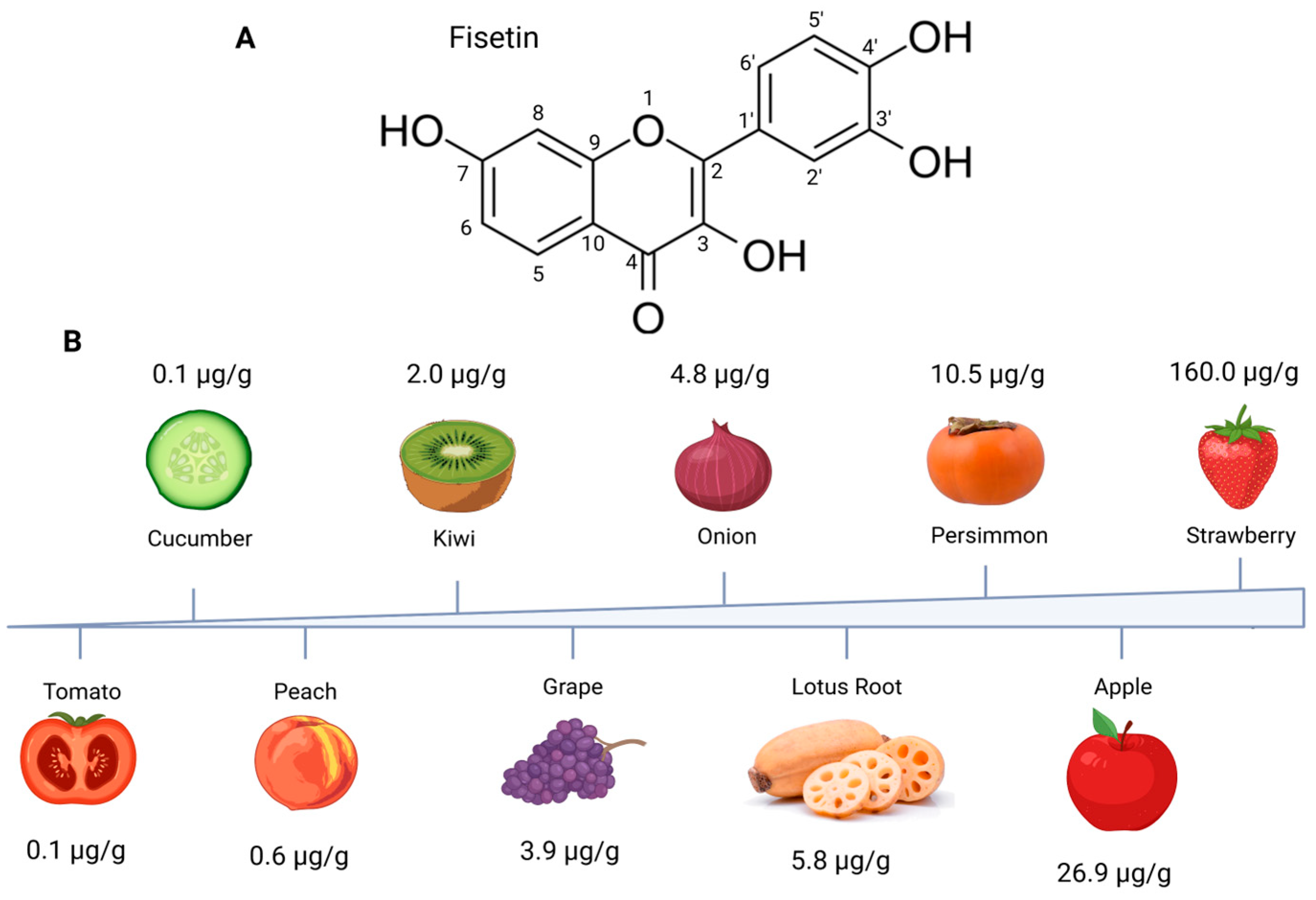
3. Overview of Fisetin
3.1. Pharmacokinetics of Fisetin
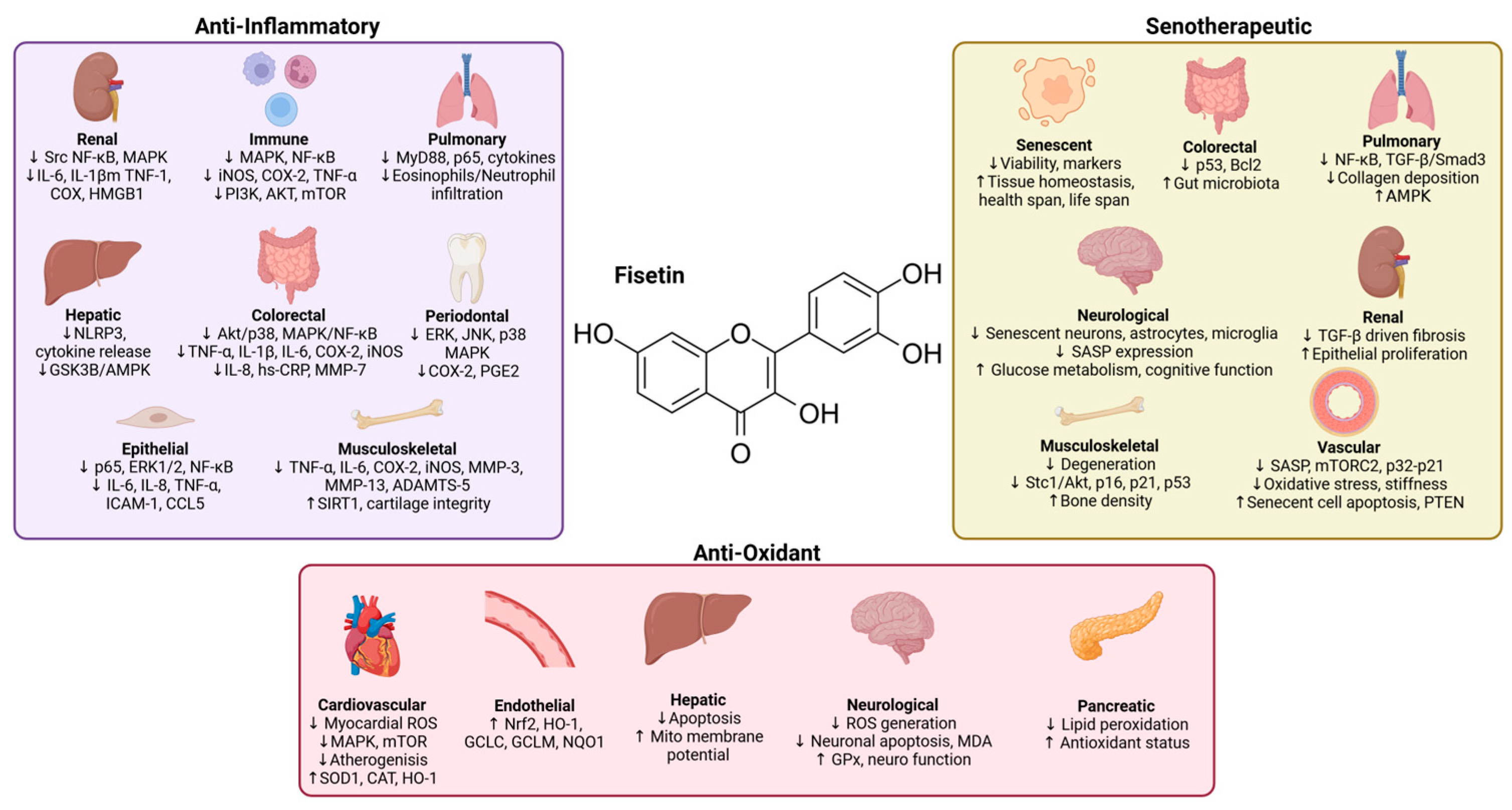
3.2. Antioxidant Properties of Fisetin
3.3. Anti-Inflammatory Properties of Fisetin
3.4. Senotherapeutic Properties of Fisetin
3.4.1. Senolytic Effects
3.4.2. Senomorphic Effects
3.4.3. Preventive and Anti-Aging Effects
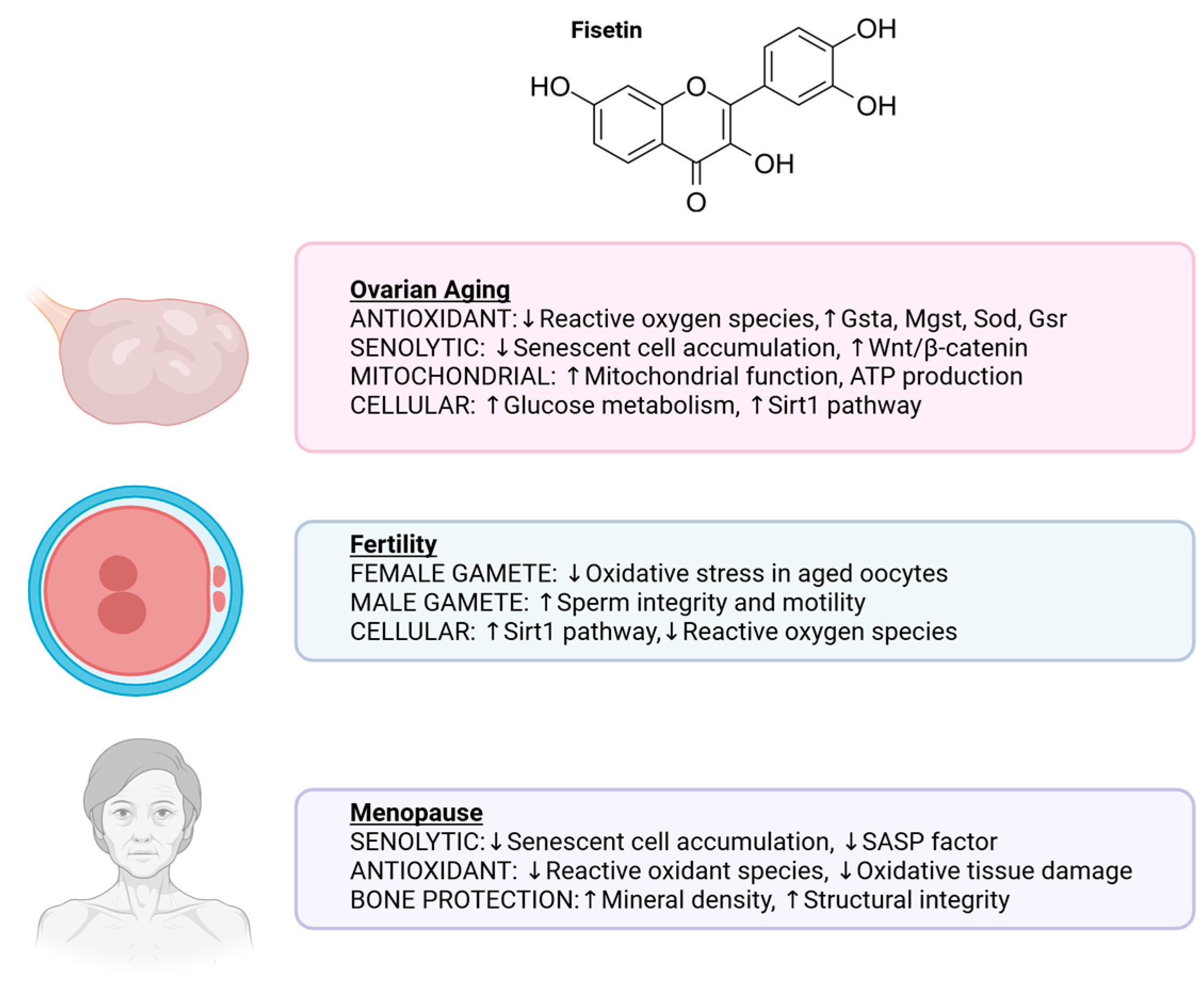
4. Role of Fisetin in Women’s Reproductive Health
4.1. Ovarian Aging
4.2. Fertility
4.3. Menopause
5. Role of Fisetin in Benign Gynecological Diseases
5.1. Endometriosis

| Condition | Study (Year) | Biological Model | Fisetin Doses Used | Key Findings |
|---|---|---|---|---|
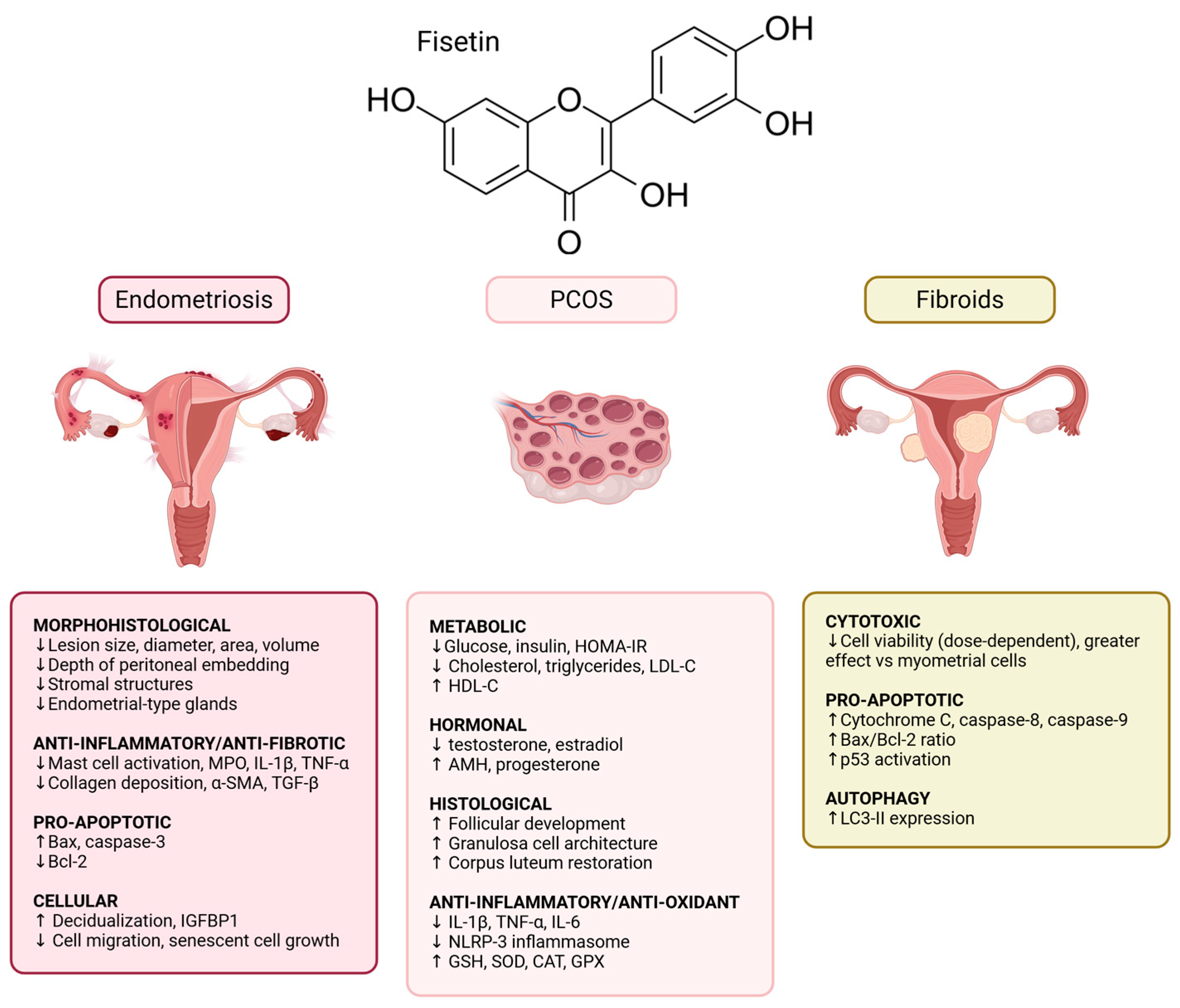
| ENDOMETRIOSIS | Arangia et al. [20] | Female Sprague Dawley rats (250 g) with induced endometriosis (intraperitoneal injection of uterine fragments) | 40 mg/kg for 7 days (oral gavage) | Morphological: No change in cyst number; ↓ lesion size, diameter, area, volume; ↓ depth of peritoneal embedding Histological: ↓ stromal structures, endometrial-type glands Inflammatory: ↓ mast cell activation (reduced chymase and tryptase staining), ↓ NLRP3, ASC, cleaved caspase-1, ↓ NF-κB, ↓ IL-1β, TNF-α Oxidative stress: ↓ PAR positive expression, ↓ nitrotyrosine expression, ↓ MDA levels Fibrotic: ↓ collagen, α-SMA, TGF-β Apoptotic: ↑ TUNEL+ cells, Bax, caspase-3; ↓ Bcl-2 |
| Delenko et al. [121] | Primary culture of human endometrial stromal cells isolated from menstrual effluent | 0, 25 μM, 50 μM | Decidualization: ↑ IGFBP1 protein levels Migration: ↓ cell migration at 25 μM (wound closure assay) Senescence: ↓ NanoJaggs accumulation Safety: Non-toxic at tested concentrations Molecular: ↓ AKT, PRAS40, ERK1, ERK2 phosphorylation on Western blots | |
| UTERINE FIBROIDS | Lee et al. [29] | Primary culture of human leiomyoma and myometrial cells from patients undergoing hysterectomy | 0, 5, 10, 20, 40, 60, 80, 100 μM | Cytotoxicity: Dose-dependent reduction in leiomyoma and myometrial cell viability as seen on MTT assay Selectivity: Greater fold change in apoptosis in leiomyoma vs. myometrial cells starting at 20 μM In leiomyoma cells on Western blots: 1. Intrinsic and extrinsic apoptosis: Bcl-2, Bax, cytochrome c, Apaf-1, caspase-3, caspase-6, caspase-8, caspase-9, PARP 2. p53-mediated pathway: p-p53, p-Cyclin B1 3. MAPK pathway: p-p38, p-ERK, p-JNK 4. Autophagy: Beclin-1, Atg7, LC3-I, LC3-II, total mTOR, Akt, p-mTOR, p-Akt |
| POLYCYSTIC OVARY SYNDROME (PCOS) | Moustafa et al. [122] | Wistar adult female rats with letrozole-induced PCOS (1 mg/kg/day for 21 days) | 1.25 mg/kg, 2.5 mg/kg oral administration for 14 days following PCOS induction | Metabolic: ↓ serum total cholesterol, serum insulin, serum glucose, HOMA-IR Hormonal: ↓ LH, FSH; ↑ AMH Histological: Normalized follicular development, granulosa cell architecture, presence of corpus luteum restoration Anti-inflammatory: ↓ ovarian IL-1β, NF-κBp65 Antioxidant: ↓ Nrf2 gene expression |
| Chahal et al. [123] | Sprague Dawley rats (9–12 weeks) with mifepristone-induced PCOS (20 mg/kg/day orally for 13 days) | 20 mg/kg (low dose), 40 mg/kg (high dose) fisetin PO after induction for 21 days | Anthropometric: ↓ body weight Metabolic: ↓ fasting blood glucose, fasting insulin, HOMA-IR Hormonal: ↓ testosterone, estradiol, LH; ↑ progesterone, FSH (dose-dependent) Histopathological: ↓ count and size of cyst follicles; healthy developing follicles with oocyte and well-defined granulosa cells Anti-inflammatory: ↓ TNF-α, IL-6 Antioxidant: ↑ GSH, SOD | |
| Mihanfar et al. [28] | Wistar female rats (42-day-old) with letrozole-induced PCOS (1 mg/kg orally for 21 days) | 10 mg/kg oral dose after induction for one month | Anthropometric: ↓ final body weight, ovary weight Histomorphological: ↓ number of cystic follicles, restoration of corpus luteum Hormonal: ↓ testosterone; ↑ estradiol, progesterone Metabolic: ↓ serum fasting glucose, HOMA-IR, cholesterol, triglyceride, LDL-C, HDL-C Antioxidant: ↑ CAT, SOD, GPX Molecular: ↑ SIRT1 mRNA levels, p-AMPK protein expression, ovarian SIRT1 protein expression; ↓ CYP17A1 mRNA levels, CYP17A1 protein expression | |
| OVARIAN CANCER | Liu et al. [30] | Human ovarian cancer cell lines A2780 and OVCAR-3 | 0, 25, 50, 100 μM | Cytotoxicity: ↓ cell proliferation (dose-dependent), ↓ proportion of viable cells (MTT assay, AV/PI staining followed by flow cytometry) Apoptosis: ↓ cytochrome C mitochondrial RNA Necroptosis: ↑ ZBP1, RIP3, MLKL protein expression (when combined with z-VAD pan-caspase inhibitor) |
| Carmi et al. [124] | Human ovarian cancer cells (A2780) co-cultured with HS-5 to confer platinum resistance | 10 μM | Platinum resistance: Restored sensitivity to platinum prodrug RJY13 as evidenced by cleaved PARP protein in A2780 cells Molecular: ↑ ERK1/2 phosphorylation and activation | |
| Jafarzadeh et al. [125] | Human ovarian cancer cell line A2780 | 0, 50, 75, 100 μg/mL (combined with cisplatin 0.1 or 0.5 μg/mL) | Synergy: Enhanced cisplatin efficacy at all dose combinations on MTT assay; ↓ proportion of viable cells even when cisplatin used below its IC50 of 0.75 μg/mL | |
| Xiao et al. [126] | In vitro: SKOV3 human ovarian cancer cell line In vivo: SKOV3 xenograft mouse model in BALB/c athymic nude mice | In vitro: 10, 30, 100, 300 μmol/L (both fisetin and fisetin micelles) In vivo: 50, 100 mg/kg (both fisetin and fisetin micelles) intraperitoneal injection for 4 weeks, 4 consecutive days per week | In vitro: Superior cytotoxicity and enhanced apoptosis induction with polymeric micelle encapsulation; fisetin IC50: 61.2 μM, TGI: 34.8%; fisetin micelles IC50: 48.2 μM, TGI: 48.7% In vivo: Fisetin (50 mg/kg) led to 53.6% tumor growth inhibition; fisetin micelles reached 70.7% inhibition after 21 days; ↓ tumor size and weight | |
| CERVICAL CANCER | Afroze et al. [21] | In vitro: HeLa human cervical cancer cell line | In vitro: 0, 50 μM for 48 h | Proliferation: ↓ cellular proliferation in dose- and time-dependent manner Apoptosis: Induced via intrinsic (↑ BAX, BAK1, caspase-9, APAF1; ↓ BCL-2) and extrinsic pathways (↑ FAS, FASL, TNF-family ligands, caspase-8) Anti-inflammatory: ↓ proinflammatory cytokines (IL-1 family, IL-4, IL-11) and chemokines (MCP-1, MIP-1β) Molecular: ↓ MAPK and PI3K/AKT/mTOR pathways; ↑ ATM, ATF2, VHL, and p53 activation |
| Ying et al. [127] | In vitro: HeLa human cervical cancer cell line In vivo: HeLa xenograft in immunodeficient nude mice (BALB/c nu/nu male mice, 5–6 weeks old, 18–22 g) | In vitro: 0, 20, 40, 80 μM In vivo: 2 mg/kg or 4 mg/kg body weight intraperitoneal injection twice weekly for 35 days | Cytotoxicity: Dose-dependently and time-dependently ↓ cellular viability; IC50 of 52 ± 0.9 μM (24 h), 36 ± 0.5 μM (48 h) Molecular: Sustained activation of ERK1/2 phosphorylation mediating fisetin-induced apoptosis In vivo: ↓ growth rate of tumors compared with control group (p < 0.05), with inhibition rates of 82.65% and 92.62% for 2 mg/kg and 4 mg/kg | |
| Chou et al. [128] | Human cervical adenocarcinoma SiHa and CaSki cells | 0, 10, 20, 40 μM for 48 h | Anti-metastatic: ↓ motility and invasiveness in concentration-dependent manner at non-toxic concentrations at 20 and 40 μM Molecular: Dephosphorylation of p38 MAPK, disruption of NF-κB nuclear translocation, repression of uPA gene expression | |
| Lin et al. [129] | In vitro: HeLa human cervical cancer cell line In vivo: HeLa xenografts in BALB/c (5-week-old) female mice | In vitro: 40 μM fisetin + sorafenib (2.5 or 5 μM) In vivo: 4 mg/kg fisetin and 10 mg/kg sorafenib orally two times per week | Synergistic effect: Combined treatment significantly ↓ cell viability compared to each agent alone (p < 0.01) In vivo: ↓ subcutaneous tumor volume in combination group vs. other groups (p < 0.01) Molecular: Combined treatment upregulated DR5, activation of caspase-8 and caspase-3, ↑ Bax/Bcl-2 ratio |
5.2. Uterine Fibroids
5.3. Polycystic Ovary Syndrome (PCOS)
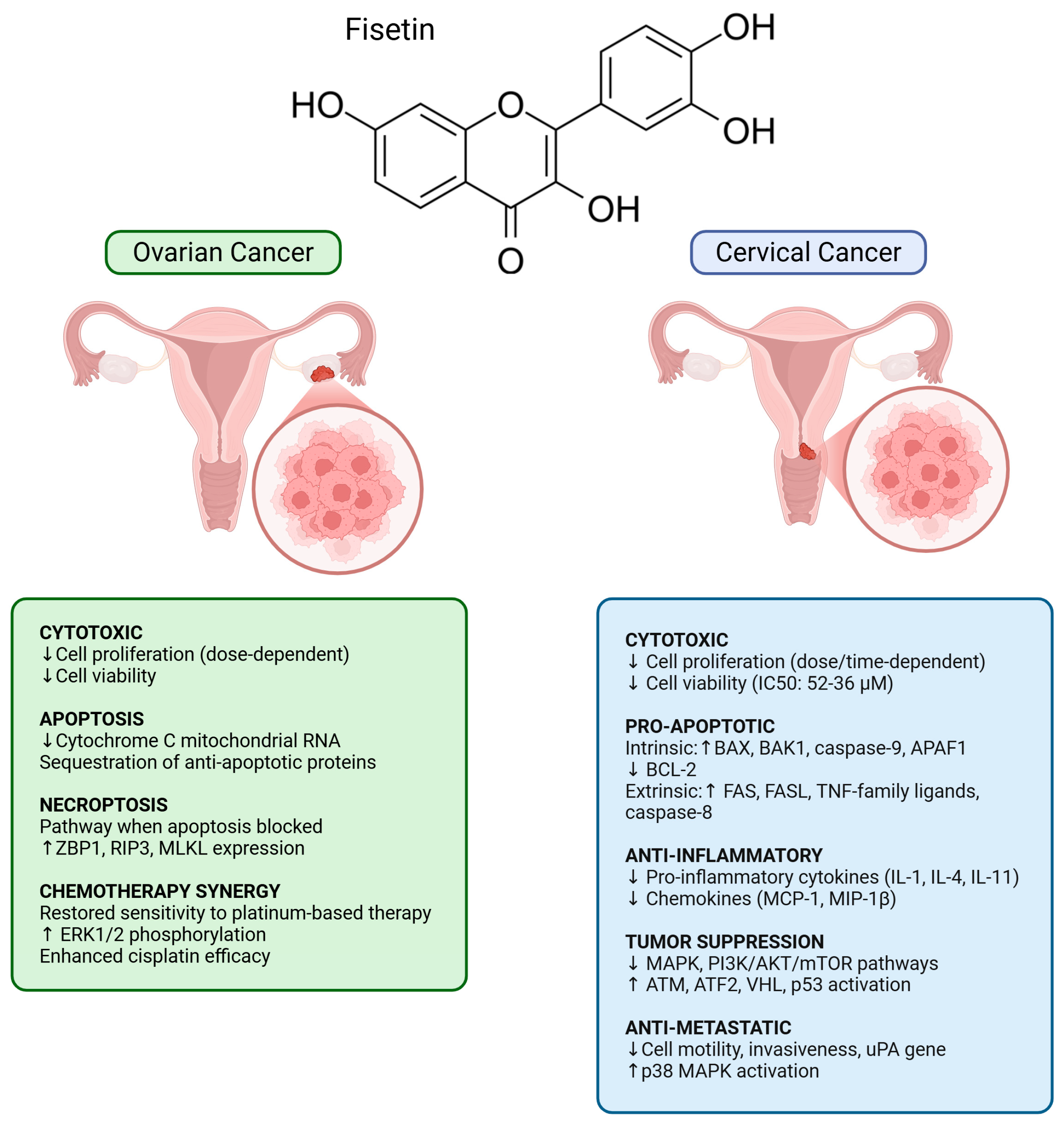
6. Role of Fisetin in Malignant Gynecological Diseases
6.1. Ovarian Cancer
6.2. Cervical Cancer
7. Clinical Trials of Fisetin
8. Limitations
9. Conclusions and Future Perspectives
Author Contributions
Funding
Data Availability Statement
Conflicts of Interest
Abbreviations
| AUC | Area Under the Curve |
| CAT | Catalase |
| FOXO3 | Forkhead Box O3 |
| GSH | Glutathione |
| GPX | Glutathione Peroxidase |
| HPV | Human Papillomavirus |
| LC3-II | Light Chain 3-II |
| LPS | Lipopolysaccharide |
| NOX1 | NADPH Oxidase 1 |
| PCOS | Polycystic Ovarian Syndrome |
| ROS | Reactive Oxygen Species |
| SAR | Structure–Activity Relationship |
| SASP | Senescence-Associated Secretory Phenotype |
| SNEDDSs | Self-Nanoemulsifying Systems |
| SPPB | Short Physical Performance Battery |
| SOD | Superoxide Dismutase |
| uPA | Urokinase-type Plasminogen Activator |
| 6MWD | 6 min Walk Distance |
References
- Falcone, T.; Flyckt, R. Clinical management of endometriosis. Obstet. Gynecol. 2018, 131, 557–571. [Google Scholar] [CrossRef] [PubMed]
- Stewart, E.A.; Cookson, C.; Gandolfo, R.A.; Schulze-Rath, R. Epidemiology of uterine fibroids: A systematic review. BJOG Int. J. Obstet. Gynaecol. 2017, 124, 1501–1512. [Google Scholar] [CrossRef] [PubMed]
- Palomba, S.; Santagni, S.; Falbo, A.; La Sala, G.B. Complications and challenges associated with polycystic ovary syndrome: Current perspectives. Int. J. Women’s Health 2015, 7, 745–763. [Google Scholar] [CrossRef] [PubMed]
- Siegel, R.L.; Miller, K.D.; Jemal, A. Cancer statistics, 2018. CA Cancer J. Clin. 2018, 68, 7–30. [Google Scholar] [CrossRef]
- Islam, M.S.; Afrin, S.; Jones, S.I.; Segars, J. Selective progesterone receptor modulators—Mechanisms and therapeutic utility. Endocr. Rev. 2020, 41, bnaa012. [Google Scholar] [CrossRef]
- Wekker, V.; Van Dammen, L.; Koning, A.; Heida, K.Y.; Painter, R.C.; Limpens, J.; Laven, J.S.E.; Roeters van Lennep, J.E.; Roseboom, T.J.; Hoek, A. Long-term cardiometabolic disease risk in women with PCOS: A systematic review and meta-analysis. Hum. Reprod. Update 2020, 26, 942–960. [Google Scholar] [CrossRef]
- Yin, X.; Ji, Y.; Chan, C.L.W.; Chan, C.H.Y. The mental health of women with polycystic ovary syndrome: A systematic review and meta-analysis. Arch. Women’s Ment. Health 2021, 24, 11–27. [Google Scholar] [CrossRef]
- Go, V.A.A.; Thomas, M.C.; Singh, B.; Prenatt, S.; Sims, H.; Blanck, J.F.; Segars, J.H. A systematic review of the psychosocial impact of fibroids before and after treatment. Am. J. Obstet. Gynecol. 2020, 223, 674–708.e8. [Google Scholar] [CrossRef]
- Al-Hendy, A.; Myers, E.R.; Stewart, E. Uterine fibroids: Burden and unmet medical need. Semin. Reprod. Med. 2017, 35, 473–480. [Google Scholar] [CrossRef]
- Kuroki, L.; Guntupalli, S.R. Treatment of epithelial ovarian cancer. BMJ 2020, 371, m3773. [Google Scholar] [CrossRef]
- Christ, J.P.; Cedars, M.I. Current guidelines for diagnosing PCOS. Diagnostics 2023, 13, 1113. [Google Scholar] [CrossRef] [PubMed]
- Ramos-Nino, M.E. Non-Hormonal strategies in endometriosis: Targets with future clinical potential. J. Clin. Med. 2025, 14, 5091. [Google Scholar] [CrossRef] [PubMed]
- Islam, M.S.; Parish, M.; Brennan, J.T.; Winer, B.L.; Segars, J.H. Targeting fibrotic signaling pathways by EGCG as a therapeutic strategy for uterine fibroids. Sci. Rep. 2023, 13, 8492. [Google Scholar] [CrossRef] [PubMed]
- Parish, M.; Massoud, G.; Hazimeh, D.; Segars, J.; Islam, M.S. Green Tea in Reproductive cancers: Could Treatment be as simple? Cancers 2023, 15, 862. [Google Scholar] [CrossRef]
- Hazimeh, D.; Massoud, G.; Parish, M.; Singh, B.; Segars, J.; Islam, M.S. Green tea and benign gynecologic disorders: A new trick for an old beverage? Nutrients 2023, 15, 1439. [Google Scholar] [CrossRef]
- Li, W.; Qin, L.; Feng, R.; Hu, G.; Sun, H.; He, Y.; Zhang, R. Emerging senolytic agents derived from natural products. Mech. Ageing Dev. 2019, 181, 1–6. [Google Scholar] [CrossRef]
- Arai, Y.; Watanabe, S.; Kimira, M.; Shimoi, K.; Mochizuki, R.; Kinae, N. Dietary intakes of flavonols, flavones and isoflavones by Japanese women and the inverse correlation between quercetin intake and plasma LDL cholesterol concentration. J. Nutr. 2000, 130, 2243–2250. [Google Scholar] [CrossRef]
- Park, H.-H.; Lee, S.; Oh, J.-M.; Lee, M.-S.; Yoon, K.-H.; Park, B.H.; Kim, J.W.; Song, H.; Kim, S.-H. Anti-inflammatory activity of fisetin in human mast cells (HMC-1). Pharmacol. Res. 2007, 55, 31–37. [Google Scholar] [CrossRef]
- Dong, B.; Liu, C.; Xue, R.; Wang, Y.; Sun, Y.; Liang, Z.; Fan, W.; Jiang, J.; Zhao, J.; Su, Q.; et al. Fisetin inhibits cardiac hypertrophy by suppressing oxidative stress. J. Nutr. Biochem. 2018, 62, 221–229. [Google Scholar] [CrossRef]
- Arangia, A.; Marino, Y.; Fusco, R.; Siracusa, R.; Cordaro, M.; D’Amico, R.; Macrì, F.; Raffone, E.; Impellizzeri, D.; Cuzzocrea, S.; et al. Fisetin, a natural polyphenol, ameliorates endometriosis modulating mast cells derived NLRP-3 inflammasome pathway and oxidative stress. Int. J. Mol. Sci. 2023, 24, 5076. [Google Scholar] [CrossRef]
- Afroze, N.; Pramodh, S.; Shafarin, J.; Bajbouj, K.; Hamad, M.; Sundaram, M.K.; Haque, S.; Hussain, A. Fisetin deters cell proliferation, induces apoptosis, alleviates oxidative stress and inflammation in human cancer cells, HeLa. Int. J. Mol. Sci. 2022, 23, 1707. [Google Scholar] [CrossRef]
- Zhu, Y.; Doornebal, E.J.; Pirtskhalava, T.; Giorgadze, N.; Wentworth, M.; Fuhrmann-Stroissnigg, H.; Niedernhofer, L.J.; Robbins, P.D.; Tchkonia, T.; Kirkland, J.L. New agents that target senescent cells: The flavone, fisetin, and the BCL-XL inhibitors, A1331852 and A1155463. Aging 2017, 9, 955–963. [Google Scholar] [CrossRef] [PubMed]
- Tavenier, J.; Nehlin, J.O.; Houlind, M.B.; Rasmussen, L.J.; Tchkonia, T.; Kirkland, J.L.; Andersen, O.; Rasmussen, L.J.H. Fisetin as a senotherapeutic agent: Evidence and perspectives for age-related diseases. Mech. Ageing Dev. 2024, 222, 111995. [Google Scholar] [CrossRef] [PubMed]
- Wu, J.; Liu, Y.; Song, Y.; Wang, L.; Ai, J.; Li, K. Aging conundrum: A perspective for ovarian aging. Front. Endocrinol. 2022, 13, 952471. [Google Scholar] [CrossRef] [PubMed]
- Fu, Y.; Cao, Y.; Yan, Y.; Huang, S.; Li, S.; Huang, Y.; Wang, Z.; Gao, L.; Xiao, C. An in-depth overview of the molecular mechanisms governing ovarian aging and the corresponding preventative and therapeutic strategies. Aging Res. 2024, 2, 9340023. [Google Scholar] [CrossRef]
- Kirchner, V.A.; Badshah, J.S.; Hong, S.K.; Martinez, O.; Pruett, T.L.; Niedernhofer, L.J. Effect of cellular senescence in disease progression and transplantation: Immune cells and solid organs. Transplantation 2024, 108, 1509–1523. [Google Scholar] [CrossRef]
- Islam, M.S.; Ciavattini, A.; Petraglia, F.; Castellucci, M.; Ciarmela, P. Extracellular matrix in uterine leiomyoma pathogenesis: A potential target for future therapeutics. Hum. Reprod. Update 2018, 24, 59–85. [Google Scholar] [CrossRef]
- Mihanfar, A.; Nouri, M.; Roshangar, L.; Khadem-Ansari, M.H. Ameliorative effects of fisetin in letrozole-induced rat model of polycystic ovary syndrome. J. Steroid Biochem. Mol. Biol. 2021, 213, 105954. [Google Scholar] [CrossRef]
- Lee, J.-W.; Choi, H.J.; Kim, E.-J.; Hwang, W.Y.; Jung, M.-H.; Kim, K.S. Fisetin induces apoptosis in uterine leiomyomas through multiple pathways. Sci. Rep. 2020, 10, 7993. [Google Scholar] [CrossRef]
- Liu, Y.; Cao, H.; Zhao, Y.; Shan, L.; Lan, S. Fisetin-induced cell death in human ovarian cancer cell lines via zbp1-mediated necroptosis. J. Ovarian Res. 2022, 15, 57. [Google Scholar] [CrossRef]
- Herzig, J. Studien über Quercetin und seine Derivate: VII. Abhandlung. Monatshefte Chem. Verwandte Teile Anderer Wiss. 1891, 12, 177–190. [Google Scholar] [CrossRef]
- Kostanecki, S.V.; Lampe, V.; Tambor, J. Synthese des fisetins. Berichte Dtsch. Chem. Ges. 1904, 37, 784–791. [Google Scholar] [CrossRef]
- Lee, S.-O.; Kim, S.-J.; Kim, J.-S.; Ji, H.; Lee, E.-O.; Lee, H.-J. Comparison of the main components and bioactivity of Rhus verniciflua Stokes extracts by different detoxification processing methods. BMC Complement. Altern. Med. 2018, 18, 242. [Google Scholar] [CrossRef]
- Huang, M.-C.; Hsueh, T.Y.; Cheng, Y.-Y.; Lin, L.-C.; Tsai, T.-H. Pharmacokinetics and biliary excretion of fisetin in rats. J. Agric. Food Chem. 2018, 66, 6300–6307. [Google Scholar] [CrossRef] [PubMed]
- Zhang, X.; Yin, J.; Liang, C.; Sun, Y.; Zhang, L. UHPLC-Q-TOF-MS/MS method based on four-step strategy for metabolism study of fisetin in vitro and in vivo. J. Agric. Food Chem. 2017, 65, 10959–10972. [Google Scholar] [CrossRef] [PubMed]
- Jo, J.H.; Jo, J.J.; Lee, J.-M.; Lee, S. Identification of absolute conversion to geraldol from fisetin and pharmacokinetics in mouse. J. Chromatogr. B 2016, 1038, 95–100. [Google Scholar] [CrossRef]
- Touil, Y.S.; Auzeil, N.; Boulinguez, F.; Saighi, H.; Regazzetti, A.; Scherman, D.; Chabot, G.G. Fisetin disposition and metabolism in mice: Identification of geraldol as an active metabolite. Biochem. Pharmacol. 2011, 82, 1731–1739. [Google Scholar] [CrossRef]
- Seguin, J.; Brullé, L.; Boyer, R.; Lu, Y.M.; Romano, M.R.; Touil, Y.S.; Scherman, D.; Bessodes, M.; Mignet, N.; Chabot, G.G. Liposomal encapsulation of the natural flavonoid fisetin improves bioavailability and antitumor efficacy. Int. J. Pharm. 2013, 444, 146–154. [Google Scholar] [CrossRef]
- Ragelle, H.; Crauste-Manciet, S.; Seguin, J.; Brossard, D.; Scherman, D.; Arnaud, P.; Chabot, G.G. Nanoemulsion formulation of fisetin improves bioavailability and antitumour activity in mice. Int. J. Pharm. 2012, 427, 452–459. [Google Scholar] [CrossRef]
- Bothiraja, C.; Yojana, B.D.; Pawar, A.P.; Shaikh, K.S.; Thorat, U.H. Fisetin-loaded nanocochleates: Formulation, characterisation, in vitro anticancer testing, bioavailability and biodistribution study. Expert Opin. Drug Deliv. 2014, 11, 17–29. [Google Scholar] [CrossRef]
- Liu, W.-Y.; Lin, C.-C.; Hsieh, Y.-S.; Wu, Y.-T. Nanoformulation development to improve the biopharmaceutical properties of fisetin using design of experiment approach. Molecules 2021, 26, 3031. [Google Scholar] [CrossRef]
- Kumar, R.; Kumar, R.; Khurana, N.; Singh, S.K.; Khurana, S.; Verma, S.; Sharma, N.; Kapoor, B.; Vyas, M.; Khursheed, R.; et al. Enhanced oral bioavailability and neuroprotective effect of fisetin through its SNEDDS against rotenone-induced Parkinson’s disease rat model. Food Chem. Toxicol. 2020, 144, 111590. [Google Scholar] [CrossRef] [PubMed]
- Krishnakumar, I.M.; Jaja-Chimedza, A.; Joseph, A.; Balakrishnan, A.; Maliakel, B.; Swick, A. Enhanced bioavailability and pharmacokinetics of a novel hybrid-hydrogel formulation of fisetin orally administered in healthy individuals: A randomised double-blinded comparative crossover study. J. Nutr. Sci. 2022, 11, e74. [Google Scholar] [CrossRef] [PubMed]
- Markovic, Z.S.; Mentus, S.V.; Dimitrić Marković, J.M. Electrochemical and density functional theory study on the reactivity of fisetin and its radicals: Implications on in vitro antioxidant activity. J. Phys. Chem. A 2009, 113, 14170–14179. [Google Scholar] [CrossRef] [PubMed]
- Ishige, K.; Schubert, D.; Sagara, Y. Flavonoids protect neuronal cells from oxidative stress by three distinct mechanisms. Free Radic. Biol. Med. 2001, 30, 433–446. [Google Scholar] [CrossRef]
- Lee, S.E.; Jeong, S.I.; Yang, H.; Park, C.S.; Jin, Y.H.; Park, Y.S. Fisetin induces Nrf2-mediated HO-1 expression through PKC-δ and p38 in human umbilical vein endothelial cells. J. Cell. Biochem. 2011, 112, 2352–2360. [Google Scholar] [CrossRef]
- Zhang, H.; Zheng, W.; Feng, X.; Yang, F.; Qin, H.; Wu, S.; Hou, D.-X.; Chen, J. Nrf2–ARE signaling acts as master pathway for the cellular antioxidant activity of fisetin. Molecules 2019, 24, 708. [Google Scholar] [CrossRef]
- Prasath, G.S.; Sundaram, C.S.; Subramanian, S.P. Fisetin averts oxidative stress in pancreatic tissues of streptozotocin-induced diabetic rats. Endocrine 2013, 44, 359–368. [Google Scholar] [CrossRef]
- Zhang, L.; Wang, H.; Zhou, Y.; Zhu, Y.; Fei, M. Fisetin alleviates oxidative stress after traumatic brain injury via the Nrf2-ARE pathway. Neurochem. Int. 2018, 118, 304–313. [Google Scholar] [CrossRef]
- Piao, M.J.; Kim, K.C.; Chae, S.; Keum, Y.S.; Kim, H.S.; Hyun, J.W. Protective effect of fisetin (3,7,3′,4′-tetrahydroxyflavone) against γ-irradiation-induced oxidative stress and cell damage. Biomol. Ther. 2013, 21, 210–215. [Google Scholar] [CrossRef]
- Lian, T.-W.; Wang, L.; Lo, Y.-H.; Huang, I.-J.; Wu, M.-J. Fisetin, morin and myricetin attenuate CD36 expression and oxLDL uptake in U937-derived macrophages. Biochim. Biophys. Acta (BBA)-Mol. Cell Biol. Lipids 2008, 1781, 601–609. [Google Scholar] [CrossRef]
- Burda, S.; Oleszek, W. Antioxidant and antiradical activities of flavonoids. J. Agric. Food Chem. 2001, 49, 2774–2779. [Google Scholar] [CrossRef]
- Firuzi, O.; Lacanna, A.; Petrucci, R.; Marrosu, G.; Saso, L. Evaluation of the antioxidant activity of flavonoids by “ferric reducing antioxidant power” assay and cyclic voltammetry. Biochim. Biophys. Acta (BBA)-Gen. Subj. 2005, 1721, 174–184. [Google Scholar] [CrossRef]
- Kim, S.-C.; Kang, S.-H.; Jeong, S.-J.; Kim, S.-H.; Ko, H.S.; Kim, S.-H. Inhibition of c-Jun N-terminal kinase and nuclear factor κ B pathways mediates fisetin-exerted anti-inflammatory activity in lipopolysccharide-treated RAW264.7 cells. Immunopharmacol. Immunotoxicol. 2012, 34, 645–650. [Google Scholar] [CrossRef] [PubMed]
- Kim, J.H.; Kim, M.-Y.; Kim, J.-H.; Cho, J.Y. Fisetin suppresses macrophage-mediated inflammatory responses by blockade of Src and Syk. Biomol. Ther. 2015, 23, 414. [Google Scholar] [CrossRef] [PubMed]
- Zheng, L.T.; Ock, J.; Kwon, B.-M.; Suk, K. Suppressive effects of flavonoid fisetin on lipopolysaccharide-induced microglial activation and neurotoxicity. Int. Immunopharmacol. 2008, 8, 484–494. [Google Scholar] [CrossRef] [PubMed]
- Sun, Y.; Qin, H.; Zhang, H.; Feng, X.; Yang, L.; Hou, D.-X.; Chen, J. Fisetin inhibits inflammation and induces autophagy by mediating PI3K/AKT/mTOR signaling in LPS-induced RAW264.7 cells. Food Nutr. Res. 2021, 65, 6355. [Google Scholar] [CrossRef]
- Gutiérrez-Venegas, G.; Contreras-Sánchez, A.; Ventura-Arroyo, J.A. Anti-inflammatory activity of fisetin in human gingival fibroblasts treated with lipopolysaccharide. J. Asian Nat. Prod. Res. 2014, 16, 1009–1017. [Google Scholar] [CrossRef]
- Peng, H.-L.; Huang, W.-C.; Cheng, S.-C.; Liou, C.-J. Fisetin inhibits the generation of inflammatory mediators in interleukin-1β–induced human lung epithelial cells by suppressing the NF-κB and ERK1/2 pathways. Int. Immunopharmacol. 2018, 60, 202–210. [Google Scholar] [CrossRef]
- Wu, S.-J.; Huang, W.-C.; Cheng, C.-Y.; Wang, M.-C.; Cheng, S.-C.; Liou, C.-J. Fisetin suppresses the inflammatory response and oxidative stress in bronchial epithelial cells. Nutrients 2022, 14, 1841. [Google Scholar] [CrossRef]
- Kwak, S.; Ku, S.-K.; Bae, J.-S. Fisetin inhibits high-glucose-induced vascular inflammation in vitro and in vivo. Inflamm. Res. 2014, 63, 779–787. [Google Scholar] [CrossRef] [PubMed]
- Sahu, B.D.; Kumar, J.M.; Sistla, R. Fisetin, a dietary flavonoid, ameliorates experimental colitis in mice: Relevance of NF-κB signaling. J. Nutr. Biochem. 2016, 28, 171–182. [Google Scholar] [CrossRef] [PubMed]
- Huang, W.; Li, M.-L.; Xia, M.-Y.; Shao, J.-Y. Fisetin-treatment alleviates airway inflammation through inhbition of MyD88/NF-κB signaling pathway. Int. J. Mol. Med. 2018, 42, 208–218. [Google Scholar] [CrossRef] [PubMed]
- Goh, F.Y.; Upton, N.; Guan, S.; Cheng, C.; Shanmugam, M.K.; Sethi, G.; Leung, B.P.; Wong, W.F. Fisetin, a bioactive flavonol, attenuates allergic airway inflammation through negative regulation of NF-κB. Eur. J. Pharmacol. 2012, 679, 109–116. [Google Scholar] [CrossRef]
- Ren, Q.; Guo, F.; Tao, S.; Huang, R.; Ma, L.; Fu, P. Flavonoid fisetin alleviates kidney inflammation and apoptosis via inhibiting Src-mediated NF-κB p65 and MAPK signaling pathways in septic AKI mice. Biomed. Pharmacother. 2020, 122, 109772. [Google Scholar] [CrossRef]
- Pu, J.-L.; Huang, Z.-T.; Luo, Y.-H.; Mou, T.; Li, T.-T.; Li, Z.-T.; Wei, X.-F.; Wu, Z.-J. Fisetin mitigates hepatic ischemia-reperfusion injury by regulating GSK3β/AMPK/NLRP3 inflammasome pathway. Hepatobiliary Pancreat. Dis. Int. 2021, 20, 352–360. [Google Scholar] [CrossRef]
- Kim, H.J.; Kim, S.H.; Yun, J.-M. Fisetin inhibits hyperglycemia-induced proinflammatory cytokine production by epigenetic mechanisms. Evid.-Based Complement. Altern. Med. 2012, 2012, 639469. [Google Scholar] [CrossRef]
- Kim, A.; Yun, J.-M. Combination treatments with luteolin and fisetin enhance anti-inflammatory effects in high glucose-treated THP-1 cells through histone acetyltransferase/histone deacetylase regulation. J. Med. Food 2017, 20, 782–789. [Google Scholar] [CrossRef]
- Zheng, W.; Feng, Z.; You, S.; Zhang, H.; Tao, Z.; Wang, Q.; Chen, H.; Wu, Y. Fisetin inhibits IL-1β-induced inflammatory response in human osteoarthritis chondrocytes through activating SIRT1 and attenuates the progression of osteoarthritis in mice. Int. Immunopharmacol. 2017, 45, 135–147. [Google Scholar] [CrossRef]
- Nabizadeh, Z.; Nasrollahzadeh, M.; Shabani, A.A.; Mirmohammadkhani, M.; Nasrabadi, D. Evaluation of the anti-inflammatory activity of fisetin-loaded nanoparticles in an in vitro model of osteoarthritis. Sci. Rep. 2023, 13, 15494. [Google Scholar] [CrossRef]
- Farsad-Naeimi, A.; Alizadeh, M.; Esfahani, A.; Aminabad, E.D. Effect of fisetin supplementation on inflammatory factors and matrix metalloproteinase enzymes in colorectal cancer patients. Food Funct. 2018, 9, 2025–2031. [Google Scholar] [CrossRef]
- da Silva, D.C.; Jervis, P.J.; Martins, J.A.; Valentão, P.; Ferreira, P.M.; Pereira, D.M. Fisetin derivatives exhibit enhanced anti-inflammatory activity and modulation of endoplasmic reticulum stress. Int. Immunopharmacol. 2023, 119, 110178. [Google Scholar] [CrossRef] [PubMed]
- Di Micco, R.; Krizhanovsky, V.; Baker, D.; d’Adda di Fagagna, F. Cellular senescence in ageing: From mechanisms to therapeutic opportunities. Nat. Rev. Mol. Cell Biol. 2021, 22, 75–95. [Google Scholar] [CrossRef] [PubMed]
- Acosta, J.C.; Banito, A.; Wuestefeld, T.; Georgilis, A.; Janich, P.; Morton, J.P.; Athineos, D.; Kang, T.-W.; Lasitschka, F.; Andrulis, M.; et al. A complex secretory program orchestrated by the inflammasome controls paracrine senescence. Nat. Cell Biol. 2013, 15, 978–990. [Google Scholar] [CrossRef] [PubMed]
- Basisty, N.; Kale, A.; Jeon, O.H.; Kuehnemann, C.; Payne, T.; Rao, C.; Holtz, A.; Shah, S.; Sharma, V.; Ferrucci, L.; et al. A proteomic atlas of senescence-associated secretomes for aging biomarker development. PLoS Biol. 2020, 18, e3000599. [Google Scholar] [CrossRef]
- Saliev, T.; Singh, P.B. Targeting Senescence: A Review of Senolytics and Senomorphics in Anti-Aging Interventions. Biomolecules 2025, 15, 860. [Google Scholar] [CrossRef]
- Yousefzadeh, M.J.; Zhu, Y.; McGowan, S.J.; Angelini, L.; Fuhrmann-Stroissnigg, H.; Xu, M.; Ling, Y.Y.; Melos, K.I.; Pirtskhalava, T.; Inman, C.L.; et al. Fisetin is a senotherapeutic that extends health and lifespan. eBioMedicine 2018, 36, 18–28. [Google Scholar] [CrossRef]
- Ji, X.M.; Dong, X.X.; Li, J.P.; Tai, G.J.; Qiu, S.; Wei, W.; Silumbwe, C.W.; Damdinjav, D.; Otieno, J.N.; Li, X.X.; et al. Fisetin Clears Senescent Cells Through the Pi3k-Akt-Bcl-2/Bcl-xl Pathway to Alleviate Diabetic Aortic Aging. Phytother. Res. 2025, 39, 2757–2775. [Google Scholar] [CrossRef]
- Mahoney, S.A.; Venkatasubramanian, R.; Darrah, M.A.; Ludwig, K.R.; VanDongen, N.S.; Greenberg, N.T.; Longtine, A.G.; Hutton, D.A.; Brunt, V.E.; Campisi, J.; et al. Intermittent supplementation with fisetin improves arterial function in old mice by decreasing cellular senescence. Aging Cell 2024, 23, e14060. [Google Scholar] [CrossRef]
- Ijima, S.; Saito, Y.; Nagaoka, K.; Yamamoto, S.; Sato, T.; Miura, N.; Iwamoto, T.; Miyajima, M.; Chikenji, T.S. Fisetin reduces the senescent tubular epithelial cell burden and also inhibits proliferative fibroblasts in murine lupus nephritis. Front. Immunol. 2022, 13, 960601. [Google Scholar] [CrossRef]
- Zhang, L.; Tong, X.; Huang, J.; Wu, M.; Zhang, S.; Wang, D.; Liu, S.; Fan, H. Fisetin alleviated bleomycin-induced pulmonary fibrosis partly by rescuing alveolar epithelial cells from senescence. Front. Pharmacol. 2020, 11, 553690. [Google Scholar] [CrossRef] [PubMed]
- Huard, C.A.; Gao, X.; Dey Hazra, M.E.; Dey Hazra, R.-O.; Lebsock, K.; Easley, J.T.; Millett, P.J.; Huard, J. Effects of Fisetin treatment on cellular senescence of various tissues and organs of old sheep. Antioxidants 2023, 12, 1646. [Google Scholar] [CrossRef] [PubMed]
- Hambright, W.S.; Mu, X.; Gao, X.; Guo, P.; Kawakami, Y.; Mitchell, J.; Mullen, M.; Nelson, A.-L.; Bahney, C.; Nishimura, H.; et al. The senolytic drug fisetin attenuates bone degeneration in the Zmpste24−/− progeria mouse model. J. Osteoporos. 2023, 2023, 5572754. [Google Scholar] [CrossRef] [PubMed]
- Zhao, R.; Kou, H.; Jiang, D.; Wang, F. Exploring the anti-aging effects of fisetin in telomerase-deficient progeria mouse model. PeerJ 2023, 11, e16463. [Google Scholar] [CrossRef]
- Russo, M.; Moccia, S.; Luongo, D.; Russo, G.L. Senolytic flavonoids enhance type-I and type-II cell death in human radioresistant colon cancer cells through AMPK/MAPK pathway. Cancers 2023, 15, 2660. [Google Scholar] [CrossRef]
- Colman, R.; Tchkonia, T.; Pirtskhalava, T.; Giorgadze, N.; Prata, L.; Schaefer, K.; Kirkland, J. Effect of Combined Dasatinib and Fisetin Treatment on Senescent Cell Clearance in Monkeys. Innov. Aging 2020, 4, 131–132. [Google Scholar] [CrossRef]
- Ashiqueali, S.A.; Chaudhari, D.; Zhu, X.; Noureddine, S.; Siddiqi, S.; Garcia, D.N.; Gostynska, A.; Stawny, M.; Rubis, B.; Zanini, B.M.; et al. Fisetin modulates the gut microbiota alongside biomarkers of senescence and inflammation in a DSS-induced murine model of colitis. GeroScience 2024, 46, 3085–3103. [Google Scholar] [CrossRef]
- Jacob, J.; Aggarwal, A.; Bhattacharyya, S.; Sahni, D.; Sharma, V.; Aggarwal, A. Fisetin and resveratrol exhibit senotherapeutic effects and suppress cellular senescence in osteoarthritic cartilage-derived chondrogenic progenitor cells. Eur. J. Pharmacol. 2025, 997, 177573. [Google Scholar] [CrossRef]
- Henschke, A.; Grześkowiak, B.; Ivashchenko, O.; Sánchez-Cerviño, M.C.; Coy, E.; Moya, S. Targeting Cellular Senescence with Liposome-Encapsulated Fisetin: Evidence of Senomorphic Effect. Int. J. Mol. Sci. 2025, 26, 7489. [Google Scholar] [CrossRef]
- Kim, S.G.; Sung, J.Y.; Kim, J.-R.; Choi, H.C. Fisetin-induced PTEN expression reverses cellular senescence by inhibiting the mTORC2-Akt Ser473 phosphorylation pathway in vascular smooth muscle cells. Exp. Gerontol. 2021, 156, 111598. [Google Scholar] [CrossRef]
- Fang, Y.; Medina, D.; Stockwell, R.; McFadden, S.; Quinn, K.; Peck, M.R.; Bartke, A.; Hascup, K.N.; Hascup, E.R. Sexual dimorphic metabolic and cognitive responses of C57BL/6 mice to Fisetin or Dasatinib and quercetin cocktail oral treatment. GeroScience 2023, 45, 2835–2850. [Google Scholar] [CrossRef] [PubMed]
- Park, S.U.; Walsh, L.; Berkowitz, K.M. Mechanisms of ovarian aging. Reproduction 2021, 162, R19–R33. [Google Scholar] [CrossRef] [PubMed]
- Schummers, L.; Hutcheon, J.A.; Hacker, M.R.; VanderWeele, T.J.; Williams, P.L.; McElrath, T.F.; Hernandez-Diaz, S. Absolute risks of obstetric outcomes risks by maternal age at first birth: A population-based cohort. Epidemiology 2018, 29, 379–387. [Google Scholar] [CrossRef] [PubMed]
- Lim, S.W.; Jin, L.; Luo, K.; Jin, J.; Shin, Y.J.; Hong, S.Y.; Yang, C.W. Klotho enhances FoxO3-mediated manganese superoxide dismutase expression by negatively regulating PI3K/AKT pathway during tacrolimus-induced oxidative stress. Cell Death Dis. 2017, 8, e2972. [Google Scholar] [CrossRef]
- Hirano, M.; Onodera, T.; Takasaki, K.; Takahashi, Y.; Ichinose, T.; Nishida, H.; Hiraike, H.; Nagasaka, K. Ovarian aging: Pathophysiology and recent developments in maintaining ovarian reserve. Front. Endocrinol. 2025, 16, 1619516. [Google Scholar] [CrossRef]
- Yang, Z.; Zhang, J.; Yuan, Q.; Wang, X.; Zeng, W.; Mi, Y.; Zhang, C. Flavonoid Fisetin Alleviates Ovarian Aging of Laying Chickens by Enhancing Antioxidant Capacity and Glucose Metabolic Homeostasis. Antioxidants 2024, 13, 1432. [Google Scholar] [CrossRef]
- Dong, J.; Yang, Z.; Yuan, Q.; Zeng, W.; Mi, Y.; Zhang, C. Preventive Effect of Fisetin on Follicular Granulosa Cells Senescence via Attenuating Oxidative Stress and Upregulating the Wnt/β-Catenin Signaling Pathway. Cells 2025, 14, 1704. [Google Scholar] [CrossRef]
- Xing, X.; Liang, Y.; Li, Y.; Zhao, Y.; Zhang, Y.; Li, Z.; Li, Z.; Wu, Z. Fisetin delays postovulatory oocyte aging by regulating oxidative stress and mitochondrial function through Sirt1 pathway. Molecules 2023, 28, 5533. [Google Scholar] [CrossRef]
- Garcia, D.N.; Hense, J.D.; Zanini, B.M.; Isola, J.V.V.; Prosczek, J.B.; Ashiqueali, S.; Oliveira, T.L.; Mason, J.B.; Schadock, I.C.; Barros, C.C.; et al. Senolytic treatment fails to improve ovarian reserve or fertility in female mice. GeroScience 2024, 46, 3445–3455. [Google Scholar] [CrossRef]
- Penzias, A.; Azziz, R.; Bendikson, K.; Falcone, T.; Hansen, K.; Hill, M.; Jindal, S.; Kalra, S.; Mersereau, J.; Reindollar, R.; et al. Optimizing natural fertility: A committee opinion. Fertil. Steril. 2022, 117, 53–63. [Google Scholar] [CrossRef]
- Wilcox, A.J.; Dunson, D.; Baird, D.D. The timing of the “fertile window” in the menstrual cycle: Day specific estimates from a prospective study. BMJ 2000, 321, 1259–1262. [Google Scholar] [CrossRef]
- Sharma, R.; Biedenharn, K.R.; Fedor, J.M.; Agarwal, A. Lifestyle factors and reproductive health: Taking control of your fertility. Reprod. Biol. Endocrinol. 2013, 11, 66. [Google Scholar] [CrossRef] [PubMed]
- Alam, F.; Syed, H.; Amjad, S.; Baig, M.; Khan, T.A.; Rehman, R. Interplay between oxidative stress, SIRT1, reproductive and metabolic functions. Curr. Res. Physiol. 2021, 4, 119–124. [Google Scholar] [CrossRef] [PubMed]
- Ezati, D.; Vardiyan, R.; Talebi, A.R.; Alipour, F.; Pahang, H.; Mohammadi, S. Fisetin attenuates the adverse effects of freezing and thawing procedures on the biological characteristics of human asthenoteratozoospermia samples. Reprod. Biol. 2025, 25, 101060. [Google Scholar] [CrossRef] [PubMed]
- Talaulikar, V. Menopause transition: Physiology and symptoms. Best Pract. Res. Clin. Obstet. Gynaecol. 2022, 81, 3–7. [Google Scholar] [CrossRef]
- Santoro, N.; Epperson, C.N.; Mathews, S.B. Menopausal symptoms and their management. Endocrinol. Metab. Clin. 2015, 44, 497–515. [Google Scholar] [CrossRef]
- Figueras, F.; Castelo-Branco, C.; Pons, F.; Sanjuán, A.; Vanrell, J. Effect of continuous and sequential oral estrogen–progestogen replacement regimens on postmenopausal bone loss: A 2-year prospective study. Eur. J. Obstet. Gynecol. Reprod. Biol. 2001, 99, 261–265. [Google Scholar] [CrossRef]
- Vogelvang, T.E.; Mijatovic, V.; Kenemans, P.; Teerlink, T.; van der Mooren, M.J. HMR 3339, a novel selective estrogen receptor modulator, reduces total cholesterol, low-density lipoprotein cholesterol, and homocysteine in healthy postmenopausal women. Fertil. Steril. 2004, 82, 1540–1549. [Google Scholar] [CrossRef]
- Ghosh, M.; Rodriguez-Garcia, M.; Wira, C.R. The immune system in menopause: Pros and cons of hormone therapy. J. Steroid Biochem. Mol. Biol. 2014, 142, 171–175. [Google Scholar] [CrossRef]
- Stevenson, J.C.; Ren, M.; Kahler, E.; Custodio, M.G.; Nappi, R.E.; Tatarchuk, T.; Simoncini, T.; Karpova, V.; Yu, Q. Ultra-low dose estradiol and dydrogesterone for the treatment of menopausal symptoms in a pooled, multi-ethnic population. Maturitas 2024, 190, 108117. [Google Scholar] [CrossRef]
- Nageswari, C.; Meena, N.; Gupta, S.; Thillaieaswaran, B. Effect of Pilates Exercises on Pain, Endurance, Quality-of-Life, and Disability in Postmenopausal Women with Low Back Pain. Musculoskelet. Care 2025, 23, e70071. [Google Scholar] [CrossRef]
- Khan, N.; Syed, D.N.; Ahmad, N.; Mukhtar, H. Fisetin: A dietary antioxidant for health promotion. Antioxid. Redox Signal. 2013, 19, 151–162. [Google Scholar] [CrossRef] [PubMed]
- Pašalić, E.; Tambuwala, M.M.; Hromić-Jahjefendić, A. Endometriosis: Classification, pathophysiology, and treatment options. Pathol.-Res. Pract. 2023, 251, 154847. [Google Scholar] [CrossRef] [PubMed]
- Fryer, J.; Mason-Jones, A.J.; Woodward, A. Understanding diagnostic delay for endometriosis: A scoping review using the social-ecological framework. Health Care Women Int. 2025, 46, 335–351. [Google Scholar] [CrossRef] [PubMed]
- Ozkan, S.; Murk, W.; Arici, A. Endometriosis and infertility: Epidemiology and evidence-based treatments. Ann. N. Y. Acad. Sci. 2008, 1127, 92–100. [Google Scholar] [CrossRef]
- As-Sanie, S.; Mackenzie, S.C.; Morrison, L.; Schrepf, A.; Zondervan, K.T.; Horne, A.W.; Missmer, S.A. Endometriosis: A review. JAMA 2025, 334, 67–78. [Google Scholar] [CrossRef]
- Szypłowska, M.; Tarkowski, R.; Kułak, K. The impact of endometriosis on depressive and anxiety symptoms and quality of life: A systematic review. Front. Public Health 2023, 11, 1230303. [Google Scholar] [CrossRef]
- Ou, Y.; Wang, H.; Zhou, C.; Chen, Y.; Lyu, J.; Feng, M.; Huang, X. Endometriosis-associated infertility: Multi-omics insights into pathogenesis and precision therapeutics. Front. Endocrinol. 2025, 16, 1613334. [Google Scholar] [CrossRef]
- Salker, M.; Teklenburg, G.; Molokhia, M.; Lavery, S.; Trew, G.; Aojanepong, T.; Mardon, H.J.; Lokugamage, A.U.; Rai, R.; Landles, C.; et al. Natural selection of human embryos: Impaired decidualization of endometrium disables embryo-maternal interactions and causes recurrent pregnancy loss. PLoS ONE 2010, 5, e10287. [Google Scholar] [CrossRef]
- Shih, A.J.; Adelson, R.P.; Vashistha, H.; Khalili, H.; Nayyar, A.; Puran, R.; Herrera, R.; Chatterjee, P.K.; Lee, A.T.; Truskinovsky, A.M.; et al. Single-cell analysis of menstrual endometrial tissues defines phenotypes associated with endometriosis. BMC Med. 2022, 20, 315. [Google Scholar] [CrossRef]
- Delenko, J.; Hyman, N.; Chatterjee, P.K.; Safaric Tepes, P.; Shih, A.J.; Xue, X.; Gurney, J.; Baker, A.G.; Wei, C.; Munoz Espin, D.; et al. Targeting Cellular Senescence to Enhance Human Endometrial Stromal Cell Decidualization and Inhibit Their Migration. Biomolecules 2025, 15, 873. [Google Scholar] [CrossRef] [PubMed]
- Moustafa, P.E.; Abo El Nasr, N.M.E.; Shabana, M.E.; Saleh, D.O. Fisetin mitigates letrozole-induced polycystic ovarian syndrome in rats: Crosstalk of AMPK/PI3K/AKT-mediated-Nrf2 antioxidant defense mechanism and the inflammasome NLRP3/NF-κB P65/IL-1β signaling pathways. Naunyn-Schmiedeberg’s Arch. Pharmacol. 2024, 397, 8077–8088. [Google Scholar] [CrossRef] [PubMed]
- Chahal, S.K.; Kabra, A. Fisetin ameliorates polycystic ovary syndrome in rats via a mechanistic modulation of AMP-activated protein kinase and SIRT1 molecular pathway. Naunyn-Schmiedeberg’s Arch. Pharmacol. 2024, 397, 10017–10029. [Google Scholar] [CrossRef] [PubMed]
- Koren Carmi, Y.; Mahmoud, H.; Khamaisi, H.; Adawi, R.; Gopas, J.; Mahajna, J. Flavonoids restore platinum drug sensitivity to ovarian carcinoma cells in a phospho-ERK1/2-dependent fashion. Int. J. Mol. Sci. 2020, 21, 6533. [Google Scholar] [CrossRef]
- Jafarzadeh, S.; Baharara, J.; Tehranipour, M. Apoptosis induction with combined use of cisplatin and fisetin in cisplatin-resistant ovarian cancer cells (A2780). Avicenna J. Med. Biotechnol. 2021, 13, 176–182. [Google Scholar] [CrossRef]
- Xiao, X.; Zou, J.; Fang, Y.; Meng, Y.; Xiao, C.; Fu, J.; Liu, S.; Bai, P.; Yao, Y. Fisetin and polymeric micelles encapsulating fisetin exhibit potent cytotoxic effects towards ovarian cancer cells. BMC Complement. Altern. Med. 2018, 18, 91. [Google Scholar] [CrossRef]
- Ying, T.-H.; Yang, S.-F.; Tsai, S.-J.; Hsieh, S.-C.; Huang, Y.-C.; Bau, D.-T.; Hsieh, Y.-H. Fisetin induces apoptosis in human cervical cancer HeLa cells through ERK1/2-mediated activation of caspase-8-/caspase-3-dependent pathway. Arch. Toxicol. 2012, 86, 263–273. [Google Scholar] [CrossRef]
- Chou, R.-H.; Hsieh, S.-C.; Yu, Y.-L.; Huang, M.-H.; Huang, Y.-C.; Hsieh, Y.-H. Fisetin inhibits migration and invasion of human cervical cancer cells by down-regulating urokinase plasminogen activator expression through suppressing the p38 MAPK-dependent NF-κB signaling pathway. PLoS ONE 2013, 8, e71983. [Google Scholar] [CrossRef]
- Lin, M.-T.; Lin, C.-L.; Lin, T.-Y.; Cheng, C.-W.; Yang, S.-F.; Lin, C.-L.; Wu, C.-C.; Hsieh, Y.-H.; Tsai, J.-P. Synergistic effect of fisetin combined with sorafenib in human cervical cancer HeLa cells through activation of death receptor-5 mediated caspase-8/caspase-3 and the mitochondria-dependent apoptotic pathway. Tumor Biol. 2016, 37, 6987–6996. [Google Scholar] [CrossRef]
- Dolmans, M.-M.; Petraglia, F.; Catherino, W.H.; Donnez, J. Pathogenesis of uterine fibroids: Current understanding and future directions. Fertil. Steril. 2024, 122, 6–11. [Google Scholar] [CrossRef]
- Boos, D.; Chuang, T.-D.; Abbasi, A.; Luzzi, A.; Khorram, O. The immune landscape of uterine fibroids as determined by mass cytometry. F&S Sci. 2024, 5, 272–282. [Google Scholar] [CrossRef] [PubMed]
- Lakabi, R.; Harth, S.; Meinhold-Heerlein, I.; Olsthoorn, A.V.; Munro, M.G.; Murji, A. Diagnosis and classification of uterine fibroids. Int. J. Gynecol. Obstet. 2025, 171, 566–573. [Google Scholar] [CrossRef] [PubMed]
- Giuliani, E.; As-Sanie, S.; Marsh, E.E. Epidemiology and management of uterine fibroids. Int. J. Gynecol. Obstet. 2020, 149, 3–9. [Google Scholar] [CrossRef] [PubMed]
- The Rotterdam ESHRE/ASRM-Sponsored PCOS Consensus Workshop Group. Revised 2003 consensus on diagnostic criteria and long-term health risks related to polycystic ovary syndrome. Fertil. Steril. 2004, 81, 19–25. [Google Scholar] [CrossRef]
- Salari, N.; Nankali, A.; Ghanbari, A.; Jafarpour, S.; Ghasemi, H.; Dokaneheifard, S.; Mohammadi, M. Global prevalence of polycystic ovary syndrome in women worldwide: A comprehensive systematic review and meta-analysis. Arch. Gynecol. Obstet. 2024, 310, 1303–1314. [Google Scholar] [CrossRef]
- Gautam, R.; Maan, P.; Jyoti, A.; Kumar, A.; Malhotra, N.; Arora, T. The role of lifestyle interventions in PCOS management: A systematic review. Nutrients 2025, 17, 310. [Google Scholar] [CrossRef]
- Alesi, S.; Forslund, M.; Melin, J.; Romualdi, D.; Peña, A.; Tay, C.T.; Witchel, S.F.; Teede, H.; Mousa, A. Efficacy and safety of anti-androgens in the management of polycystic ovary syndrome: A systematic review and meta-analysis of randomised controlled trials. eClinicalMedicine 2023, 63, 102162. [Google Scholar] [CrossRef]
- Balen, A.H.; Morley, L.C.; Misso, M.; Franks, S.; Legro, R.S.; Wijeyaratne, C.N.; Stener-Victorin, E.; Fauser, B.C.; Norman, R.J.; Teede, H. The management of anovulatory infertility in women with polycystic ovary syndrome: An analysis of the evidence to support the development of global WHO guidance. Hum. Reprod. Update 2016, 22, 687–708. [Google Scholar] [CrossRef]
- Caruso, G.; Weroha, S.J.; Cliby, W. Ovarian cancer: A review. JAMA 2025, 334, 1278–1291. [Google Scholar] [CrossRef]
- Cho, K.R.; Shih, I.-M. Ovarian cancer. Annu. Rev. Pathol. Mech. Dis. 2009, 4, 287–313. [Google Scholar] [CrossRef]
- NCI. Cancer Stat Facts: Ovarian Cancer. Available online: https://seer.cancer.gov/statfacts/html/ovary.html (accessed on 10 December 2025).
- Kroeger, P.T., Jr.; Drapkin, R. Pathogenesis and heterogeneity of ovarian cancer. Curr. Opin. Obstet. Gynecol. 2017, 29, 26–34. [Google Scholar] [CrossRef] [PubMed]
- Abd Ghani, M.F.; Othman, R.; Nordin, N. Molecular docking study of naturally derived flavonoids with antiapoptotic BCL-2 and BCL-XL proteins toward ovarian cancer treatment. J. Pharm. Bioallied Sci. 2020, 12, S676–S680. [Google Scholar] [CrossRef]
- Tang, J.; Zhuang, Y.; Zhang, Y.; Hu, H.; Wang, H.; Xu, H.; Li, Y.; Tu, C. Necroptosis in cancer: Insight from epigenetic, post-transcriptional and post-translational modifications. J. Hematol. Oncol. 2025, 18, 77. [Google Scholar] [CrossRef] [PubMed]
- He, L.; Peng, K.; Liu, Y.; Xiong, J.; Zhu, F.-F. Low expression of mixed lineage kinase domain-like protein is associated with poor prognosis in ovarian cancer patients. OncoTargets Ther. 2013, 6, 1539–1543. [Google Scholar] [CrossRef] [PubMed][Green Version]
- Slaughter, K.; Holman, L.L.; Thomas, E.L.; Gunderson, C.C.; Lauer, J.K.; Ding, K.; McMeekin, D.S.; Moore, K.M. Primary and acquired platinum-resistance among women with high grade serous ovarian cancer. Gynecol. Oncol. 2016, 142, 225–230. [Google Scholar] [CrossRef]
- Walboomers, J.M.; Jacobs, M.V.; Manos, M.M.; Bosch, F.X.; Kummer, J.A.; Shah, K.V.; Snijders, P.J.; Peto, J.; Meijer, C.J.; Muñoz, N. Human papillomavirus is a necessary cause of invasive cervical cancer worldwide. J. Pathol. 1999, 189, 12–19. [Google Scholar] [CrossRef]
- Bowden, S.J.; Doulgeraki, T.; Bouras, E.; Markozannes, G.; Athanasiou, A.; Grout-Smith, H.; Kechagias, K.S.; Ellis, L.B.; Zuber, V.; Chadeau-Hyam, M.; et al. Risk factors for human papillomavirus infection, cervical intraepithelial neoplasia and cervical cancer: An umbrella review and follow-up Mendelian randomisation studies. BMC Med. 2023, 21, 274. [Google Scholar] [CrossRef]
- Cheng, X.; Wang, P.; Cheng, L.; Zhao, F.; Liu, J. Trends in cervical cancer incidence and mortality in the United States, 1975–2018: A population-based study. Front. Med. 2025, 12, 1579446. [Google Scholar] [CrossRef]
- Francoeur, A.A.; Monk, B.J.; Tewari, K.S. Treatment advances across the cervical cancer spectrum. Nat. Rev. Clin. Oncol. 2025, 22, 182–199. [Google Scholar] [CrossRef]
- NCI. Cervical Cancer Prognosis and Survival Rates. Available online: https://www.cancer.gov/types/cervical/survival (accessed on 10 December 2025).
- Daneri-Navarro, A.; Macias-Lopez, G.; Oceguera-Villanueva, A.; Del Toro-Arreola, S.; Bravo-Cuellar, A.; Perez-Montfort, R.; Orbach-Arbouys, S. Urokinase-type plasminogen activator and plasminogen activator inhibitors (PAI-1 and PAI-2) in extracts of invasive cervical carcinoma and precursor lesions. Eur. J. Cancer 1998, 34, 566–569. [Google Scholar] [CrossRef]
- Sugimura, M.; Kobayashi, H.; Kanayama, N.; Terao, T. Clinical significance of urokinase-type plasminogen activator (uPA) in invasive cervical cancer of the uterus. Gynecol. Oncol. 1992, 46, 330–336. [Google Scholar] [CrossRef]




| Category | Conditions | NCT Number | Phase | Sex | Age | Enrolled (n) | Dosing | Objectives | Location | Current Status |
|---|---|---|---|---|---|---|---|---|---|---|
| Aging and Frailty | Frail elderly syndrome | NCT03675724 | Phase 2 | All | ≥70 | 40 | Fisetin 20 mg/kg/day orally for 2 days | To evaluate whether fisetin reduces frailty, inflammation, insulin resistance, and bone resorption markers in older adults | Mayo Clinic in Rochester, Rochester, Minnesota, United States | Enrolling by invitation (2018–2027) |
| Frail elderly syndrome | NCT03430037 | Phase 2 | Female | ≥70 | 40 | Fisetin 20 mg/kg/day orally for 2 days each month for 2 months | To assess whether fisetin reduces inflammation, insulin resistance, bone resorption, and frailty in older women with gait disturbance | Mayo Clinic in Rochester, Rochester, Minnesota, United States | Enrolling by invitation (2018–2027) | |
| Frailty, childhood cancer | NCT04733534 | Phase 2 | All | ≥18 | 110 | Arm 1 (Dasatinib + Quercetin): 100 mg dasatinib daily plus 500 mg quercetin twice daily on days 1–3 and 30–32. Arm 2 (Fisetin): 20 mg/kg/day on days 1–2 and 30–31 | To evaluate whether short senolytic regimens (dasatinib + quercetin or fisetin) reduce cellular senescence and improve frailty in adult survivors of childhood cancer | St. Jude Children’s Research Hospital, Memphis, Tennessee, United States | Active, not recruiting (2022–2027) | |
| Skeletal health | NCT04313634 | Phase 2 | Female | ≥60 | 74 | Arm 1: Dasatinib + Quercetin: 100 mg dasatinib for 2 days plus 1000 mg quercetin daily for 3 days, repeated every 28 days for five cycles. Arm 2: Fisetin: ~20 mg/kg/day for 3 days, repeated every 28 days for five cycles | To assess whether senolytic treatment reduces senescent cell burden and favorably alters bone turnover markers in older women | Mayo Clinic in Rochester, Rochester, Minnesota, United States | Completed (2020–2023) | |
| Healthy aging | NCT07195318 | Not applicable | All | ≥50 | 120 | Fisetin 100 mg orally once daily for 7 weeks | To evaluate the safety and potential anti-inflammatory and healthy-aging effects of daily low-dose (100 mg) fisetin supplementation over 7 weeks in middle-aged and older adults | Department of Clinical Research, Copenhagen University Hospital Amager & Hvidovre, Hvidovre, Denmark | Recruiting (2025–2035) | |
| Aging, endothelial dysfunction, arterial stiffness | NCT06133634 | Phase 1 Phase 2 | All | ≥65 | 70 | Fisetin 2 mg/kg/day for 3 days, repeated once after a 2-week interval | To determine whether intermittent fisetin treatment improves vascular endothelial function and reduces aortic stiffness in older adults while assessing underlying senescence-related mechanisms, safety, and tolerability | University of Colorado Boulder, Boulder, Colorado, United States | Active, not recruiting (2023–2027) | |
| Musculoskeletal | Knee osteoarthritis | NCT04210986 | Phase 1 Phase 2 | All | 40–80 | 75 | 20 mg/kg for 2 days, 28 days off, then another 2 days | To evaluate the safety of fisetin and determine whether it reduces senescent cells, inflammatory SASP markers, and osteoarthritis symptoms to improve joint function | The Steadman Clinic, Vail, Colorado, United States | Completed (2020–2023) |
| Knee osteoarthritis | NCT04815902 | Phase 1 Phase 2 | All | 40–85 | 100 | Losartan 12.5 mg twice daily for 30 days starting the day after BMAC; fisetin 20 mg/kg on four pre-injection days and six post-injection days in three cycles | To evaluate whether fisetin and losartan, alone or combined, enhance the therapeutic effect of BMAC injections for knee osteoarthritis | The Steadman Clinic, Vail, Colorado, United States | Active, not recruiting (2021–2025) | |
| Knee osteoarthritis | NCT05276895 | Not applicable | All | 40–80 | 60 | Arm 1: Quercetin + Fisetin: 1250 mg quercetin + 1000 mg fisetin daily for 3 days every 3 weeks over 12 weeks. Arm 2: Quercetin + Fisetin + Glycyrrhizin: 1250 mg quercetin + 1000 mg fisetin for 3 days, followed by 100 mg/day glycyrrhizin for 1 week every 3 weeks over 12 weeks | To evaluate whether natural senolytic agents alone or combined with NLRP3 inflammasome inhibition reduce knee pain and effusion-synovitis in symptomatic knee osteoarthritis | Assiut University, Faculty of Medicine, Asyut, Egypt | Suspended (2022–2024) | |
| Knee osteoarthritis | NCT04770064 | Phase 1 Phase 2 | All | 35–80 | 60 | High dose: 20 mg/kg for 2 days, a 28-day wash-out, then 2 more days; low dose: 100 mg daily for 90 days | To evaluate whether two fisetin dosing regimens reduce pain, improve function, and decrease senescence-related cartilage degradation in mild to moderate knee osteoarthritis | UK Healthcare at Turfland and UK HealthCare Joint Reconstruction and Replacement, Lexington, Kentucky, United States | Withdrawn (2023–2024) | |
| Knee osteoarthritis, obesity, depression | NCT05482672 | Phase 2 Phase 3 | All | ≥40 | 120 | Oral fisetin is taken for 2 days, followed by a 28-day washout, then another 2-day course | To test if the GetHealthy-OA program with fisetin improves pain and function in knee osteoarthritis with obesity and depression | UK Healthcare at Turfland and UK HealthCare Joint Reconstruction and Replacement, Lexington, Kentucky, United States | Withdrawn (2023–2023) | |
| Meniscus tear | NCT05505747 | Phase 2 Phase 3 | All | 18–45 | NA | 20 mg/kg/day for 2 days, a 28-day washout, then another 2-day course, starting 8 weeks post-surgery | To test whether fisetin plus real-time biofeedback improves recovery and joint function after meniscus repair | UK Healthcare at Turfland, Lexington, Kentucky, United States | Withdrawn (2025–2026) | |
| Femoroacetabular impingement | NCT05025956 | Phase 1 Phase 2 | All | 18–80 | 68 | Fisetin 20 mg/kg/day for 2 days pre-surgery and on days 33–34, 63–64, and 93–94 post-surgery (100 mg capsules) | To assess whether perioperative fisetin improves the therapeutic effects of PRP and losartan in patients undergoing hip arthroscopy for femoroacetabular impingement or labral tear | The Steadman Clinic, Vail, Colorado, United States | Active, not recruiting (2021–2024) | |
| Carpal tunnel syndrome | NCT05416515 | Phase 2 | All | 21–80 | 40 | 100 mg orally for two consecutive days, repeated once after one month | To evaluate the safety and effectiveness of fisetin for mild to moderate carpal tunnel syndrome | Mayo Clinic in Rochester, Rochester, Minnesota, United States | Active, not recruiting (2022–2025) | |
| COVID-19 | COVID-19 | NCT04476953 | Phase 2 | All | ≥18 | 80 | Approximately 20 mg/kg/day given orally or via NG/D tube for 2 consecutive days | To evaluate whether fisetin can prevent worsening oxygenation, inflammation, and disease progression in hospitalized adults with COVID-19, while assessing its safety and tolerability | Mayo Clinic in Rochester, Rochester, Minnesota, United States | Active, not recruiting (2020–2026) |
| COVID-19 | NCT04771611 | Phase 2 | All | ≥18 | 55 | Approximately 20 mg/kg/day orally for four days total, given on days 0–1 and again on days 8–9 | To evaluate whether short-term fisetin treatment reduces COVID-19–related complications and mortality while establishing its safety in at-risk outpatients | Mayo Clinic in Rochester, Rochester, Minnesota, United States | Completed (2021–2022) | |
| COVID-19 | NCT04537299 | Phase 2 | All | ≥65 | 20 | Approximately 20 mg/kg/day given orally or via NG/D tube for 2 days, repeated on days 8 and 9 | To evaluate whether fisetin can safely reduce disease progression and inflammation in older nursing-home residents with confirmed SARS-CoV-2 infection | Mayo Clinic in Rochester, Rochester, Minnesota, United States | Terminated (2022–2024) | |
| Cancer and Survivorship | Breast cancer survivors | NCT06113016 | Phase 2 | Female | Child, adult, older adult | 164 | Fisetin taken orally on days 1–3 of each 14-day cycle for 8 cycles, plus a physical activity handout and blood sample collection | To evaluate whether fisetin, alone or combined with structured exercise, improves physical function and reduces frailty in postmenopausal breast cancer survivors after chemotherapy | UCLA Health Cancer Care in Alhambra, Alhambra; UCLA Health Beverly Hills Primary & Specialty Care, Beverly Hills; UCLA Health Burbank Primary & Specialty Care, Burbank; UCLA/Jonsson Comprehensive Cancer Center, Los Angeles; UCLA Health Primary Care in Marina del Rey, Marina del Rey; UCLA Health Primary Care in Pasadena, Pasadena, California, United States | Recruiting (2024–2028) |
| Breast cancer survivors | NCT05595499 | Phase 2 | Female | Child, adult, older adult | 88 | Participants take oral fisetin on days 1–3 every 2 weeks for up to 8 weeks, with blood samples collected throughout the trial | To evaluate whether fisetin improves physical function—primarily the 6MWD in frail postmenopausal breast cancer survivors following chemotherapy | UCLA Health Cancer Care in Alhambra, Alhambra; UCLA Health Beverly Hills Primary & Specialty Care, Beverly Hills; UCLA Health Burbank Primary & Specialty Care, Burbank; City of Hope Comprehensive Cancer Center, Duarte; UCLA/Jonsson Comprehensive Cancer Center, Los Angeles; UCLA Health Primary Care in Marina del Rey, Marina del Rey; UCLA Health Primary Care in Pasadena, Pasadena, California, United States | Recruiting (2023–2026) | |
| Glioma | NCT07025226 | Early phase 1 | All | ≥18 | 10 | Not disclosed | To evaluate the safety, tolerability, and preliminary therapeutic activity of combining dasatinib, quercetin, fisetin, and temozolomide in patients with previously treated glioma with residual disease | Mayo Clinic in Rochester, Rochester, Minnesota, United States | Recruiting (2025–2027) | |
| Chronic Diseases | Chronic kidney disease, diabetes, diabetic nephropathy | NCT03325322 | Phase 2 | All | 40–80 | 26 | Fisetin 20 mg/kg/day taken orally for 2 consecutive days | To evaluate whether a single 2-day course of oral fisetin improves stem cell function, kidney function, inflammation, and physical performance in individuals with advanced chronic kidney disease | Mayo Clinic in Rochester, Rochester, Minnesota, United States | Suspended (2018–2026) |
| Peripheral arterial disease | NCT06399809 | Phase 2 | All | ≥50 | 34 | Fisetin at 20 mg/kg once daily for 2 days every 14 days, rounded to the nearest 100 mg capsule | To evaluate whether fisetin reduces senescent cell burden and improves 6MWD in older adults with peripheral artery disease, while exploring its effects on inflammatory and senescence biomarkers | Northwestern University Feinberg School of Medicine, Chicago, Illinois, United States | Recruiting (2024–2027) | |
| Common variable immunodeficiency, interstitial lung disease | NCT05593588 | Phase 2 | All | ≥18 | 20 | Fisetin is given at 20 mg/kg, supplied in 100 mg capsules, taken orally on days 0, 1, 28, and 29 | To evaluate whether fisetin improves interstitial lung disease in individuals with common variable immunodeficiency compared with placebo | Mayo Clinic in Rochester, Rochester, Minnesota, United States | Enrolling by invitation (2023–2026) | |
| Acute Conditions | Sepsis | NCT05758246 | Phase 2 | All | ≥65 | 220 | 20 mg/kg once daily for 2 days | To identify the most effective dose of fisetin for reducing early organ failure in older patients with sepsis and to assess its potential for advancing to a definitive phase 3 trial | University of Florida, Gainesville, Florida; University of Iowa, Iowa City, Iowa; Ridges, Burnsville, Minnesota; Southdale, Edina, Minnesota; M Health Fairview St. John’s, Maplewood, Minnesota; St. John’s, Maplewood, Minnesota; University of Minnesota, Minneapolis, Minnesota; HCMC, Minneapolis, Minnesota; UMMC, Minneapolis, Minnesota; University of Mississippi Medical Center, Jackson, Mississippi, United States | Recruiting (2023–2026) |
| Neurological Conditions | Mild cognitive impairment | NCT02741804 | Not applicable | All | ≥55 | 150 | BBH-1001 supplement (turmeric 125 mg, fisetin 16.65 mg, green tea extract 17.5 mg, EPA 75 mg, DHA 150 mg, vitamin D3 250 IU) as 4 daily softgels for 18 months | To evaluate whether a micronutrient supplement combined with a multi-domain lifestyle intervention can reduce retinal amyloid and improve cognitive outcomes in individuals with mild cognitive impairment | Cedars-Sinai Medical Center, Los Angeles, California, United States | Unknown (2016–2019) |
| Gulf War illness | NCT02909686 | Not applicable | Male | 39–65 | 36 | Fisetin dose: 200–800 mg orally once daily | To evaluate whether nine anti-inflammatory botanical compounds can reduce symptoms in Gulf War Illness | University of Alabama at Birmingham, Birmingham, Alabama, United States | Completed (2016–2022) | |
| Others | Fatigue | NCT06819254 | Phase 4 | All | ≥65 | 60 | Participants first receive fisetin 20 mg/kg twice daily for 2 consecutive days each week over 2 weeks, followed by a 14-day washout, then cross-over to an identical 2-week placebo regimen | To evaluate whether short-course fisetin supplementation reduces fatigue in older adult cancer survivors compared with placebo in a randomized, double-blind, cross-over design | Atrium Health Wake Forest Baptist Hospital, Winston-Salem, North Carolina, United States | Not yet recruiting (2025–2026) |
| Primary open-angle glaucoma | NCT04784234 | Not applicable | All | 40–80 | 100 | Not disclosed | To determine whether six months of daily GlaucoCetin improves vision and visual function in patients with open-angle glaucoma compared with placebo | Wills Eye Hospital, Glaucoma Research Center, Philadelphia, Pennsylvania, United States | Unknown (2021–2023) | |
| Sleep disorder, aging | NCT06990256 | Not applicable | All | 45–70 | 80 | Fisetin Group: participants take 500 mg of fisetin once daily after breakfast for 12 weeks. Combined Urolithin A + Fisetin Group: participants take 300 mg urolithin A + 200 mg fisetin once daily after breakfast for 12 weeks | To determine whether urolithin A, fisetin, or their combination improves sleep quality and aging-related biomarkers in middle-aged and older adults over a 12-week intervention | Wuchang Hospital Affiliated to Wuhan University of Science and Technology, Wuhan, Hubei, China | Not yet recruiting (2025–2026) | |
| Pharmacokinetic study in healthy volunteers | NCT06796374 | Not applicable | All | ≥18 | 80 | FISEKIN-1 is a four-arm study comparing fisetin pharmacokinetics in young (18–30 years) and older adults (≥65 years) receiving either a single 100 mg fisetin capsule or a higher-dose formulation of 1000 mg fisetin plus 200 mg quercetin in two softgel capsules | To compare fisetin pharmacokinetics between young and older adults using two different oral fisetin formulations and doses | University Medicine Greifswald, Germany | Not yet recruiting (2025–2026) | |
| Multimorbidity | NCT06431932 | Phase 1 Phase 2 | All | ≥20 | 60 | Fisetin at 20 mg/kg/day for two consecutive days | To evaluate the pharmacokinetics, safety, and tolerability of fisetin and identify feasible biomarkers and outcome measures for future clinical trials in healthy adults and older patients | Copenhagen University Hospital, Amager and Hvidovre, Denmark | Not yet recruiting (2025–2034) |
Disclaimer/Publisher’s Note: The statements, opinions and data contained in all publications are solely those of the individual author(s) and contributor(s) and not of MDPI and/or the editor(s). MDPI and/or the editor(s) disclaim responsibility for any injury to people or property resulting from any ideas, methods, instructions or products referred to in the content. |
© 2026 by the authors. Licensee MDPI, Basel, Switzerland. This article is an open access article distributed under the terms and conditions of the Creative Commons Attribution (CC BY) license.
Share and Cite
El Sayed, S.; Saiyed, D.; Macri, V.I.; Asamoah-Mensah, A.; Segars, J.H.; Islam, M.S. Beneficial Effects of Fisetin, a Senotherapeutic Compound, in Women’s Reproductive Health and Diseases: Evidence from In Vitro to Clinical Studies. Nutrients 2026, 18, 393. https://doi.org/10.3390/nu18030393
El Sayed S, Saiyed D, Macri VI, Asamoah-Mensah A, Segars JH, Islam MS. Beneficial Effects of Fisetin, a Senotherapeutic Compound, in Women’s Reproductive Health and Diseases: Evidence from In Vitro to Clinical Studies. Nutrients. 2026; 18(3):393. https://doi.org/10.3390/nu18030393
Chicago/Turabian StyleEl Sayed, Samya, D’leela Saiyed, Valeria I. Macri, Awurakua Asamoah-Mensah, James H. Segars, and Md Soriful Islam. 2026. "Beneficial Effects of Fisetin, a Senotherapeutic Compound, in Women’s Reproductive Health and Diseases: Evidence from In Vitro to Clinical Studies" Nutrients 18, no. 3: 393. https://doi.org/10.3390/nu18030393
APA StyleEl Sayed, S., Saiyed, D., Macri, V. I., Asamoah-Mensah, A., Segars, J. H., & Islam, M. S. (2026). Beneficial Effects of Fisetin, a Senotherapeutic Compound, in Women’s Reproductive Health and Diseases: Evidence from In Vitro to Clinical Studies. Nutrients, 18(3), 393. https://doi.org/10.3390/nu18030393