Taste of Things to Come: Craving Responses to Ingestion of and Mouth Rinse with a Sugary Drink in Connection with Food Cues and Associations with Continuous Interstitial Glucose Measurement in a Healthy Population

Abstract
1. Introduction
2. Methods
2.1. Ethical Approval
2.2. Participants
2.3. Procedures
- Body characteristics were assessed, including sex, age, height, weight, and body composition (i.e., body fat percentage).
- Participants were asked to fill in self-report questionnaires (IPAQ, FCQ-T, TFEQ, PSS, PANAS, see Measurements).
- Fasting earlobe blood samples were collected to measure blood glucose levels and for analysis of leptin levels (see Measurement for details).
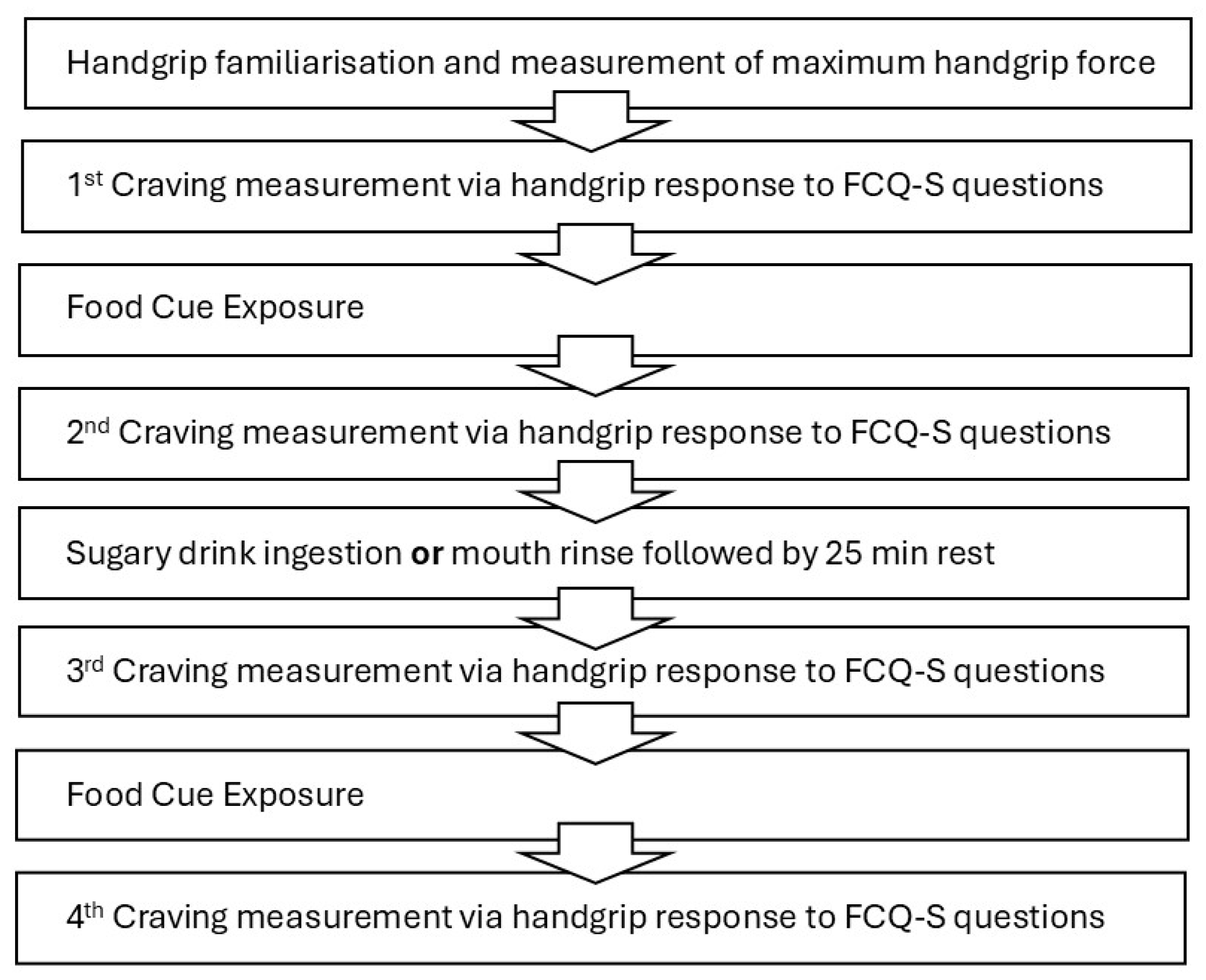
- Familiarisation with the handgrip force measure as a measure of agreement with the statements on the Food Craving Questionnaire State (FCQ-S). The procedure was explained, and a test trial was performed, as well as three maximum handgrip forces for standardisation of cravings (see validation study in Supplementary Information).
- The participants were asked to rate their current cravings (FCQ-S statements on the computer screen) by applying handgrip forces for perceived agreement with statements. The handgrip dynamometer was connected to an A/D converter (PowerLab system) to record the handgrip forces (no visual feedback was available for the forces applied).
- Participants were shown neutral images (household items) while being asked to perform a cognitive sorting task to focus attention on the images (see Measurement for details). After the neutral cue exposure, the assessment of their current cravings was repeated.
- Participants consumed 250 mL of a commercially available orange-flavoured cordial containing 50 g of sugar and then rested for 25 min.
- During the resting period, a continuous glucose monitoring sensor (CGMS) was attached to the back of the upper arm (see Measurement for details).
- Participants performed the 3 min step test to assess cardiovascular fitness (see Measurements).
2.4. Measurements
2.4.1. Demographic and Body Characteristics
2.4.2. Self-Report Measures
- The FCQ-T [3] assesses food cravings via 39 items that address behavioural, cognitive, and physiological components of cravings. The FCQ-T has an overall CRα of 0.98, with subscale alphas ranging from 0.71 to 0.95 [3]. Total scores range from 39 to 234, with higher scores indicating greater trait food craving.
- The Food Cravings Questionnaire-State (FCQ-S) assesses the strength of food cravings that are influenced by one’s current state. It uses 15 items measuring agreement with statements connected to five dimensions (see Measurements of food craving via handgrip dynamometer). The FCQ-S has an overall CRα of 0.96 [3].
- The Three-Factor Eating Questionnaire (TFEQ) [50] consists of 18 items evaluating three dimensions of eating behaviour: ‘uncontrolled eating’, ‘cognitive restraint’, and ‘emotional eating’, with Cronbach’s alpha for these scales being above 0.70 [51]. Subscales were transformed to 0 to 100 scales, with high scores indicating greater expression of each eating behaviour.
- The Perceived Stress Scale (PSS) assesses individuals’ appraisal of stressful situations in their lives [54]. Participants respond to 10 items on a Likert scale ranging from 0 = ‘Never’ to 4 = ‘Very Often’ to assess unpredictability, lack of control, and pressure in their lives over the past month, with Cronbach’s alpha for this scale above 0.70 [55]. Scores range between 0 and 40, with higher scores indicating greater perceived stress. Scores higher than 27 are considered high perceived stress.
2.4.3. Continuous Glucose Monitoring (CGM)
2.4.4. Calculation of the Incremental Area Under the Curve (iAUC) of Glucose Levels over Time
2.4.5. Cardiovascular Fitness Test
2.4.6. Cue Exposure
2.4.7. Blood Sampling
2.4.8. Measurements of Food Craving via Handgrip Dynamometer-Food Craving Questionnaire-S
2.5. Statistical Analyses
3. Results
3.1. Body Characteristics, Blood Parameters, and Self-Report Measures
3.2. Interstitial Glucose Levels
3.3. Changes in Interstitial Glucose Levels
3.4. Changes in Craving Scores
3.5. Correlation Analysis
4. Discussion
4.1. Physiological and Food Craving Responses to Ingestion and Mouth Rinse
4.2. Moderating Physiological Mechanisms of Food Cravings
5. Conclusions
Supplementary Materials
Author Contributions
Funding
Institutional Review Board Statement
Informed Consent Statement
Data Availability Statement
Acknowledgments
Conflicts of Interest
References
- Gendall, K.A.; Joyce, P.R.; Sullivan, P.F. Impact of definition on prevalence of food cravings in a random sample of young women. Appetite 1997, 28, 63–72. [Google Scholar] [CrossRef] [PubMed]
- Weingarten, H.P.; Elston, D. Food cravings in a college population. Appetite 1991, 17, 167–175. [Google Scholar] [CrossRef]
- Cepeda-Benito, A.; Gleaves, D.H.; Fernandez, M.C.; Vila, J.; Williams, T.L.; Reynoso, J. The development and validation of Spanish versions of the State and Trait Food Cravings Questionnaires. Behav. Res. Ther. 2000, 38, 1125–1138. [Google Scholar] [CrossRef]
- Dalton, M.; Finlayson, G.; Hill, A.; Blundell, J. Preliminary validation and principal components analysis of the Control of Eating Questionnaire (CoEQ) for the experience of food craving. Eur. J. Clin. Nutr. 2015, 69, 1313–1317. [Google Scholar] [CrossRef] [PubMed]
- Weingarten, H.P.; Elston, D. The phenomenology of food cravings. Appetite 1990, 15, 231–246. [Google Scholar] [CrossRef]
- Tiffany, S.T. A cognitive model of drug urges and drug-use behavior: Role of automatic and nonautomatic processes. Psychol. Rev. 1990, 97, 147–168. [Google Scholar] [CrossRef]
- Kemps, E.; Tiggemann, M.; Grigg, M. Food cravings consume limited cognitive resources. J. Exp. Psychol. Appl. 2008, 14, 247–254. [Google Scholar] [CrossRef] [PubMed]
- Polk, S.E.; Schulte, E.M.; Furman, C.R.; Gearhardt, A.N. Wanting and liking: Separable components in problematic eating behavior? Appetite 2017, 115, 45–53. [Google Scholar] [CrossRef]
- Pelchat, M.L.; Johnson, A.; Chan, R.; Valdez, J.; Ragland, J.D. Images of desire: Food-craving activation during fMRI. Neuroimage 2004, 23, 1486–1493. [Google Scholar] [CrossRef]
- Garcia, S.C.; Hormes, J.M. The moderating role of food cravings in the relationship between weight suppression and eating disorder psychopathology in college students. Front. Psychol. 2024, 15, 1343048. [Google Scholar] [CrossRef]
- Kemps, E.; Tiggemann, M. Hand-held dynamic visual noise reduces naturally occurring food cravings and craving-related consumption. Appetite 2013, 68, 152–157. [Google Scholar] [CrossRef] [PubMed][Green Version]
- Chao, A.M.; Grilo, C.M.; Sinha, R. Food cravings, binge eating, and eating disorder psychopathology: Exploring the moderating roles of gender and race. Eat. Behav. 2016, 21, 41–47. [Google Scholar] [CrossRef]
- Meule, A.; Kubler, A. Double trouble. Trait food craving and impulsivity interactively predict food-cue affected behavioral inhibition. Appetite 2014, 79, 174–182. [Google Scholar] [CrossRef] [PubMed]
- Kanoski, S.E.; Boutelle, K.N. Food cue reactivity: Neurobiological and behavioral underpinnings. Rev. Endocr. Metab. Disord. 2022, 23, 683–696. [Google Scholar] [CrossRef]
- Stice, E.; Burger, K.; Yokum, S. Caloric deprivation increases responsivity of attention and reward brain regions to intake, anticipated intake, and images of palatable foods. Neuroimage 2013, 67, 322–330. [Google Scholar] [CrossRef]
- Jastreboff, A.M.; Sinha, R.; Lacadie, C.; Small, D.M.; Sherwin, R.S.; Potenza, M.N. Neural correlates of stress- and food cue-induced food craving in obesity: Association with insulin levels. Diabetes Care 2013, 36, 394–402. [Google Scholar] [CrossRef] [PubMed]
- Adam, T.C.; Epel, E.S. Stress, eating and the reward system. Physiol. Behav. 2007, 91, 449–458. [Google Scholar] [CrossRef]
- Pelchat, M.L. Food cravings in young and elderly adults. Appetite 1997, 28, 103–113. [Google Scholar] [CrossRef]
- Reichenberger, J.; Richard, A.; Smyth, J.M.; Fischer, D.; Pollatos, O.; Blechert, J. It’s craving time: Time of day effects on momentary hunger and food craving in daily life. Nutrition 2018, 55–56, 15–20. [Google Scholar] [CrossRef]
- Boswell, R.G.; Kober, H. Food cue reactivity and craving predict eating and weight gain: A meta-analytic review. Obes. Rev. 2016, 17, 159–177. [Google Scholar] [CrossRef]
- Volkow, N.D.; Wise, R.A.; Baler, R. The dopamine motive system: Implications for drug and food addiction. Nat. Rev. Neurosci. 2017, 18, 741–752. [Google Scholar] [CrossRef]
- Berridge, K.C. From prediction error to incentive salience: Mesolimbic computation of reward motivation. Eur. J. Neurosci. 2012, 35, 1124–1143. [Google Scholar] [CrossRef] [PubMed]
- Neary, N.M.; Goldstone, A.P.; Bloom, S.R. Appetite regulation: From the gut to the hypothalamus. Clin. Endocrinol. 2004, 60, 153–160. [Google Scholar] [CrossRef]
- Kroemer, N.B.; Krebs, L.; Kobiella, A.; Grimm, O.; Vollstadt-Klein, S.; Wolfensteller, U.; Kling, R.; Bidlingmaier, M.; Zimmermann, U.S.; Smolka, M.N. (Still) longing for food: Insulin reactivity modulates response to food pictures. Hum. Brain Mapp. 2013, 34, 2367–2380. [Google Scholar] [CrossRef]
- Garutti, M.; Sirico, M.; Noto, C.; Foffano, L.; Hopkins, M.; Puglisi, F. Hallmarks of Appetite: A Comprehensive Review of Hunger, Appetite, Satiation, and Satiety. Curr. Obes. Rep. 2025, 14, 12. [Google Scholar] [CrossRef]
- Tack, J.; Verbeure, W.; Mori, H.; Schol, J.; Van den Houte, K.; Huang, I.H.; Balsiger, L.; Broeders, B.; Colomier, E.; Scarpellini, E.; et al. The gastrointestinal tract in hunger and satiety signalling. United Eur. Gastroenterol. J. 2021, 9, 727–734. [Google Scholar] [CrossRef]
- Sundaresan, S.; Johnson, C.; Dixon, K.B.; Dole, M.; Kilkelly, D.; Antoun, J.; Flynn, C.R.; Abumrad, N.N.; Tamboli, R. Intraduodenal nutrient infusion differentially alters intestinal nutrient sensing, appetite, and satiety responses in lean and obese subjects. Am. J. Clin. Nutr. 2023, 118, 646–656. [Google Scholar] [CrossRef]
- Veldhuizen, M.G.; Babbs, R.K.; Patel, B.; Fobbs, W.; Kroemer, N.B.; Garcia, E.; Yeomans, M.R.; Small, D.M. Integration of Sweet Taste and Metabolism Determines Carbohydrate Reward. Curr. Biol. 2017, 27, 2476–2485 e2476. [Google Scholar] [CrossRef]
- Lasschuijt, M.P.; de Graaf, K.; Mars, M. Effects of Oro-Sensory Exposure on Satiation and Underlying Neurophysiological Mechanisms-What Do We Know So Far? Nutrients 2021, 13, 1391. [Google Scholar] [CrossRef] [PubMed]
- Aitken, T.J.; Liu, Z.; Ly, T.; Shehata, S.; Sivakumar, N.; La Santa Medina, N.; Gray, L.A.; Zhang, J.; Dundar, N.; Barnes, C.; et al. Negative feedback control of hypothalamic feeding circuits by the taste of food. Neuron 2024, 112, 3354–3370.e3355. [Google Scholar] [CrossRef] [PubMed]
- Han, P.; Bagenna, B.; Fu, M. The sweet taste signalling pathways in the oral cavity and the gastrointestinal tract affect human appetite and food intake: A review. Int. J. Food Sci. Nutr. 2019, 70, 125–135. [Google Scholar] [CrossRef]
- Smeets, P.A.; Erkner, A.; de Graaf, C. Cephalic phase responses and appetite. Nutr. Rev. 2010, 68, 643–655. [Google Scholar] [CrossRef]
- Steinert, R.E.; Beglinger, C. Nutrient sensing in the gut: Interactions between chemosensory cells, visceral afferents and the secretion of satiation peptides. Physiol. Behav. 2011, 105, 62–70. [Google Scholar] [CrossRef] [PubMed]
- Poppitt, S.D.; Shin, H.S.; McGill, A.T.; Budgett, S.C.; Lo, K.; Pahl, M.; Duxfield, J.; Lane, M.; Ingram, J.R. Duodenal and ileal glucose infusions differentially alter gastrointestinal peptides, appetite response, and food intake: A tube feeding study. Am. J. Clin. Nutr. 2017, 106, 725–735. [Google Scholar] [CrossRef][Green Version]
- Burdakov, D.; Luckman, S.M.; Verkhratsky, A. Glucose-sensing neurons of the hypothalamus. Philos. Trans. R. Soc. Lond. B Biol. Sci. 2005, 360, 2227–2235. [Google Scholar] [CrossRef]
- Sclafani, A.; Ackroff, K. Role of gut nutrient sensing in stimulating appetite and conditioning food preferences. Am. J. Physiol. Regul. Integr. Comp. Physiol. 2012, 302, R1119–R1133. [Google Scholar] [CrossRef]
- McKnight, A.D.; Alhadeff, A.L. Nutrient detection pathways for food reinforcement and satiation. Curr. Opin. Neurobiol. 2025, 92, 103040. [Google Scholar] [CrossRef]
- de Araujo, I.E.; Schatzker, M.; Small, D.M. Rethinking Food Reward. Annu. Rev. Psychol. 2020, 71, 139–164. [Google Scholar] [CrossRef]
- Orquin, J.L.; Kurzban, R. A meta-analysis of blood glucose effects on human decision making. Psychol. Bull. 2016, 142, 546–567. [Google Scholar] [CrossRef]
- Cogan, B.; Cooper, J.A. Differential effects of nutritive and non-nutritive sweet mouth rinsing on appetite in adults with obesity. Appetite 2024, 193, 107133. [Google Scholar] [CrossRef]
- Costanzo, A.; Russell, C.G.; Lewin, S.; Keast, R. A Fatty Acid Mouth Rinse Decreases Self-Reported Hunger and Increases Self-Reported Fullness in Healthy Australian Adults: A Randomized Cross-Over Trial. Nutrients 2020, 12, 678. [Google Scholar] [CrossRef]
- Lauritsen, J.V.; Bergmann, N.; Junker, A.E.; Gyldenlove, M.; Skov, L.; Gluud, L.L.; Hartmann, B.; Holst, J.J.; Vilsboll, T.; Knop, F.K. Oral glucose has little or no effect on appetite and satiety sensations despite a significant gastrointestinal response. Eur. J. Endocrinol. 2023, 189, 619–626. [Google Scholar] [CrossRef]
- Taylor, M. A review of food craving measures. Eat. Behav. 2019, 32, 101–110. [Google Scholar] [CrossRef]
- Cepeda-Benito, A.; Fernandez, M.C.; Moreno, S. Relationship of gender and eating disorder symptoms to reported cravings for food: Construct validation of state and trait craving questionnaires in Spanish. Appetite 2003, 40, 47–54. [Google Scholar] [CrossRef]
- Westland, J.C. Information loss and bias in likert survey responses. PLoS ONE 2022, 17, e0271949. [Google Scholar] [CrossRef]
- Obradovic, M.; Sudar-Milovanovic, E.; Soskic, S.; Essack, M.; Arya, S.; Stewart, A.J.; Gojobori, T.; Isenovic, E.R. Leptin and Obesity: Role and Clinical Implication. Front. Endocrinol. 2021, 12, 585887. [Google Scholar] [CrossRef]
- Vilarino-Garcia, T.; Polonio-Gonzalez, M.L.; Perez-Perez, A.; Ribalta, J.; Arrieta, F.; Aguilar, M.; Obaya, J.C.; Gimeno-Orna, J.A.; Iglesias, P.; Navarro, J.; et al. Role of Leptin in Obesity, Cardiovascular Disease, and Type 2 Diabetes. Int. J. Mol. Sci. 2024, 25, 2338. [Google Scholar] [CrossRef] [PubMed]
- Fogelholm, M.; Malmberg, J.; Suni, J.; Santtila, M.; Kyrolainen, H.; Mantysaari, M.; Oja, P. International Physical Activity Questionnaire: Validity against fitness. Med. Sci. Sports Exerc. 2006, 38, 753–760. [Google Scholar] [CrossRef] [PubMed]
- Craig, C.L.; Marshall, A.L.; Sjostrom, M.; Bauman, A.E.; Booth, M.L.; Ainsworth, B.E.; Pratt, M.; Ekelund, U.; Yngve, A.; Sallis, J.F.; et al. International physical activity questionnaire: 12-country reliability and validity. Med. Sci. Sports Exerc. 2003, 35, 1381–1395. [Google Scholar] [CrossRef]
- Stunkard, A.J.; Messick, S. The three-factor eating questionnaire to measure dietary restraint, disinhibition and hunger. J. Psychosom. Res. 1985, 29, 71–83. [Google Scholar] [CrossRef] [PubMed]
- Karlsson, J.; Persson, L.O.; Sjostrom, L.; Sullivan, M. Psychometric properties and factor structure of the Three-Factor Eating Questionnaire (TFEQ) in obese men and women. Results from the Swedish Obese Subjects (SOS) study. Int. J. Obes. Relat. Metab. Disord. 2000, 24, 1715–1725. [Google Scholar] [CrossRef]
- Watson, D.; Clark, L.A.; Tellegen, A. Development and validation of brief measures of positive and negative affect: The PANAS scales. J. Pers. Soc. Psychol. 1988, 54, 1063–1070. [Google Scholar] [CrossRef]
- Crawford, J.R.; Henry, J.D. The positive and negative affect schedule (PANAS): Construct validity, measurement properties and normative data in a large non-clinical sample. Br. J. Clin. Psychol. 2004, 43, 245–265. [Google Scholar] [CrossRef]
- Cohen, S.; Kamarck, T.; Mermelstein, R. A global measure of perceived stress. J. Health Soc. Behav. 1983, 24, 385–396. [Google Scholar] [CrossRef]
- Lee, E.H. Review of the psychometric evidence of the perceived stress scale. Asian Nurs. Res. 2012, 6, 121–127. [Google Scholar] [CrossRef]
- Matthan, N.R.; Ausman, L.M.; Meng, H.; Tighiouart, H.; Lichtenstein, A.H. Estimating the reliability of glycemic index values and potential sources of methodological and biological variability. Am. J. Clin. Nutr. 2016, 104, 1004–1013. [Google Scholar] [CrossRef] [PubMed]
- Hughes, A.D.; Chaturvedi, N. Estimation of Maximal Oxygen Consumption and Heart Rate Recovery Using the Tecumseh Sub-Maximal Step Test and their Relationship to Cardiovascular Risk Factors. Artery Res. 2017, 18, 29–35. [Google Scholar] [CrossRef] [PubMed]
- Overduin, J.; Jansen, A. Food Cue Reactivity in Fasting and Non-Fasting Subjects. Eur. Eat. Disord. Rev. 1996, 4, 249–259. [Google Scholar] [CrossRef]
- Martens, M.J.; Born, J.M.; Lemmens, S.G.; Karhunen, L.; Heinecke, A.; Goebel, R.; Adam, T.C.; Westerterp-Plantenga, M.S. Increased sensitivity to food cues in the fasted state and decreased inhibitory control in the satiated state in the overweight. Am. J. Clin. Nutr. 2013, 97, 471–479. [Google Scholar] [CrossRef]
- Sun, W.; Kober, H. Regulating food craving: From mechanisms to interventions. Physiol. Behav. 2020, 222, 112878. [Google Scholar] [CrossRef] [PubMed]
- Kroemer, N.B.; Krebs, L.; Kobiella, A.; Grimm, O.; Pilhatsch, M.; Bidlingmaier, M.; Zimmermann, U.S.; Smolka, M.N. Fasting levels of ghrelin covary with the brain response to food pictures. Addict. Biol. 2013, 18, 855–862. [Google Scholar] [CrossRef]
- Nederkoorn, C.; Smulders, F.T.; Jansen, A. Cephalic phase responses, craving and food intake in normal subjects. Appetite 2000, 35, 45–55. [Google Scholar] [CrossRef]
- Nicola, S.M. Reassessing wanting and liking in the study of mesolimbic influence on food intake. Am. J. Physiol. Regul. Integr. Comp. Physiol. 2016, 311, R811–R840. [Google Scholar] [CrossRef]
- Roger, C.; Lasbleiz, A.; Guye, M.; Dutour, A.; Gaborit, B.; Ranjeva, J.P. The Role of the Human Hypothalamus in Food Intake Networks: An MRI Perspective. Front. Nutr. 2021, 8, 760914. [Google Scholar] [CrossRef] [PubMed]
- Clarke, G.S.; Page, A.J.; Eldeghaidy, S. The gut-brain axis in appetite, satiety, food intake, and eating behavior: Insights from animal models and human studies. Pharmacol. Res. Perspect. 2024, 12, e70027. [Google Scholar] [CrossRef]
- Waise, T.Z.; Dranse, H.J.; Lam, T.K. The metabolic role of vagal afferent innervation. Nat. Rev. Gastroenterol. Hepatol. 2018, 15, 625–636. [Google Scholar] [CrossRef] [PubMed]
- Brierley, D.I.; de Lartigue, G. Reappraising the role of the vagus nerve in GLP-1-mediated regulation of eating. Br. J. Pharmacol. 2022, 179, 584–599. [Google Scholar] [CrossRef] [PubMed]
- Cecil, J.E.; Castiglione, K.; French, S.; Francis, J.; Read, N.W. Effects of intragastric infusions of fat and carbohydrate on appetite ratings and food intake from a test meal. Appetite 1998, 30, 65–77. [Google Scholar] [CrossRef]
- Schultes, B.; Panknin, A.K.; Hallschmid, M.; Jauch-Chara, K.; Wilms, B.; de Courbiere, F.; Lehnert, H.; Schmid, S.M. Glycemic increase induced by intravenous glucose infusion fails to affect hunger, appetite, or satiety following breakfast in healthy men. Appetite 2016, 105, 562–566. [Google Scholar] [CrossRef]
- Holst, J.J. The incretin system in healthy humans: The role of GIP and GLP-1. Metabolism 2019, 96, 46–55. [Google Scholar] [CrossRef]
- Alabduljader, K.; Cliffe, M.; Sartor, F.; Papini, G.; Cox, W.M.; Kubis, H.P. Ecological momentary assessment of food perceptions and eating behavior using a novel phone application in adults with or without obesity. Eat. Behav. 2018, 30, 35–41. [Google Scholar] [CrossRef]
- Block, G.; Hartman, A.M. Issues in reproducibility and validity of dietary studies. Am. J. Clin. Nutr. 1989, 50, 1133–1138; discussion 1231-1135. [Google Scholar] [CrossRef]
- Ravelli, M.N.; Schoeller, D.A. Traditional Self-Reported Dietary Instruments Are Prone to Inaccuracies and New Approaches Are Needed. Front. Nutr. 2020, 7, 90. [Google Scholar] [CrossRef]
- Brummer, J.; Glasbrenner, C.; Hechenbichler Figueroa, S.; Koehler, K.; Hochsmann, C. Continuous glucose monitoring for automatic real-time assessment of eating events and nutrition: A scoping review. Front. Nutr. 2023, 10, 1308348. [Google Scholar] [CrossRef]
- Merino, J.; Linenberg, I.; Bermingham, K.M.; Ganesh, S.; Bakker, E.; Delahanty, L.M.; Chan, A.T.; Capdevila Pujol, J.; Wolf, J.; Al Khatib, H.; et al. Validity of continuous glucose monitoring for categorizing glycemic responses to diet: Implications for use in personalized nutrition. Am. J. Clin. Nutr. 2022, 115, 1569–1576. [Google Scholar] [CrossRef] [PubMed]
- Sartor, F.; Donaldson, L.F.; Markland, D.A.; Loveday, H.; Jackson, M.J.; Kubis, H.P. Taste perception and implicit attitude toward sweet related to body mass index and soft drink supplementation. Appetite 2011, 57, 237–246. [Google Scholar] [CrossRef] [PubMed]
- O’Doherty, J.P.; Deichmann, R.; Critchley, H.D.; Dolan, R.J. Neural responses during anticipation of a primary taste reward. Neuron 2002, 33, 815–826. [Google Scholar] [CrossRef]
- Rolls, E.T. Taste, olfactory, and food reward value processing in the brain. Prog. Neurobiol. 2015, 127–128, 64–90. [Google Scholar] [CrossRef] [PubMed]
- Grosshans, M.; Vollmert, C.; Vollstadt-Klein, S.; Tost, H.; Leber, S.; Bach, P.; Buhler, M.; von der Goltz, C.; Mutschler, J.; Loeber, S.; et al. Association of leptin with food cue-induced activation in human reward pathways. Arch. Gen. Psychiatry 2012, 69, 529–537. [Google Scholar] [CrossRef]
- Opland, D.M.; Leinninger, G.M.; Myers, M.G., Jr. Modulation of the mesolimbic dopamine system by leptin. Brain Res. 2010, 1350, 65–70. [Google Scholar] [CrossRef]
- Mars, M.; de Graaf, C.; de Groot, C.P.; van Rossum, C.T.; Kok, F.J. Fasting leptin and appetite responses induced by a 4-day 65%-energy-restricted diet. Int. J. Obes. 2006, 30, 122–128. [Google Scholar] [CrossRef]
- Hopkins, M.; Gibbons, C.; Caudwell, P.; Webb, D.L.; Hellstrom, P.M.; Naslund, E.; Blundell, J.E.; Finlayson, G. Fasting Leptin Is a Metabolic Determinant of Food Reward in Overweight and Obese Individuals during Chronic Aerobic Exercise Training. Int. J. Endocrinol. 2014, 2014, 323728. [Google Scholar] [CrossRef] [PubMed]
- Arumäe, K.; Kreegipuu, K.; Vainik, U. Assessing the overlap between three measures of food reward. Front. Psychol. 2019, 10, 883. [Google Scholar] [CrossRef] [PubMed]
- Bland, J.M.; Altman, D.G. Measuring agreement in method comparison studies. Stat. Methods Med. Res. 1999, 8, 135–160. [Google Scholar] [CrossRef]
- Cameron, J.D.; Goldfield, G.S.; Finlayson, G.; Blundell, J.E.; Doucet, E. Fasting for 24 hours heightens reward from food and food-related cues. PLoS ONE 2014, 9, e85970. [Google Scholar] [CrossRef] [PubMed]
- Creswell, K.G.; Sayette, M.A.; Skrzynski, C.J.; Wright, A.G.; Schooler, J.W.; Sehic, E. Assessing cigarette craving with a squeeze. Clin. Psychol. Sci. 2019, 7, 597–611. [Google Scholar] [CrossRef]
- Harkonen, R.; Harju, R.; Alaranta, H. Accuracy of the Jamar dynamometer. J. Hand Ther. 1993, 6, 259–262. [Google Scholar] [CrossRef]
- Jamieson, S. Likert scales: How to (ab)use them. Med Educ 2004, 38, 1217–1218. [Google Scholar] [CrossRef]
- Jebb, A.T.; Ng, V.; Tay, L. A Review of Key Likert Scale Development Advances: 1995-2019. Front. Psychol. 2021, 12, 637547. [Google Scholar] [CrossRef]
- Rogers, P.J.; Hardman, C.A. Food reward. What it is and how to measure it. Appetite 2015, 90, 1–15. [Google Scholar] [CrossRef]
- Shechtman, O.; Gestewitz, L.; Kimble, C. Reliability and validity of the DynEx dynamometer. J. Hand Ther. 2005, 18, 339–347. [Google Scholar] [CrossRef] [PubMed]
- Thoma, D.; Hüsam, J.; Wielscher, K. Introducing grip force as a nonverbal measure of bilingual feelings. Biling. Lang. Cogn. 2023, 26, 125–137. [Google Scholar] [CrossRef]
- White, M.A.; Whisenhunt, B.L.; Williamson, D.A.; Greenway, F.L.; Netemeyer, R.G. Development and validation of the food-craving inventory. Obes. Res. 2002, 10, 107–114. [Google Scholar] [CrossRef] [PubMed]



| Participants (n = 47; 30 Females) | Mean (SD) | Median [25th Percentile, 75th Percentile] |
|---|---|---|
| Age (years) | 27.92 (7.95) | 26.00 [23.0, 31.0] |
| Height (m) | 1.70 (0.11) | 1.65 [1.61, 1.76] |
| Weight (Kg) | 67.56 (13.73) | 67.70 [56.80, 78.20] |
| BMI (kg/m2) | 23.89 (3.94) | 23.43 [22.08, 25.74] |
| Estimated VO2 max (L × min−1 × kg−1) | 42.10 (8.19) | 39.92 [35.92, 49.47] |
| Body fat % | 22.42 (8.23) | 23.10 [16.20, 28.70] |
| Participants (n = 47; 30 Females) | Mean (SD) | Median [25th Percentile, 75th Percentile] | |
|---|---|---|---|
| PANAS positive affect | 36.09 (6.12) | 37.00 [31.00, 41.00] | |
| PANAS negative affect | 20.15 (6.46) | 19.00 [15.00, 24.00] | |
| FCQ-T | 120.38 (30.55) | 123.00 [104.00, 133.00] | |
| TFEQ: CR | 53.84 (10.86) | 52.78 [44.44, 63.89] | |
| TFEQ: UE | 48.86 (13.46) | 51.85 [40.74, 59.26] | |
| TFEQ: EE | 58.39 (26.16) | 55.56 [44.44, 77.78] | |
| PSS | 31.64 (3.76) | 31.00 [29.00, 34.00] | |
| IPAQ | High = 28 | Mod = 16 | Low = 3 |
| Fasting glucose (mmol/L) | 4.63 (0.47) | 4.60 [4.30, 5.00] | |
| Fasting leptin (ng/mL) | 9.77 (9.75) | 5.70 [3.17, 13.77] | |
| CGM Data | Mean (SD) | Median [25th Percentile, 75th Percentile] |
|---|---|---|
| Glucose variability (%CV) | 16.06 (3.89) | 16.00 [13.40, 18.70] |
| Mean glucose (mmol/L) | 5.58 (3.89) | 5.60 [5.30, 5.90] |
| Daytime glucose (mmol/L) | 5.72 (0.42) | 5.69 [5.47, 6.60] |
| Nighttime glucose (mmol/L) | 5.31 (0.52) | 5.41 [4.91, 5.70] |
| Glucose Level | Fasted | ||
|---|---|---|---|
| Baseline | During FCQ-Ss | Change | |
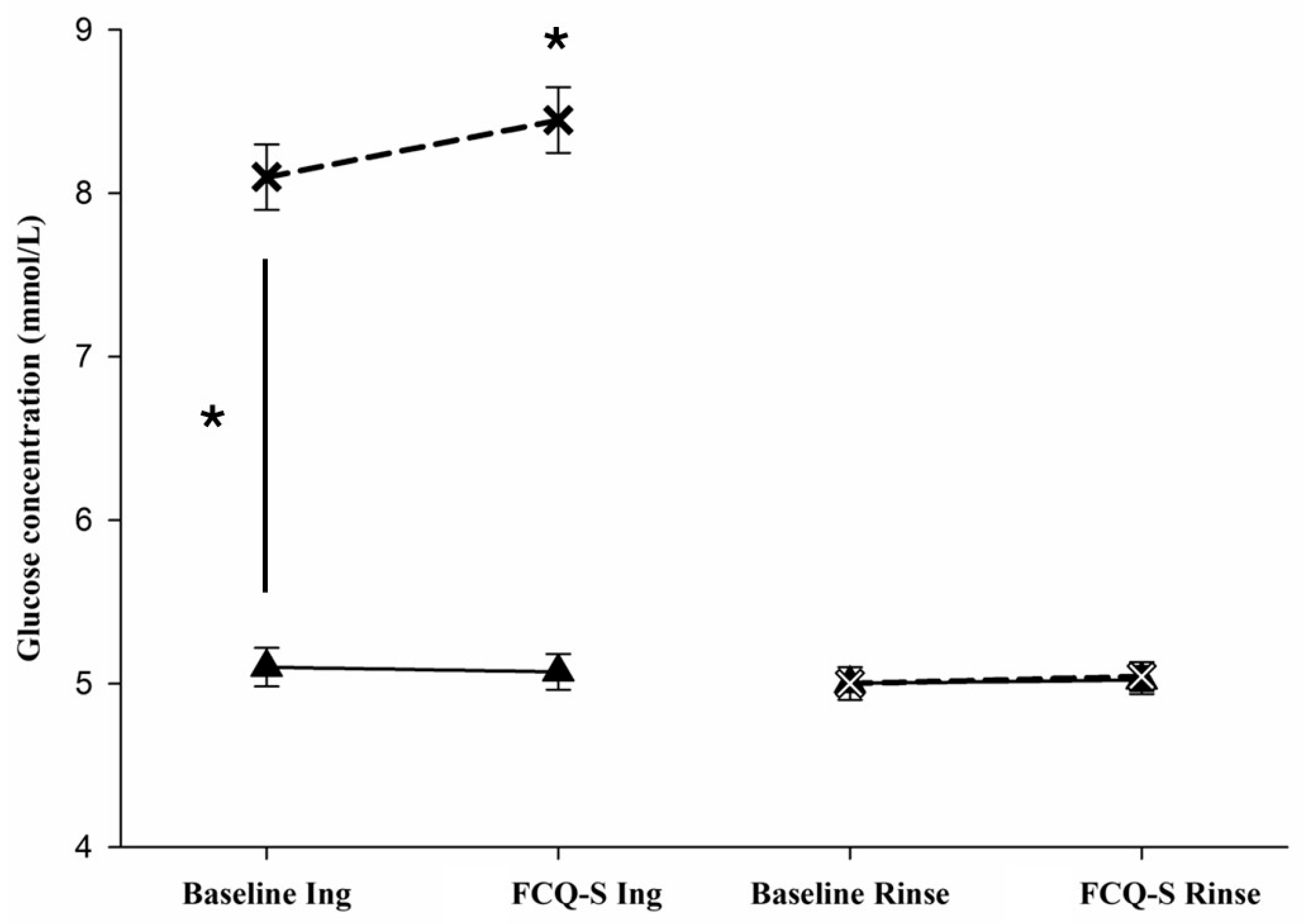
| Ingestion trial | 5.09 (0.81) 5.20 [4.60, 5.60] | 5.07 (0.75) 5.13 [4.60, 5.63] | −0.02 (0.19) −0.05 [−0.10, 0.08] |
| Rinse trial | 5.00 (0.64) 5.10 [4.70, 5.50] | 5.02 (0.58) 5.10 [4.70, 5.43] | 0.02 (0.15) 0.03 [−0.03, 0.10] |
| Glucose level | After Intake | ||
| Baseline | During FCQ-S | Change | |
| Ingestion trial | 7.94 (1.41) * 8.10 [7.30, 9.10] | 8.45 (1.38) * 8.63 [7.93, 9.33] | 0.51 (0.46) * 0.53 [0.25, 0.80] |
| Rinse trial | 5.02 (0.63) 5.10 [4.60, 5.50] | 5.04 (0.61) 5.18 [4.58, 5.55] | 0.02 (0.09) 0.00 [−0.08, 0.08] |
| CGM Data | Mean (SD) | Median [25th Percentile, 75th Percentile] | |
|---|---|---|---|
| Glucose iAUC (mmol*time) | Ingestion trial | 28.98 (22.03) | 30.70 [6.90, 44.60] |
| Rinse trial | 38.56 (16.21) * | 37.80 [28.60, 52.50] | |
| FCQ-S | Fasted | ||
|---|---|---|---|
| Pre-cue | Post-cue | Change | |
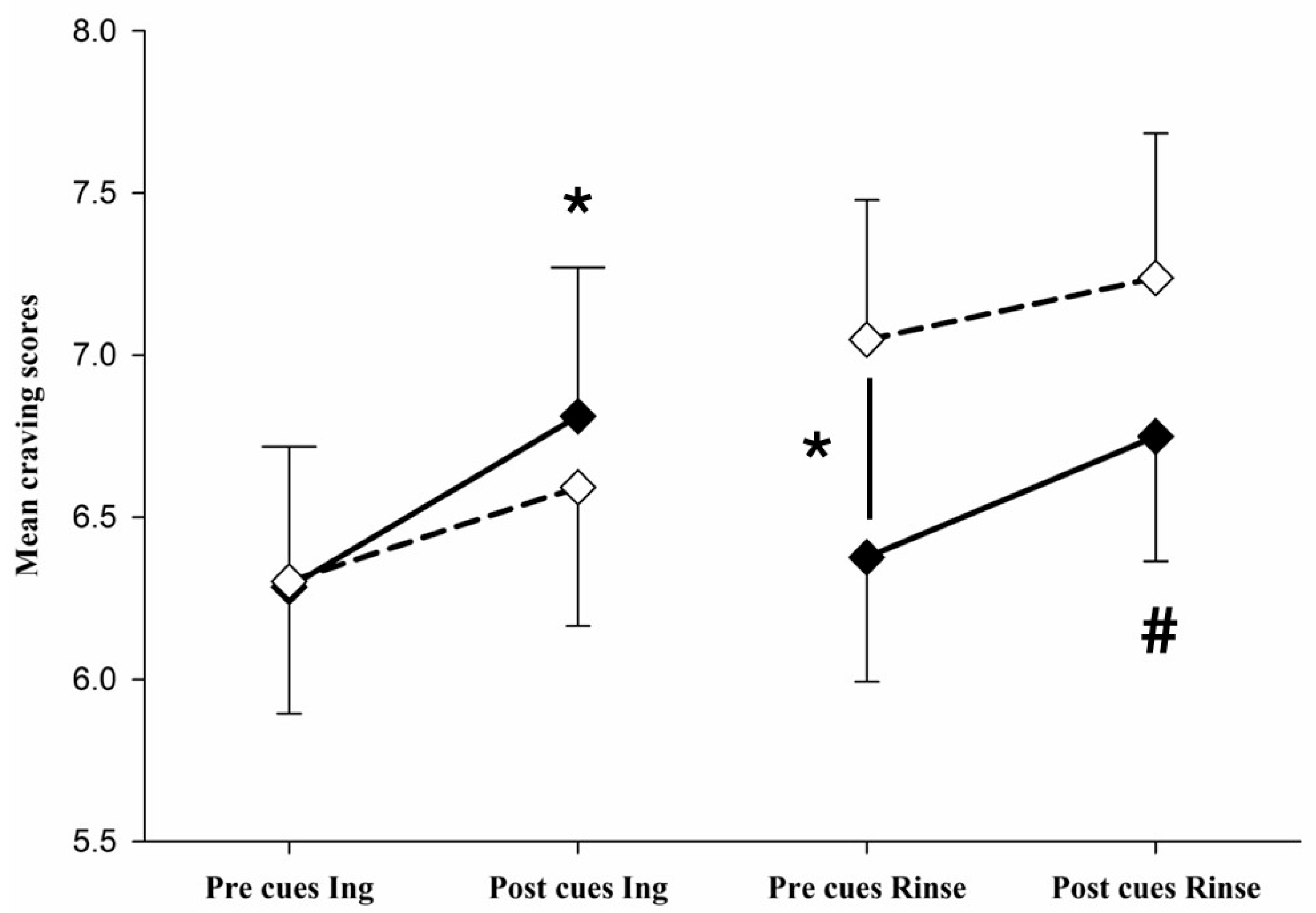
| Ingestion trial | 6.28 (2.97) 5.98 [3.78, 8.86] | 6.81 (3.15) 7.54 [3.86, 9.41] | 0.53 (1.28) * 0.66 [−0.32, 1.35] |
| Rinse trial | 6.38 (2.63) 6.40 [4.44, 8.29] | 6.75 (2.64) 6.86 [4.50, 8.85] | 0.37 (1.29) # 0.42 [−0.55, 1.01] |
| FCQ-S | After intake | ||
| Pre cue | Post cue | Change | |
| Ingestion trial | 6.30 (2.79) 5.93 [4.32, 8.30] | 6.59 (2.94) 6.30 [4.67, 9.20] | 0.26 (1.45) 0.46 [−0.86, 1.42] |
| Rinse trial | 7.05 (2.95) 7.25 [4.92, 9.67] | 7.24 (3.05) 6.81 [4.77, 10.18] | 0.19 (1.49) 0.17 [−0.91, 0.91] |
| Variable 1 | Variable 2 | Correlation Coefficient (r) | p-Value |
|---|---|---|---|
| Craving change (fasted) | Body fat % | −0.371 | 0.010 ** |
| Craving change (fasted) | BMI | −0.426 | 0.003 ** |
| Craving change (fasted) | Leptin | −0.345 | 0.017 * |
| FCQ-T | Leptin | 0.325 | 0.026 * |
| Fitness level | Body fat % | −0.710 | <0.001 ** |
| Fitness level | Leptin levels | −0.651 | <0.001 ** |
| Body fat % | BMI | 0.515 | <0.001 ** |
| Body fat % | FCQ-T scores | 0.295 | 0.044 * |
| Leptin levels | Body fat % | 0.796 | <0.001 ** |
| iAUC (rinse trial) | Glucose variability | 0.488 | <0.001 ** |
| iAUC (rinse trial) | Craving level (post cue) | 0.321 | 0.03 * |
| iAUC (ingestion trial) | Leptin levels | −0.369 | 0.012 * |
Disclaimer/Publisher’s Note: The statements, opinions and data contained in all publications are solely those of the individual author(s) and contributor(s) and not of MDPI and/or the editor(s). MDPI and/or the editor(s) disclaim responsibility for any injury to people or property resulting from any ideas, methods, instructions or products referred to in the content. |
© 2026 by the authors. Licensee MDPI, Basel, Switzerland. This article is an open access article distributed under the terms and conditions of the Creative Commons Attribution (CC BY) license.
Share and Cite
Al Gamode, A.; Malik, R.B.; Butler, J.; Kubis, H.-P. Taste of Things to Come: Craving Responses to Ingestion of and Mouth Rinse with a Sugary Drink in Connection with Food Cues and Associations with Continuous Interstitial Glucose Measurement in a Healthy Population. Nutrients 2026, 18, 177. https://doi.org/10.3390/nu18010177
Al Gamode A, Malik RB, Butler J, Kubis H-P. Taste of Things to Come: Craving Responses to Ingestion of and Mouth Rinse with a Sugary Drink in Connection with Food Cues and Associations with Continuous Interstitial Glucose Measurement in a Healthy Population. Nutrients. 2026; 18(1):177. https://doi.org/10.3390/nu18010177
Chicago/Turabian StyleAl Gamode, Abdelbare, Rohi Brigid Malik, Joe Butler, and Hans-Peter Kubis. 2026. "Taste of Things to Come: Craving Responses to Ingestion of and Mouth Rinse with a Sugary Drink in Connection with Food Cues and Associations with Continuous Interstitial Glucose Measurement in a Healthy Population" Nutrients 18, no. 1: 177. https://doi.org/10.3390/nu18010177
APA StyleAl Gamode, A., Malik, R. B., Butler, J., & Kubis, H.-P. (2026). Taste of Things to Come: Craving Responses to Ingestion of and Mouth Rinse with a Sugary Drink in Connection with Food Cues and Associations with Continuous Interstitial Glucose Measurement in a Healthy Population. Nutrients, 18(1), 177. https://doi.org/10.3390/nu18010177