Article

Partially Hydrolysed Whey-Based Infant Formula Improves Skin Barrier Function
1
Department of Gastrointestinal Health, Nestlé Institute of Health Sciences, Nestlé Research, Société des Produits Nestlé S.A., Vers-chez-les-Blanc, 1000 Lausanne, Switzerland
2
Biostatistics and Data Management, Clinical Research Unit, Nestlé Research, Société des Produits Nestlé S.A., Vers-chez-les-Blanc, 1000 Lausanne, Switzerland
3
External Consultant, 21465 Reinbek, Germany
4
Department of Dermatology, Inselspital, Bern University Hospital, 3010 Bern, Switzerland
5
Institute of Pharmacology, University of Bern, 3012 Bern, Switzerland
6
Department of Clinical Immunology and Allergology, Sechenov University, 119991 Moscow, Russia
7
Laboratory of Molecular Immunology, Institute of Fundamental Medicine and Biology, Kazan Federal University, 420008 Kazan, Russia
8
Institute of Biochemistry, Medical School Brandenburg, 16816 Neuruppin, Germany
9
Nestlé Nutrition, 1800 Vevey, Switzerland
10
Department of Pediatrics, Children’s Hospital of Philadelphia, Perelman School of Medicine at University of Pennsylvania, Philadelphia, PA 19104, USA
11
Department of Pediatrics, Dr. von Hauner Children’s Hospital and University Hospital, LMU Munich, 80337 Munich, Germany
12
Department of Pediatrics, Gastroenterology and Nutrition, School of Medicine Collegium Medicum, University of Warmia and Mazury, 10-719 Olsztyn, Poland
*
Author to whom correspondence should be addressed.
Nutrients 2021, 13(9), 3113; https://doi.org/10.3390/nu13093113
Submission received: 15 July 2021 / Revised: 24 August 2021 / Accepted: 1 September 2021 / Published: 4 September 2021
(This article belongs to the Special Issue Dietary Intake and Nutrition for Pediatric Allergic Diseases)

Abstract

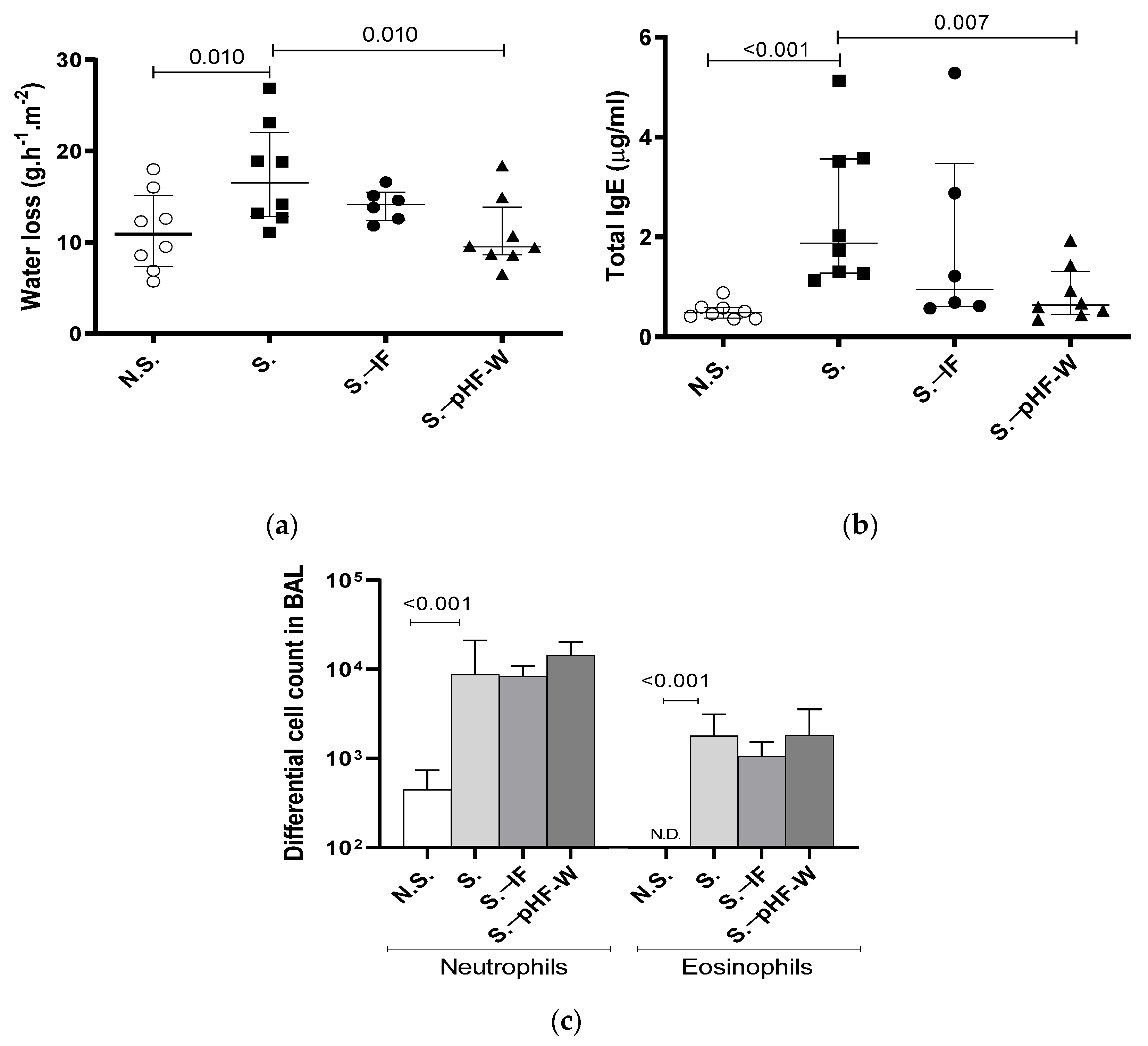
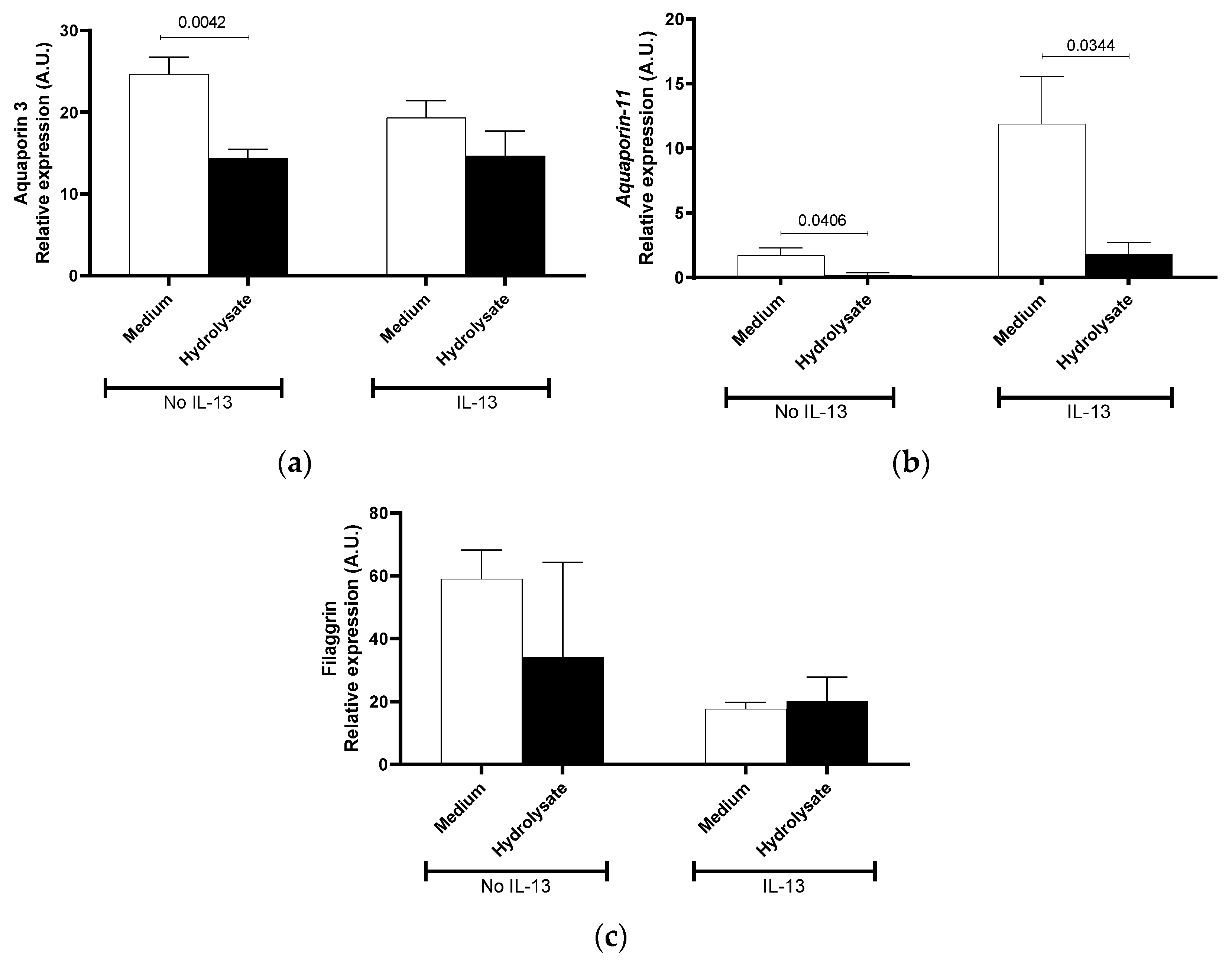
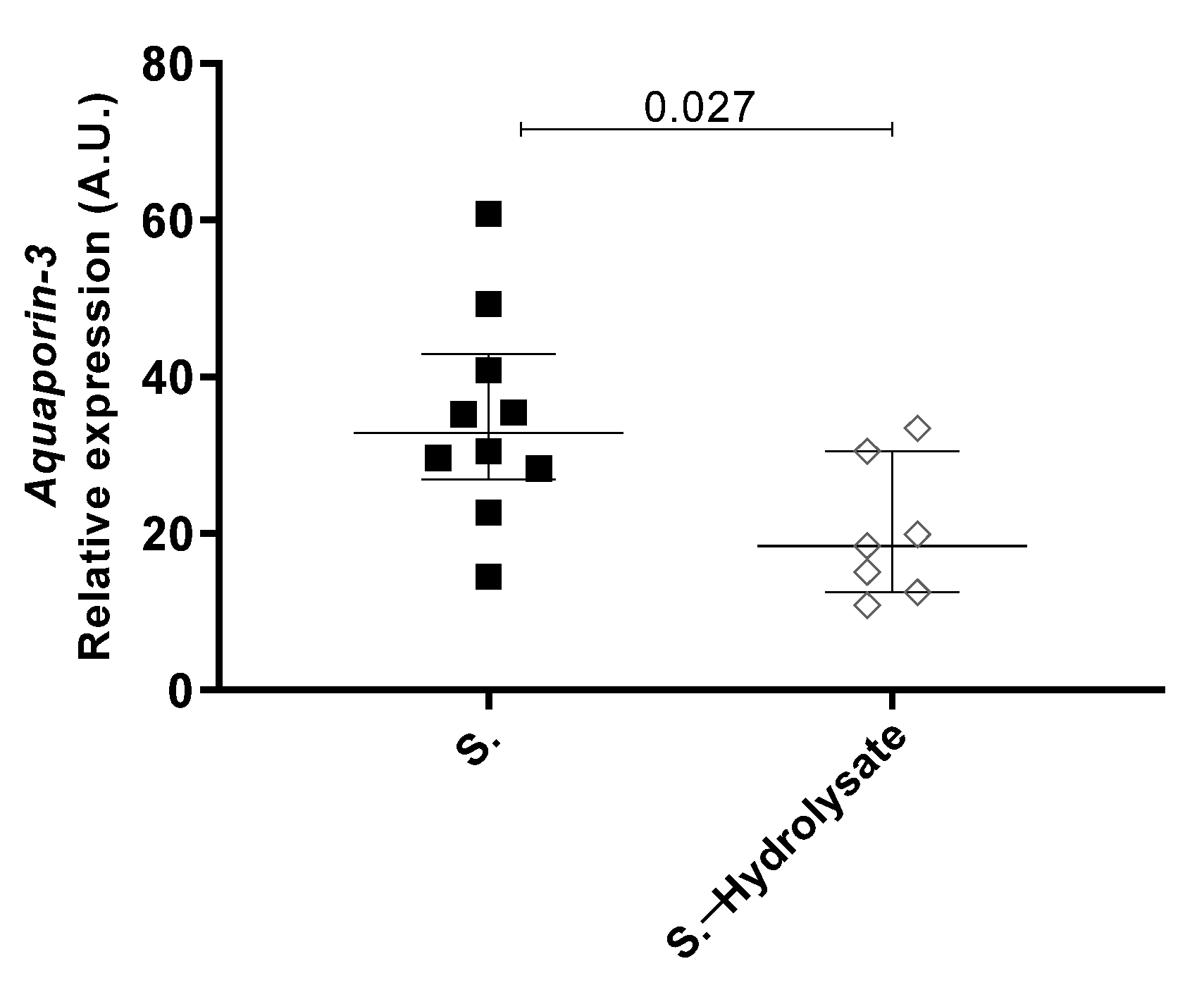
Specific partially hydrolysed whey-based infant formulas (pHF-W) have been shown to decrease the risk of atopic dermatitis (AD) in infants. Historically, AD has been associated primarily with milk allergy; however, defective skin barrier function can be a primary cause of AD. We aimed to ascertain whether oral supplementation with pHF-W can improve skin barrier function. The effect of pHF-W was assessed on transepidermal water loss (TEWL) and antibody productions in mice epicutaneously exposed to Aspergillus fumigatus. Human primary keratinocytes were stimulated in vitro, and the expression of genes related to skin barrier function was measured. Supplementation with pHF-W in neonatal mice led to a significant decrease in TEWL and total IgE, but not in allergen-specific antibody levels. The whey hydrolysate was sufficient to decrease both TEWL and total IgE. Aquaporin-3 gene expression, linked with skin hydration, was modulated in the skin of mice and human primary keratinocytes following protein hydrolysate exposure. Skin barrier improvement may be an additional mechanism by which pHF-W may potentially reduce the risk of AD development in infants. Further human studies are warranted to confirm the clinical efficacy of these observations.
Keywords: aquaporin; partially hydrolysed whey-based infant formula; skin barrier function; transepidermal water loss aquaporin; partially hydrolysed whey-based infant formula; skin barrier function; transepidermal water loss