Plant-Derived and Dietary Hydroxybenzoic Acids—A Comprehensive Study of Structural, Anti-/Pro-Oxidant, Lipophilic, Antimicrobial, and Cytotoxic Activity in MDA-MB-231 and MCF-7 Cell Lines

 ,
,  ,
,  , ,
, ,  , , , , ,
Abstract
1. Introduction
2. Materials and Methods
2.1. Materials
2.2. Methods
2.3. Calculations in ACD/Labs and Gausssian09 Programs
2.4. FTIR, 1H, and 13C NMR Study
2.5. Statistical Analysis
3. Results
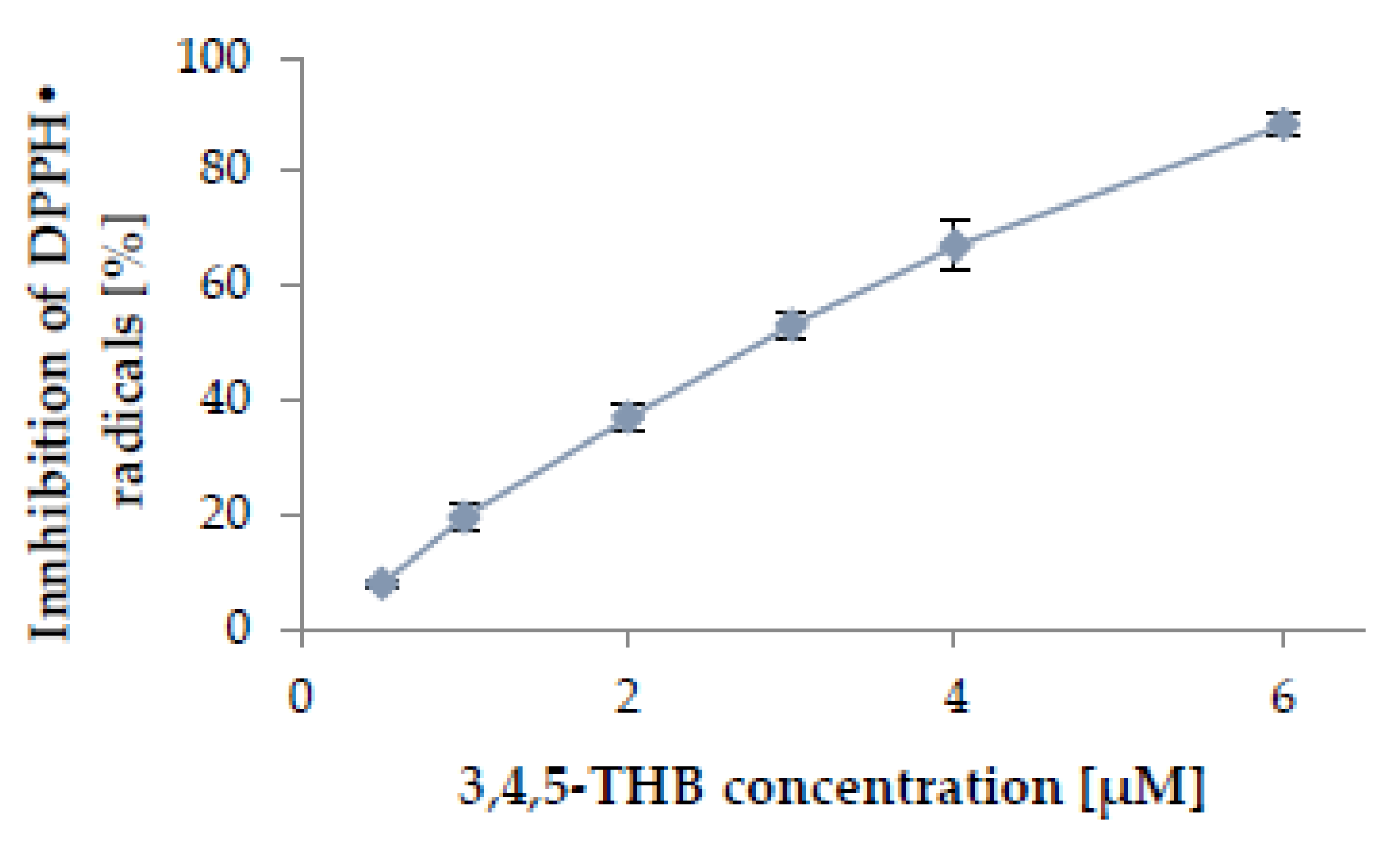
3.1. DPPH Assay
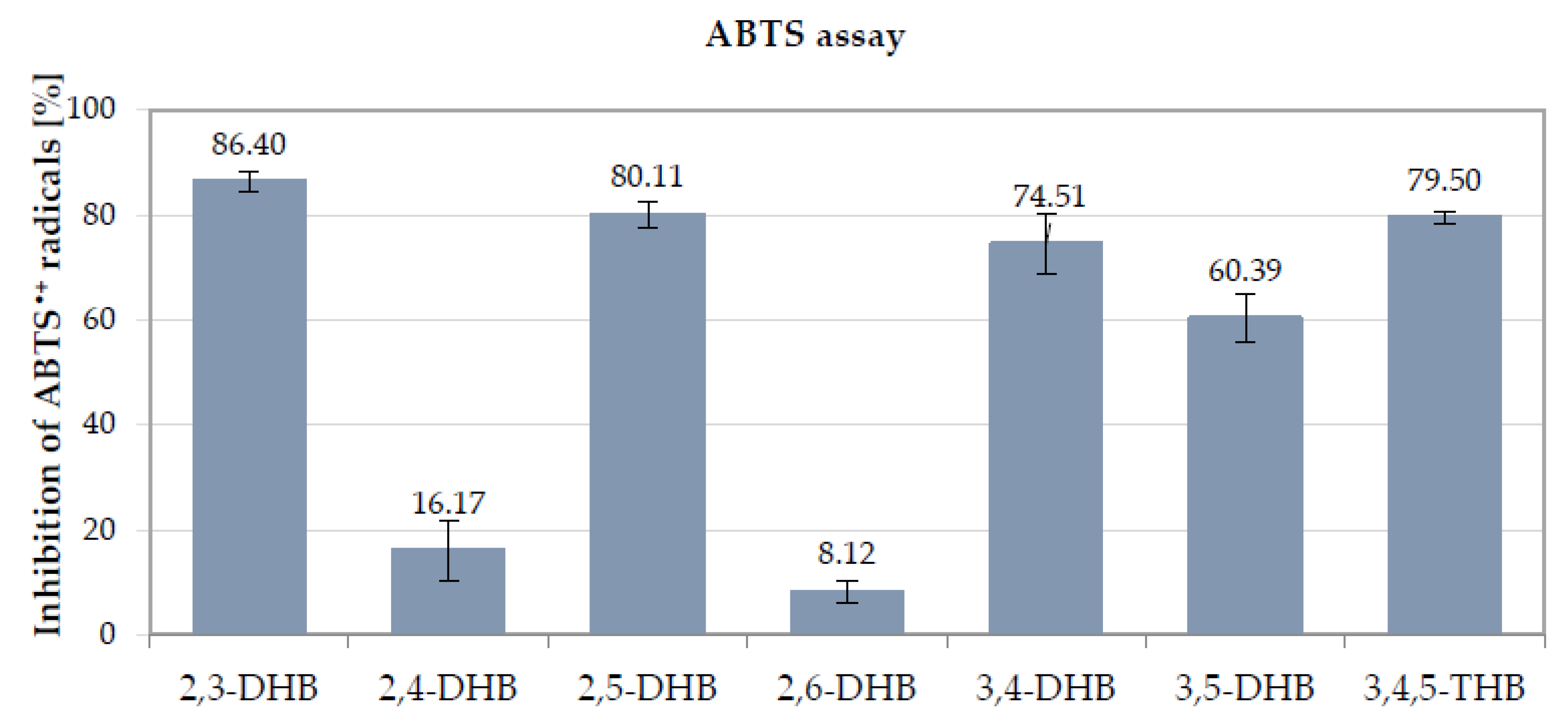
3.2. ABTS Assay
3.3. FRAP Assay
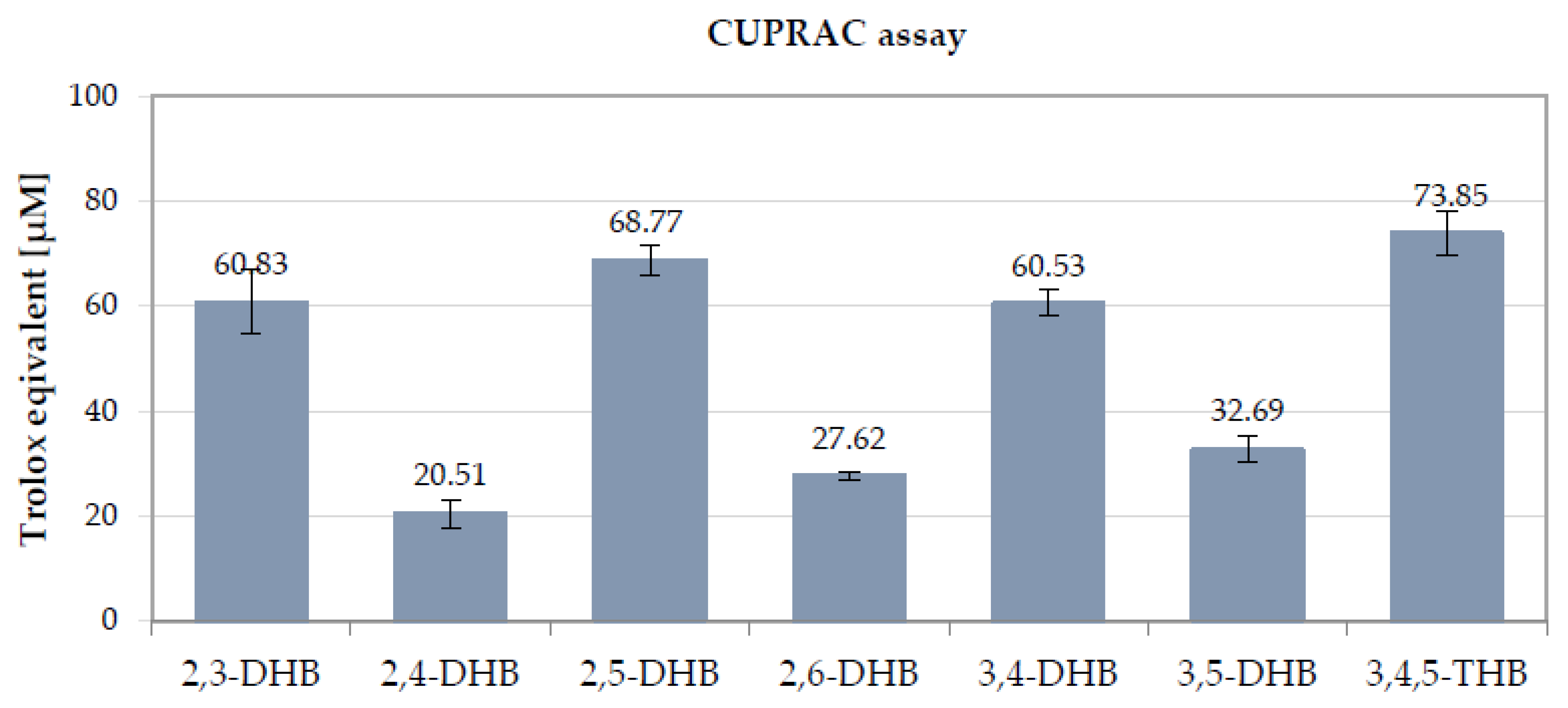
3.4. CUPRAC Assay
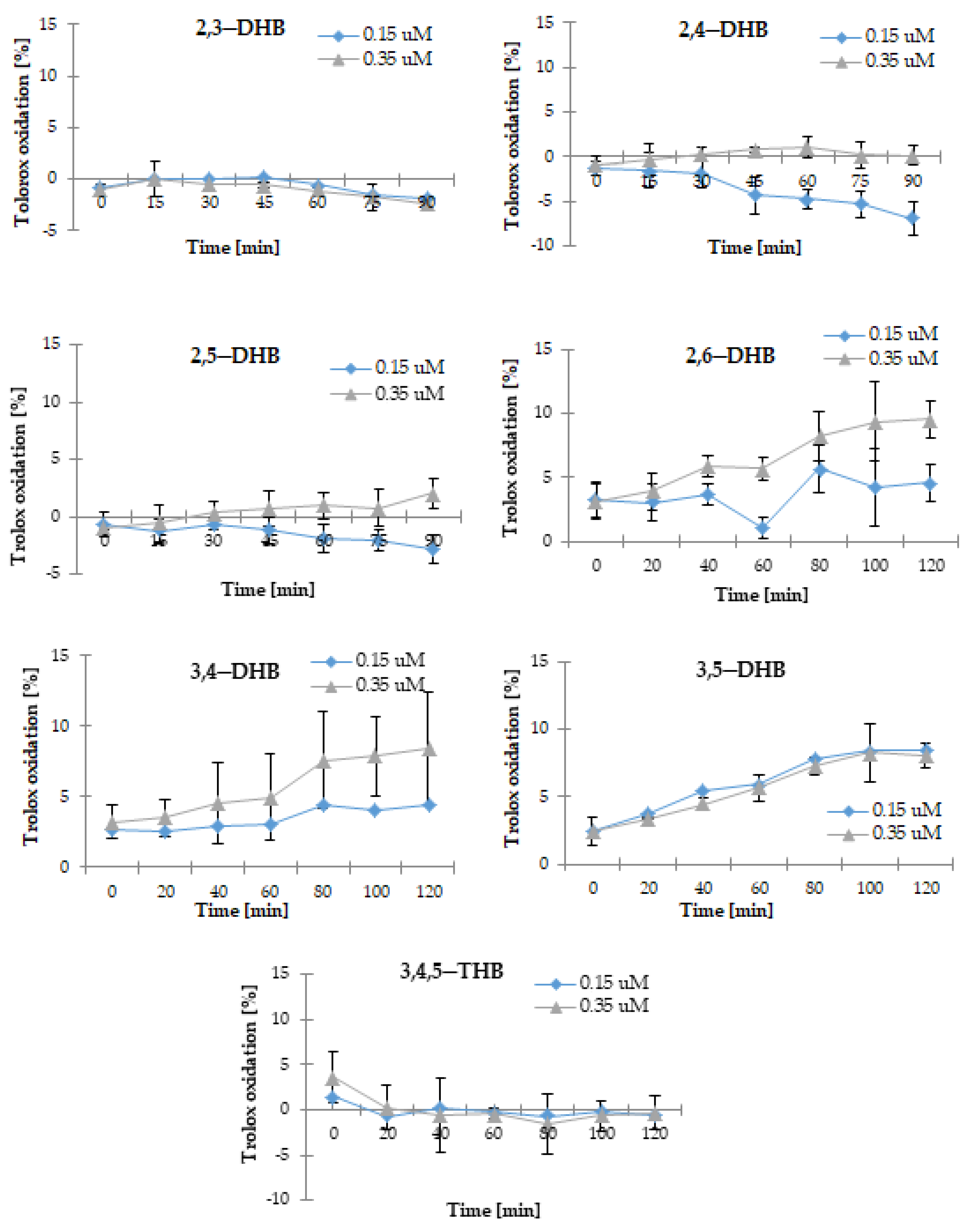
3.5. Pro-Oxidant Activity
3.6. Antimicrobial Activity
3.7. Cytotoxicity Studies in MCF-7 and MDA-MB-231 Cell Lines
3.8. Lipophilicity of Hydroxybenzoic Acids
3.9. DFT Study
3.10. Aromaticity
3.11. The Distribution of Electronic Charges
3.12. ESP Maps
3.13. FTIR, 1H, and 13C NMR Study
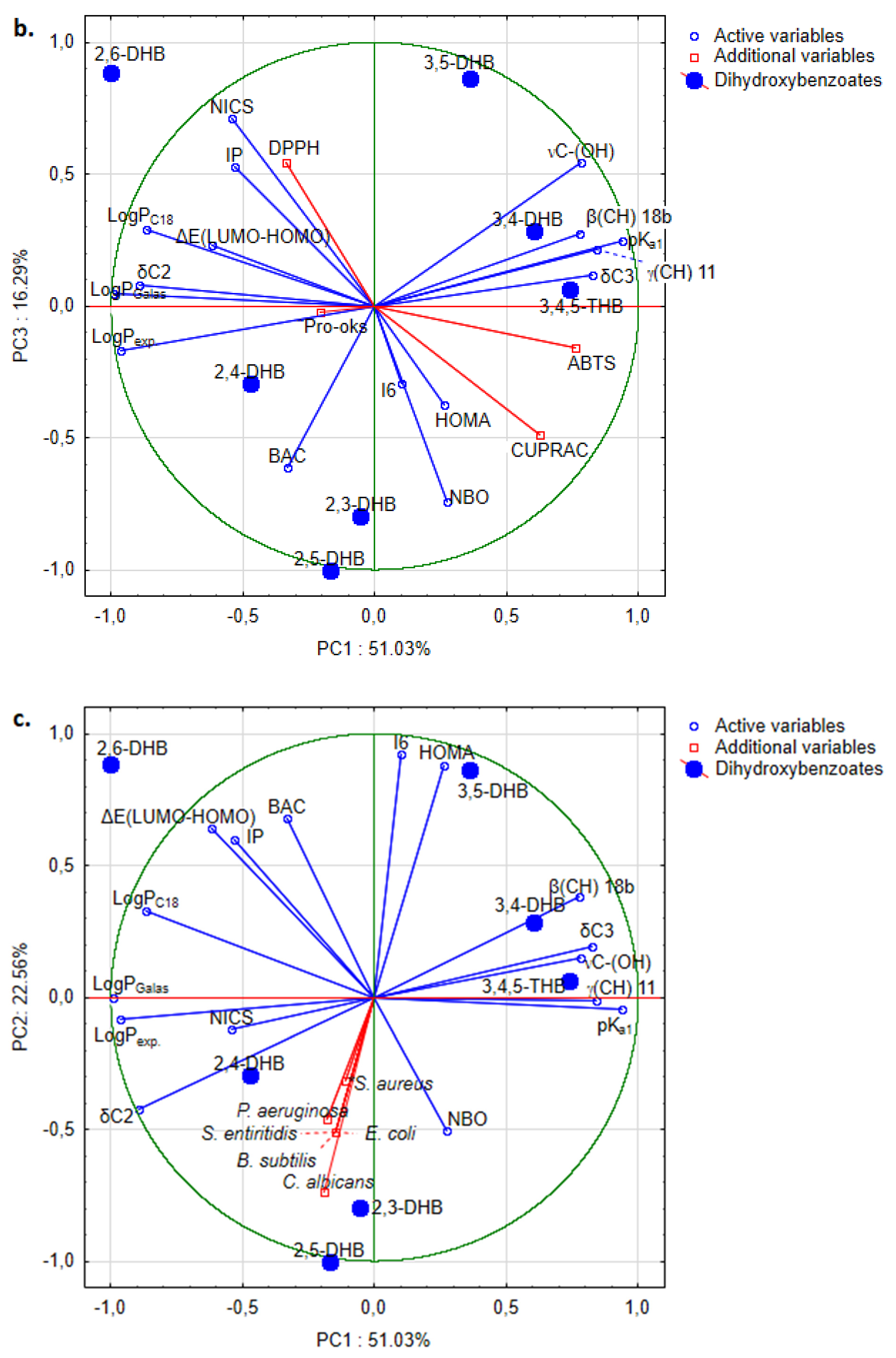
3.14. Statistical Analysis
4. Conclusions
Supplementary Materials
Author Contributions
Funding
Institutional Review Board Statement
Informed Consent Statement
Data Availability Statement
Conflicts of Interest
References
- Martínez-Cayuela, M. Oxygen free radicals and human disease. Biochimie 1995, 77, 147–161. [Google Scholar] [CrossRef] [Scilit]
- Phaniendra, A.; Jestadi, D.B.; Periyasamy, L. Free Radicals: Properties, Sources, Targets, and Their Implication in Various Diseases. Indian J. Clin. Biochem. 2015, 30, 11–26. [Google Scholar] [CrossRef] [Scilit]
- Di Meo, S.; Venditti, P. Evolution of the Knowledge of Free Radicals and Other Oxidants. Oxid. Med. Cell. Longev. 2020, 2020, 9829176. [Google Scholar] [CrossRef] [Scilit]
- Jurgowiak, M.; Oliński, R. Wolne rodniki a starzenie się. Kosmos 1995, 44, 71–88. [Google Scholar]
- Pizzino, G.; Irrera, N.; Cucinotta, M.; Pallio, G.; Mannino, F.; Arcoraci, V.; Squadrito, F.; Altavilla, D.; Bitto, A. Oxidative Stress: Harms and Benefits for Human Health. Oxid. Med. Cell. Longev. 2017, 2017, 8416763. [Google Scholar] [CrossRef] [Scilit]
- Niemann, B.; Rohrbach, S.; Miller, M.R.; Newby, D.E.; Fuster, V.; Kovacic, J.C. Oxidative Stress and Cardiovascular Risk: Obesity, Diabetes, Smoking, and Pollution: Part 3 of a 3-Part Series. J. Am. Coll. Cardiol. 2017, 70, 230–251. [Google Scholar] [CrossRef] [Scilit] [PubMed]
- Pham-Huy, L.A.; He, H.; Pham-Huy, C. Free radicals, antioxidants in disease and health. Int. J. Biomed. Sci. 2008, 4, 89–96. [Google Scholar]
- Umeno, A.; Biju, V.; Yoshida, Y. In vivo ROS production and use of oxidative stress-derived biomarkers to detect the onset of diseases such as Alzheimer’s disease, Parkinson’s disease, and diabetes. Free Radic. Res. 2017, 51, 413–427. [Google Scholar] [CrossRef] [Scilit] [PubMed]
- Valko, M.; Leibfritz, D.; Moncol, J.; Cronin, M.T.D.; Mazur, M.; Telser, J. Free radicals and antioxidants in normal physiological functions and human disease. Int. J. Biochem. Cell Biol. 2007, 39, 44–84. [Google Scholar] [CrossRef] [Scilit]
- Kang, D.H. Oxidative stress, DNA damage, and breast cancer. AACN Adv. Crit. Care 2002, 13, 540–549. [Google Scholar] [CrossRef] [Scilit]
- Sugamura, K.; Keaney, J.F. Reactive oxygen species in cardiovascular disease. Free Radic. Biol. Med. 2011, 51, 978–992. [Google Scholar] [CrossRef] [Scilit]
- Kurutas, E.B. The importance of antioxidants which play the role in cellular response against oxidative/nitrosative stress: Current state. Nutr. J. 2016, 15, 71. [Google Scholar] [CrossRef] [Scilit] [PubMed]
- Septembre-Malaterre, A.; Remize, F.; Poucheret, P. Fruits and vegetables, as a source of nutritional compounds and phytochemicals: Changes in bioactive compounds during lactic fermentation. Food Res. Int. 2018, 104, 86–99. [Google Scholar] [CrossRef] [Scilit]
- Guardado, E.; Molina, E.; Joo, M.; Uriarte, E. Antioxidant and Pro-Oxidant Effects of Polyphenolic Compounds and Structure-Activity Relationship Evidence. Nutr. Well-Being Health 2012, 2, 23–48. [Google Scholar]
- Kowalczewski, P.Ł.; Radzikowska, D.; Ivanišová, E.; Szwengiel, A.; Kačániová, M.; Sawinska, Z. Influence of abiotic stress factors on the antioxidant properties and polyphenols profile composition of Green Barley (Hordeum vulgare L.). Int. J. Mol. Sci. 2020, 21, 397. [Google Scholar] [CrossRef] [Scilit]
- Ruskovska, T.; Budić-Leto, I.; Corral-Jara, K.F.; Ajdžanović, V.; Arola-Arnal, A.; Bravo, F.I.; Deligiannidou, G.-E.; Havlik, J.; Janeva, M.; Kistanova, E.; et al. Systematic Bioinformatic Analyses of Nutrigenomic Modifications by Polyphenols Associated with Cardiometabolic Health in Humans—Evidence from Targeted Nutrigenomic Studies. Nutrients 2021, 13, 2326. [Google Scholar] [CrossRef] [Scilit] [PubMed]
- Taamalli, A.; Contreras, M.D.M.; Abu-Reidah, I.M.; Trabelsi, N.; Ben Youssef, N. Quality of phenolic compounds: Occurrence, health benefits, and applications in food industry. J. Food Qual. 2019, 2019, 9594646. [Google Scholar] [CrossRef] [Scilit]
- Dos Santos, W.N.L.; da Silva Sauthier, M.C.; dos Santos, A.M.P.; de Andrade Santana, D.; Almeida Azevedo, R.S.; da Cruz Caldas, J. Simultaneous determination of 13 phenolic bioactive compounds in guava (Psidium guajava L.) by HPLC-PAD with evaluation using PCA and Neural Network Analysis (NNA). Microchem. J. 2017, 133, 583–592. [Google Scholar] [CrossRef] [Scilit]
- Yilmaz, Y.; Toledo, R.T. Major Flavonoids in Grape Seeds and Skins: Antioxidant Capacity of Catechin, Epicatechin, and Gallic Acid. J. Agric. Food Chem. 2004, 52, 255–260. [Google Scholar] [CrossRef] [Scilit]
- Li, R.; Chen, X.G.; Jia, K.; Liu, Z.P.; Peng, H.Y. A systematic determination of polyphenols constituents and cytotoxic ability in fruit parts of pomegranates derived from five Chinese cultivars. SpringerPlus 2016, 5, 914. [Google Scholar] [CrossRef] [Scilit]
- Di Stefano, V.; Avellone, G.; Bongiorno, D.; Indelicato, S.; Massenti, R.; Lo Bianco, R. Quantitative evaluation of the phenolic profile in fruits of six avocado (Persea americana) cultivars by ultra-high-performance liquid chromatography-heated electrospray-mass spectrometry. Int. J. Food Prop. 2017, 20, 1302–1312. [Google Scholar] [CrossRef] [Scilit]
- Nour, V.; Trandafir, I.; Cosmulescu, S. Antioxidant capacity, phenolic compounds and minerals content of blackcurrant (ribes nigrum L.) leaves as influenced by harvesting date and extraction method. Ind. Crops Prod. 2014, 53, 133–139. [Google Scholar] [CrossRef] [Scilit]
- Palafox-Carlos, H.; Yahia, E.M.; González-Aguilar, G.A. Identification and quantification of major phenolic compounds from mango (Mangifera indica, cv. Ataulfo) fruit by HPLC-DAD-MS/MS-ESI and their individual contribution to the antioxidant activity during ripening. Food Chem. 2012, 135, 105–111. [Google Scholar] [CrossRef] [Scilit]
- Hallmann, E.; Ponder, A.; Aninowski, M.; Narangerel, T.; Leszczyńska, J. The interaction between antioxidants content and allergenic potency of different raspberry cultivars. Antioxidants 2020, 9, 256. [Google Scholar] [CrossRef] [Scilit]
- Butkhup, L.; Samappito, W.; Samappito, S. Phenolic composition and antioxidant activity of white mulberry (Morus alba L.) fruits. Int. J. Food Sci. Technol. 2013, 48, 934–940. [Google Scholar] [CrossRef] [Scilit]
- Khadem, S.; Marles, R.J. Monocyclic phenolic acids; hydroxy- and polyhydroxybenzoic acids: Occurrence and recent bioactivity studies. Molecules 2010, 15, 7985–8005. [Google Scholar] [CrossRef] [Scilit] [PubMed]
- Dludla, P.V.; Nkambule, B.B.; Jack, B.; Mkandla, Z.; Mutize, T.; Silvestri, S.; Orlando, P.; Tiano, L.; Louw, J.; Mazibuko-Mbeje, S.E. Inflammation and oxidative stress in an obese state and the protective effects of gallic acid. Nutrients 2019, 11, 23. [Google Scholar] [CrossRef] [Scilit] [PubMed]
- Yin, M.C.; Lin, C.C.; Wu, H.C.; Tsao, S.M.; Hsu, C.K. Apoptotic effects of protocatechuic acid in human breast, lung, liver, cervix, and prostate cancer cells: Potential mechanisms of action. J. Agric. Food Chem. 2009, 57, 6468–6473. [Google Scholar] [CrossRef] [Scilit] [PubMed]
- Kalinowska, M.; Gołębiewska, E.; Mazur, L.; Lewandowska, H.; Pruszyński, M.; Świderski, G.; Wyrwas, M.; Pawluczuk, N.; Lewandowski, W. Crystal Structure, Spectroscopic Characterization, Antioxidant and Cytotoxic Activity of New Mg(II) and Mn(II)/Na(I) Complexes of Isoferulic Acid. Materials 2021, 14, 3236. [Google Scholar] [CrossRef] [Scilit]
- Ashidate, K.; Kawamura, M.; Mimura, D.; Tohda, H.; Miyazaki, S.; Teramoto, T.; Yamamoto, Y.; Hirata, Y. Gentisic acid, an aspirin metabolite, inhibits oxidation of low-density lipoprotein and the formation of cholesterol ester hydroperoxides in human plasma. Eur. J. Pharmacol. 2005, 513, 173–179. [Google Scholar] [CrossRef] [Scilit]
- Abedi, F.; Razavi, B.M.; Hosseinzadeh, H. A review on gentisic acid as a plant derived phenolic acid and metabolite of aspirin: Comprehensive pharmacology, toxicology, and some pharmaceutical aspects. Phyther. Res. 2020, 34, 729–741. [Google Scholar] [CrossRef] [Scilit] [PubMed]
- Shi, G.F.; An, L.J.; Jiang, B.; Guan, S.; Bao, Y.M. Alpinia protocatechuic acid protects against oxidative damage in vitro and reduces oxidative stress in vivo. Neurosci. Lett. 2006, 403, 206–210. [Google Scholar] [CrossRef] [Scilit] [PubMed]
- Valko, M.; Izakovic, M.; Mazur, M.; Rhodes, C.J.; Telser, J. Role of oxygen radicals in DNA damage and cancer incidence. Mol. Cell. Biochem. 2004, 266, 37–56. [Google Scholar] [CrossRef] [Scilit]
- Lewandowska, H.; Kalinowska, M. New polyphenol-containing LDL nano-preparations in oxidative stress and DNA damage: A potential route for cell-targeted PP delivery. Materials 2020, 13, 5106. [Google Scholar] [CrossRef] [Scilit] [PubMed]
- Lin, H.-H.; Chen, J.-H.; Huang, C.-C.; Wang, C.-J. Apoptotic effect of 3,4-dihydroxybenzoic acid on human gastric carcinoma cells involving JNK/p38 MAPK signaling activation. Int. J. Cancer 2007, 120, 2306–2316. [Google Scholar] [CrossRef] [Scilit]
- Lodovici, M.; Guglielmi, F.; Meoni, M.; Dolara, P. Effect of natural phenolic acids on DNA oxidation in vitro. Food Chem. Toxicol. 2001, 39, 1205–1210. [Google Scholar] [CrossRef] [Scilit]
- Sappey, C.; Boelaert, J.R.; Legrandpoels, S.; Grady, R.W.; Piette, J. NF-κB transcription factor activation by hydrogen peroxide can be decreased by 2, 3-Dihydroxybenzoic acid and its ethyl ester derivative. Arch. Biochem. Biophys. 1995, 321, 263–270. [Google Scholar] [CrossRef] [Scilit] [PubMed]
- Sharma, S.; Khan, N.; Sultana, S. Study on prevention of two-stage skin carcinogenesis by Hibiscus rosa sinensis extract and the role of its chemical constituent, gentisic acid, in the inhibition of tumour promotion response and oxidative stress in mice. Eur. J. Cancer Prev. 2004, 13, 53–63. [Google Scholar] [CrossRef] [Scilit]
- Rafat Husain, S.; Cillard, J.; Cillard, P. Hydroxyl radical scavenging activity of flavonoids. Phytochemistry 1987, 26, 2489–2491. [Google Scholar] [CrossRef] [Scilit]
- Brand-Williams, W.; Cuvelier, M.E.; Berset, C. Use of a free radical method to evaluate antioxidant activity. LWT Food Sci. Technol. 1995, 28, 25–30. [Google Scholar] [CrossRef] [Scilit]
- Velika, B.; Kron, I. Antioxidant properties of benzoic acid derivatives against Superoxide radical. Free Rad. Antiox. 2012, 2, 62–67. [Google Scholar] [CrossRef] [Scilit]
- Rice-Evans, C.A.; Diplock, A.T.; Symons, M.C.R. Techniques in Free Radical Research; Elsevier: New York, NY, USA, 1991; pp. 1–291. [Google Scholar]
- Re, R.; Pellegrini, N.; Proteggente, A.; Pannala, A.; Yang, M.; Rice-Evans, C. Antioxidant activity applying an improved ABTS radical cation decolorization assay. Free Radic. Biol. Med. 1999, 26, 1231–1237. [Google Scholar] [CrossRef] [Scilit]
- Apak, R.; Güçlü, K.; Özyürek, M.; Karademir, S.E. Novel total antioxidant capacity index for dietary polyphenols and vitamins C and E, using their cupric ion reducing capability in the presence of neocuproine: CUPRAC method. J. Agric. Food Chem. 2004, 52, 7970–7981. [Google Scholar] [CrossRef] [Scilit]
- Zeraik, M.L.; Petrônio, M.S.; Coelho, D.; Regasini, L.O.; Silva, D.H.S.; da Fonseca, L.M.; Machado, S.A.S.; Bolzani, V.S.; Ximenes, V.F. Improvement of Pro-Oxidant Capacity of Protocatechuic Acid by Esterification. PLoS ONE 2014, 9, e110277. [Google Scholar] [CrossRef] [Scilit]
- Kalinowska, M.; Bajko, E.; Matejczyk, M.; Kaczyński, P.; Łozowicka, B.; Lewandowski, W. The study of anti-/pro-oxidant, lipophilic, microbial and spectroscopic properties of new alkali metal salts of 5-o-caffeoylquinic acid. Int. J. Mol. Sci. 2018, 19, 463. [Google Scholar] [CrossRef] [Scilit]
- PhysChem, ADME & Toxicity Calculations with Percepta Software. Available online: https://www.acdlabs.com/products/percepta/ (accessed on 7 July 2021).
- Julg, A.; Francoics, P. Structural studies of some non-alternant hydrocarbons; a new definition of aromaticity. Theor. Chim. Acta 1967, 7, 249–261. [Google Scholar] [CrossRef] [Scilit]
- Krygowski, T.M.; Ciesielski, A.; Bird, C.W.; Kotschy, A. Aromatic Character of the Benzene Ring Present in Various Topological Environments in Benzenoid Hydrocarbons. Nonequivalence of Indices of Aromaticity. J. Chem. Inf. Comput. Sci. 1995, 35, 205. [Google Scholar] [CrossRef] [Scilit]
- Cyrañski, M.K.; Krygowski, T.M.; Katritzky, A.R.; Schleyer, P.V.R. To what extent can aromaticity be defined uniquely? J. Org. Chem. 2002, 67, 1333–1338. [Google Scholar] [CrossRef] [Scilit] [PubMed]
- Bird, C.W. A new aromaticity index and its application to five-membered ring heterocycles. Tetrahedron 1985, 41, 1409–1414. [Google Scholar] [CrossRef] [Scilit]
- Schleyer, P.V.R.; Jiao, H. What is aromaticity? Pure Appl. Chem. 1996, 68, 209–218. [Google Scholar] [CrossRef] [Scilit]
- Weinhold, F.; Landis, C.R. Natural bond orbitals and extensions of localized bonding concepts. Chem. Educ. Res. Pract. 2001, 2, 91–104. [Google Scholar] [CrossRef] [Scilit]
- Breneman, C.M.; Wiberg, K.B. Determining atom-centered monopoles from molecular electrostatic potentials. The need for high sampling density in formamide conformational analysis. J. Comput. Chem. 1990, 11, 361–373. [Google Scholar] [CrossRef] [Scilit]
- Frish, M.J.; Trucks, G.W.; Schlegel, H.; Frisch, M.J.; Trucks, G.W.; Schlegel, H.B.; Scuseria, G.E.; Robb, M.A.; Cheeseman, J.R.; Scalmani, G.; et al. Gaussian 09, Revision A.02; Gaussian Inc.: Wallingford, CT, USA, 2009. [Google Scholar]
- Sharma, O.P.; Bhat, T.K. DPPH antioxidant assay revisited. Food Chem. 2009, 113, 1202–1205. [Google Scholar] [CrossRef] [Scilit]
- Francenia Santos-Sánchez, N.; Salas-Coronado, R.; Villanueva-Cañongo, C.; Hernández-Carlos, B. Antioxidant Compounds and Their Antioxidant Mechanism. In Antioxidants; IntechOpen: London, UK, 2019; pp. 1–28. [Google Scholar]
- Holtz, R.W. In Vitro Methods to Screen Materials for Anti-aging Effects. In Skin Aging Handbook; Elsevier Inc.: Amsterdam, The Netherlands, 2009; pp. 329–362. [Google Scholar]
- Wojdyło, A.; Oszmiański, J.; Czemerys, R. Antioxidant activity and phenolic compounds in 32 selected herbs. Food Chem. 2007, 105, 940–949. [Google Scholar] [CrossRef] [Scilit]
- Cieślik, E.; Grȩda, A.; Adamus, W. Contents of polyphenols in fruit and vegetables. Food Chem. 2006, 94, 135–142. [Google Scholar] [CrossRef] [Scilit]
- Mishra, K.; Ojha, H.; Chaudhury, N.K. Estimation of antiradical properties of antioxidants using DPPH- assay: A critical review and results. Food Chem. 2012, 130, 1036–1043. [Google Scholar] [CrossRef] [Scilit]
- Kalinowska, M.; Mazur, L.; Jabłońska-Trypuć, A.; Lewandowski, W. A new calcium 2,5-dihydroxybenzoate: Synthesis, characterization and antioxidant studies and stress mediated cytotoxity in MCF-7 cells. J. Saudi Chem. Soc. 2018, 22, 742–756. [Google Scholar] [CrossRef] [Scilit]
- Prihantini, A.I.; Tachibana, S.; Itoh, K. Antioxidant Active Compounds from Elaeocarpussylvestris and their Relationship between Structure and Activity. Procedia Environ. Sci. 2015, 28, 758–768. [Google Scholar] [CrossRef] [Scilit]
- Santoso, S.P.; Ismadji, S.; Angkawijaya, A.E.; Soetaredjo, F.E.; Go, A.W.; Ju, Y.H. Complexes of 2,6-dihydroxybenzoic acid with divalent metal ions: Synthesis, crystal structure, spectral studies, and biological activity enhancement. J. Mol. Liq. 2016, 221, 617–623. [Google Scholar] [CrossRef] [Scilit]
- Mardani-Ghahfarokhi, A.; Farhoosh, R. Antioxidant activity and mechanism of inhibitory action of gentisic and α-resorcylic acids. Sci. Rep. 2020, 10, 19487. [Google Scholar] [CrossRef] [Scilit]
- Nofrizal; Putra, D.P.; Arbain, D. Antioxidant and antibacterial constituents from two Sumatran ferns, Trichomanes javanicum and Oleandra pistillaris. Nat. Prod. Commun. 2017, 12, 1263–1264. [Google Scholar]
- Karamać, M.; Kosińska, A. Comparison of radical-scavenging activities for selected phenolic acids. Pol. J. Food Nutr. Sci. 2005, 55, 165–170. [Google Scholar]
- Czerniak, K.; Walkiewicz, F. Synthesis and antioxidant properties of dicationic ionic liquids. New J. Chem. 2017, 41, 530–539. [Google Scholar] [CrossRef] [Scilit]
- Sroka, Z.; Cisowski, W. Hydrogen peroxide scavenging, antioxidant and anti-radical activity of some phenolic acids. Food Chem. Toxicol. 2003, 41, 753–758. [Google Scholar] [CrossRef] [Scilit]
- Tung, Y.T.; Wu, J.H.; Kuo, Y.H.; Chang, S.T. Antioxidant activities of natural phenolic compounds from Acacia confusa bark. Bioresour. Technol. 2007, 98, 1120–1123. [Google Scholar] [CrossRef] [Scilit]
- Mathew, S.; Abraham, T.E.; Zakaria, Z.A. Reactivity of phenolic compounds towards free radicals under in vitro conditions. J. Food Sci. Technol. 2015, 52, 5790–5798. [Google Scholar] [CrossRef] [Scilit]
- Yen, G.C.; Der Duh, P.; Tsai, H.L. Antioxidant and pro-oxidant properties of ascorbic acid and gallic acid. Food Chem. 2002, 79, 307–313. [Google Scholar] [CrossRef] [Scilit]
- Biskup, I.; Golonka, I.; Gamian, A.; Sroka, Z. Antioxidant activity of selected phenols estimated by ABTS and FRAP methods. Adv. Hyg. Exp. Med. 2013, 67, 958–963. [Google Scholar] [CrossRef] [Scilit]
- Li, X.; Wang, X.; Chen, D.; Chen, S. Antioxidant activity and mechanism of protocatechuic acid in Vitro. Funct. Foods Health Dis. 2011, 1, 232–244. [Google Scholar] [CrossRef] [Scilit]
- Kukoc-Modun, L.; Tsikas, D.; Biocic, M.; Radić, N. Flow injection analysis of N-acetyl-l-cysteine based on the reduction of copper(ii)-neocuproine reagent. Anal. Lett. 2016, 49, 607–617. [Google Scholar] [CrossRef] [Scilit]
- Spiegel, M.; Kapusta, K.; Kołodziejczyk, W.; Saloni, J.; Żbikowska, B.; Hill, G.A.; Sroka, Z. Antioxidant Activity of Selected Phenolic Acids–Ferric Reducing Antioxidant Power Assay and QSAR Analysis of the Structural Features. Molecules 2020, 25, 3088. [Google Scholar] [CrossRef] [Scilit]
- Rice-Evans, C.A.; Miller, N.J.; Paganga, G. Structure-antioxidant activity relationships of flavonoids and phenolic acids. Free Radic. Biol. Med. 1996, 20, 933–956. [Google Scholar] [CrossRef] [Scilit]
- Owusu Apenten, R. A FRAP Assay at pH 7 unveils Extra Antioxidant Activity from Green, Black, White and Rooibos Tea but not Apple Tea. Food Nutr. Rep. 2015, 1, 16–23. [Google Scholar] [CrossRef] [Scilit]
- Litwinienko, G.; Ingold, K.U. Abnormal solvent effects on hydrogen atom abstraction. 2. Resolution of the curcumin antioxidant controversy. The role of sequential proton loss electron transfer. J. Org. Chem. 2004, 69, 5888–5896. [Google Scholar] [CrossRef] [Scilit]
- Foti, M.C.; Daquino, C.; Geraci, C. Electron-transfer reaction of cinnamic acids and their methyl esters with the DPPH(*) radical in alcoholic solutions. J. Org. Chem. 2004, 69, 2309–2314. [Google Scholar] [CrossRef] [Scilit] [PubMed]
- Borges, A.; Ferreira, C.; Saavedra, M.J.; Simões, M. Antibacterial activity and mode of action of ferulic and gallic acids against pathogenic bacteria. Microb. Drug Resist. 2013, 19, 256–265. [Google Scholar] [CrossRef] [Scilit] [PubMed]
- Sánchez-Maldonado, A.F.; Schieber, A.; Gänzle, M.G. Structure-function relationships of the antibacterial activity of phenolic acids and their metabolism by lactic acid bacteria. J. Appl. Microbiol. 2011, 111, 1176–1184. [Google Scholar] [CrossRef] [Scilit] [PubMed]
- Stojković, D.S.; Živković, J.; Soković, M.; Glamočlija, J.; Ferreira, I.C.F.R.; Janković, T.; Maksimović, Z. Antibacterial activity of Veronica montana L. extract and of protocatechuic acid incorporated in a food system. Food Chem. Toxicol. 2013, 55, 209–213. [Google Scholar] [CrossRef] [Scilit]
- Mattson, T.E.; Johny, A.K.; Amalaradjou, M.A.R.; More, K.; Schreiber, D.T.; Patel, J.; Venkitanarayanan, K. Inactivation of Salmonella spp. on tomatoes by plant molecules. Int. J. Food Microbiol. 2011, 144, 464–468. [Google Scholar] [CrossRef] [Scilit]
- Baskaran, S.A.; Upadhyay, A.; Kollanoor-Johny, A.; Upadhyaya, I.; Mooyottu, S.; Roshni Amalaradjou, M.A.; Schreiber, D.; Venkitanarayanan, K. Efficacy of plant-derived antimicrobials as antimicrobial wash treatments for reducing enterohemorrhagic escherichia coli O157: H7 on apples. J. Food Sci. 2013, 78, M1399–M1404. [Google Scholar] [CrossRef] [Scilit] [PubMed]
- Upadhyay, A.; Upadhyaya, I.; Kollanoor-Johny, A.; Ananda Baskaran, S.; Mooyottu, S.; Karumathil, D.; Venkitanarayanan, K. Inactivation of Listeria monocytogenes on frankfurters by plant-derived antimicrobials alone or in combination with hydrogen peroxide. Int. J. Food Microbiol. 2013, 163, 114–118. [Google Scholar] [CrossRef] [Scilit] [PubMed]
- Ahire, J.J.; Dicks, L.M.T. 2,3-dihydroxybenzoic acid-containing nanofiber wound dressings inhibit biofilm formation by Pseudomonas aeruginosa. Antimicrob. Agents Chemother. 2014, 58, 2098–2104. [Google Scholar] [CrossRef] [Scilit] [PubMed]
- Pj, B.; Shibumon, G.; Sunny, K.; Cincy, G. 2,3-Dihydroxybenzoic Acid: An Effective Antifungal Agent Isolated from Flacourtia inermis Fruit. Int. J. Pharm. Clin. Res. 2010, 2, 101–105. [Google Scholar]
- Lattanzio, V.; Di Venere, D.; Linsalata, V.; Lima, G.; Ippolito, A.; Salerno, M. Antifungal activity of 2,5-dimethoxybenzoic acid on postharvest pathogens of strawberry fruits. Postharvest Biol. Technol. 1996, 9, 325–334. [Google Scholar] [CrossRef] [Scilit]
- Merkl, R.; Hrádková, I.; Filip, V.; Šmidrkal, J. Antimicrobial and antioxidant properties of phenolic acids alkyl esters. Czech J. Food Sci. 2010, 28, 275–279. [Google Scholar] [CrossRef] [Scilit]
- Campos, F.M.; Couto, J.A.; Figueiredo, A.R.; Tóth, I.V.; Rangel, A.O.S.S.; Hogg, T.A. Cell membrane damage induced by phenolic acids on wine lactic acid bacteria. Int. J. Food Microbiol. 2009, 135, 144–151. [Google Scholar] [CrossRef] [Scilit]
- Hsu, J.D.; Kao, S.H.; Ou, T.T.; Chen, Y.J.; Li, Y.J.; Wang, C.J. Gallic acid induces G2/M phase arrest of breast cancer cell MCF-7 through stabilization of p27Kip1 attributed to disruption of p27 Kip1/Skp2 complex. J. Agric. Food Chem. 2011, 59, 1996–2003. [Google Scholar] [CrossRef] [Scilit] [PubMed]
- Marcelia, M.; Arsianti, A.; Chan, J.O.T.; Stevano, J.W.; Fadilah, F.; Putrianingsih, R.; Azizah, N.N.; Bahtiar, A.; Tanimoto, H. Kiyomikakiuchi In vitro cytotoxicity of the synthesized gallic acid derivatives (N-Alkyl Gallamide) against breast MCF-7 cancer cells. Orient. J. Chem. 2018, 34, 2268–2272. [Google Scholar] [CrossRef] [Scilit]
- Maurya, D.K.; Nandakumar, N.; Devasagayam, T.P.A. Anticancer property of gallic acid in A549, a human lung adenocarcinoma cell line, and possible mechanisms. J. Clin. Biochem. Nutr. 2011, 48, 85–90. [Google Scholar] [CrossRef] [Scilit]
- Moghtaderi, H.; Sepehri, H.; Delphi, L.; Attari, F. Gallic acid and curcumin induce cytotoxicity and apoptosis in human breast cancer cell MDA-MB-231. BioImpacts 2018, 8, 185–194. [Google Scholar] [CrossRef] [Scilit] [PubMed]
- Sherin, L.; Sohail, A.; Shujaat, S. Time-dependent AI-Modeling of the anticancer efficacy of synthesized gallic acid analogues. Comput. Biol. Chem. 2019, 79, 137–146. [Google Scholar] [CrossRef] [Scilit]
- Roleira, F.M.F.; Tavares-Da-Silva, E.J.; Varela, C.L.; Costa, S.C.; Silva, T.; Garrido, J.; Borges, F. Plant derived and dietary phenolic antioxidants: Anticancer properties. Food Chem. 2015, 183, 235–258. [Google Scholar] [CrossRef] [Scilit] [PubMed]
- Sankaranarayanan, R.; Valiveti, C.K.; Dachineni, R.; Kumar, D.R.; Lick, T.; Bhat, G.J. Aspirin metabolites 2,3-DHBA and 2,5-DHBA inhibit cancer cell growth: Implications in colorectal cancer prevention. Mol. Med. Rep. 2020, 21, 20–34. [Google Scholar] [CrossRef] [Scilit]
- Yip, E.C.H.; Chan, A.S.L.; Pang, H.; Tam, Y.K.; Wong, Y.H. Protocatechuic acid induces cell death in HepG2 hepatocellular carcinoma cells through a c-Jun N-terminal kinase-dependent mechanism. Cell Biol. Toxicol. 2006, 22, 293–302. [Google Scholar] [CrossRef] [Scilit]
- Reis, F.S.; Sousa, D.; Barros, L.; Martins, A.; Morales, P.; Ferreira, I.C.F.R.; Vasconcelos, M.H. Leccinum vulpinum Watling induces DNA damage, decreases cell proliferation and induces apoptosis on the human MCF-7 breast cancer cell line. Food Chem. Toxicol. 2016, 90, 45–54. [Google Scholar] [CrossRef] [Scilit] [PubMed]
- Chmiel, T.; Mieszkowska, A.; Kempińska-Kupczyk, D.; Kot-Wasik, A.; Namieśnik, J.; Mazerska, Z. The impact of lipophilicity on environmental processes, drug delivery and bioavailability of food components. Microchem. J. 2019, 146, 393–406. [Google Scholar] [CrossRef] [Scilit]
- Hansch, C.; Leo, A.; Hoekman, D.; Livingstone, D.J. Exploring QSAR: Hydrophobic, Electronic, and Steric Constants; American Chemical Society: Washington, DC, USA, 1995; Volume 1, pp. 155–156. [Google Scholar]
- Zevatskii, Y.E.; Lysova, S.S. Empirical Procedure for the Calculation of Ionization Constants of Organic Compounds in Water from Their Molecular Volume. Russ. J. Org. Chem. 2009, 45, 825–834. [Google Scholar] [CrossRef] [Scilit]
- Chemical Book. Available online: https://www.chemicalbook.com/ProductIndex_EN.aspx (accessed on 8 July 2021).
- Human Metabolome Database. Available online: https://hmdb.ca/ (accessed on 8 July 2021).
- Kortum, G.; Vogel, W.; Andrussow, K. Dissociation Constants of Organic Acids in Aqueous Solution; Butterworths: London, UK, 1961. [Google Scholar]
- Sangster, J.M. Octanol-Water Partition Coefficients: Fundamentals and Physical Chemistry; Wiley: New York, NY, USA, 1997; Volume 2. [Google Scholar]
- Taylor, T.; Seitz, E.; Fox, P.; Fuls, J. Antimicrobial Compositions Containing an Aromatic Carboxylic Acid and a Hydric Solvent. U.S. Patent 7,592,300, 22 September 2009. [Google Scholar]
- Serjeant, E.P.; Bempsey, B. Ionisation constants of organic acids in aqueous solution. IUPAC Chem. Data Ser. 1979, 23, 169–190. [Google Scholar]
- Patty, F.A. Industrial Hygiene and Toxicology; John Wiley & Sons Inc.: New York, NY, USA, 1963. [Google Scholar]
- Honório, K.M.; Da Silva, A.B.F. An AM1 study on the electron-donating and electron-accepting character of biomolecules. Int. J. Quantum Chem. 2003, 95, 126–132. [Google Scholar] [CrossRef] [Scilit]
- Marković, Z.; Crossed, D.; Signorović, J.; Dimitrić Marković, J.M.; Živić, M.; Amić, D. Investigation of the radical scavenging potency of hydroxybenzoic acids and their carboxylate anions. Mon. Chem. Chem. Mon. 2014, 145, 953–962. [Google Scholar] [CrossRef] [Scilit]
- Chen, Y.; Xiao, H.; Zheng, J.; Liang, G. Structure-thermodynamics-antioxidant activity relationships of selected natural phenolic acids and derivatives: An experimental and theoretical evaluation. PLoS ONE 2015, 10, e0121276. [Google Scholar] [CrossRef] [Scilit] [PubMed]
- National Institute of Advanced Industrial Science and Technology. Available online: https://sdbs.db.aist.go.jp/ (accessed on 10 July 2021).
- Varsanyi, G.; Kovner, M.A.; Lang, L. Assignments for Vibrational Spectra of 700 Benzene Derivatives; Akademiai Kiado: Budapest, Hungary, 1973. [Google Scholar]
- Lewandowski, W.; Kalinowska, M.; Lewandowska, H. The influence of metals on the electronic system of biologically important ligands. Spectroscopic study of benzoates, salicylates, nicotinates and isoorotates. Review. J. Inorg. Biochem. 2005, 99, 1407–1423. [Google Scholar] [CrossRef] [Scilit]
- Kalinowska, M.; Siemieniuk, E.; Kostro, A.; Lewandowski, W. The application of Aj, BAC, I6, HOMA indexes for quantitative determination of aromaticity of metal complexes with benzoic, salicylic, nicotinic acids and benzene derivatives. J. Mol. Struct. THEOCHEM 2006, 761, 129–141. [Google Scholar] [CrossRef] [Scilit]
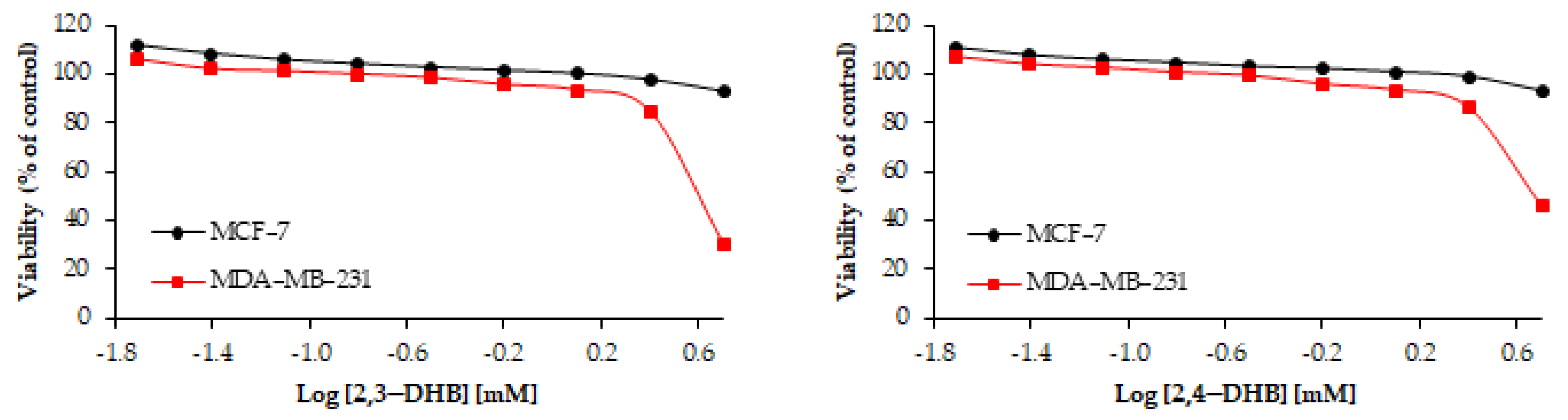
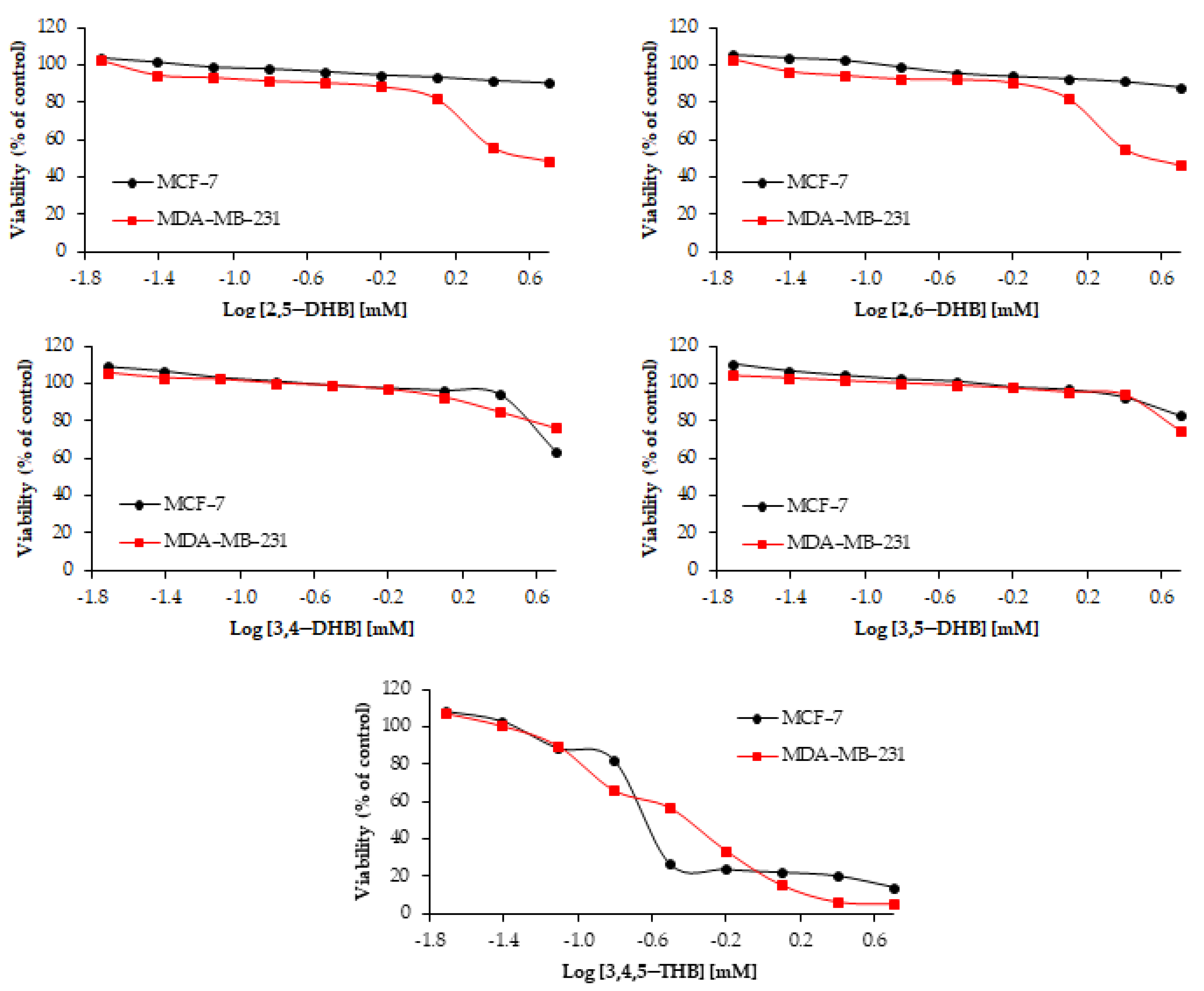

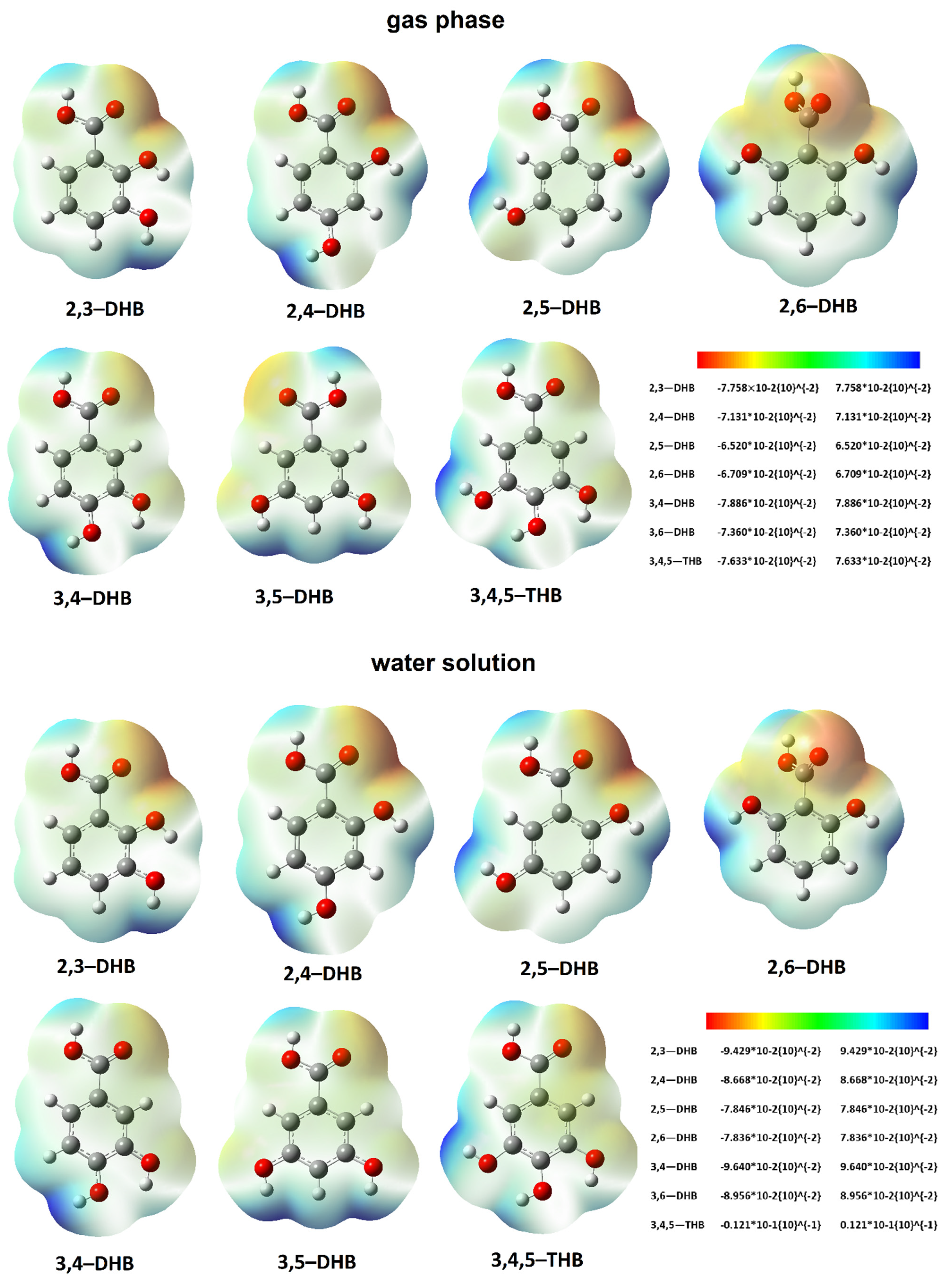
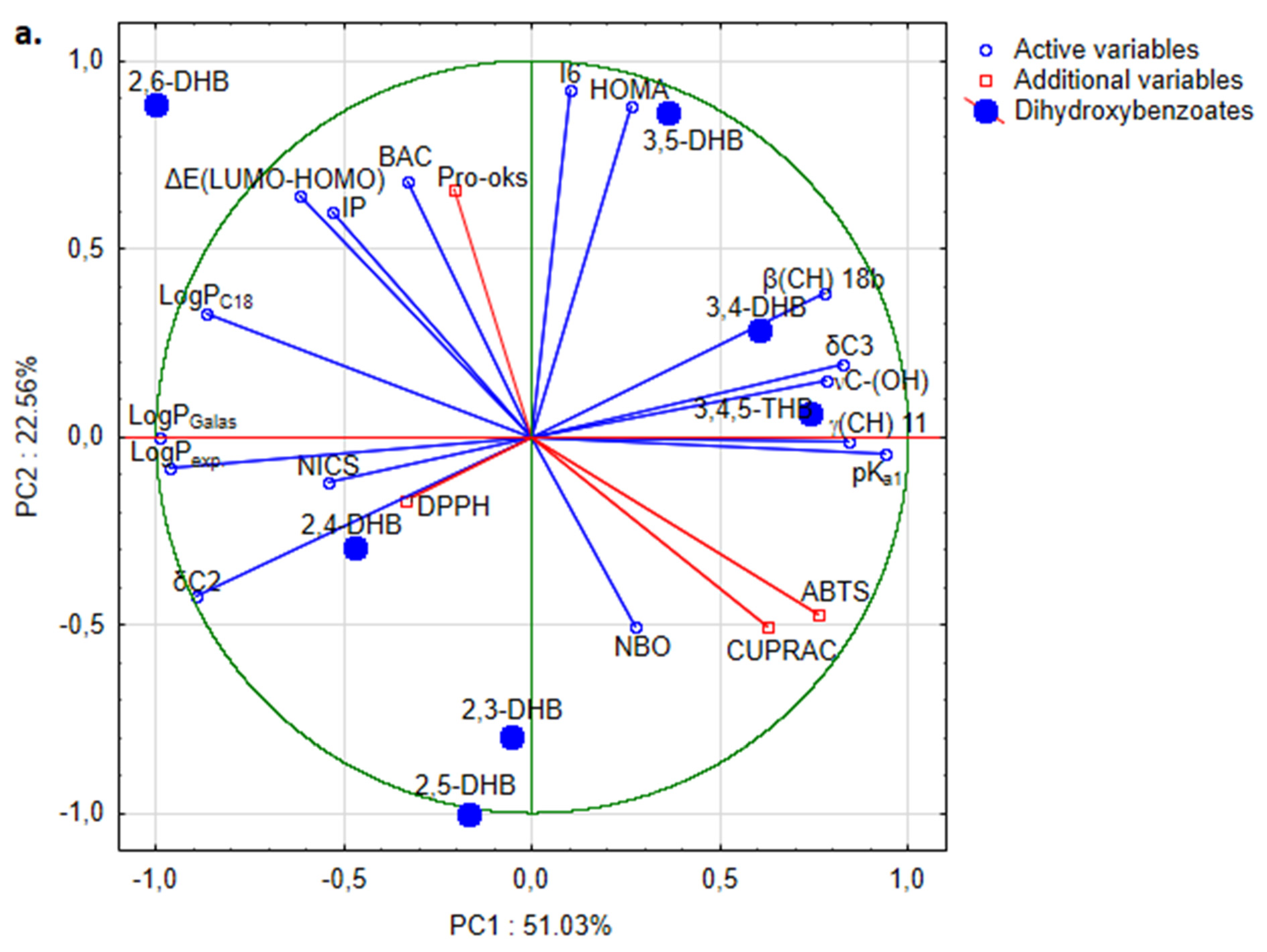


| Compound | 2,3-DHB | 2,4-DHB | 2,5-DHB | 2,6-DHB | 3,4-DHB | 3,5-DHB | 3,4,5-THB |
|---|---|---|---|---|---|---|---|
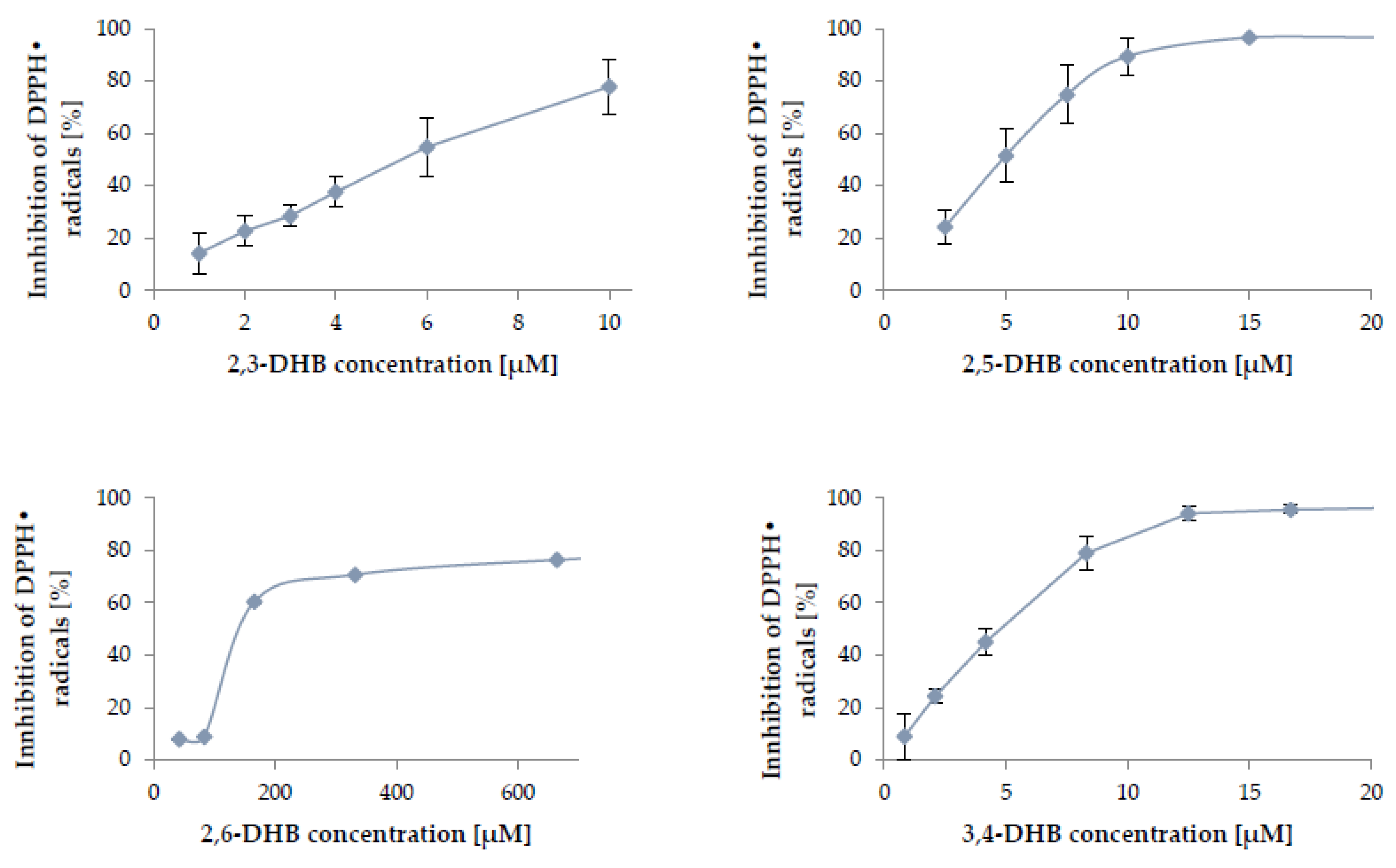
| DPPH/IC50 (µM) | 5.86 ± 0.64 | >120,000 | 4.99 ± 0.79 | 209.02 ± 0.98 | 5.24 ± 0.95 | >1000 | 2.42 ± 0.08 |
| Method | 2,3-DHB | 2,4-DHB | 2,5-DHB | 2,6-DHB | 3,4-DHB | 3,5-DHB | 3,4,5-THB |
|---|---|---|---|---|---|---|---|
| DPPH, IC50 (μM) | 3.52 * (CDPPH = 1 mM, t = 30 min) [63] | 4.95 (CDPPH = 60 μM, t = 60 min) [62] | 231.51 (CDPPH = 500 μM, t = 30 min) [64] | 3.91 * (CDPPH = 1 mM, t = 30 min) [63] | 384.6 (CDPPH = 90 μM, t = 30 min) [65] | 3.78 * (CDPPH = 1 mM, t = 30 min) [63] | |
| 5.18 * (CDPPH = 1 mM, t = 30 min) [63] | 15.38 * (CDPPH = 1 mM, t = 30 min) [63] | 3.83 (CDPPH = 50 μM, t = 30 min) [66] | 0.0237 (CDPPH = 1 mM, t = 20 min) [67] | ||||
| 37.04 (CDPPH = 90 μM, t = 30 min) [65] | 0.0574 (CDPPH = 1 mM, t = 20 min) [67] | ||||||
| 0.0292 (CDPPH = 1 mM, t = 20 min) [67] | 15.83 (CDPPH = 60 μM, t = 30 min) [68] | ||||||
| 6.30 (CDPPH = 60 μM, t = 30 min) [68] | |||||||
| DPPH radical scavenging activity (%) | 46 (C2,3-DHB = 0.11 mg/mL, CDPPH = 100 μM, t = 1 min) [69] | 0.11 (C2,4-DHB = 0.11 mg/mL, CDPPH = 100 μM, t = 1 min) [69] | 30.5 (C2,5-DHB = 0.11 mg/mL, CDPPH = 100 μM, t = 1 min) [69] | 41.2 (C3,4-DHB = 0.11 mg/mL, CDPPH = 100 μM, t = 1 min) [69] | 0.6 (C3,5-DHB = 0.11 mg/mL, CDPPH = 100 μM, t = 1 min) [69] | 75 (C3,4,5-THB = 0.11 mg/mL, CDPPH = 100 μM, t = 1 min) [69] | |
| ≈ 70 (C3,4-DHB = 10 μM, CDPPH = 100 μM, t = 30 min) [70] | ≈ 70 (C3,4,5-THB = 10 μM, CDPPH = 100 μM, t = 30 min) [70] | ||||||
| ≈ 88.5 (C3,4-DHB = 15 μM, CDPPH = 60 μM, t = 30 min) [71] | 40 (C3,4,5-THB≈ 0.7 mM, CDPPH = 200 μM, t = 30 min) [72] | ||||||
| 88.5 (C3,4,5-THB = 15 μM, CDPPH = 60 μM, t = 30 min) [71] | |||||||
| ABTS, IC50 (μM) | 10.73 (CABTS = 7 mM, t = 6 min) [73] | 169.44 (CABTS = 7 mM, t = 6 min) [73] | 15.56 (CABTS = 7 mM, t = 6 min) [73] | 20.67 (CABTS = 7 mM, t = 6 min) [73] | 41.85 (CABTS = 7 mM, t = 6 min) [73] | 4.33 (CABTS = 7 mM, t = 6 min) [73] | |
| ≈ 6.50 (CABTS = 7 mM, t = 6 min) [68] | 0.89 * (CABTS = n.d., t = 6 min) [74] | ||||||
| 10.07 (CABTS = 7 mM, t = 6 min) [68] | |||||||
| ABTS radical scavenging activity (%) | ≈ 38 (C3,4,5-THB = 10 μM, CABTS = 7 mM, t = 7 min) [71] | ≈ 80 (C3,4,5-THB = 10 μM, CABTS = 7 mM, t = 7 min) [71] | |||||
| FRAP (μM Fe2+) | ≈ 0.012 (C = 0,001 mg/mL), λ = 593 nm, t = 30 min) [73] | ≈ 0.98 (C = 0,001 mg/mL), λ = 593 nm, t = 30 min) [73] | ≈ 0.65 (C = 0,001 mg/mL), λ = 593 nm, t = 30 min) [73] | ≈ 0.03 (C = 0,001 mg/mL), λ = 593 nm, t = 30 min) [73] | ≈ 1.03 (C = 0,001 mg/mL), λ = 593 nm, t = 30 min) [73] | ||
| 75.39 (C = 5 μM, λ = 594 nm, t = n.d.) [62] | |||||||
| 236.86 (C = 50 μM, λ = 594 nm, t = n.d.) [62] |
| Compound | 2,3-DHB | 2,4-DHB | 2,5-DHB | 2,6-DHB | 3,4-DHB | 3,5-DHB | 3,4,5-THB |
|---|---|---|---|---|---|---|---|
| FRAP (µM Fe2+) | 173.79 ± 39.06 | (-) * | 236.00 ± 6.31 | (-) * | 44.22 ± 9.38 | (-) * | 158.10 ± 14.81 |
| Microorganisms | Compound | ||||||
|---|---|---|---|---|---|---|---|
| 2,3-DHB | 2,4-DHB | 2,5-DHB | 2,6-DHB | 3,4-DHB | 3,5-DHB | 3,4,5-THB | |
| MIC (mg/mL) | |||||||
| Escherichia coli | 5 | 2 | 3 | 3 | 2 | 2 | 3 |
| Pseudomonas aeruginosa | 5 | 2 | 5 | 4 | 2 | 3 | 4 |
| Staphylococcus aureus | 5 | 2 | 5 | 5 | 2 | 2 | 6 |
| Bacillus subtilis | 5 | 2 | 3 | 3 | 2 | 2 | 3 |
| Salmonella enteritidis | 5 | 2 | 3 | 3 | 2 | 2 | 3 |
| Candida albicans | 5 | 2 | 5 | 3 | 2 | 2 | 3 |
| Compound | Cytotoxicity (mM) in Cell Line | |
|---|---|---|
| MDA-MB-231 | MCF-7 | |
| 2,3-DHB | IC50 = 4.10 ± 0.76 | NT * |
| 2,4-DHB | IC50 = 4.77 ± 1.20 | NT * |
| 2,5-DHB | IC50 = 4.39 ± 1.50 | NT * |
| 2,6-DHB | IC50 = 3.97 ± 2.50 | NT * |
| 3,4-DHB | NT * | NT * |
| 3,5-DHB | NT * | NT * |
| 3,4,5-THB | IC50 = 0.36 ± 0.50 | IC50 = 0.44 ± 1.80 |
| Compound | C18 | C8 | CN | IAM | PHE | ||||||||||
|---|---|---|---|---|---|---|---|---|---|---|---|---|---|---|---|
| log kw | ϕ0 | R2 | log kw | ϕ0 | R2 | log kw | ϕ0 | R2 | log kw | ϕ0 | R2 | log kw | ϕ0 | R2 | |
| 2,3-DHB | 2.47 | 0.60 | 0.950 | 1.70 | 0.87 | 0.994 | 1.59 | 1.16 | 0.997 | 2.17 | 1.08 | 0.996 | 1.25 | 0.93 | 0.972 |
| 2,4-DHB | 2.66 | 0.57 | 0.983 | 1.81 | 1.38 | 0.981 | 2.06 | 1.15 | 0.999 | 1.14 | 1.00 | 0.995 | 1.39 | 1.05 | 0.996 |
| 2,5-DHB | 2.39 | 0.55 | 0.985 | 1.37 | 0.90 | 0.993 | 1.64 | 1.15 | 0.997 | 1.60 | 1.11 | 0.997 | 1.17 | 1.01 | 0.986 |
| 2,6-DHB | 2.99 | 0.68 | 0.926 | 1.17 | 1.05 | 0.927 | 1.49 | 1.08 | 0.975 | 1.31 | 1.14 | 0.989 | 0.87 | 1.05 | 0.998 |
| 3,4-DHB | 2.32 | 0.45 | 0.979 | 1.00 | 0.83 | 0.988 | 1.58 | 1.08 | 0.996 | 0.44 | 1.13 | 0.993 | 1.07 | 0.50 | 0.996 |
| 3,5-DHB | 2.56 | 0.45 | 0.983 | 0.90 | 0.83 | 0.978 | 1.78 | 1.07 | 0.994 | 0.51 | 1.16 | 0.993 | 1.03 | 0.55 | 0.985 |
| 3,4,5-THB | 1.91 | 0.37 | 0.977 | 0.50 | 0.91 | 0.979 | 1.24 | 1.06 | 0.977 | 0.15 | 1.44 | 0.989 | 0.83 | 0.33 | 0.961 |
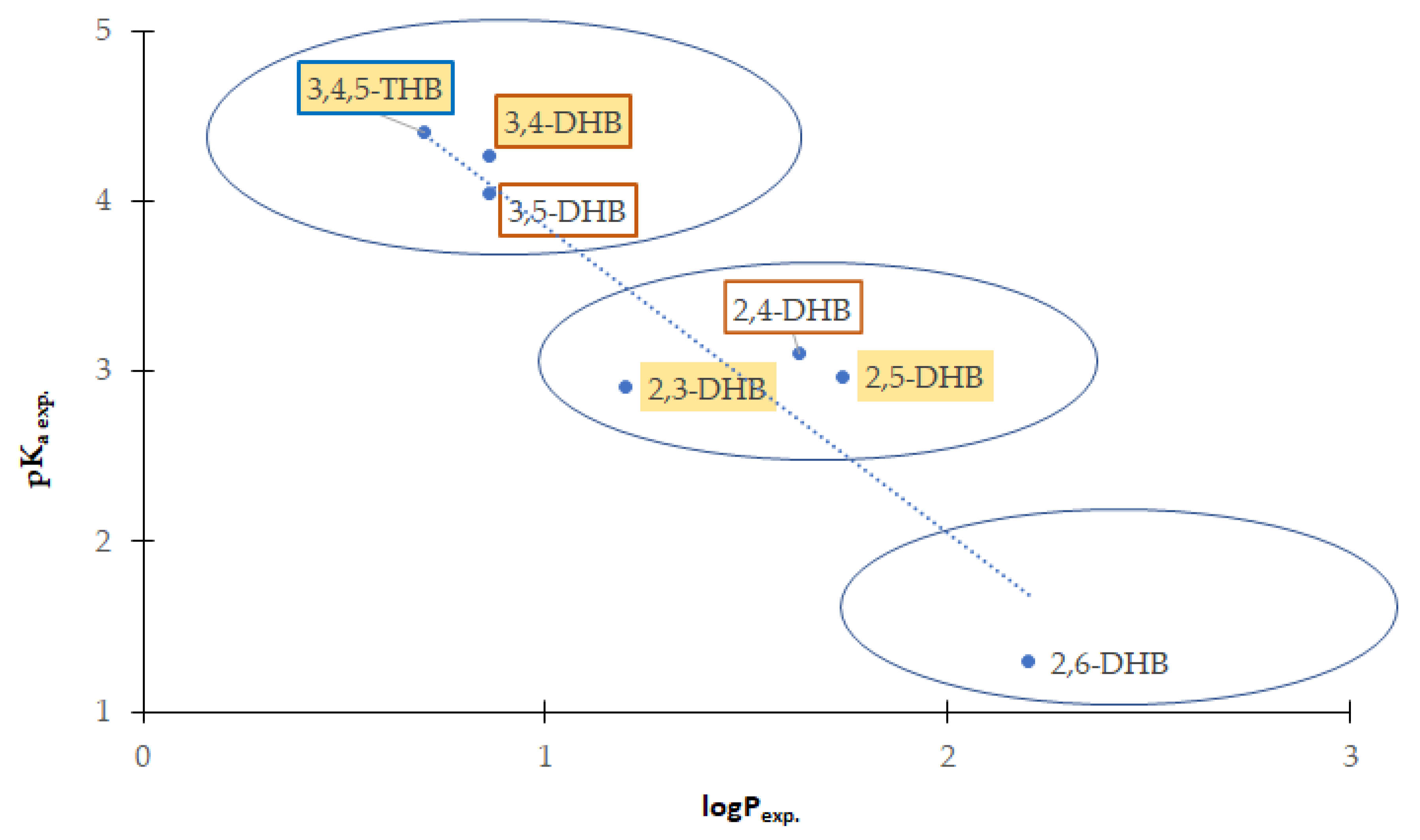
| Compound | LogP Classic | LogP Galas | LogPexp. | ACD/pKa Classic | pKaexp. |
|---|---|---|---|---|---|
| 2,3-DHB | 1.80 ± 0.26 | 1.42 | 1.20 [102] | pKa1 = 3.0 ± 0.1 pKa2 = 10.1 ± 0.1 pKa3 = 15.6 ± 0.1 | 2.91 (at 25 °C) [103] 2.98 [104] 2.56 [105] |
| 2,4-DHB | 1.60 ± 0.26 | 1.82 | 1.63 [102] | pKa1 = 3.3 ± 0.1 pKa2 = 9.1 ± 0.2 pKa3 = 13.8 ± 0.1 | 3.11 (at 25 °C) [106] 3.11 [104] 3.1 [105] |
| 2,5-DHB | 1.56 ± 0.26 | 1.55 | 1.74 [107] | pKa1 = 3.0 ± 0.1 pKa2 = 11.0 ± 0.2 pKa3 = 14.7 ± 0.2 | 2.97 (at 25 °C) [104] 2.84 [105] 2.97 [108] |
| 2,6-DHB | 2.24 ± 0.27 | 2.32 | 2.20 [102] | pKa1 = 1.3 ± 0.1 pKa2 = 12.5 ± 0.1 pKa3 = 14.1 ± 0.1 | 1.30 [104] 1.51 [105] |
| 3,4-DHB | 1.16 ± 0.24 | 0.97 | 0.86 [102] | pKa1 = 4.5 ± 0.1 pKa2 = 9.1 ± 0.2 pKa3 = 12.8 ± 0.1 | 4.26 (at 25 °C) [109] 4.48 [104] 4.16 [105] |
| 3,5-DHB | 1.12 ± 0.24 | 0.99 | 0.86 [102] | pKa1 = 4.0 ± 0.1 pKa2 = 9.8 ± 0.1 pKa3 = 11.3 ± 0.1 | 4.04 [104] 3.61 [105] 4.04 [108] |
| 3,4,5-THB | 0.91 ± 0.33 | 0.61 | 0.70 [102] | pKa1 = 4.3 ± 0.1 pKa2 = 9.0 ± 0.2 pKa3 = 12.3 ± 0.1 pKa4 = 14.4 ± 0.2 | 4.40 [110] 4.41 [104] 3.94 [105] |
Publisher’s Note: MDPI stays neutral with regard to jurisdictional claims in published maps and institutional affiliations. |
© 2021 by the authors. Licensee MDPI, Basel, Switzerland. This article is an open access article distributed under the terms and conditions of the Creative Commons Attribution (CC BY) license (https://creativecommons.org/licenses/by/4.0/).
Share and Cite
Kalinowska, M.; Gołębiewska, E.; Świderski, G.; Męczyńska-Wielgosz, S.; Lewandowska, H.; Pietryczuk, A.; Cudowski, A.; Astel, A.; Świsłocka, R.; Samsonowicz, M.; et al. Plant-Derived and Dietary Hydroxybenzoic Acids—A Comprehensive Study of Structural, Anti-/Pro-Oxidant, Lipophilic, Antimicrobial, and Cytotoxic Activity in MDA-MB-231 and MCF-7 Cell Lines. Nutrients 2021, 13, 3107. https://doi.org/10.3390/nu13093107
Kalinowska M, Gołębiewska E, Świderski G, Męczyńska-Wielgosz S, Lewandowska H, Pietryczuk A, Cudowski A, Astel A, Świsłocka R, Samsonowicz M, et al. Plant-Derived and Dietary Hydroxybenzoic Acids—A Comprehensive Study of Structural, Anti-/Pro-Oxidant, Lipophilic, Antimicrobial, and Cytotoxic Activity in MDA-MB-231 and MCF-7 Cell Lines. Nutrients. 2021; 13(9):3107. https://doi.org/10.3390/nu13093107
Chicago/Turabian StyleKalinowska, Monika, Ewelina Gołębiewska, Grzegorz Świderski, Sylwia Męczyńska-Wielgosz, Hanna Lewandowska, Anna Pietryczuk, Adam Cudowski, Aleksander Astel, Renata Świsłocka, Mariola Samsonowicz, and et al. 2021. "Plant-Derived and Dietary Hydroxybenzoic Acids—A Comprehensive Study of Structural, Anti-/Pro-Oxidant, Lipophilic, Antimicrobial, and Cytotoxic Activity in MDA-MB-231 and MCF-7 Cell Lines" Nutrients 13, no. 9: 3107. https://doi.org/10.3390/nu13093107
APA StyleKalinowska, M., Gołębiewska, E., Świderski, G., Męczyńska-Wielgosz, S., Lewandowska, H., Pietryczuk, A., Cudowski, A., Astel, A., Świsłocka, R., Samsonowicz, M., Złowodzka, A. B., Priebe, W., & Lewandowski, W. (2021). Plant-Derived and Dietary Hydroxybenzoic Acids—A Comprehensive Study of Structural, Anti-/Pro-Oxidant, Lipophilic, Antimicrobial, and Cytotoxic Activity in MDA-MB-231 and MCF-7 Cell Lines. Nutrients, 13(9), 3107. https://doi.org/10.3390/nu13093107