Article

Evidence Use in the Development of the Australian Dietary Guidelines: A Qualitative Study
Institute for Physical Activity and Nutrition (IPAN), School of Exercise and Nutrition Sciences, Deakin University, Geelong 3220, Australia
*
Author to whom correspondence should be addressed.
Nutrients 2021, 13(11), 3748; https://doi.org/10.3390/nu13113748
Submission received: 17 September 2021 / Revised: 19 October 2021 / Accepted: 21 October 2021 / Published: 23 October 2021

Abstract

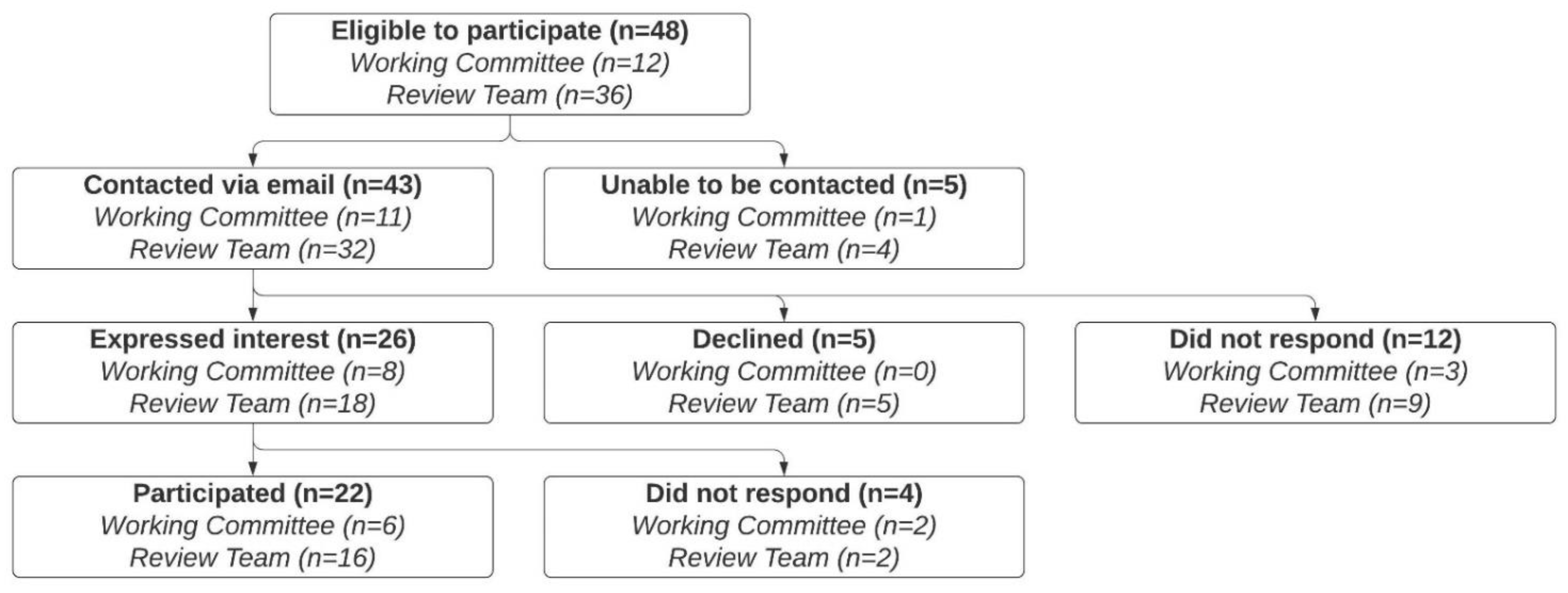
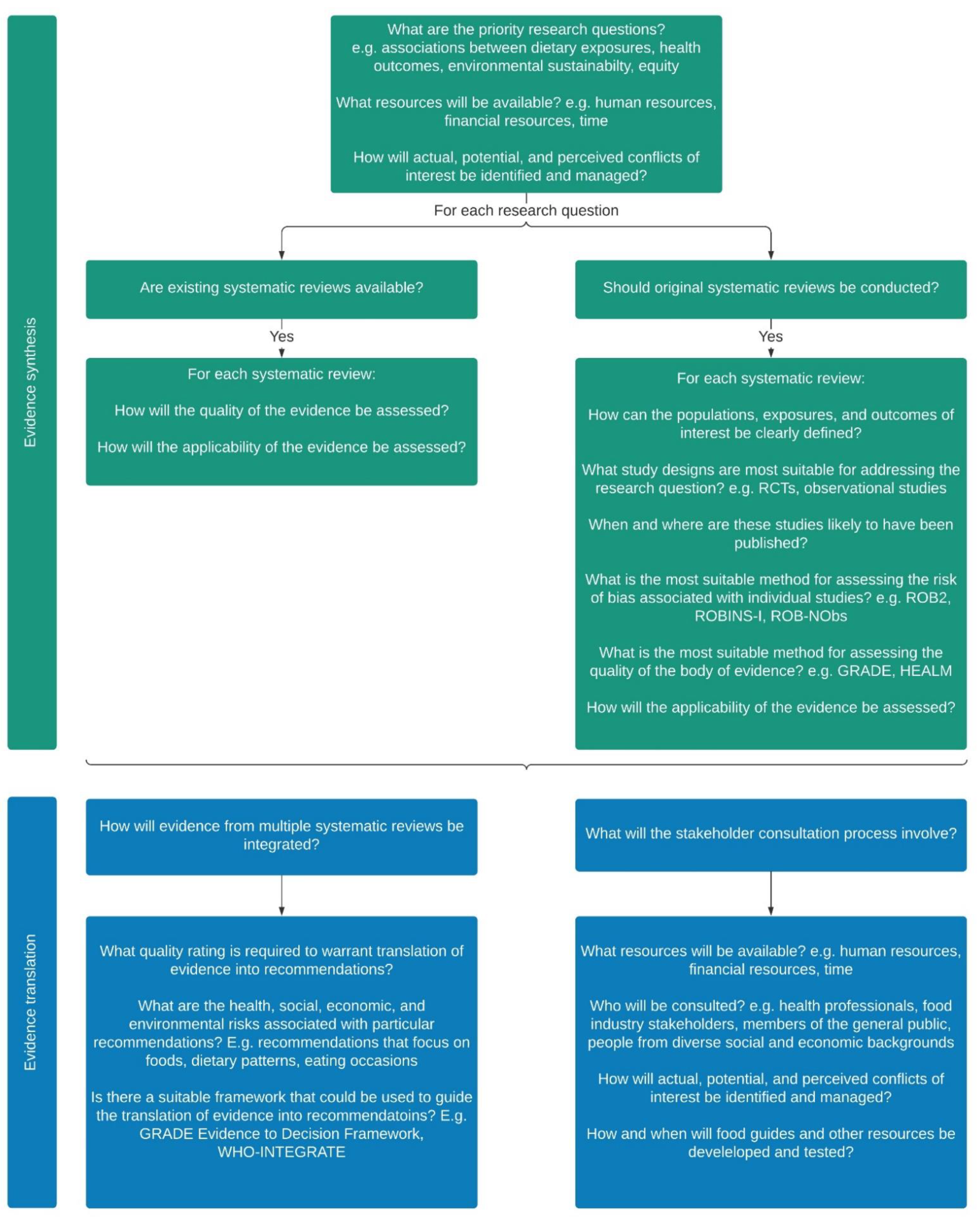
Dietary guidelines are important nutrition policy reference standards that should be informed by the best available evidence. The types of evidence that are reviewed and the evidence review methods that are used have implications for evidence translation. The aim of this study was to explore perceived advantages, disadvantages, and practicalities associated with the synthesis and translation of evidence from nutrient-based, food-based, and dietary patterns research in dietary guideline development. A qualitative descriptive study was conducted. Twenty-two semi-structured interviews were conducted with people involved in the development of the 2013 Australian Dietary Guidelines (ADGs). Transcripts were analysed thematically. To inform future ADGs, there was support for reviewing evidence on a range of dietary exposures (including dietary patterns, foods and food groups, nutrients and food components, and eating occasions) and health outcomes, as well as evidence on environmental sustainability and equity. At the evidence synthesis stage, practicalities associated with planning the evidence review and conducting original systematic reviews were discussed. At the evidence translation stage, practicalities associated with integrating the evidence and consulting stakeholders were described. To ensure that the best available evidence is translated into future ADGs, evidence review methods should be selected based on the exposures and outcomes of interest.
Keywords: dietary guidelines; dietary patterns; evidence synthesis; evidence translation; qualitative research dietary guidelines; dietary patterns; evidence synthesis; evidence translation; qualitative research