

Chemical Composition, Bioactivity and Safety Aspects of Kuding Tea—From Beverage to Herbal Extract


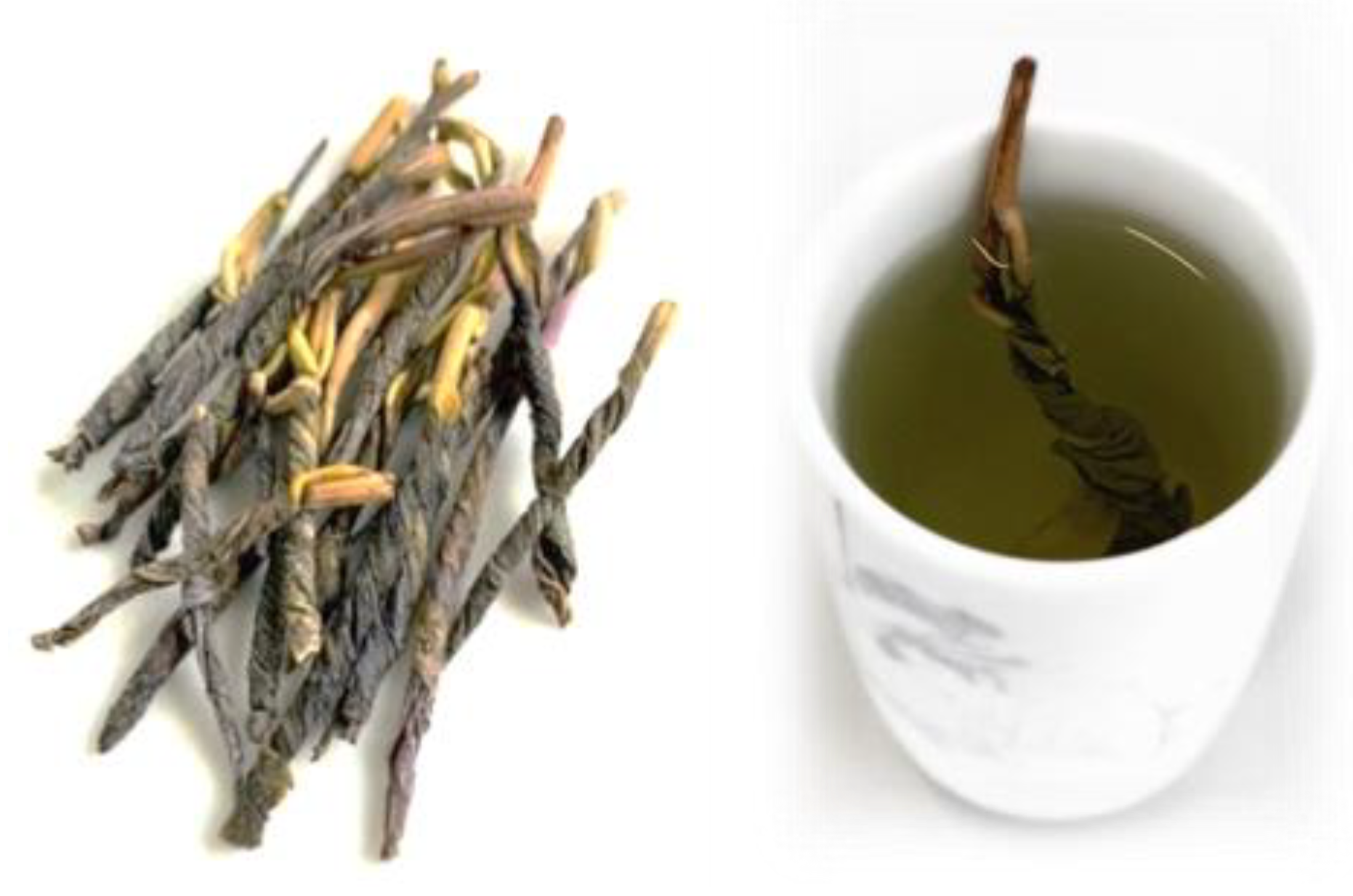
Abstract
1. Introduction
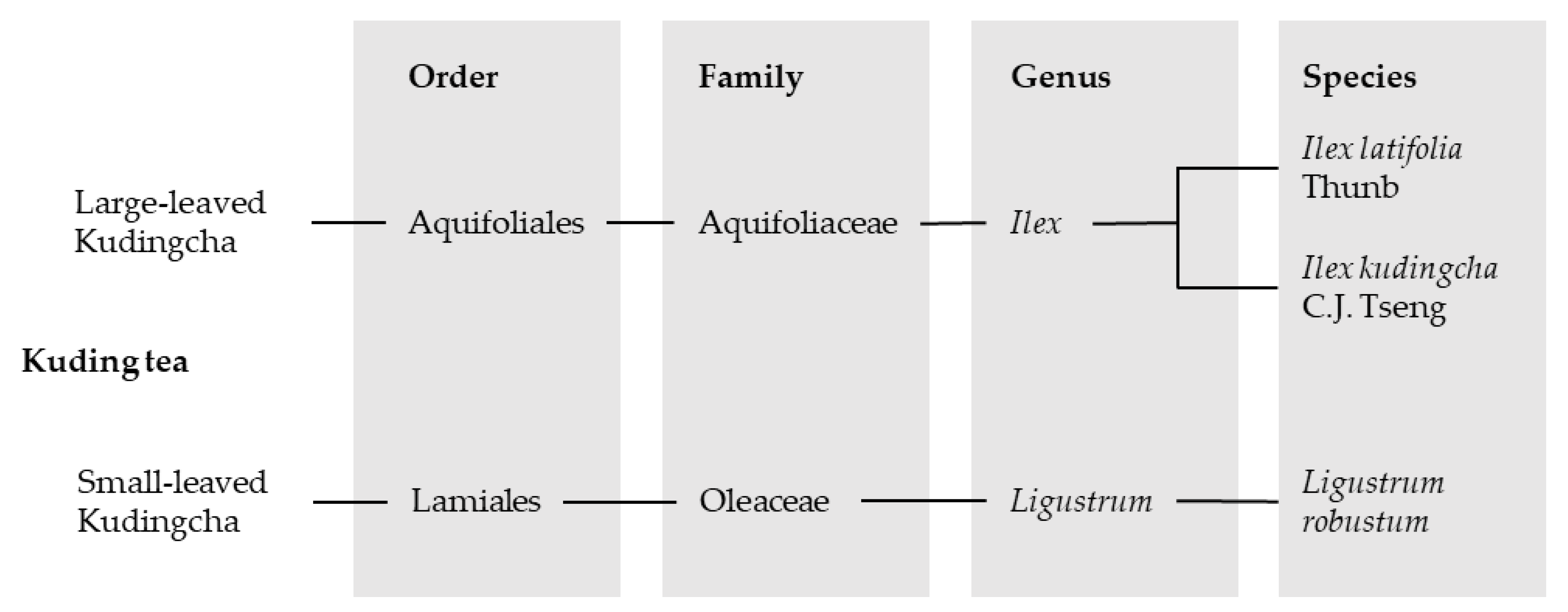
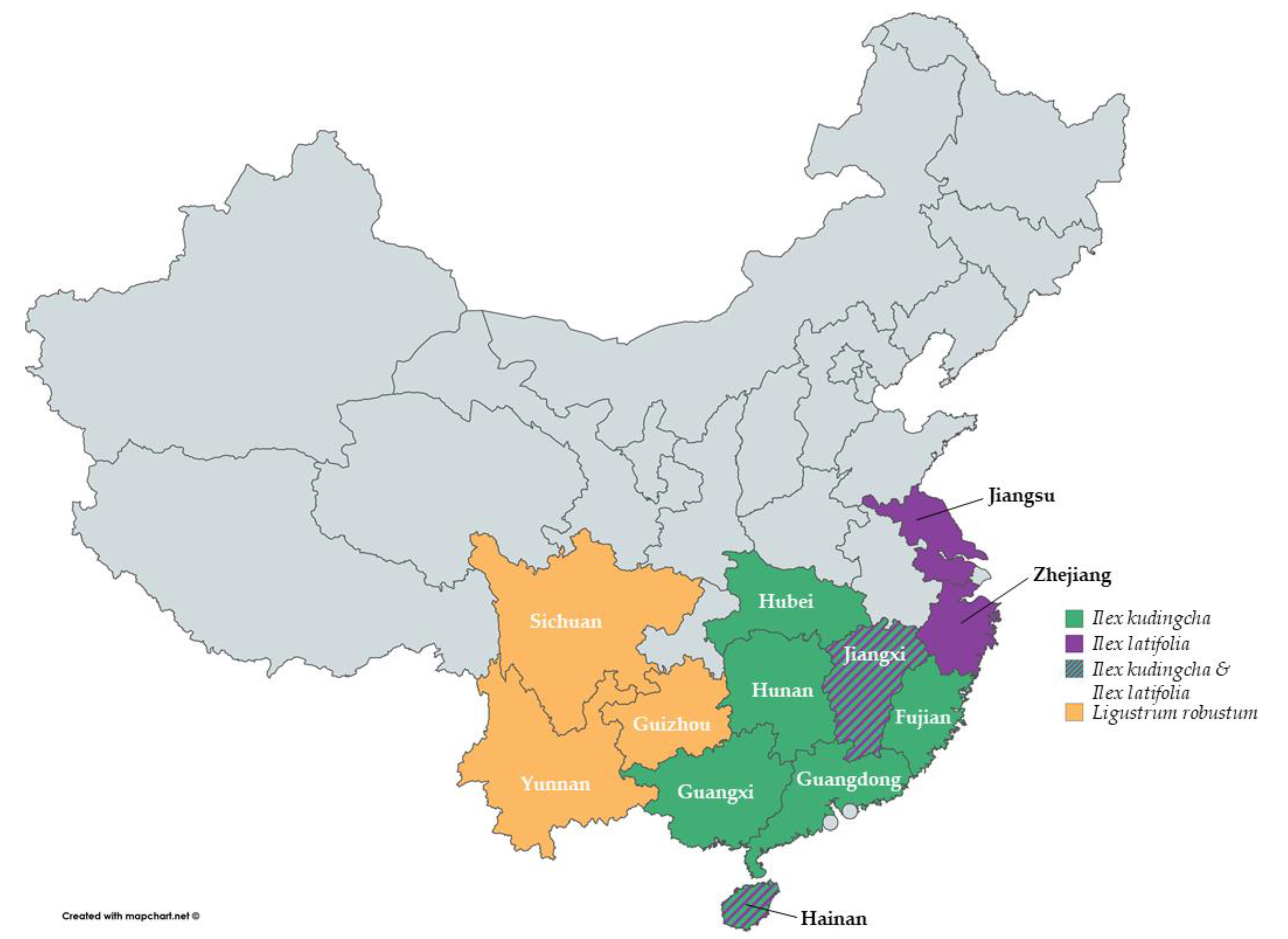
2. Classification and Distribution
3. Important Phytochemicals of Large-Leaved Kudingcha
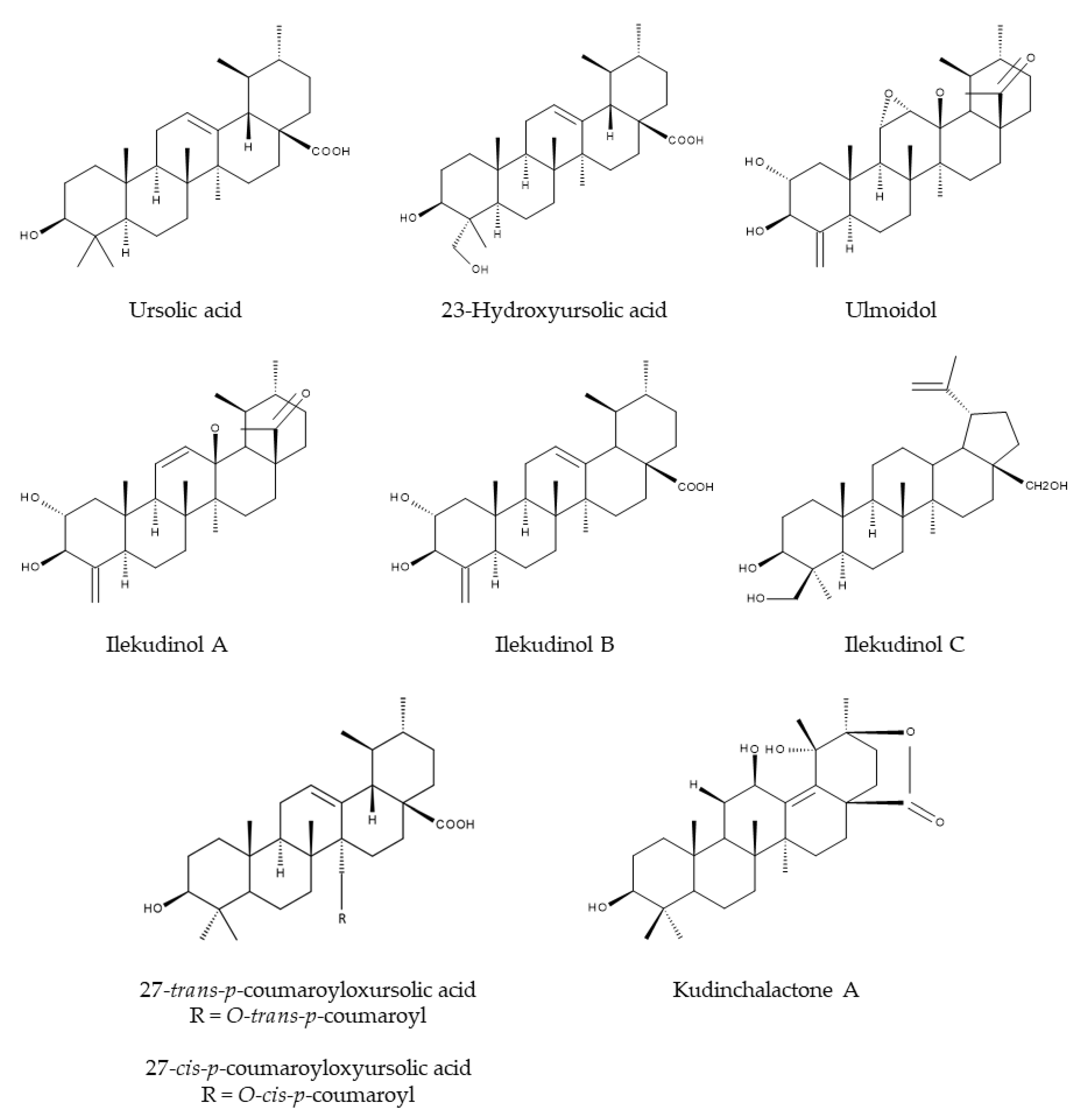
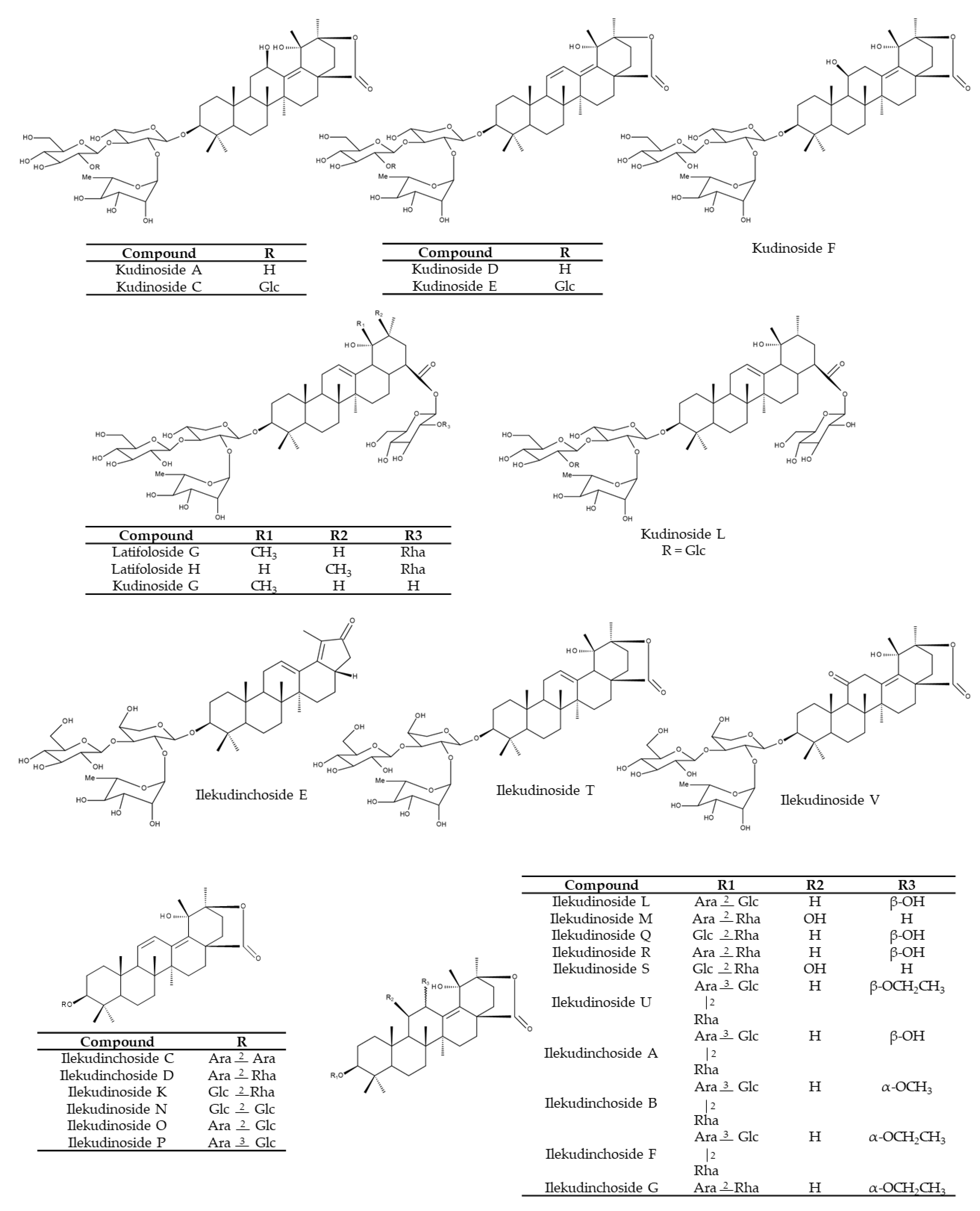
3.1. Triterpenoids and Their Glycosides
3.2. Polyphenols
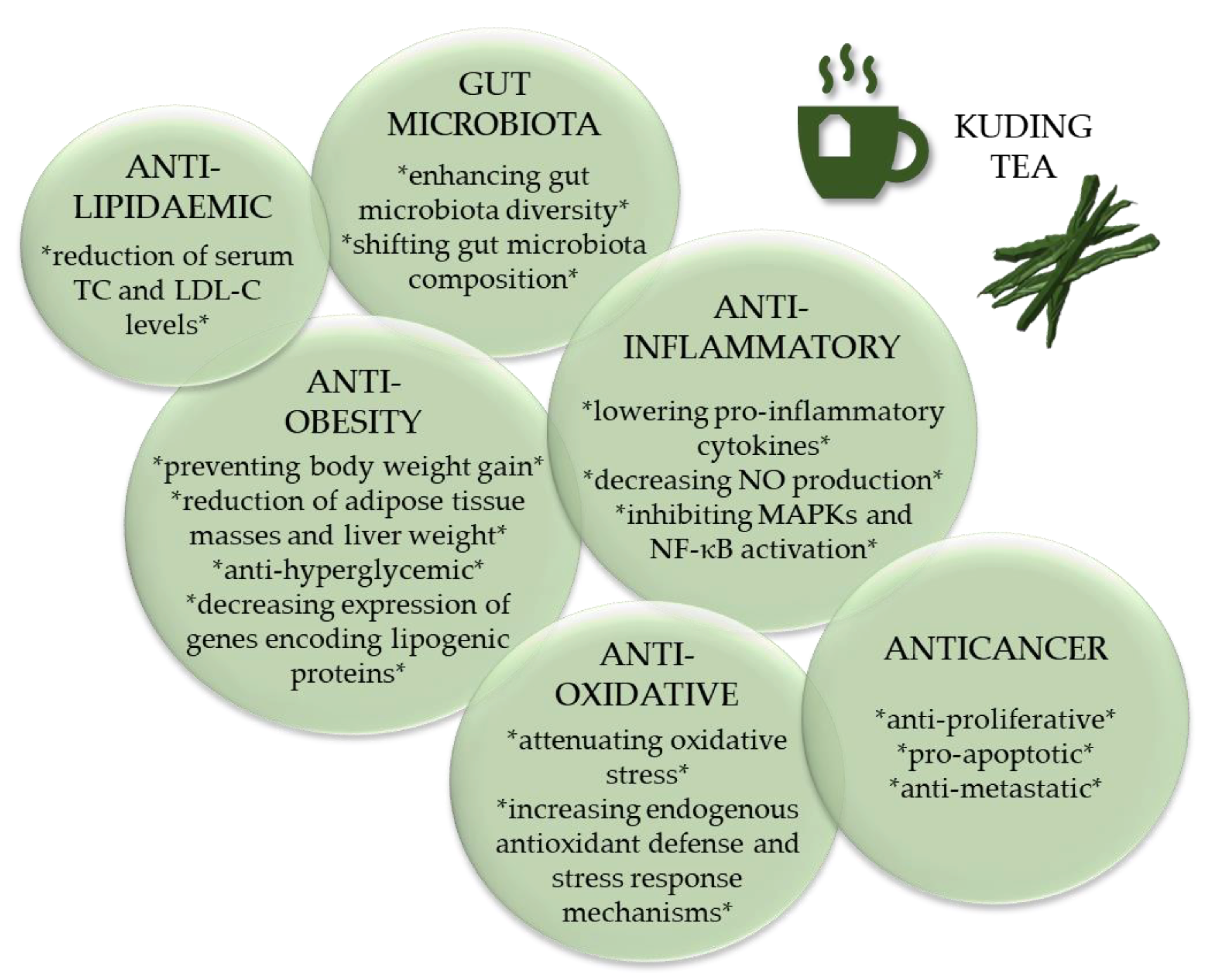
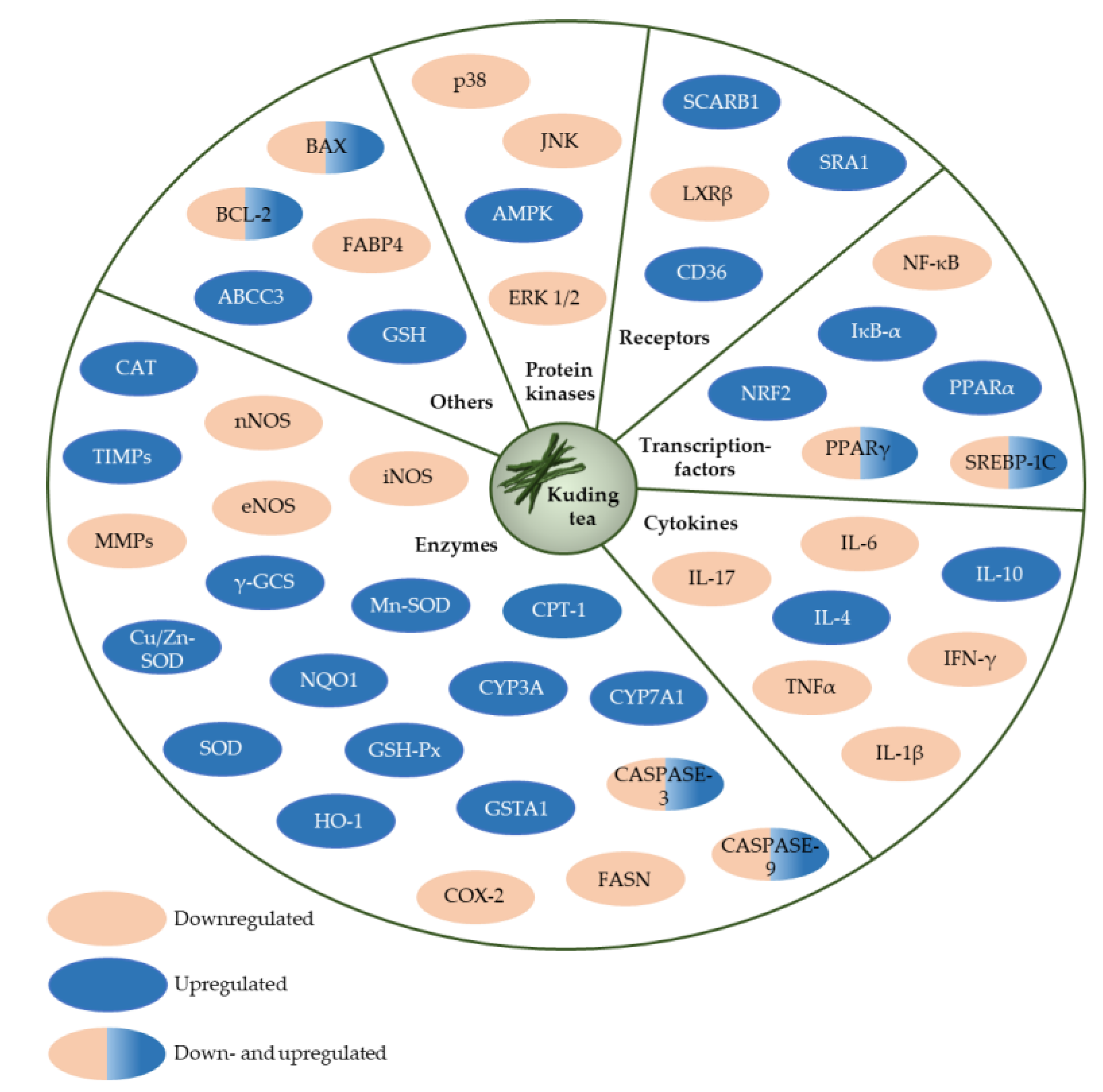
4. Health Benefits
4.1. Antiobesity Activity
4.2. Antilipidaemic Activity
4.3. Regulation of the Intestinal Microbiota
4.4. Anticancer Properties
4.5. Anti-Inflammatory Activity
4.6. Antioxidative Activity
5. Safety Aspects of Large-Leaved Kudingcha
6. Conclusions
Author Contributions
Funding
Conflicts of Interest
References
- Li, L.; Xu, L.J.; Ma, G.Z.; Dong, Y.M.; Peng, Y.; Xiao, P.G. The large-leaved Kudingcha (Ilex latifolia Thunb and Ilex kudingcha C.J. Tseng): A traditional Chinese tea with plentiful secondary metabolites and potential biological activities. J. Nat. Med. 2013, 67, 425–437. [Google Scholar] [CrossRef]
- He, Z.-D.; Lau, K.-M.; But, P.P.-H.; Jiang, R.-W.; Dong, H.; Ma, S.-C.; Fung, K.-P.; Ye, W.-C.; Sun, H.-D. Antioxidative glycosides from the leaves of Ligustrum robustum. J. Nat. Prod. 2003, 66, 851–854. [Google Scholar] [CrossRef]
- Fan, S.; Zhang, Y.; Hu, N.; Sun, Q.; Ding, X.; Li, G.; Zheng, B.; Gu, M.; Huang, F.; Sun, Y.-Q.; et al. Extract of Kuding tea prevents high-fat diet-induced metabolic disorders in C57BL/6 mice via liver X receptor (LXR) β antagonism. PLoS ONE 2012, 7, e51007. [Google Scholar] [CrossRef] [PubMed]
- Chen, G.; Xie, M.; Dai, Z.; Wan, P.; Ye, H.; Zeng, X.; Sun, Y. Kudingcha and Fuzhuan brick tea prevent obesity and modulate gut microbiota in high-fat diet fed mice. Mol. Nutr. Food Res. 2018, 62, e1700485. [Google Scholar] [CrossRef] [PubMed]
- Song, C.; Yu, Q.; Li, X.; Jin, S.; Li, S.; Zhang, Y.; Jia, S.; Chen, C.; Xiang, Y.; Jiang, H. the Hypolipidemic effect of Total Saponins from Kuding Tea in High-Fat Diet-Induced Hyperlipidemic Mice and Its Composition Characterized by UPLC-QTOF-MS/MS. J. Food Sci. 2016, 81, H1313–H1319. [Google Scholar] [CrossRef] [PubMed]
- Zhu, K.; Li, G.; Sun, P.; Wang, R.; Qian, Y.; Zhao, X. In vitro and in vivo anti-cancer activities of Kuding tea (Ilex kudingcha C.J. Tseng) against oral cancer. Exp. Ther. Med. 2014, 7, 709–715. [Google Scholar] [CrossRef] [PubMed]
- Zhao, X.; Wang, Q.; Qian, Y.; Song, J.-L. Ilex kudingcha C.J. Tseng (Kudingcha) has in vitro anticancer activities in MCF-7 human breast adenocarcinoma cells and exerts anti-metastatic effects in vivo. Oncol. Lett. 2013, 5, 1744–1748. [Google Scholar] [CrossRef] [PubMed][Green Version]
- Zhang, H.; Zou, X.; Huang, Q.; Zhong, X.; Huang, Z. Effects of Kudingcha nanoparticles in hyperlipidaemic rats induced by a high fat diet. Cell. Physiol. Biochem. 2018, 45, 2257–2267. [Google Scholar] [CrossRef] [PubMed]
- Wüpper, S.; Fischer, A.; Lüersen, K.; Lucius, R.; Okamoto, H.; Ishida, Y.; Terao, K.; Rimbach, G. High dietary Kuding tea extract supplementation induces hepatic xenobiotic-metabolizing enzymes-A 6-week feeding study in mice. Nutrients 2019, 12, 40. [Google Scholar] [CrossRef] [PubMed]
- Van den Berg, S.J.P.L.; Serra-Majem, L.; Coppens, P.; Rietjens, I.M.C.M. Safety assessment of plant food supplements (PFS). Food Funct. 2011, 2, 760–768. [Google Scholar] [CrossRef] [PubMed]
- Gan, R.-Y.; Zhang, D.; Wang, M.; Corke, H. Health benefits of bioactive compounds from the genus ilex, a source of traditional caffeinated beverages. Nutrients 2018, 10, 1682. [Google Scholar] [CrossRef] [PubMed]
- Hao, D.; Gu, X.; Xiao, P.; Liang, Z.; Xu, L.; Peng, Y. Research progress in the phytochemistry and biology of Ilex pharmaceutical resources. Acta Pharm. Sin. B 2013, 3, 8–19. [Google Scholar] [CrossRef]
- Li, L.; Peng, Y.; Ma, G.; He, C.; Feng, Y.; Lei, Q.; Xiao, P. Quantitative analysis of five kudinosides in the large-leaved Kudingcha and related species from the genus Ilex by UPLC-ELSD. Phytochem. Anal. 2012, 23, 677–683. [Google Scholar] [CrossRef] [PubMed]
- Zhu, F.; Cai, Y.-Z.; Sun, M.; Ke, J.; Lu, D.; Corke, H. Comparison of major phenolic constituents and in vitro antioxidant activity of diverse Kudingcha genotypes from Ilex kudingcha, Ilex cornuta, and Ligustrum robustum. J. Agric. Food Chem. 2009, 57, 6082–6089. [Google Scholar] [CrossRef]
- Yi, H.; Zhou, J.; Shang, X.; Zhao, Z.; Peng, Q.; Zhu, M.; Zhu, C.; Lin, C.; Liu, Q.; Liao, Q.; et al. Multi-component analysis of Ilex Kudingcha C.J. Tseng by a single marker quantification method and chemometric discrimination of HPLC fingerprints. Molecules 2018, 23, 854. [Google Scholar] [CrossRef]
- Wang, C.-Q.; Li, M.-M.; Zhang, W.; Wang, L.; Fan, C.-L.; Feng, R.-B.; Zhang, X.-Q.; Ye, W.-C. Four new triterpenes and triterpene glycosides from the leaves of Ilex latifolia and their inhibitory activity on triglyceride accumulation. Fitoterapia 2015, 106, 141–146. [Google Scholar] [CrossRef]
- Zhang, T.-T.; Hu, T.; Jiang, J.-G.; Zhao, J.-W.; Zhu, W. Antioxidant and anti-inflammatory effects of polyphenols extracted from Ilex latifolia Thunb. RSC Adv. 2018, 8, 7134–7141. [Google Scholar] [CrossRef]
- Zhou, J.; Yi, H.; Zhao, Z.-X.; Shang, X.-Y.; Zhu, M.-J.; Kuang, G.-J.; Zhu, C.-C.; Zhang, L. Simultaneous qualitative and quantitative evaluation of Ilex kudingcha C. J. tseng by using UPLC and UHPLC-qTOF-MS/MS. J. Pharm. Biomed. Anal. 2018, 155, 15–26. [Google Scholar] [CrossRef]
- Liu, L.; Sun, Y.; Laura, T.; Liang, X.; Ye, H.; Zeng, X. Determination of polyphenolic content and antioxidant activity of kudingcha made from Ilex kudingcha C.J. Tseng. Food Chem. 2009, 112, 35–41. [Google Scholar] [CrossRef]
- Thuong, P.T.; Su, N.D.; Ngoc, T.M.; Hung, T.M.; Dang, N.H.; Thuan, N.D.; Bae, K.; Oh, W.K. Antioxidant activity and principles of Vietnam bitter tea Ilex kudingcha. Food Chem. 2009, 113, 139–145. [Google Scholar] [CrossRef]
- Che, Y.; Wang, Z.; Zhu, Z.; Ma, Y.; Zhang, Y.; Gu, W.; Zhang, J.; Rao, G. Simultaneous qualitation and quantitation of chlorogenic acids in Kuding tea using ultra-high-performance liquid chromatography-diode array detection coupled with linear ion trap-orbitrap mass spectrometer. Molecules 2016, 21, 1728. [Google Scholar] [CrossRef] [PubMed]
- Ouyang, M.-A.; Yang, C.-R.; Chen, Z.-L.; Wang, H.-Q. Triterpenes and triterpenoid glycosides from the leaves of Ilex kudincha. Phytochemistry 1996, 41, 871–877. [Google Scholar] [CrossRef]
- Hu, T.; He, X.-W.; Jiang, J.-G. Functional analyses on antioxidant, anti-inflammatory, and antiproliferative effects of extracts and compounds from Ilex latifolia Thunb., a Chinese bitter tea. J. Agric. Food Chem. 2014, 62, 8608–8615. [Google Scholar] [CrossRef]
- Liu, H.; Liu, C.; Yang, X.; Zeng, S.; Xiong, Y.; Xu, W. Solid-phase extraction of ursolic acid from herb using beta-cyclodextrin-based molecularly imprinted microspheres. J. Sep. Sci. 2008, 31, 3573–3580. [Google Scholar] [CrossRef]
- Nishimura, K.; Fukuda, T.; Miyase, T.; Noguchi, H.; Chen, X.M. Activity-guided isolation of triterpenoid acyl CoA cholesteryl acyl transferase (ACAT) inhibitors from Ilex kudincha. J. Nat. Prod. 1999, 62, 1061–1064. [Google Scholar] [CrossRef]
- Zuo, W.-J.; Dai, H.-F.; Chen, J.; Chen, H.-Q.; Zhao, Y.-X.; Mei, W.-L.; Li, X.; Wang, J.-H. Triterpenes and triterpenoid saponins from the leaves of Ilex kudincha. Planta Med. 2011, 77, 1835–1840. [Google Scholar] [CrossRef] [PubMed]
- Ouyang, M.-A.; Wang, H.-Q.; Chen, Z.-L.; Yang, C.-R. Triterpenoid glycosides from Ilex kudincha. Phytochemistry 1996, 43, 443–445. [Google Scholar] [CrossRef]
- Ouyang, M.-A.; Han-Qing, W.; Yu-Qing, L.; Chong-Ren, Y. Triterpenoid saponins from the leaves of Ilex latifolia. Phytochemistry 1997, 45, 1501–1505. [Google Scholar] [CrossRef]
- Feng, R.-B.; Fan, C.-L.; Liu, Q.; Liu, Z.; Zhang, W.; Li, Y.-L.; Tang, W.; Wang, Y.; Li, M.-M.; Ye, W.-C. Crude triterpenoid saponins from Ilex latifolia (Da Ye Dong Qing) ameliorate lipid accumulation by inhibiting SREBP expression via activation of AMPK in a non-alcoholic fatty liver disease model. Chin. Med. 2015, 10, 23. [Google Scholar] [CrossRef]
- Tang, L.; Jiang, Y.; Chang, H.-T.; Zhao, M.-B.; Tu, P.-F.; Cui, J.-R.; Wang, R.-Q. Triterpene saponins from the leaves of Ilex kudingcha. J. Nat. Prod. 2005, 68, 1169–1174. [Google Scholar] [CrossRef]
- Ouyang, M.-A. Glycosides from the Leaves of Ilex latifolia. Chin. J. Chem. 2001, 19, 885–892. [Google Scholar] [CrossRef]
- Ouyang, M.A.; Yang, C.R.; Wu, Z.J. Triterpenoid saponins from the leaves of Ilex kudincha. J. Asian Nat. Prod. Res. 2001, 3, 31–42. [Google Scholar] [CrossRef] [PubMed]
- Nishimura, K.; Miyase, T.; Noguchi, H. Triterpenoid saponins from Ilex kudincha. J. Nat. Prod. 1999, 62, 1128–1133. [Google Scholar] [CrossRef]
- Zuo, W.-J.; Dai, H.-F.; Zeng, Y.-B.; Wang, H.; Chen, H.-Q.; Wang, J.-H. Two new triterpenoid saponins from the leaves of Ilex kudingcha. J. Asian Nat. Prod. Res. 2012, 14, 308–313. [Google Scholar] [CrossRef] [PubMed]
- Zuo, W.; Wang, Q.; Li, W.; Sha, Y.; Li, X.; Wang, J. Structure elucidation and NMR assignments of an unusual triterpene saponin derivative from Ilex kudincha. Magn. Reson. Chem. 2012, 50, 325–328. [Google Scholar] [CrossRef]
- Tang, L.; Jiang, Y.; Tian, X.-M.; Zhou, S.-X.; Tu, P.-F. Triterpene saponins from the leaves of Ilex kudingcha. J. Asian Nat. Prod. Res. 2009, 11, 554–561. [Google Scholar] [CrossRef]
- Huang, D.; Ou, B.; Prior, R.L. The chemistry behind antioxidant capacity assays. J. Agric. Food Chem. 2005, 53, 1841–1856. [Google Scholar] [CrossRef] [PubMed]
- Li, H.; Wang, L.; Luo, Y. Composition analysis by UPLC-PDA-ESI (-)-HRMS and antioxidant activity using Saccharomyces cerevisiae model of herbal teas and green teas from Hainan. Molecules 2018, 23, 2550. [Google Scholar] [CrossRef]
- Zhao, X.; Sun, P.; Li, G.; Yi, R.; Qian, Y.; Park, K.-Y. Polyphenols in Kuding tea help prevent HCl/ethanol-induced gastric injury in mice. Food Funct. 2018, 9, 1713–1725. [Google Scholar] [CrossRef]
- Zhang, T.-T.; Zheng, C.-Y.; Hu, T.; Jiang, J.-G.; Zhao, J.-W.; Zhu, W. Polyphenols from Ilex latifolia Thunb. (a Chinese bitter tea) exert anti-atherosclerotic activity through suppressing NF-κB activation and phosphorylation of ERK1/2 in macrophages. Medchemcomm 2018, 9, 254–263. [Google Scholar] [CrossRef]
- Santana-Gálvez, J.; Cisneros-Zevallos, L.; Jacobo-Velázquez, D.A. Chlorogenic Acid: Recent advances on its dual role as a food additive and a nutraceutical against metabolic syndrome. Molecules 2017, 22, 358. [Google Scholar] [CrossRef] [PubMed]
- Yi, R.; Zhang, J.; Sun, P.; Qian, Y.; Zhao, X. Protective effects of Kuding tea (Ilex kudingcha C. J. Tseng) polyphenols on UVB-Induced skin aging in SKH1 hairless mice. Molecules 2019, 24, 1016. [Google Scholar] [CrossRef] [PubMed]
- Song, C.; Xie, C.; Zhou, Z.; Yu, S.; Fang, N. Antidiabetic effect of an active components group from Ilex kudingcha and its chemical composition. Evid. Based Complement. Alternat. Med. 2012, 2012, 423690. [Google Scholar] [CrossRef] [PubMed]
- Wu, H.; Chen, Y.-L.; Yu, Y.; Zang, J.; Wu, Y.; He, Z. Ilex latifolia Thunb protects mice from HFD-induced body weight gain. Sci. Rep. 2017, 7, 14660. [Google Scholar] [CrossRef] [PubMed]
- Xie, M.; Chen, G.; Wan, P.; Dai, Z.; Zeng, X.; Sun, Y. Effects of Dicaffeoylquinic acids from Ilex kudingcha on lipid metabolism and intestinal microbiota in high-fat-diet-fed mice. J. Agric. Food Chem. 2019, 67, 171–183. [Google Scholar] [CrossRef]
- Zhai, X.; Ren, D.; Luo, Y.; Hu, Y.; Yang, X. Chemical characteristics of an Ilex Kuding tea polysaccharide and its protective effects against high fructose-induced liver injury and vascular endothelial dysfunction in mice. Food Funct. 2017, 8, 2536–2547. [Google Scholar] [CrossRef]
- Shi, Q.; Jin, S.; Xiang, X.; Tian, J.; Huang, R.; Li, S.; Chen, C.; Xu, H.; Song, C. The metabolic change in serum lysoglycerophospholipids intervened by triterpenoid saponins from Kuding tea on hyperlipidemic mice. Food Funct. 2019, 10, 7782–7792. [Google Scholar] [CrossRef]
- Wan, P.; Peng, Y.; Chen, G.; Xie, M.; Dai, Z.; Huang, K.; Dong, W.; Zeng, X.; Sun, Y. Modulation of gut microbiota by Ilex kudingcha improves dextran sulfate sodium-induced colitis. Food Res. Int. 2019, 126, 108595. [Google Scholar] [CrossRef]
- Xie, M.; Chen, G.; Hu, B.; Zhou, L.; Ou, S.; Zeng, X.; Sun, Y. Hydrolysis of Dicaffeoylquinic acids from Ilex kudingcha happens in the colon by intestinal microbiota. J. Agric. Food Chem. 2016, 64, 9624–9630. [Google Scholar] [CrossRef]
- Liu, Y.; Xie, M.; Wan, P.; Chen, G.; Chen, C.; Chen, D.; Yu, S.; Zeng, X.; Sun, Y. Purification, characterization and molecular cloning of a dicaffeoylquinic acid-hydrolyzing esterase from human-derived Lactobacillus fermentum LF-12. Food Funct. 2020, 11, 3235–3244. [Google Scholar] [CrossRef]
- Xie, M.; Chen, G.; Wan, P.; Dai, Z.; Hu, B.; Chen, L.; Ou, S.; Zeng, X.; Sun, Y. Modulating effects of Dicaffeoylquinic acids from Ilex kudingcha on intestinal microecology in vitro. J. Agric. Food Chem. 2017, 65, 10185–10196. [Google Scholar] [CrossRef]
- Zhao, X.; Pang, L.; Li, J.; Song, J.-L.; Qiu, L.-H. Apoptosis inducing effects of Kuding tea polyphenols in human buccal squamous cell carcinoma cell line BcaCD885. Nutrients 2014, 6, 3084–3100. [Google Scholar] [CrossRef] [PubMed]
- Mukhtar, H.; Ahmad, N. Tea polyphenols: Prevention of cancer and optimizing health. Am. J. Clin. Nutr. 2000, 71, 1698S–1702S. [Google Scholar] [CrossRef] [PubMed]
- Kim, J.Y.; Jeong, H.Y.; Lee, H.K.; Yoo, J.K.; Bae, K.; Seong, Y.H. Protective effect of Ilex latifolia, a major component of “kudingcha”, against transient focal ischemia-induced neuronal damage in rats. J. Ethnopharmacol. 2011, 133, 558–564. [Google Scholar] [CrossRef] [PubMed]
- Zhao, X.; Wang, Q.; Qian, Y.; Song, J.-L. Ilex kudingcha C.J. Tseng (Kudingcha) prevents HCl/ethanol-induced gastric injury in Sprague-Dawley rats. Mol. Med. Rep. 2013, 7, 1613–1616. [Google Scholar] [CrossRef]
- Menter, D.G.; Schilsky, R.L.; DuBois, R.N. Cyclooxygenase-2 and cancer treatment: Understanding the risk should be worth the reward. Clin. Cancer Res. 2010, 16, 1384–1390. [Google Scholar] [CrossRef]
- Kim, J.Y.; Lee, H.K.; Hwang, B.Y.; Kim, S.; Yoo, J.K.; Seong, Y.H. Neuroprotection of Ilex latifolia and caffeoylquinic acid derivatives against excitotoxic and hypoxic damage of cultured rat cortical neurons. Arch. Pharm. Res. 2012, 35, 1115–1122. [Google Scholar] [CrossRef]
- Fan, J.; Wu, Z.; Zhao, T.; Sun, Y.; Ye, H.; Xu, R.; Zeng, X. Characterization, antioxidant and hepatoprotective activities of polysaccharides from Ilex latifolia Thunb. Carbohydr. Polym. 2014, 101, 990–997. [Google Scholar] [CrossRef] [PubMed]
- Zhao, X.; Song, J.-L.; Yi, R.; Li, G.; Sun, P.; Park, K.-Y.; Suo, H. Comparison of antioxidative effects of insect tea and its raw tea (Kuding tea) polyphenols in kunming mice. Molecules 2018, 23, 204. [Google Scholar] [CrossRef]
- Long, X.; Pan, Y.; Zhao, X. Prophylactic effect of Kudingcha polyphenols on oxazolone induced colitis through its antioxidant capacities. Food Sci. Hum. Wellness 2018, 7, 209–214. [Google Scholar] [CrossRef]
- Finley, J.W.; Kong, A.-N.; Hintze, K.J.; Jeffery, E.H.; Ji, L.L.; Lei, X.G. Antioxidants in foods: State of the science important to the food industry. J. Agric. Food Chem. 2011, 59, 6837–6846. [Google Scholar] [CrossRef]
- Serreli, G.; Deiana, M. In vivo formed metabolites of polyphenols and their biological efficacy. Food Funct. 2019, 10, 6999–7021. [Google Scholar] [CrossRef] [PubMed]
- Bedi, O.; Bijjem, K.R.V.; Kumar, P.; Gauttam, V. Herbal induced hepatoprotection and hepatotoxicity: A critical review. Indian J. Physiol. Pharmacol. 2016, 60, 6–21. [Google Scholar] [PubMed]
- Oketch-Rabah, H.A.; Roe, A.L.; Rider, C.V.; Bonkovsky, H.L.; Giancaspro, G.I.; Navarro, V.; Paine, M.F.; Betz, J.M.; Marles, R.J.; Casper, S.; et al. United States pharmacopeia (USP) comprehensive review of the hepatotoxicity of green tea extracts. Toxicol. Rep. 2020, 7, 386–402. [Google Scholar] [CrossRef]
- Navarro, V.J.; Khan, I.; Björnsson, E.; Seeff, L.B.; Serrano, J.; Hoofnagle, J.H. Liver injury from herbal and dietary supplements. Hepatology 2017, 65, 363–373. [Google Scholar] [CrossRef] [PubMed]
- Jaramillo, M.C.; Zhang, D.D. The emerging role of the Nrf2-Keap1 signaling pathway in cancer. Genes Dev. 2013, 27, 2179–2191. [Google Scholar] [CrossRef]
- Xu, D.; Xu, M.; Jeong, S.; Qian, Y.; Wu, H.; Xia, Q.; Kong, X. The role of Nrf2 in liver disease: Novel molecular mechanisms and therapeutic approaches. Front. Pharmacol. 2018, 9, 1428. [Google Scholar] [CrossRef]
- Mena, P.; Del Rio, D. Gold standards for realistic (Poly)phenol research. J. Agric. Food Chem. 2018, 66, 8221–8223. [Google Scholar] [CrossRef]
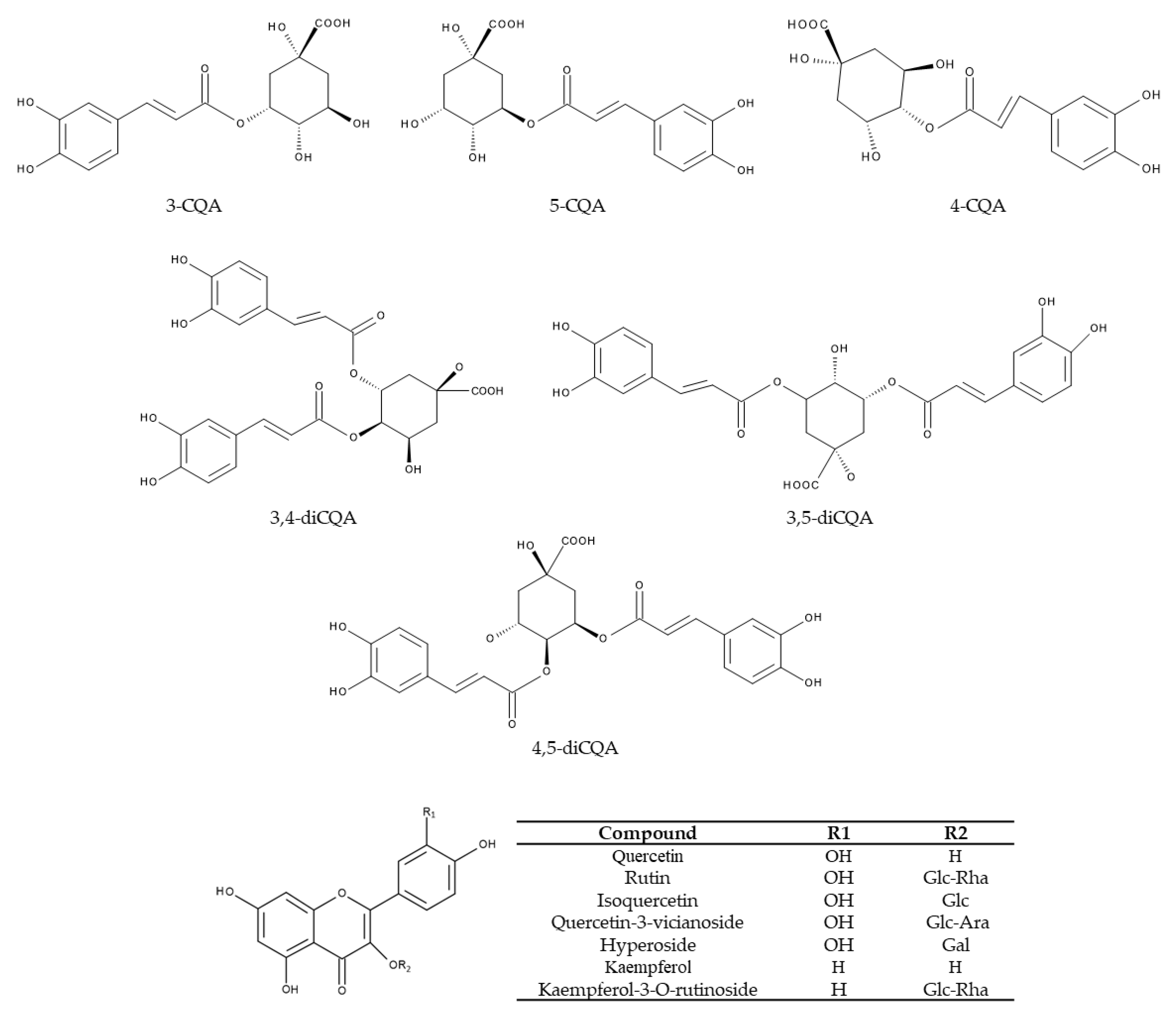

| Polyphenols | Synonyms | Abbreviation | Content (mg/g) | References |
|---|---|---|---|---|
| neochlorogenic acid | 3-caffeoylquinic acid | 3-CQA | 3.37 3 | [14,15,17,19,20,21,38,40,42] |
| chlorogenic acid | 5-caffeoylquinic acid | 5-CQA | 105.49 1 79.71 2 30.51 3 | [14,15,17,19,20,21,38,39,40,42] |
| cryptochlorogenic acid | 4-caffeoylquinic acid | 4-CQA | 20.69 1 16.02 2 2.59 3 | [14,15,20,21,38,39,40,42] |
| isochlorogenic acid B | 3,4-di-caffeoylquinic acid | 3,4-diCQA | 163.65 1 52.53 2 4.51 3 | [15,19,20,21,38,39,42] |
| isochlorogenic acid A | 3,5-di-caffeoylquinic acid | 3,5-diCQA | 70.33 1 120.03 2 52.18 3 | [14,15,19,20,21,38,39,42] |
| isochlorogenic acid C | 4,5-di-caffeoylquinic acid | 4,5-diCQA | 129.49 1 96.42 2 30.32 3 | [14,15,19,20,21,38,39,42] |
© 2020 by the authors. Licensee MDPI, Basel, Switzerland. This article is an open access article distributed under the terms and conditions of the Creative Commons Attribution (CC BY) license (http://creativecommons.org/licenses/by/4.0/).
Share and Cite
Wüpper, S.; Lüersen, K.; Rimbach, G. Chemical Composition, Bioactivity and Safety Aspects of Kuding Tea—From Beverage to Herbal Extract. Nutrients 2020, 12, 2796. https://doi.org/10.3390/nu12092796
Wüpper S, Lüersen K, Rimbach G. Chemical Composition, Bioactivity and Safety Aspects of Kuding Tea—From Beverage to Herbal Extract. Nutrients. 2020; 12(9):2796. https://doi.org/10.3390/nu12092796
Chicago/Turabian StyleWüpper, Svenja, Kai Lüersen, and Gerald Rimbach. 2020. "Chemical Composition, Bioactivity and Safety Aspects of Kuding Tea—From Beverage to Herbal Extract" Nutrients 12, no. 9: 2796. https://doi.org/10.3390/nu12092796
APA StyleWüpper, S., Lüersen, K., & Rimbach, G. (2020). Chemical Composition, Bioactivity and Safety Aspects of Kuding Tea—From Beverage to Herbal Extract. Nutrients, 12(9), 2796. https://doi.org/10.3390/nu12092796

