Article

Determination of Suitable Ecological Intervals for Arid Terminal Lakes via Multi-Source Remote Sensing: A “Morphometry–Security–Efficiency” Framework Applied to Ebinur Lake


1
School of Civil Engineering, Tianjin University, Tianjin 300072, China
2
Southern Xinjiang Joint Laboratory of Water System Science and Engineering, College of Management and Economics, Tianjin University, Tianjin 300072, China
3
Xinjiang Institute of Ecology and Geography, Chinese Academy of Sciences, Urumqi 830011, China
4
College of Water Resources and Civil Engineering, China Agricultural University, Beijing 100083, China
5
School of Humanities and Arts, Tianjin University, Tianjin 300072, China
*
Author to whom correspondence should be addressed.
Remote Sens. 2026, 18(5), 771; https://doi.org/10.3390/rs18050771
Submission received: 3 February 2026 / Revised: 25 February 2026 / Accepted: 28 February 2026 / Published: 3 March 2026

Highlights

What are the main findings?
  • A suitable ecological interval of 500–740 km2 for Ebinur Lake was quantitatively delineated by integrating lake basin morphometry, ecological security indices, and resource efficiency.
  • Ecosystem service water use efficiency (ESWUE) exhibits a distinct seasonal peak in April (approx. 10 CNY/m3), significantly surpassing the summer trough.
What are the implications of the main findings?
  • Implementing a “Spring Surplus and Autumn Deficit” dynamic regulation strategy allows for precise saline dust control during high-risk windy seasons while minimizing evaporation losses.
  • Current water usage patterns result in a 40% failure rate against the minimum ecological baseline, necessitating the integration of local dynamic regulation with long-term cross-basin water transfer schemes.

Abstract

Terminal lakes in arid regions face severe degradation due to the dual pressures of climate change and anthropogenic water consumption. Traditional single-threshold methods for defining ecological water requirements often fail to balance ecosystem stability with water scarcity. To address this, this study constructs a comprehensive framework coupling “Morphometric Stability–Ecological Security Reliability–Resource Use Efficiency” to delineate the suitable ecological interval for Ebinur Lake, the largest saltwater lake in Xinjiang. Using multi-source remote sensing data (Landsat, Sentinel, ICESat, CryoSat), we reconstruct the long-term hydrological dynamics from 2001 to 2023. Results indicate a significant shrinking trend in the lake area, driven primarily by reduced inflow. We jointly consider the lake morphometric breakpoint, the ecological security baseline, and the lower bound of ecosystem service water use efficiency (ESWUE) to determine a minimum suitable ecological area of 500 km2; the regulation upper limit is set at 740 km2 based on the marginal peak of ESWUE. However, monitoring data reveal that the lake falls below the minimum 500 km2 baseline in approximately 40% of months, highlighting a severe ecological deficit risk. Furthermore, ESWUE analysis shows a peak in April (10 CNY/m3), suggesting that, under current climate conditions, a “Spring Surplus and Autumn Deficit” regulation strategy—advancing the replenishment window to the spring windy season—can maximize dust suppression benefits at a lower evaporative cost. This study provides a theoretical basis and methodological paradigm that will contribute to the sustainable management of shrinking terminal lakes globally.

1. Introduction

Terminal lakes in arid regions function as the ultimate sinks for basin-scale water and salt migration and serve as critical ecological barriers. However, they act as some of the most fragile geographical units when subjected to global climate change and anthropogenic disturbances [1]. As unique ecosystems, these lakes not only sustain regional biodiversity and regulate the climate but also play an irreplaceable role in impeding the expansion of desertification [2]. Nevertheless, under the dual pressures of climate warming and intensified human activities, the shrinkage of inland lakes has become a formidable challenge facing arid regions globally [3]. For instance, from the 1970s to the early 21st century, approximately 121 lakes in the semi-arid region of China that borders the Asian Gobi Desert have dried up [4]. Ebinur Lake, the largest saltwater lake in Xinjiang, is pivotal in maintaining the ecological balance of its basin and acts as a key ecological barrier against the diffusion of saline dust from the surrounding wetlands [5]. In recent decades, the fluctuating shrinkage of its water surface has transformed the area into a primary source of salt dust storms triggered by strong winds [6,7], posing a severe threat to the ecological security and sustainable socio-economic development of the economic belt on the northern slope of the Tianshan Mountains [8]. Therefore, scientifically defining the suitable ecological scale of the lake under the constraint of extreme water scarcity holds significant theoretical and practical implications.
Historically, defining the ecological scale of lakes has predominantly focused on a single threshold: the minimum ecological water requirement. Traditional studies largely rely on hydrological methods (e.g., natural base flow proportions) or specific ecological objective methods (e.g., habitat protection, dust suppression) [9], aiming to establish a baseline water level that maintains the lake’s basic morphology or functions [10]. However, a single rigid threshold often fails to reflect the spatiotemporal heterogeneity of ecosystem quality [11]. To address this limitation, comprehensive evaluation methods based on remote sensing technology, such as the remote sensing ecological index (RSEI), have been widely adopted. These methods have significantly enhanced the capability to monitor the evolution of eco-environmental quality in arid regions [12,13]. Compared to single indicators like the Normalized Difference Vegetation Index (NDVI), comprehensive ecological indices couple multiple physical parameters—including climatic characteristics and water environments—thereby integrating “Pressure–State–Response” information more holistically [14] to quantitatively evaluate ecological quality changes at a regional scale.
Despite significant progress in ecological monitoring technologies, transforming monitoring results into scientific management decisions remains a critical challenge. The core contradiction lies in the fact that the pursuit of high ecological quality indices typically implies a higher demand for water resources, yet the boundary between ecological security and water consumption is difficult to define. In arid zones characterized by extreme water scarcity, this contradiction is particularly acute. On the one hand, the rigid expansion of irrigation areas in the middle reaches constantly encroaches upon the water volume entering the downstream lake. On the other hand, maintaining an excessively broad water surface downstream leads to a surge in evaporation losses, which conversely exacerbates the imbalance between water supply and demand at the basin scale [15,16]. Recently, introducing the concept of efficiency from economics into eco-hydrology has emerged as a new breakthrough [17,18,19]. From the perspective of ecosystem service water use efficiency (ESWUE)—defined as the ratio of total ecosystem services to evapotranspiration—a reasonable ecological goal should not be the infinite expansion of the water surface, but rather the maximization of ecosystem service value produced per unit of water consumption [20]. However, existing studies lack a comprehensive assessment framework that organically integrates the physical stability of the lake basin, ecological security baseline constraints, and resource utilization efficiency advantages. Consequently, it is difficult to scientifically determine a suitable ecological regulation interval that balances these multiple competing objectives.
In light of this, taking Ebinur Lake as a representative case study, this research constructs a comprehensive framework for identifying suitable ecological intervals by integrating “Morphometry–Security–Efficiency”. First, long-time-series multi-source remote sensing data are utilized to reconstruct lake area and water level sequences, addressing the challenge of data scarcity in ungauged regions. Subsequently, the ecological regulation interval is systematically delineated from three dimensions: lake morphology, the ecological security index, and ecological water use efficiency. Through this multidimensional assessment, this study not only determines the optimal ecological interval for Ebinur Lake to balance ecological security with water resource utilization efficiency but also provides a theoretical reference and a methodological paradigm for the sustainable management and restoration of shrinking terminal lakes in arid regions worldwide.

2. Materials and Methods

2.1. Study Area

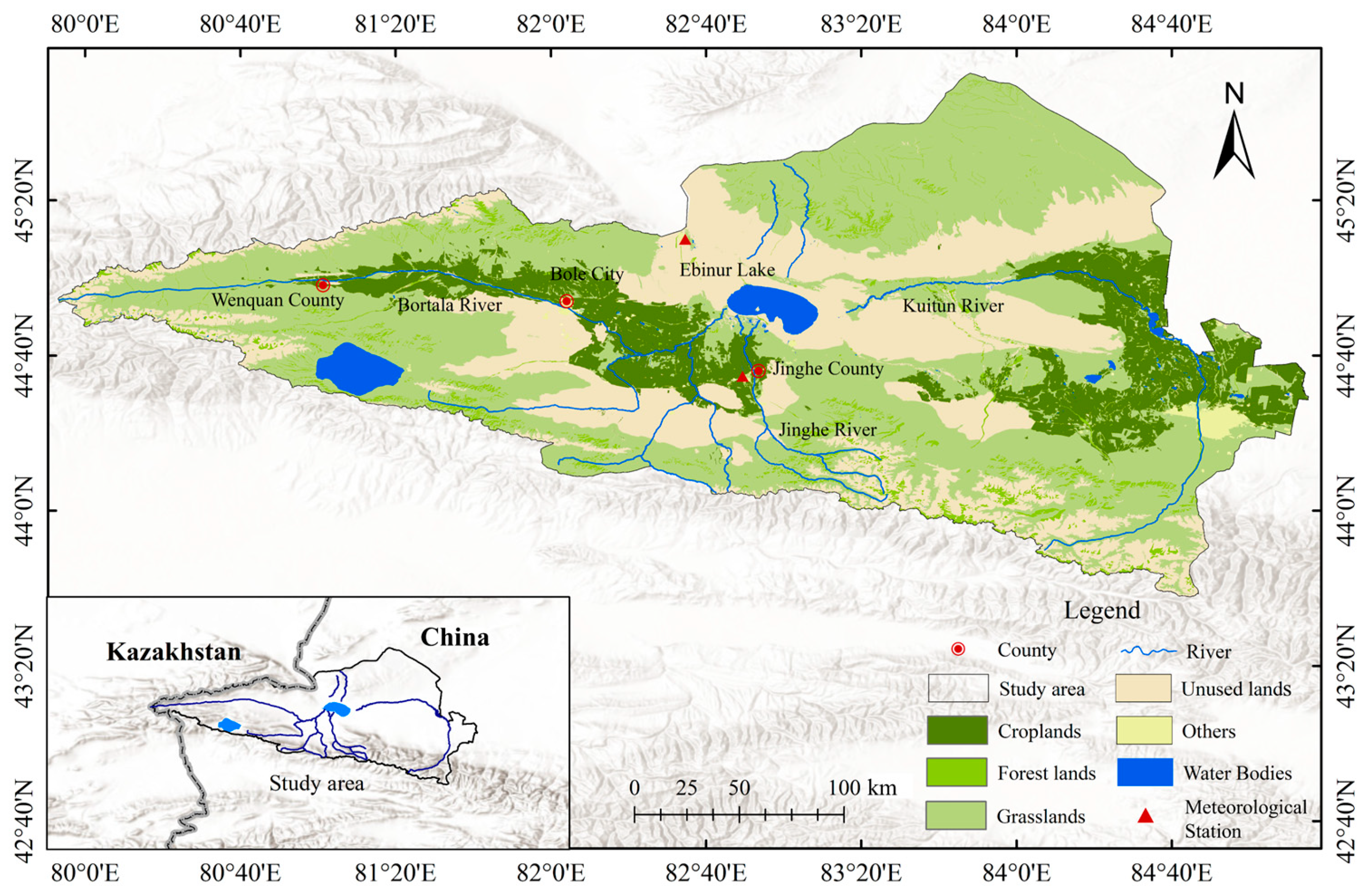
The Ebinur Lake Basin is situated in the northwestern Xinjiang Uygur Autonomous Region, China (44°43′–45°12′N, 82°35′–83°11′E) (Figure 1). It serves as the lowest catchment center on the southwestern edge of the Junggar Basin and acts as a critical ecological barrier for the economic belt on the northern slope of the Tianshan Mountains. Dominated by a temperate continental arid climate, the region is characterized by extreme aridity, with a multi-year average precipitation of only approximately 149 mm, contrasting sharply with an annual potential evaporation exceeding 2000 mm [21]. Despite these harsh hydrothermal disparities, a unique wetland ecosystem has developed. The Ebinur Lake Wetland National Nature Reserve, established in 2007, supports typical salt-tolerant xerophytic vegetation communities—including Populus euphratica, Haloxylon ammodendron, and Phragmites australis—serving as a vital oasis for maintaining regional biodiversity.
As Xinjiang’s largest saltwater lake, Ebinur Lake represents the terminus of basin-scale water and salt convergence; fluctuations in its water extent directly mirror the regional water budget. The lake is primarily replenished by surface runoff from the Bortala and Jing Rivers. In recent decades, however, significant agricultural expansion and intensified water resource development have markedly reduced this inflow, driving a distinct trend of lake shrinkage. Crucially, the lake is situated downwind of the Alataw Pass. Influenced by the “narrow-tube effect”, the area experiences strong wind dynamics year-round, with over 160 days of gales annually and maximum wind speeds reaching 55 m/s [21]. This unique meteorological condition amplifies the ecological consequences of shrinkage: once water levels drop and the lakebed is exposed, the dried playa is easily eroded by strong winds, becoming a source of saline dust storms that severely threaten surrounding oasis agriculture and the critical railway lines in northern Xinjiang [22].

2.2. Data

Lake area inversion was based on multi-source optical imagery with low or no cloud cover from April to October during the 2001–2023 study period, including Landsat 5, Landsat 7, Landsat 8, and Sentinel-2. Following image preprocessing and cloud/shadow masking, a monthly lake-area time series was constructed by combining water indices with visual interpretation. In addition, land-use/land-cover data were obtained from the China Land Cover Dataset (CLCD) to characterize the underlying surface patterns around the lake. Lake water levels were derived from multi-source satellite altimetry and in situ measurements. The local water resources management department provided in situ lake water level records from April to October between 2004 and 2009. To overcome the spatiotemporal limitations of ground measurements and extend the record, we incorporated multi-source satellite altimetry spanning 2003–2023, including laser altimetry from ICESat and ICESat-2 and radar altimetry from CryoSat-2 (Table 1).
This study estimated lake evaporation depth using multiple remote-sensing and reanalysis evapotranspiration products and then converted it to evaporative water loss volume by coupling it with the dynamic water surface area. Specifically, lake evaporation was derived from the ensemble average of three gridded products: the ECMWF Reanalysis v5-Land (ERA5-Land), the Penman–Monteith–Leuning version 2 (PML_v2), and the Global Land Evaporation Amsterdam Model version 4.2a (GLEAM v4.2a). GLEAM v4.2a integrates satellite observations with reanalysis data and constrains potential evaporation to actual evaporation using a multiplicative evaporative-stress factor regulated by variables such as root-zone soil moisture [23]. PML_v2 is generated using the PML framework, driven by MODIS vegetation/land-surface parameters and meteorological forcing [24]. ERA5-Land is a high-resolution land-surface reanalysis produced by the European Centre for Medium-Range Weather Forecasts (ECMWF); it is forced by ERA5 and provides total evaporation and related land-surface water and energy flux variables [25].
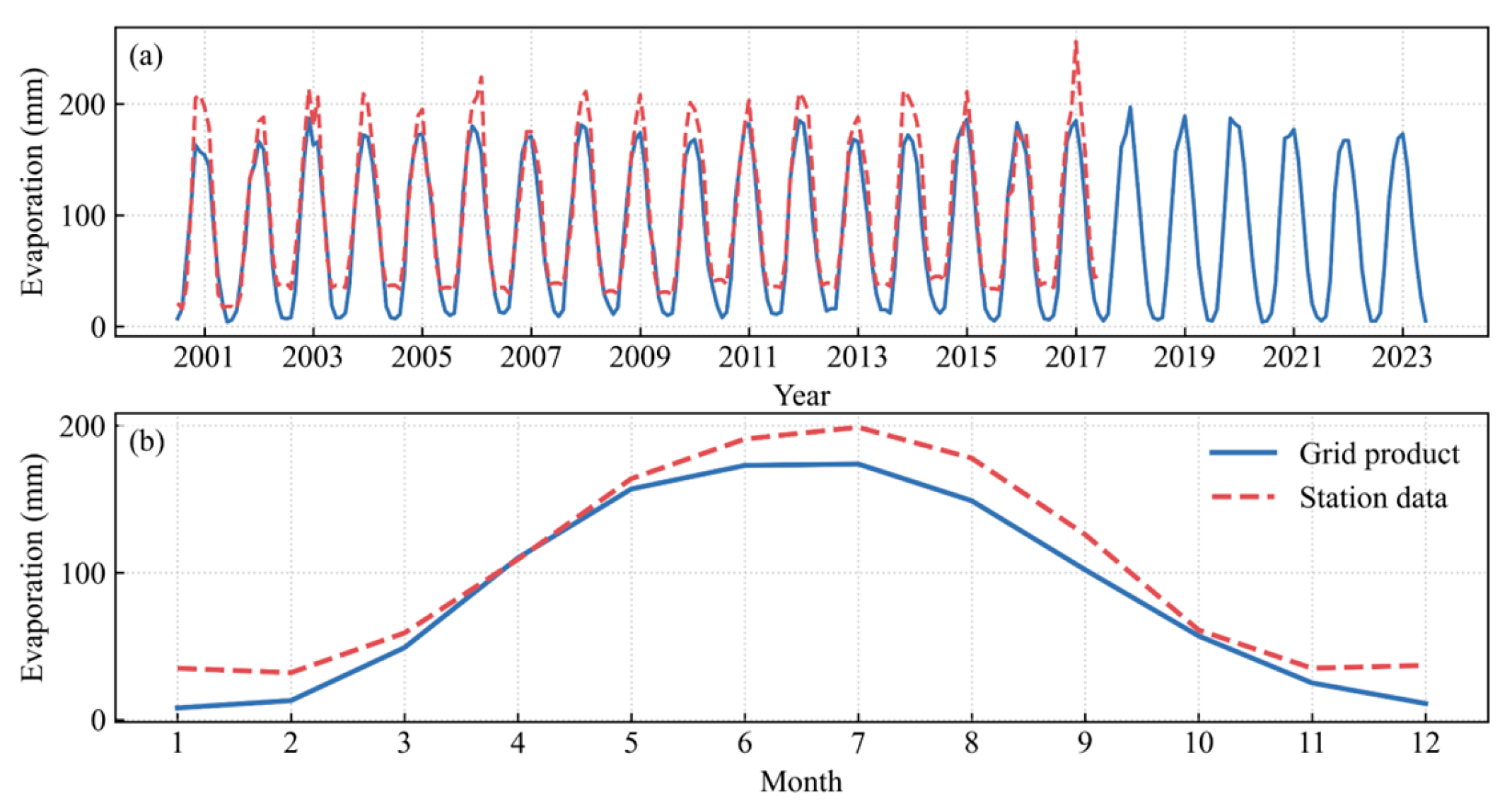
To reduce the uncertainty inherent in gridded products, we further performed a bias correction using in situ observations. Following the conversion approach proposed by Cui et al. [26], monthly measurements from large evaporation pans at the Jinghe and Alashankou meteorological stations for 2001–2017 were used to reconstruct a reference series of lake-surface evaporation through a conversion coefficient combined with a distance-weighting scheme. This reference series was then used to correct the ensemble-mean gridded evaporation. The gridded ensemble and station-based observations showed good agreement at the monthly scale (R2 = 0.90; Figure 2), indicating that the gridded products capture the seasonal variability of evaporative water loss over the lake. However, systematic biases persisted in several individual months; therefore, a monthly ratio-factor method was applied for correction. The resulting corrected annual lake-surface evaporation was approximately 1220 mm.

2.3. Methods

2.3.1. Remote Sensing Inversion of Lake Area and Water Level

Given the high turbidity of Ebinur Lake, the extensive distribution of surrounding salt crusts and mudflats, and the complex shoreline transition zones, the Google Earth Engine (GEE) cloud platform was employed. To enhance water features, the Normalized Difference Water Index (NDWI), Modified NDWI (MNDWI), and Automated Water Extraction Index—no-shadow (AWEInsh) were calculated [27]. The formulas are as follows:
NDWI   =   Green NIR Green   +   NIR
MNDWI = Green SWIR 1 Green + SWIR 1
AWEI nsh = 4 × Green SWIR 1 0.25 × NIR + 2.75 × SWIR 2
where Green, NIR, SWIR1, and SWIR2 represent surface reflectance in the green, near-infrared, and two shortwave infrared bands, respectively.
The area extraction workflow involved: (1) Sample construction and accuracy validation: A reference sample set covering open water, shallow shoals, and salt crusts was established by combining high-resolution imagery with manual visual interpretation. (2) Optimal index selection: Thresholds were determined based on the Otsu algorithm [28]. The accuracy of each index was evaluated using confusion matrices, overall accuracy (OA), and Kappa coefficients to select the optimal extraction scheme. (3) Time series generation: Lake areas for the non-freezing period (April–October) from 2001 to 2023 were inverted in batches. Linear interpolation was applied to fill data gaps caused by cloud cover or poor image quality in specific months.
Given the differences in the service lifespans and revisit frequencies of various satellite sensors, along with signal interference caused by the complex terrain surrounding the lake, systematic bias correction was applied to the multi-source altimetry data. By extracting valid orbital crossover points over the Ebinur Lake region, removing anomalous observations, and applying time-series smoothing, the initial lake surface elevation sequences for each satellite were obtained. Subsequently, to eliminate systematic errors among different sensors, this study assumed that systematic biases are time-invariant. Using the in situ data and the high-precision ICESat-2 data as respective baselines, the altimetric water levels of ICESat and CryoSat-2 were synchronously calibrated during their overlapping periods. Specifically, the mean water level difference on a monthly scale during the overlapping period was calculated and applied as an error value across the entire observation period for the respective sensors. This approach effectively removed the systematic biases between altimetric water levels from different sources [29,30]. Furthermore, to address the early period lacking satellite altimetry coverage (2001–2002), an empirical water level–area model was established using the statistical regression between the available in situ water levels and concurrent remote sensing-derived water surface areas. This model was subsequently applied to interpolate the missing data, yielding a continuous, long-term water level series for the 2001–2023 period. To verify the reliability of this localized data infilling for the long-term sequence analysis, we compared the lake basin morphological fitting results under two scenarios: with and without the interpolated data. The analysis revealed that the simulated breakpoint areas of the lake morphology (for the calculation method, see Section 2.3.2) differed by only 1 km2 between the two cases. This confirms that, given the minimal proportion of the interpolated records within the overall study sequence, their error propagation effect on the long-term trend analysis is highly limited. Consequently, this approach effectively ensures the reliability and physical independence of the reconstructed time series.

2.3.2. Delineation of Suitable Ecological Area/Water Level Intervals

Addressing the dual constraints of lake shrinkage and water resource competition in the Ebinur Lake Basin, this study transcends the limitations of single water level thresholds. We constructed a comprehensive identification framework that couples “Morphometric Stability–Ecological Security Reliability–Resource Use Efficiency”. The suitable ecological regulation interval is systematically delineated through the following three dimensions:
(1) Morphological Lower Limit
The response of lake area to water-level fluctuations depends on the topographic characteristics of the lake basin; identifying the breakpoint in this response is key to defining physical morphometric stability. This study utilized the reconstructed long-term Area–Water Level dataset and employed a piecewise linear regression model to identify the sensitivity threshold of the basin morphology. We performed a traversal search using the least squares method to locate the breakpoint that minimized the global residual sum of squares (RSS), defining this point as the geometric lower limit (Amorph,min). Physically, this threshold characterizes the critical transition state from a gentle to a steep lake basin. Once the water level falls below this threshold, even minor declines trigger the rapid exposure of ecologically sensitive zones (e.g., shallow shoals and salt crusts), leading to a non-linear surge in saline dust risk.
(2) Ecological Security Baseline
To quantify the stability of ecosystem functions under multiple stressors, a comprehensive ecological security index (ESI) was constructed based on the “State–Pressure–Driver” framework [31]. (a) State: The RSEI was selected to characterize the habitat quality of the near-shore ecological zone [12,13]. (b) Pressure: This layer integrates the salinity index (SAL, reflecting soil salinization), water turbidity (reflecting wind-wave disturbance), and aerosol optical depth (AOD, characterizing saline dust pressure in the background zone). (c) Driver: This covers the positive driver of inflow recharge and the negative driver of regional meteorological drought (PDSI, Palmer Drought Severity Index).
Spatially, the “near-shore ecological zone” was defined as a 5 km buffer extending from the historical maximum water surface, focusing on the lake–vegetation coupling system directly affected by water level fluctuations. The “regional background zone” was defined as a 20 km extension to characterize regional climatic and environmental backgrounds. Data acquisition and indicator calculation were implemented via the GEE platform: The SAL was constructed using the Normalized Difference Salinity Index (NDSI) based on Landsat imagery within the 5 km near-shore terrestrial pixels and normalized via range standardization; Turbidity was characterized using the monthly composite mean of Landsat red band reflectance for water pixels; AOD was statistically derived from MODIS aerosol products within the 20 km background zone; and monthly mean PDSI was obtained from the TerraClimate product for the 20 km background zone.
To avoid subjective weighting bias, this study employed the entropy weight method to objectively determine indicator weights based on the information entropy of each indicator series and then constructed a monthly ESI time series. First, all indicators were normalized using min-max normalization, with benefit-type and cost-type indicators treated separately, yielding the normalized matrix z ij , where i = 1 , , n denotes the sampled months and j = 1 , , m denotes the indicators. Second, the proportion of the j-th indicator in month i was calculated as:
p ij   =   z ij i = 1 n z ij
The information entropy of each indicator was then computed as:
E j = k i = 1 n p ij × ln ( p ij ) ,   k = 1 ln ( n )
When pij = 0, p ij × ln ( p ij ) was set to 0 to avoid an undefined logarithm. Next, indicator weights were derived based on entropy redundancy:
w j   =   1 E j j = 1 m ( 1 E j )
Finally, the monthly composite index was obtained by linearly weighting the normalized indicators:
ESI i = j = 1 m w j × z ij
where pij is the proportion of indicator j in month i; Ej is the information entropy of indicator j; wj is the corresponding entropy-based weight of indicator j; and ESIi is the ecological security index for month i. The ESI ranges from 0 to 1. Using an equal-interval classification with a step of 0.2, the index was divided into five ecological grades: excellent (0.8–1.0), good (0.6–0.8), moderate (0.4–0.6), poor (0.2–0.4), and very poor (0–0.2). In this study, 0.4 was adopted as the minimum threshold [31,32]. Furthermore, to evaluate the reliability of achieving ecological security when the lake level is maintained above a certain target (H*), the Probability of Ecological Security Compliance (Psafe) is defined as:
P safe ( H * ) = P ( ESI 0.4 H H * ) = N ( ESI 0.4 H H * ) N ( H H * )
where N(·) denotes the number of samples satisfying the condition. This probability represents the proportion of months where the ecosystem remains secure (ESI ≥ 0.4) among all months where the water level meets or exceeds the target (H ≥ H*). We set Psafe ≥ 50% as a constraint (see Section 4.1). This ensures that the derived minimum area (AESI,min) and minimum water level (HESI,min) not only meet the ecological security baseline but also possess at least a 50% probability of occurrence, thereby avoiding “apparent compliance” that occurs only under rare, sporadic conditions.
(3) Water Use Efficiency Interval
In arid regions, a reasonable ecological target must seek a balance between maintaining ecosystem service value (ESV) and evaporative loss. We introduced the ESWUE model—defined as the ecosystem service value produced per unit of evaporative water consumption—to identify the suitable “Cost-Benefit” interval [17,33]. ESV was estimated using the unit-area equivalent value factor method [34] within the nearshore ecotone of Ebinur Lake. Within this region, water bodies and unused lands account for approximately 90% of the total area; therefore, the monthly environmental variability is primarily governed by the seasonal fluctuation of the lake surface. The annual mean unit-area service value coefficient for each land-use/land-cover type (VCi) was adopted from previous studies that locally calibrated the coefficients for the Ebinur Lake region (Table 2) [18,35]. To characterize the seasonal fluctuation of ESV, a monthly weighting factor (αi,m) was introduced. For water bodies, the weighting factor was determined by the ratio of monthly lake inflow to the total annual inflow to represent the intra-annual allocation of the hydrological regulation and water purification services. For vegetated types (e.g., grassland), this factor was scaled using the monthly NDVI proportion. For unused lands, the weight was uniformly distributed across all months [36,37]. The calculation formula is as follows:
ESV = m = 1 12 i = 1 K ( A i , m × VC i × α i , m )
where m denotes the month; i denotes the land-use type; K is the total number of land-use types; αi,m is the monthly weighting factor, with the sum of all months equaling 1; VCi is the annual mean unit-area service value coefficient for type i (CNY/(km2·a)); and Ai,m is the area of type i in month m (km2). Specifically, the monthly water body area was extracted using remote sensing retrievals, and its dynamic variations were approximated as mutual conversions with the surrounding unused lands. The areas of the remaining land-use types were obtained from the CLCD dataset.
Based on marginal utility theory, the regulation interval was determined by identifying characteristic points on the ESWUE curve: (a) Efficiency Frontier Threshold (Regulation Upper Limit): Using the binning extremum method (0.1 m intervals), efficiency frontier points across different water level ranges were extracted. A quadratic function was fitted to the “Evaporation Cost–ESV Benefit” relationship to identify the vertex (i.e., the stationary point where the first derivative equals zero). The corresponding area was denoted as AESV,max, marking the onset of diminishing marginal ecological gains relative to evaporative cost. Exceeding this area implies that the ecological gain from additional water resources cannot offset the sharply increasing evaporation costs. (b) Structural Transition Threshold (Efficiency Lower Limit): The K-Means clustering algorithm was used to identify the structural breakpoint (with the corresponding area denoted as AESV,min) in the ESV response pattern. The optimal number of clusters (K = 2) was selected based on the evaluation of the silhouette score and the elbow method (Table 3). This point marks a threshold below which ESV improvement from inflow is limited, whereas above which ecological benefits amplify significantly. This logic aligns with the lake morphometry method: whereas the morphometric approach defines the minimum ecological water level at the breakpoint of the Area–Water Level curve, this section characterizes the corresponding critical point in the ESV response, extending the threshold concept from a geometric dimension to an ecological-benefit dimension.
Synthesizing the multi-dimensional assessments, this study defines the theoretical ecological lower limit by taking the maximum value among the morphological threshold, the ecological security baseline, and the efficiency lower bound. Conversely, the regulation upper limit is determined by the efficiency frontier peak. Furthermore, to ensure the practicality of basin water resource management, these theoretical thresholds were rounded to collectively constitute the final suitable ecological regulation interval [Amin, Amax] for Ebinur Lake.

3. Results

3.1. Spatiotemporal Evolutionary Characteristics of Lake Area and Water Level

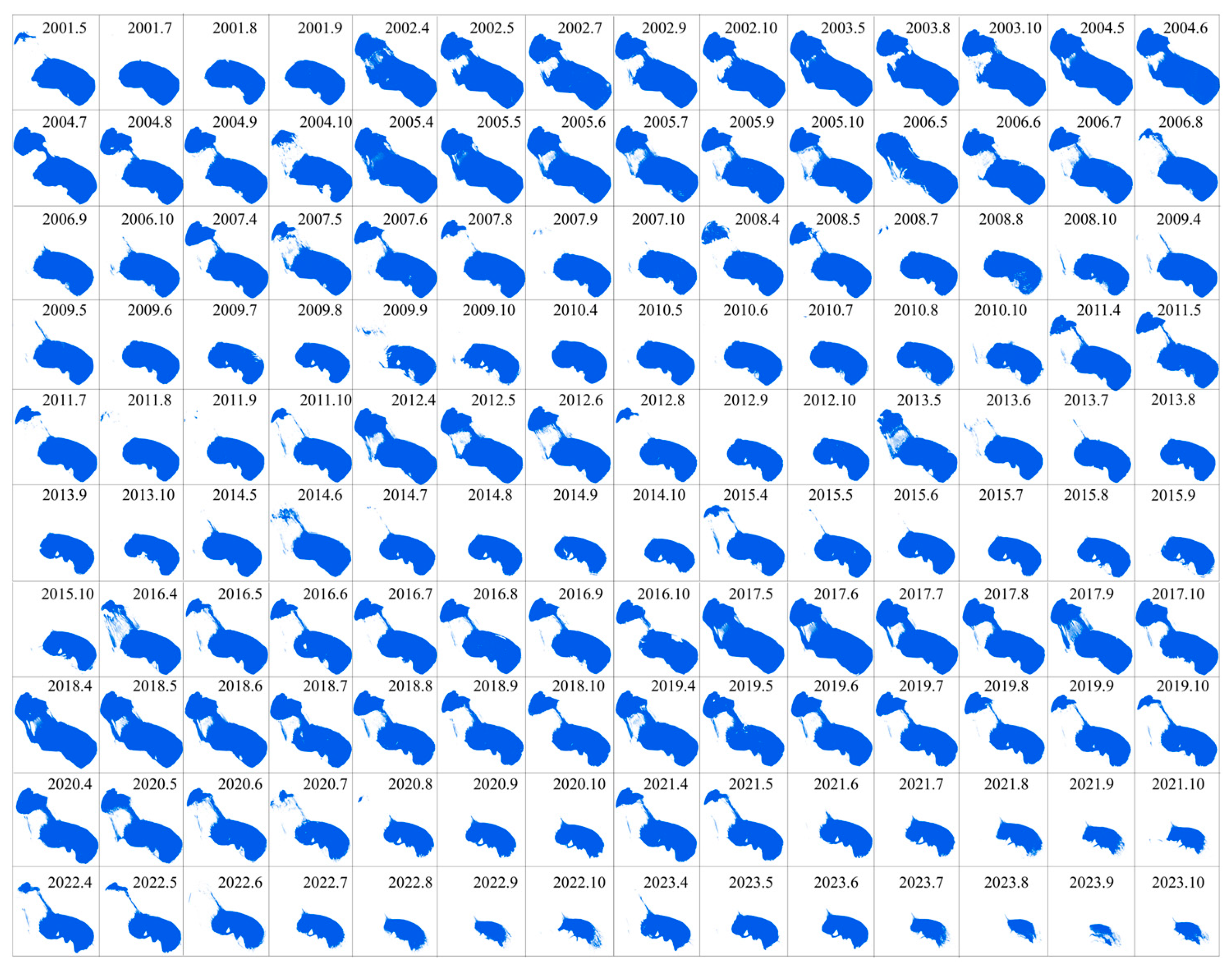
To accurately reconstruct the long-term hydrological dynamics of Ebinur Lake, this study first evaluated the applicability of three indices (NDWI, MNDWI, and AWEInsh) in typical years (see Section 4.1 for details). Validation results demonstrated that NDWI performed best in suppressing background noise from saline lands and delineating shallow water bodies; thus, it was selected to extract the monthly lake water extent from 2001 to 2023 (Figure 3).
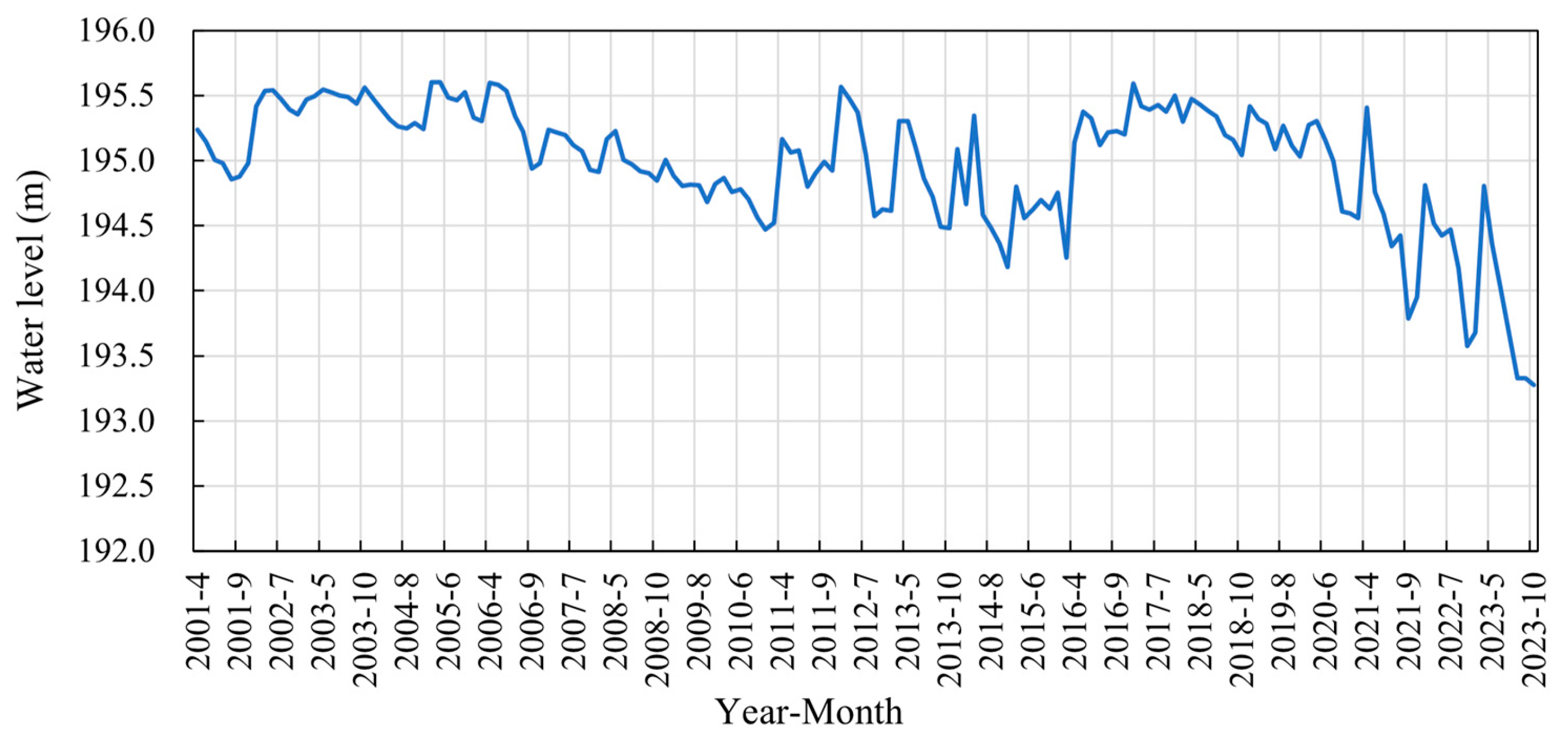
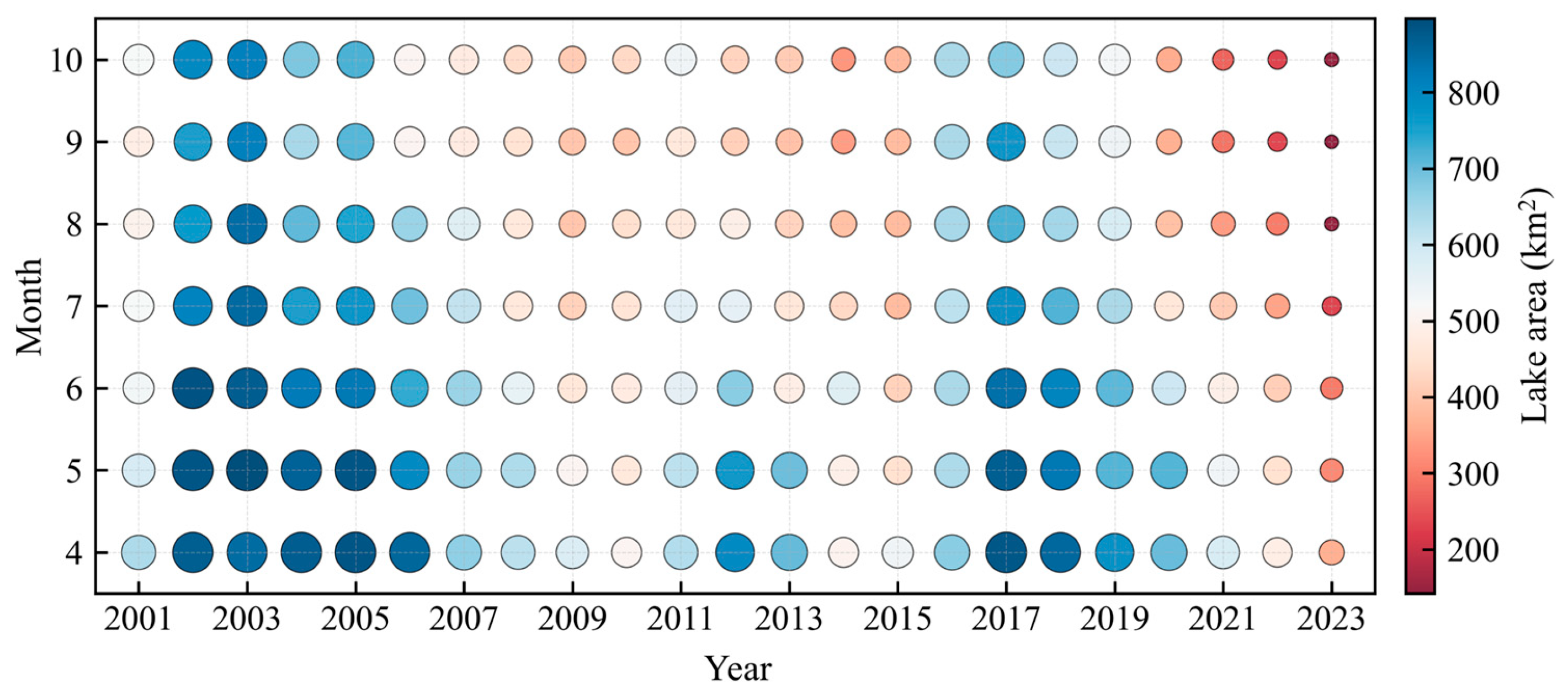
On an inter-annual scale, Ebinur Lake underwent a non-linear evolutionary process characterized by distinct phases of stability, gradual decline, and rapid shrinkage. The period from 2001 to 2006 represented a phase of high-level stability, during which the lake maintained historical high water levels. The annual average area fluctuated between 750 and 850 km2, while water levels stabilized at 195.0–195.6 m. During this interval, the lake morphology was robust; hydraulic connectivity between the eastern and western lake zones was well-maintained, and the water mask appeared as a large, continuous sheet of water. Subsequently, under the dual influence of increased basin water consumption and climatic fluctuations, the lake entered a period of fluctuating gradual decline from 2007 to 2019. Although a brief rebound occurred in 2016 due to runoff recharge from a wet year, the overall water storage volume exhibited a deficit trend, with the centroid of the water level shifting downward to approximately 195.0 m and the area decreasing to around 500 km2. Since 2020, the system has entered a phase of rapid shrinkage characterized by a sharp reduction in inflow. By October 2023, the water level plummeted to a historical low of 193.28 m, representing a drop of approximately 2.0 m compared to the peak in 2003. Correspondingly, the water surface shrank to 236 km2, retaining only the core water body in the southeast, while the shallow northwestern zones dried up extensively, transforming into potential sources of saline dust.
Figure 4 and Figure 5 show the monthly time series changes in the water area and level of Ebinur Lake during 2001–2023. Seasonally, the lake typically reaches its annual peak in April–May, driven primarily by spring alpine snowmelt runoff. In the subsequent months (June–October), intense lake surface evaporation and agricultural irrigation diversions dominate the water budget, causing the water surface to recede monthly. This pattern exhibits a typical hydrological rhythm of “Spring Surplus and Autumn Deficit”. Notably, the long-term analysis revealed a critical shift in the hydrological response mechanism: as the overall scale of the lake shrinks, its capacity to regulate hydrological fluctuations weakens significantly. This is manifested as an anomalous amplification of the intra-annual water level amplitude. During the early high-water stage (2002–2006), the vast water surface effectively buffered fluctuations in the water budget, keeping the intra-annual water level difference generally below 0.4 m. In contrast, during the recent stage of extreme shrinkage (e.g., 2023), the intra-annual decline surged to over 1.5 m. This “Amplification Effect” of seasonal volatility indicates that the lake has lost its self-regulatory capability to maintain a steady state, subjecting the ecosystem to more drastic stress from alternating wet and dry conditions.

3.2. Response Characteristics of Ecological Security and Service Value

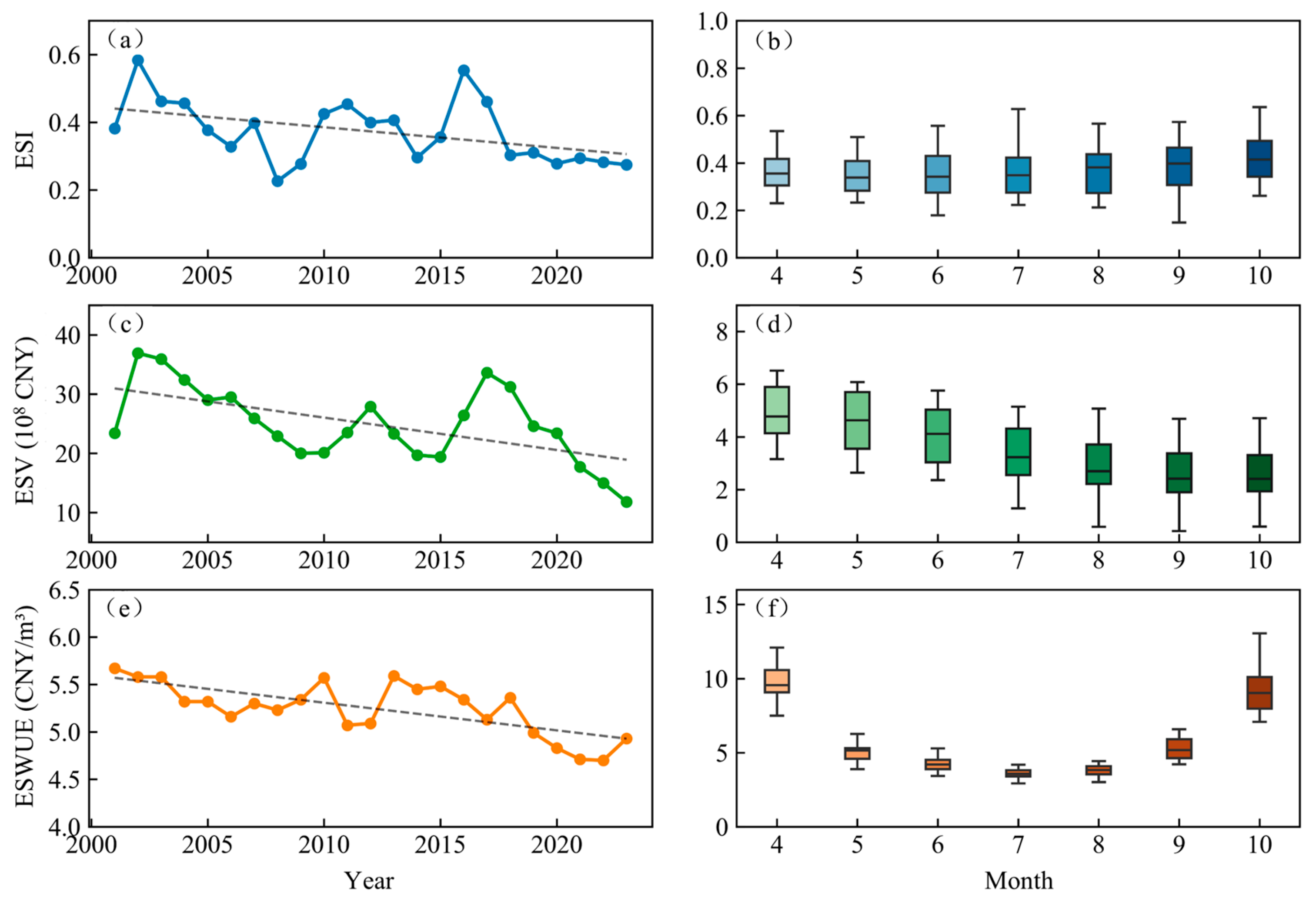
Figure 6 shows the inter-annual and seasonal variation characteristics of ESI, ESV, and ESWUE for Ebinur Lake during 2001–2023. On an inter-annual scale, the ESI exhibited a fluctuating downward trend (Figure 6a) correlated with variations in inflow, whereas significant heterogeneity was observed on a seasonal scale (Figure 6b). Particularly in July and August, the superposition of intense high-temperature-driven evaporation and peak agricultural water consumption led to simultaneous lake shrinkage and intensified salinity stress. Consequently, the mean ESI plunged to its nadir, rendering the system highly sensitive. Conversely, entering October, the level of ecological security rebounded significantly as hydrological pressure alleviated and water quality improved. Further weight analysis revealed the dominant mechanisms controlling ESI evolution: Inflow (0.40) > PDSI (0.25) > RSEI (0.15) = SAL (0.15) > Turbidity (0.03) > AOD (0.02). This hierarchy indicates that inflow volume and regional wet/dry conditions are the primary controlling factors for ESI variations, followed by ecological quality and salinity.
The ESV exhibited a distinct “area-controlled” characteristic (r = 0.93), indicating that the expansion of the water surface directly drives the elevation of total service value (Figure 6d). As the lake shrank, its total value plummeted from a peak of 36.9 × 10⁸ CNY in 2002 to 11.8 × 10⁸ CNY in 2023, representing a decline of 68% (Figure 6c). Synchronously, the ESWUE displayed a fluctuating downward trend (Figure 6e), accompanied by a bimodal seasonal distribution that aligns precisely with the high-risk periods for regional wind prevention and sand fixation. ESWUE peaked in April (9.78 CNY/m3) and October (9.13 CNY/m3), significantly surpassing the summer trough (Figure 6f). This implies that prioritizing the maintenance of ecological water levels during windy seasons can maximize regional ecological security benefits at a lower water consumption cost.

3.3. Comprehensive Delineation of Multidimensional Suitable Ecological Intervals

Addressing the characteristics of high disturbance and strong uncertainty in the Ebinur Lake Basin, this study constructed a three-dimensional identification framework coupling “Morphometric Stability–Ecological Security Reliability–Resource Use Efficiency” to systematically delineate the suitable regulation interval.
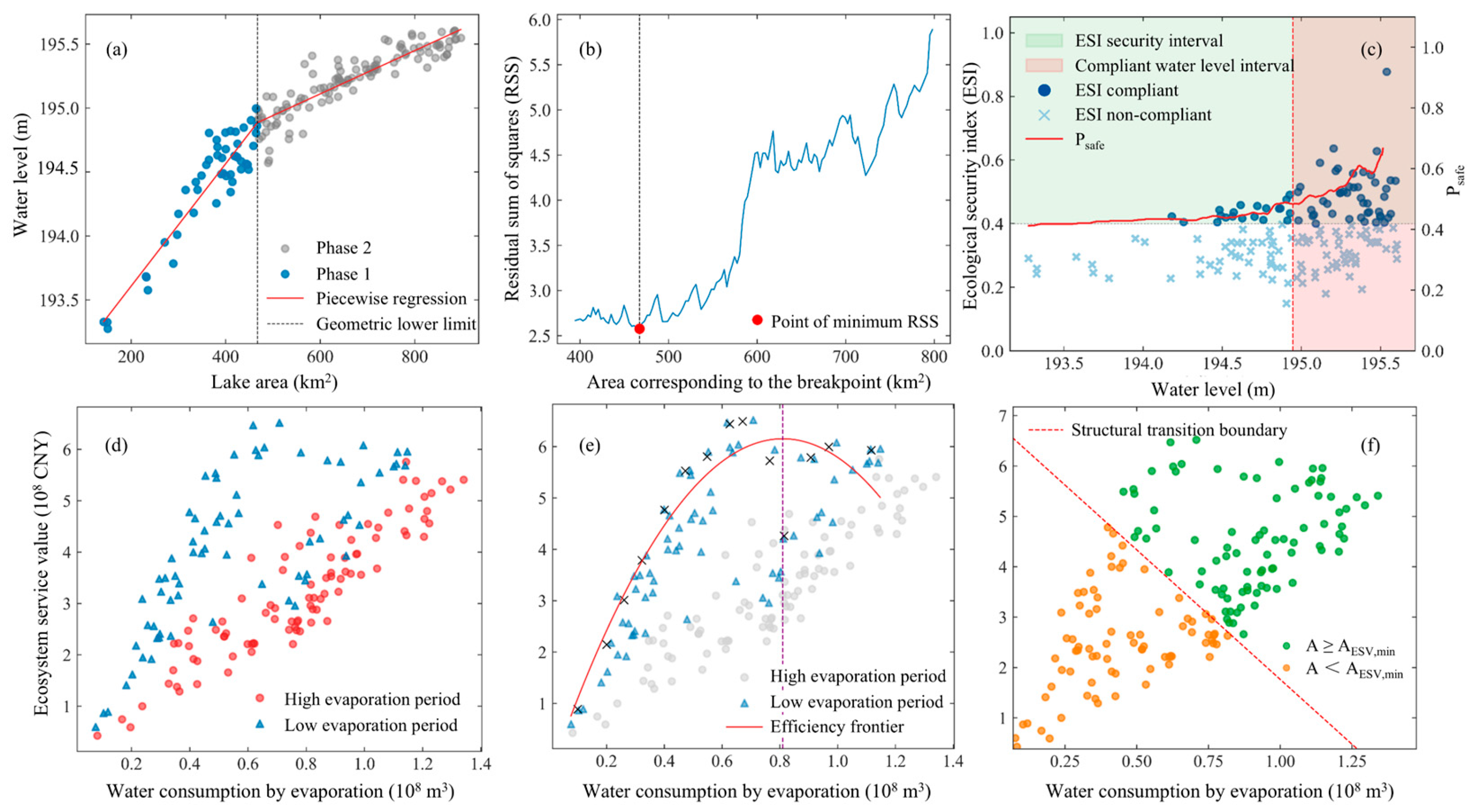
Lake basin geometry and ecological evaluation indicators jointly define the rigid baseline for regulation. Based on the characteristics of the Area–Water Level relationship (Figure 7a), a piecewise regression model identified the geometric critical point of the transition from a gentle to a steep basin at 467 km2, with good model fit (RSS = 2.58, RMSE = 0.13 m) (Figure 7b). When the area falls below this threshold, the sensitivity of area to water level changes (dA/dH) intensifies significantly; a minor drop in water level can trigger rapid surface shrinkage, reflecting the strong constraint of basin morphology during low-water stages. Building upon this physical basis, ecological evaluation indicators further determined the ecological security baseline for the lake area. Constrained by ESI ≥ 0.4 and Psafe ≥ 0.5, the inverted ecological security baseline was determined to be 503 km2 (Figure 7c).
Across different seasons, a distinct stratification is evident between evaporative water consumption costs and ESV (Figure 7d). By fitting the "Evaporation Cost–ESV Benefit" relationship curve, two key nodes of ecosystem response were identified (Figure 7e,f): First, the structural transition point (corresponding to an area of 492 km2) marks the shift in ESV response from limited growth at low water levels to significantly enhanced growth at higher levels. Second, the efficiency-frontier vertex (corresponding to an area of 744 km2) indicates the point beyond which the marginal benefit of ecological water use begins to diminish.
Synthesizing the above analysis, the regulation lower limit was established by taking the maximum value among the morphological geometric threshold, the ecological security baseline, and the structural transition lower limit of efficiency. Meanwhile, the efficiency frontier peak served as the regulation upper limit. Consequently, the suitable ecological regulation interval for Ebinur Lake was determined to be 503–744 km2, which is rounded to 500–740 km2 for practical management purposes.

4. Discussion

4.1. Reliability of Remote Sensing Inversion and Multidimensional Validation of Ecological Intervals

(1) Accuracy of Remote Sensing Retrieval
The identification of a suitable ecological area interval for Ebinur Lake hinges primarily on the stability of the reconstructed lake area–water level process. For shallow terminal lakes in arid regions, errors predominantly arise from mixed pixels along shorelines and spectral confusion caused by saline mudflats, intermittently flooded zones, and highly turbid waters. Particularly during low-water stages, the rapid expansion of exposed lakebeds and salt crusts can easily induce systematic overestimation or underestimation of the water extent. Based on this understanding, we conducted a comparative screening of NDWI, MNDWI, and AWEInsh.
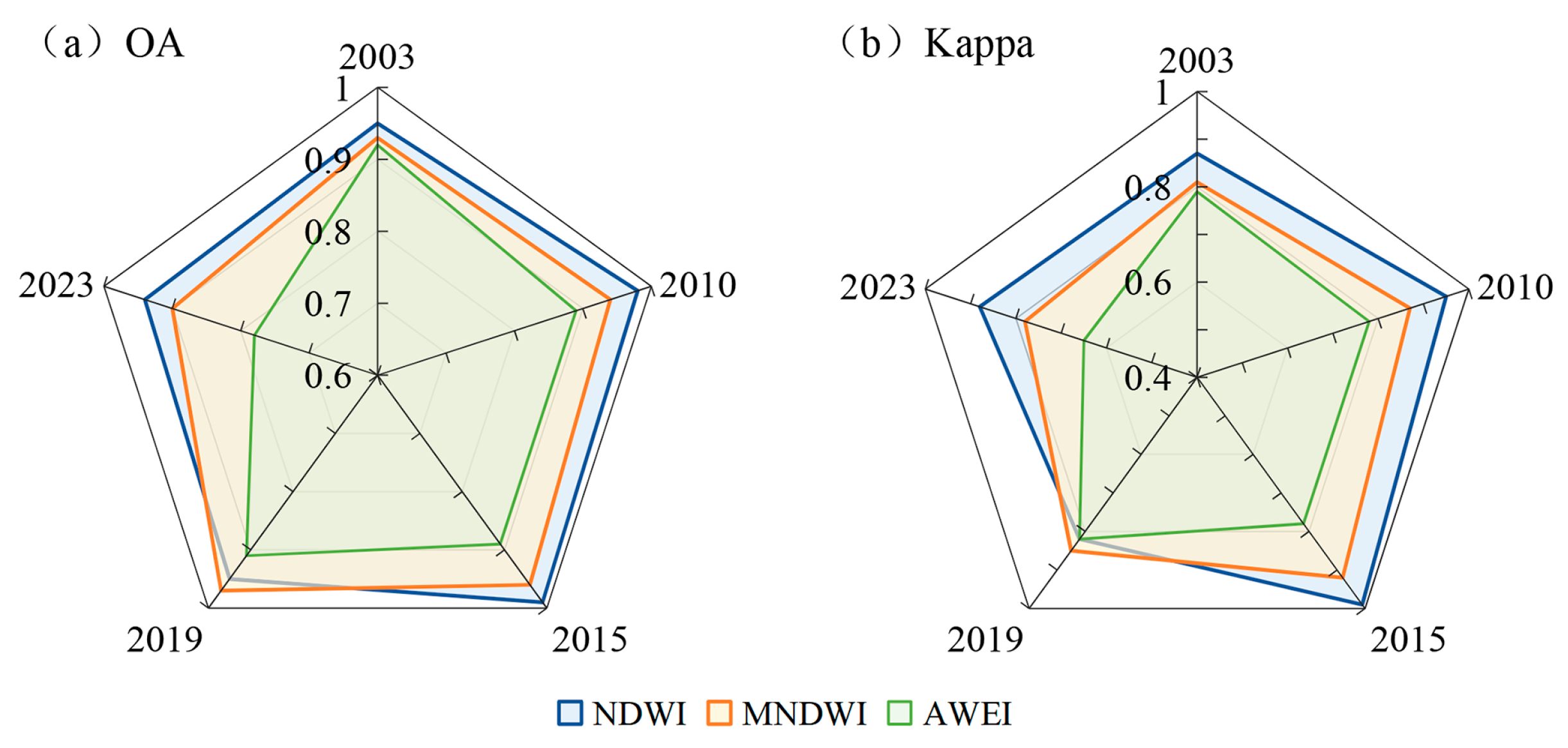
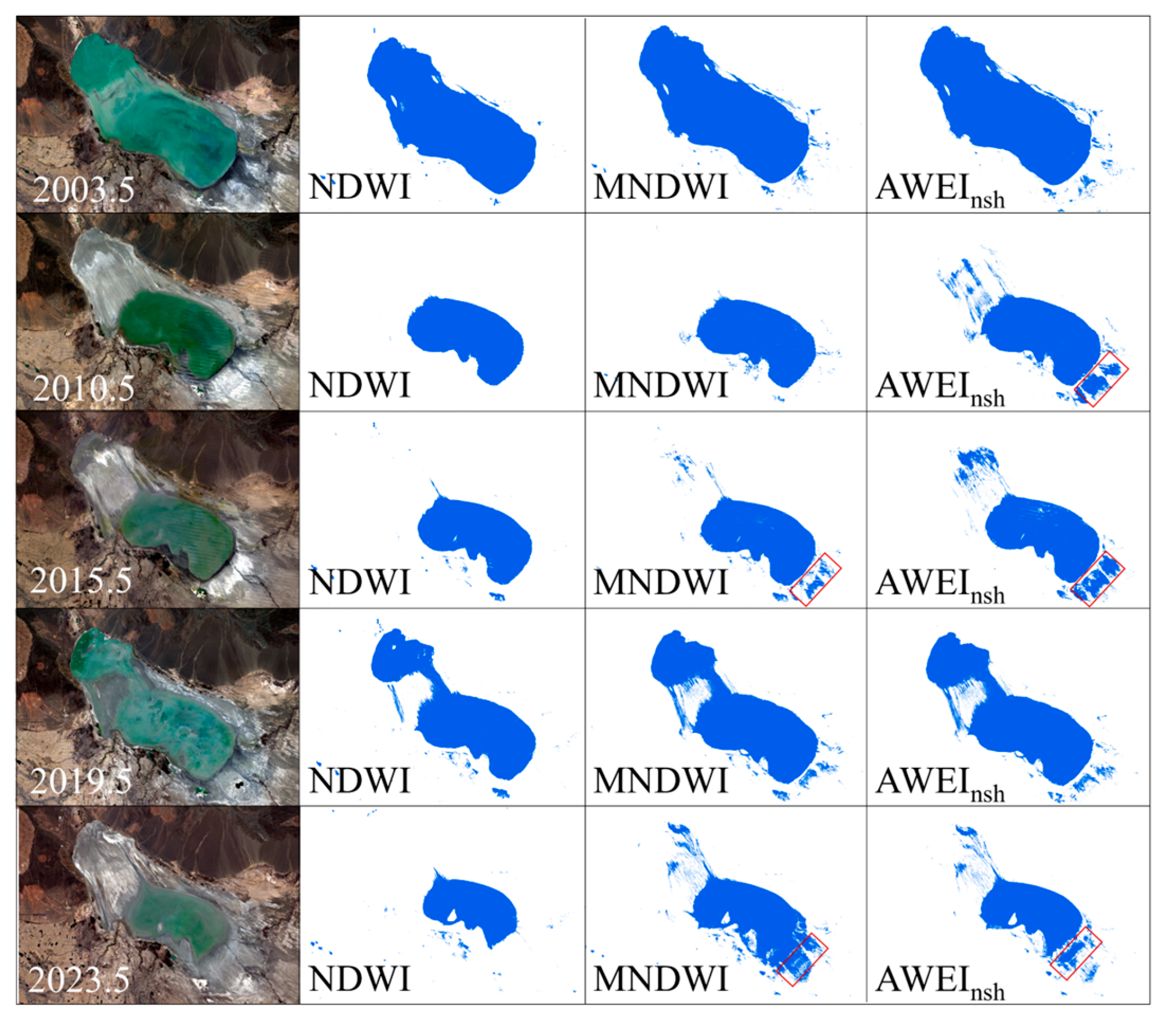
Comparative results indicate that the water boundaries extracted by NDWI are more continuous with fewer isolated noise pixels, showing limited omission errors in narrow waterways and shallow transition zones. Relative to the reference images, the OA of NDWI ranges from 0.94 to 0.99 (Figure 8a), and the Kappa coefficient ranges from 0.87 to 0.99 (Figure 8b). Mechanistically, by leveraging the difference between green and near-infrared reflectances, NDWI effectively suppresses high-reflectance backgrounds from bare soil and saline lands while successfully separating moderately to highly turbid waters, demonstrating stronger adaptability to seasonal flooding and shallow zones. In contrast, MNDWI, which incorporates shortwave infrared (SWIR), is more sensitive to moist salt crusts and exposed lakebeds [22], leading to a slight overestimation of water bodies in certain regions. Although AWEInsh possesses advantages in complex shadow or mountainous valley terrains [38], in the high-salinity, high-reflectance background of Ebinur Lake, it tends to misidentify local shadows and saline lands as water, resulting in fragmented pseudo-water patches in the downstream and southeastern parts of the lake (see red box in Figure 9). Overall, these findings align with existing comparative studies on Ebinur Lake, confirming that NDWI outperforms others in terms of accuracy and stability [21].
(2) Rationale for Psafe = 50%
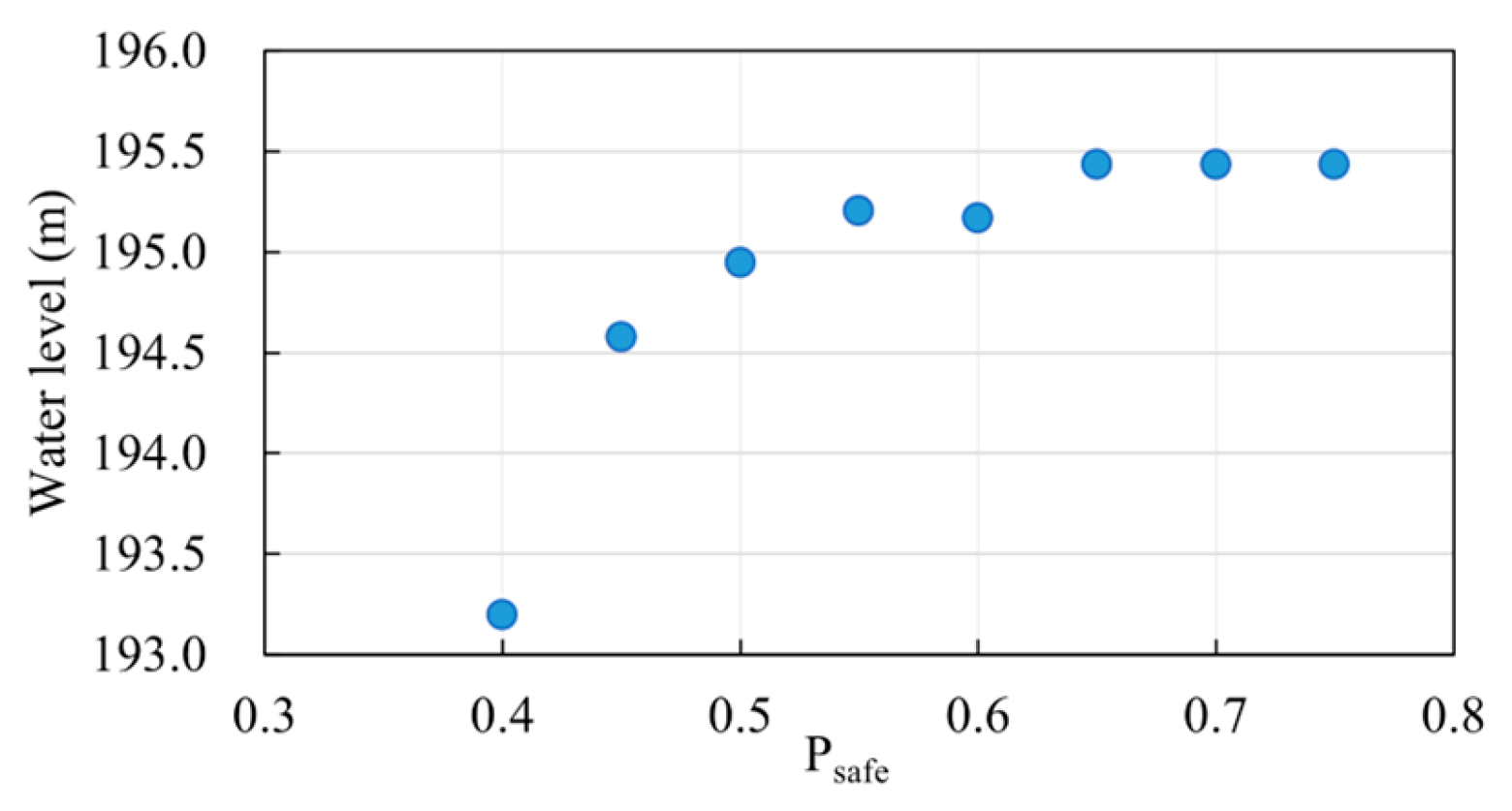
Within our assessment framework, we adopt ESI ≥ 0.4 as the criterion for ecological security and further introduce Psafe as a reliability constraint to back-calculate the target water-level and area thresholds corresponding to the lower bound of ecological security. Because ecological security in Ebinur Lake is jointly controlled by multiple factors—such as inflow, water turbidity, and AOD—there is an inherent scatter between any single hydrological indicator and the ecological state, and relying solely on absolute water-level (or area) thresholds can be easily distorted by a small number of sporadic months. Therefore, we employ a conditional probability—defined as the frequency of achieving ecological security (ESI ≥ 0.4) among months when the lake level meets or exceeds the target threshold H*—to constrain threshold identification. This approach effectively suppresses the illusion of “apparent compliance” and enhances the stability and interpretability of the derived ecological thresholds. Sensitivity analysis demonstrates that the target water level increases non-linearly as the reliability requirement is raised (Figure 10), exhibiting a distinct diminishing marginal increase once it surpasses 50%. Although setting a higher reliability can further enhance the theoretical probability of meeting ecological security compliance, the selection of the baseline threshold still must accommodate practical basin-wide regulation conditions. Given that the lake area has remained persistently low in recent years (e.g., the annual mean area in 2023 was only approx. 300 km2), setting an excessively high target water level would substantially increase the pressure on regional water supply and ecological regulation. Therefore, adopting Psafe = 50% as the baseline reliability requirement at the current stage not only ensures that the ecological thresholds are grounded in a relatively stable statistical basis, but also better aligns with the present water-resource endowment and management reality of the basin.
(3) Empirical Validation of the Suitable Ecological Interval
Based on reliable area inversion, this study defines the suitable ecological interval for Ebinur Lake as 500–740 km2. The lower limit is derived from the morphological baseline and further reinforced by ecological security constraints, while the upper limit is determined by the marginal trade-off of ecological water use efficiency. Regarding the lower threshold: The value of 500 km2 is closely aligned with existing targets for wind prevention and sand fixation (500 km2) [8] and minimum ecological restoration (522 km2) [39], as well as the minimum suitable area derived from an ecological security perspective (497.8 km2) [17]. Due to climate change and human activities, the dramatic shrinkage of Ebinur Lake has exposed a salinized dry lakebed exceeding 500 km2, annually releasing millions of tons of dust and salt dust into the atmosphere [40]. Carried by the prevailing northwesterly winds, these dust particles directly threaten the environmental and economic security of the entire oasis economic belt along the northern slopes of the Tianshan Mountains [6]. Furthermore, based on an analysis of Ebinur Lake’s evolution over the past 50 years and the associated environmental responses, Bao et al. [39] pointed out that lake surface contraction and increased water mineralization are often accompanied by a reduction in the scale of aquatic and wetland ecosystems, thereby exacerbating wind erosion and dust activity in the region. Their results indicate that when the lake area is maintained at approximately 800 km2, the surrounding region can generally preserve relatively stable ecological integrity, and wetland habitats help support regional biodiversity. If the lake area retreats below 600 km2, the regional ecological environment typically shows a noticeable trend of degradation. Once the lake area further approaches 500 km2, the core functions of the ecosystem become highly vulnerable, the original wetland integrity is difficult to maintain, and the entire ecosystem may face a high level of security risk. Notably, even treating this lower limit as an “ecological red line”, data from 2001–2023 reveal that the lake surface area fell below 500 km2 in approximately 40% of the months, highlighting the risk of an ecological deficit under current inflow and water use patterns. Regarding the upper threshold: The value of 740 km2 falls between the optimal spring dust-suppression area (710 km2) [8] and the full ecological restoration target (800 km2) [39]. This limit strategically avoids the “inefficient expansion” associated with rapidly increasing evaporative losses at higher water levels and does not breach the high-water restriction required for the safety of the railway embankment in northern Xinjiang (approx. 980 km2).

4.2. Ecological Response of the Lake Driven by Human Activities

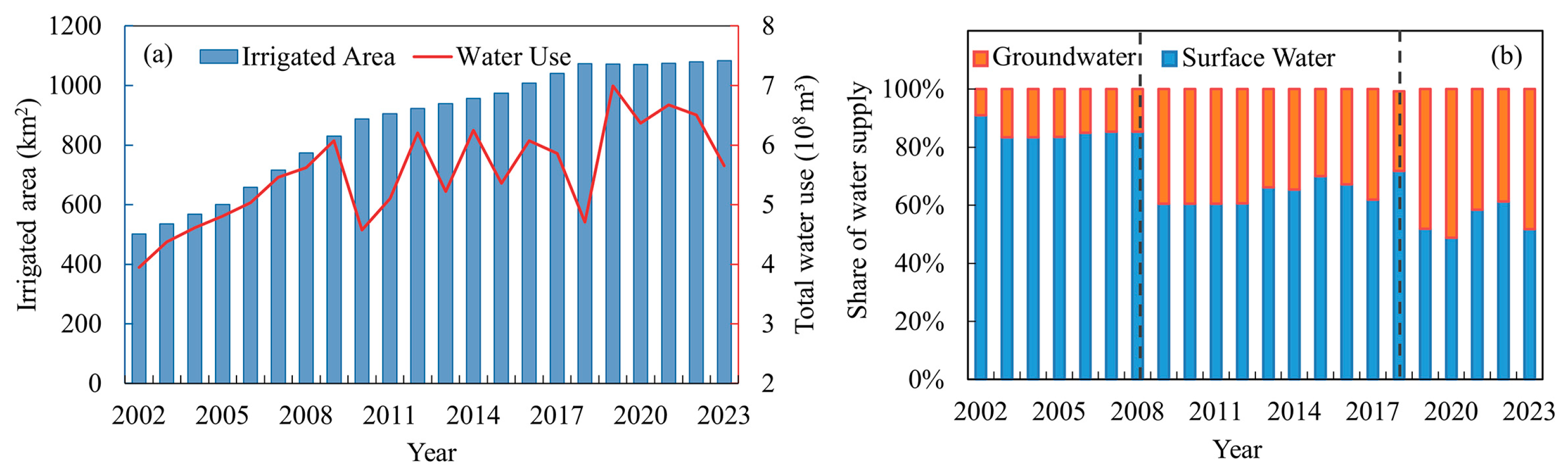
Against the backdrop of climate warming and humidification, precipitation in the mountainous headwaters shows a fluctuating but overall decreasing tendency, yet rising air temperature has accelerated glacier and snowmelt, sustaining a slight increase in mountain runoff. Nevertheless, this natural increment has been offset by policy-driven, drastic shifts in land-use patterns [41]. Since the initiation of China’s “Western Development” strategy in the early 2000s [42], the irrigated area in Jinghe County—where Ebinur Lake is located—has expanded rapidly at a rate of 300 km2/10a, increasing by 131% by 2023 (Figure 11a). This expansion-oriented agricultural development model has driven a rigid increase in water demand, prompting extensive upstream withdrawals of both surface water and groundwater, thereby severely crowding out the surface runoff originally destined for the ecosystem. Consequently, the inflow to Ebinur Lake has persistently remained at a low level [43], and this sharp reduction in inflow constitutes the dominant driver of the lake’s evolution (r = 0.65).
To alleviate these hydrological pressures, China launched large-scale, highly efficient water-saving projects in 2008, supported by financial subsidies, which promoted the widespread adoption of drip irrigation across the basin. However, improvements in irrigation efficiency failed to effectively curb the rising total regional water consumption; instead, they triggered a classic “Jevons paradox” (i.e., the irrigation water rebound effect) [44,45]. The underlying mechanism is that a suite of agricultural incentive policies [46]—including the 2007 improved-seed subsidy, the 2011 temporary cotton purchase-and-storage program, and the cotton target price subsidy implemented since 2014—secured farmers’ economic returns. Driven by both institutional dividends and market demand, farmers tend to reinvest the water saved through technological upgrades into the expanded planting of high-water-consuming crops. Ultimately, the water-saving effect generated by technological progress at the micro-field scale is offset by unbridled agricultural expansion at the macro-basin scale. This causes the total basin evapotranspiration to increase rather than decrease, further exacerbating the supply–demand imbalance of surface water resources [47,48].
Under the dual constraints of agricultural expansion and the ecological water requirements of Ebinur Lake, the regional water supply structure has undergone a compensatory adjustment. To meet irrigation demands, the agricultural sector has increased groundwater extraction, thereby reducing its direct reliance on surface water. This source substitution has released the surface runoff previously appropriated by agriculture, increasing downstream river discharge and lake recharge, which has provided a short-term buffer against the shrinkage of the lake area. Statistical data indicate that within the composition of human water withdrawals, the proportion of surface water supply dropped from 86% before 2008 to 54% in 2018, while the share of groundwater extraction correspondingly rose to 46% (Figure 11b). However, this shift has also intensified groundwater overexploitation [49]. To translate irrigation-efficiency improvements into basin-scale water savings, additional management measures are needed in parallel with planting-structure optimization. In particular, groundwater withdrawals should be kept within an enforceable allocation cap supported by accounting and monitoring, while demand-side actions can discourage further expansion of high water-consuming crops. Together, these measures help convert technological gains into genuine water savings and promote sustainable water use.

4.3. Implications for Future Watershed Management

Ecological management of Ebinur Lake should not be confined to maintaining a single rigid water level but should transition towards a “Dynamic Elastic Regulation” mode oriented by seasonal benefit differences. Quantitative assessment based on the ESWUE model demonstrates significant non-linear differences in the marginal ecological benefits and evaporation costs generated by the same volume of water input across different seasons. Therefore, regulation strategies should precisely match the hydrological rhythm of “Spring Surplus and Autumn Deficit” with ecological demands: (1) Spring Strategy (April–May): This period serves as the “high-yield phase” for ecological benefits and the “critical phase” for wind prevention and sand fixation. Data indicate that ESWUE peaks during this time (approx. 10 CNY/m3). It is recommended to advance the replenishment “window”, fully utilizing the abundant snowmelt runoff to push the lake surface to the upper limit of the suitable interval (approx. 740 km2). This strategy not only secures ecological value with a high input–output ratio but also utilizes the vast water surface to form a physical cover. This achieves precise source control during the period of highest saline dust diffusion risk, trading for the maximum annual windbreak and sand fixation benefits [8]. (2) Summer Strategy (July–August): As temperatures rise, intense evaporation causes water use efficiency to plummet to its nadir (approx. 4 CNY/m3). This decline is primarily driven by the sharply increased evaporation intensity under high temperatures, which reduces the ecological service output per unit of water consumed. Therefore, maintaining high lake levels during the hot season is not recommended. A more appropriate strategy is to relax the target toward the lower bound of the suitable interval (approx. 500 km2), ensuring basic habitat support while reducing consumptive losses during the period of maximum evaporative demand.
It should be noted that the suitable ecological interval (500–740 km2) and the associated “Spring Surplus” strategy were primarily derived from the 2001–2023 historical hydrological record, aiming to characterize a highly effective regulation pathway under present-day climatic and management constraints. Under future climate change scenarios, the robustness of strategies rooted in a historical stationarity assumption should be further examined. CMIP6-based projections indicate that, in the Tianshan region, the onset and termination of the potential snowfall season may shift on day-to-month timescales, implying a certain degree of advancement and/or temporal compression of the snowmelt process [50]. Nevertheless, projections suggest that climate change up to 2100 is unlikely to substantially alter the intra-annual allocation pattern of mountainous inflows. The broad hydrological seasonality—spring as the peak runoff period—is expected to remain largely valid, with the possibility of even more abundant spring inflows. Under different SSP emission scenarios, total mountainous runoff in the Jinghe River Basin shows a slight increasing tendency, while the magnitude of snowmelt runoff remains relatively stable [51]. Therefore, prioritizing spring as a replenishment window with relatively low evaporative loss and high marginal ecological benefits is anticipated to be supported by a sound physical basis and remain practically operational in the long term. Nonetheless, given the inherent uncertainty in climate-change projections, future basin-scale ecological management should rely on sustained field monitoring and assessments of evolving climate–hydrology conditions, allowing ecological replenishment strategies to be adaptively adjusted.
Given the long-term constraints on water supply, relying solely on surface inflow is insufficient to support the stable implementation of this dynamic regulation. Pathways for the ecological utilization of unconventional water sources must be actively explored. On the one hand, drawing on the assessment approach by Zhang et al. [17], a comprehensive “agricultural drainage recycling system” should be constructed to collect agricultural return flow via drainage canals and transport it to Ebinur Lake. On the other hand, from a long-term perspective, as the “meltwater dividend” brought by climate warming and wetting gradually diminishes, water resource pressure in the basin will intensify. It is imperative to combine feasibility studies for cross-basin ecological water transfer to achieve a synergistic coexistence of ecological security and economic development.

5. Conclusions

To address the dual challenges of ecological degradation and water resource competition facing terminal lakes in arid regions, this study quantitatively delineates the suitable ecological interval for Ebinur Lake based on a reconstructed long-term hydrological time series (2001–2023) derived from multi-source remote sensing data. This is achieved by coupling lake basin morphological characteristics, ecological security reliability, and resource utilization efficiency. The main conclusions are as follows:
(1) The hydro-ecological system of Ebinur Lake exhibits a degradation trend. Results indicate that between 2001 and 2023, the water area of Ebinur Lake fluctuated dramatically (230–900 km2) but showed an overall significant shrinking trend with an average annual reduction rate of 13 km2/a, accompanied by a distinct seasonal pattern of “high in spring and low in autumn”. Driven by this shrinkage, the water level continued to decline at a rate of 0.04 m/a. This hydrological contraction further induced a synergistic degradation trend in the ESI and ESV.
(2) The suitable ecological interval and realistic risks are identified. Based on the comprehensive evaluation framework, this study defines the suitable ecological interval for Ebinur Lake as 500–740 km2. Specifically, 500 km2 represents the management lower bound supported by lake morphometry, ecological security, and efficiency constraints, whereas 740 km2 corresponds to the marginal peak of ecological water use efficiency. However, even when measured against this minimum baseline of 500 km2, monitoring data from 2001–2023 reveal that the lake surface falls below the standard in approximately 40% of the months. This profound gap reflects the severe risk of an ecological deficit under the current patterns of inflow and water consumption.
(3) Regulation strategies based on spatiotemporal optimization are proposed. Analysis demonstrates that ESWUE peaks in April (approx. 10 CNY/m3). Accordingly, it is recommended to shift the replenishment “window” forward to the spring windy season, thereby achieving higher windbreak and sand fixation benefits at a lower evaporative cost. Furthermore, given that the encroachment of agricultural water use on surface runoff forces the displacement of supply-demand contradictions to groundwater, future management must combine optimized local regulation with the strategic planning of cross-basin ecological water transfer schemes to fundamentally safeguard regional ecological security.

Author Contributions

Conceptualization, J.L., A.L. and M.D.; methodology, J.L.; formal analysis, J.L., A.L., Q.A., J.Z., Q.L. and R.S.; investigation, J.L.; data curation, J.L. and Q.A.; writing—original draft preparation, J.L., A.L. and Q.A.; writing—review and editing, J.L., A.L. and M.D.; funding acquisition, A.L. All authors have read and agreed to the published version of the manuscript.

Funding

This research was funded by the National Natural Science Foundation of China, grant number U2443207.

Data Availability Statement

The raw data supporting the conclusions of this article will be made available by the authors on request.

Conflicts of Interest

The authors declare no conflicts of interest.

References

  1. Zeng, H.; Wu, B.; Zhu, W.; Zhang, N. A Trade-off Method between Environment Restoration and Human Water Consumption: A Case Study in Ebinur Lake. J. Clean. Prod. 2019, 217, 732–741. [Google Scholar] [CrossRef]
  2. Yang, X.; Gu, X.; Zhang, P.; Liu, J.; Zhang, W.; Long, A. Assessment of the Impacts of Climate and Land Use Changes on Water Yield in the Ebinur Lake Basin. Land 2024, 13, 1324. [Google Scholar] [CrossRef]
  3. Yang, X.; Lu, X. Drastic Change in China’s Lakes and Reservoirs over the Past Decades. Sci. Rep. 2014, 4, 6041. [Google Scholar] [CrossRef] [PubMed]
  4. Liu, H.; Yin, Y.; Piao, S.; Zhao, F.; Engels, M.; Ciais, P. Disappearing Lakes in Semiarid Northern China: Drivers and Environmental Impact. Environ. Sci. Technol. 2013, 47, 12107–12114. [Google Scholar] [CrossRef]
  5. Wei, Q.; Halike, A.; Yao, K.; Chen, L.; Balati, M. Construction and Optimization of Ecological Security Pattern in Ebinur Lake Basin Based on MSPA-MCR Models. Ecol. Indic. 2022, 138, 108857. [Google Scholar] [CrossRef]
  6. Ge, Y.; Abuduwaili, J.; Ma, L.; Wu, N.; Liu, D. Potential Transport Pathways of Dust Emanating from the Playa of Ebinur Lake, Xinjiang, in Arid Northwest China. Atmos. Res. 2016, 178–179, 196–206. [Google Scholar] [CrossRef]
  7. Wang, J.; Yang, S.; Lou, H.; Liu, H.; Wang, P.; Li, C.; Zhang, F. Impact of Lake Water Level Decline on River Evolution in Ebinur Lake Basin (an Ungauged Terminal Lake Basin). Int. J. Appl. Earth Obs. Geoinf. 2021, 104, 102546. [Google Scholar] [CrossRef]
  8. Lin, Q.; Xu, W. Analysis of the Effect of the Quantity of Inflow into Ebinur Lake on Its Ecological Security. Environ. Res. 2025, 266, 120517. [Google Scholar] [CrossRef]
  9. Ye, Z.; Chen, S.; Zhang, Q.; Liu, Y.; Zhou, H. Ecological Water Demand of Taitema Lake in the Lower Reaches of the Tarim River and the Cherchen River. Remote Sens. 2022, 14, 832. [Google Scholar] [CrossRef]
  10. Hao, X.; Zhao, Z.; Fan, X.; Zhang, J.; Zhang, S. Evaluation Method of Ecological Water Demand Threshold of Natural Vegetation in Arid-Region Inland River Basin Based on Satellite Data. Ecol. Indic. 2023, 146, 109811. [Google Scholar] [CrossRef]
  11. Shang, S.; Shang, S. Simplified Lake Surface Area Method for the Minimum Ecological Water Level of Lakes and Wetlands. Water 2018, 10, 1056. [Google Scholar] [CrossRef]
  12. Xiong, Y.; Xu, W.; Lu, N.; Huang, S.; Wu, C.; Wang, L.; Dai, F.; Kou, W. Assessment of Spatial–Temporal Changes of Ecological Environment Quality Based on RSEI and GEE: A Case Study in Erhai Lake Basin, Yunnan Province, China. Ecol. Indic. 2021, 125, 107518. [Google Scholar] [CrossRef]
  13. Yuan, B.; Fu, L.; Zou, Y.; Zhang, S.; Chen, X.; Li, F.; Deng, Z.; Xie, Y. Spatiotemporal Change Detection of Ecological Quality and the Associated Affecting Factors in Dongting Lake Basin, Based on RSEI. J. Clean. Prod. 2021, 302, 126995. [Google Scholar] [CrossRef]
  14. Xu, H.; Wang, Y.; Guan, H.; Shi, T.; Hu, X. Detecting Ecological Changes with a Remote Sensing Based Ecological Index (RSEI) Produced Time Series and Change Vector Analysis. Remote Sens. 2019, 11, 2345. [Google Scholar] [CrossRef]
  15. Zhao, G.; Li, Y.; Zhou, L.; Gao, H. Evaporative Water Loss of 1.42 Million Global Lakes. Nat. Commun. 2022, 13, 3686. [Google Scholar] [CrossRef]
  16. Zheng, Y.; Tian, Y.; Du, E.; Han, F.; Wu, Y.; Zheng, C.; Li, X. Addressing the Water Conflict between Agriculture and Ecosystems under Environmental Flow Regulation: An Integrated Modeling Study. Environ. Model. Softw. 2020, 134, 104874. [Google Scholar] [CrossRef]
  17. Zhang, Y.; Ling, H.; Yan, J.; Zhang, Y.; Qin, X. Determination of Water Surface Area Thresholds for Terminal Lakes in Arid Regions: Balancing Ecological Security and Water Use Efficiency. Water Resour. Manag. 2025, 39, 3801–3815. [Google Scholar] [CrossRef]
  18. Zhang, F.; Yushanjiang, A.; Jing, Y. Assessing and Predicting Changes of the Ecosystem Service Values Based on Land Use/Cover Change in Ebinur Lake Wetland National Nature Reserve, Xinjiang, China. Sci. Total Environ. 2019, 656, 1133–1144. [Google Scholar] [CrossRef]
  19. Tang, H.; Halike, A.; Yao, K.; Wei, Q.; Yao, L.; Tuheti, B.; Luo, J.; Duan, Y. Ecosystem Service Valuation and Multi-Scenario Simulation in the Ebinur Lake Basin Using a Coupled GMOP-PLUS Model. Sci. Rep. 2024, 14, 5071. [Google Scholar] [CrossRef]
  20. Teng, Y.; Xu, C.; Zhang, Y.; Su, M.; Zhang, Y.; Li, S.; Chen, Q.; Huang, Q. Ecosystem Service Water Use Efficiency: A New Perspective for Coordinating Ecosystem Services and Water Consumption in the Loess Plateau. J. Hydrol. Reg. Stud. 2025, 62, 102770. [Google Scholar] [CrossRef]
  21. Liu, Y.; Wang, Q.; Wang, D.; Si, Y.; Qi, T.; Duan, H.; Shen, M. Dynamic Changes and Driving Factors in the Surface Area of Ebinur Lake over the Past Three Decades. Remote Sens. 2024, 16, 3876. [Google Scholar] [CrossRef]
  22. Wang, J.; Ding, J.; Li, G.; Liang, J.; Yu, D.; Aishan, T.; Zhang, F.; Yang, J.; Abulimiti, A.; Liu, J. Dynamic Detection of Water Surface Area of Ebinur Lake Using Multi-Source Satellite Data (Landsat and Sentinel-1A) and Its Responses to Changing Environment. Catena 2019, 177, 189–201. [Google Scholar] [CrossRef]
  23. Miralles, D.G.; Bonte, O.; Koppa, A.; Baez-Villanueva, O.M.; Tronquo, E.; Zhong, F.; Beck, H.E.; Hulsman, P.; Dorigo, W.; Verhoest, N.E.C.; et al. GLEAM4: Global Land Evaporation and Soil Moisture Dataset at 0.1° Resolution from 1980 to near Present. Sci. Data 2025, 12, 416. [Google Scholar] [CrossRef] [PubMed]
  24. Zhang, Y.; Kong, D.; Gan, R.; Chiew, F.H.S.; McVicar, T.R.; Zhang, Q.; Yang, Y. Coupled Estimation of 500 m and 8-Day Resolution Global Evapotranspiration and Gross Primary Production in 2002–2017. Remote Sens. Environ. 2019, 222, 165–182. [Google Scholar] [CrossRef]
  25. Muñoz-Sabater, J.; Dutra, E.; Agustí-Panareda, A.; Albergel, C.; Arduini, G.; Balsamo, G.; Boussetta, S.; Choulga, M.; Harrigan, S.; Hersbach, H.; et al. ERA5-Land: A State-of-the-Art Global Reanalysis Dataset for Land Applications. Earth Syst. Sci. Data 2021, 13, 4349–4383. [Google Scholar] [CrossRef]
  26. Cui, L.; Xu, Z.; Chen, P.; Zhang, H.; Dong, W.; Huang, J. Analysis of Evaporation from Ebinur Lake. Water Resour. Prot. 2012, 28, 59–61+65. (In Chinese) [Google Scholar] [CrossRef]
  27. Li, M.; Liu, C.; Zhang, F.; Chan, N.W.; Adam, E.; Wang, W.; Wu, Y. Exploring the Causes of Severe Fluctuations in Water Surface Area Using Water Index and Structural Equation Modeling: Evidence from Ebinur Lake, China. Remote Sens. 2025, 17, 1431. [Google Scholar] [CrossRef]
  28. Otsu, N. A Threshold Selection Method from Gray-Level Histograms. IEEE Trans. Syst. Man Cybern. 1979, 11, 23–27. [Google Scholar] [CrossRef]
  29. Long, D.; Li, X.; Li, X.; Han, P.; Zhao, F.; Hong, Z.; Wang, Y.; Tian, F. Remote Sensing Retrieval of Water Storage Changes and Underlying Climatic Mechanisms over the Tibetan Plateau during 2000–2020. Adv. Water Sci. 2022, 33, 375–389. (In Chinese) [Google Scholar] [CrossRef]
  30. Li, X.; Long, D.; Huang, Q.; Han, P.; Zhao, F.; Wada, Y. High-Temporal-Resolution Water Level and Storage Change Data Sets for Lakes on the Tibetan Plateau during 2000–2017 Using Multiple Altimetric Missions and Landsat-Derived Lake Shoreline Positions. Earth Syst. Sci. Data 2019, 11, 1603–1627. [Google Scholar] [CrossRef]
  31. Sun, K.; He, W.; Shen, Y.; Yan, T.; Liu, C.; Yang, Z.; Han, J.; Xie, W. Ecological Security Evaluation and Early Warning in the Water Source Area of the Middle Route of South-to-North Water Diversion Project. Sci. Total Environ. 2023, 868, 161561. [Google Scholar] [CrossRef]
  32. Zhang, H.; Ling, H.; Chen, F. Determination of the Suitable Lake Surface Area of Typical Terminal Lakes in Arid Regions. Sustainability 2026, 18, 1411. [Google Scholar] [CrossRef]
  33. Kang, Z.; Ling, H.; Gong, Y.; Yan, J.; Han, F.; Shan, Q.; Zhang, G. The Precise Implementation of the Ecological Water Transfer Project Effectively Promotes the Enhancement of Desert Riparian Ecosystem Service Value in the Mainstream of Tarim River. Ecol. Indic. 2024, 169, 112914. [Google Scholar] [CrossRef]
  34. Xie, G.; Zhang, C.; Zhang, L.; Chen, W.; Li, S. Improvement of the Evaluation Method for Ecosystem Service Value Based on per Unit Area. J. Nat. Resour. 2015, 30, 1243–1254. (In Chinese) [Google Scholar] [CrossRef]
  35. Yueriguli, K.; Yang, S.; Zibibula, S. Impact of land use change on ecosystem service value in Ebinur Lake Basin, Xinjiang. Trans. Chin. Soc. Agric. Eng. 2019, 35, 260–269. (In Chinese) [Google Scholar] [CrossRef]
  36. Jiang, T.; Qu, Y.; Zhang, X.; Jing, L.; Feng, K.; Zhang, G.; Han, Y. Evaluating Ecological Drought Vulnerability from Ecosystem Service Value Perspectives in North China. Remote Sens. 2024, 16, 3733. [Google Scholar] [CrossRef]
  37. Xie, G.; Zhang, C.; Zhen, L.; Zhang, L. Dynamic Changes in the Value of China’s Ecosystem Services. Ecosyst. Serv. 2017, 26, 146–154. [Google Scholar] [CrossRef]
  38. Feyisa, G.L.; Meilby, H.; Fensholt, R.; Proud, S.R. Automated Water Extraction Index: A New Technique for Surface Water Mapping Using Landsat Imagery. Remote Sens. Environ. 2014, 140, 23–35. [Google Scholar] [CrossRef]
  39. Bao, A.; Mu, G.; Zhang, Y.; Feng, X.; Chang, C.; Yin, X. Estimation of the rational water area for controlling wind erosion in the dried-up basin of the Ebinur Lake and its effect detection. Chin. Sci. Bull. 2006, 51, 68–74. (In Chinese) [Google Scholar] [CrossRef]
  40. Jilili, A.; Mu, G. Eolian Factor in the Process of Modern Salt Accumulation in Western Dzungaria, China. Eurasian Soil Sci. 2006, 39, 367–376. [Google Scholar] [CrossRef]
  41. Foroumandi, E.; Nourani, V.; Kantoush, S.A. Investigating the Main Reasons for the Tragedy of Large Saline Lakes: Drought, Climate Change, or Anthropogenic Activities? A Call to Action. J. Arid Environ. 2022, 196, 104652. [Google Scholar] [CrossRef]
  42. Zhang, P.; Long, A.; Hai, Y.; Deng, X.; Wang, H.; Liu, J.; Li, Y. Spatiotemporal variations and driving forces of agricultural water consumption in Xinjiang during 1988–2015: Based on statistical analysis of crop water footprint. J. Glaciol. Geocryol. 2021, 43, 242–253. (In Chinese) [Google Scholar] [CrossRef]
  43. Deng, H.; Tang, Q.; Zhang, Z.; Liu, X.; Zhao, G.; Cui, S.; Zhang, Z.; Shao, S.; Liu, J.; Chen, F. Impact of Human Activities on the Long-Term Change and Seasonal Variability of Ebinur Lake, Northwest China. Sci. China Earth Sci. 2025, 68, 473–486. [Google Scholar] [CrossRef]
  44. Grafton, R.Q.; Williams, J.; Perry, C.J.; Molle, F.; Ringler, C.; Steduto, P.; Udall, B.; Wheeler, S.A.; Wang, Y.; Garrick, D.; et al. The Paradox of Irrigation Efficiency. Science 2018, 361, 748–750. [Google Scholar] [CrossRef] [PubMed]
  45. Xiong, R.; Zheng, Y.; Han, F.; Tian, Y. Improving the Scientific Understanding of the Paradox of Irrigation Efficiency: An Integrated Modeling Approach to Assessing Basin-Scale Irrigation Efficiency. Water Resour. Res. 2021, 57, e2020WR029397. [Google Scholar] [CrossRef]
  46. Mao, D.; Li, X.; Liu, W. The Research on the Impact of Cotton Support Policy on Water Saving Irrigation Development in Xinjiang. Water Sav. Irrig. 2017, 2, 85–89. (In Chinese) [Google Scholar]
  47. Xu, H.; Song, J. Drivers of the Irrigation Water Rebound Effect: A Case Study of Hetao Irrigation District in Yellow River Basin, China. Agric. Water Manag. 2022, 266, 107567. [Google Scholar] [CrossRef]
  48. Cai, W.; Jiang, X.; Sun, H.; Lei, Y.; Nie, T.; Li, L. Spatial Scale Effect of Irrigation Efficiency Paradox Based on Water Accounting Framework in Heihe River Basin, Northwest China. Agric. Water Manag. 2023, 277, 108118. [Google Scholar] [CrossRef]
  49. Liu, J.; Ding, J.; Bao, Q.; Zhang, Z.; Jiang, L.; Qu, Y. Characteristics of Groundwater in Ebinur Lake Basin Using Isotopes Method. Arid Land Geogr. 2023, 46, 201–210. (In Chinese). Available online: http://alg.xjegi.com/CN/10.12118/j.issn.1000-6060.2022.228.
  50. Li, X.; Liu, X.; Zhao, K.; Zhang, X.; Li, L. Change in the Potential Snowfall Phenology: Past, Present, and Future in the Chinese Tianshan Mountainous Region, Central Asia. Cryosphere 2023, 17, 2437–2453. [Google Scholar] [CrossRef]
  51. Yang, Z.; Bai, P.; Tian, Y.; Liu, X. Glacier Coverage Dominates the Response of Runoff and Its Components to Climate Change in the Tianshan Mountains. Water Resour. Res. 2025, 61, e2024WR037947. [Google Scholar] [CrossRef]
Figure 1. Geographical location, river network, and land use types of the study area.
Remotesensing 18 00771 g001
Figure 2. Comparison of evaporation between gridded products (2001–2023) and station data (2001–2017): (a) monthly time series; (b) multi-year monthly average.
Remotesensing 18 00771 g002
Figure 3. Spatiotemporal evolution of Ebinur Lake surface morphology from 2001 to 2023.
Remotesensing 18 00771 g003
Figure 4. Monthly time series of Ebinur Lake water area during 2001–2023.
Remotesensing 18 00771 g004
Figure 5. Monthly time series of Ebinur Lake water level during 2001–2023.
Remotesensing 18 00771 g005
Figure 6. Inter-annual and seasonal variations for Ebinur Lake during 2001–2023: (a) inter-annual and (b) seasonal variations of ESI; (c) inter-annual and (d) seasonal variations of ESV; (e) inter-annual and (f) seasonal variations of ESWUE.
Remotesensing 18 00771 g006
Figure 7. Determination of the ecological intervals for Ebinur Lake. (a) Piecewise regression fitting of the Area–Water Level relationship; (b) Identification of the optimal breakpoint; (c) Ecological water level lower limit diagnosed jointly using ESI and compliance reliability; (d) Relationship between ESV and evaporative water consumption cost across different seasons; (e) Efficiency frontier of ESV; (f) Identification of the ESV structural transition threshold (AESV,min) using K-Means clustering.
Remotesensing 18 00771 g007
Figure 8. Evaluation of extraction accuracy for three water indices across different periods: (a) OA; (b) Kappa coefficient.
Remotesensing 18 00771 g008
Figure 9. Comparison of lake area extraction accuracy using NDWI, MNDWI, and AWEInsh indices. The red boxes indicate areas misclassified as water bodies.
Remotesensing 18 00771 g009
Figure 10. Sensitivity of target water level to the required ecological security reliability.
Remotesensing 18 00771 g010
Figure 11. Time series of irrigation area, total water use, and water supply structure in Jinghe County: (a) Irrigated area and water use; (b) Water supply structure. The dashed lines indicate the years with obvious turning points in the water supply structure.
Remotesensing 18 00771 g011
Table 1. Basic information on the remote-sensing and reanalysis datasets used in this study.
DatasetTemporal Resolution/
Revisit Time
Spatial Resolution/Grid SizeTemporal CoverageData Access
Landsat 516 days30–120 m1984–2013https://earthexplorer.usgs.gov/, accessed on 2 October 2025
Landsat 716 days15–60 m1999–presenthttps://earthexplorer.usgs.gov/, accessed on 2 October 2025
Landsat 816 days15–100 m2013–presenthttps://earthexplorer.usgs.gov/, accessed on 2 October 2025
Sentinel-25 days10–60 m2015–presenthttps://dataspace.copernicus.eu/, accessed on 2 October 2025
CLCDYearly30 m1990–2021https://zenodo.org/records/5816591, accessed on 5 October 2025
ICESat91 days (repeat orbit; campaign-based)70 m (footprint)2003–2009https://nsidc.org/data/GLAH14, accessed on 4 October 2025
ICESat-291 days13–17 m (footprint)2018–presenthttps://nsidc.org/data/ATL13, accessed on 4 October 2025
CryoSat-2369 days (repeat); 30-day sub-cycle0.3 km × 1.6 km (footprint, mode-dependent)2010–presenthttps://earth.esa.int/eogateway/catalog/cryosat-products, accessed on 4 October 2025
GLEAM v4.2aDaily0.1°1980–2024https://www.gleam.eu/, accessed on 10 October 2025
PML_v28 days500 m2000–2023https://earthengine.openeo.org/v1.0/collections/CAS/IGSNRR/PML/V2_v018, accessed on 11 October 2025
ERA5-Land1 h0.1°1950–presenthttps://doi.org/10.24381/cds.e2161bac, accessed on 14 October 2025
Table 2. ESV coefficients for different land use types in the study area (unit: CNY/(km2·a)).
Land Use TypesDescriptionESV Coefficients
Water bodiesWater surfaces such as rivers and lakes
(reservoirs/ponds)
4,067,640
WetlandsMarshes, lakeshore wetlands, and
hydrophytic vegetation
3,924,831
Forest landsNatural forests, shrub forests, and open forest lands1,933,373
GrasslandsNatural grasslands and grasslands across
different vegetation cover
640,560
Unused landsDeserts, saline–alkali lands, and bare37,140
Table 3. Evaluation metrics for K-Means clustering across different numbers of clusters.
KInertiaSilhouette Score
27.0050.480
34.3590.436
43.0820.474
52.4080.441
61.8790.461
71.5690.445
81.3190.439
Disclaimer/Publisher’s Note: The statements, opinions and data contained in all publications are solely those of the individual author(s) and contributor(s) and not of MDPI and/or the editor(s). MDPI and/or the editor(s) disclaim responsibility for any injury to people or property resulting from any ideas, methods, instructions or products referred to in the content.