Article

In-Orbit Performance of the GRACE Accelerometers and Microwave Ranging Instrument

1
Institute of Geodesy and Geoinformation Science, Technische Universität Berlin, Straße des 17. Juni 135, 10623 Berlin, Germany
2
Chair of Astronomical and Physical Geodesy, Technical University of Munich (TUM), Arcisstraße 21, 80333 München, Germany
3
Department 1: Geodesy, GFZ German Research Centre for Geosciences, Telegrafenberg, 14473 Potsdam, Germany
4
Max-Planck-Institute for Gravitational Physics (Albert-Einstein-Institute), Leibniz University Hannover, Callinstraße 38, 30167 Hannover, Germany
5
German Aerospace Center (DLR), Institute for Satellite Geodesy and Inertial Sensing, Callinstraße 30b, 30167 Hannover, Germany
*
Author to whom correspondence should be addressed.
Remote Sens. 2023, 15(3), 563; https://doi.org/10.3390/rs15030563
Submission received: 29 November 2022 / Revised: 10 January 2023 / Accepted: 13 January 2023 / Published: 17 January 2023
(This article belongs to the Special Issue GRACE for Earth System Mass Change: Monitoring and Measurement)

Abstract

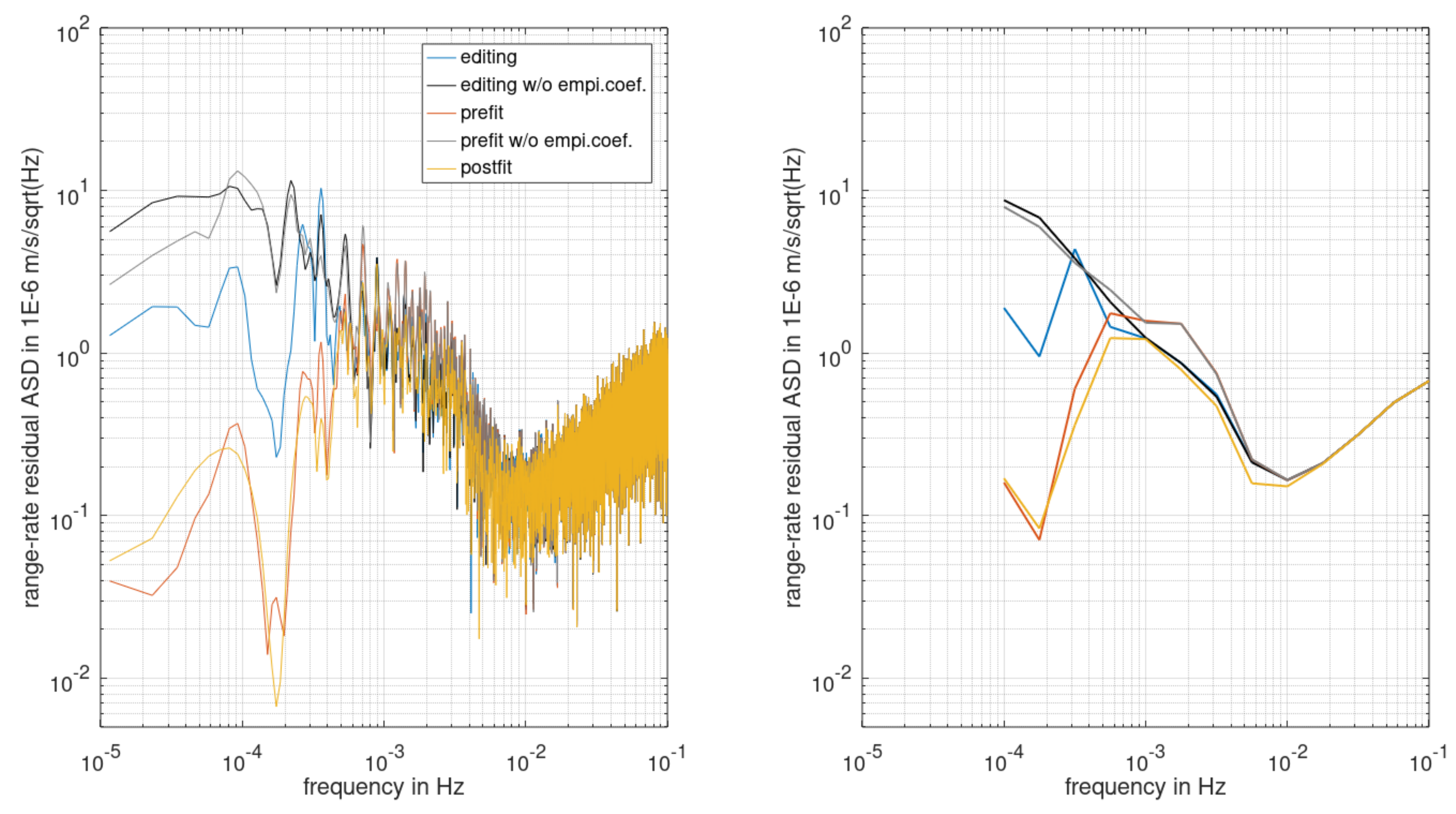
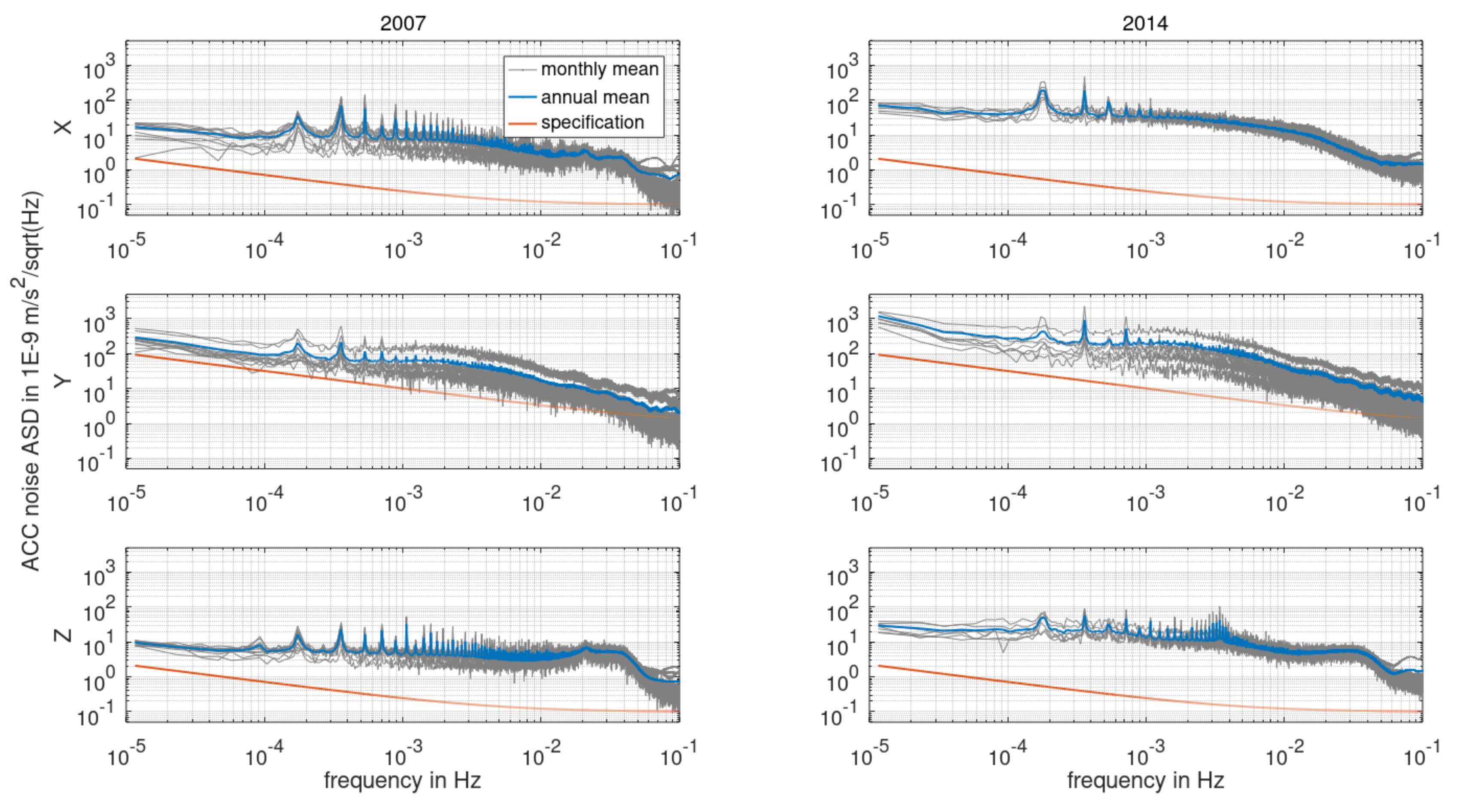
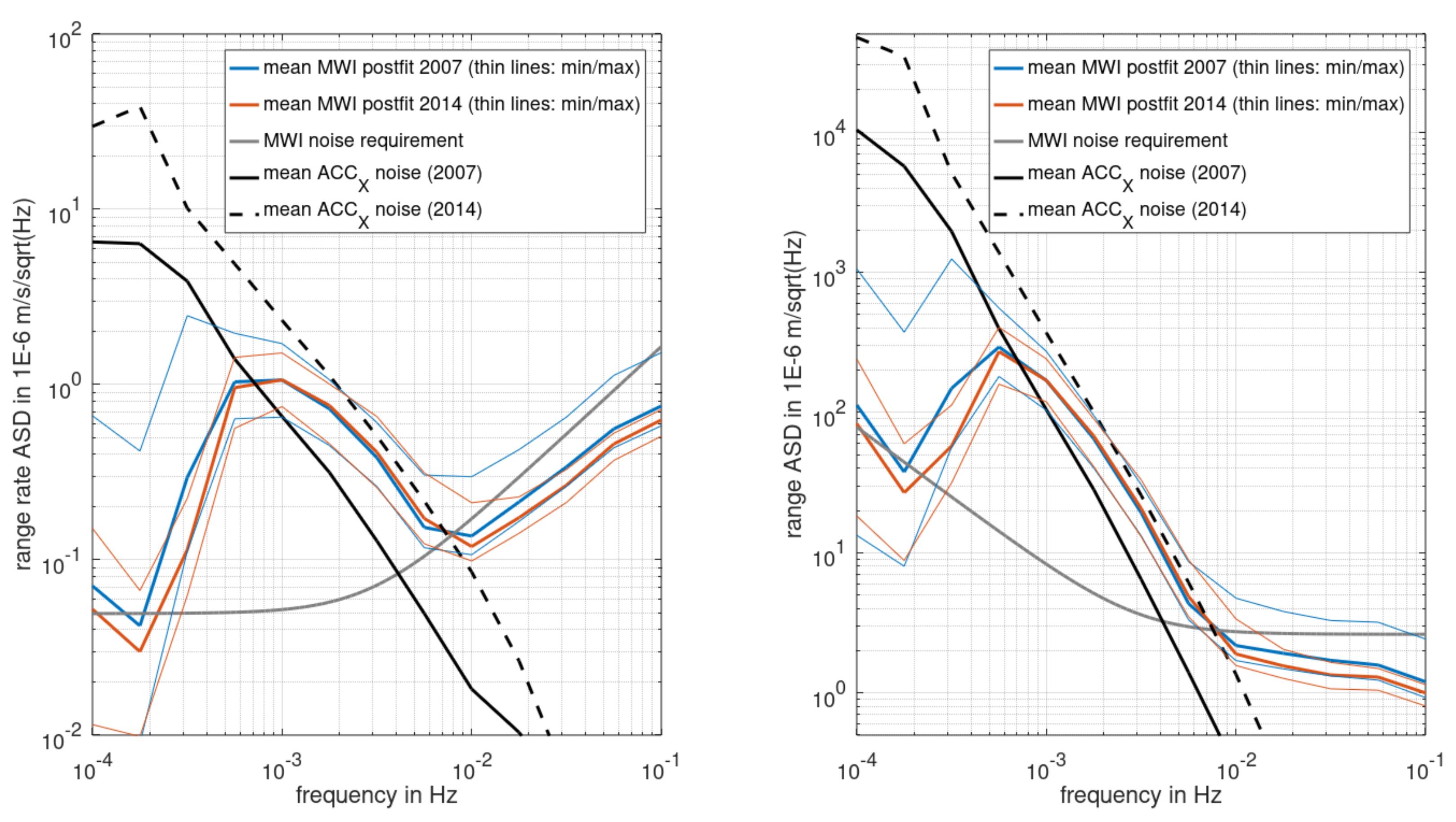
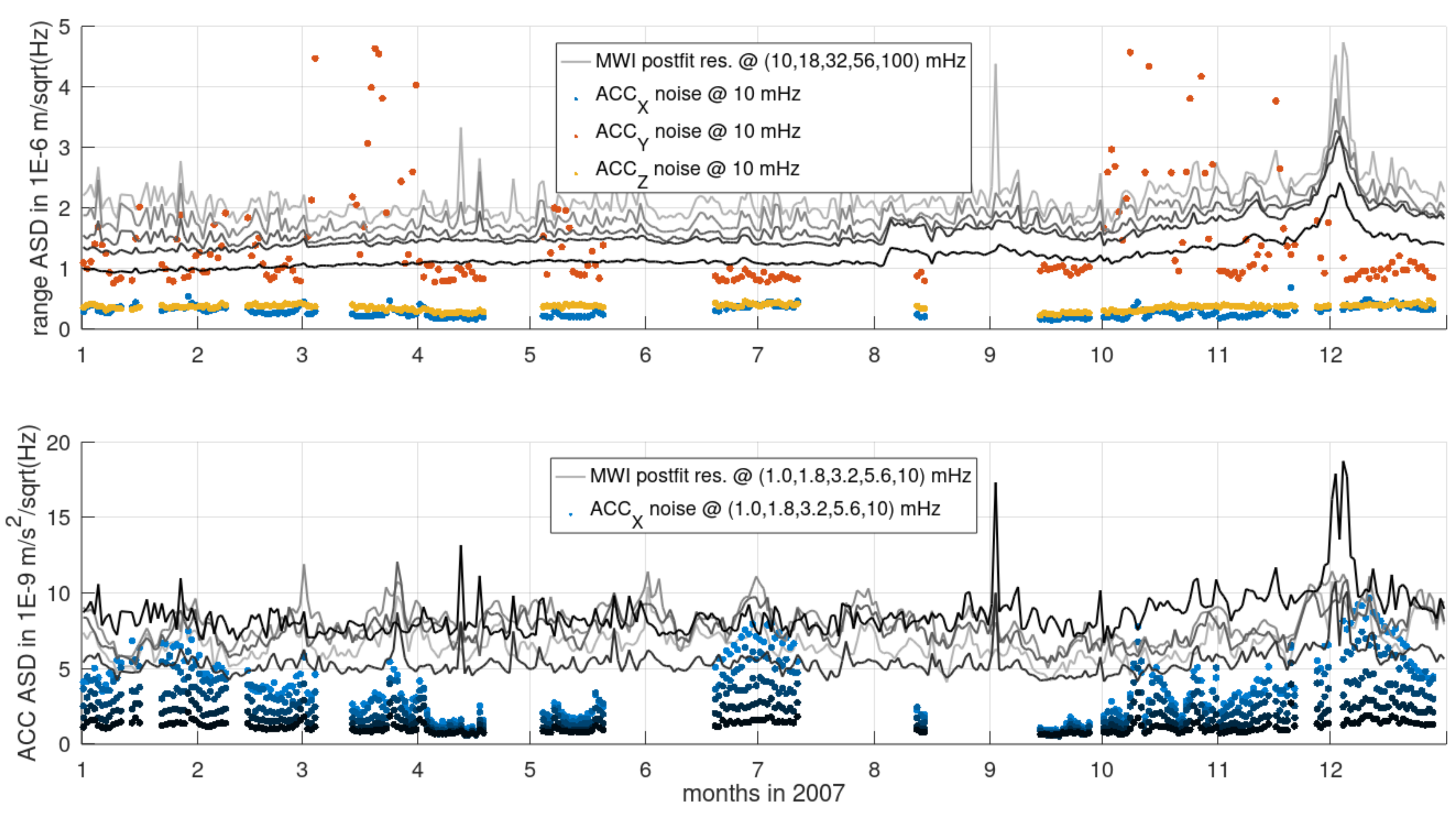
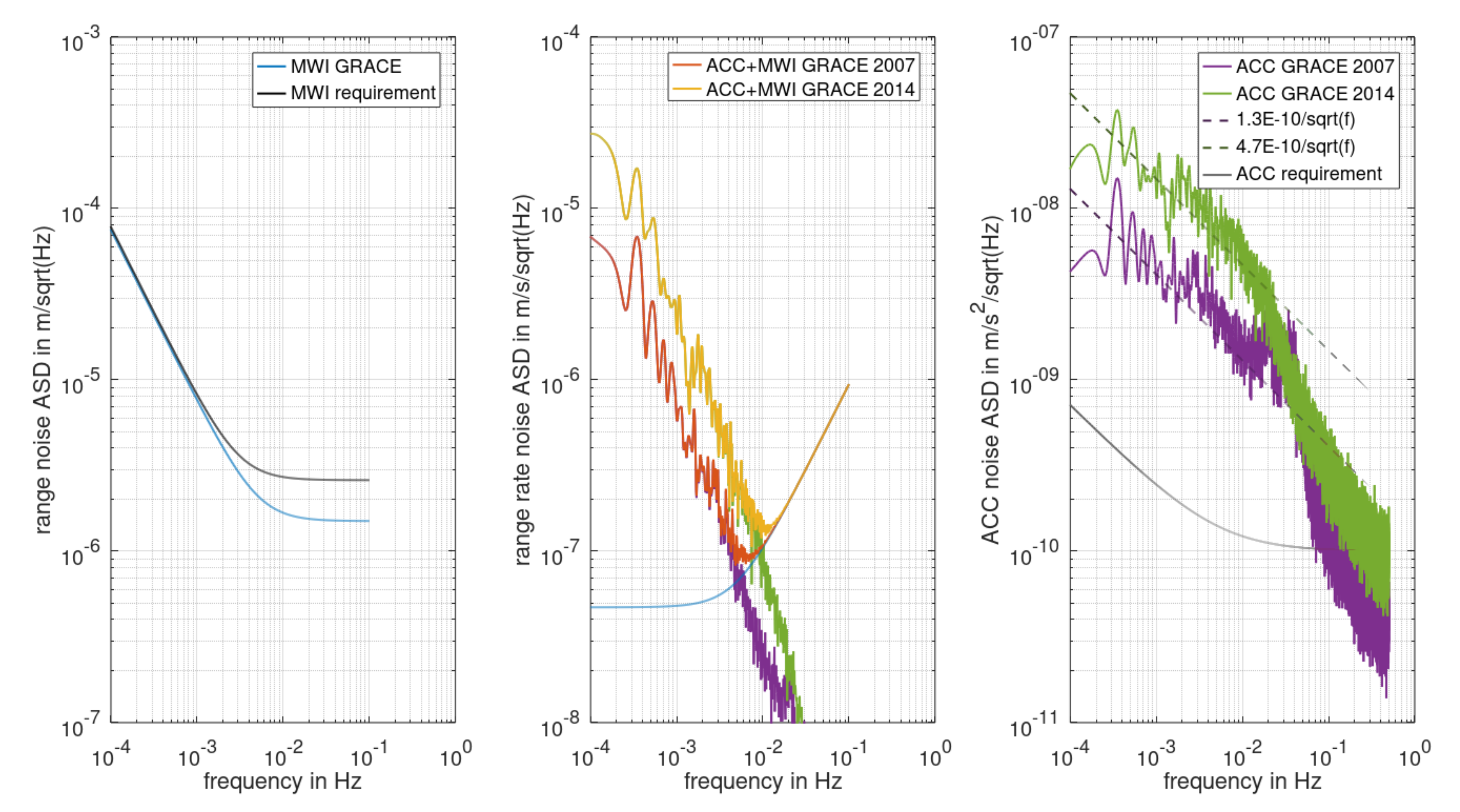
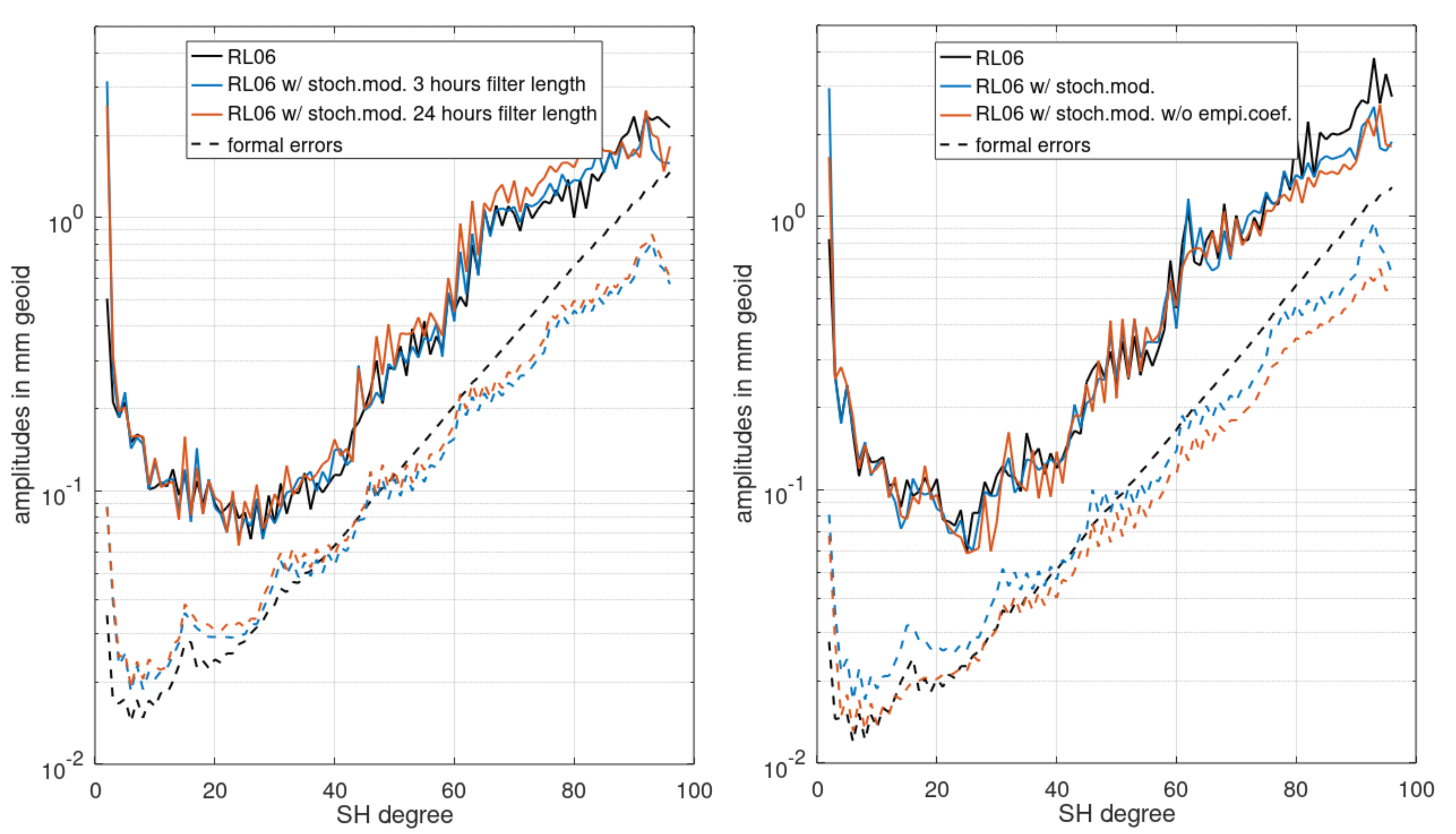
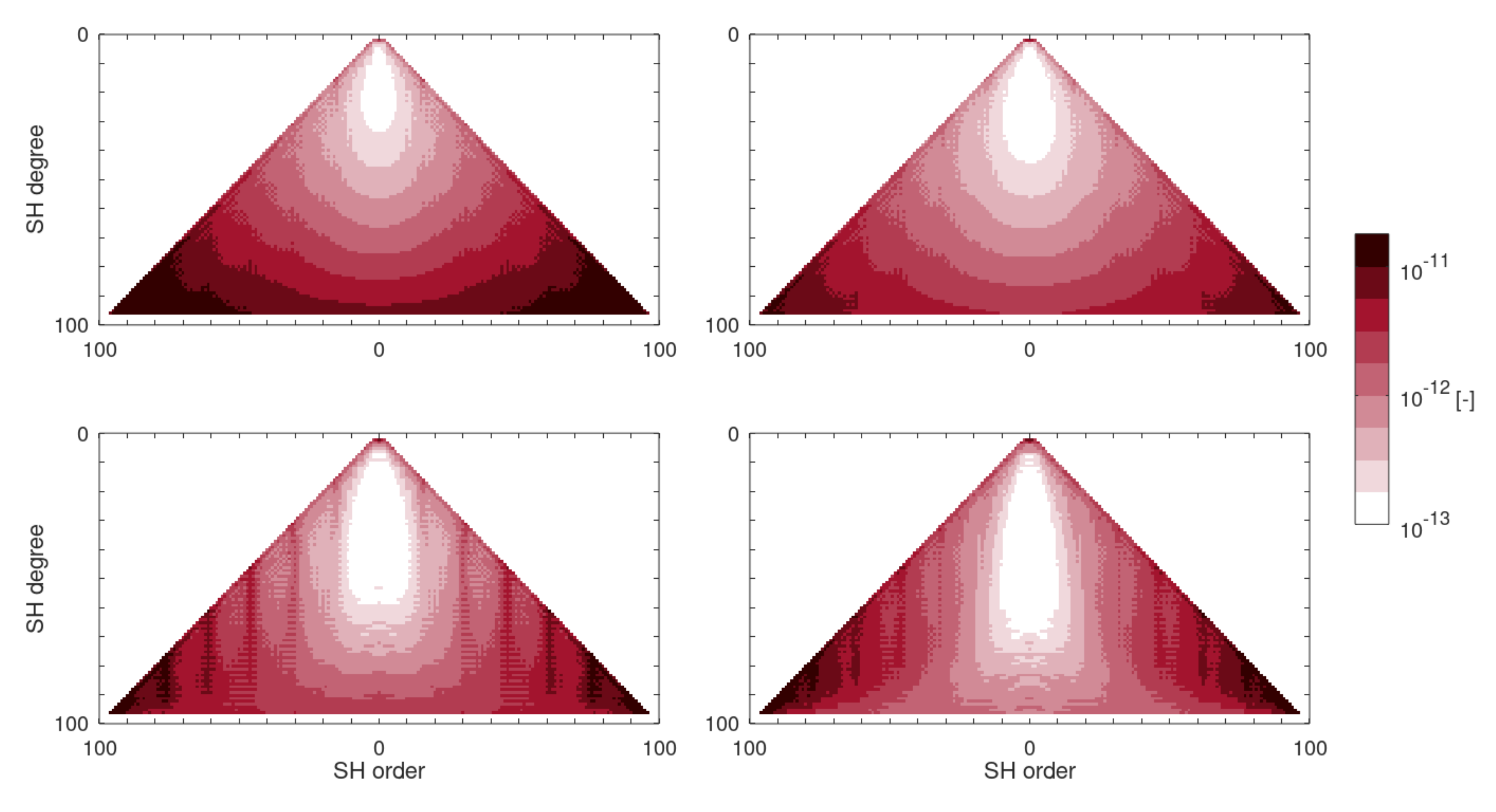
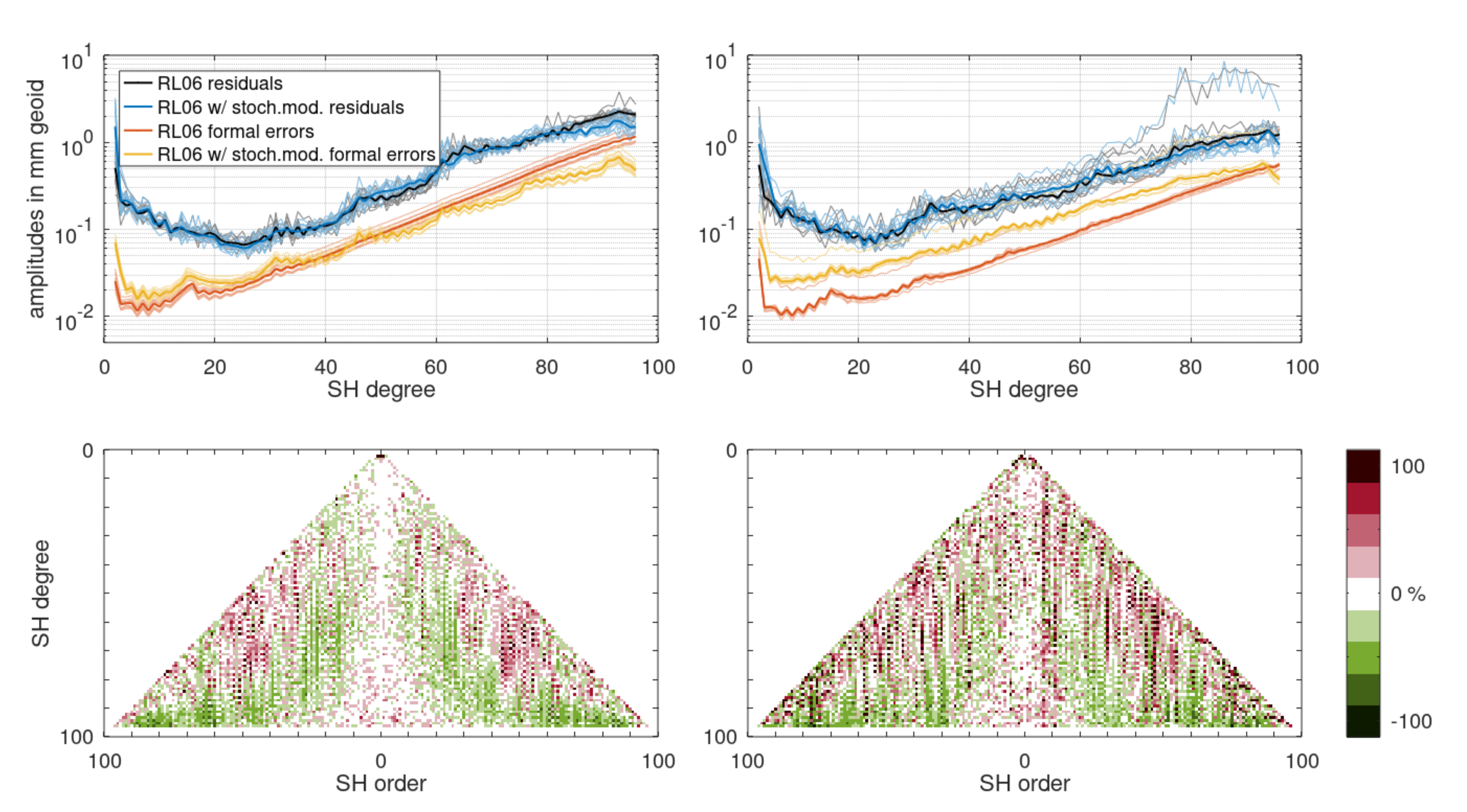
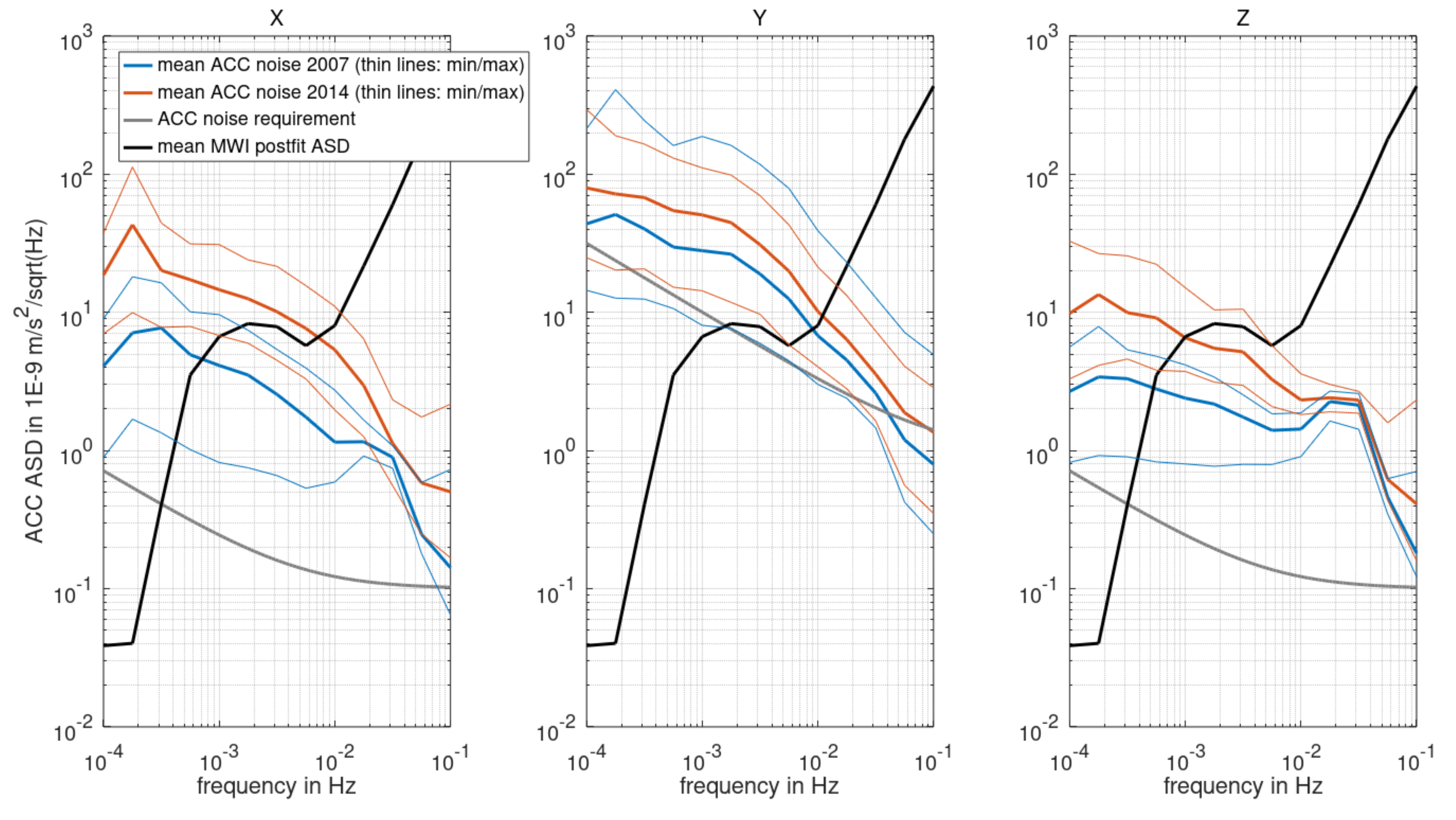
The Gravity Recovery and Climate Experiment (GRACE) satellite mission has provided global long-term observations of mass transport in the Earth system with applications in numerous geophysical fields. In this paper, we targeted the in-orbit performance of the GRACE key instruments, the ACCelerometers (ACC) and the MicroWave ranging Instrument (MWI). For the ACC data, we followed a transplant approach analyzing the residual accelerations from transplanted accelerations of one of the two satellites to the other. For the MWI data, we analyzed the post-fit residuals of the monthly GFZ GRACE RL06 solutions with a focus on stationarity. Based on the analyses for the two test years 2007 and 2014, we derived stochastic models for the two instruments and a combined ACC+MWI stochastic model. While all three ACC axes showed worse performance than their preflight specifications, in 2007, a better ACC performance than in 2014 was observed by a factor of 3.6 due to switched-off satellite thermal control. The GRACE MWI noise showed white noise behavior for frequencies above 10 mHz around the level of 1.5×10⁶ m/Hz. In the combined ACC+MWI noise model, the ACC part dominated the frequencies below 10 mHz, while the MWI part dominated above 10 mHz. We applied the combined ACC+MWI stochastic models for 2007 and 2014 to the monthly GFZ GRACE RL06 processing. This improved the formal errors and resulted in a comparable noise level of the estimated gravity field parameters. Furthermore, the need for co-estimating empirical parameters was reduced.
Keywords: GRACE; accelerometer transplant; microwave ranging instrument post-fit residuals; stochastic modeling; monthly gravity field determination; empirical parameters GRACE; accelerometer transplant; microwave ranging instrument post-fit residuals; stochastic modeling; monthly gravity field determination; empirical parameters