Article

Long-Term Dynamics of Sandy Vegetation and Land in North China

National Ecosystem Science Data Center, Key Laboratory of Ecosystem Network Observation and Modeling, Institute of Geographic Sciences and Natural Resources Research, Chinese Academy of Sciences, Beijing 100101, China
Remote Sens. 2023, 15(19), 4803; https://doi.org/10.3390/rs15194803
Submission received: 2 September 2023 / Revised: 26 September 2023 / Accepted: 27 September 2023 / Published: 2 October 2023
(This article belongs to the Special Issue Machine Learning in Global Change Ecology: Methods and Applications)

Abstract

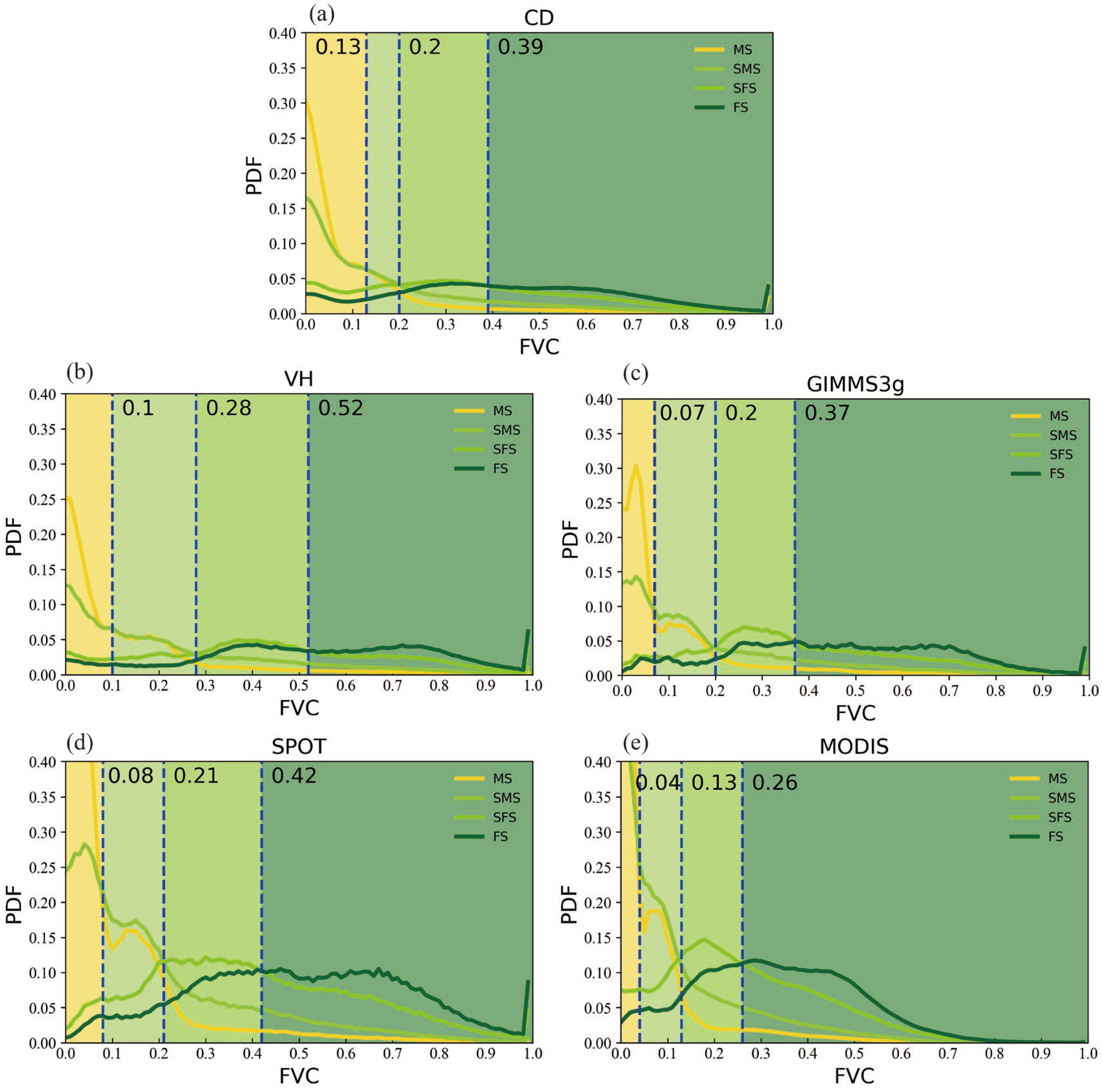
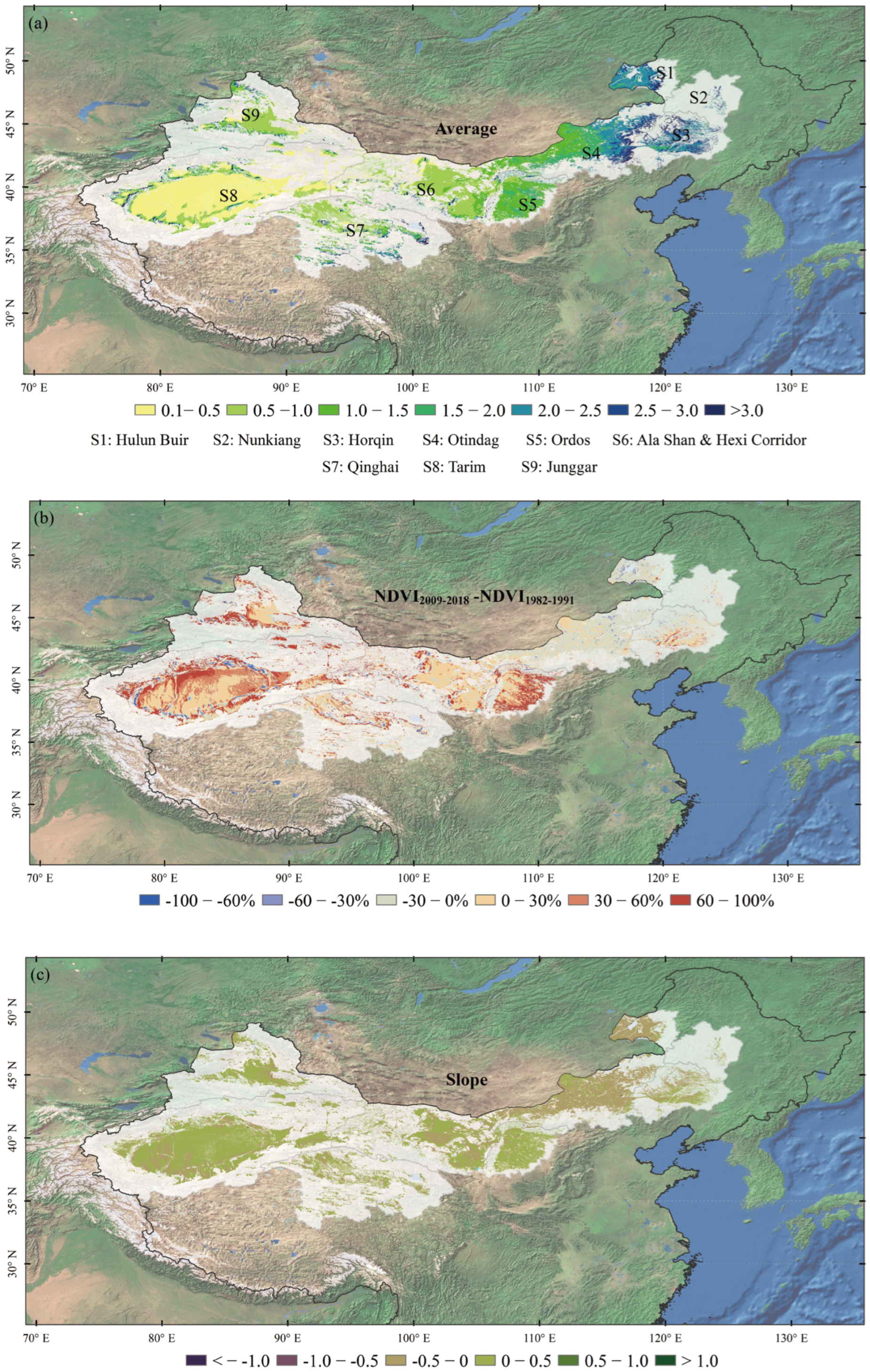
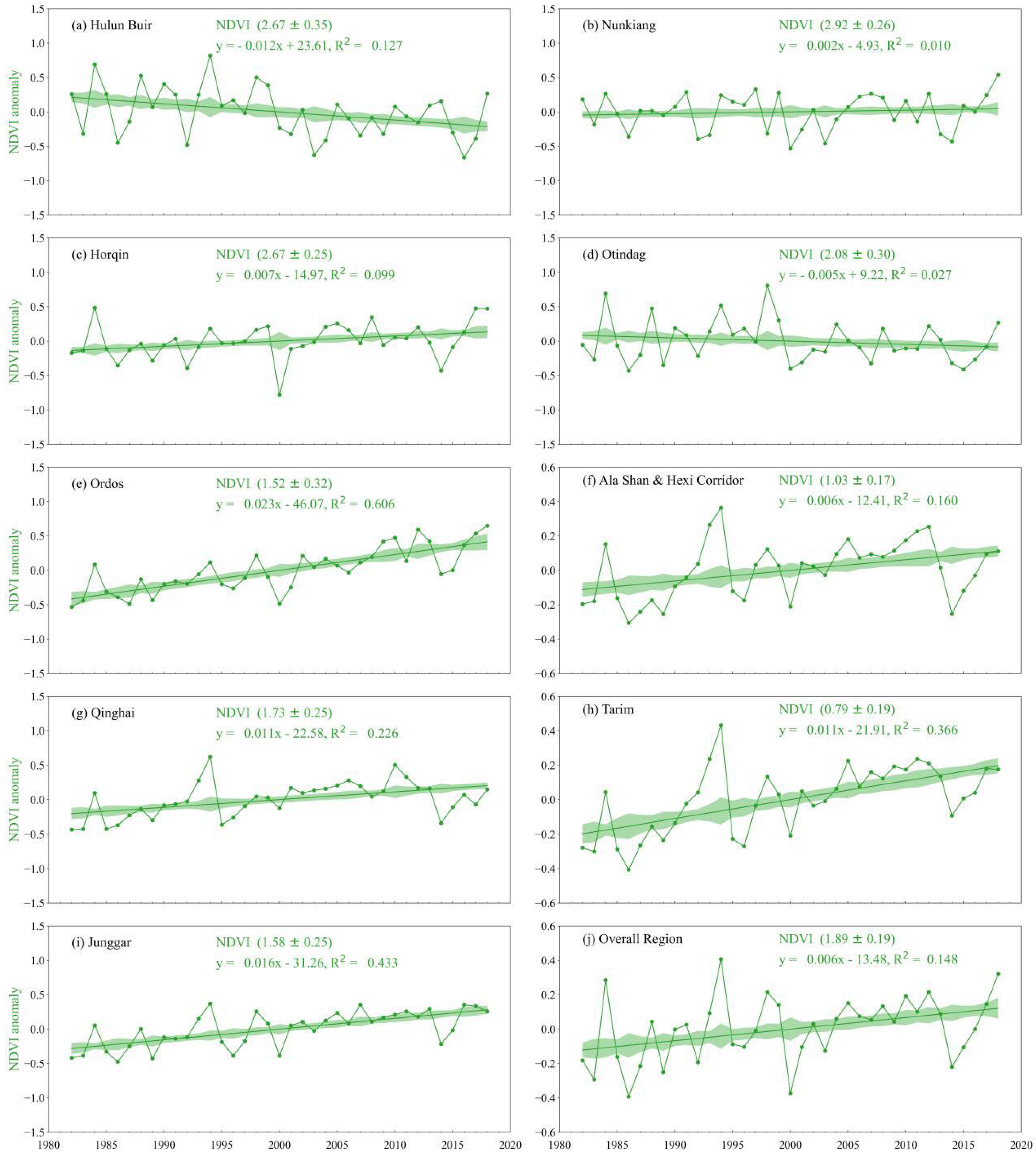
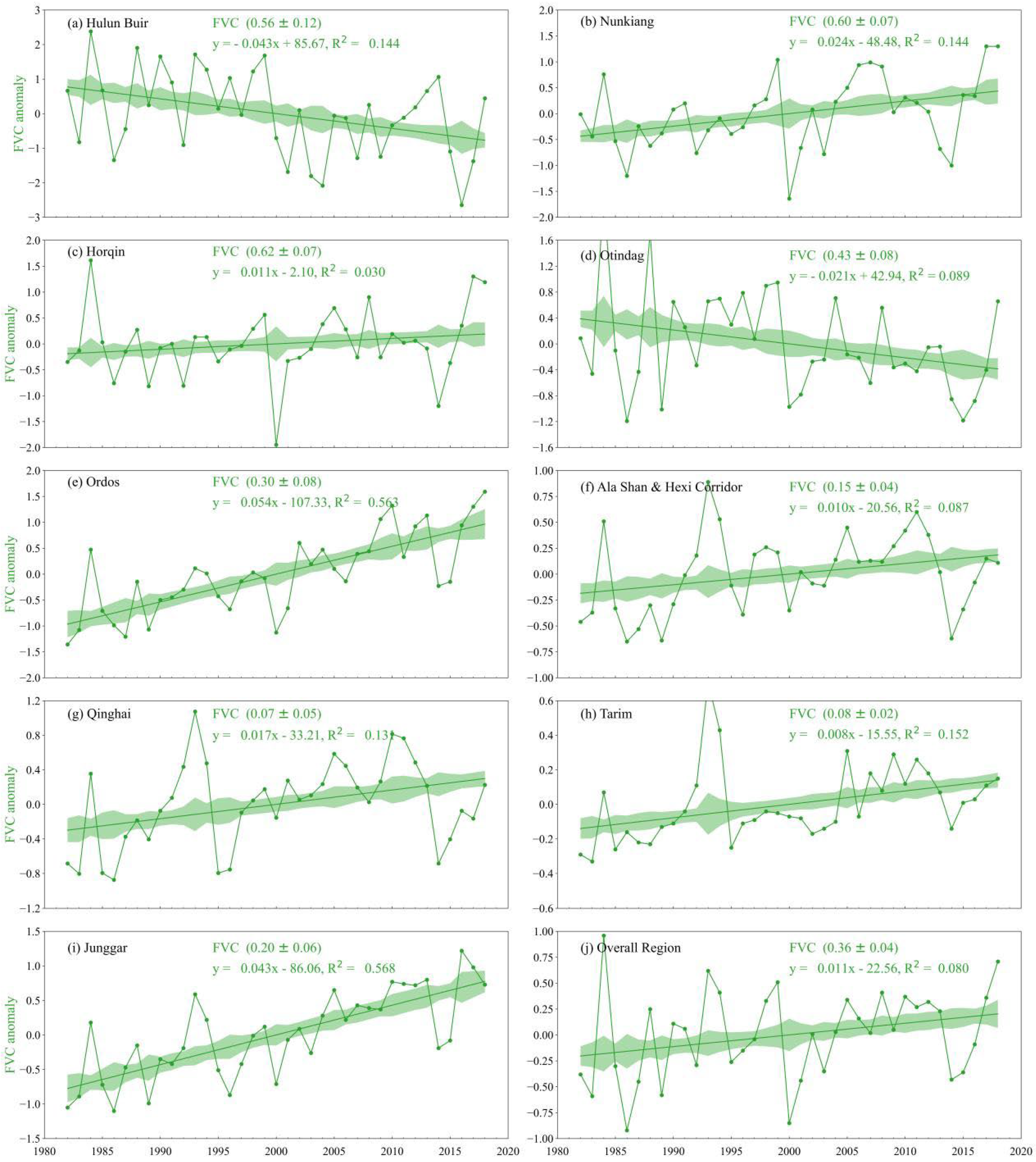
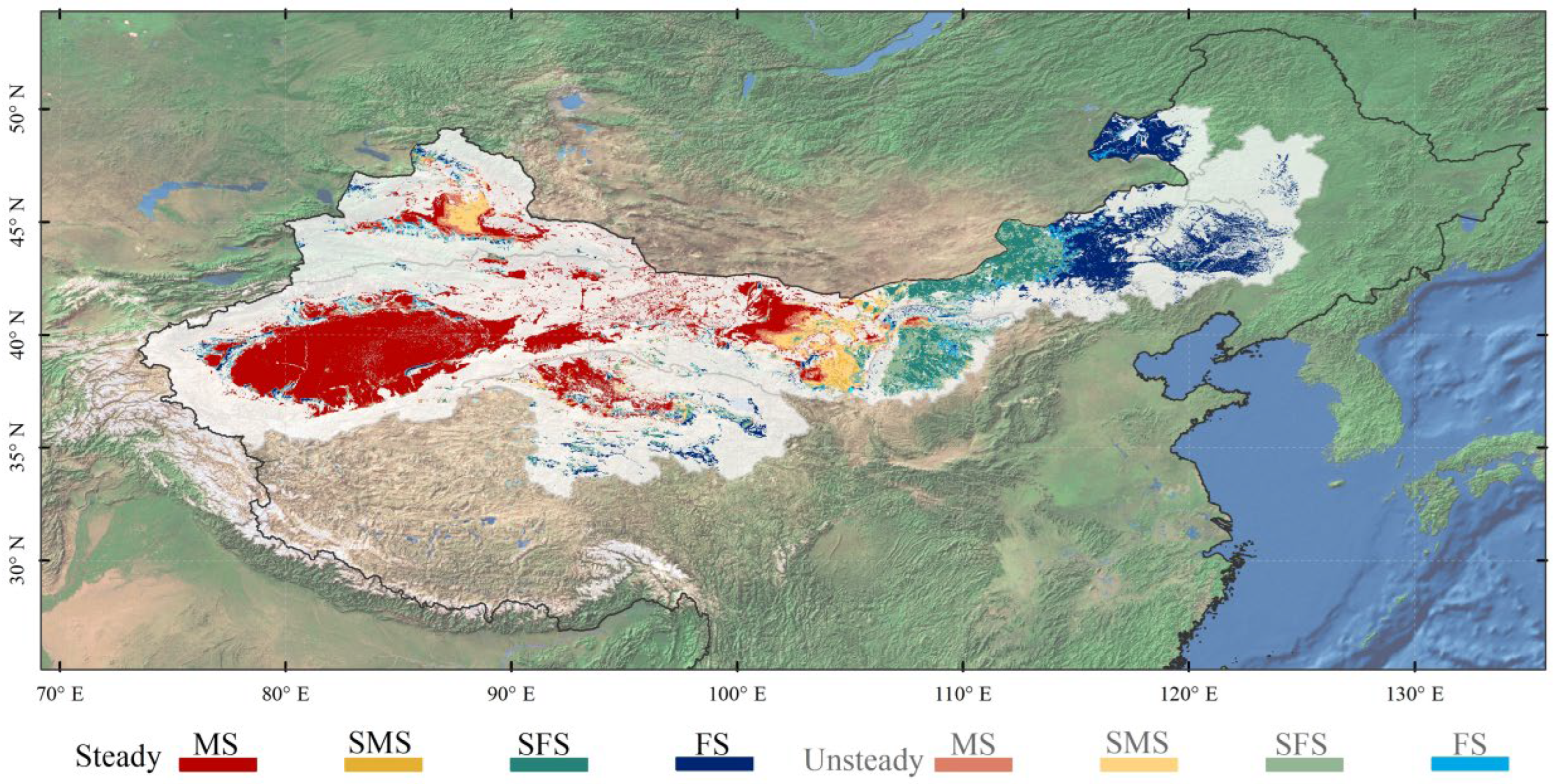
Owing to the lack of long-term, continuous, large-scale, and high-resolution monitoring data and methods, we still cannot accurately understand the detailed processes of sand change in northern China. To some extent, this hinders the scientific implementation of sand prevention and control actions. To gain a more accurate and detailed understanding of the process of sandy land change, we conducted an investigation using a reconstructed, long-term, continuous, 250 m-high spatial resolution normalized difference vegetation index (NDVI) and fractional vegetation cover (FVC) data from 1982 to 2018 to examine vegetation changes in sandy land in northern China. This study revealed that vegetation activity (NDVI slope = 0.011/a, R2 = 0.148) and vegetation coverage (FVC slope = 0.011/a, R2 = 0.080) in the northern sandy land (NSL) have slowed the desertification trend. The NSL desertification and reverse areas show decreasing and increasing trends, respectively, indicating an improvement in the degree of desertification from 1982 to 2018. Furthermore, we employed a newly proposed sandy classification method to investigate the area changes in mobile, semi-mobile, semi-fixed, and fixed sandy lands. Over the past 37 years, the total NSL area has shown a significantly weak decreasing trend (slope = −0.0009 million km2/year, r = −0.374, p = 0.023), with relatively small changes in the total area. However, the distribution area of large mobile sandy lands has significantly decreased, whereas the area of fixed sandy lands has significantly increased. Additionally, a survey of changes in the location of sandy lands revealed that 71.86% of the distribution of sandy land remained relatively fixed between 1982 and 2018, with only 28.14% of the distribution remaining in an unstable state. Stable mobile and fixed sandy lands accounted for 85.40% and 82.41% of the total area of mobile and fixed sandy lands, respectively, whereas there were more unstable sandy land distribution areas in the semi-mobile and semi-fixed sandy lands. These results indicate the alleviation of NSL desertification. The new sandy classification and monitoring methods proposed in this study will help improve the remote sensing monitoring of large-scale sand dynamics and offer new ideas for monitoring desertification on a large scale using remote sensing techniques.
Keywords: sandy land; large-scale remote sensing monitoring; classification of sand; position stability; North China sandy land; large-scale remote sensing monitoring; classification of sand; position stability; North China