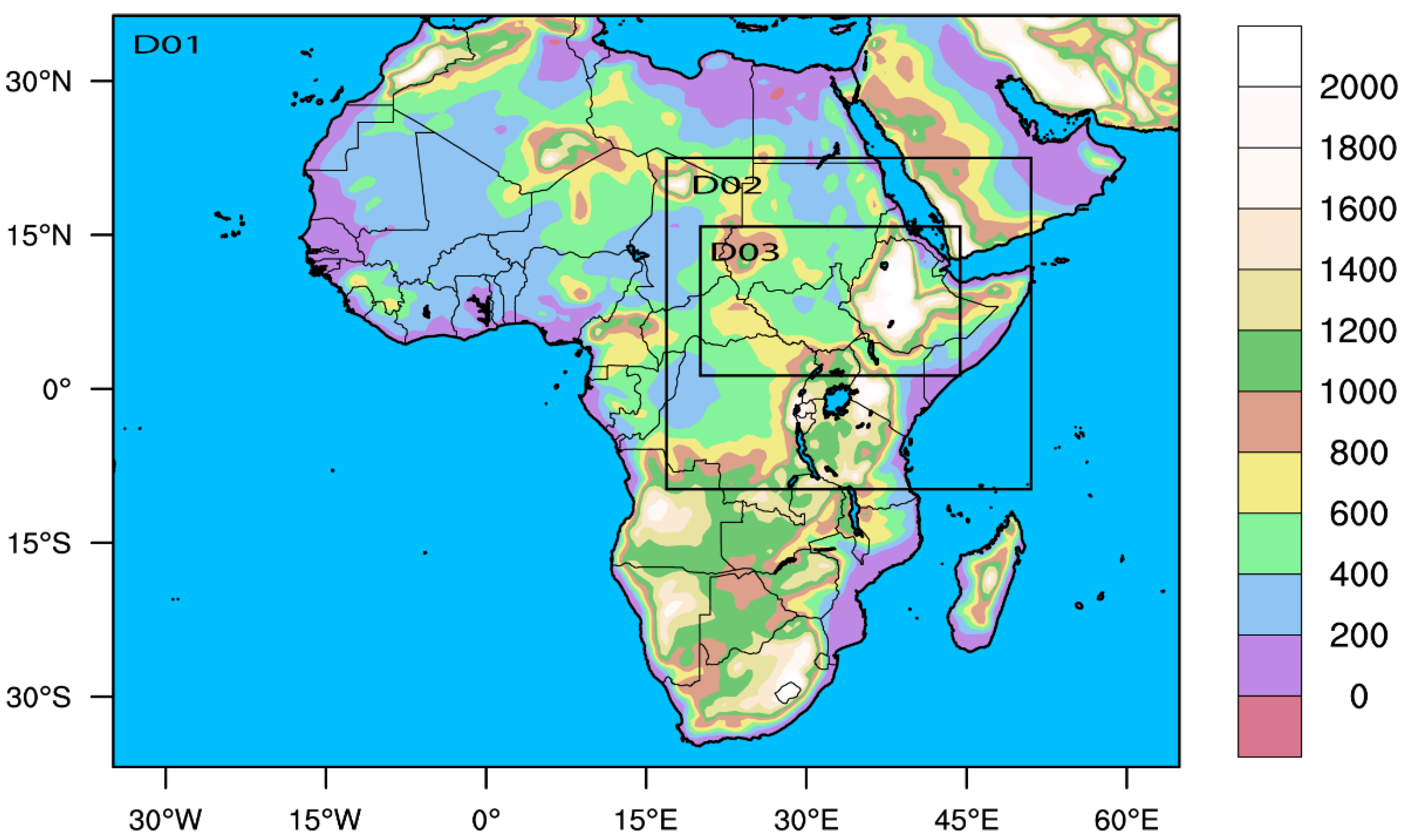
Assessing the Performance of WRF Model in Simulating Heavy Precipitation Events over East Africa Using Satellite-Based Precipitation Product

 ,
, 
 , ,
, , 

Abstract
Share and Cite
Nooni, I.K.; Tan, G.; Hongming, Y.; Saidou Chaibou, A.A.; Habtemicheal, B.A.; Gnitou, G.T.; Lim Kam Sian, K.T.C. Assessing the Performance of WRF Model in Simulating Heavy Precipitation Events over East Africa Using Satellite-Based Precipitation Product. Remote Sens. 2022, 14, 1964. https://doi.org/10.3390/rs14091964
Nooni IK, Tan G, Hongming Y, Saidou Chaibou AA, Habtemicheal BA, Gnitou GT, Lim Kam Sian KTC. Assessing the Performance of WRF Model in Simulating Heavy Precipitation Events over East Africa Using Satellite-Based Precipitation Product. Remote Sensing. 2022; 14(9):1964. https://doi.org/10.3390/rs14091964
Chicago/Turabian StyleNooni, Isaac Kwesi, Guirong Tan, Yan Hongming, Abdoul Aziz Saidou Chaibou, Birhanu Asmerom Habtemicheal, Gnim Tchalim Gnitou, and Kenny T. C. Lim Kam Sian. 2022. "Assessing the Performance of WRF Model in Simulating Heavy Precipitation Events over East Africa Using Satellite-Based Precipitation Product" Remote Sensing 14, no. 9: 1964. https://doi.org/10.3390/rs14091964
APA StyleNooni, I. K., Tan, G., Hongming, Y., Saidou Chaibou, A. A., Habtemicheal, B. A., Gnitou, G. T., & Lim Kam Sian, K. T. C. (2022). Assessing the Performance of WRF Model in Simulating Heavy Precipitation Events over East Africa Using Satellite-Based Precipitation Product. Remote Sensing, 14(9), 1964. https://doi.org/10.3390/rs14091964