Clutter Elimination Algorithm for Non-Precipitation Echo of Radar Data Considering Meteorological and Observational Properties in Polarimetric Measurements

Abstract
1. Introduction
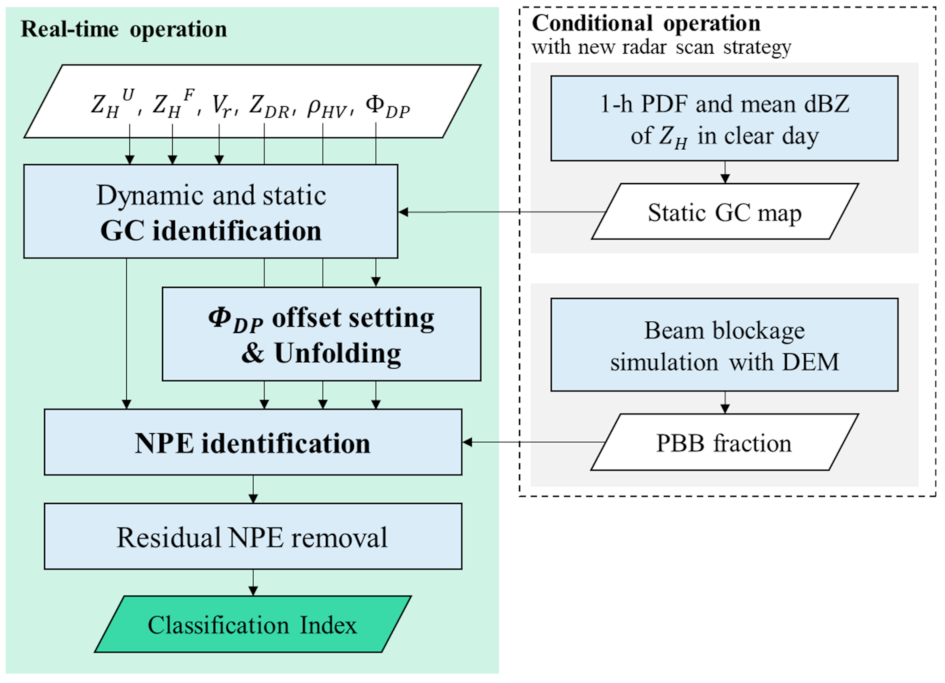
2. CLEANER
3. Methods
3.1. Identification of Ground Clutters
3.1.1. Feature Parameters for Ground Clutter
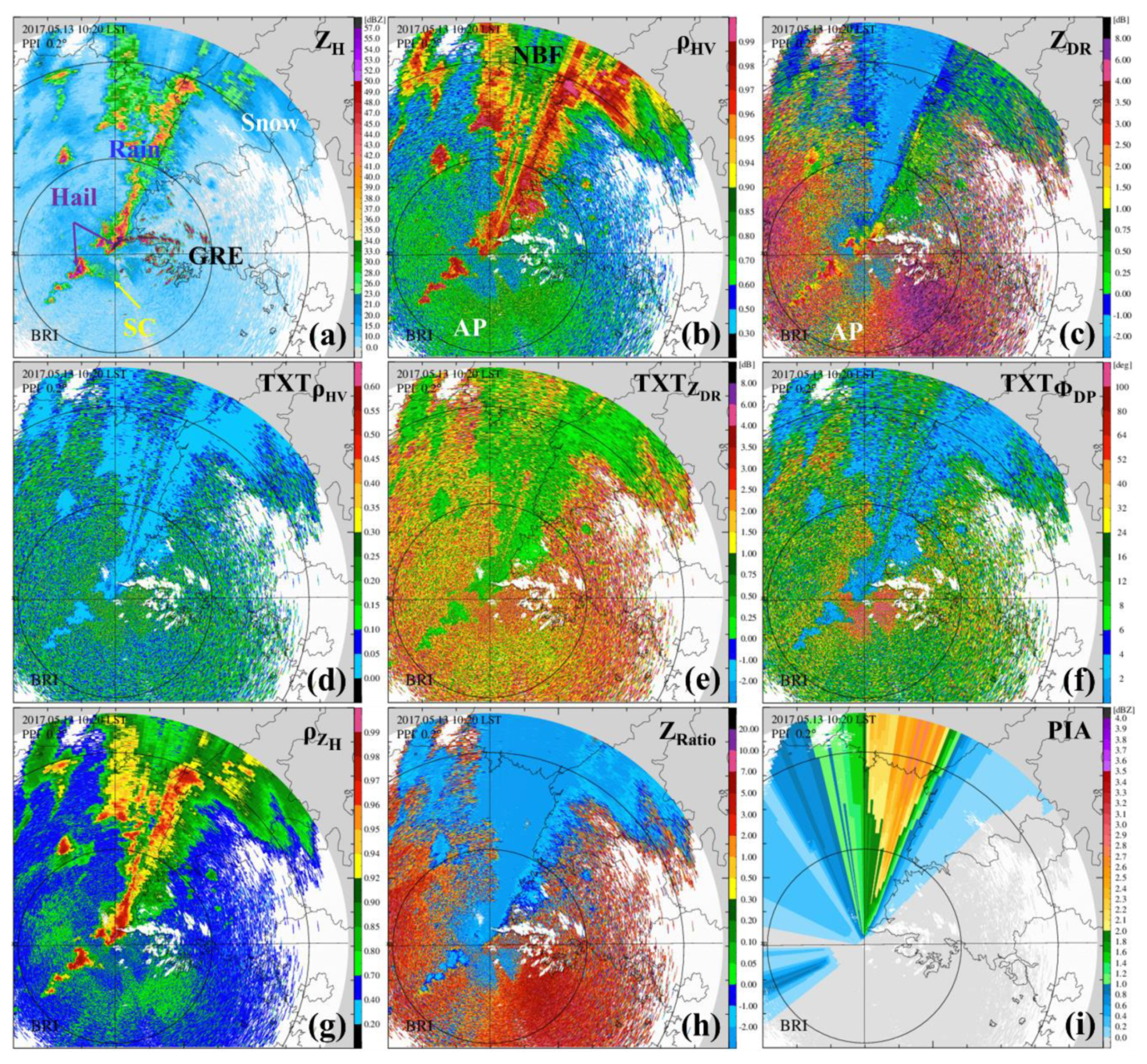
3.1.2. Characteristics of the Feature Parameters and Identification for Ground Clutter
3.2. Processes for Differential Phase Shift
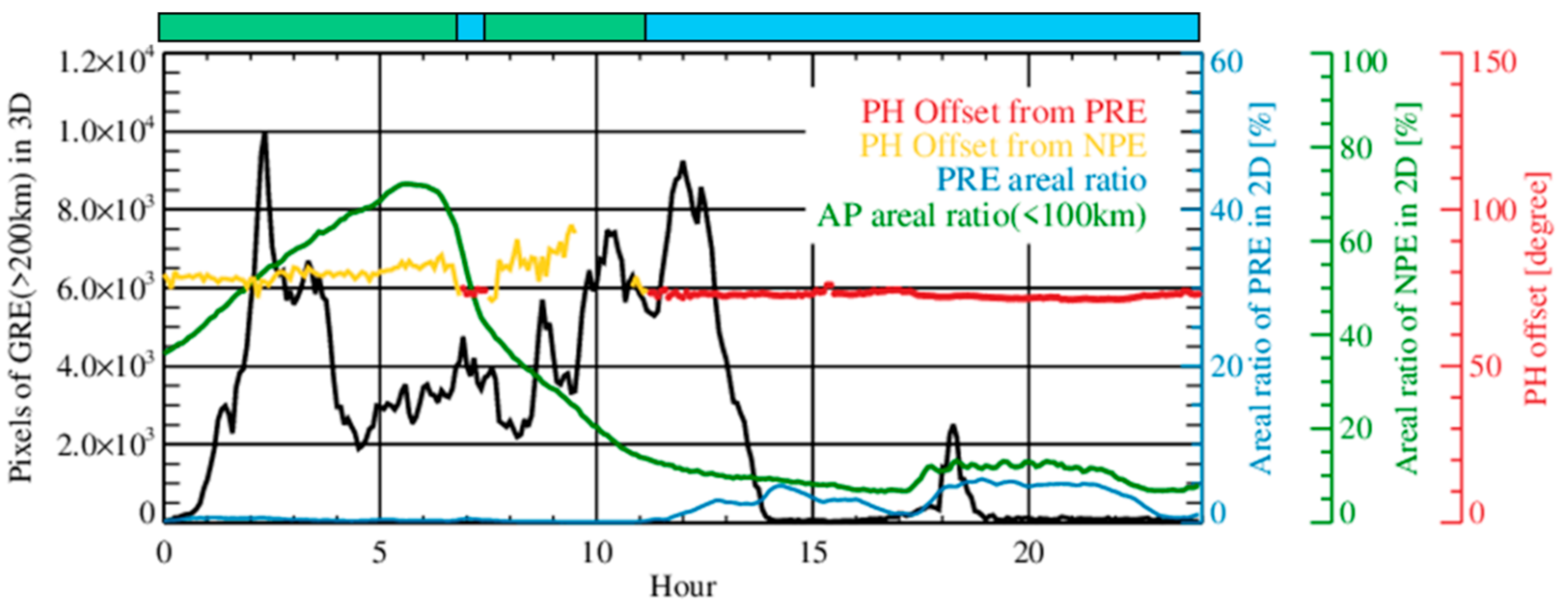
3.2.1. Offset Determination in Real Time
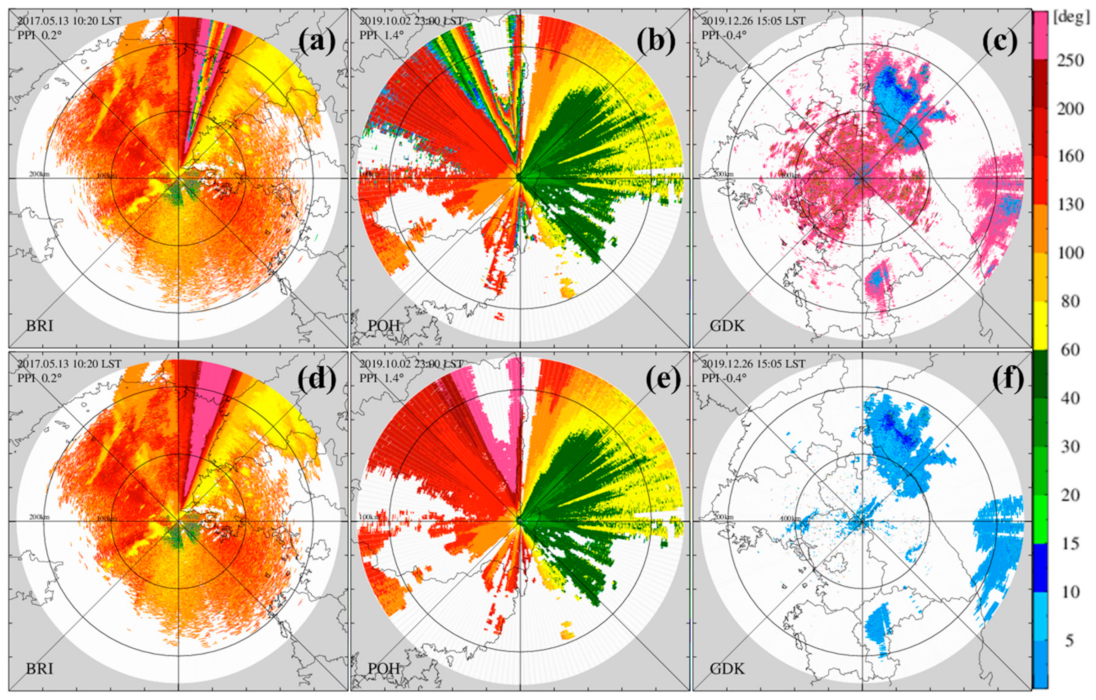
3.2.2. Unfolding for Multi- and Inverse-Folding
- We set the maximal-valid increment considering the maximal specific differential phase shift with radar wavelength and also set the valid fluctuation amount every bin with data quality affected by the wavelength and total-valid difference () due to PRE.
- Set initial to
- Add the folding amount () to if the difference between and () is smaller than–75% of
- Subtract to if is larger than 75% of
- Save step 3 or 4 as unfolded () if the absolute value of the difference between and () is smaller than
- Update with the averaged value between and processed by unfolding if the bin is PRE according to the following conditions: (i) larger than and ; (ii) difference between and is larger than –50% of and smaller than (valid increment ); and (iii) is smaller than the valid variation.
- Repeat step 3 times until is smaller than 75% of () to unfold the multi-folding (for a C- or X-band radar system).
3.3. Classification of Precipitation and Non-Precipitation Echoes
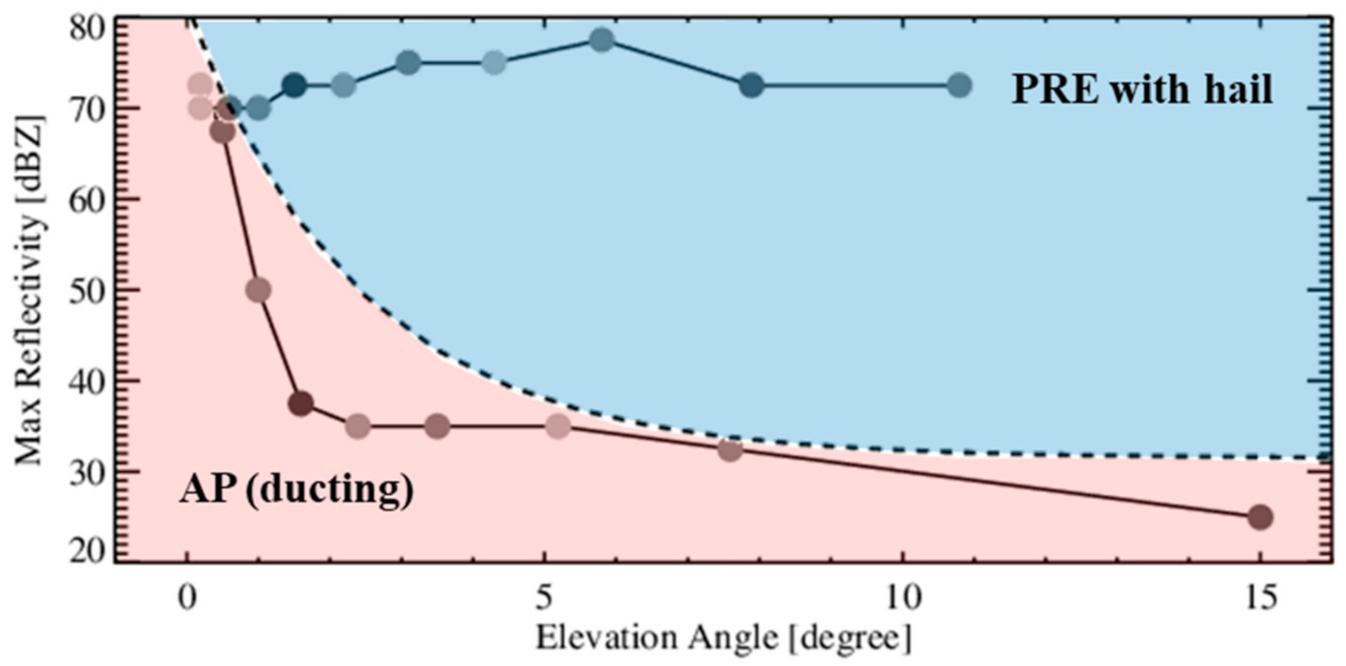
3.3.1. Set of Maximum Reflectivity for Non-Precipitation Echo
3.3.2. Feature Parameters and Their Characteristics for Non-Precipitation Echo
3.3.3. Classification Conditions for Non-Precipitation Echo
4. Results
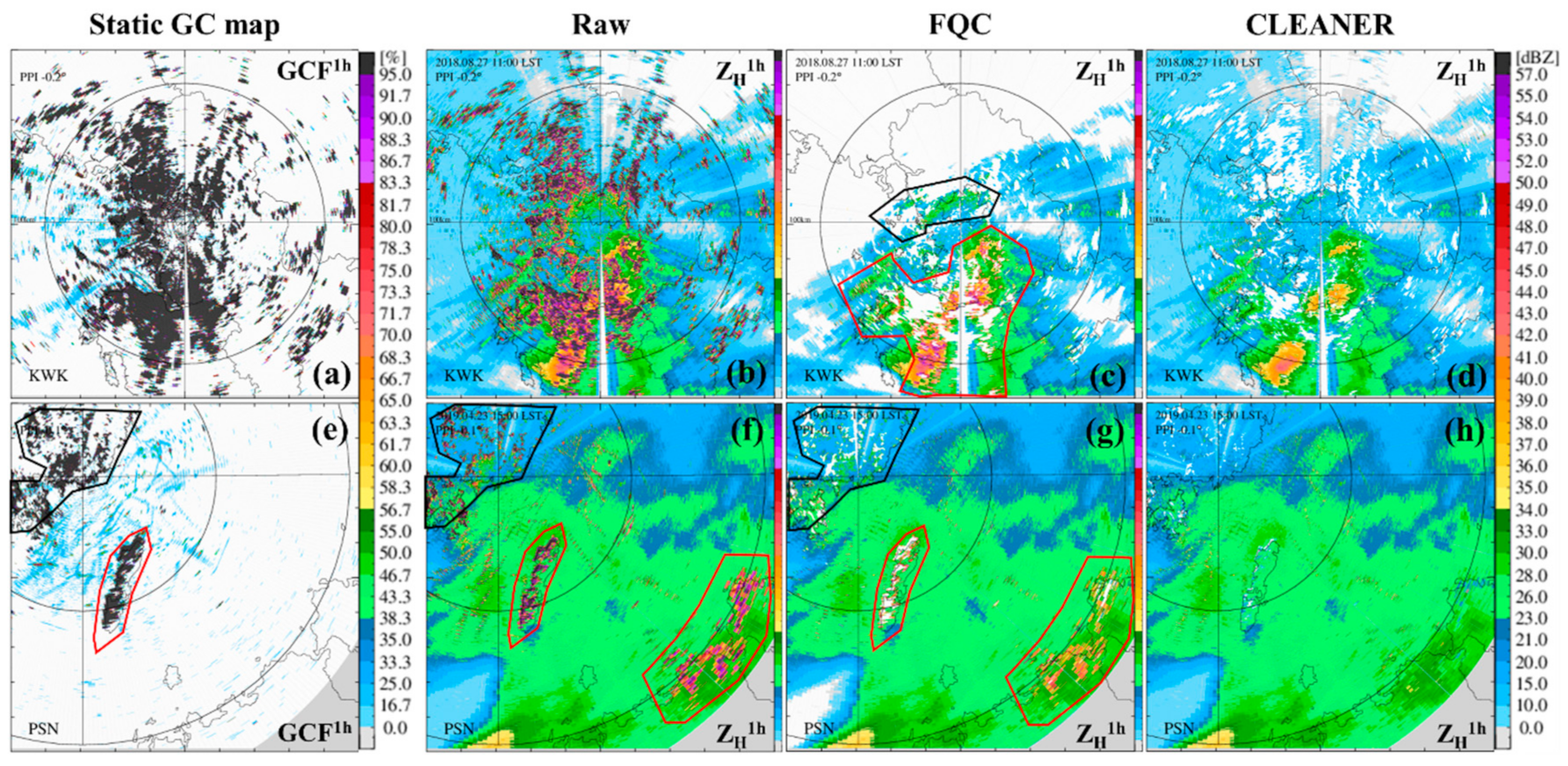
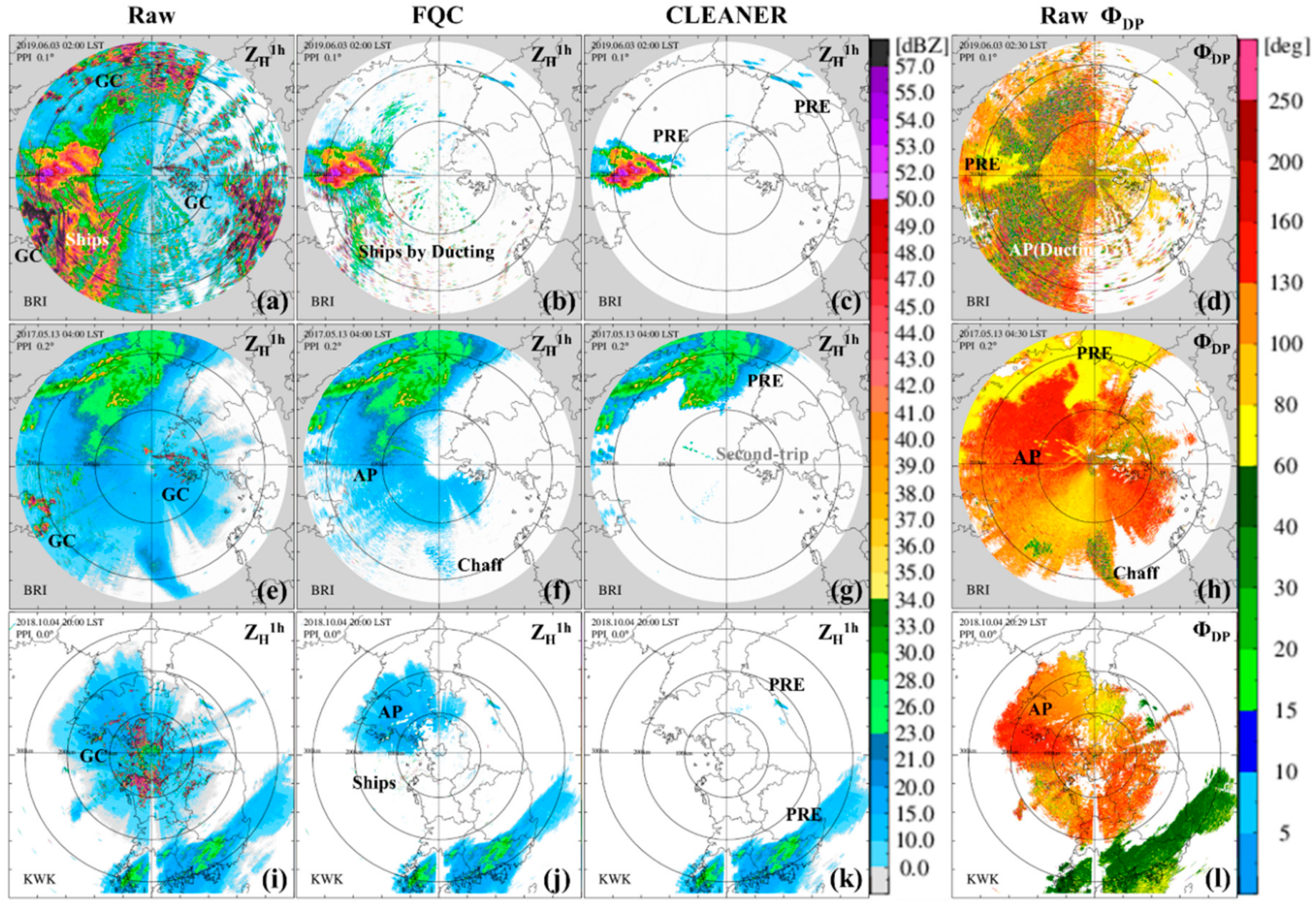
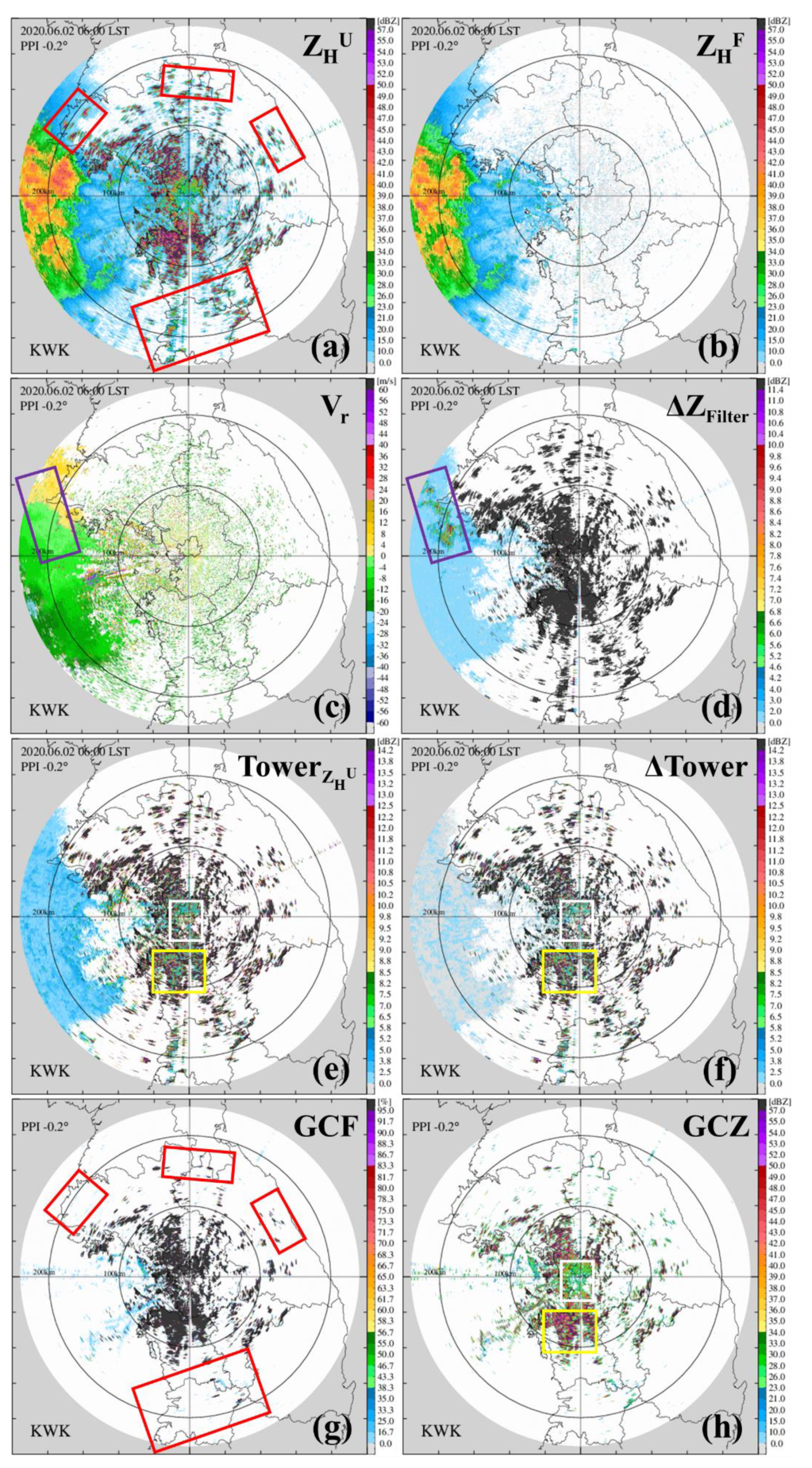
4.1. Ground Clutters
4.2. Anomalous Propagations
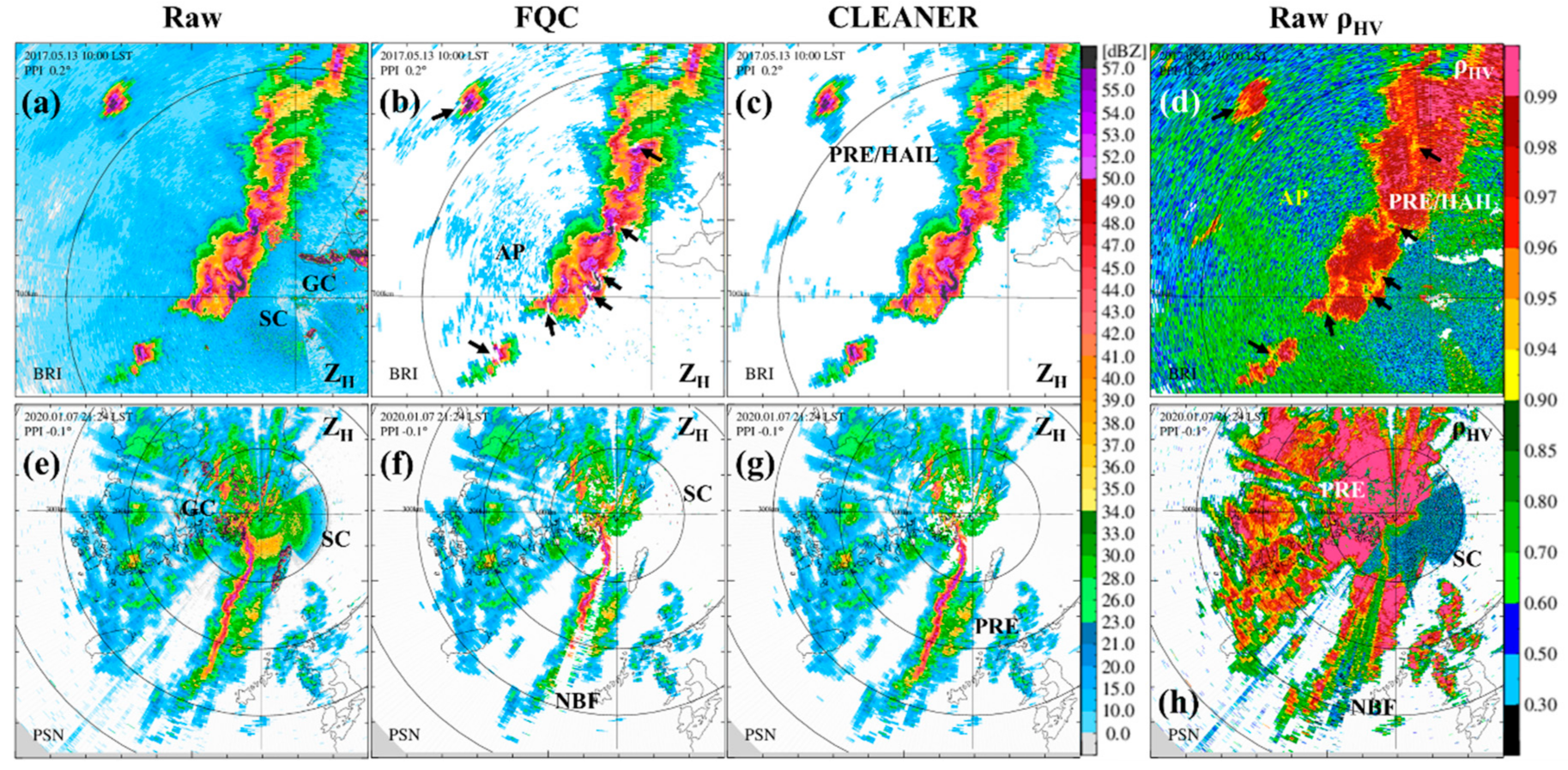
4.3. Hail and Nonuniform Beam Filling
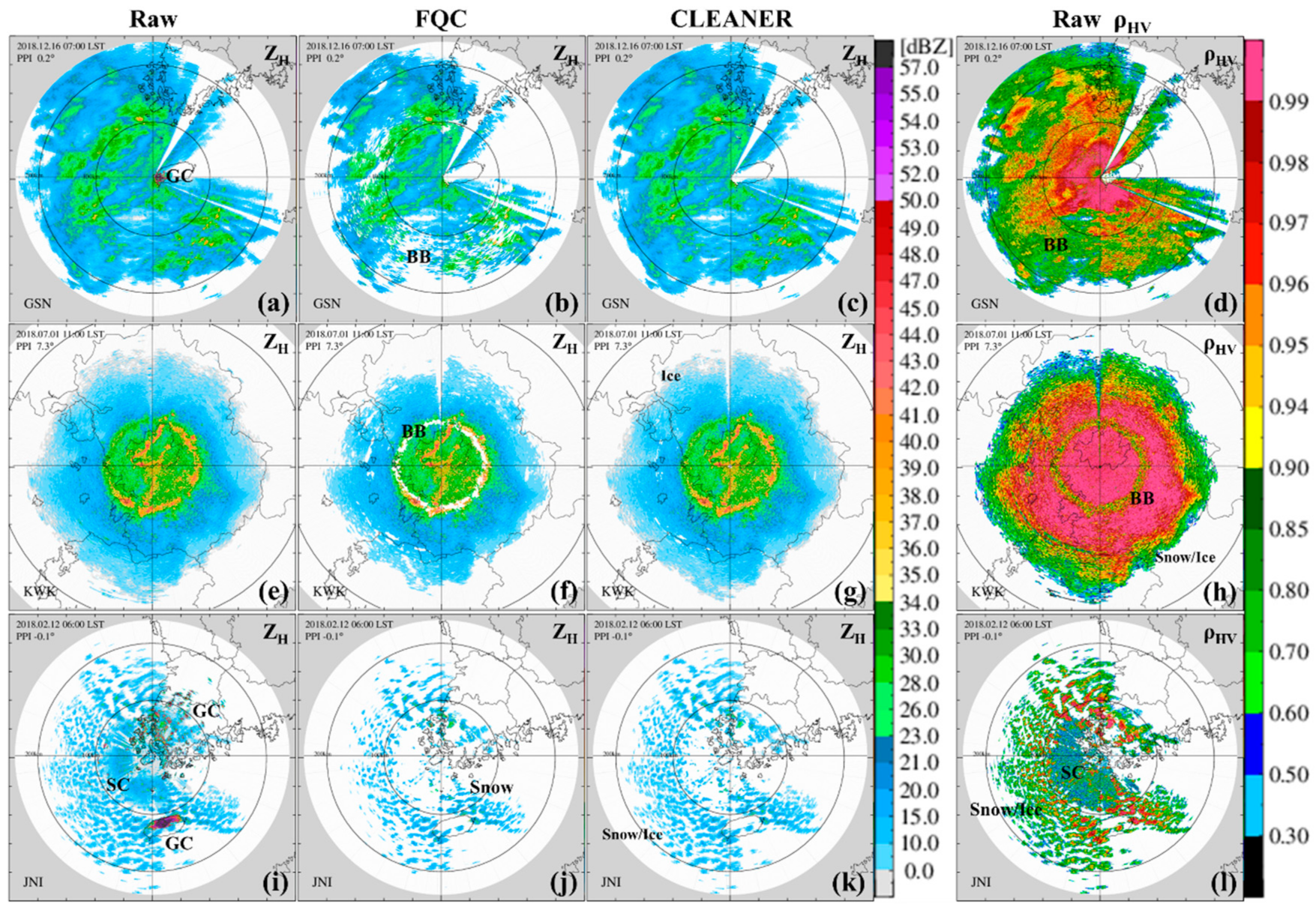
4.4. Bright Band, Snow and Ice Crystals
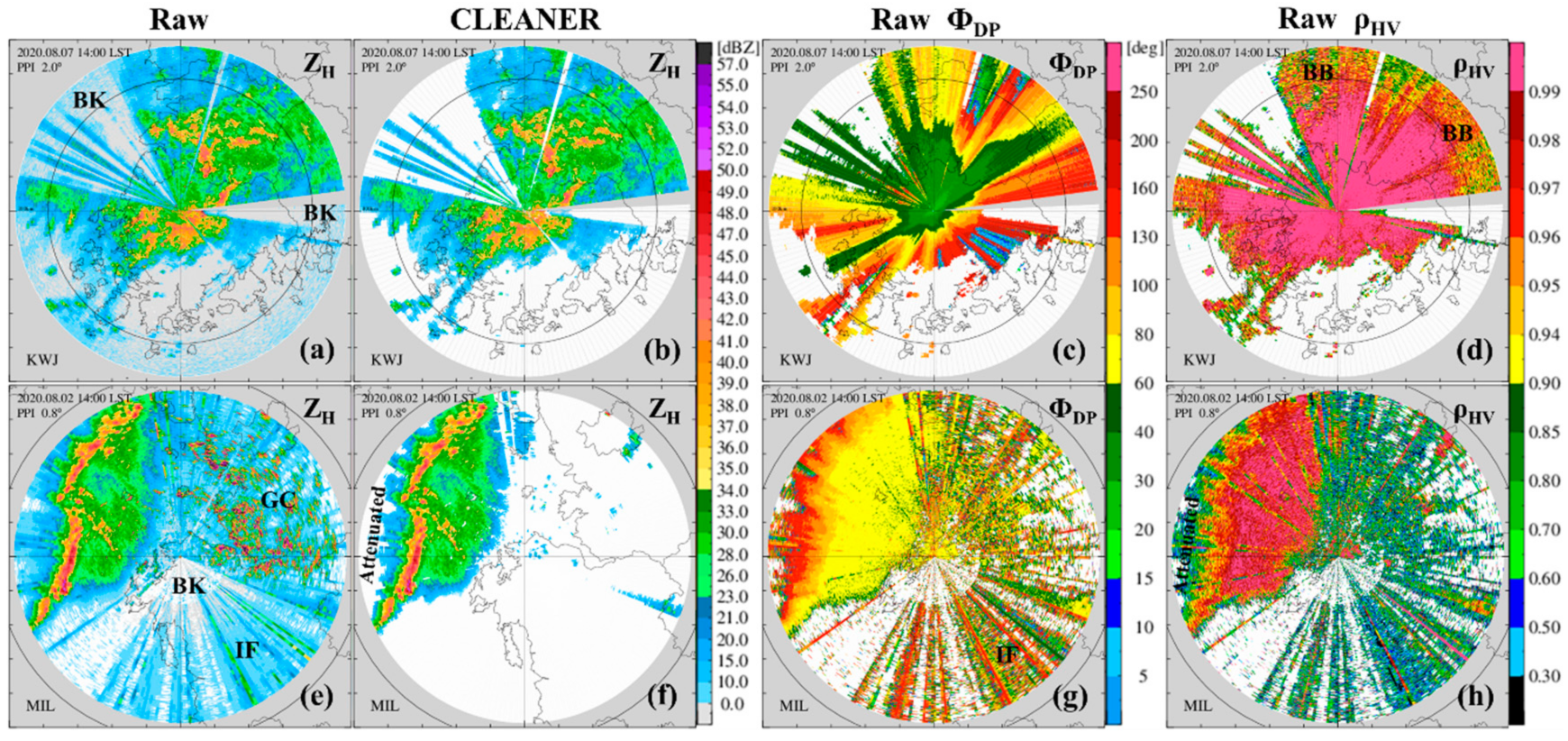
4.5. Applications to C- and X-band Polarimetric Radars
5. Conclusions
Author Contributions
Funding
Conflicts of Interest
References
- Vivekanandan, J.; Zrnić, D.S.; Ellis, S.M.; Oye, R.; Ryzhkov, A.V.; Straka, J. Cloud microphysics retrieval using S-band dual-polarization radar measurements. Bull. Amer. Meteor. Soc. 1999, 80, 381–388. [Google Scholar] [CrossRef] [Scilit]
- Rico-Ramirez, M.A.; Cluckie, I.D. Classification of ground clutter and anomalous propagation using dual-polarization weather radar. IEEE Trans. Geosci. Remote Sens. 2008, 46, 1892–1904. [Google Scholar] [CrossRef] [Scilit]
- Thompson, E.J.; Rutledge, S.A.; Dolan, B.; Chandrasekar, V.; Cheong, B.-L. A dual-polarization radar hydrometeor classification algorithm for winter precipitation. J. Atmos. Ocean. Technol. 2014, 31, 1457–1481. [Google Scholar] [CrossRef] [Scilit]
- Grazioli, J.; Tuia, D.; Berne, A. Hydrometeor classification from polarimetric radar measurements: A clustering approach. Atmos. Meas. Tech. 2015, 8, 149–170. [Google Scholar] [CrossRef] [Scilit]
- Giangrande, S.E.; Ryzhkov, A.V. Estimation of rainfall based on the results of polarimetric echo classification. J. Appl. Meteor. Climatol. 2008, 47, 2445–2462. [Google Scholar] [CrossRef] [Scilit]
- Ryzhkov, A.V.; Diederich, M.; Zhang, P.; Simmer, C. Potential utilization of specific attenuation for rainfall estimation, mitigation of partial beam blockage, and radar networking. J. Atmos. Ocean. Technol. 2014, 31, 599–619. [Google Scholar] [CrossRef] [Scilit]
- Zhang, J.; Howard, K.; Langston, C.; Kaney, B.; Qi, Y.; Tang, L.; Grams, H.; Wang, Y.; Cocks, S.; Arthur, S.M.A.; et al. Multi-Radar Multi-Sensor (MRMS) quantitative precipitation estimation: Initial operating capabilities. Bull. Am. Meteorol. Soc. 2016, 97, 621–638. [Google Scholar] [CrossRef] [Scilit]
- Jung, Y.; Xue, M.; Zhang, G.; Straka, J. Assimilation of simulated polarimetric radar data for a convective storm using the ensemble Kalman filter. Part II: Impact of polarimetric data and storm analysis. Mon. Weather Rev. 2008, 136, 2246–2260. [Google Scholar] [CrossRef] [Scilit]
- Houtekamer, P.L.; Zhang, F. Review of the ensemble Kalman filter for atmospheric data assimilation. Mon. Weather Rev. 2016, 144, 4489–4532. [Google Scholar] [CrossRef] [Scilit]
- Gourley, J.J.; Tabary, P.; Parent du Chatelet, J. A fuzzy logic algorithm for the separation of precipitating from nonprecipitating echoes using polarimetric radar observations. J. Atmos. Ocean. Technol. 2007, 24, 1439–1451. [Google Scholar] [CrossRef] [Scilit]
- Islam, T.; Rico-Ramirez, M.; Han, D.; Srivastava, P. Artificial intelligence techniques for clutter identification with polarimetric radar signatures. Atmos. Res. 2012, 109–110, 95–113. [Google Scholar] [CrossRef] [Scilit]
- Lakshmanan, V.; Christopher, C.; Krause, J.; Tang, L. Quality control of weather radar data using polarimetric variables. J. Atmos. Ocean. Technol. 2013, 31, 1234–1249. [Google Scholar] [CrossRef] [Scilit]
- Dufton, D.; Collier, C. Fuzzy logic filtering of radar reflectivity to remove nonmeteorological echoes using dual polarization radar moments. Atmos. Meas. Tech. 2015, 8, 3985–4000. [Google Scholar] [CrossRef] [Scilit]
- Ryzhkov, A.V. The impact of beam broadening on the quality of radar polarimetric data. J. Atmos. Ocean. Technol. 2007, 24, 729–744. [Google Scholar] [CrossRef] [Scilit]
- Lei, L.; Zhang, G.; Doviak, R.J.; Palmer, R.; Cheong, B.L.; Xue, M.; Cao, Q.; Li, Y. Multilag correlation estimators for polarimetric radar measurements in the presence of noise. J. Atmos. Ocean. Technol. 2012, 29, 772–795. [Google Scholar] [CrossRef] [Scilit]
- Kumjian, M.R. Principles and applications of dual-polarization radar. Part II: Warm- and cold-season applications. J. Oper. Meteor. 2013, 1, 243–264. [Google Scholar] [CrossRef] [Scilit]
- Kumjian, M.R. Principles and applications of dual-polarization weather radar. Part III: Artifacts. J. Oper. Meteor. 2013, 1, 265–274. [Google Scholar] [CrossRef] [Scilit]
- Ryzhkov, A.V.; Zrnić, D. Radar Polarimetry for Weather Observations; Springer International Publishing: Cham, Switzerland, 2019; pp. 185–188. [Google Scholar] [CrossRef] [Scilit]
- Tang, L.; Zhang, J.; Langston, C.; Krause, J.; Howard, K.; Lakshmanan, V. A physically based precipitation–nonprecipitation radar echo classifier using polarimetric and environmental data in a real-time national system. Weather Forecast. 2014, 29, 1106–1119. [Google Scholar] [CrossRef] [Scilit]
- Jung, S.-H.; Lee, G.-W. Statistical characteristics of atmospheric conditions related to radar beam propagation using radiosonde data in 2005-2006. J. Korean Earth Sci. Soc. 2010, 31, 584–599, (In Korean with English abstract). [Google Scholar] [CrossRef] [Scilit]
- Merceret, F.J.; Ward, J.G. Attenuation of Weather Radar Signals Due to Wetting of the Radome by Rainwater or Incomplete Filling of the Beam Volume. NASA/TM-2002-211171, 9 April 2000. [Google Scholar]
- Ryzhkov, A.V.; Kumjian, M.R.; Ganson, S.M.; Zhang, P. Polarimetric radar characteristics of melting hail. Part II: Practical implications. J. Appl. Meteor. Climatol. 2013, 52, 2871–2886. [Google Scholar] [CrossRef] [Scilit]
- Ye, B.-Y.; Lee, G.-W.; Park, H.-M. Identification and removal of non-meteorological echoes in dual-polarization radar data based on a fuzzy logic algorithm. Adv. Atmos. Sci. 2015, 32, 1217–1230. [Google Scholar] [CrossRef] [Scilit]
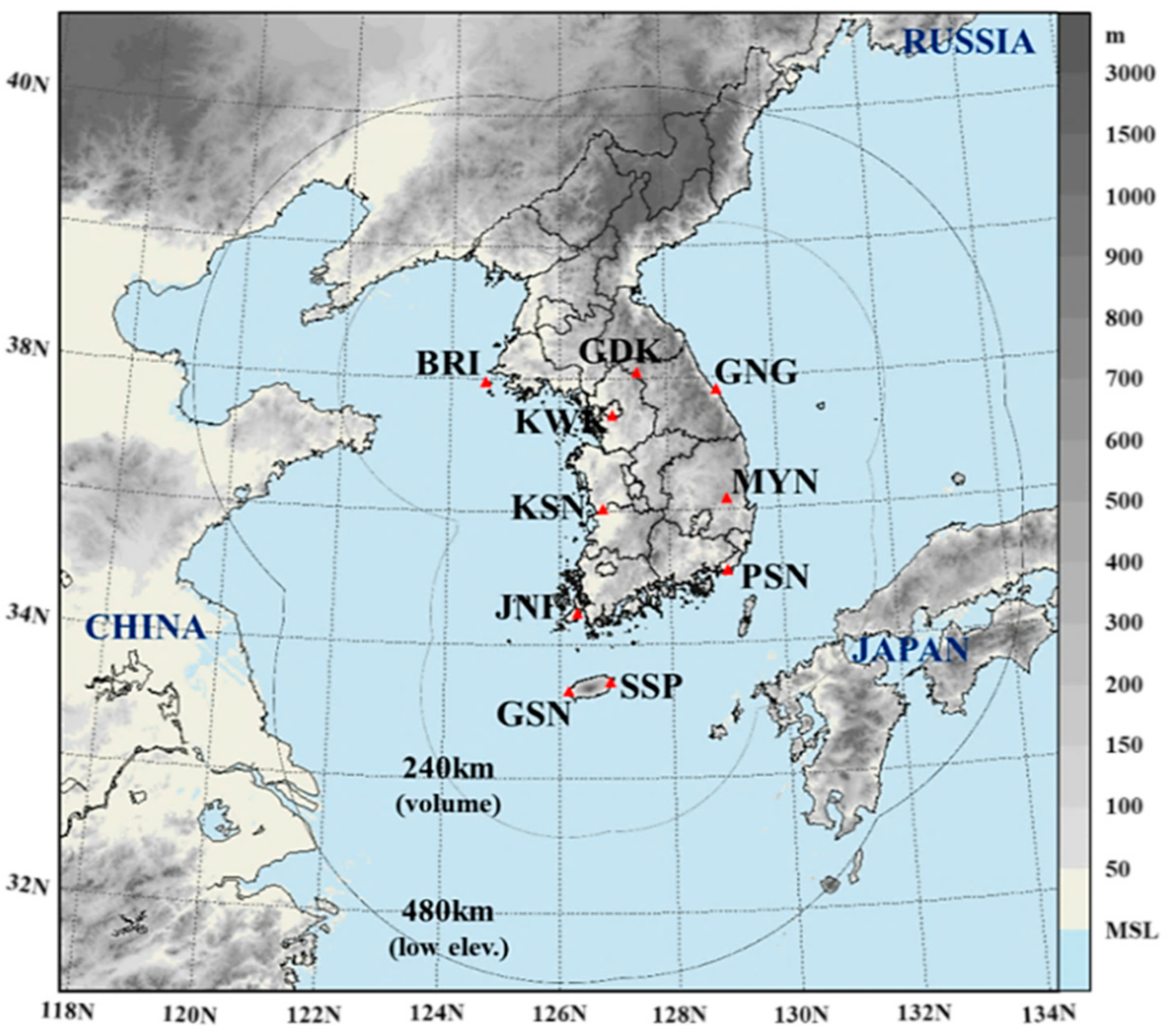




| Parameters | Values | |
|---|---|---|
| VCP | LNG | |
| # of site | 10 | |
| Dual polarization | Simultaneous H and V | |
| Band | S-band | |
| Beam width | 0.95° | |
| Pulse width | 2 μs | 4.5 μs |
| PRF | 620–1200 Hz with elev. | 306 Hz |
| Observational range | 240 km | 480 km |
| Range resolution | 250 m | |
| Elevation angles | 9 (−0.2 to 15°) | 1 (0.0°) |
| Scan duration | 224 s | 40 s |
| Parameters | Constraints | Thresholds [dBZ] | |
|---|---|---|---|
| ~10 km | |||
| = 2 km | |||
| and | |||
| and | (min = 7.5, max = 15.0) | ||
| and & and | |||
| Parameters | Constraints | Initial Thresholds | Threshold Adjustments |
|---|---|---|---|
and | |||
| and and | |||
| and | - | ||
| no winter season | - | ||
and |
Publisher’s Note: MDPI stays neutral with regard to jurisdictional claims in published maps and institutional affiliations. |
© 2020 by the authors. Licensee MDPI, Basel, Switzerland. This article is an open access article distributed under the terms and conditions of the Creative Commons Attribution (CC BY) license (http://creativecommons.org/licenses/by/4.0/).
Share and Cite
Oh, Y.-A.; Kim, H.-L.; Suk, M.-K. Clutter Elimination Algorithm for Non-Precipitation Echo of Radar Data Considering Meteorological and Observational Properties in Polarimetric Measurements. Remote Sens. 2020, 12, 3790. https://doi.org/10.3390/rs12223790
Oh Y-A, Kim H-L, Suk M-K. Clutter Elimination Algorithm for Non-Precipitation Echo of Radar Data Considering Meteorological and Observational Properties in Polarimetric Measurements. Remote Sensing. 2020; 12(22):3790. https://doi.org/10.3390/rs12223790
Chicago/Turabian StyleOh, Young-A, Hae-Lim Kim, and Mi-Kyung Suk. 2020. "Clutter Elimination Algorithm for Non-Precipitation Echo of Radar Data Considering Meteorological and Observational Properties in Polarimetric Measurements" Remote Sensing 12, no. 22: 3790. https://doi.org/10.3390/rs12223790
APA StyleOh, Y.-A., Kim, H.-L., & Suk, M.-K. (2020). Clutter Elimination Algorithm for Non-Precipitation Echo of Radar Data Considering Meteorological and Observational Properties in Polarimetric Measurements. Remote Sensing, 12(22), 3790. https://doi.org/10.3390/rs12223790