Article

Ship Identification and Characterization in Sentinel-1 SAR Images with Multi-Task Deep Learning

1
IMT Atlantique—Lab-STICC, UMR CNRS 6285, 29238 Brest, France
2
Univ. Bretagne Sud—IRISA, UMR CNRS 6074, 56017 Vannes, France
3
Collecte Localisation Satellites, 29280 Brest, France
*
Author to whom correspondence should be addressed.
Remote Sens. 2019, 11(24), 2997; https://doi.org/10.3390/rs11242997
Submission received: 2 November 2019 / Revised: 8 December 2019 / Accepted: 11 December 2019 / Published: 13 December 2019
(This article belongs to the Special Issue Remote Sensing: 10th Anniversary)

Abstract

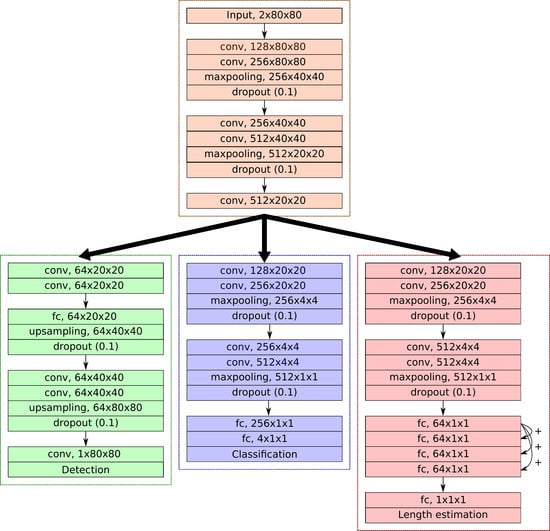
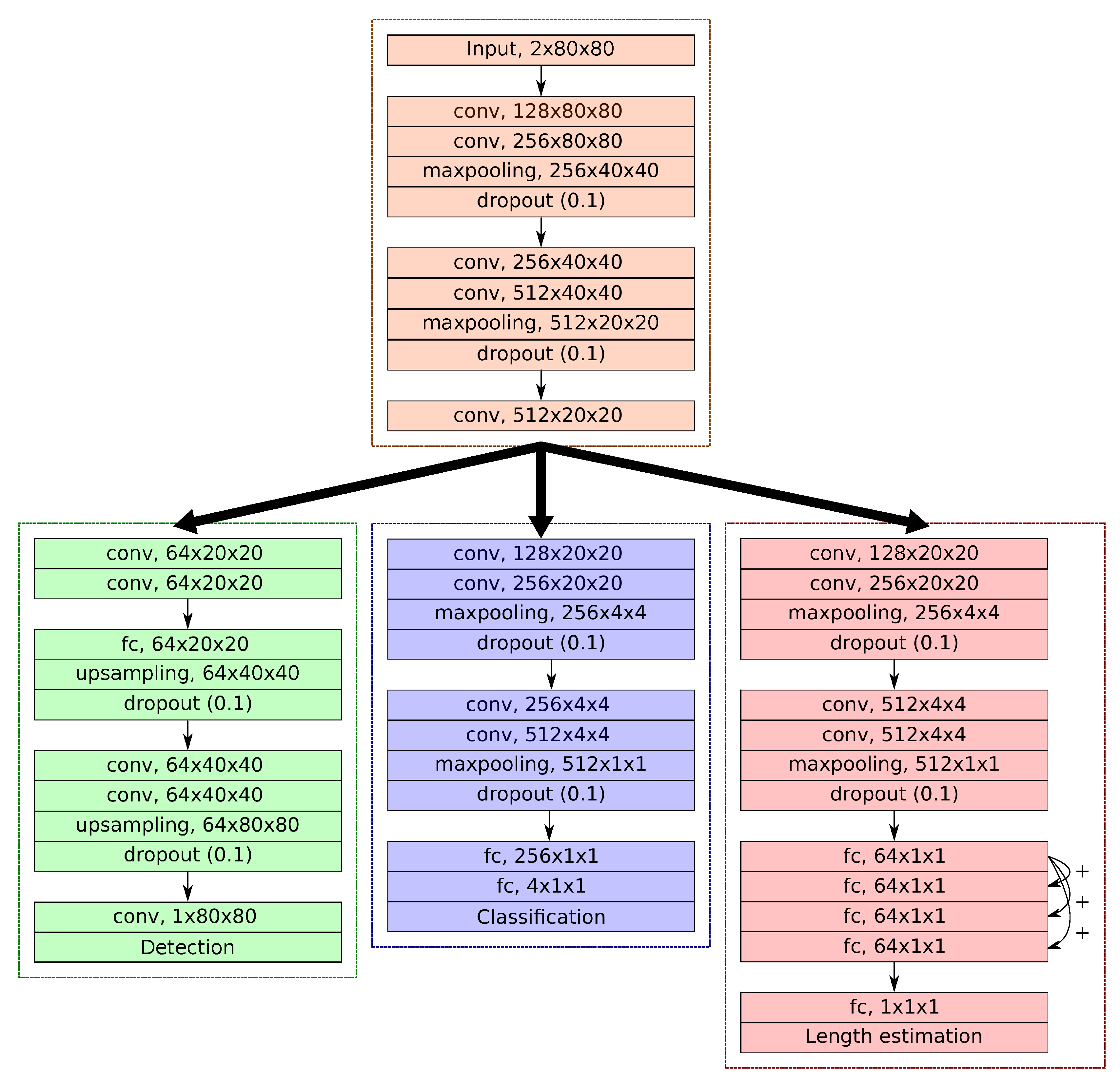
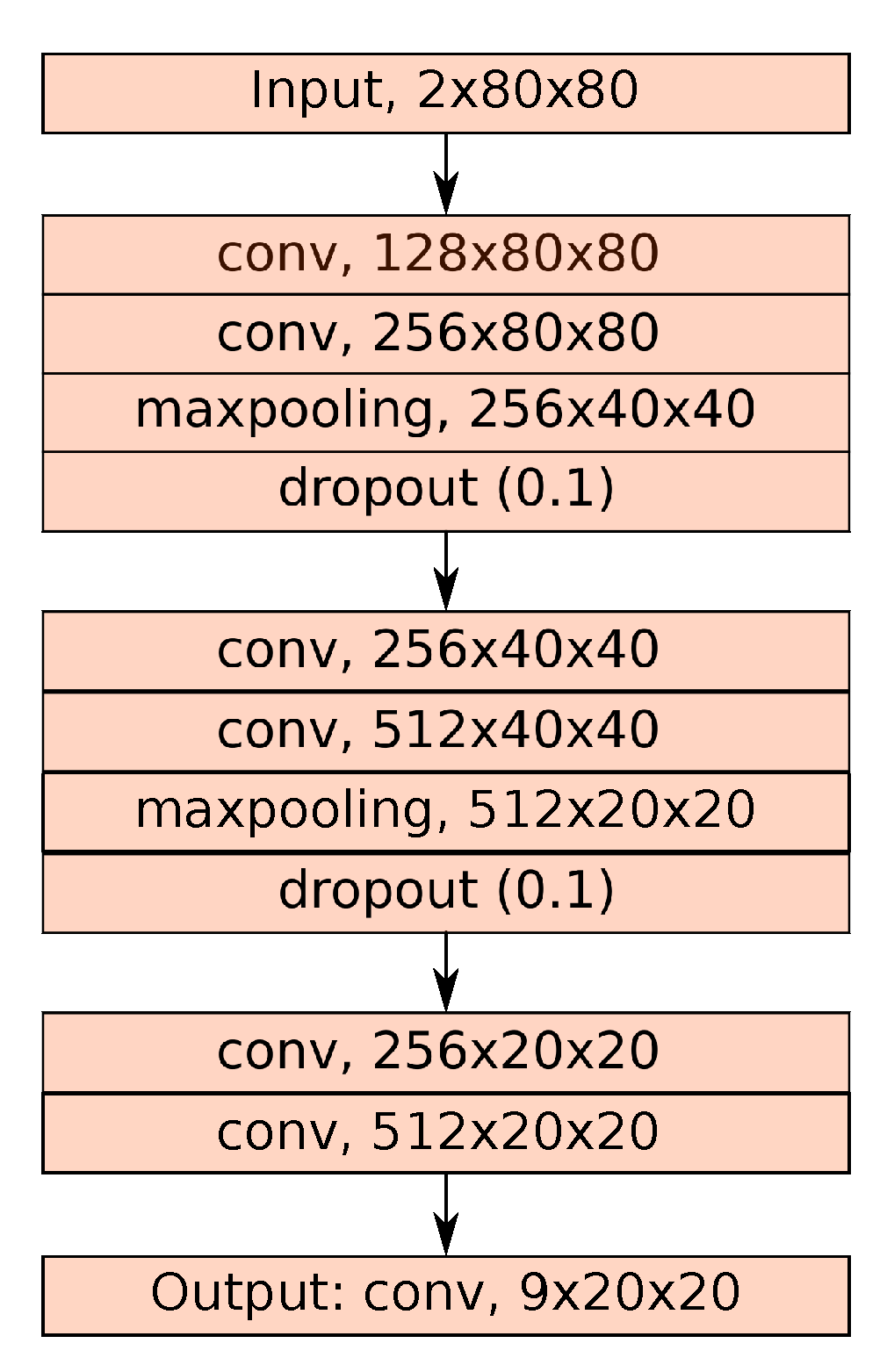
The monitoring and surveillance of maritime activities are critical issues in both military and civilian fields, including among others fisheries’ monitoring, maritime traffic surveillance, coastal and at-sea safety operations, and tactical situations. In operational contexts, ship detection and identification is traditionally performed by a human observer who identifies all kinds of ships from a visual analysis of remotely sensed images. Such a task is very time consuming and cannot be conducted at a very large scale, while Sentinel-1 SAR data now provide a regular and worldwide coverage. Meanwhile, with the emergence of GPUs, deep learning methods are now established as state-of-the-art solutions for computer vision, replacing human intervention in many contexts. They have been shown to be adapted for ship detection, most often with very high resolution SAR or optical imagery. In this paper, we go one step further and investigate a deep neural network for the joint classification and characterization of ships from SAR Sentinel-1 data. We benefit from the synergies between AIS (Automatic Identification System) and Sentinel-1 data to build significant training datasets. We design a multi-task neural network architecture composed of one joint convolutional network connected to three task specific networks, namely for ship detection, classification, and length estimation. The experimental assessment shows that our network provides promising results, with accurate classification and length performance (classification overall accuracy: 97.25%, mean length error: 4.65 m ± 8.55 m).
Keywords: deep neural network; Sentinel-1 SAR images; ship identification; ship characterization; multi-task learning deep neural network; Sentinel-1 SAR images; ship identification; ship characterization; multi-task learning
Graphical Abstract