1. Introduction
Companies throughout the world are under increasing pressure to minimise waste, enhance resource efficiency, and report on their sustainability performance in a transparent manner [
1]. As a result, environmental, social, and governance (ESG) frameworks have emerged as key tools for businesses to articulate their sustainability commitments and demonstrate accountability to regulators, investors, and other stakeholders [
2,
3]. Simultaneously, the circular economy has arisen as a complementary paradigm that tries to transition production and consumption systems from linear “take–make–dispose” models to regenerative and resource-efficient systems based on reuse, recycling, and value recovery. Circular economy principles, which directly target waste reduction, resource efficiency, and ethical production, are strongly associated with ESG framework objectives [
4,
5].
The degree to which businesses integrate resource efficiency, waste reduction, lifecycle extension, and regenerative techniques into their operations and value chains is referred to as circularity. Instead of fully realised circular models, circular business model (CBM) pathways are incremental, sector-specific trajectories through which businesses align their operations with circular economy principles, such as resource optimisation, product life extension, and renewable input substitution. In this context, integration refers to the connection of circular economy processes with ESG performance indicators, whereby ESG disclosures serve as analytical entry points for identifying and interpreting new circular practices within businesses.
Despite this conceptual comparison, the integration of ESG policies with circular business model innovation is still restricted in practice [
6,
7]. Most corporate sustainability initiatives continue to function within linear business structures, and ESG disclosures frequently reflect compliance-oriented reporting rather than transformative operational change. As a result, ESG reporting usually includes policy commitments and disclosure standards without clearly revealing how companies incorporate circular ideas into their operational processes and business models. More importantly, despite massive amounts of ESG disclosures and sustainability reports that exist, key gaps remain. Knowledge ESG databases are rarely transformed into organised, comparable datasets that can be analysed longitudinally and across sectors. There is also little empirical evidence tying ESG metrics to specific circular economy indicators or circular business model pathways. Moreover, previous research rarely examines how ESG performance can be utilised to identify incremental, sector-specific transitions to circular business models, rather than presuming complete circular adoption. These limitations impede academics’ and practitioners’ abilities to systematically analyse sustainability transitions using ESG data [
7,
8].
Recent advancements in digital analytics and artificial intelligence (AI) present an opportunity to address the above gaps. Corporate sustainability disclosures, policy statements, and ESG reports all create enormous knowledge repositories containing useful information regarding corporate sustainability conduct [
9]. However, these repositories are often viewed as narrative disclosures rather than analytical datasets. Qualitative sustainability information can be turned into structured data using AI-assisted structuring and clustering approaches, allowing for sector-level comparison analytics and long-term trend analyses. This approach enables researchers to move beyond static reporting assessments and investigate how sustainability practices evolve across industries over time.
This study is based on a crucial conceptual distinction. Three analytically different but frequently confused dimensions are circular business model (CBM) identification, ESG disclosures, and real circular transformation. ESG disclosures, which reflect governance frameworks, operational procedures, and stakeholder responsiveness, mainly record how businesses report and signal sustainability-related activities. In contrast, CBM identification is an analytical procedure that interprets these signals in order to deduce possible methods for the generation of circular value. The whole operational re-design of business models toward closed-loop and regenerative systems, which cannot be directly witnessed by disclosure data alone, is referred to as actual circular transformation. This study does not assume that realised circular transformation is equivalent to ESG disclosures. Rather, it presents ESG indicators as empirical signals that can be methodically examined to find sector-specific, incremental paths toward the establishment of circular business models. This study avoids overinterpreting disclosure data by making this distinction clear, and it offers a structured way to connect ESG performance trends with likely cyclical transition paths.
Building on this concept, this study uses longitudinal ESG data from 100 companies between 2014 and 2024 to analyse ESG evolution across five high-impact sectors: mining, energy, consumer cyclical, healthcare, and technology. By organising ESG variables into sectoral analytical matrices, this study finds patterns of sustainability performance, governance convergence, and new operational practices linked to circular economy concepts. This paper uses this analytical approach to show how massive ESG knowledge datasets may be converted into comparable sector-level sustainability analytics capable of detecting long-term ESG trend evolution and supporting incremental circular business model development.
As a result, this study intends to address the following research questions:
How can ESG disclosures be structured and analysed to detect long-term sectoral sustainability trends?
How can ESG indicators help identify emerging pathways to circular business model development across industries?
Each research question is linked to a methodological step and expected outcome. The first research question examines ESG indicators through sector-level matrices and trend analysis from 2014 to 2024, revealing long-term sectoral ESG evolution patterns. The second research question employs a theory-guided interpretive mapping approach to connect circularity-relevant ESG indicators with circular economy mechanisms, identifying sector-specific circular business model pathways and developing a circular–ESG integration framework.
By answering these concerns, this study makes three significant contributions. First, from a methodological perspective, it demonstrates how large ESG knowledge databases can be transformed into structured analytical datasets that can be used for longitudinal and sector-level sustainability analysis. Second, from an empirical perspective, this study provides a cross-sector, longitudinal analysis of ESG evolution across five key sectors over the 2014–2024 period, revealing sector-specific sustainability trends and differences in ESG alignment. Third, from a theoretical and practical perspective, this study develops a circular–ESG integration framework that connects ESG performance indicators to sector-specific circular business model paths, serving as a useful analytical tool for researchers, managers, and policymakers looking to operationalise sustainability transitions.
2. Literature Review
2.1. Circular Economy and Circular Business Models
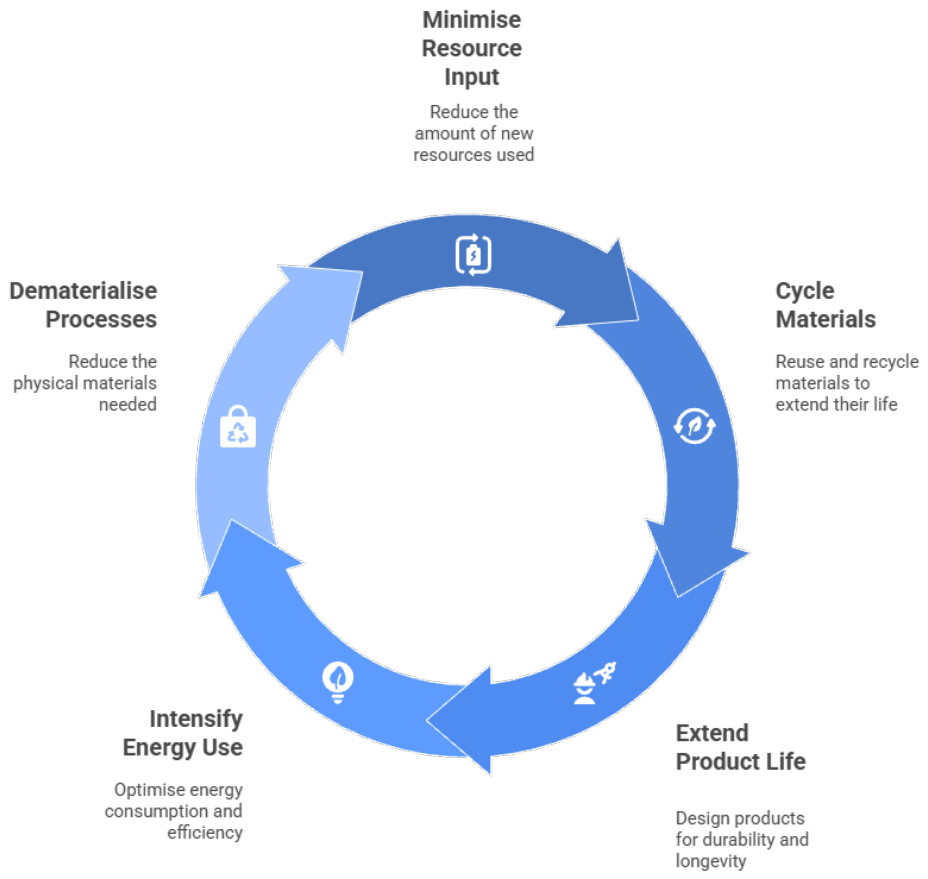
The circular economy (CE) literature is grounded in foundational work that conceptualises circularity as a systemic shift from linear production models toward regenerative and closed-loop systems. Early contributions emphasised resource efficiency, lifecycle thinking, and value retention as core principles, forming the basis for subsequent developments in circular business model research. Building on these foundations, more recent studies have expanded the concept to include digital integration, governance mechanisms, and sector-specific applications. The CE has evolved as a transformative model for sustainable growth, demonstrating a systematic change away from the traditional linear model of “take, make, dispose” in favour of regenerative and restorative production and consumption (
Figure 1). At its core, the CE supports the design of closed resource loops that prioritise waste reduction, reuse, and the restoration of natural capital systems [
10,
11]. Companies that implement circular strategies can simultaneously minimise environmental impacts, lower manufacturing costs, enhance resource efficiency, and unleash new sources of economic advantage. The CE thus goes beyond environmental stewardship and is increasingly seen as a generator of innovation, resilience, and long-term corporate value [
12].
The CE is founded on three core principles driven by design, including eliminating waste and pollution, circulating products and materials at their highest value, and regenerating nature. These principles provide opportunities for businesses and other societal actors to contribute to sustainable development and create harmony between the economy, the environment, and society. These opportunities are dependent on systematic societal changes taking place [
14,
15]. However, the successful implementation of CE principles is dependent on a complex combination of internal company dynamics and external enabling conditions [
16]. Internally, leadership commitment, innovation capacity, and stakeholder involvement play critical roles in influencing how circular principles are integrated into business operations. Among them, environmental, social, and governance (ESG) disclosure has emerged as a critical internal tool for increasing accountability and transparency. Companies use ESG reporting to articulate their environmental and social performance, demonstrating alignment with sustainable development goals and fostering trust among investors, regulators, and the general public [
10,
12].
The rise of circular business models (CBMs), which are organisational frameworks designed to capture value through resource circulation, product life extension, and regenerative design, has been a key enabler of circular change. Building on this foundational literature, recent research classifies CBMs into archetypes such as resource efficiency, produce-on-demand, renewable inputs, product-as-a-service, and resource recovery models [
17,
18,
19,
20]. These archetypes show different methods for generating and maintaining circular value. Resource efficiency models emphasise process optimisation as a means of reducing energy and material use. The replacement of pure materials with recycled or renewable inputs is emphasised by circular input models. Product life extension models use recycling, remanufacturing, repair, and reuse to extend the useful life of products. Through stakeholder integration, digital or institutional infrastructures, and coordination mechanisms, models enabled by platforms and governance promote circularity. When combined, these archetypes offer an organised framework for examining how businesses implement circular economy concepts at the business model level [
21].
Empirical evaluations show that many organisations use hybrid CBMs, which combine different paradigms, such as leasing systems and materials recovery, to maximise environmental and economic gains [
22]. A rising frontier in this sector is feature-based or digital CBMs, which incorporate ESG and sustainability goals directly into platform structures. For example, digital marketplaces now include sustainability features like user-driven recycled material selection, lifecycle traceability dashboards, and clear reporting interfaces, all of which can improve ESG performance [
23].
Despite these advancements, CBM research still faces theoretical and practical challenges. A literature review of 256 CBM-related research studies demonstrated that important variables such as reverse logistics, value retention, and lifecycle management are defined and operationalised differently, resulting in a fragmented theoretical environment. Furthermore, whereas CBM adoption is growing globally, empirical validation is primarily centred in developed economies [
24]. According to a recent systematic review of 107 studies, institutional voids, limited financing, lack of regulation, and technological limitations are significant barriers to implementation in emerging and developing countries, often more restrictive than technical challenges themselves [
25].
To address these gaps, scholars have strengthened the theoretical foundations of CBMs by connecting them to systems theory, dynamic capabilities, and competitive advantage. [
26], for example, argues that CBMs are a systemic repositioning of a company within its broader value ecosystem, rather than an isolated sustainability initiative. This approach positions circularity as a designed modification of how value is created, delivered, and received, reinforcing the interdependence between environmental responsibility and corporate competitiveness.
Current research highlights the necessity of expanding circularity to encompass social and governance aspects in addition to material and environmental flows [
6]. According to [
27,
28], social circularity is the continuing regeneration and reintegration of human and social capital within economic systems. This includes worker adaptation, continuous skill development, supplier competence building, and long-term employability. Social sustainability, on the other hand, is mainly concerned with upholding moral labour standards and respectable working circumstances. Simultaneously, governance circularity refers to the institutional and strategic mechanisms, such as integrated reporting, board-level sustainability monitoring, ESG-linked incentives, and stakeholder engagement structures, that facilitate and maintain circular practices. Governance circularity incorporates circular concepts into organisational decision-making and strategic alignment, in contrast to governance sustainability, which prioritises transparency and compliance [
18,
29]. Together, these dimensions move circularity from a resource-based approach to a systemic organisational structure, where environmental, social, and governance mechanisms collectively enable circular business model evolution.
While recent studies provide valuable extensions, many are context-specific or focused on emerging applications, often without fully engaging with the foundational theoretical principles of circular economy and business model innovation. This creates a fragmented knowledge base where newer contributions are not always systematically integrated with established theory. In summary, while the literature on CE and CBMs has grown significantly, it still struggles with issues of clarity, adaptability, and integration with complementary fields such as ESG and digital transformation. This intersection, where circularity meets ESG, provides an opportunity to advance both research and corporate practice. The following section investigates the growing connection between ESG, sustainability, and strategic disclosures as tools for promoting systemic business transformation.
2.2. ESG and Strategic Disclosures
ESG frameworks have grown significantly in recent years, as global stakeholders demand increasing transparency and accountability for corporate non-financial performance. ESG reporting includes standardised metrics that measure environmental, social, and governance issues, allowing investors, regulators, and civil society to assess and compare enterprises’ sustainability practices [
2,
30,
31]. ESG frameworks make it easier to make evidence-based decisions and identify risks by turning complicated sustainability frameworks into quantitative metrics. However, many ESG disclosures remain compliance-oriented and rigid, geared to meet external regulations rather than catalyse internal transformation [
32]. As [
33] point out, organisations frequently treat ESG as a checklist exercise rather than integrating its concepts into strategic and operational operations. This instrumental adoption reduces ESG’s revolutionary potential, making it a formal obligation rather than a value-creation mechanism.
Nonetheless, the expanding use of ESG frameworks has sparked criticism. Researchers highlight difficulties such as reporting fatigue, greenwashing, and a lack of standardisation and comparability among ESG disclosures. Many companies deliberately report favourable metrics while missing indicators that reveal serious environmental or social risks, compromising the credibility and utility of ESG reports. Evidence from circular economy disclosure research suggests that larger and more profitable firms are more likely to reveal circularity-related ESG data, owing to increased stakeholder scrutiny and legitimacy demands. Smaller firms, on the other hand, may suffer capacity and knowledge constraints that limit the depth and quality of disclosure. This gap highlights persisting differences in ESG participation across company size, sector, and region [
34].
A recent and promising development in the ESG area is the integration of digital technologies into sustainability reporting and the improvement of company performance. Studies of Chinese companies demonstrate that implementing generative artificial intelligence (AI) and other digital technologies greatly improves ESG performance, acting as a bridge between technology capabilities and sustainability outcomes. Such findings point to an emerging pattern in which technology-enabled ESG serves as both a reporting tool and a catalyst for operational transformation. When used correctly, digitalisation can improve data quality, automate metric extraction, and reveal hidden risks and opportunity patterns in ESG datasets [
35,
36].
In sum, the ESG landscape is undergoing a key transition from static, compliance-based reporting to dynamic, technology-enabled, strategy-driven sustainability management. However, many organisations continue to be misaligned with the deeper systemic changes required for large-scale sustainability [
37]. To close this gap, ESG frameworks must progress from disclosure tools to fundamental components of strategic business re-design, an area increasingly defined by circular economy thinking and innovation-led business model transformation.
However, when considering the intersection between ESG disclosures and circular economy transitions, important conceptual and empirical gaps remain. Despite these advancements, opinions on whether ESG metrics can accurately predict the rise of circular business models remain divided. While some research indicates that ESG disclosures represent significant strategic transformation and sustainable integration, others contend that these disclosures are still primarily compliance-driven and unrelated to real operational change. This conflict draws attention to a significant flaw in current research, which is that ESG measurements are frequently viewed as reporting tools or performance indicators without seriously evaluating their capacity to reflect more profound business model transformation.
Additionally, a large portion of the research now in publication either takes a strictly conceptual approach to circular business models or a descriptive investigation of ESG reporting procedures, with little integration between the two. Because of this, the connection between ESG disclosures and circular business model paths is still poorly understood, especially when it comes to the methodical application of empirical ESG data to pinpoint incremental and industry-specific circular transitions.
2.3. Digital AI Enablers for ESG–Circular Integration
The rapid merging of digital technologies and sustainability frameworks marks a defining shift in how organisations operationalise environmental, social, and governance responsibility. In this approach, the integration of AI, Machine Learning (ML), Internet of Things (IoT), and other digital technologies has emerged as an important driver for aligning CE principles with ESG performance objectives [
38,
39]. These technologies serve as the missing link between sustainability goals and their practical implementation, enabling data-driven insights, predictive optimisation, and transparency across value chains [
39,
40].
Recent reviews of AI and ML applications in CE contexts highlight their ability to improve decision-making in areas such as reverse logistics, waste management, recycling efficiency, and manufacturing optimisation. AI makes it easier to develop self-improving circular systems that reduce waste and optimise resource flows by automating data processing and enabling adaptive learning [
41,
42,
43]. However, as noted in the literature, the relationship between these AI-driven circular processes and ESG outcomes remains underexplored [
44]. Most existing research focuses on operational benefits rather than explicitly tying technological advancements to measurable ESG metrics or corporate disclosure frameworks [
45]. In contrast, AI-driven methods increasingly enable qualitative ESG disclosures to be transformed into structured datasets, addressing the limitations of traditional ESG reporting, which is often narrative and fragmented.
Beyond industrial applications, AI has the ability to transform strategic reporting and ESG–circular alignment. Natural language processing (NLP) and text-mining techniques are increasingly being used to analyse sustainability and ESG disclosures, revealing latent themes, gaps, and cross-domain relationships [
46,
47]. Using these methods, researchers may map the extent to which corporate ESG narratives align with circular economy practices, particularly in innovation-driven sectors. For example, AI-driven textual analytics have been used to assess the level of circular strategy adoption among emerging enterprises, providing significant insights into the maturity and dissemination of circular–ESG integration [
48,
49]. However, most of these studies continue to focus on early-stage users or small-scale businesses, leaving large enterprise applications and cross-industry comparisons remaining unexplored.
Adoption of AI improves ESG disclosure quality, comparability, and decision usefulness in corporate reporting situations, according to additional empirical data. [
9] evaluate the effect of AI deployment on ESG reporting methods using econometric modelling and firm-level panel data. According to their findings, AI improves operational efficiency as well as the formalisation and structure of ESG data, which makes disclosures more comparable, consistent, and analytically useful. Similarly, multilevel panel structural equation modelling (SEM) is used in a new longitudinal study on companies in emerging economies to analyse how AI capabilities, ESG practices, and environmental performance outcomes interact. The findings show that rather than serving only as an operational tool, AI enhances ESG integration through better data coordination, governance processes, and performance monitoring. This demonstrates how AI may support ESG-driven sustainability results, even in complex and institutionally varied settings [
50].
Together, these studies show that AI contributes to ESG systems in two ways: first, by strengthening the integration of ESG practices into organisational decision-making processes, and second, by increasing the structure, quality, and comparability of ESG disclosures. Nevertheless, there is still a lack of research on the application of AI to convert ESG disclosures into structured datasets for identifying circular economy paths. Despite these challenges, the combination of digital technologies, such as AI, IoT, NLP, and blockchain, represents an important edge for ESG–circular integration. These technologies allow businesses to gather and analyse sustainability data in real time, increase disclosure quality, and connect operational changes to measurable ESG key performance indicators (KPIs) [
49,
51]. The next generation of ESG–circular systems will be dynamic, intelligent ecosystems capable of learning, adapting, and optimising towards regenerative results, rather than simply compliance. However, evidence-based data remains limited, particularly in demonstrating how digital investments translate into improved ESG and circular economy performance across sectors.
2.4. Conceptual Positioning and Research Opportunity
Although the integration of ESG principles, circular economy practices, and digital technologies has received growing attention, several critical gaps and inconsistencies persist in the literature [
52,
53]. These limitations reveal an urgent need for empirical, cross-sectoral, and theoretically grounded research that captures how organisations can transition from fragmented sustainability initiatives to cohesive, data-driven circular systems.
First, much of the existing ESG and circular economy research remains siloed and descriptive, with limited integration across disciplines. ESG research focuses on disclosure quality, stakeholder legitimacy, and investor communication, whereas circular economy research focuses on resource efficiency and material flows [
54,
55,
56]. As a result, the processes that connect ESG reporting, business circularity, and sustainability performance are mostly conceptual rather than proven using real-world data. This mismatch hinders the creation of coherent frameworks capable of directing industry-wide transformation [
53,
57].
Second, despite the growing interest in digital AI enablers, empirical evidence of their impact on ESG and circular outcomes is limited and fragmented. The majority of studies focus on single technologies or small-scale case studies, e.g., IoT in manufacturing, NLP for disclosure analysis, without establishing quantifiable relationships between digital adoption and ESG–circular performance indicators [
54,
58]. Furthermore, most of these studies focus on developed economies, leaving emerging markets underrepresented despite their unique regulatory, infrastructure, and socioeconomic dynamics [
10]. This geographical imbalance hinders the applicability of current findings and ignores the contextual problems of digital transition in the emerging markets.
Lastly, while CBMs offer a promising framework for integrating corporate strategy with regenerative principles, their relationship with ESG measures is underexplored. The current CBM literature focuses mostly on archetypes, which include product-as-a-service and resource recovery, without assessing how such models transfer into measurable ESG outcomes or impact disclosure practices [
21,
59]. Furthermore, there are few empirical studies on hybrid or digitally enabled CBMs, particularly those that use AI, IoT, or blockchain, indicating a significant opportunity for interdisciplinary research at the intersection of digital transformation, sustainability strategy, and business model innovation [
23,
24].
When taken together, these criticisms highlight a pressing research opportunity to develop an empirically grounded, theoretically integrated, and digitally enabled model that explains how ESG mechanisms, circular economy principles, and AI technologies co-evolve to drive sustainable business transformation. Addressing these gaps will not only enrich academic understanding but also provide actionable insights for policymakers and practitioners seeking to embed circularity and accountability into corporate strategy.
2.5. Theoretical Framework
This study draws on an integrated theoretical foundation combining Stakeholder Theory and Business Model Innovation (BMI) Theory to explain how organisations adapt their strategies, structures, and operations towards sustainable, circular, and digitally enabled models [
60]. Together, these models provide a holistic view of the ESG–circular integration process, integrating external legitimacy pressures with internal innovation capabilities. They lay the conceptual groundwork for investigating how companies address environmental and social limitations, respond to stakeholder expectations, and remodel their value architectures to fit with sustainability standards [
29].
2.5.1. Stakeholder Theory
Stakeholder Theory, proposed by Freeman in 1984, suggests that a firm’s responsibilities extend beyond maximising shareholder value to creating and sustaining value for a broad network of stakeholders, including customers, employees, suppliers, communities, regulators, and the natural environment. Within the context of ESG and circular economy transitions, this theory reframes corporate sustainability as a process of multi-stakeholder value creation rather than a risk mitigation or reputational exercise [
61].
The circular economy further expands this stakeholder lens by emphasising the entire material and product lifecycle, from production and consumption to reuse and regeneration, thereby involving non-traditional stakeholders such as recyclers, waste collectors, informal workers, and municipalities [
62]. Similarly, ESG frameworks operationalise these responsibilities through standardised metrics that measure how companies engage with stakeholder concerns related to labour practices, supply chain transparency, environmental impact, and community well-being [
37].
By applying Stakeholder Theory, this study interprets the ESG–circular transition as a strategic response to evolving societal expectations and legitimacy pressures. The theory explains why organisations increasingly incorporate circular and ESG principles into their business models in order to maintain their social right to operate while also meeting the ethical, regulatory, and environmental expectations of society. This dynamic is particularly evident in sectors such as consumer cyclical, agriculture, and basic materials, where consumer awareness, investor activism, and regulatory oversight intensify accountability demands [
13,
63]. Thus, this theory explains the “why” in the external and moral motivations behind ESG-driven circular transformation.
2.5.2. Business Model Innovation (BMI) Theory
Business Model Innovation (BMI) Theory offers an additional internal lens for understanding how organisations implement the transition from linear to circular systems. According to [
64], BMI involves rethinking how businesses create, deliver, and collect value, particularly in response to external pressures or technological disruption. In the framework of ESG and circular economy integration, BMI outlines how organisations transition from traditional, product-oriented structures to CBMs, including product-as-a-service, sharing, reverse logistics, and material recovery systems [
60].
However, ESG frameworks have traditionally focused on performance metrics like carbon intensity or diversity ratios, failing to account for the structural innovations that support sustainable value creation [
65]. This misalignment creates a measuring gap in which corporate ESG indicators may lag behind actual changes in business logic and organisational architecture. BMI Theory bridges this gap by viewing sustainability as an innovation process that is integrated into a firm’s operational and strategic development, rather than just an outcome to report. Integrating ESG principles into CBM development requires strategic innovation, new value propositions, and governance changes. Through this lens, circularity emerges as both an innovation pathway and a competitiveness strategy, aligning environmental regeneration with economic performance [
18,
19].
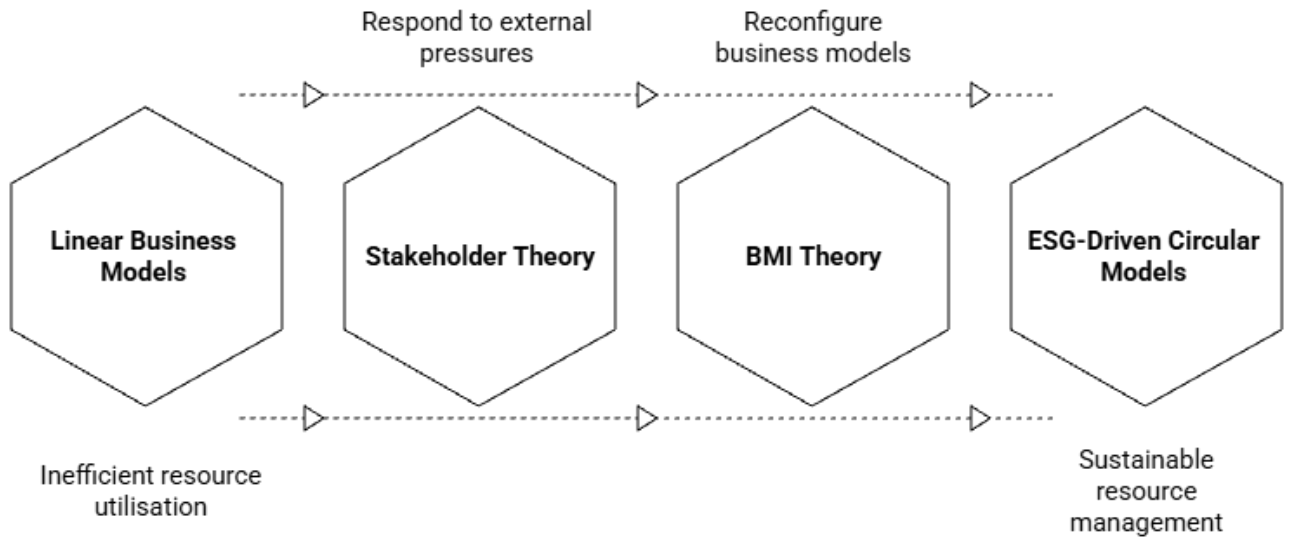
In summary, BMI Theory complements Stakeholder Theory by explaining how internal processes and design concepts enable organisations to rearrange resources, relationships, and technology in order to achieve ESG–circular alignment (
Figure 2). Stakeholder Theory focuses on external legitimacy and responsibility, whereas BMI Theory emphasises internal adaptation, innovation, and value regeneration. This integrated perspective enables us to understand ESG indicators as signals of developing business model innovation and circular transition pathways, rather than just disclosure measurements. The integrated framework provides a theoretical platform for examining how ESG analytics might uncover sector-specific pathways toward circular business model evolution by connecting stakeholder-driven sustainability constraints with organisational innovation processes.
In this study, the relationship between Stakeholder Theory and BMI Theory is operationalised through ESG disclosures, which serve as a bridge between internal transformation and external constraints. According to Stakeholder Theory, ESG indicators are understood as visible signals of how businesses react to societal pressures, legal obligations, and stakeholder expectations. In line with BMI Theory, variations and trends in these metrics over time are also seen as stand-ins for small changes in business model elements.
ESG disclosures can be analytically positioned as both reflecting and generative processes according to the integrated perspective, which is reflective of stakeholder-driven accountability pressures and generative of internal business model adaptation routes. From this perspective, ESG indicators can be used as empirical starting points to determine how businesses progressively align their operational procedures with the concepts of the circular economy. Therefore, by capturing how stakeholder-driven signals translate into innovation-led, sector-specific circular transitions, the interpretive mapping approach used in this study connects ESG performance patterns to circular business model archetypes. The interpretation of sectoral ESG patterns, where variations in disclosure intensity and structure are examined in connection to stakeholder demands and incremental business model adaptation routes, is additionally guided by this integrated perspective.
3. Methodology
The methodology of this study is grounded in two theoretical foundations: Stakeholder Theory and BMI Theory. These theories collectively explain why and how companies embed circularity and sustainability principles within their ESG strategies. Together, these theories form the conceptual outline for the ESG–circularity framework, guiding both data interpretation and methodological design.
By integrating Stakeholder Theory into ESG–circularity analysis, this study interprets corporate disclosures not merely as reporting tools but as indications of multi-stakeholder discussion. This means that indicators that will be extracted from the disclosures are seen as communication tools that operationalise stakeholder responsiveness [
66]. The strength and consistency of these disclosures provide insight into how companies align sustainability performance with stakeholders. Applying BMI Theory allows the methodology to link quantitative ESG metrics to qualitative transformations in company-level strategy and innovation [
67]. This connection underscores that data-driven ESG indicators are not isolated performance metrics; they signal deeper shifts in business model logic.
Together, these theories provide a dual perspective, whereby one explains why firms disclose and act on sustainability metrics for accountability and legitimacy, while the other explains how firms operationalise sustainability through structural and strategic transformation. This theoretical alignment informs the methodological design, which is the ESG–circularity framework quantifies the E, S and G transformation while interpreting it through these dual theories. This integration positions ESG circularity not merely as a compliance exercise but as a strategic business transformation model that links stakeholder value creation, sustainable innovation, and regenerative economic systems.
3.1. Research Design
Grounded in these theoretical foundations, this study adopts a mixed-method analytical design combining longitudinal ESG data analytics with theory-guided interpretive mapping to translate quantitative ESG indicators into qualitative circularity pathways. The research design is structured into two sequential steps corresponding to the two research questions: (1) ESG data structuring and longitudinal sectoral analysis and (2) interpretive mapping of ESG indicators to circular business model pathways. The approach responds to calls for scalable, cross-sector methods capable of revealing how ESG evolution supports broader sustainability transitions, including circular business model emergence. The design integrates structured ESG panel data from 100 firms across five sectors (2014–2024), enabling sector-level comparison and temporal analysis of ESG performance and disclosure patterns. The selected period reflects the rapid expansion and standardisation of ESG reporting following the mid-2010s, allowing for consistent longitudinal analysis.
Analytically, this study integrates quantitative ESG analysis with interpretive mapping informed by circular economy theory. Interpretive mapping refers to a theory-guided analytical approach that connects empirical observations to conceptual constructs, enabling the identification of underlying patterns, relationships, and meanings in complicated datasets [
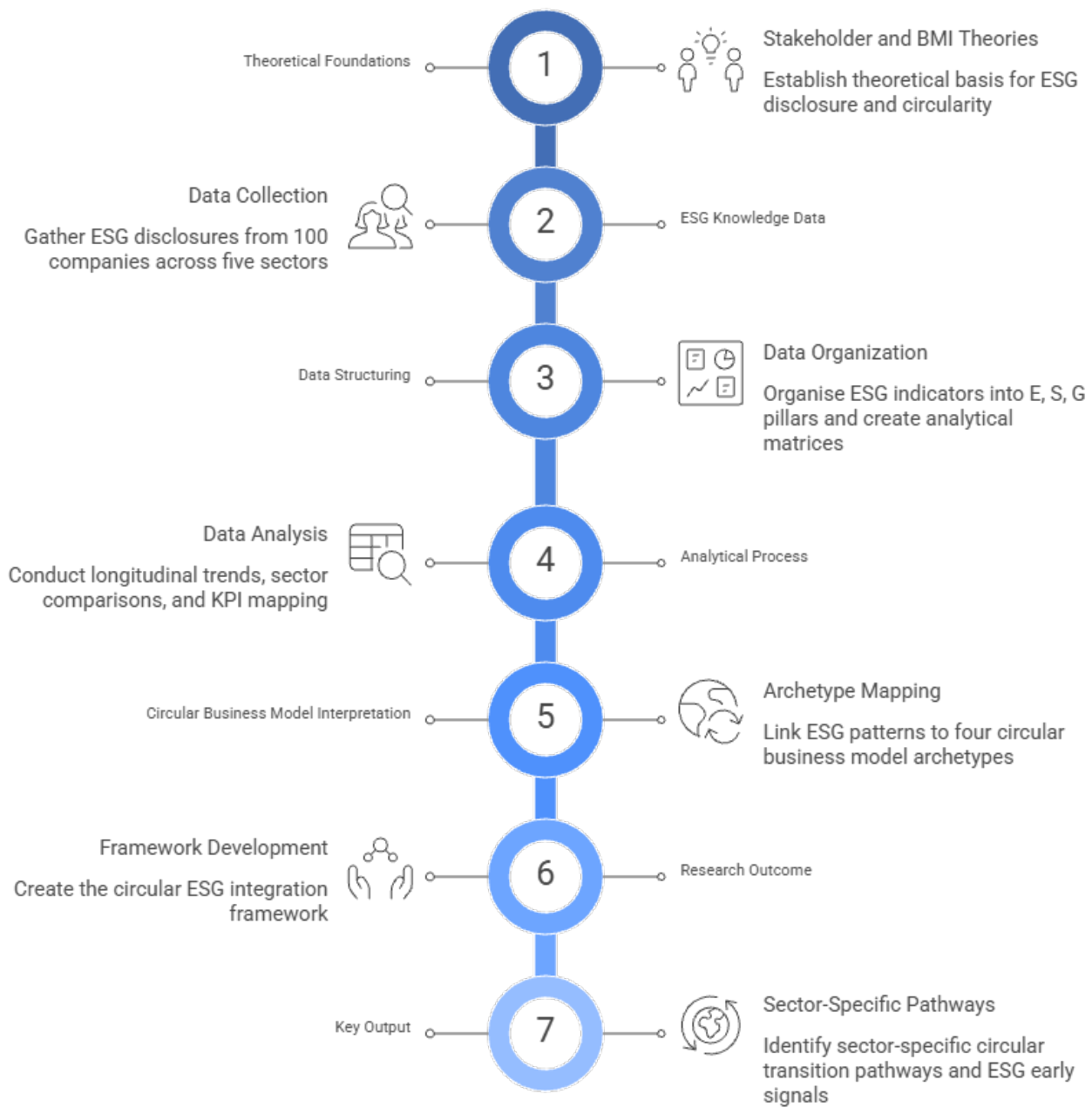
68]. In this study, quantitative ESG indicators are systematically linked to conceptual circular economy mechanisms, enabling the identification of patterns and pathways rather than direct causal inference. This approach allows ESG indicators to be interpreted as operational entry points for circular practices (
Figure 3).
While the sectoral scope, time period, and ESG indicator selection are methodologically justified, their combined application enables insights that extend beyond existing studies. By integrating multi-sector analysis with a longitudinal design and circularity-aligned ESG indicators, this study captures sector-contingent sustainability dynamics and transition pathways that are not observable in cross-sectional or single-sector ESG analyses. This integrated approach allows for a deeper understanding of how ESG disclosures relate to emerging circular business model patterns over time.
3.2. Sectoral Scoping and Data Sources
Five sectors, including mining, energy, consumer cyclical, healthcare, and technology, were purposively selected for their differing materiality profiles and circular economy relevance. Mining and energy are resource-intensive sectors due to their significant environmental effect and emphasis on resource efficiency and emissions reduction. Take-back, recycling, and product lifecycle management are all intimately related to the consumer cyclical sector. Technology and healthcare industries are crucial in promoting circularity through sustainable product creation, efficiency optimisation, and digital innovation, despite requiring fewer resources [
69].
The 100 companies in the sample were chosen from the Reuters ESG database based on industry representation, data accessibility, and consistency of ESG reporting from 2014 to 2024. Only companies with enough longitudinal ESG data to enable comparative research across several years and metrics were included. Sector classification ensures conformity with common industry groupings used in ESG research, and the dataset includes firms from multiple geographic regions, reflecting the global coverage of the Reuters ESG database and ensuring comparability across institutional contexts. However, it is important to note that the sample is skewed toward larger, publicly listed firms with established ESG reporting practices. As a result, potential biases, such as reporting bias and survivorship bias, may be present, as firms with incomplete or inconsistent disclosures were excluded from the analysis.
Structured ESG indicators were sourced from the Reuters database, which provides consistent, cross-company metrics used in empirical ESG research. The E, S and G metrics were cleaned, filtered, and standardised into a tidy longitudinal structure (company × sector × year × metric × value). KPI selection followed a theory-driven filtering process, in which only indicators directly associated with circular economy principles, such as resource efficiency, waste recovery, lifecycle management, governance integration, etc., were retained. Baseline years were determined empirically by assessing incomplete patterns and selecting the year with the highest non-null density per pillar (E: 2023; S: 2022; G: 2022). This ensured analytical robustness and reduced noise from inconsistent disclosure periods.
Companies were analysed within their respective sectors to reflect the sector-specific nature of ESG materiality and regulatory obligations. Two sets of matrices were constructed for each pillar:
These matrices enabled the identification of performance leaders, laggards, and characteristic ESG trajectories within each sector over the ten-year period. This formed the empirical basis for subsequent circularity and CBM mapping.
3.3. Circular Business Model Interpretation
CBM pathways were identified by linking sector-level ESG performance patterns to established circular economy mechanisms (e.g., closed-loop logistics, service-based delivery, material recovery systems) [
70]. Rather than measuring business model change directly, the study adopted a theory-guided interpretive mapping approach based on recognised CBM categories.
The CBM mapping process followed a structured, multi-stage analytical pipeline. First, ESG indicators were filtered to retain only those relevant to circular economy principles, including resource efficiency, waste management, lifecycle design, and governance integration. Second, these indicators were structured into company-level and sector-level matrices to enable longitudinal and cross-sector comparison. Third, sector-level ESG patterns were analysed over time to identify dominant sustainability characteristics. Fourth, these patterns were interpreted through circular economy mechanisms using a theory-guided interpretive mapping approach. Finally, the interpreted mechanisms were aligned with established circular business model archetypes (optimise, loop, regenerate, exchange).
This process did not directly observe business model transformation but instead identified plausible CBM alignment pathways inferred from ESG performance patterns. Sector-level ESG patterns were compared against these archetypes to identify alignment between ESG performance and potential circular pathways. This interpretive mapping approach ensured theoretical integration while maintaining empirical validity within the limits of available ESG data.
To improve methodological openness and consistency, the alignment of ESG indicators with CBM archetypes followed a structured, theory-driven assignment process instead of manual qualitative coding. ESG KPIs were initially screened according to their significance to circular economy concepts, encompassing resource efficiency, lifecycle extension, waste recovery, renewable input substitution, and governance integration. The dimensions, extracted from the recognised circular economy and CBM literature, served as analytical criteria for the systematic allocation of indicators to their respective CBM archetypes (optimise, loop, regenerate, exchange).
To maintain consistency, explicit assignment logic was implemented throughout the process. Indicators pertaining to emissions reduction, energy efficiency, and waste minimisation were uniformly understood as indicative of resource efficiency (optimise) pathways, whereas take-back initiatives, recycling programs, and lifecycle-oriented indicators were linked to product life extension and recovery (regenerate/loop) pathways. Governance-related indicators, including CSR committees, ESG-linked incentives, and stakeholder engagement tools, were interpreted as facilitating governance-oriented exchange pathways. The assignment process underwent iterative reviews across sectors and timeframes to guarantee internal consistency and conformity with theoretical definitions. This method embodies a theory-driven interpretive mapping process, wherein ESG indicators are regarded as empirical signals of prospective circular routes rather than as directly observed alterations of business models.
3.4. Framework Development
Findings from ESG evolution, sectoral comparison, and circularity mapping will be consolidated into an integrated ESG–circularity alignment framework. The framework will outline the sector-specific ESG maturity patterns, enabling digital mechanisms, circular entry points, and strategic pathways for companies seeking to transition toward circular operations. This result will provide both a theoretical contribution and actionable insight for practitioners and policymakers.
4. Results
The analysis focuses on identifying consistent and substantively meaningful longitudinal patterns across sectors, rather than formal statistical inference.
4.1. ESG Data Coverage and Scope
The final dataset comprised a ten-year longitudinal ESG panel (2014–2024) covering 100 firms across five sectors: mining, energy, consumer cyclical, healthcare, and technology. After KPI filtering, the environmental pillar contained 62 KPI (57,050 observations), the social pillar contained 28 KPIs (23,830 observations), and the governance pillar contained 46 KPIs (45,800 observations) (
Table 1). Sectoral representation remained stable across pillars, with 20 companies per sector, ensuring sufficient coverage for within-sector comparisons while preserving cross-sector variability.
Year-level consistency analysis revealed that ESG disclosure quality improves over time, although unevenly across pillars. Environmental KPIs reached their highest overall consistency in 2023, while social and governance KPIs peaked in 2022. These years were therefore selected as baseline reference points for subsequent matrix construction and sectoral benchmarking, reducing bias arising from missing data and inconsistent reporting cycles.
4.2. KPI Consistency and Disclosure Patterns
KPI-level consistency analysis demonstrated consistently high disclosure rates for governance and policy-oriented indicators across all sectors. In the environmental pillar, indicators related to emissions accounting, waste reduction initiatives, recycling activities, environmental management systems (e.g., ISO 14000 [
71]), and sustainable product initiatives exhibit accuracy rates exceeding 94%, indicating strong reporting maturity in compliance-oriented and narrative-driven metrics.
Similarly, the social pillar demonstrates high accuracy for occupational health and safety policies, training measures, supplier ESG programmes, and labour standards, suggesting that firms prioritise formalised human capital disclosures over outcome-based social performance metrics. Governance indicators display the strongest overall accuracy, particularly those associated with board committee structures, ESG oversight mechanisms, succession planning, and audit independence (
Table 2). Across pillars, KPI accuracy varies more strongly by indicator type than by sector, suggesting that disclosure practices are shaped primarily by regulatory alignment and reporting norms rather than sector-specific operational characteristics.
4.3. Sector-Level ESG Evolution (2014–2024)
4.3.1. Environmental Disclosure Evolution
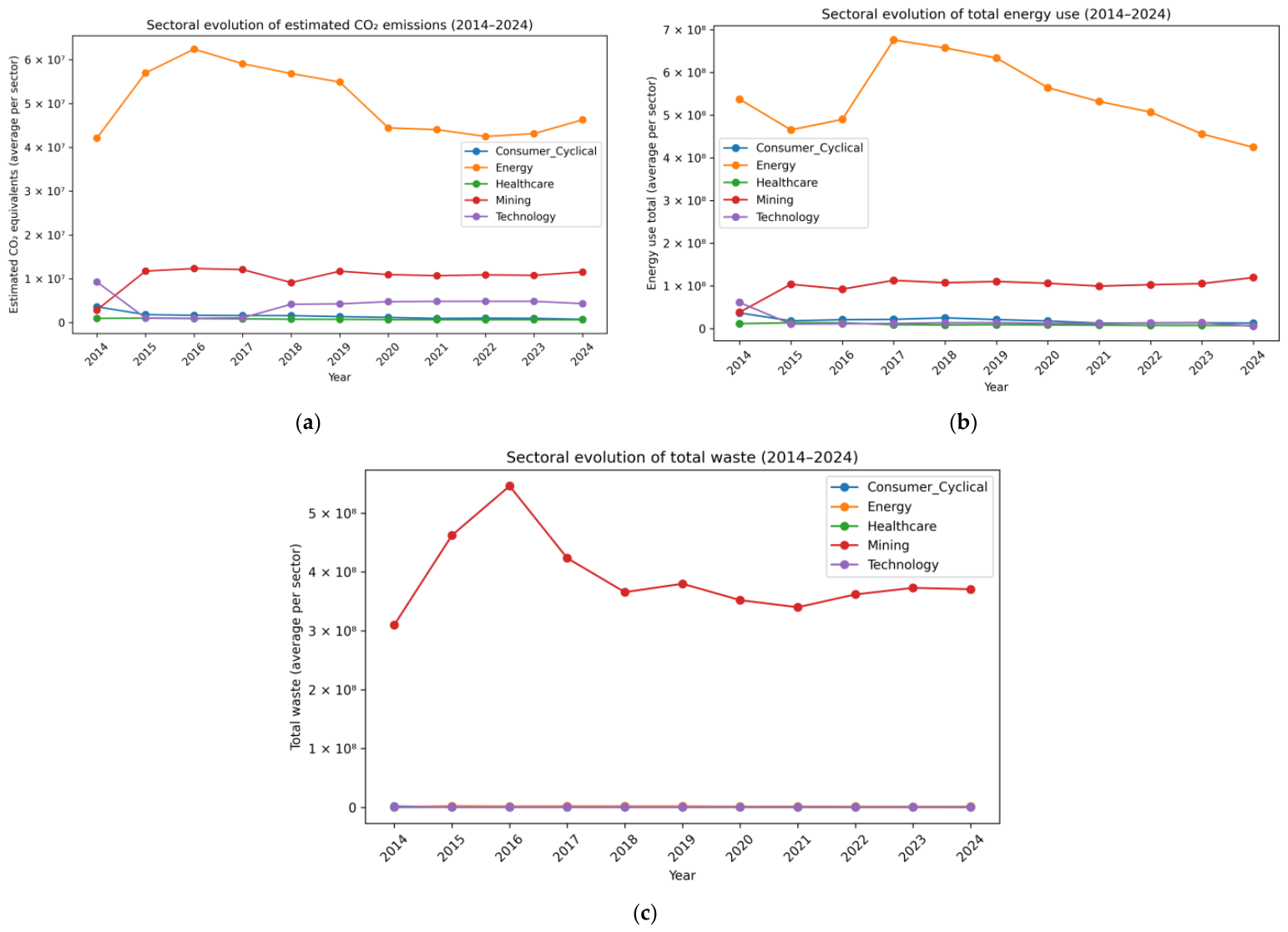
Sectoral trend analysis revealed divergent ESG trajectories across sectors. Across the 2014–2024 period, energy and mining consistently dominate CO
2 output, reflecting the carbon-intensive nature of upstream extraction and fossil fuel-based operations. The technology, consumer cyclical, and healthcare sectors maintain significantly lower emission levels, demonstrating relatively stable trends with mild fluctuations. A slow increase in 2024 for energy suggests either increased reported activity, improved measurement, or actual operational expansion, highlighting ongoing transition challenges (
Figure 4a).
For the total energy use KPI (
Figure 4b), energy production records the highest total energy use, followed by mining, and they both display a gradual decline after 2019, which can indicate improvements in process efficiency or fuel switching. However, mining shows a slight increase in 2024, which can be signalled by sector-specific events or reporting tools. The other three sectors show much smaller energy footprints, with slight downward adjustments over time that align with digitalisation and improved operational efficiency (
Figure 4c). Then, the total waste generation in
Figure 4c is dominated by the mining sector, where its values are of a higher magnitude than the other sectors. Mining waste peaks in 2016, then stabilises with moderate variation through 2024. Other sectors show minimal waste volumes, reinforcing that environmental pressure points are sector-specific and driven by industry structure rather than firm behaviour alone.
4.3.2. Social Disclosure Evolution
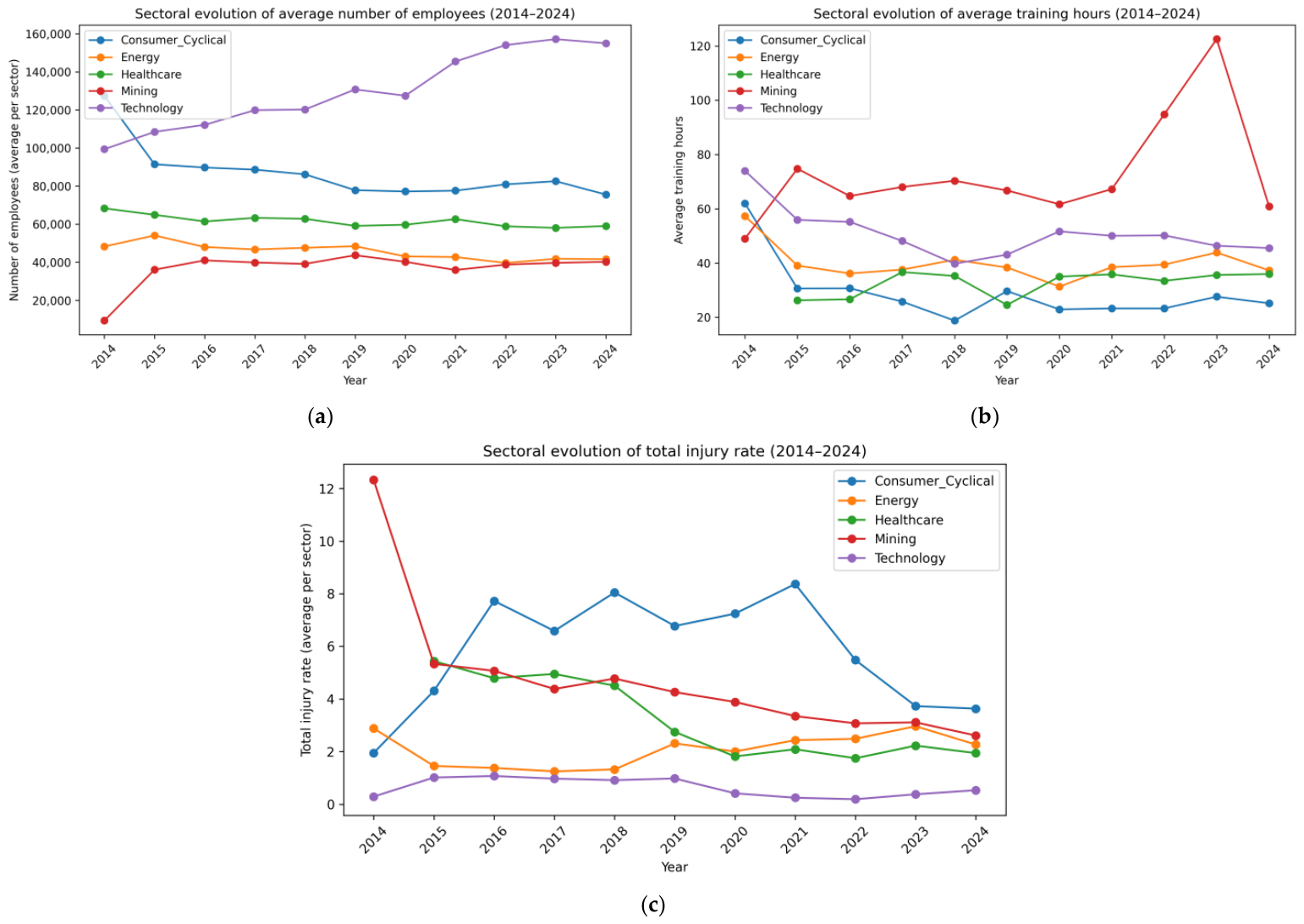
In
Figure 5a, for the average number of employees, technology demonstrates the strongest employment growth, expanding from approximately 100,000 to nearly 200,000 on average per company cluster. Consumer cyclical experiences a steady decline after 2014, suggesting retail automation, supply chain restructuring, or labour rationalisation. Healthcare and energy are relatively stable throughout the years, while mining remains relatively stable with slight fluctuations. In
Figure 5b, training behaviours show sector-specific investment priorities, wherein mining significantly increases training hours after 2020, suggesting an upskilling push driven by mechanisation and safety requirements. Consumer cyclical maintains relatively low and stable training hours, while technology and healthcare maintain moderate levels but do not increase over time. This illustrates a divergence between digital-skills-intensive sectors and more traditional labour-intensive sectors. In
Figure 5c, mining begins with the highest injury rates but shows systematic long-term reductions, indicating better safety controls. Consumer cyclical maintains higher injury variability, peaking around 2018–2021. Energy and healthcare show mid-range, stable patterns with small declines. Technology maintains the lowest injury rates, consistent with lower physical exposure. Overall, the downward trend across sectors signals improvements in occupational health and safety over the decade.
4.3.3. Governance Disclosure Evolution
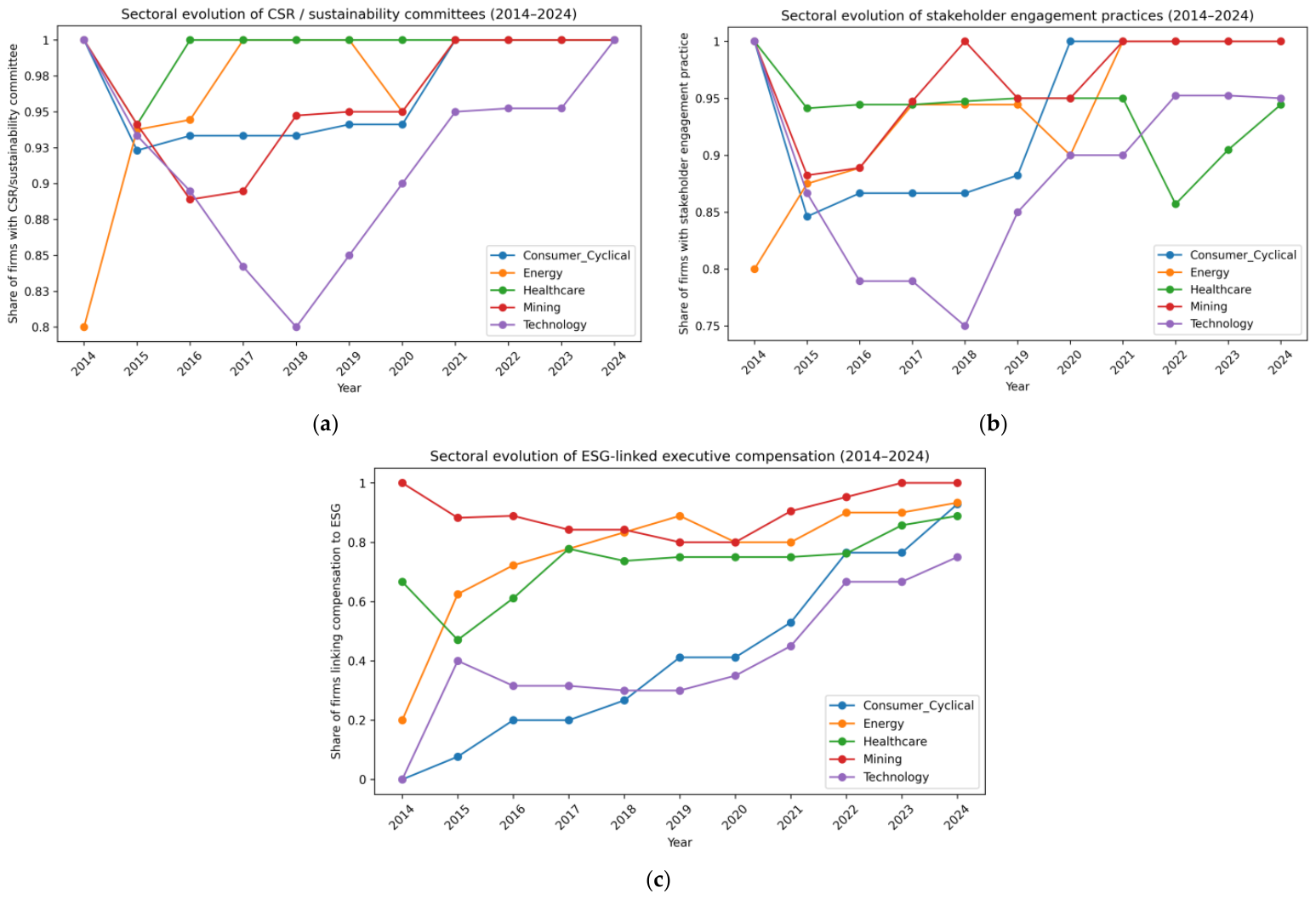
Across all five sectors, CSR/sustainability committees rise sharply after 2015 and reach near-universal adoption by 2021–2024. Healthcare reaches full adoption earliest, while technology shows a temporary dip between 2016 and 2018 before catching up (
Figure 6a). This indicates a structural shift toward formal ESG oversight across corporate governance systems, irrespective of sector.
Figure 6b demonstrates that engagement practices start strong across all sectors in 2014, suggesting prior institutionalisation. After a brief decline, notably in technology and energy, all sectors converge upward again, reaching near-total adoption by 2024. This reflects growing regulatory and reputational pressures for transparent stakeholder processes.
Figure 6c shows ESG-linked executive compensation, which demonstrates the clearest long-term governance transformation. Mining starts surprisingly high in 2014, then normalises downward before climbing again. Energy and healthcare display a consistent upward trajectory, stabilising by 2024. Consumer cyclical and technology start low but show rapid acceleration from 2018 onward. By 2024, all sectors are better at KPI adoption, signalling mainstream integration of ESG into executive incentives.
In summary, the findings demonstrate significant sectoral differentiation in the emergence of ESG. Environmental disclosures are dominated by high-impact sectors like mining and energy, which represent the materiality of emissions, energy use, and resource intensity within their core activities. Lower-impact industries, such as technology and healthcare, on the other hand, show steadier or decreasing environmental trends across time, which are compatible with efficiency improvements, service-oriented business models, and less direct environmental exposure. Technology companies show employment growth and continuously low injury rates within the social pillar, underscoring the influence of human-capital-intensive business strategies on social outcomes. Significant increases in safety and training KPIs are demonstrated by mining companies, indicating that operational risk management and regulatory pressure are important factors influencing social performance. On the other hand, worker contraction occurs in consumer cyclical firms, which can be due to supply chain restructuring, automation, and cost optimisation. In governance, ESG structures achieve near-universal adoption by 2024, which suggests that governance maturity develops more quickly and steadily than environmental or social results, serving more as a foundation for institutional compliance than as a source of competitive ESG differences.
4.4. Circularity KPI Mapping
Circularity was operationalised through ESG indicators that directly reflect resource loops, capability renewal, and strategic integration. Circular economy indicators were established based on widely accepted circular economy frameworks to map KPIs (
https://ec.europa.eu/eurostat/web/circular-economy/database (accessed on 14 December 2025)). Environmental circularity KPIs captured material efficiency, waste recovery, renewable inputs, product lifecycle design, and take-back systems. Social circularity focused on workforce capability regeneration, supplier ESG training, occupational safety, and employment continuity. Governance circularity was measured through board-level sustainability oversight, CSR committees, SDG alignment, and executive ESG incentive structures. Companies were classified as circularity reporting leaders based on consistent KPI presence within each pillar, enabling firm-level and sector-level benchmarking without reliance on composite ESG scores.
Table 3 presents a summary of the circularity-aligned KPIs mapped with the circular economy indicators, showing that environmental circularity indicators dominate reporting completeness, while social and governance circularity metrics remain largely policy-oriented rather than performance-driven.
4.5. ESG Leadership Profiles
A company is classified as a circularity KPI reporting leader if it shows high and consistent disclosure across circular-relevant ESG KPIs. Firm-level benchmarking reveals distinct ESG–circularity leadership patterns across the data. Environmental circularity reporting is dominated by technology companies, with Accenture, Apple, SAP, and Infosys exhibiting consistent disclosure of waste reduction, renewable energy use, and lifecycle-oriented KPIs (
Table 4). Healthcare firms such as Roche and AstraZeneca also feature prominently, reflecting structured environmental management systems. Social circularity leadership is more evenly distributed, with firms across technology, healthcare, energy, and mining reporting workforce training, safety systems, and supplier ESG engagement indicators. Governance circularity reporting shows broad adoption of CSR committees and integrated ESG oversight structures, with Accenture, Roche, SAP, and Rio Tinto demonstrating cross-pillar governance alignment (
Supplementary Tables S3 and S4). When ESG pillars are combined, only a limited subset of companies, most notably Accenture and Roche, exhibit consistent reporting across environmental, social, and governance circularity-relevant KPIs, indicating differentiated circular business readiness at the firm level.
4.6. Linking ESG Leaders to Circular Business Model Archetypes
To assess how ESG leadership aligns with circular economy strategies, firm-level ESG results were mapped to established CBM archetypes (
Table 5). Rather than asserting business model transformation, this analysis identifies observable alignment pathways between ESG performance and circular business model logic. Four CBM archetypes were considered, consistent with the circular economy literature [
73,
74]:
Optimise: resource efficiency and optimisation;
Loop: Circular Inputs and Renewable Substitution;
Regenerate: product life extension and recovery;
Exchange: Governance-Enabled Circular Platforms.
Table 5.
ESG leadership and alignment with CBM archetypes.
Table 5.
ESG leadership and alignment with CBM archetypes.
| Company | Sector | Dominant Circular Business Model Archetype | KPIs |
|---|
| Accenture | Technology | Resource Efficiency and Governance-Enabled Platforms | Low CO2 emissions, renewable energy use, ESG-linked incentives, CSR committee |
| SAP | Technology | Resource Efficiency and Circular Inputs | Energy efficiency, green capex, clean energy products, integrated ESG strategy |
| Roche | Healthcare | Resource Efficiency and Product Life Extension | Waste recycling, lifecycle analysis, sustainability governance |
| Puma | Consumer Cyclical | Product Life Extension and Recovery | Take-back initiatives, recycling programs, sustainable product design |
| Repsol | Energy | Circular Inputs and Transition Pathways | Clean energy products, green capex, governance oversight |
| Rio Tinto | Mining | Resource Efficiency and Governance-Enabled Platforms | Waste recycling, emissions management, sustainability committees |
4.6.1. Resource Efficiency and Optimisation
Firms exhibiting consistently low emissions, reduced energy use, and effective waste management align most strongly with the resource efficiency archetype. Technology firms such as Accenture, SAP, Infosys, and Apple, as well as healthcare firms including Roche and AstraZeneca, demonstrate sustained performance advantages in these indicators. These results suggest that operational efficiency and digital optimisation form the dominant circular pathway for these sectors.
4.6.2. Circular Inputs and Renewable Substitution
Alignment with circular input substitution is observed primarily among firms reporting high renewable energy usage, green capital expenditure, and clean energy products. Energy and technology sector firms such as Repsol, SAP, Infosys, and Accenture show relatively stronger alignment with this archetype, indicating transition-oriented circular strategies focused on input substitution rather than product-level circularity.
4.6.3. Product Life Extension and Recovery
The product life extension archetype is most evident among consumer cyclical firms. Companies such as Puma and Nike demonstrate strong performance in take-back initiatives, recycling programs, eco-design, and product responsibility indicators. These firms exhibit circularity pathways centred on extending product lifecycles and recovering post-consumer value rather than purely reducing operational footprints.
4.6.4. Governance-Enabled Circular Platforms
Across all sectors, governance-related indicators, such as CSR committees, ESG-linked executive incentives, integrated sustainability strategies, and SDG alignment, form a foundational enabler for circular strategies. Firms including Accenture, SAP, Roche, and Rio Tinto consistently report governance structures that support sustainability integration. However, governance alignment alone does not distinguish circular leaders, highlighting its role as an enabler rather than a differentiator.
Table 5 summarises the alignment between firm-level ESG leadership and dominant circular business model archetypes. The results indicate that ESG leaders do not converge toward a single circular configuration. Instead, firms align with sector-contingent circular pathways, with technology and healthcare firms emphasising efficiency-driven circularity, consumer cyclical firms prioritising product life extension and recovery, and energy and mining firms exhibiting transition-oriented and governance-enabled circular strategies.
Overall, the results indicate that ESG leadership aligns with distinct, sector-contingent circular business model archetypes rather than a uniform circular transformation pathway. Technology and healthcare firms primarily align with efficiency-driven circular models, consumer cyclical firms with product-based circularity, and energy and mining firms with transition-oriented and governance-supported pathways. These findings underscore the importance of sector context in shaping feasible circular strategies and caution against generalised circular economy prescriptions. Additionally, it is important to note that the observed ESG patterns reflect disclosure intensity and reporting behaviour rather than direct measures of operational sustainability performance or realised circular transformation.
5. Discussion
5.1. Sector-Level ESG Evolution Patterns
The longitudinal analysis of ESG indicators from 2014 to 2024 reveals that ESG evolution is incremental, sector-specific, and uneven across pillars, rather than uniform. Environmental indicators, particularly energy use, emissions, and waste-related metrics, exhibit gradual improvement in consumer cyclical, technology, and healthcare sectors, indicating an incomplete isolation of operational development from its impact on the environment. In contrast, energy and mining sectors display greater variability and consistently higher overall environmental impact, reflecting structural reliance on resource-intensive operations and exposure to product cycles and changes in regulations.
Significantly, beyond 2020, there is an increase in energy efficiency and carbon reduction, particularly in the consumer cyclical and technology industries. The view that ESG performance reacts to both internal strategy and external stakeholder expectations is reinforced by this shift, which is consistent with increased global climate commitments, investor scrutiny, and supply chain decarbonisation demands. Waste-related improvements, including recycling and take-back recycling initiatives, are especially common in consumer cyclical businesses because of their closer proximity to final customers and the reputational risk associated with packaging, product disposal, and e-waste.
Significantly less variance between sectors is shown in social and governance metrics. By 2022, health and safety rules, CSR committees, and stakeholder engagement systems were widely adopted, indicating institutional convergence toward minimal ESG requirements. However, outcome-oriented social measures, including injury rates, are nevertheless inconsistent, especially in sectors with high operational demands. Together, these trends imply that social and governance indicators increasingly reflect legitimacy and compliance rather than strategic advantage, while environmental indicators are the primary driver of ESG differentiation.
Overall, emissions, energy use, and regulatory pressure dominate the high-impact, resource-intensive ESG profiles of the mining and energy industries. Lifecycle management, recycling, and customer-facing sustainability measures are the driving forces behind consumer cyclical firms’ product-centric ESG trends. Efficiency-driven ESG profiles with reduced environmental intensity, stable operational footprints, and robust governance integration are found in the technology and healthcare industries. These trends show that rather than being consistent across industries, ESG evolution is structurally determined and sector-contingent.
5.2. ESG Leadership
Firm-level benchmarking further highlights the concentration of environmental leadership within the technology and healthcare sectors. Firms such as Accenture, SAP, Infosys, Apple, Roche, and AstraZeneca consistently outperform sectoral averages on emissions, energy efficiency, and selected circularity-related indicators. By contrast, social and governance leadership is broadly distributed across sectors, reinforcing the interpretation that governance structures are necessary but insufficient conditions for superior environmental outcomes.
Companies that show consistent environmental improvement typically have solid governance baselines, according to cross-pillar comparison. This supports the idea that governance mechanisms, such as integrated sustainability plans, ESG-linked incentives, and board monitoring, serve more as enabling infrastructures than as direct performance drivers. However, especially in structurally resource-intensive companies, the existence of governance institutions by itself does not ensure better environmental results. This result emphasises against using governance disclosure as a stand-in for significant sustainable change.
5.3. Linking ESG Leadership to Circular Business Model Archetypes
This study’s main contribution is the empirical connection between ESG leadership patterns and CBM archetypes, without claiming complete business model transformation. The findings demonstrate that instead of moving toward a single circular design, ESG leaders align with several sector-specific circular pathways. As demonstrated by their low carbon intensity, energy efficiency, and waste reduction, technology and healthcare companies are primarily in line with resource efficiency and optimisation models. These companies propose an efficiency-driven route to circularity by utilising digitalisation, process optimisation, and governance integration to lessen their environmental effects.
Consumer cyclical firms, including Puma and Nike, align more strongly with product life extension and recovery archetypes, as reflected in take-back initiatives, recycling programs, and eco-design indicators. In contrast, energy and mining firms primarily exhibit transition-oriented and governance-enabled pathways, focusing on circular inputs, clean energy products, and oversight structures rather than closed-loop product systems. Importantly, rather than full CBMs, these patterns show the existence of CBM enablers. The idea that circular transformation is a sector-specific and path-dependent process is reinforced by the gradual emergence of circularity through ESG-aligned operational practices and governance systems. These results are in line with earlier studies showing that the adoption of circular business models is path-dependent and sector-contingent [
19,
73]. This study, like [
74], concludes that organisations align with different archetypes based on operational constraints and strategic priorities rather than converging toward a single circular model. Additionally, there is evidence that digitalisation and process optimisation play a major role in facilitating circular transitions, which is supported by the predominance of efficiency-driven paths in the technology and healthcare industries.
5.4. Implications for Stakeholder Theory and BMI Theory
The results highlight how stakeholder prominence, pressure, and proximity influence the adoption of ESG and circularity from the view of Stakeholder Theory. Due to increased exposure and reputational risk, consumer-facing industries show higher alignment with product-based circularity, whereas technology and healthcare companies respond to investor, regulatory, and professional stakeholder expectations through efficiency-driven improvements. Energy and mining companies prioritise transition-oriented strategies and solid governance due to the high regulatory and social scrutiny they face. By demonstrating that stakeholder pressures do not result in uniform ESG or cyclical reactions, these findings expand on the theory. Rather, corporations create distinct circular routes by addressing the most important stakeholder requests within their sectoral environment. Thus, ESG serves as a signalling and learning process mediated by stakeholders, allowing businesses to gradually align operations with stakeholder expectations while controlling structural and financial restrictions.
From a BMI perspective, the results challenge traditional methods of significant circular transformation. Firms display gradual BMI, where specific business model components, such as value creation efficiency, input sourcing, or governance structures, are modified over time. These small-scale adaptations are captured by ESG KPIs, which indicate how companies test circular practices without risking their primary revenue streams.
This aligns with BMI Theory, which emphasises gradual reconfiguration under uncertainty. Thus, ESG-based circularity is an evolution of an adaptive business model in which companies gradually test and incorporate circular components. Longer time frames may see the emergence of full CBMs; however, current research indicates that ESG serves as a pre-transformational foundation rather than a clear sign of a change in company strategy.
5.5. Toward a Circular–ESG Integration Framework
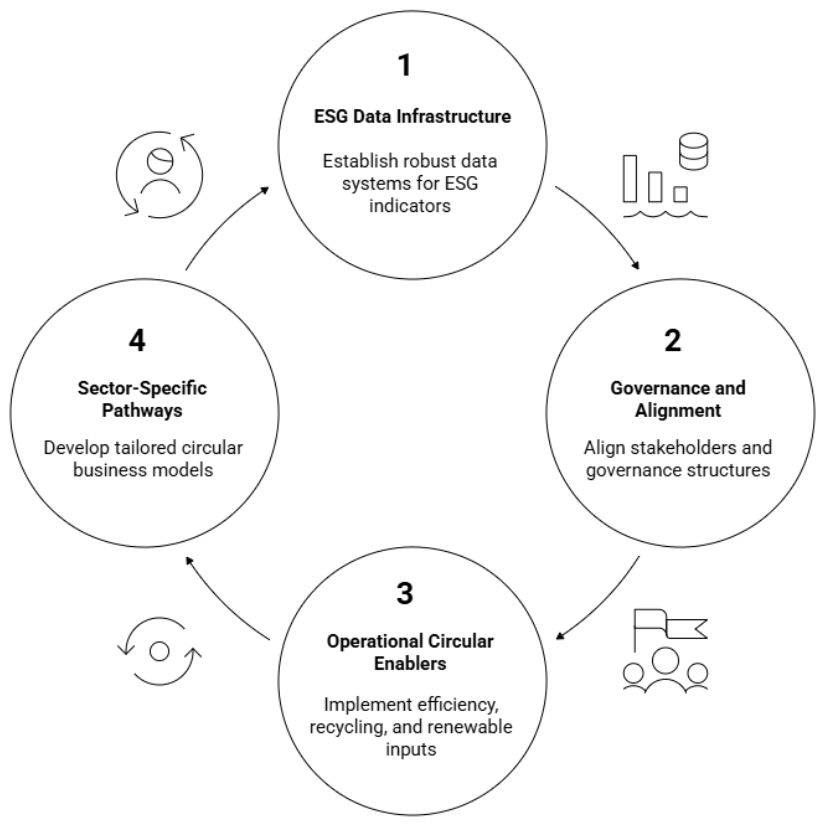
Building on these results, a framework for integrating ESG and circular business models can be developed (
Figure 7) that views ESG indicators as starting points and drivers of the development of circular business models. The system consists of four interrelated layers: ESG data infrastructure and disclosure; governance and stakeholder alignment mechanisms, operational circular enablers (efficiency, recycling, renewable inputs), and sector-specific circular business model pathways. The concept emphasises sector-specific pathways, where companies go through several circular paths depending on structural factors, stakeholder pressures, and governance ability, rather than prescribing uniform circular solutions. ESG indicators provide the empirical basis for diagnosing readiness, tracking progress, and identifying feasible circular interventions.
The proposed framework for integrating ESG and circularity has both theoretical and practical uses. It gives researchers a methodical technique to connect ESG metrics with circular business model paths, facilitating further empirical and comparative research. The framework provides practitioners and policymakers with a diagnostic and strategic tool to determine sector-specific circular entry points, evaluate ESG maturity, and create focused circular transition actions.
5.6. Implications and Recommendations
For managers, the findings suggest that circularity should be pursued through strategically aligned ESG KPIs rather than disruptive or premature business model changes. With the help of ESG analytics, companies are able to identify realistic circular entry points aligned with existing operations, such as improving resource efficiency, enhancing product recovery mechanisms, or replacing inputs. Then, governance mechanisms can be used to prioritise these initiatives, align incentives, and manage stakeholder expectations. Managers should therefore view ESG systems as decision support tools for gradual circular transition rather than as compliance-driven reporting exercises.
For policymakers and regulators, the results advise against one-size-fits-all circular economy standards. Sector-specific policy frameworks that recognise differentiated circular pathways are more likely to support meaningful and sufficient transition. Enhancing the comparability, consistency, and outcome-orientation of ESG disclosures, especially for circularity-relevant KPIs, can further improve the ability of investors, regulators, and firms to assess circular readiness and progress. Circular business model evolution may therefore be indirectly accelerated by policies that support high-quality ESG data infrastructure.
To operationalise and implement circular strategies utilising ESG data, companies might adopt a systematic, indicator-based decision-making approach. Initially, companies should identify high-consistency ESG KPIs applicable to their sector (e.g., energy consumption, waste minimisation, governance supervision) as dependable entry points for circular initiatives. Secondly, these indicators must be aligned with pertinent circular processes, like resource efficiency enhancements, product lifecycle prolongation, or renewable input replacement, contingent upon sector-specific attributes. Third, companies should emphasise incremental implementation by concentrating on operationally viable measures, such as strengthening energy efficiency, broadening take-back systems, or augmenting supplier ESG participation, instead of pursuing comprehensive business model transformation.
Fourth, governance frameworks incorporating ESG-linked incentives, board supervision, and stakeholder engagement methods should be employed to integrate and expand these activities into organisational strategy. Ultimately, companies must consistently track ESG indicator changes over time to evaluate success, enhance interventions, and recognise developing circular routes. This method allows organisations to transition from static ESG reporting to dynamic, data-driven execution of circular strategies that correspond with sector-specific restrictions and possibilities.
The applicability of the proposed framework is subject to several boundary conditions. It is most relevant in contexts where consistent and structured ESG data is available, particularly among larger firms with established reporting practices. Additionally, sectoral differences in materiality and operational structure influence the feasibility of circular pathways; therefore, the framework should be applied in a sector-sensitive manner. Finally, as the analysis is non-causal and based on disclosure data, the framework should be interpreted as a decision support and diagnostic tool rather than a prescriptive model of circular transformation.
6. Limitations
This study presents several limitations that should be acknowledged. First, although it adopts a longitudinal design spanning from 2014 to 2024, ESG data availability remains uneven across years and indicators. While baseline years were selected to minimise missing data bias, temporal inconsistencies may still affect the robustness of certain trend analyses. Second, this study employs a theory-guided interpretive mapping approach to link ESG indicators with circular economy mechanisms and CBM archetypes. Although this method allows for the identification of meaningful patterns and pathways, it does not establish causal relationships between ESG performance and business model transformation. Thirdly, this study focuses on five sectors chosen for their relevance to circular economy transitions. This focus enables detailed sectoral comparison but may limit the generalisability of findings to other industries with different materiality profiles.
Furthermore, the dependence on Reuters ESG data as the primary data source is inherently biased towards large, publicly traded companies with superior disclosure standards. Consequently, smaller enterprises and organisations functioning in less structured reporting contexts may be underrepresented. The dataset also demonstrates enhanced representation of developed markets and companies with established ESG reporting frameworks, potentially constraining the applicability of findings to emerging market contexts where disclosure practices, regulatory conditions, and resource limitations vary considerably. In addition, the exclusion of firms with incomplete or inconsistent ESG disclosures may introduce survivorship bias, favouring firms with more stable and mature reporting practices. Therefore, the findings should be regarded as reflective of ESG–circularity trends among relatively established reporting organisations, rather than a thorough representation of all firms across global or emerging economies.
Future research could address these limitations by incorporating primary data sources to more directly validate CBM adoption. Furthermore, integrating causal analytical techniques and expanding both sectoral and geographic coverage would enhance our empirical understanding of the relationship between ESG performance and circular economy practices.
7. Conclusions
In conclusion, this study reveals that while ESG evolution offers a useful, data-driven basis for developing circular business models, it should not be seen as a stand-in for complete circular transformation. Stakeholder pressure, governance capability, and incremental business model innovation define sector-specific, ESG-aligned pathways that lead to the emergence of circularity. The study provides a more practical, operational, and evidence-based knowledge of how businesses move toward circular economy principles over time by empirically connecting ESG indicators to circular business model archetypes.
Beyond identifying sectoral and firm-level ESG leadership patterns, the study contributes by reframing ESG not merely as a reporting or compliance mechanism but as a strategic learning and coordination infrastructure that enables gradual reconfiguration of business model components. The findings highlight that ESG indicators serve as early signals of circular readiness, allowing firms and stakeholders to observe where efficiency gains, recovery practices, and governance alignment create feasible entry points for circular initiatives. This perspective moves the circular economy discourse away from idealised end-state models toward measurable transition pathways, grounded in empirical evidence and sensitive to sectoral constraints.
By highlighting how stakeholder-driven ESG pressures and governance mechanisms interact to generate gradual, path-dependent circular development, the study provides a significant contribution to the literature on business model innovation and Stakeholder Theory. Instead of undergoing a uniform transition, businesses follow a variety of circular paths that are influenced by the institutional environment, value chain position, and industry structure. This insight highlights the importance of aligning ESG analytics, governance design, and strategic experimentation when advancing circular economy objectives. As ESG data infrastructures continue to mature, the integration of ESG analytics with circular business model theory offers a promising foundation for future research and practice aimed at accelerating sustainable and economically viable transitions.