1. Introduction
The accelerating degradation of the natural environment has led to a marked increase in the frequency and intensity of unusual weather patterns and climatic anomalies. Phenomena such as sustained temperature rises, sea-level expansion, intensified storm systems, and widespread wildfire events now pose formidable threats to both energy infrastructure and the broader fabric of societal functioning. These challenges are becoming increasingly significant [
1]. The systemic implications of climate-related hazards have therefore emerged as a central priority within financial market analysis, drawing considerable scrutiny from both practitioners and policymakers [
2,
3]. As documented by the Intergovernmental Panel on Climate Change (IPCC), the consequences of shifting climatic conditions have been observed across virtually every scientific discipline and throughout all components of the climate system. The term “climate change” encompasses the ongoing upward trajectory of mean global temperatures, the progressive warming of the planet, the escalation of severe weather systems, and a rising incidence of catastrophic episodes—notably coastal inundation driven by higher sea levels, prolonged agricultural dry spells, riverine and surface flooding, and hazardous thermal extremes that disrupt ecosystems across the globe. The interdependence between economic and financial networks and environmental equilibrium is profound, leaving these systems exposed to the compounding repercussions of sustained climatic shifts. As a result, a broad cross-section of industries has directed considerable research effort toward understanding the ramifications of climate-related hazards [
4]. Climate risks, whether through physical harm, evolving market conditions, policy constraints, or reputational challenges, present significant difficulties for businesses and can lead to substantial financial losses.
Within this context, the energy industry stands out as especially exposed to both the tangible physical damages and the structural transition pressures brought about by shifting climatic patterns. Escalating heat levels, prolonged water scarcity, and catastrophic flooding events routinely interfere with energy generation capacity and distribution logistics. At the same time, regulatory frameworks designed to curb carbon emissions are propelling an accelerated worldwide pivot away from fossil-based energy carriers. Such transformations carry far-reaching consequences not merely for commodity pricing within energy markets but also for the broader financial architecture that underpins energy-related investment, production financing, and risk valuation. Furthermore, frequent climate disasters have introduced inevitable risks to energy supply, potentially impacting the energy market [
5,
6]. Meanwhile, various greenhouse gas emission reduction measures have been adopted to mitigate climate risks [
7]. The energy structure has been optimized, and the proportion of renewable energy consumption has increased [
8,
9]. Measures addressing climate change have notably influenced the dynamics of the energy market, reshaping both supply structures and demand patterns [
10].
To counter these threats, China has pursued an ambitious agenda of expanding clean energy capacity and developing sustainable financial instruments. Official statistics reveal that the proportion of non-fossil energy in China’s total primary energy consumption climbed from 15.5% in 2013 to 25.9% by 2023, signaling a decisive structural pivot toward greener energy sources. This trajectory reflects sustained improvements in the alignment between energy generation practices and ecological preservation goals, which has facilitated the growth of an energy-efficient economy. Such developments have simultaneously enhanced the synergy between energy production and environmental stewardship, while also transforming the operational landscape of both conventional energy and green finance markets vulnerabilities. Statistical data indicate that the share of new energy consumption in China has experienced significant growth, rising from 15.5% of total energy use in 2013 to 25.9% by 2023. This energy consumption shift reflects a structural transformation of the national energy mix toward cleaner and low-carbon sources. The compatibility between energy production and ecological sustainability has improved substantially, fostering the emergence of an energy-conserving society and further optimizing the overall energy consumption structure. These changes have improved the compatibility between energy production and ecological sustainability, while also reshaping the dynamics of energy and green financial markets.
During the last ten years, heightened recognition of planetary warming trends and the growing frequency of climate-driven catastrophes have refocused scholarly and practitioner attention on how climate-associated hazards propagate through financial and commodity markets [
11,
12]. Consequently, climate risk exposure has become an increasing concern for financial institutions, including asset managers and banks, particularly regarding asset allocation strategies and the management of loan portfolios [
13]. Concerns over both physical climate risks and transition-related uncertainties are increasingly influential in shaping how financial institutions assess investment opportunities and monitor corporate behavior [
14]. Simultaneously, the financial consequences of how green investment channels respond to shifting climate conditions have drawn considerable scholarly scrutiny. A notable regulatory insight from Hong et al. highlights that financial market participants’ limited familiarity with climate hazards may result in suboptimal adaptive responses [
15]. Regulators worry that this knowledge gap could result in inadequate risk assessment and management practices when addressing climate-related financial challenges. Moreover, the correlation between energy prices and extreme events is of paramount importance in energy finance studies. Events such as droughts and reduced rainfall have profoundly impacted energy price risks [
16]. It is anticipated that climate risks will also increase the frequency of extreme climate events [
17]. Beyond the uncertainties inherent in climate dynamics, the sample period has also been shaped by notable geopolitical upheavals—notably the military confrontation between Russia and Ukraine and the escalating tensions in the Middle East—which have amplified turbulence across global energy markets and heightened financial instability. While these episodes are acknowledged here as relevant macroeconomic context for the investigation window, they are not modeled as explicit control variables or dummies within the baseline econometric specification. Rather, their influence is captured implicitly via the observed market dynamics and volatility patterns embedded in the baseline econometric model as separate control or dummy variables. Instead, their potential effects are reflected indirectly through observed market dynamics and volatility captured in the empirical framework.
Although the scholarly literature on the interplay among climate risk, sustainable finance, and energy commodities has expanded substantially, several notable lacunae persist. Prior investigations tend to concentrate on aggregate-level effects while largely ignoring the differential behavior across distinct energy sub-sectors (such as fossil-based versus renewable sources) and heterogeneous categories of green bonds. Furthermore, scant attention has been devoted to the temporal evolution of these interconnections—specifically how they manifest across varying investment horizons or under conditions of severe market stress. These deficiencies constrain our capacity to fully comprehend the channels through which climate risk propagates across interlinked market structures. This study seeks to address several key questions: Are there differences in the risk transmission mechanisms between climate risks arising from various sources and international energy and green bond prices? Do income spillover effects between these variables differ in intensity when comparing short-term versus long-term horizons? While climate risks affect energy prices, do fluctuations in energy prices further exacerbate climate risks?
To bridge these identified research gaps, the present investigation adopts the generalized forecast error variance decomposition methodology advanced by Diebold and Yilmaz, applying it to evaluate the cross-market spillover dynamics among energy commodities, green bond instruments, and indicators of climate risk [
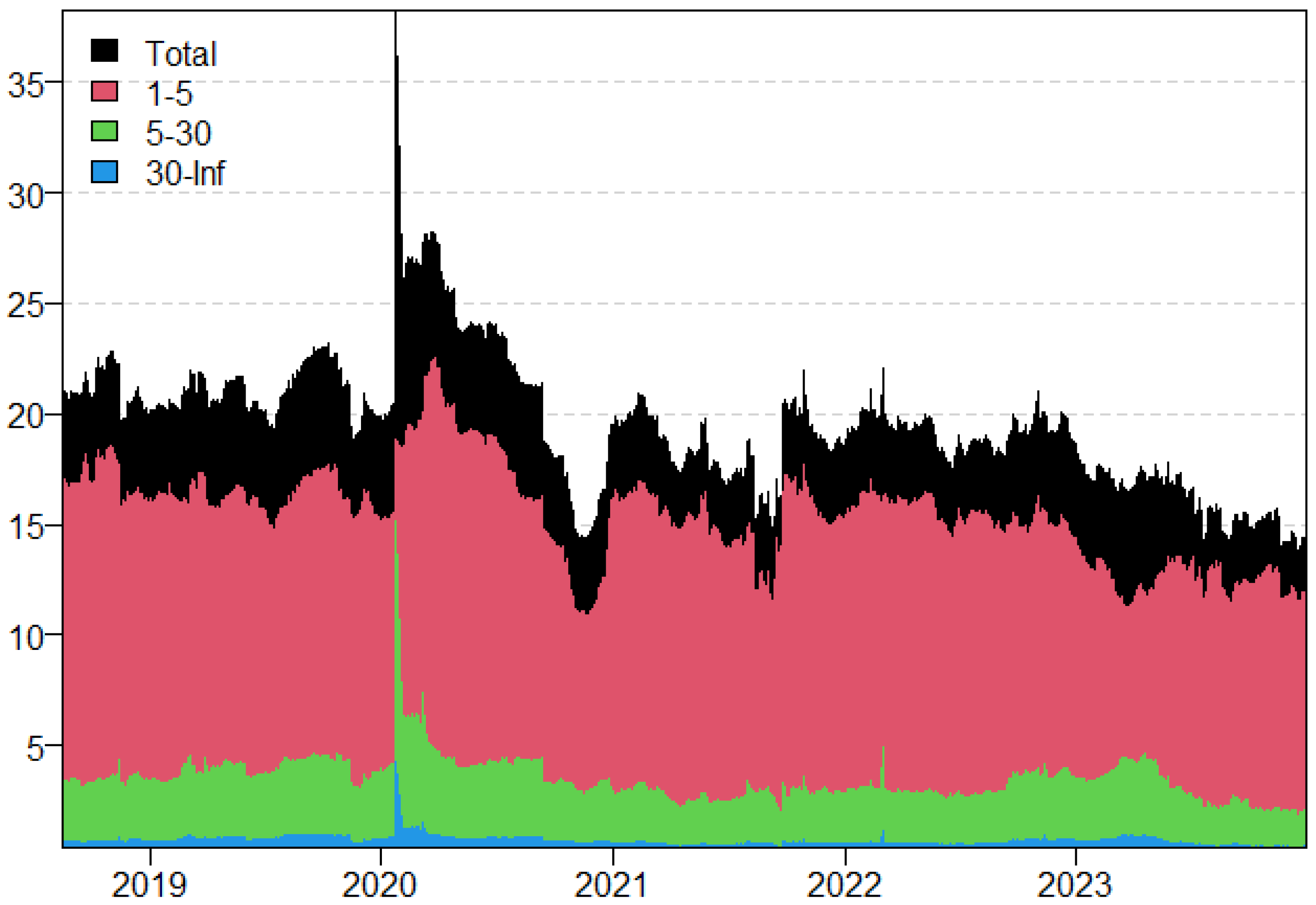
18]. Based on the empirical analysis, the approach developed by Baruník–Křehlík (BK) decomposes connectivity into long-, medium-, and short-term components, enabling a more nuanced evaluation of systemic risk during periods of market turbulence. Křehlik was employed to examine the changes in spillover-influencing factors across high, medium, and low frequencies [
19]. An empirical study was conducted to investigate the relationship between energy prices, green bonds, and climate risks during different periods. Additionally, we employed the quantile vector autoregression (QVAR) method to explore spillover effects under various quantile conditions, thereby revealing the time-domain and frequency-domain characteristics among these variables. This approach enriches the research methods for such issues and enhances our ability to respond to and mitigate climate risks more effectively.
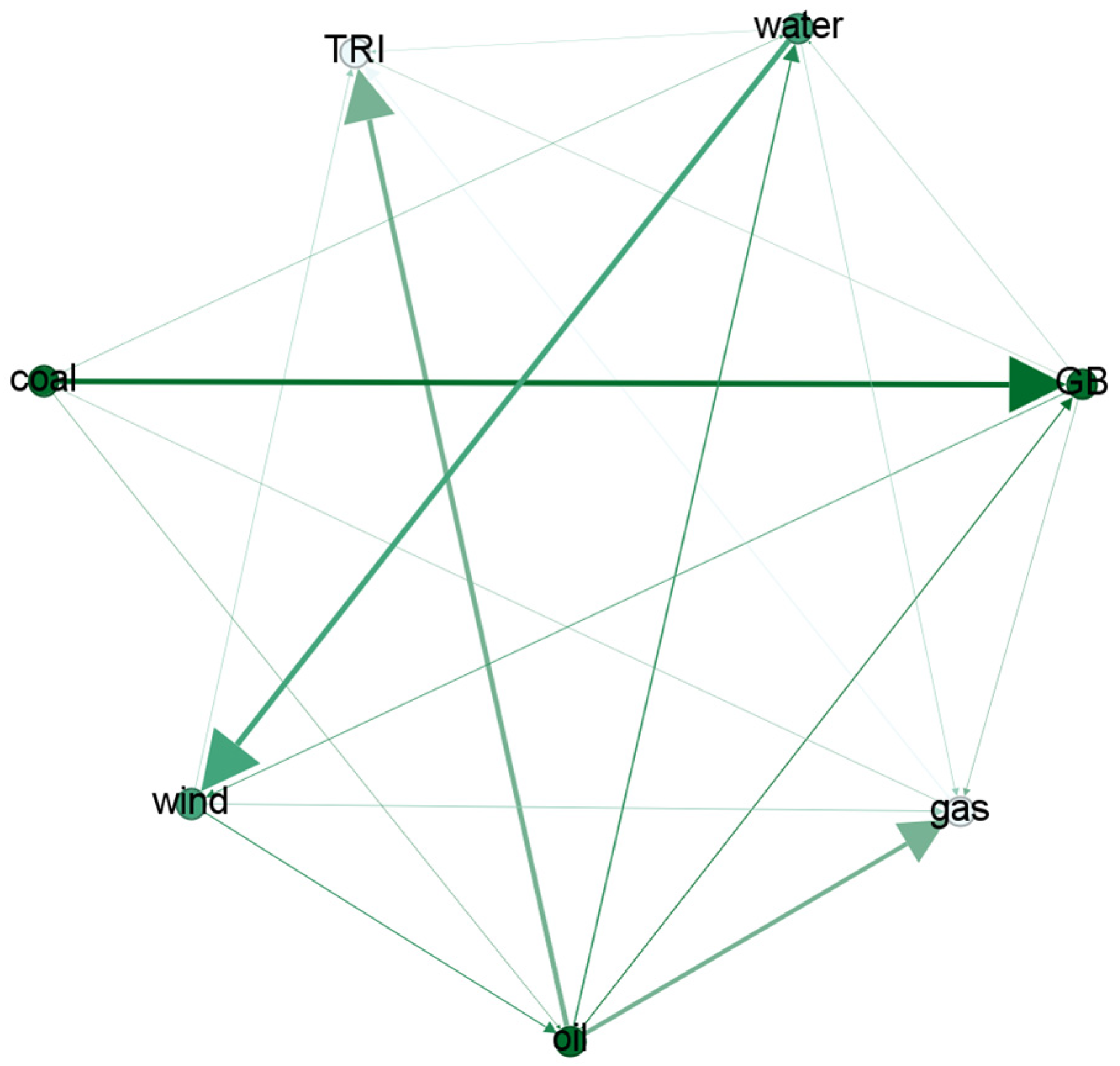
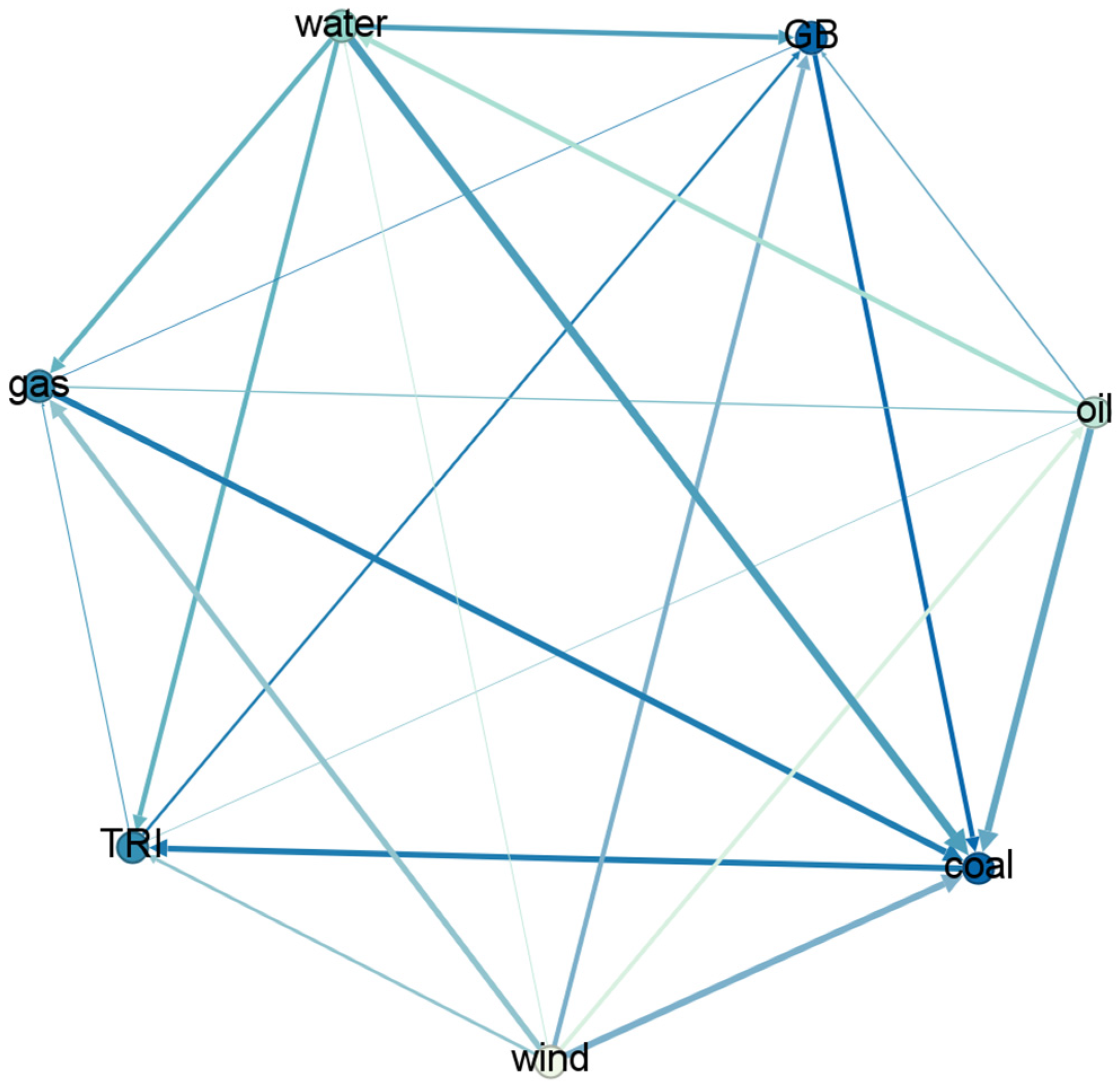
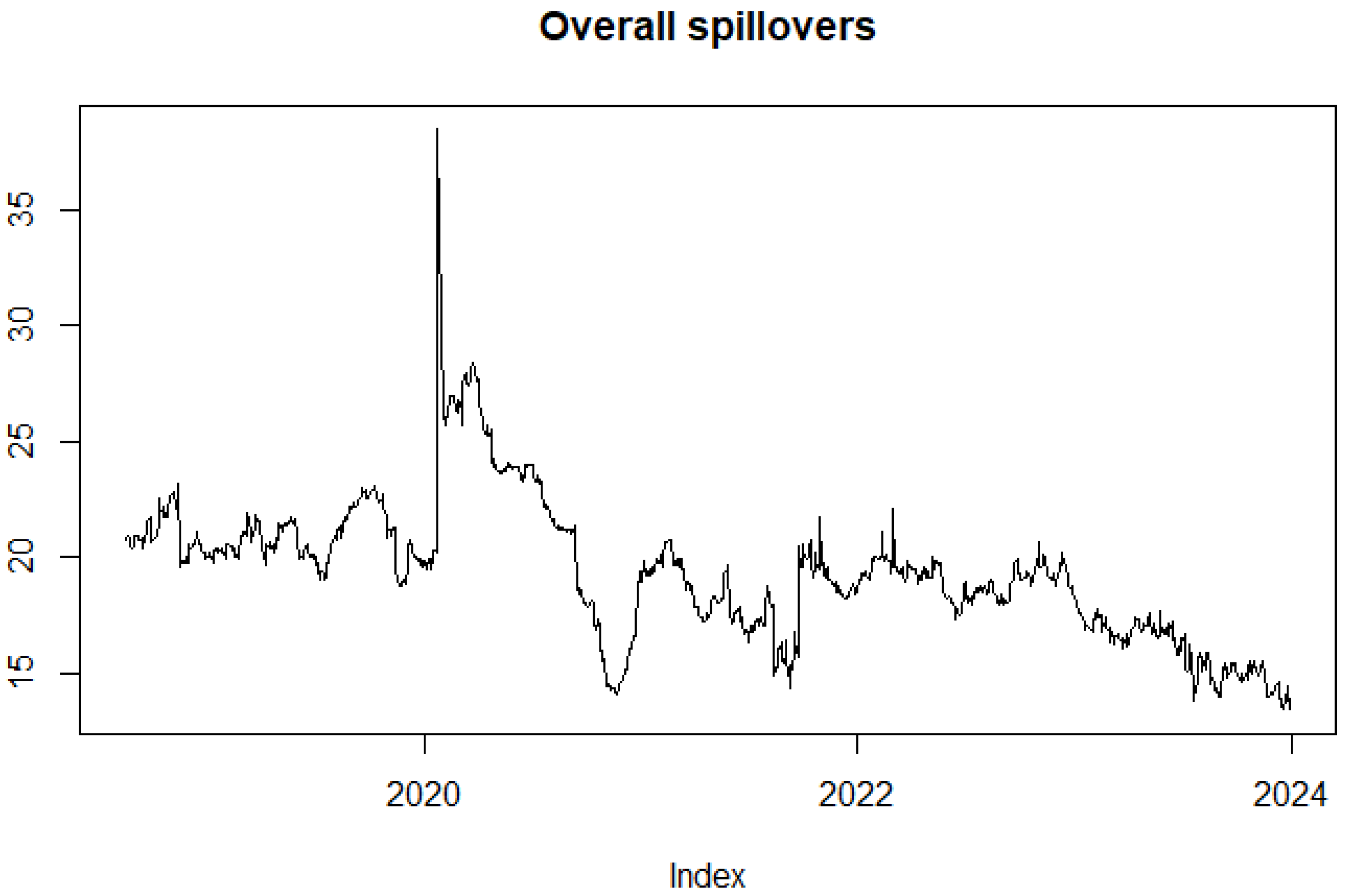
The principal contributions of this paper are threefold. In the first instance, it illuminates how cross-market linkages operate across varying spectral bands, thereby furnishing a more granular picture of inter-market dynamics. Specifically, the Diebold–Yilmaz (DY) framework is applied to gauge static spillover transmission among climate risk variables, energy sector indices, and green bond instruments. The analysis confirms that episodes of pronounced climate risk coincide with a notable elevation in the aggregate connectivity measure relative to tranquil market conditions. Complementing this, the Baruník–Křehlík (BK) method is employed to examine long-, medium-, and short-term connectivity, allowing for a detailed assessment of risks during market turbulence. Second, we use a quantile vector autoregression (QVAR) model to quantify spillover effects among climate risk, green bonds, and energy markets. Our analysis finds that the new energy market consistently exhibits relatively high risk spillover, highlighting its role as a major contributor to overall market risk. Furthermore, under median and extreme quantile transformations, the natural gas and coal markets demonstrate the most pronounced changes, with the net spillover index shifting from positive to negative, thereby acting as risk recipients. Third, our findings indicate substantially higher risk spillover effects in new energy markets. Notably, geopolitical events, such as the Palestine–Israel conflict, have influenced spillover dynamics across different time horizons, with short-term versus medium- to long-term responses varying among commodities. These heterogeneous responses reflect differences in supply chains, demand patterns, policy interventions, and degrees of financialization. Monitoring such changes is essential for investors to develop differentiated investment portfolios and optimize returns through frequency-based connectivity analysis.
The paper is organized as follows:
Section 2 reviews relevant literature,
Section 3 presents the research methodology,
Section 4 discusses empirical findings and
Section 5 concludes with policy implications.