Review

The Role of Blockchain Technology in Reducing Information Asymmetry and Enhancing Trust in Circular Construction


Faculty of Civil Engineering, University of Zagreb, 10000 Zagreb, Croatia
*
Author to whom correspondence should be addressed.
Sustainability 2026, 18(5), 2328; https://doi.org/10.3390/su18052328
Submission received: 3 January 2026 / Revised: 21 February 2026 / Accepted: 23 February 2026 / Published: 28 February 2026

Abstract

This paper explores the role of blockchain technology in reducing information asymmetry and improving trust in the context of circular construction. In the construction industry, especially when applying circular economy principles, many stakeholders suffer from lack of transparency and poor data sharing. This often causes mistrust and inefficient collaboration. Blockchain, as a decentralized and secure technology, can solve this problem by creating transparent, traceable, and immutable records of material flows, contracts, and processes. However, there is a lack of scientific evidence in understanding the blockchain’s role in building trust and reducing information asymmetry in circular construction. This study reviews recent literature where the blockchain is applied to circular construction, finds the current gaps, and proposes future directions for research on this topic. It identifies critical technical, organizational, and legal barriers while outlining a clear pathway for overcoming them. By addressing these challenges, the blockchain can evolve into a central enabler of circular, sustainable, and trustworthy construction, offering a decisive reference point for guiding adoption, standardization, and industry-wide implementation.

1. Introduction

Construction is one of the most resource-intensive sectors in the world and is responsible for high levels of material use and waste generation across building lifecycles [1,2]. The circular economy has become an important strategy to address environmental, social, and economic challenges in the construction industry. The circular economy represents a shift from the traditional linear “take–make–dispose” model toward an approach that aims to keep the value of materials and building components for as long as possible while reducing waste and environmental impacts [3]. In the construction industry, the circular economy is strongly linked to a lifecycle perspective and includes decisions made during design, construction, operation and maintenance, and end-of-life stages, as well as interactions between different actors in supply chains and institutions. The circular economy in construction is therefore not limited to recycling activities but is commonly implemented through several complementary strategies. These include narrowing resource flows by reducing the use of primary materials, slowing resource flows by extending the service life of buildings and components through durability and adaptability, closing material loops through reuse, remanufacturing, and recycling, and regenerating natural systems by using renewable resources and limiting harmful substances [3].
To support reuse, recycling, and recovery, clear information and trust between stakeholders are necessary. However, construction supply chains are usually characterized by fragmented data, low traceability, and strong information asymmetry [4]. These conditions reduce collaboration and make it difficult to achieve circular goals.
The concept of information asymmetry comes from the principal–agent theory, which describes a situation where a principal hires an agent to perform tasks on their behalf [5]. Information asymmetry plays an important role in decision-making and management in construction projects. Principal–agent theory is relevant to construction because many project participants act on behalf of others. In a construction project, the client is usually the main principal, while designers, contractors, supervising engineers, and project managers act as agents. In the same way, contractors act as principals to their subcontractors [6].
Information asymmetry refers to situations in which one party involved in an exchange possesses more or better information than another, leading to imbalanced decision-making and potential opportunistic behavior [6]. Because construction projects involve many participants and are highly complex, there are multiple principal–agent relationships. As a result, principal–agent problems often arise, especially when one party does not have full information about another party [6]. This means that information asymmetry exists in many project relationships and can cause problems in planning, execution, and overall project management. Information asymmetry can increase transaction costs, reduce trust, and create risks related to adverse selection, moral hazard, and hold up [6].
According to a survey of project managers, building trust between project participants is the main strategy for reducing information asymmetry risks in construction projects [7]. In project teams, trust strongly influences the quality of relationships between the involved parties [8]. When trust breaks down, it is often the result of opportunistic behavior by project participants [9].
In the context of construction projects, trust is a multidimensional concept that operates at different levels. Prior research [10,11] distinguishes between system-based trust, cognition-based trust, and affect-based trust. System-based trust refers to trust placed in impersonal structures such as institutions, digital platforms, or technological systems rather than in individual actors. It is grounded in the rules and performance of the system, which are expected to ensure reliable and secure operations. Cognition-based trust, by contrast, emerges from stakeholders’ assessments of their partners’ competence and reliability, developed through the consistent, accurate, and transparent exchange of information. Regular communication, progress reporting, and shared access to project data enable actors to evaluate performance objectively and foster confidence in collaborative arrangements. Affect-based trust originates from interpersonal relationships and emotional bonds, reflecting individuals’ willingness to invest in long-term cooperation based on mutual respect and social connection. In highly fragmented construction supply chains, affect-based (interpersonal) trust is often fragile and project-specific. Blockchain technology primarily contributes by strengthening system-based trust, as it enables trust to be embedded in transparent protocols, immutable records, and automated verification mechanisms. This form of trust can complement institutional system arrangements and partially substitute for cognition-based and affect-based trust where long-term relational ties are weak or absent.
In recent years, blockchain technology has emerged as a possible solution for secure and decentralized information exchange in construction systems. Because trust is difficult to build and maintain in construction projects, many studies have explored strategies to increase trust [9,12,13]. Recent research places a strong emphasis on replacing or supporting relational trust with technological trust in construction projects. This is where blockchain technology becomes relevant. The blockchain offers a way to reduce information asymmetry and promote trust-based relationships between project participants.
The increasing complexity of buildings and supply chains leads to complex information flows, which often cause communication gaps and sometimes legal disputes [14]. A blockchain can be used in construction projects to reduce information asymmetry between key stakeholders. By providing shared and verified data, a blockchain helps address problems caused by project complexity and the large number of participants involved [15]. By providing immutable, transparent, and traceable transaction records, the blockchain can reduce information asymmetry and support trust-based cooperation between stakeholders throughout the building lifecycle [16,17,18].
This study aims to provide a critical review of research on the blockchain’s role in reducing information asymmetry and strengthening trust in circular construction. It synthesizes recent academic work on this topic and evaluates the research background and theoretical contribution of studies. Furthermore, it identifies the main blockchain applications in circular construction and implementation challenges. The main focus of this review is to explore the contribution of the blockchain in reducing information asymmetry and building trust. The review also classifies the literature according to levels of theoretical development—concept enrichment, concept application, and terminology application—and identifies research gaps and areas for future research. Through this approach, the paper contributes to a clearer and more structured understanding of how blockchain technology can support trustworthiness in circular construction.
The rest of the paper is organized as follows: Section 2 describes the methodology used in this review. Section 3 presents the main results of the review, coming from the descriptive, theoretical contribution and thematic analyses. Section 4 brings a brief discussion of the results, identifies gaps in the existing research, and provides recommendations for future studies. Finally, Section 5 concludes the paper and gives directions for the future development of enhancing trust and eliminating information asymmetry in circular construction with the use of blockchain technology.

2. Methodology

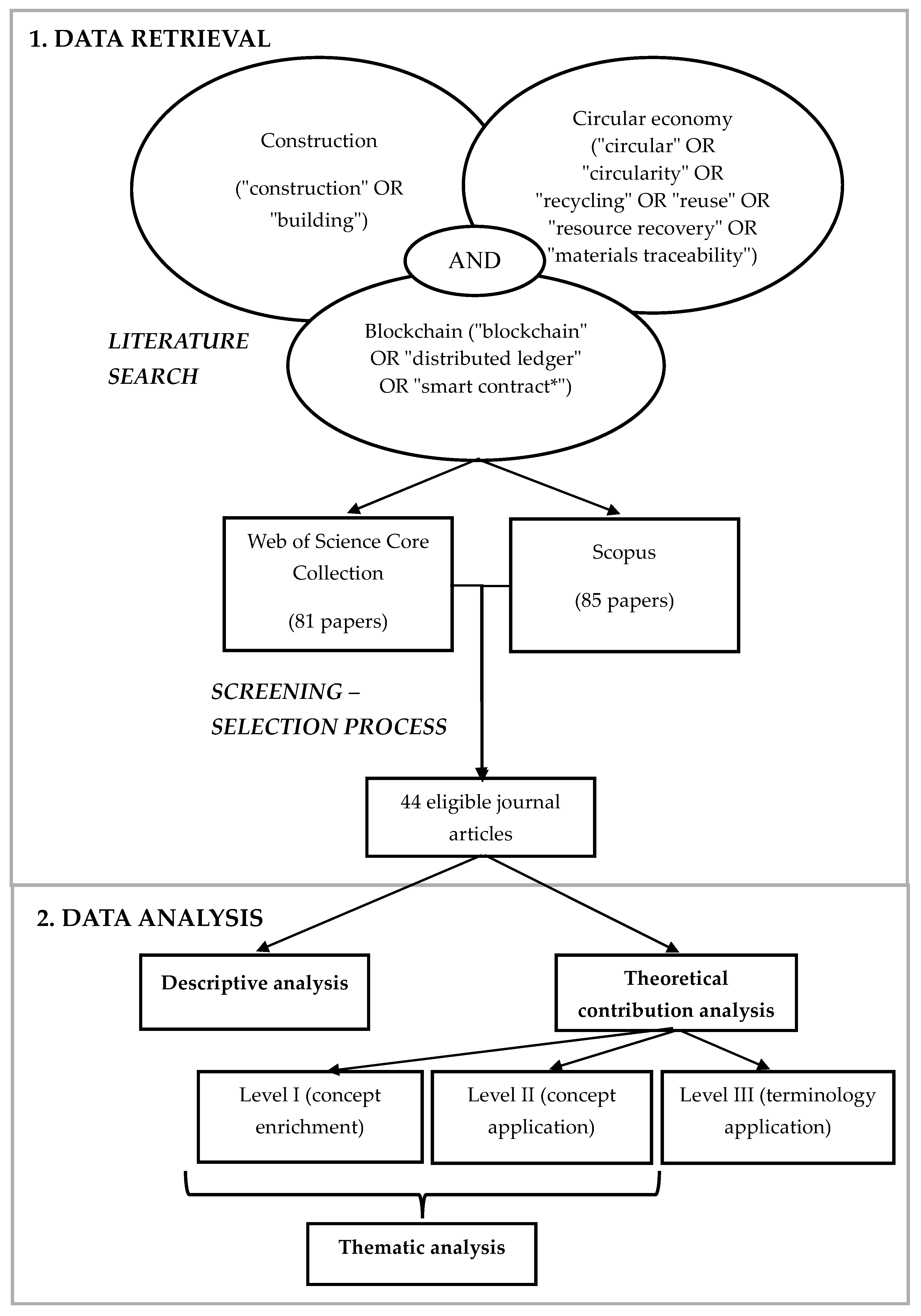
The aim of this review is to critically explore how blockchain technology is discussed in the academic literature as a tool to reduce information asymmetry and increase trust in the context of circular construction. For this purpose, a systematic search and review of the scientific literature was conducted, including descriptive, theoretical, and thematic analysis. The process is based on recognized review procedures and tools used in articles with similar methodologies [19,20]. The structured approach shown in Figure 1 and described below is chosen to ensure the transparency and reproducibility of the study.

2.1. Data Retrieval

The dataset for this review was created from academic publications found in Web of Science Core Collection and Scopus, which are two of the largest and most relevant scientific databases [20]. No time restrictions were applied in order to include all relevant articles from the earliest to the most recently available studies.
The search strategy was based on three semantic clusters, designed to capture the intersection of three main topics:
  • Construction domain: (“construction” OR “building”);
  • Circular economy (CE): (“circular” OR “circularity” OR “recycling” OR “reuse” OR “re-source recovery” OR “materials traceability”);
  • Blockchain technology: (“blockchain” OR “distributed ledger” OR “smart contract*”).
These three clusters were combined using Boolean logic (1 AND 2 AND 3). The searches were limited to peer-reviewed journal articles and review papers published in the English language. The final search included the terms in titles, abstracts, and keywords.
The search results included 81 papers retrieved from Web of Science and 85 papers retrieved from the Scopus database. After removing duplicates and performing a screening based on the title, abstract, and keywords, a total of 44 journal articles were selected as relevant for full-text review and critical analysis.
The selection process followed several inclusion and exclusion criteria. Articles were included if they: (a) discussed the application of blockchain technology in the construction industry, (b) referred to circular economy principles or practices, (c) contained direct or indirect references to trust or information asymmetry or could be interpreted through those concepts, or (d) were published in peer-reviewed journals and available in full-text English versions.
Articles were excluded if they: (a) focused only on blockchain in general or in unrelated industries (e.g., finance, logistics, or healthcare), (b) were not written in English, or (c) were conference papers or editorials.

2.2. Data Analysis

All search results were imported into Mendeley Reference Manager v2.142.0. Mendeley was used to manage duplicate removal, document organization, and coding during the analysis process.
The review applied three levels of analysis: descriptive, theoretical, and thematic. Descriptive analysis included basic metrics: publication year, journal source, and research method used. This step helped to understand the general structure and development of the field.
To systematically evaluate the theoretical contribution of the retrieved papers to the research topic, each article was categorized based on the depth and originality of its engagement with the key concepts. This procedure was adapted from the contribution-level framework introduced by Littau et al. [21], which has been used in other reviews [22] to assess the qualitative depth of the literature within a specific field.
The evaluation of the theoretical contribution of articles followed a three-level structure, which reflects how the blockchain was conceptually and empirically linked to circular construction. Level I (concept enrichment) was assigned to articles that developed new theoretical insights, models, or frameworks related to blockchain use in circular construction. These articles did not only apply existing knowledge but proposed original concepts or extended theories. Level II (concept application) was assigned to articles which applied existing concepts of the blockchain to circular construction use cases or scenarios. While these papers did not introduce new models, they discussed practical implications, challenges, or benefits of the blockchain for improving trust, traceability, or stakeholder collaboration. Their focus was on using a blockchain as a supporting tool rather than advancing theoretical discussion. Level III (terminology application) included articles that mentioned blockchain and circular construction in a limited or superficial way. These articles usually contained keywords but did not explore their interrelation in detail. For instance, a blockchain might be briefly listed as digital technology relevant for construction or CE but without further explanation of how it impacts information asymmetry, transparency, or project trust. These papers often lacked critical engagement with the subject and did not connect the blockchain to the core mechanisms of circularity or stakeholder dynamics.
Each of the 44 included articles was read in full and independently categorized by the researchers according to the three contribution levels. Where initial categorizations differed, the articles were re-examined and discussed in detail until consensus was reached. Disagreements were resolved through joint re-reading and analytical discussion rather than through statistical inter-coder reliability measures, which is consistent with qualitative review practices. Only one level of contribution was assigned per article to ensure consistency and avoid overlap. This assessment provided the foundation for the thematic analysis of the articles.
To ensure analytical depth and conceptual relevance, only articles categorized as Level I (concept enrichment) and Level II (concept application) were included in the following thematic analysis. Level I and II studies demonstrate substantive engagement with the blockchain in relation to circular construction processes, trust building, and information asymmetry reduction, either through theoretical development or applied analysis. In contrast, Level III (terminology application) studies primarily reference the blockchain or circular construction at a descriptive or contextual level without analytically examining their interrelation. Including such studies in thematic coding would have diluted the interpretive depth of the analysis and weakened the alignment between the research questions and the analytical method. Therefore, thematic analysis was restricted to 25 articles that provided sufficient conceptual or applied substance to support meaningful synthesis.
Thematic analysis is usually used to identify, analyze, and interpret patterns within data through coding [23]. Its primary goal is the identification of themes. The objects of coding in thematic analysis include aspects of individuals’ behaviors, emotions, opinions, norms, relationships, routines, agreements or disagreements, and changes over time [23]. In this study, thematic analysis was conducted to better understand how the blockchain is discussed and applied in the context of circular construction. The goal of the analysis was to go beyond a basic description and to find common patterns, ideas, and gaps across the selected articles. This analysis helped to identify the key focus areas in the literature and to evaluate how blockchain is used to support trust and reduce information asymmetry in construction projects that follow circular economy principles.
Thematic analysis was done by manually coding sentences that support specific themes. The full texts of 25 selected articles were read carefully. The coding process was done in Mendeley Reference Manager v2.142.0, which helped to organize and annotate the literature. Table 1 presents the six main themes that were used in the thematic analysis, along with their interpretation. The objects of coding were sentences from the retrieved articles.
The thematic coding provided the foundation for the critical analysis of the literature, which is presented in the next few sections of this paper. It also made it possible to compare how different articles approach similar topics and to evaluate the maturity and focus of the research field.

3. Results

The results of the review and the analysis are presented in four subsections. In total, 44 articles are included in the results, as they satisfy all selection criteria described in the Methodology section. First, the research context is outlined, including the temporal distribution of the reviewed articles, their journal sources, the frequency of research methods applied, and the theoretical contributions of each study. Second, the review examines the applications of blockchain technology in circular construction. Third, the main contributions of a blockchain to trust building and the reduction in information asymmetry are identified. Finally, the technological, organizational, and legal challenges associated with blockchain implementation are discussed.

3.1. Research Context

3.1.1. Publication Timeframe

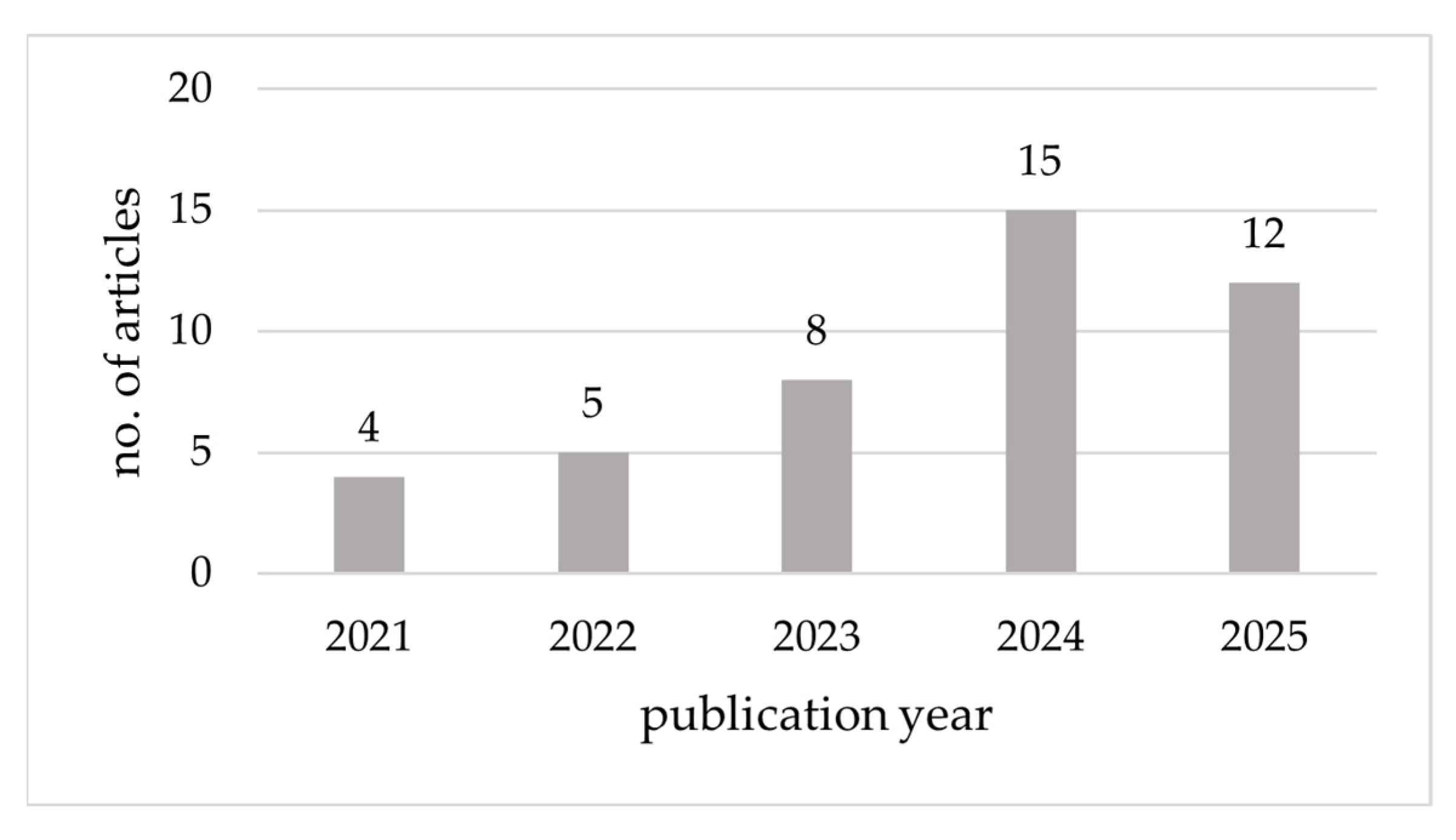
The retrieved literature spans from 2021 to 2025 (Figure 2), representing a relatively recent and rapidly expanding research field. The earliest publications began to develop frameworks for blockchain adoption in circular construction through systematic literature reviews [1,24,25] and case studies [26]. Systematic literature reviews and framework development were also the most common methods in 2022. In 2023 the topic began to mature. During this period, studies such as [17,27,28,29,30] adopted design science research, fuzzy decision modeling, and multi-attribute decision-making. This indicated a shift towards more structured methodologies for studying blockchain implementation in circular construction.
The majority of the relevant papers (27 out of 44) were published in 2024 and 2025. Several studies [4,16,31,32,33,34,35] published in 2024 and 2025 use the case study method as a tool for practical experimentation on the topic. Further research sophistication can also be observed in the usage of advanced methods such as modeling [36], expert opinion [33,37], interviews [35,38], the Delphi survey [39], game theory [40], and design science [41].
Overall, in the publication timeframe from 2021 to 2025, the topic of blockchain in circular construction has matured from theoretical to empirical development. However, the short timeframe implies that the field is still emergent, with limited longitudinal evidence and few established theoretical concepts. The topic is still in a growth phase, offering significant opportunities for the future application of different research methods and more empirical testing.

3.1.2. Journal Source

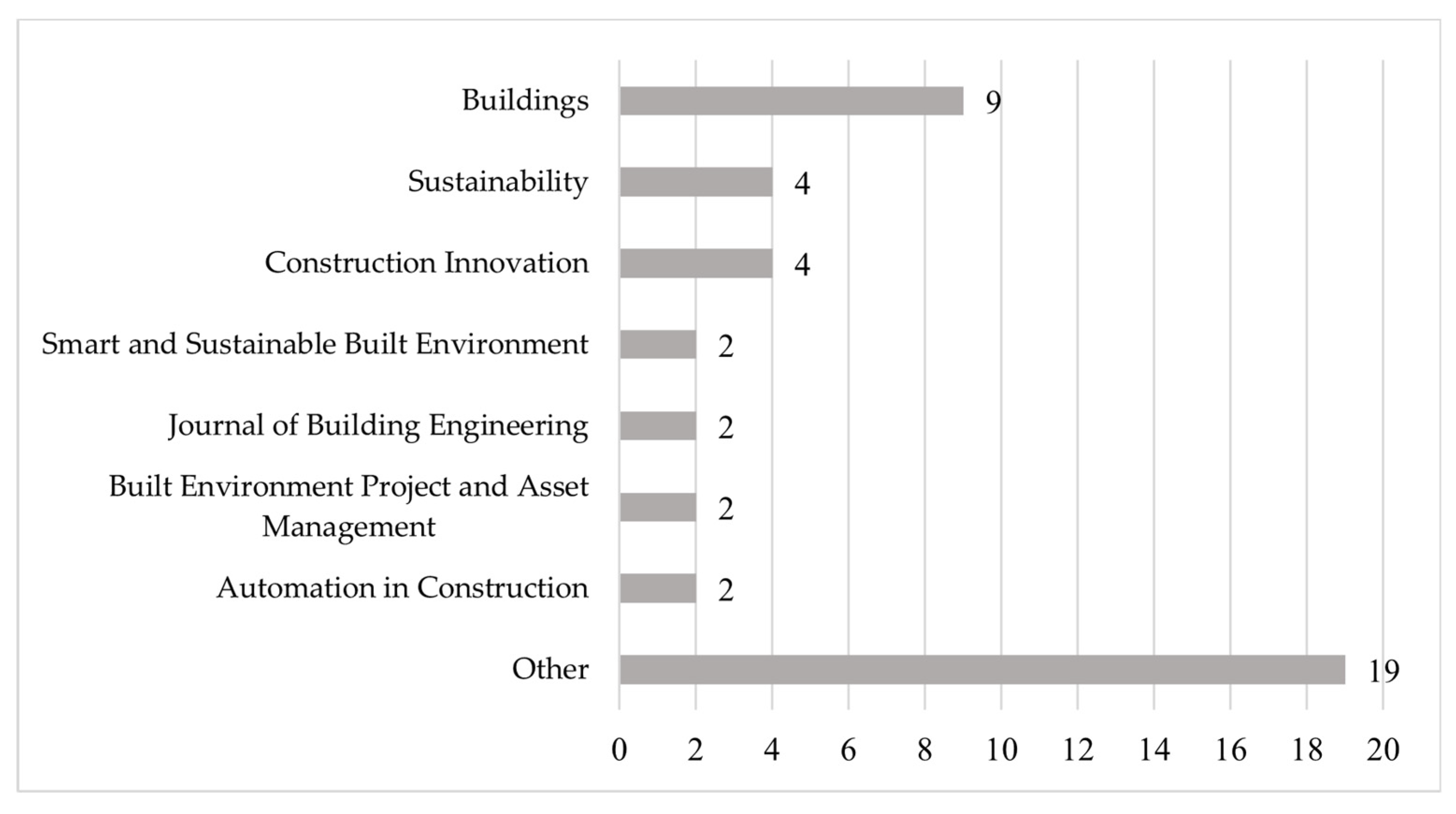
The reviewed articles are published across a diverse yet thematically consistent range of journals, concentrated on the topics of construction management and sustainability (Figure 3). Dominant journals are MDPI journals (Buildings (nine articles) and Sustainability (four articles)), followed by Construction Innovation (four articles), and Automation in Construction, Built Environment Project and Asset Management, Journal of Building Engineering, the Smart and Sustainable Built Environment (with two articles each).
The domination of MDPI journals is not surprising, since MDPI provides a fast review and publication process, favorable for new and emerging topics. The construction-focused journals primarily position the blockchain within the construction management domain, while journals focused on sustainability and environmental science emphasize the blockchain’s potential to enable circular economy transitions, resource efficiency, and carbon tracking.

3.1.3. Research Methods

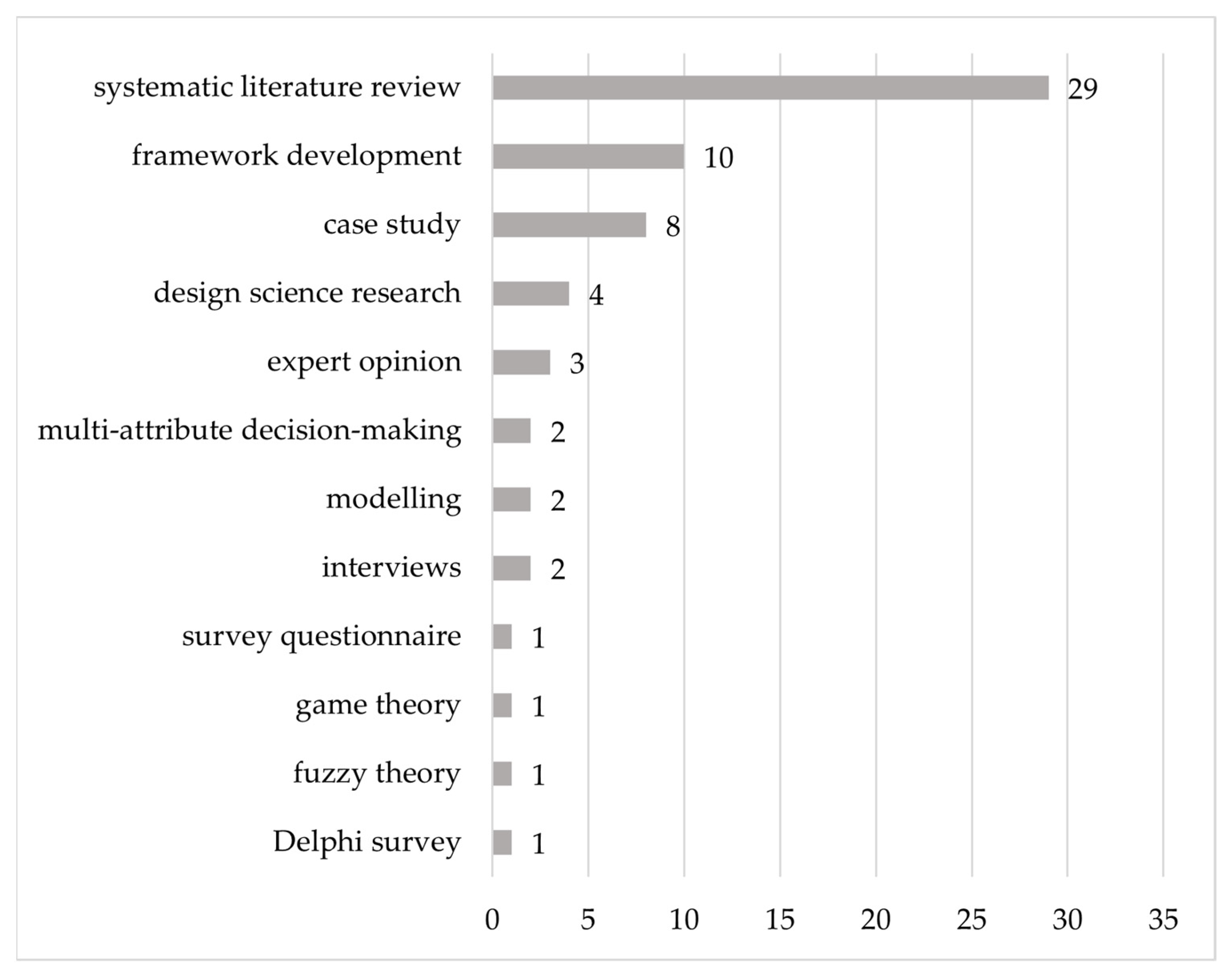
The reviewed body of literature shows broad methodological heterogeneity (see Figure 4). Methods range from conceptual and framework development to empirical simulation, case studies, and expert-based surveys. The choice of research methods mostly reflects the exploratory and evolving nature of blockchain applications in circular construction. Therefore, the most common method used in retrieved articles is a systematic literature review (in 29 of 44 articles). Systematic literature reviews are commonly used in combination with framework development (in, for example, [31,32,42,43]), which means that the literature review is undertaken to provide the foundation for further research. These reviews provide valuable overviews and ensure transparency through reproducible search protocols. However, a large number of review papers on this topic indicates a lack of empirical evidence and the low maturity of the field.
Case study (eight articles) and expert-based methods (seven articles overall) are also widely applied. Some researchers conduct interviews, Delphi surveys, or questionnaire surveys to capture practitioner perceptions and contextualize the blockchain’s role in waste management or urban circular systems [27,39]. Others use case studies to reflect on the use of blockchain in circular construction [31,32,33]. These articles enhance contextual richness and practical relevance. However, they often involve small samples and subjective expert judgments, limiting generalizability and reproducibility.
Other bodies of literature (four articles) use design science research (borrowed from the field of information systems). Design science research enables the iterative creation of artifacts, linking theory with problem-solving [17,27]. However, these studies still rely on limited pilot implementations or hypothetical case simulations.
The rest of the studies involve methods like modeling, game theory, and fuzzy multi-criteria decision-making. Scholars use these quantitative or semi-quantitative methods to capture stakeholder interactions and decision behaviors within blockchain-enabled ecosystems [29,36,37,41].
Overall, the observed methods reveal that blockchain research in circular construction is still dominated by exploratory, conceptual, and qualitative approaches. Empirical depth and real-world validation remain scarce.

3.1.4. Theoretical Contributions

The theoretical contribution of articles on the topic of the blockchain in circular construction is assessed in a three-level structure. Level I (concept enrichment) represents articles that developed new theoretical insights, models, or frameworks related to blockchain use in circular construction. Level II (concept application) represents articles which applied existing concepts of the blockchain to circular construction use cases or scenarios. These papers did not introduce new models; however, they discussed practical implications of blockchain in circular construction. Level III (terminology application) included articles that mentioned the blockchain and circular construction in a limited or superficial way.
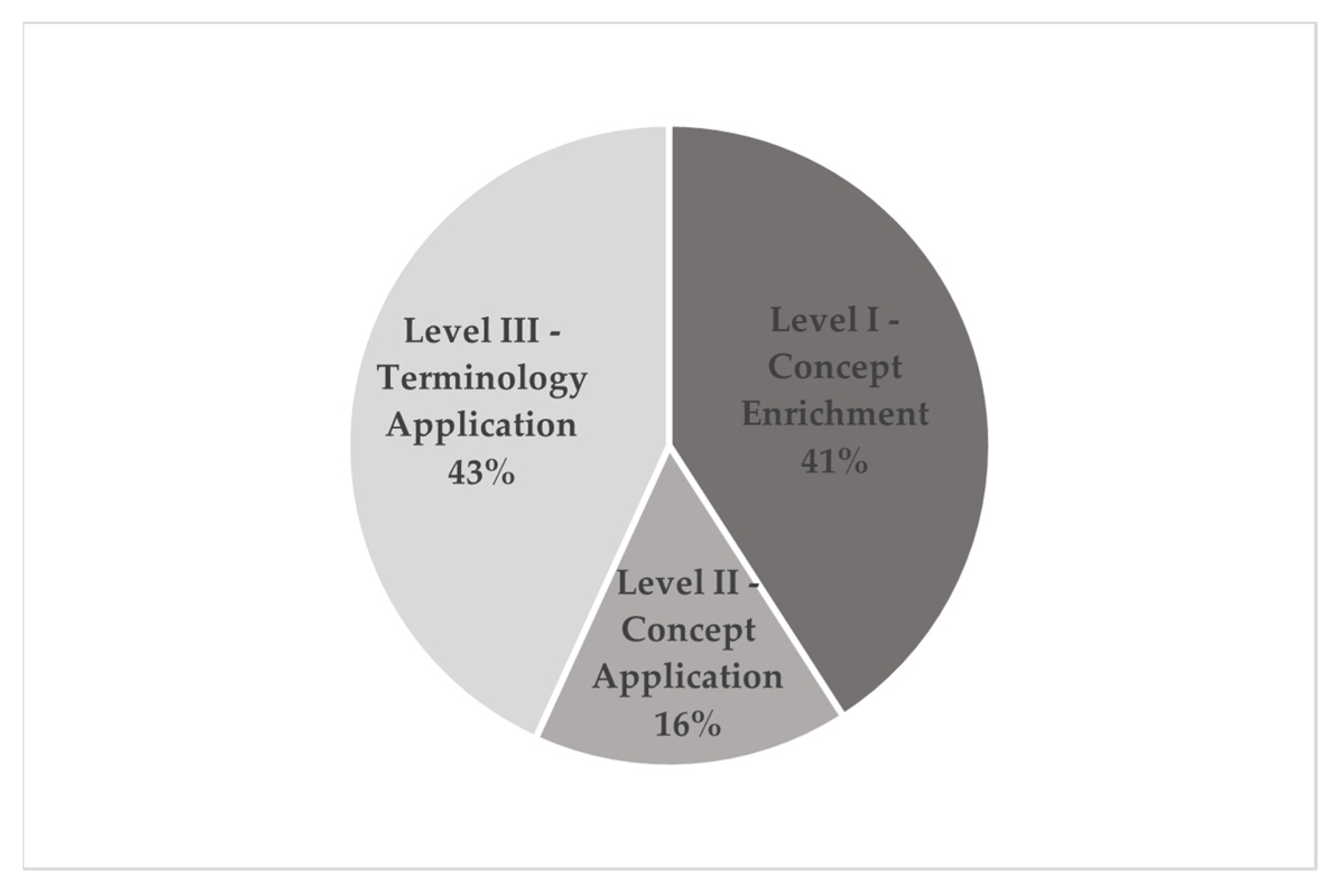
Figure 5 shows the distribution of articles across different levels of theoretical contributions. The majority of articles (43 per cent) falls into level III, only mentioning blockchain or circular construction somewhere in the text. Nevertheless, a similar percentage (41 per cent) of the articles falls into Level I, developing new theoretical insights about the blockchain in circular construction. They represent the most significant body of knowledge on this topic. The remaining 16 per cent of articles falls into Level II. These studies apply some blockchain concepts to circular construction and are valuable in a practical way.
Level I (Concept Enrichment) Studies
Level I studies provide the main conceptual structure for understanding how a blockchain can support credible information and stakeholder cooperation for circular construction. These studies introduce new models and technical ideas such as multi-layer system designs, incentive-compatible digital-twin data sharing, game-theoretic governance, and token-based passports [1,4,16,17,18,24,25,28,30,31,32,33,36,37,39,40,41].
Bucher et al. [16] differentiate decentralized data networks (where data storage and management are distributed across multiple nodes, and control and governance of the system are shared among several participants) and the blockchain. They test different types of networks using material passport data to study trade-offs between mutability, data sovereignty, access control, and storage management across the asset lifecycle. Their main insight is that different functions of material passports need different system designs rather than one single protocol [16].
Çetin et al. [1] introduce the circular digital built environment framework. They map digital technologies, including blockchain, to circular strategies and argue that transparent and reliable data flows are essential for maintaining value across the asset lifecycle. They identify material passports as a leading use case where blockchain’s immutability and traceability can reduce information asymmetry along supply chains [1].
Jayarathna et al. [39] employ the Delphi study to investigate the potential of converging blockchain with the circular economy to improve construction waste management. The study identifies potential enablers such as an immutable auditing facility, transparency, trackability, and traceability, as well as common barriers to blockchain implementation in a circular economy.
Several Level I studies propose integrated system architectures linking blockchain with Building Information Modeling (BIM) and digital twins (DT) to coordinate circular concepts such as reverse logistics and reuse markets. Elghaish et al. [17] design a BIM–blockchain–smart-contract workflow that shifts incentives toward deconstruction rather than demolition. Movaffaghi and Yitmen [28] propose a theoretical platform combining blockchain with multi-criteria decision methods to help stakeholders select reused components using transparent and auditable rules. Teisserenc and Sepasgozar [24,25] add an adoption model that positions blockchain-enabled digital twins to improve trust, security, and collaboration in Construction 4.0.
Two studies by Lin et al. [36,41] move beyond descriptive arguments. The first uses design science and argues that decentralized information sharing, broad supervision, and incentive mechanisms can reduce illegal dumping by lowering moral hazards [41]. The second uses an evolutionary game model among the government, construction enterprises, and recycling enterprises to theoretically show how a blockchain’s transparency can reduce the need for heavy supervision [36].
Rathnayake et al. [33] design EcoConstruct, a blockchain system that tracks embodied carbon, tokenizes carbon credits, and enables carbon trading. Mankata et al. [4] synthesize exploratory and experimental studies to propose a blockchain-based supply chain architecture [4]. Wilson et al. [18] propose a multi-layer blockchain design that supports material reuse without revealing sensitive information [18]. Wu et al. [30] introduce a tokenized waste passport system using non-fungible tokens (NFTs) for cross-border waste trading.
Xiao et al. [40] propose a digital-twin sharing framework with game-theoretic incentives and subsidy rules. Their results show that carefully designed incentive mechanisms increase data contributions and reduce information withholding in prefabrication logistics and site operations [40].
Yuan et al. [37] analyze barriers to blockchain adoption in construction waste management. They identify feedback loops among technical and organizational obstacles, helping planners sequence interventions that gradually reduce information asymmetry and strengthen trust.
Two conceptual frameworks—AKI2ALL and RE-HAK—combine blockchain governance with AI-based allocation and milestone verification to support the adaptive reuse of abandoned houses [31,32].
Taken together, Level I studies define core elements of a blockchain and link these elements to circular principles such as reuse, deconstruction, and carbon emissions. They explain how information asymmetry can be reduced through shared audit trails and strategy-proof incentive design, and why these features help build trust across stakeholders.
Level II (Concept Application) Studies
Level II studies explore real applications of blockchain in circular construction, such as sustainability assessments, waste management systems, and legal traceability. They also identify practical limits and challenges in implementation without advancing new theory [2,26,27,44,45,46,47].
Abbas and Myeong [44] provide a cross-industry review of how the blockchain can support sustainability. They emphasize that immutable shared ledgers and smart-contracted transactions can reduce fraud and help resolve disputes in circular supply chains [44]. Arshad et al. [45] link Net Zero Energy Building, the SDGs, and circularity, placing the blockchain inside broader holistic models. However, their focus is mainly on retrofit strategies rather than on detailed mechanism design [45].
Choudhuri et al. [27] develop a design-science artifact for responsible urban digitization in India. They recommend stronger horizontal integration across municipal functions and careful use of the cloud, Internet of Things (IoT), and data analytics. Blockchain is included as part of this platform approach, mainly to support transparency and coordination [27].
Elghaish et al. [46] conduct a gap analysis and propose a conceptual framework positioning blockchain together with IoT and Artificial Intelligence (AI) for circular construction. They highlight the limited number of real implementations and suggest that the blockchain’s value lies in supporting building asset tracking and the coordination of reverse supply chain processes [46].
Liu et al. [2] propose a blockchain-supported information management framework for construction waste management. They describe user, application, service, and infrastructure layers and introduce a credit system to evaluate recyclability. This framework shows how shared data can reduce information gaps among stakeholders [2].
Shishehgarkhaneh et al. [47] review blockchain research in construction from 2016 to 2022. They identify major themes: supply chains, smart contracts, sustainability, BIM, IoT, and energy efficiency. The circular economy is highlighted as a growing area where trust and traceability are central [47].
Voorter and Koolen [26] study the traceability procedure in Flanders and argue that linking the blockchain to existing legal workflows could improve cooperation by strengthening information processing and availability. This provides a concrete example of the blockchain in a specific regulatory context [26].
Compared with Level I studies, these papers mainly apply established blockchain benefits (such as immutability, traceability, and transparency) to specific domains such as construction waste management, urban platforms, and legal traceability. They help clarify where the blockchain is useful and what adoption barriers remain, but they do not introduce new theoretical ideas.
Level III (Terminology Application) Studies
Level III studies describe the wider context of digitalization in the built environment. However, they usually provide only weak links between the blockchain and circular construction [34,35,38,42,43,48,49,50,51,52,53,54,55,56,57,58,59,60,61].
Level III articles mention blockchain and circular construction briefly in text, usually as a technology for digitalization. Representative examples are overviews of digital transformation for circular economy [48,51,57], frameworks or reviews where a blockchain is peripheral [35,42,54,59], material passport surveys that do not detail a blockchain [50,55], digital technology lists for waste or carbon quantification [52,61], and broad reviews of IoT/BIM/DT in construction where blockchain is a keyword [34,38,43,60]. These works are valuable for terminology consolidation, but they provide limited theoretical development on the blockchain’s specific role in circular construction.

3.2. Blockchain Applications in Circular Construction

The integration of blockchain technology in circular construction represents a rapidly developing research area with growing evidence of conceptual frameworks and practical use cases. Across the literature, the blockchain is understood as an enabler of core circular economy principles such as reuse, recycling, resource optimization, extended material life and others. The reviewed studies provide a wide range of examples demonstrating how a blockchain can be applied to circular construction. Table 2 shows the blockchain application areas in circular construction, the technological mechanisms behind the application, and supported circular principles.
The most prominent application areas are construction materials and waste passports. Across the built environment, lifecycle data are fragmented and difficult to govern, which complicates the transformation toward circular economy models. The blockchain enables the tracking and classification of materials for reuse and recycling through material passports [1,16]. These passports store data about the origin, composition, and environmental impact, thus supporting lifecycle transparency [16,18,30]. Similarly, waste material passports [30] use blockchain to store and verify construction waste information, enhancing material circularity and eliminating information asymmetry in trading. They can be implemented with on-chain/off-chain storage (e.g., IPFS) to the immutable distributed ledger [16,18]. In cross-border construction waste trading, NFTs act as tokenized passports that represent specific lots of construction and demolition materials with their handling history and rights, thereby facilitating reuse, recycling, and transparency in secondary markets [30].
Multiple papers explore construction waste reuse and recycling coordination among contractors, recyclers, and regulators. In that case smart contracts govern transactions and incentives. Studies show evidence of automatic data recording, enabled governmental oversight, and introduce incentives and penalty mechanisms to steer behavior of stakeholders [2,26,36,37,41]. Voorter & Koolen [26] emphasize that choosing a public permissioned blockchain structure makes it easier to identify and track the different stages of a waste management process. Furthermore, tokenization in the blockchain refers to the process of converting rights to an asset into a digital token so that real-world assets are represented in digital form [26]. In practice, tokenization is implemented by tagging physical objects, such as cargo containers, with machine-readable technologies (for example, RFID chips or QR codes).
Several papers combine blockchain with other technologies such as BIM, IoT, and AI to support the reuse of building components. Elghaish et al. [17,46] presented integrated workflows combining the blockchain, BIM, and smart contracts to foster the reuse of BIM families, track component lifecycles, and support circular supply chain practices. Similarly, Xiao et al. [40] proposed a blockchain-based platform for the secure sharing of DTs, using smart contracts and zero-knowledge proofs for user authorization and data integrity. In those cases, a blockchain ensures that digital representations are shared securely.
Herrador et al. [31,32] use blockchain as an immutable registry of property states, permits, and repurposing agreements for vacant or underused housing. The blockchain automates administrative and financial processes in building repurposing programs, aligns incentives, and tracks milestones (e.g., waste removal, structural repair, and energy upgrades). Smart contracts automatically adjust prices or subsidy levels based on predefined rules. This process increases transparency and helps align the incentives of different stakeholders [31,32].
The blockchain is also used to track emissions transparently and create positive incentives for low-carbon and circular practices. On-chain ledgers record carbon metrics from design through procurement. NFTs minted as “carbon rewards” represent verified achievements [33]. Tokenized incentives can be aligned with circularity criteria in retrofit programs and near-zero energy building strategies [45].
Furthermore, several articles use blockchain for circular supply chain coordination. Applications include the traceability of material flows, product certification, reverse logistics, and exchange platforms for secondary materials/components [4,28,39,46]. Regional traceability procedures may be complemented by blockchain registries to “close the loop” operationally [26]. In those cases, permissioned or consortium chains encode roles, certifications, and automated verifications, public chains/NFTs support open discovery and trading, and the IoT binds physical flows to digital events. Smart contracts are a key feature in these cases, automating data verification, access rights, and financial or operational transactions without the need for intermediaries [46].
Reviewed articles also show how the blockchain can provide shared infrastructure for municipalities/regulators to validate rights, supervise processes, and standardize disclosures across circular networks. Consortium/permissioned chains define governance, roles, and access, while smart contracts encode compliance rules, enabling the environment for responsible markets and component reuse/recycling [2,26,36,41,44].
Finally, a blockchain can be used to attach social and ethical attributes (fair work, safety, and non-discrimination) to products and materials for better procurement in circular supply chains. A blockchain provides reliable information about labor and ethics across product lifecycles and enables customer transparency [29]. Smart contracts and tokens are used for reverse logistics (“take-back incentives”) [29].
Technologically, various blockchain architectures and consensus mechanisms are explored. Ethereum is commonly used for public smart contract deployment, as seen in the works of Jayarathna et al. [39] and Movaffaghi & Yitmen [28], while Hyperledger, Polkadot, and Tezos support private or permissioned applications [4,18,33].
Smart contracts encode rule-based transactions for exchanges, milestones, reputations, penalties, and automated administrative actions, reducing manual coordination [1,2,4,17,18,28,31,32,36,41].
Tokenization, especially through NFTs, has been employed for carbon trading [33], construction waste identification [30], and incentivizing sustainable user behaviors [29,44]. These mechanisms often integrate reputation systems and incentive algorithms within smart contracts [41], enabling automated validation of circular contributions.
Other technological features supporting circular construction implementation include decentralized identifiers (DIDs) for stakeholder verification [16], zero-knowledge proofs [40], version control for data history [16], and cryptographic hash functions [30,47]. Some examples combine on-chain anchoring with off-chain storage (e.g., IPFS) to preserve immutability [16]. All of these tools enhance the security, privacy, and flexibility of blockchain systems in managing sensitive or proprietary data.
From a circular construction perspective, the principles most frequently addressed include reuse and recycling [2,36,41], the regeneration of resources [29], traceability [18], transparency [24,25,44], and collaboration across stakeholders [17,31]. Applications span project lifecycle stages from design and planning to demolition and repurposing [24,25], as well as reverse logistics [26,27].
In summary, reviewed articles have shown how the blockchain enables a range of functions critical for circular construction, including material and waste passports, construction waste reuse and recycling, blockchain integration with other technologies, refurbishment, reuse and lifecycle optimization, carbon emissions tracking, circular supply chain coordination, legal traceability, and ethical/social transparency. The blockchain also improves trust and reduces information asymmetry among stakeholders by ensuring data immutability, auditability, and selective transparency. Several studies emphasized its role in facilitating collaboration [1,28,39], particularly in fragmented construction supply chains where data is distributed and frequently siloed [4,16]. Therefore, the next section emphasizes the specific contributions of the blockchain in reducing information asymmetry and building trust between stakeholders in circular construction.

3.3. Blockchain Contribution in Building Trust and Reducing Information Asymmetry

The trust-building role of a blockchain in circular construction should be understood primarily through the lens of system-based trust rather than as a direct replacement for interpersonal relationships. While interpersonal trust remains important in collaborative project environments, the blockchain introduces a form of trust grounded in verifiable data, cryptographic security, and consensus mechanisms. By embedding rules and verification processes into digital infrastructure, the blockchain reduces reliance on subjective judgments and informal assurances. This shift is particularly relevant in circular construction networks, where actors frequently interact across organizational and national boundaries and where trust in institutions may be unevenly distributed. In this context, the blockchain acts as a stabilizing mechanism that reduces information asymmetry and enables cooperation among stakeholders with limited prior relationships.
One of the key barriers in the transition towards a circular construction is the persistence of information asymmetry and lack of trust among stakeholders across the supply chain. These issues limit transparency, hinder collaboration, and compromise the efficient implementation of circular principles into construction. Blockchain technology, with its core features such as immutability, transparency, traceability, and decentralization, has emerged as a critical enabler to overcome these challenges in the construction sector. The reviewed studies provide a wide range of examples demonstrating how the blockchain supports stakeholder trust through data transparency and the minimization of information asymmetry. Table 3 shows the blockchain contributions that enable information asymmetry minimization and trust building between stakeholders in circular construction.

3.3.1. Transparent and Immutable Data Records

The reviewed literature consistently identifies transparency, traceability, and immutability as the most critical blockchain features for addressing information asymmetry and building trust in circular construction. Blockchain trust is derived from verifiable protocols and consensus mechanisms. By establishing a single, shared ledger accessible to all participants, a blockchain eliminates the need for a central authority and ensures that every transaction or record is verifiable and tamper-proof [1,2,16,47]. Traceability is critical for maintaining lifecycle data integrity in the built environment, where information is often fragmented and inconsistent [16]. The immutability of blockchain records ensures that once data are entered, they cannot be retroactively modified, thus reducing opportunities for manipulation and disputes [1,31,32]. Blockchain functions as a trustless system, reduces reliance on intermediaries, and allows stakeholders to engage confidently, even without direct prior relationships [4,47].

3.3.2. Decentralized, Peer-Reviewed Data Validation

Information asymmetry in construction arises from incomplete, inaccurate, or inaccessible data across project actors [26]. Blockchain’s distributed data environment addresses this by providing a transparent and synchronized information space where every stakeholder can access the same verified data in real time [2].
In construction waste reuse and recycling, blockchain frameworks enable open information sharing between contractors, recyclers, and regulators, reducing supervisory burdens and fostering confidence in reported outcomes [36,41]. The system’s transparency allows the government to adopt lighter monitoring strategies because participants’ behavior becomes observable and self-regulated through visibility [36]. Similarly, blockchain-based waste material passports mitigate information asymmetry between buyers and suppliers in cross-border construction material trading by ensuring the authenticity and verifiability of material data [30]. The same mechanism applies to material passports for tracking component origins and compositions, which support accurate classification and safe reuse [1,18]. Such traceable and reliable records strengthen market confidence in reclaimed materials and enable high-quality reuse decisions [18].

3.3.3. Smart Contract Automation

Smart contracts are “automated, self-sufficient procedures deployed over blockchain to enforce agreements between buyers and sellers, undergoing automatic verification and execution through a computer network” [28] (p. 10). “The concept of smart contracts replaces third-party intermediaries as a set of coded protocols, where users specify rules for managing transactions and automatically execute contract commands through the computer” [2] (p. 9). Mankata et al. [4] emphasized the role of smart contracts in minimizing human interference and preventing manipulation. These self-executing contracts enhance trust in circular construction primarily by securing data integrity and accountability across actors [4]. In circular supply chains, smart contracts execute rule-based verifications that automatically validate transactions, certifications, and labels, minimizing human interference and thereby increasing trust in digital processes [4]. The application of smart contracts in circular construction can be seen when automatically interacting with data stored on centralized trust servers [16], in the automatic enforcement of agreements between parties involved in the building process [28], the automatization of transactions between external stakeholders [1], autonomously controlling the cash flow [1], dynamically executing pricing or subsidy levels based on fixed rules [32], ensuring transparency and aligning stakeholder incentives instantly [32], adjusting taxation/permits upon approval [32], and tracking and recording the progress of the building refurbishments [31].

3.3.4. Selective Transparency and Data Control

Transparency and confidentiality are essential for trust and for encouraging stakeholder participation in circular construction where data can be commercially sensitive. The blockchain enables selective information disclosure through encryption, decentralized identifiers (DIDs), and controlled access, allowing firms to share only what is necessary while retaining ownership of private information [16,44]. DIDs support a globally verifiable and decentralized digital identity [16]. They can be used to identify any type of entity, including a person, an organization, or an abstract entity. The creation and management of a DID do not rely on a central authority but are instead handled in a decentralized way. Furthermore, zero-knowledge proofs (ZKPs) are an advanced cryptographic method that improves privacy and security in decentralized data networks [16]. They allow for the verification of data existence or correctness against predefined standards while keeping the underlying information private.
These mechanisms maintain a balance between openness and privacy, strengthening trust that sensitive data such as pricing, sourcing, or recycling details will not be exploited. In this way, the blockchain enhances trust, offering stakeholders control over their information [44].
Liu et al. [2] noted that data on the blockchain is accessible and verifiable by all network participants, which facilitates collective supervision. These properties lower the risk of fraudulent reporting and encourage honest behavior among stakeholders. Such features are also applicable to digital product certification and material traceability, where actors can track the origin, characteristics, and usage history of construction components [18,28].
Teisserenc & Sepasgozar [25] have argued that the blockchain is secure by nature by providing a “single source of truth”. Abbas & Myeong [44] reported that blockchain fosters trust between stakeholders by allowing selective data exchange and securing transactions against tampering. Similarly, Rathnayake et al. [33] showed how blockchain-based systems support trustworthy carbon trading by eliminating intermediaries and providing immutable emissions records.

3.3.5. Multi-Stakeholder Collaboration

Collaboration across the construction lifecycle is often hindered by fragmented data, misaligned incentives, and mutual distrust [25]. Blockchain provides a neutral and verifiable platform for multi-stakeholder coordination, linking designers, contractors, owners, and regulators through a common “source of truth” [25]. Reviewed studies show that blockchain-based networks enhance communication, cooperation, and shared decision-making by ensuring that all parties operate on consistent data sets [28,46]. For example, a blockchain in refurbishment and adaptive reuse automates trust relations between property owners, municipalities, and renovators [31,32]. Collaboration is also reinforced by consensus mechanisms that ensure all network participants agree on the validity of records before they are confirmed [30].
In practical implementations, blockchain platforms serve as digital collaboration spaces. Elghaish et al. [17] developed blockchain-based tools that allow multiple stakeholders to share demolition data and asset maintenance records. The collaborative environment enabled by such tools contributes to stakeholder engagement, improved coordination, and safer decision-making processes. Integration with other digital technologies further enhances the blockchain’s role in building trust between construction stakeholders. Xiao et al. [40] described how blockchain supports the secure sharing of digital twins in prefabricated construction. Elghaish et al. [17] emphasized blockchain’s potential to create secure, real-time records for BIM systems, ensuring data integrity throughout the project lifecycle.
Lin et al. [36,41] highlighted that the blockchain enables transparent information sharing among contractors, recyclers, and regulators, which is essential for improving the efficiency of construction waste reuse and recycling systems. Through smart contracts and decentralized data flows, these systems reduce the dependence on intermediaries and minimize information manipulation, thereby fostering trust and collaboration.
The concept of shared audit trails is repeatedly emphasized as a mechanism to build trust [18,25]. Herrador et al. [31,32] applied blockchain in rural property revitalization frameworks and showed that immutable records and transparent refurbishment tracking improve trust and reduce disputes among owners, renovators, and governments. This is further confirmed by Wu et al. [30], who applied a blockchain to waste material passports and showed that the technology reduces buyer–supplier information asymmetries in cross-border material exchanges.

3.3.6. Institutional Transparency

As shown in the reviewed articles, the blockchain contributes to trust not only among private actors but also between stakeholders and governing institutions. With decentralized blockchain networks, citizens, municipalities, and businesses can participate in transparent and traceable circular processes [27]. For governments and regulators, the blockchain enables traceable supervision and verifiable compliance, reducing corruption risks and increasing citizen trust in governance [27,41]. The blockchain acts as a system-based trust intermediary, replacing subjective relationships with objective verification, and creating credible conditions for circular economy transactions. These contributions establish the blockchain as not only a technological infrastructure but also a governance mechanism that promotes ethical, efficient, and collaborative practices in circular construction.

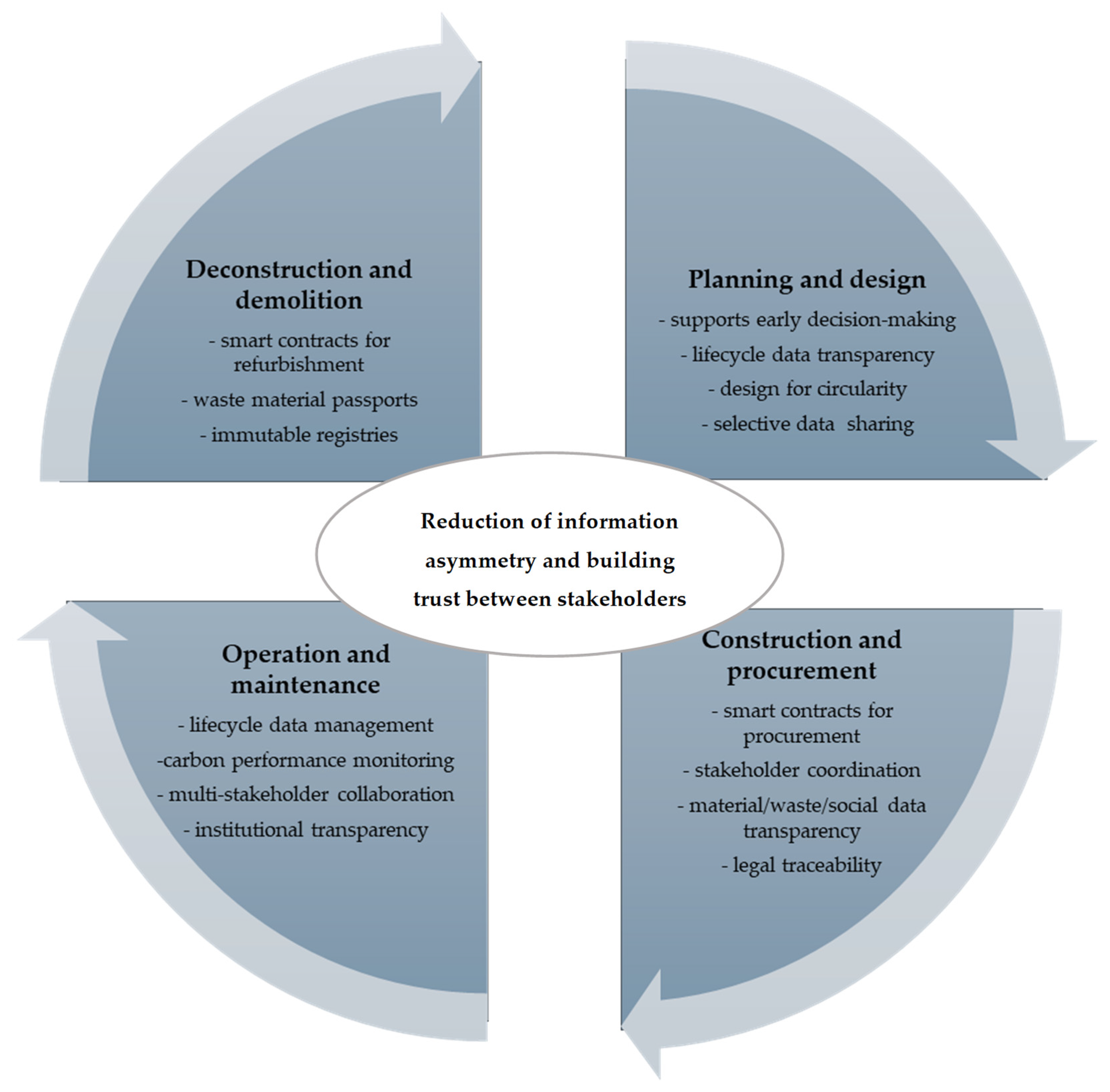
3.3.7. Conceptual Framework of Blockchain Reducing Information Asymmetry and Building Trust Across Project Lifecycle

To synthesize the reviewed findings, Figure 6 presents an integrative conceptual framework illustrating how core blockchain mechanisms operate across key construction lifecycle stages. Figure 6 highlights how these mechanisms reduce information asymmetry and build trust at each stage, thus being the central element of the framework. This in turn supports institutional trust and indirectly facilitates interpersonal trust among stakeholders in circular construction networks. Therefore, the blockchain is positioned as a cross-lifecycle enabler of trust between all stakeholders rather than a project-specific digital tool.
At the design and planning stage, blockchain applications focus on establishing reliable and verifiable lifecycle information that enables circular decision-making from the outset. The reviewed literature highlights the design for disassembly, adaptability, and high-value reuse. Blockchain integration with BIM and DTs enables the secure sharing of design data and reusable BIM families across projects while ensuring data integrity through immutable records. Selective transparency mechanisms, such as DIDs and permissioned access, allow for sensitive design and procurement data to be shared securely among stakeholders.
During construction and procurement, the blockchain primarily supports coordination and traceability across fragmented supply chains. Smart contracts are widely used to automate procurement transactions, milestone verification, incentive mechanisms, and penalty enforcement, thereby reducing information asymmetry and opportunistic behavior. Construction waste reuse and recycling systems rely on the blockchain to coordinate interactions among contractors, recyclers, and regulators, often through permissioned or consortium networks. Tokenization enables the transparent representation of materials, waste streams, and ownership rights. The blockchain further supports material and waste traceability, certification, and reverse logistics, as well as the transparency of labor and social compliance data. It also enables legal traceability and regulatory supervision, using permissioned or consortium blockchains to encode roles, permits, and compliance rules.
In the operation and management phase, blockchain applications support long-term asset governance and lifecycle data transparency. Immutable ledgers are used to store and verify maintenance records and operational data. The blockchain also enables ongoing carbon performance monitoring, with on-chain records and tokenized incentives encouraging low-carbon and circular operational practices. It enhances multi-stakeholder collaboration, providing a single source of truth for owners, operators, and public authorities. In addition, shared ledgers and supervisory dashboards enhance institutional transparency, allowing municipalities and regulators to monitor compliance and performance throughout the operational phase.
At the end-of-life stage, including deconstruction and demolition, blockchain applications focus on preserving material value and enabling circular recovery pathways. Waste and material passports provide verifiable information, supporting accurate classification and safe reuse or recycling. Smart contracts are applied to refurbishment and adaptive reuse processes, automating administrative procedures, subsidy allocation, pricing adjustments, and milestone tracking. Finaly, immutable documentation registries reduce disputes and align stakeholder incentives during repurposing activities.

3.4. Blockchain Implementation Challenges

Although the blockchain has a strong potential to support circular construction, its implementation faces many challenges. Security and transparency are key elements of blockchain technology, but they also create new challenges during implementation. These challenges can be grouped into three main categories: technical, organizational, and legal or regulatory. Cryptographic hashing, consensus mechanisms, and immutable ledgers can improve data integrity and traceability; however, vulnerabilities may still occur at system interfaces, during smart contract design, or at the stage of data input. Overcoming these challenges will require cooperation across sectors, supportive policy changes, investment in skills and capacity building, and more empirical research to enable effective implementation. This section presents these challenges based on reviewed academic studies.

3.4.1. Technical Challenges

Several technical challenges limit the effectiveness of the blockchain in circular construction. A key issue is scalability, especially the ability to store and process the large volumes of data generated in construction projects. This is particularly true for large-scale construction and infrastructure projects that require frequent data updates across extended project lifecycles. Such construction projects generate large volumes of heterogeneous data through BIM, IoT devices, DTs, and lifecycle documentation. Systems that store data directly on the blockchain often have high costs, limited storage capacity, and risks of data duplication [16,18,33,44]. Distributed file systems such as IPFS can improve data access, but they still face problems related to data ownership, access control, and governance [16].
Another major challenge is interoperability. Blockchain systems often do not integrate easily with other digital tools such as IoT, BIM, and DT, which are necessary for continuous and reliable information exchange [24,25,37]. The lack of common technical standards and the difficulty of connecting with existing legacy systems further complicate adoption [4].
In addition, cybersecurity risks, privacy concerns, and limits caused by data immutability remain important issues [31,32,44]. The high energy use of some blockchain platforms, especially those using energy-intensive consensus mechanisms, also conflicts with sustainability goals [33,39,47]. These challenges are especially evident in applications such as carbon emissions tracking, circular supply chain coordination, and waste management systems, where continuous and reliable data recording is required. Finally, smart contract implementation can be complex, particularly in regions with limited digital skills or a weak technological infrastructure, which slows down practical use [2,31,32].

3.4.2. Organizational Challenges

The reviewed articles recognized a number of challenges at the organizational level that slow the adoption of the blockchain. These include a low awareness among stakeholders, resistance to change, and fragmented work processes in the construction industry [29,37,39]. Because of the fragmented nature of construction supply chains, stakeholders may be reluctant to share sensitive information on shared digital platforms due to concerns over confidentiality, competitive advantage, and data misuse [24,25,40]. The construction sector is often risk-averse, which makes it difficult to introduce new technologies such as blockchain [24].
The lack of real-world case studies and large pilot projects also delays adoption [16,17]. In addition, limited digital skills, unfamiliarity with new technologies, and weak collaboration between stakeholders create further challenges [33,40]. Studies also show that organizational readiness and strong support from managers and senior decision-makers are important for successful adoption [29,37].
Other research points to weak incentive structures and uncertain returns on investment as economic barriers [2,4]. Construction organizations, particularly small and medium-sized enterprises, often face uncertainty regarding the return on investment, while the additional costs associated with blockchain infrastructure and system maintenance can deter participation [2,4]. Finally, poor data sharing practices and fragmented supply chains limit the effectiveness of blockchain in construction [18,25].

3.4.3. Legal Challenges

Regulatory uncertainty is one of the main barriers to using blockchain in construction. In many countries, clear legal frameworks for blockchain are still missing, especially for smart contracts, data ownership, security, responsibility, and liability [2,24,25,31,32,44]. Other challenges mentioned in the reviewed articles include uncertain regulations [24,25], immature policy support [30], and limited government incentives to encourage blockchain use in construction processes [37].
Lack of standardization also slows adoption. Material passports and blockchain-based waste management systems do not yet follow common protocols or industry-wide guidelines, which limits their wider use [18]. For example, material passports include different terminologies and processes because of this lack of standardization [18].
In refurbishment and adaptive reuse programs, blockchain-based automation of administrative processes may conflict with existing taxation systems, inheritance laws, and subsidy regulations [31,32]. Consequently, the effective adoption of a blockchain in construction depends not only on technical readiness but also on coordinated regulatory support and standardization that reflect the specific characteristics of the construction industry.

4. Discussion

As seen from the challenges identified in Section 3.4, blockchain applications in circular construction cover different domains and project lifecycle stages and should not be understood as isolated technical problems. Instead, they appear repeatedly across different application areas. For example, issues related to data standardization and interoperability affect material passports, circular supply chain coordination, and BIM/DT integration in a similar way, regardless of the lifecycle phases in which they are used. Similarly, organizational barriers such as limited digital literacy, fragmented responsibilities among stakeholders, and uncertainty regarding the return on investment constrain blockchain adoption across lifecycle stages rather than in specific applications only. This perspective indicates that many implementation challenges are structural and systemic in nature. They require coordinated technical, organizational, and regulatory responses.
The reviewed literature also shows that blockchain technology is not suitable for all construction contexts. Blockchain-based solutions tend to be less appropriate in projects with low data complexity or low requirements for traceability and long-term data management. In such situations, conventional centralized databases or established contractual coordination mechanisms may provide adequate functionality at a lower implementation cost. Furthermore, in contexts characterized by weak digital infrastructure, limited regulatory support, or low stakeholder readiness, blockchain adoption may introduce additional complexity without providing proportional benefits. These boundary conditions underline the importance of aligning blockchain adoption decisions with project scale, data intensity, management requirements, and institutional maturity.
This section furthermore reviews the current gaps in the literature that limit the adoption of blockchain. At the same time, reviewed studies provide a number of possible future research directions to address these gaps.

4.1. Current Research Gaps

One of the most common problems in the literature is the lack of clear theoretical foundations and decision-support frameworks that help practitioners choose appropriate blockchain architectures for specific circular economy use cases [16]. Much of the current research remains at a conceptual level and is not yet supported by well-developed theoretical models. Similar concerns are raised by Sadeghi et al. [29], who note that many studies do not clearly define the specific requirements for blockchain implementation from a circular economy perspective. Mankata et al. [4] also point out the absence of systematic reviews and integrated frameworks that explain how the blockchain can be applied across construction supply chains to support circularity.
Furthermore, many existing studies are based on concepts or simulations, which shows a lack of empirical validation through real-world pilot projects. This limitation appears across different application areas, including supply chain traceability [17], rural regeneration projects [31,32], and construction waste recycling governance [41]. Most proposed frameworks are tested only as prototypes, which limits their general applicability.
Another important gap is the lack of performance measurement and cost–benefit analysis. For example, Bucher et al. [16] point out that many studies do not assess the economic or operational impacts of using specific blockchain networks. Wilson et al. [18] also note that economic analysis, standardization of material passports, and interoperability between different blockchains are still poorly studied. These gaps reduce the empirical evidence needed to build trust among industry stakeholders.
The literature also reveals that current research weakly integrates the blockchain with other Industry 4.0 technologies, such as the IoT, BIM, and DTs [24,46].
Another research gap involves the scalability and technical feasibility of blockchain technology in circular construction. Many researchers call for the development of standardized frameworks and technical protocols that allow for interoperability between different blockchain networks and circular economy platforms [18,33]. In addition, some studies point to the need for practical tools and algorithms that make blockchain usable for construction waste management [2]. Others highlight the lack of metrics for evaluating data quality and trust in blockchain-based material tracking systems [30].
From a regulatory perspective, authors [44] call for more research on legal frameworks to clarify data ownership, liability, and the legal status of smart contracts. Without clear legal rules and standardization, future blockchain applications may remain fragmented and inconsistent.
To summarize, despite the growing academic interest in blockchain applications for construction, official and aggregated statistics on the adoption of blockchain technology in the construction industry remain largely unavailable. Most existing evidence is derived from conceptual studies, pilot projects, or isolated case examples, often reported at the organizational or project level.

4.2. Future Research

Based on these gaps, the literature suggests several common directions for future research. First, many studies call for repeated prototyping, pilot projects, and field testing in real construction projects. These future studies should measure blockchain system performance, user acceptance, and alignment with regulations [16,17,30,31,32]. Such studies should also include cost–benefit analysis and scalability evaluation [16,18].
Second, researchers ask for a deeper integration of with blockchain with related technologies such as IoT, AI, BIM, and digital twins to build automated and data-driven circular systems [17,24,33]. This integration could enable real-time monitoring in circular construction projects and better decision-making among multiple stakeholders.
Third, researchers recommend developing standardized circular economy indicators and interoperability protocols to test blockchain solutions under controlled policy conditions [31,32,33]. Fourth, future studies should focus more on behavioral factors, including incentive design and reputation mechanisms [30].
Finally, several authors encourage expanding research to underrepresented contexts and regions, such as low-technology environments and developing countries [27,31,32,45]. In these settings, blockchain may also support broader goals related to social and environmental equity.

5. Conclusions and Future Directions

This critical review has examined the growing body of research on the role of blockchain technology in reducing information asymmetry and building trust in circular construction. The findings show that, although the blockchain is still at an early stage of adoption in the construction industry, it has a strong potential to improve data transparency, information asymmetry issues, and trust and cooperation between stakeholders. In the reviewed studies, the blockchain is applied in several areas, including material and waste passports, construction waste reuse and recycling, blockchain integration with other technologies, refurbishment, adaptive reuse and lifecycle optimization, carbon accounting, circular supply chain coordination, governance and legal traceability, and ethical/social transparency and responsibility. Taken together, these applications show that the blockchain can act as a decentralized trust infrastructure that supports transparent information flows, which are essential for circular construction.
At the same time, the analysis shows that the field is marked by fragmented methods. Many studies rely mainly on conceptual frameworks, while empirical evidence is still limited. Level I studies that focus on concept development (for example, [16,24,25,31,32]) make strong theoretical contributions by proposing models and typologies for blockchain-based data networks, governance structures, and digital-twin integration. In contrast, Level II studies that focus on concept application, such as Elghaish et al. [46], Liu et al. [2], and Voorter and Koolen [26], apply a blockchain to specific circular use cases but are often restricted to simulations. Level III studies mainly use blockchain-related terminology within sustainability discussions but rarely explain the underlying mechanisms.
The reviewed literature shows that the blockchain can play an important role in building trust and reducing information asymmetry in circular construction. By providing transparent, traceable, and immutable data, the blockchain helps stakeholders access reliable information across the whole construction lifecycle. Other blockchain features such as decentralized data validation, smart contract automation, and selective data sharing reduce opportunities for data manipulation and misunderstandings and, at the same time, reduce information asymmetry and build trust between stakeholders. Furthermore, the blockchain supports better collaboration among designers, contractors, recyclers, owners, and regulators by offering a common and trusted information platform. It also improves institutional transparency by enabling verifiable supervision and compliance with circular policies. These findings suggest that the blockchain is not only a technical tool but also a governance mechanism that can support fair, transparent, and trustworthy circular construction processes.
The review also identifies several challenges in blockchain implementation. These include technical limits related to scalability, problems with interoperability, unclear rules for data ownership, and high system complexity. At the organizational level, there is the resistance to change, low digital skills, and fragmented governance structures. At the regulatory level, there is uncertainty about policies and a lack of technical standards. These challenges show that the potential of the blockchain in circular construction cannot be achieved through technology alone. It also requires institutional coordination and regulatory development.
Looking forward, the literature highlights several priorities for future research. First, there is a strong need for empirical testing and long-term evaluation of blockchain-based frameworks in real construction projects. This is necessary to move from mainly conceptual studies to measurable effects on trust between stakeholders and circular outcomes. Second, research on interoperability should focus on better integration of the blockchain with other digital technologies, such as BIM, the IoT, and AI. Such integration could support more automated management of the lifecycle data, reducing information asymmetry. Third, more attention should be given to policy questions, especially how blockchain systems can work within existing construction regulations. Finally, cross-disciplinary research that combines computer science, construction management, and sustainability studies is needed to build stronger theoretical explanations of how a blockchain reduces information asymmetry and supports trust in circular construction.
This review suggests that future research should focus first on establishing foundational conditions before progressing toward comparative evaluation or optimization-based decision models. In particular, standardized lifecycle data and interoperable digital infrastructures are necessary prerequisites for meaningful cost–benefit analysis and architectural comparison. Once these conditions are in place, future studies can move toward optimization-oriented decision support and theory development. From this perspective, the present review serves as a consolidation step that clarifies the current state of research and identifies what needs to be addressed before more advanced analytical approaches can be reliably applied.
This review addresses several scientific gaps in the existing literature. First, it provides a structured synthesis linking specific blockchain mechanisms to the reduction in information asymmetry in circular construction, an issue that has often been discussed only implicitly in prior studies. Second, by classifying studies according to levels of theoretical contribution, the review highlights the maturity and limitations of current research. Through this integrative perspective, the paper advances conceptual clarity and provides a coherent foundation for future research on blockchain-enabled circular construction.
In conclusion, this paper provides a structured identification of critical development pathways in a rapidly expanding field poised for increased scholarly engagement. Advancing this area requires more integrated theoretical development, comprehensive empirical validation, and strengthened collaboration among researchers, industry practitioners, and policymakers. Addressing these priorities will be pivotal in positioning the blockchain as a central enabler of circular construction, facilitating the systematic reduction in information asymmetry, and reinforcing trust among stakeholders throughout the construction lifecycle.

Author Contributions

Conceptualization, A.C.; methodology, A.C. and I.I.J.; software, I.I.J.; formal analysis, I.I.J.; investigation, I.I.J.; writing—original draft preparation, A.C. and I.I.J.; writing—review and editing, A.C. and I.I.J.; visualization, I.I.J.; supervision, A.C. All authors have read and agreed to the published version of the manuscript.

Funding

This work was carried out within the institutional research project BLOCKRUG (Digital Transformation of Circular Construction Using Blockchain Technology) funded by the Ministry of Science, Education and Youth of the Republic of Croatia under the National Recovery and Resilience Plan 2021–2026, co-funded by the European Union (NextGenerationEU).

Institutional Review Board Statement

Not applicable.

Informed Consent Statement

Not applicable.

Data Availability Statement

The original contributions presented in the study are included in the article, further inquiries can be directed to the corresponding author.

Conflicts of Interest

The authors declare no conflicts of interest.

References

  1. Çetin, S.; de Wolf, C.; Bocken, N.M.P. Circular digital built environment: An emerging framework. Sustainability 2021, 13, 6348. [Google Scholar] [CrossRef]
  2. Liu, Z.; Wu, T.; Wang, F.; Osmani, M.; Demian, P. Blockchain enhanced construction waste information management: A conceptual framework. Sustainability 2022, 14, 12145. [Google Scholar] [CrossRef]
  3. Çetin, S. Towards a Circular Building Industry Through Digitalisation. Doctoral Dissertation, Delft University of Technology, Delft, The Netherlands, 2023. [Google Scholar]
  4. Mankata, L.M.; Antwi-Afari, P.; Ng, S.T. A blockchain-based supply chain framework for advancing circular economy in the construction industry. J. Clean. Prod. 2025, 519, 145966. [Google Scholar] [CrossRef]
  5. Jäger, C. The Principal-Agent Theory Within the Context of Economic Sciences; Herstellung und Verlag, Books on Demand GmbH: Norderstedt, Germany, 2008. [Google Scholar]
  6. Ivić, I.; Cerić, A. Mitigation measures for information asymmetry between participants in construction projects: The impact of trust. Sustainability 2024, 16, 6808. [Google Scholar] [CrossRef]
  7. Cerić, A. Trust in Construction Projects; Routledge: Oxon, UK, 2016. [Google Scholar]
  8. Ling, F.Y.Y.; Ning, Y.; Ke, Y.; Kumaraswamy, M.M. Modeling relational transaction and relationship quality among team members in public projects in Hong Kong. Autom. Constr. 2013, 36, 16–24. [Google Scholar] [CrossRef]
  9. Zheng, X.; Zhang, S.; Wang, C. Trust repair after opportunistic behaviors in Chinese construction projects. Sustainability 2018, 10, 2339. [Google Scholar] [CrossRef]
  10. Wong, W.K. A Trust Inventory for Use in the Construction Industry. Master’s Thesis, City University of Hong Kong, Hong Kong, China, 2007. [Google Scholar]
  11. Cerić, A.; Legac, G.; Ivić, I. Dynamics of trust in construction projects. In Proceedings of the 16th Organization, Technology and Management International Conference (OTMC) & 2nd IPMA Global Project Profession Forum, Šibenik, Croatia, 25–28 September 2024. [Google Scholar]
  12. Xu, J. In the shadow of a negative past: Repairing and developing trust in construction projects. Proc. Inst. Civ. Eng. Manag. Procure. Law 2020, 173, 5–13. [Google Scholar] [CrossRef]
  13. Zheng, X.; Song, X.; Zhang, S.; Gao, Y. Identification of trust-repair strategies and their effectiveness in the Chinese construction industry. J. Manag. Eng. 2017, 33, 04017032. [Google Scholar] [CrossRef]
  14. Heiskanen, A. The technology of trust: How the Internet of Things and blockchain could usher in a new era of construction productivity. Constr. Res. Innov. 2017, 8, 66–70. [Google Scholar] [CrossRef]
  15. Cerić, A. Reducing information asymmetry and building trust in projects using blockchain technology. Građevinar 2021, 73, 967–978. [Google Scholar] [CrossRef]
  16. Bucher, D.F.; Hunhevicz, J.J.; Byers, B.S.; Honic, M.; de Wolf, C.; Hall, D.M. Decentralized data networks for lifecycle management in the built environment. J. Inf. Technol. Constr. 2025, 30, 034. [Google Scholar] [CrossRef]
  17. Elghaish, F.; Hosseini, M.R.; Kocatürk, T.; Arashpour, M.; Bararzadeh Ledari, M. Digitalised circular construction supply chain: An integrated BIM–blockchain solution. Autom. Constr. 2023, 148, 104746. [Google Scholar] [CrossRef]
  18. Wilson, S.; Adu-Duodu, K.; Li, Y.; Sham, R.W.H.; Almubarak, M.; Wang, Y.; Solaiman, E.; Perera, C.; Ranjan, R.; Rana, O.F. Blockchain-enabled provenance tracking for sustainable material reuse in construction supply chains. Future Internet 2024, 16, 135. [Google Scholar] [CrossRef]
  19. Zhang, R.; Zhang, Y.; Sun, G.; Wei, H. Low-Carbon and Recycled Mineral Composite Materials for Sustainable Infrastructure: A Comprehensive Review. Sustainability 2025, 17, 7908. [Google Scholar] [CrossRef]
  20. Ivić, I.; Cerić, A. Risks Caused by Information Asymmetry in Construction Projects: A Systematic Literature Review. Sustainability 2023, 15, 9979. [Google Scholar] [CrossRef]
  21. Littau, P.; Jujagiri, N.J.; Gerald, A. 25 Years of Stakeholder Theory in Project Management Literature (1984–2009). Proj. Manag. J. 2010, 41, 17–29. [Google Scholar] [CrossRef]
  22. Cerić, A.; Vukomanović, M.; Ivić, I.; Kolarić, S. Trust in megaprojects: A comprehensive literature review of research trends. Int. J. Proj. Manag. 2021, 39, 325–338. [Google Scholar] [CrossRef]
  23. Knott, E.; Rao, A.H.; Summers, K.; Teeger, C. Interviews in the social sciences. Nat. Rev. Methods Primers 2022, 2, 73. [Google Scholar] [CrossRef]
  24. Teisserenc, B.; Sepasgozar, S.M.E. Adoption of blockchain technology through digital twins in the construction industry 4.0: A PESTELS approach. Buildings 2021, 11, 670. [Google Scholar] [CrossRef]
  25. Teisserenc, B.; Sepasgozar, S.M.E. Project data categorization, adoption factors, and non-functional requirements for blockchain based digital twins in the construction industry 4.0. Buildings 2021, 11, 626. [Google Scholar] [CrossRef]
  26. Voorter, J.; Koolen, C. The traceability of construction and demolition waste in Flanders via blockchain technology: A match made in heaven? J. Eur. Environ. Plan. Law 2021, 18, 347–369. [Google Scholar] [CrossRef]
  27. Choudhuri, B.; Srivastava, P.R.; Mangla, S.K.; Kazancoglu, Y. Enterprise architecture as a responsible data driven urban digitization framework: Enabling circular cities in India. Ann. Oper. Res. 2023, 354, 05187–05188. [Google Scholar] [CrossRef]
  28. Movaffaghi, H.; Yitmen, I. Framework for dynamic circular economy in the building industry: Integration of blockchain technology and multi-criteria decision-making approach. Sustainability 2023, 15, 15914. [Google Scholar] [CrossRef]
  29. Sadeghi, M.; Mahmoudi, A.; Deng, X.; Luo, X. Prioritizing requirements for implementing blockchain technology in construction supply chain based on circular economy: Fuzzy ordinal priority approach. Int. J. Environ. Sci. Technol. 2023, 20, 4991–5012. [Google Scholar] [CrossRef]
  30. Wu, L.; Lu, W.W.; Peng, Z.; Webster, C.J. A blockchain non-fungible token-enabled ‘passport’ for construction waste material cross-jurisdictional trading. Autom. Constr. 2023, 149, 104783. [Google Scholar] [CrossRef]
  31. Herrador, M.; de Jong, W.; Nasu, K.; Granrath, L. RE-HAK: A novel refurbish-to-host solution using AI-driven blockchain to advance circular economy and revitalize Japan’s akiyas. Buildings 2025, 15, 1883. [Google Scholar] [CrossRef]
  32. Herrador, M.; Margono, R.B.; Dewancker, B.J. AKI2ALL: Integrating AI and blockchain for circular repurposing of Japan’s akiyas—A framework and review. Buildings 2025, 15, 2629. [Google Scholar] [CrossRef]
  33. Rathnayake, B.; Gunathilake, L.; Edirisinghe, R.; Perera, S. EcoConstruct: A blockchain-based system for carbon trading in construction projects. Constr. Innov. 2025, 25, 213–234. [Google Scholar] [CrossRef]
  34. Santos, P.F.A.; Cervantes Puma, G.C.; Zaragoza-Benzal, A.; Byrne, A.; Karaca, F.; Ferrández, D.; Salles, A.; Bragança, L. Circular material usage strategies and principles in buildings: A review. Buildings 2024, 14, 281. [Google Scholar] [CrossRef]
  35. Zandee, D.; Zutshi, A.; Creed, D.A.; Nijhof, A.H.J. Aiming for bullseye: A novel gameplan for circular economy in the construction industry. Eng. Constr. Archit. Manag. 2024, 31, 593–617. [Google Scholar] [CrossRef]
  36. Lin, Y.; Wang, J.; Niu, D.; Nwetlawung, Z.E. Evaluating stakeholders’ decisions in a blockchain-based recycling construction waste project: A hybrid evolutionary game and system dynamics approach. Buildings 2024, 14, 2205. [Google Scholar] [CrossRef]
  37. Yuan, H.; Du, W.; Zuo, J.; Ma, X. Paving a traceable green pathway towards sustainable construction: A fuzzy ISM-DEMATEL analysis of blockchain technology adoption barriers in construction waste management. Ain Shams Eng. J. 2024, 15, 102627. [Google Scholar] [CrossRef]
  38. Talla, A.; McIlwaine, S.J. Industry 4.0 and the circular economy: Using design-stage digital technology to reduce construction waste. Smart Sustain. Built Environ. 2024, 13, 179–198. [Google Scholar] [CrossRef]
  39. Jayarathna, H.S.N.M.; Perera, B.A.K.S.; Atapattu, D.; Rodrigo, M.N.N. Circular economy and blockchain-integrated road map to improve construction waste management. Constr. Innov. 2025, 25, 23–49. [Google Scholar] [CrossRef]
  40. Xiao, J.; Ma, S.; Wang, S.; Huang, G.Q. Fine-grained digital twin sharing framework for smart construction through an incentive mechanism. Int. J. Prod. Econ. 2024, 276, 109382. [Google Scholar] [CrossRef]
  41. Lin, Y.; Wang, J.; Niu, D.; Tao, X. Blockchain-driven framework for construction waste recycling and reuse. J. Build. Eng. 2024, 89, 109355. [Google Scholar] [CrossRef]
  42. Flores Lara, J.C.; El-Fadel, M.; Khalfan, M.M.A. Integrating Industry 4.0 and circular economy in the UAE construction sector: A policy-aligned framework. Built Environ. Proj. Asset Manag. 2025, 15, 535–556. [Google Scholar] [CrossRef]
  43. Saradara, S.M.; Khalfan, M.M.A.; Jaya, S.V.; Swarnakar, V.; Rauf, A.; El-Fadel, M.E. Advancing building construction: A novel conceptual framework integrating circularity with modified lean project delivery systems. Dev. Built Environ. 2024, 20, 100531. [Google Scholar] [CrossRef]
  44. Abbas, Z.; Myeong, S. A comprehensive study of blockchain technology and its role in promoting sustainability and circularity across large-scale industry. Sustainability 2024, 16, 4232. [Google Scholar] [CrossRef]
  45. Arshad, M.O.; Haleem, A.; Nadeem, M. Understanding the energy retrofit strategies towards net zero energy building in sync with the SDGs: A review and bibliometric analysis. J. Build. Eng. 2025, 106, 112574. [Google Scholar] [CrossRef]
  46. Elghaish, F.; Matarneh, S.T.; Edwards, D.J.; Rahimian, F.P.; El-Gohary, H.O.; Ejohwomu, O.A. Applications of Industry 4.0 digital technologies towards a construction circular economy: Gap analysis and conceptual framework. Constr. Innov. 2022, 22, 647–670. [Google Scholar] [CrossRef]
  47. Shishehgarkhaneh, M.B.; Moehler, R.C.; Moradinia, S.F. Blockchain in the construction industry between 2016 and 2022: A review, bibliometric, and network analysis. Smart Cities 2023, 6, 819–845. [Google Scholar] [CrossRef]
  48. Banihashemi, S.; Meskin, S.; Sheikhkhoshkar, M.; Mohandes, S.R.; Hajirasouli, A.; LeNguyen, K. Circular economy in construction: The digital transformation perspective. Clean. Eng. Technol. 2024, 18, 100715. [Google Scholar] [CrossRef]
  49. Eze, E.C.; Sofolahan, O.; Ugulu, R.A.; Ameyaw Effah, E.E. Bolstering circular economy in construction through digitalisation. Constr. Innov. 2024, 25, 1774–1796. [Google Scholar] [CrossRef]
  50. KC, A.C.; Senaratne, S.; Perera, S.; Nanayakkara, S. Review of current digital technologies for material passports to enhance circularity towards net zero. Built Environ. Proj. Asset Manag. 2024, 15, 1055–1072. [Google Scholar] [CrossRef]
  51. Keles, C.; Cruz-Rios, F.; Hoque, S.T. Digital technologies and circular economy in the construction sector: A review of lifecycle applications, integrations, potential, and limitations. Buildings 2025, 15, 553. [Google Scholar] [CrossRef]
  52. Lai, K.E.; Rahiman, N.A.; Othman, N.; Ali, K.N.; Lim, Y.W.; Moayedi, F.; Dzahir, M.A.M. Quantification process of carbon emissions in the construction industry. Energy Build. 2023, 289, 113025. [Google Scholar] [CrossRef]
  53. Li, X.; Xu, J.; Su, Y. Research status and emerging trends in green building materials based on bibliometric network analysis. Buildings 2025, 15, 884. [Google Scholar] [CrossRef]
  54. Ma, W.; Yuan, H.; Hao, J. A bibliometric visual analysis of the system dynamics approach for construction and demolition waste management. Clean. Waste Syst. 2022, 1, 100004. [Google Scholar] [CrossRef]
  55. Markou, I.; Sinnott, D.; Thomas, K. Current methodologies of creating material passports: A systematic literature review. Case Stud. Constr. Mater. 2025, 22, e04267. [Google Scholar] [CrossRef]
  56. Rayhan, D.S.A.; Bhuiyan, I.U. Review of construction and demolition waste management tools and frameworks with the classification, causes, and impacts of the waste. Waste Dispos. Sustain. Energy 2024, 6, 95–121. [Google Scholar] [CrossRef]
  57. Rodrigo, M.N.N.; Omrany, H.; Chang, R.; Zuo, J. Leveraging digital technologies for circular economy in construction industry: A way forward. Smart Sustain. Built Environ. 2024, 13, 85–116. [Google Scholar] [CrossRef]
  58. Senaratne, S.; Rodrigo, M.N.N.; Almeida, L.M.M.C.E.; Perera, S.; Jin, X. Systematic review on stakeholder collaboration for a circular built environment: Current research trends, gaps and future directions. Resour. Conserv. Recycl. Adv. 2023, 19, 200169. [Google Scholar] [CrossRef]
  59. Sharma, N.; Kalbar, P.P.; Salman, M. Global review of circular economy and life cycle thinking in building demolition waste management: A way ahead for India. Build. Environ. 2022, 222, 109413. [Google Scholar] [CrossRef]
  60. Shishehgarkhaneh, M.B.; Keivani, A.; Moehler, R.C.; Jelodari, N.; Roshdi Laleh, S. Internet of things (IoT), building information modeling (BIM), and digital twin (DT) in construction industry: A review, bibliometric, and network analysis. Buildings 2022, 12, 1503. [Google Scholar] [CrossRef]
  61. Wu, Z.; Pei, T.; Bao, Z.; Ng, S.T.; Lu, G.; Chen, K. Utilizing intelligent technologies in construction and demolition waste management: From a systematic review to an implementation framework. Front. Eng. Manag. 2025, 12, 1–23. [Google Scholar] [CrossRef]
Figure 1. Research methodology. (The symbol * in this figure is used as a truncation wildcard symbol. It retrieves multiple word variants by replacing zero or more characters. This helps broaden searches to capture spelling variations, plural forms, and related word endings).
Sustainability 18 02328 g001
Figure 2. Number of articles published in a year.
Sustainability 18 02328 g002
Figure 3. Distribution of articles across journals.
Sustainability 18 02328 g003
Figure 4. Most common research methods used.
Sustainability 18 02328 g004
Figure 5. Distribution of theoretical contribution of retrieved articles.
Sustainability 18 02328 g005
Figure 6. Conceptual framework of blockchain reducing information asymmetry and building trust across project lifecycle.
Sustainability 18 02328 g006
Table 1. Coding rules for thematic analysis.
CodeDescription of Code
Context and key findingsThe type of study and the main conclusion or contribution of the article
Blockchain application in circular constructionHow blockchain is used (or proposed to be used) in circular construction
Technological mechanisms usedThe technical elements of blockchain mentioned or analyzed (for example, smart contracts, tokenization, etc.)
Trust and information asymmetryHow blockchain helps to build trust and reduce information asymmetry
Implementation challengesThe barriers and limitations to using blockchain in circular construction
Research gaps and future directionsThe identification of knowledge gaps and the formulation of future research directions
Table 2. Blockchain application areas in circular construction.
Application AreaTechnological MechanismsCircular Economy Principles SupportedExemplar Sources
1. Material and waste passportsDistributed ledger; decentralized data networks (IPFS off-chain storage); NFTsDesign for disassembly, reuse at high value, transparency in secondary markets[1,16,18,30]
2. Construction waste reuse and recyclingSmart contracts; public/private/consortium networks; tokenizationReuse and recycling; resource optimization; market efficiency[2,26,36,37,41]
3. Blockchain integration with other technologiesSmart contracts; reusable BIM families; municipal permissioned networks; DT sharing frameworksDesign for adaptability, lifetime extension, and knowledge reuse across projects[17,24,25,28,40]
4. Refurbishment, reuse, and lifecycle optimizationSmart contracts; municipal permissioned networksExtending asset life; embodied carbon preservation; adaptive reuse[31,32]
5. Carbon emissions trackingSmart contracts; NFTs; incentivesRegeneration; responsible sourcing; measurable circular performance[33,45]
6. Circular supply chain coordinationPermissioned or consortium chains; public chains/NFTsKeeping products/materials in use; transparency in secondary markets[4,46,47]
7. Legal traceabilityConsortium/permissioned networks; supervisory dashboards; standardized registries; smart contractsStandardized traceability; secure data sharing; regulatory accountability[2,16,26,36,41,44]
8. Ethical/social transparencySmart contracts; tokenization; immutable ethical/social records; transparent consumer interfacesFair work; social responsibility[29]
Table 3. Blockchain contributions that enable information asymmetry minimization and trust building between stakeholders in circular construction.
Blockchain ContributionExamplesEffect on Trust/Information Asymmetry
1. Transparent and immutable data recordsDistributed ledger, consensus, cryptographic hashingRemoves data manipulation and hidden information
2. Decentralized, peer-reviewed data validationMaterial and waste passportsEnhances trust in material origins and quality
3. Smart contract automationRule-based, self-executing contractsReduces human bias; ensures fair, transparent transactions
4. Selective transparency and data controlEncryption, decentralized identifiers (DIDs), zero-knowledge proofs (ZKPs), permissioned networksBuilds trust through privacy and secure sharing
5. Multi-stakeholder collaborationShared ledgers, open interfaces, interoperable BIM/IoT/DT systemsReduces information asymmetry and improves coordination
6. Institutional transparencyDecentralized supervision and open verificationBuilds public trust in governance and circular policy enforcement
Disclaimer/Publisher’s Note: The statements, opinions and data contained in all publications are solely those of the individual author(s) and contributor(s) and not of MDPI and/or the editor(s). MDPI and/or the editor(s) disclaim responsibility for any injury to people or property resulting from any ideas, methods, instructions or products referred to in the content.