Review

Advances in Biopolymers: A Comprehensive Review Towards a Circular Economy
by
Elizabeth Hernández-Hernández
1,
Fabiola Sandoval-Salas
1,*,
Carlos Méndez-Carreto
1,
Daniela Ruiz-Sandoval
2,
Christell Barrales-Fernández
1 and
Francisco Hernández-Quinto
1
1
Research Laboratory, Tecnológico Nacional de México/Instituto Tecnológico Superior de Perote, Km 2.5 Carretera Federal Perote—México, Perote 91270, Veracruz, Mexico
2
Tecnológico Nacional de México/Instituto Tecnológico Superior del Oriente del Estado de Hidalgo, Carretera Apan-Tepeapulco, Las Peñitas, Apan 43900, Hidalgo, Mexico
*
Author to whom correspondence should be addressed.
Sustainability 2026, 18(4), 1983; https://doi.org/10.3390/su18041983
Submission received: 31 December 2025 / Revised: 26 January 2026 / Accepted: 2 February 2026 / Published: 14 February 2026
(This article belongs to the Special Issue Advanced Materials and Technologies for Environmental Sustainability)

Abstract

Biopolymers can be derived from biological sources, including protein blends with plasticizers, starch, enzymatic synthesis, microorganisms, and algae. They are classified into polynucleotides, polysaccharides, and polypeptides, including polyhydroxyalkanoates, polylactic acid, and thermoplastic starch. Blending polymers with plasticizers and nanoparticles enhances their mechanical, thermal, and barrier properties. Biopolymers have various applications, such as in packaging, textiles, medical devices, cosmetics, agriculture, food products, emulsifiers, construction additives, bioplastics, and biofuels. Some of the advantages of biopolymers include their biodegradability, use of renewable resources, and reduced environmental impact. Nevertheless, certain disadvantages persist, such as high production costs, inadequate waste management systems, material quality loss during recycling, and the limited availability of raw materials. In this context, castor oil has emerged as a promising raw material for biopolymer production, with notable applications in coatings and sealants, and, consequently, bioplastics have become a sustainable and feasible alternative to conventional plastics that aligns with the principles of the circular economy. Moreover, new biopolymers are constantly being developed, and innovative applications are increasingly being explored across industries. The aim of the present review is to analyze the potential of biopolymers as sustainable alternatives to conventional plastics by evaluating their sources, production methods, advantages, limitations, and applications.

1. Introduction

Global bioplastic production reached 2.4 million tons in 2021 and is projected to reach 7.5 million tons by 2026, representing 2% of the world’s total plastic production. While global production of plant-based polymers (bioplastics) has shown sustained growth, generally driven by environmental regulations and the demand for sustainable packaging, global production capacity is estimated to reach approximately 1.84 million tons by 2026, potentially doubling by the end of the decade. Biopolymers are essential components in the composition of plastic materials, and they are used in a variety of applications; consequently, researchers strive to improve the production of conventional materials to create new polymeric compounds from natural resources, incorporating biodegradable polymers elaborated with starch and natural fibers, with the main objective of reducing the production of synthetic polymers [1]. Compared to conventional materials, the production processes of biopolymers are more economical, with positive environmental benefits [2,3,4,5,6,7].
Plastic materials are essential for human activities, easily accessible around the world, and boast excellent mechanical, optical, and barrier properties that are useful for packaging. However, they have a negative impact on the environment due to the vast volume of residues generated, around 225 million tons. Current production rates suggest that in 2050 the planet will produce approximately 34 billion tons of plastics [8,9,10,11,12].
Petroleum is the base for the production of plastics; it consists of long chains of polymers linked by covalent bonds. Petroleum is a non-renewable resource, and its transformation requires large amounts of energy, causing harmful processes and pollution to the soil and water bodies for many years to come [8,10,13,14,15,16,17].
In that sense, different alternatives have been sought to produce materials with properties akin to those of synthetic plastics but that are derived from biological sources or renewable materials and use environmentally friendly production processes that reduce the material’s carbon footprint. These materials are known as bioplastics or biopolymers. In recent years, the synthesis of aromatic and toxic substrates has been studied, with the generation of value-added compounds that impact sustainable bioremediation and bioprocessing [13,16,18,19,20].
Biopolymers are primarily classified according to their origin in nucleic acids, polyanhydrides, polyamides, poly-isoprenoids, polyphenolic biopolymers, polysaccharides, poly-oxo-esters, and poly thioesters. Their main function is reducing the carbon footprint [8,18,21,22].

2. Types of Biopolymers by Biological Origin

Classification of Biopolymers According to Their Biological Origin

Polymers are mainly classified as polynucleotides, polysaccharides, and polypeptides. They can also include chitosan, cellulose, alginate, xylan, and starch. Six types of plant polymers are distinguished, including mixtures of starch, polylactic acid, polyhydroxyalkanoates, polybutylene succinate, polycaprolactone, and polybutylene adipate-co-terephthalate [18,21,23].
The basis for biopolymers can be obtained from different materials, including mixtures of proteins with plasticizers, which provide malleability for the plastic by modifying the base’s polymer chains. Biopolymers can be obtained from vegetable oils, chitosan, starch, cellulose, vegetables (corn, potatoes, wheat, barley, tomatoes, or soybeans), animals (shrimp and crab exoskeletons), microorganisms, algae, and microalgae (polyhydroxyalkanoates). The most commonly used method for obtaining biopolymers is enzymatic synthesis, which is a cost-effective alternative to conventional methods, as it reduces greenhouse gas emissions and uses green production technologies [8,10,13,16,21,24].
An example of biological polymers is polyhydroxyalkanoates, which originate from microorganisms that provide raw materials such as lignin and phenolic compounds, which have a negative impact on nature. Other types of biopolymers include algaenan analogs, which are highly hydrolysis-resistant and insoluble aliphatic substances found in the outer layers of certain microalgae. In addition, for biopolymers derived from lignin sources, the type of lignin used is a determining factor in the quality, processability, and functionality. The complex structure of lignin, which is rich in aromatic rings and functional groups, affects production. These extremely durable biopolymers can be selectively preserved during the early stages of diagenetic processes and transformed into a form of kerogen [6,25].
Among the most common polymers is polylactic acid, which is the second most produced biodegradable bioplastic worldwide, after thermoplastic starch. In 2019, it represented 13.9% of global bioplastic production. Currently, polylactic acid is the most widely used biodegradable bioplastic, and its decomposition does not cause environmental pollution. Polylactic acid has a similar characteristic to polystyrene, polyethylene, and polypropylene. Its production is based on bacterial fermentation using renewable carbon sources such as corn starch and sugarcane [6,7,26,27].
Starch blends are widely used to produce biopolymers due to their low cost and availability, as starch is the most abundant polymer in nature. Starch is extracted from starch-rich vegetables, such as corn, potatoes, wheat, barley, tomatoes, and soybeans. On the other hand, polylactic acid polymers have the potential to replace food packaging due to their plastic-like properties. While polyhydroxyalkanoates and polyhydroxybutyrate are produced from plant waste and have similar applications, polybutylene succinate polymers are obtained from the fermentation of sugars, making them attractive to the packaging industry [6,18,28].
Table 1 summarizes the characteristics of the main biological polymers, as well as their advantages and disadvantages.
Although bio-based polymers have advantages over fossil-based polymers, the main problems for their large-scale implementation include instability in physical strength and the high technological investment required for processing, among others. However, scientific and technological advances are mitigating the negative impact of these aspects, and it is expected that they will completely replace fossil-based polymers soon. For example, the work carried out by Kant et al. [28] developed an effective method for producing antimicrobial biofilms that maintain aseptic conditions and prevent fractures, which are the main causes of failure in biofilm production. Furthermore, among the advantages found in the production of bio-based polymers is that they are produced using technology and methods that do not impact the environment, which enables them to have added value and improve characteristics such as high-water retention, high polymerization, chemical degradation, purity, high crystallinity, and strong mechanical properties.

3. Composite Materials Made with Biopolymers

Lignocellulosic biomass is composed of many complex polymers which, after enzymatic hydrolysis, are converted into monomers that act as precursors that form the basis of polyesters and polyamides [8,10].
Not all polymers have suitable characteristics for use due to their low endurance, short shelf life, and aging; however, other types of materials can be added to improve these properties. For example, natural polymer fibers such as wood powder and flax dust can be added to polylactic acid to improve its endurance. Some of the materials used to obtain polymers include carbon fibers, glass fibers, polypropylene, polyvinyl alcohol, polyethylene terephthalate, algae, microalgae, proteins (whey protein, soy protein, silk fibroin, and vegetable fats), poly-saccharides (chitosan, cellulose, starch, pectin, and sugarcane bagasse), and lipids (beeswax and lauric acid), mainly [12,14,19,33,36].
Thermoplastics made from starch are obtained by combining temperatures and shear forces, to which synthetic polymers are added to improve mechanical properties and moisture resistance. The starch used for this purpose is commonly extracted from corn for commercial applications, but starch extracted from potatoes, rice, and wheat can also be considered [4,9,24,28,37,38].
In industry, microbial fermentation is commonly used to produce natural polymers. One example is the production of polyhydroxyalkanoates with Bacillus velezensis, using coconut water as a substrate [16,39,40,41,42].

Main Processes Used to Obtain Biopolymers

Several methods for obtaining biopolymers are recognized, such as casting, extrusion, or injection molding. The casting method is the most widely used to obtain plastic films; however, extrusion and injection molding produce polymers with a defined and malleable shape through the addition of sodium sulfite or urea [8,13].
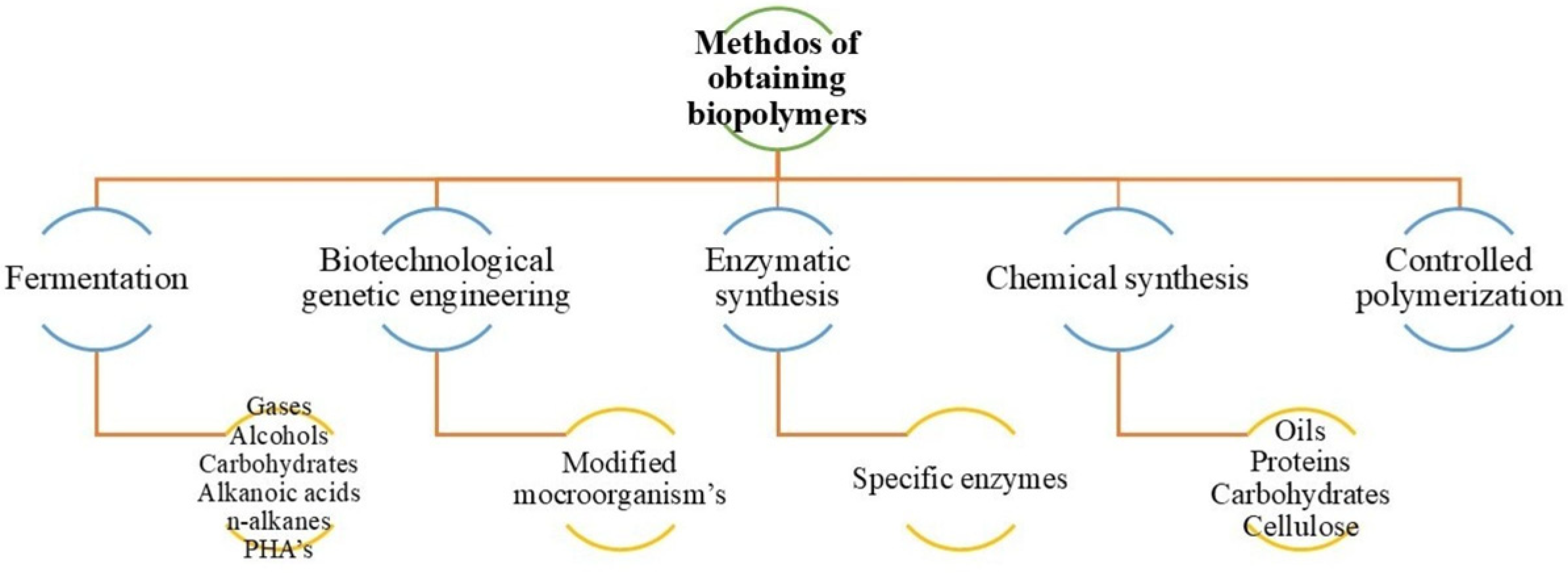
Five main methods can be used to obtain polymer bases produced from biological sources: production by natural or genetically modified microorganisms, the synthesis of monomers of biological origin, direct extraction from biomass, synthesis from petrochemicals, and combining any of the above techniques [21,43,44]. In Figure 1, summarizes the main methods of polymer bases.
  • Fermentation
Microbial fermentation is a prominent method for producing natural polymers in industrial settings. This process typically involves using media rich in carbon sources, which can be categorized into five groups: gases (methane and carbon dioxide), alcohols (ethanol, methanol, octanol, and glycerol), carbohydrates (starch, glucose, fructose, xylose, sucrose, etc.), alkanoic acids (oleic acid, butyric acid, propionic acid, valeric acid, hexanoic acid, and lauric acid), and n-alkanes (hexane, octane, and dodecane). Polyhydroxyalkanoates are an example of bioplastics produced through fermentation and can be used as an alternative to petroleum-based plastics. Countries such as Italy, China, Brazil, and the United States lead the production of polyhydroxyalkanoates, highlighting their environmentally friendly nature. The maximum technical yield achievable is up to 0.40–0.50 g of polymer per gram of glucose consumed (approximately 40–50%). Future technological advancements aim to approach this maximum theoretical yield in order to reduce production costs [6,19,45,46].
  • Biotechnological genetic engineering
Genetic engineering and biotechnology using genetically modified microorganisms play crucial roles in the production of specific biopolymers. This approach involves the production of proteins such as elastin and collagen. Bioplastics produced by chemical synthesis are obtained by using a monomer generated through the biotechnological conversion of a renewable source, such as the production of polylactic acid from lactic acid through sugar fermentation [27].
  • Enzymatic synthesis
A wide variety of biopolymers can be synthesized through enzymes; for example, chitosan is a polymer derived from chitin, obtained through the deacetylation of chitin using specific enzymes. The conversion efficiency of this method is usually high, ranging between 80% and 95% under optimized laboratory and advanced pilot plant conditions [35].
  • Chemical synthesis
Vegetable oils are considered the most suitable raw materials for polymer production due to their abundance in nature, low production costs, and environmentally friendly production. The chemical synthesis of polyurethanes occurs through polycondensation between a diisocyanate and a variety of glycols and macrodiols. The overall process yield from raw material to final polymer is estimated to be between 40% and 60% [33,47].
Microemulsions are dispersions composed of three phases: non-polar, polar, and surfactant. They are mixtures of oil and water with a bi-continuous structure of interconnected phases and are based on apolar solvents with surfactant molecules. Negative interfacial tension values allow for rapid microemulsion formation. This method is divided into four steps: microemulsification, confined solidification, isolation, and drying [48,49].
  • Controlled polymerization
The interfacial polymerization method is based on polycondensation at interfaces that generate layers through the rapid polymerization of monomers. To create a multifunctional monomer, it is dissolved in the core of the material and dispersed in an aqueous phase; a reagent is then added, which causes rapid polymerization on the surface of the core droplets, resulting in the formation of the capsule walls. While interfacial polymerization can be applied to produce larger microcapsules, most commercial interfacial polymerization processes generate smaller capsules, with diameters ranging from 20 to 30 microns. It is an extremely efficient process, with monomer-to-polymer conversion yields exceeding 95% [50].
On the other hand, in situ polymerization is carried out in the continuous phase. An oil–water emulsion is created using water-soluble polymers and high-shear mixers, achieving a stable emulsion with the required droplet size. A water-soluble melamine resin is introduced and dispersed in the mixture. Subsequently, the pH is lowered, initiating polycondensation and generating cross-linked resins that are deposited at the interface between the oil droplets and the aqueous phase. As the wall material hardens, microcapsules form, resulting in an aqueous dispersion of polymer-encapsulated oil droplets [50].
In controlled polymerization, biopolymers can also be synthesized by chemical reactions based on carbon heteroatom bonds. For example, polysaccharides are synthesized in laboratories through controlled chemical reactions [44].

4. Applications of Biopolymers

Conventional plastics are being replaced by bioplastics, which are used across a wide variety of applications, including the production of composite materials. Furthermore, the combination of biopolymers and nanomaterials generates advantageous mechanical properties, useable thermal stability, acts as a moisture barrier, is UV-resistant, and has also been attributed antimicrobial and antioxidant properties [12,19,31,51].
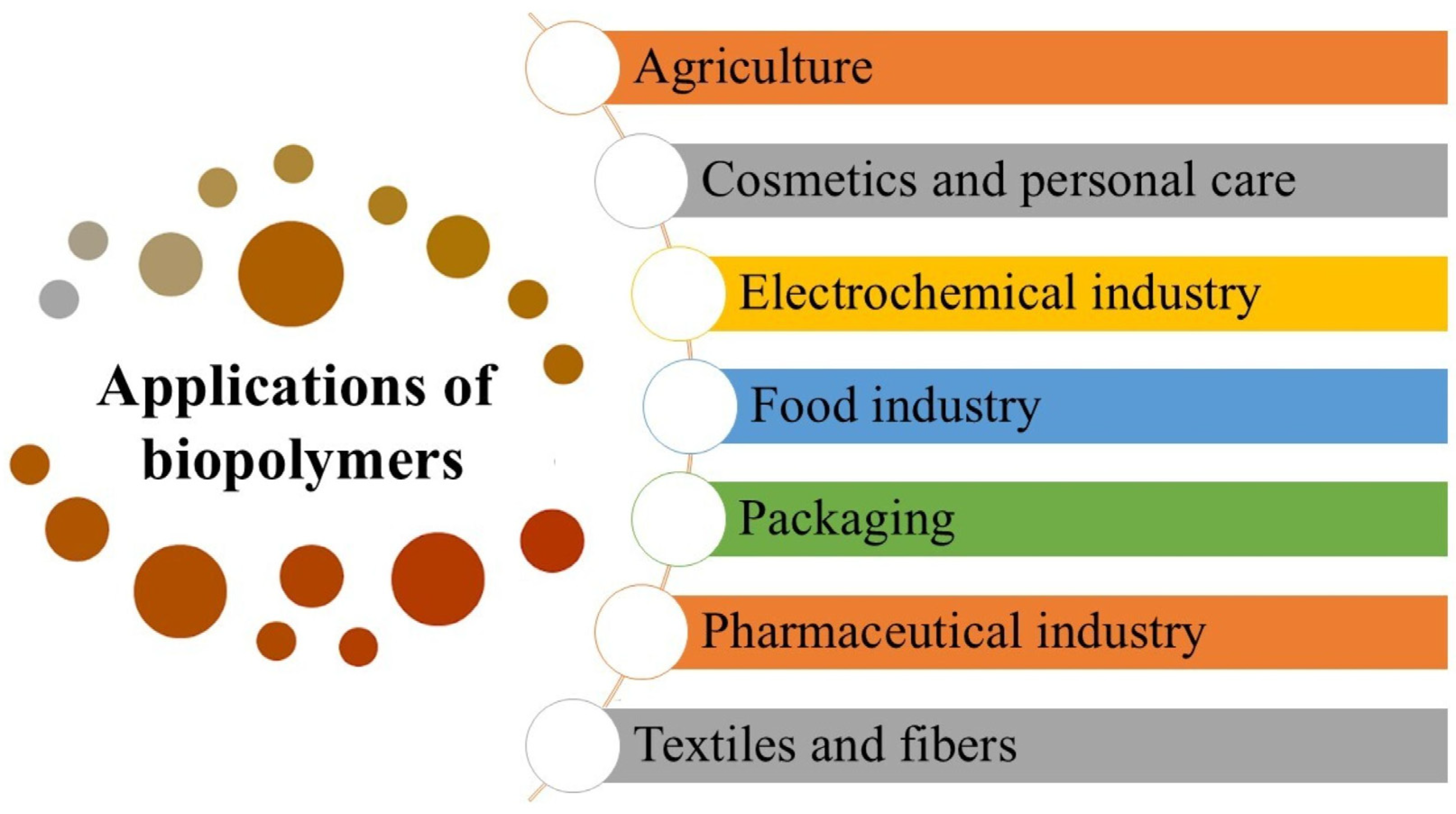
Biopolymers have a wide range of applications, including hydrogels, solar cells, asphalt, sensors, elastomers, and food packaging, which are summarized in Figure 2 and described below [16,52,53].
  • Agriculture
Biopolymers are used in agriculture to control the release of nutrients and pesticides, as well as to improve soil properties. Another application is the combination of unbound amino acids, oligopeptides, and polypeptides derived from the breakdown of protein-rich sources, which possess bio-stimulant properties beneficial to horticultural and agricultural crops [12,16,29].
  • Cosmetics and personal care
Hyaluronic acid and collagen are the most used biopolymers in the cosmetics industry and for the production of skincare products due to their moisturizing and filling properties. Chitosan is a biopolymer that helps with lip care, color adhesion, and fragrance—it is an elastic film that provides hydration and it has antimicrobial properties, widely used in color cosmetics, dental hygiene, hair care, and creams. Collagen also contains antioxidant properties, while hyaluronic acid helps protect the skin, as it contains moisturizing and anti-aging properties. Finally, cellulose has properties that promote soft and smooth hair. The industry also uses biopolymers in naturally derived cosmetic packaging made from polysaccharides and polylactic acid [12,15,54].
  • Electrochemical industry
The inherent electrical conductivity of polymers has applications in direct methanol fuel cells, corrosion inhibitors, chemical sensors, light-emitting diodes, devices based on polymeric transitions, electromagnetic interference shielding, and laser systems. This is due to their electronic conductivity, which can be effectively adjusted, positively influencing the efficiency of exchangeable redox processes [54]. Natural polymers outperform synthetic ones due to their environmental potential, low production cost, non-toxicity, electrochemical stability, and versatility. For example, tamarind seed polysaccharides, naturally derived from Tamarindus indica extract, are water-soluble and have generated interest due to their ability to tolerate different pH levels, their natural decomposition capability, and their lack of toxicity and irritation [55].
  • Food industry
Biopolymers are used in the food industry to encapsulate flavors and nutrients, and to form edible films and coatings to extend food shelf life. One example is films made from proteins, which retard microbial growth and can be used as coatings on fresh produce such as fruits and vegetables, and are also used to preserve meat products. These biological polymers offer economic advantages thanks to their low production costs. In the food industry, the use of nanotechnology to reinforce polymers with nanofillers or microfillers advanced significantly, especially in food packaging. Three-dimensional printing with biopolymers has also made inroads into personalized nutrition for the elderly, thereby helping to ensure sustainable food supply. In addition to traditional extrusion and injection molding techniques for binders, electrospinning has emerged as a crucial technique in food production, enabling the encapsulation of bioactive compounds in packaging and the creation of materials with improved texture, flavor, fat reduction, and salt content properties [33,54,56].
  • Packaging
Polylactic acid, a thermoplastic derived from the polymerization of lactic acid, is obtained primarily from corn, root, and sugarcane biomass. It has applications in the production of disposable items such as cups, cutlery, plates, and food containers. Thermoplastic starch and polyhydroxybutyrate are also used in the manufacture of biodegradable and compostable packaging. These materials offer a more environmentally friendly alternative to conventional plastics. Additionally, biological composites, including natural fibers and clay minerals, have emerged as promising materials for use in active and smart food packaging applications. This market is growing rapidly, with an annual growth rate close to 4%, and is estimated to reach a value of approximately $10.7 billion by 2032 [22,24,33,35,56,57,58,59,60].
  • Pharmaceutical industry
Biopolymers used in the pharmaceutical industry, such as the manufacture of sutures, dressings, implants, and medical devices, have demonstrated good biocompatibility and controlled degradability; for example, polylactic acid and polyglycolic acid are used in the manufacture of resorbable medical products [14,17,29,60].
  • Textiles and fibers
Chitosan and cellulose are the biopolymers most commonly used in the production of textile fibers, as they are associated with enhanced properties such as strength and moisture absorption in the resultant fabrics. Currently, the textile industry is developing new methods to incorporate biopolymers through microencapsulation and implement new applications that improve colors, aromas, and antimicrobial properties without altering the fabric’s qualities. Some examples include color-changing shirts, thermoregulating car seats, insect-repellent military uniforms, ski gloves, and others [12,48,52,60,61].

5. Advantages and Disadvantages of Biopolymers

Due to a range of economic, political, and international factors, the total bio-derived polymer production in 2020 was estimated to have reached approximately 4.2 million tons, representing approximately 1% of the total production volume of fossil-derived polymers. Furthermore, the annual growth rate of biopolymer production has been approximately 8%, outpacing overall polymer growth and demonstrating the steady growth of the biopolymer industry. As a result, of the significant social interest in promoting sustainability, and the significant recent improvements in the quality and functionality of biopolymers, there has been a consistent increase in biopolymer production. For example, China has become the world’s largest producer of bioplastics, mostly obtained from sugarcane and corn biomass. It has also implemented regulations prohibiting the use of non-degradable plastics [6,62].
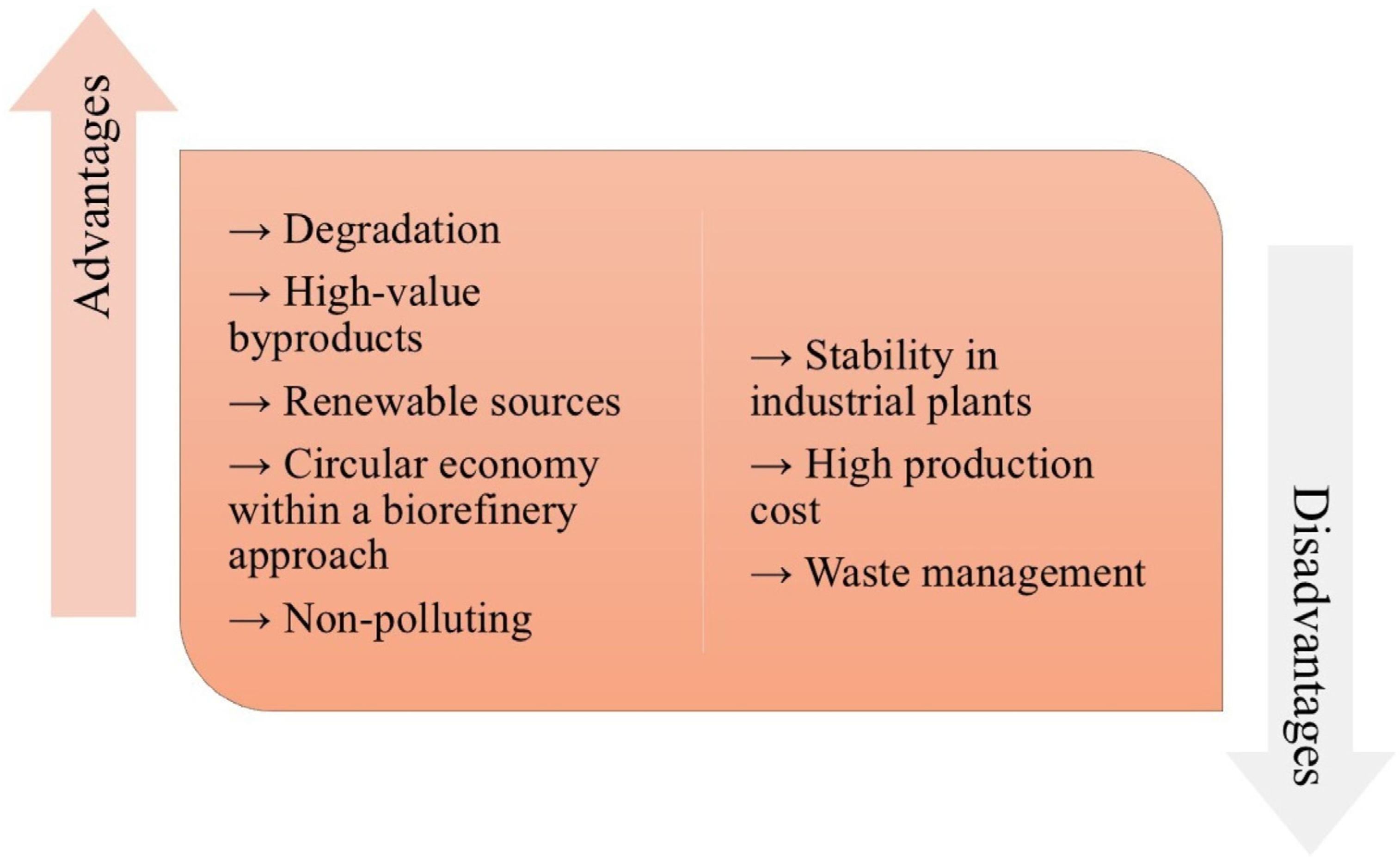
The most notable advantages of bioplastics are that they do not release toxic compounds into the environment as they degrade, they adsorb a net amount of CO2 from the atmosphere, and they emit fewer greenhouse gases. Furthermore, their production does not significantly compete with food or agricultural resources, as it uses only a minimal fraction of the available land to obtain the needed raw materials, which, above all, can be considered renewable resources. The land used for biopolymer production represents 0.01% of global agricultural land use in 2021 alone, with projected growth to 0.06% by 2026 [2,59]. Figure 3 summarizes the main advantages and disadvantages of biopolymers.
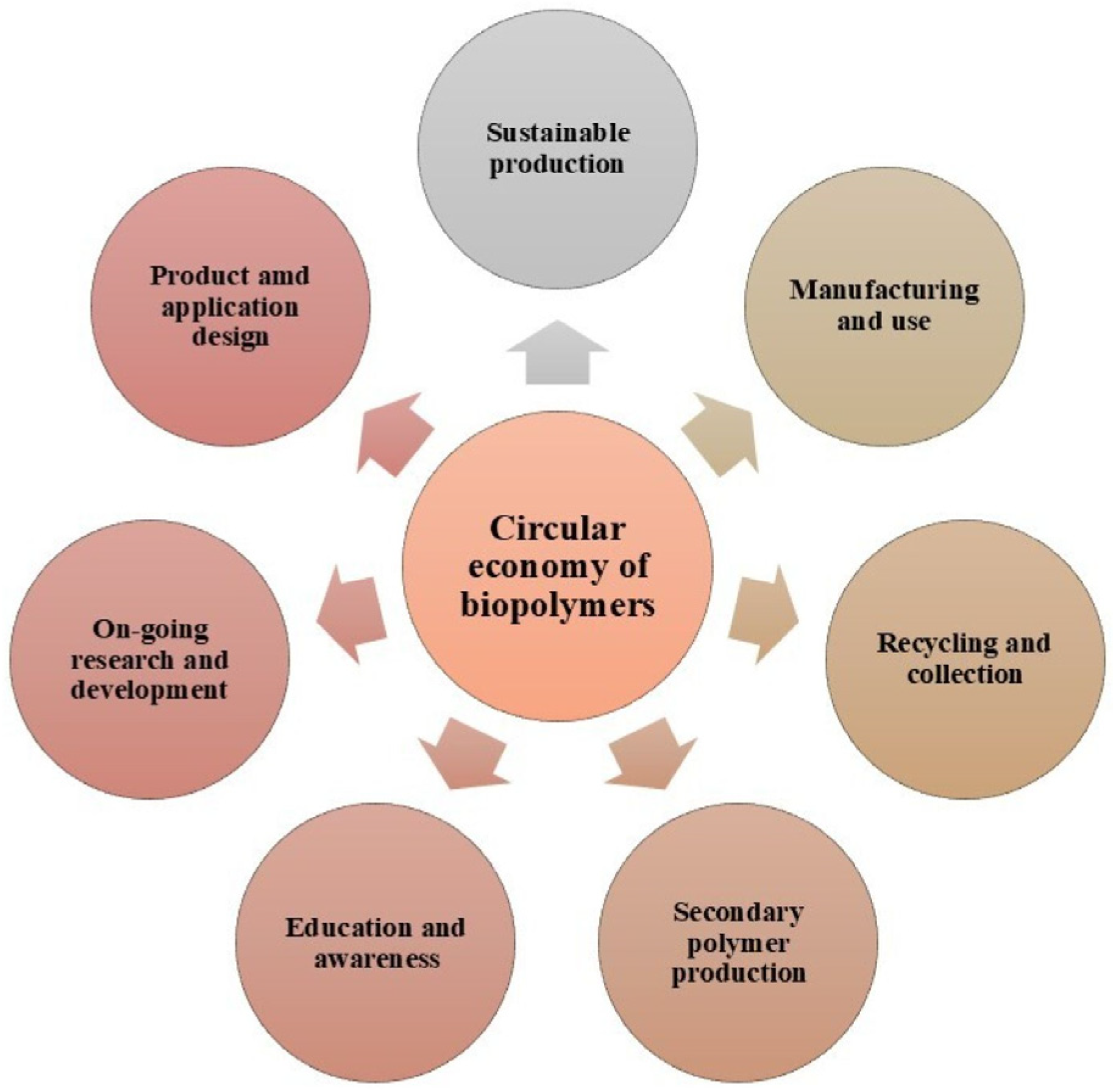
In the context set out above, the proper management of bioplastics is of crucial importance, specifically in terms of the circular economy (Figure 4). Bioplastics are an example of how the bioeconomy can contribute to sustainable development, as they are highly durable, lightweight, protective, and versatile compared to conventional plastics. They also offer the advantage of being made from renewable resources, and they generate less pollution when to the time comes for their recycling, incineration, disposal in a landfill, or biodegradation. On the other hand, they do have the disadvantage that, due to the diversity and complexity of bioplastic compounds, recycling may not be the most appropriate option, as recycled bioplastics tend to lose quality due to degradation, limiting their effectiveness [2,6,26,38,63,64].
Bio-based polyurethanes, unlike petroleum-derived polymers, which are highly polluting and nonrenewable, are easy to produce, do not generate toxic pollutants, and have biodegradable properties. The advantages of biopolymers are their low production cost, low toxicity, high transparency, and good biodegradability; however, they can have disadvantages such as low flexibility, low mechanical strength, and sensitivity to water. Therefore, depending on their application, they are complemented with other additives and polymers to improve their properties [10,16].
Producing biopolymers using a biorefinery approach reduces production costs by up to 50%. Furthermore, it leverages the concept of the circular economy to produce value-added commercial byproducts with high ecological and economic importance [21].
Interest in the production of bioplastics from algae has increased in recent years as this technology emerges and develops. Given that this is a new technology, critical environmental aspects must be identified during the early stages of its development, principally via pilot-scale testing. This will provide opportunities to implement process design prior to the implementation of further improvements during their production on an industrial scale [65].
Polymers obtained from starch blends have the advantage of being inexpensive to produce and are suitable for processing with a wide variety of non-food grains and vegetables. However, they have the disadvantage of being water resistant and having low mechanical strength, so additives are often added to improve their properties [18].
Among the main challenges facing the production of biodegradable polymers are scaling up to industrial manufacture, developing the technology to demonstrate process efficiency, obtaining the optimum performance from the techniques used, and maximizing development opportunities. These are necessary steps to promote an environmentally sustainable bioplastics industry with strong economic potential. While progress has been made in developing the production of bio-based blasting, obstacles such as high production costs remain. Although the collection, sorting, and proper management of waste remain complex and costly, in some cases, the most appropriate option for disposing of bioplastics at the end of their useful life is organic recycling [2,66,67,68].

6. Importance of Biopolymers in Mexico

Bio-based plastics can be obtained from renewable biomass such as sugarcane, corn, algae, vegetable oils, and other sources. Starch-based bioplastics have experienced significant demand for their use in food packaging, bags, and other applications.
Some studies report on edible cassava films, where two nanofiber-reinforced films can be obtained under optimal conditions. They conclude that such films can be used in food packaging. Cassava is a tuber that is produced in six Mexican states, most notably Tabasco with 13.3 thousand tons, Michoacán with 3.3 thousand tons, and Morelos with 1.8 thousand tons, demonstrating the availability of raw materials for processing this starch into plastic films [69].
Another raw material that has been successfully used in the production of bioplastics is corn, which yields starch amounting to 70% of its mass, making it a biomass resource that can readily be used for bioplastic production. Moreover, its degradation is estimated at 90 days. Mexico ranks 8th in global corn production, with at least 59 native varieties registered. On other hand, potato planting is carried out across most of Mexico, with the main producers being the states of Sinaloa, Sonora, Puebla, Veracruz, Mexico State, Nuevo León, and Guanajuato [4,70,71,72].
Potatoes rank 17th among the country’s agricultural products in terms of cultivation area and production. In 2017, over 1.7 million tons of this tuber were produced, providing seeds for further cultivation and meeting the food needs of the population, with an average consumption per person of 14.8 kg. The starch and resin from this tuber can both be used to produce bioplastics [73].

7. Production of Polyurethane from Castor Oil

Polyurethanes are commonly synthesized from chemical compounds derived from fossil fuels; therefore, alternatives have been developed for their production from renewable resources, such as the production of biopolyols and -diols synthesized from vegetable oils. Castor oil, for example, possesses characteristics suitable for the production of polyurethanes due to its hydroxyl groups and the fact that it does not require pretreatment [74,75,76].
Castor oil, composed primarily of ricinoleic acid (approximately 90%), is a valuable raw material for polyurethane synthesis. Ricinoleic acid’s unique structure facilitates the polymerization of carbon chains, which is the basis for the production of thermoplastic polyurethanes. Polyurethanes obtained from castor oil are currently being applied in biomedicine, where they can be used to formulate interesting bio-nanocomposites [47,77].
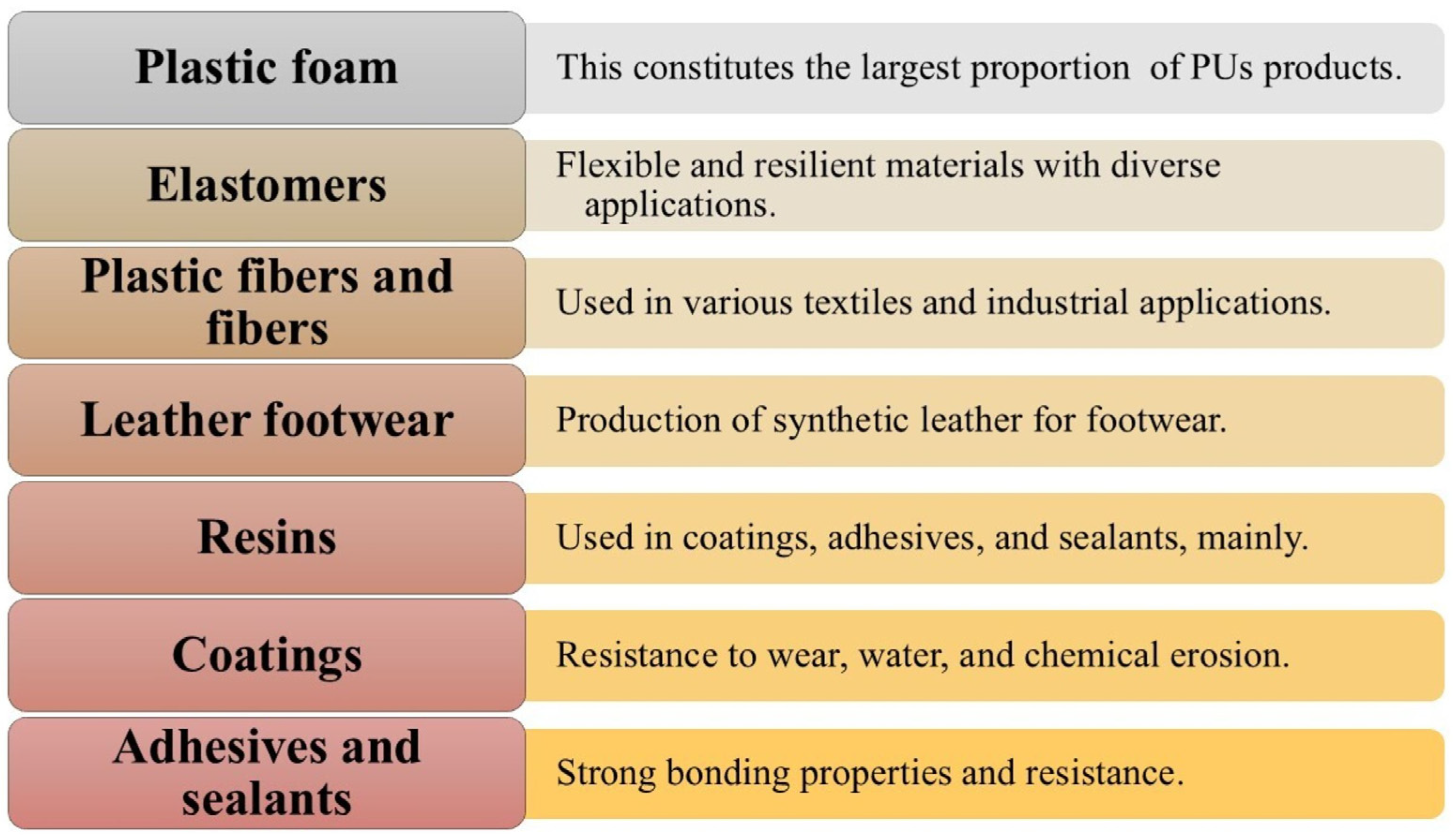
Polyurethanes are among the most widely used polymeric materials, as they are known for their versatility and adaptability [33,78]. Their wide range of applications, coupled with the possibility of chemical modification of their base structure, makes them suitable for protective coatings. To promote sustainability and address the dwindling supply of petroleum-based raw materials, the use of polyols derived from biological sources, including castor oil, soybean oil, linseed oil, cottonseed oil, and cardanol, has become increasingly prevalent in current polyurethane formulations. Figure 5 summarizes the application of polyurethane-derived products by categories [79,80,81,82,83].
Some studies have developed several monomers derived from vegetable oils, such as polyols and emulsifiers, and their corresponding water-based polyurethanes. Those that use water instead of organic solvents have been integrated into different applications in fields such as coatings, sound-absorbing materials, adhesives, flexible electronic devices, and sealants. Interestingly, the incorporation of long, flexible fatty acid chains and specific triglyceride structures into the polyurethane base structure confers exceptional flexibility and remarkable water resistance to the resulting polymeric films [84].
Polyurethane foams are notable for their rapid oil absorption, thanks to their porous, hydrophobic, and oleophilic properties. For example, açaí waste, which is used in the production of polyurethane foams, possesses advantages such as low manufacturing costs, low density, and high biodegradability, which contribute to its economic viability [85].
The polyurethane market is generally divided into five asymmetric segments, with foams representing 65% of the market, followed by coatings with 13%, elastomers with 12%, adhesives with 7%, and others, including biomedical applications, with 3%.
Two main types of polyurethane foams can be identified: flexible foams with an open-cell structure and rigid foams with a closed-cell structure. Naturally, it is also possible to develop intermediate systems, such as sprayed foams, which are rigid but boast open-cell structures. The structures and properties of polyurethane foams can be adjusted by modifying various factors, such as the composition and quantity of the used monomers, the use of catalysts, the presence of surfactants, and the incorporation of foaming agents. Polyurethane coatings made with vegetable oils have proven effective, exhibiting outstanding characteristics such as exceptional strength, durability, and toughness, as well as possessing notable resistance to abrasion, corrosion, and chemicals, and flexibility at low temperatures. These coatings have been applied successfully in industry, and have also contributed to the reduction or elimination of the use of volatile organic compounds. The use of vegetable oils as a national renewable resource represents a sustainable means to mitigate losses due to corrosion and environmental degradation [86].
For this reason, the development of polymers derived from castor oil through a biorefinery approach facilitates the use of all fractions to obtain functional monomers and sustainable polymers. The aim is to progressively replace petroleum-derived polymers without compromising performance, compatibility, and industrial scalability. Furthermore, castor oil contains a high percentage of ricinoleic acid, which provides hydroxyl and a double bond advantageous for functionalization, allowing the production of epoxides to produce epoxy resins, high-functionality polyols, biodegradable polyesters, and polyurethane networks derived from polyols; glycerol and other co-products provide low-cost chemical platforms and monomers. The inclusion of the biorefinery approach seeks to minimize waste and maximize conversion through pilot and scalable processes, along with environmental impact assessment using lifecycle analysis.
Some of the advantages of using castor oil for biopolymer production include feedstock renewability, high chemical functionality due to the hydroxyl group, reaction versatility and compatibility with existing industrial processes, adjustable crosslinking density, improved adhesion and mechanical properties when applied in coatings and elastomers, and the promotion of an integrated and sustainable biorefinery ecosystem. In summary, the biorefinery strategy for castor oil polymer production enables the transformation of abundant biomass resources into functional, high-value-added polymers, gradually replacing petrochemical derivatives without compromising performance or safety. Epoxidation, polyolation, and polycondensation are routes that offer versatile platforms for coatings, adhesives, and composite materials, with clear environmental advantages and the potential for co-product valorization. Going forward, it is recommended to focus on critical steps, including pilot-scale validation, process optimization, and environmental assessment, to demonstrate technical, economic, and regulatory viability, thereby advancing integration with the automotive, cosmetics, and consumer industries.

8. Conclusions

The widespread use of synthetic polymers derived from petroleum has generated serious environmental impacts due to their persistence in ecosystems and the emissions associated with their production and disposal. This state of affairs has driven the search for sustainable alternatives that reduce dependence on fossil resources. In this context, biopolymers are emerging as a viable and strategic option within the circular economy as these materials, made from renewable sources such as starch, cellulose, lignin, and vegetable oils, offer functional properties comparable to those of conventional plastics.
The methods most commonly used to produce biopolymers are the controlled polymerization of biomass-derived monomers, starting with lactic acid to obtain polylactic acid; microbial fermentation, which allows for the synthesis of polyhydroxyalkanoates; and the chemical modification of natural biopolymers, such as cellulose or chitin, to improve their strength and thermal stability.
From an environmental perspective, biopolymer production significantly reduces CO2 emissions and the generation of persistent waste. Furthermore, the use of agricultural waste or industrial byproducts as raw materials promotes a circular economy based on the comprehensive use of resources. The biodegradability of these materials reduces the accumulation of plastics in ecosystems, fostering the preservation of biodiversity, and improving the quality of soils and water bodies. From an economic perspective, although the production costs of biopolymers still exceed those of conventional plastics, technological improvements and process optimization are narrowing this gap. In the long term, the internalization of environmental costs and international regulations on single-use plastics will increase the competitiveness of green polymers.
This review includes studies that have demonstrated that biopolymers significantly reduce the carbon footprint of plastics, given that their life cycle is based on the use of renewable resources and the natural degradation of their waste. From an environmental perspective, their use contributes to decreasing the accumulation of non-biodegradable waste. Furthermore, from an economic standpoint, although biopolymers currently suffer from higher production costs than petrochemical plastics, technological innovations, improved fermentation yields, and waste valorization are narrowing this gap.
However, challenges such as production costs remain, as does the need to improve mechanical properties and waste management. Research into production processes and innovation in the use of raw materials remain crucial to overcoming these obstacles and fully realizing the potential of bioplastics and biopolymers in the circular economy of the future, thereby reducing dependence on petroleum-derived plastics.
Overall, the production of biopolymers represents a technological alternative means of transitioning to sustainable industrial models. Implementing these materials can contribute to mitigating climate change, fostering rural development, and strengthening the circular economy. As scientific advances optimize synthesis and transformation processes, biopolymers will solidify their role as environmentally friendly substitutes for conventional plastics, representing a comprehensive solution with positive environmental, social, and economic impacts.

Author Contributions

Conceptualization, F.S.-S. and E.H.-H.; writing—original draft preparation, C.M.-C. and D.R.-S.; writing—review and editing, C.B.-F. and F.H.-Q.; supervision, F.S.-S. All authors have read and agreed to the published version of the manuscript.

Funding

This research received no external funding.

Data Availability Statement

There is not new or additional data were created.

Conflicts of Interest

The authors declare no conflicts of interest.

References

  1. Rahardiyan, D.; Moko, E.M.; Tan, J.S.; Lee, C.K. Thermoplastic starch (TPS) bioplastic, the green solution for single-use petroleum plastic food packaging—A review. Enzym. Microb. Technol. 2023, 168, 110260. [Google Scholar] [CrossRef]
  2. Folino, A.; Pangallo, D.; Calabrò, P.S. Assessing bioplastics biodegradability by standard and research methods: Current trends and open issues. J. Environ. Chem. Eng. 2023, 11, 109424. [Google Scholar] [CrossRef]
  3. Islam, M.S.; Islam, M.M.; Islam, K.N.; Sobuz, M.H.R. Biodegradable and Bio-Based Environmentally Friendly Polymers. Encycl. Mater. Plast. Polym. 2022, 2, 820–836. [Google Scholar] [CrossRef]
  4. Jayakumar, A.; Radoor, S.; Siengchin, S.; Shin, G.H.; Kim, J.T. Recent progress of bioplastics in their properties, standards, certifications and regulations: A review. Sci. Total Environ. 2023, 878, 163156. [Google Scholar] [CrossRef] [PubMed]
  5. Rahman, M.H.; Bhoi, P.R. An overview of non-biodegradable bioplastics. J. Clean. Prod. 2021, 294, 126218. [Google Scholar] [CrossRef]
  6. Cheah, W.Y.; Er, A.C.; Aiyub, K.; Yasin, N.H.M.; Ngan, S.L.; Chew, K.W.; Khoo, K.S.; Ling, T.C.; Juan, J.C.; Ma, Z.; et al. Current status and perspectives of algae-based bioplastics: A reviewed potential for sustainability. Algal Res. 2023, 71, 103078. [Google Scholar] [CrossRef]
  7. Mujtaba, M.; Fraceto, L.F.; Fazeli, M.; Mukherjee, S.; Savassa, S.M.; Medeiros, G.A.D.; Pereira, A.D.E.S.; Mancini, S.D.; Lipponen, J.; Vilaplana, F. Lignocellulosic biomass from agricultural waste to the circular economy: A review with focus on biofuels, biocomposites and bioplastics. J. Clean. Prod. 2023, 402, 136815. [Google Scholar] [CrossRef]
  8. Andreeßen, C.; Steinbüchel, A. Recent developments in non-biodegradable biopolymers: Precursors, production processes, and future perspectives. Appl. Microbiol. Biotechnol. 2019, 103, 143–157. [Google Scholar] [CrossRef]
  9. Celletti, S.; Fedeli, R.; Ghorbani, M.; Loppi, S. Impact of starch-based bioplastic on growth and biochemical parameters of basil plants. Sci. Total Environ. 2023, 856, 159163. [Google Scholar] [CrossRef]
  10. Xu, H.; Chen, L.; Xu, Z.; McClements, D.J.; Cheng, H.; Qiu, C.; Long, J.; Ji, H.; Meng, M.; Jin, Z. Structure and properties of flexible starch-based double network composite films induce by dopamina selfi-polymerization. Carbohydr. Polym. 2023, 299, 120106. [Google Scholar] [CrossRef]
  11. Kanagesan, K.; Abdulla, R.; Derman, E.; Sabullah, M.K.; Govindan, N.; Gansau, J.A. A sustainable approach to green algal bioplastics production from brown seaweeds of Sabah, Malaysia. J. King Saud Univ.—Sci. 2022, 34, 102268. [Google Scholar] [CrossRef]
  12. Pesante, G.; Frison, N. Recovery of bio-based products from PHA-rich biomass obtained from biowaste: A review. Bioresour. Technol. Rep. 2023, 21, 101345. [Google Scholar] [CrossRef]
  13. Felix, M.; Perez-Puyana, V.; Romero, A.; Guerrero, A. Development of protein-based bioplastics modified with different additives. J. Appl. Polym. Sci. 2017, 134, 45430. [Google Scholar] [CrossRef]
  14. Ferdinánd, M.; Várdai, R.; Móczó, J.; Pukánszky, B. Poly (lactic acid) reinforced with synthetic polymer fibers: Interactions, structure and properties. Compos. Part A Appl. Sci. Manuf. 2023, 164, 107318. [Google Scholar] [CrossRef]
  15. Faria, M.; Cunha, C.; Gomes, M.; Mendonça, I.; Kaufmann, M.; Ferreira, A.; Cordeiro, N. Bacterial cellulose biopolymers: The sustainable solution to water-polluting microplastics. Water Res. 2022, 222, 118952. [Google Scholar] [CrossRef] [PubMed]
  16. Yu, Z.; Yang, Y.; Wang, C.; Shi, G.; Xie, J.; Gao, B.; Li, Y.C.; Wan, Y.; Cheng, D.; Shen, T.; et al. Nano-soy-protein microcapsule-enabled self-healing biopolyurethane-coated controlled-release fertilizer: Preparation, performance, and mechanism. Mater. Today Chem. 2021, 20, 100413. [Google Scholar] [CrossRef]
  17. Mohammad, S.H.; Bhukya, B. Biotransformation of toxic lignin and aromatic compounds of lignocellulosic feedstock into eco-friendly biopolymers by Pseudomonas putida KT2440. Bioresour. Technol. 2022, 363, 128001. [Google Scholar] [CrossRef]
  18. Venâncio, C.; Lopes, I.; Oliveira, M. Bioplastics: Known effects and potential consequences to marine and estuarine ecosystem services. Chemosphere 2022, 309, 136810. [Google Scholar] [CrossRef]
  19. Akhter, S.; Khan, M.A.; Mahmud, S.; Biki, S.P.; Shamsuzzoha, M.; Hasan, S.M.K.; Ahmed, M. Biosynthesis and characterization bacterial nanocellulose and polyhydroxyalkanoate films using bacterial strains isolated from fermented coconut water. Process Biochem. 2022, 122, 214–223. [Google Scholar] [CrossRef]
  20. Peramune, D.; Manatunga, D.C.; Dassanayake, R.S.; Premalal, V.; Liyanage, R.N.; Gunathilake, C.; Abidi, N. Recent advances in biopolymer-based advanced oxidation processes for dye removal applications: A review. Environ. Res. 2022, 215, 114242. [Google Scholar] [CrossRef]
  21. Ali, S.S.; Elsamahy, T.; Abdelkarim, E.A.; Al-Tohamy, R.; Kornaros, M.; Ruiz, H.A.; Zhao, T.; Li, F.; Sun, J. Biowastes for biodegradable bioplastics production and end-of-life scenarios in circular bioeconomy and biorefinery concept. Bioresour. Technol. 2022, 363, 127869. [Google Scholar] [CrossRef]
  22. Li, H.; Zhou, M.; Mohamed, A.E.Y.; Chen, L.; Zhou, C. From fruit and vegetable waste to degradable bioplastic films and advanced materials: A review. Sustain. Chem. Pharm. 2022, 30, 100859. [Google Scholar] [CrossRef]
  23. Rajgadia, N.; Debnath, M. Biodegradable mulch utilizing bioplastic biopolymer polyhydroxyalkanoates. Mater. Today Proc. 2023, 79, 411–419. [Google Scholar] [CrossRef]
  24. Kiran, V.G.; Varsha, A.K.; Vijayalaksmi, M.; Govindaraj, V.; Anisha, M.; Gokul, M.; Eznhil, E.N.; Bebin, M.; Prasath, T.A.; Chezhiyan, P.P. Synthesis and Characterization of Banana Peel Starch-based Bioplastic for Intravenous Tubes Preparation. Mater. Today Commun. 2022, 33, 104464. [Google Scholar] [CrossRef]
  25. Kong, X.; Huang, N.; Hu, S.; Zhang, X.; Ran, Y. Structural characterization and confined pyrolysis of resistant aliphatic biopolymer derived from cyanobacteria. Org. Geochem. 2022, 165, 104352. [Google Scholar] [CrossRef]
  26. Boisseaux, P.; Hopkinson, P.; Santillo, D.; Smith, C.; Garmulewicz, A.; Powell, Z.; Galloway, T. Environmental safety of second and third generation bioplastics in the context of the circular economy. Ecotoxicol. Environ. Saf. 2023, 256, 114835. [Google Scholar] [CrossRef] [PubMed]
  27. Fredi, G.; Dorigato, A. Recycling of bioplastic waste: A review. Adv. Ind. Eng. Polym. Res. 2021, 4, 159–177. [Google Scholar] [CrossRef]
  28. Kanth, S.; Puttaiahgowda, Y.M.; Kulal, A. Synthesis, characterization, and antimicrobial activities of a starch-based polymer. Carbohydr. Res. 2023, 532, 108900. [Google Scholar] [CrossRef]
  29. Fiejdasz, S.; Gilarska, A.; Horak, W.; Radziszewska, A.; Strączek, T.; Szuwarzyński, M.; Nowakowska, M.; Kapusta, C. Structurally stable hybrid magnetic materials based on natural polymers—Preparation and characterization. J. Mater. Res. Technol. 2021, 15, 3149–3160. [Google Scholar] [CrossRef]
  30. Wang, H.; Wang, C.; Guo, F.; Yu, J.; Zhang, Y.; Harder, M.; Ntaikou, I.; Antonopoulou, G.; Lyberatos, G.; Yan, Q. Enhancement of biosynthesis of polyhydroxyalkanoates (PHA) from Taihu blue algae by adding by-product acetic acid. J. Biotechnol. 2023, 363, 32–39. [Google Scholar] [CrossRef] [PubMed]
  31. Zamakhaeva, S.A.; Fedorov, D.N.; Trotsenko, Y.A. Methylotrophic producers of bioplastics. Appl. Biochem. Microbiol. 2017, 53, 389–400. [Google Scholar] [CrossRef]
  32. Chakraborty, I.P.; Govindaraju, I.; Managuli, V.; Banik, S.; Mahato, K.K.; Mazumder, N. Preparation and characterization of citric acid crosslinked starch based bioplastic. Mater. Today Proc. 2022, 55, 26–30. [Google Scholar] [CrossRef]
  33. Tran, M.H.; Lee, E. Development and optimization of solvothermal liquefaction of marine macroalgae Saccharina japonica biomass for biopolyol and biopolyurethane production. J. Ind. Eng. Chem. 2020, 81, 167–177. [Google Scholar] [CrossRef]
  34. Jenova, I.; Venkatesh, K.; Karthikeyan, S.; Madeswaran, S.; Sheeba, D.J. Study on the electrical properties of gum tragacanth—LiClO4 natural polymer electrolyte. Mater. Today Proc. 2023. [Google Scholar] [CrossRef]
  35. Liao, J.; Zhou, Y.; Hou, B.; Zhang, J.; Huang, H. Nano-chitin: Preparation strategies and food biopolymer film reinforcement and applications. Carbohydr. Polym. 2023, 305, 120553. [Google Scholar] [CrossRef] [PubMed]
  36. Idris, S.N.; Amelia, T.S.; Bhubalan, K.; Lazim, A.M.M.; Zakwan, N.A.M.A.; Jamaluddin, M.I.; Santhanam, R.; Amirul, A.A.A.; Vigneswari, S.; Ramakrishna, S. The degradation of single-use plastics and commercially viable bioplastics in the environment: A review. Environ. Res. 2023, 231, 115988. [Google Scholar] [CrossRef]
  37. Grossule, V.; Zanatta, S.; Modesti, M.; Lavagnolo, M.C. Treatment of food waste contaminated by bioplastics using BSF larvae: Impact and fate of starch-based bioplastic films. J. Environ. Manag. 2023, 330, 117229. [Google Scholar] [CrossRef]
  38. Jin, Y.; Lenzen, M.; Montoya, A.; Laycock, B.; Yuan, Z.; Lant, P.; Li, M.; Wood, R.; Malik, A. Greenhouse gas emissions, land use and employment in a future global bioplastics economy. Resour. Conserv. Recycl. 2023, 193, 106950. [Google Scholar] [CrossRef]
  39. Yuan, Y.; He, N.; Xue, Q.; Guo, Q.; Dong, L.; Haruna, M.H.; Zhang, X.; Li, B.; Li, L. Shellac: A promising natural polymer in the food industry. Trends Food Sci. Technol. 2021, 109, 139–153. [Google Scholar] [CrossRef]
  40. Baek, J.; Ramasamy, M.; Cho, D.G.; Soo, C.C.C.; Kapar, S.; Lee, J.Y.; Tam, K.C. A new approach for the encapsulation of Saccharomyces cerevisiae using shellac and cellulose nanocrystals. Food Hydrocoll. 2023, 134, 108079. [Google Scholar] [CrossRef]
  41. Thombare, N.; Kumar, S.; Kumari, U.; Sakare, P.; Yogi, R.K.; Prasad, N.; Sharma, K.K. Shellac as a multifunctional biopolymer: A review on properties, applications and future potential. Int. J. Biol. Macromol. 2022, 215, 203–223. [Google Scholar] [CrossRef]
  42. Cho, B.G.; Lee, J.E.; Jeon, S.Y.; Chae, H.G. A study on miscibility properties of polyacrylonitrile blending films with biodegradable polymer, shellac. Polym. Test. 2023, 121, 107983. [Google Scholar] [CrossRef]
  43. Wang, X.; Zhang, H.J.; Yang, Y.; Chen, Y.; Zhu, X.; You, X. Biopolymer-based self-healing hydrogels: A short review. Giant 2023, 16, 100188. [Google Scholar] [CrossRef]
  44. Oberti, T.G.; Cortizo, M.S. Homo- and copolymers based on dialkyl fumarates: A review on radical polymerization, properties, current and future applications. Eur. Polym. J. 2023, 198, 112389. [Google Scholar] [CrossRef]
  45. Lim, S.W.; Kansedo, J.; Tan, I.S.; Tan, Y.H.; Nandong, J.; Lam, M.K.; Ongkudon, C.M. Microbial valorization of oil-based substrates for polyhydroxyalkanoates (PHA) production—Current strategies, status, and perspectives. Process Biochem. 2023, 130, 715–733. [Google Scholar] [CrossRef]
  46. Zhou, W.; Bergsma, S.; Colpa, D.I.; Euverink, G.J.W.; Krooneman, J. Polyhydroxyalkanoates (PHAs) synthesis and degradation by microbes and applications towards a circular economy. J. Environ. Manag. 2023, 341, 118033. [Google Scholar] [CrossRef]
  47. Rajalakshmi, P.; Marie, J.M.; Xavier, A.J.M. Castor oil-derived monomer ricinoleic acid based biodegradable unsaturated polyesters. Polym. Degrad. Stab. 2019, 170, 109016. [Google Scholar] [CrossRef]
  48. Peng, X.; Umer, M.; Pervez, M.N.; Hasan, K.F.; Habib, M.A.; Islam, M.S.; Lin, L.; Xiong, X.; Naddeo, V.; Cai, Y. Biopolymers-based microencapsulation technology for sustainable textiles development: A short review. Case Stud. Chem. Environ. Eng. 2023, 7, 100349. [Google Scholar] [CrossRef]
  49. Asgari, S.; Saberi, A.H.; Clements, D.J.M.; Lin, M. Microemulsions as nanoreactors for synthesis of biopolymer nanoparticles. Trends Food Sci. Technol. 2019, 86, 118–130. [Google Scholar] [CrossRef]
  50. Nelson, G. Microencapsulated colourants for technical textile application. Adv. Dye. Finish. Tech. Text. 2013, 78–104. [Google Scholar] [CrossRef]
  51. Thomas, A.P.; Kasa, V.P.; Dubey, B.K.; Sen, R.; Sarmah, A.K. Synthesis and commercialization of bioplastics: Organic waste as a sustainable feedstock. Sci. Total Environ. 2023, 904, 167243. [Google Scholar] [CrossRef]
  52. Singh, P.; Singari, R.M.; Mishra, R.S.; Bajwa, G.S. A review on recent development on polymeric hybrid composite and analysis of their enhanced mechanical performance. Mater. Today Proc. 2022, 56, 3692–3701. [Google Scholar] [CrossRef]
  53. Krishnan, A.; Kanniyappan, P.; Vaithilingam, S.; Govindraj, L.; Muthukaruppan, A. Bio-polymer based thermally stable composites as catalytic support materials for energy harvesting process. Int. J. Hydrogen Energy 2023, 50, 1484–1495. [Google Scholar] [CrossRef]
  54. Gupta, I.; Cherwoo, L.; Bhatia, R.; Setia, H. Biopolymers: Implications and application in the food industry. Biocatal. Agric. Biotechnol. 2022, 46, 102534. [Google Scholar] [CrossRef]
  55. Saha, A.; Kumar, K.V.; Jyothi, N.K.; Kiran, M.G.; Rao, M.C. Structural and electrical properties of TSP: CH3COONa amorphous Biopolymer electrolytes for electrochemical cell applications. J. Non-Cryst. Solids 2023, 616, 122465. [Google Scholar] [CrossRef]
  56. Kumar, R.K.S.; Dhilipkumar, T.; Jessie, J.A.; Gaayathri, K.K.; Arumugam, S. Advancements in bio-polymeric composite materials for active and intelligent food packaging: A comprehensive review. Mater. Today Proc. 2023. [Google Scholar] [CrossRef]
  57. Atiwesh, G.; Mikhael, A.; Parrish, C.C.; Banoub, J.; Lee, T.A.T. Environmental impact of bioplastic use: A review. Heliyon 2021, 7, e07918. [Google Scholar] [CrossRef]
  58. Abang, S.; Wong, F.; Sarbatly, R.; Sariau, J.; Baini, R.; Besar, N.A. Bioplastic classifications and innovations in antibacterial, antifungal, and antioxidant applications. J. Bioresour. Bioprod. 2023, 8, 361–387. [Google Scholar] [CrossRef]
  59. Mohammed, A.; Ward, K.; Lee, K.Y.; Dupont, V. The environmental impact and economic feasibility assessment of composite calcium alginate bioplastics derived from Sargassum. Green Chem. 2023, 25, 5501–5516. [Google Scholar] [CrossRef]
  60. Uyan, M.; Celiktas, M.S. Evaluation of the bio-based materials utilization in shape memory polymer composites production. Eur. Polym. J. 2023, 195, 112196. [Google Scholar] [CrossRef]
  61. Venkatarajan, S.; Subbu, C.; Athijayamani, A.; Muthuraja, R. Mechanical properties of natural cellulose fibers reinforced polymer composites—2015–2020: A review. Mater. Today Proc. 2021, 47, 1017–1024. [Google Scholar] [CrossRef]
  62. Xie, Y.; Gao, S.; Zhang, D.; Wang, C.; Chu, F. Bio-based polymeric materials synthesized from renewable resources: A mini-review. Resour. Chem. Mater. 2023, 2, 223–230. [Google Scholar] [CrossRef]
  63. Jander, W. Advancing bioeconomy monitorings: A case for considering bioplastics. Sustain. Prod. Consum. 2022, 30, 255–268. [Google Scholar] [CrossRef]
  64. Cucina, M. The lesser of two evils: Enhancing biodegradable bioplastics use to fight plastic pollution requires policy makers interventions in Europe. Environ. Impact Assess. Rev. 2023, 103, 107230. [Google Scholar] [CrossRef]
  65. Ayala, M.; Thomsen, M.; Pizzol, M. Life Cycle Assessment of pilot scale production of seaweed-based bioplastic. Algal Res. 2023, 71, 103036. [Google Scholar] [CrossRef]
  66. Talan, A.; Pokhrel, S.; Tyagi, R.D.; Drogui, P. Biorefinery strategies for microbial bioplastics production: Sustainable pathway towards Circular Bioeconomy. Bioresour. Technol. Rep. 2022, 17, 100875. [Google Scholar] [CrossRef]
  67. Adamu, U.; Chen, H.; Sheng, Y.; Ajibade, F.O.; Wang, Q. A review of microalgae biofilm as an eco-friendly approach to bioplastics, promoting environmental sustainability. Environ. Res. 2023, 236, 116833. [Google Scholar] [CrossRef]
  68. Kalita, N.K.; Hakkarainen, M. Integrating biodegradable polyesters in a circular economy. Curr. Opin. Green Sustain. Chem. 2023, 40, 100751. [Google Scholar] [CrossRef]
  69. Ancy, A.; Lazar, M.; Chandran, S.; Chandran, A.; Ushamani, M. Development of ecofriendly and sustainable bioplastics from cassava starch: Tailoring the properties using nanoparticles. Chem. Pharm. 2024, 37, 101377. [Google Scholar] [CrossRef]
  70. Avellán, A.; Díaz, D.; Mendoza, A.; Zambrano, M.; Zamora, Y.; Riera, M. Obtaining bioplastics from corn starch (Zeav mays L.). Rev. Colon Cienc. Tecnol. Neg. 2020, 7, 1–11. Available online: http://portal.amelica.org/ameli/jatsRepo/215/215974004/index.html (accessed on 20 September 2025).
  71. Osorio, L.L.D.R.; Grande-Tovar, C.D. Valorización de residuos industriales en la producción de almidón de yuca Valorization of industrial waste in the production of cassava starch. Prospectiva 2021, 19, 1–19. Available online: http://ojs.uac.edu.co/index.php/prospectiva/article/view/2556/2416 (accessed on 5 January 2026).
  72. Springle, N.; Li, B.; Soma, T.; Shulman, T. The complex role of single-use compostable bioplastic food packaging and foodservice ware in a circular economy: Findings from a social innovation lab. Sustain. Prod. Consum. 2022, 33, 664–673. [Google Scholar] [CrossRef]
  73. Vallejo-Román, J.; Moreno-Andrade, H. Ruralidad y estrategias adaptativas: Producción de papa y leche en dos localidades de la región centro de Veracruz. Inter Discip. 2021, 9, 69. [Google Scholar] [CrossRef]
  74. Araujo, T.R.; Bresolin, D.; Oliveira, D.D.; Sayer, C.; Araújo, P.H.H.D.; Oliveira, J.V.D. Conventional lignin functionalization for polyurethane applications and a future vision in the use of enzymes as an alternative method. Eur. Polym. J. 2023, 188, 111934. [Google Scholar] [CrossRef]
  75. Hormaiztegui, M.E.V.; Marin, D.; Gañán, P.; Stefani, P.M.; Mucci, V.; Aranguren, M.I. Nanocelluloses Reinforced Bio-Waterborne Polyurethane. Polymers 2021, 13, 2853. [Google Scholar] [CrossRef]
  76. Hormaiztegui, M.E.V.; Mucci, V.L.; Aranguren, M.I. Composite films obtained from a waterborne biopolyurethane. of tartaric acid and nanocellulose. Ind. Crops Prod. 2019, 142, 111879. [Google Scholar] [CrossRef]
  77. Hu, X.; Ming, C.; Li, Q.; Zhang, L.; Li, C.Z. Polymerization of sugars/furan model compounds and bio-oil during the acid-catalyzed conversion—A review. Fuel Process. Technol. 2021, 222, 106958. [Google Scholar] [CrossRef]
  78. Peyrton, J.; Avérous, L. Structure-properties relationships of cellular materials from biobased polyurethane foams. Mater. Sci. Eng. R Rep. 2021, 145, 100608. [Google Scholar] [CrossRef]
  79. Hejna, A.; Kirpluks, M.; Kosmela, P.; Cabulis, U.; Haponiuk, J.; Piszczyk, Ł. The influence of crude glycerol and castor oil-based polyol on the structure and performance of rigid polyurethane-polyisocyanurate foams. Ind. Crops Prod. 2017, 95, 113–125. [Google Scholar] [CrossRef]
  80. Zhang, S.; Chu, F.; Zhou, Y.; Xu, Z.; Jiang, X.; Luo, X.; Yuan, G.; Hu, Y.; Hu, W. High-performance flexible polyurethane from renewable castor oil: Preparation, properties and mechanism. Compos. Part A Appl. Sci. Manuf. 2022, 159, 107034. [Google Scholar] [CrossRef]
  81. Cabulis, U.; Ivdre, A. Recent developments in the sustainability of the production of polyurethane foams from polyols based on the first-to the fourth-generation of biomass feedstock. Curr. Opin. Green Sustain. Chem. 2023, 44, 100866. [Google Scholar] [CrossRef]
  82. Sykam, K.; Sivanandan, S.; Basak, P. 1,2,3-Triazole mediated, non-halogenated phosphorus containing protective coatings from castor oil: Flame retardant and anti-corrosion applications. Prog. Org. Coat. 2023, 178, 107475. [Google Scholar] [CrossRef]
  83. Ma, Y.; Xiao, Y.; Zhao, Y.; Bei, Y.; Hu, L.; Zhou, Y.; Jia, P. Biomass based polyols and biomass based polyurethane materials as a route towards sustainability. React. Funct. Polym. 2022, 175, 105285. [Google Scholar] [CrossRef]
  84. Zhi, L.; Zhang, C.; Liu, Z.; Liu, T.; Dou, X.; Chen, Y.; Ou, R.; Wang, Q. Flexible decorative wood veneer with high strength, wearability and moisture penetrability enabled by infiltrating castor oil-based waterborne polyurethanes. Compos. Part B Eng. 2022, 230, 109502. [Google Scholar] [CrossRef]
  85. Martins, L.S.; Silva, N.G.S.; Claro, A.M.; Amaral, N.C.; Barud, H.S.; Mulinari, D.R. Insight on açaí seed biomass economy and waste cooking oil: Eco-sorbent castor oil-based. J. Environ. Manag. 2021, 293, 112803. [Google Scholar] [CrossRef]
  86. Paraskar, P.M.; Prabhudesai, M.S.; Hatkar, V.M.; Kulkarni, R.D. Vegetable oil based polyurethane coatings—A sustainable approach: A review. Prog. Org. Coat. 2021, 156, 106267. [Google Scholar] [CrossRef]
Figure 1. Methods for obtaining biological polymers. Own elaboration.
Sustainability 18 01983 g001
Figure 2. Applications for biopolymers. Own elaboration.
Sustainability 18 01983 g002
Figure 3. Advantages and disadvantages of biopolymers. Own elaboration.
Sustainability 18 01983 g003
Figure 4. Circular economy of biopolymers. Own elaboration.
Sustainability 18 01983 g004
Figure 5. Applications of polyurethane-derived products by categories. Own elaboration.
Sustainability 18 01983 g005
Table 1. Characteristics of common biopolymers and their origins.
BiopolymerOrigin/SynthesisCharacteristicsApplicationsAdvantagesDisadvantagesReference
Polylactic acid-Good mechanical properties:
Low crystallization rate
Water sensitivity during processing
Poor impact resistance (2 kJ/m2)
  • Three-dimensional printing
  • Packaging
  • Biomedical applications
  • Natural origin
  • Slow crystallization rate
  • Improved properties when blended with natural or synthetic fibers
  • Low resistance
  • Fragility over time
  • Rapid aging
[14]
Hydrogels-Water adsorption capacity
  • Removal of metal ions in aqueous media
  • Agriculture
  • Therapeutic delivery
  • Regenerative tissue engineering
  • Absorb large amounts of water, suitable for active ingredient release
  • Non-toxic
  • Biodegradable
  • Low cost
Incorrect polymer incorporation causes hydrogel instability[29,30]
Bacterial nanocellulose-Extracted from Xanthococcus, G. xylinus, Alcaligenes, Agrobacterium, Achromobacteria, Aerobacter, Bacillus, Pseudomonas, Rhizobium, and Sarcina
Improves plastic film properties when combined with other natural polymers
Sustainable packaging
  • Natural origin
  • High water retention
  • High polymerization
  • Chemical degradation
  • Purity
  • High crystallinity
  • Strong mechanical properties
  • Can be obtained by fermentation (e.g., coconut water)
  • Recognized as safe by FDA
Under development[19]
Bacterial polyhydroxyalkanoatesβ-ketothiolase
Acetyl-CoA reductase
Obtained from Bacillus subtilis, Bacillus sp., Clostridium sp., Corynebacterium, Nocardia, Rhodococcus, Streptomyces, Staphylococcus, Haloquadratum, Halobacterium, Haloarcula, HaloquadratumSustainable packaging
  • Isolated from soils with industrial sugarcane waste
  • Grass
  • Biocompatible
  • Biodegradable
  • Expensive method
  • Use sugar as a carbon source
[19,31]
Bacterial polyhydroxyalkanoates-Obtained from Pseudomonas putida using lignin and toxic aromatic compounds as substrate
  • Food
  • Pharmacology
  • Packaging
  • Tissue engineering
  • Stem cell engineering
  • Cell microencapsulation
  • Cost-effective
  • Eco-friendly
  • Biocompatible
  • High substrate cost
  • Low yields
[17]
Bacterial cellulose-Produced by Acetobacter spp., Agrobacterium spp., Azotobacter, Rhizobium spp., Sarcina, Alcaligenes, Pseudomonas, and Komagataeibacter
  • Food, biomedical, pharmaceutical, cosmetic, electronic industries
  • Wastewater treatment (removal of dyes and heavy metals)
  • Biocompatible
  • Biodegradable
  • High purity
Process under development[15]
Starch-Plant-derived, composed of glucose-based polymers (amylose and amylopectin)
  • Food packaging
  • Low production cost
  • Renewable
  • Biodegradable
Requires chemical modification to improve thermal stability[9,28,32]
Polyurethane foam from Saccharina japonica-Obtained from marine biomass (Saccharina japonica)
Stable thermal properties, like petroleum-based polyurethane foam
  • Construction
  • Packaging
Third-generation biomass-[33]
Soy protein microcapsules with bio polyurethane coatingSoy protein, castor oilPorous microcapsules with bio-based polyurethane filmsFertilizerBio polyurethane coating reduces nutrient release rate and prolongs fertilizer lifetimePolyurethane film may crack due to insolubility of protein resin outside the biopolymer[16]
Natural polymer electrolyte LiClO4Tragacanth gumHigh ionic conductivity
Dimensional flexibility
Thermal, chemical, and mechanical stability
Electrochemical industry
  • Improves polymer backbone flexibility
  • Increases amorphous phase degree
-[34]
NanochitinDerived from crab or shrimp shellsEnhanced physicochemical and functional propertiesBiodegradable packaging filmsReinforces structure of biopolymer filmsMachinery and chemical reagents required in chitin extraction[35]
Source: own elaboration.
Disclaimer/Publisher’s Note: The statements, opinions and data contained in all publications are solely those of the individual author(s) and contributor(s) and not of MDPI and/or the editor(s). MDPI and/or the editor(s) disclaim responsibility for any injury to people or property resulting from any ideas, methods, instructions or products referred to in the content.