


Abstract
Nanocellulose, a biodegradable and renewable nanomaterial derived from biomass, has emerged as a promising sustainable building block for flexible functional devices due to its renewability, low density, excellent mechanical strength, tunable surface chemistry, and outstanding film-forming capability. This paper provides a critical review of the evaluations and synthesis of recent progress in the manufacturing, functionalization, and incorporation of nanocellulose and its composite materials for electronic devices and electrical systems applications. The paper also highlights the contributions of nanocellulose to performance, durability, and environmental sustainability, along with its potential uses in flexible electrical equipment, energy storage devices, sensors, and conductive components. Furthermore, the review examines the combined effects of nanocellulose with metallic nanoparticles, carbon-based materials, and polymers in developing superior electrically conductive composites. In addition, the article highlights research gaps and suggests future directions for advancing sustainable, high-performance conductive materials. Finally, the paper critically analyzes key challenges such as reliability, interface compatibility, and long-term stability, and proposes strategies to address these limitations.
1. Introduction
The world is confronting two major crises: the growing depletion of fossil fuel resources and environmental degradation caused by non-biodegradable materials [1]. These non-degradable materials generate excess waste and cannot degrade naturally. They pollute land, groundwater, and marine environments [2]. Hence, they have an impact on water and marine life. In such a scenario, the production of biodegradable substances from biomass is vital to replace non-degradable materials [3]. Therefore, manufacturing biodegradable, biocompatible, nontoxic, and environmentally friendly materials from cellulose is an alternative that promotes sustainability and circular economy [4,5].
Recent research has proposed an advanced integration of nanocellulose with conductive and functional phases to overcome its inherent electrical limitations and allow it to be used in flexible electronics, sensors, and energy devices applications. Hybrid films combining nanocellulose with graphene or reduced graphene oxide demonstrate enhanced mechanical resilience and efficient charge transport, suitable for flexible solar cells and electrochemical systems [6]. Innovative processing strategies, including in situ polymerization, surface modifications, and nanostructured architectures, have improved interfacial bonding and overall performance [7]. Consequently, nanocellulose-based multifunctional composites are emerging as strong candidates for next-generation technologies. This brings flexibility, durability, and multifunctionality for wearable electronics, energy storage, soft robotics, and smart sensing platforms [8]. In addition, nanocellulose-based conductive composites also offer significant environmental advantages over conventional synthetic materials. Their production typically involves lower carbon emissions and reduced energy use compared to petroleum-based polymers [9]. Moreover, the high ratio and hydrogen-bonded network of nanocellulose enable effective reinforcement and conductivity enhancement at low filler loadings. When combined with conductive fillers such as graphene, reduced graphene oxide, or carbon nanotubes, these composites achieve desirable electrical performance while maintaining sustainability objectives [10]. Recent research demonstrates that the use of renewable feedstock alone does not guarantee environmental sustainability. Production processes involving chemical pretreatments, mechanical fibrillation, and high energy consumption can substantially compromise overall environmental performance. Cradle-to-grave evaluations using LCA frameworks like ISO 14040 provide comprehensive insights into these materials [11]. Production routes strongly influence LCA outcomes. For example, TEMPO-oxidation with homogenization generally yields lower impacts than solvent-heavy chemical methods, while sonication and mechanical treatments remain energy-intensive. Optimized processing enables nanocellulose composites to outperform other nanomaterials, such as carbon nanotubes, in environmental performance [12]. Green processing and material design further enhance sustainability. Water-based fabrication, solvent-free methods, and in situ polymerization minimize hazardous chemicals and improve environmental compatibility [13,14]. High nanocellulose loadings (>60 vol%) in polymer or conductive composites reduce global warming potential and abiotic depletion, particularly when device performance benefits such as weight reduction or improved functionality are considered [15]. End-of-life management is another key advantage. Unlike conventional electronic materials, nanocellulose can undergo natural degradation under suitable conditions, reducing long-term ecological risks [16]. Ongoing research continues to develop partially or fully biodegradable conductive networks that balance functional performance with environmental responsibility. Overall, nanocellulose-based conductive composites provide a sustainable pathway for advanced flexible electronics, combining low environmental impact, high mechanical reinforcement, and enhanced conductivity. They are poised to play a pivotal role in environmentally friendly technologies aligned with global sustainability goals [17]. This review advances the field by offering an integrated and critical perspective that links material design, processing, and performance while highlighting emerging trends and research gaps. This approach helps in establishing clear design principles and supports the future development and application of cellulose-based materials.
2. Review Methodology
The authors conducted a systematic literature review following Preferred Reporting Items for Systematic Reviews and Meta-Analyses (PRISMA) guidelines using PubMed, Scopus, Google Scholar, ScienceDirect, and Web of Science. An initial search yielded over 1000 records with keywords related to nanocellulose, CNF, CNC, sustainable composites, flexible electronics, conductive hybrids, strain sensors, and energy storage. After screening for relevance and peer review, 431 publications were included for qualitative synthesis. The review methodology is summarized in the PRISMA flow diagram (Figure 1).
Figure 1.
Schematic diagram for review methodology.
3. Literature Review
Cellulose, derived from plant biomass, is an environmentally friendly material due to its renewable and biodegradable nature [18]. It has crystalline and amorphous parts and is a promising material due to its biocompatibility, biodegradability, and sustainability [19]. These basic fibrils of cellulose are arranged into bigger microfibrils with lengths measured in micrometers and diameters between 5 and 50 nm [20]. After cellulose is separated by a variety of chemical procedures, two products that contain glucose residue chains and are widely accessible organic materials are produced: tiny cellulose nanocrystals (CNCs) and nanocellulose fibrils (CNFs). CNCs are generated through acid hydrolysis, and the crystalline region is left behind by the amorphous portion. Unlike CNCs, CNFs contain both crystalline and amorphous domains that form a kind of pattern. In addition, other types of nanocellulose are obtained from the bacterial cell wall, which is called bacterial nanocellulose (BNC) [21]. Table 1 depicts the diverse sources of nanocellulose-derived materials, such as bacteria, wood, plants, and marine animals.
Table 1.
Sources, varieties and applications of nanocellulose.
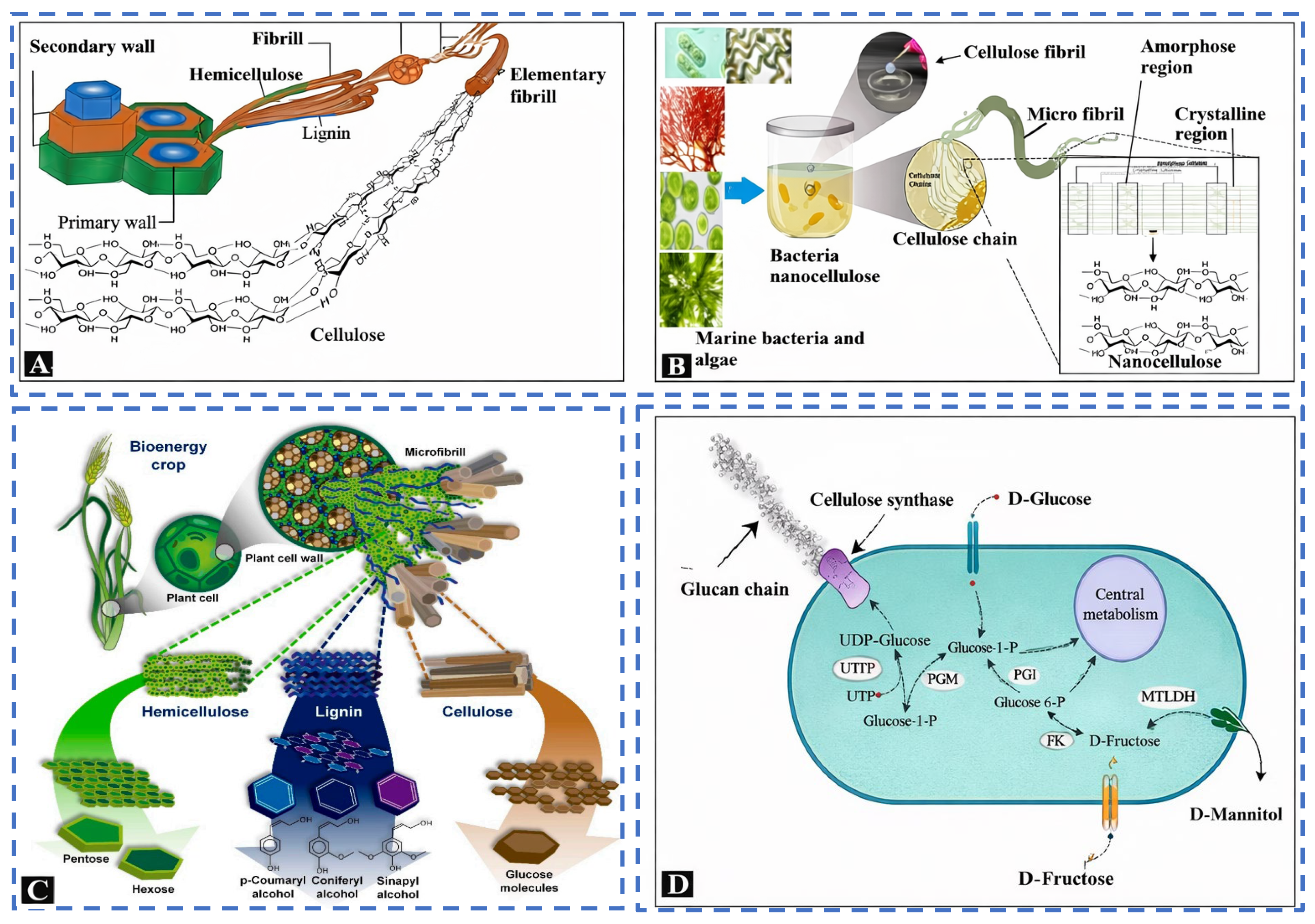
Moreover, cellulose and its supporting chain make up most plant cell walls. Hydrogen bonds within and between molecules, in addition to van der Waals forces, lead cellulose to form a bundle [53]. The amorphous and crystalline parts are represented by highly organized and random regions found inside the microfibrils, which are several micrometers long and 10–50 nm in diameter. Figure 2 illustrates the structured hierarchy of nanocelluloses derived from plants. Understanding the chemical structure of cellulose is essential for the manufacture and use of nanocellulose. A high-molecular-weight photopolymer of β-1,4-linked hydro-D-glucose units, cellulose is distinguished by each unit being 180° corkscrewed in relation to its surroundings [54]. Every cellulose chain has two unique end units. One is the nominal nonproducing end with a pendant hydroxyl group, and the second is a hemiacetal unit, which possesses chemically reducing functionality [55]. Along the polymer chain, cellulose molecules are characterized by an abundance of hydroxyl groups (one anhydroglucose unit has three hydroxyl groups) [56]. Consequently, hydroxyl groups and oxygen atoms in anhydroglucose components produce a significant number of hydrogen bonds [57]. Although its morphological, physiological, mechanical, and biological characteristics change depending on the source, the structure of its chemical makeup remains the same. Because of its vast range of characteristics, cellulose can satisfy the need for a variety of products and components for a variety of applications, such as biomedical [58,59,60], biological and biomimicking [61,62,63], energy [64,65,66], pharmaceutical [67,68,69], infrastructure [70,71,72], additive manufacturing [73,74,75], paper and textile [76,77], electronics [78,79], and food industry [80] applications.
The chemical processes involved in the production of cellulosic products pose an environmental risk. As a result, when constructing environmentally friendly devices for storing energy, one should prioritize reducing the impact caused by chemical treatments. Furthermore, it is a new and sustainable raw material being used in the field of nanotechnology [81,82]. The growth of petroleum-derived synthetic substances and goods in recent years has made ecological and environmental issues a significant concern [83,84]. However, there is a lot of interest in the development of new and innovative engineered resources with cost-effective and environmentally advantageous features [85]. Subsequently, the biopolymer nanocellulose has drawn more attention as a result of advances in nanotechnology [7]. In addition, because of their benign nature, suitability, biodegradability, and recyclable characteristics, renewable and environmentally friendly materials derived from natural sources have developed significantly. The creation of these novel materials is turning into a key component of technologies for the future that are sustainable. Numerous products have been manufactured using these abundant and biodegradable materials. As a result, scholars are looking into cutting-edge technologies to improve performance and lessen environmental impact, encouraging eco-friendly behaviors and boosting economic growth in industries that prioritize sustainability [86]. For example, the recent literature highlights a growing global interest in sustainability, which has driven research toward renewable materials, with cellulose emerging as a promising option due to its abundance, low cost, and environmentally friendly nature. Recent studies show that nanocellulose, which offers high strength, large surface area, and adaptable chemistry, can be effectively combined with graphene to create advanced hybrid materials. These nanocellulose graphene composites exhibit enhanced performance and are being explored for a wide range of applications, including flexible electronics, energy storage, biomedical devices, packaging, shielding, and separation technologies. While significant progress has been made, the literature also highlights ongoing challenges related to processing and large-scale production, emphasizing the need for further research to support the development of sustainable, high-performance materials [87]. Additionally, the utilization of renewable resources is crucial for carbon capturing and storage, which stops significant amounts of carbon dioxide from being emitted into the natural environment and lessens the rate of global warming [88]. Today, nanocellulose (NC), one of the super materials engineered with a tiny element material, has huge applications in various fields. These materials may be derived from any organic source of cellulose, including pulp from wood, which is made up of a densely packed array of “nanofibrils” [89]. They expand the possibilities for materials science and its applications by combining significant cellulose features with those of nanoparticles. At the same time, nanocellulose also represents an excellent example of the ongoing merger of biological and material engineering [90].
In addition to these established applications, an emerging and innovative research direction involves the design of multifunctional nanocellulose-based smart systems that integrate carbon capture, energy storage, and sensing capabilities within a single material platform [9,91]. By tailoring the surface chemistry of nanocellulose and combining it with functional nanomaterials such as graphene, metal oxides, or conductive polymers, hybrid structures can be engineered to simultaneously adsorb carbon dioxide, store electrical energy, and monitor environmental conditions in real time [92,93]. Such integrated systems have strong potential for next-generation sustainable technologies, particularly in green buildings, wearable electronics, and self-powered environmental monitoring devices [94]. This multifunctional material strategy enhances resource efficiency, reduces processing complexity, and supports circular economy principles while contributing to low-carbon and climate-resilient technology development [95].
Figure 2.
Visual representations of plant-based nanocellulose’s hierarchical structure (A) [96]; bacterial-based nanocellulose (B) [97]; biopolymers of lignocellulosic biomass, including cellulose, hemicellulose, and lignin (C) [55]; and genetic modifications of K. xylinus strains under various circumstances to produce BC (D) [98].
The key chemical profile of cellulose molecules is their plentiful hydroxyl groups along the polymer chain (one anhydroglucose unit has three hydroxyl groups) [56]. As a result, a large number of hydrogen bonds are formed between hydroxyl groups and oxygen atoms in the anhydroglucose parts [57]. Although its morphological, physiological, mechanical, and biological characteristics change depending on the source, the structure of its chemical makeup remains the same. Because of its vast range of characteristics, cellulose can satisfy the need for a variety of products and components for a variety of applications, such as biomedical [58,59,60], biological and biomimicking [61,62,63] energy [64,65,66], pharmaceutical [67,68,69], infrastructure [70,71,72], additive manufacturing [73,74,75], paper and textile [76,77], electronics [78,79], and food industry [80] applications.
4. Types of Nanocellulose and Their Properties
Using chemical, enzymatic, or mechanical methods, nanocellulose can be harvested from natural resources. The three primary types of nanocellulose materials are bacterial nanocellulose (BNC); cellulose nanocrystals (CNCs), also referred to as nanowhiskers; and nanofibrous cellulose (NFC) or cellulose nanofibers [99,100]. The following section and Table 2 will discuss the abovementioned different kinds of nanocellulose materials.
Cellulose nanocrystals (CNCs): CNCs are high-aspect-ratio, bio-based nanoparticles that are generated industrially in tons per day globally [101]. Highly conductive fluids, medical devices, semiconductors and sensors, emulsions and foams, and conductive polymer composite fibers are just a few of the materials in which the performance, physical, chemical, and electrical characteristics can be improved by CNCs. This kind of nanocellulose is created when cellulose combusts and breaks down into nanoparticles (a process known as “top-to-bottom”). This nanocellulose is usually produced by hydrolyzing cellulose molecules that have been dissolved in water in an acidic environment. Traditionally, strong sulfuric acid has been used to dissolve the amorphous parts of cellulose while leaving the crystalline parts intact [78]. Even though this method yields a stiff, rod-shaped CNC that is about 90% pure, the sulfate groups are still present as impurities at the combustion surface [102]. Nanocellulose is already being produced commercially, and research is now primarily focused on industrial uses. Because mechanical disintegration requires a lot of energy, CNF isolation was formerly thought to be a more costly procedure [103]. CNFs have emerged as multifunctional nanomaterials due to their high aspect ratio, surface reactivity, and mechanical robustness, facilitating their incorporation into conductive fluids, biomedical systems, semiconductors, sensors, emulsions, foams, and conductive polymer composite fibers.
Nanofibrillated Cellulose (NFC): NFC characterizes cellulose fibers that have undergone fibrillation to create a collection of cellulose microfibril units, which typically have a nanoscale diameter and a length of less than 100 nm [104]. These materials have various brand names, and the majority of nano- or micro-fibrillated cellulose (NFC or MFC) comes from wood fiber [105]. It is made up of a long, web-like architecture that exhibits remarkable mechanical properties such as a very low coefficient of thermal expansion, high strength, and a high Young’s modulus [106]. NFCs have attracted a lot of attention due to their ability to combine with an appropriate matrix polymer to create high-quality, unique bio-based composite applications [107].
Bacterial nanocellulose (BNC): BNC is a kind of biomaterial that is becoming increasingly popular in the field of environmentally friendly substances and nanocomposites. It is too thick to be used as a biological implant substance because it includes 99% water [108]. The utilization of microbial pathways to produce nanocellulose was beneficial for the creation of eco-friendly products. In fact, BNC production relies on growth, which enables large yields and the continuous availability of goods due to the rapid development of these microorganisms [109,110]. Moreover, BNC nanocelluloses have various properties based on their production process and end-use. All the different types of nanocellulose share some general characteristics, including sustainability and biodegradability, a large number of options worldwide, the ability to engage local farmers, simple manufacturing techniques, low production costs, an elevated ability for interacting with nearby molecules, minimal energy demand, improved mechanical features (such as Young’s modulus, magnetic characteristics, stiffness, rigidity, low density, and high aspect ratio), superior heat transfer abilities, and a better reactive surface [111].
Table 2.
Various types of nanocellulose and their characteristics.
5. Extraction Techniques of Nanocellulose
The distinctive hierarchical structure of natural cellulose, composed of nanoscale fibrils and crystallites, enables the extraction of nanocomponents through chemical, mechanical, biological, or combined techniques. Nanocellulose preparation methods are divided into two categories: the top-down and bottom-up approaches. In the top-down approach, cellulose particles are isolated from various sources and reduced to the nanoscale [117]. For instance, cellulose nanocrystals (CNCs) can be extracted through three main approaches: mechanical, chemical, or biological methods. Strong acids—for example, hydrochloric acid or sulfuric acid—are used in the most commonly described acid hydrolysis process, which synthesizes highly crystalline nanoparticles with comparatively low aspect ratios. This process requires additional steps to remove residual acids. Conversely, high-pressure homogenizers, grinders, or high-intensity ultrasonic methods are used to fibrillate plant cellulose pulp in water to create nanofibrillated cellulose (NFC), which can achieve high aspect ratios but demands an enormous amount of energy. A more sustainable alternative combines enzymatic hydrolysis with mechanical fibrillation to produce NFC efficiently [118]. In addition, cellulose nanostructures are produced via the bottom-up method from either the biosynthesis process or the cellulose molecules’ solution state. Nanocelluloses are comparatively homogeneous particles with a vastly increased surface area that are produced by “extraction” or “assembly”, bringing with them many of the advantageous characteristics that support their numerous and innovative applications [119,120]. Bottom-up synthesis has been used to produce bacterial cellulose since it is made up of cellulose nanofibers that certain bacteria secrete extracellularly [121]. Bacterial cellulose’s distinct nanofibrillar structure provides it with superior mechanical and physical characteristics, including a large porosity level, excellent modulus of elastic strength, and exceptionally high crystallinity [122]. A schematic diagram of extraction methods of nanocellulose from natural resources is presented in Figure 3.
Figure 3.
Extraction methods of nanocellulose from natural resources [103,117,123].
The chemical extraction techniques (acid hydrolysis, TEMPO-mediated oxidation, carboxymethylation, acetylation), mechanical fibrillation methods (refining, grinding, homogenization, microfluidization, extrusion, radiation, steam explosion, sonication, cryo-crushing), and biological/enzymatic routes (bacterial biosynthesis of nanocellulose, BNC) are all summarized in the comprehensive comparative Table 3. The comparison is supported by the recent literature and is based on yield, purity, energy usage, and ecological implications.
The extraction of nanocellulose via different methods faces several key challenges and research gaps that must be addressed to enable more efficient, scalable, and sustainable production. Mechanical extraction techniques, such as high-pressure homogenization, grinding, cryo-crushing, ultrasonication, and ball milling, can liberate cellulose nanofibrils without harsh chemicals, but they are highly energy-intensive and often require multiple passes to achieve nanoscale fibrillation, significantly increasing operational costs and heat generation; additionally, achieving uniform fibril size and reproducibility remains difficult, which limits industrial feasibility [124,125].
Chemical extraction methods, particularly acid hydrolysis for cellulose nanocrystals (CNCs), produce corrosive acidic effluent that demands careful neutralization and waste management, raising environmental impact and operating expenses, and can also introduce surface groups (e.g., sulfate) that reduce thermal stability [126]. While alternatives such as TEMPO-mediated oxidation improve aqueous dispersibility and reduce certain hazards, they still rely on toxic oxidants (e.g., NaClO) and generate by-products that are difficult to manage. Therefore, green and energy-efficient production of nanocellulose is increasingly focused on enzymatic pretreatment combined with mechanical fibrillation as a sustainable alternative to conventional chemical and high-energy mechanical methods. However, biological and enzymatic approaches offer greener routes under mild conditions and lower toxic waste production but suffer from slow reaction rates, high enzyme costs, long processing times, and challenges in enzyme reuse and scalability, which currently restrict their commercial viability. Moreover, residual biomass components such as lignin and hemicellulose can remain in nanocellulose products if pretreatment is inadequate, complicating applications that require high purity by interfering with mechanical, optical, or electrical properties and necessitating effective delignification steps. Enzymatic pretreatment, particularly using cellulase enzymes like endoglucanases, has emerged as a green and energy-efficient strategy to mitigate this issue. By selectively targeting and loosening the amorphous regions of cellulose fibers, enzymatic treatment significantly reduces the mechanical energy required for subsequent fibrillation steps. For example, specific glycosyl hydrolase enzymes linked with carbohydrate-binding modules have been shown to reduce fibrillation energy by 15–32% compared to controls without pretreatment, demonstrating measurable energy savings while preserving fiber quality [127,128].
Across all nanocellulose extraction methods, achieving an optimal balance between high yield, material quality, energy efficiency, environmental sustainability, and economic viability remains a major challenge, further complicated by the lack of standardized production protocols and regulatory frameworks. Mechano-enzymatic extraction approaches have emerged as a promising solution, as enzymatic pretreatment combined with mechanical fibrillation significantly reduces energy consumption by more than 60% while improving nanofiber yield and uniformity. These bio-mechanical processes also minimize the use of hazardous chemicals, leading to lower environmental impact and reduced costs associated with chemical handling and wastewater treatment [127].
Beyond energy savings, mechano-enzymatic approaches align with green chemistry principles by operating under mild conditions, using biodegradable enzymes, and minimizing toxic waste. A novel two-step mechano-enzymatic method combining ball milling and subsequent enzymatic hydrolysis has been shown to produce nanostructured cellulose with functional properties while maintaining a sustainable process footprint. This strategy offers a viable alternative to conventional chemical routes that rely on strong acids or oxidants, which often generate hazardous effluents and require extensive neutralization and disposal treatments [129].
In addition, a novel approach in implementing circular economy principles in nanocellulose extraction focuses on converting waste streams and renewable biomass into high-value nanomaterials, thereby minimizing raw material consumption and closing resource loops. One promising strategy involves valorizing textile waste, particularly cotton-based textiles, as a sustainable feedstock for nanocellulose production rather than relying on virgin cellulose sources [130]. Cotton textile wastes are abundant in global waste streams and contain high cellulose content, making them attractive for resource recovery and circular reuse; integrating their transformation into nanocellulose can both reduce landfill disposal and support material reintegration in industrial value chains, aligning with circular economy principles. However, sustainable implementation requires careful consideration of energy consumption, chemical usage, and effluent management during extraction, as conventional acid hydrolysis and chemical treatments may produce hazardous waste, high water demand, and greenhouse gas emissions [131].
Recent research demonstrates that nanocellulose can be effectively extracted from textile waste through chemical pretreatments, acid hydrolysis, and functionalization processes, enabling its reuse in high-performance applications while reinforcing circular economy principles. Beyond textile waste, nanocellulose valorization from agricultural residues, paper waste, and other lignocellulosic biomass has gained attention as a sustainable strategy, although challenges such as seasonal feedstock availability, transportation-related emissions, and the need for efficient, low-chemical pretreatment methods remain challenging [132]. The adoption of green solvent systems, particularly natural deep eutectic solvents (NADES), has emerged as a promising solution, offering high nanocellulose yields, reduced environmental impact, and recyclable processing media that enhance overall process sustainability [133]. Lifecycle assessment studies further confirm the environmental benefits of green production routes for nanocellulose. Comparative analyses indicate that enzyme-assisted pretreatment methods can significantly reduce greenhouse gas emissions by approximately 2 to 18 times relative to conventional sulfuric acid-based processes, primarily due to lower electricity demand during fibrillation. Additionally, hybrid production strategies combining enzymatic pretreatment with energy-efficient mechanical processes, such as extrusion, demonstrate substantial reductions in energy consumption, highlighting the viability of enzyme-integrated and low-energy approaches for sustainable and scalable nanocellulose production [134,135].
Table 3.
Comparative table: nanocellulose production methods.
6. Application of Nanocellulose
Nanocellulose offers exceptional potential as a sustainable alternative to synthetic polymers, combining its superior strength, minimal density, significant aspect ratio, and ecological compatibility with the added benefit of being derived from renewable resources [187]. Its lightweight, flexible, mechanically robust, and tunable surface chemistry properties, along with its excellent dielectric properties, make it highly attractive for electronic applications. Transparency and biodegradability further position it as an eco-friendly substitute for petroleum-based substrates. The use of biodegradable and conductive nanocellulose-based composite polymers and high-temperature-resistant nanocellulose opens opportunities across diverse sectors, including electronics, energy storage devices, and advanced nanocomposite materials.
6.1. Nanocellulose in Electronics
Conventional electronics are usually composed of non-biodegradable, non-renewable, and occasionally harmful materials like hazardous chemicals and heavy metals [188]. As a result, eco-friendly electronics composed of biodegradable materials have received extra attention lately, as electronic waste, or “e-waste,” poses a major global health and environmental risk [189,190]. One of the new materials utilized for sustainable technologies is nanocellulose, which has at least one dimension in the nanoscale range of 1–100 nm [191]. Numerous industrial applications have made extensive use of them due to their intrinsic properties, which include dielectric behavior, biodegradability, mechanical durability, thermal resistance, surface chemistry and porosity, and optical transparency [192,193]. Technically speaking, NCs do not have electrical conductivity on their own; yet, electrical conductivity is crucial for some essential electronic element components [194]. Consequently, to develop and improve the electrically conductive NC-based conductive materials, a variety of physical and/or chemically modified techniques have been developed. For advanced applications, these technologies enable electrical current to flow within the nanocellulose composite. NCs can be combined with conductive materials like metallic particles, polymers, and carbon materials to create composites that enhance electrical conductivity while maintaining properties like flexibility and strength. This opens up new possibilities in electronics chips, sensors, and advanced materials, paving the way for innovative designs in next-generation technologies [195,196]
The fabrication of conductive nanocellulose materials follows two main approaches, as illustrated in Figure 4. The first involves coating the NC surface with conductive materials such as nanocarbon, graphitic particles, silver or gold nanoparticles, and conductive polymers using methods like sputter coating, vapor deposition, or particle applications. In this approach, NC serves as a substrate or nanoscale template [197]. However, coatings often exhibit non-uniformity at larger scales, which can increase light scattering and reduce optical transparency. The second approach integrates conductive materials directly into the NC substrate to form composites, typically through techniques like in situ polymerization or blending. These methods are essential for composite fabrication. Furthermore, various advanced techniques have been employed to create conductive nanocellulose patterns for green electronics applications, including green transistors, antennas, paper circuits, sensors, and electrochromic devices.
Figure 4.
Schematic illustration of the generalized fabrication routes for NC-based conductive material.
One broad class of fabrication strategy is surface coating, in which conductive materials are deposited or adhered onto preformed nanocellulose films or networks. Metallic nanoparticles (e.g., Ag, Cu) and carbon nanomaterials can be coated directly on nanocellulose substrates, taking advantage of nanocellulose’s high surface area and porosity for ion transport and mechanical support. Surface coating is often straightforward and can yield flexible composite films when using conductive polymers or nanowires, but achieving uniform dispersion and maintaining optical transparency at higher loadings can be challenging due to uneven layers and light scattering [198].
In contrast to surface coating, embedding conductive materials within the nanocellulose matrix via blending or in situ polymerization aims to create integrated conductive networks throughout the bulk composite. Blending methods mix nanocellulose suspensions with conductive fillers such as carbon nanotubes, graphene, or MXene before film formation, which can yield continuous conductive pathways and enhanced electromechanical stability during stretching and bending [199]. Meanwhile, in situ polymerization involves impregnating nanocellulose with monomers of conductive polymers (e.g., polyaniline, PEDOT:PSS) and initiating polymerization directly on or within the nanocellulose network [200,201]. This strategy often produces more uniform, three-dimensional conductive polymer networks anchored to the cellulose framework and can improve electrical conductivity and mechanical integration compared to simple coating. For example, in situ polymerization of PEDOT on CNFs has achieved conductivities in the order of ~10.55 S/cm with notable electromechanical performance and flexibility, leveraging the synergistic interaction between cellulose and the polymerized matrix [202].
Comparing these approaches reveals disadvantages in electrical performance, mechanical flexibility, transparency, and scalability. Surface coating can preserve high transparency in thin conductive layers and maintain flexibility but may struggle with scalability due to the difficulty of achieving uniform coatings on large areas. Embedded approaches such as blending and in situ polymerization enhance electrical performance and mechanical robustness by establishing deeper conductive networks, though increased filler content can reduce optical transparency. In situ polymerization often offers superior integration of conductive polymers within cellulose matrices, potentially leading to scalable processes with tailored properties, but can involve multi-step chemistry and solvent considerations that must be optimized for industrial implementation [203,204].
Overall, the properties of surface coating and embedding approaches (blending and in situ polymerization) for fabricating conductive nanocellulose material are shown in Table 4.
Table 4.
Summary of the physical, mechanical, and electrical properties of conductive nanocellulose fabricated using surface coating and embedding methods.
In addition, recent studies demonstrate that conductive nanocellulose-based composites exhibit a broad range of mechanical modulus and electrical conductivity, primarily governed by the type of nanocellulose and conductive filler employed. As summarized in Table 5, well-percolated conductive networks formed within CNF frameworks, particularly with graphene or MXene fillers, enable electrical conductivities ranging from several hundred to above 103 S m−1 while maintaining high stiffness and strength, with moduli spanning hundreds of MPa to the GPa scale. These results highlight nanocellulose’s effectiveness as a mechanically robust scaffold that supports efficient charge transport when combined with two-dimensional or carbon-based conductive fillers [213].
Nanocellulose comprising cellulose nanofibrils (CNFs) and nanocrystals (CNCs) has emerged as a sustainable high-performance nanomaterial characterized by remarkable mechanical stiffness and strength, biodegradability, and tunable surface chemistry. These intrinsic attributes make nanocellulose an excellent reinforcement phase in composites intended for structural and multifunctional applications. However, its native electrical insulating nature necessitates integration with conductive fillers (e.g., graphene, MXenes, carbon nanotubes) to engineer electrically conductive composites. This integration inevitably introduces a fundamental trade-off between mechanical modulus and electrical conductivity because conductive pathways typically require high filler loadings that can disrupt the nanocellulose network and weaken mechanical reinforcement [214].
In conductive nanocellulose composites, increasing conductive filler loading enhances electrical percolation and conductivity but may also induce filler agglomeration, phase separation, or weakened interfacial bonding, leading to reduced Young’s modulus and tensile strength [215]. This trade-off is widely reported for materials developed for flexible electronics and electromagnetic interference (EMI) shielding. To address this challenge, interface engineering strategies, such as surface functionalization of fillers or nanocellulose, have been shown to improve compatibility and stress transfer. For instance, polyethylene glycol (PEG)-modified nanocellulose/graphene composites achieved enhanced tensile strength (~30.56 MPa) alongside measurable electrical conductivity (~5.67 S m−1), demonstrating that optimized interfaces can partially decouple mechanical and electrical performance [216].
Beyond chemical modification, hierarchical and layered architecture provides an effective route to multifunctional optimization. Vacuum-filtered and gradient-structured CNF/MXene composites spatially confine conductive phases within a mechanically robust cellulose framework, enabling high conductivity without sacrificing modulus. Gradient and sandwich-structured CNT/MXene/CNF papers fabricated via vacuum-assisted filtration have achieved conductivities of ~2506.6 S m−1, tensile strengths of ~97.9 MPa, and strong EMI shielding effectiveness, underscoring the importance of structural control in balancing stiffness and electrical functionality [217].
Despite these advances, trade-offs between conductivity and mechanical performance remain evident. MXene- and graphene-based systems typically favor high conductivity at the expense of ductility, whereas CNT-based nanocellulose composites often exhibit moderate conductivity (S cm−1 range) with improved toughness and flexibility, making them suitable for stretchable and wearable applications. These trends emphasize the critical role of optimized filler dispersion, interfacial bonding, and architectural design in achieving balanced performance [218]. Overall, recent progress suggests that rational interface engineering and hierarchical structuring can enable sustainable nanocellulose-based conductive composites to approach the performance of conventional synthetic or metallic materials while offering enhanced environmental compatibility [219]. Some examples of the mechanical modulus versus conductivity trade-offs of currently fabricated conductive nanocellulose composite materials are shown in Table 5.
Table 5.
Mechanical modulus versus and conductivity trade-offs of conductive nanocellulose composite samples.
The mechanisms of improving the conductivity of nanocellulose using conductive materials collectively enable a low-resistance, three-dimensional conductive network throughout the composite, which is essential for high electrical performance in flexible electronics [218]. For instance, a central challenge in fabricating conductive nanocellulose composites is overcoming the intrinsically insulating nature of cellulose (band gap ≈5.7 eV), which otherwise limits charge transport when combined with conductive fillers. To address this, interfacial chemistry must be engineered so that conductive fillers such as conductive polymers (e.g., PEDOT:PSS), carbon nanotubes, graphene, or metal nanoparticles are not merely physically mixed but are chemically or electrostatically integrated with the cellulose matrix. Without proper interfacial interactions, hydrophilic nanocellulose tends to aggregate via hydrogen bonding, while hydrophobic conductive components experience poor wetting and dispersion, leading to isolated conductive islands rather than a percolating network necessary for efficient electron transport [225,226]. Proper surface functionalization, including oxidation, the introduction of charged groups, or the grafting of computerizing moieties, enhances matrix–filler compatibility and reduces agglomeration, thereby promoting uniform filler dispersion and continuous conductive pathways throughout the composite. This tailored chemistry is a key factor in achieving strong electrical performance alongside mechanical integrity.
A fundamental mechanism by which functionalization improves nanocellulose composite performance is through modifying surface groups to create strong interfacial adhesion and favorable electrostatic interactions. Introducing ionic or polar groups (e.g., via oxidation or sulfation) on the nanocellulose surface increases its hydrophilicity and surface charge density, which stabilizes dispersions and enhances interactions with conductive polymers or charged fillers [70]. In the case of PEDOT:PSS/nanocellulose composites, enhancing surface area and controlling surface chemistry have been shown to promote ordered alignment of PEDOT chains along the cellulose scaffold, significantly boosting electrical conductivity (up to ∼252 S cm−1) by facilitating π–π stacking and continuous charge pathways. This alignment arises because a high nanocellulose surface area provides abundant adsorption sites and promotes phase separation that orients conductive polymer domains in ways conducive to electron transport across the interface [204].
Beyond surface charge, covalent functionalization or grafting strategies can further improve electrical performance by creating strong chemical bridges between fillers and the cellulose matrix [227,228]. For example, covalent grafting of polymer chains or functional groups onto graphene or carbon nanomaterials enhances their compatibility with nanocellulose, reduces interfacial resistance, and facilitates better load transfer and electron mobility across interfaces. Mechanistic modeling and experimental studies demonstrate that interfacial conduction and tunneling effects are highly sensitive to interface quality, filler aspect ratio, and interfacial conduction pathway parameters that are strongly influenced by surface chemistry. Effective functionalization reduces interfacial gaps and promotes electron tunneling between neighboring conductive domains, lowering the percolation threshold and enabling robust electrical networks at lower filler loadings [229,230,231].
Driven by these advances in interfacial engineering, extensive research efforts have focused on the development of NC-based conductive materials for electrical and electronic applications that demand both sustainability and enhanced functional performance. This growing interest arises from the outstanding physical, mechanical, and chemical properties of nanocellulose, along with the increasing demand for biomaterial-based and flexible electronic devices [113]. Paper-based flexible conductive devices, for example, have been utilized in photovoltaics, antennas, solar cells, substrates for OLED displays, transparent conductive electrodes, and electronic circuits such as field-effect transistors. A few of the applications of nanocellulose composites in electronics include batteries, capacitors, flexible electronics, conductive paths, sensors, actuators, etc., as depicted in Figure 5. These applications include increased or unique features, as well as applications in electrical and electronic sustainability, such as organic photovoltaic devices, printed foldable antennae, thin film transistors (TFTs), organic-light-emitting diodes (OLEDs), electrodes for LEDs, organic solar cells, and resistive touch screens [232,233,234].
Figure 5.
Schematic diagram of nanocellulose-based conductive composite applications in electronics.
In recent years, studies have been intensively interested in the manufacturing of electronics from conductive nanocellulose-based substrates with organic semiconductors deposited on them. Research conducted by Jesper Edberg et al. [235] developed flexible electrochemical circuits from a poly(3,4-ethylenedioxythiophene):poly(styrene sulfonate) (PEDOT:PSS) nanocellulose composite. The findings demonstrate that when nanocellulose is immersed in a PEDOT:PSS solution, it develops semiconductive materials. Using “cut and stick” PEDOT:PSS nanocellulose composites, this semiconductive material was used to produce electrical circuits such as organic electrochemical transistors (OECT), supercapacitors, and diodes. These devices were employed to construct digital circuits such as NOT, NAND, and NOR logic. Moreover, Yuen et al. [236] developed a thin-film organic electrochemical transistor and an ultrathin microbial nanocellulose wicking membrane combined in a biocompatible decal that gathers, transmits, and integrates biofluid.
An OECT decal was fabricated on a 10–15 μm thick nanocellulose substrate, incorporating an inkjet-printed SU-8 isolation layer, and exhibits a symmetric negative–positive drain–source I–V sweep, as shown in Figure 6A. A simulated sweat solution was applied to the nanocellulose surface surrounding the decal and allowed to infiltrate for 15 min. Before sweat exposure, the device displayed a high source–drain current of approximately 10 mA that was independent of gate voltage, indicating the absence of transistor behavior (Figure 6B). The OECT decal operates within the physiological NaCl concentration range of human sweat. As shown in Figure 6C, vertical wicking significantly enhances response time, with the current reaching its minimum in less than 30 s on a cotton pad, compared to approximately 40 min on a glass slide, demonstrating more efficient fluid delivery. After sweat application, the device exhibits typical normally ON OECT characteristics, where increasing the gate voltage effectively modulates the current, reducing the source–drain current to below 1 mA and down to 14 μA. This corresponds to an ON/OFF ratio of 428 while maintaining low gate leakage current, as illustrated in Figure 6D.
Figure 6.
Schematic pictures of an OECT device (A), drain voltage (B), gate transfer curves of an absorbent cotton pad that contained a biofluid (C), and the transfer curve’s dependence on different NaCl concentrations in the simulated sweat (D) [236].
Similarly, nanocellulose-based organic photodiodes, which are made by coating cellulose with silver nanowires (AgNWs), are advancing the next generation of imaging technologies by facilitating integration into smartphones, automotive systems, and a variety of other sectors, such as biomedicine, education, environmental monitoring, optical communications, pharmaceuticals, and machine vision [237,238]. Furthermore, Grishkewich [195] found that organic light-emitting diodes on cellulose nanocrystal substrates have higher analogue current efficiency (42.7 ± 9.8 cd/A at 100 cd/m2) compared to glass substrates (45.5 ± 10.0). In addition to giving an extra benefit from this substrate, the fact that it is dispersible in water allows the device to be recycled.
Additionally, in a study by Wan et al. [239], the authors investigated polyaniline simultaneously deposited on the surface of graphene nanosheets and bacterial cellulose nanofibers, resulting in a ternary composite with enhanced electrical conductivity on the bacterial cellulose/graphene nanosheet nanocomposite. The study examined the impact of processing parameters on the physical, mechanical, electrical conductivity, and morphological properties of polyaniline, graphene nanosheets, and bacterial cellulose composites. The results indicated that integrating polyaniline enhances the composite’s electrical conductivity, making it suitable for electromagnetic shielding and flexible electrode materials. Another study by Xie et al. [240] produced an interesting biocompatible composite of bacterial cellulose and flexible, conductive polydopamine that provides dual electron and ion conductivity. Under neutral pH circumstances, dopamine was autopolymerized in situ within bacterial cellulose to produce this substance. The resulting bio-conductive electrodes performed superbly, making them ideal for flexible biosensors and biological electrodes in wearable medical devices. Likewise, nanocellulose-based, recyclable, and biodegradable ultrasonography and electromyography signal-detection wearable electrodes were developed by Lengwan Li [241]. Based on the findings, an ultrasonic (US) transparent electrode, made of a cellulose substrate and PEDOT:PSS, was developed for simultaneous detection of surface electromyography (sEMG) and ultrasonic (US) signals. The cellulose substrate’s transparency was not significantly affected by pretreatment techniques, while CaCl2 treatment reduced US transparency. The holo-CNF-based electrode was the most flexible, showing potential for clinical use in the future, as depicted in Figure 7. Figure 7A shows the development of 3D-printed cellulose-based electrodes incorporating PEDOT:PSS/EG ink. Among the tested mesh designs, the three-layer 9 × 9 squares exhibited the highest conductivity and adequate ultrasound transparency for sEMG signal recording. Figure 7B depicts the electrode setup for simultaneous ultrasound (US) and sEMG measurements. Prior to testing, the electrode surface was wetted to ensure proper skin–transducer contact, and force data were collected simultaneously during the MVC test. Finally, Figure 7C presents the sEMG signals (blue) and isometric force data (red) recorded using TOCN, TOCN(Ca2+), holo-CNF, TEMPO pulp, and commercial electrodes during maximum voluntary contraction.
Figure 7.
Printed PEDOT: PSS lines on TOCN substrates (A), electrode placed on the biceps brachii (B), and EMG signals (blue line) and isometric forces (red line) (C) [241].
Beyond this, numerous studies emphasize how important nanocellulose is for use in electronics. For instance, bacterial cellulose’s promise in next-generation electrochemical devices was demonstrated recently when a unique gel electrolyte was created by covering it with layers of alginate and chitosan. A lot of research has also been done to develop new nanocellulose-conductive composites for cutting-edge applications that have improved intrinsic properties, such as optical, mechanical, thermal, barrier, and insulating qualities, as well as/or multiple functions (e.g., fire-retardant, magnetic, and electrical properties) [79]. As a result, its use is expanded beyond traditional domains to burgeoning high-tech fields in the electronics industry, including electrical and photonic devices, clean energy, biomedicine, sensing, and the environment. For example, conformal electronic decals were developed based on a polysaccharide circuit board (PCB) consisting of a thin nanocellulose film and a thick water-soluble pullulan layer (Figure 8A,B). The findings indicate that nanocellulose-based films, owing to their excellent in vivo and in vitro biocompatibility, favorable wettability, and nanoscale surface roughness, hold significant potential for clinical applications, including cortical neural electrode arrays for neurological disorder diagnosis. The developed flexible cortical neural electrode (Figure 8C), using a pure nanocellulose substrate, demonstrated a 13% increase in human neurotypic cell viability and more stable multisite recordings of epileptiform activity in rat brains compared to electrodes made from PET. Additionally, Park et al. developed high-performance, transparent, biodegradable, and non-toxic photodetectors on nanocellulose substrates, showing excellent electrical performance and mechanical stability, paving the way for eco-friendly, disposable sensing devices, as shown in Figure 8D. These devices show excellent electrical properties, including a saturation mobility of 1.4 cm2 V−1 s−1, and maintain stable performance under mechanical bending. This study highlights the potential of nanocellulose films as low-cost, eco-friendly substrates for disposable photodetectors [242].
Figure 8.
Cross-sectional electronic device circuit boards (A), film decal transfer with conductive traces conforming to an epidermal surface (B), a neural electrode array on flexible pure nanocellulose film (C), schematic diagram of a bottom-gate/top-contact organic phototransistor (D), structure of an IGZO transistor on pure nanocellulose film with a bilayer channel (E), and transparent organic field-effect transistors (OFETs) circuit diagram (F) [79], with the permission of Elsevier under license no. 6145741311659.
Ning et al. [243] achieved high-performance oxide TFTs on nanocellulose films using a bi-layer IGZO channel and room-temperature fabrication, avoiding thermal damage. The devices showed excellent electrical characteristics, including high mobility, a large I_on/I_off ratio, and low subthreshold swing. The resulting devices exhibited a saturation mobility of 15.8 cm2/(V·s), an I_on/I_off ratio of 4.4 × 10⁵, a threshold voltage of −0.42 V, and a subthreshold swing of 0.66 V/dec. (Figure 8E). Furthermore, Huang et al. [244] developed FETs on TEMPO-oxidized CNF films, using the material’s ionic conductivity to form an electric double layer, enabling low-voltage operation (<2 V) while the film acted as both substrate and dielectric, as presented in Figure 8F.
Additionally, the design, fabrication, performance regulation, characterization, and application of pure nanocellulose film with a typical thickness of less than 100 μm have resulted in a novel class of disposable optoelectronic products [245]. These nanocellulose-based optoelectronic materials have been employed by various commercial products such as photovoltaic solar cells, transistors, circuit boards, LEDs, sensors, actuators, batteries, supercapacitors, energy harvesters, breathalyzers, and diagnostic devices. Moreover, current research highlights the challenges and future directions for paper-based substrates, emphasizing their role in advancing sustainable, green optoelectronics. Researchers have been investigating sustainable substitutes for magnetic and magneto-electronic components in the field of magnetic nanocellulose materials, taking advantage of the material’s excellent mechanical characteristics and nanoscale surface roughness [79]. There are numerous methods for making nanocellulose sheets magnetic. To create functional magnetic membranes, appropriate for cutting-edge applications, these methods include sputtering magnetic materials directly onto nanocellulose films, the in situ synthesis of magnetic NPs on the nanocellulose surface, or mechanically blending FeO4 nanoparticles (NPs) within the nanocellulose network. For instance, sputtering magnetic material onto the nanocellulose film or mechanically combining in situ-synthesized magnetic nanoparticles on the nanocellulose surface to immobilize FeO4NPs in a nanocellulose network [246]. By keeping conductive AgNWs inert in a nanocellulose structure, a miniaturized printed flexible antenna was manufactured, which naturally features a dielectric constant (k) value up to 5.3 [247]. This antenna can be used as a wearable device in soft armor and body gear. In addition, technological advancements have made it possible to create proximity sensors with great resolution and sensitivity that can detect small objects. A transparent, stretchy, and stretch-unresponsive capacitive touch sensor panel was developed, with precisely designed proximity sensors that use reduced graphene oxide electrodes and nanowires of silver to sense the presence of adjacent objects without making physical contact. Wearable and skin-mounted medical devices, biomedicine, nanorobotics, security and defense systems, and robotics are just a few of the many fields in which these sensors find use [248].
6.2. Nanocellulose in Flexible Electronics
Flexible electronics, which are significantly slimmer, more structurally flexible, and more durable than standard electronics, are progressively replacing rigid electronics in modern electronic gadgets due to their multiple benefits [249,250]. Much proof of concept has been demonstrated on flexible electronics, demonstrating comparable device efficiency compared to conventional stiff electronics [118]. One of the most important applications for these materials is for the manufacturing of flexible substrates, which ultimately dictate the manufacturing method, production cost, mechanical flexibility, and device performance [251,252]. For instance, solar cells [253], touchscreens [254], transistors [255], OLEDs [256,257,258,259], and self-powered human-interactive transparent flexible systems are just a few of the electronics that have recently been built using nanocellulose-based substrates [260].
From Figure 9A, it can be seen that Electroluminescence occurs through four key steps: (1) charge injection, (2) charge transport, (3) charge recombination, and (4) light emission. When an external voltage is applied, electrons and holes are injected from the cathode and anode, respectively, and move through the organic layers. Electrons travel via the lowest unoccupied molecular orbital (LUMO) and holes travel via the highest occupied molecular orbital (HOMO) toward the recombination zone, or emissive layer, where electron–hole pairs (excitons) form. The recombination of these excitons produces visible light through radiative decay, alongside some non-radiative decay. Carrier transport occurs mainly through a hopping mechanism, requiring sufficient energy to overcome interfacial barriers between materials. Further, Pinto et al. [261] developed transparent composites prepared by bacterial cellulose and castor oil-based polyurethane as a substrate for flexible OLEDs. The authors observed that the composites exhibited significantly higher transmittance than pristine BNC, with an increase of over 62% at 350 nm. Specifically, the BNC-PU72 and BNC-PU120 substrates achieved high transmittance of approximately 82% and 90% at 700 nm, respectively (Figure 9B). The BNC-PU composites also displayed extremely low surface roughness (<1 nm) compared to 32 nm for pristine BNC. Additionally, they demonstrated good thermal stability (above 250 °C) and excellent mechanical performance, with tensile strength reaching 69 MPa and Young’s modulus up to 6 GPa and a maximum luminance of 231 ± 18 cd/m2 versus the 485 ± 8 cd/m2 exhibited by the reference OLED, as shown in Figure 9C. Furthermore, both p-type and n-type devices were developed by Sharova [255], enabling complementary logic circuits gated by chitosan. An inverter was fabricated using chitosan-gated transistors on an ethyl cellulose substrate, as shown in Figure 9D. The resulting logic gate exhibited a voltage transfer characteristic (VTC) with an inversion threshold (V_inv) of approximately 0.45 V at V_DD = 1 V, close to the ideal V_DD/2, which could be further optimized by adjusting transistor geometry. The inverter also demonstrated a high gain of about −19 at the logic transition, as shown in Figure 9E. It is very appealing to produce flexible materials for a variety of applications because of their high mechanical strength, structural flexibility, reinforcing capabilities, and customizable self-assembly behavior, as well as their ease of processing [262]. Skin electronics that are stretchy, elastic, and even self-healing blend in perfectly with human skin and have been suggested for a number of exciting uses in biomimetic prostheses, autonomous artificial intelligence (such as robots), and medical diagnostics [263]. Recent advancements have focused on hybrid conductive systems that synergistically enhance electrical performance. For instance, cellulose nanofiber (CNF)/PEDOT:PSS/MXene ternary composites demonstrate exceptional electrical conductivity (>1900 S cm−1) and robust mechanical properties, positioning them as promising candidates for high-performance flexible electronics and electromagnetic interference (EMI) shielding materials. These heterostructure films also exhibit substantially improved tensile strength and fracture strain compared to single-component counterparts [264]. Likewise, cellulose nanofibers functionalized with reduced graphene oxide (rGO) and metal oxides have been used to fabricate conductive films (~23.2 S/m), exploring sustainable feedstocks and structural control to influence charge transport, which is an important consideration in eco-friendly device design [265].
Figure 9.
Structure of an OLED (A), optical transmittance spectra comparing the transparency of BNC-PU composites with the pristine BNC (B), current density curves for an OLED manufactured on BNC-PU72 and on ITO-coated glass substrates (C) [257], schematic representation of an inverting logic gate device realized with chitosan-gated transistors based on P3HT and P (NDI-C4- TEGMe-T2) (D), and complementary inverter voltage transfer curve (VTC) and the corresponding derivative curve to extract gain as a function of input voltages (E) [255].
Conductive polymer–nanocellulose composites have also advanced flexible electronic component development. Porous PEDOT:PSS/CNF composite papers produced via vacuum filtration and post-treatment exhibit significantly enhanced electrical conductivity (>100 S/cm) and excellent bending stability, indicating their suitability for flexible energy storage devices, wearable sensors, and portable electronics [266]. Hybridization of nanocellulose with conductive polymers and carbon fillers such as graphene provides a route to tailor both mechanical flexibility and charge transport pathways, further enabling integration into diverse electronic architectures. In addition to conductive polymer and carbon-based systems, novel composite designs combining nanocellulose with MXene and elastomeric matrices like polydimethylsiloxane (PDMS) have been developed for strain-sensing applications. Such composites leverage the high conductivity of MXene lamellae and the flexibility of nanocellulose/PDM networks to achieve enhanced strain sensitivity, critical for wearable electronics and soft robotics [267].
Furthermore, nanocellulose-driven film has been incorporated into thin-film electronic devices such as thin-film transistors [268]. The study explores the use of nanocellulose-driven films in thin-film electronic devices like thin-film transistors. While organic TFTs hold promise for next-generation display technologies, their practical implementation is constrained by poor mobility and material drawbacks, such as fibril aggregation, high hygroscopicity, reduced thermal stability, and increased costs arising from limited production efficiency, when compared with plastic films or glass.
Despite promising applications, nanocellulose-based conductive composites face several critical limitations. Material intrinsic limits arise from nanocellulose’s insulating nature, requiring high filler loadings that can compromise mechanical flexibility and biodegradability [65]. Interface and dispersion challenges persist due to poor compatibility between hydrophilic nanocellulose and many conductive fillers, leading to aggregation and inconsistent electrical networks. Environmental stability is limited by sensitivity to humidity, temperature, and oxidative conditions, affecting long-term device reliability. Standardization and scalability issues hinder reproducibility and industrial translation, as lab-scale methods often fail to maintain performance at larger scales. Additionally, multifunctional integration remains underexplored, with few studies addressing simultaneous electrical, mechanical, and environmental performance within complete flexible electronic systems. Addressing these gaps is essential to advance nanocellulose composites toward reliable, scalable, and multifunctional flexible electronics.
6.3. Nanocellulose in Wearable Electronics and Sensors
Today, smart and intelligent fabrics are predicted to witness incredible growth in the future. The result of this renewed attention has been the expansion of industrial goods and the improvement of innovative technologies for incorporating electrical elements into textile materials [269]. Here, we explore present perspectives on the development of electrically conductive textile substrates containing nanocellulose-based conductive substances and intrinsically conductive polymers. The use of flexible wearable electronics has been expanding in our everyday lives as a result of the Internet of Things (IoT) and the miniaturization of electronic devices [270]. Because of their superior deformability, soft feel, strength, light weight, good absorption, and moisture qualities, textile materials have drawn a lot of interest for the successful development of flexible electronics. Nowadays, fibrous textiles are recognized as the perfect material for the engineering and production of electronic devices [271].
Moreover, cellulose-based nanocomposite electronics have been used in the application of sensors in wearable E-textiles [272,273]. For instance, PDMS was used to combine crushed graphene and nanosized cellulose, which then created 3D macroporous nano-papers with excellent stretchability (up to 100%). Because of their strong mechanical resistance, deformability, and printability, tensile graphene nano-papers have been employed as strain sensors in wearable technology to track human activity [274]. By combining single-walled carbon nanotubes (CNTs) with 2,2,6,6-tetramethylpiperidine-1-oxyl (TEMPO)-oxidized cellulose nanofibrils (TOCNs) with many sodium carboxyl groups on the crystalline nanocellulose surfaces, ultrastrong, transparent, conductive, and printable nanocomposites were effectively created. Both in dried composite film and in the water employed as the dispersion medium, surface anionic cellulose nanofibrils had nano-dispersing and reinforcing effects on CNTs, resulting in highly conductive and printable nanocomposites with a small number of CNTs. As a result, TOCNs are anticipated to be a flexible and efficient matrix that may be utilized as a substitute for traditional polymers in a variety of electrical materials when combined with graphene and carbon nanotubes [275]. Kim Taeil et al. produced disposable wireless ion-selective 3D-printed biocompatible sensor devices with flexible, high-sensitivity, and distinctive features using a conductive ink that can be printed three times and optimized them using cellulose nanofibers and silver nanowires [276]. The utilization of nanocellulose-based composites in wearable E-textile sensors is presented in Table 6.
Table 6.
Application of conductive nanocellulose composites in wearable E-textile sensors.
The use of nanocellulose as an electrical material in wearable sensors and actuators is one of the scientific advancements in wearable technology [294] applied in healthcare, sports, communication, entertainment, surveillance, and human–robot interfacing for industrial or entertainment purposes due to its properties, as shown in Figure 10. The recent literature on nanocellulose-based wearable sensors reports that they are widely used for strain, temperature, humidity, chemical, enzyme, glucose, flexible tactile, and pressure sensors, as well as body-motion tracking [302]. For example, Zaihua Duan [303] recently published a flexible sensor that measured humidity for multipurpose applications, based on a CNFeCNT paper-based humidity sensor proposed for low-cost, environmentally friendly construction. The sensor is constructed of ordinary printing paper and flexible conductive adhesive tape, with the paper acting as both a humidity sensing medium and a substrate. The sensor has an excellent humidity sensing response of over 103 and good linearity (R2 = 0.9549) across the 41.1% to 91.5% relative humidity range. Its versatility and compatibility make it appropriate for a wide range of applications, including breath rate, infant diaper wetness, noncontact switches, skin humidity, and spatial localization monitoring. The high resistance of the paper-based sensor enables easy signal processing.
Figure 10.
Unique properties allow the use of nanocellulose in many biomedical applications.
Similarly, wearable strain sensors developed using conductive nanocellulose hydrogel composites [304,305,306] are also used as sensing elements. These include graphene, PEDOT:PSS complex with equivalent mass or a smaller amount, or silver nanoparticles (AGNP). PEDOT:PSS/CNF is created by protonating CNF surface carboxylates and hydrogen bonding CNF surface carboxyls with PSS. These processes all contribute to a specific level of conductivity, which gives the hydrogel a detectable piezoresistive effect. It should be mentioned that this kind of sensor only uses CNCs and CNF [307]. Jian Zhou [308] related a nanocellulose aerogel based on conductive polymers for use in linearly responsive strain sensors that may be adjusted. Cellulose nanofibrils (CNFs) protonated with conductive PEDOT:PSS and encapsulated using a PDMS precursor have been formed into strong and highly conductive nanocellulose aerogels. As seen in Figure 11A, the outcome demonstrates that the produced strain sensors possessed high linearity and high sensitivity with regard to the applied strain. In addition, Chunxiao Zheng et al. created strain sensors that are extremely stretchy and self-healing by employing graphene supported by nanocellulose in electro-conductive hydrogels. Great stretchability, superior viscoelasticity, quick self-healing, and great healing efficiency are all features of the composite gels. With a gauge factor of roughly 3.8, as seen in Figure 11B, the strain sensors combined with GN-CNF@PVA hydrogel exhibit excellent responsiveness, stability, and repeatability, suggesting potential for wearable sensing devices.
Figure 11.
Highly stretchable CNC-PANI strain sensors (A) and effects of strains of cyclic loading on ΔR/R0 CNC-PANI strain sensor (B) [308], adapted from American Chemical Society under licence no. 6145750088278. Stretchable GN-CNF@PVA hydrogel (C) and strain of the GN-CNF@PVA gels with corresponding resistance variations due to the strain (D) [309]. Nanocellulose-based highly sensitive self-healable strain biosensors (E) [310], adapted from Elsevier under permission number 6145750401100. In situ polymerization of PANI on CNCs and preparation of PVA composite film (F). Ag NW/FNC aerogel for multifunctional strain sensor and its gauge factors (G) [311], adapted from Elsevier under licence no. 6145750788947. NC and PDMs composite relative resistance change and gauge factors versus strain (H) [312], adapted from Elsevier under licence no. 6145750788947. NC and PDMs composite relative resistance change and gauge factors versus strain (I), and their strain sensors for finger movement detections (J) [312].
In particular, the process consumes a large amount of alcohol, mainly ethanol, during the often-carried-out solvent exchange procedure [313]. Furthermore, various researchers have studied nanocellulose-based multifunctional sensors, which have properties of anti-freezing, anti-dehydration, and high flexibility [314,315] for operation in extremely cold environments. Likewise, Rahul Mangayil [316] investigated the potential application of BC films as a piezoelectric material. The experimental results showed that the physical, mechanical, and electrical properties of the produced BC film were promising as sensor materials. In addition, Lian Han et al. [310] used the percolated conductive network of cellulose nanocrystal–polyaniline (CNC-PANI) composites in a polyvinyl alcohol (PVA) matrix to design and build a composite film as a flexible strain biosensor. According to the analytical results, strain biosensors’ strain-sensing behavior was defined by CNC alignment and percolated network-based conductivity optimization. The optimal sensing qualities were achieved by using the optimized 5% CNC, as shown in Figure 11C, and their percolation threshold was set at 4.278%. A multifunctional strain sensor has been developed by Rui Cheng [311] by utilizing a conductive silver nanowire (AGNWS)/nano fibrillated (NFC) composite. According to the analytical results, the resulting sensor has exceptional stability and durability (more than 10,000 cycles), a detection limit of 0.5% strain, a fast response time (180 ms), ultralow density (less than 13.58 mg/cm3), and suitable sensitivity (3.86 kPa−1). Importantly, as shown in Figure 11D,E, the integrated conductive network in aerogel simultaneously enables real-time monitoring of electrophysiological impulses and minor deformations, enabling the implementation of wearable technology, noise sensors, and automatic speed and loading detectors. The ΔR/R0 -strain curves for CNC 2.5%, 5%, and 7.5% are shown in Figure 11F. ΔR/R0 increased monotonically with respect to strain and increased at an accelerated rate at larger strains. Furthermore, Figure 11G displays ΔR/R0 of SNA0.42–200 with increasing compression strain up to 80%, in which ΔR/R0 decreases steeply at a strain of less than 10% and flattens at a strain of more than 10%.
Another outstanding research project by Yin Zuozhu et al. [317] investigated a superhydrophobic photocatalytic self-cleaning nanocellulose-based strain sensor for full-range human motion tracking, specifically finger twists, wrist movements, elbow bends, and knee movements. The conductive nanocomposite was synthesized from graphene slurry and lignocellulosic nanocellulose, utilizing scraping and dip-coating processes. Furthermore, Chaoyi Yan et al. [312] developed stretchable piezoresistive graphene–nanocellulose nano-paper for strain sensors, incorporating them into an elastomer matrix. The study developed two types: flexible and stretchable nano-papers, with flexible nano-papers able to withstand 6% strain and stretchy nano-papers up to 100%. Flexible and eco-friendly TEMPO-oxidized cellulose paper was also produced [318]. The results show that the pressure sensor has a high durability of 104 loading/unloading cycles and a high sensitivity over a broad range (500 Pa–3 kPa). For a temperature differential of 125 K, the thermoelectric generator produces 1.7 mV of thermoelectric voltage. Additionally, the tactile sensor arrays exhibit long-lasting sensing performance, minimal interference, and a fast response. Another study by Huayu Liu [319] produced a multifunctional, superelastic, super-hydrophilic carbon aerogel with intriguing mechanical properties in order to produce encouraging outcomes in strain sensors and highly compressive supercapacitors. Regarding wearable temperature sensors, PAAm-CNF/CNT-Gly (PCCG) conductive organo-hydrogels were created by a straightforward one-step polymerization process and used in wearable electronic skins, intelligent robots with dependable response capabilities, and human–machine interaction platforms. Additionally, researcher Sheng Chen used carbonized bacterial nanocellulose and wood-derived cellulose nanofibril composite aerogels to build a flexible, sensitivity-adjustable pressure sensor that operates in a wide pressure range (0–100 kPa) [320]. The sensors were produced from wood-derived dissolving pulp and carbonized bacterial nanocellulose (CBNC), and they act as piezoresistive material sensors that exhibit remarkable flexibility, a fast response, reliability, and especially adjustable sensitivity. Additionally, as illustrated in Figure 12A, Cheng et al. [321] produced a self-powered flexible cellulose-based thermoelectric sponge for wearable pressure sensors and energy harvesting electrodes. Its relative resistance varies with the pressure applied for pressure sensors with various active materials, as shown in Figure 12B. From the figure, three distinct regions can be identified: (i) an elastic region at strains (ε) below 20%, (ii) a plateau region between 20% < ε < 60%, and (iii) a densification region for ε above 60%. In the densification region, the sharp rise in stress with increasing strain is attributed to the collapse of pores.
Figure 12.
Structure illustration of the PEDOT:PSS covered by CP:PP sponge pressure sensor (A), and resistance–pressure curves obtained for one cycle (B). Resistance–pressure curves obtained for one cycle (C), and the change in resistance with cyclic pressure and release (D) [321], with permission from Chemical Engineering Journal under license No. 6145751493232. Self-healing, rheological, and tensile properties of CPPH (E). Cellulose-based single-electrode sweat sensor with different concentrations of Na+, K+, and Ca+ (F) [322]. Schematic illustration of assembled compressible pressure sensors (G). Relationship between the change in the relative current and the linear sensitivity of the pressure sensor (H). Pressure sensor on elbow swing and its relative current (I). Current signals from elbow swing (I) and wrist bending (J). Schematic illustration of the assembled compressible supercapacitor (K). CV curves of compressible supercapacitor at scan rates of 2–50 mV s−1 (L), and GCD curves at different areal current densities (M,N) [323].
Likewise, a conductive hydrogel based on bleached bagasse pulp cellulose was used to create a multipurpose, completely flexible self-powered sweat sensor [322]. PVA/borax (PVAB) and 2,2,6,6-tetramethylpiperidine-1-oxyl radical (TEMPO)-oxidized CNFs (TOCNF) were dynamically cross-linked with polyaniline (PANI) in situ to form the electrode. Based on the findings, the sweat sensor showed 0.6 S m−1 of conductivity, 1530 percent stretchability, and 95% electrical and tensile self-healing efficiency in 10 s. The sweat sensor quantitatively measures the levels of Na+, K+, and Ca2+ in perspiration in real time using the triboelectric effect, as shown in Figure 12C [323], for the application of smart and wearable electronics in healthcare [324]. Compressible electrodes for supercapacitors are an additional use for this hybrid conductive aerogel. The results demonstrated that the generated material monitors both the pressure at 0.1–6.4 kPa and the current stability at 20% strain for 2000 cycles, as shown in Figure 12D. The link between the change in the relative current and the linear sensitivity of the pressure sensor is shown in Figure 12E, where I0 is the current without external pressure, ΔI is the relative change in the current, and ΔP is the change in external pressure.
Recently, some of the reports on NC toward the construction of a novel wearable, edible, implantable, and sensitive electrochemical biosensor showed that a nanocellulose-based conductive composite was developed. These biosensors were integrated systems of transducer-receptors that had a physicochemical detector for sensing biological analytes [63] such as glucose, cholesterol, human neutrophil elastase, human serum albumin, purines, bacteria, organic dyes, gas, toxic compounds, heavy metals [325], and drug sensors. For example, Semantan bamboo (Gigantochloa scortechinii) was used to create screen-printed electronic components, specifically PANi/CNC/IL/SPE quaternary composite hydrogel conductive materials, for a cholesterol biosensor through acid hydrolysis. The studies demonstrate the electrocatalytic properties of nanocomposites in relation to the hydrogen peroxide electrochemical process. The DPV approach was used to describe the redesigned electrode, which ranged from −1 to +1 V at a scan rate of 10 mVs−1. The results showed promise for developing a new enzymatic biosensor for use in applications in industry as well as medical textiles [326]. Another study found that 1D nanocellulose-derived sensors can be used to improve glucose sensing because of their active surface features [327,328]. Nanocellulose is an ideal organic support material for enzyme immobilization due to its large surface area, unique particle size, and pore structure. Edible electronics is another fascinating field that has emerged recently. Drug release systems, scaffolds for tissue engineering, skin replacements for burns and wounds, stent coverings and bone reconstruction nerves, gum and durometer reconstruction, blood vessel growth, medications, and biosensors have all been developed in biomedicine recently using edible electronics [329]. For example, Alina S. Sharova [255] created chitosan-based ethyl cellulose inkjet-printed gold electrodes and gated organic transistors as a versatile substrate for edible electronics and bioelectronics. Subsequently, electronics based on nanocellulose were utilized as future edible electronics components in the way that a “smart pill” can serve as a sensor for internal body operations and digital medication intake monitoring in the context of treating chronic illnesses. Subsequently, electronics based on nanocellulose were utilized, with the potential, which has only been partially explored, to revolutionize modern biomedical technologies and devices [330,331].
6.4. Nanocellulose in Energy Storage Devices
In recent decades, there has been a sharp increase in demand for renewable energy technology, including solar cells, lithium-ion batteries, and supercapacitors. Because of its exceptional mechanical, optical, and physical qualities, all necessary for the creation of high-quality energy devices, nanocellulose (NCs) has shown great promise [332]. Appropriate energy storage technologies are in high demand due to the proliferation of wearable and portable devices. Novel strategies for lithium-ion batteries (LIBs) and fiber-shaped supercapacitors (SCs) have been put forth to address these demands. A new flexible one-dimensional design with remarkable wearability, elasticity, and miniaturization is demonstrated via a state-of-the-art fiber-shaped device [333]. Recent developments include wire-shaped, helical, and serpentine designs based on nanocellulose that enable electronics to endure repetitive twisting, bending, and stretching without losing functionality. These power sources can be combined with flexible electronics that are stress-resistant and preserve electrochemical stability for 17,000 flexure cycles at a 0.5 cm radius [334]. Flexible nanogenerators that successfully convert mechanical energy into electrical energy are being extensively researched because of their high potential for powering low-power personal electronic gadgets and self-powered sensors [335]. The advancement of nanogenerators for mechanical energy harvesting is reviewed, with an emphasis on two key technologies: flexible piezoelectric nanogenerators (PENGs) and flexible triboelectric nanogenerators (TENGs). Kim et al. [336] studied a bio-triboelectric nanogenerator based on an eco-friendly and naturally abundant biomaterial, bacterial nanocellulose, with different input circumstances and structural characteristics. The results demonstrate that the BNC Bio-TENG’s electrical output performance under various input situations was considered due to the real-world fluctuation of mechanical energy. A moderate touch (input force of 16.8 N) and a load resistance of 1 MΩ can result in a peak power density and accumulative charge of roughly 4.8 mW/m2 and 8.1 μC/m2, respectively, for the BNC Bio-TENG, as shown in Figure 13.
Figure 13.
Optical and SEM images of bacterial nanocellulose before and after solubilization (A); schematic of the triboelectric energy generation process (B); BNC Bio-TENG performance test: rectified current (C); and accumulative charge at a load resistance of 1 MΩ (D). Dependence of the peak output current and voltage (E) and the instantaneous power output on external load resistance (F) [336], with permission from Elsevier under license no 6145761223086.
The results show that a full-wave diode bridge can rectify the alternating signal generated by the BNC Bio-TENG into a direct current, which may then be stored in energy storage devices for later use (Figure 13A). Measurements of accumulative charge and power under simple input conditions were used to assess the device’s practical performance. A single cycle produces an accumulative charge of 8.1 μC/m2, which can be stored, as seen in Figure 13B. The load resistance determines the electrical output, and external loads are simulated using varying resistances. The peak voltage increases with increasing resistance and approaches the open-circuit voltage, as seen in Figure 13C, whereas the peak current falls because of Ohmic losses. As a result, at a load of 1 MΩ, the instantaneous peak power reaches its maximum, resulting in a peak-power density of roughly 4.8 mW/m2 (Figure 13D).
Additionally, a gel electrolyte for electric double-layer capacitors (EDLCs) was created by Kotatha [337] using bacterial cellulose coated with alternating layers of chitosan and alginate. In solid-state EDLCs, which can take the place of liquid-based electrolyte systems, this gel included 1-ethyl-3-methylimidazolium tetrafluoroborate and a composite separator. Flexible nanocellulose-based composites for flexible functional energy storage devices are manufactured using 1D (twisting, wet spinning, and microfluidic spinning), 2D (electrospinning, printing, and vacuum filtration), and 3D (3D printing, supercritical drying, and laser cutting) technologies, as illustrated in Figure 14 [338,339].
Figure 14.
Illustration of fabricating nanocellulose-based flexible composites. Chemical reduction methods of (AgNPs–cellulose composites) (A) [340]. Scalable synthesis of TCNF/CNT fibers using wet spinning (B) [341], reproduced with permission under license no. 6145860394453. Preparation of nanocellulose composite by using microfluidics (C). Relative resistance changes of hollow fiber–CNTs with varying degrees of swallowing (D). Hollow fiber–CNTs detection of electromyographic signals (E) [342]. Developments of nanocellulose by electrospinning (F) [343]. The deposition of PPY/CNCs on fiber substrate by inkjet printing (G) [344]. Development of nanocellulose-based membranes through vacuum filtration (H) [345]. Laser-cutting process for nanocellulose-paper-based microfluidic microchannel fabrication (I) [346]. NC 3D printing by extrusion (J) [347], and adoption of 4D printing technology (K) [348].
Figure 14 summarizes various advanced cellulose-based fabrication techniques for functional materials and devices. The physical method involves separately preparing cellulose and silver nanoparticles and mixing them, with cellulose acting as a carrier; however, weak bonding leads to poor washing durability despite high silver loading. To overcome this, the in situ chemical reduction method allows the slow growth of small silver nanoparticles, with cellulose serving as both a reducing agent and a matrix, improving particle stability (Figure 14A) [340]. A hybrid liquid crystal (LC) phase of tunicate cellulose nanofibrils (TCNF) and CNTs achieves optimal packing as components align into domains, with TCNF effectively dispersing CNTs in water without additives. The concentrated TCNF/CNT LC dope maintains colloidal stability and birefringence, enabling continuous fabrication of meter-scale CNT/TCNF fibers via standard roll-to-roll wet spinning (Figure 14B) [341]. Hollow fibers fabricated via microfluidics exhibited a clear, stable interface between core and shell solutions, and replacing the inner phase with MC, HPMC, or PEG still produced well-formed structures. Low interfacial tension (<0.1 mN m−1) minimized mass transfer, allowing the inner phase to be rinsed away after solidification to yield intact hollow fibers (Figure 14C).
Hollow fiber–CNTs applied to the throat successfully detected subtle motions such as swallowing, with laryngeal movement inducing ∆R/R0 signals that scaled with swallowing intensity. They also functioned effectively as EMG electrodes, generating distinct waveforms that reliably reflected muscle activity (Figure 14D,E) [342]. Electrospinning remains a widely used method for fabricating conductive nanofiber composites, producing high-surface-area fibers with tunable porosity and strong mechanical properties. These fibers can be functionalized for integration into sensors and biosensors, making them suitable for strain detection, wearable devices, and EMG or biochemical monitoring (Figure 14F) [343]. In addition, conductive nanocellulose composites can be deposited via dual-nozzle inkjet printing, where a Py/CNC solution and APS oxidant enable in situ polymerization that penetrates and adheres to the substrate. For PET substrates, PVA enhances bonding, resulting in robust, highly conductive layers (Figure 14G) [344].
Conductive nanocellulose-based membranes can also be produced via vacuum filtration, forming uniform, free-standing films with controlled thickness and high mechanical strength. Incorporating conductive materials such as CNTs, graphene, or metal nanoparticles enhances electrical conductivity for applications in flexible sensors, energy storage, and wearable electronics (Figure 14H) [345]. These membranes can further be patterned using a facile laser-cutting process, enabling rapid fabrication of paper-based microfluidic channels with integrated conductive pathways for flexible electronics and lab-on-paper devices (Figure 14I) [346].
Additive manufacturing techniques also play a key role: a 25.45 wt% nanocellulose paste was 3D-printed via a twin-screw extruder and 1.51 mm nozzle, with optimized feed rate, speed, and layer compression ensuring strong layer adhesion. The printability of 10–20 wt% PVA-blended NC pastes was confirmed through continuous, layer-wise structures guided by CAD-generated G-code (Figure 14J) [347]. Finally, a sustainable cellulose-hydrogel composite ink combining carboxymethyl cellulose and cellulose fibers (~50% fiber volume) was developed for 4D printing. Enhanced with montmorillonite clay for improved storage and extrusion, the ink enabled smooth printing of complex structures capable of predictable morphing in response to hydration and dehydration (Figure 14K) [348]. Recently, 3D networks of nanocellulose-based energy storage devices have evolved for carbon-electrode applications, representing clear alternatives to the current carbon material monopoly (carbon nanotubes, reduced graphene oxide, and derivatives). Nanocellulose-based conductive nanomaterials for energy applications were significant, and there have been promising breakthroughs in this area, such as solar energy harvesting [349], solar cell electrodes [350], photoelectrochemical water splitting [351,352,353], converting solar energy into hydrogen fuels [354], energy storage applications [355,356], and nanogenerator developments [357,358,359].
6.5. Nanocellulose in Capacitors and Supercapacitors
Rechargeable batteries, supercapacitors, and hybrid capacitors are examples of electrochemical energy storage (EES) technologies that have received a lot of attention over the last three decades as sources of electricity for electric vehicles and portable electronics due to their high capacity for energy, long service life, and security features [360,361,362]. The demand for better performance has driven an ongoing interest in materials and structural engineering. Aside from this, nanocellulose composites have emerged as appealing possibilities because of their unique mix of electrical conductivity, flexibility, and ease of fabrication [363]. By integrating battery electrode materials into cellulose paper, paper batteries with good performance, great flexibility, and low cost can be accomplished [14]. Research groups are working on producing nanocellulose-based supercapacitors due to their properties, such as high surface-area-to-volume ratio, Young’s modulus, tensile strength, thermal stability, hydrogen-bonding capacity, biocompatibility, environmental friendliness, and nontoxicity [364]. These properties make nanocellulose an attractive material for energy storage applications, potentially leading to more efficient and sustainable electronics. As research progresses, advances in processing techniques and material integration may improve the performance and scalability of these supercapacitors. These inventions could transform energy storage, reducing reliance on fossil fuels and promoting greener technology. Interdisciplinary collaboration is crucial for overcoming current hurdles and realizing the full potential of these new materials, including electric vehicles and renewable energy systems [365]. The integration of many components with distinct properties into a single device appears to be a potential strategy for next-generation flexible electronics. Table 7 displays some study findings demonstrating various hybrid nanocomposites for flexible energy storage.
Table 7.
Nanocellulose conductive composite for supercapacitors.
A researcher, Helen H. Hsu [378], created a metal-free, nanocellulose conductive composite supercapacitor that is made by vacuum-driven filtration and put together in sandwich structures for a variety of uses, including industrial energy storage, wearable electronics, hybrid electric vehicles, and biomedical applications like e-skins. This study created and manufactured sandwich-like supercapacitors using a metal-free nanocellulose-based PANI/RGO electrode that has exceptional conductivity, mechanical strength, and flexibility. To reduce the macropore volume of the resulting PPy-NCF composites while maintaining the volume of the micro- and mesopores, quaternary amine groups are added to the surface of NCFs prior to polypyrrole (PPy) polymerization.
As a result, the capacitance has increased and surface nanocellulose fibers have been changed [379]. The excellent conductivity of nanocellulose supercapacitors has been achieved by the composite electrode’s large active material mass loading ratio of 16.5 mg/cm2 and the completed supercapacitor’s tiny impedance of 3.90 Ω. Another intriguing study focuses on a disposable and printable supercapacitor that Minjie Hou created using carbon nanotubes and nanocellulose [380]. The device was made from cellulose nanofibers (CNF), reduced graphene oxide (RGO), and polypyrrole (PPy). The specific density with different electrodes is displayed in Figure 15A. In addition, Jie Wang [381] created reduced graphene oxide (RGO) aerogels using a low-temperature (less than 500 °C) thermal treatment method enhanced by nanocelluloses. This approach promotes the gelation of a graphene oxide (GO) solution, resulting in GO aerogels from a low-concentration dispersion (2.85 mg mL−1). The presence of amorphous carbon nanofibers in RGO sheets is attributed to the apparent total thermal breakdown of nanocellulose over 350 °C. Wide interlayer spacing, high CO-type functional group content, and high defect content are all well balanced in 350 °C RGO aerogels. Figure 15B–F show the gravimetric capacitance and cycling performance of rGO350, rGO400, and rGO450 electrodes at 1 A g−1 current rate. Compressed RGO aerogels with no binder or conductive additive have a high discharge capacitance of 270 F g−1 at this current rate.
Figure 15.
Schematic diagram of the assembled S-PRC-based SSC (A). Gravimetric capacitances and volumetric capacitances, respectively, of S-PRC-based SSC obtained from GCD curves (B,C) [380], with permission from Elsevier under license no. 6145770534614. Gravimetric capacitance of rGO350, rGO400, and rGO450 electrodes at the different current rates from 1 to 10 A g−1 (D). Cyclic voltammogram profiles of rGO300 (E), rGO350 (F), rGO400 (G), and rGO450 (H). Film electrodes at various scan rates from 1 to 20 mV s−1 (6 M KOH was used as electrolyte) [381], with permission from Elsevier under license no. 6145771341127.
In addition to graphene, carbon aerogels, nanocellulose conductive composite supercapacitors, and multi-walled carbon nanotube (CNT) nanocellulosic film are also used for producing supercapacitor electrodes [382]. The sandwich design of this film is made up of a center NFC layer and two surface CNT/NFC layers. NFC improves the mechanical performance of the film in addition to helping the CNT disperse uniformly to create the conductive CNT/NFC layers. This sandwich-structured film has a Young’s modulus of 3.8 GPa and a high tensile strength of 60.8 MPa. Furthermore, with just 19.2 weigh t percent CNT, the film shows excellent electrical conductivity of 90.8 S cm−1. An integrated film supercapacitor (IFSC) was created using this sandwich-structured film. The middle NFC layer maintains the mechanical flexibility of the film supercapacitor while serving as the mesoporous electrolyte membrane. The IFSC reaches a volume energy of 1 mWh cm−3 at a power density of 0.08 W cm−3 and has a high volumetric capacitance of 11.25 F cm−3. Additionally, the capacitance values of this IFSC remain rather constant in various bending states, demonstrating its exceptional flexibility. This integrated supercapacitor’s all-in-one architecture offers a universal approach to the creation of future soft integrated electronics and is scalable for various active materials like metal oxides and nanostructured carbon [194]. However, based on the state of study, this subject still faces some obstacles, such as poor energy density. Realizing the uniform dispersion of metallic particles and nanocarbons in the polymeric matrix is the primary issue in the case of the blending strategy [383]. To improve dispersion and compatibility amongst nanocomposite components, surface modifications such as covalent binding, surfactants, ionic interactions, physical adsorption, and molecule/polymer grafting are therefore necessary. It is crucial yet difficult to enhance the 2D film electrodes’ electrochemical performance and fast-charging capabilities while preserving their mechanical integration.
A new, fully conductive nanocellulose nanocomposite coated with polypyrrole that is completely self-healing was created for biocompatible electronic skin sensor systems. With the help of iron (III) ion chelation, weak H-bond interactions, and the combined effects of PVA, CNC/CNF, and PPy, this robust PVA nanocomposite film can be used as an artificial skin electronic sensor. The nanocomposite films demonstrated great strength, self-healing capability, high sensitivity, self-adhesiveness, and biocompatibility, indicating their possible use in wearable sensing devices, human–machine interaction, and artificially flexible skin electronics [384]. A novel ingestible supercapacitor (FISCs) based on Sargassum nanocellulose has been created for use in biomedical applications. These supercapacitors are perfect in situations where traditional batteries are not appropriate because of their high areal capacitance and exceptional cycling stability, as shown in Figure 16 [385]. From the results, it can be seen that FISCs achieved a high energy density of 307 μWh cm−2 and an electrode areal capacitance of 2.29 F cm−2. During self-discharge, they also exhibited more than 90% antibacterial activity. Even with these developments, controlled degradation and long-term compatibility with biological tissues continue to present difficulties.
Figure 16.
Ingestible symmetric supercapacitor with SCNF-based electrodes, separator, and Au foil. Electrochemical characterizations of edible supercapacitors and demonstration of edible supercapacitors powering an LED in simulated gastric fluid. (A) Cyclic voltammetry (CV) curves at the scanning rates from 5 to 100 mV s −1 (B). Energy and power densities calculated from the constant current (C) [386]. Schematic illustration of a planar-type supercapacitor consisting of biodegradable metal thin-film (W, Fe, or Mo) electrodes and an NaCl/Agarose gel electrolyte on a glass substrate (D). CV curves obtained at a scan rate of 300 mV s−1 (E). Dependence of areal capacitance on current density from 0.05 to 0.20 mA cm−2 (F) [387]. Optical image of interdigital electrodes on a gelatin substrate with e-ZMSC in the folded state by tweezers (G). Electrochemical performance of e-ZMS (H). Power and energy densities of e-ZMSC (I) [388], adapted from ACS Nano under permission no. 6145780471198.
Recent studies have explored the development of biodegradable micro supercapacitors (MSCs) as transient energy storage devices. Wang et al. [386] developed edible supercapacitors by preparing an electrode slurry from activated charcoal and egg white (1:2 mass ratio) with deionized water added (1:3 charcoal to water), followed by magnetic stirring and ultrasonication. Current collectors were made by coating chlorine-free wood fiber paper with egg white, attaching a ≈3 µm gold leaf, and drying before patterning. The slurry was doctor-bladed onto the collectors, dried overnight at ambient conditions, and further dried under low pressure to remove water, resulting in electrodes ~120 µm thick. Roasted seaweed, with its multilayer hydrophilic structure, served as a separator, and the supercapacitor was assembled by laminating the seaweed between two electrodes and sealing it with gelatin sheets, with cheese slices added to prevent electrolyte absorption by the gelatin, as shown in Figure 16A–C. The results show that the cyclic voltammetry (CV) curves of the edible supercapacitor were recorded at scan rates ranging from 5 to 100 mV s−1. At lower scan rates, the CV curves exhibit a clearly rectangular shape, while at higher scan rates, they remain approximately rectangular, indicating ideal capacitive behavior and good reversibility of the supercapacitor (Figure 16B). In addition, the energy and power density curves were derived from constant-current charge–discharge measurements conducted at current densities of 250 mA g−1, 500 mA g−1, 1 A g−1, 2 A g−1, and 4 A g−1. The device exhibited a leakage current of 0.08 mA, comparable to that of typical supercapacitors (Figure 16C).
Le et al. [387] reported MSCs constructed from water-soluble metals (W, Fe, and Mo) as electrodes, biopolymer-based agarose gel electrolytes, and poly(lactic-co-glycolic acid) substrates encapsulated with polyanhydride. These devices exhibit enhanced electrochemical performance during repeated charge–discharge cycles, attributed to pseudo-capacitance generated by metal-oxide layers formed through electrochemical corrosion at the electrode–electrolyte interface. Investigations into the dissolution behavior of individual components and the assembled MSCs highlighted the potential for precise control over device lifetime via encapsulation strategies that adjust thickness, chemistry, and molecular weight. Demonstration experiments have illustrated their practical applications, including transient power sources for light-emitting diodes and capacitors for wireless power harvesting in integrated circuits, highlighting their promise in environmentally sustainable electronics, as shown in Figure 16D. These metals exhibit CV curves that are more rectangular and cover larger areas compared to those of the Au electrode. Additionally, the nearly symmetric triangular shape of the charge–discharge curve at a current density of 0.05 mA cm−2 (Figure 16E) indicates ideal capacitive behavior of the fabricated MSCs. The current density was calculated by dividing the charge–discharge current (~50 µA) by the total electrode area (~1 cm2), including both the electrodes and the inter-electrode gaps. At 0.05 mA cm−2, the areal capacitances (C_cell, A) of Au, W, Fe, and Mo supercapacitors were 0.01, 0.02, 0.18, and 0.61 mF cm−2, respectively, and these values decreased as current density increased, as illustrated in Figure 16F.
Furthermore, ingestible energy storage devices have highlighted the potential of combining high energy output with biocompatibility for in vivo applications. Chain et al. developed zinc-ion-based hybrid micro-supercapacitors (ZMSCs) composed of an edible activated carbon micro cathode and zinc micro anode, capable of fitting into standard-sized capsules for ingestion in the gastrointestinal tract. These devices exhibit flexibility, lightweight construction, and shape adaptability, achieving an aerial energy density of 215.1 μWh cm−2, areal capacitance of 605 mF cm−2, and a high working voltage of 1.8 V, surpassing both state-of-the-art biocompatible supercapacitors/micro supercapacitors and conventional miniaturized button batteries. In vitro and in vivo studies demonstrated that ZMSCs not only power electronics in the porcine stomach without a voltage booster but also provide a nutritional dose of zinc and display antibacterial activity against Escherichia coli during discharge. This work exemplifies the design of high-performance edible energy storage devices for safe, practical biomedical applications, as shown in Figure 16G–I [388].
6.6. Nanocellulose for Thermal Management
The issue of frequency reduction or overheating damage brought on by substrates’ insufficient thermal conductivity has been the subject of numerous research attempts. One of the most promising approaches to date is the development of sophisticated, eco-friendly, environmentally sustainable, and useful thermal interface materials (TIMs) [389]. By increasing the thermal conductivity of a polymeric matrix, remarkable advancements have been made in thermally conductive composites based on nanocellulose. Adding thermally conductive fillers, including graphene, carbon nanotubes, boron nitride nanosheets, and nanodiamonds, to the nanocellulose composite proved a practical and efficient way to increase its thermal conductivity. A new and practical method for creating highly thermally conductive composites is provided by the successful construction of a number of innovative thermally conductive hybrid nanofillers [390]. These techniques are steadily advancing their wide applications in next-generation green electronics (e.g., transistors, organic light-emitting diodes (OLEDs), antennas, loudspeakers, actuators, and touchscreens), as well as energy storage devices (e.g., lithium-ion batteries and supercapacitors). For example, a researcher [391] has proposed improving the thermal conductivity of TIMs by constructing two-dimensional reduced graphene oxide (rGO) coated with silver nanoparticles in a hybrid nanofibrillated cellulose (NFC) film. The study found that adding a small amount of Ag-rGO nanosheets significantly changes the surface shape and chemistry of Ag-rGO-functionalized NFC, leading to a significant improvement in thermal conductivity. In-plane thermal conductivity increased by nearly 1095% compared to pure NFC, while through-plane conductivity increased by 573%. Ag-rGO/NFC also achieves fast heat transmission, with values as high as 0.18 °C/s. Furthermore, cellulose nanofibril/reduced graphene oxide (CNF/rGO) nanocomposites were made by Shuangxi Nie [251], and their thermal characteristics were examined. The results show that when only 1 weight percent rGO is present, the CNF/rGO porous paper has an ultrahigh in-plane thermal conductivity of up to 16.30 W/m K [392]. Additionally, vacuum-assisted self-assembly of cellulose nanofibers (CNFs) and hydroxylated boron nitride nanosheets (OH-BNNS) followed by hydrophobic modification by Dechao Hu [393] resulted in the production of extremely thermally conductive and superhydrophobic nanocellulose-based composite films. When compared to pure CNF films, the laminated CNF-based composite films containing 50 weight percent OH-BNNS exhibit a high in-plane thermal conductivity (15.13 W/m K), leading to a 505% enhancement. The CNF/OH-BNNS composite films, on the other hand, exhibit a special superhydrophilicity (contact angle more than 155°) and a self-cleaning capability.
7. Challenges, Degradation Mechanisms, and Performance Optimization of Conductive Cellulose Composites for Advanced Electronics and Thermal Applications
Conductive cellulose composites have attracted considerable attention for applications in electronics, flexible and wearable devices, energy storage, and thermal management owing to their renewable origin, low density, and inherent mechanical flexibility. Despite these advantages, their practical performance is constrained by intrinsic failure mechanisms associated with integrating hydrophilic cellulose matrices with conductive fillers such as metal nanoparticles, carbon nanotubes, or graphene. Effective electrical and thermal transport depends on continuous percolation networks; however, inadequate filler dispersion, agglomeration, and weak interfacial bonding frequently disrupt these pathways, leading to localized heating, stress concentration, and premature mechanical failure effects that are particularly detrimental under cyclic deformation in flexible and wearable electronics [394,395] Fabrication processes further challenge the mechanical robustness of these composites. Methods such as electroless metal plating can introduce surface defects in cellulose fibers, reducing tensile strength and compromising durability in flexible systems [396]. In parallel, scalability remains a significant barrier to commercialization. The production of high-quality nanocellulose is energy-intensive, and achieving homogeneous filler dispersion at an industrial scale is technically demanding. Moreover, increasing filler content to enhance conductivity often degrades processability by increasing viscosity or inducing phase separation, limiting scalable techniques such as melt or wet spinning [397,398].
Moisture absorption is another critical limitation arising from cellulose’s hydrophilic nature. Under ambient conditions, water uptake of up to 4–5 wt% can plasticize the matrix, cause swelling, weaken filler–matrix adhesion, and disrupt conductive networks. Anisotropic swelling induces internal stresses and interfacial microcracks that propagate rapidly under mechanical deformation, reducing the lifetime of wearable and flexible devices [399]. In energy storage systems, absorbed moisture can interact with electrodes or electrolytes, accelerating degradation, shortening cycle life, and potentially causing safety concerns [400]. Thermal degradation critically limits the operational stability of conductive nanocellulose composites. At elevated temperatures, cellulose undergoes glycosidic bond cleavage and dehydration, causing matrix embrittlement and loss of mechanical integrity, while thermal expansion mismatch between cellulose and conductive fillers induces interfacial stresses and microcracking that degrade electrical and thermal conductivity effects, particularly detrimental in high-power electronics and thermal management systems [401]. In addition, although highly conductive fillers enhance network formation, they can also be susceptible to oxidation in humid or oxygen-rich environments, which disrupts percolation pathways and increases interfacial resistance; such environmental effects on composite performance are well-documented in polymer composite thermal analyses and require careful engineering of interfaces and filler chemistry for long-term stability [402]. Table 8 shows the summary of the different failure mechanisms, strategies and specific challenges based on its application in the conductive cellulose composites.
Table 8.
Failure mechanisms, mitigation strategies, and application-specific challenges in conductive cellulose composites.
8. Future Perspectives and Outlook
Nanocellulose has emerged as a leading candidate for sustainable materials due to its natural origin and biodegradability, positioning it as one of the most promising eco-friendly options of the twenty-first century [408]. Beyond structural reinforcement, it holds growing potential in biomedical and electronic applications; however, its interactions with living tissues remain poorly understood, requiring further in vivo studies [60]. While functionalization and chemical modifications can enhance its properties, these approaches often increase costs, reduce sustainability, and raise toxicity concerns, posing challenges for regulatory acceptance [409]. Despite its promise, nanocellulose still faces major production challenges that hinder large-scale adoption. The extraction and synthesis of bacterial cellulose remain both time-intensive and costly, demanding significant investment in advanced manufacturing technologies to achieve high yields [410]. Similarly, developing functional nanocellulose-based composites is constrained by technical bottlenecks, particularly the complex and lengthy preparation of electrically conductive precursors, which limits commercial scalability [411]. Addressing these inefficiencies through streamlined and optimized processes will be critical for future progress.
In addition, previous studies have highlighted several challenges in the functionalization of nanocellulose aerogels, including uneven filler dispersion, limitations in structural design, the modification of functional groups, and difficulties in scaling from laboratory to industrial production [313]. In parallel, computer simulations have become increasingly valuable in guiding the design of nanocellulose-based electronic materials, often complementing or even replacing experimental trial-and-error approaches [412]. Current models focus on electrical percolation and tunneling mechanisms, describing electron transport through interconnected networks of conductive fillers within insulating matrices. Theoretical approaches, such as current simulation systems for conductive nanocellulose composites, encounter significant limitations that impede rapid development and scalable manufacturing. These systems struggle to integrate nanoscale interactions with macroscopic behavior, as multiscale models often fail to accurately capture bidirectional coupling across different scales and necessitate inaccurate simplifying assumptions about filler morphology and interfaces. Common percolation and tunneling models rely on idealized filler distributions, neglecting the real-world heterogeneity and processing effects, which results in discrepancies between simulations and experimental findings [413]. The high computational costs of detailed stochastic and multiscale simulations further prolong iterative design processes. Moreover, many models do not connect with manufacturing parameters such as shear during extrusion or 3D printing, which constrains their predictive capabilities for production [414]. The integration of machine learning is also limited by a lack of high-quality experimental data and challenges related to interpretability and feature selection, thereby diminishing the efficiency of rapid in silico optimization for advanced composite design. Advanced simulations that incorporate interphase thickness and tunneling distance can accurately predict conductivity and percolation thresholds, demonstrating how filler geometry and interfacial interactions govern charge transport. By integrating these computational insights with experimental strategies, researchers can optimize the development of high-performance conductive nanocellulose composites, enabling more predictive and efficient material design [415,416,417].
Although these composites are prized for their lightweight characteristics, their relatively low compressive strength restricts broader practical applications. Designing nanocellulose-based composites with enhanced density, strength, and toughness therefore represents a critical avenue for future work. Addressing these challenges, alongside articulating clear objectives that leverage the intrinsic properties of cellulose, will be essential for advancing functional composite electronic materials based on nanocellulose [418]. Despite these barriers, the promise of nanocellulose remains undeniable. Addressing these technical, economic, and regulatory challenges through innovative processing, sustainable modification strategies, and rigorous safety evaluations will be key to unlocking its full potential in next-generation sustainable electronics, biomedicine, and beyond [419].
Despite notable progress in conductive nanocellulose composites, several practical limitations impede their translation into commercial devices. A fundamental challenge lies in the inherent insulating nature of pristine nanocellulose, which requires the incorporation of conductive fillers (e.g., graphene, CNTs, MXenes, conductive polymers) to achieve sufficient electrical performance; however, homogeneous dispersion and stable integration of these fillers throughout the nanocellulose matrix remain difficult, often leading to agglomeration, non-uniform conductive networks, and inconsistent electrical behavior across devices [420]. Poor interfacial adhesion between nanocellulose and conductive components also limits efficient charge transport due to electron scattering at boundaries, necessitating sophisticated surface chemistry control to balance conductivity with mechanical integrity. In addition, many conductive nanocellulose composites demonstrate environmental instability with performance degradation under humidity, temperature fluctuations, and oxidative conditions, raising questions about their long-term durability in practical applications such as flexible sensors and wearable electronics.
In energy storage systems such as nanocellulose-based supercapacitors, additional challenges emerge from the interplay between mechanical and electrochemical performance. For example, while high porosity and lightweight structures enable excellent ion transport and flexibility, they often result in low volumetric capacitance due to insufficient active material loading and poor mechanical consolidation, limiting overall energy density and device robustness. Electrode thickness and active material distribution critically influence both transport efficiency and mechanical strength; yet, optimizing these factors without sacrificing electrical performance remains an unresolved issue. Moreover, although blending active materials into the nanocellulose matrix can improve capacitance, excessive filler content often compromises mechanical durability and flexibility, reducing the reliability of flexible energy devices over repeated deformation cycles [421].
To address these limitations and accelerate the commercial integration of nanocellulose composite technologies, focused future research should target several key areas. First, advanced interface engineering strategies—such as novel covalent coupling agents, designed block copolymers, and tailored functional groups—are needed to enhance filler dispersion and interfacial charge transport without sacrificing mechanical properties. Second, the development of scalable, industrially compatible processing techniques (e.g., extrusion, roll-to-roll printing, and 3D additive manufacturing) could bridge the gap between laboratory demonstrations and high-volume production, ensuring consistent quality and batch-to-batch reproducibility. Third, improved environmental stabilization methods (such as encapsulation layers or moisture-resistant coatings) are essential to maintain performance under real-world operating conditions. Additionally, integrating multifunctional capabilities (e.g., combining energy storage with sensing or self-healing features) could enhance device value and commercial attractiveness, while standardized testing protocols and durability benchmarks would facilitate performance comparisons and accelerate technology adoption across sectors [422].
9. Conclusions
Nanocellulose has emerged as a highly promising material for flexible and sustainable electronics, both as substrates and printable inks. Its high-value applications can help to balance production costs and make large-scale implementation increasingly feasible. Although their long-term resistance to humidity and aging still requires thorough evaluation, nanocellulose films possess high transparency, surface smoothness, and thermal stability, making them promising materials for future electronic developments. As a renewable and biodegradable material, nanocellulose also brings a sustainable alternative to nonrenewable plastics, paving the way for the development of eco-friendly electronic devices. Nowadays, advances in molecular-level design and hierarchical construction at the nano-, micro-, and macro-scales enable precise tailoring of nanocellulose composites, enhancing mechanical, electrical, and functional performance. Achieving this requires careful control over fabrication processes and a deep understanding of the material’s intrinsic properties. Techniques like roll-to-roll coating and casting are positioned to allow the commercial production of transparent, flexible electronic and analytical devices, and ongoing laboratory research and pilot-scale demonstrations are laying the groundwork for industrial-scale manufacturing. Additionally, the pharmaceutical and medical industries stand to benefit greatly from nanocellulose-based 3D printing since it enables the production of high-performance, customized goods. In conclusion, nanocellulose-based composites are a revolutionary class of materials that combine high performance, sustainability, and flexibility. For applications like wearable electronics, sensors, and energy devices, their abundance, adjustable qualities, and environmentally friendly nature make them a strong substitute for traditional synthetic substrates. Future research combining computational design, advanced fabrication, and lifecycle-focused strategies promises to unlock their full potential, even though there are still issues with scaling production, optimizing strength, and guaranteeing durability. A new era of high-performance, ecologically conscious electronics that strike a balance between sustainability, resilience, and functionality is about to dawn, thanks to persistent interdisciplinary innovation in nanocellulose composites.
Author Contributions
Review conceptualization—A.S.A., M.G.T. and M.A.A.; resources—A.S.A., M.G.T., M.A.A. and M.B.; writing—original draft—A.S.A.; writing—review, and editing—M.A.A., M.G.T., M.B. and A.S.A.; validations—A.S.A., M.G.T., M.A.A. and M.B.; visualization—M.A.A., M.G.T. and M.B.; supervision—M.A.A., M.G.T. and M.B. All authors contributed to the work reported. All authors have read and agreed to the published version of the manuscript.
Funding
This research received no external funding.
Institutional Review Board Statement
Not applicable.
Informed Consent Statement
Not applicable.
Data Availability Statement
No new data were created or analyzed in this study.
Conflicts of Interest
The authors declare no conflicts of interest.
References
- Tan, K.W.; Heo, S.K.; Foo, M.L.; Chew, I.M.L.; Yoo, C.K. An insight into nanocellulose as soft con-densed matter: Challenge and future prospective toward environmental sustainability. Sci. Total Environ. 2019, 650, 1309–1326. [Google Scholar] [CrossRef] [Scilit]
- Stasiškienė, Ž.; Barbir, J.; Draudvilienė, L.; Chong, Z.K.; Kuchta, K.; Voronova, V.; Leal Filho, W. Challenges and Strategies for Bio-Based and Biodegradable Plastic Waste Management in Europe. Sustainability 2022, 14, 16476. [Google Scholar] [CrossRef] [Scilit]
- Godbole, A.M.; Somnache, S.N. Nanocellulose: A potential and versatile ‘Biomaterial’ for futuristic research. Ger. J. Pharm. Biomater. 2023, 2, 1–5. [Google Scholar] [CrossRef] [Scilit]
- Sikorska, W.; Musioł, M.; Zawidlak-Wȩgrzyńska, B.; Rydz, J. End-of-Life Options for (Bio)degradable Polymers in the Circular Economy. Adv. Polym. Technol. 2021, 2021, 6695140. [Google Scholar] [CrossRef] [Scilit]
- Li, W.; Liu, Q.; Zhang, Y.; Li, C.; He, Z.; Choy, W.C.H.; Low, P.J.; Sonar, P.; Kyaw, A.K.K. Biodegradable Materials and Green Processing for Green Electronics. Adv. Mater. 2020, 32, 2001591. [Google Scholar] [CrossRef] [Scilit]
- Sumarago, E.C.; Jeco-Espaldon, B.M.Y.; Siacor, F.D.C.; Tan, N.P.B. A review on fabrication of nano-cellulose and carbon nanomaterials hybrid film for solar energy device applications via 3D printing: Opportunities, limitations, and prospects. Discov. Appl. Sci. 2025, 7, 707. [Google Scholar] [CrossRef] [Scilit]
- Thakur, V.; Guleria, A.; Kumar, S.; Sharma, S.; Singh, K. Recent advances in nanocellulose processing, functionalization and applications: A review. Mater. Adv. R. Soc. Chem. 2021, 2, 1872–1895. [Google Scholar] [CrossRef] [Scilit]
- Yang, X.; Biswas, S.K.; Han, J.; Tanpichai, S.; Li, M.C.; Chen, C.; Zhu, S.; Das, A.K.; Yano, H. Surface and Interface Engineering for Nanocellulosic Advanced Materials. Adv. Mater. 2021, 33, 2002264. [Google Scholar] [CrossRef] [Scilit]
- Klemm, D.; Kramer, F.; Moritz, S.; Lindström, T.; Ankerfors, M.; Gray, D.; Dorris, A. Nanocelluloses: A new family of nature-based materials. Angew. Chem. Int. Ed. 2011, 50, 5438–5466. [Google Scholar] [CrossRef] [Scilit]
- Nechyporchuk, O.; Belgacem, M.N.; Bras, J. Production of cellulose nanofibrils: A review of recent advances. Ind. Crops Prod. 2016, 93, 2–25. [Google Scholar] [CrossRef] [Scilit]
- Kaur, P.; Sharma, N.; Munagala, M.; Rajkhowa, R.; Aallardyce, B.; Shastri, Y.; Agrawal, R. Nanocellulose: Resources, Physio-Chemical Properties, Current Uses and Future Applications. Front. Nanotechnol. 2021, 3, 747329. [Google Scholar] [CrossRef] [Scilit]
- Li, Q.; McGinnis, S.; Sydnor, C.; Wong, A.; Renneckar, S. Nanocellulose life cycle assessment. ACS Sustain. Chem. Eng. 2013, 1, 919–928. [Google Scholar] [CrossRef] [Scilit]
- Gao, M.; Shih, C.C.; Pan, S.Y.; Chueh, C.C.; Chen, W.C. Advances and challenges of green materials for electronics and energy storage applications: From design to end-of-life recovery. J. Mater. Chem. A 2018, 6, 20546–20563. [Google Scholar] [CrossRef] [Scilit]
- Li, Y.; Zhu, H.; Shen, F.; Wan, J.; Lacey, S.; Fang, Z.; Dai, H.; Hu, L. Nanocellulose as green dispersant for two-dimensional energy materials. Nano Energy 2015, 13, 346–354. [Google Scholar] [CrossRef] [Scilit]
- Hervy, M.; Evangelisti, S.; Lettieri, P.; Lee, K.Y. Life cycle assessment of nanocellulose-reinforced advanced fibre composites. Compos. Sci. Technol. 2015, 118, 154–162. [Google Scholar] [CrossRef] [Scilit]
- Mariano, M.; El Kissi, N.; Dufresne, A. Cellulose nanocrystals and related nanocomposites: Review of some properties and challenges. J. Polym. Sci. Part B Polym. Phys. 2014, 52, 791–806. [Google Scholar] [CrossRef] [Scilit]
- Wang, C.; Su, Y.; Song, B.; Zhang, J.; Gu, L.; Hao, S.; Shao, C.; Wen, J.; Cong, H. Biomass-Driven Flexible Electronics for Medical Surveillance: The Dawn of Personalized Digital Health. Adv. Funct. Mater. 2025. early view. [Google Scholar] [CrossRef] [Scilit]
- Shaghaleh, H.; Wang, S.; Xu, X. Current progress in production of biopolymeric materials based on cellulose, cellulose nanofibers, and cellulose derivatives. RSC Adv. 2018, 8, 825–842. [Google Scholar] [CrossRef] [Scilit]
- Marinho, E. Cellulose: A comprehensive review of its properties and applications. Sustain. Chem. Environ. 2025, 11, 100283. [Google Scholar] [CrossRef] [Scilit]
- Khalil, H.P.S.A.; Bhat, A.H.; Yusra, A.F.I. Green composites from sustainable cellulose nanofibrils: A review. Carbohydr. Polym. 2012, 87, 963–979. [Google Scholar] [CrossRef] [Scilit]
- Dahman, Y. Nanostructured biomaterials and bio composites from bacterial Cellulose nanofibers. J. Nanosci. Nanotechnol. 2009, 9, 5105–5122. [Google Scholar] [CrossRef] [Scilit] [PubMed]
- Mehanny, S.; Magd, E.E.A.; Ibrahim, M.; Farag, M.; Gil-sanmillan, R.; Navarro, J.; El, A.; El, H.; El-kashif, E. Extraction and characterization of nanocellulose from three types of palm residues. J. Mater. Res. Technol. 2020, 10, 526–537. [Google Scholar] [CrossRef] [Scilit]
- Tan, V.Y.; Chou, P.M. Effectiveness of using different mechanical methods for extraction of nanocellulose from kapok husk. AIP Conf. Proc. 2020, 2233, 020027. [Google Scholar] [CrossRef] [Scilit]
- Trifol, J.; Sillard, C.; Plackett, D.; Szabo, P.; Bras, J.; Daugaard, A.E. Chemically extracted nanocellulose from sisal fibres by a simple and industrially relevant process. Cellulose 2017, 24, 107–118. [Google Scholar] [CrossRef] [Scilit]
- Sijabat, E.K.; Nuruddin, A.; Aditiawati, P.; Purwasasmita, B.S. Synthesis and Characterization of Bacterial Nanocellulose from Banana Peel for Water Filtration Membrane Application. J. Phys. Conf. Ser. 2019, 1230, 012085. [Google Scholar] [CrossRef] [Scilit]
- Dai, H.; Ou, S.; Huang, Y.; Huang, H. Utilization of pineapple peel for production of nanocellulose and film application. Cellulose 2018, 25, 1743–1756. [Google Scholar] [CrossRef] [Scilit]
- Lapuz, A.R.; Tsuchikawa, S.; Inagaki, T.; Ma, T.; Migo, V. Production of Nanocellulose Film from Abaca Fibers. Crystals 2022, 12, 601. [Google Scholar] [CrossRef] [Scilit]
- Kim, D.Y.; Lee, B.M.; Koo, D.H.; Kang, P.H.; Jeun, J.P. Preparation of nanocellulose from a kenaf core using E-beam irradiation and acid hydrolysis. Cellulose 2016, 23, 3039–3049. [Google Scholar] [CrossRef] [Scilit]
- Shah, S.S.; Shaikh, M.N.; Khan, M.Y.; Alfasane, M.A.; Rahman, M.M.; Aziz, M.A. Present Status and Future Prospects of Jute in Nanotechnology: A Review. Chem. Rec. 2021, 21, 1631–1665. [Google Scholar] [CrossRef] [Scilit]
- Song, Y. A Novel Process of Nanocellulose Extraction from Kenaf Bast. Mater. Res. Express 2018, 67, 085028. [Google Scholar] [CrossRef] [Scilit]
- Kusmono, K.; Wildan, M.W.; Ilman, M.N. A Preliminary Study of Extraction and Characterization of Nanocrystalline Cellulose (NCC) from Ramie Fiber. J. Mater. Process. Charact. 2020, 1, 41–45. [Google Scholar] [CrossRef] [Scilit]
- Dai, D.; Fan, M.; Collins, P. Fabrication of nanocelluloses from hemp fibers and their application for the reinforcement of hemp fibers. Ind. Crops Prod. 2013, 44, 192–199. [Google Scholar] [CrossRef] [Scilit]
- Farooq Adil, S.; Bhat, V.S.; Batoo, K.M.; Imran, A.; Assal, M.E.; Madhusudhan, B.; Khan, M.; Al-Warthan, A. Isolation and characterization of nanocrystalline cellulose from flaxseed Hull: A future onco-drug delivery agent. J. Saudi Chem. Soc. 2020, 24, 374–379. [Google Scholar] [CrossRef] [Scilit]
- Ikhuoria, E.; Omorogbe, S.; Agbonlahor, O.; Etiuma, R. Nanocellulose Crystals from Coir Fibre for Template Application. Am. Chem. Sci. J. 2015, 9, ACSJ.18766. [Google Scholar] [CrossRef] [Scilit]
- Kanoth, B.; Thomas, T.; Joseph, J.M.; Kuthirummal, N.; Narayanankutty, S. A Cost-Effective Method to Prepare Cellulose Nanofiber from Coir. Adv. Sci. Eng. Med. 2015, 7, 492–497. [Google Scholar] [CrossRef] [Scilit]
- Deepa, B.; Abraham, E.; Cordeiro, N.; Mozetic, M.; Mathew, A.P.; Oksman, K.; Faria, M.; Thomas, S.; Pothan, L.A. Utilization of various lignocellulosic biomass for the production of nanocellulose: A comparative study. Cellulose 2015, 22, 1075–1090. [Google Scholar] [CrossRef] [Scilit]
- Nehra, P.; Chauhan, R.P. Facile synthesis of nanocellulose from wheat straw as an agricultural waste. Iran. Polym. J. Engl. Ed. 2022, 31, 771–778. [Google Scholar] [CrossRef] [Scilit]
- Ludueña, L.; Fasce, D.; Alvarez, V.A.; Stefani, P.M. Nanocellulose from rice husk following alkaline treatment to remove silica. BioResources 2011, 6, 1440–1453. [Google Scholar] [CrossRef] [Scilit]
- Ilyas, R.A.; Sapuan, S.M.; Nazrin, A.; Syafiq, R.; Aisyah, H.A.; Norrrahim, M.N.F.; Yasim-Anuar, T.A.T.; Kadier, A.; Kalil, M.S.; Atikah, M.S.N.; et al. Nanocellulose/Starch Biopolymer Nanocomposites: Processing, Manufacturing, and Applications. In Advanced Processing, Properties, and Applications of Starch and Other Bio-Based Polymers; Elsevier Inc.: Amsterdam, The Netherlands, 2020; pp. 65–88. [Google Scholar] [CrossRef] [Scilit]
- Yu, M.; Yang, R.; Huang, L.; Cao, X.; Yang, F.; Liu, D. Preparation and characterization of bamboo nanocrystalline cellulose. Bioresources 2012, 7, 1802–1812. [Google Scholar] [CrossRef] [Scilit]
- Gu, W.; Zeng, S.; Dauletbek, A.; Xu, B.; Wang, X.; Yuan, M.; Gu, Y. Study on preparation of lignin-containing nanocellulose from bamboo parenchyma. J. Renew. Mater. 2022, 10, 385–399. [Google Scholar] [CrossRef] [Scilit]
- Wang, Y.; Wei, X.; Li, J.; Wang, F.; Wang, Q.; Zhang, Y.; Kong, L. Homogeneous isolation of nanocellulose from eucalyptus pulp by high pressure homogenization. Ind. Crops Prod. 2017, 104, 237–241. [Google Scholar] [CrossRef] [Scilit]
- de Souza, A.G.; Junqueira, M.T.; de Lima, G.F.; Rangari, V.K.; Rosa, D.S. A New Proposal of Preparation of Different Polymorphs of Nanocellulose from Eucalyptus citriodora. J. Polym. Environ. 2020, 28, 1150–1159. [Google Scholar] [CrossRef] [Scilit]
- Alvarado, D.R.; Argyropoulos, D.S.; Scholle, F.; Peddinti, B.S.T.; Ghiladi, R.A. A facile strategy for photoactive nanocellulose-based antimicrobial materials. Green Chem. 2019, 21, 3424–3435. [Google Scholar] [CrossRef] [Scilit]
- Li, J.; Cha, R.; Mou, K.; Zhao, X.; Long, K.; Luo, H.; Zhou, F.; Jiang, X. Nanocellulose-Based Anti-bacterial Materials. Adv. Healthc. Mater. 2018, 7, 1800334. [Google Scholar] [CrossRef] [Scilit]
- Moradi, M.; Jacek, P.; Farhangfar, A.; Guimarães, J.T.; Forough, M. The role of genetic manipulation and in situ modifications on production of bacterial nanocellulose: A review. Int. J. Biol. Macromol. 2021, 183, 635–650. [Google Scholar] [CrossRef] [Scilit]
- Gullo, M.; La China, S.; Falcone, P.M.; Giudici, P. Biotechnological production of cellulose by acetic acid bacteria: Current state and perspectives. Appl. Microbiol. Biotechnol. 2018, 102, 6885–6898. [Google Scholar] [CrossRef] [Scilit]
- Chanthathamrongsiri, N.; Petchsomrit, A.; Leelakanok, N.; Siranonthana, N.; Sirirak, T. The comparison of the properties of nanocellulose isolated from colonial and solitary marine tunicates. Heliyon 2021, 7, e07819. [Google Scholar] [CrossRef] [Scilit]
- Dunlop, M.J.; Acharya, B.; Bissessur, R. Isolation of nanocrystalline cellulose from tunicates. J. Environ. Chem. Eng. 2018, 6, 4408–4412. [Google Scholar] [CrossRef] [Scilit]
- Barzkar, N.; Sohail, M. An overview on marine cellulolytic enzymes and their potential applications. Appl. Microbiol. Biotechnol. 2020, 104, 6873–6892. [Google Scholar] [CrossRef] [Scilit]
- Zaki, M.; Abdul Khalil, H.P.S.; Sabaruddin, F.A.; Bairwan, R.D.; Oyekanmi, A.A.; Alfatah, T.; Danish, M.; Mistar, E.M.; Abdullah, C.K. Microbial treatment for nanocellulose extraction from marine algae and its applications as sustainable functional material. Bioresour. Technol. Rep. 2021, 16, 100811. [Google Scholar] [CrossRef] [Scilit]
- Abouelkheir, S.S.; Kamara, M.S.; Atia, S.M.; Amer, S.A.; Youssef, M.I.; Abdelkawy, R.S.; Khattab, S.N.; Sabry, S.A. Novel research on nanocellulose production by a marine Bacillus velezensis strain SMR: A comparative study. Sci. Rep. 2020, 10, 14202. [Google Scholar] [CrossRef] [Scilit]
- Wajid, M.; Manan, S.; Ul-Islam, M.; Vasilyevich, V.; Thomas, S.; Yang, G. Introduction to Nanocellulose. In Nanocellulose: Synthesis, Structure, Properties and Applications; World Scientific Publishing Europe Ltd.: London, UK, 2021; pp. 1–50. [Google Scholar]
- George, J.; Sabapathi, S.N. Cellulose nanocrystals: Synthesis, functional properties, and applications. Nanotechnol. Sci. Appl. 2015, 8, 45–54. [Google Scholar] [CrossRef] [Scilit]
- Hernández-Beltrán, J.U.; Hernández-De Lira, I.O.; Cruz-Santos, M.M.; Saucedo-Luevanos, A.; Hernández-Terán, F.; Balagurusamy, N. Insight into pretreatment methods of lignocellulosic biomass to in-crease biogas yield: Current state, challenges, and opportunities. Appl. Sci. 2019, 9, 3721. [Google Scholar] [CrossRef] [Scilit]
- Ross, P.; Mayer, R.; Benziman, M. Cellulose biosynthesis and function in bacteria. Microbiol. Rev. 1991, 55, 35–58. [Google Scholar] [CrossRef] [PubMed]
- Pogorelova, N.; Evgeniy, R.; Ilya, D.; Dmitry, N.; Svetlana, C. Bacterial cellulose nano composites: Morphology and Mechanical Properties. Materials 2019, 13, 87–105. [Google Scholar] [CrossRef] [Scilit]
- Guise, C.; Fangueiro, R. Biomedical Applications of Nanocellulose. In Natural Fibres: Towards Industrial and Technology Advances in Science Applications; RILEM Book-Series; Springer: Berlin/Heidelberg, Germany, 2016; pp. 155–169. [Google Scholar]
- Ong, X.R.; Chen, A.X.; Li, N.; Yang, Y.Y.; Luo, H.K. Nanocellulose: Recent Advances Toward Bio-medical Applications. Small Sci. 2023, 3, 2200076. [Google Scholar] [CrossRef] [Scilit]
- Lin, N.; Dufresne, A. Nanocellulose in biomedicine: Current status and future prospect. Eur. Polym. J. 2014, 59, 302–325. [Google Scholar] [CrossRef] [Scilit]
- Heise, K.; Kontturi, E.; Allahverdiyeva, Y.; Tammelin, T.; Linder, M.B.; Ikkala, O. Nanocellulose: Re-cent Fundamental Advances and Emerging Biological and Biomimicking Applications. Adv. Mater. 2021, 33, 2004349. [Google Scholar] [CrossRef] [Scilit]
- Yasir, M.; Al, A.; Ullah, Z.; Ahmed, W.; Arshad, H. Recent advances in nanocellulose-based different biomaterials: Types, properties, and emerging applications. J. Mater. Res. Technol. 2021, 14, 2601–2623. [Google Scholar] [CrossRef] [Scilit]
- Eldhose, M.; Roy, R.; George, C.; Joseph, A. Sensing and Biosensing Applications of Nanocellulose; Springer Nature: Singapore, 2023; pp. 1–26. [Google Scholar]
- Peter, S.; Lyczko, N.; Gopakumar, D.; Maria, H.J.; Nzihou, A.; Thomas, S. Nanocellulose and its derivative materials for energy and environmental applications. J. Mater. Sci. 2022, 57, 6835–6880. [Google Scholar] [CrossRef] [Scilit]
- Dias, A.T.; Konar, S.; Leão, L.; Yang, W.; Tjong, J.; Sain1, M. Current State of Applications of Nano-cellulose in Flexible Energy and Electronic Devices. Front. Chem. 2020, 8, 420. [Google Scholar] [CrossRef] [Scilit]
- Guccini, V. Nanocellulose: Energy Applications and Self-Assembly. Ph.D. Thesis, Stockholm University, Stockholm, Sweden, 2019. [Google Scholar]
- Varghese, R.T.; Cherian, R.M.; Chirayil, C.J.; Antony, T.; Kargarzadeh, H.; Thomas, S. Nanocellulose as an Avenue for Drug Delivery Applications: A Mini-Review. J. Compos. Sci. 2023, 7, 210. [Google Scholar] [CrossRef] [Scilit]
- Salimi, S.; Sotudeh-Gharebagh, R.; Zarghami, R.; Chan, S.Y.; Yuen, K.H. Production of Nanocellulose and Its Applications in Drug Delivery: A Critical Review. ACS Sustain. Chem. Eng. 2019, 7, 15800–15827. [Google Scholar] [CrossRef] [Scilit]
- Lee, S.-H.; Kim, H.-J.; Kim, J.-C.; Abd, S.; Paula, D. Nanocellulose Applications for Drug Delivery: A Review. J. For. Environ. Sci. 2019, 35, 141–149. [Google Scholar] [CrossRef]
- Chin, K.M.; Sung Ting, S.; Ong, H.L.; Omar, M. Surface functionalized Nanocellulose as a veritable inclusionary material in contemporary bioinspired applications: A review. J. Appl. Polym. Sci. 2018, 135, 46065. [Google Scholar] [CrossRef] [Scilit]
- Wei, H.; Rodriguez, K.; Renneckar, S.; Vikesland, P.J. Environmental science and engineering applications of nanocellulose-based nanocomposites. Environ. Sci. Nano 2014, 1, 302–316. [Google Scholar] [CrossRef] [Scilit]
- Norrrahim, M.N.F.; Mohd Kasim, N.A.; Knight, V.F.; Ujang, F.A.; Janudin, N.; Abdul Razak, M.A.I.; Shah, N.A.A.; Noor, S.A.M.; Jamal, S.H.; Ong, K.K.; et al. Nanocellulose: The next super versatile material for the military. Mater. Adv. 2021, 2, 1485–1506. [Google Scholar] [CrossRef] [Scilit]
- Mohan, D.; Teong, Z.K.; Bakir, A.N.; Sajab, M.S.; Kaco, H. Extending cellulose-based polymers application in additive manufacturing technology: A review of recent approaches. Polymers 2020, 12, 1876. [Google Scholar] [CrossRef] [Scilit]
- Valentini, F.; Dorigato, A.; Rigotti, D.; Pegoretti, A. Polyhydroxyalkanoates/Fibrillated Nanocellulose Composites for Additive Manufacturing. J. Polym. Environ. 2019, 27, 1333–1341. [Google Scholar] [CrossRef] [Scilit]
- Ee, L.Y.; Li, S.F.Y. Recent advances in 3D printing of nanocellulose: Structure, preparation, and ap-plication prospects. Nanoscale Adv. 2021, 3, 1167–1208. [Google Scholar] [CrossRef] [Scilit]
- Saremi, R.; Borodinov, N.; Laradji, A.M.; Sharma, S.; Luzinov, I.; Minko, S. Adhesion and Stability of Nanocellulose Coatings. Molecules 2020, 25, 3238. [Google Scholar] [CrossRef] [Scilit] [PubMed]
- Spagnuolo, L.; D’Orsi, R.; Operamolla, A. Nanocellulose for Paper and Textile Coating: The Importance of Surface Chemistry. Chempluschem 2022, 87, e202200204. [Google Scholar] [CrossRef] [Scilit] [PubMed]
- Nizam, P.A.; Gopakumar, D.A.; Pottathara, Y.B.; Pasquini, D.; Nzihou, A.; Thomas, S. Nanocellulose-based composites: Fundamentals and applications in electronics. In Nanocellulose Based Composites for Electronics; Elsevier Inc.: Amsterdam, The Netherlands, 2021; pp. 15–29. [Google Scholar] [CrossRef] [Scilit]
- Fang, Z.; Hou, G.; Chen, C.; Hu, L. Nanocellulose-based films and their emerging applications. Curr. Opin. Solid State Mater. Sci. 2019, 23, 100764. [Google Scholar] [CrossRef] [Scilit]
- Li, Z.; Zhang, Y.; Anankanbil, S.; Guo, Z. Applications of nanocellulosic products in food: Manufacturing processes, structural features and multifaceted functionalities. Trends Food Sci. Technol. 2021, 113, 277–300. [Google Scholar] [CrossRef] [Scilit]
- Kim, J.H.; Shim, B.S.; Kim, H.S.; Lee, Y.J.; Min, S.K.; Jang, D.; Abas, Z.; Kim, J. Review of nanocellulose for sustainable future materials. Int. J. Precis. Eng. Manuf. Green Technol. 2015, 2, 197–213. [Google Scholar] [CrossRef] [Scilit]
- Norizan, M.N.; Shazleen, S.S.; Alias, A.H.; Sabaruddin, F.A.; Asyraf, M.R.M.; Zainudin, E.S.; Abdullah, N.; Samsudin, M.S.; Kamarudin, S.H.; Norrrahim, M.N.F. Nanocellulose-Based Nanocomposites for Sustainable Applications: A Review. Nanomaterials 2022, 12, 3483. [Google Scholar] [CrossRef] [Scilit]
- Akbar, M.U.; Huma, Z.; Salman, M.; Hussain, R.; Zahoor, A.F.; Mansha, A.; Asim, S.; Zuber, M. Synthetic materials to bionanocomposites: An overview. In Bionanocomposites: Green Synthesis and Applications; Elsevier: Amsterdam, The Netherlands, 2020; pp. 1–20. [Google Scholar]
- Dhali, K.; Ghasemlou, M.; Daver, F.; Cass, P.; Adhikari, B. A review of nanocellulose as a new material towards environmental sustainability. Sci. Total Environ. 2021, 775, 145871. [Google Scholar] [CrossRef] [Scilit]
- Jamalipour, S.; Iravani, S. Eco-friendly and sustainable synthesis of biocompatible nanomaterials for diagnostic imaging: Current challenges and future perspectives. Green Chem. 2020, 22, 2662–2687. [Google Scholar] [CrossRef] [Scilit]
- Pinto, R.J.B.; Martins, M.A.; Lucas, J.M.F.; Vilela, C.; Sales, A.J.M.; Costa, L.C.; Marques, P.A.A.P.; Freire, C.S.R. Highly Electroconductive Nanopapers Based on Nanocellulose and Copper Nanowires: A New Generation of Flexible and Sustainable Electrical Materials. ACS Appl. Mater. Interfaces 2020, 12, 34208–34216. [Google Scholar] [CrossRef] [Scilit]
- Ahmed, A.; Adak, B.; Faruk, O.; Mukhopadhyay, S. Nanocellulose Coupled 2D Graphene Nanostructures: Emerging Paradigm for Sustainable Functional Applications. Ind. Eng. Chem. Res. 2021, 60, 10882–10916. [Google Scholar] [CrossRef] [Scilit]
- Wang, F.; Harindintwali, J.D.; Yuan, Z.; Wang, M.; Wang, F.; Li, S.; Yin, Z.; Huang, L.; Fu, Y.; Li, L.; et al. Technologies and perspectives for achieving carbon neutrality. Innovation 2021, 2, 100180. [Google Scholar] [CrossRef] [Scilit]
- Theivasanthi, T.; Anne Christma, F.L.; Toyin, A.J.; Gopinath, S.C.B.; Ravichandran, R. Synthesis and characterization of cotton fiber-based nanocellulose. Int. J. Biol. Macromol. 2018, 109, 832–836. [Google Scholar] [CrossRef] [Scilit]
- Han, J. Preparation and Characterization of Cellulose Nanoparticles and Their Application in Biopolymeric. Ph.D. Thesis, Louisiana State University and Agricultural and Mechanical College, Baton Rouge, LA, USA, 2013; pp. 1–161. [Google Scholar]
- Lv, Y.; Li, Q.; Yang, W.; Zhang, Z.; Li, Y. Recent advances in functional design of nanocellulose and their intelligent application. Int. J. Smart Nano Mater. 2025, 16, 245–283. [Google Scholar] [CrossRef] [Scilit]
- Trache, D.; Hussin, M.H.; Thakur, V.K. Recent progress in cellulose nanocrystals: Sources and production. Nanoscale 2017, 9, 1763–1786. [Google Scholar] [CrossRef] [Scilit] [PubMed]
- Moon, R.J.; Martini, A.; Nairn, J.; Simonsen, J.; Youngblood, J. Cellulose nanomaterials review: Structure, properties and nanocomposites. Chem. Soc. Rev. 2011, 40, 3941–3994. [Google Scholar] [CrossRef] [Scilit] [PubMed]
- Kangarshahi, B.M.; Naghib, S.M.; Younesian, D. Unlocking the Rhythmic Power of Bacterial Cellulose: A Comprehensive Review on Green Energy Harvesting and Sustainable Applications. Adv. Funct. Mater. 2025, 35, 2413760. [Google Scholar] [CrossRef] [Scilit]
- Kargupta, W.; Stevenson, T.; Sharman, S.; Tanner, J.; Batchelor, W. Sustainable production of nano-cellulose: Technoeconomic assessment, energy savings and scalability. J. Clean. Prod. 2023, 425, 138748. [Google Scholar] [CrossRef] [Scilit]
- Rojas, J.; Bedoya, M.; Ciro, Y. Current Trends in the Production of Cellulose Nanoparticles and Nanocomposites for Biomedical Applications. In Cellulose—Fundamental Aspects and Current Trends; Intechopen: London, UK, 2015; pp. 193–228. [Google Scholar]
- de Assis, S.C.; Morgado, D.L.; Scheidt, D.T.; de Souza, S.S.; Cavallari, M.R.; Ando Junior, O.H.; Carrilho, E. Review of Bacterial Nanocellulose-Based Electrochemical Biosensors: Functionalization, Challenges, and Future Perspectives. Biosensors 2023, 13, 142. [Google Scholar] [CrossRef] [Scilit]
- Taokaew, S. Bacterial Nanocellulose Produced by Cost-Effective and Sustainable Methods and Its Ap-plications: A Review. Fermentation 2024, 10, 316. [Google Scholar] [CrossRef] [Scilit]
- Poulose, A.; Parameswaranpillai, J.; George, J.J.; Gopi, J.A.; Krishnasamy, S.; Dominic, C.D.M.; Hameed, N.; Salim, N.V.; Radoor, S.; Sienkiewicz, N. Nanocellulose: A Fundamental Material for Science and Technology Applications. Molecules 2022, 27, 8032. [Google Scholar] [CrossRef] [Scilit]
- Patil, T.V.; Patel, D.K.; Dutta, S.D.; Ganguly, K.; Santra, T.S.; Lim, K.T. Nanocellulose, a versatile platform: From the delivery of active molecules to tissue engineering applications. Bioact. Mater. 2022, 9, 566–589. [Google Scholar] [CrossRef] [Scilit] [PubMed]
- Vanderfleet, O.M.; Cranston, E.D. Production routes to tailor the performance of cellulose nanocrystals. Nat. Rev. Mater. 2021, 6, 124–144. [Google Scholar] [CrossRef] [Scilit]
- Dufresne, A. Nanocellulose: A new ageless bionanomaterial. Mater. Today 2013, 16, 220–227. [Google Scholar] [CrossRef] [Scilit]
- Nasir, M.; Hashim, R.; Sulaiman, O.; Asim, M. Nanocellulose: Preparation methods and applications. In Cellulose-Reinforced Nanofibre Composites; Elsevier Ltd.: Amsterdam, The Netherlands, 2017; pp. 261–276. [Google Scholar] [CrossRef] [Scilit]
- Missoum, K.; Belgacem, M.N.; Bras, J.; Abde, B.; Sahasa, P. Nanofibrillated cellulose surface modification: A review. Materials 2013, 6, 1745–1766. [Google Scholar] [CrossRef] [Scilit]
- Etuk, V.E.; Oboh, I.O.; Etuk, B.R.; Johnson, E.O.; Egemba, K. Nanocellulose: Types, Synthesis and Applications. In Proceedings of the European Conference on Sustainability, Energy and the Environment (ECSEE 2018), Brighton, UK, 6–7 July 2018; The International Academic Forum (IAFOR): Nagoya, Japan, 2018. [Google Scholar]
- Hu, Z.; Zhai, R.; Li, J.; Zhang, Y.; Lin, J. Preparation and Characterization of Nanofibrillated Cellulose from Bamboo Fiber via Ultrasonication Assisted by Repulsive Effect. Int. J. Polym. Sci. 2017, 2017, 9850814. [Google Scholar] [CrossRef] [Scilit]
- Didier, J.; De Amorim, P.; Carvalho, K.; Cybelle, D.S.; Duarte, R.; Duarte, S.; De Assis, F.; Ribeiro, S.; Santos, G.; Patrícia, S.; et al. Plant and bacterial nanocellulose: Production, properties and applications in medicine, food, cosmetics, electronics and engineering. A review. Environ. Chem. Lett. 2020, 18, 851–869. [Google Scholar] [CrossRef] [Scilit]
- Stanisławska, A.; Staroszczyk, H.; Szkodo, M.; Abdel, B.; Pola, S. The effect of dehydration/rehydration of bacterial nanocellulose on its tensile strength and physicochemical properties. Carbohydr. Polym. 2020, 236, 116023. [Google Scholar] [CrossRef] [Scilit]
- Kargarzadeh, H.; Ioelovich, M.; Ahmad, I.; Thomas, S.; Dufresne, A. Methods for Extraction of Nanocellulose from Various. In Handbook of Nanocellulose and Cellulose Nanocomposites; John Wiley & Sons: Hoboken, NJ, USA, 2017; Volume 1, pp. 1–49. [Google Scholar]
- Abraham, E.; Deepa, B.; Pothan, L.A.; Jacob, M.; Thomas, S.; Cvelbar, U.; Anandjiwala, R. Extraction of nanocellulose fibrils from lignocellulosic fibres: A novel approach. Carbohydr. Polym. 2011, 86, 1468–1475. [Google Scholar] [CrossRef] [Scilit]
- Ioelovich, M. Nanocellulose-fabrication, structure, properties, and application in the area of care and cure. In Fabrication and Self-Assembly of Nanobiomaterials: Applications of Nanobiomaterials; Elsevier Inc.: Amsterdam, The Netherlands, 2016; pp. 243–288. [Google Scholar] [CrossRef] [Scilit]
- Miettinen, A.; Carrasco, G.; Kataja, M. Three-dimensional microstructural properties of nano-fibrillated cellulose films. Int. J. Mol. Sci. 2014, 15, 6423–6440. [Google Scholar] [CrossRef] [Scilit]
- Trache, D.; Thakur, K.; SpriBoukherroub, R. Cellulose nanocrystals/graphene hybrids—A promising new class of materials for advanced applications. Nanomaterials 2020, 10, 1523. [Google Scholar] [CrossRef] [Scilit]
- Le Gars, M.; Douard, L.; Belgacem, N.; Bras, J. Cellulose Nanocrystals: From Classical Hydrolysis to the Use of Deep Eutectic Solvents. In Smart Nano Systems for Biomedicine, Optoelectronics and Catalysis; IntechOpen: London, UK, 2020; pp. 1–18. [Google Scholar]
- Pires, J.R.A.; Souza, V.G.L.; Fernando, L.; Lusya, A. Industrial Crops and Products Valorization of energy crops as a source for nanocellulose production—Current knowledge and future prospects. Ind. Crops Prod. 2019, 140, 111642. [Google Scholar] [CrossRef] [Scilit]
- Blanco, A.; Monte, M.C.; Campano, C.; Balea, A.; Merayo, N.; Negro, C. Nanocellulose for industrial use: Cellulose nanofibers (CNF), cellulose nanocrystals (CNC), and bacterial cellulose (BC). In Handbook of Nanomaterials for Industrial Applications; Elsevier Inc.: Amsterdam, The Netherlands, 2018; pp. 74–126. [Google Scholar] [CrossRef] [Scilit]
- Bacakova, L.; Pajorova, J.; Tomkova, M.; Matejka, R.; Broz, A.; Stepanovska, J.; Prazak, S.; Skogberg, A.; Siljander, S.; Kallio, P. Applications of Nanocellulose/Nanocarbon Composites: Focus on Biotechnology and Medicine. Nanomaterials 2020, 10, 196. [Google Scholar] [CrossRef] [Scilit] [PubMed]
- Thomas, P.; Duolikun, T.; Rumjit, N.P.; Moosavi, S.; Lai, C.W.; Bin Johan, M.R.; Fen, L.B. Comprehensive review on nanocellulose: Recent developments, challenges and future prospects. J. Mech. Behav. Biomed. Mater. 2020, 110, 103884. [Google Scholar] [CrossRef] [Scilit] [PubMed]
- Martin-Martinez, F.J.; Jin, K.; López Barreiro, D.; Buehler, M.J. The rise of hierarchical nanostructured materials from renewable sources: Learning from nature. ACS Nano 2018, 12, 7425–7433. [Google Scholar] [CrossRef] [Scilit] [PubMed]
- Niinivaara, E.; Cranston, E.D. Bottom-up assembly of nanocellulose structures. Carbohydr. Polym. 2020, 247, 116664. [Google Scholar] [CrossRef] [Scilit]
- Gregory, D.A.; Tripathi, L.; Fricker, A.T.R.; Asare, E.; Orlando, I.; Raghavendran, V.; Roy, I. Bacterial cellulose: A smart biomaterial with diverse applications. Mater. Sci. Eng. R Rep. 2021, 145, 100623. [Google Scholar] [CrossRef] [Scilit]
- Torres, F.G.; Arroyo, J.J.; Troncoso, O.P.; Poaula, A. Bacterial cellulose nanocomposites: An all-nano type of material. Mater. Sci. Eng. C 2019, 98, 1277–1293. [Google Scholar] [CrossRef] [Scilit]
- Tahir, D.; Ramzan, M.; Karim, A.; Hu, H.; Naseem, S.; Rehan, M.; Ahmad, M.; Zhang, M. Sources, Chemical Functionalization, and Commercial Applications of Nanocellulose and Nanocellulose-Based Composites: A Review. Polymers 2022, 14, 4468. [Google Scholar] [CrossRef] [Scilit]
- Hansini, A.M.P.; Galpaya, G.D.C.P.; Gunasena, M.D.K.M.; Abeysundara, P.M.; Kirthika, V. From Nature to Innovation: Advances in Nanocellulose Extraction and Its Multifunctional Applications. Molecules 2025, 30, 2670. [Google Scholar] [CrossRef] [Scilit]
- Pradhan, D.; Jaiswal, A.K.; Jaiswal, S. Emerging technologies for the production of nanocellulose from lignocellulosic biomass. Carbohydr. Polym. 2022, 285, 119258. [Google Scholar] [CrossRef] [Scilit]
- Sonowal, D.; Wani, K.M. Comprehensive review of cellulose nanocrystals: Preparation, properties, modifications and applications. Bull. Natl. Res. Cent. 2025, 49, 55. [Google Scholar] [CrossRef] [Scilit]
- Liu, A.X.; Jiang, Y.; Song, X. A bio-mechanical process for cellulose nanofiber production—Towards a greener and energy conservation solution. Carbohydr. Polym. 2018, 208, 191–199. [Google Scholar] [CrossRef] [Scilit]
- Berto, G.L.; Mattos, B.D.; Velasco, J.; Zhao, B.; Segato, F.; Rojas, O.J. Endoglucanase effects on energy consumption in the mechanical fibrillation of cellulose fibers into nanocelluloses. Int. J. Biol. Macromol. 2023, 243, 125215. [Google Scholar] [CrossRef] [Scilit] [PubMed]
- Aulitto, M.; Castaldo, R.; Avolio, R.; Errico, M.E.; Xu, Y.; Gentile, G.; Contursi, P. Sustainable and Green Production of Nanostructured Cellulose by a 2-Step Mechano-Enzymatic Process. Polymers 2023, 15, 1115. [Google Scholar] [CrossRef] [Scilit] [PubMed]
- Sathasivam, T.; Sugiarto, S.; Yew, M.P.Y.; Oh, X.Y.; Chan, S.Y.; Chan, B.Q.Y.; Tim, M.J.; Kai, D. Transforming textile waste into nanocellulose for a circular future. Nanoscale 2024, 16, 14168–14194. [Google Scholar] [CrossRef] [Scilit] [PubMed]
- Ghamari, M.; Sun, D.; Dai, Y.; See, C.H.; Yu, H.; Edirisinghe, M.; Sundaram, S. Valorization of diverse waste-derived nanocellulose for multifaceted applications: A review. Int. J. Biol. Macromol. 2024, 280, 136130. [Google Scholar] [CrossRef] [Scilit]
- Teixeira, M.A.; Barreiros, M.P.; Felgueiras, H.P.; Fangueiro, R.; Ferreira, D.P. Unlocking the potential of nanocellulose from textile waste: A pathway to nanocomposite applications. Cellulose 2025, 32, 29–57. [Google Scholar] [CrossRef] [Scilit]
- Almeida, R.O.; Maloney, T.C.; Gamelas, J.A.F. Production of functionalized nanocelluloses from different sources using deep eutectic solvents and their applications. Ind. Crops Prod. 2023, 199, 116583. [Google Scholar] [CrossRef] [Scilit]
- Nargotra, P.; Sharma, V.; Tsai, M.L.; Hsieh, S.L.; Dong, C.D.; Wang, H.M.D.; Kuo, C.H. Recent Advancements in the Valorization of Agro-Industrial Food Waste for the Production of Nanocellulose. Appl. Sci. 2023, 13, 6159. [Google Scholar] [CrossRef] [Scilit]
- Farhana, N.; Aljafree, A. Environmental impact and sustainability of nanocellulose-based nitrated polymers in propellants. RSC Adv. 2025, 15, 24167–24191. [Google Scholar] [CrossRef] [Scilit]
- Xue, H.; Zhang, Y.; Zhao, Z.; Gao, H.; Bao, W.; Li, J.; Zhang, Z.; Wang, Q.; He, Q. A Review: Sources, Preparation and Application of Nanocellulose. J. Polym. Mater. 2025, 42, 379–409. [Google Scholar] [CrossRef] [Scilit]
- Pavez, P.; Isaacs, M.; Talwar, N.; Huerta, O.; Mill, D.; Holden, N.M. Evaluating the environmental impacts of nanocellulose production using conventional and novel approach at laboratory scale. Clean. Eng. Technol. J. 2025, 28, 101063. [Google Scholar] [CrossRef] [Scilit]
- Tofanica, B.; Mikhailidi, A.; Fortun, M.E.; Rotaru, R.; Ungureanu, O.C.; Ungureanu, E. Cellulose Nanomaterials: Characterization Methods, Isolation Techniques, and Strategies. Crystals 2025, 15, 352. [Google Scholar] [CrossRef] [Scilit]
- Deng, W.; Zhang, Y.; Hu, L.; Puthiyaveettil, N. Lignocellulosic nanofibrils isolate via lac-case/TEMPO-mediated oxidation for stabilizing pickering emulsions. Cellulose 2025, 32, 5407–5424. [Google Scholar] [CrossRef] [Scilit]
- Mazega, A.; Lehrhofer, A.F.; Aguado, R.J.; Potthast, A.; Marquez, R.; Rosenau, T.; Delgado, M. Key insights into TEMPO-mediated oxidation of cellulose: Influence of starting material. Cellulose 2025, 32, 5227–5246. [Google Scholar] [CrossRef] [Scilit]
- Chitbanyong, K.; Pitiphatharaworachot, S.; Pisutpiched, S.; Khantayanuwong, S.; Puangsin, B. Characterization of Bamboo Nanocellulose Prepared by TEMPO-mediated Oxidation. Bioresource 2018, 13, 4440–4454. [Google Scholar] [CrossRef] [Scilit]
- Mateo, S.; Peinado, S.; Morillas-gutiérrez, F.; La Rubia, M.D.; Moya, A.J. Nanocellulose from Agri-cultural Wastes: Products and Applications—A Review. Processes 2021, 9, 1594. [Google Scholar] [CrossRef] [Scilit]
- Rahman, S.; Hasan, S.; Nitai, A.S.; Nam, S.; Ahmed, M.B. Recent Developments of Carbox-ymethyl Cellulose. Polymers 2021, 13, 1345. [Google Scholar] [CrossRef] [Scilit]
- Rachtanapun, P.; Jantrawut, P.; Klunklin, W.; Jantanasakulwong, K.; Phimolsiripol, Y.; Leksawasdi, N.; Seesuriyachan, P.; Chaiyaso, T.; Reungsang, A.; Minh, T.; et al. Carboxymethyl Bacterial Cellulose from Nata de Coco: Effects of NaOH. Polymers 2021, 13, 348. [Google Scholar] [CrossRef] [Scilit]
- Denton, C.D.; Focke, W.W.; Ramjee, S. Cellulose Acetate Reinforced with Acetylated Nanocellulose Fibres. Chem. Afr. 2025, 8, 5453–5462. [Google Scholar] [CrossRef] [Scilit]
- Copenhaver, K.; Li, K.; Wang, L.; Lamm, M.; Zhao, X.; Korey, M.; Neivandt, D.; Dixon, B.; Sultana, S.; Kelly, P.; et al. Pretreatment of Lignocellulosic Feedstocks for Cellulose Nanofibril Production; Springer: Dordrecht, The Netherlands, 2022; Volume 29, pp. 4835–4876. [Google Scholar] [CrossRef] [Scilit]
- Ang, S.; Haritos, V.; Batchelor, W. Effect of refining and homogenization on nanocellulose fiber development, sheet strength and energy consumption. Cellulose 2019, 26, 4763–4786. [Google Scholar] [CrossRef] [Scilit]
- Clone, D.U.; Jim, L.; Eugenio, E.; Ibarra, D.; Darder, M.; Mart, J.A.; Mart, R. Cellulose Nanofibers from a Dutch Elm Disease-Resistant Ulmus minor Clone. Polymers 2020, 12, 2450. [Google Scholar] [CrossRef] [Scilit] [PubMed]
- Espinosa, E.; Isaı, R.; Rodrı, A. Industrial application of orange tree nanocellulose as papermaking reinforcement agent. Cellulose 2020, 27, 10781–10797. [Google Scholar] [CrossRef] [Scilit]
- Wang, Q.Q.; Zhu, J.Y.; Gleisner, R.; Kuster, T.A.; Baxa, U.; Mcneil, S.E. Morphological development of cellulose fibrils of a bleached eucalyptus pulp by mechanical fibrillation. Cellulose 2012, 19, 1631–1643. [Google Scholar] [CrossRef] [Scilit]
- Varshney, S.; Mishra, N.; Gupta, M.K. Progress in nanocellulose and its polymer-based composites: A review on processing, characterization, and applications. Polym. Compos. 2021, 42, 3660–3686. [Google Scholar] [CrossRef] [Scilit]
- Phanthong, P.; Reubroycharoen, P.; Hao, X.; Xu, G. Nanocellulose: Extraction and application. Carbon Resour. Convers. 2018, 1, 32–43. [Google Scholar] [CrossRef] [Scilit]
- Li, J.; Wei, X.; Wang, Q.; Chen, J.; Chang, G.; Kong, L.; Su, J.; Liu, Y. Homogeneous isolation of nanocellulose from sugarcane bagasse by high pressure homogenization. Carbohydr. Polym. 2012, 90, 1609–1613. [Google Scholar] [CrossRef] [Scilit]
- Bangar, S.P.; Whiteside, W.S. Nano-cellulose reinforced starch bio composite films- A review on green composites. Int. J. Biol. Macromol. 2021, 185, 849–860. [Google Scholar] [CrossRef] [Scilit]
- Lenhart, V.; Quodbach, J.; Kleinebudde, P. Fibrillated Cellulose via High Pressure Homogenization: Analysis and Application for Orodispersible Films. AAPS PharmSciTech 2020, 21, 64. [Google Scholar] [CrossRef] [Scilit]
- Grysan, P.; Fleming, Y.; Fischer, P.; Soukoulis, C. Physicochemical, morphological, and rheological properties of cellulose nanofibrils produced via ultra-high-pressure homogenization. Carbohydr. Polym. Technol. Appl. 2025, 9, 100635. [Google Scholar] [CrossRef] [Scilit]
- Wang, W.; Mozuch, M.D.; Sabo, R.C.; Kersten, P. Production of cellulose nanofibrils from bleached eucalyptus fibers by hyperthermostable endoglucanase treatment and subsequent micro fluidization. Cellulose 2015, 22, 351–361. [Google Scholar] [CrossRef] [Scilit]
- Ämmälä, A.; Antti, J.; Ossi, S. Evolution of cellulose pulp micro fibrillation during disc grinding and micro fluidization indicated by apparent specific surface area. Cellulose 2025, 32, 10343–10354. [Google Scholar] [CrossRef] [Scilit]
- Sundstro, J.; Naderi, A.; Lindstro, T.; Erlandsson, J. Microfluidized carboxymethyl cellulose modified pulp: A Nanofibrillated cellulose system with some attractive properties. Cellulose 2015, 22, 1159–1173. [Google Scholar] [CrossRef] [Scilit]
- Thi, T.; Ho, T.; Abe, K. Nanofibrillation of pulp fibers by twin-screw extrusion. Cellulose 2014, 22, 421–433. [Google Scholar] [CrossRef] [Scilit]
- Ufodike, C.; Jackson, S.; Bolden, N. Synthesis and characterization of extruded cellulosic fibrils for enhanced reinforced/filamentary textiles. TRJ 2018, 88, 520–531. [Google Scholar] [CrossRef] [Scilit]
- Trigui, K.; De Loubens, C.; Magnin, A.; Putaux, J.; Bou, S. Cellulose nanofibrils prepared by twin-screw extrusion: Effect of the fiber pretreatment on the fibrillation efficiency. Carbohydr. Polym. J. 2020, 240, 116342. [Google Scholar] [CrossRef] [Scilit]
- Wang, S.; Cheng, Q. A Novel Process to Isolate Fibrils from Cellulose Fibers by High-Intensity Ultra-sonication, Part 1: Process Optimization. J. Appl. Polym. Sci. 2009, 113, 1270–1275. [Google Scholar] [CrossRef] [Scilit]
- Cheng, Q.; Wang, S.; Han, Q. Novel Process for Isolating Fibrils from Cellulose Fibers by High-Intensity Ultrasonication. II. Fibril Characterization. J. Appl. Polym. Sci. 2021, 115, 2756–2762. [Google Scholar] [CrossRef] [Scilit]
- Pamidi, T.; Johansson, Ö.; Löfqvist, T. Chemical Engineering and Processing—Process Intensification Acoustic optimization of a flow through sonicator for fibrillation of cellulose fibers. Chem. Eng. Process. Process Intensif. 2022, 181, 109154. [Google Scholar] [CrossRef] [Scilit]
- Gordeyeva, K.; Zupanc, M.; Gordeeva, A.; Redlinger-pohn, J.D.; Petkovs, M.; Zhang, Q.; Dular, M.; Daniel, L.S. Cavitation Fibrillation of Cellulose Fiber. Biomacromolocules 2022, 23, 847–862. [Google Scholar] [CrossRef] [Scilit]
- Zieli, M. Influence of Chemical Pre-Treatments and Ultrasonication on the Dimensions and Appearance of Cellulose Fibers. Materials 2020, 13, 5274. [Google Scholar] [CrossRef] [Scilit]
- Levanič, J.; Svedström, K.; Liljeström, V.; Šernek, M. Cellulose fiber and nanofibril characteristics in a continuous sono-assisted process for production of TEMPO-oxidized Nanofibrillated cellulose. Cellulose 2022, 29, 9121–9142. [Google Scholar] [CrossRef] [Scilit]
- Raju, V.; Revathiswaran, R.; Subramanian, K.S.; Parthiban, K.T.; Chandrakumar, K.; Anoop, E.V.; Chirayil, C.J. Isolation and characterization of nanocellulose from selected hardwoods, viz., Eucalyptus tereticornis Sm. and Casuarina equisetifolia L., by steam explosion method. Sci. Rep. 2023, 13, 1199. [Google Scholar] [CrossRef] [Scilit] [PubMed]
- Deepa, B.; Abraham, E.; Mathew, B.; Bismarck, A.; Blaker, J.J.; Pothan, L.A.; Lopes, A.; Ferreira, S.; Souza, D.; Kottaisamy, M. Bioresource Technology Structure, morphology and thermal characteristics of banana nano fibers obtained by steam explosion. Bioresour. Technol. 2011, 102, 1988–1997. [Google Scholar] [CrossRef] [Scilit] [PubMed]
- Boonterm, M.; Sunyadeth, S.; Dedpakdee, S. Characterization and comparison of cellulose fiber ex-traction from rice straw by chemical treatment and thermal steam explosion. J. Clean. Prod. 2015, 134, 592–599. [Google Scholar] [CrossRef] [Scilit]
- Piras, C.C.; Fern, S.; Borggraeve, W.M. De Nanoscale Advances Ball milling: A green technology for the preparation and functionalisation of nanocellulose derivatives. Nanoscale Adv. 2019, 1, 937–947. [Google Scholar] [CrossRef] [Scilit]
- Ferreira, R.R.; Souza, A.G.; Nunes, L.L.; Rangari, V.K.; Rosa, S. Use of ball mill to prepare nanocellulose from eucalyptus biomass: Challenges and process optimization by combined method. Mater. Today Commun. 2019, 22, 100755. [Google Scholar] [CrossRef] [Scilit]
- Rq, R.; Dqg, F. Preparation of microcrystalline cellulose from dissolving cellulose by cryo-crushing and acid hydrolysis. In 2015 International Conference on Science and Technology (TICST); IEEE: Piscataway, NJ, USA, 2015; pp. 188–190. [Google Scholar]
- Mavlankar, G.R.; Bhatu, M.N.; Baikar, P.P.; Patil, S.P. Unlocking the Potential of Nanocellulose: Transforming Cellulose Into a Sustainable Resource for Innovative Applications. Chem. Select 2024, 9, e202402065. [Google Scholar] [CrossRef] [Scilit]
- Agate, S.; Tyagi, P.; Naithani, V.; Lucia, L.; Pal, L. Innovating Generation of Nanocellulose from In-dustrial Hemp by Dual Asymmetric Centrifugation. ASC Publ. 2020, 8, 1850–1858. [Google Scholar] [CrossRef] [Scilit]
- Padhi, S.; Singh, A.; Routray, W. Nanocellulose from agro-waste: A comprehensive review of extraction methods and applications. Rev. Environ. Sci. Bio/Technol 2023, 22, 1–27. [Google Scholar] [CrossRef] [Scilit]
- Szentner, K.; Wa, A. Production of Nanocellulose by Enzymatic Treatment for. Materials 2021, 14, 2124. [Google Scholar] [CrossRef] [Scilit] [PubMed]
- Poddar, P.K.; Gupta, A.; Saidatul, S.; Kim, N.S.; Khan, T.A. Synthesis of Nanocellulose from Rubberwood Fibers via Ultrasonication Combined with Enzymatic and Chemical Pretreatments. Asian J. Appl. Sci. 2015, 3, 520–527. [Google Scholar]
- Wu, X.; Yuan, X.; Zhao, J.; Ji, D.; Guo, H. Study on the effects of different pectinase/cellulase ratios and pretreatment times on the preparation of nanocellulose by ultrasound-assisted bio-enzyme heat treatment. RSC Adv. 2023, 13, 5149–5157. [Google Scholar] [CrossRef] [Scilit] [PubMed]
- Kumar, A.; Deshmukh, B.S.P.; Patil, S. Development of energy efficient nanocellulose production process by enzymatic pretreatment and controlled temperature refining of cotton linters. Cellulose 2023, 30, 833–847. [Google Scholar] [CrossRef] [Scilit]
- Karn, D.B. Chemical Modification of the Extracted Nanocellulose from Bark of Edgeworthia Gardneri Plant and Study of its Antimicrobial Activity. Master’s Thesis, Tribhuvan University, Janakpurdham, Nepal, 2023. [Google Scholar]
- Shavyrkina, N.A.; Gladysheva, E.K.; Zenkova, A.A.; Skiba, E.A. From Low-Cost Miscanthus × giganteus to Valuable Bacterial Nanocellulose: A Complete Technological Cycle. Polymers 2025, 17, 2890. [Google Scholar] [CrossRef] [Scilit]
- Kazimierczak, J.; Wietecha, J.; Kopania, E.; Szadkowski, M.; Infelise, L. Utilization of Post-Maceration Liquid from Spartium junceum Enzymatic Retting in Biosynthesis of Bacterial Nano-cellulose. Fibres Text. East. Eur. 2016, 6, 45–50. [Google Scholar] [CrossRef] [Scilit]
- Herceg, F.; Pavunc, A.L.; Djakovi, S. Preparation and Structural Properties of Bacterial Nano-cellulose Obtained from Beetroot Peel Medium. Energies 2022, 15, 9374. [Google Scholar]
- Ahmed, E.F.; Ali, S.; Heider, N.H. Description and determination of the nanocellulose components produced from acetic acid bacteria. Rev. Bionatura 2023, 8, 75. [Google Scholar]
- Tan, M.J.; Owh, C.; Chee, P.L.; Ko, A.; Kyaw, K.; Kai, D.; Loh, X.J. Biodegradable electronics: Cornerstone for sustainable electronics and transient applications. R. Socity Chem. 2016, 4, 5531–5558. [Google Scholar] [CrossRef] [Scilit]
- Seager, R.D.; Chauraya, A.; Zhang, S.; Whittow, W.; Vardaxoglou, Y. Flexible radio frequency connectors for textile electronics. Electron. Lett. 2013, 49, 1371–1373. [Google Scholar] [CrossRef] [Scilit]
- Köhler, A. End-of-Life Implications of Electronic Textiles Assessment of a Converging Technology. Master’s Thesis, Lund University, Lund, Sweden, 2008. [Google Scholar]
- Colherinhas, G.; Malaspina, T.; Fileti, E.; Moha, E.; Vario, L.; Sado, V. Storing Energy in Biodegradable Electrochemical Supercapacitors. ACS Omega 2018, 3, 13869–13875. [Google Scholar] [CrossRef] [Scilit]
- Ko, Y.; Kwon, G.; Choi, H.; Lee, K.; Jeon, Y.; Lee, S.; Kim, J.; You, J. Cutting Edge Use of Conductive Patterns in Nanocellulose-Based Green Electronics. Adv. Funct. Mater. 2023, 33, 2306399. [Google Scholar] [CrossRef] [Scilit]
- Lakshmanan, S.; Jurečič, V. Dielectric and thermal conductive properties of differently structured Ti3C2Tx MXene-integrated nanofibrillated cellulose films. Cellulose 2024, 31, 8149–8168. [Google Scholar] [CrossRef] [Scilit]
- Gallegos-rosas, K.; Azari, A.; Soldano, C.; Hasa, A. Carboxymethyl Cellulose as a Sustainable Dielectric Material for Organic Field-Effect Transistors. Appl. Electron. Mater. 2025, 7, 1274–1288. [Google Scholar] [CrossRef] [Scilit]
- Xiao, J.; Li, H.; Zhang, H.; He, S.; Zhang, Q.; Liu, K.; Jiang, S.; Duan, G.; Zhang, K. Nano-cellulose and its derived composite electrodes toward supercapacitors: Fabrication, properties, and challenges. J. Bioresour. Bioprod. 2022, 7, 245–269. [Google Scholar] [CrossRef] [Scilit]
- Grishkewich, N.; Mohammed, N.; Tang, J.; Tam, K.C. Recent advances in the application of cellulose nanocrystals. Curr. Opin. Colloid Interface Sci. 2017, 29, 32–45. [Google Scholar] [CrossRef] [Scilit]
- Bencurova, E.; Chinazzo, A.; Kar, B.; Jung, M. How Far Are the Nanocellulose Chip and Its Production in Reach? A Literature Survey. Nanomaterials 2024, 14, 1536. [Google Scholar] [CrossRef] [Scilit]
- Yang, W.; Gong, Y.; Zhao, X.; Liu, T.; Zhang, Y.; Chen, F. Strong and Highly Conductive Graphene Composite Film Based on the Nanocellulose-Assisted Dispersion of Expanded Graphite and In-corporation of Poly (ethylene oxide). ACS Sustain. Chem. Eng. 2019, 7, 5045–5056. [Google Scholar] [CrossRef] [Scilit]
- Hsu, H.H.; Zhong, W. Nanocellulose-Based Conductive Membranes for Free-Standing Super-capacitors: A Review. Membranes 2019, 96, 88. [Google Scholar]
- Tafete, G.A.; Abera, M.K.; Thothadri, G. Review on nanocellulose-based materials for super-capacitors applications. J. Energy Storage 2022, 48, 103938. [Google Scholar] [CrossRef] [Scilit]
- Yousefi, I.; Zhong, W. A Review of Recent Developments in Nanocellulose-Based Conductive Hydrogels. Bentham Sci. 2021, 17, 620–633. [Google Scholar] [CrossRef] [Scilit]
- Thapa, Y.N.; Rajchal, B.; Karki, D. Conjugated polymer-reinforced cellulosic frameworks: A promising approach for flexible electronics. Polym. Int. 2025, 74, 560–574. [Google Scholar] [CrossRef] [Scilit]
- Nanofibers, E.P.C. Advances in the Fabrication, Properties, and Applications of Electrospun PEDOT-Based Conductive Nanofibers. Polymers 2024, 16, 2514. [Google Scholar] [CrossRef] [Scilit] [PubMed]
- Manuscript, A. Materials Chemistry C. J. Mater. Chem. 2017, 5, 1569–1585. [Google Scholar] [CrossRef] [Scilit]
- Qureshi, N.; Dhand, V.; Subhani, S.; Kumar, R.S.; Raghavan, N.; Kim, S.; Doh, J. Exploring Conductive Filler-Embedded Polymer Nanocomposite for Electrical Percolation via Electromagnetic Shielding-Based Additive Manufacturing. Adv. Mater. Technol. 2024, 9, 2400250. [Google Scholar] [CrossRef] [Scilit]
- Swierzy, A.P.; Szczepanowicz, K.; Kamyshny, A.; Magdassi, S. Metallic core-shell nanoparticles for conductive coatings and printing. Adv. Colloid Interface Sci. 2022, 299, 102578. [Google Scholar] [CrossRef] [Scilit]
- Sekkat, A.; Sanchez-velasquez, C.; Bardet, L.; Weber, M.; Bellet, D.; Muñoz-rojas, D. Towards enhanced transparent conductive nanocomposites based on metallic nanowire networks coated with metal oxides: A brief review. J. Mater. Chem. A 2024, 12, 25600–25621. [Google Scholar] [CrossRef] [Scilit]
- Mary, R.; Tharayil, A.; Thresia, R.; Antony, T. A review on the emerging applications of nano-cellulose as advanced coatings. Carbohydr. Polym. J. 2022, 282, 119119. [Google Scholar]
- Taurbekov, A.; Fierro, V.; Kuspanov, Z.; Abdisattar, A. Nanocellulose and carbon nanotube composites: A universal solution for environmental and energy challenges. J. Environ. Chem. Eng. 2024, 12, 113262. [Google Scholar] [CrossRef] [Scilit]
- Calvo, V.; Mart, C.; Fuentes, L.; Maser, W.K.; Benito, A.M. Nanocellulose: The Ultimate Green Aqueous Dispersant for Nanomaterials. Polymers 2024, 16, 1664. [Google Scholar] [CrossRef] [Scilit]
- Meng, J.; Yin, M.; Guo, K.; Zhou, X.; Xue, Z. In Situ Polymerization in COF Boosts Li-Ion Conduction in Solid Polymer Electrolytes for Li Metal Batteries. Nano-Micro Lett. 2025, 17, 35. [Google Scholar] [CrossRef] [Scilit]
- Materials, P. In Situ Generation of Nanoparticles on and within Polymeric Materials. Polymers 2024, 16, 1611. [Google Scholar] [CrossRef] [Scilit]
- Motaung, T.E.; Mochane, M.J. In situ Polymerization of Nylon-Cellulose Nano Composite. Polym. Sci. 2017, 3, 117. [Google Scholar] [CrossRef]
- Qin, Q.; Li, J.; Yao, S.; Liu, C.; Huang, H.; Zhu, Y. Electrocardiogram of a Silver Nanowire Based Dry Electrode: Quantitative Comparison With the Standard Ag/AgCl Gel Electrode. IEEE Access 2019, 7, 20789–20800. [Google Scholar] [CrossRef] [Scilit]
- Klemm, D.; Cranston, E.D.; Fischer, D.; Gama, M.; Kedzior, S.A.; Kralisch, D.; Kramer, F.; Kondo, T.; Lindström, T.; Nietzsche, S.; et al. Nanocellulose as a natural source for groundbreaking applications in materials science: Today’s state. Mater. Today 2018, 21, 720–748. [Google Scholar] [CrossRef] [Scilit]
- Nan, X.; Zhang, Y.; Shen, J.; Liang, R.; Wang, J.; Jia, L.; Yang, X.; Yu, W.; Zhang, Z. A Review of the Establishment of Effective Conductive Pathways of Conductive Polymer Composites and Advances in Electromagnetic Shielding. Polymers 2024, 16, 2539. [Google Scholar] [CrossRef] [Scilit]
- Xie, P.; Ge, Y.; Wang, Y.; Zhou, J.; Miao, Y.; Liu, Z. Mechanically Enhanced Nanocrystalline Cellulose/Reduced Graphene Oxide/Polyethylene Glycol Electrically Conductive Composite Film. Nanomaterials 2022, 12, 4371. [Google Scholar] [CrossRef] [Scilit]
- Cao, W.; Ma, C.; Tan, S.; Ma, M.; Wan, P.; Chen, F. Ultrathin and Flexible CNTs/MXene/Cellulose Nanofibrils Composite Paper for Electromagnetic Interference Shielding. Nano-Micro Lett. 2019, 11, 72. [Google Scholar] [CrossRef] [Scilit]
- Zhang, H.; Dou, C.; Pal, L.; Hubbe, M.A. Review of Electrically Conductive Composites and Films Containing Cellulosic Fibers or Nanocellulose. Bioresources 2019, 14, 7494–7542. [Google Scholar] [CrossRef] [Scilit]
- Mokhena, T.C.; Mochane, M.J.; Mtibe, A.; Sigonya, S.; Ntsendwana, B.; Masibi, E.G.; Sikhwivhilu, L.; Motsoeneng, T.S. Recent Advances on Nanocellulose-Graphene Oxide Composites: A Review; Springer: Dordrecht, The Netherlands, 2024; Volume 31, pp. 7207–7249. [Google Scholar] [CrossRef] [Scilit]
- Orasugh, J.T.; Temane, L.T.; Ray, S.S. Nanocellulose-based conductive composites: A review of sys-tems for electromagnetic interference shielding applications. Int. J. Biol. Macromol. 2024, 277, 133891. [Google Scholar] [CrossRef] [Scilit]
- Liu, D.; Dong, Y.; Liu, Y.; Ma, N.; Sui, G. Cellulose Nanowhisker (CNW)/Graphene Nanoplatelet (GN) Composite Films With Simultaneously Enhanced Thermal, Electrical and Mechanical Properties. Front. Mater. 2019, 6, 235. [Google Scholar] [CrossRef] [Scilit]
- Ngidi, N.P.D.; Martincigh, B.S.; Nyamori, V.O. Recent progress on nanocellulose-based nanocomposites for application in photovoltaic solar cells and supercapacitors. J. Mater. Res. Technol. 2025, 37, 1682–1704. [Google Scholar] [CrossRef] [Scilit]
- Chen, C.; Bu, X.; Feng, Q.; Li, D. Cellulose nanofiber/carbon nanotube conductive nano-network as a reinforcement template for polydimethylsiloxane nanocomposite. Polymers 2018, 10, 1000. [Google Scholar] [CrossRef] [Scilit]
- Zhang, H.; Wang, Z.; Zhang, Z.; Wu, J.; Zhang, J.; He, J. Regenerat-ed-cellulose/multiwalled-carbon-nanotube composite fibers with enhanced mechanical properties pre-pared with the ionic liquid 1-allyl-3-methylimidazolium chloride. Adv. Mater. 2007, 19, 698–704. [Google Scholar] [CrossRef] [Scilit]
- Ntobeng, M.M. Enhancing the Conductivity of Bacterial Cellulose/Polyvinyl Alcohol Composite for the Development of Flexible Transparent Electrodes. Master’s Thesis, University of Pretoria, Pretoria, South Africa, 2024. [Google Scholar]
- Feast, W.J.; Friend, R.H. Synthesis and material and electronic properties of conjugated polymers. J. Mater. Sci. 1990, 25, 3796–3805. [Google Scholar] [CrossRef] [Scilit]
- Lu, Y.; Cueva, M.C.; Lara-curzio, E.; Ozcan, S. Improved Mechanical Properties of Polylactide Nanocomposites-Reinforced with Cellulose Nanofibrils through Interfacial Engineering via Amine-Functionalization. Carbohydr. Polym. 2015, 131, 208–217. [Google Scholar] [CrossRef] [Scilit]
- Elena, M.; Razvan, C.; Bejan, D.; Coroaba, A. Cellulose surface modification for improved attachment of carbon nanotubes. Cellulose 2022, 29, 6057–6076. [Google Scholar] [CrossRef] [Scilit]
- Article, R.; Chanda, S.; Bajwa, D.S. A review of current physical techniques for dispersion of cellulose nanomaterials in polymer matrices. Rev. Adv. Mater. Sci. 2021, 60, 325–341. [Google Scholar] [CrossRef] [Scilit]
- Li, Y.; Wang, B.; Ma, M.; Wang, B. Review of Recent Development on Preparation, Properties, and Applications of Cellulose-Based Functional Materials. Int. J. Polym. Sci. 2018, 2018, 8973643. [Google Scholar] [CrossRef] [Scilit]
- Zhou, L.; Ke, K.; Yang, M.; Yang, W. Recent progress on chemical modification of cellulose for high mechanical-performance Poly(lactic acid)/Cellulose composite: A short review. Compos. Commun. 2021, 23, 100548. [Google Scholar] [CrossRef] [Scilit]
- Zhu, H.; Fang, Z.; Preston, C.; Li, Y.; Hu, L. Transparent paper: Fabrications, properties, and device applications. Energy Environ. Sci. 2014, 7, 269–287. [Google Scholar] [CrossRef] [Scilit]
- Ha, D.; Fang, Z.; Zhitenev, N.B. Paper in Electronic and Optoelectronic Devices. Adv. Electron. Mater. 2018, 4, 1700593. [Google Scholar] [CrossRef] [Scilit] [PubMed]
- Hoeng, F.; Bras, J. Use of nanocellulose in printed electronics: A review. R. Socity Chem. 2016, 8, 13131–13154. [Google Scholar] [CrossRef] [Scilit] [PubMed]
- Edberg, J.; Malti, A.; Granberg, H.; Hamedi, M.M.; Crispin, X.; Engquist, I.; Berggren, M. Electro-chemical circuits from “cut and stick” PEDOT:PS S nanocellulose composite. Flex. Print. Electron. 2017, 2, 014003. [Google Scholar] [CrossRef] [Scilit]
- Yuen, J.D.; Walper, S.A.; Melde, B.J.; Daniele, M.A.; Stenger, D.A. Electrolyte-sensing transistor decals enabled by ultrathin microbial nanocellulose. Sci. Rep. 2017, 7, 40867. [Google Scholar] [CrossRef] [Scilit]
- Kopeinik, H.; Schennach, R.; Gallik, J.; Plank, H.; Friedel, B. Photodiodes based on wood pulp fiber networks. Cellulose 2015, 22, 3425–3434. [Google Scholar] [CrossRef] [Scilit]
- Vuuren, D.J.; Armin, A.; Pandey, A.K.; Burn, P.L.; Meredith, P. Organic Photodiodes: The Future of Full Color Detection and Image Sensing. Adv. Mater. 2016, 28, 4766–4802. [Google Scholar] [CrossRef] [Scilit]
- Wan, Y.; Li, J.; Yang, Z.; Ao, H.; Xiong, L.; Luo, H. Simultaneously depositing polyaniline onto bac-terial cellulose nanofibers and graphene nanosheets toward electrically conductive nanocomposites. Curr. Appl. Phys. 2018, 18, 933–940. [Google Scholar] [CrossRef] [Scilit]
- Xie, Y.; Zheng, Y.; Fan, J.; Wang, Y.; Yue, L.; Zhang, N. Novel Electronic-Ionic Hybrid Conductive Composites for Multifunctional Flexible Bioelectrode Based on in Situ Synthesis of Poly(dopamine) on Bacterial Cellulose. ACS Appl. Mater. Interfaces 2018, 10, 22692–22702. [Google Scholar] [CrossRef] [Scilit]
- Li, L.; Su, Y.; Klein, F.; Garemark, J.; Li, Z.; Wang, Z.; Li, J.; Wang, R.; Li, Y. Synchronized ultra sonography and electromyography signals detection enabled by nanocellulose based ultrasound transparent electrodes. Carbohydr. Polym. 2025, 347, 122641. [Google Scholar] [CrossRef] [Scilit]
- Park, J.; Seo, J.H.; Yeom, S.W.; Yao, C.; Yang, V.W.; Cai, Z.; Jhon, Y.M.; Ju, B.K. Flexible and Trans-parent Organic Phototransistors on Biodegradable Cellulose Nanofibrillated Fiber Substrates. Adv. Opt. Mater. 2018, 6, 1701140. [Google Scholar] [CrossRef] [Scilit]
- Ning, H.; Zeng, Y.; Kuang, Y.; Zheng, Z.; Zhou, P.; Yao, R.; Zhang, H.; Bao, W.; Chen, G.; Fang, Z.; et al. Room-Temperature Fabrication of High-Performance Amorphous In-Ga-Zn-O/Al2O3 Thin-Film Transistors on Ultrasmooth and Clear Nano paper. ACS Appl. Mater. Interfaces 2017, 9, 27792–27800. [Google Scholar] [CrossRef] [Scilit] [PubMed]
- Dai, S.; Chu, Y.; Liu, D.; Cao, F.; Wu, X.; Zhou, J.; Zhou, B.; Chen, Y.; Huang, J. Intrinsically ionic conductive cellulose nanotapers applied as all solid dielectrics for low voltage organic transistors. Nat. Commun. 2018, 9, 2737. [Google Scholar] [CrossRef] [Scilit] [PubMed]
- Vicente, A.T.; Araújo, A.; Mendes, M.J.; Nunes, D.; Oliveira, M.J.; Sanchez-Sobrado, O.; Ferreira, M.P.; Águas, H.; Fortunato, E.; Martins, R. Multifunctional cellulose-paper for light harvesting and smart sensing applications. J. Mater. Chem. C 2018, 6, 3143–3181. [Google Scholar] [CrossRef] [Scilit]
- Galland, S.; Andersson, R.L.; Salajková, M.; Ström, V.; Olsson, R.T.; Berglund, L.A. Cellulose nano-fibers decorated with magnetic nanoparticles-synthesis, structure and use in magnetized high toughness membranes for a prototype loudspeaker. J. Mater. Chem. C 2013, 1, 7963–7972. [Google Scholar] [CrossRef] [Scilit]
- Inui, T.; Koga, H.; Nogi, M.; Komoda, N.; Suganuma, K. A miniaturized flexible antenna printed on a high dielectric constant nanopaper composite. Adv. Mater. 2015, 27, 1112–1116. [Google Scholar] [CrossRef] [Scilit]
- Choi, T.Y.; Hwang, B.U.; Kim, B.Y.; Trung, T.Q.; Nam, Y.H.; Kim, D.N.; Eom, K.; Lee, N.E. Stretch-able, Transparent, and Stretch-Unresponsive Capacitive Touch Sensor Array with Selectively Patterned Silver Nanowires/Reduced Graphene Oxide Electrodes. ACS Appl. Mater. Interfaces 2017, 9, 18022–18030. [Google Scholar] [CrossRef] [Scilit]
- Simegnaw, A.; Malengier, B.; Rotich, G.; Tadesse, M.G.; Van Langenhove, L. Review on the integration of microelectronics for e-textile. Materials 2021, 14, 5113. [Google Scholar] [CrossRef] [Scilit]
- Li, L.; Lou, Z.; Chen, D.; Jiang, K.; Han, W.; Shen, G. Recent Advances in Flexible/Stretchable Super-capacitors for Wearable Electronics. Small 2018, 14, 1702829. [Google Scholar] [CrossRef] [Scilit]
- Simegnaw, A.; Malengier, B.; Getnet, M.; Van Langenhove, L. Development of Stainless-Steel Yarn with Embedded Surface Mounted Light Emitting Diodes. Materials 2022, 15, 2892. [Google Scholar] [CrossRef] [Scilit]
- Simegnaw, A.; Malengier, B.; Tadesse, M.G.; Rotich, G.; Van Langenhove, L. Study the Electrical Properties of Surface Mount Device Integrated Silver Coated Vectran Yarn. Materials 2021, 15, 272. [Google Scholar] [CrossRef] [Scilit] [PubMed]
- Gao, L.; Chao, L.; Hou, M.; Liang, J.; Chen, Y.; Yu, H. Flexible, transparent nanocellulose paper-based perovskite solar cells. npj Flex. Electron. 2019, 3, 4. [Google Scholar] [CrossRef] [Scilit]
- Guo, X.; Li, J.; Wang, F.; Zhang, J.H.; Zhang, J.; Shi, Y.; Pan, L. Application of conductive polymer hydrogels in flexible electronics. J. Polym. Sci. 2022, 60, 2635–2662. [Google Scholar] [CrossRef] [Scilit]
- Sharova, A.S.; Modena, F.; Luzio, A.; Melloni, F.; Cataldi, P.; Viola, F.; Lamanna, L.; Zorn, N.F.; Sassi, M.; Ronchi, C.; et al. Chitosan-gated organic transistors printed on ethyl cellulose as a versatile platform for edible electronics and bioelectronics. Nanoscale 2023, 15, 10808–10819. [Google Scholar] [CrossRef] [Scilit]
- Li, S.; Lee, P.S. Development and applications of transparent conductive nanocellulose paper. Sci. Technol. Adv. Mater. 2017, 18, 620–633. [Google Scholar] [CrossRef] [Scilit]
- Faraco, T.A.; Fontes, M.D.L.; Paschoalin, R.T.; Claro, A.M.; Gonçalves, I.S.; Cavicchioli, M.; De Farias, R.L.; Cremona, M.; Jos, S.; Barud, S.; et al. Review of Bacterial Nanocellulose as Suitable Sub-strate for Conformable and Flexible Organic Light-Emitting Diodes. Polymer 2023, 15, 479. [Google Scholar] [CrossRef] [Scilit]
- O’Connor, B.; An, K.H.; Zhao, Y.; Pipe, K.P.; Shtein, M. Fiber shaped organic light emitting device. Adv. Mater. 2007, 19, 3897–3900. [Google Scholar] [CrossRef] [Scilit]
- Hu, B.; Li, D.; Ala, O. Textile-based flexible electroluminescent devices. Adv. Funct. Mater. 2011, 21, 305–311. [Google Scholar] [CrossRef] [Scilit]
- Zhang, Z.; Yan, Q.; Liu, Z.; Zhao, X.; Wang, Z.; Sun, J.; Wang, Z.L.; Wang, R.; Li, L. Flexible MXene composed triboelectric nanogenerator via facile vacuum-assistant filtration method for self-powered biomechanical sensing. Nano Energy 2021, 88, 106257. [Google Scholar] [CrossRef] [Scilit]
- Pinto, E.R.P.; Barud, H.S.; Silva, R.R.; Palmieri, M.; Polito, W.L.; Calil, V.L.; Cremona, M.; Ribeiro, S.J.L.; Messaddeq, Y. Transparent composites prepared from bacterial cellulose and castor oil based polyurethane as substrates for flexible OLEDs. J. Mater. Chem. C 2015, 3, 11581–11588. [Google Scholar] [CrossRef] [Scilit]
- Chen, Z.; Hu, Y.; Shi, G.; Zhuo, H.; Ali, M.A.; Jamróz, E.; Zhang, H.; Zhong, L.; Peng, X. Advanced Flexible Materials from Nanocellulose. Adv. Funct. Mater. 2023, 33, 2214245. [Google Scholar] [CrossRef] [Scilit]
- Abouzeid, R.; Shayan, M.; Wu, T.; Gwon, J.; Kärki, T.A.; Wu, Q. Highly Flexible, Self-Bonding, Self-Healing, and Conductive Soft Pressure Sensors Based on Dicarboxylic Cellulose Nanofiber Hy-drogels. ACS Appl. Polym. Mater. 2023, 5, 7009–7021. [Google Scholar] [CrossRef] [Scilit] [PubMed]
- Liu, K.; Du, H.; Liu, W.; Zhang, M.; Wang, Y.; Liu, H.; Zhang, X.; Xu, T.; Si, C. Strong, flexible, and highly conductive cellulose nanofibril/PEDOT:PSS/MXene nanocomposite films for efficient electro-magnetic interference shielding. Nanoscale 2022, 14, 14902–14912. [Google Scholar] [CrossRef] [Scilit] [PubMed]
- Sulbarán-rangel, B.; Macias-tello, M.G.; Vargas-hernández, M.D.L.Á. Nanocellulose-based materials functionalized with reduced graphene oxide and titanium dioxide for potential applications in electronic devices. Biotechnol. Sustanable Mater. 2025, 2, e00995. [Google Scholar] [CrossRef] [Scilit]
- Carrascosa, A.; Jaime, S.S.; Gabriel, G.; Vilaseca, F. Advanced Flexible Wearable Electronics from Hybrid Nanocomposites Based on Cellulose Nanofibers, PEDOT: PSS and Reduced Graphene Oxide. Polymers 2024, 16, 3035. [Google Scholar] [CrossRef] [Scilit]
- Shayan, M.; Koo, M.S.; Abouzeid, R.; Chen, Y.; Gwon, J.; Wu, Q. Hybrid cellulose nano-fibril/MXene/polydimethylsiloxane conductive composites for enhanced strain sensing. Cellulose 2025, 32, 6627–6640. [Google Scholar] [CrossRef] [Scilit]
- Williams, N.X.; Bullard, G.; Brooke, N.; Therien, M.J.; Franklin, A.D. Printable and recyclable carbon electronics using crystalline nanocellulose dielectrics. Nat. Electron. 2021, 4, 261–268. [Google Scholar] [CrossRef] [Scilit]
- Islam, G.M.N.; Ali, A.; Collie, S. Textile sensors for wearable applications: A comprehensive review. Cellulose 2020, 27, 6103–6131. [Google Scholar] [CrossRef] [Scilit]
- Nechyporchuk, O.; Yu, J.; Nierstrasz, V.A.; Bordes, R. Cellulose Nanofibril-Based Coatings of Woven Cotton Fabrics for Improved Inkjet Printing with a Potential in E-Textile Manufacturing. ACS Sustain. Chem. Eng. 2017, 5, 4793–4801. [Google Scholar] [CrossRef] [Scilit]
- Repon, M.R.; Mikučionienė, D. Progress in flexible electronic textile for heating application: A critical review. Materials 2021, 14, 6540. [Google Scholar] [CrossRef] [Scilit]
- Wu, W. Stretchable electronics: Functional materials, fabrication strategies and applications. Sci. Technol. Adv. Mater. 2019, 20, 187–224. [Google Scholar] [CrossRef] [Scilit]
- Dandegaonkar, G.; Ahmed, A.; Sun, L.; Adak, B.; Mukhopadhyay, S. Cellulose based flexible and wearable sensors for health monitoring. Mater. Adv. 2022, 3, 3766–3783. [Google Scholar] [CrossRef] [Scilit]
- Luo, S.; Samad, Y.A.; Chan, V.; Liao, K. Cellular Graphene: Fabrication, Mechanical Properties, and Strain-Sensing Applications. Matter 2019, 1, 1148–1202. [Google Scholar] [CrossRef] [Scilit]
- Koga, H.; Saito, T.; Kitaoka, T.; Nogi, M.; Suganuma, K.; Isogai, A. Transparent, conductive, and printable composites consisting of TEMPO-oxidized nanocellulose and carbon nanotube. Biomacromolecules 2013, 14, 1160–1165. [Google Scholar] [CrossRef] [Scilit] [PubMed]
- Kim, T.; Yi, Q.; Hoang, E.; Esfandyarpour, R. A 3D Printed Wearable Bioelectronic Patch for Mul-ti-Sensing and In Situ Sweat Electrolyte Monitoring. Adv. Mater. Technol. 2021, 6, 2001021. [Google Scholar] [CrossRef] [Scilit]
- Zhang, L.; Ren, W.; Liu, F.; Xia, L.; Wu, X.; Yang, R.; Yu, Y.; Zhang, X. A Comparative Investigation on Structural and Chemical Differences between the Pith and Rind of Sunflower Stalk and Their Influences on Nano fibrillation Efficiency. Polymers 2022, 14, 930. [Google Scholar] [CrossRef] [Scilit]
- Ansari, J.R.; Hegazy, S.M.; Houkan, M.T.; Kannan, K.; Aly, A.; Sadasivuni, K.K. Nanocellulose-based materials/composites for sensors. In Nanocellulose Based Composites for Electronics; Elsevier Inc.: Amsterdam, The Netherlands, 2021; pp. 185–214. [Google Scholar]
- Wei, Y.; Qian, Y.; Zhu, P.; Xiang, L.; Lei, C. Nanocellulose-templated carbon nanotube enhanced conductive organohydrogel for highly-sensitive strain and temperature sensors. Cellulose 2022, 29, 3829–3844. [Google Scholar] [CrossRef] [Scilit]
- Sadasivuni, K.K.; Kafy, A.; Zhai, L.; Ko, H.U.; Mun, S.; Kim, J. Transparent and flexible cellulose nanocrystal/reduced graphene oxide film for proximity sensing. Small 2015, 11, 994–1002. [Google Scholar] [CrossRef] [Scilit]
- Shahzad, A.; Ali, Z.; Ali, U.; Khaliq, Z.; Zubair, M.; Kim, I.S.; Hussain, T.; Khan, M.Q.; Rasheed, A.; Qadir, M.B. Development and characterization of conductive ring spun hybrid yarns. J. Text. Inst. 2019, 110, 141–150. [Google Scholar] [CrossRef] [Scilit]
- Xu, H.; Xie, Y.; Zhu, E.; Liu, Y.; Shi, Z.; Xiong, C.; Yang, Q. Supertough and ultrasensitive flexible electronic skin based on nanocellulose/sulfonated carbon nanotube hydrogel films. J. Mater. Chem. A 2020, 8, 6311–6318. [Google Scholar] [CrossRef] [Scilit]
- Yu, H.; Tian, Y.; Dirican, M.; Fang, D.; Yan, C.; Xie, J.; Jia, D.; Liu, Y.; Li, C.; Cui, M.; et al. Flexible, transparent and tough silver nanowire/nanocellulose electrodes for flexible touch screen panels. Carbohydr. Polym. 2021, 273, 118539. [Google Scholar] [CrossRef] [Scilit]
- Tong, X.; Wang, H.; Ding, H.; Li, J.; Zhao, H.; Lin, Z.; Xi, H.; Zhang, X. Flexible Humidity Sensors Based on Multidimensional Titanium Dioxide/Cellulose Nanocrystals Composite Film. Nanomaterials 2022, 12, 1970. [Google Scholar] [CrossRef] [Scilit] [PubMed]
- Zhu, P.; Liu, Y.; Fang, Z.; Kuang, Y.; Zhang, Y.; Peng, C.; Chen, G. Flexible and Highly Sensitive Humidity Sensor Based on Cellulose Nanofibers and Carbon Nanotube Composite Film. Langmuir 2019, 35, 4834–4842. [Google Scholar] [CrossRef] [Scilit] [PubMed]
- Wang, Z.; Cheng, F.; Cai, H.; Li, X.; Sun, J.; Wu, Y.; Wang, N.; Zhu, Y. Robust versatile nanocellulose/polyvinyl alcohol/carbon dot hydrogels for biomechanical sensing. Carbohydr. Polym. 2021, 259, 117753. [Google Scholar] [CrossRef] [Scilit] [PubMed]
- Dai, L.; Wang, Y.; Zou, X.; Chen, Z.; Liu, H.; Ni, Y. Ultrasensitive Physical, Bio, and Chemical Sensors Derived from 1-, 2-, and 3-D Nanocellulosic Materials. Adv. Sci. 2020, 16, 1906567. [Google Scholar] [CrossRef] [Scilit]
- Abbasi-Moayed Samira, H.G. Nanopaper based Artificial Tongue: Ratiometric Fluorescent Sensor Array on Bacterial Nanocellulose for Chemical Discrimination Applications. Nanoscale 2018, 10, 2492–2502. [Google Scholar] [CrossRef] [Scilit]
- Nguyen, L.H.; Naficy, S.; Chandrawati, R.; Dehghani, F. Nanocellulose for Sensing Applications. Adv. Mater. Interfaces 2019, 6, 30–33. [Google Scholar] [CrossRef] [Scilit]
- Incani, V.; Danumah, C.; Boluk, Y. Nanocomposites of nanocrystalline cellulose for enzyme immobilization. Cellulose 2013, 20, 191–200. [Google Scholar] [CrossRef] [Scilit]
- Ram, B.; Jamwal, S.; Ranote, S.; Chauhan, G.S.; Dharela, R. Highly Selective and Rapid Naked-Eye Colorimetric Sensing and Fluorescent Studies of Cu2+Ions Derived from Spherical Nanocellulose. ACS Appl. Polym. Mater. 2020, 2, 5290–5299. [Google Scholar] [CrossRef] [Scilit]
- Silva, R.R.; Raymundo-Pereira, P.A.; Campos, A.M.; Wilson, D.; Otoni, C.G.; Barud, H.S.; Costa, C.A.R.; Domeneguetti, R.R.; Balogh, D.T.; Ribeiro, S.J.L.; et al. Microbial nanocellulose adherent to human skin used in electrochemical sensors to detect metal ions and biomarkers in sweat. Talanta 2020, 218, 121153. [Google Scholar] [CrossRef] [Scilit]
- de Mulatier, S.; Nasreldin, M.; Delattre, R.; Ramuz, M.; Djenizian, T. Electronic Circuits Integration in Textiles for Data Processing in Wearable Technologies. Adv. Mater. Technol. 2018, 3, 1700320. [Google Scholar] [CrossRef] [Scilit]
- Horta-velázquez, A.; Morales-narváez, E. Nanocellulose in wearable sensors. Green Anal. Chem. 2022, 1, 100009. [Google Scholar] [CrossRef] [Scilit]
- Chauhan, P.; Hadad, C.; López, A.H.; Silvestrini, S.; La Parola, V.; Frison, E.; Maggini, M.; Prato, M.; Carofiglio, T. A nanocellulose–dye conjugate for multi-format optical pH-sensing. Chem. Commun. 2014, 50, 9493–9496. [Google Scholar] [CrossRef] [Scilit] [PubMed]
- Moradi, M.; Tajik, H.; Almasi, H.; Forough, M.; Ezati, P. A novel pH-sensing indicator based on bacterial cellulose nanofibers and black carrot anthocyanins for monitoring fish freshness. Carbohydr. Polym. 2019, 222, 115030. [Google Scholar] [CrossRef] [Scilit]
- Eskilson, O.; Zattarin, E.; Berglund, L.; Oksman, K.; Hanna, K.; Rakar, J.; Sivlér, P.; Skog, M.; Rin-klake, I.; Shamasha, R.; et al. Nanocellulose composite wound dressings for real-time pH wound monitoring. Mater. Today Bio 2023, 19, 100574. [Google Scholar] [CrossRef] [Scilit]
- Wu, B.; Zhu, G.; Dufresne, A.; Lin, N. Fluorescent Aerogels Based on Chemical Crosslinking between Nanocellulose and Carbon Dots for Optical Sensor. ACS Appl. Mater. Interfaces 2019, 11, 16048–16058. [Google Scholar] [CrossRef] [Scilit]
- Li, M.; Li, X.; Xiao, H.N.; James, T.D. Fluorescence Sensing with Cellulose-Based Materials. Chem. Open 2017, 6, 685–696. [Google Scholar] [CrossRef] [Scilit]
- Nawaz, H.; Zhang, J.; Tian, W.; Jin, K.; Jia, R.; Yang, T.; Zhang, J. Cellulose-based fluorescent sensor for visual and versatile detection of amines and anions. J. Hazard. Mater. 2020, 387, 121719. [Google Scholar] [CrossRef] [Scilit]
- Abbasi-Moayed, S.; Golmohammadi, H.; Bigdeli, A.; Hormozi-Nezhad, M.R. A rainbow ratiometric fluorescent sensor array on bacterial nanocellulose for visual discrimination of biothiols. Analyst 2018, 143, 3415–3424. [Google Scholar] [CrossRef] [Scilit]
- Langari, M.M.; Nikzad, M.; Labidi, J. Nanocellulose-based sensors in medical/clinical applications: The state-of-the-art review. Carbohydr. Polym. 2023, 304, 120509. [Google Scholar] [CrossRef] [Scilit]
- Duan, Z.; Jiang, Y.; Yan, M.; Wang, S.; Yuan, Z.; Zhao, Q.; Sun, P.; Xie, G.; Du, X.; Tai, H. Facile, Flexible, Cost-Saving, and Environment-Friendly Paper-Based Humidity Sensor for Multifunctional Applications. ACS Appl. Mater. Interfaces 2019, 11, 21840–21849. [Google Scholar] [CrossRef] [Scilit] [PubMed]
- Zhang, L.; Wan, C.; Su, J.; Zhang, C.; Wei, S.; Tian, W.; Liu, X.; Cheng, W.; Li, X.; Li, X.; et al. A dual-crosslinked self-healing and antibacterial nanocellulose hydrogel for monitoring of human motions. Mater. Des. 2022, 215, 110464. [Google Scholar] [CrossRef] [Scilit]
- Fu, Q.; Cui, C.; Meng, L.; Hao, S.; Dai, R.; Yang, J. Emerging cellulose-derived materials: A promising platform for the design of flexible wearable sensors toward health and environment monitoring. Mater. Chem. Front. 2021, 5, 2051–2091. [Google Scholar] [CrossRef] [Scilit]
- Wang, X.; Li, X.; Wang, B.; Chen, J.; Zhang, L.; Zhang, K.; He, M.; Xue, Y.; Yang, G. Preparation of Salt-Induced Ultra-Stretchable Nanocellulose Composite Hydrogel for Self-Powered Sensors. Nanomaterials 2023, 13, 157. [Google Scholar] [CrossRef] [Scilit]
- Zhao, X.; Wang, W.; Wang, Z.; Wang, J.; Huang, T.; Dong, J.; Zhang, Q. Flexible PE-DOT:PSS/polyimide aerogels with linearly responsive and stable properties for piezoresistive sensor applications. Chem. Eng. J. 2020, 395, 125115. [Google Scholar] [CrossRef] [Scilit]
- Zhou, J.; Hsieh, Y. Conductive Polymer Protonated Nanocellulose Aerogels for Tunable and Linearly Responsive Strain Sensors. ACS Appl. Mater. Interfaces 2018, 10, 27902–27910. [Google Scholar] [CrossRef] [Scilit]
- Zheng, C.; Yue, Y.; Gan, L.; Xu, X.; Mei, C.; Han, J. Highly Stretchable and Self-Healing Strain Sensors Based on Nanocellulose-Supported Graphene Dispersed in Electro-Conductive Hydrogels. Nanomaterials 2019, 9, 937. [Google Scholar] [CrossRef] [Scilit]
- Han, L.; Zhang, H.; Yu, H.; Ouyang, Z.; Yao, J.; Krucinska, I.; Kim, D.; Chiu, K. Highly sensitive self-healable strain biosensors based on robust transparent conductive nanocellulose nanocomposites: Relationship between percolated network and sensing mechanism. Biosens. Bioelectron. 2021, 191, 113467. [Google Scholar] [CrossRef] [Scilit]
- Cheng, R.; Zeng, J.; Wang, B.; Li, J.; Cheng, Z.; Xu, J.; Gao, W.; Chen, K. Ultralight, flexible and conductive silver nanowire/nanofibrillated cellulose aerogel for multifunctional strain sensor. Chem. Eng. J. 2021, 424, 130565. [Google Scholar] [CrossRef] [Scilit]
- Yan, C.; Wang, J.; Kang, W.; Cui, M.; Wang, X.; Foo, C.Y.; Chee, K.J.; Lee, P.S. Highly Stretchable Piezoresistive Graphene—Nanocellulose Nanopaper for Strain Sensors. Adv. Mater. 2022, 26, 2022–2027. [Google Scholar] [CrossRef] [Scilit]
- Chen, Y.; Zhang, L.; Yang, Y.; Pang, B.; Xu, W.; Duan, G.; Jiang, S.; Zhang, K. Recent Progress on Nanocellulose Aerogels: Preparation, Modification, Composite Fabrication, Applications. Adv. Mater. 2021, 33, 2005569. [Google Scholar] [CrossRef] [Scilit] [PubMed]
- Ge, W.; Cao, S.; Yang, Y.; Rojas, O.J.; Wang, X. Nanocellulose/LiCl systems enable conductive and stretchable electrolyte hydrogels with tolerance to dehydration and extreme cold conditions. Chem. Eng. J. 2021, 408, 127306. [Google Scholar] [CrossRef] [Scilit]
- Brakat, A.; Zhu, H. Nanocellulose-Graphene Hybrids: Advanced Functional Materials as Multifunctional Sensing Platform. Nano-Micro Lett. 2021, 13, 94. [Google Scholar] [CrossRef] [Scilit] [PubMed]
- Mangayil, R.K.; Rajala, S.M.; Pammo, A.J.; Sarlin, E.L.; Santala, V.P.; Karp, M.T.; Tuukkanen, S.R. Engineering and Characterization of Bacterial Nanocellulose Films as Low Cost and Flexible Sensor Material. Appl. Mater. Interfaces 2017, 9, 19048–19056. [Google Scholar] [CrossRef] [Scilit]
- Yin, Z.; Chen, X.; Chen, Z.; Song, H.; Lv, P.; Xue, M. Superhydrophobic Photocatalytic Self-Cleaning Nanocellulose-Based Strain Sensor for Full-Range Human Motion Monitoring. Adv. Mater. Interfaces 2023, 10, 2202350. [Google Scholar] [CrossRef] [Scilit]
- Jung, M.; Kim, K.; Kim, B.; Lee, K.; Kang, J.; Jeon, S. Vertically stacked nanocellulose tactile sensor. R. Socity Chem. 2017, 9, 17212–17219. [Google Scholar] [CrossRef] [Scilit]
- Liu, H.; Xu, T.; Cai, C.; Liu, K.; Liu, W.; Zhang, M.; Du, H.; Si, C.; Zhang, K. Multifunctional Super-elastic, Super-hydrophilic, and Ultralight Nanocellulose-Based Composite Carbon Aerogels for Com-pressive Supercapacitor and Strain Sensor. Adv. Funct. Mater. 2022, 32, 2113082. [Google Scholar] [CrossRef] [Scilit]
- Chen, S.; Chen, Y.; Li, D.; Xu, Y.; Xu, F. Flexible and Sensitivity-Adjustable Pressure Sensors Based on Carbonized Bacterial Nanocellulose/Wood-Derived Cellulose Nano fibril Composite Aerogels. ACS Appl. Mater. Interfaces 2021, 13, 8754–8763. [Google Scholar] [CrossRef] [Scilit]
- Cheng, H.; Du, Y.; Wang, B.; Mao, Z.; Xu, H.; Zhang, L.; Zhong, Y.; Jiang, W.; Wang, L.; Sui, X. Flexible cellulose-based thermoelectric sponge towards wearable pressure sensor and energy harvesting. Chem. Eng. J. 2018, 338, 1–7. [Google Scholar] [CrossRef] [Scilit]
- Qin, Y.; Mo, J.; Liu, Y.; Zhang, S.; Wang, J.; Fu, Q.; Wang, S.; Nie, S. Stretchable Triboelectric Self-Powered Sweat Sensor Fabricated from Self-Healing. Adv. Funct. Mater. 2022, 32, 2201846. [Google Scholar] [CrossRef] [Scilit]
- Xu, T.; Song, Q.; Liu, K.; Liu, H.; Pan, J.; Liu, W.; Dai, L. Nanocellulose-Assisted Construction of Multifunctional MXene-Based Aerogels with Engineering Biomimetic Texture for Pressure Sensor and Compressible Electrode. Nano-Micro Lett. 2023, 15, 98. [Google Scholar] [CrossRef] [Scilit]
- Yang, J.; Li, H.; Cheng, J.; He, T.; Li, J.; Wang, B. Nanocellulose intercalation to boost the performance of MXene pressure sensor for human interactive monitoring. J. Mater. Sci. 2021, 56, 13859–13873. [Google Scholar] [CrossRef] [Scilit]
- Weishaupt, R.; Siqueira, G.; Schubert, M.; Kämpf, M.M.; Zimmermann, T.; Maniura-weber, K.; Faccio, G. A Protein-Nanocellulose Paper for Sensing Copper Ions at the Nano- to Micromolar Level. Adv. Funct. Mater. 2017, 27, 1604291. [Google Scholar] [CrossRef] [Scilit]
- Abdi, M.M.; Razalli, R.L.; Tahir, P.; Chaibakhsh, N.; Hassani, M.; Mir, M. Optimized fabrication of newly cholesterol biosensor based on nanocellulose. Int. J. Biol. Macromol. 2019, 126, 1213–1223. [Google Scholar] [CrossRef] [Scilit] [PubMed]
- Mohammad, K.; Uddin, A.; Jokinen, V.; Jahangiri, F.; Franssila, S.; Rojas, O.J.; Tuukkanen, S. Dis-posable Microfluidic Sensor Based on Nanocellulose for Glucose Detection. Glob. Chall. 2019, 3, 1800079. [Google Scholar] [CrossRef] [Scilit]
- Edwards, J.V.; Prevost, N.; French, A.; Concha, M.; Delucca, A.; Wu, Q. Nanocellulose-Based Bio-sensors: Design, Preparation, and Activity of Peptide-Linked Cotton Cellulose Nanocrystals Having Fluorimetric and Colorimetric Elastase Detection Sensitivity. Engineering 2013, 2013, 20–28. [Google Scholar] [CrossRef]
- Bhat, A.H.; Dasan, Y.K.; Khan, I.; Soleimani, H.; Usmani, A. Application of nanocrystalline cellulose: Processing and biomedical applications. In Cellulose-Reinforced Nanofibre Composites; Elsevier Ltd.: Amsterdam, The Netherlands, 2017; pp. 215–240. [Google Scholar] [CrossRef] [Scilit]
- Xu, W.; Yang, H.; Zeng, W.; Houghton, T.; Wang, X.; Murthy, R.; Kim, H.; Lin, Y.; Mignolet, M.; Duan, H.; et al. Food-Based Edible and Nutritive Electronics. Adv. Mater. Technol. 2017, 2, 1700181. [Google Scholar] [CrossRef] [Scilit]
- Sharova, A.S.; Melloni, F.; Lanzani, G.; Bettinger, C.J.; Caironi, M. Edible Electronics: The Vision and the Challenge. Adv. Mater. Technol. 2021, 6, 2000757. [Google Scholar] [CrossRef] [Scilit]
- Guo, R.; Zhang, L.; Lu, Y.; Zhang, X.; Yang, D. Research progress of nanocellulose for electrochemical energy storage: A review. J. Energy Chem. 2020, 51, 342–361. [Google Scholar] [CrossRef] [Scilit]
- Ren, J.; Xu, Q.; Li, Y.G. Flexible fiber-shaped energy storage devices: Principles, progress, applications and challenges. Flex. Print. Electron. 2018, 3, 013001. [Google Scholar] [CrossRef] [Scilit]
- Zamarayeva, A.M.; Ostfeld, A.E.; Wang, M.; Duey, J.K.; Deckman, I.; Lechêne, B.P.; Davies, G.; Steingart, D.A.; Arias, A.C. Flexible and stretchable power sources for wearable electronics. Sci. Adv. 2017, 3, e1602051. [Google Scholar] [CrossRef] [Scilit] [PubMed]
- Tayeb, P.; Tayeb, A.H. Application of Nanocellulose in Sustainable Electrochemical and Piezoelectric Systems: A Review. Carbohydr. Polym. 2019, 224, 115149. [Google Scholar] [CrossRef] [Scilit] [PubMed]
- Kim, H.J.; Yim, E.C.; Kim, J.H.; Kim, S.J.; Park, J.Y.; Oh, I.K. Bacterial Nano-Cellulose Triboelectric Nanogenerator. Nano Energy 2017, 33, 130–137. [Google Scholar] [CrossRef] [Scilit]
- Kotatha, D.; Morishima, K.; Uchida, S.; Ogino, M.; Ishikawa, M.; Furuike, T.; Tamura, H. Preparation and characterization of gel electrolyte with bacterial cellulose coated with alternating layers of chitosan and alginate for electric double-layer capacitors. Res. Chem. Intermed. 2018, 44, 4971–4987. [Google Scholar] [CrossRef] [Scilit]
- Noh, S.; An, H.; Song, Y. Vacuum-filtration fabrication for diverse conductive transparent cellulose electronic devices. Cellulose 2021, 28, 3081–3096. [Google Scholar] [CrossRef] [Scilit]
- Xu, T.; Du, H.; Liu, H.; Liu, W.; Zhang, X.; Zhang, K.; Si, C.; Liu, P. Advanced Nanocellulose-Based Composites for Flexible Functional Energy Storage Devices. Adv. Mater. 2021, 33, 2101368. [Google Scholar] [CrossRef] [Scilit]
- Salama, A.; Abouzeid, R.E.; Owda, M.E.; Cruz-Maya, I.; Guarino, V. Cellulose–silver composites materials: Preparation and applications. Biomolecules 2021, 11, 1684. [Google Scholar] [CrossRef] [Scilit]
- Cho, S.Y.; Yu, H.; Choi, J.; Kang, H.; Park, S.; Jang, J.S.; Hong, H.J.; Kim, I.D.; Lee, S.K.; Jeong, H.S.; et al. Continuous Meter-Scale Synthesis of Weavable Tunicate Cellulose/Carbon Nanotube Fibers for High-Performance Wearable Sensors. ACS Nano 2019, 13, 9332–9341. [Google Scholar] [CrossRef] [Scilit]
- Wang, Y.; Wang, Z.; Sun, H.; Lyu, T.; Ma, X.; Guo, J.; Tian, Y. Multi-Functional Nano-Doped Hollow Fiber from Microfluidics for Sensors and Micromotors. Biosensors 2024, 14, 186. [Google Scholar] [CrossRef] [Scilit]
- Halicka, K.; Cabaj, J. Electrospun Nanofibers for Sensing and Biosensing Applications—A Review. Int. J. Mol. Sci. 2021, 22, 6357. [Google Scholar]
- Li, X.; Cao, M.; Li, S.; Li, L.; Yang, Y.; Liu, R.; Sun, Z.; Mo, L.; Xin, Z.; Chen, Y.; et al. In-Situ Oxi-dative Polymerization of Pyrrole Composited with Cellulose Nanocrystal by Reactive Ink-Jet Printing on Fiber Substrates. Polymers 2022, 14, 4231. [Google Scholar] [CrossRef] [Scilit]
- Jaffar, S.S.; Saallah, S.; Misson, M.; Siddiquee, S.; Roslan, J.; Saalah, S.; Lenggoro, W. Recent Development and Environmental Applications of Nanocellulose-Based Membranes. Membranes 2022, 12, 287. [Google Scholar] [CrossRef] [Scilit] [PubMed]
- Lu, M.; Yuan, W.; Yong, R.; Yuan, H.; Jiang, Z.; Gong, Y.; Niu, F.; Song, P. Facile Laser-Cutting Process for Nanocellulose-Paper-Based Microfluidic Microchannel Fabrication. IEEE Sens. J. 2025, 25, 6107–6113. [Google Scholar] [CrossRef] [Scilit]
- Latif, M.; Jiang, Y.; Song, J.; Kim, J. Additively-Manufactured High-Concentration Nanocellulose Composites: Structure and Mechanical Properties. Polymers 2023, 15, 669. [Google Scholar] [CrossRef] [Scilit]
- Mulakkal, M.C.; Trask, R.S.; Ting, V.P.; Seddon, A.M. Responsive cellulose-hydrogel composite ink for 4D printing. Mater. Des. 2018, 160, 108–118. [Google Scholar] [CrossRef] [Scilit]
- Barr, M.C.; Rowehl, J.A.; Lunt, R.R.; Xu, J.; Wang, A.; Boyce, C.M.; Im, S.G.; Bulović, V.; Gleason, K.K. Paper Electronics: Direct Monolithic Integration of Organic Photovoltaic Circuits on Unmodified Paper. Adv. Funct. Mater. 2011, 23, 3499. [Google Scholar]
- Miettunen, K.; Vapaavuori, J.; Tiihonen, A.; Poskela, A.; Lahtinen, P.; Halme, J.; Lund, P. Nanocellulose aerogel membranes for optimal electrolyte filling in dye solar cells. Nano Energy 2014, 8, 95–102. [Google Scholar] [CrossRef] [Scilit]
- Ke, D.; Liu, S.; Dai, K.; Zhou, J.; Zhang, L.; Peng, T. CdS/regenerated cellulose nanocomposite films for highly efficient photocatalytic H2 production under visible light irradiation. J. Phys. Chem. C 2009, 113, 16021–16026. [Google Scholar] [CrossRef] [Scilit]
- Milano, F.; Guascito, M.R.; Semeraro, P.; Sawalha, S.; Da Ros, T.; Operamolla, A.; Giotta, L.; Prato, M.; Valli, L. Nanocellulose/fullerene hybrid films assembled at the air/water interface as promising functional materials for photo-electrocatalysis. Polymers 2021, 13, 243. [Google Scholar] [CrossRef] [Scilit]
- Pinheiro, G.K.; Muller, D.; Serpa, R.B.; Reis, F.T.; Sartorelli, M.L.; Schiavon, M.A.; Rambo, C.R. Flexible TiO2-coated nanocellulose membranes incorporated with CdTe as electrodes in photoelectro-chemical cells. J. Mater. Sci. Mater. Electron. 2019, 30, 1891–1895. [Google Scholar] [CrossRef] [Scilit]
- Abraham, A.; Jothi, V.R.; Lee, J.; Yi, S.C.; Sang, B.I. Bacterial nanocellulose as a green and flexible electrode matrix for efficient hydrogen evolution reaction in alkaline conditions. Cellulose 2020, 27, 8135–8146. [Google Scholar] [CrossRef] [Scilit]
- Razali, S.A.; Azwadi, N.; Sidik, C.; Koten, H. Cellulose Nanocrystals: A Brief Review on Properties and General Applications. J. Adv. Res. Des. 2019, 60, 1–15. [Google Scholar]
- Aziz, T.; Fan, H.; Zhang, X.; Haq, F.; Ullah, A.; Ullah, R.; Khan, F.U.; Iqbal, M. Advance Study of Cellulose Nanocrystals Properties and Applications. J. Polym. Environ. 2020, 28, 1117–1128. [Google Scholar] [CrossRef] [Scilit]
- Zhang, M.; Du, H.; Liu, K.; Nie, S.; Xu, T.; Zhang, X.; Si, C. Fabrication and applications of cellulose-based nanogenerators. Adv. Compos. Hybrid Mater. 2021, 4, 865–884. [Google Scholar] [CrossRef] [Scilit]
- Annamalai, P.K.; Nanjundan, A.K.; Dubal, D.P.; Baek, J.B. An Overview of Cellulose-Based Nano-generators. Adv. Mater. Technol. 2021, 6, 2001164. [Google Scholar] [CrossRef] [Scilit]
- Zhou, J.; Wang, H.; Du, C.; Zhang, D.; Lin, H.; Chen, Y.; Xiong, J. Cellulose for Sustainable Tribo-electric Nanogenerators. Adv. Energy Sustain. Res. 2022, 3, 2100161. [Google Scholar] [CrossRef] [Scilit]
- Tadesse, M.G.; Ahmmed, A.S.; Lübben, J.F. Review on conductive polymer composites for super capacitor applications. J. Compos. Sci. 2024, 8, 53. [Google Scholar] [CrossRef] [Scilit]
- Chu, Y.; Sun, Y.; Wu, W.; Xiao, H. Dispersion Properties of Nanocellulose: A Review. J. Compos. Sci. 2024, 250, 1–30. [Google Scholar] [CrossRef] [Scilit]
- Zhu, Y.; Peng, L.; Fang, Z.; Yan, C.; Zhang, X.; Yu, G. Structural Engineering of 2D Nanomaterials for Energy Storage and Catalysis. Adv. Mater. 2018, 30, 1706347. [Google Scholar] [CrossRef] [Scilit]
- Chen, W.; Yu, H.; Fan, Z. Nanocellulose: A promising nanomaterial for advanced electrochemical energy storage. Chem. Soc. Rev. 2018, 47, 2837–2872. [Google Scholar] [CrossRef] [Scilit]
- Zhao, X.; Zhang, Y.; Lv, Z.; Ding, Z.; Wang, Y.; Yang, H.; Wang, J.; Chen, H. Nanocellulose and Its Composites Toward Flexible Supercapacitor. Adv. Mater. Technol. 2025, 10, 2401709. [Google Scholar] [CrossRef] [Scilit]
- Zu, G.; Shen, J.; Zou, L.; Wang, F.; Zhang, Y. Nanocellulose-Derived Highly Porous Carbon Aerogels for Supercapacitors. Carbon 2015, 99, 203–211. [Google Scholar] [CrossRef] [Scilit]
- Sun, Z.; Qi, H.; Chen, M.; Guo, S.; Huang, Z.; Maganti, S.; Murugadoss, V.; Huang, M.; Guo, Z. Pro-gress in Cellulose/Carbon Nanotube Composite Flexible Electrodes for Supercapacitors. Eng. Sci. 2022, 18, 59–74. [Google Scholar] [CrossRef] [Scilit]
- Guo, X.; Zhang, Q.; Li, Q.; Yu, H.; Liu, Y. Composite aerogels of carbon nanocellulose fibers and mixed-valent manganese oxides as renewable supercapacitor electrodes. Polymers 2019, 11, 129. [Google Scholar] [CrossRef] [Scilit] [PubMed]
- Zhong, M.; Zhang, M.; Li, X. Carbon nanomaterials and their composites for supercapacitors. Carbon Energy 2022, 4, 950–985. [Google Scholar] [CrossRef] [Scilit]
- Sethi, M.; Shenoy, U.S.; Bhat, D.K. Porous graphene-NiCo2O4 nanorod hybrid composite as a high-performance supercapacitor electrode material. New J. Chem. 2020, 44, 4033–4041. [Google Scholar] [CrossRef] [Scilit]
- Bokhari, S.W.; Siddique, A.H.; Sherrell, P.C.; Yue, X.; Karumbaiah, K.M.; Wei, S.; Ellis, A.V.; Gao, W. Advances in graphene-based supercapacitor electrodes. Energy Rep. 2020, 6, 2768–2784. [Google Scholar] [CrossRef] [Scilit]
- Ke, Q.; Wang, J. Graphene-based materials for supercapacitor electrodes—A review. J. Mater. 2016, 2, 37–54. [Google Scholar] [CrossRef] [Scilit]
- Zhu, C.; Guan, C.; Cai, D.; Chen, T.; Wang, Y.; Du, J.; Wu, J.; Xu, X.; Yu, H.; Huang, W. Carbon Nanoarrays Embedded with Metal Compounds for High-Performance Flexible Supercapacitors. Batter. Super Caps 2020, 3, 93–100. [Google Scholar] [CrossRef] [Scilit]
- Young, C.; Kim, J.; Kaneti, Y.V.; Yamauchi, Y. One-Step Synthetic Strategy of Hybrid Materials from Bimetallic Metal-Organic Frameworks for Supercapacitor Applications. ACS Appl. Energy Mater. 2018, 1, 2007–2015. [Google Scholar] [CrossRef] [Scilit]
- Chen, R.; Li, X.; Huang, Q.; Ling, H.; Yang, Y.; Wang, X. Self-assembled porous biomass car-bon/RGO/nanocellulose hybrid aerogels for self-supporting supercapacitor electrodes. Chem. Eng. J. 2021, 412, 128755. [Google Scholar] [CrossRef] [Scilit]
- Chen, Y.; Lyu, S. Higher conductivity via adding vapor grown nano- carbon fi bers as conducting networks for supercapacitor application. RCS Adv. 2018, 8, 39918–39928. [Google Scholar] [CrossRef] [Scilit]
- Tammela, P.; Wang, Z.; Frykstrand, S.; Zhang, P.; Sintorn, I.M.; Nyholm, L.; Strømme, M. Asymmetric Supercapacitors based on Carbon Nanofibre and Polypyrrole/Nanocellulose Composite Electrodes Petter. RSC Adv. 2015, 5, 16405–16413. [Google Scholar] [CrossRef] [Scilit]
- Xing, J.; Tao, P.; Wu, Z.; Xing, C.; Liao, X.; Nie, S. Nanocellulose-graphene composites: A promising nanomaterial for flexible supercapacitors. Carbohydr. Polym. 2018, 207, 447–459. [Google Scholar] [CrossRef] [Scilit] [PubMed]
- Hsu, H.H.; Khosrozadeh, A.; Li, B.; Luo, G.; Xing, M.; Zhong, W. An Eco-Friendly, Nanocellulose/RGO/in Situ Formed Polyaniline for Flexible and Free-Standing Supercapacitors. ACS Sustain. Chem. Eng. 2019, 7, 4766–4776. [Google Scholar] [CrossRef] [Scilit]
- Wang, Z.; Carlsson, D.O.; Tammela, P.; Hua, K.; Zhang, P.; Nyholm, L.; Strømme, M.; Al, W.E.T. Surface Modi fi ed Nanocellulose Fibers Yield Conducting Polymer-Based Flexible Supercapacitors with Enhanced Capacitances. ACS Nano 2015, 9, 7563–7571. [Google Scholar] [CrossRef] [Scilit]
- Hou, M.; Xu, M.; Hu, Y.; Li, B. Nanocellulose incorporated graphene/polypyrrole fi lm with a sandwich-like architecture for preparing fl exible supercapacitor electrodes. Electrochim. Acta 2019, 313, 245–254. [Google Scholar] [CrossRef] [Scilit]
- Wang, J.; Ran, R.; Sunarso, J.; Yin, C.; Zou, H.; Feng, Y.; Li, X.; Zheng, X.; Yao, J. Nanocellulose-assisted low-temperature synthesis and supercapacitor performance of reduced graphene oxide aerogels. J. Power Sources 2017, 347, 259–269. [Google Scholar] [CrossRef] [Scilit]
- Hou, M.; Hu, Y.; Xu, M.; Li, B. Nanocellulose based flexible and highly conductive film and its application in supercapacitors. Cellulose 2020, 27, 9457–9466. [Google Scholar] [CrossRef] [Scilit]
- Chen, C.; Hu, L. Nanocellulose toward Advanced Energy Storage Devices: Structure and Electro-chemistry. ASC Publ. 2018, 51, 3154–3165. [Google Scholar] [CrossRef] [Scilit]
- Han, L.; Cui, S.; Yu, H.; Song, M.; Zhang, H.; Grishkewich, N.; Huang, C.; Kim, D.; Michael, K.; Tam, C. Self-Healable Conductive Nanocellulose Nanocomposites for Biocompatible Electronic Skin Sensor Systems. Appl. Mater. Interfaces 2019, 11, 44642–44651. [Google Scholar] [CrossRef] [Scilit]
- He, Q.; Ling, Z.; Li, D.; Yang, K.; Yang, H.; Yan, Z. Sargassum Nanocellulose-Based Fully Ingestible Supercapacitor. Adv. Mater. 2025, 37, 2416307. [Google Scholar] [CrossRef] [Scilit] [PubMed]
- Wang, X.; Xu, W.; Chatterjee, P.; Lv, C.; Popovich, J.; Song, Z.; Dai, L.; Kalani, M.Y.S.; Haydel, S.E.; Jiang, H. Food-Materials-Based Edible Supercapacitors. Adv. Mater. Technol. 2016, 1, 1600059. [Google Scholar] [CrossRef] [Scilit]
- Lee, G.; Kang, S.K.; Won, S.M.; Gutruf, P.; Jeong, Y.R.; Koo, J.; Lee, S.S.; Rogers, J.A.; Ha, J.S. Fully Biodegradable Microsupercapacitor for Power Storage in Transient Electronics. Adv. Energy Mater. 2017, 7, 1700157. [Google Scholar] [CrossRef] [Scilit]
- Chen, K.; Yan, L.; Sheng, Y.; Ma, Y.; Qu, L.; Zhao, Y. An Edible and Nutritive Zinc-Ion Micro-supercapacitor in the Stomach with Ultrahigh Energy Density. ACS Nano 2022, 16, 15261–15272. [Google Scholar] [CrossRef] [Scilit]
- Akbar, A.R.; Tian, W.; Qadir, M.B.; Khaliq, Z.; Liu, Z.; Tahir, M.; Hu, Y.; Xiong, C.; Yang, Q. A novel ternary composite aerogel for high-performance supercapacitor. Colloids Surf. A Physicochem. Eng. Asp. 2021, 610, 125644. [Google Scholar] [CrossRef] [Scilit]
- Huang, Y.; Kormakov, S.; He, X.; Gao, X.; Zheng, X.; Liu, Y.; Sun, J.; Wu, D. Conductive Polymer Composites from Renewable Resources: An Overview of Preparation, Properties, and Applications. Polymers 2019, 11, 187. [Google Scholar] [CrossRef] [Scilit]
- Yang, S.; Xue, B.; Li, Y.; Li, X.; Xie, L.; Qin, S.; Xu, K. Controllable Ag-rGO heterostructure for highly thermal conductivity in layer-by-layer nanocellulose hybrid films. Chem. Eng. J. 2019, 381, 123072. [Google Scholar] [CrossRef] [Scilit]
- Nie, S.; Mo, J.; Zhang, Y.; Xiong, C.; Wang, S. Ultra-high thermal-conductive, reduced graphene oxide welded cellulose nanofibrils network for efficient thermal management. Carbohydr. Polym. 2020, 250, 116971. [Google Scholar] [CrossRef] [Scilit]
- Hu, D.; Ma, W.; Zhang, Z.; Ding, Y.; Wu, L. Dual Bio-Inspired Design of Highly Thermally Conductive and Superhydrophobic Nanocellulose Composite Films. ACS Appl. Mater. Interfaces 2020, 12, 11115–11125. [Google Scholar] [CrossRef] [Scilit]
- Baranek, S.; Cerny, V.; Drochytka, R.; Meszarosova, L.; Melichar, J. Electrically conductive composite materials with incorporated waste and secondary raw materials. Sci. Rep. 2023, 13, 11421. [Google Scholar] [CrossRef] [Scilit] [PubMed]
- Masek, A.; Kosmalska, A. Technological limitations in obtaining and using cellulose biocomposites. Front. Bioeng. Biotechnol. 2022, 10, 912052. [Google Scholar] [CrossRef] [Scilit] [PubMed]
- Al-Maqdasi, Z.; Joffe, R.; Ouarga, A.; Emami, N.; Chouhan, S.S.; Landström, A.; Hajlane, A. Conductive regenerated cellulose fibers for multi-functional composites: Mechanical and structural investigation. Materials 2021, 14, 1746. [Google Scholar] [CrossRef] [Scilit] [PubMed]
- Bai, X.; Zhu, M.; Pan, S. Fiber electronics for wearable interactive systems. J. Mater. Chem. C 2025, 13, 17396–17415. [Google Scholar] [CrossRef] [Scilit]
- Jain, K. Design of Cellulose-Based Electrically Conductive Composites: Fundamentals, Modifications, and Scale-Up Design of Cellulose-Based Electrically Conductive Composites: Fundamentals, Modifications. Ph.D. Thesis, KTH Royal Institute of Technology, Stockholm, Sweden, 2022. [Google Scholar]
- Chandrasekaran, S.; Cruz-Izquierdo, A.; Castaing, R.; Kandola, B.; Scott, J.L. Facile preparation of flame-retardant cellulose composite with biodegradable and water-resistant properties for electronic device applications. Sci. Rep. 2023, 13, 4603. [Google Scholar] [CrossRef] [Scilit]
- Teng, C.P.; Tan, M.Y.; Toh, J.P.W.; Lim, Q.F.; Wang, X.; Ponsford, D.; Lin, E.M.J.; Thitsartarn, W.; Tee, S.Y. Advances in Cellulose-Based Composites for Energy Applications. Materials 2023, 16, 3856. [Google Scholar] [CrossRef] [Scilit]
- Antony Jose, S.; Cowan, N.; Davidson, M.; Godina, G.; Smith, I.; Xin, J.; Menezes, P.L. A Comprehensive Review on Cellulose Nanofibers, Nanomaterials, and Composites: Manufacturing, Properties, and Applications. Nanomaterials 2025, 15, 356. [Google Scholar] [CrossRef] [Scilit]
- Mumtaz, N.; Li, Y.; Artiaga, R.; Farooq, Z.; Mumtaz, A.; Guo, Q.; Nisa, F.U. Fillers and methods to improve the effective (out-plane) thermal conductivity of polymeric thermal interface materials—A review. Heliyon 2024, 10, e25381. [Google Scholar] [CrossRef] [Scilit]
- Braz, W.F.; Teixeira, L.T.; Navarro, R.; Pandoli, O.G. Nanocellulose Application for Metal Adsorption and Its Effect on Nanofiber Thermal Behavior. Metals 2025, 15, 832. [Google Scholar] [CrossRef] [Scilit]
- de Lima, G.G.; Zakaluk, I.C.B.; Artner, M.A.; Pedro, A.C.; Gonzalez de Cademartori, P.H.; de Muniz, G.I.B.; Magalhães, W.L.E. Enhancing Barrier and Antioxidant Properties of Nanocellulose Films for Coatings and Active Packaging: A Review. ACS Appl. Nano Mater. 2025, 8, 4397–4421. [Google Scholar] [CrossRef] [Scilit]
- Du, Z.; Wang, N.; Du, J. Recent Progress in Cellulose-Based Conductive Hydrogels. Polymers 2025, 17, 1089. [Google Scholar] [CrossRef] [Scilit] [PubMed]
- Muresan, L.M. Nanocomposite Coatings for Anti-Corrosion Properties of Metallic Substrates. Materials 2023, 16, 5092. [Google Scholar] [CrossRef] [Scilit] [PubMed]
- Manimaran, M.; Norizan, M.N.; Mohamad Kassim, M.H.; Adam, M.R.; Norrrahim, M.N.F.; Knight, V.F. Critical assessment of the thermal stability and degradation of chemically functionalized nanocellulose-based polymer nanocomposites. Nanotechnol. Rev. 2024, 13, 20240005. [Google Scholar] [CrossRef] [Scilit]
- Abitbol, T.; Rivkin, A.; Cao, Y.; Nevo, Y.; Abraham, E.; Ben-Shalom, T.; Lapidot, S.; Shoseyov, O. Nanocellulose, a tiny fiber with huge applications. Curr. Opin. Biotechnol. 2016, 39, 76–88. [Google Scholar] [CrossRef] [Scilit]
- Kontturi, E.; Laaksonen, P.; Linder, M.B.; Nonappa; Gröschel, A.H.; Rojas, O.J.; Ikkala, O. Advanced Materials through Assembly of Nanocelluloses. Adv. Mater. 2018, 30, 1703779. [Google Scholar] [CrossRef] [Scilit]
- Cho, Y.; Ninh, P.T.T.; Hwang, S.; Choe, S.; Myung, J. Sustainability Meets Functionality: Green Design Approaches to Cellulose-Based Materials. ACS Mater. Lett. 2025, 7, 1563–1592. [Google Scholar] [CrossRef] [Scilit]
- Li, T.; Chen, C.; Brozena, A.H.; Zhu, J.Y.; Xu, L.; Driemeier, C.; Dai, J. Developing fibrillated cellulose as a sustainable technological material. Nature 2021, 590, 47–56. [Google Scholar] [CrossRef] [Scilit]
- Kovalenko, A. Predictive multiscale modeling of nanocellulose based materials and systems. IOP Conf. Ser. Mater. Sci. Eng. 2014, 64, 012040. [Google Scholar] [CrossRef] [Scilit]
- Shen, R.; Xue, S.; Xu, Y.; Liu, Q.; Feng, Z.; Ren, H.; Zhai, H. Research Progress and Development Demand of Nanocellulose Reinforced Polymer Composites. Polymers 2020, 12, 2113. [Google Scholar] [CrossRef] [Scilit]
- Cao, J.; Zhang, X. Modulating the percolation network of polymer nanocomposites for flexible sensors. J. Appl. Phys. 2020, 128, 220901. [Google Scholar] [CrossRef] [Scilit]
- Zhang, Z.; Hu, L.; Wang, R.; Zhang, S.; Fu, L.; Li, M.; Xiao, Q. Advances in Monte Carlo Method for Simulating the Electrical Percolation Behavior of Conductive Polymer Composites with a Carbon-Based Filling. Polymers 2024, 16, 545. [Google Scholar] [CrossRef] [Scilit]
- Mazumder, S.; Golbabaei, M.H.; Zhang, N. Advances in Computational Modeling and Machine Learning of Cellulosic Biopolymers: A Comprehensive Review. Biomimetics 2025, 10, 802. [Google Scholar] [CrossRef] [Scilit]
- Zare, Y.; Naqvi, M.; Rhee, K.Y.; Park, S.J. Simulation of electrical conductivity for polymer carbon nanofiber composites assuming an extended nanofiber by interphase depth and tunneling distance. Sci. Rep. 2025, 15, 18641. [Google Scholar] [CrossRef] [Scilit]
- Dar, M.A.; Xie, R.; Liu, J.; Ali, S.; Pawar, K.D.; Sudiana, I.M.; Sun, J. Current Paradigms and Future Challenges in Harnessing Nanocellulose for Advanced Applications in Tissue Engineering: A Critical State-of-the-Art Review for Biomedicine. Int. J. Mol. Sci. 2025, 26, 1449. [Google Scholar] [CrossRef] [Scilit]
- Trache, D.; Tarchoun, A.F.; Derradji, M.; Hamidon, T.S. Nanocellulose: From Fundamentals to Advanced Applications. Front. Chem. 2020, 8, 392. [Google Scholar] [CrossRef] [Scilit] [PubMed]
- Yang, W.; Zhang, Y.; Liu, T.; Huang, R.; Chai, S.; Chen, F.; Fu, Q. A Completely Green Approach for the Preparation of Strong and Highly Conductive Graphene Composite Film by Using Nanocellulose as Dispersing Agent and Mechanical Compression A Completely Green Approach for the Preparation of Strong and Highly Conductive G. ASC Sustain. Chem. Eng. 2017, 5, 9102–9113. [Google Scholar] [CrossRef] [Scilit]
- Kim, J.; Lee, D.; Lee, Y.; Chen, W.; Lee, S. Nanocellulose for Energy Storage Systems: Beyond the Limits of Synthetic Materials. Adv. Mater. 2019, 31, 1804826. [Google Scholar] [CrossRef] [Scilit] [PubMed]
- Garg, S.; Avanthi, A. Overcoming cost, energy, and process barriers for industrially viable nanocellulose production. Garg Avanthi Discov. Appl. Sci. 2025, 7, 142. [Google Scholar] [CrossRef] [Scilit]
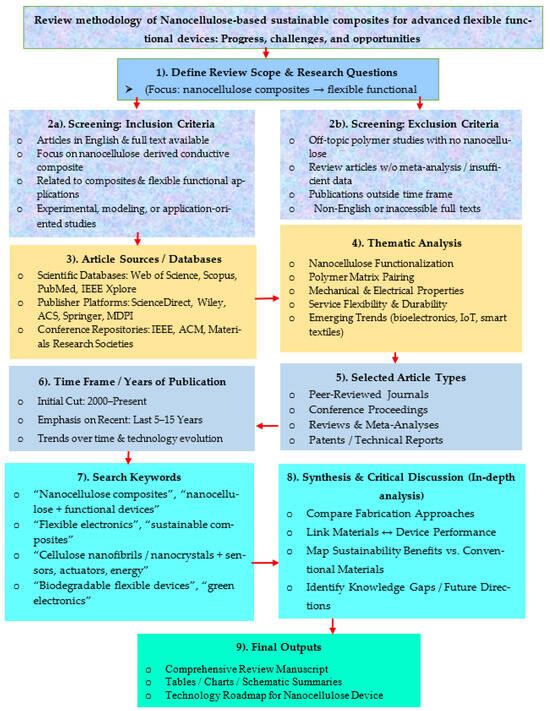
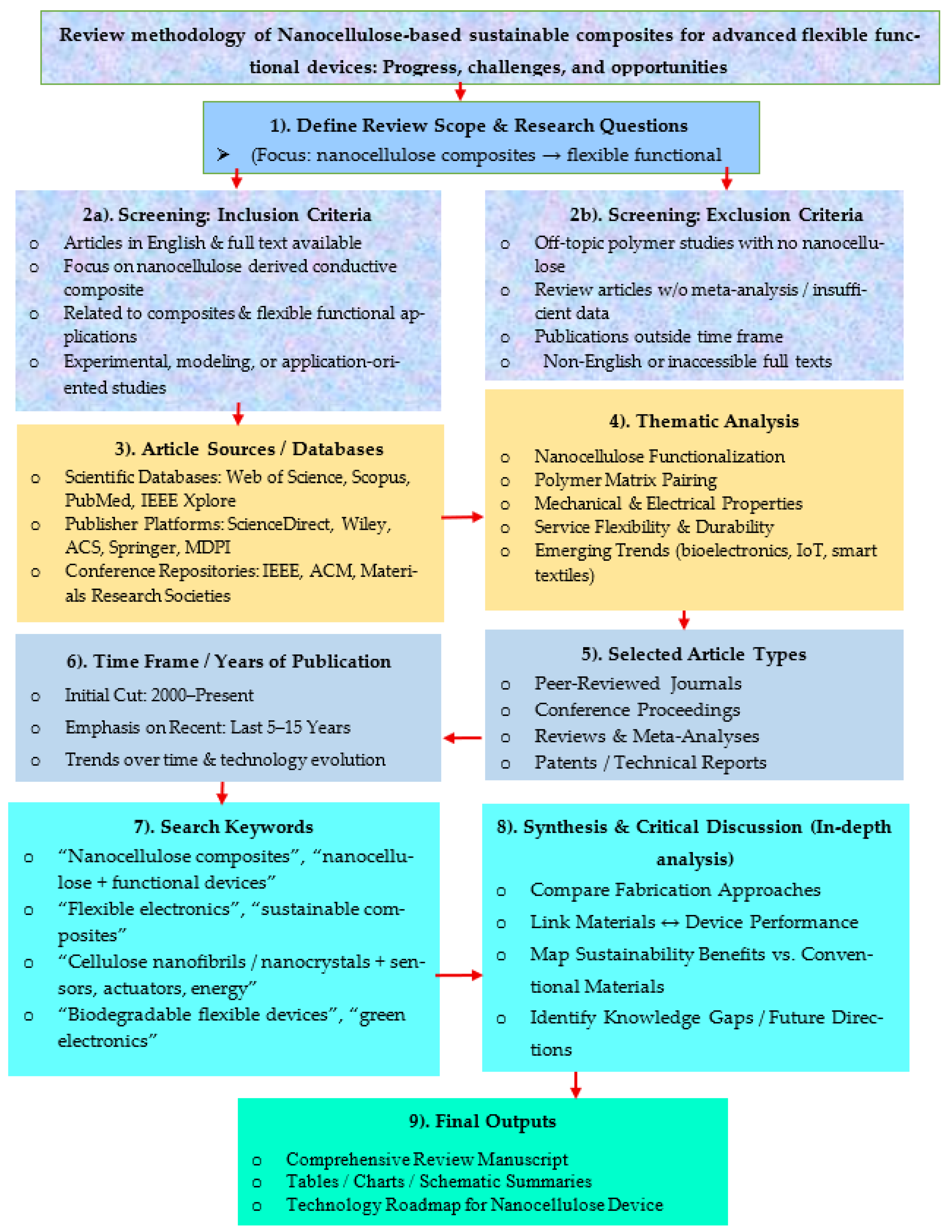
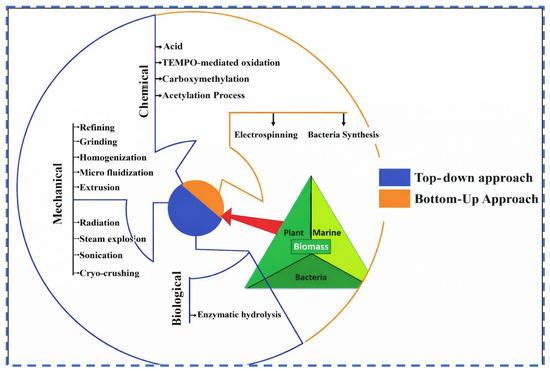
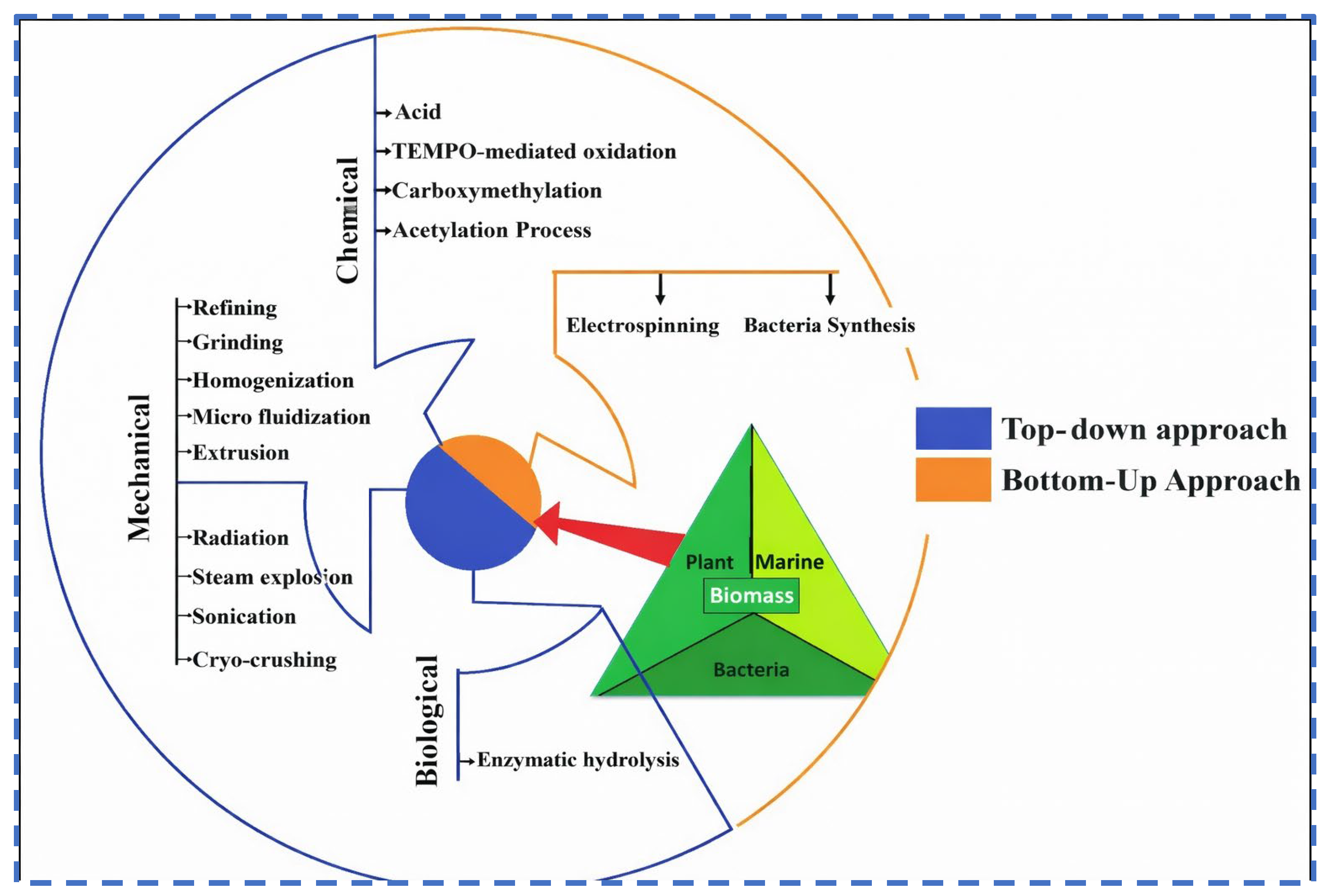
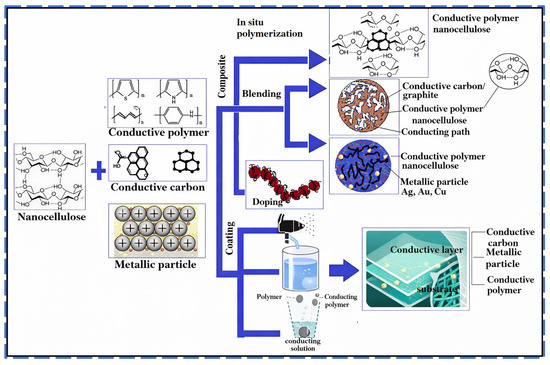
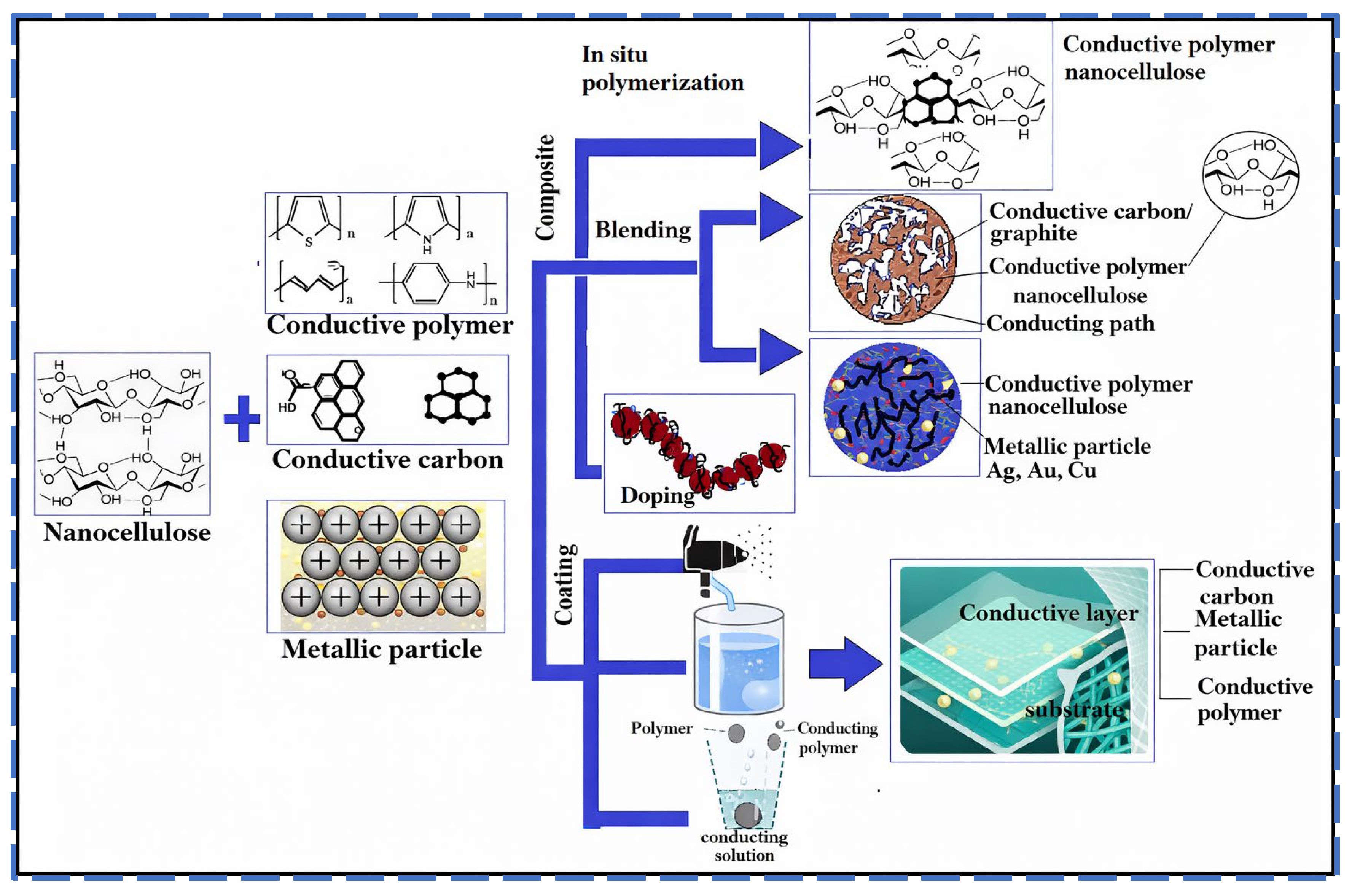
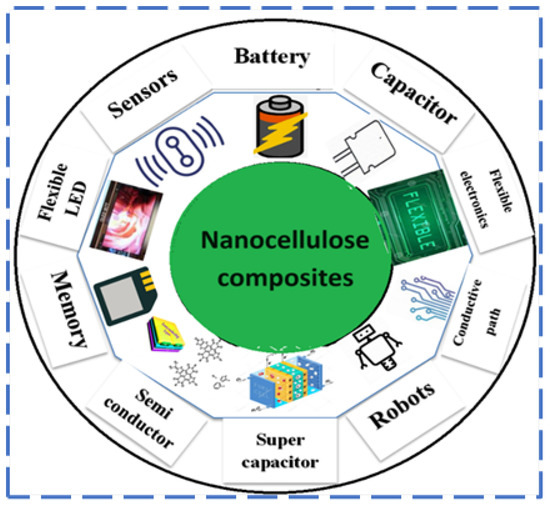
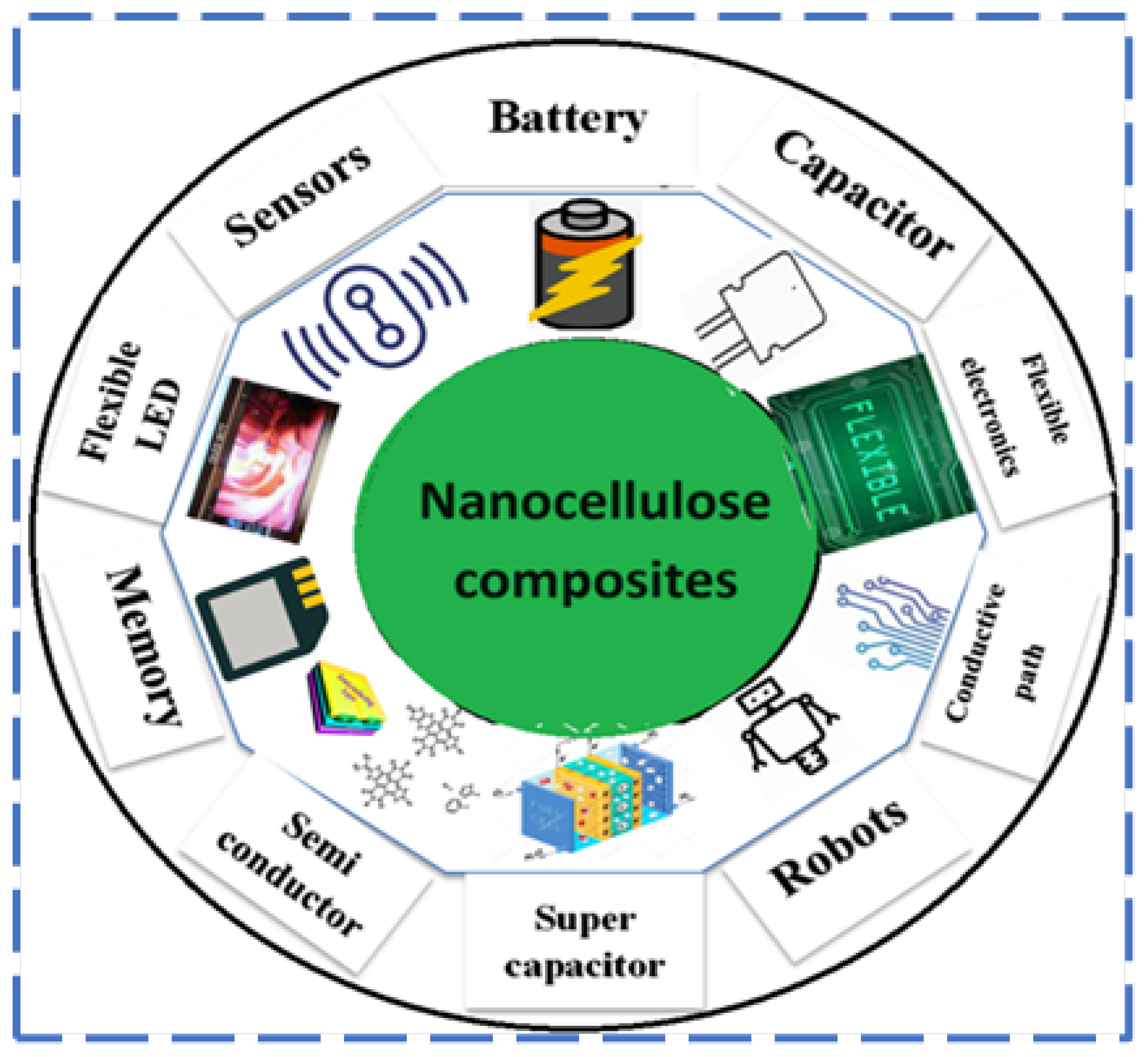
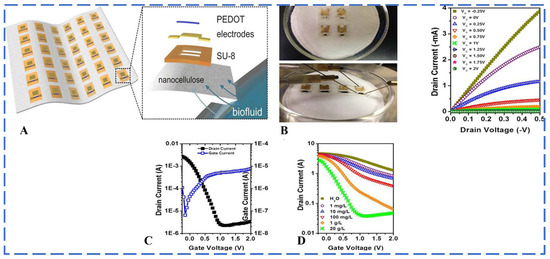
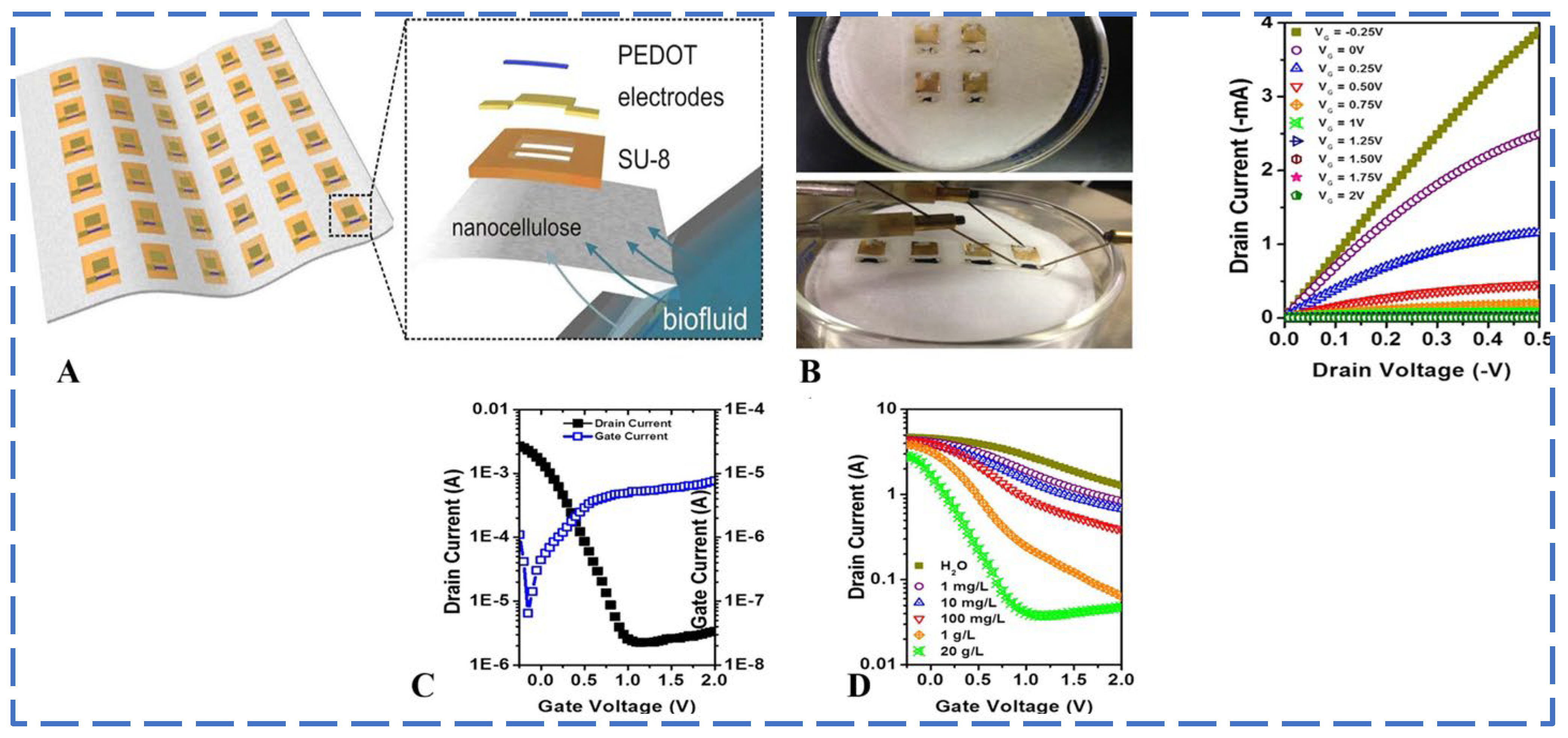
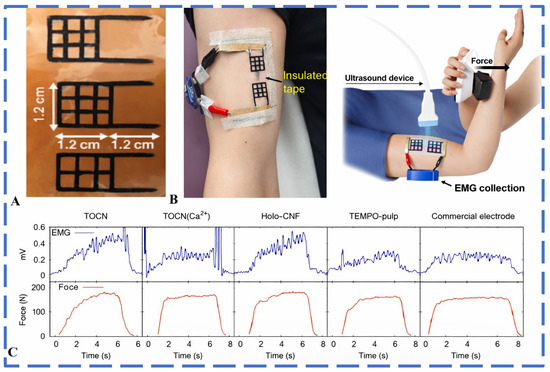
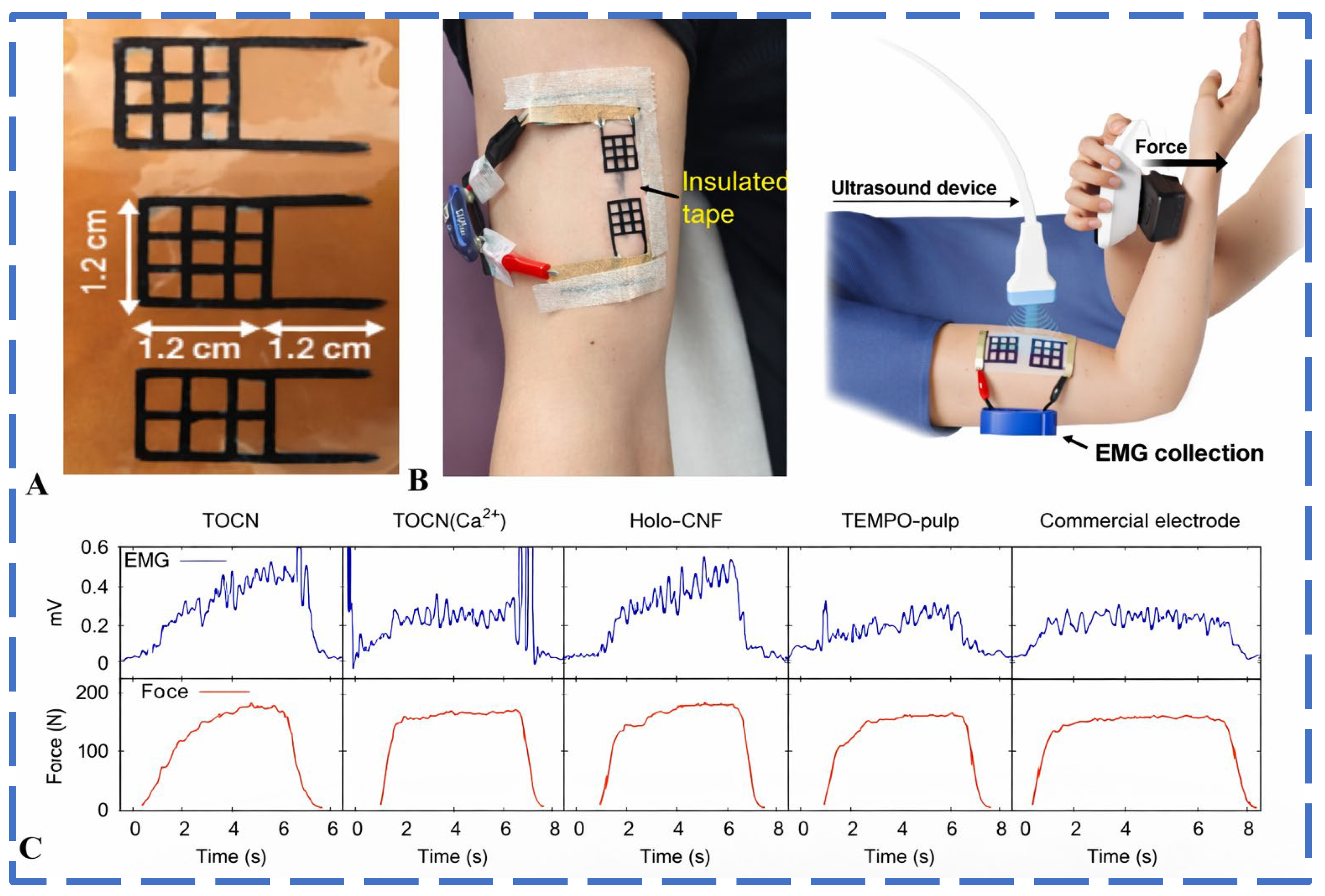
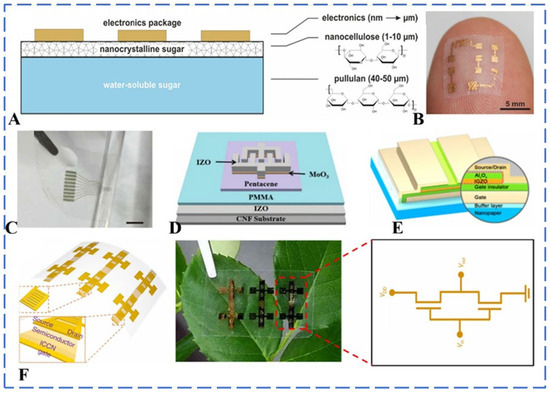
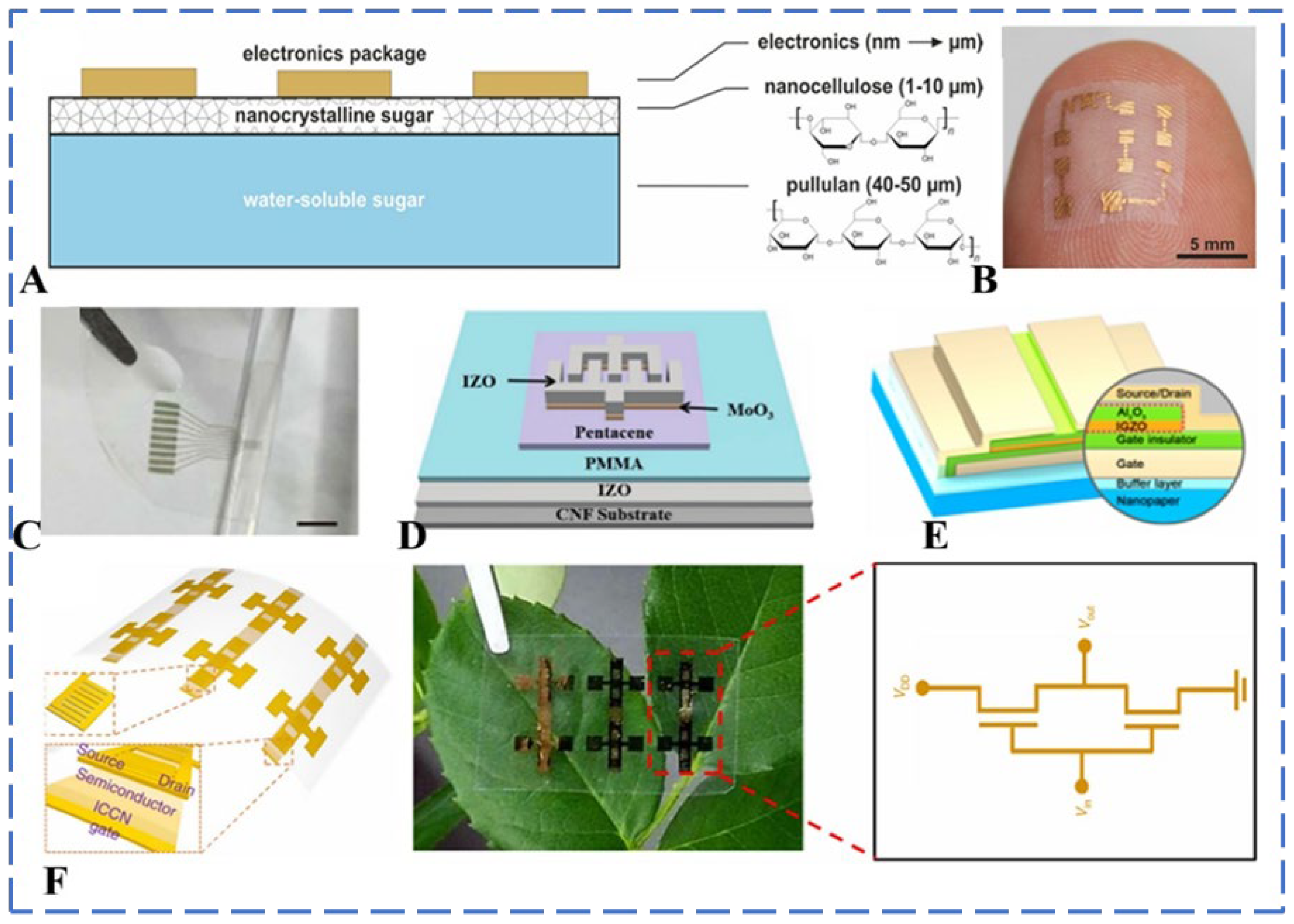
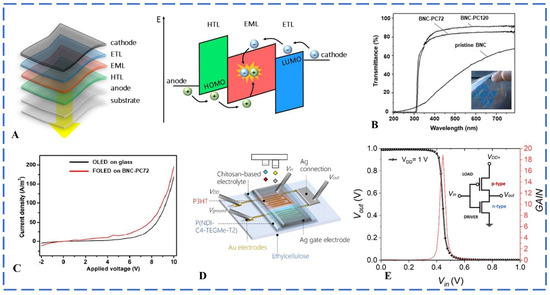
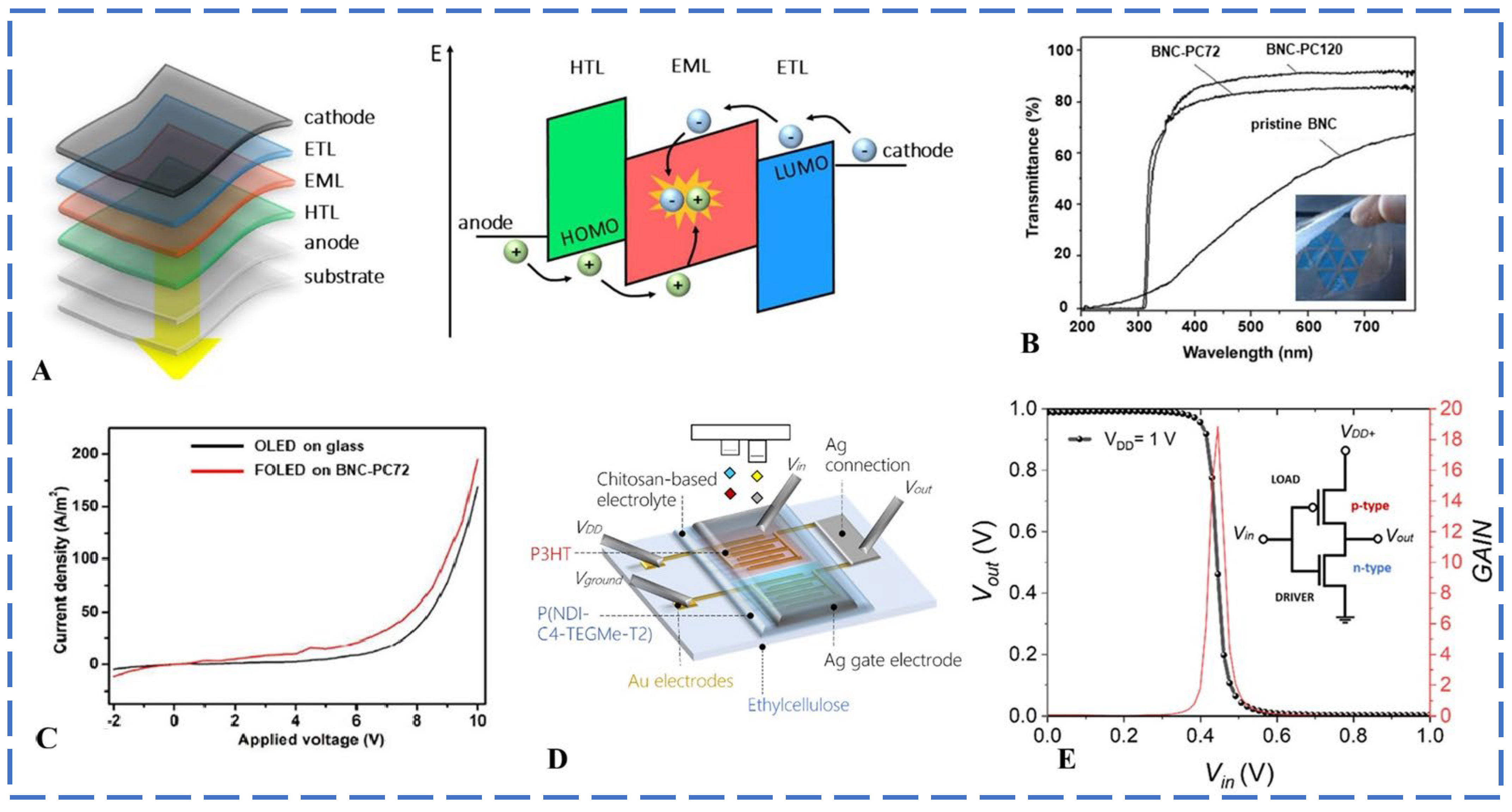
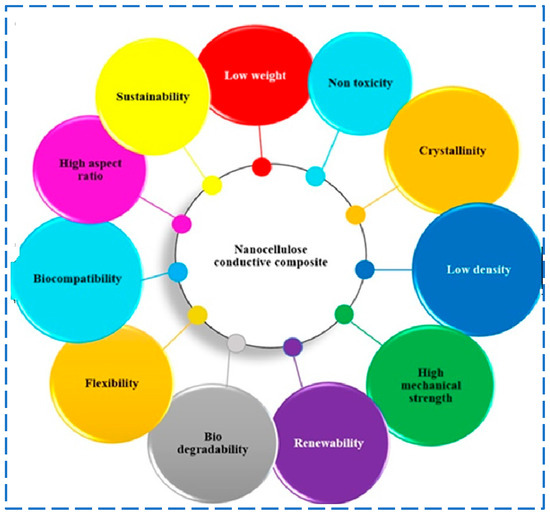
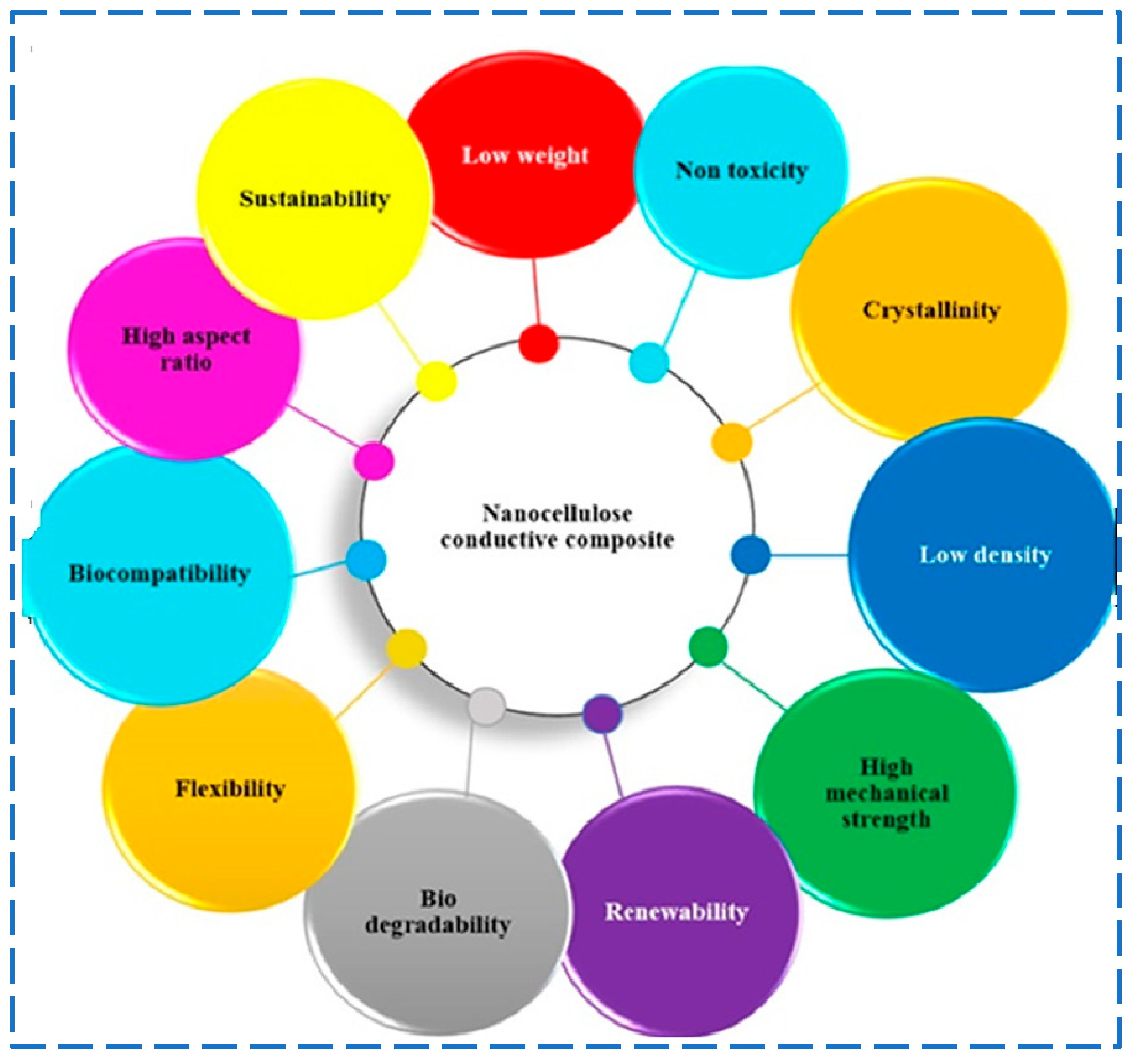
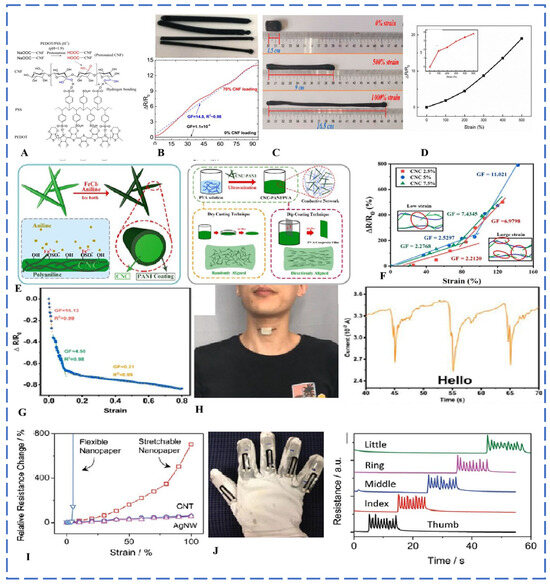
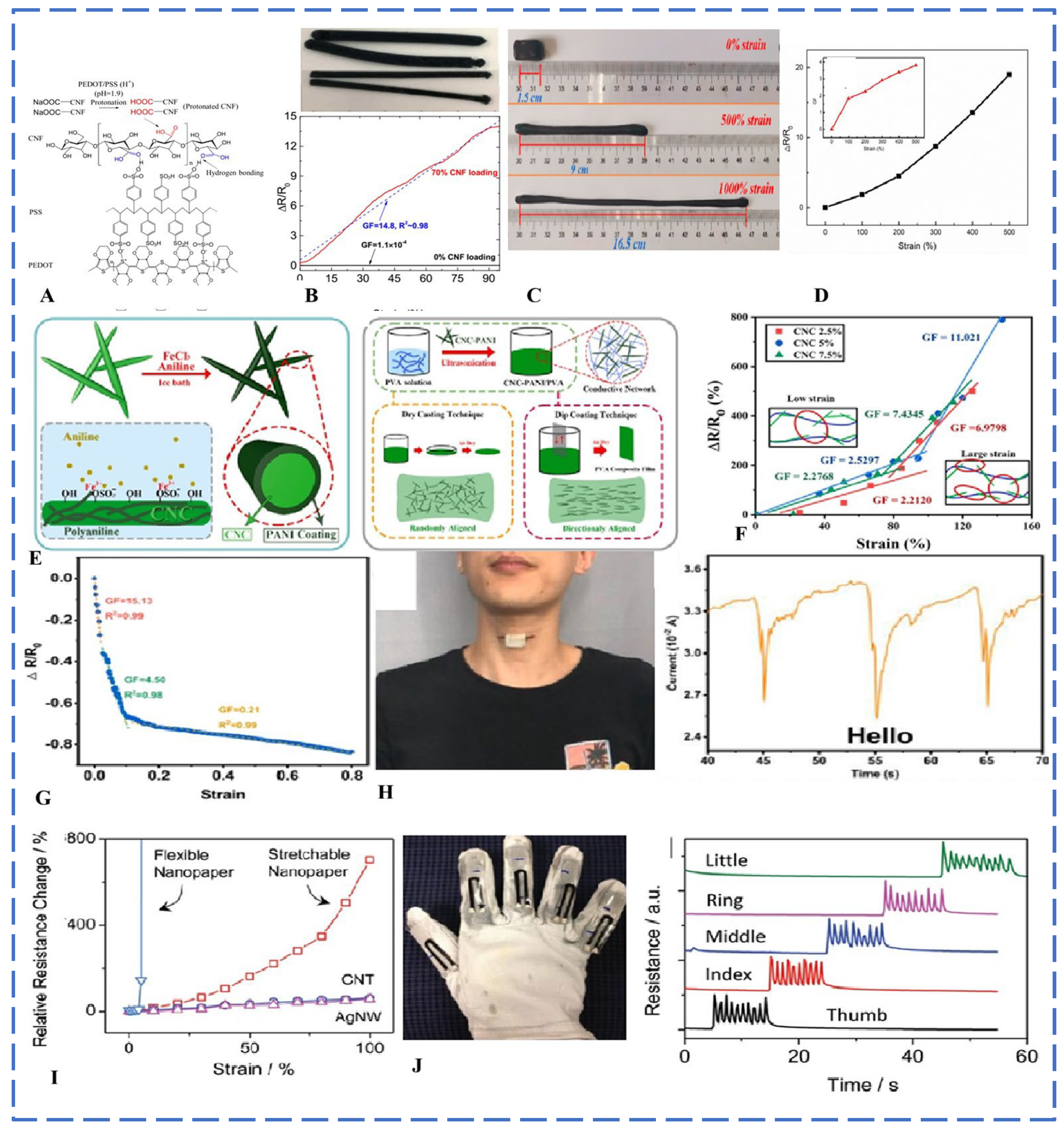
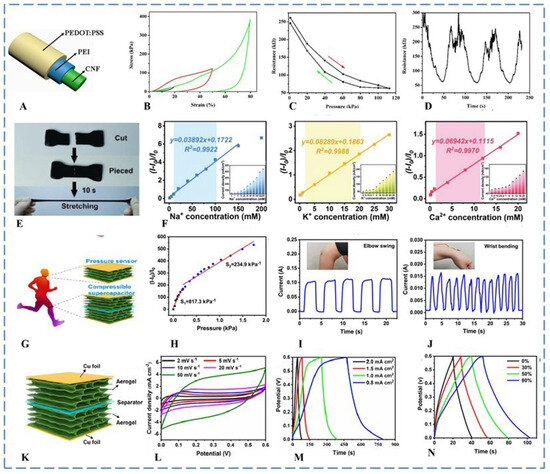
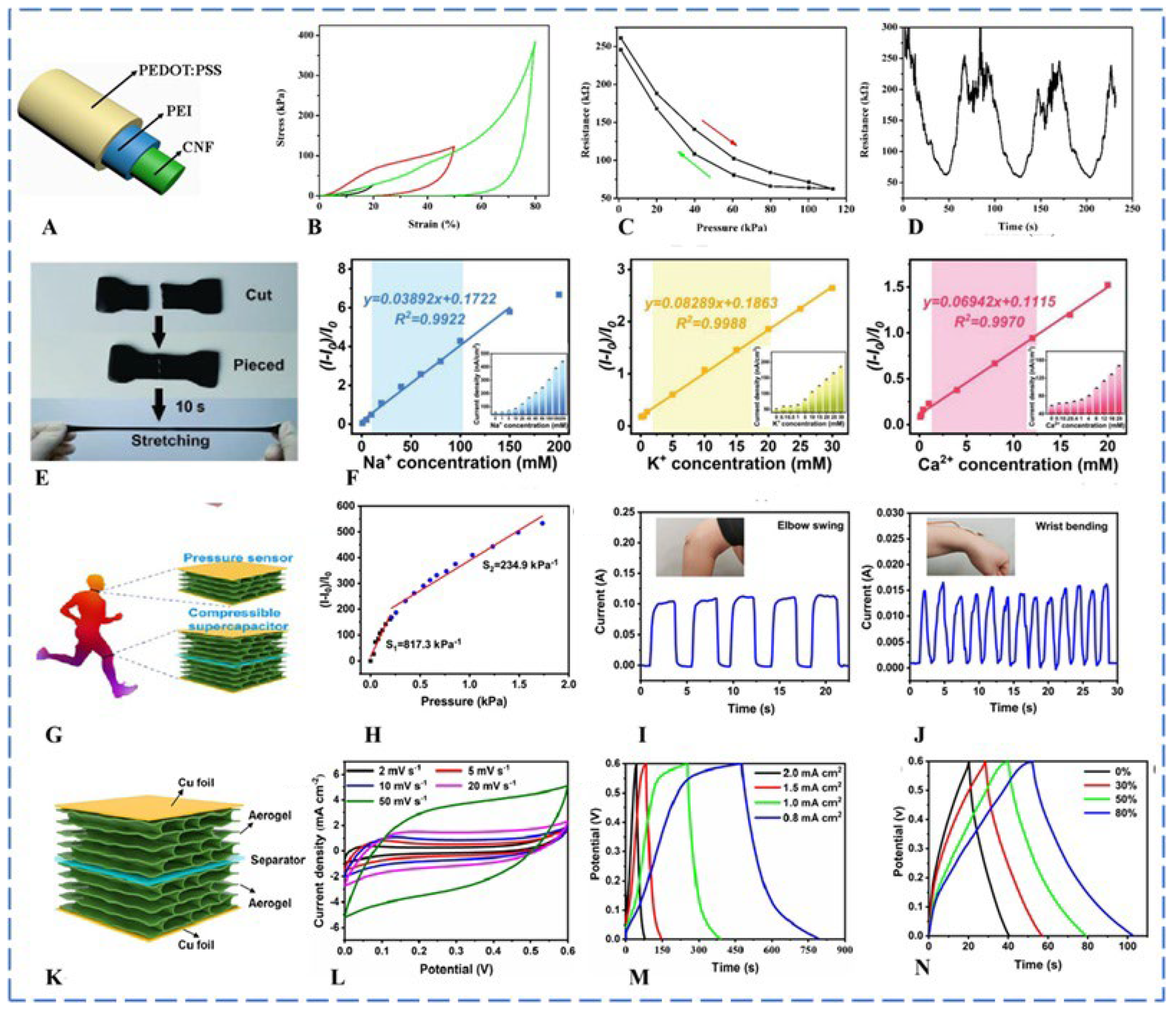
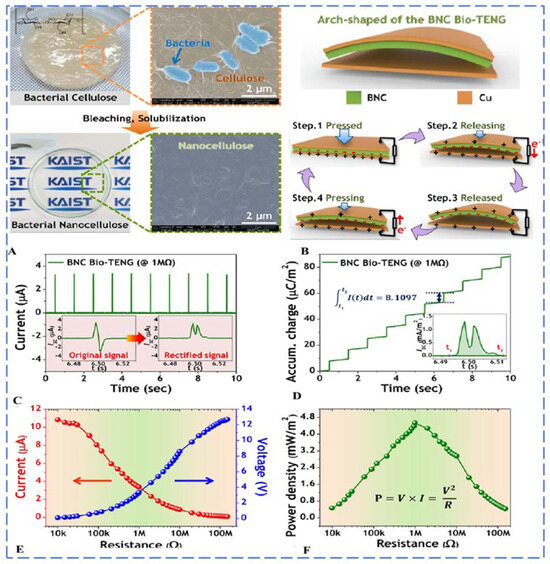
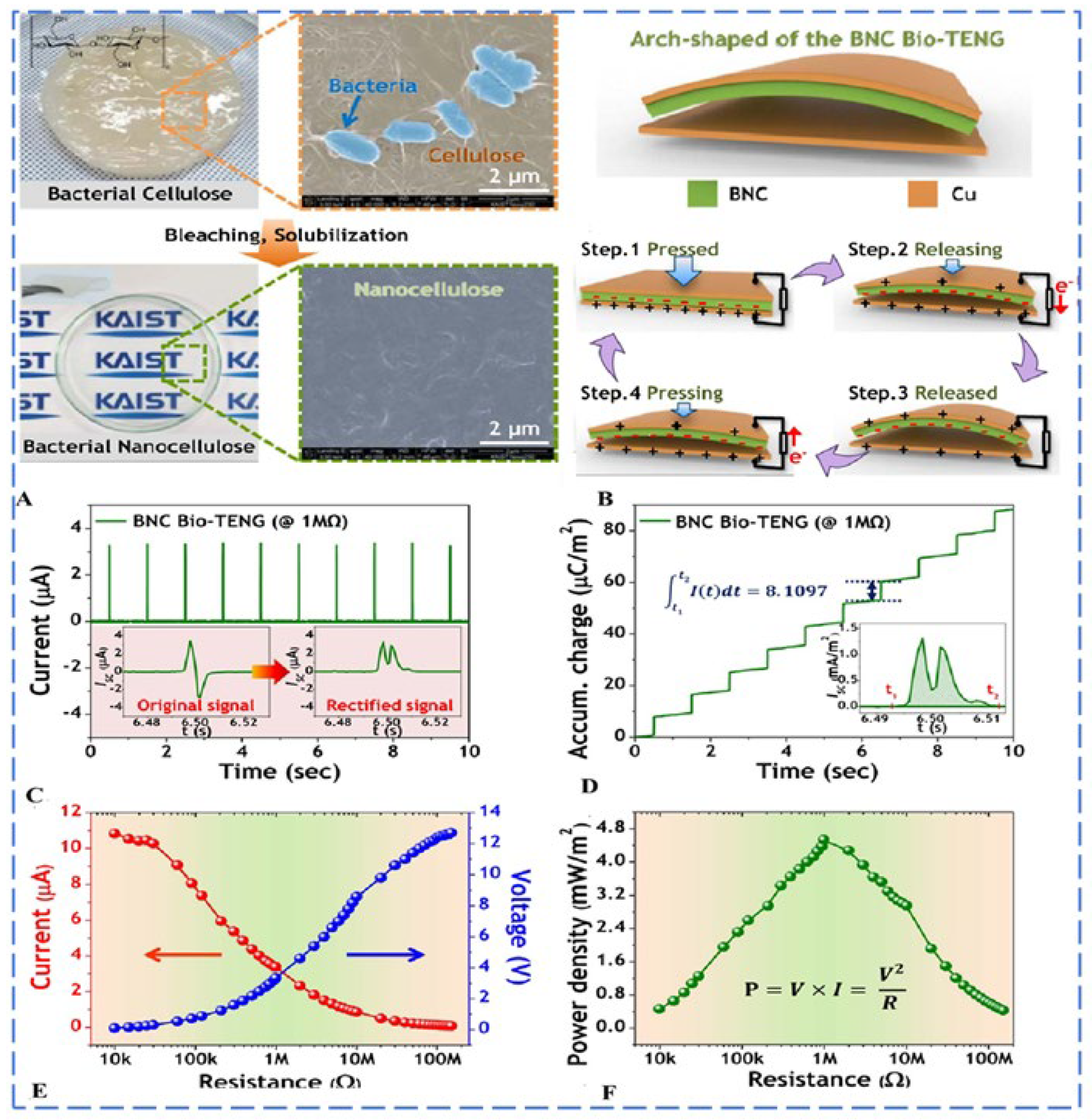
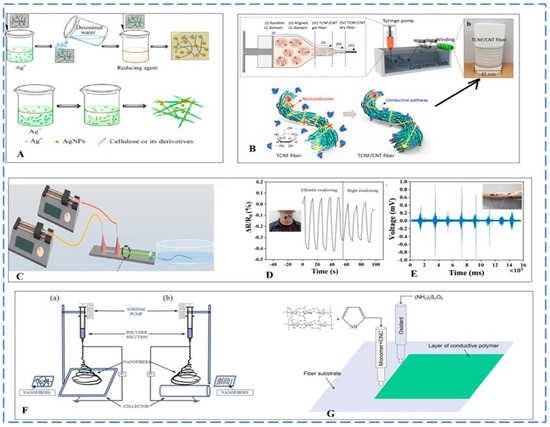
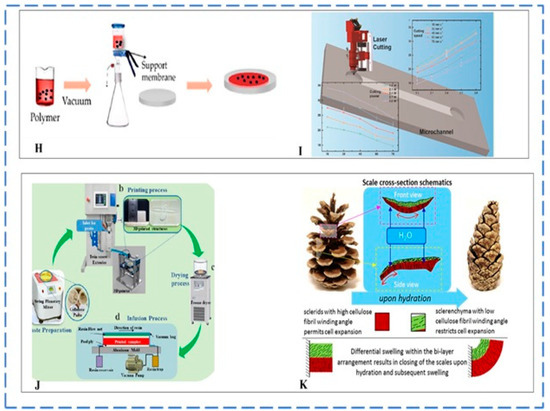
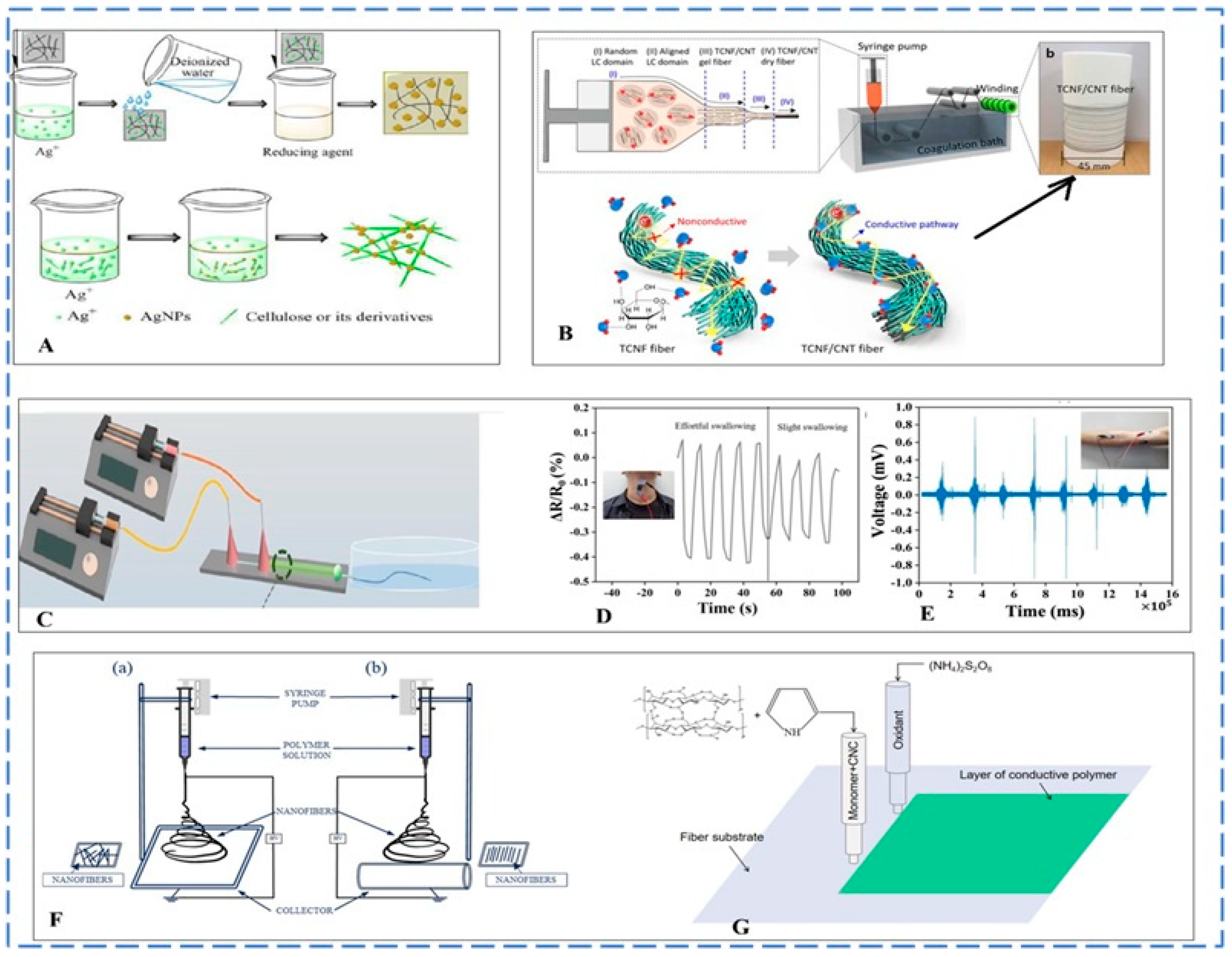
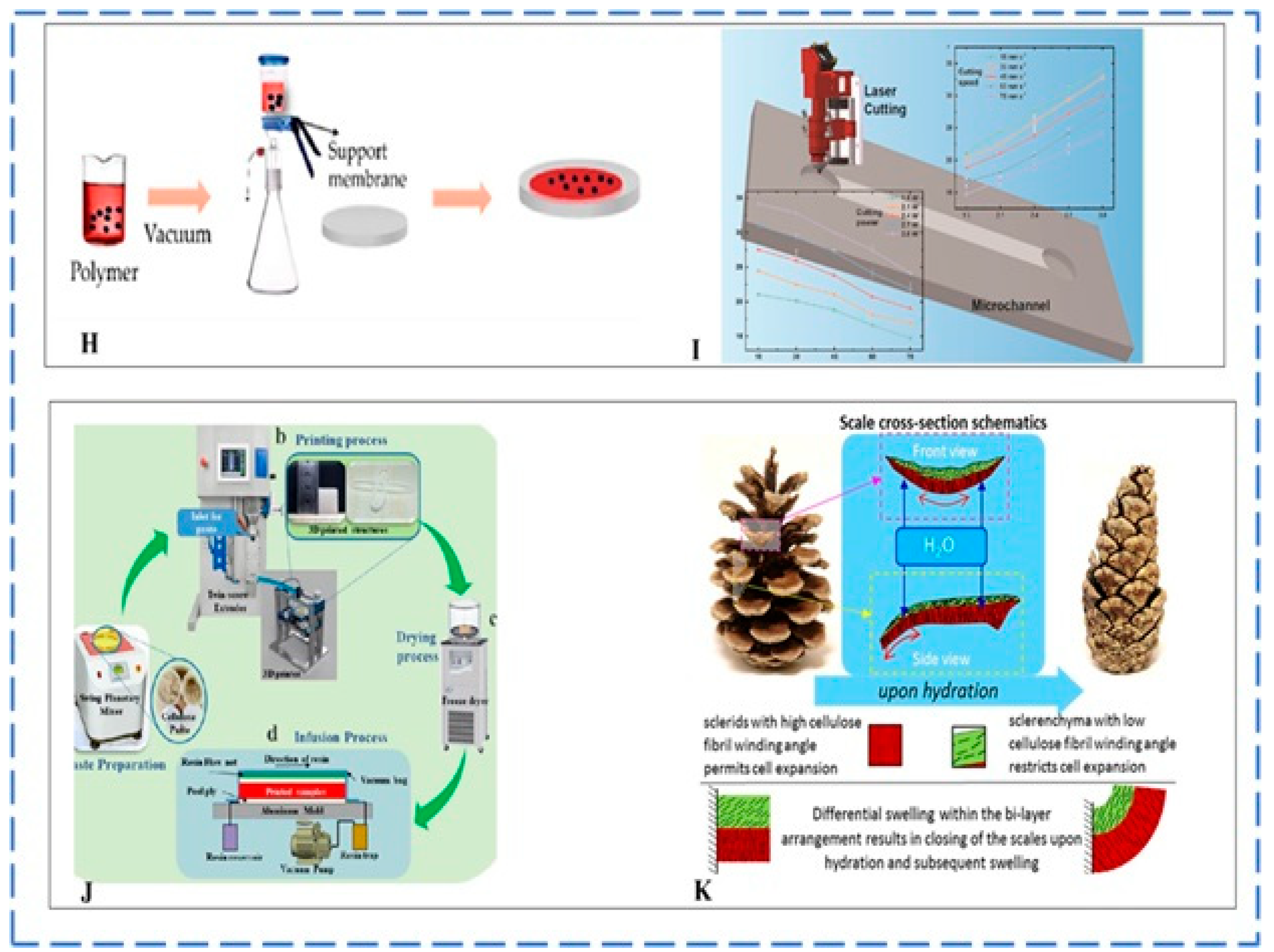
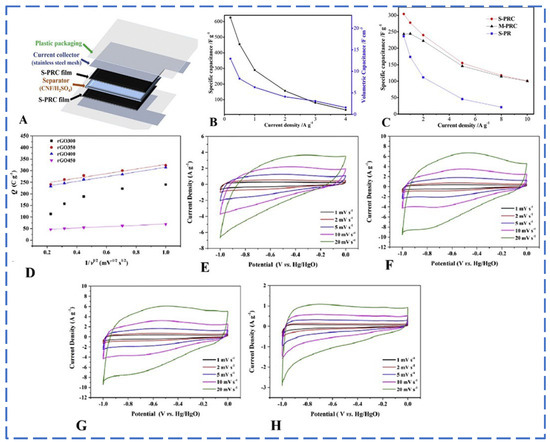
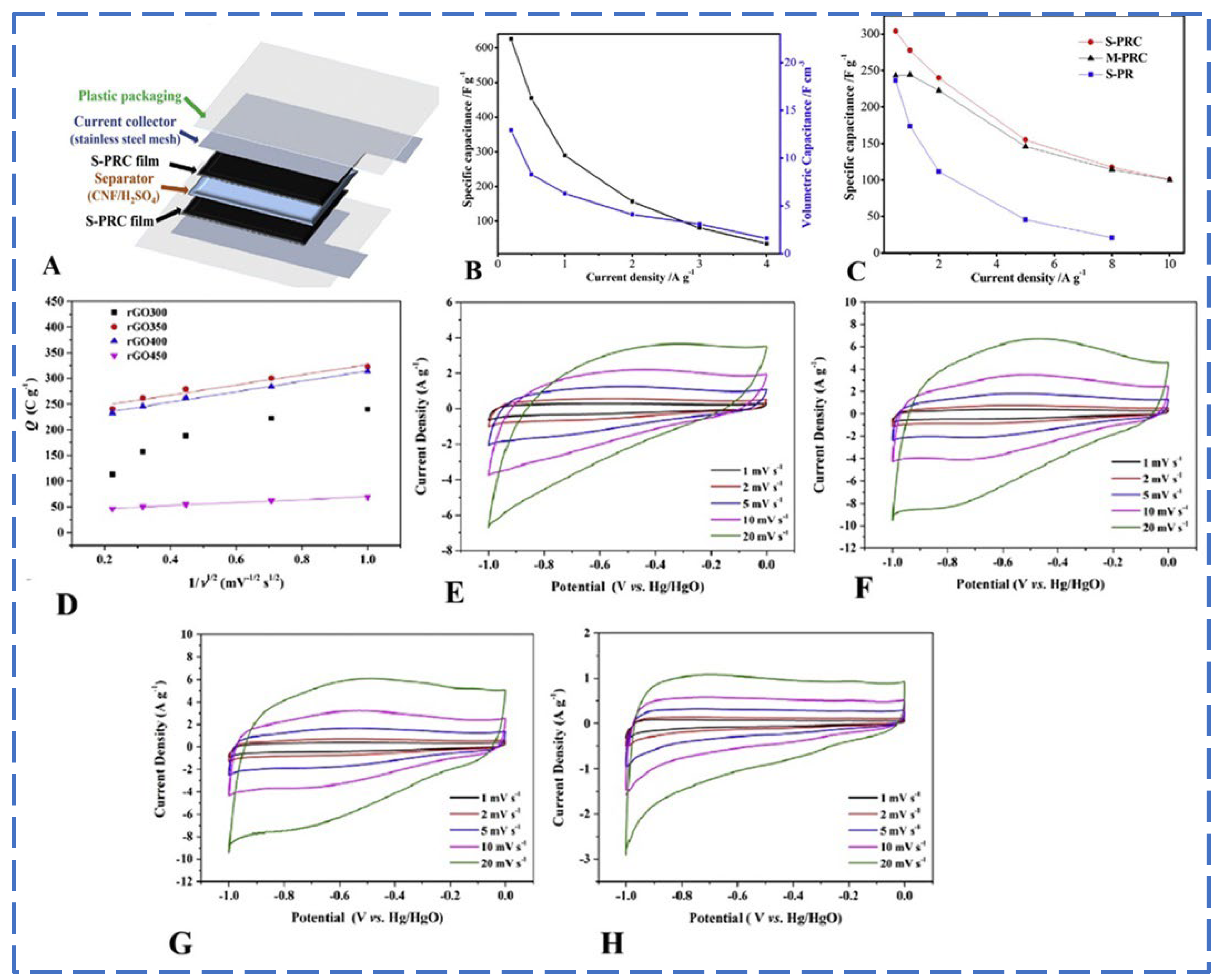
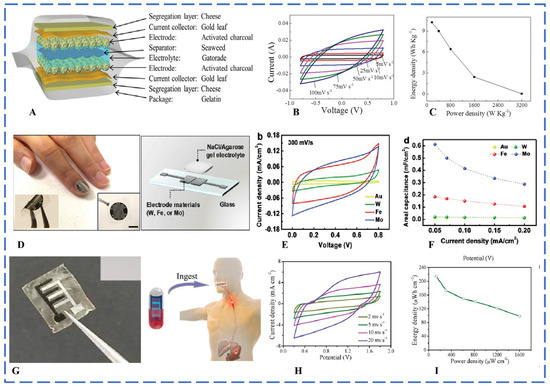
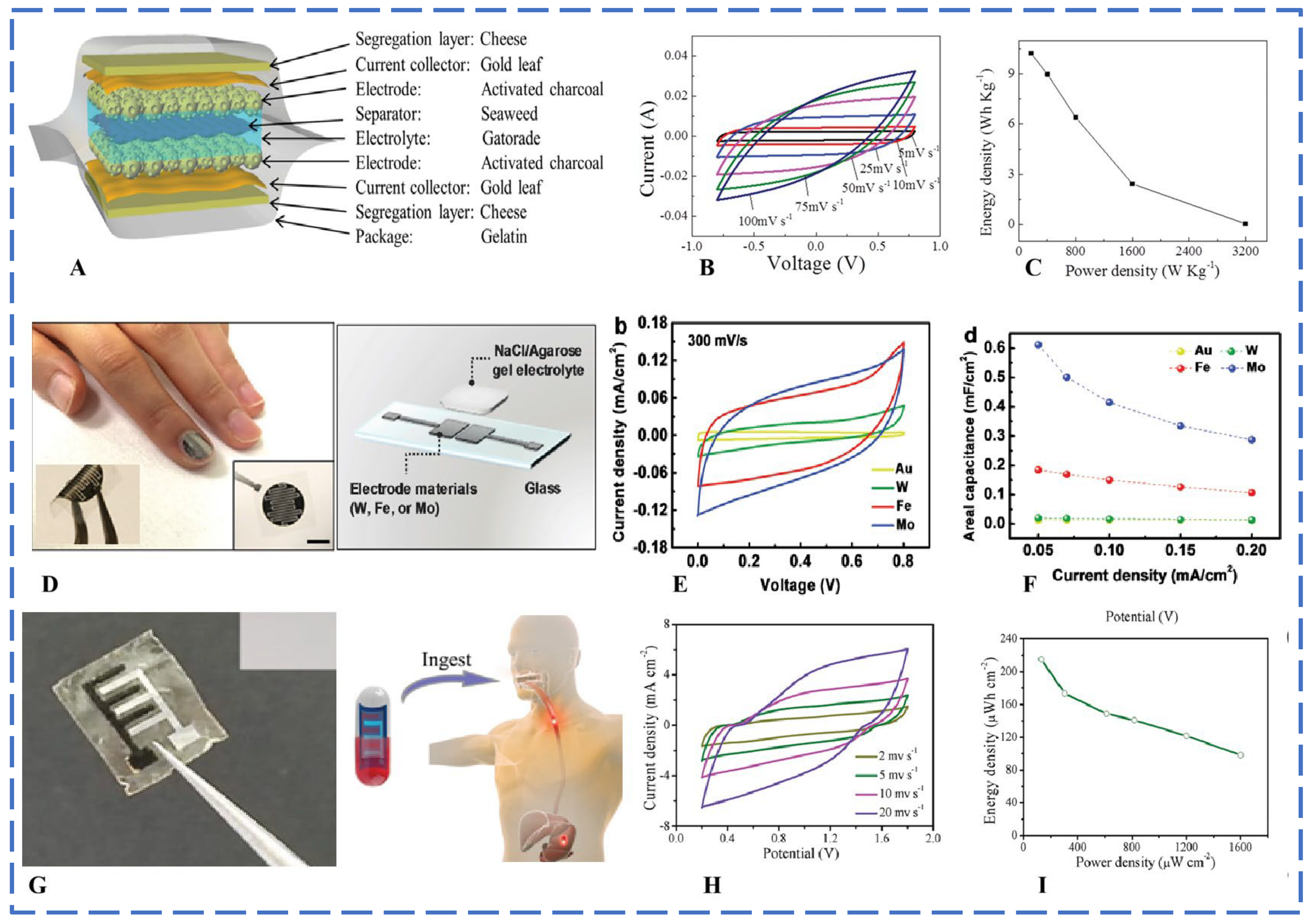

Disclaimer/Publisher’s Note: The statements, opinions and data contained in all publications are solely those of the individual author(s) and contributor(s) and not of MDPI and/or the editor(s). MDPI and/or the editor(s) disclaim responsibility for any injury to people or property resulting from any ideas, methods, instructions or products referred to in the content. |
© 2026 by the authors. Licensee MDPI, Basel, Switzerland. This article is an open access article distributed under the terms and conditions of the Creative Commons Attribution (CC BY) license.