HBA-VSG Joint Optimization of Distribution Network Voltage Control Under Cloud-Edge Collaboration Architecture

Abstract
1. Introduction
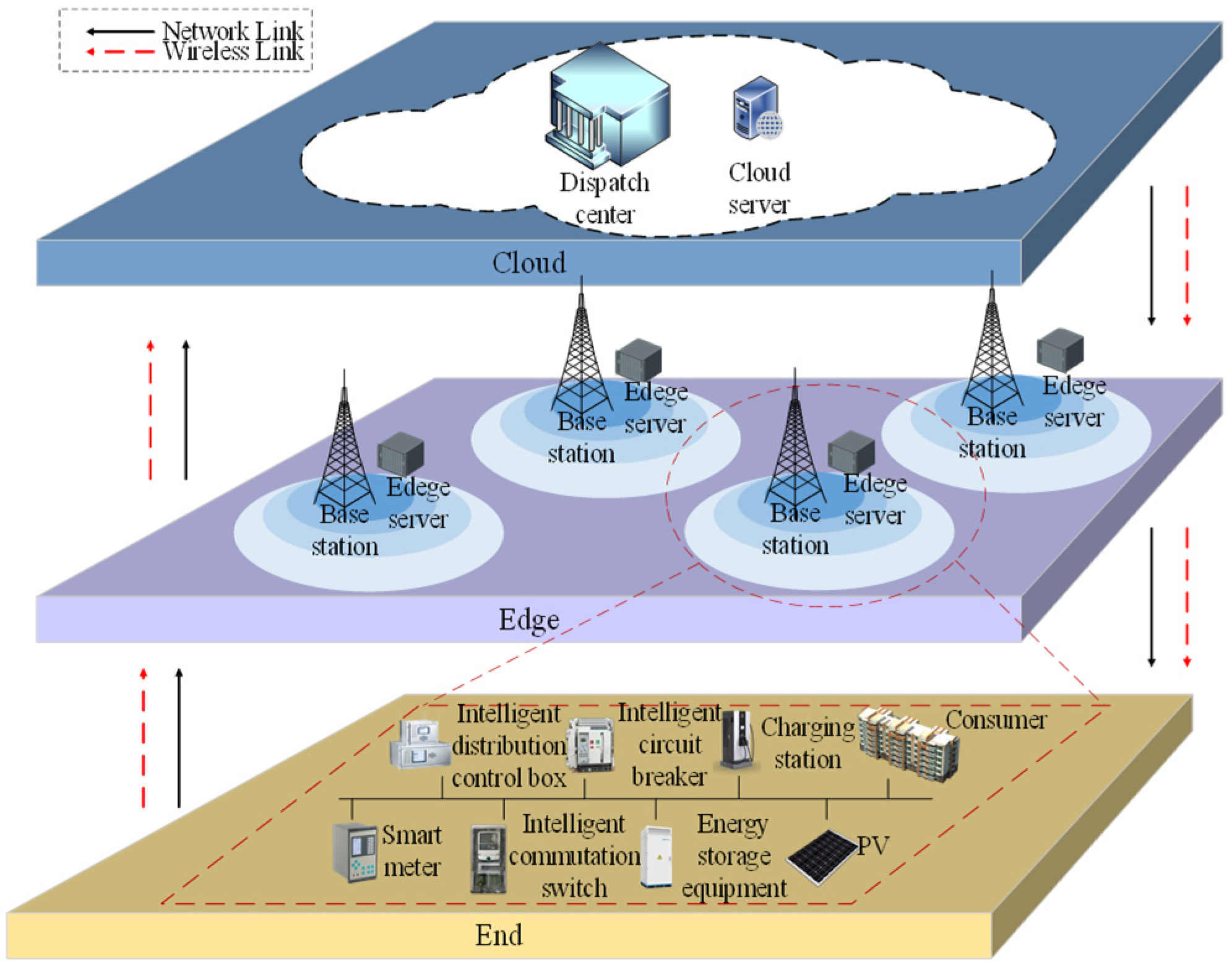
2. Hierarchical Control Strategy for Distribution Networks Under Cloud-Edge Collaboration Architecture
2.1. Edge Control Strategy
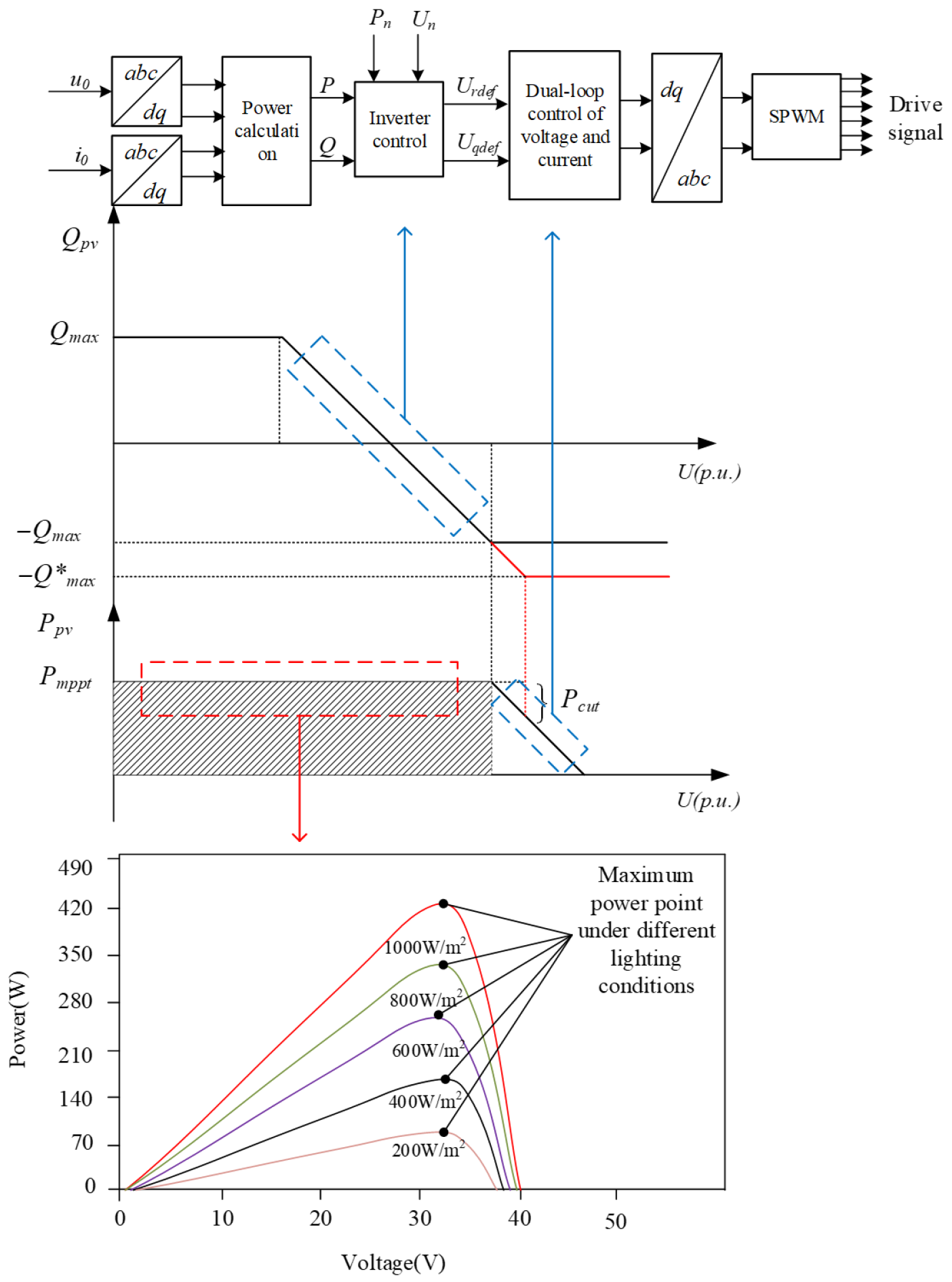
2.1.1. Voltage Control Method Based on Inverter Reactive Power
2.1.2. Voltage Control Method Based on Inverter Active Power
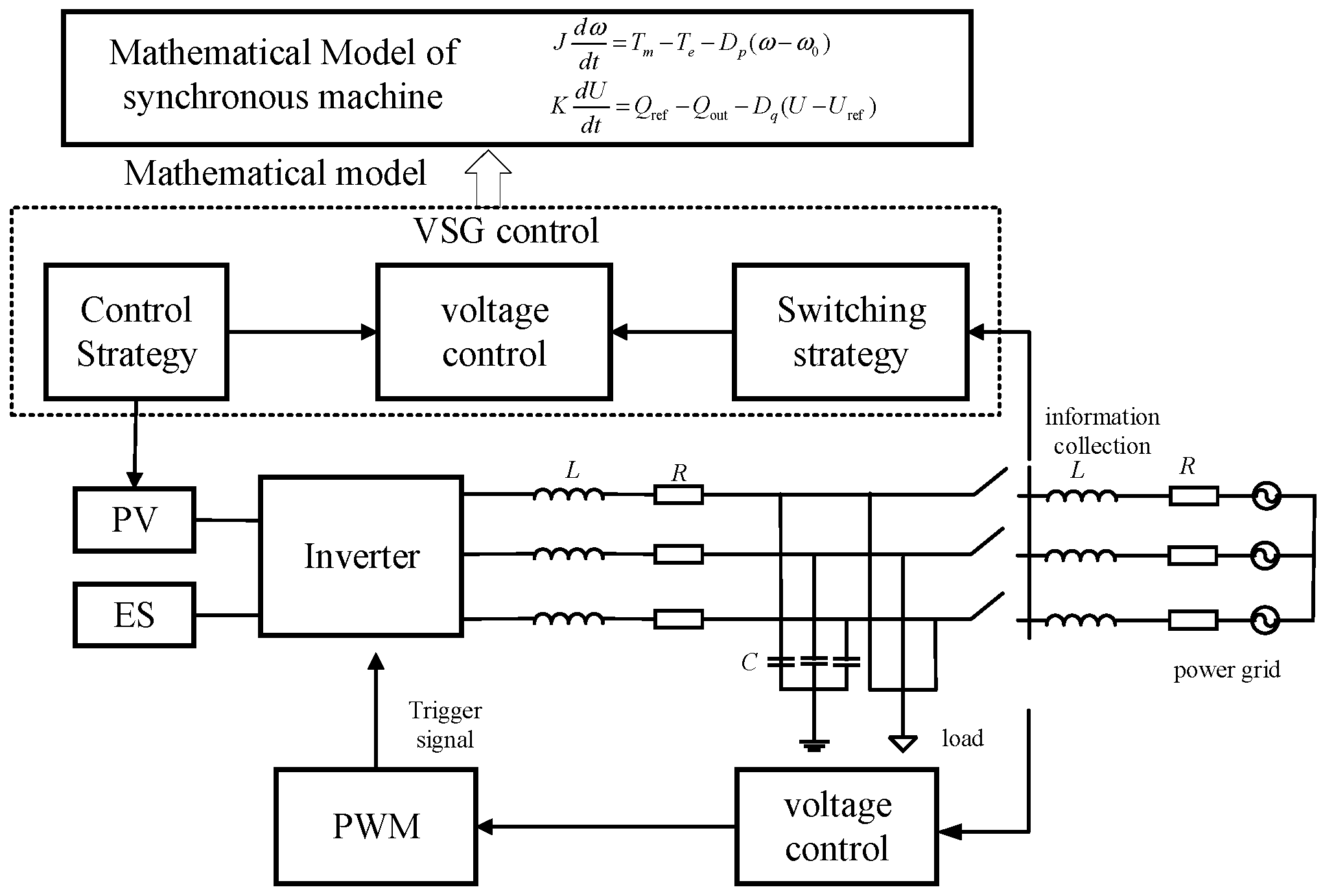
2.1.3. Voltage Control Method Based on VSG
2.1.4. Multi-Mode Coordinated Control Strategy
- (1)
- Normal Operation Zone, :
- (2)
- Early Warning Regulation Zone, :
- (3)
- Emergency Control Zone, :
- Multi-time-scale Coordination:
- 2.
- Hierarchical Capacity Utilization:
- 3.
- Fault-tolerant Design:
2.2. Centralized Optimization and Scheduling in the Cloud
- (1)
- Basic optimization algorithm [20]:
- (2)
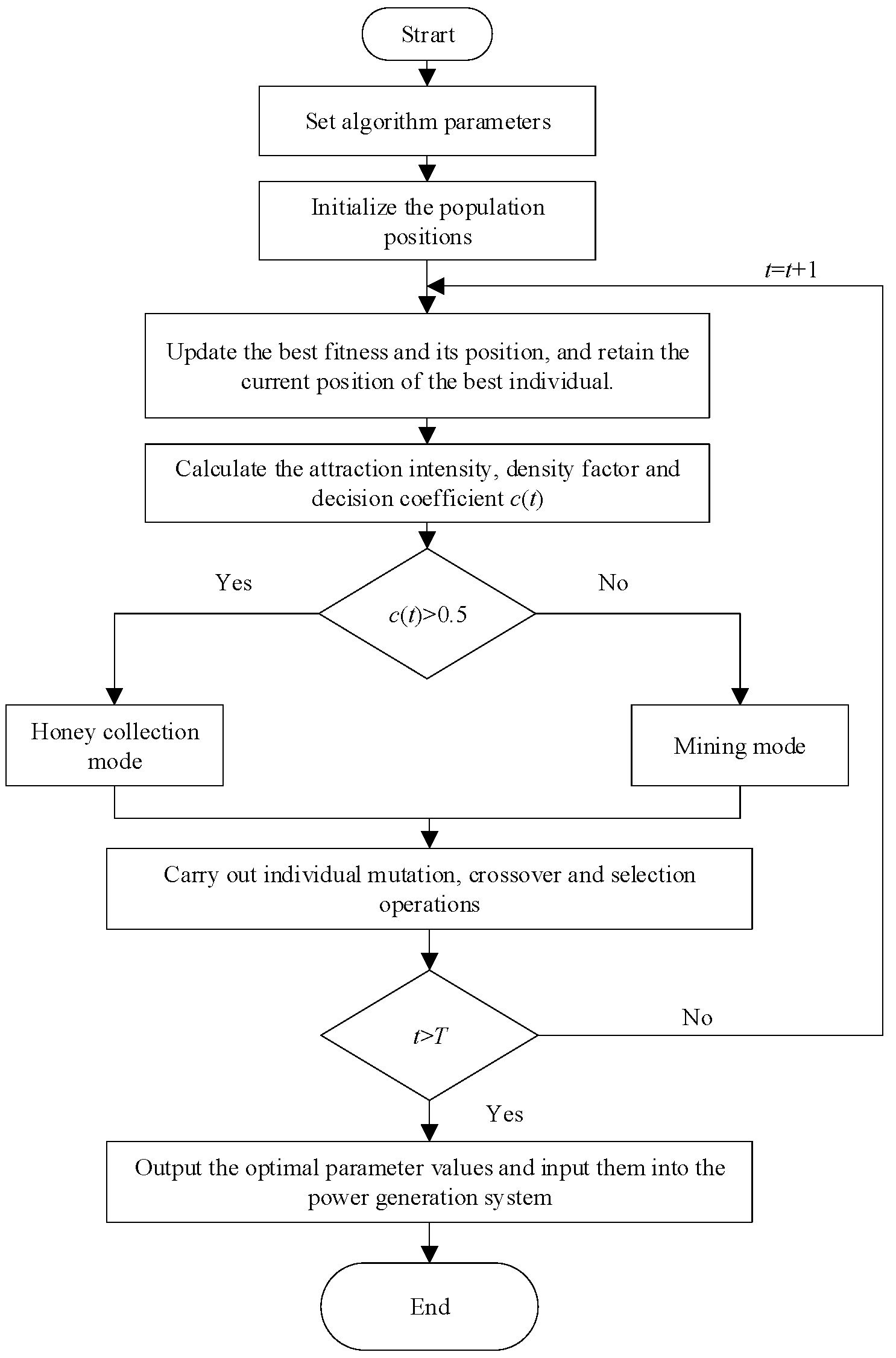
- Improved Honey Badger Algorithm
2.3. Artstein Transformation
3. Computational Model of Hierarchical Control Strategy for Distribution Network with Cloud-Edge Collaboration
3.1. Analysis and Modeling of Low-Voltage Distribution Areas
- (1)
- Distributed Photovoltaic Power Generation:
- (2)
- Energy Storage:
- (3)
- Electric Vehicle Charging Piles:
3.2. Optimization Scheduling Model for Cloud-Edge Collaborative Medium- and Low-Voltage Distribution Networks
3.2.1. Objective Functions
3.2.2. Constraints
- (1)
- The power flow balance constraint is
- (2)
- The branch current constraint is
- (3)
- The node voltage constraint is
- (4)
- The photovoltaic power output constraint is
- (5)
- The power output constraint of the adjustable low-voltage distribution area is
- (6)
- The energy storage power output constraint is
- (7)
- The electric vehicle charging pile constraint is
3.3. Control Flow
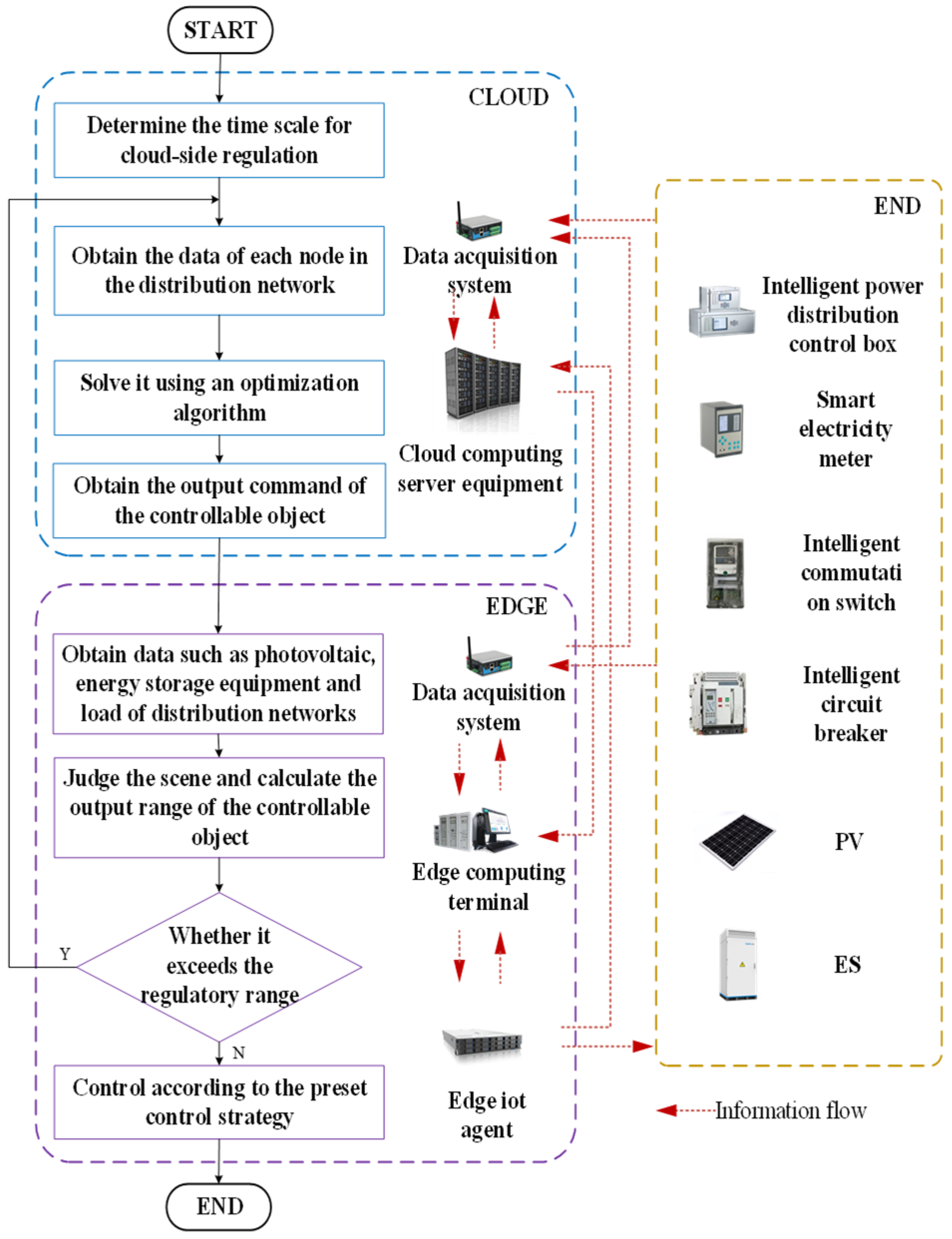
- Determine the control time-scale for the cloud-based centralized control of the medium-voltage distribution network. Considering the communication and computing capabilities between the cloud and edge terminals, this control time-scale is set to 10 min.
- Acquire load parameters of each node in the medium-voltage distribution network, as well as parameters of each controlled object—such as distributed photovoltaics, energy storage reactive compensation capacity, and adjustable low-voltage distribution areas in the network. The parameters of adjustable low-voltage distribution areas include the output range data of low-voltage distribution areas fed back in step 6.
- Solve the model using the HBA based on the cloud control model.
- Issue the solved control power commands to the adjustable edge-terminal low-voltage distribution areas and activate edge-terminal control.
- Obtain data of each node in the low-voltage distribution network, including parameters such as distribution transformer taps, distributed photovoltaics, energy storage, and loads.
- Perform real-time control of the edge terminal using adjustable variables such as inverters and capacitor bank switching based on the edge-terminal hierarchical control model.
- Determine whether the edge-terminal control range is exceeded. If yes, edge devices upload real-time data to the cloud, and return to step 2; if not, edge devices issue control commands to terminal devices to complete the control flow.
4. Case Analysis
4.1. Case Analysis of Multi-Mode Cooperative Joint Control
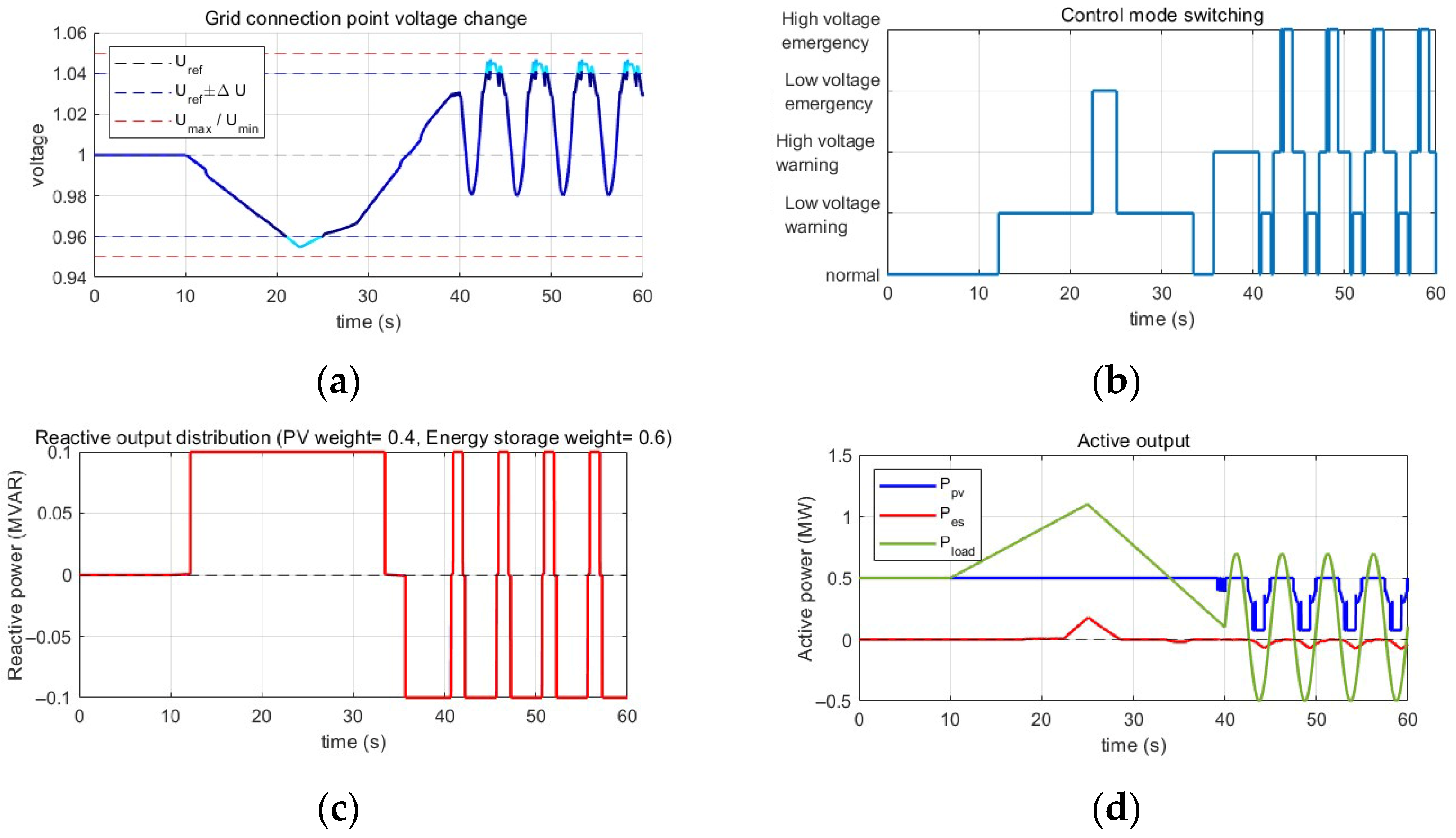
- Normal operating state (0–10 s): The load is maintained stable at a reference value of 0.5 MW, with a rate of change of zero.
- Low-voltage state (10–25 s): The load gradually increases from 0.5 MW to 1.1 MW over a period of 15 s, simulating a peak load ramp event.
- High-voltage state (25–40 s): The load is gradually shed from 1.1 MW down to 0.1 MW, simulating a light-load condition with a negative rate of change.
- Fluctuation Scenario (40–60 s): Periodic load fluctuations are applied, oscillating between −0.5 MW and 0.7 MW with a frequency of approximately 0.25 Hz, simulating dynamic intermittency in the actual grid.
- Normal operating state (0–10 s): The system voltage is stably maintained at 1.00 p.u., and the control mode remains in a normal state continuously
- Low-voltage state (10–25 s): The voltage drops from 1.00 p.u. to a minimum of 0.954 p.u. When the predicted voltage approaches Uref-ΔU, the control mode enters low-voltage warning, with the maximum reactive power output. When it approaches Umin, it enters low-voltage emergency mode, maintaining the active power of the photovoltaic while appropriately discharging the energy storage. The maximum voltage deviation observed is −0.046 p.u.
- High-voltage state (25–40 s): The voltage rises to a maximum of 1.031 p.u. and the predicted voltage approaches Uref + ΔU, the control mode enters the high-voltage warning mode, with the maximum reactive power output and the active power decreasing in a stepwise manner.
- Fluctuation scenario (40–60 s): The voltage fluctuation range is between 0.981 p.u. and 1.045 p.u., and the mode switches rapidly between early warning and emergency.
4.2. Sensitivity and Robustness Analysis
4.3. Discussion and Limitations
5. Conclusions
- The established cloud-edge collaborative architecture successfully decouples control tasks across different time-scales, effectively reconciling the inherent trade-off between long-term economic operation and millisecond-level transient stability.
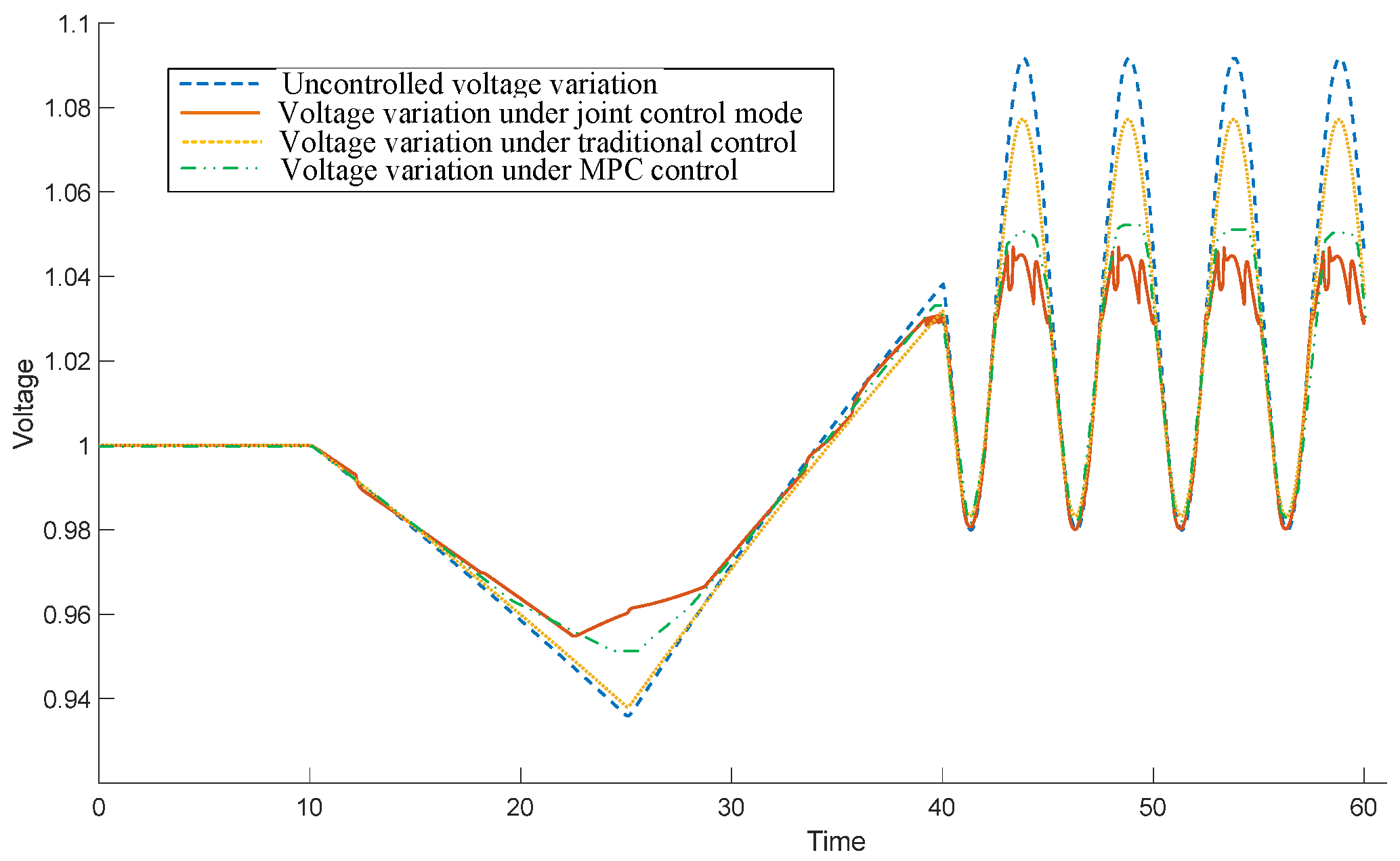
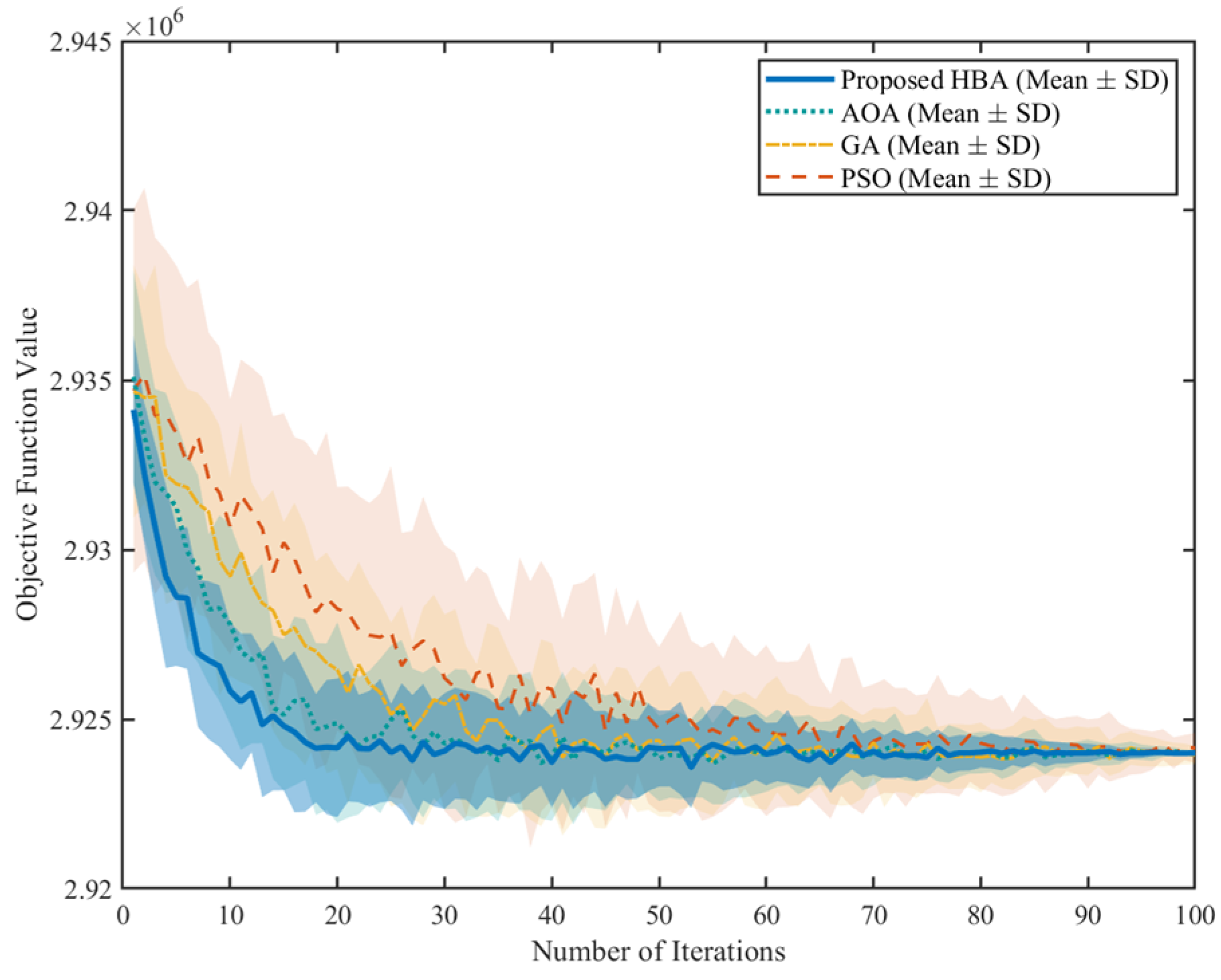
- Quantitative simulation results demonstrate the superior performance of the proposed strategy, which reduces active power losses by 27% and voltage deviation by 43% compared to traditional droop control. The Improved HBA also manifests enhanced convergence speed and global search capability over traditional algorithms.
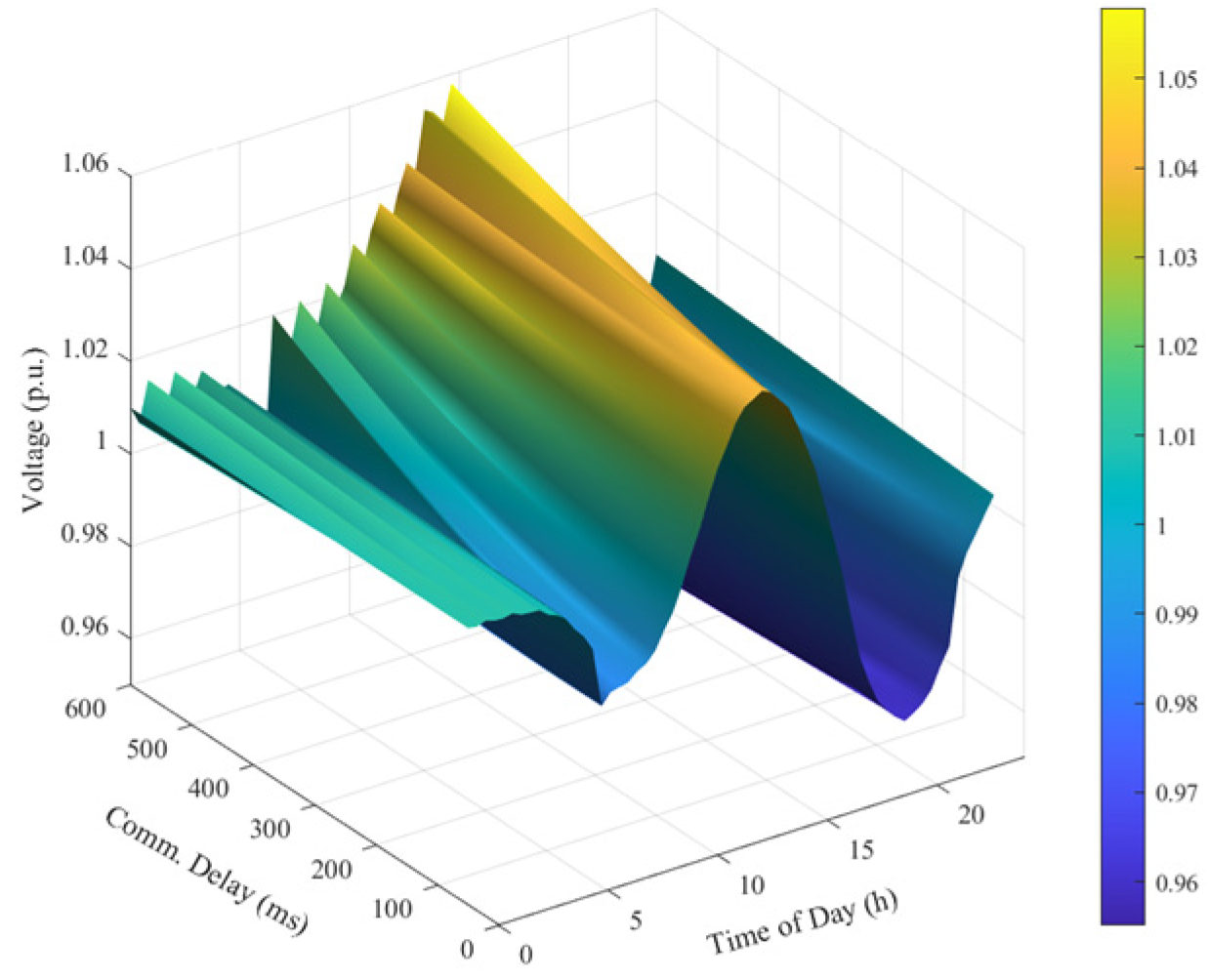
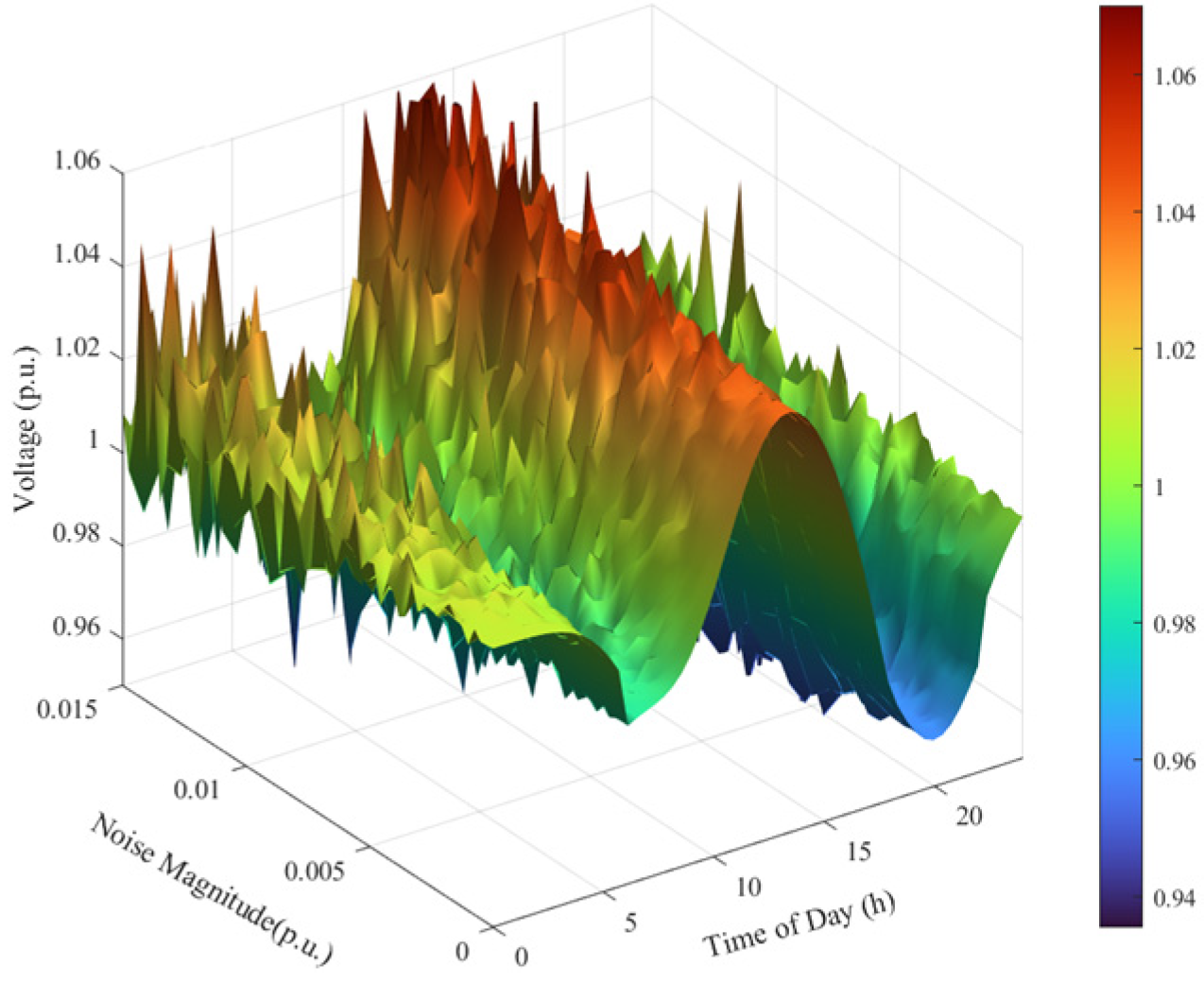
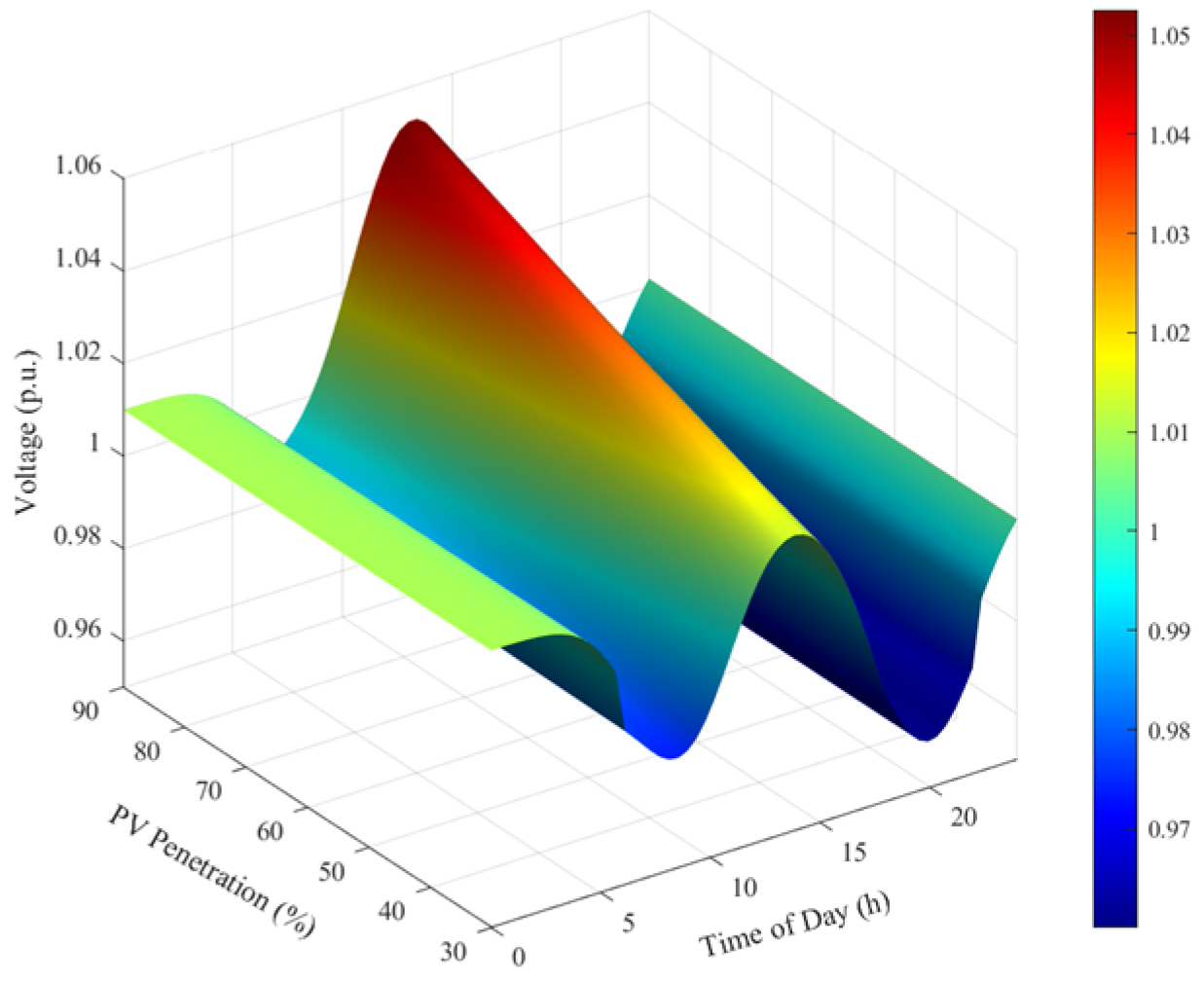
- The strategy exhibits strong robustness against stochastic disturbances, maintaining system stability even under extreme conditions involving 80% PV penetration and communication delays of up to 500 ms.
Author Contributions
Funding
Institutional Review Board Statement
Informed Consent Statement
Data Availability Statement
Conflicts of Interest
Abbreviations
| AHP | Analytic Hierarchy Process |
| AOA | Arithmetic Optimization Algorithm |
| DG | Distributed generation |
| GCN | Convolutional Neural Network |
| HBA | Honey Badger Algorithm |
| MPC | Model Predictive Control |
| PCC | Point of Common Coupling |
| PSO | Particle Swarm Optimization |
| SOC | State of charge |
| VSG | Virtual Synchronous Generator |
References
- Zhao, Z.; Mi, C.; Chang, X.; Wang, S.; Wang, C. Discussion on the collaborative voltage control of distributed photovoltaic modules based on high photovoltaic penetration. Electron. Compon. Mater. 2025, 44, 208–214. [Google Scholar] [CrossRef]
- Yao, H.; Qin, W.; Jing, X.; Wang, K.; Zhu, Z.; Han, X. Possibilistic theory—Based assessment method for distributed PV hosting capacity of low—Voltage distribution networks. High Volt. Eng. 2024, 50, 2682–2692. [Google Scholar] [CrossRef]
- He, J.; Meng, W.; Jiang, W.; Yin, X. Power quality problems in renewable energy power distribution systems: Analysis and solutions. High Volt. Eng. 2023, 49, 2983–2994. [Google Scholar]
- Li, L.; Lu, S.; Sun, H.; Wu, R. Adaptive Scheduling Method of Heterogeneous Resources on Edge Side of Power System Collaboration Based on Cloud–Edge Security Dynamic Collaboration. Processes 2025, 13, 366. [Google Scholar] [CrossRef]
- Dang, S.; Zhang, J.; Lu, T.; Zhang, Y.; Song, P.; Zhang, J.; Liu, R. Cloud—Edge collaborative high—Frequency acquisition data processing for distribution network resilience improvement. Front. Energy Res. 2024, 12, 1440487. [Google Scholar] [CrossRef]
- Bai, X.; Zhang, Y.; Wu, H.; Wang, Y.; Jin, S. A cloud–edge–device collaborative offloading scheme with heterogeneous tasks and its performance evaluation. Front. Inf. Technol. Electron. Eng. 2024, 25, 664–684. [Google Scholar] [CrossRef]
- Sun, Y.; Guo, C.; Fang, Z. Research on cloud—Edge collaborative control method of reactive power and voltage in distribution network based on Edgex Foundry. Power Syst. Prot. Control. 2023, 51, 126–135. [Google Scholar] [CrossRef]
- Wang, J.; Lan, J.; Wang, L.; Lin, Y.; Hao, M.; Zhang, Y.; Xiang, Y.; Qin, L. Voltage Hierarchical Control Strategy for Distribution Networks Based on Regional Autonomy and Photovoltaic-Storage Coordination. Sustainability 2024, 16, 6758. [Google Scholar] [CrossRef]
- Ma, C.; Xiong, W.; Tang, Z.; Li, Z.; Xiong, Y.; Wang, Q. A Hierarchical Voltage Control Strategy for Distribution Networks Using Distributed Energy Storage. Electronics 2025, 14, 1888. [Google Scholar] [CrossRef]
- Sang, W.; Guo, W.; Dai, S.; Tian, C.; Yu, S.; Teng, Y. Virtual Synchronous Generator, a Comprehensive Overview. Energies 2022, 15, 6148. [Google Scholar] [CrossRef]
- Ji, Y.; Zhang, H.; Wu, M.; Hu, L.; Chen, R.; Sun, L.; Xu, Y. A Power Decoupling Strategy for Virtual Synchronous Generator Based on Active Disturbance Rejection Control Strategy. Symmetry 2025, 17, 2016. [Google Scholar] [CrossRef]
- Hakmi, S.H.; Alnami, H.; Al Faiya, B.M.; Moustafa, G. Multidimensional Optimal Power Flow with Voltage Profile Enhancement in Electrical Systems via Honey Badger Algorithm. Biomimetics 2025, 10, 836. [Google Scholar] [CrossRef] [PubMed]
- Long, H.; He, Y.; He, Y.; Song, C.; Gao, Q.; Tan, H. Application of Improved Honey Badger Algorithm in Multi-objective Reactive Power Optimization. IAENG Int. J. Appl. Math. 2022, 52, 1105–1122. [Google Scholar]
- Pang, X.; Lu, X.; Ding, H.; Guerrero, J.M. Construction of Smart Grid Load Forecast Model by Edge Computing. Energies 2022, 15, 3028. [Google Scholar] [CrossRef]
- Li, P.; Ji, H.; Song, G.; Yao, M.; Wang, C.; Wu, J. A combined central and local voltage control strategy of soft open points in active distribution networks. Energy Procedia 2019, 158, 2524–2529. [Google Scholar] [CrossRef]
- Guerrero, J.M.; Vasquez, J.C.; Matas, J.; de Vicuna, L.G.; Castilla, M. Hierarchical control of droop-controlled AC and DC microgrids—A general approach toward standardization. IEEE Trans. Ind. Electron. 2011, 58, 158–172. [Google Scholar] [CrossRef]
- Zhong, Q.-C.; Weiss, G. Synchronverters: Inverters That Mimic Synchronous Generators. IEEE Trans. Ind. Electron. 2011, 58, 1259–1267. [Google Scholar] [CrossRef]
- Arani, M.F.M.; El-Saadany, E.F. Implementing Virtual Inertia in DFIG-Based Wind Power Generation. IEEE Trans. Power Syst. 2013, 28, 1373–1384. [Google Scholar] [CrossRef]
- Bensiali, H.; Khoucha, F.; Benrabah, A.; Benhamimid, L.; Benbouzid, M. Virtual Synchronous Generator Control of Grid Connected Modular Multilevel Converters with an Improved Capacitor Voltage Balancing Method. Appl. Sci. 2025, 15, 2865. [Google Scholar] [CrossRef]
- Hashim, F.A.; Houssein, E.H.; Hussain, K.; Mabrouk, M.S.; Al-Atabany, W. Honey Badger Algorithm: New metaheuristic algorithm for solving optimization problems. Math. Comput. Simul. 2022, 192, 84–110. [Google Scholar] [CrossRef]
- Lan, Y.; Li, Y.; Wang, N. Multi-Objective Reactive Power Optimization for Distribution Networks Based on the Modified Golden Eagle Algorithm. In Proceedings of the 2023 3rd International Conference on Electrical Engineering and Computer Technology (ICEECT 2023), Sanya, China, 24–26 March 2023. [Google Scholar]
- Dai, X.; Liu, G.-P.; Hu, W.; Deng, Q.; Lei, Z. Distributed Secondary Control for DC Microgrids With Time-Varying Communication Delays: A Networked Predictive Control Scheme. IEEE Trans. Power Syst. 2024, 39, 4459–4472. [Google Scholar] [CrossRef]
- Feng, Y.W.; Liu, J.L. Distributed Fixed Time Control for DC Microgrid with Input Delay. Int. Trans. Electr. Energy Syst. 2023, 2023, 8837110. [Google Scholar] [CrossRef]








| Parameter Category | Parameter Name | Parameter Value |
|---|---|---|
| System parameters | Target voltage Uref | 1.0 p.u. |
| Normal operating range ΔU | 0.04 p.u. | |
| Photovoltaic parameters | Maximum power Pmp | 0.5 MW |
| Maximum reactive power capacity Qmax | 0.1 MVar | |
| Energy storage parameters | Capacity Ecap | 1.0 MWh |
| Maximum active power Pes_max | 0.2 MW | |
| Maximum reactive power capacity Qes_max | 0.1 MVar | |
| VSG control parameters | Virtual inertia J | 1.0 |
| Damping coefficient D | 15 | |
| Control parameters | Voltage recovery gain | 2.2 |
| Emergency trigger threshold | 0.03 p.u. | |
| Anticipatory control gain | 2.5 |
| Indicator | Optimal Control Strategy | MPC Control | Traditional Droop Control |
|---|---|---|---|
| Maximum voltage deviation | 0.045 p.u. | 0.055 p.u. | 0.077 p.u. |
| Voltage qualification | 87% | 82% | 71% |
| Algorithm | Avg. Convergence Iteration | Execution Time |
|---|---|---|
| HBA | 15 | 3.42 |
| AOA | 28 | 4.15 |
| GA | 60 | 5.68 |
| PSO | 67 | 3.85 |
| Operating Scene | Power Loss/kW | Voltage Deviation/p.u. | Distributed Power Consumption/kW |
|---|---|---|---|
| Scene 1 | 22,575.04 | 18.49 | 144,000 |
| Scene 2 | 16,465.59 | 10.46 | 147,450.39 |
Disclaimer/Publisher’s Note: The statements, opinions and data contained in all publications are solely those of the individual author(s) and contributor(s) and not of MDPI and/or the editor(s). MDPI and/or the editor(s) disclaim responsibility for any injury to people or property resulting from any ideas, methods, instructions or products referred to in the content. |
© 2026 by the authors. Licensee MDPI, Basel, Switzerland. This article is an open access article distributed under the terms and conditions of the Creative Commons Attribution (CC BY) license.
Share and Cite
Jia, D.; Kang, T.; Wang, S.; Ye, X. HBA-VSG Joint Optimization of Distribution Network Voltage Control Under Cloud-Edge Collaboration Architecture. Sustainability 2026, 18, 1286. https://doi.org/10.3390/su18031286
Jia D, Kang T, Wang S, Ye X. HBA-VSG Joint Optimization of Distribution Network Voltage Control Under Cloud-Edge Collaboration Architecture. Sustainability. 2026; 18(3):1286. https://doi.org/10.3390/su18031286
Chicago/Turabian StyleJia, Dongli, Tianyuan Kang, Shuai Wang, and Xueshun Ye. 2026. "HBA-VSG Joint Optimization of Distribution Network Voltage Control Under Cloud-Edge Collaboration Architecture" Sustainability 18, no. 3: 1286. https://doi.org/10.3390/su18031286
APA StyleJia, D., Kang, T., Wang, S., & Ye, X. (2026). HBA-VSG Joint Optimization of Distribution Network Voltage Control Under Cloud-Edge Collaboration Architecture. Sustainability, 18(3), 1286. https://doi.org/10.3390/su18031286