The Role of Farmers’ Organizations in the Bioeconomy: The Case of the Argentine Association of Direct Seeding Producers (AAPRESID)



Abstract
1. Introduction
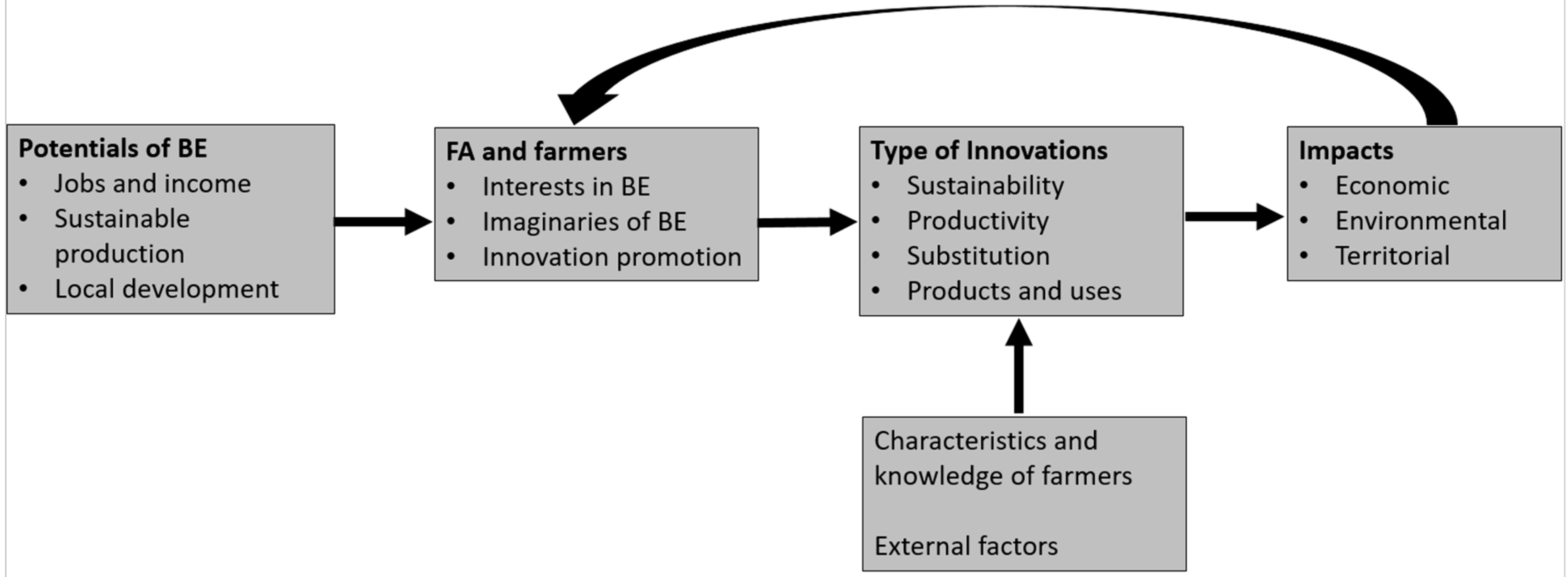
- How does AAPRESID promote the bioeconomy in its role as an FA?
- How do the members of AAPRESID conceive and understand the bioeconomy?
- What kind of bioeconomic innovations do they set in motion and what are their impacts?
- How could innovations be driven by FAs in order to move towards a more complex bioeconomy?
2. Conceptual Framework: Farmer Associations and Their Role in the Bioeconomy
2.1. The Farmer Association
- Informal producer groups and cooperatives;
- Producer associations or federations;
- Cooperatives controlled by their own members;
- Producer chambers with voting members.
2.2. Bioeconomy and Innovation
2.3. The Role of FA in Bioeconomy
3. Materials and Methods
4. Results
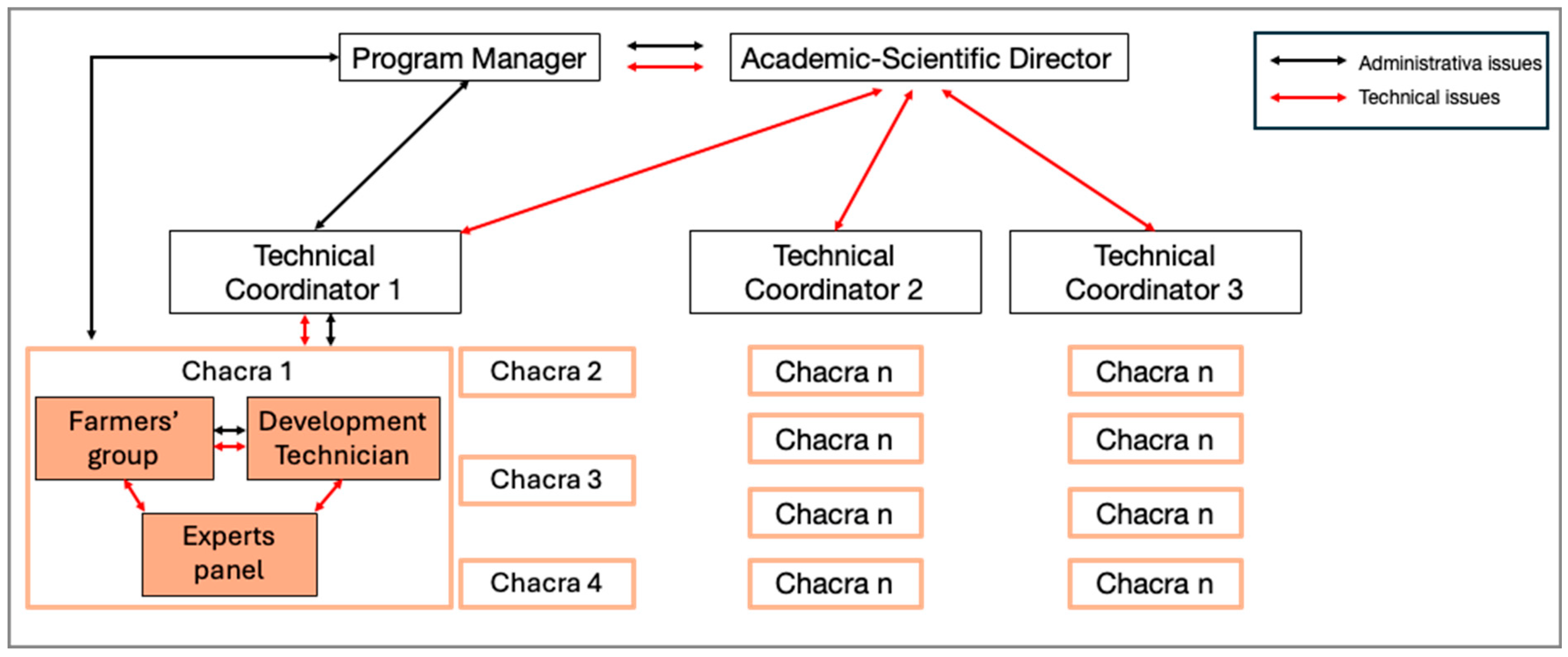
4.1. How Does AAPRESID Promote the Bioeconomy Within Its Group of Associates?
- Program Manager: responsible for managing and administering the Chacras system.
- Academic-Scientific Director: participates in the elaboration of the Chacras’ projects.
- Technical Coordinators (TCs): they assist and audit the development technicians in the fulfillment of each farm’s project.
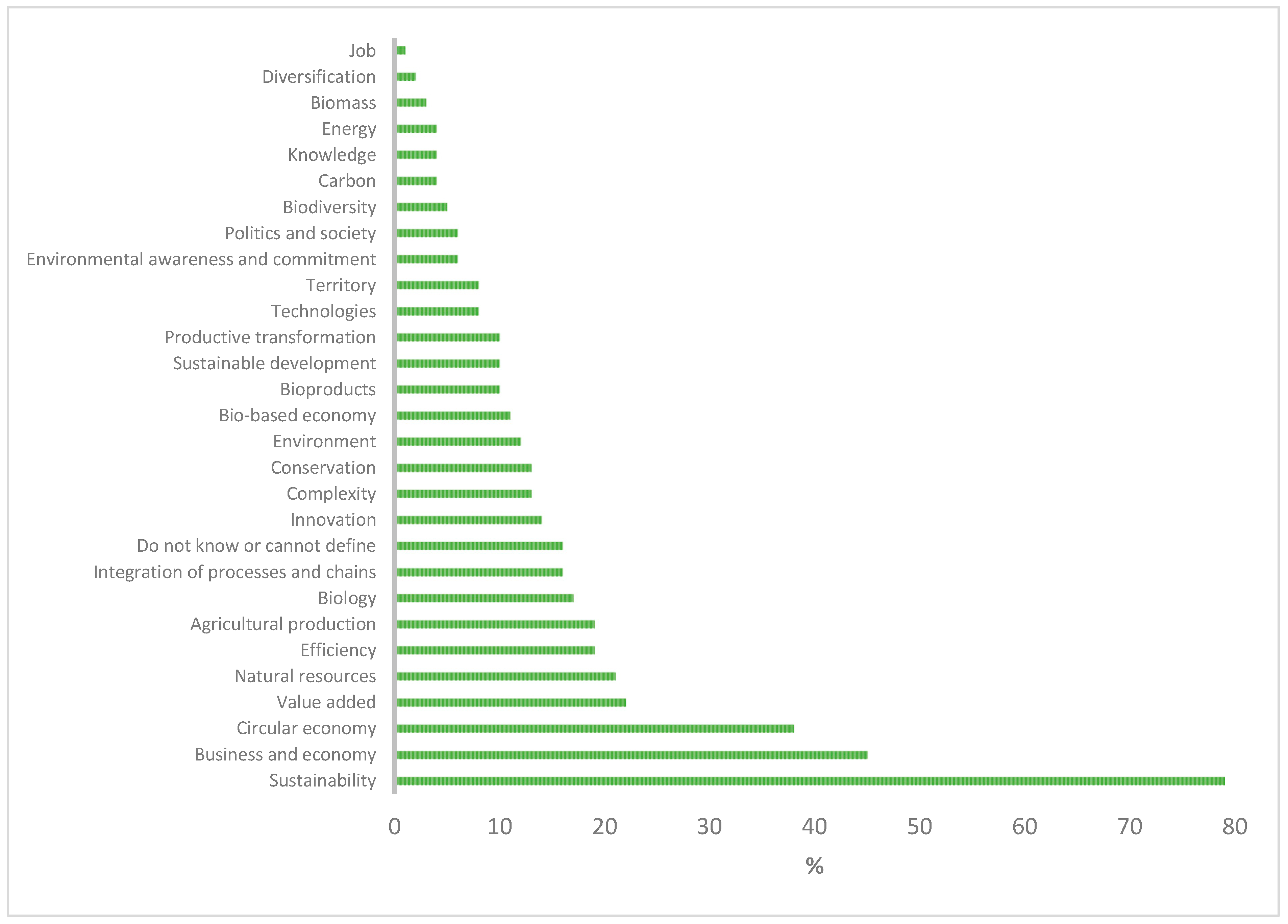
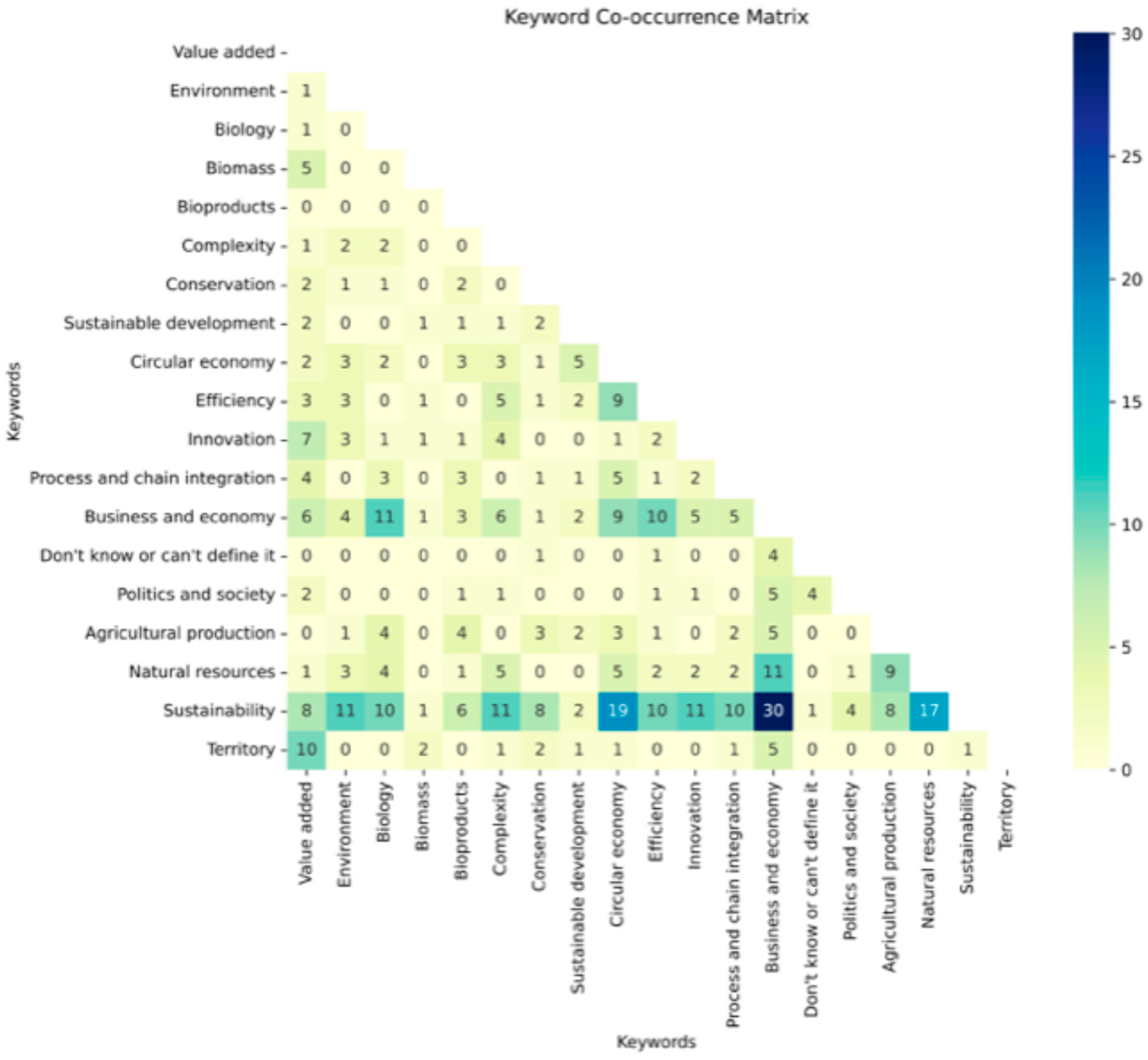
4.2. How Do AAPRESID’s Member Farmers Conceive and Understand the Bioeconomy?
- ○
- Sustainability: includes words such as ecologically friendly, resource sustainability, sustainable.
- ○
- Business and economy: refers to profitability, agribusiness, production and services, entrepreneurship.
- ○
- Circular economy: refers to circularity, cycle, recycling, reuse, renewal.
- ○
- Value addition: refers to terms such as value addition, creating more value, transformation.
- ○
- Natural resources: refers to terms such as resources, biological resources.
- ○
- Efficiency: refers to terms such as maximization of inputs and outputs, efficient, less waste.
4.3. What Innovations Are Generated Around the Bioeconomy?
4.3.1. Types of Innovations
4.3.2. The Network of Actors Involved in Innovation Construction
4.3.3. Factors That Promote and Inhibit Innovations
4.3.4. Impacts Generated by Innovations
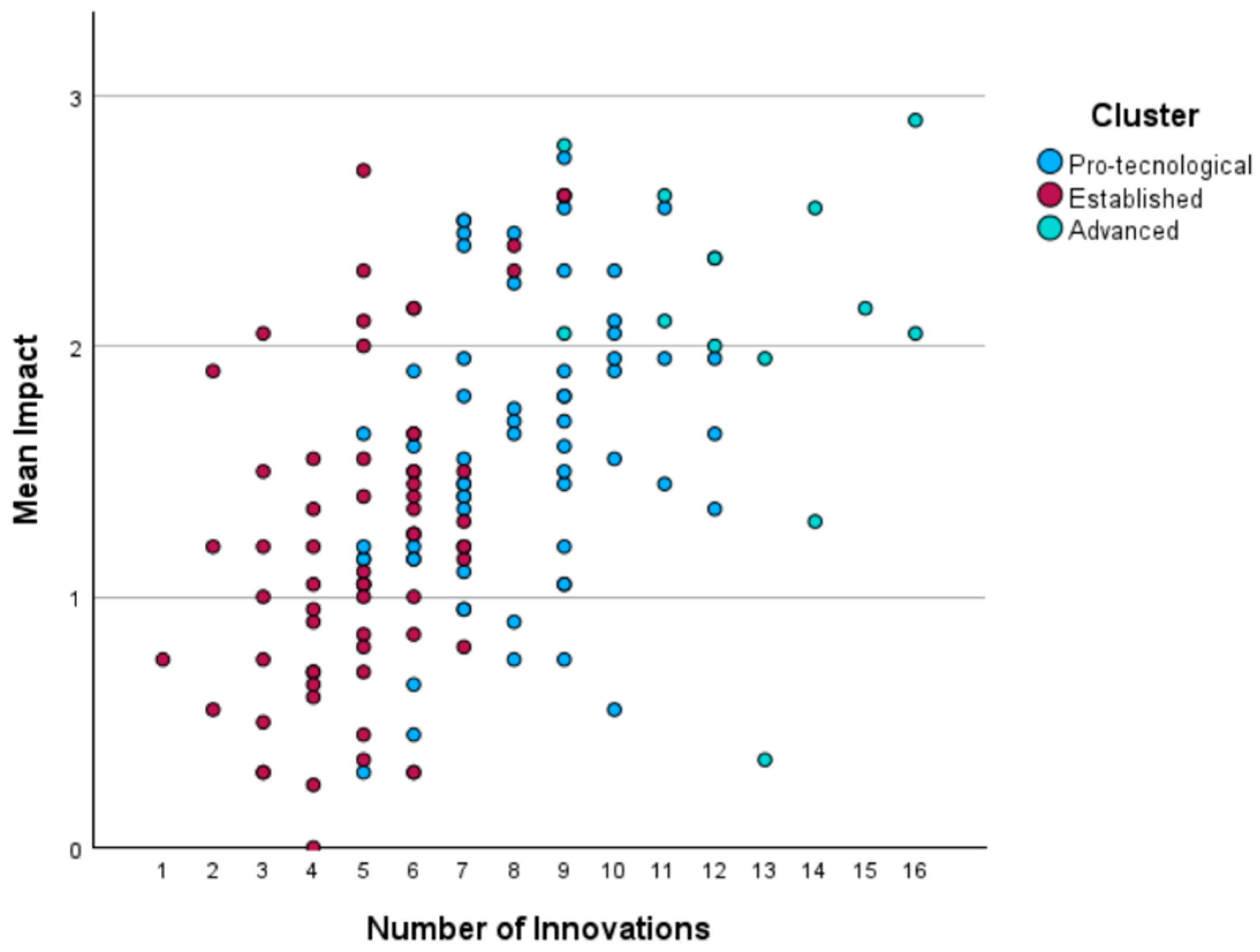
4.4. A Typology of Farmers in the Bioeconomy
- (1)
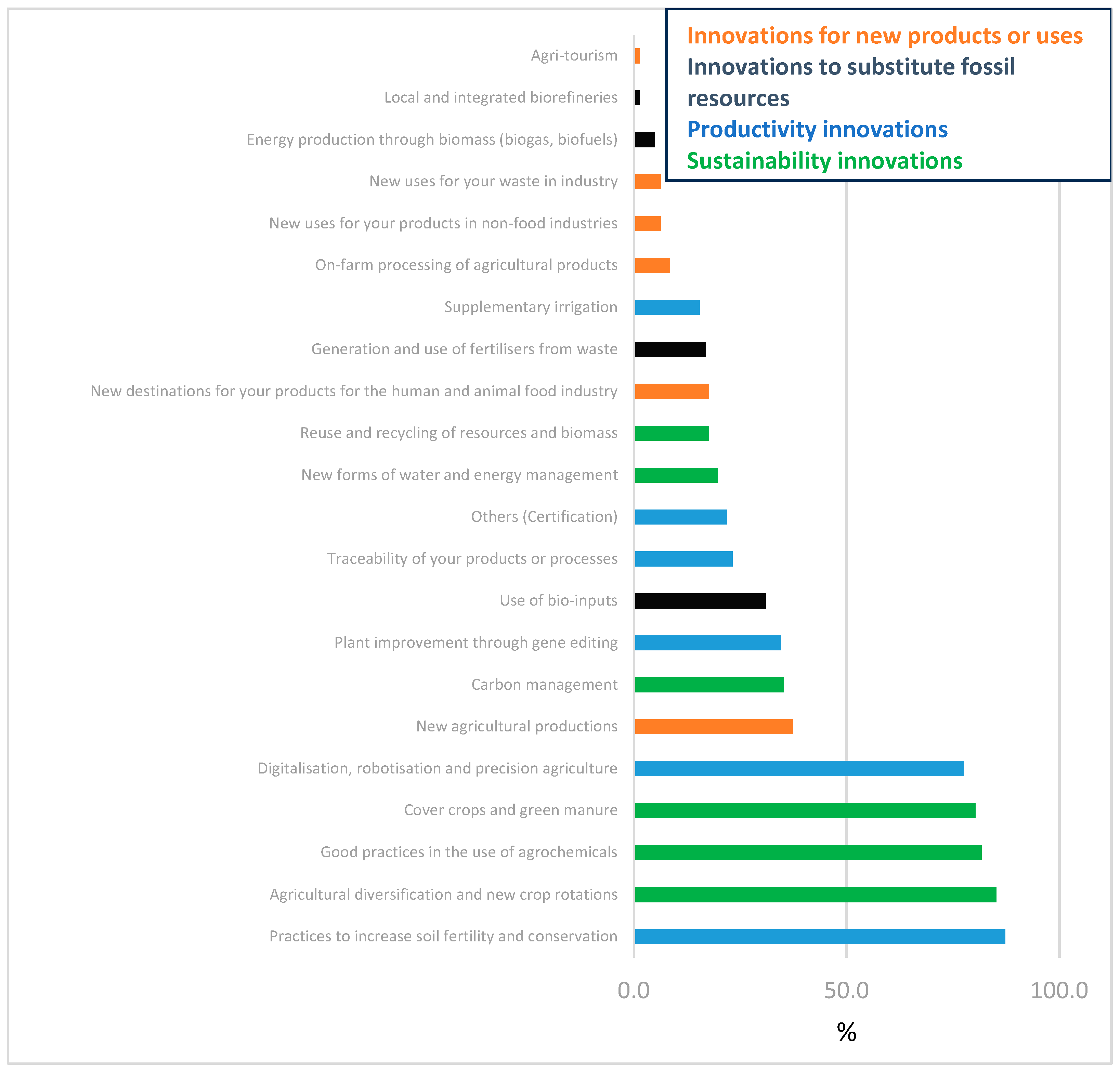
- Stabilized farmers (n = 58): These are farmers who have a university education, are middle-aged or older. They are moderately familiar with the bioeconomy. They have a low average of innovations, preferably oriented towards improving the sustainability of their productive activities, with innovations in new crop rotations, practices to increase soil fertility and conservation, cover crops and good practices in the use of agrochemicals. They have achieved these innovation processes due to the availability of information, their links with technical organizations and owing to the training and information they have received from AAPRESID. These farmers aim to continue with and improve these types of innovations, without moving towards more disruptive innovation processes or a more complex bioeconomy.
- (2)
- Pro-technological farmers (n = 70): These farmers have mostly the same characteristics as the previous one, but they are significantly younger. They make innovation efforts in the same types of activities, with a strong orientation towards innovations that strengthen sustainability, but also productivity, with a greater technological orientation, i.e., they rely much more on new technologies for agricultural production (robotization, digital agriculture, mapping, use of advanced machinery), and their level of improvement and innovation is very focused on new processes. Towards the future, they have the same interests as the previous group, but with much more emphasis on acquiring and using a new technological arsenal, especially in machinery and processes.
- (3)
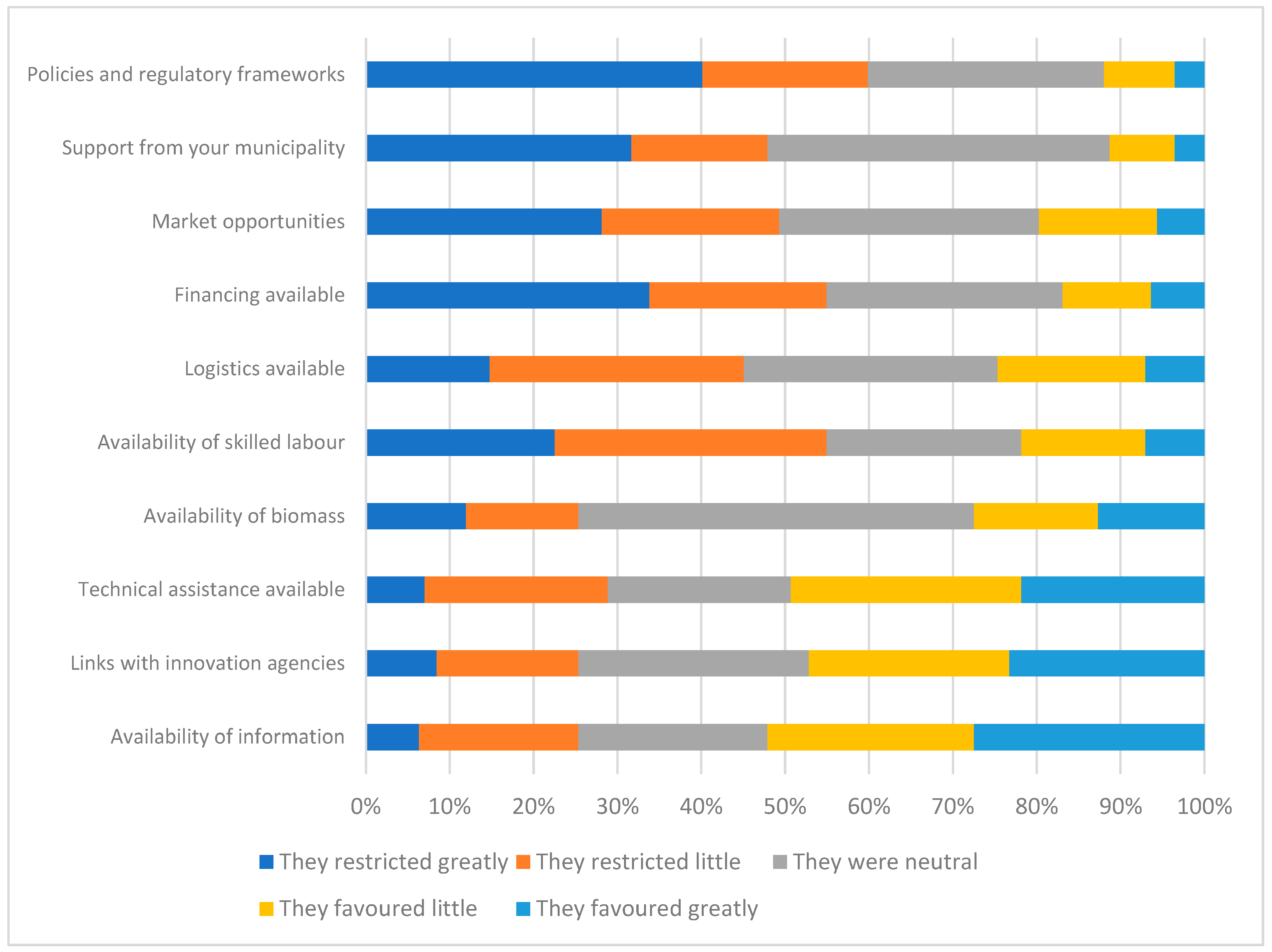
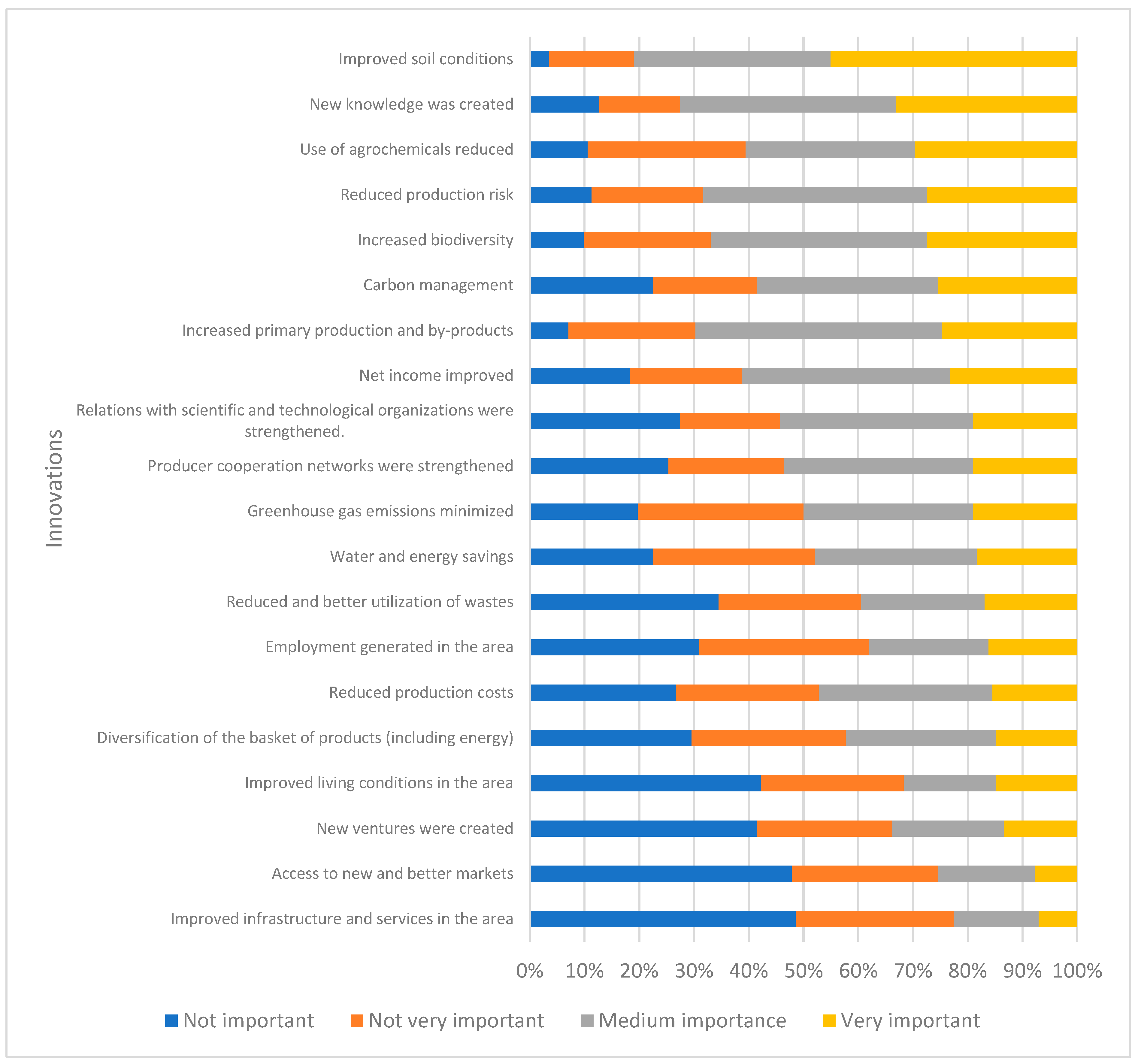
- Advanced bioeconomy farmers (n = 14): This group involves much younger or much older farmers; they are the most familiar with the bioeconomy, and make efforts in all the same sectors as the previous ones, but they are also very innovative in new products and processes of a more advanced bioeconomy. Thus, they are moving forward with activities such as biomass recycling, energy production, generation of new products, and the use of bioinputs, among others. A distinctive element is that in addition to the technical support in production that they have had (like the other types of farmers), this group points out as a key factor, the search for more information, not only technological and productive, but also for new market opportunities, more often than the other groups with the support of AAPRESID, being more proactive in seeking and building cooperation networks and exchange of experiences. In the future, these farmers intend to diversify their production, generate greater added value and promote the reuse and utilization of residues and other by-products, with cascade production schemes.
5. Discussion
5.1. How Does AAPRESID Promote the Bioeconomy in Its Role as an FA?
5.2. How Do the Farmers Associated with AAPRESID Conceive and Understand the Bioeconomy?
5.3. What Kind of Bioeconomic Innovations Do They Set in Motion and What Are Their Impacts?
5.4. How Could Innovations Be Driven by FAs in Order to Move Towards a More Complex Bioeconomy?
6. Conclusions
Author Contributions
Funding
Institutional Review Board Statement
Informed Consent Statement
Data Availability Statement
Conflicts of Interest
Appendix A

| Variables of Analysis | Stabilized Farmers (n = 58) | Pro-Technological Farmers (n = 70) | Advanced Bioeconomy Farmers (n = 14) | Fisher Exact |
|---|---|---|---|---|
| General characterization | intermediate/major | Intermediate | young/old | 0.020 ** |
| University students | University students | University graduates with more postgraduate degrees | 0.586 * | |
| Moderately familiar | Moderately familiar | Very familiar with the bioeconomy | 0.006 *** | |
| Largest concentration of more than 5 thousand ha | Higher concentration between 1000 and 5000 ha | Largest concentration of more than 5 thousand ha | 0.000 *** | |
| Innovations | Low average number of innovations (4.89) | Median average number of innovations (7.89) | High average number of innovations (12.64) | 0.000 *** |
| Sustainability | 2.71 | 3.71 | 4.86 | 0.000 *** |
| Productivity | 1.52 | 2.93 | 3.21 | 0.000 *** |
| Substitution | 0.33 | 0.44 | 1.93 | 0.000 *** |
| New products | 0.29 | 0.80 | 2.64 | 0.000 *** |
| Shared and cluster-specific innovations | Practices to increase soil fertility and conservation/cover crops/good practices in agrochemical use. | 0.117/0.211/0.660 | ||
| Agtech/gene editing | 0.000 *** | |||
| Traceability/water and energy management/biomass recycling/energy production/use of bioinputs/biofertilizers/new products/new destinations/on-farm processing | 0.000 *** | |||
| Key factors driving innovations | Availability of information/technical assistance/links to innovation organizations | 0.980/0.615/0.413 | ||
| Labor availability/market opportunities | 0.060 */ 0.025 ** | |||
| Support from AAPRESID | Technical information/training | 0.643/0.915 | ||
| Market information/market contacts | 0.036 **/ 0.086 * | |||
| The impacts of innovations, shared and specific to each cluster | Increased production/reduced risk/reduced costs/improved soil conditions | 0.087/0.093/0.105/0.156/ | ||
| Diversification of the product basket/creation of new ventures/access to better markets/strengthening of relationships with organizations and networks/employment generation/better use of wastes | 0.000 *** | |||
| Shared and cluster- specific interests for the future | Practices to increase soil fertility and soil conservation/agricultural diversification and new rotations/good agrochemical practices/cover crops | 0.323/ 0.138/0.964/0.942 | ||
| Biomass reuse/biorefineries/fertilizer generation from waste/new agricultural production/new destinations for industry/new uses of waste/on-farm processing/agro-Tourism | 0.046 **/ 0.017 **/ 0.042 **/ 0.010 **/ 0.012 **/ 0.009 ***/ 0.006 ***/ 0.018 ** | |||
References
- Haarich, S. Bioeconomy Development in EU Regions—Final Report. 2017. Available online: https://ec.europa.eu/research/bioeconomy/pdf/publications/bioeconomy_development_in_eu_regions.pdf (accessed on 1 December 2025).
- Wreford, A.; Bayne, K.; Edwards, P.; Renwick, A. Enabling a transformation to a bioeconomy in New Zealand. Environ. Innov. Soc. Transit. 2019, 31, 184–199. [Google Scholar] [CrossRef]
- Gould, H.; Kelleher, L.; O’Neill, E. Trends and policy in bioeconomy literature: A bibliometric review. EFB Bioeconomy J. 2023, 3, 100047. [Google Scholar] [CrossRef]
- Trigo, E.; Morales, E.V.; Grassi, L.; Losada, J.; Dellisanti, J.P.; Molinari, M.E.; Murmis, M.R.; Almada, M.; Molina, S. Bioeconomía Argentina. Visión desde Agroindustria. 2016. Available online: https://www.magyp.gob.ar/sitio/areas/bioeconomia/_archivos/000000_Bioeconomia%20Argentina.pdf (accessed on 3 December 2025).
- Romano, L. Bioeconomía como Estrategia para el Desarrollo Argentino. Buenos Aires. 2019. Available online: https://fibamdp.files.wordpress.com/2020/06/la-bioeconomicc81a-como-estrategia-para-el-desarrollo-argentino.pdf (accessed on 24 November 2025).
- CEPAL; FAO; IICA. Perspectivas de la Agricultura y del Desarrollo Rural en las Américas: Una mirada Hacia América Latina y el Caribe: 2019–2020; CEPAL: Santiago, Chile, 2020; 144p. [Google Scholar]
- Balan, E.M.; Zeldea, C.G. Bioeconomy in Romania: Investigating Farmers’ Knowledge. Sustainability 2023, 15, 7883. [Google Scholar] [CrossRef]
- González, F.J.E.; Torrente, R.G. Deployment of bioeconomy at local scale: Institutions, policies and actors. EFB Bioeconomy J. 2022, 2, 100030. [Google Scholar] [CrossRef]
- Gazzano, I.; Achkar, M.; Díaz, I. Agricultural Transformations in the Southern Cone of Latin America: Agricultural Intensification and Decrease of the Aboveground Net Primary Production, Uruguay’s Case. Sustainability 2019, 11, 7011. [Google Scholar] [CrossRef]
- Grisa, C.; Sabourin, E. Agricultura Familiar: De los Conceptos a las Políticas Públicas en América Latina y el Caribe; FAO: Santiago, Chile, 2019; 19p. [Google Scholar]
- Klerkx, L.; Landini, F.; Santoyo-Cortés, H. Agricultural extension in Latin America: Current dynamics of pluralistic advisory systems in heterogeneous contexts. J. Agric. Educ. Ext. 2016, 22, 389–397. [Google Scholar] [CrossRef]
- Sasson, A.; Malpica, C. Bioeconomy in Latin America. New Biotechnol. 2018, 40, 40–45. [Google Scholar] [CrossRef] [PubMed]
- Gregolin, M.R.P.; Landini, F.P.; Conti, S. Vínculo investigación-extensión y modelos de innovación en el Instituto Nacional de Tecnología Agropecuaria: Análisis de documentación institucional. Rev. Econ. Sociol. Rural 2024, 62, e277483. [Google Scholar] [CrossRef]
- Testa, M.E.; Bilbao, C. Inventario de Políticas Relacionadas a la Economía verde en Argentina; Organización Internacional del Trabajo: Buenos Aires, Agentina, 2021; pp. 1–93. [Google Scholar]
- Turner, J.A.; Landini, F.; Percy, H.; Gregolin, M.R.P. Advisor understanding of their roles in the advisory system: A comparison of governance structures in Argentina, Australia, Brazil, and New Zealand. J. Agric. Educ. Ext. 2023, 29, 3–28. [Google Scholar] [CrossRef]
- Albaladejo, C. The impossible and necessary coexistence of agricultural development models in the Pampas: The case of Santa Fe province (Argentina). Rev. Agric. Food Environ. Stud. 2020, 101, 213–240. [Google Scholar] [CrossRef]
- Papadopoulou, C.I.; Loizou, E.; Chatzitheodoridis, F.; Michailidis, A.; Karelakis, C.; Fallas, Y.; Paltaki, A. What Makes Farmers Aware in Adopting Circular Bioeconomy Practices? Evidence from a Greek Rural Region. Land 2023, 12, 809. [Google Scholar] [CrossRef]
- Bizikova, L.; Nkonya, E.; Minah, M.; Hanisch, M.; Turaga, R.M.R.; Speranza, C.I.; Karthikeyan, M.; Tang, L.; Ghezzi-Kopel, K.; Kelly, J.; et al. A scoping review of the contributions of farmers’ organizations to smallholder agriculture. Nat. Food 2020, 1, 620–630. [Google Scholar] [CrossRef]
- Gjorgjieska, D.P.; Ilic, B. Importance of Farmers’ Association and Education for Agricultural Policy in the SEE. In Proceedings of the Sustainable Agriculture and Rural Development in Terms of the Republic of Serbia Strategic Goals, Belgrade, Serbia, 28–30 May 2020. [Google Scholar]
- IFAP. Towards Self-Supporting Farmers’ Organizations; International Federation of Agricultural Producers: Paris, France, 1992; 44p. [Google Scholar]
- Gugerty, M.K.; Biscaye, P.; Leigh Anderson, C. Delivering development? Evidence on self-help groups as development intermediaries in South Asia and Africa. Dev. Policy Rev. 2019, 37, 129–151. [Google Scholar] [CrossRef] [PubMed]
- Wilde, K.; Hermans, F. Innovation in the bioeconomy: Perspectives of entrepreneurs on relevant framework conditions. J. Clean. Prod. 2021, 314, 127979. [Google Scholar] [CrossRef]
- Hausknost, D.; Schriefl, E.; Lauk, C.; Kalt, G. A transition to which bioeconomy? An exploration of diverging techno-political choices. Sustainability 2017, 9, 669. [Google Scholar] [CrossRef]
- Kircher, M.; Maurer, K.-H.; Herzberg, D. KBBE: The knowledge-based bioeconomy: Concept, status and future prospects. EFB Bioeconomy J. 2022, 2, 100034. [Google Scholar] [CrossRef]
- Lainez, M.; González, J.M.; Aguilar, A.; Vela, C. Spanish strategy on bioeconomy: Towards a knowledge based sustainable innovation. New Biotechnol. 2018, 40, 87–95. [Google Scholar] [CrossRef]
- O’Shaughnessy, M.; Christmann, G.; Richter, R. Introduction. Dynamics of social innovations in rural communities. J. Rural Stud. 2023, 99, 187–192. [Google Scholar] [CrossRef]
- Yin, X.; Chen, J.; Li, J. Rural innovation system: Revitalize the countryside for a sustainable development. J. Rural Stud. 2019, 93, 471–478. [Google Scholar] [CrossRef]
- Czyżewski, A.; Grzyb, A.; Matuszczak, A.; Michałowska, M. Factors for bioeconomy development in eu countries with different overall levels of economic development. Energies 2021, 14, 3182. [Google Scholar] [CrossRef]
- Pettersson, S.; Asplund, T.; Ostwald, M. Circumstantial factors and local collaboration determine farmers’ perceptions and practices on circular bioeconomy—Examples from Southern Sweden. Clean. Circ. Bioeconomy 2024, 9, 100114. [Google Scholar] [CrossRef]
- Dürr, J.; Sili, M. New or Traditional Approaches in Argentina’s Bioeconomy? Biomass and Biotechnology Use, Local Embeddedness, and Sustainability Outcomes of Bioeconomic Ventures. Sustainability 2022, 14, 14491. [Google Scholar] [CrossRef]
- Dietz, T.; Börner, J.; Förster, J.J.; von Braun, J. Governance of the bioeconomy: A global comparative study of national bioeconomy strategies. Sustainability 2018, 10, 3190. [Google Scholar] [CrossRef]
- Bröring, S.; Laibach, N.; Wustmans, M. Innovation types in the bioeconomy. J. Clean. Prod. 2020, 266, 121939. [Google Scholar] [CrossRef]
- Dieken, S.; Dallendörfer, M.; Henseleit, M.; Siekmann, F.; Venghaus, S. The multitudes of bioeconomies: A systematic review of stakeholders’ bioeconomy perceptions. Sustain. Prod. Consum. 2021, 27, 1703–1717. [Google Scholar] [CrossRef]
- Alviar, M.; Ram, L. Measuring the Contribution of the Bioeconomy: The Case of Colombia and Antioquia. Sustainability 2021, 13, 2353. [Google Scholar] [CrossRef]
- D’Adamo, I.; Falcone, P.M.; Morone, P. A New Socio-economic Indicator to Measure the Performance of Bioeconomy Sectors in Europe. Ecol. Econ. 2020, 176, 106724. [Google Scholar] [CrossRef]
- Terce, A.; Ferreira, V.; Pi, L. Economic impact of the bioeconomy in Spain: Multiplier effects with a bio social accounting matrix. J Clean. Prod. 2021, 298, 126752. [Google Scholar]
- Benoit, S. Bioéconomie et diversité des ancrages territoriaux. Économie Rural 2021, 376, 77–91. [Google Scholar] [CrossRef]
- Lehtonen, O.; Okkonen, L. Regional socio-economic impacts of decentralised bioeconomy: A case of Suutela wooden village, Finland. Environ. Dev. Sustain. 2013, 15, 245–256. [Google Scholar] [CrossRef]
- Fernando, L.; Wilder, J.; Sossa, Z.; Fredy, J.; Sarta, M.; Camilo, J.; Saavedra, J.; Guzman, L.; Tapasco, D. National Agricultural Innovation System (NAIS): Diagnosis, Gaps, and Mapping of Actors. Sustainability 2024, 16, 3294. [Google Scholar] [CrossRef]
- Grillitsch, M.; Trippl, M. Innovation Policies and New Regional Growth Paths: A Place-Based System Failure Framework. Innov. Syst. Policy Manag. 2018, 24, 329–358. [Google Scholar]
- Bisang, R.; Kosacoff, B. Las redes de producción en el agro argentino. In Proceedings of the XIV AAPRESID Annual Congress, Mar del Plata, Argentina, 29 August 2006; Available online: http://www.eclac.cl/argentina/noticias/noticias/5/26385/aapresid2206.pdf (accessed on 3 December 2025).
- Liaudat, M.D.; Fernandes, A.H. Agronegocios y nuevas tecnologías de representación empresarial en el Cono Sur. Un estudio exploratorio sobre ABAG (Brasil) y AAPRESID (Argentina). Marx Marx. 2021, 9, 96–121. [Google Scholar]
- Liaudat, M. Los agronegocios aterrizan en la escuela: Análisis de las estrategias educativas de AAPRESID y AACREA. Estud. Rural 2022, 7, 40–74. [Google Scholar] [CrossRef]
- Goulet, F.; Grosso, S. Ciencia a demanda. Prácticas alternativas de investigación y extensión en la agronomía de los cultivos extensivos. Pampa 2013, 2009, 129–148. [Google Scholar] [CrossRef][Green Version]
- Dürr, J.; Sili, M. Bioeconomic Entrepreneurship and Key Factors of Development: Lessons from Argentina. Sustainability 2022, 14, 2447. [Google Scholar] [CrossRef]
- Rodríguez, A.G.; Mondaini, A.O.; Hitschfeld, M.A. Bioeconomía en América Latina; ECLAC: Santiago, Chile, 2017. [Google Scholar]
- Leitão, J.; Pereira, D.; de Brito, S. Inbound and outbound practices of open innovation and eco-innovation: Contrasting bioeconomy and non-bioeconomy firms. J. Open Innov. Technol. Mark. Complex. 2020, 6, 145. [Google Scholar] [CrossRef]
- Pigford, A.A.E.; Hickey, G.M.; Klerkx, L. Beyond agricultural innovation systems? Exploring an agricultural innovation ecosystems approach for niche design and development in sustainability transitions. Agric. Syst. 2018, 164, 116–121. [Google Scholar] [CrossRef]
- Sharma, R.; Peshin, R.; Khar, S.; Ishar, A.K. Agriculture Innovation System Approach for Sustainable Agriculture Development: A Review. Int. J. Agro-Econ. 2014, 1, 1–7. [Google Scholar]
- Lamprinopoulou, C.; Renwick, A.; Klerkx, L.; Hermans, F.; Roep, D. Application of an integrated systemic framework for analysing agricultural innovation systems and informing innovation policies: Comparing the Dutch and Scottish agrifood sectors. Agric. Syst. 2014, 129, 40–54. [Google Scholar] [CrossRef]
- Purkus, A.; Hagemann, N.; Bedtke, N.; Gawel, E. Towards a sustainable innovation system for the German wood-based bioeconomy: Implications for policy design. J. Clean. Prod. 2018, 172, 3955–3968. [Google Scholar] [CrossRef]
- Van Lancker, J.; Wauters, E.; Van Huylenbroeck, G. Managing innovation in the bioeconomy: An open innovation perspective. Biomass Bioenergy 2016, 90, 60–69. [Google Scholar] [CrossRef]
- Overbeek, G.; de Bakker, E.; Beekman, V.; Kiresiewa, Z.; Delbrück, S.; Ribeiro, B.; Stoyanov, M.; Vale, M. Review of Bioeconomy Strategies at Regional and National Levels; BioSTEP Project; EU: Brussels, Belgium, 2016; p. 78. [Google Scholar]
- Zahl-Thanem, A.; Burton, R.J.; Vik, J. Should we use email for farm surveys? A comparative study of email and postal survey response rate and non-response bias. J. Rural. Stud. 2021, 87, 352–360. [Google Scholar] [CrossRef]


| Variables | Indicator | Number | % |
|---|---|---|---|
| Genre | Female | 10 | 7.0 |
| Male | 132 | 93.0 | |
| Age | 26 to 35 years old | 22 | 15.5 |
| 36 to 45 years old | 35 | 24.6 | |
| 46 to 55 years old | 41 | 28.9 | |
| Over 55 years old | 44 | 31.0 | |
| Education | Post grade | 36 | 25.4 |
| Secondary agricultural and livestock | 3 | 2.1 | |
| Secondary other | 9 | 6.3 | |
| University | 94 | 66.2 | |
| Type of activities of AAPRESID’s stakeholders | Others | 13 | 9.2 |
| Agriculture | 51 | 35.9 | |
| Agriculture and livestock | 78 | 54.9 | |
| Surface area worked or advised | Less than 100 ha. | 2 | 1.4 |
| From 100 to 500 ha. | 14 | 9.9 | |
| From 500 to 1000 ha. | 18 | 12.7 | |
| From 1000 to 5000 ha. | 61 | 43.0 | |
| More than 5000 ha. | 47 | 33.1 |
| Familiarization Level | General | By Membership Category | |||
|---|---|---|---|---|---|
| Partners (n = 46) | Managers and Coordinators (n = 56) | Development Technicians (n = 37) | |||
| n | % | % | % | % | |
| I am NOT familiar with | 34 | 24 | 22 | 29 | 19 |
| I am more or less familiar with | 80 | 56 | 65 | 52 | 54 |
| I am VERY familiar | 28 | 20 | 13 | 20 | 27 |
Disclaimer/Publisher’s Note: The statements, opinions and data contained in all publications are solely those of the individual author(s) and contributor(s) and not of MDPI and/or the editor(s). MDPI and/or the editor(s) disclaim responsibility for any injury to people or property resulting from any ideas, methods, instructions or products referred to in the content. |
© 2026 by the authors. Licensee MDPI, Basel, Switzerland. This article is an open access article distributed under the terms and conditions of the Creative Commons Attribution (CC BY) license.
Share and Cite
Sili, M.; Dürr, J.; Madías, A. The Role of Farmers’ Organizations in the Bioeconomy: The Case of the Argentine Association of Direct Seeding Producers (AAPRESID). Sustainability 2026, 18, 1285. https://doi.org/10.3390/su18031285
Sili M, Dürr J, Madías A. The Role of Farmers’ Organizations in the Bioeconomy: The Case of the Argentine Association of Direct Seeding Producers (AAPRESID). Sustainability. 2026; 18(3):1285. https://doi.org/10.3390/su18031285
Chicago/Turabian StyleSili, Marcelo, Jochen Dürr, and Andrés Madías. 2026. "The Role of Farmers’ Organizations in the Bioeconomy: The Case of the Argentine Association of Direct Seeding Producers (AAPRESID)" Sustainability 18, no. 3: 1285. https://doi.org/10.3390/su18031285
APA StyleSili, M., Dürr, J., & Madías, A. (2026). The Role of Farmers’ Organizations in the Bioeconomy: The Case of the Argentine Association of Direct Seeding Producers (AAPRESID). Sustainability, 18(3), 1285. https://doi.org/10.3390/su18031285