Article

Learning from Unsustainable Post-Disaster Temporary Housing Programs in Spain: Lessons from the 2011 Lorca Earthquake and the 2021 La Palma Volcano Eruption

Higher Technical School of Engineering and Industrial Design, Technical University of Madrid, Ronda de Valencia, n° 3, 28012 Madrid, Spain
*
Author to whom correspondence should be addressed.
Sustainability 2026, 18(2), 963; https://doi.org/10.3390/su18020963
Submission received: 5 December 2025 / Revised: 9 January 2026 / Accepted: 12 January 2026 / Published: 17 January 2026
(This article belongs to the Special Issue Disaster Risk Reduction and Sustainability)

Abstract

This article examines the failure of the two most recent temporary housing programs implemented in Spain following two major disasters: the 2011 Lorca earthquake and the 2021 La Palma volcanic eruption. Despite differing hazard typologies, both cases resulted in incomplete and ultimately unsuccessful housing programs, with only 13 of the 60 planned units built in Lorca and 121 of the 200 planned units delivered in La Palma. Using a qualitative comparative case study approach, the research analyzes governance decisions, housing design, and implementation processes to assess their impact on the sustainability of post-disaster temporary housing. The analysis adopts the five dimensions of sustainability—environmental, economic, social, cultural, and institutional—as an integrated analytical framework for evaluating public management performance in post-disaster temporary housing. The findings show that early decision-making, shaped by political urgency, technical misjudgments, and the absence of adaptive governance, led to severe delays, cost overruns, inadequate and energy-inefficient construction, and the formation of marginalized settlements. This study concludes that the lack of regulatory frameworks, legal instruments, and operational protocols for temporary housing in Spain was a determining factor in both failures, generating vulnerability, prolonging recovery processes, and undermining sustainability across all five dimensions. By drawing lessons from these cases, this article contributes to debates on resilient and sustainable post-disaster recovery and highlights the urgent need for integrated regulatory frameworks for temporary housing in Spain.

1. Introduction

Human settlements and the societies that inhabit them are invariably exposed—albeit to varying degrees—to events capable of disrupting everyday life and the normal functioning of the community. These events, whether triggered by natural forces or human action, constitute threats, also known as hazards [1,2]. When such phenomena unfold, they may escalate into disasters. As a result, they produce severe economic and social losses, generate human suffering, and hinder development by affecting large populations and their assets.
A disaster is not a phenomenon in itself. Rather, it is the outcome of physical, social, political, and economic conditions that render a community vulnerable to a given hazard. Its consequences depend on the community’s resilience—which is defined as its capacity to respond and recover [1,2,3].
Post-disaster temporary housing constitutes a critical yet often underestimated phase within disaster recovery processes. Although commonly conceived as a short-term emergency response, these solutions frequently remain in use for extended periods. In this context, they shape everyday living conditions, social relations, and long-term recovery trajectories. For this reason, understanding temporary housing requires an integrated perspective. This approach must consider not only technical and environmental aspects but also institutional arrangements, governance structures, and residents’ lived experiences. Accordingly, the following sections review key debates on resilience, housing, and sustainability, to provide the conceptual framework for this comparative analysis.

1.1. Linking Resilience, Housing and Sustainable Development

1.1.1. Resilience

Within disaster studies, resilience has become a central concept for understanding recovery processes. This concept originates in engineering, where it refers to the energy recovered by a body once the deformation stress ceases. Ecological sciences later adopted the term to describe the ability of a system to maintain structure and behavioral patterns under disturbance, as Holling argued [4]. More recently, disaster management has incorporated resilience to designate the capacity of a society exposed to hazards to resist, adapt, and recover, while maintaining acceptable levels of functioning [1,2].
Graphical representations of resilience typically plot time on the x-axis and functional capacity on the y-axis [5]. They show a sharp initial decline under stress, followed by an ascending line that marks recovery. The shorter this interval, the more resilient society is. Consequently, the community sooner regains a sense of normality that enables development.
In contemporary disaster risk reduction (DRR), both vulnerabilities and capacities are understood as dynamic, following the pressure-and-release (PAR) model [6,7]. Effective risk management must therefore reduce exposure and root causes of vulnerability while strengthening community capacities, thereby enhancing resilience [8,9].

1.1.2. The Housing Problem

Housing is among the most vulnerable assets in disaster contexts [10]. This vulnerability stems from physical, political, economic, and environmental factors [11,12,13]. One of the most visible consequences of disasters is the destruction or inaccessibility of large numbers of dwellings, leaving thousands homeless. For affected populations, securing adequate shelter becomes an urgent priority, as survival, health, livelihoods, and safety depend on it [14].
Housing is intrinsically linked to work, health, education, and social stability. It fosters community life and underpins family structure. Culturally, it is a source of pride and identity, while politically and economically it is considered essential for development and well-being [15]. Without the security of “a home,” families’ ability to regain normality is severely constrained [16]. Furthermore, the loss of housing entails not only physical and material damage but also long-lasting psychological impacts [12].
During reconstruction, adequate shelter programs are indispensable to initiate recovery, normalization, and rebuilding [17]. Shelter prevents mortality and disease, improves health and hygiene, while protecting against structural risks and external factors such as climate. Equally important, it preserves dignity, identity, and privacy, stabilizing families and communities and restoring a sense of normality [18]. Housing is recognized as a fundamental right under international law, essential for human and social development [19]. Providing shelter in disaster contexts must therefore be a priority for governments and agencies [20]. Without safe and dignified housing, recovery efforts cannot proceed efficiently, exacerbating social and economic impacts [21]. From this perspective, housing emerges as a key component of resilience, understood not merely as physical protection but as a dynamic process involving social cohesion, economic opportunities, cultural adaptation, institutional capacity, and environmental effectiveness.

1.1.3. Shelter Management in Disaster Contexts

Providing shelter to displaced populations is a crucial component of national and international assistance programs [17,19]. Yet defining the most appropriate solution is complex [22,23]. Considerations include design, duration, cost, and acceptability. Solutions must meet standards approximating normal living conditions, while being scalable, affordable, timely, and adequate.
Shelter solutions vary according to needs [24,25,26]:
  • Emergency shelters: immediate, life-saving responses during the acute phase;
  • Short-term temporary shelters: brief post-emergency stays requiring adequacy in availability, accessibility, acceptability, and adaptability;
  • Long-term temporary housing: transitional dwellings with requirements of accessibility, affordability, habitability, tenure security, cultural adequacy, location, and access to services such as health and education [16];
  • Permanent housing: definitive solutions with equal or improved standards compared to pre-disaster conditions.
Although the preferred trajectory is direct transition from shelter to permanent housing, this is not always feasible. Constraints include destruction levels, construction models, available resources, climatic conditions [23], and bureaucratic delays [27]. Consequently, temporary housing solutions are necessary to provide stability, enabling families to reorganize and regain community life. Such solutions should integrate social spaces, cultural activities, and local economies, while allowing time for effective risk reduction planning and sustainable recovery [19].
Without sufficient time, decision-making is undermined by open challenges, trade-offs, and contradictions. Operational, managerial, and political pressures may prioritize speed over quality, universal over local solutions, and efficiency over effectiveness, often favoring top-down approaches that limit participation and resilience [28]. Sound decision-making, therefore, requires prior planning and sector-specific strategies to avoid repeating past mistakes and to support coordinated aid programs that address the diverse needs of all affected populations [29].
Lessons learned highlight five fundamental principles, echoing those established in the 1970s by Frederick C. Cuny [30] and Ian Davis [23]:
  • Contextual adequacy [31];
  • Community participation [32,33];
  • Use of local resources [34,35,36];
  • Coordinated prior planning [37,38,39];
  • Contribution to sustainable community development [19,40].
Shelter must be understood not as a product but as a process integrating risk reduction, service access, and local capacity-building. This approach fosters safe reconstruction and strengthens social resilience [41,42,43,44].
Housing conditions during the recovery phase are central to this process, as they influence everyday practices, social ties, and trust in public institutions. In this context, poorly designed or governed temporary housing solutions may undermine resilience, even when conceived as rapid emergency responses.

1.1.4. The Role of Temporary Housing in Recovery and Sustainable Development

Sustainable development requires a long-term, intergenerational commitment to fostering healthy ecological and human systems [45]. However, recovery plans rarely incorporate long-term sustainable solutions.
From a sustainability perspective, proper housing management is fundamental to reducing vulnerability factors, facilitating community recovery process and future development. Therefore, any temporary housing strategy must be committed to sustainable development across its multiple domains, including environmental, social, cultural, economic, and institutional criteria [46,47,48].
These dimensions shape not only the material quality of the housing units but also residents’ sense of dignity, community cohesion, and capacity to recover after disasters, strengthening long-term resilience.
The environmental dimension of sustainability demands attention to the impact of both the disaster and reconstruction processes. In this regard, speed must not override legislation or hinder coordination when addressing environmental issues [49,50].
The social dimension depends on inclusive and equitable recovery, reducing vulnerabilities among the most disadvantaged sectors. Reconstruction must integrate local conditions with quality and safety standards that enhance community resilience [50,51].
The economic dimension requires equitable reconstruction and the restoration of livelihoods. Effective strategies reactivate communities and empower individuals to rebuild their homes and lives. Utilizing local resources—materials, processes, industries, and labor—supports sectoral development and maximizes opportunities for sustainable recovery [52,53].
The cultural dimension involves identifying and preserving assets, practices, and traditions that hold value for future community development. Safeguarding local ways of living and dwelling through the use of traditional methods and materials—while seamlessly introducing new technologies and values that the community can assimilate—ensures the socio-cultural acceptance of shelter solutions and significantly improves both safety and quality of life [54,55].
Finaly, the institutional dimension of sustainability requires that local institutions possess sufficient capacity to maintain infrastructure and advance recovery. This includes long-term risk reduction policies, transparency, democratization of processes, and definition of clear responsibilities. Ultimately, the interaction between institutions and communities plays a crucial role in reducing vulnerabilities and progressively reintegrating communities into risk governance [56,57].

1.2. Disasters in Spain: Risk and Management

The debate on how temporary housing programs affect recovery and sustainable development takes on special relevance in the Spanish context. This is due to its particular risk circumstances and the factors conditioning its disaster management system.

1.2.1. Disaster Risk in Spain

Statistically, Spain is not among the countries most prone to high-intensity disasters compared to other developed nations like Japan or Chile. Nonetheless, the Spanish territory faces significant hazards capable of producing severe disasters. Spain presents a mixed risk profile, with threats arising from both natural and technological or anthropogenic phenomena, often characterized by strong environmental components [58].
Natural hazards include climatological events such as floods and avalanches, and geological hazards such as earthquakes, volcanic eruptions, tsunamis, and landslides [59]. Anthropogenic hazards include induced forest fires [60], and to a lesser extent, industrial, nuclear, or transport accidents [61]. Notably, climate change effects can also be considered human-induced hazards [62].
Historically, floods have been the most frequent and damaging disasters in Spain [63]. The DANA storm in Valencia on 29 October 2024, is the most recent and impactful event [64], though experts agree it will not be the last [65].
This vulnerability is partly due to Spain’s geographic position and the influence of both Atlantic and Mediterranean climates [66]. Other risk factors include inefficient land management, settlement in hazard-prone areas [67], high population density [68], and social inequalities [69]. These factors combined increase overall vulnerability [70]. Moreover, since the 1970s, natural disasters worldwide have multiplied fivefold due to climate change [71], and Spain is no exception [72].

1.2.2. Housing Vulnerability as a Component of Risk

According to the 2024 Risk Map of the Spanish housing stock by ST Analytics, nearly 9% of dwellings are located in areas exposed to river flooding—equivalent to 2.3 million homes out of 25.8 million [73]. The report also indicates that approximately 5 million dwellings are at very high seismic risk, and more than 330,000 are exposed to coastal flooding.
Furthermore, Spain’s housing stock is weakened by structural deficiencies. More than half of the buildings were constructed before the 1980s, prior to the introduction of modern quality standards [74]. In addition, high-rise buildings (over five stories) account for almost half of the building stock [75].
This is compounded by an institutional problem of access to housing, which is limited by a strong speculative component. In the event of home loss, the scarcity of available housing often renders government financial assistance ineffective.
These factors of housing vulnerability, both physical and social, combined with its high exposure to potential extreme weather events, translate not only into an increased risk of disaster but also into a critical challenge for effective recovery.

1.2.3. Disaster Management in Spain

Spain’s disaster risk management system can be classified as a global strategic model type 3 [76]. It is structured around competencies distributed across national, regional, and local scales among multiple agencies. However, this fragmentation often results in coordination challenges and limited integration, which undermines the effectiveness of existing legislative, administrative, and technical resources.
To provide coherence to this complex structure, different levels of planning have been established. The primary instruments are the Emergency Plans, defined at both national and regional levels to identify potential risks, allocate required resources, and outline coordination among actors [77]. Nevertheless, these plans frequently remain schematic and lack sufficient operational capacity [78]. Consequently, there is a critical need to develop specific action protocols—more detailed than general plans—where procedures, roles, and resources are meticulously defined in advance to preclude improvised solutions [79,80].

1.2.4. The Role of Temporary Housing in Disaster Management in Spain

In Spain, the concept of provisional housing has not evolved beyond emergency shelters. Instead of developing protocols to address potential mass demand for temporary housing, responses have historically relied on compensation and urgent legislative measures [79], such as rental subsidies or financing for reconstruction, rehabilitation, or repair—largely improvised.
This absence of planning may stem from earlier conceptions of disasters as inevitable events, prior to the Lisbon earthquake of 1755 and the rise of scientific thought [81]. Until the 1950s, before industrial development, Spain lacked the capacity to implement temporary housing programs capable of addressing widespread damage. The sporadic nature of disasters until recent decades reinforced this reactive approach.
However, in the 21st century Spain has faced two disasters with the high number of damaged or destroyed dwellings, requiring temporary housing programs:
  • Lorca Earthquakes (2011): On May 11, two earthquakes of magnitudes 4.5 and 5.1 struck Lorca (Murcia). Nine people died, more than 3000 lost their homes, 1164 dwellings were demolished, and over 7500 residents were displaced. A temporary housing program was launched to install 60 units, but only 13 were ultimately built.
  • La Palma Volcanic Eruption (2021): Between September 19 and December 13, the eruption destroyed 3000 buildings, including 1300–1400 homes. A program was initiated to install 200 temporary dwellings, but only 121 were completed.
Despite Spain’s commitment to the Sendai Framework, which requires objectives, plans, competencies, and effective coordination mechanisms for disaster risk reduction and sustainable development [82], both programs were improvised, politically driven, and disconnected from the fundamental purpose of temporary housing: to serve the affected population, strengthening social and economic resilience,
This reality contrasts sharply with countries such as Japan or Chile, where temporary housing is systematically integrated into disaster risk management frameworks. These countries constantly review their recovery programs, striving to make their territories more resilient through sustainable processes. That includes the design and planning of temporary housing strategies with the aim of helping people, taking into account their real needs. While not intended as direct benchmarks, these international references can help to contextualize the Spanish response and highlight alternative approaches to governance and sustainability.
Spain presents a unique opportunity to study post-disaster housing management withing a decentralized system, characterized by complex legislation on operational coordination, a lack of a risk-awareness culture at the political level. In this context, the absence of specific planning often creates a ‘regulatory vacuum’ where political urgency prevails over technical and social criteria, directly impacting sustainability outcomes.
Building on this conceptual framework, this article examines the temporary housing responses implemented after the Lorca earthquake and the La Palma volcanic eruption as expressions of a broader governance model rather than as isolated technical interventions. The five dimensions of sustainability—environmental, social, economic, cultural, and institutional—are employed as an integrated analytical lens to examine how early governance and design decisions, shaped by political urgency, fragmented decision-making, and the absence of prior planning, translated into systemic vulnerabilities. Rather than treating sustainability as a normative objective, the analysis uses these dimensions to reveal how governance failures constrained resilience and delayed recovery. By examining how these dimensions were simultaneously affected, the study explains why both programs produced unsustainable outcomes, despite differing hazard types and territorial contexts.

2. Materials and Methods

2.1. Research Design

This study develops an investigation that describes, analyzes, and evaluates the sustainability of public management in temporary housing programs focuses on the two most significant disasters in Spain in recent years where such programs were required: the Lorca earthquake of 11 May 2011, and the La Palma volcanic eruption between 19 September and 13 December 2021.
The methods and tools employed are predominantly qualitative, chosen for their capacity to explore complex social processes in dynamic post-disaster contexts. The analysis relies on qualitative interpretation to address key questions—who makes decisions, how and when they are taken, where they are implemented, and why—[83] focusing on actors, governance processes, spatial settings, and their implications for recovery.
As a strategy, the research adopts a general inquiry approach, using the case study as the methodological tool [84]. The case study enables in-depth investigation through exhaustive analysis of a particular phenomenon, based on observation, description, and interpretation. It reveals dynamics and complexities in real contexts, identifying patterns, categories, indicators, and variables that explain how and why events occurred. This approach is widely used in social sciences and public policy analysis [85,86,87], addressing phenomena through documentation, selection, and analysis of information, and focusing on what can be learned from each case [88].
Furthermore, the two case studies presented allow for a comparative synthesis that identifies parallels, common characteristics, and shared underlying causes [89]. This regrouping process synthesizes ideas to understand broader phenomena without diluting the identity of each individual case [86].

2.2. Case Selection

Lorca and La Palma, occurring within the same national context and within a ten-year period, present an opportunity to highlight the recurring failure of public administrations to implement temporary housing strategies. While both cases differ in the type of threat and geographical context, both demonstrated a lack of foresight and an absence of action protocols. Consequently, improvised responses resulted in clear management errors in design and governance with utterly unsustainable outcomes.

2.3. Data Collection

Documentary and media sources were selected according to three main criteria: (1) direct relevance to the temporary housing solutions implemented, (2) explicit reference to living conditions or residents’ experiences, and (3) temporal proximity to the rehousing process.
Official information providing detailed descriptions of emergency management was obtained from institutional sources. These data include the number of dwellings, the companies involved, manufacturing and assembly timelines, and the duration of settlement use. Furthermore, the analysis incorporated the location of temporary housing areas (THAs) in relation to destroyed or damaged dwellings, the entry criteria for these areas, and the percentage of THAs compared to other forms of temporary accommodation, such as private rentals and public housing.
Technical data concerning both housing specifications and seismic or volcanic activity were compiled from specialized technical and scientific reports. Additionally, timelines, official narratives, and announced costs were gathered from institutional communications and official press releases.
Qualitative evidence regarding the lived realities of occupancy—specifically concerning thermal performance and privacy issues—was obtained primarily from media sources, including investigative journalism and open letters. In the case of Lorca, this information was supplemented by fieldwork, which included direct observation of the settlement and informal conversations with residents. By contrast, since direct fieldwork in La Palma was not feasible due to geographical distance and access limitations, this case relied on secondary qualitative sources. All materials were processed through qualitative content analysis; the combination of multiple source types enabled data triangulation, thereby enhancing the robustness of the qualitative interpretation. Table 1 synthesizes the data sources and selection criteria used in the case study analysis described above.

2.4. Data Analysis

Quantitative data allow for a detailed description of management, while qualitative data provide information on the level of acceptance of institutional strategies.
Specifically, cross-analysis of this information enables the examination of design quality in THAs, a perspective often overlooked in the existing literature. This includes, on the one hand, the constructive quality of housing modules, their distribution, size, and the typologies; and, on the other hand, the proportion between private space and public facilities.
Finally, a comparison is established between governmental strategies in both cases, using management models and strategic recommendations.
In this context, design-related aspects such as housing typologies, spatial layouts, materials and construction systems are treated not only as technical features but as analytical indicators that shape everyday practices, social relations, institutional performance, economic costs, and environmental behavior. Through this lens, design decisions are examined in relation to the five dimensions of sustainability, allowing the identification of key factors, their causes, and their effects on recovery trajectories and long-term outcomes.
To guide this analysis, the study addresses the following research questions:
  • What governance and design factors contributed to the failure of temporary housing programs in Lorca and La Palma?
  • How did these decisions affect sustainability across institutional, social, economic, cultural, and environmental dimensions?

3. Case Studies

3.1. Emergency Management in Spain

Although the Spanish emergency management system is divided into national, regional, and local levels, it is the first two levels that are most relevant for the purposes of this research.

3.1.1. National Level

In Spain, authority over emergencies and civil protection lies with the Ministry of the Interior [90], being exercised through the Directorate General for Civil Protection and Emergencies [91] and supported by the Military Emergency Unit (UME) of the Ministry of Defence [92]. However, local entities and autonomous communities may assume control as long as the emergency does not exceed their coping capacity.
According to this approach, national legislation establishes several phases associated with different operational situations, as detailed in the current State General Emergency Plan [93]. Two of these phases are key for this study:
  • Fase “b” (Pre-emergency): This involves Operational Situation 1, which is declared when a regional government (Comunidad Autónoma) has already declared an emergency within its territory without direct state intervention. It also includes Operational Situation 2, declared by the State when the need for extraordinary resources from the General State Administration or other Communities is foreseen. Notably, the declaration of this phase by the State “does not entail intervention by the national administration in directing or managing emergencies of regional interest.”
  • Fase “c”, (Emergency of National Interest): This involves Operational Situation 3, in which the emergency requires national-level command and the mobilization of extraordinary resources from all public administrations. In this case, the State, through the Ministry of the Interior, assumes responsibility for directing, coordinating, managing, and mobilizing the resources within the National Civil Protection System.
The authority to declare state intervention lies with the national government via the Ministry of the Interior. This can be done on the Ministry’s own initiative or at the request of a regional government.

3.1.2. Regional Level

Civil Protection actions at the regional level are organized through specific Emergency Response Plans drafted by each territorial administration [94]. All regional emergency plans replicate the division of responsibilities between regional and national authorities by establishing different levels of emergency. For instance, Level 2, usually means that the direction, coordination, and management of the emergency remain regional (up to Operational Situation 2). In contrast, Level 3, means requesting the declaration of a national emergency. Once the State declares a Situation 3 (Fase “c”), responsibility for direction, coordination, and management transfers to the Ministry of the Interior.
Regarding temporary housing, neither national nor regional governments in Spain have a protocol or regulatory framework that defines or governs the characteristics that temporary housing must meet when provided to disaster-affected populations. Existing references only mention the need to offer emergency shelter [95].

3.2. Case Study 1: Lorca

On 11 May 2011, two consecutive earthquakes measuring 4.5 and 5.1 on the Richter scale struck Lorca (Murcia, Spain). Their epicenters were located 4 km and 3 km from the city, respectively, affecting only this municipality [96]. The earthquakes resulted in nine deaths and hundreds of injuries. According to data published by the Lorca City Council [97], more than 3000 people lost their homes, 1164 dwellings were demolished, and over 7500 residents were displaced.
The Territorial Civil Protection Plan of the Region of Murcia (PLATEMUR) [98] establishes four levels of emergency severity (0 to 3) where Level 3 corresponds to a declaration of a national emergency. Similarly, the Special Civil Protection Plan for Seismic Risk in the Region of Murcia (SISMIMUR) [99] utilizes the same severity levels, reserving Level 3 for situations involving national interest. Following the Lorca earthquake, the Regional Government of Murcia declared Level 2 on 13 May 2011 [100] and did not request Level 3 at any later stage.
The Spanish Red Cross (CRE) participates in emergencies through cooperation agreements with various public administrations—at the national (such as the Directorate General for Civil Protection), regional, and local levels. Among its core functions is the provision of temporary shelters, delivered through its Immediate Emergency Response Teams (ERIE). In June 2011, CRE offered to install 60 housing units to accommodate 60 of the 232 families from the San Fernando neighborhood who had lost their homes.

3.2.1. Temporary Housing Offered by the Spanish Red Cross in Lorca

The design that CRE proposed for Lorca was the same model implemented after the 12 January 2010 Haiti earthquake, where more than 3500 units were installed. This module had been designed to comply with the minimum parameters and standards established by the Shelter Coordination Team (SCT)—following the Shelter Cluster call by the International Federation of Red Cross (IFRC) on 10 February 2010— [101].
CRE had originally conceived this prototype following the Indian Ocean tsunami of 26 December 2004. This design formed the basis of the system for which a patent—Modular cabin for temporary and progressive housing for emergency response [102]—was filed on 10 March 2010, coinciding with its large-scale implementation in Haiti.
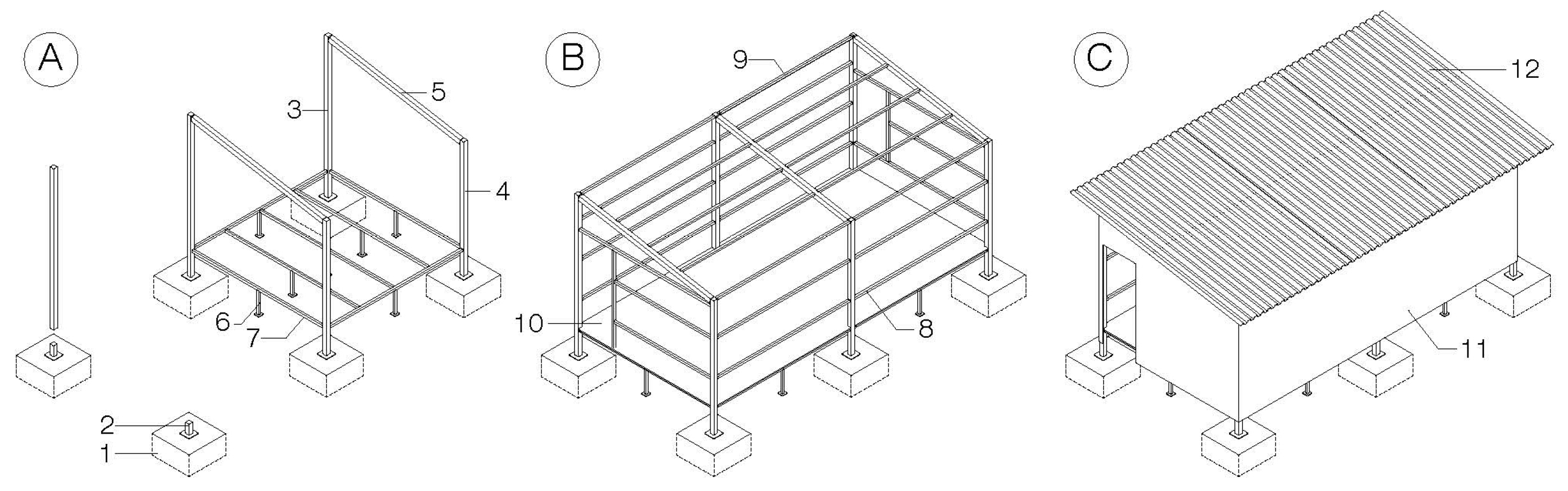
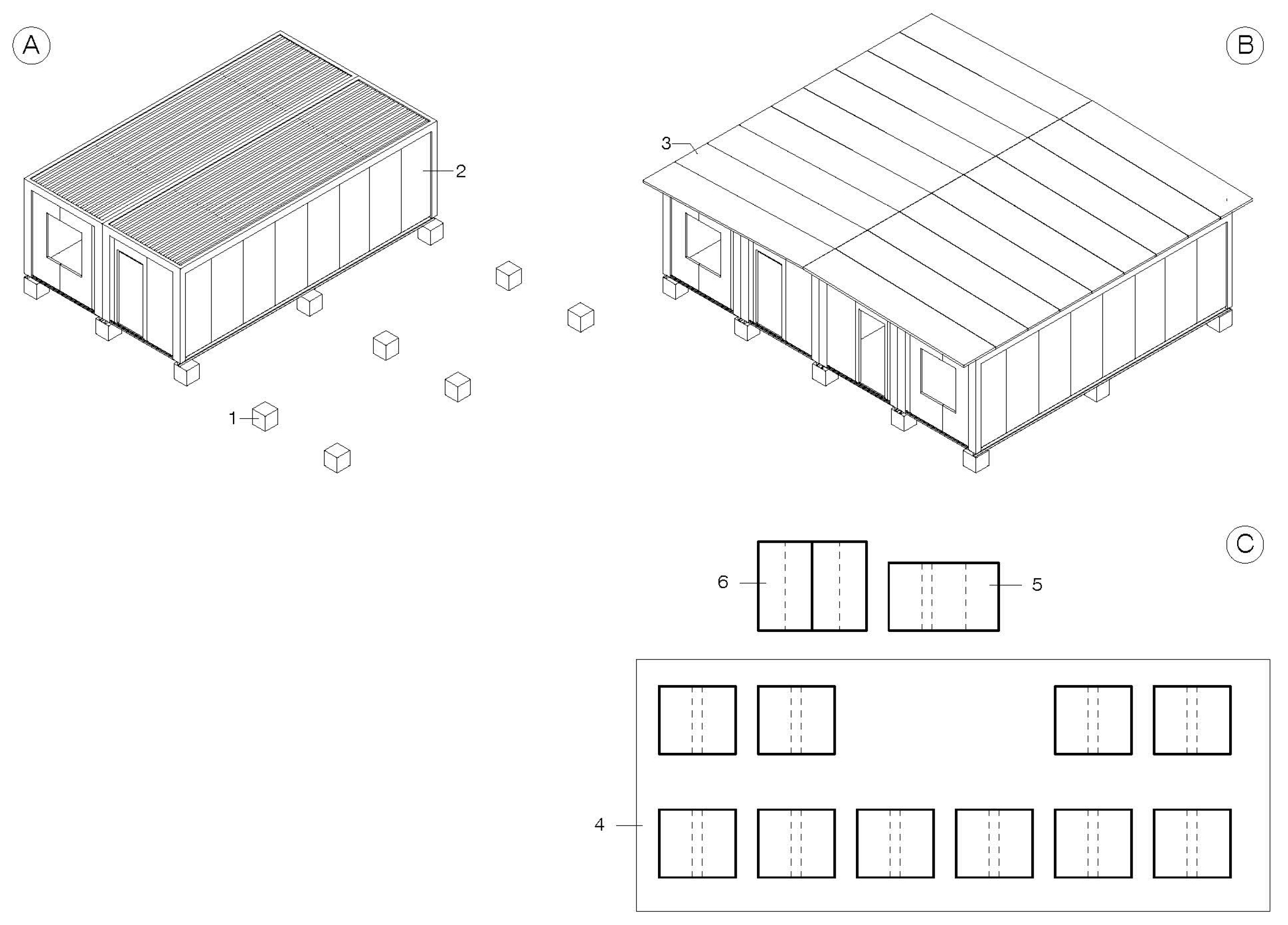
The housing unit installed by CRE in Léogâne (Haiti) consisted of a galvanized steel module measuring 3 m × 6 m (18 m2). The basic dwelling—for families of up to five people—was composed of a single module, families of six to ten were allocated two modules, and those of eleven to fifteen, received three. The structure, comprising three portal frames, was modular every three meters, and a raised floor was designed to prevent flooding. Foundations consisted of small concrete footings with embedded steel bolts used to anchor the metal structure (see Figure 1).
The shelter was designed as progressive housing, meaning that CRE provided the galvanized steel structure, timber flooring, and fabric-based wall and roof coverings (tarpaulin in the earliest models). Users were expected to reinforce or replace the fabric enclosures over time. Interiors were initially open-plan, with curtain dividers that could later be replaced by permanent partitions. The exterior fabric cladding incorporated a door and two windows, one on each short side.
However, the housing units CRE offered to install in Lorca were rejected by the city council. This decision responded to demands from residents who argued that these shelters did not meet the minimum acceptable standards for Spain.
Following this rejection, CRE and the city council agreed to upgrade the Haiti shelters and install up to 60 improved units in various urban locations [103].
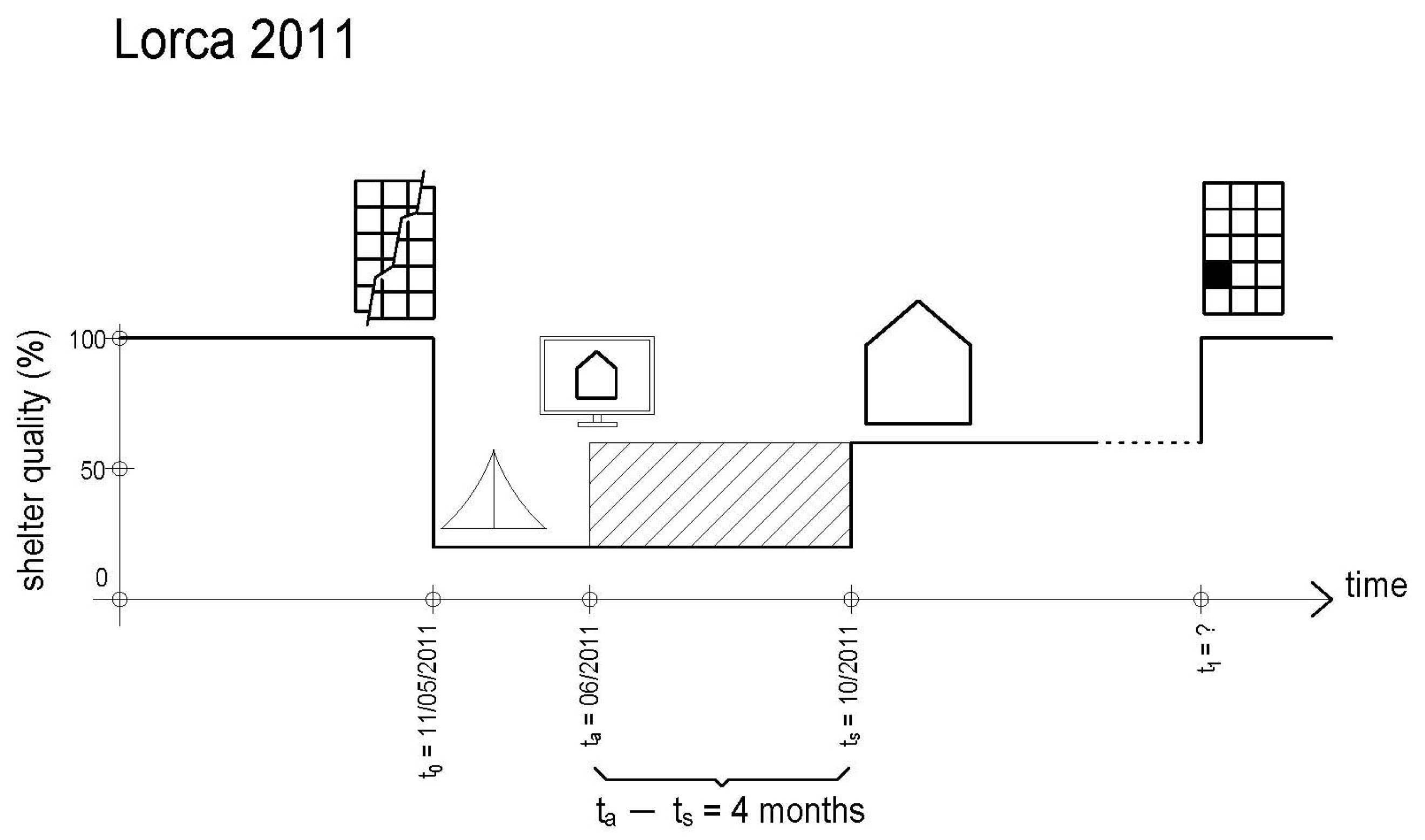
This required a complete redesign of the initial proposal—both typologically and constructively—to meet expectations and standards appropriate for the Spanish context. Five months after the earthquake and three months after the agreement to improve the Haiti shelters, the first 13 upgraded units were inaugurated and handed over to residents.

3.2.2. The Temporary Housing Units Ultimately Installed in Lorca

Although most of the 13 units ultimately installed in Lorca were based on the system used in Haiti, the subsequent adaptations resulted in a complete typological and constructive redefinition.
Typological Characteristics
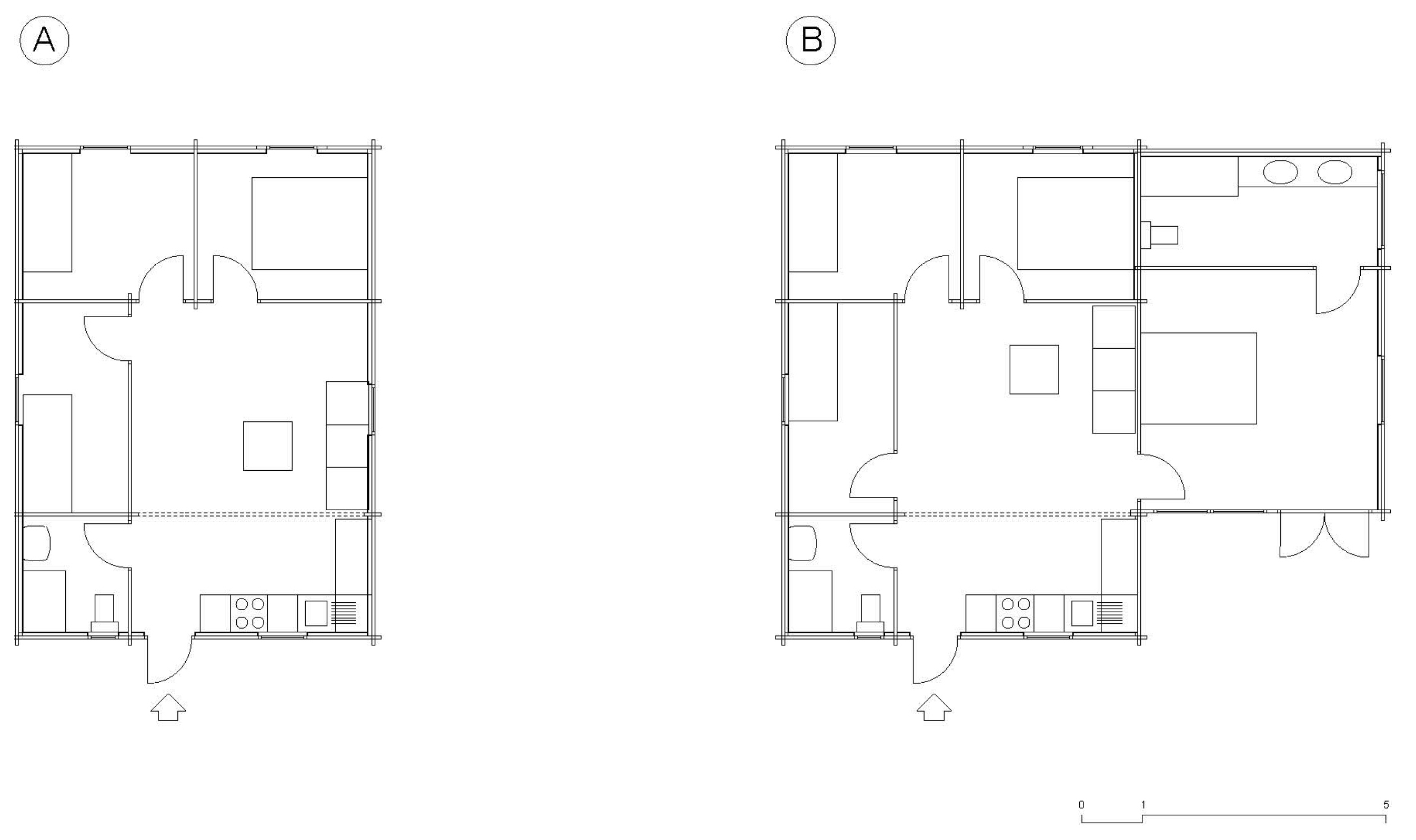
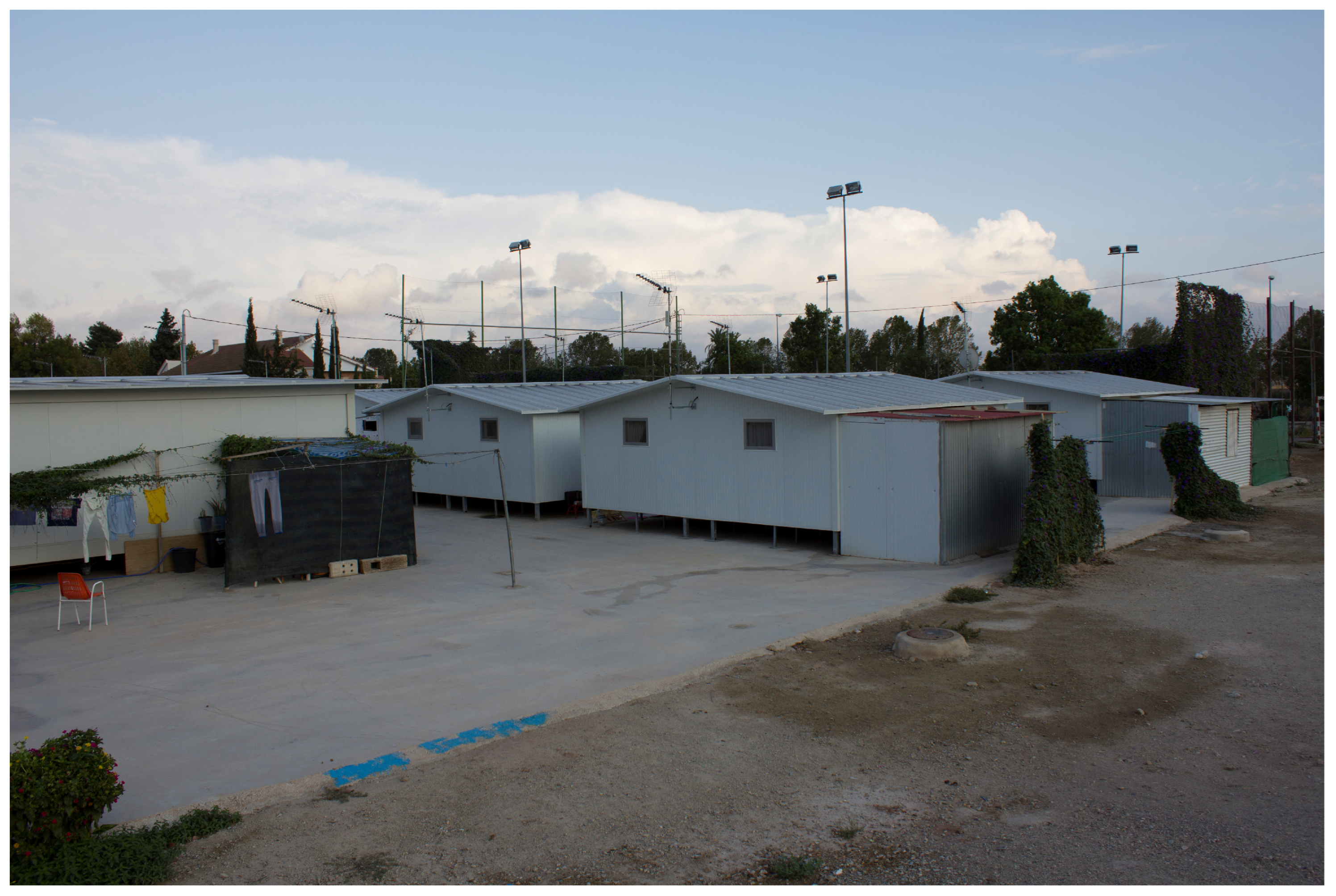
From a typological standpoint, these dwellings include a living–dining area with an integrated kitchen and a bathroom. Most units have two or three bedrooms, accommodating up to six people, with floor areas ranging between 39 and 42 m2, except for one larger unit measuring 60 m2 [104]. Most of the units—10 out of 13—follow a single 42 m2 model, rectangular in plan with a gable roof (Figure 2 and Figure 3).
The construction is based on the same 3 × 6 m galvanized steel structure used in Haiti. Two modules are combined with a one-meter gap between their long sides to reach the 42 m2 total area (3 × 6 + 3 × 6 + 6 × 1). The largest unit consists of three modules to accommodate more than six people. The remaining two dwellings were not built using the CRE-patented module but used construction-site cabins as their structural basis (Figure 4).
Constructive Characteristics
The improvements over the Haiti shelters were substantial. Most notably, the nature of the shelter changed entirely: instead of functioning as progressive housing, designed to be upgraded by users over time, these units were delivered as fully finished dwellings. The shelters were designed as follows:
  • Facades and roofs were constructed with sandwich panels;
  • Interior partitions were made of gypsum board;
  • Kitchens were equipped with a two-burner ceramic cooktop, a small refrigerator, and an electric water heater;
  • All units were fitted with air-conditioning systems for both heating and cooling.
Assembly was carried out exclusively by specialized personnel, without participation from residents. A team of four workers could assemble one dwelling per day.
Site Preparation and Layout
To accommodate the housing units, the city council prepared a 4000 m2 plot equipped with water, electricity, and sewerage services. The ground was leveled and concreted. The dwellings were arranged in a grid layout, except for the two larger units which fell outside the main matrix (Figure 4).
Costs
The overall costs included:
  • Site preparation: €44,637.31;
  • Construction, installation, and furnishing of the 13 units: €354,119.65 [105].
This results in an approximate construction cost of €650/m2, excluding site preparation.
Limited Implementation
Due to the difficulties arising from the rushed redesign of the shelters, only 13 of the 60 planned units were installed. As of summer 2023—more than 12 years after the earthquake—six of these units were still occupied [106].

3.3. Case Study 2: La Palma

Between 19 September and 13 December 2021, a volcanic eruption occurred in the Cabeza de Vaca area on the island of La Palma [107], giving rise to the Tajogaite volcano. During the eruption, thousands of earthquakes were recorded, the largest measuring 5.1 on the Richter scale. Lava flow eventually covered 1200 hectares, leading to the evacuation of 7000 residents and the destruction of approximately 3000 buildings, of which 1300 to 1400 were homes.
The Special Civil Protection and Emergency Response Plan for Volcanic Risk of the Autonomous Community of the Canary Islands (PEVOLCA) [108] defines four alert levels, each associated with a color code and a corresponding degree of volcanic activity. The highest Level, Level 4 (red alert), includes three sub-levels:
  • Island level;
  • Regional level;
  • State level.
On 21 September 2021, PEVOLCA activated Level 2 [109], red alert, which remained in effect until it was downgraded to yellow at the end of the eruption. At no point was Level 3 activated, which would have transferred command of the emergency to the national government.
While the Spanish Red Cross did not provide temporary housing after the La Palma eruption, it offered various other forms of assistance during the emergency and recovery phases [110].
Since the emergency remained under regional authority at all times, the Government of the Canary Islands, specifically the Department of Public Works, Ports, and Housing, led the process of providing post-disaster housing alternatives.
The response began rapidly. On 25 October 2021, before the eruption had ended, Regional Minister Sebastián Franquis met with the mayors of the affected municipalities (El Paso, Tazacorte, and Los Llanos de Aridane) at the Cabildo of La Palma. During this meeting, he requested the provision and urbanization of public land wherefor the installation of prefabricated houses—that were already being acquired by the regional government [111].
Minister Franquis proposed the installation of 200 modular homes, noting that the first 30 units had already been purchased for El Paso. He also announced that the Canary Islands Housing Institute (ICAVI) had contacted several specialized companies to manufacture the remaining units [112].
No public information exists regarding any selection process, public tender, or restricted competition to determine which companies would fabricate and install the planned 200 prefabricated homes. It is documented, however, that representatives of the Federación Provincial de Entidades de la Construcción de Santa Cruz de Tenerife (FEPECO)—a key provincial federation for construction entities in the Canary Islands led by its president, Óscar Izquierdo—met with ICAVI officials in November 2021, to offer proposals for temporary housing. They offered “energy-efficient, sustainable, and accessible homes, compliant with the Spanish Technical Building Code, using materials already on the island and with a capacity for completion within four to six months”. According to Izquierdo [113], ICAVI ultimately offered municipalities only two models:
  • Wooden houses for El Paso, purchased in October 2021;
  • Container-type modular dwellings, manufactured by Mybox Experience, a company based in Ourense (Galicia).

3.3.1. Five First Wooden Houses in El Jable, Los Llanos De Aridane

The first five wooden houses were installed on a plot prepared by the Los Llanos de Aridane City Council. The homes were slightly elevated on concrete blocks with pre-installed sanitation infrastructure:; however, they were not yet connected to the general network, as urbanization works were still pending.
Assembly began on 14 December 2021 [114] and progressed quickly to allow for a showcase visit by the regional housing minister and ICAVI officials on 12 January 2022, barely one month after the eruption ended. Their visit, and the announcement that the homes would be delivered within 15 days, received extensive media coverage [115].
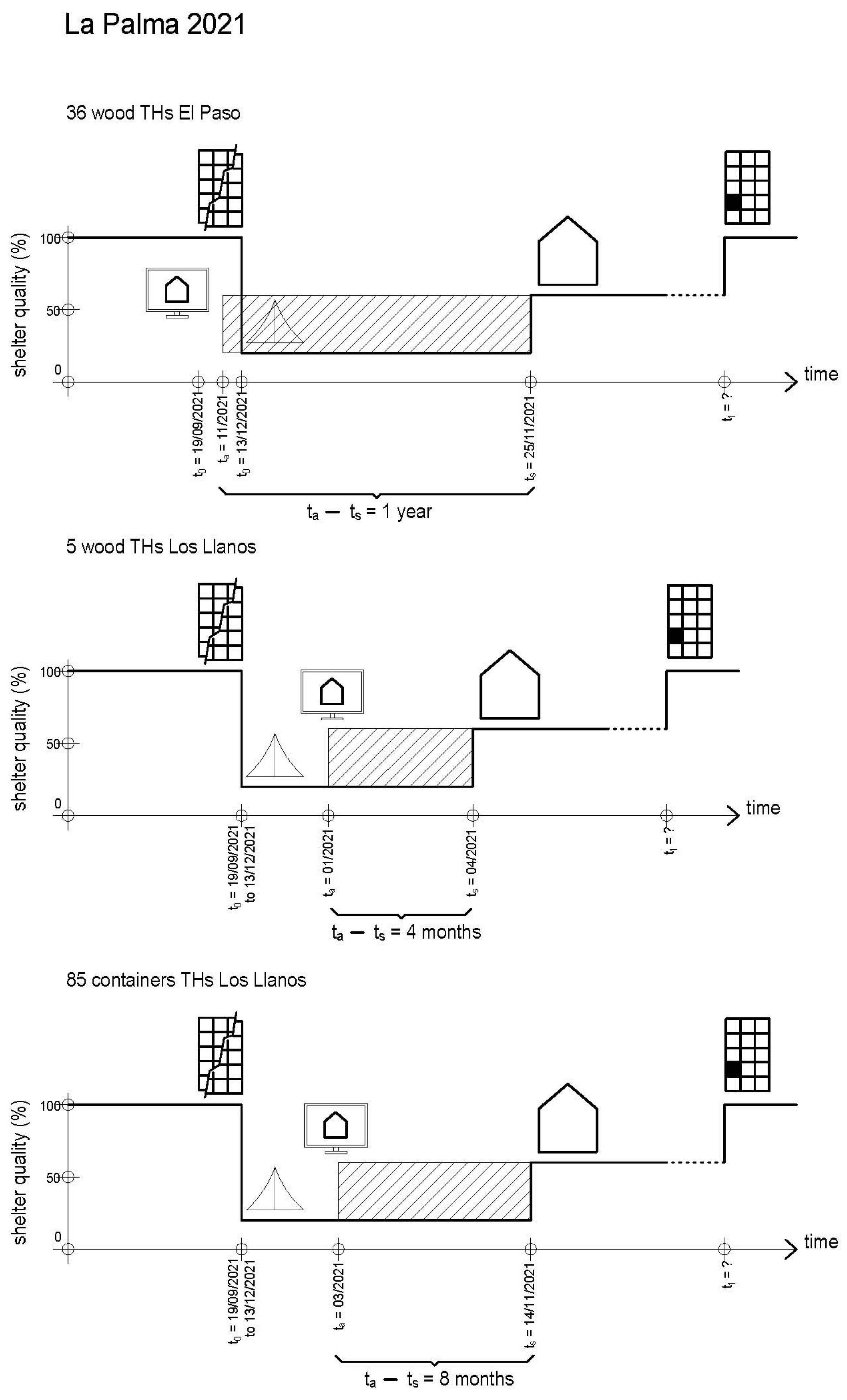
However, the handover of these first five homes was delayed until early April 2022—five months after the eruption ended and four months after the minister’s publicized visit—because the plot still required full urbanization [116].
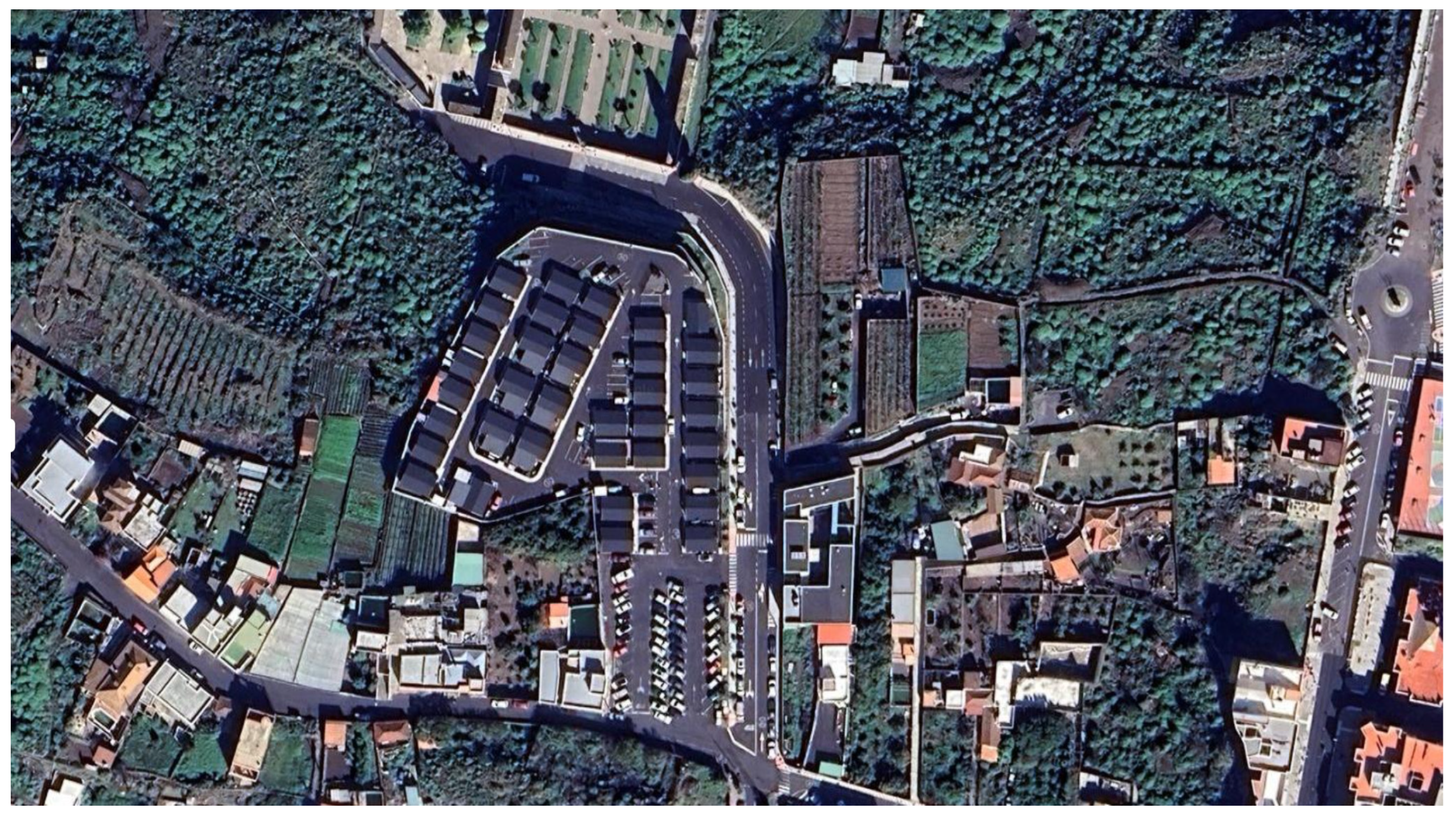
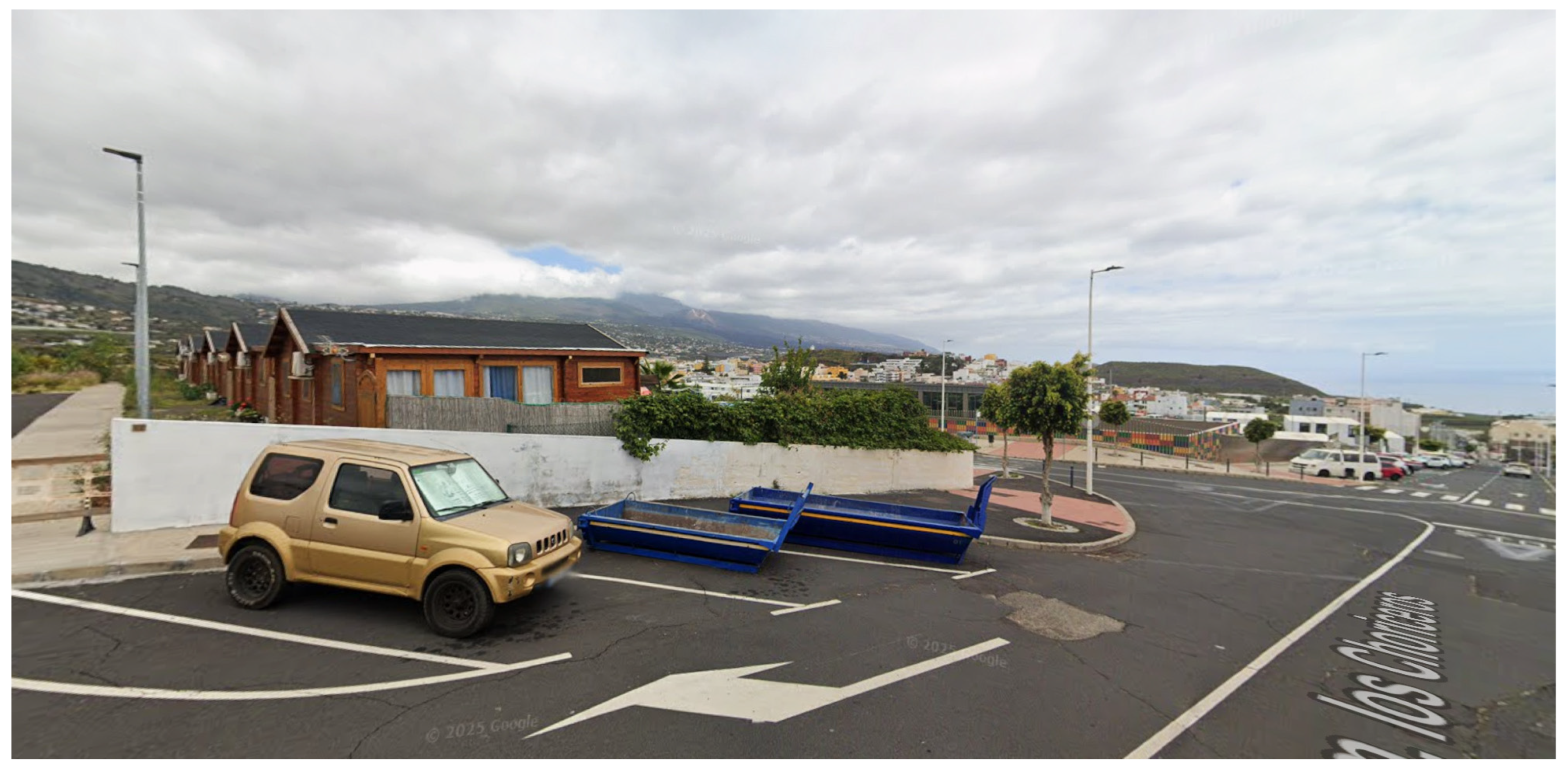
These homes occupy a plot immediately above the site later designated for the 85 container units (Figure 5). Their typology matches one of the two models later installed in El Paso—specifically the larger 74 m2 type.
Unlike the processes documented for the future 36 wooden homes in El Paso or the 85 container homes in Los Llanos, there is no publicly available information regarding the contractor or cost of the urbanization works for these first five houses.

3.3.2. Thirty-Six Prefabricated Wooden Homes in El Paso

News reports from November 2021 quoted Minister Franquis stating that the prefabricated wooden homes planned for El Paso had been acquired following an agreement with a company specialized in this type of construction, after reviewing proposals from dozens of firms in the sector [117].
However, no public documentation exists detailing this selection process.
The first 30 wooden homes had already been purchased by the Government of the Canary Islands on 25 October 2021 from the local company Modular Vivendi [118]. By 4 November 2021, the crates containing these homes were already being stored in a warehouse owned by the supplier in the municipality of El Paso.
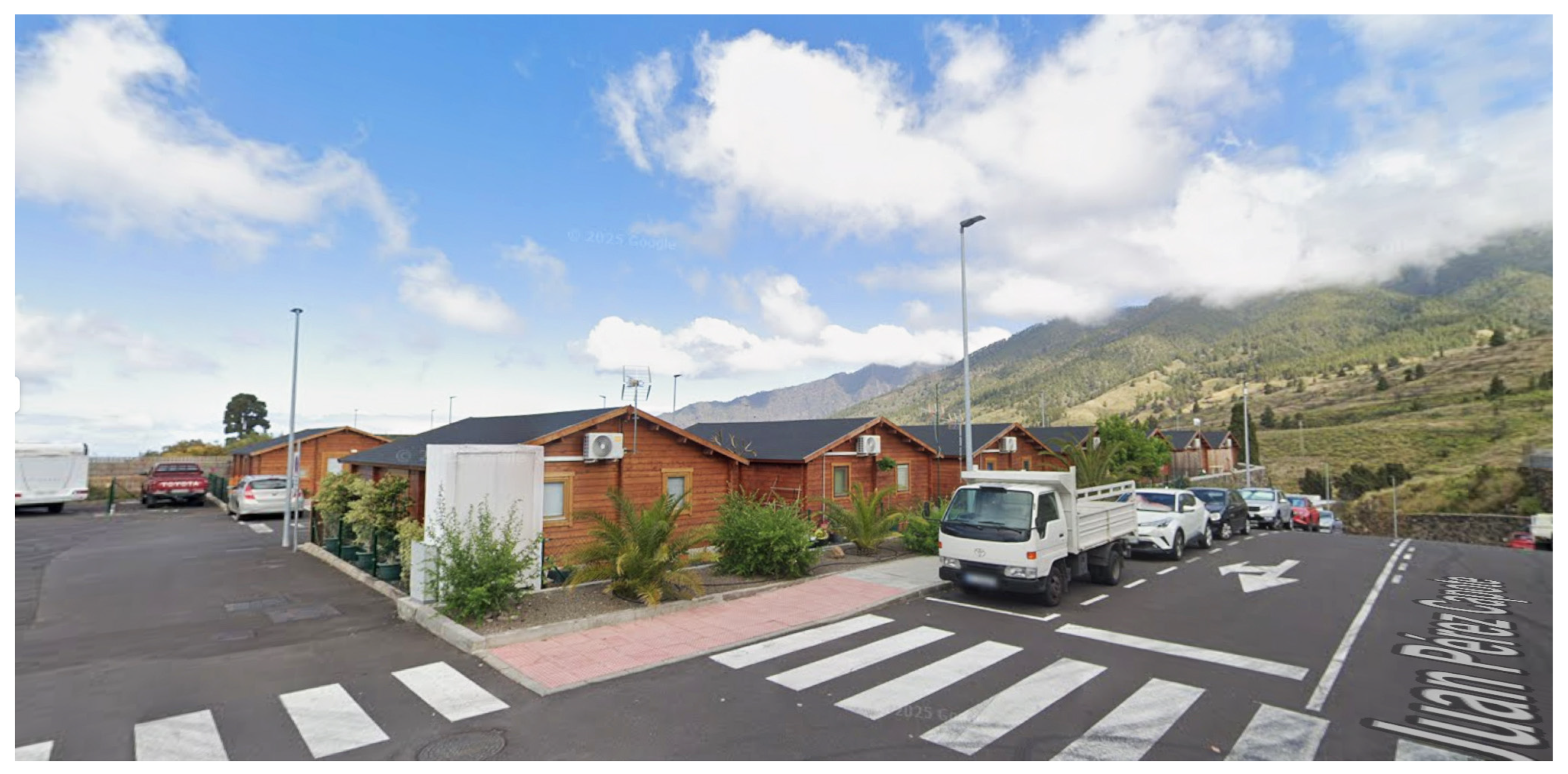
The land designated for these units was the same site agreed upon during the 25 October 2021 meeting between Minister Franquis and the Mayor of El Paso, Sergio Rodríguez. The plot—measuring approximately 6000 m2—is located between the local school and the cemetery, on the outskirts of El Paso, along Juan Pérez Capote Street: an extension of Antonio González Suárez Street (Figure 6). On 7 November 2021, a national prime-time news segment showed excavators preparing the site. Given this situation, the mayor emphasized the urgency of providing dignified housing for affected residents. The report indicated that keys to the first 30 homes were expected to be delivered by mid-November 2021, even before the eruption had ended.
In reality, work was halted shortly after that news segment and did not resume until after 5 May 2022. On that date, the Government of the Canary Islands awarded a €749,980 contract to Domingo Jesús Martín García to carry out the urbanization of the site [119].
Consequently, the 36 wooden homes in El Paso were finally handed over on 25 November 2022 [120], more than one year after the initial announcement promising imminent delivery.
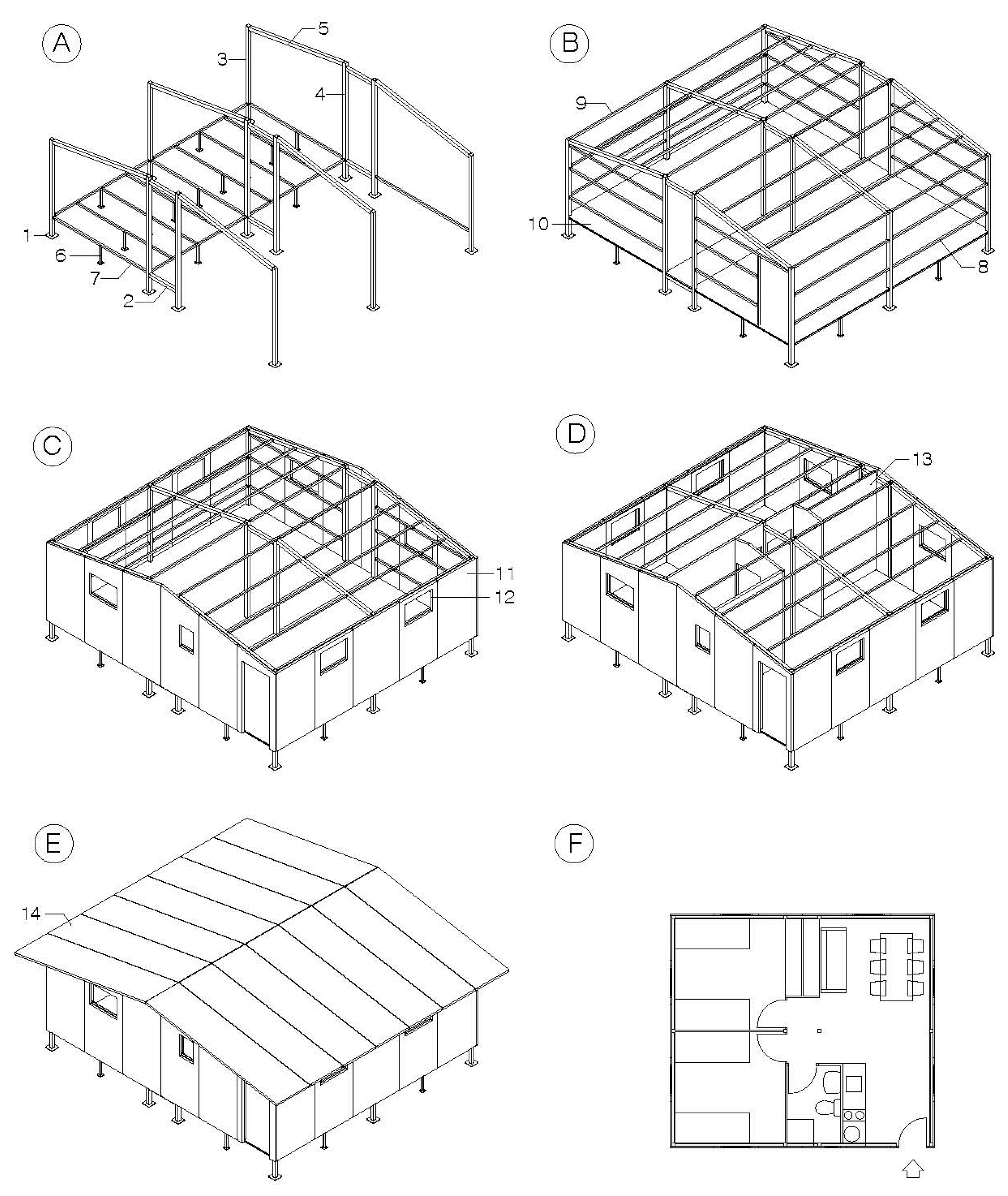
The models installed by Modular Vivendi were provided in two sizes (Figure 7):
  • 72 m2 (three-bedroom model);
  • 48 m2 (two-bedroom model).
Both configurations follow a similar layout, featuring a main module measuring 5.95 × 8.08 m, containing the living room, kitchen, and one bathroom. In the three-bedroom model, an additional module 5.95 × 4 m provides two extra rooms (one bedroom and a second bathroom).
Constructive Quality
The original specifications included:
  • A fir-wood structure with interlocking 45 mm planks;
  • Double-glazed Windows;
  • A treated-timber floor structure supported on a flat surface;
  • A sloped roof made of 18 mm board topped with self-protected asphalt membrane designed to imitate slate.
This typology is common in low-cost wooden cabins intended for seasonal or recreational use (campgrounds, second homes, etc.). It has basic performance characteristics, however, for the El Paso installation, these homes were improved by adding interior lining systems to incorporate thermal insulation, which was absent in the original models.
Site Layout and Spatial Configuration
The 36 homes were arranged in parallel rows following a grid-like pattern (Figure 8 and Figure 9). Key features of the site include:
  • A main entrance, located on the short side of the larger modules (5.95 × 8.08 m);
  • A 2 m separation between units on all sides, except at the entrance, where a 7 m-wide street was formed;
  • Slight variations in layout due to the irregular shape of the plot;
  • No shared facilities: no common buildings or designated community spaces;
  • Approximately 4000 m2 of unbuilt land remains, though part of it is utilized for terraced retaining structures to manage the steep northern slope, leaving an equivalent of just over 100 m2 of open space per dwelling.
Costs
  • The original purchase price of the wooden homes—excluding transport and assembly—ranged from €33,000 to €39,000, or approximately €500/m2;
  • The final cost, including improvements and installation, totaled €1,819,978, equivalent to €960/m2 (1,819,978 €/1896 m2);
  • When including the cost of urbanization (€749,980), the final investment increased to €1355/m2.

3.3.3. Eighty-Five Modular Homes in Los Llanos De Aridane

During the meeting of 25 October 2021 between Minister Franquis and the mayors of the affected municipalities, the Canary Islands Housing Institute (ICAVI) announced that it was considering the installation of modular homes constructed with polyurethane sandwich panels.
However, on 15 January 2022, ICAVI publicly announced the commissioning of 100 modular homes built from repurposed shipping containers from the Galician company Mybox Experience [121].
No information has been made public regarding the selection process for this company, which does not manufacture the polyurethane sandwich panel homes originally discussed. It is documented, however, that by November 2021, ICAVI had already received concrete proposals from the local federation FEPECO, offering energy-efficient, code-compliant prefabricated homes using local materials and with delivery times of four to six months. Nevertheless, ICAVI selected the container model as the sole option offered to the Los Llanos de Aridane City Council [115].
On 11 February 2022, the first five container-type modular homes arrived in La Palma, even before urbanization works had commenced [122]. These units were used to inaugurate a model dwelling on 11 March 2022, during a public visit by Minister Franquis, the mayor of Los Llanos, Noelia García, and ICAVI director Maribel Santana.Land and Urbanization Works
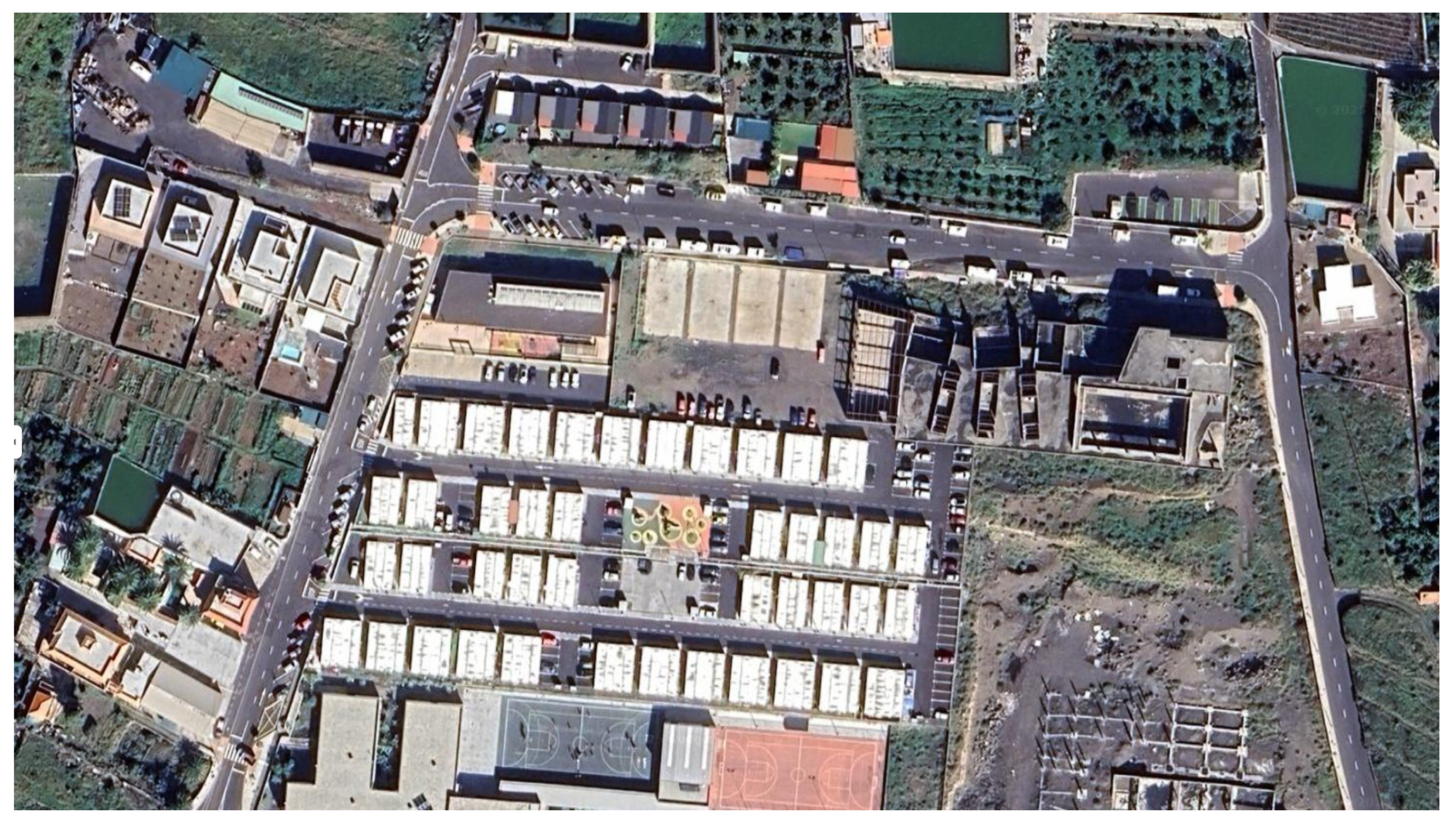
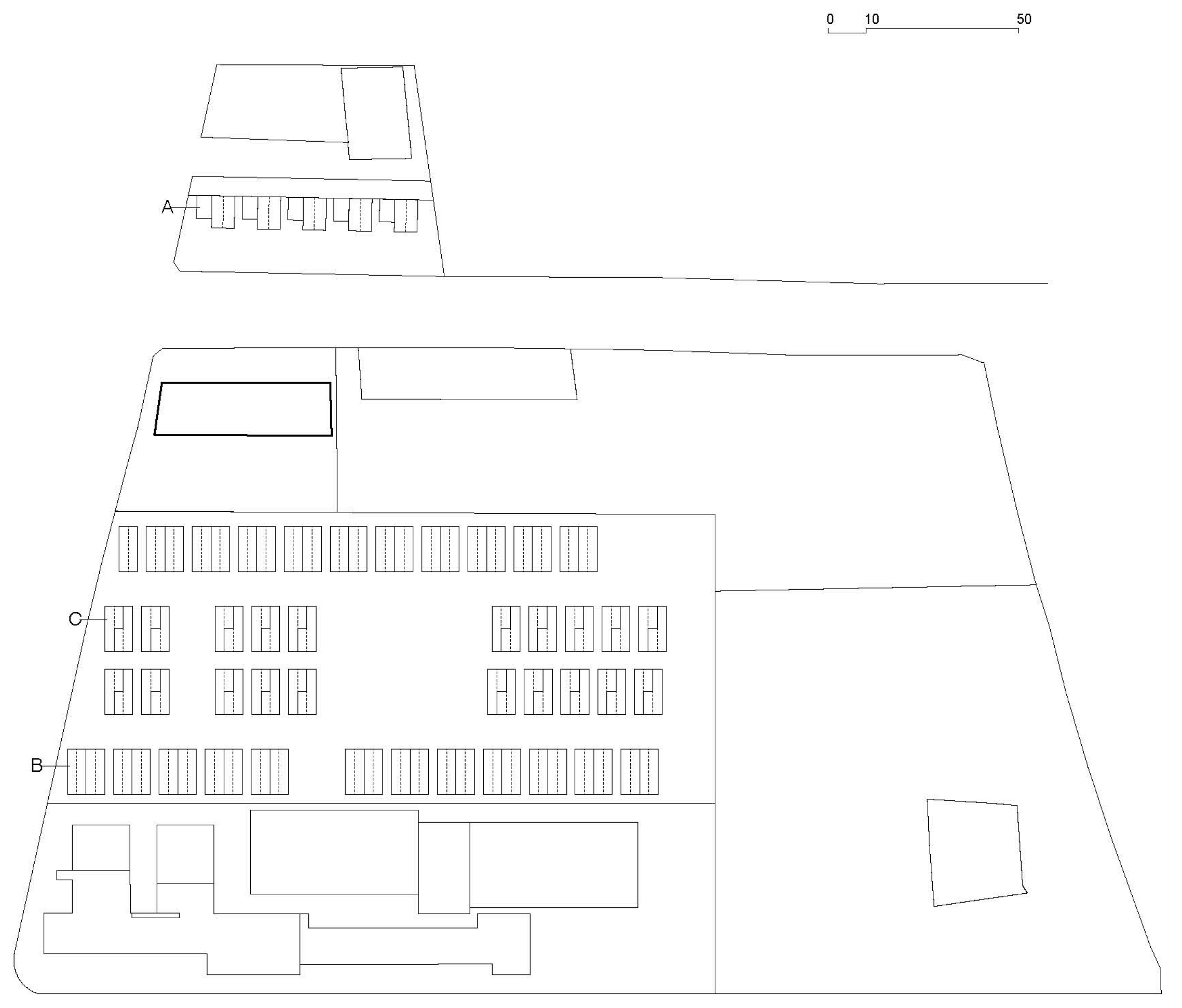
The land provided by the Los Llanos de Aridane City Council is adjacent to the plot used for the first five wooden homes. It consists of a sloping area of more than 12,000 m2 located along the Camino de Los Choriceros, next to a primary school and sports facilities (see Figure 10).
The official contract for urbanizing this parcel was awarded on 5 May 2022, the same day as the contract for the 36 wooden homes in El Paso. The Government of the Canary Islands approved the award to Roturaciones Amargar S.L. for €571,235 to urbanize the 12,631 m2 parcel intended for the installation of 85 prefabricated container homes.
The first 44 homes were delivered on 14 November 2022, more than one year after the eruption began. The remaining 41 homes were delivered on 21 December 2022 [123].
Typologies and Construction System
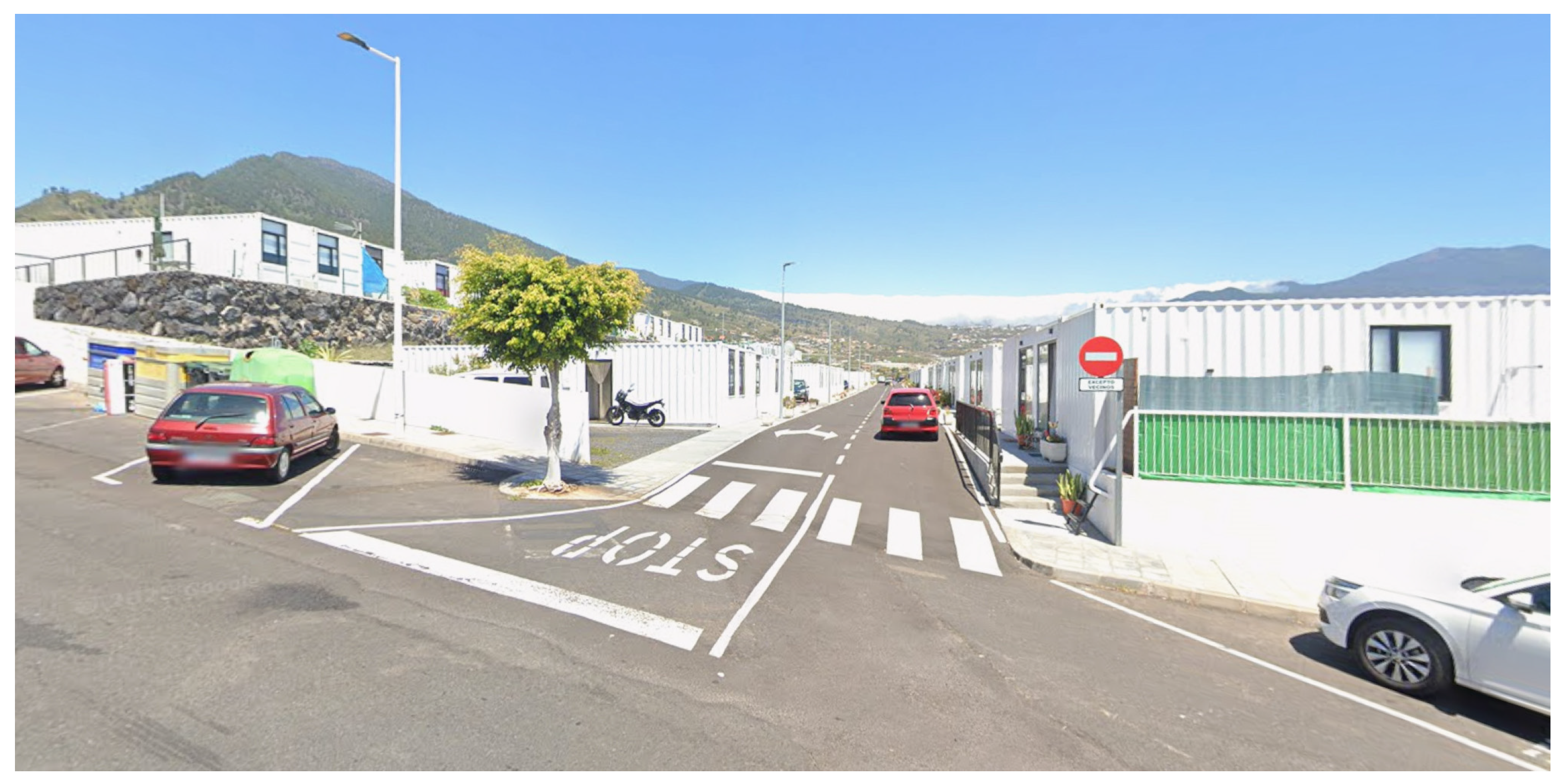
The models supplied by Mybox Experience consist of two types:
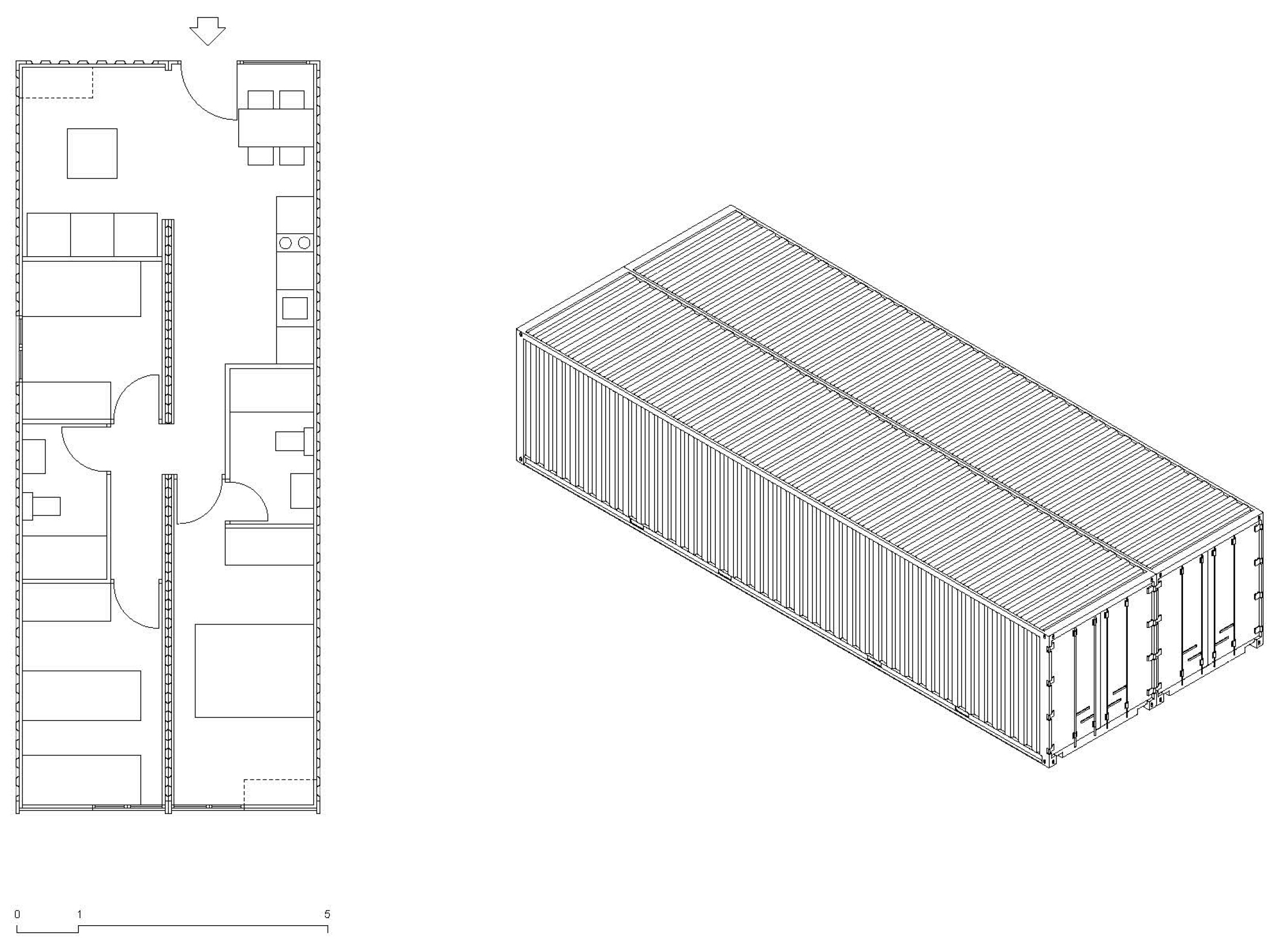
  • 60 m2 units (three bedrooms, two bathrooms), built from two repurposed 40-foot shipping containers (2.44 m × 12 m × 2.55 m in height) (Figure 11);
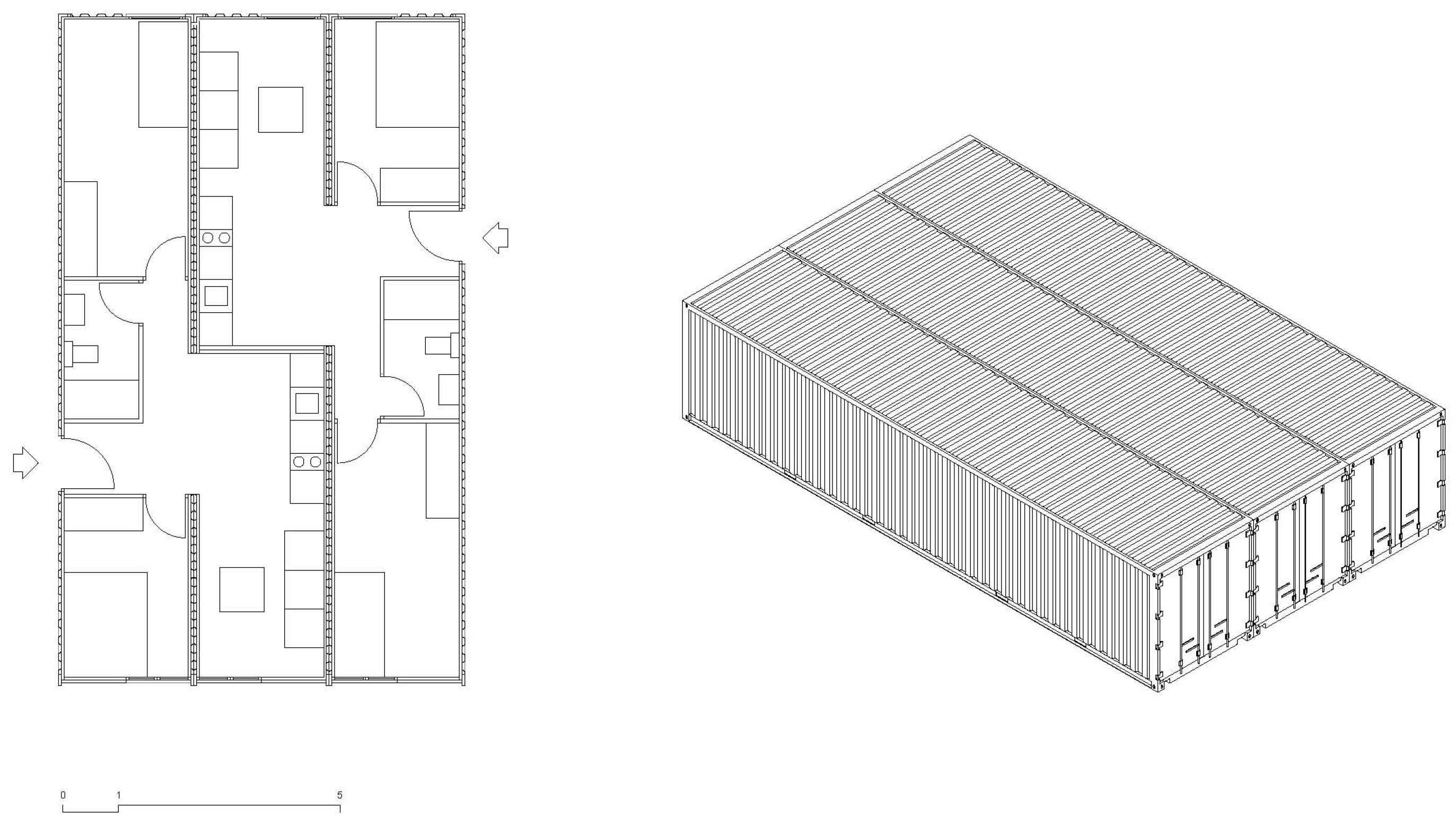
  • 45 m2 units (two bedrooms, one bathroom), built from one and a half 40-foot containers (Figure 12).
The construction system is based on the reuse of standard maritime containers, with openings cut for access, lighting, and ventilation. The characteristic corrugated metal shell—painted white—forms the exterior envelope. The interior is finished with gypsum board linings to incorporate thermal insulation and service installations. Windows are black aluminum, and floors consist of floating laminate with a wood-like appearance. All units are equipped with air-conditioning systems.
Spatial Layout and Density
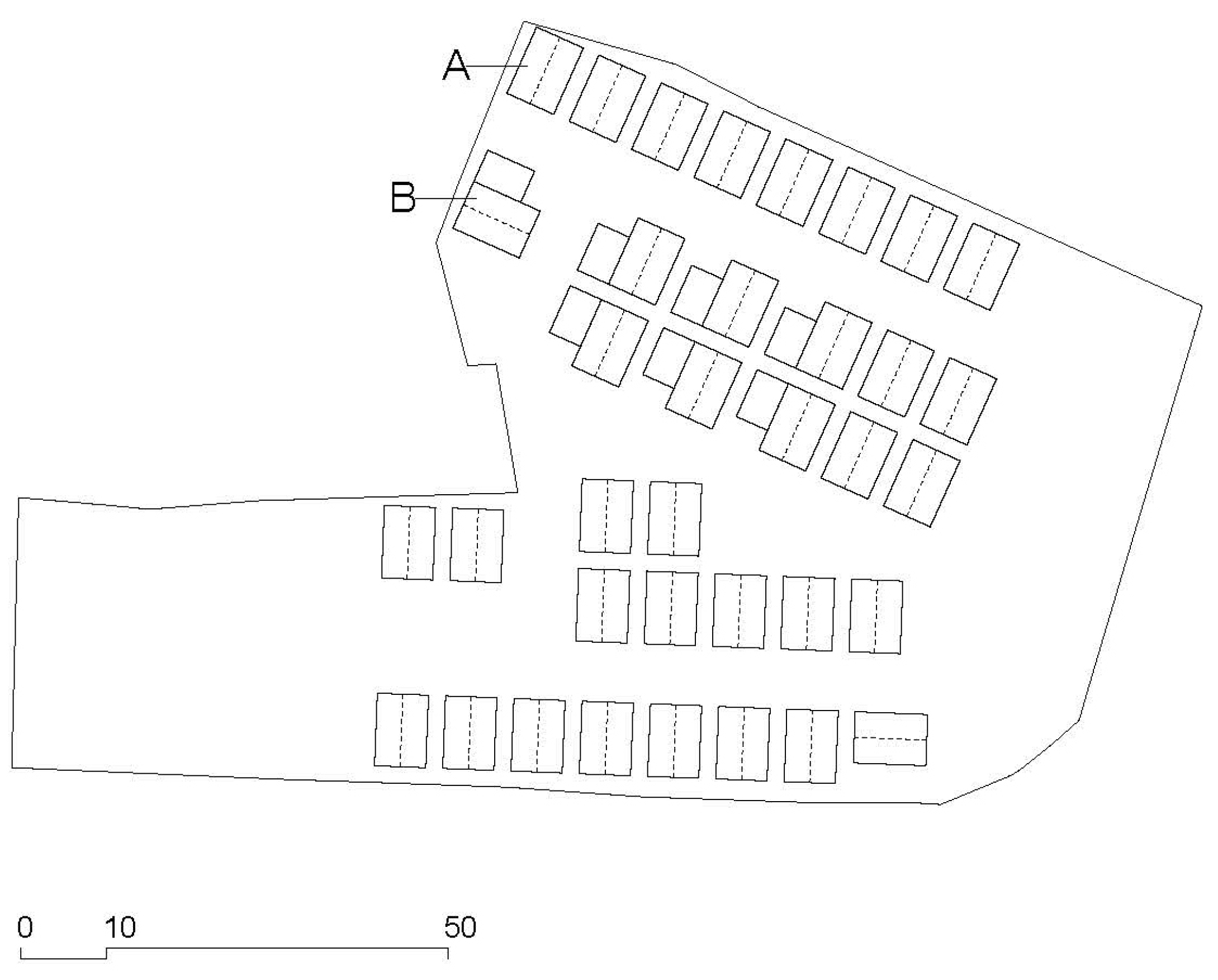
The homes are arranged in dense parallel rows following a grid pattern (Figure 13 and Figure 14). Key characteristics include the following:
  • Entrances are located on the short side of each container;
  • Three-bedroom units (two containers) are grouped in clusters of four containers, located along the longitudinal edges of the plot; these have openings on only three sides;
  • Two-bedroom units (1.5 containers) are also grouped, forming clusters of three containers, located in the central rows;
  • Longitudinal separation between clusters is restricted to 2.3 m;
  • Entrance-side separation (forming an internal street) is 9 m;
  • Rear-side separation is 4.5 m;
  • No community buildings or shared spaces are provided;
  • The proportion of common space per dwelling is less than 90 m2.
Costs
The Government of the Canary Islands, through ICAVI, acquired the 85 container homes for €5.3 million. This represents an approximate acquisition cost of €1178/m2 (5.3 M/(45 × 60 + 40 × 45) = €1178/m2).
Including the cost of urbanization (€571,235 for 12,631 m2), the final cost rises to €1223/m2.

4. Results

In 2011, following the Lorca earthquake, Spain lacked any national or regional regulations, plans or protocols defining operational procedures and standards for temporary housing. By 2021, after the La Palma volcanic eruption, this situation remained unchanged.
Consequently, both cases revealed serious strategic shortcomings that led to the failure of both temporary housing programs.

4.1. Lorca

In the Lorca case, the Spanish Red Cross (CRE), drawing on its international disaster response experience, proposed using the same model it had successfully deployed in Haiti. These shelters were designed according to standards set by the international experts of the Shelter Coordination Team [101] and were based on the minimum requirements established by the Sphere Project 2004 edition, an international initiative aimed at improving the effectiveness and accountability of humanitarian assistance [124].
However, the subsequent rejection of this proposal by residents was predictable [27,125]. Directly applying minimum standards intended for low-income countries, to a highly developed context like Spain was not a reasonable approach. This situation triggered several critical consequences [106].

4.1.1. Significant Delays

Negotiations between the Lorca City Council and CRE to adapt the Haiti shelter models to European standards caused substantial delays. These delays were further extended by the technical requirement to develop, fabricate, install and assemble an entirely new prototype, proving that imported solutions without prior context adaptation are ineffective for rapid response [52].

4.1.2. Inadequate Design and Construction

Due to haste, lack of planning, and absent community participation, the units turned out to be barely habitable and culturally inappropriate.
Design issues:
In Spain, as in many European countries, prefabricated housing still carries a stigma associated with marginality, partly rooted in unsuccessful prefab housing solutions built in the 1970s. As residents later noted, the temporary housing area quickly became associated with social degradation:
“Our children live in a dreadful environment, more like a ghetto than the neighborhood where we would want them to grow up” (Letter to Queen Sofía, 6 March 2014).
Thermal Performance issues:
In terms of construction, poorly insulated metal structures were installed, with inadequate thermal comfort for the Mediterranean climate. This deficiency stems from several factors:
  • Material Inadequacy: The use of sandwich panels for exterior cladding attached to a metal frame proved inappropriate for Lorca’s climate, where summer temperatures frequently reach 40 °C.
  • Thermal Gain and Loss: During summer, solar radiation overheats the metal envelope, causing interior temperatures to exceed outdoor levels. Conversely, in winter, the lack of thermal mass and insulation causes interior temperatures to remain extremely low.
  • Economic Impact: As a result, residents are forced to rely on electric air-conditioning units year-round. This dependency generates utility bills that are unsustainable for low-income households, exacerbating their vulnerability.

4.1.3. Excessive Cost of the Shelters

While the Haiti modules already exceeded the IASC cost parameters (US$4700 per module; US$260/m2), the cost in Lorca surged dramatically to €650/m2 (≈US$812/m2). A 42 m2 unit cost approximately €27,300 (US$34,124).
For comparison, the 2011 construction cost of a conventional single-family home in Spain —defined as a permanent structure with traditional masonry and full compliance with the Technical Building Code (CTE)—ranged between €616 and €879/m2 [126]. Thus, the final cost of these temporary homes approached that of permanent housing, despite their significantly inferior thermal and acoustic performance. Ultimately, this disproportionate cost-to-benefit ratio resulted in only 13 of the 60 initially planned units being installed, illustrating a clear failure in the economic sustainability of the program.

4.2. La Palma

In the second case—the 2021 La Palma eruption—early decisions made during the emergency phase—such as the purchase of wooden homes and the commissioning of container-type homes from a mainland company—produced the following outcomes:

4.2.1. Delays in Implementation

Both housing models were selected before preparing the required sites for installation:
  • Consequently, the wooden homes purchased in October 2021 could not be delivered until November 2022—more than one year later;
  • Similarly, the container homes were commissioned in January 2022 and delivered to the island in February 2022, but they sat for ten months before installation, due to delays in urbanization works.

4.2.2. Prioritizing Speed over Quality Standards

The wooden homes and metal container units share only one common characteristic: their rapid availability. However, their constructive logic, performance, and long-term suitability differ substantially. While the wooden houses adhered to established manufacturing standards, the container units proved completely inadequate for residential use. Shipping containers are fundamentally designed for logistics and transport rather than direct habitation; consequently, without rigorous and specialized adaptation, their low quality resulted in several critical issues
Regulatory non-compliance
A technical report issued in March 2023, only a few months after delivery [127], concluded that the container homes failed to meet basic habitability requirements established by Canary Islands regulations [128].
Rapid and severe deterioration
Within four months [129], the reused container steel began to rust, compromising waterproofing and causing water leaks, leading to bulging ceilings and walls.
Absence of thermal and acoustic comfort
  • As happened in Lorca, the metal envelope, exposed to solar radiation, created extreme indoor temperatures, requiring continuous air-conditioning, with unaffordable electricity costs for residents;
  • Lack of acoustic insulation and the paired layout of two- or three-bedroom units resulted in severe noise transmission and loss of privacy.
Public acknowledgement of substandard conditions
By October 2024, less than two years after delivery, the new Regional Minister of Public Works, Transport, and Housing, Pablo Rodríguez, publicly acknowledged in Parliament that most container homes were in “undignified conditions”, stating:
“No Canarian, no human being, deserves to live in substandard housing.” [130]
Abandonment and informal subletting
Due to their poor condition, some beneficiaries never moved in, others abandoned the units shortly after, and some units were illegally sublet [131].

4.2.3. Excessive Cost

The price of container homes—€1178/m2—was significantly higher than the average construction cost of a permanent single-family home in Spain in 2021, which stood at €978/m2 [132]. This reference value, based on the cost indicators for “standard quality” residential construction, accounts for high-durability materials (concrete, steel, and brick), advanced energy efficiency systems, and a lifespan exceeding 50 years. In contrast, the container units offered a repurposed metal envelope with a high risk of corrosion and poor thermal mass. This evidence reinforces the argument that the emergency housing strategy in La Palma prioritized speed through a high-cost, low-quality industrial solution that failed to align with the principles of efficient public management.

5. Discussion

The absence of specific regulations establishing procedures and standards for temporary housing means that, following a disaster, emergency management authorities are forced to make numerous complex decisions under extreme pressure—decisions that carry profound long-term consequences for affected communities. These critical choices encompass site selection, construction and indoor comfort standards, the procurement of manufacturing and assembly services, cost management, and overall spatial planning, including the provision of essential facilities.
As observed in the Lorca and La Palma cases, under such pressure, managing authorities often prioritize speed over quality, universal solutions over local ones, and efficiency over effectiveness. Furthermore, they frequently employ top-down approaches that limit community participation. These decisions undermine key aspects of resilience and sustainability.
To avoid these time constraints, Japan, a country with extensive experience in disaster management, specifies each of these aspects in detailed regulations, that are continuously refined and updated after each disaster event.
While Japan represents a high benchmark as one of the industrialized countries with the world’s most advanced post-disaster housing systems [133]—other countries closer to Spain in cultural and developmental terms, such as Chile, also demonstrate the importance of learning from past mistakes and updating legal frameworks to guide housing policy in future emergencies.
Critical analyses of Chilean post-disaster housing programs following the 27 February 2010 and the 1 April 2014 earthquakes, as well as the 12 April Valparaíso fire revealed consistently low quality across emergency housing solutions. Consequently, these events highlighted the need for new regulatory and legal instruments [134]. In response, the Chilean government updated its regulations, including the adoption—starting in 2018—of minimum technical requirements for emergency housing units and sanitation facilities [135].
In comparison to these examples, Spain remains anchored in obsolete procedures, without effective planning. This leads to improvised decisions that neglect lessons learned, and repeat common errors in management, accommodation design and the implementation area planning, ultimately resulting in situations of precariousness and substandard housing.
From the Japanese and Chilean experiences, several concrete mechanisms can be distilled that are directly transferable to the Spanish context. These include the following:
(i)
the institutionalization of post-disaster learning through binding regulations that are revised after each major event.
(ii)
the definition of minimum technical and habitability standards for temporary housing units, including thermal performance and spatial requirements.
(iii)
the establishment of pre-disaster agreements with certified manufacturers and service providers to ensure rapid deployment without compromising quality.
(iv)
the anticipation of medium-term occupancy by integrating temporary housing into spatial and infrastructure planning.
(v)
the reduction in discretionary decision-making under emergency conditions through predefined governance frameworks. Together, these mechanisms demonstrate that improving sustainability does not depend on hazard type, but on institutional preparedness and regulatory clarity.

5.1. Improvised Responses

In both case studies analyzed, the responsible authorities prioritized displaying the housing module as quickly as possible, to convey an image of efficiency and rapid response. However, this approach overlooked a key principle: a housing unit is not habitable unless it is connected to essential infrastructure such as water, electricity, and sanitation. In both cases, urgency turned into haste, and these early decisions ultimately contributed to program failure.
This is compounded by the lack of pre-established standards. If Spain had such standards for temporary housing, the design of the units would have been predetermined, allowing their fabrication to begin almost automatically. Accordingly, authorities could then have been focused their efforts on the far more complex task of identifying and preparing suitable land, which cannot be anticipated before a disaster and often represents the most time-consuming component. Some countries with advanced disaster management systems even maintain pre-designated land reserves for temporary housing areas.

5.2. Lack of Definition in Housing Design Criteria

A paradox emerges when comparing the temporary housing sizes offered in Lorca and La Palma with the much smaller standardized sizes used in Japan. While Spanish cases offered 42 m2 (2D) and 60 m2 (3D) units in Lorca; 45 m2 (2D), and 60–72 m2 (3D) units in La Palma, Japanese post-disaster regulations since 2004 have defined three housing sizes: 20 m2 (1D), 30 m2 (2D), and 40 m2 (3D).
The generous surface areas offered in Spain were not accompanied by adequate construction quality. Moreover, they contradict the fundamental principle that temporary housing is designed for limited occupancy during the recovery period. In the absence of regulations specifying minimum square footage, the sizes offered in these two case studies varied considerably and would likely vary again in future disasters.

5.3. Lack of Environmental Considerations in Construction Systems

Both case studies repeated the same strategic error: prioritizing fast-assembly systems, such as large sandwich panels on metal frames or repurposed steel containers. In both Lorca and La Palma, the exposed metal envelopes became overheated environments during warm months, making the units uninhabitable without intensive cooling. This is an unsustainable solution given Spain’s rising temperatures and increasing electricity costs.
Literature provides strong evidence that metal-shell temporary housing is severely limited in performance in warm climates without substantial, often costly and complex modifications. Specifically, the lack of thermal mass in lightweight metal structures increases the overheating risk, even in milder summer conditions, and the indoor environment is significantly affected by outdoor weather [136,137,138].
Furthermore, in the case of La Palma, the decision to procure containers from a manufacturer 1750 km away (in Galicia) significantly increased the program’s embodied energy and carbon footprint. This directly contradicts the environmental pillars of sustainable recovery [139].

5.4. Formation of Marginalized Areas and Stigmatization

Historically, clusters of temporary housing deteriorate rapidly and become associated with marginality and informal settlements. Multiple factors contribute to this perception, including the following:
  • The socio-economic profile of many residents—often households already at risk of exclusion;
  • The aesthetic and material qualities of the units, particularly in metal shelters where cladding deteriorates quickly;
  • Barracks-like grid layouts are commonly used;
  • Peripheral locations, far from urban centers.
Both Spanish case studies reproduced these conditions, with the partial exception of wooden homes in La Palma.
Despite these challenges, international experiences demonstrate strategies that can improve acceptance. In La Palma, acceptance of wooden homes was significantly higher than that of metal container units. Similarly, after the 2011 Tohoku earthquake, Japan expanded its authorized manufacturers to include wooden-housing companies, which produced 6000 of the 50,000 temporary units installed [140]. This success influenced the response to the 2016 Kumamoto earthquake, where wooden units designed by architects like Pritzker Prize laureate Shigeru Ban were incorporated prioritizing dignity and design even when not strictly necessary. The Project was awarded with the Good Design Special Award (Disaster Recovery Design 2017).

6. Conclusions

Experience in managing temporary housing in disaster situations has made it clear that this is not an easy task, especially when addressing vulnerability issues. Strengthening community resilience is fundamental to accelerating recovery and ensuring development that does not compromise the resources available for future generations.
To this end, housing must not only provide physical security but also address the social, economic, cultural, administrative, and environmental factors crucial for recovery and sustainable development in all its dimensions.
Consequently, governments must establish clear objectives, develop plans, define competencies, and promote effective coordination mechanisms, as outlined in the Hyogo and Sendai Frameworks for Action.

6.1. The Spainish Response in Lorca and La Palma

In the field of temporary housing, Spain has failed to incorporate the international lessons learned over the past decades, nor has it adapted its policies to the strategic recommendations of the Hyogo and Sendai Frameworks for Action. Paradoxically, although Spain is a signatory to both international agreements, their core principles regarding resilience and sustainable recovery remain largely unimplemented in national emergency housing protocols.

6.1.1. Failure to Apply Lessons Learned

Regarding the management of temporary housing, the strategies implemented in Lorca and La Palma show recurring errors characterized by the following issues:
Contextual inadequacy
The emergency responses failed to adapt to the Spanish context across three critical dimensions:
Socio-economic Inconsistency: The initial proposal for Lorca relied on modules originally designed for Haiti. Implementing solutions tailored for one of the world’s least developed countries in a European context ignored the significant differences in economic structures, long-term durability requirements, and recovery expectations.
Cultural Disconnection: In both Lorca and La Palma, authorities opted for “universal” prefabricated solutions. These models were disconnected from local building traditions, vernacular architecture, and the specific housing culture of the affected communities.
Technical Incompatibility: The selected construction systems were ill-suited for Spain’s climate. The lack of thermal mass and inadequate insulation resulted in unacceptable indoor comfort levels, rendering the units uninhabitable without continuous—and costly—reliance on air conditioning.
Top-down approaches
Affected communities were not involved in selecting housing models or the assembly and installation process.
In Lorca, decisions remained between the Spanish Red Cross and the city council; in La Palma, decisions were opaque, limited to the housing institute (ICAVI) and local authorities, without public consultation.
Underutilization of local resources
Local capacities and industries were overlooked. Lorca reused surplus structural modules from Haiti, While La Palma commissioned homes from a company 1750 km away, ignoring proposals from the local construction sector (FEPECO).
Absence of advance planning
Neither Lorca nor La Palma had any specific regulations, legal frameworks, or protocols for temporary housing—whether at the national level or within the respective regional governments (Murcia and the Canary Islands). In fact, none of Spain’s 17 regions currently possess specific regulations in this field.
Misunderstanding temporary housing as a process
In both cases, authorities prioritized the rapid delivery of the housing product over the comprehensive process required to ensure habitability. This conceptual error led to significant paradoxes: in Lorca, the reliance on a module designed for international humanitarian aid—unsuitable for the Spanish regulatory and climatic context—resulted in extensive technical delays. In La Palma, while the physical modules were delivered with relative speed, they remained vacant for months—or even a full year—because the necessary urbanization works and utility connections had not been completed.
A proper understanding of the actual timelines involved in temporary housing—particularly the inherent challenges of site selection and land preparation—would have revealed that the “urgency” was misplaced. Recognizing that these infrastructural phases are the most time-consuming would have allowed authorities more time to select appropriate, high-quality dwelling models, rather than settling for substandard solutions under the guise of immediate availability.

6.1.2. Unsustainable Recovery and Development

The Spanish response in both case studies proved unsustainable across its multiple domains:
Environmental
In neither case was there a complete design of the process from the point of view of circularity. There is no credible forecast for the reuse and/or recycling of the housing modules or the restoration of the conditioned land. Furthermore, the interventions lacked an assessment of operational energy use, embodied energy, and carbon footprint. This disregard for the circularity of materials and waste generation reveals a model focused on immediate relief rather than long-term environmental responsibility.
Social
Despite the Sendai Framework encouraging community engagement and social equity, both responses repeated systemic mistakes that led to marginalized enclaves. Contrary to the principles of resilience, selection criteria concentrated the most vulnerable households in poorly integrated areas. Sites were located on the outskirts with deficient connectivity, and no public or community spaces were incorporated, hindering social resilience.
Economic
The investment per square meter was disproportionately high—often equal to or exceeding the cost of permanent public housing (VPO) according to national official benchmarks (MITMA). This high capital expenditure contrasts sharply with the rapid deterioration and poor thermal performance observed just a few years after installation, representing an inefficient use of public resources.
Cultural
The typological solutions, often associated with informality or marginality, did not align with local housing practices, vernacular materials, or inhabitant expectations. This lack of contextual adaptation made the dwellings culturally unacceptable and alien to the local identity.
Institutional
Management in both cases was characterized by a reactive approach, as the absence of a pre-established regulatory framework forced authorities into improvised decision-making. This institutional vacuum led to a focus on the rapid delivery of the housing “product” while neglecting the complex urban process—such as land preparation and infrastructure. Consequently, the process was marked by the following:
  • A lack of transparency in the decision-making chain;
  • No citizen participation or community consultation;
  • Minimal involvement of experts in post-disaster temporary housing;
  • Prioritization of public image over actual process quality.
Media announcements of rapid delivery were consistently followed by operational delays of up to one year, revealing a profound disconnection between political communication and technical planning. This paradox is quantitatively and visually synthesized in the lag between announced and actual supply illustrated in Figure 15 and Figure 16.

6.2. A Recurrent Pattern of Failure

The temporary housing programs implemented in Lorca (2011) and La Palma (2021) reveal that mistakes made in the first case were repeated in the second. In both cases, political and technical leaders faced the challenge without the following:
  • specific regulations;
  • legal frameworks;
  • established protocols;
  • or technical guidance.
As a highly decentralized country, Spanish regional authorities are responsible for managing emergencies up to Situation 2—as occurred in the cases of Lorca and La Palma. However, these regions share the same deficiencies identified in both cases, following the same pattern.
Meanwhile, exposure to disasters is increasing due to climate change, especially the warming of the Mediterranean, which increases the likelihood of extreme weather events and widespread housing losses.
If this pattern continues, a valuable opportunity will be lost to strengthen community resilience and ensure the long-term sustainability of the recovery process. A more integrated approach would instead foster social equity, generate new economic resources for the community without depleting existing ones, and incorporate temporary accommodations as a cultural asset. Furthermore, such a shift would increase public trust in institutions and significantly reduce the overall environmental footprint of disaster interventions

6.3. Policy Implications: Towards a New Regulatory Framework

To avoid the systemic failures identified in this study, a comprehensive regulatory framework must be established. Beyond immediate relief, this framework should undertake the following:
  • Establish spatial planning standards: Define mandatory layouts for temporary housing sites, including minimum street widths, strategic unit spacing for fire safety and privacy, and the compulsory integration of public spaces and community facilities;
  • Standardize contextualized modular designs: Develop a catalog of pre-approved modular prototypes specifically adapted to the Spanish climate (thermal mass, ventilation) and housing culture, specifying sustainable materials and finishes;
  • Implement a pre-disaster procurement system: Create an official registry of authorized manufacturers and service providers to streamline assembly without compromising quality or transparency;
  • Optimize logistics and sustainability: Define maximum transport distances from manufacturing facilities to installation sites to reduce the carbon footprint and ensure rapid deployment;
  • Institutionalize community engagement: Mandate participatory mechanisms in planning and decision-making to ensure that solutions respect the social fabric and local identity of the affected population.
Comparable regulatory instruments have already been implemented in countries such as Japan and Chile, demonstrating that regulatory preparedness and governance capacity—rather than speed or technological novelty—are the key determinants of sustainable post-disaster temporary housing, by structuring decision-making processes that simultaneously address institutional coordination, social integration, economic efficiency, cultural adequacy, and environmental performance.

6.4. Contribution to Sustainability and Disaster Studies

While Spain has been studied extensively for flood and seismic risk, primarily focusing on technical aspects or single-case descriptions, comparative analyses of temporary housing governance remain scarce. This study addresses that gap by researching how distorted governance, hasty policy, and inadequate housing design interact, reducing resilience and sustainable processes.
The failure of both housing programs underscores the urgent need for more precise plans and effective action protocols capable of integrating architectural design, community participation, and the Sustainable Development Goals across their five key dimensions: institutional, economic, social, cultural, institutional and environmental.
By structuring the analysis this way, the study highlights how habitability, spatial organization, and governance frameworks interact to shape long-term recovery.
Finally, the Spanish experience reveals structural vulnerabilities that are not specific to hazard type but to institutional arrangements.

Author Contributions

The paper was produced with close collaboration between the authors P.B., F.B. and D.M. P.B. and F.B. drafted the initial version of the paper, providing a detailed description and analysis of all the aspects of the paper. The primary research was designed and conducted by P.B. and F.B., with input from D.M. The ideas and themes in the paper come from joint discussions and analysis of the context, the literature review and evaluation of the primary data from the case studies by both P.B. and F.B. All authors have read and agreed to the published version of the manuscript.

Funding

This research received no external funding.

Institutional Review Board Statement

According to Spanish national regulations on research ethics (Law 14/2007 on Biomedical Research; Organic Law 3/2018 on Data Protection and Digital Rights), ethical approval is not required for non-interventional studies that involve no clinical procedures and collect no personal or sensitive data. The present study is based on non-invasive interviews dealing exclusively with housing conditions and public policy, without collecting identifying personal data. Therefore, this research is exempt from ethical review requirements under Spanish legislation.

Informed Consent Statement

Verbal informed consent was obtained from all participants involved in the study. Verbal consent was used because the interviews took place in the context of exploratory fieldwork, were non-invasive, collected no personal or sensitive data, and full anonymity was guaranteed. Participants were informed of the objectives of the study, the voluntary nature of participation, and their right to withdraw at any time.

Data Availability Statement

The data presented in this study are available on request from the corresponding author.

Acknowledgments

The authors would like to express their gratitude to the Higher Technical School of Engineering and Industrial Design (ETSIDI), Technical University of Madrid (UPM) for covering part of the costs to publish in open access.

Conflicts of Interest

The authors declare no conflicts of interest.

References

  1. UNDP. Disaster Recovery. Challenges and Lessons; United Nations Development Programme (UNDP): New York, NY, USA, 2016; 36p, Available online: https://www.undp.org/publications/disaster-recovery-challenges-and-lessons (accessed on 25 November 2025).
  2. Wisner, B.; Blaikie, P.; Cannon, T.; Davis, I. At Risk: Natural Hazards, People’s Vulnerability and Disasters, 2nd ed.; Routledge: New York, NY, USA, 2003; 496p. [Google Scholar]
  3. Batchelor, V. Tarpaulins, Transitional Shelters or Permanent Houses: How Does The Shelter Assistance Provided Affect the Recovery of Communities After Disaster? Centre for Development and Emergency Practice (CENDEP), School of the Built Environment, Master of Arts Degree in Development and Emergency Practice, Oxford Brookes University, 2011; 85p. Available online: https://www.humanitarianlibrary.org/sites/default/files/2014/02/20120420-batchelor-tarpaulins_transtional_shelters.pdf (accessed on 25 November 2025).
  4. Holling, C.S. The resilience of terrestrial ecosystems; local surprise and global change. In Sustainable Development of the Biosphere; Clark, W.C., Munn, R.E., Eds.; Cambridge University Press: Cambridge, UK, 1986; pp. 292–317. [Google Scholar]
  5. USAID. Introduction to Disaster Risk Reduction; United States Agency for International Development (USAID), 2011; 59p. Available online: https://www.preventionweb.net/publication/introduction-disaster-risk-reduction (accessed on 25 November 2025).
  6. UNISDR. Sendai Framework for Disaster Risk Reduction 2015–2030; United Nations International Strategy for Disaster Reduction (UNISDR): Geneva, Switzerland, 2015; 32p, Available online: https://www.undrr.org/publication/sendai-framework-disaster-risk-reduction-2015-2030 (accessed on 25 November 2025).
  7. Frimpong, A. Sheltering and housing recovery implementation policy problems: Dissecting the problems of policy implementation and possible solutions. Int. J. Humanit. Soc. Sci. 2011, 1, 1–12. Available online: https://ijhss.thebrpi.org/journal/index/621 (accessed on 25 November 2025).
  8. Coppola, D.P. Introduction to International Disaster Management; Elsevier: Oxford, UK, 2006; 576p. [Google Scholar]
  9. OCHA. Exploring Key Changes and Developments in Post-Disaster Settlement, Shelter and Housing, 1982–2006; Office for the Coordination of Humanitarian Affairs (UN OCHA): Geneva, Switzerland, 2006; 91p, Available online: https://digitallibrary.un.org/record/572156?ln=en&v=pdf (accessed on 25 November 2025).
  10. Baird, M.E. The “Phases” of Emergency Management; Prepared for the Intermodal Freight Transportation Institute (ITFI), University of Memphis; Vanderbilt Center for Transportation Research (VECTOR), 2010; 46p. Available online: https://www.coursehero.com/file/55678399/The-Phases-of-Emergency-Managementpdf/ (accessed on 25 November 2025).
  11. Lindell, M.K. Disaster studies. Curr. Sociol. 2013, 61, 797–825. [Google Scholar] [CrossRef]
  12. IASC. Using The Cluster Approach to Strengthen Humanitarian Response; Guidance Note Inter-Agency Standing Committee (IASC), 2006; 15p. Available online: https://interagencystandingcommittee.org/working-group/iasc-guidance-note-using-cluster-approach-strengthen-humanitarian-response-2006 (accessed on 25 November 2025).
  13. UNDRO. Shelter After Disaster. Guidelines for Assistance; Office of the United Nations Disaster Relief Co-Ordinator (UNDRO): Geneva, Switzerland, 1982; 82p, Available online: https://www.humanitarianlibrary.org/sites/default/files/2014/02/UNDRO_ShelterAfterDisaster.pdf (accessed on 25 November 2025).
  14. Manfield, P. Emergency Shelter for Humanitarian Relief in Cold Climates: Policy and Praxis; The Martin Centre for Architectural and Urban Studies, Cambridge University Dissertation, 2001; 94p. Available online: https://sheltercluster.org/nepal-earthquake-2015/documents/pmanfield-emergency-shelter-humanitarian-relief-cold-climates (accessed on 25 November 2025).
  15. AWS. Disaster Recovery Annotated Bibliography—Overview; Amazon Web Services, 2018; 21p. Available online: https://share.google/WKEGMlY1XJWQvVQ2h (accessed on 25 November 2025).
  16. CWGER. Guidance Note on Early Recovery; Cluster Working Group on Early Recovery (CWGER): Geneva, Switzerland, 2008; 58p, Available online: https://www.undp.org/publications/guidance-note-early-recovery-cwger-april-2008 (accessed on 25 November 2025).
  17. Otto, R.; Weingärtner, L. Linking Relief and Development: More than old Solutions for Old Problems? IOB Study No. 380; Ministry of Foreign Affairs: The Hague, The Netherlands, 2013; 22p, Available online: https://alnap.org/help-library/resources/linking-relief-and-development-more-than-old-solutions-for-old-problems/ (accessed on 25 November 2025).
  18. Mannakkara, S.; Wilkinson, S. Re-conceptualising “Building Back Better” to improve post-disaster recovery. Int. J. Manag. Proj. Bus. 2014, 7, 327–341. [Google Scholar] [CrossRef]
  19. UNISDR. Hyogo Framework of Action 2005–2015: Building the Resilience of Nations and Communities to Disasters; United Nations Office for Disaster Risk Reduction (UNISDR): Geneva, Switzerland, 2007; 24p, Available online: https://www.undrr.org/publication/hyogo-framework-action-2005-2015-building-resilience-nations-and-communities-disasters (accessed on 25 November 2025).
  20. IFRC. Contingency Planning Guidance; International Federation of Red Cross and Red Crescent Societies (IFRC): Geneva, Switzerland, 2025; 65p, Available online: https://www.ifrc.org/document/ifrc-contingency-planning-guide-national-societies-2025 (accessed on 25 November 2025).
  21. Comerio, M.C. Disaster recovery and community renewal: Housing approaches. Cityscape J. Policy Dev. Res. 2014, 16, 51–68. Available online: https://www.huduser.gov/portal/periodicals/cityscpe/vol16num2/ch3.pdf (accessed on 25 November 2025).
  22. IRP. Guidance Note on Recovery: Shelter; International Recovery Platform Secretariat (IRP): Kobe, Japan, 2010; 138p, Available online: https://www.undrr.org/publication/documents-and-publications/guidance-note-recovery-shelter (accessed on 25 November 2025).
  23. Zhu, Y.; Holden, M.; Schiff, R. Housing Vulnerability Reconsidered: Applications and Implications for Housing Research, Policy and Practice. Hous. Theory Soc. 2024, 41, 417–430. [Google Scholar] [CrossRef]
  24. Schmidt-Thomé, P. (Ed.) The Spatial Effects and Management of Natural and Technological Hazards in Europe—ESPON 1.3.1. Executive Summary; Geological Survey of Finland (GTK), 2006; 309p. Available online: https://archive.espon.eu/programme/projects/espon-2006/thematic-projects/spatial-effects-natural-and-technological-hazards (accessed on 25 November 2025).
  25. Barakat, S. Housing Reconstruction After Conflict and Disaster; The Humanitarian Practice Network (HPN); Overseas Development Institute: London, UK, 2003; 42p, Available online: https://odihpn.org/en/publication/housing-reconstruction-after-conflict-and-disaster/ (accessed on 25 November 2025).
  26. Kronenburg, R. Mobile and Flexible Architecture: Solutions for Shelter and Rebuilding in Post-Flood Disaster Situations; Blue in Architecture 09; symposium proceedings; Università Iuav di Venezia, 2011; 6p. Available online: https://api.semanticscholar.org/CorpusID:107434244 (accessed on 25 November 2025).
  27. UN-Habitat. The Right to Adequate Housing; Fact Sheet No. 21/Rev.1; UN-Habitat: Geneva, Switzerland, 2009; 52p, Available online: https://www.ohchr.org/en/publications/fact-sheets/fact-sheet-no-21-rev-1-human-right-adequate-housing (accessed on 25 November 2025).
  28. UNHRC. Human Rights and Environment (Resolution 19/4); United Nations Human Rights Council, 2012; 4p. Available online: https://undocs.org/A/HRC/RES/19/4 (accessed on 25 November 2025).
  29. OXFAM. Guidelines for Post Disaster Housing, 1st ed.; OXFAM GB, 2004; 52p. Available online: https://www.humanitarianlibrary.org/sites/default/files/2018/10/Guidelines%20for%20Post%20Disaster%20Housing%20%20.pdf (accessed on 25 November 2025).
  30. Perrucci, D.V.; Vazquez, B.A.; Aktas, C.B. Sustainable temporary housing: Global trends and outlook. Procedia Eng. 2016, 145, 327–332. [Google Scholar] [CrossRef]
  31. Quarantelli, E. Patterns of sheltering and housing in US disasters. Disaster Prev. Manag. Int. J. 1995, 4, 43–53. [Google Scholar] [CrossRef]
  32. Peacock, W.G.; Dash, N.; Zhang, Y.; Van Zandt, S. Post-Disaster Sheltering, Temporary Housing and Permanent Housing Recovery. In Handbook of Disaster Research; Handbooks of Sociology and Social Research; Rodríguez, H., Donner, W., Trainor, J., Eds.; Springer: Cham, Switzerland, 2018; pp. 569–594. [Google Scholar] [CrossRef]
  33. Pezzica, C.; Cutini, V.; Bleil de Souza, C. Mind the gap: State of the art on decision-making related to post-disaster housing assistance. Int. J. Disaster Risk Reduct. 2021, 53, 101975. [Google Scholar] [CrossRef]
  34. Da Silva, J. Lessons from Aceh: Key Considerations in Post-Disaster Reconstruction; Arup, DEC, Org.; Practical Action Publishing: Bourton on Dunsmore, UK, 2010; 98p, Available online: https://alnap.org/help-library/resources/lessons-from-aceh-key-considerations-in-post-disaster-reconstruction/ (accessed on 25 November 2025).
  35. Cuny, F.C. Disasters and the Small Dwelling: The State of the Art. Disasters 1978, 2, 118–124. [Google Scholar] [CrossRef]
  36. UN-Habitat. Supporting Safer Housing Reconstruction After Disasters: Planning and Implementing Technical Assistance at Large Scale; United Nations Human Settlements Programme (UN-Habitat), 2019; 389p. Available online: https://unhabitat.org/sites/default/files/documents/2019-09/supporting_safer_housing_reconstruction_after_disasters.pdf (accessed on 25 November 2025).
  37. Sphere Association. The Sphere Handbook: Humanitarian Charter and Minimum Standards in Humanitarian Response, 2018 edition; Sphere Association: Geneva, Switzerland, 2018; 407p, Available online: https://spherestandards.org/handbook/editions// (accessed on 25 November 2025).
  38. Twigg, J. Characteristics of a Disaster-Resilient Community: A Guidance Note, 2nd ed.; University College London: London, UK, 2009; 84p, Available online: https://discovery.ucl.ac.uk/id/eprint/1346086/ (accessed on 25 November 2025).
  39. Zetter, R. Shelter Provision and Settlement Policies for Refugees: A state of the art review. In Studies on Emergencies and Disaster Relief Report No. 2; The Nordic Africa Institute: Uppsala, Sweden, 1995; pp. 29–106. [Google Scholar]
  40. Corsellis, T.; Vitale, A. Transitional Settlement-Displaced Populations; University of Cambridge Shelter Project; OXFAM GB: Oxford, UK, 2005; 240p, Available online: http://hdl.handle.net/10546/115526 (accessed on 25 November 2025).
  41. Global Shelter Cluster (GSC). Global Shelter Cluster ‘Strategy 2018–2022; Global Shelter Cluster, 2018; 28p. Available online: https://sheltercluster.org/iraq/documents/global-shelter-cluster-strategy-2018-2022?utm_source=chatgpt.com (accessed on 25 November 2025).
  42. Jha, A. Safer Homes, Stronger Communities: A Handbook for Reconstructing After Natural Disasters; The World Bank and GFDRR: Washington, DC, USA, 2010; 408p, Available online: http://documents.worldbank.org/curated/en/290301468159328458 (accessed on 25 November 2025).
  43. Shelter Centre. Transitional Shelter Guidelines; DFID, UK Aid, SIDA, IOM and Shelter Centre, 2012; 242p. Available online: https://sheltercluster.org/resources/documents/transitional-shelter-guidelines (accessed on 25 November 2025).
  44. Sheppard, S.; Hill, R. The Economic Impact of Shelter Assistance in Post-Disaster Settings; CHF International, 2005; 63p. Available online: https://alnap.org/help-library/resources/the-economic-impact-of-shelter-assistance-in-post-disaster-settings/ (accessed on 25 November 2025).
  45. Hamilton, N. Post-Disaster Shelter: A Studio-Based Response to Emergency Shelter in Natural Disaster Zones. In Proceedings of the Sustainable Futures: Architecture and Urbanism in the Global South, Kampala, Uganda, 27–30 June 2012; pp. 250–254. Available online: http://sfc2012.org/hamilton.pdf (accessed on 25 November 2025).
  46. Doninger, A. Transition to What?: Evaluating the Transitional Shelter Process in Leogane, Haiti. Master’s Thesis, Oxford Brookes University, Oxford, UK, 2013; 72p. Available online: https://www.brookes.ac.uk/getmedia/9073665d-1b57-414d-9e54-d7532de31b08/avery-donninger-dissertation.pdf (accessed on 25 November 2025).
  47. Wheeler, S. Planning for Sustainability: Creating Livable Equitable and Ecological Communities; Routledge: London, UK, 2013; 424p. [Google Scholar] [CrossRef]
  48. Lizarralde, G.; Johnson, C.; Davidson, C. Rebuilding After Disasters: From Emergency to Sustainability; Routledge: London UK, 2010; 224p. [Google Scholar] [CrossRef]
  49. Sepúlveda, R.; Lizarralde, G. Rethinking the management of construction waste in post-disaster reconstruction projects. Int. J. Disaster Resil. Built Environ. 2018, 9, 290–309. [Google Scholar] [CrossRef]
  50. Çetin, S.; Kirchherr, J. The Build Back Circular framework: Circular economy strategies for post-disaster reconstruction and recovery. Circ. Econ. Sustain. 2025, 5, 1689–1726. [Google Scholar] [CrossRef]
  51. Tavanti, M.; Sfeir-Yunis, A. Human Rights Based Sustainable Development: Essential Frameworks for an Integrated Approach. Int. J. Sustain. Policy Pract. 2013, 8, 21–35. [Google Scholar] [CrossRef]
  52. Gkoumas, I.; Mavridou, T.; Seymour, V.; Nanos, N. Post-disaster housing and social considerations. Int. J. Disaster Risk Reduct. 2025, 124, 105537. [Google Scholar] [CrossRef]
  53. Gasser, M.; Salzano, C.; Di Meglio, R.; Lazarte-Hoyle, A. Local Economic Development in Post-Crises Situations: Operational Guide; International Labour Organization (ILO), 2003; 237p. Available online: https://labordoc.ilo.org/discovery/fulldisplay/alma993741293402676/41ILO_INST:41ILO_V2 (accessed on 25 November 2025).
  54. Chang, S.E.; Rose, A.Z. Towards a Theory of Economic Recovery from Disasters. Int. J. Mass Emergencies Disasters 2012, 32, 171–181. [Google Scholar] [CrossRef]
  55. UNESCO. Culture in City Reconstruction and Recovery; United Nations Educational, Scientific and Cultural Organization (UNESCO): Paris, Frace; World Bank: Washington, DC, USA, 2018; 61p, Available online: http://documents.worldbank.org/curated/en/708271541534427317 (accessed on 25 November 2025).
  56. Mosquera Téllez, J.; Gómez Carvajal, E.R. La gestión del riesgo-de la incertidumbre a la adaptabilidad. Bistua Rev. Fac. Cienc. Básicas 2011, 9, 55–62. Available online: https://biblat.unam.mx/es/revista/bistua-pamplona/articulo/la-gestion-del-riesgo-de-la-incertidumbre-a-la-adaptabilidad (accessed on 25 November 2025).
  57. Johnson, L.A.; Olshansky, R.B. The road to recovery: Governing post-disaster reconstruction. Land Lines 2013, 25, 14–21. Available online: https://www.lincolninst.edu/publications/articles/road-recovery (accessed on 25 November 2025).
  58. Arcos, P.; Castro, R.; Cuartas, T. Desastres medioambientales en España e impacto sobre la salud pública: Estudio sobre incidencia y características de los episodios entre 1950 y 2008. Segur. Medio Ambiente 2010, 119, 46–52. Available online: https://www.fundacionmapfre.org/documentacion/publico/i18n/catalogo_imagenes/grupo.cmd?path=1062067 (accessed on 25 November 2025).
  59. Fernández Garrido, M.I. Los Riesgos Naturales en España y en la Unión Europea: Incidencia y Estrategias de Actuación; Universidad de Cantabria, 2007; 748p. Available online: https://hdl.handle.net/10803/10654 (accessed on 25 November 2025).
  60. Galiana, L. Las interfaces urbano-forestales: Un nuevo territorio de riesgo en España. Boletín Asoc. Geógrafos Españoles 2012, 58, 205–226. [Google Scholar] [CrossRef]
  61. Ministerio para la Transición Ecológica. Perfil Ambiental en España 2017; Ministerio para la Transición Ecológica: Madrid, Spain, 2018; 345p, Available online: https://www.miteco.gob.es/es/calidad-y-evaluacion-ambiental/publicaciones/perfil_ambiental_2017.html (accessed on 25 November 2025).
  62. Lizarralde, G. Does climate change cause disasters? How citizens, academics, and leaders explain climate-related risk and disasters in Latin America and the Caribbean. Int. J. Disaster Risk Reduct. 2021, 58, 102173. [Google Scholar] [CrossRef]
  63. Horrillo Muñoz, M.A.; Soriano Cavero, B.; Espejo Gil, F. Análisis de la siniestralidad de los riesgos extraordinarios del Consorcio de Compensación de Seguros 1995–2019. Consorseguros 2020, 13, 15. Available online: https://consorsegurosdigital.com/es/numero-13/portada/ (accessed on 25 November 2025).
  64. Castro-Melgar, I.; Falaras, T.; Basiou, E.; Parcharidis, I. Assessment of the October 2024 Cut-Off Low Event Floods Impact in Valencia (Spain) with Satellite and Geospatial Data. Remote Sens. 2025, 17, 2145. [Google Scholar] [CrossRef]
  65. Olcina-Cantos, J.; Díez-Herrero, A. Inundaciones en España: El papel de la planificación territorial. Ciudad. Territ. Estud. Territ. 2025, 223, 7–46. [Google Scholar] [CrossRef]
  66. Cortès, M.; Turco, M.; Ward, P.; Sánchez-Espigares, J.A.; Alfieri, L.; Llasat, M.C. Changes in flood damage with global warming on the eastern coast of Spain. Nat. Hazards Earth Syst. Sci. 2019, 19, 2855–2877. [Google Scholar] [CrossRef]
  67. López Ortiz, M.I.; Melgarejo Moreno, J. (Eds.) Riesgo de Inundación en España: Análisis y Soluciones para la Generación de Territorios Resilientes; Universitat d’Alacant, 2020; 1329p. Available online: http://hdl.handle.net/10045/109017 (accessed on 25 November 2025).
  68. Fundación BBVA. La población en España: 1900–2009; Serie Población, n° 51; Cuadernos Fundación BBVA, 2010; 16p. Available online: https://www.fbbva.es/publicaciones/la-poblacion-en-espana-1900-2009/ (accessed on 25 November 2025).
  69. Ayala, L. Desigualdad y Pobreza en España en el Largo Plazo: La Continuidad de un Modelo; VII Informe Sobre la Exclusión y Desarrollo Social en España; Fundación FOESSA, 2014; 47p. [CrossRef]
  70. Fundación Aon España. Barómetro de las Catástrofes en España 2023; Fundación Aon España, 2024; 100p. Available online: https://fundacionaon.es/wp-content/uploads/2024/11/Barometro-Catastrofes-Naturales-en-Espana-2023-Fundacion-Aon.pdf (accessed on 25 November 2025).
  71. Marín, J.L. Así ha Crecido el Número de Desastres Climáticos en el Último Medio Siglo; El Orden Mundial (EOM), 2021. Available online: https://elordenmundial.com/mapas-y-graficos/asi-ha-crecido-el-numero-de-desastres-climaticos-en-el-ultimo-medio-siglo/ (accessed on 25 November 2025).
  72. Moreno, J.M. Evaluación Preliminar de los Impactos en España por Efecto del Cambio Climático; Ministerio de Medio Ambiente, 2005; 822p. Available online: https://www.miteco.gob.es/content/dam/miteco/es/cambio-climatico/temas/impactos-vulnerabilidad-y-adaptacion/evaluacion_preliminar_impactos_2005_tcm30-178491.pdf (accessed on 25 November 2025).
  73. ST-Analytics. Mapa de Riesgos del Parque de Viviendas en España 2024; ST Sociedad de Tasación, 2024; 6p. Available online: https://www.st-tasacion.es/pdf/informes/Np-Mapa-de-riesgos-del-parque-de-vivienda-en-Espana-2024-vf.pdf (accessed on 25 November 2025).
  74. Ministerio de Fomento. Análisis de las Características de la Edificación Residencial en España (2001); Ministerio de Fomento, 2013; 394p. Available online: https://www.mivau.gob.es/recursos_mfom/pdf/9DFC55DD-B6F8-4C40-8634-8B199A6770A8/135887/INF_CARAC_EDIF_RESID_2001.pdf (accessed on 25 November 2025).
  75. Módenes, J.A.; López-Colás, J. Población y Vivienda en España: El Sistema Residencial a la luz del Censo de 2001. Pap. Rev. Sociol. 2010, 95, 655–672. [Google Scholar] [CrossRef][Green Version]
  76. UNDRO. Mitigating Natural Disasters: Phenomena, Effects and Options. A manual for Policy Makers and Planners; United Nations: New York, NY, USA, 1991; 164p. [Google Scholar]
  77. Ministerio de Defensa. España ante las Emergencias y Catástrofes. Las Fuerzas Armadas en Colaboración con las Autoridades Civiles; Cuadernos de Estrategia 165; Ministerio de Defensa, 2013; 227p. Available online: https://www.defensa.gob.es/ume/Galerias/Descargas/PRENSA/CE_165.pdf (accessed on 25 November 2025).
  78. Vallejo, I.; Camarillo, J.M. La gestión de los riesgos naturales en el ámbito de Protección Civil. Boletín Asoc. Geógrafos Españoles 2000, 30, 51–68. Available online: https://bage.age-geografia.es/ojs/index.php/bage/article/view/380 (accessed on 25 November 2025).
  79. proteccióncivil.info. Protocolos de Actuación. 2025. Available online: https://proteccioncivil.info/protocolos-de-actuacion/ (accessed on 25 November 2025).
  80. Manich Biel, O. Diseño de las Bases de una Logística Aplicada a Desastres y Catástrofes en el Ámbito de la Provincia de Barcelona; Memoria TFC; Universitat Politecnica de Catalunya, 2008; 105p. Available online: https://hdl.handle.net/2099.1/5062 (accessed on 25 November 2025).
  81. Perry, R.W.; Quarantelli, E.L. (Eds.) What is a Disaster? New Answers to Old Questions; Xlibris Press: Philadelphia, PA, USA, 2005; 442p. [Google Scholar]
  82. IECAH. La Gestión del Riesgo de Desastres en España: Una Asignatura Pendiente para todas las Administraciones Públicas; Instituto de Estudios sobre Conflictos y Acción Humanitaria (IECAH), 2024. Available online: https://iecah.org/la-gestion-del-riesgo-de-desastres-en-espana-una-asignatura-pendiente-para-todas-las-administraciones-publicas/ (accessed on 25 November 2025).
  83. Gibbs, G.R. Analyzing Qualitative Data; SAGE Publications Ltd.: London, UK, 2007; 35p. [Google Scholar] [CrossRef]
  84. Lim, W.M. What Is Qualitative Research? An Overview and Guidelines. Australas. Mark. J. 2024, 33, 199–229. [Google Scholar] [CrossRef]
  85. Rule, P. Introduction: Case study research in the social sciences. In Handbook of Case Study Research in the Social Sciences; Edward Elgar Publishing: Cheltenham, UK, 2024; pp. 1–14. [Google Scholar] [CrossRef]
  86. Garson, G.D. Case Study Research in Public Administration and Public Policy: Standards and Strategies. J. Public Aff. Educ. 2002, 8, 209–216. [Google Scholar] [CrossRef]
  87. Yin, R.K. Case Study Research and Applications: Design and Methods, 6th ed.; Applied Social Research Methods; Sage: Newbury Park, CA, USA, 2017; 352p. [Google Scholar]
  88. Stake, R.E. Case Studies. In Handbook of Qualitative Research, 2nd ed.; Denzin, N.K., Lincoln, Y.S., Eds.; Sage: Thousand Oaks, CA, USA, 2000; pp. 134–164. [Google Scholar]
  89. Hunziker, S.; Blankenagel, M. Multiple Case Research Design. In Research Design in Business and Management; Springer Gabler: Wiesbaden, Germany, 2024; pp. 171–186. [Google Scholar] [CrossRef]
  90. Agencia Estatal Boletín Oficial del Estado. Ley 2/1985, de 21 de Enero, Sobre Protección Civil. Available online: https://www.boe.es/buscar/act.php?id=BOE-A-1985-1696 (accessed on 27 November 2025).
  91. Agencia Estatal Boletín Oficial del Estado. Real Decreto 991/2006, de 8 de Septiembre, por el que se Desarrolla la Estructura Orgánica Básica del Ministerio del Interior. Available online: https://www.boe.es/buscar/doc.php?id=BOE-A-2006-15846 (accessed on 27 November 2025).
  92. Agencia Estatal Boletín Oficial del Estado. Real Decreto 1097/2011, de 22 de Julio, por el que se Aprueba el Protocolo de Intervención de la Unidad Militar de Emergencias. Available online: https://www.boe.es/buscar/act.php?id=BOE-A-2011-12869 (accessed on 27 November 2025).
  93. Plan Estatal General de Emergencias de Protección Civil (PLEGEM). Available online: https://www.interior.gob.es/opencms/pdf/archivos-y-documentacion/documentacion-y-publicaciones/publicaciones-descargables/proteccion-civil/PLEGEM_126210029_web.pdf (accessed on 27 November 2025).
  94. Agencia Estatal Boletín Oficial del Estado. Real Decreto 1378/1985, de 1 de Agosto, Sobre Medidas Provisionales para la Actuación en Situaciones de Emergencia en los casos de Grave Riesgo, Catástrofe o Calamidad Pública. Available online: https://www.boe.es/buscar/act.php?id=BOE-A-1985-16874 (accessed on 27 November 2025).
  95. European Union. EUR-Lex. 2001/792/EC, Euratom: Council Decision of 23 October 2001 Establishing a Community Mechanism to Facilitate Reinforced Cooperation in Civil Protection Assistance Interventions. Available online: https://eur-lex.europa.eu/eli/dec/2001/792/oj/eng (accessed on 27 November 2025).
  96. Instituto Geográfico Nacional (IGN). Informe del Sismo de Lorca del 11 de Mayo de 2011. Available online: https://www.ign.es/web/resources/sismologia/www/lorca/Lorcainfo2011.pdf (accessed on 27 November 2025).
  97. Ayuntamiento de Lorca. Lorca Informa. Available online: https://www.lorca.es/lorcainforma/noticiasdetalle.asp?id=5206 (accessed on 27 November 2025).
  98. Plan Territorial de Protección Civil de la Región de Murcia (PLATEMUR). Available online: https://ierd.es/wp-content/uploads/2014/06/PTE-Murcia.pdf (accessed on 27 November 2025).
  99. Plan Especial de Protección Civil Ante el Riesgo Sísmico en la Región de Murcia (SISMIMUR). Available online: https://www.112rmurcia.es/attachments/article/15/SISMIMUR%202021.pdf (accessed on 27 November 2025).
  100. Telecomunicaciones de Emergencia. Available online: https://emercomms.ipellejero.es/2011/05/13/terremoto-de-murcia-actualizacion-inforiesgosdgpce-13052011-1300h (accessed on 27 November 2025).
  101. IASC. Shelter Cluster Haiti Transitional Shelter Technical Guidance. Available online: https://www.humanitarianlibrary.org/sites/default/files/2014/02/100421_Haiti_Shelter_TechnicalGuidance_REVISED.pdf (accessed on 27 November 2025).
  102. Oficina Española de Patentes y Marcas. Available online: https://patentimages.storage.googleapis.com/pdfs/cd3e5c2c0466149c9e65/2393650.pdf (accessed on 27 November 2025).
  103. La Verdad. 13 July 2011. Cruz Roja Instalará 60 Casas Modulares para Damnificados. Available online: https://www.laverdad.es/murcia/v/20110713/lorca/cruz-roja-instalara-casas-20110713.html?ref (accessed on 27 November 2025).
  104. Bris, P.; Bendito, F.; Saint-Supéry, M. Planificación de la vivienda de emergencia en desastres naturales (Emergency Housing Planning during Natural Disasters). Terremotos de Haití y España (Earthquakes in Haiti and Spain). Rev. INVI 2016, 31, 115–141. Available online: https://revistainvi.uchile.cl/index.php/INVI/article/view/62717 (accessed on 27 November 2025). [CrossRef]
  105. Cruz Roja Española. 11 July 2011. Viviendas Modulares para Alojar a 14 Familias de Lorca Afectadas por el Terremoto. Available online: http://www.cruzroja.es/boletines/62/noticia3.html (accessed on 27 November 2025).
  106. La Opinión de Murcia. 27 July 2023. Sin Fecha para el Realojo de las Familias que Siguen en Casas Prefabricadas Desde los Terremotos de Lorca de 2011. Available online: https://www.laopiniondemurcia.es/municipios/2023/07/27/fecha-realojo-familias-siguen-casas-90393196.html (accessed on 27 November 2025).
  107. Instituto Geográfico Nacional (IGN). Erupción en la isla de La Palma. Available online: https://www.ign.es/web/vlc-serie-palma (accessed on 27 November 2025).
  108. Plan Especial de Protección Civil y Atención de Emergencias por Riesgo Volcánico en la Comunidad Autónoma de Canarias (PEVOLCA). Available online: https://www.volcanesdecanarias.org/wp-content/uploads/2022/10/PEVOLCA_0908201.pdf (accessed on 27 November 2025).
  109. Gobierno de Canarias. Alerta por Riesgo volcánico. Available online: https://www.gobiernodecanarias.org/emergencias/alertas/Alerta_vigente_pevolca.html (accessed on 27 November 2025).
  110. Cruz Roja Española. Cruz Roja da Respuesta a las Necesidades que aún Persisten entre la Población Afectada por el Volcán de La Palma. Available online: https://www2.cruzroja.es/-/cruz-roja-da-respuesta-a-las-necesidades-que-aun-persisten-entre-la-poblacion-afectada-por-el-volcan-de-la-palma (accessed on 27 November 2025).
  111. Gobierno de Canarias. El Gobierno de Canarias ha Tramitado ya 300 Expedientes Sociales de Familias Afectadas por el Volcán de La Palma. Available online: https://www3.gobiernodecanarias.org/noticias/el-gobierno-de-canarias-ha-tramitado-ya-300-expedientes-sociales-de-familias-afectadas-por-el-volcan-de-la-palma/ (accessed on 27 November 2025).
  112. Gobierno de Canarias. Franquis se Compromete con el Cabildo de La Palma y Ayuntamientos a Adquirir cerca de 200 Viviendas Prefabricadas. Available online: https://www3.gobiernodecanarias.org/noticias/franquis-se-compromete-con-el-cabildo-de-la-palma-y-ayuntamientos-a-adquirir-cerca-de-200-viviendas-prefabricadas/ (accessed on 27 November 2025).
  113. Confederación Nacional de la Construcción (FEPECO). Contenedores y Casas de Madera. Available online: https://fepeco.org/2022/12/27/contenedores-y-casas-de-madera/ (accessed on 27 November 2025).
  114. El Time. 21 December 2021. Así Están las Primeras Casas de Madera para Familias Damnificadas, una Semana Después de Inciar la Obra. Available online: https://www.eltime.es/isla-bonita/37233-asi-estan-las-primeras-casas-de-madera-para-familias-damnificadas-una-semana-despues-de-inciarse-su-construccion.html (accessed on 27 November 2025).
  115. El día. 12 January 2022. Casas Prefabricadas en El Jable (Los Llanos de Aridane) para los Afectados por el Volcán de La Palma. Available online: https://www.eldia.es/fotos/canarias/la-palma/2022/01/12/casas-prefabricadas-jable-llanos-aridane-volcan-la-palma-61497104.html#foto=18 (accessed on 27 November 2025).
  116. Diario de Avisos. 8 April 2022. Entregan las Primeras 5 Casas de Madera en La Palma. Available online: https://diariodeavisos.elespanol.com/2022/04/casas-de-madera-en-la-palma/ (accessed on 27 November 2025).
  117. ABC. 8 November 2021. Así Son las Primeras Casas Prefabricadas que Recibirán 30 Familias Afectadas por el Volcán de La Palma. Available online: https://www.abc.es/sociedad/abci-primeras-casas-prefabricadas-recibiran-este-lunes-30-familias-afectadas-volcan-palma-202111072003_noticia.html?ref (accessed on 27 November 2025).
  118. Modular Vivendi. Casas de Madera Modulares. Available online: https://modularvivendi.com/ (accessed on 27 November 2025).
  119. Gobierno de Canarias. Ratificada la Contratación de los Trabajos de Urbanización para Viviendas Modulares en El Paso y Los Llanos. Available online: https://www3.gobiernodecanarias.org/noticias/ratificada-la-contratacion-de-los-trabajos-de-urbanizacion-para-viviendas-modulares-en-el-paso-y-los-llanos/ (accessed on 27 November 2025).
  120. Gobierno de Canarias. Vivienda Entrega 36 Viviendas Más en El Paso a las Familias Afectadas por la Erupción del Volcán. Available online: https://www3.gobiernodecanarias.org/noticias/vivienda-entrega-36-viviendas-mas-en-el-paso-a-las-familias-afectadas-por-la-erupcion-del-volcan/ (accessed on 27 November 2025).
  121. El Español. 29 January 2022. MyBox Experiencie: La Empresa Gallega que Convierte Containers en Viviendas para La Palma. Available online: https://www.elespanol.com/treintayseis/economia/empresas/20220129/mybox-experiencie-empresa-gallega-convierte-containers-viviendas-palma/646185555_0.html (accessed on 27 November 2025).
  122. 20 minutos. 11 February 2022. Las Primeras Cinco Viviendas Modulares Tipo Contenedor Llegarán a La Palma en Menos de dos Semanas. Available online: https://www.20minutos.es/noticia/4955607/0/las-primeras-cinco-viviendas-modulares-tipo-contenedor-llegaran-a-la-palma-en-menos-de-dos-semanas/ (accessed on 27 November 2025).
  123. El Time. 21 December 2022. Termina la Entrega de Viviendas Provisionales para los Afectados. Available online: https://eltime.es/isla-bonita/42636-termina-la-entrega-de-viviendas-provisionales-para-afectados-por-la-erupcion.html (accessed on 27 November 2025).
  124. Sphere Association. The Sphere Handbook: Humanitarian Charter and Minimum Standards in Humanitarian Response, 2004 edition; Practical Action Publishing: Geneva, Switzerland, 2004; 345p, Available online: https://spherestandards.org/wp-content/uploads/Sphere-Handbook-2004-English.pdf (accessed on 25 November 2025).
  125. Ramalingam, B.; Scriven, K.; Foley, C. Innovations in International Humanitarian Action. ALNAP. 8th Review of Humanitarian Action. 2009. Available online: https://www.researchgate.net/publication/242679493_Innovations_in_international_humanitarian_action_-_3_Chapter_3_Innovations_in_international_humanitarian (accessed on 27 November 2025).
  126. Arquitectos de Málaga. Valores Medios Estimativos de la Construcción 2011. Available online: https://coamalaga.es/wp-content/uploads/2021/01/VALORES-MEDIOS-ESTIMATIVOS-DE-LA-CONSTRUCCIÓN-2011.pdf (accessed on 27 November 2025).
  127. El Valle de Aridane. 16 March 2023. Un Informe Técnico Concluye que las Casas Contenedor para Afectados del Volcán «No Son Aptas» para Vivir: «Incumplen» la Normativa de Habitabilidad. Available online: https://www.elvalledearidane.com/viviendas-contenedor-informe-tecnico-afectados-volcan-la-palma-incumplimientos-decreto/ (accessed on 27 November 2025).
  128. Boletín Oficial de Canarias. DECRETO 117/2006, de 1 de Agosto, por el que se Regulan las Condiciones de Habitabilidad de las Viviendas y el Procedimiento para la Obtención de la Cédula de Habitabilidad. Available online: https://www.gobiernodecanarias.org/boc/2006/161/001.html (accessed on 27 November 2025).
  129. ABC Canarias. 11 April 2023. Las ‘Casas Contenedor’ de La Palma se Oxidan Cuatro Meses Después de su Entrega. Available online: https://www.abc.es/espana/canarias/residencial-contenedor-realidad-detras-promesas-palma-20230406130015-nt.html?ref (accessed on 27 November 2025).
  130. Eldiario.es. 22 October 2024. El Gobierno Canario Reconoce que las Casas-Contenedor para Afectados por el Volcán de La Palma Presentan “Condiciones Indignas”. Available online: https://www.eldiario.es/canariasahora/sociedad/casas-contenedor-afectados-volcan-la-palma-condiciones-indignas_1_11754160.html (accessed on 27 November 2025).
  131. El Apurón. 20 January 2025. Detectan Subalquileres en las Viviendas Contenedor de Afectados del Volcán. Available online: https://elapuron.com/noticias/sociedad/195122/detectan-subalquileres-las-viviendas-contenedor-afectados-del-volcan/ (accessed on 27 November 2025).
  132. Arquitectos de Málaga. Valores Medios Estimativos de la Construcción 2021. Available online: https://profesionales.coamalaga.es/tablonanuncios/valoesmediosestimativoscontruccion2021.pdf (accessed on 30 December 2025).
  133. Cyranoski, D. Japan faces up to failure of its earthquake preparations. Nat. News 2011, 471, 556–557. [Google Scholar] [CrossRef]
  134. Garay, R.M. Viviendas de emergencia: Reflexiones a partir de la experiencia del terremoto del 27F. Rev. INVI 2015, 30, 213–221. Available online: https://revistainvi.uchile.cl/index.php/INVI/article/view/62591/66545 (accessed on 27 November 2025). [CrossRef]
  135. Repositorio Académico de la Universidad de Chile. Habitabilidad Transitoria en Desastres en Chile: Experiencia en el Período 2014–2017. Available online: https://repositorio.uchile.cl/handle/2250/151726 (accessed on 27 November 2025).
  136. Eltaweel, A.; Saint, R.; D’Amico, B.; Pomponi, F. A parametric thermal analysis of refugees’ shelters using incremental design and affordable construction material. Energy Build. 2023, 290, 113110. [Google Scholar] [CrossRef]
  137. Liang, W. The thermal performance of a typical prefab container house. Case Stud. Therm. Eng. 2024, 64, 105445. [Google Scholar] [CrossRef]
  138. Tan, A.Y.K.; Tan, C.-K. Thermal Comfort Performances of Temporary Shelters Using Experimental and Computational Assessments. Buildings 2021, 11, 655. [Google Scholar] [CrossRef]
  139. Odoi-Yorke, F.; Frimpong, T.A.; Bamfo-Agyei, E.; Zebilila, M.D.-H.; Abbey, A.N.A.; Oppon, J.A.; Turkson, A.T.; Atepor, L. Embodied energy in buildings: Two decades of research trends, evolution, and implications for climate change mitigation. Sci. Afr. 2026, 31, e03122. [Google Scholar] [CrossRef]
  140. JICA (Japan International Cooperation Agency). The Study of Reconstruction Processes from Large-Scale Disasters. JICA’s Support for Reconstruction; Final Report; Capital Region Comprehensive Planning Institute Co. Ltd.; Regional Planning International Co. Ltd., 2013. Available online: https://openjicareport.jica.go.jp/pdf/12127395.pdf (accessed on 27 November 2025).
Figure 1. Assembly of the temporary housing modules that CRE installed in Haiti after the 2010 earthquake. Source: the authors. (A) Structure assembly; (B) Assembly of the auxiliary facade and roof structure; (C) Facade and roof assembly. 1—Concrete foundations; 2—Column base plate; 3—Steel column (80 × 80 × 2.l = 3 m); 4—Steel column (80 × 80 × 2.l = 3 m); 5—Roof cross beam (80 × 80 × 2.l = 2.55 m); 6—Stub column floor supports; 7—Steel floor joists (40 × 40 × 2.l = 2.9 m); 8—Steel wall transoms (40 × 40 × 2.l = 3 m); 9—Steel roof purlins (40×40×2.l = 2.88 m); 10—Plywood flooring; 11—Plastic sheeting. 12—Corrugated steel roof sheeting.
Sustainability 18 00963 g001
Figure 2. Two-module housing assembly that CRE finally installed after the 2011 Lorca earthquake. Source: the authors. (A) Structure assembly; (B) Assembly of the auxiliary facade and roof structure; (C) Facade assembly; (D) Assembly of interior partitions; (E) Roof assembly; (F) Floor plan, 2 Bedroom solution, 42 m2. 1—Column base plate; 2—Steel beam connection between modules (80 × 80 × 2.l = 0.8 m); 3—Steel column (80 × 80 × 2.l = 3 m); 4—Steel column (80 × 80 × 2.l = 3 m); 5—Roof cross beam (80 × 80 × 2.l = 2.55 m); 6—Stub column floor supports; 7—Steel floor joists (40 × 40 × 2.l =2.9 m); 8—Steel wall transoms (40 × 40 × 2.l = 3 m); 9—Steel roof purlins (40 × 40 × 2.l = 2.88 m); 10—Plywood flooring; 11—Insulated sandwich panels. 12—Aluminum windows; 13—Plaster cardboard partitions; 14—Insulated sandwich panels roof sheeting.
Sustainability 18 00963 g002
Figure 3. General view of the CRE housing installed after the 2011 Lorca earthquake. Source: the authors.
Sustainability 18 00963 g003
Figure 4. CRE shelters made from accommodating cabins and camp layout that were finally installed after the 2011 Lorca earthquake. Source: the authors. (A) Foundations and accommodating cabins. Assembly: 1—Masonry foundations. 2—Accommodating cabin (2.44 m × 8 m × 2.55 m). Structure: steel frame with steel roof and floor joist; Floor: plywood flooring: Walls: Insulated sandwich panels; Roofing: Corrugated steel roof sheeting. (B) Two shelters based in the use of four accommodating cabins. 3—Insulated sandwich panels roof sheeting. (C) Camp plan: 4—Two-Module SRC solution (10 shelters); 5—Three-Module SRC solution (1 shelter); 6—Solution based on four accommodating cabins (2 shelters).
Sustainability 18 00963 g004
Figure 5. View of the 5 wooden houses installed in El Jable, Los Llanos de Aridane, after the La Palma volcano eruption. Source: Google Maps.
Sustainability 18 00963 g005
Figure 6. Site of 36 wooden houses installed on the outskirts of El Paso, after La Palma volcano eruption. Source: Google Maps.
Sustainability 18 00963 g006
Figure 7. Wooden models with 3 and 4 bedrooms installed on the outskirts of El Paso, after the eruption of the La Palma volcano. Source: the authors. (A) La Palma, El Paso (29 shelters). Wood shelter of Modular Vivendi, 48 m2: 3D + 1B. (B) La Palma, Los Llanos (5 shelters) and El Paso (7 shelters). Wood shelter of Modular Vivendi, 72 m2: 4D + 2B.
Sustainability 18 00963 g007
Figure 8. Plan of the camp with 36 wooden houses installed on the outskirts of El Paso, after the eruption of the La Palma volcano. Source: the authors. A: Twenty-nine shelters based on wood prefabricated housing of Modular Vivendi company, 51 m2: 2D + 1B. B: Seven shelters based on wood prefabricated housing of Modular Vivendi company, 75 m2: 3D + 2B.
Sustainability 18 00963 g008
Figure 9. View of the 36 wooden houses of El Paso. Source after the eruption of the La Palma volcano: Google Maps.
Sustainability 18 00963 g009
Figure 10. View of the Los Llanos site for the first 5 wooden houses and for the 85 container-type homes installed after the eruption of the La Palma volcano. Source: Google Maps.
Sustainability 18 00963 g010
Figure 11. Three-bedroom container homes installed in Los Llanos after the eruption of the La Palma volcano. Source: the authors. Model A: one shelter of two shipping containers reused: 3D + 2B.
Sustainability 18 00963 g011
Figure 12. Two-bedroom container homes installed in Los Llanos after the eruption of the La Palma volcano. Source: the authors. Model B: one shelter of one and a half shipping containers reused: 2D + 1B.
Sustainability 18 00963 g012
Figure 13. Plan of the Los Llanos camps installed in Los Llanos after the eruption of the La Palma volcano. Source: the authors. A: Five wood shelters of Modular Vivendi, 72 m2: 4D + 2B. B: Forty-five shelters based on two shipping containers reused: 3D + 2B. C: Forty shelters based on one and a half shipping containers reused: 2D + 1B.
Sustainability 18 00963 g013
Figure 14. View of the container homes in Los Llanos after the eruption of the La Palma volcano. Source: Google Maps.
Sustainability 18 00963 g014
Figure 15. Lag between announced and actual supply after the 2011 Lorca earthquake. The diagonal shadow marks the delay in the recovery process. Source: the authors. t0 = Disaster date; ta = Date of the politicians’ announcement THs supply; ts = Date of THs supply; t1 = Date of reconstruction of the permanent houses.
Sustainability 18 00963 g015
Figure 16. Lag between announced and actual supply after the eruption of the La Palma volcano. The diagonal shadow marks the delay in the recovery process. Source: the authors. t0 = Disaster date; ta = Date of the politicians’ announcement THs supply; ts = Date of THs supply; t1 = Date of reconstruction of the permanent houses.
Sustainability 18 00963 g016
Table 1. Data sources and selection criteria for case study analysis.
Data CategorySourcesSelection Criteria
Official DocumentationBOE (State), BOC (Canary Islands), BORM (Murcia), PEVOLCA and SISMIMUR Plans.Official legal status, direct relevance to procurement and emergency levels.
Technical and Scientific ReportsIGN (Seismic/Volcanic data), ICAVI (Housing), JICA/Chilean Repositories Technical accuracy and peer-reviewed comparative frameworks.
Institutional CommunicationsPress releases from Government of Canary Islands, Ministry of Public Works, and Spanish Red Cross (CRE).Primary source for timelines, announced costs, and official narratives.
Media and Qualitative EvidenceInvestigative journalism (El Diario, ABC, El País), local news (El Time, Diario de Avisos), and residents’ open letters.Evidence of lived reality, and post-occupancy issues not present in official reports.
Disclaimer/Publisher’s Note: The statements, opinions and data contained in all publications are solely those of the individual author(s) and contributor(s) and not of MDPI and/or the editor(s). MDPI and/or the editor(s) disclaim responsibility for any injury to people or property resulting from any ideas, methods, instructions or products referred to in the content.