Econometric analysis employs a set of standard control variables, in line with established academic research, intending to ensure that the results of the studies are robust, reliable, and helpful in identifying the specific impact of ESG metrics on financial performance. Company size has been included, which is the natural logarithm of total current assets. As company size is a known factor influencing financial results and the adoption of ESG practices, it is considered a fundamental variable.
We also included Company Age (Age), measured as the natural logarithm of the number of years since incorporation. Age is used to account for the influence of the life cycle and company maturity, factors that can impact the stability of governance practices and the company’s capacity for innovation and resilience over time. Finally, we included Year Fixed Effects to control for unobserved macroeconomic and regulatory changes over the analysis period (2014–2023).
6.1. Regression Analysis (Short-Run Models)
The analysis begins with correlation, used to examine the relationship between ESG scores and various economic indicators (ROE, ROA, ROCE, and leverage). This measure provides an initial assessment of the relationships between the variables. Subsequently, more complex models such as multiple regression, which helps isolate the effect of each ESG factor, and path analysis, which estimates direct and indirect relationships in systems of structural equations [
41]. From this perspective, the correlation does not exhaust the explanation of the ESG–performance relationship; rather, it represents an indispensable preliminary phase, already well-established in the literature, to identify significant patterns that can be subjected to subsequent empirical verification using multivariate approaches and causal models.
Linear correlation is one of the most widely used statistical tools to analyse the association between two quantitative variables. It measures the strength and direction of the linear relationship using the Pearson index (r), which assumes values between −1 and +1; values close to +1 indicate a strong positive correlation, values close to −1 a strong negative correlation, while values close to 0 suggest the absence of a significant linear relationship [
42]. In economic and financial disciplines, and particularly in sustainability studies, calculating linear correlation is a widely used and essential initial step. It is used to examine the initial links between ESG variables and different business or financial performance indicators. The correlation confirms the existence of initial relationships between the variables. However, it only shows a linear analysis. The results, which do not yield a definitive conclusion, suggest that the relationships require a more targeted analysis, necessitating the use of advanced statistical tools, such as multiple regression and path analysis.
Table 8 shows the correlation between the variables under study.
The ESG rating has a moderate negative relationship with all profitability ratios. With ROE, it is −0.1847, with ROA −0.1698, with ROCE −0.2415. Profitability therefore tends to decline slightly as the ESG score increases. The “return on invested capital” ratio is more sensitive to sustainability, given its strong correlation with ROCE.
The profitability ratios are consistent with each other.
The correlation coefficients between ROA and ROCE, ROA and ROE, and ROE and ROCE are 0.9416, 0.8360, and 0.8144, respectively, above 0.80. The various economic performance measures develop uniformly.
At the same time, financial leverage has a negative relationship with both profitability and sustainability. The most significant relationship is with ROE (–0.5188); high debt reduces ownership compensation. The correlation with ROA is also negative (–0.2798), while that with ROCE is lower (–0.1603). Overall, it is clear that the conditions necessary for investment require a balanced financial structure.
The matrix provides a clear picture; economic indicators are strongly correlated with each other, but sustainability is weakly correlated with lower levels of profitability and, to an even lesser extent, lower leverage.
Overall, the correlation matrix confirms the internal consistency of performance indicators and the importance of financial structure as a determinant of corporate profitability. The negative correlation, albeit slight, between ESG ratings and profitability can be interpreted as a temporary trade-off between sustainability investments and short-term financial results; the economic benefits resulting from mature ESG strategies manifest in the medium to long term. This evidence supports the use of multiple regression techniques to further investigate the specific impact of ESG assessments on the financial performance of companies in the electronics sector.
Table 9 shows the results from the multiple regression analysis.
The regression results presented in
Table 9 show that many of the estimated coefficients do not reach statistical significance. This result may be explained by several methodological and structural factors that influence the estimates.
First, the limited sample size, consisting of only 40 companies, reduces the statistical power of the analyses and increases the probability of obtaining non-significant coefficients even when genuine relationships exist between the variables.
Secondly, some independent variables exhibit high levels of multicollinearity, as evidenced by the Variance Inflation Factor (VIF), with ROA and ROCE above 10, a moderately high ROE at 5.6, and leverage without significant problems (
Table 10).
The high correlation between financial components can make coefficient estimates unstable and reduce their significance, making it difficult to distinguish the individual effect of each variable on the ESG score.
Furthermore, the electronics companies included in the sample exhibit highly heterogeneous characteristics in terms of size, operating strategies, and sustainability approaches, which increases residual variability and further contributes to the non-significance of the coefficients. Diagnostic checks on the residuals confirmed the methodological accuracy of the models, verifying normality, the absence of significant outliers, and homoscedasticity.
Ultimately, the non-significance of many coefficients does not necessarily imply the absence of relationships between the variables, but rather reflects limitations related to the small sample size, the multicollinearity of the financial components, and the heterogeneity of the companies. The results should therefore be interpreted with caution, considering these methodological limitations.
The econometric analysis explores, in a descriptive and non-causal manner, the relationships between companies’ economic and financial performance and their sustainability levels, expressed through ESG scores. Consistent with the literature that recognises the possibility of bidirectional relationships between economic outcomes and social and environmental responsibility practices, the objective is not to demonstrate a direct managerial link between the two dimensions.
To this end, a multiple linear regression model was estimated, formulated as
The ESG score represents the dependent variable, while the performance indicators—Return on Equity (ROE), Return on Assets (ROA), Return on Capital Employed (ROCE), and financial leverage (LEVA)—constitute the explanatory variables.
The decision to use ESG as a dependent variable stems from the desire to analyse whether companies with stronger economic and financial fundamentals exhibit more responsible and sustainable behaviour in the medium term.
The hypothesis of an inverse relationship between financial fluidity and sustainability is studied following a methodology that assumes that a company in good financial health is more likely to be inclined and able to support investments in clean technologies, implement inclusive social practices, and adopt more transparent governance systems. These initiatives would enhance the company’s reputation and facilitate access to capital, often on more favourable terms.
Before proceeding with the model estimation, the correlation matrix of the variables is examined. This analysis reveals a positive correlation between PSG scores and profitability indicators. Conversely, a high level of debt reduces the possibility for companies to allocate resources to sustainable activities and investments, as financial leverage is shown to have a negative correlation with sustainability. The analysis also confirms the high internal consistency between performance indicators, particularly between ROA and ROCE, which have values above 0.80.
The subsequent verification involved calculating the Variance Inflation Factors (VIFs), which confirmed a high level of multicollinearity among the variables. Although this phenomenon is not invalid in the econometric model, it is known to reduce the stability of the estimated coefficients and could explain the lack of statistical significance of some individual parameters. For this reason, the interpretation of the final results has been primarily oriented towards considering the sign and direction of the associations between the variables, rather than relying solely on punctual statistical significance.
The econometric estimates obtained indicate a positive association between return on equity and ESG scores. This suggests that the most profitable companies also demonstrate greater attention to and performance in sustainability aspects. In contrast, leverage shows a negative coefficient. This result confirms the idea that high levels of debt can reduce the financial flexibility needed to support and finance ESG initiatives with a medium to long-term time horizon. Overall, the analysis suggests that companies with strong economic performance and a solid financial structure also exhibit the best levels of sustainability. This is probably due to their ability to combine economic, environmental, and social objectives, integrating them into a coherent approach that aims to create long-term value.
6.2. Path Analysis and Testing of Mediation Mechanisms
An exploratory path analysis was performed using only variables already included in the repression model, without introducing additional latent constructs, to analyse the relationships between the variables in greater depth. This technique enabled the mapping of the potential indirect influence of profitability indicators on the ESG score, with leverage serving as a mediator. The results showed weak effects, but they are still consistent with theoretical expectations; higher operational efficiency (measured by ROA and ROE) seems to be associated with lower debt, which in turn is negatively correlated with the ESG rating. However, due to the small sample size and the purely descriptive nature of the approach, these results should not be interpreted as indicating randomness. They should be viewed only as evidence indicative of management relationships that may be relevant and require future validation through larger samples and the use of more sophisticated econometric methodologies.
Overall, empirical analysis suggests that companies in the European electronic components sector that sell the best economic and financial fundamentals are those that show a greater focus on ESG aspects.
The strength of these partnerships is no coincidence, but instead a demonstration of a growing convergence between economic performance and sustainability in European industry. There are two significant implications for this result. On the economic-financial level, it suggests that ESG policies could reflect lower corporate risk and more efficient capital management; on the managerial level, however, they emphasise that sustainability can become a competitive lever capable of strengthening corporate reputation and stakeholder trust.
Considering the first regression analysis, profitability indicators capable of debt have no significant impact on the ESG rating, suggesting that a company’s sustainability assessment is not directly influenced by traditional economic performance. For managers, achieving a positive ESG score cannot be based solely on financial results but requires the practical implementation of ESG policies.
For investors, however, the ESG rating provides informational value that extends beyond the traditional concept of profitability. A portfolio based exclusively on ESG criteria cannot be limited to only successful companies, but must focus on companies that are capable of managing risk over the long term. The integration of sustainability practices must be seen as a medium- to long-term investment to strengthen the competitiveness of companies and their ability to attract responsibly oriented capital.
The study subsequently employs path analysis, which examines the direct and indirect relationships between the various variables, to gain a more complex and nuanced understanding of these dynamics.
Path analysis is crucial because it enables you to map the influence that the SG rating has on company performance, considering mediating variables such as risk management, operational risk, investments in innovation, and financial leverage. In this way, it offers a more detailed and strategic view of the role of ESG, highlighting those connection paths that multiple regression is unable to grasp, as the latter is limited to evaluating isolated effects without considering the interconnections between variables.
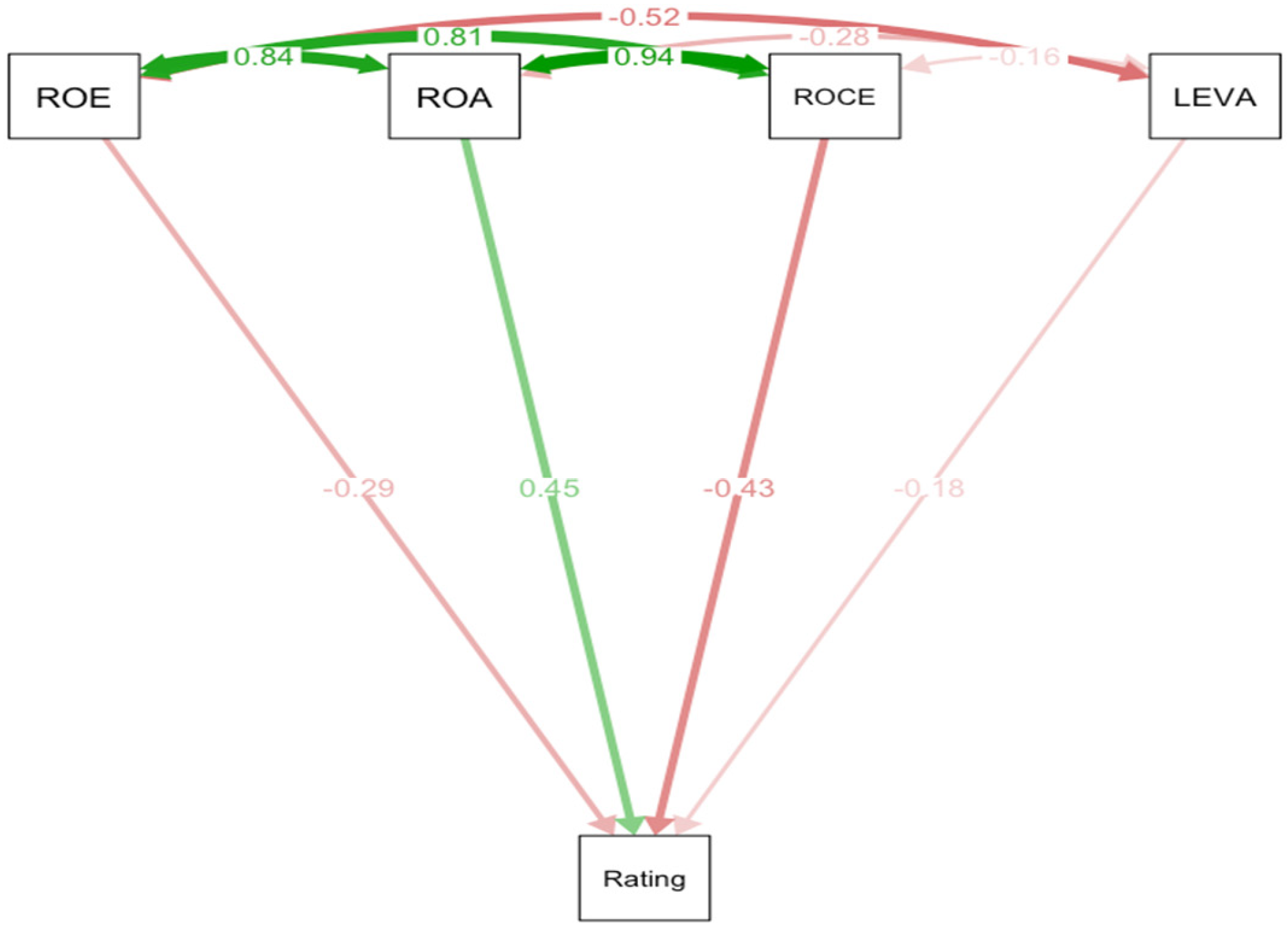
Figure 1 shows the application of the path analysis.
Table 11 reports the estimated path coefficients analysis, standard errors, Z scores,
p-values, and standardised coefficients. It is observed that none of the estimated coefficients are statistically significant (
p > 0.05). In terms of sign, ROA shows a positive effect on ESG Rating (β_ std = 0.445), while ROE (β_ std = −0.292), ROCE (β_ std = −0.426), and leverage (β_ std = −0.180) show adverse effects.
The results of the path analysis show that ROE harms ESG ratings, with a standardised coefficient of –0.292. Although the effect is not statistically significant (p = 0.413), it suggests that companies with higher return on equity tend to have slightly lower ESG scores in the short term. This relationship can be interpreted as a possible temporary trade-off between profit maximisation and sustainability investments, consistent with the literature highlighting how the benefits of ESG practices manifest primarily in the medium to long term.
The results of the analysis indicate that ROE has a positive impact on the ESG rating, with a standardised coefficient of 0.445. Companies with superior operational efficiency and a greater capacity to generate value from limited resources are more likely to achieve better ESG outcomes. Importantly, this effect was not statistically significant in the sample studied (p = 0.363).
On the contrary, the ROCE coefficient was negative (−0.426) and not significant (p = 0.409). This suggests that the return on invested capital does not directly contribute to improving the ESG rating.
This negative relationship, although weak, may reflect the fact that more capital-intensive companies commit significant resources to sustaining invested capital, which, in the short term, may limit investment in sustainable initiatives.
Finally, financial leverage (LEVA) shows a standardised coefficient of –0.180 (p = 0.397), suggesting a negative, but very weak and non-significant, effect between debt and ESG scores. This indicates that, in the sample considered, greater reliance on debt does not significantly impact sustainability performance, although it may limit the ability to finance new ESG initiatives.
The model showed an excellent level of fit to the data, as highlighted by the leading fit indicators (
Table 12).
The overall coefficient of determination is R2 = 0.091, indicating that approximately 9.1% of the variance in the ESG score (Rating) is explained by the independent variables considered.
The standardised coefficients show relationships consistent with theoretical expectations, although not all are statistically significant (p > 0.05).
ROA has a positive effect on the ESG score (β = 0.445), while ROE (β = −0.292), ROCE (β = −0.426), and financial leverage (β = −0.180) show adverse effects.
Overall, the model appears well specified and statistically stable, as confirmed by the goodness-of-fit indicators reported.
The analysis highlights how different financial variables interact with each other, using a diagram showing positive (green arrow) and negative (red arrow) relationships. Correlations between financial indicators are found at the top of the chart, while the ESG rating is at the bottom. It is noted that companies with good operating performance also tend to have good capital and earnings performance. However, debt hurts profitability and shareholder returns.
The analysis shows the existence of articulated and non-uniform relationships between the variables under study.
Conversely, returns on investment harm the ESG score, while a positive linkage indicates effective operational management.
This suggests that, in certain instances, high financial returns can be counterproductive compared to the adoption of sustainable policies. Ultimately, it is clear that these changes have a significant impact on economic performance, financial structure, and sustainability.
The most significant finding is that no single profitability indicator uniformly influences the ESG rating, underscoring the need for a differentiated analysis of the various measures of economic performance.
The figure on financial leverage is significant because, due to the increase in debt, the ESG rating is reduced, as the financial flexibility necessary to support sustainable investments is limited.
In this case, managers must carefully balance profitability and sustainability by ensuring that capital structure decisions unhindered support the implementation of ESG policies. In the long run, adopting these strategies can provide a competitive advantage.
Pathfinder confirms that sustainability should be considered a strategic component rather than a cost.
This integration must consider both the direct and indirect effects, as well as the potential trade-offs, between profitability, debt, and ESG ratings.
Despite the overall goodness of fit to the data and the economic coherence of the results, it is worth noting that the path model analysis adopted in this study is primarily descriptive and exploratory. The goal is not to estimate causal or structural mediation relationships between variables, but to represent systemically and intuitively the leading associations that emerge between economic and financial performance and sustainability.
The model structure is deliberately simplified and limits itself to observing the direct effects of financial indicators (ROE, ROA, ROCE, LEVERAGE) on the overall ESG score, without introducing indirect or mediating paths, given the small sample size (N = 40) and the lack of a temporal sequence of data that could support robust causal inferences. In this sense, path analysis was used as a graphical-mathematical extension of multiple regression to visualise the direction and intensity of the observed relationships, maintaining methodological consistency with the OLS models previously discussed.
The representation obtained confirms that operating profitability and return on invested capital tend to be positively associated with ESG scores, while leverage shows a negative link. Although these results cannot be generalised, they suggest that economic soundness and a balanced financial structure are favourable conditions for the development of corporate sustainability strategies.
The model cannot be used solely for exploratory purposes.
Its primary purpose is to develop theoretical hypotheses and illustrate findings, while also inspiring future research, despite its limitations.
By utilising more and higher-quality data and more sophisticated processing methods, future research will be able to define these relationships more accurately.
This project aims to develop an interpretative tool that integrates the qualitative and quantitative dimensions of capital and sustainability factors into a unified framework.
This proposal presents a managerial perspective that can appreciate sustainability as a strategic factor for enhancing competitiveness and resilience.
The indirect effects that emerged during the study should also be considered, consistent with the supported hypothesis that solid governance and balanced financial leverage are associated with high levels of ESG ratings.
The statistical non-significance reinforces the exploratory nature of the model. Furthermore, it suggests that future research be conducted on larger samples using dynamic approaches.
Subsequently, a robustness analysis is performed at several levels and based on various methodological specifications to ensure the consistency and reliability of the econometric results obtained.
This in-depth analysis is crucial for establishing whether the relationships found between financial performance and ESG sustainability are stable, even in the presence of outliers or random variations within the sample.