Article

Impact of Biotechnology on Sustainable Development: An Opinion Analysis

1
Department of Biochemistry and Molecular Biology, University of the Basque Country (UPV/EHU), 48940 Leioa, Spain
2
UN Etxea, Asociación del País Vasco para la UNESCO, Isozaki Atea—Plaza de la Convivencia Paseo de Uribitarte 12, Local 2, 48001 Bilbao, Spain
*
Author to whom correspondence should be addressed.
Sustainability 2025, 17(22), 10023; https://doi.org/10.3390/su172210023
Submission received: 15 September 2025 / Revised: 27 October 2025 / Accepted: 4 November 2025 / Published: 10 November 2025

Abstract

Biotechnology is increasingly recognized as a key driver for achieving the United Nations 2030 Agenda and its Sustainable Development Goals (SDGs). However, public awareness of its role remains uncertain. This study aimed to assess the knowledge, perceptions and opinions regarding the relationship between the SDGs and biotechnology among the general adult population in Spain. A validated online survey was distributed, yielding 274 responses. Although 84.3% of the respondents were familiar with the 2030 Agenda, positive perceptions of the SDGs were especially common among women and individuals with higher levels of education. Regarding biotechnology, 54.4% considered themselves knowledgeable, and nearly half (48.2%) recognized its potential contribution to health (SDG 3) and environmental sustainability, but its role in social and economic SDGs was less recognized. This study highlights the need for targeted educational and communication strategies to raise awareness and show how concrete biotechnological applications can contribute to sustainable development. Emphasizing these practical contributions can position biotechnology as a visible driver of progress and foster greater public engagement with science in achieving the 2030 Agenda.

1. Introduction

Biotechnology is increasingly being recognized as a powerful tool for advancing the 2030 Agenda for Sustainable Development, with international organizations emphasizing its potential to accelerate progress towards achieving the Sustainable Development Goals (SDGs) [1,2,3]. Its applications span agriculture, health, industry and environmental management, among others, offering concrete solutions to global challenges such as food security, climate change and public health [4,5,6,7].
The SDGs, adopted by all United Nations member states in 2015 [8], represent a significant evolution from the earlier Millennium Development Goals (MDGs) [9]. While the MDGs focused primarily on poverty reduction in developing countries, the SDGs adopt a universal, integrated approach that encompasses the social, environmental and economic dimensions of development through 17 goals and 169 targets [8,10,11]. For clarity, the SDGs are grouped into five interdependent categories known as the 5 Ps: People, Planet, Prosperity, Peace, and Partnership (Table 1):
Although the definition of biotechnology may vary across institutions, it is broadly understood as “any technological application that uses biological systems and living organisms or their derivatives to create or modify products or processes for specific uses” [12]. Biotechnology is often classified into thematic areas, commonly referred to as “colors” ([13], Table S1), such as green (agriculture), white (industrial processes), and red (healthcare). Each of these domains has demonstrated potential to contribute to the SDGs. For example, CRISPR-based gene editing is being applied to develop drought-resistant crops, directly contributing to food security (SDG 2) [5], while new biotechnological vaccines have played a pivotal role in addressing global health crises such as COVID-19 (SDG 3) [14]. In countries like Bangladesh, biotechnology has been crucial to promote sustainable development through integrated agriculture, forestry and livestock systems, enhancing food security (SDG 2), climate action (SDG 13) and ecosystem management (SDG 15) [4].
Despite this growing consensus on biotechnology’s relevance, public perception of its contribution to sustainable development remains largely unexplored. While some studies assess public awareness of the 2030 Agenda [15,16], research that analyzes how citizens understand biotechnology’s role in achieving the SDGs is scarce [17,18]. Understanding these perceptions is essential: when well-informed and engaged, citizens can generate a flow of informational governance that shapes public policies and investment decisions aligned with society’s needs and priorities [16,19]. Therefore, understanding the level of public awareness of the 2030 Agenda and the role of biotechnology is a crucial step toward consolidating biotechnology as a key discipline in sustainable development.
This study aims to address this gap by analyzing perceptions and knowledge among the adult population in Spain, offering insights into how biotechnology is understood in the context of the SDGs.

2. Methods

2.1. The Questionnaire

Design: A questionnaire was developed, structured around seven sections. The first section gathered demographic data from participants, including gender, age, education level and discipline, all coded semantically. It also included items designed to investigate the frequency of interaction with various media outlets. The following section focused on perception-related questions about the 2030 Agenda and biotechnology, intended to measure participants’ perceptions rather than influence them. Where necessary, explanatory texts were included. Inclusion criteria required participants to be adults (18+ years) with basic literacy, while exclusion criteria removed incomplete responses. No participants were excluded based on age in practice, as all respondents met this requirement.
Each section’s questions and response options (Tables S2–S5) were formulated concisely, ensuring univariate, quantifiable, and scalable responses for unbiased data analysis without subjective interpretations. Complementary methodologies were employed to classify and code responses:
-
Closed, single-choice questions used a Likert scale [20], previously validated for reliability (Cronbach’s α) and construct validity was assessed to ensure that the scale accurately measured perception constructs.
-
Multiple-choice questions were coded binarily (0 = not selected, 1 = selected) to extract quantitative data for each option.
Validation: A two-round validation process was carried out to ensure the clarity, understanding, and appropriateness of the survey questions. Each round involved six individuals representing diversity in terms of age, gender, and education level. Feedback from both rounds was used to adjust and improve the final questionnaire, ensuring that the reliability of the data was not compromised.
Distribution: The questionnaire was hosted on Google Forms® for systematic collection of responses. Distribution relied on voluntary participation through social media, messaging groups, QR-coded posters and specialized platforms such as eusBIOTEK (Basque Biotechnology Association), U4Impact, the Office of Sustainability (UPV/EHU), and the UNESCO Chair of Sustainable Development and Environmental Education (UPV/EHU). This non-probabilistic convenience sampling may introduce bias toward participants already interested in the topic, but it aimed to reach a wide adult population and gather perspectives from a broad demographic and educational spectrum.

2.2. Statistical Processing

Responses were organized in Microsoft Excel® and analyzed using IBM® SPSS Statistics version 30.
Reliability and validity: Internal consistency of the scales was confirmed via Cronbach’s α (>0.8) [21] and construct validity tests verified that the scales accurately measured participants’ perceptions.
Distribution and assumptions: The Kolmogorov–Smirnov test confirmed normality where appropriate [22,23]. Statistical analyses were performed only after verifying assumptions for each test.
Correlation analysis: Spearman’s rank correlation was employed to identify relationships between variables using two-tailed tests [24].
Comparisons using Kruskal–Wallis: The non-parametric Kruskal–Wallis test was utilized to assess differences between groups [25]. Covariates such as age, gender and education were included to control their potential influence. Statistical significance was evaluated at α = 0.05.

3. Results

274 responses were collected between February and April 2022. Given the non-probabilistic nature of the sample, the results are descriptive and should not be interpreted as representative of the general population, though they provide valuable insights into participants’ perceptions.
Cronbach’s α coefficient yielded a value of 0.906, indicating high internal consistency and, therefore, a very reliable questionnaire, suggesting that the questions were strongly correlated. When performing the Kolmogorov–Smirnov tests, it was found that, for the vast majority of the analyzed questions, the significance remained below 0.05. Therefore, the data obtained did not follow a normal distribution, which justified the use of non-parametric statistical analysis.

3.1. Demographic Data of the Population

Of the respondents, 62.8% identified as female, and 33.9% as male (Table 2). In terms of age, the sample showed a relatively balanced distribution across age groups, with a slight predominance of middle-aged adults, between 26 and 45 years (40.5%) at the time of completing the survey. A significant portion of respondents had completed university studies (84.3%), distributed as follows: 46.3% in scientific fields, 33.2% in technical areas and others, and 4.7% in healthcare fields. Regarding the information sources used by the respondents, instant messaging groups were the most frequently used, with nearly 60% of participants (n = 164) consulting them daily; only 4.7% (n = 13) indicated they never use them. Social networks and digital press followed, each used daily by about 50% (n = 134) and 40% (n = 107) of respondents, respectively.

3.2. Knowledge and Opinion on the 2030 Agenda and the SDGs

After being asked if they considered themselves knowledgeable about the 2030 Agenda for Sustainable Development and the SDGs, the majority of respondents (84.3%) answered that they had heard of the 2030 Agenda, but they did not consider themselves well-informed. However, when asked about the main goal of the 2030 Agenda, most respondents (71.5%) correctly selected the answer: “To end poverty, protect the planet, and improve the lives and prospects of people worldwide.”
When analyzing populations separately, it is noteworthy that 40.3% of individuals with higher education claimed to be familiar with the 2030 Agenda, while 34.9% of those with no higher education stated they were not familiar with it. Regarding the SDGs, only 32.1% of respondents claimed to be moderately familiar with them, while 13.1% reported being very knowledgeable.
In terms of opinions on the 2030 Agenda and the SDGs, respondents showed strong disagreement with the statements “They were created to limit citizens’ freedoms” (57.7%) and “They are not very relevant but could help in some areas” (43.4%). In contrast, there was a high level of agreement with the statements “They can be useful if implemented appropriately” (64.6%) and “They are necessary and very important” (56.2%).
Correlations were detected between the type of response selected and factors such as education level, age, and gender (Table 3). For example, responses like “They were created to limit civil liberties” and “They are not very relevant but could help in some areas” showed a negative correlation with education level, indicating that these answers were chosen more frequently by individuals with lower educational levels. Correlations were also observed between the selection of the response “They are necessary and very important” and both education level and female gender (represented by negative correlation values), indicating that this response was chosen by more women than men (Table 3).
When participants were asked to prioritize the five SDGs they considered most important, the results indicated a greater awareness of SDG 3 (Good health and well-being) (54.4%), SDG 4 (Quality education) (52.9%), SDG 2 (Zero hunger) (47.4%), SDG 5 (Gender equality) (44.5%), and SDG 13 (Climate action) (43.1%) (Figure 1). When grouping the SDGs into the five categories of the 2030 Agenda (known as the 5 Ps), the most prioritized categories were People, followed by Planet and Prosperity. Correlations were detected between age and the Planet category (−0.156), indicating that younger participants prioritized this category more, and between age and the People category (0.125), suggesting that older individuals prioritized this category more.

3.3. Knowledge and Opinion on Biotechnology

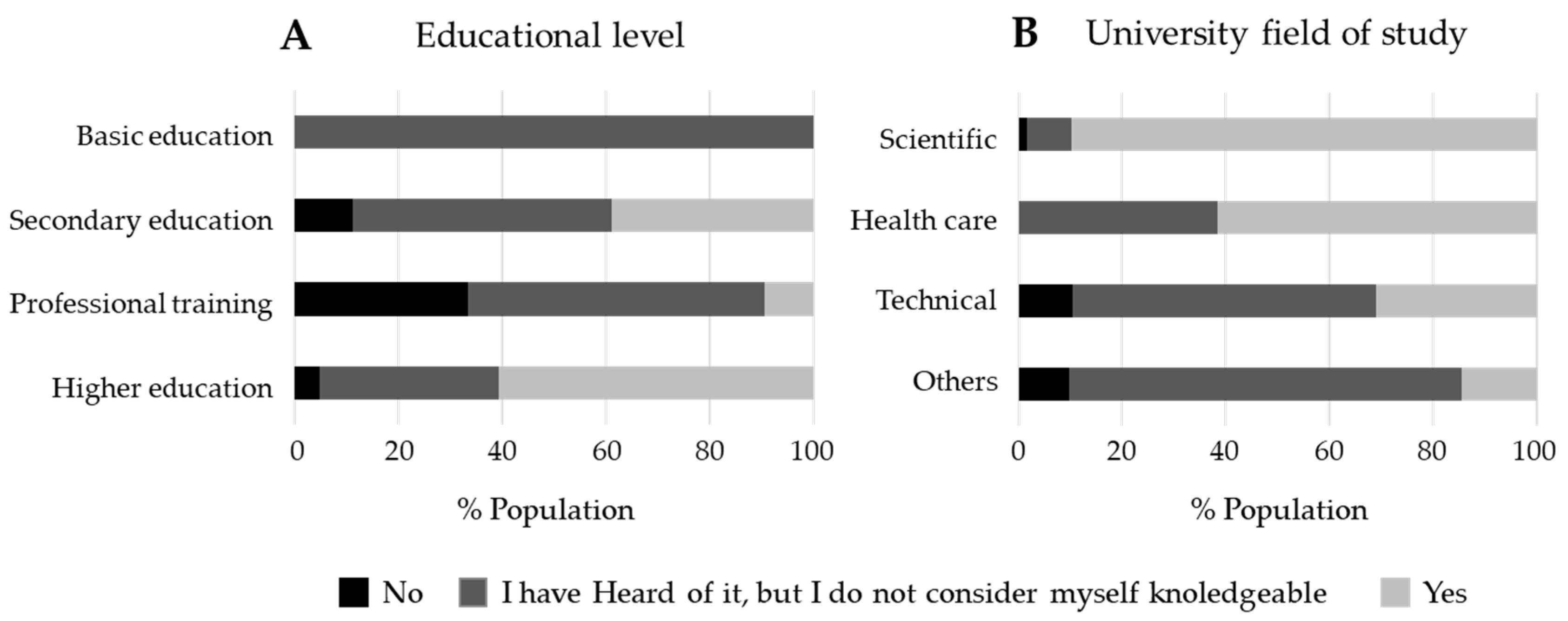
Of the respondents, 54.4% (n = 149) felt they knew what biotechnology is (Figure 2). A correlation was found between this perception and both education level and university field of study. Most individuals with a university education (Figure 2A) claimed to be familiar with biotechnology, while only about 10% indicated they did not. In contrast, those with a high school or vocational education reported more limited knowledge; most had heard of biotechnology, but they felt unfamiliar. The population with only basic education predominantly felt they did not know what biotechnology is. Within the university-educated group (Figure 2B), familiarity with biotechnology was highest in the scientific and healthcare fields. Interestingly, a larger proportion of individuals from technical and other non-scientific fields had heard of biotechnology but felt they lacked familiarity.
However, when respondents were asked if they agreed with a set of accurate statements about biotechnology applications, such as discovering new medicines or producing more environmentally friendly materials, the average Likert scale score across the entire population exceeded 3 out of 5, indicating that the actual knowledge of biotechnology in the general population was relatively high.
Additionally, a majority of respondents agreed that biotechnology has significantly impacted our lives over the past 40 years (67.8%), and most also believed it will transform the world in the next 20 years (54.2%). Correlations were found between opinions and education level for both questions, as well as with the type of education for the latter.

3.4. Interrelation Between Biotechnology and the 2030 AGENDA

A considerable proportion of respondents (48.2%) indicated that biotechnology could make substantial contributions to achieving the goals and targets of the 2030 Agenda, while 44.2% believed its contribution could be only partial.
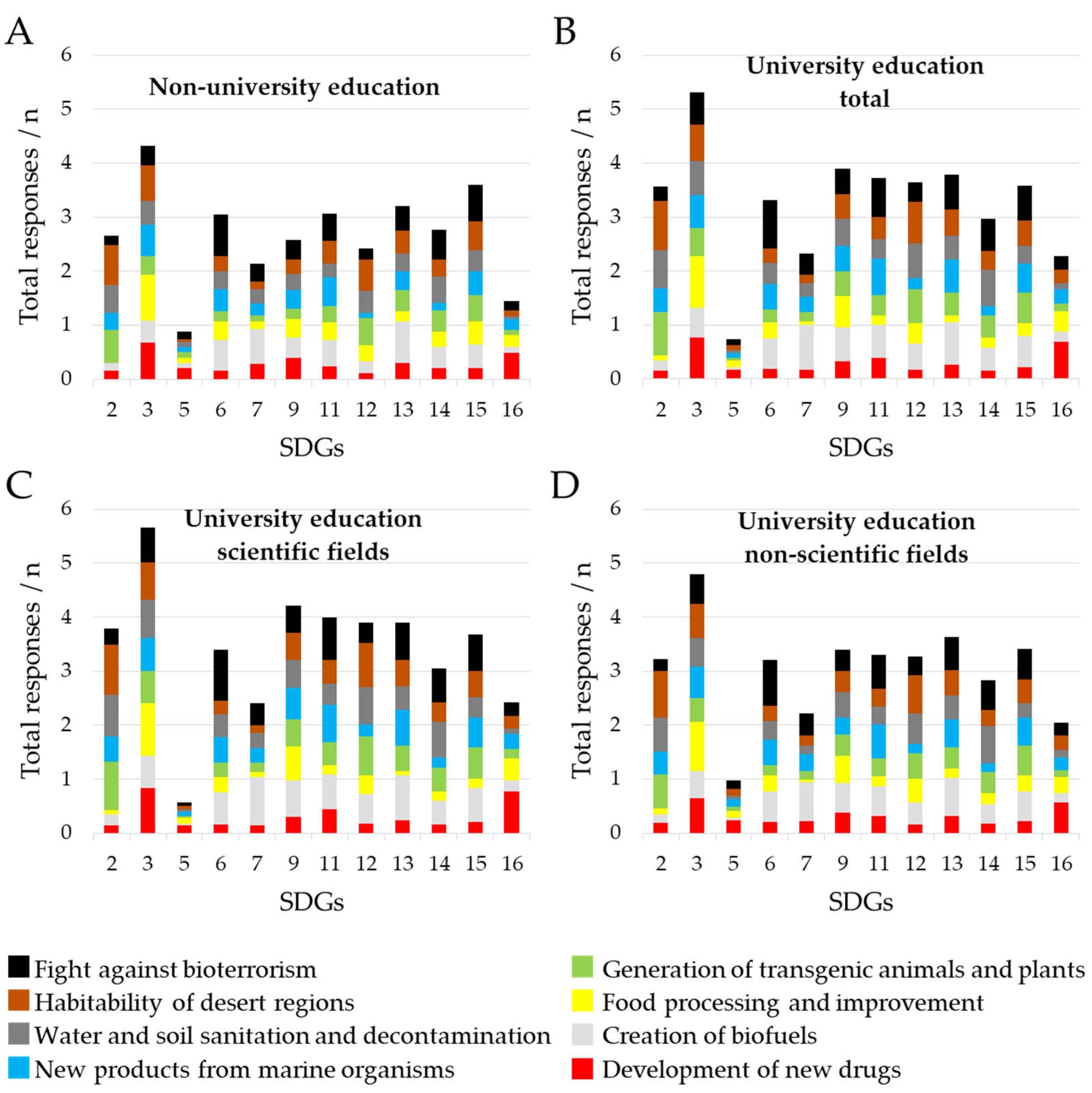
To assess how the population perceived different areas of biotechnology as contributing to various SDGs, a question was designed asking respondents to make connections. Participants were presented with different areas (colors) of biotechnology and were asked to select which SDGs they believed these areas could benefit. The number of times each SDG was selected was then summed, taking into account all areas of biotechnology for which it was chosen, and this total was divided by the total number of respondents. In this way, Figure 3 represents the average number of selections per SDG per person, while preserving its association with the specific biotechnology areas. For comparison purposes, responses from four groups of participants were analyzed separately. Individuals without a university education (n = 43) (Figure 3A) were examined independently from university-educated individuals (n = 231) (Figure 3B). The latter group was further divided into two contrasting subgroups to refine the analysis: university-educated individuals in scientific fields (n = 140) (Figure 3C), and university-educated individuals in non-scientific fields (n = 91) (Figure 3D).
In all segments of the population, the SDG perceived as most impacted by the different fields of biotechnology was SDG 3. In contrast, SDG 5 was not considered relevant by the surveyed population in terms of its relationship with biotechnology, regardless of whether the respondents were university-educated or not.
The results also revealed differences in how participants identified SDGs associated with biotechnological applications, both in the total number of associations made and in the frequency with which specific SDGs were selected.
On average, university-educated participants selected 21.8% more SDGs than those without a university education. This increased ability to associate SDGs with biotechnology applications was even more pronounced among university-educated individuals from scientific fields, who selected 27.4% more SDGs than participants without a university education. A difference was also observed, though less pronounced, when comparing university-educated respondents from different academic backgrounds: individuals with a scientific background selected 12.7% more SDGs than those from non-scientific fields.
Among participants without a university education, the most recognized SDGs were SDG 3 and SDG 15. The university-educated group not only showed a higher volume of responses but also a more balanced distribution across the selected SDGs. SDG 3 remained the most prominent, followed by a cluster of SDGs prioritized at similar levels: SDG 9, SDG 11, SDG 12, SDG 13 and SDG 15. This pattern was also observed when disaggregating the data by academic background. When considering the 5 P’s framework, different patterns emerged among the groups. The non-university-educated group prioritized SDGs related mainly to People and Planet. In contrast, the university-educated group showed a broader focus, initially prioritizing People, but then placing equal emphasis on Planet and Prosperity.
Next, we calculated the total number of SDGs associated with each biotechnology area by all participants in each group, and normalized this value by the number of individuals in that group, obtaining the average number of SDGs per person and per area. These data were then compared across groups, and standard deviations (SDs) were computed to assess the magnitude of differences (Table S6).
In the comparison between university-educated and non-university-educated participants, SDs were high across almost all areas, indicating marked differences in the number of SDGs assigned by each group, with values consistently higher for the university-educated group. The largest differences were observed in the areas of Creation of biofuels (SD = 0.87) and Sanitation and decontamination of water and soil (SD = 0.87). Conversely, Development of new drugs (SD = 0.056) and Fight against bioterrorism (SD = 0.187) showed minimal variability. This pattern was also observed when comparing university-educated participants from scientific fields versus non-scientific fields, suggesting more homogeneous associations among respondents for these areas, regardless of their educational background.
An especially noteworthy case is Generation of transgenic plants and animals, which shows high variability in responses, with a SD = 0.81 when comparing university-educated participants from scientific fields vs. non-scientific fields and SD = 1.07 when comparing university-educated participants in scientific fields vs. non-university-educated. These findings suggest that individuals with scientific backgrounds tend to have a broader understanding of the potential positive applications of this biotechnology area.

4. Discussion

The results of this study offer insights into the respondents’ knowledge and perceptions of the 2030 Agenda for Sustainable Development, the SDGs, and biotechnology. Data analysis revealed a significant bias in the survey sample, probably due to the non-probabilistic sampling method based on online voluntary participation. This approach may have introduced bias in gender, age, and educational attainment, particularly among individuals with academic backgrounds. Specifically, 84.3% of respondents had university education, and 47.8% had completed a science-related degree. This contrasts with the 32.2% of the Spanish population holding higher education degrees, as reported by the Spanish National Statistics Institute (INE) for 2022 [26]. This overrepresentation aligns with previous studies showing that individuals with higher education levels are more likely to participate in science and technology-related surveys and activities [27,28]. To address these limitations, results were analyzed by educational level, allowing examination of how different educational backgrounds influence perceptions and knowledge of the SDGs and the 2030 Agenda.
Despite these potential biases, the questionnaire demonstrated high internal consistency, as evidenced by a Cronbach’s α coefficient of 0.906, indicating a reliable survey design and robust data collection. With a total of n = 274 respondents, the sample size is sufficient to identify broad patterns across demographic groups [29]. However, results should be interpreted with caution due to the non-probabilistic sampling method and potential self-selection biases. Future surveys should aim to target older age groups and individuals with lower education levels through outreach efforts involving social organizations, traditional media, and social networks favored by older demographics.

4.1. Awareness of the 2030 Agenda and the SDGs

Notably, participants’ knowledge of the 2030 Agenda and the SDGs appeared concerning: although many were aware of their existence, few felt well-informed. This aligns with global SDG monitoring reports, which indicate that overall progress toward the goals remains significantly below expected accomplishments [30,31]. Within the heterogeneous landscape of SDG advancement worldwide, certain enabling factors are key to achieving more positive outcomes. For instance, the level of institutional implementation of the 2030 Agenda in Spain is high, where national strategies and public policies have positioned the country among the global leaders in sustainability performance. According to D’Adamo et al. [32], Spain ranks among the world’s top ten countries in overall SDG achievement, particularly excelling in social and economic dimensions. This discrepancy between institutional progress and public awareness suggests that the transformative potential of the 2030 Agenda may be undermined by limited civic engagement and insufficient communication strategies. The pattern observed in this study is consistent with previous national and international findings [16,30,33,34].
A bibliometric analysis by Díaz-Barrera et al. [35] revealed that global scientific production on SDGs is heavily concentrated on goals such as health and energy, while others receive significantly less attention. This thematic imbalance may contribute to the perceived relevance of the SDGs in everyday life, ultimately leading to limited and uneven public engagement.
Beyond these general trends, several demographic factors further shape how respondents related to the 2030 Agenda and its goals. Gender differences were particularly notable. Female respondents were more likely to consider the SDGs and the 2030 Agenda as necessary compared to male respondents (Table 3), a trend consistent with prior research showing that women tend to express stronger support for sustainability and environmental policies [36,37], possibly due to gendered socialization and greater exposure to social justice issues.
Education also emerged as a key determinant of awareness and understanding. Individuals with lower education levels expressed less confidence in the 2030 Agenda and the SDGs, confirming that higher education is positively associated with knowledge, engagement, and the ability to translate global goals into local action [15,38,39].
Age played a role as well. Younger respondents prioritized SDGs in the Planet category, while older respondents placed greater importance on those in the People category (Figure 1). This intergenerational divergence mirrors global trends, where younger populations (more likely to experience the consequences of the climate change) demonstrate greater environmental awareness and prioritize urgent climate action [40].
Although these results focus on individual-level patterns of awareness, they also invite a broader reflection on the need of collective engagement. Understanding sustainability at the personal level is important; however, real progress depends on the ability of individuals to come together and act as communities and social groups. This wider perspective aligns with existing discussions that emphasize the transformative role of communities [41]. Sustainable development depends not only on national institutional frameworks but also on fostering a sense of local ownership, inclusive participation, and shared values. Approaches that empower communities to shape and monitor their own progress are crucial to ensure that sustainability efforts are both effective and equitable. In this regard, the localization of the 2030 Agenda plays a key role, as locally designed and implemented public policies align the SDGs with the realities of people and communities, thereby enhancing public awareness and civic engagement [42,43]. Given the limited public awareness observed in this study, there is an urgent need to develop effective, locally and culturally sound strategies to mobilize citizens and strengthen their involvement in sustainability processes.

4.2. Perception of Biotechnology

Overall, participants showed a generally positive attitude toward biotechnology, with 54.4% of respondents reporting familiarity with its concepts and applications. While general perceptions did not differ between respondents with higher and lower education levels, differences emerged in their understanding of basic biotechnological concepts. For example, individuals with scientific training were more likely to correctly identify statements related to basic technical knowledge, such as “cheese production is a biotechnological process”. Interestingly, no differences were observed between fields of study regarding more complex or less intuitive applications, like “biotechnology can be used to create environmentally friendly construction materials”. This suggests that people may be more inclined to accept complex or unfamiliar claims, especially when framed within scientific or technological contexts, while remaining more skeptical of simpler, everyday assertions unless these are clearly explained. In other words, complexity can lend credibility, whereas simplicity demands clarity to be convincing [44].
These findings highlight a knowledge gap regarding the technologies underlying contemporary scientific applications, which has also been reported in the broader existing literature on science literacy. In this context, recent studies suggest that civic scientific literacy in the 21st century is less about mastering technical content and more about developing the ability to evaluate credibility, recognize trustworthy sources, and act as a competent outsider in scientific discourse [45,46]. Addressing this gap will require enhanced science communication strategies and the implementation of effective learning models proven to strengthen science literacy skills [47].

4.3. Biotechnology and the 2030 Agenda

Nearly half of the respondents (48.2%) perceived biotechnology as a valuable tool for achieving the 2030 Agenda goals, particularly in the areas of health and environmental sustainability. Accordingly, SDG 3 emerged as the goal most commonly associated with biotechnology across all groups. In contrast, biotechnology was perceived as less important for addressing social and economic SDGs. Notably, most respondents did not associate biotechnology with SDG 5, suggesting limited awareness of its potential impact on gender equality.
Differences across educational backgrounds were also evident. University-educated participants, particularly those with scientific training, demonstrated a broader and more balanced understanding of biotechnology’s relevance, linking it not only with SDGs related to People and Planet, but also with those within Prosperity.
When examining specific biotechnological applications, certain areas showed consistent associations across educational groups, while others revealed more variation. The fight against bioterrorism and the development of new drugs stood out for their uniform recognition, suggesting a shared understanding of their importance, likely influenced by global health and security concerns, such as pandemics and armed conflicts [48]. In contrast, more specialized areas, such as biofuel production, water sanitation and transgenic organisms, showed greater variability depending on educational background. The case of transgenic plants and animals was particularly striking: participants with scientific university training were far more likely to recognize their relevance to the SDGs than those with non-scientific or no university education.
Overall, these findings emphasize the importance of raising public awareness about the full range of biotechnology applications, particularly in relation to advancing the SDGs. Such efforts are especially important given documented thematic imbalances in scientific production [35], which may channel public perceptions toward certain areas of biotechnology while overlooking others. These disparities highlight the need of targeted outreach and educational initiatives. In this context, scientific literacy also plays a key role in fostering a deeper understanding of the interdisciplinary connections between technology and sustainability. It also helps shape public attitudes toward complex biotechnological innovations and can counteract the skepticism and often negative discourse surrounding certain advances, such as genetically modified organisms [49,50].

4.4. Human Dimension and Localization of the 2030 Agenda

The 2030 Agenda explicitly frames sustainable development as a universal human endeavor rooted in human rights, dignity, and equity, with a commitment to “leaving no one behind” [8]. Biotechnology, as a driver of innovation, holds significant potential to advance essential human rights (health, education, food security, environmental justice) but it must remain a human-centered instrument whose effectiveness depends on societal perception, adoption, and governance [51]. Accordingly, fostering public engagement, scientific literacy, and participatory governance becomes essential to ensure that innovation is inclusive, equitable and responsive to societal needs. Without these elements, technological advances risk reinforcing existing inequalities; for example, digital technologies can become instruments of surveillance rather than tools for human well-being [52]. Therefore, science and technology policy should be guided by ethical foresight and grounded in the responsible use of biotechnology within the SDG framework.
Building on this human-centered perspective, the relevance of the SDGs in people’s daily lives is key in shaping engagement. Although this study did not directly measure this, it is reasonable to assume that individuals are more likely to engage with goals that feel tangible and personally meaningful. When biotechnological developments are perceived as abstract or disconnected from everyday experiences, they are often undervalued [53], despite their potential to promote social well-being, environmental resilience, and equitable economic opportunities [54,55,56,57]. Thus, the success of science-driven solutions, as demonstrated by the European Union’s transition to climate neutrality, must be paired with public understanding and acceptance for maximum impact [58].
In this context, the results of this study reveal that while participants’ awareness of the 2030 Agenda appeared relatively widespread, its connection to biotechnology was only partial, and its social and economic implications remained largely overlooked. The greater comprehension observed among participants with higher education and scientific backgrounds suggests that variability is influenced by individual training. However, there is also evidence that public attitudes toward science are shaped by broader social and environmental contexts and can shift in response to global events: for example, the COVID-19 pandemic highlighted the vital role of scientific knowledge in addressing global crises and may have strengthened public trust in science, while conflicts and sociopolitical instability, including the conflicts in Ukraine and Palestine, can reshape perceptions of goals like SDG 16 [48,59].
Taken together, these results emphasize that technological innovation alone is insufficient; it must be guided by informed, participatory, and ethically grounded approaches. Human factors such as education, awareness, ethical engagement, and the capacity to critically interact with scientific developments are fundamental to ensuring that technologies are effectively understood, accepted, and integrated into sustainable solutions.
In order to fully unlock the transformative potential of citizen engagement, sustainability efforts must also consider territorial and contextual specificities. Research using multi-criteria and spatial methods reveals that progress toward the SDGs strongly depends on regional structures and local governance settings [60,61,62]. Similarly, biotechnological innovations can advance the SDGs, but only when adapted to local systems and needs, reinforcing the importance of context-sensitive implementation.
Overall, this work contributes to an interdisciplinary understanding of sustainable development as not only a scientific or technological challenge but also as a space for dialogue between disciplines and society. Through this integrative lens, biotechnology can serve as a bridge between innovation, ethics, and global well-being.

5. Conclusions

The results of this study show that although awareness of the 2030 Agenda and the SDGs is relatively widespread, detailed understanding remains uneven and strongly influenced by education. Individuals with higher educational attainment, particularly those with scientific training, demonstrated greater familiarity and engagement with sustainability issues.
Participants generally held positive views toward biotechnology and recognized its importance for health and environmental objectives, yet its potential contribution to social and economic goals was less acknowledged.
Although the non-probabilistic nature of the sample in this study limits the generalizability of the results, the findings suggest that human factors, such as education or scientific literacy, play a crucial role in shaping how individuals engage with sustainability goals and technological innovation. These insights highlight the need to strengthen science communication and educational strategies that can bridge the gap between scientific advances and public understanding, ultimately fostering more inclusive participation in sustainability transitions.
This study did not evaluate specific applications of biotechnology, but respondents were able to recognize its contributions to multiple SDGs, particularly SDGs 3, 9, 13 and 15. The authors share this multidimensional understanding of biotechnology’s relevance to sustainable development and, consistent with existing literature, believe that it has the potential to contribute to all 17 SDGs, given the interconnected nature of areas such as health, food security, environmental sustainability, and innovation. Nevertheless, evidence highlights biotechnology’s particularly strong impact on SDG 2 (Zero Hunger), through agricultural innovation; SDG 3 (Good Health and Well-being), via medical and public health advances; SDG 6 (Clean Water and Sanitation), through environmental biotechnologies; SDG 9 (Industry, Innovation and Infrastructure), as a driver of sustainable innovation and SDG 13 (Climate Action), by supporting mitigation and adaptation strategies. Of particular importance is the multiplier effect of some of these goals towards the rest of the SDGs, which reinforces the systemic and interdependent nature of the 2030 Agenda. In addition, this study underscores the importance of SDG 4 (Quality Education) and SDG 16 (Peace, Justice and Strong Institutions), as public understanding, ethical engagement, and participatory governance are essential for the responsible integration of biotechnology into sustainable development.
In conclusion, achieving the SDGs requires more than technological progress; it depends on fostering a scientifically literate and ethically engaged society capable of critically interacting with science and technology. To realize this potential, biotechnology should be integrated into broader frameworks of sustainability, education, and civic participation, adapted to local contexts and supported by public trust and meaningful stakeholder involvement. When developed through inclusive and context-sensitive strategies, biotechnology can become a catalyst for addressing complex global challenges and advancing a human-centered and equitable vision of sustainable development.

Supplementary Materials

The following supporting information can be downloaded at: https://www.mdpi.com/article/10.3390/su172210023/s1, Table S1: Colors of biotechnology; Table S2: Survey Questionnaire. Demographic information; Table S3: Survey Questionnaire. Knowledge and opinion on the 2030 Agenda and the SDGs; Table S4: Survey Questionnaire. Knowledge on biotechnology; Table S5: Survey Questionnaire. Perceived link between biotechnology and the 2030 Agenda; Table S6: Differences in perceived relevance of SDGs associated with each biotechnology area across groups.

Author Contributions

Conceptualization, L.R.M. and A.A.; methodology, A.L., A.A. and L.R.M.; validation, A.A. and L.R.M.; formal analysis, A.L. and A.L.-S. and L.R.M.; writing—original draft preparation, A.L., A.A. and L.R.M.; writing—review and editing, L.R.M.; supervision, L.R.M. All authors have read and agreed to the published version of the manuscript.

Funding

This research received no external funding.

Institutional Review Board Statement

Ethical review and approval were waived for this study due to its educational nature and minimal risk to participants. The project was conducted as part of a Bachelor’s Thesis at the University of the Basque Country (UPV/EHU) and was supervised by academic advisors who ensured compliance with the ethical principles and good research practices outlined by the UPV/EHU Ethics Committee. The study also fully adhered to the General Data Protection Regulation (GDPR, Regulation (EU) 2016/679). This approach aligns with standard practice for low-risk, educational research projects that do not require formal ethical approval.

Informed Consent Statement

Informed consent was obtained from all subjects prior to their involvement in the study. Participants were fully informed about the purpose of the survey, the voluntary nature of their participation, and the confidentiality of their responses. No personally identifiable information was collected, ensuring participant anonymity. All data were used solely for statistical analysis and handled with strict confidentiality and security measures.

Data Availability Statement

The raw data supporting the conclusions of this article are available from the corresponding author upon reasonable request.

Acknowledgments

The authors would like to express their sincere gratitude to P. Albandoz for his invaluable contribution to the final version of this manuscript. His thoughtful suggestions greatly improved the clarity and overall quality of the work.

Conflicts of Interest

The authors declare no conflicts of interest.

References

  1. Donato, K.; Medori, M.C.; Stuppia, L.; Beccari, T.; Dundar, M.; Marks, R.S.; Michelini, S.; Borghetti, E.; Zuccato, C.; Seppilli, L.; et al. Unleashing the potential of biotechnology for sustainable development. Eur. Rev. Med. Pharmacol. Sci. 2023, 27 (Suppl. S6), 100–113. [Google Scholar] [CrossRef] [PubMed]
  2. World Economic Forum. Biotechnology: From Transforming Healthcare to Transforming Our Planet|World Economic Forum. 2023. Available online: https://www.weforum.org/stories/2023/09/biotechnology-sustainable-development-goals/ (accessed on 20 October 2025).
  3. International Council of Biotechnology Associations. Driving Solutions for Sustainable Development. 2023. Available online: http://internationalbiotech.org/wp-content/uploads/2024/02/SDG-ICBA-Report_2023.12.11.pdf (accessed on 21 October 2025).
  4. Datta, P.; Behera, B.; Timsina, J.; Rahut, D.B. Achieving sustainable development through agriculture-forestry-livestock nexus in Bangladesh: Synergies and trade-offs. Agric. Syst. 2024, 215, 103854. [Google Scholar] [CrossRef]
  5. Ahmad, S.; Tang, L.; Shahzad, R.; Mawia, A.M.; Rao, G.S.; Jamil, S.; Wei, C.; Sheng, Z.; Shao, G.; Wei, X.; et al. CRISPR-Based Crop Improvements: A Way Forward to Achieve Zero Hunger. J. Agric. Food Chem. 2021, 69, 8307–8323. [Google Scholar] [CrossRef]
  6. Khan, A.; Ashiq, B.; Qadri, T.A.; Khattak, W.A.; Anas, M.; Khan, R.A.; Abbas, S.; Shinwari, Z.K.; Maaza, M. Nanotechnology Solutions For Advancing Sustainable Development Goals (SDGs): Integrating Nanomaterials For Global Sustainability. BioNanoScience 2025, 15, 590. [Google Scholar] [CrossRef]
  7. Raman, R.; Sreenivasan, A.; Kulkarni, N.V.; Suresh, M.; Nedungadi, P. Analyzing the contributions of biofuels, biomass, and bioenergy to sustainable development goals. iScience 2025, 28, 112157. [Google Scholar] [CrossRef]
  8. United Nations General Assembly. Transforming Our World: The 2030 Agenda for Sustainable Development (A/RES/70/1). 2015. Available online: http://sdgs.un.org/2030agenda (accessed on 26 October 2025).
  9. United Nations General Assembly. United Nations Millennium Declaration (A/RES/55/2). 2000. Available online: https://www.ohchr.org/en/instruments-mechanisms/instruments/united-nations-millennium-declaration (accessed on 26 October 2025).
  10. UN Etxea Asociación del País Vasco Para la UNESCO Agenda 2030 para el Desarrollo Sostenible. Available online: https://unetxea.org/ (accessed on 22 October 2025).
  11. United Nations. The 17 GOALS|Sustainable Development. Available online: https://sdgs.un.org/es/goals (accessed on 30 September 2025).
  12. Secretariat of the Convention on Biological Diversity. United Nations. Convention on Biological Diversity. 2016. Available online: https://www.cbd.int/doc/legal/cbd-en.pdf (accessed on 26 October 2025).
  13. DaSilva, E.J. The Colours of Biotechnology: Science, Development and Humankind. Electron. J. Biotechnol. 2004, 7, 3. [Google Scholar]
  14. Li, M.; Wang, H.; Tian, L.; Pang, Z.; Yang, Q.; Huang, T.; Fan, J.; Song, L.; Tong, Y.; Fan, H. COVID-19 vaccine development: Milestones, lessons and prospects. Signal Transduct. Target. Ther. 2022, 7, 146. [Google Scholar] [CrossRef]
  15. Zamora-Polo, F.; Sánchez-Martín, J.; Corrales-Serrano, M.; Espejo-Antúnez, L. What Do University Students Know about Sustainable Development Goals? A Realistic Approach to the Reception of this UN Program Amongst the Youth Population. Sustainability 2019, 11, 3533. [Google Scholar] [CrossRef]
  16. Bautista-Puig, N.; Barreiro-Gen, M.; Statulevičiūtė, G.; Stančiauskas, V.; Dikmener, G.; Akylbekova, D.; Lozano, R. Unraveling public perceptions of the Sustainable Development Goals for better policy implementation. Sci. Total Environ. 2024, 912, 169114. [Google Scholar] [CrossRef] [PubMed]
  17. Sari, N.K.; Heliawati, L.; Rubini, B. Analysis of Sustainable Awareness of Junior High School Students on Biotechnology Material. J. Innov. Educ. Cult. Res. 2024, 5, 556–567. [Google Scholar] [CrossRef]
  18. Yeh, S.-C.; Chen, P.-X.; Lin, C.-C.; Chiang, I.-C. Genetically modified organisms and sustainable development goals: A survey of Taiwanese public opinion. PLoS ONE 2025, 20, e0325790. [Google Scholar] [CrossRef]
  19. Soma, K.; MacDonald, B.H.; Termeer, C.J.; Opdam, P. Introduction article: Informational governance and environmental sustainability. Curr. Opin. Environ. Sustain. 2016, 18, 131–139. [Google Scholar] [CrossRef]
  20. Newing, H. Conducting Research in Conservation: Social Science Methods and Practice; Routledge: Oxfordshire, UK, 2010; pp. 1–376. [Google Scholar] [CrossRef]
  21. Cronbach, L.J. Coefficient alpha and the internal structure of tests. Psychometrika 1951, 16, 297–334. [Google Scholar] [CrossRef]
  22. Dodge, Y. The Concise Encyclopedia of Statistics; Springer: New York, NY, USA, 2008. [Google Scholar]
  23. Smirnov, N. Table for Estimating the Goodness of Fit of Empirical Distributions. Ann. Math. Stat. 1948, 19, 279–281. [Google Scholar] [CrossRef]
  24. Glasser, G.J.; Winter, R.F. Critical Values of the Coefficient of Rank Correlation for Testing the Hypothesis of Independence. Biometrika 1961, 48, 444. [Google Scholar] [CrossRef]
  25. Kruskal, W.H.; Wallis, W.A. Use of Ranks in One-Criterion Variance Analysis. J. Am. Stat. Assoc. 1952, 47, 583. [Google Scholar] [CrossRef]
  26. Instituto Nacional de Estadística. Population Census (Educational and Employment Data). 2022. Available online: https://www.ine.es/dyngs/Prensa/en/CENSO2022.htm (accessed on 20 October 2025).
  27. Miller, J.D. Public Understanding of, and Attitudes toward, Scientific Research: What We Know and What We Need to Know. Public Underst. Sci. 2004, 13, 273–294. [Google Scholar] [CrossRef]
  28. Waugh, J.K.; Lindsey, J.K.; Stewart, M.Z.; Winter, J.C.; Parrish, J.K. Demographics of Public Participation in Science: A Meta-Analytic Approach. Citiz. Sci. Theory Pract. 2023, 8, 61. [Google Scholar] [CrossRef]
  29. DeVellis, R.F. Scale Development: Theory and Applications, 4th ed.; Sage publications: Thousand Oaks, CA, USA, 2017. [Google Scholar]
  30. Sachs, J.D.; Lafortune, G.; Fuller, G. The SDGs and the UN Summit of the Future: Sustainable Development Report 2024; Dublin University Press: Dublin, Ireland, 2024. [Google Scholar]
  31. United Nations. SDG Indicators. Global Indicator Framework for the Sustainable Development Goals and Targets of the 2030 Agenda for Sustainable Development. 2025. Available online: https://unstats.un.org/sdgs/indicators/indicators-list (accessed on 26 October 2025).
  32. D’Adamo, I.; Della Sciucca, M.; Gastaldi, M.; Lupi, B. Indicator Assessment of Sustainable Development Goals: A Global Perspective. Sustainability 2025, 17, 8259. [Google Scholar] [CrossRef]
  33. Focus 2030. Who Knows the Sustainable Development Goals in France, Germany, the UK and the USA? 2025. Available online: https://focus2030.org/Who-knows-the-Sustainable-Development-Goals-in-France-Germany-the-UK-and-the (accessed on 20 October 2025).
  34. Al Husban, W. The Impact of Integrating Sustainable Development Goals on Students’ Awareness and Pro-Environmental Behavior: A Case Study of Jordan. Sustainability 2025, 17, 2588. [Google Scholar] [CrossRef]
  35. Diaz-Barrera, M.E.; Alfaro-Aucca, C.; Pacheco-Mendoza, J.; Moreno-Albarrán, M.; Pacheco-Luza, E.F.; Chunga, C.E.R. Bibliometric analysis of prominent topics in global scientific production on sustainable development goals in Scopus (2013–2022). Discov. Sustain. 2025, 6, 74. [Google Scholar] [CrossRef]
  36. Echavarren, J.M. The Gender Gap in Environmental Concern: Support for an Ecofeminist Perspective and the Role of Gender Egalitarian Attitudes. Sex Roles 2023, 89, 610–623. [Google Scholar] [CrossRef]
  37. OECD. Gender Equality in a Changing World. Gend Equal Work. 2025. Available online: https://www.oecd.org/en/publications/gender-equality-in-a-changing-world_e808086f-en.html (accessed on 21 October 2025).
  38. GlobeScan. Growing Awareness of the SDGs. 2023. Available online: https://globescan.com/2023/11/22/growing-awareness-of-the-sdgs/ (accessed on 20 October 2025).
  39. Cachero, C.; Grao-Gil, O.; Pérez-Delhoyo, R.; Ordóñez-García, M.C.; Andújar-Montoya, M.D.; Lillo-Ródenas, M.Á.; Torres, R. Perception of the Sustainable Development Goals among university students: A multidisciplinary perspective. J. Clean. Prod. 2023, 429, 139682. [Google Scholar] [CrossRef]
  40. Publications Office of the European Union. Young People’s Environmental Sustainability Competence: Emotional, Cognitive, Behavioural, and Attitudinal Dimensions in EU and OECD Countries; Publications Office of the European Union: Luxembourg, 2023. [Google Scholar] [CrossRef]
  41. D’Adamo, I. Sustainable communities: We are the world. Sci. Rep. 2025, 15, 8068. [Google Scholar] [CrossRef] [PubMed]
  42. Sever, S.D.; Tok, E.; Sellami, A.L. Sustainable Development Goals in a Transforming World: Understanding the Dynamics of Localization. Sustainability 2025, 17, 2763. [Google Scholar] [CrossRef]
  43. Hidalgo Simón, A. SDG Localisation and Multi-Level Governance: Lessons from the Basque Country; Siragusa, A., Proietti, P., Eds.; Publications Office of the European Union: Luxembourg, 2021. [Google Scholar]
  44. Johnson, S.G.; Valenti, J.; Keil, F.C. Simplicity and complexity preferences in causal explanation: An opponent heuristic account. Cogn. Psychol. 2019, 113, 101222. [Google Scholar] [CrossRef] [PubMed]
  45. Osborne, J.; Allchin, D. Science literacy in the twenty-first century: Informed trust and the competent outsider. Int. J. Sci. Educ. 2024, 47, 2134–2155. [Google Scholar] [CrossRef]
  46. Cologna, V.; Mede, N.G.; Berger, S.; Besley, J.; Brick, C.; Joubert, M.; Maibach, E.W.; Mihelj, S.; Oreskes, N.; Schäfer, M.S.; et al. Trust in scientists and their role in society across 68 countries. Nat. Hum. Behav. 2025, 9, 713–730. [Google Scholar] [CrossRef]
  47. Kusumaningtyas, D.I.; Suprapto, N.; Suryanti, S. Fostering science literacy: A comprehensive systematic review of learning models. Multidiscip. Rev. 2025, 8, 2025292. [Google Scholar] [CrossRef]
  48. Abi-Rizk, A. The impact of the COVID-19 pandemic on public trust in science. PLoS ONE 2025, 20, e0328075. [Google Scholar] [CrossRef]
  49. McFadden, B.R.; Rumble, J.N.; Stofer, K.A.; Folta, K.M. U.S. public opinion about the safety of gene editing in the agriculture and medical fields and the amount of evidence needed to improve opinions. Front. Bioeng. Biotechnol. 2024, 12, 1340398. [Google Scholar] [CrossRef] [PubMed]
  50. Cacciatore, M.A. Misinformation and public opinion of science and health: Approaches, findings, and future directions. Proc. Natl. Acad. Sci. USA 2021, 118, e1912437117. [Google Scholar] [CrossRef]
  51. United Nations. Secretary-General’s Strategy on New Technologies. 2018. Available online: https://www.un.org/en/newtechnologies/ (accessed on 26 October 2025).
  52. Office of the High Commissioner for Human Rights. Spyware and Surveillance: Threats to Privacy and Human Rights Growing, UN Report Warns. 2022. Available online: https://www.ohchr.org/en/press-releases/2022/09/spyware-and-surveillance-threats-privacy-and-human-rights-growing-un-report (accessed on 20 October 2025).
  53. McHughen, A. Public perceptions of biotechnology. Biotechnol. J. 2007, 2, 1105–1111. [Google Scholar] [CrossRef]
  54. Arora, N.K.; Fatima, T. Environmental sustainability and biotechnology: Opportunities and challenges. Environ. Sustain. 2024, 7, 115–119. [Google Scholar] [CrossRef]
  55. Diaz-Troya, S.; Huertas, M.J. Green microbes: Potential solutions for key sustainable development goals. Microb. Biotechnol. 2024, 17, e14546. [Google Scholar] [CrossRef]
  56. Alfehaid, M.M.A.; Johri, A.; Sehajpal, S.; Jain, A. Exploring the Synergies Between SDG 9 and SDG 3: The Role of Innovation and Infrastructure in Enhancing Public Health. Int. J. Sustain. Dev. Plan. 2025, 20, 2293–2315. [Google Scholar] [CrossRef]
  57. de Morais, M.G.; Moraes, L.; Kuntzler, S.G.; Santos, T.D.; Costa, J.A.V.; Moreira, J.B. Biochar from microalgae: A biotechnology approach for water treatment systems. In Water, The Environment, and the Sustainable Development Goals; Elsevier: Amsterdam, The Netherlands, 2024; pp. 407–435. [Google Scholar] [CrossRef]
  58. Georgescu, L.P.; Balsalobre-Lorente, D.; Zlati, M.L.; Fortea, C.; Antohi, V.; Barbuta-Misu, N. Cluster Analysis of the Transition to Climate Neutrality in the European Union. Sustain. Dev. 2025, 1–22. [Google Scholar] [CrossRef]
  59. Muratoglu, A.; Wassar, F. Water at the intersection of human rights and conflict: A case study of Palestine. Front. Water 2024, 6, 1470201. [Google Scholar] [CrossRef]
  60. Kudełko, J. Development sustainability levels in EU countries. Sustain. Dev. 2025, 33, 2797–2811. [Google Scholar] [CrossRef]
  61. Górecka, D.; Roszkowska, E. Enhancing Spatial Analysis through Reference Multi-Criteria Methods: A Study Evaluating EU Countries in terms of Sustainable Cities and Communities. Netw. Spat. Econ. 2024, 25, 1–42. [Google Scholar] [CrossRef]
  62. D’Adamo, I.; Gastaldi, M.; Uricchio, A.F. A multiple criteria analysis approach for assessing regional and territorial progress toward achieving the Sustainable Development Goals in Italy. Decis. Anal. J. 2025, 15, 100559. [Google Scholar] [CrossRef]
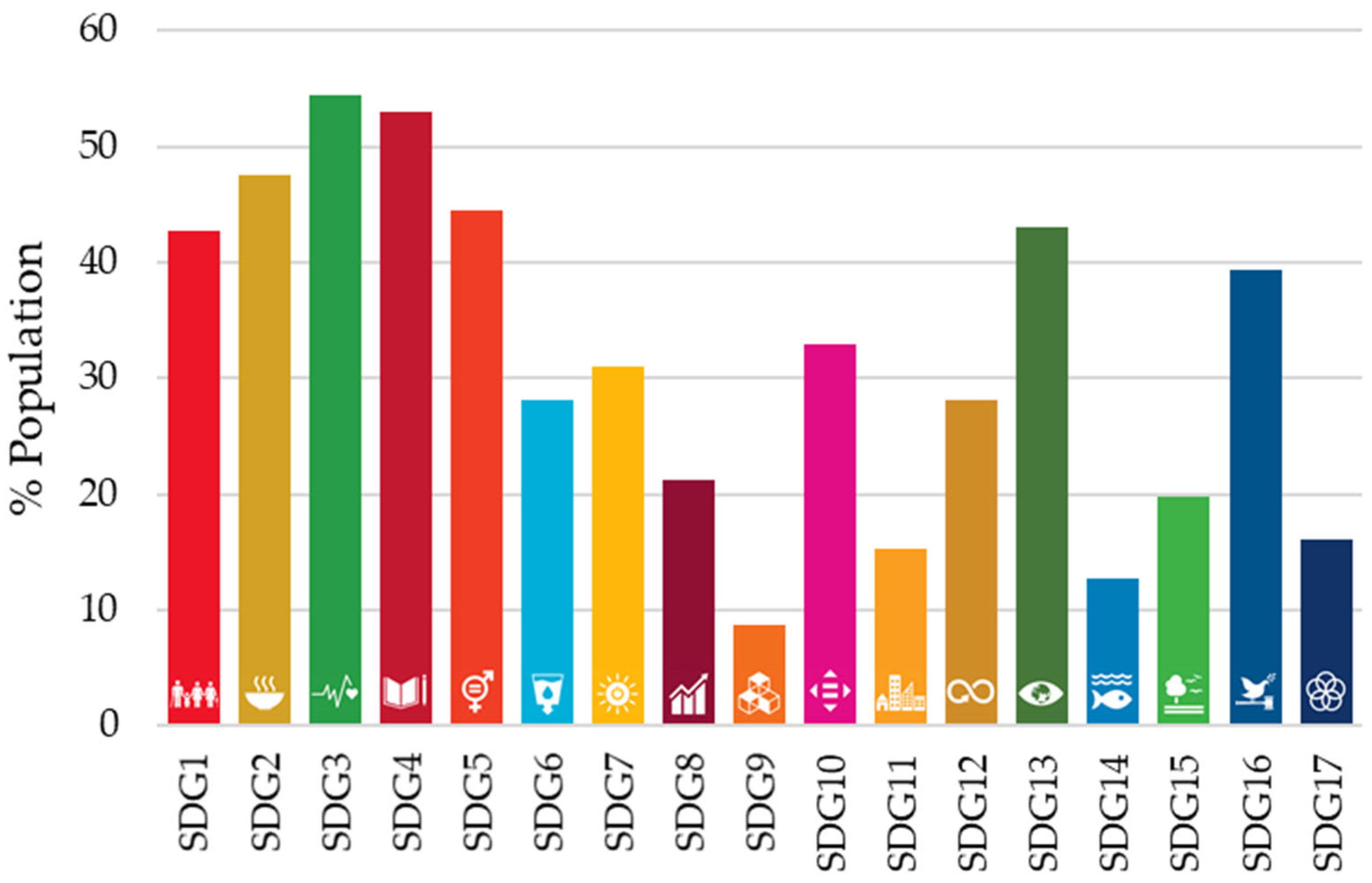
Figure 1. Prioritization of the Sustainable Development Goals (SDGs) according to the surveyed population. Percentage of people who selected each SDG as one of the top five most important. SDG 1 No Poverty, SDG 2 Zero Hunger, SDG 3 Good Health and Well-being, SDG 4 Quality Education, SDG 5 Gender Equality, SDG 6 Clean Water and Sanitation, SDG 7 Affordable and Clean Energy, SDG 8 Decent Work and Economic Growth, SDG 9 Industry, Innovation and Infrastructure, SDG 10 Reduced Inequalities, SDG 11 Sustainable Cities and Communities, SDG 12 Responsible Consumption and Production, SDG 13 Climate Action, SDG 14 Life Below Water, SDG 15 Life on Land, SDG 16 Peace, Justice and Strong Institutions, SDG 17 Partnerships for the Goals.
Sustainability 17 10023 g001
Figure 2. Degree of knowledge of biotechnology according to education level and university field of study. Possible responses to the question, “Do you consider yourself knowledgeable about what biotechnology is?”: “No” (black); “I have heard of it, but I do not consider myself knowledgeable about it” (dark grey); “Yes” (light grey). The X-axis represents the percentage of people who selected each response, separated by (A) education level and (B) type of university field of study.
Sustainability 17 10023 g002
Figure 3. Perception of the interrelationship between biotechnology and the 2030 Agenda. Cumulative responses for each SDG from the study population, divided into four groups: (A) non-university educated, (B) university-educated (all fields), (C) university-educated in scientific fields, and (D) university-educated in non-scientific fields. The X-axis represents the 12 SDGs selected for the study. The Y-axis, labelled “Total responses/n” indicates the total number of times each SDG was selected across all proposed biotechnology application areas, using a binary coding system (0 or 1) and normalized by the number of respondents in each group. The different colors in the stacked bars represent the various biotechnology application areas (colors) provided as response options.
Sustainability 17 10023 g003
Table 1. Comparison between the Millennium Development Goals (MDGs) and the Sustainable Development Goals (SDGs) organized according to the 5 Ps framework: People, Planet, Prosperity, Peace, and Partnership. Grouping of the MDGs and the SDGs into 3 and 5 interdependent cores, respectively.
MDGsSDGs
People1: Eradicate extreme poverty and hunger
2: Achieve universal primary education
3: Promote gender equality and empower women
4: Reduce child mortality
5: Improve maternal health
6: Combat HIV/AIDS, malaria and other diseases
1: No poverty
2: Zero hunger
3: Good health and well-being
4: Quality education
5: Gender equality
Planet7: Ensure environmental sustainability6: Clean water and sanitation
12: Responsible consumption and production
13: Climate action
14: Life below water
15: Life on land
Prosperity 7: Affordable and clean energy
8: Decent work and economic growth
9: Industry, innovation and infrastructure
10: Reduced inequalities
11: Sustainable cities and communities
Peace 16: Peace, justice and strong institutions
Partnership8: Global partnership for development17: Partnerships for the goals
Table 2. Demographic characteristics of the survey respondents. Distribution of participants by gender, age group, and educational level. All values are expressed as percentages of the total number of respondents (n = 274). For each variable, the number of respondents (n) included in the calculation is indicated. Within the “Higher education” category, participants were further classified into three subgroups based on their academic background: scientific, healthcare, and technical and other fields.
nPercent (%)
Gender
  Female17262.8
  Male9333.9
Age
  18–259835.8
  26–4511140.5
  >466523.7
Educational level
  Higher education23184.3
    Scientific12746.3
    Healthcare134.7
    Technical and others9133.2
  Secondary education186.6
  Professional training217.7
  Basic education41.5
Table 3. Correlation matrix between gender, age, education level and the opinions of the surveyed population regarding the 2030 Agenda and the SDGs. Significant correlations found are highlighted in bold and larger numbers: positive correlations are shown in blue and negative correlations in pink. * indicates statistical significance (p < 0.05).
Created to Limit Civil LibertiesNot Very Relevant, but Could Help in Some AreasUseful if Properly ImplementedNecessary and Very Important
Gender0.0180.106−0.036−0.140 *
Age0.059−0.094−0.143 *0.046
Education level−0.162 *−0.186 *0.1020.131 *
Disclaimer/Publisher’s Note: The statements, opinions and data contained in all publications are solely those of the individual author(s) and contributor(s) and not of MDPI and/or the editor(s). MDPI and/or the editor(s) disclaim responsibility for any injury to people or property resulting from any ideas, methods, instructions or products referred to in the content.