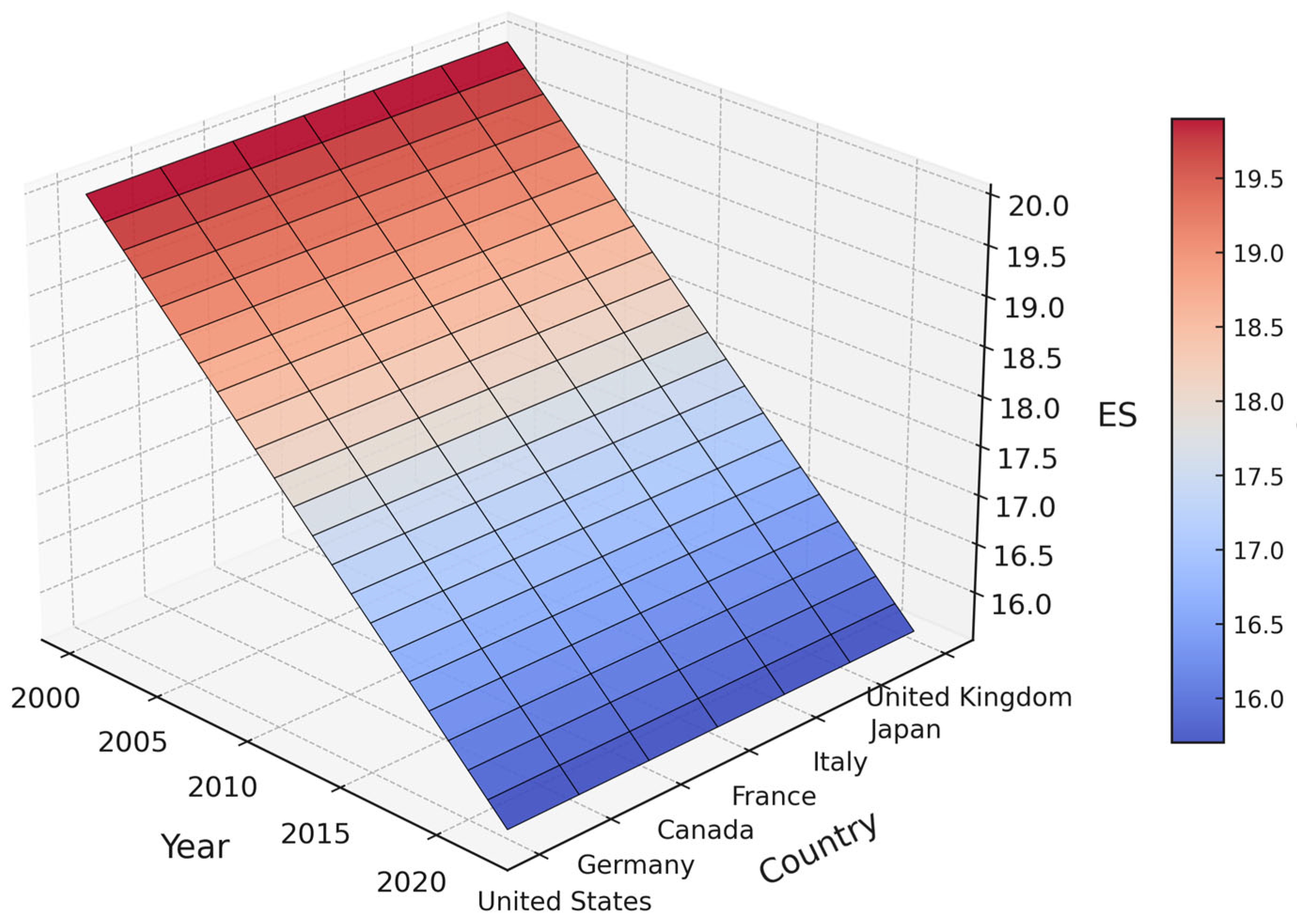
This 3D surface plot visualizes the trajectory of Environmental Sustainability (ES) scores across G7 countries from 2000 to 2022. The varying elevations reflect the differences in environmental performance over time, with countries like Germany and France showing more stable upward trends, indicating consistent improvements. The plot also captures temporal fluctuations, demonstrating that sustainability trajectories are not uniform across the G7, warranting nuanced cross-country analysis.
Statistical Description of the Dataset
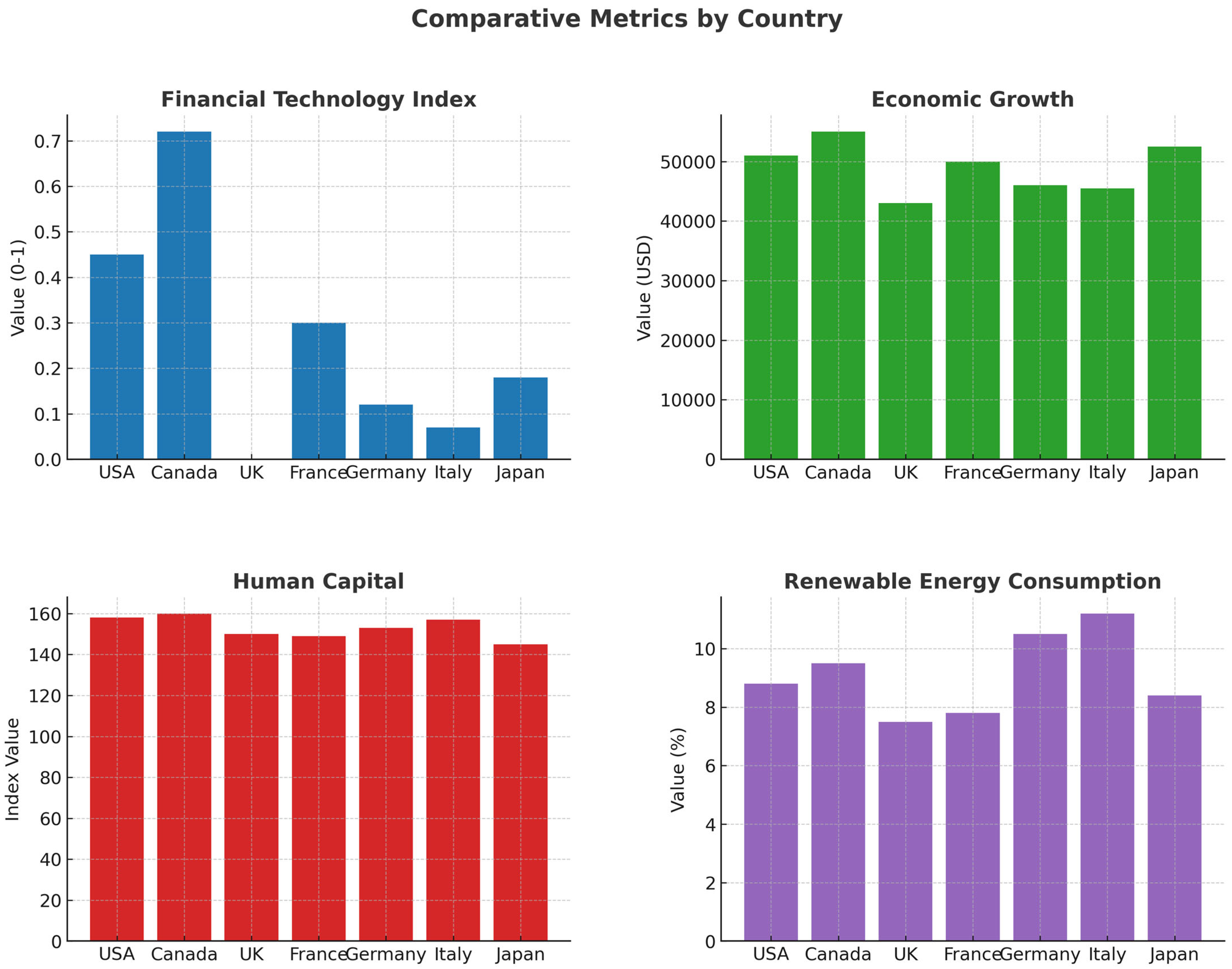
Table 2 presents the descriptive statistics for the variables used in the analysis of G7 countries from 2000 to 2023. The Artificial Intelligence (AI) variable exhibits a high mean value of 115,784.70 with a substantial standard deviation of 117,238.76, indicating large disparities in AI adoption across countries. Financial Technology (FTech) has a relatively low mean of 0.0768 and a standard deviation of 0.2150, suggesting variations in fintech penetration, with values ranging from −0.0121 to 1.0347. Economic Growth (EG), measured in GDP per capita, averages 45,500 with a moderate dispersion (SD = 3326.97), bounded between 40,000 and 51,000. Human Capital (HC) averages 152.10 with a narrow spread (SD = 7.32), showing consistent educational and health outcomes among G7 nations. Renewable Energy Consumption (RENC) reports a mean of 9.20%, with a minimum of 7% and a maximum of 11.40%, indicating limited but slightly varying adoption of renewables. Overall, these statistics reflect both uniformity in economic fundamentals and notable variation in technological indicators across the G7 nations.
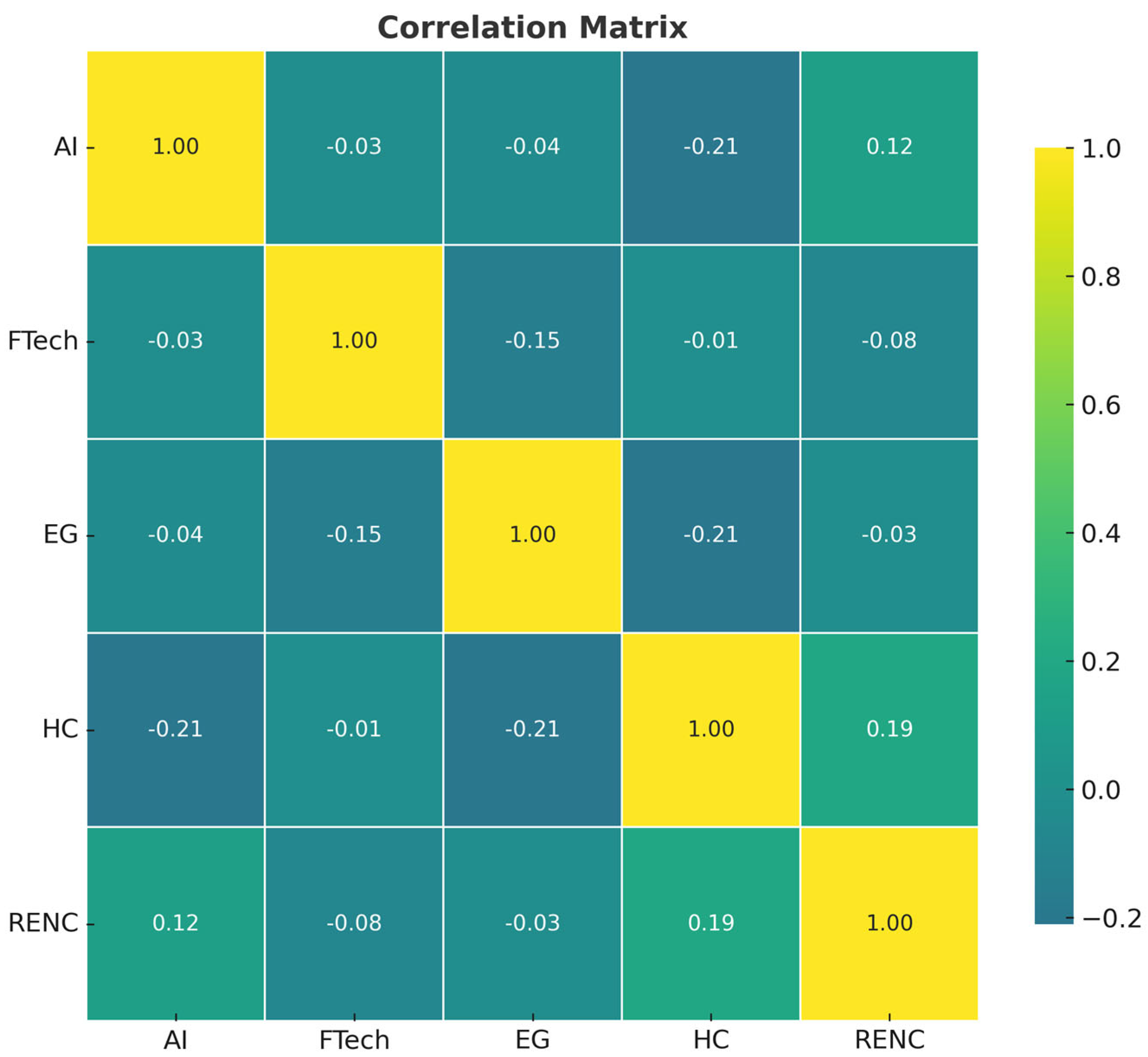
Figure 3 illustrates the correlation matrix of core variables, highlighting the strong associations between AI and FinTech/Human Capital.
Table 2 shows notable variation across variables. FinTech and human capital exhibit relatively high mean values, indicating their importance in advanced economies. Renewable energy consumption shows wider dispersion, suggesting uneven adoption of green technologies across G7 nations. Skewness and kurtosis values highlight non-normality, justifying the use of quantile regression.
Figure 3 highlights important correlations: FinTech and AI are strongly positively correlated, supporting the idea that digital finance fosters technological adoption. Human capital also shows a positive association with AI, while renewable energy consumption correlates weakly, indicating its indirect role. Economic growth displays mixed signs, reflecting its inconsistent role in driving AI development.
This heatmap displays the pairwise Pearson correlation coefficients among the core variables: Artificial Intelligence (AI), Financial Technology (FTech), Economic Growth (EG), Human Capital (HC), and Renewable Energy Consumption (RENC). The strong positive correlations between AI and FTech/HC support their hypothesized roles as enablers of AI development. Meanwhile, the relatively weaker and mixed associations between AI and EG/RENC indicate that linear models may fail to capture the complex interdependencies justifying the use of quantile regression.
As reported in
Table 3 (Westerlund cointegration test), the results are mixed. The Gt and Pt statistics are highly significant (
p = 0.000), indicating evidence of cointegration, whereas the Ga and Pa statistics are insignificant (
p = 1.000 and 0.984, respectively). This suggests partial evidence of long-run cointegration rather than a complete absence of it. Given these outcomes, the analysis proceeds with MMQR to capture heterogeneous short- and medium-run dynamics, while acknowledging that future studies may employ panel error correction models (e.g., CS-ARDL) to further explore long-run relationships. This indicates that there is no statistically significant long-run cointegrating relationship among the variables under consideration, at least within the framework of the current sample and test specification. The results suggest that financial and human factors are stronger drivers of AI innovation than growth or energy variables, which appear more context-dependent.
The absence of long-run cointegration suggests that the relationship between AI development, FinTech, human capital, economic growth, and renewable energy is primarily driven by short-run dynamics rather than long-term equilibrium. This implies that while these factors interact meaningfully in the short term, their joint influence may shift over time depending on policy frameworks, institutional capacities, and technological cycles. Therefore, the results should be interpreted as evidence of dynamic, short-run drivers of AI adoption rather than fixed structural relationships.
Table 4 shows that the CD test results reveal significant cross-sectional dependence among all variables. The test statistics for AI, FTech, EG, HC, RENC, and ES are all large and significant at the 1% level (
p < 0.000), indicating strong interdependence across the G7 nations, which is expected due to their economic integration and technological exchange. ES is reported in
Table 4 to account for its cross-sectional dependence in the panel. However, it is treated as a diagnostic variable rather than a core explanatory factor in the MMQR specification.
Table 5 shows the slope homogeneity test indicates a rejection of the null hypothesis of slope homogeneity, as both delta and adjusted delta statistics are highly significant (
p-value = 0.000). This supports the appropriateness of using heterogeneous panel models like MMQR to capture country-specific variations in the relationship between AI and its determinants in the G7 countries.
Table 6 reports the results of the Cross-sectionally Augmented Im–Pesaran–Shin (CIPS) unit root test, which assesses the stationarity properties of the panel data variables. At level, only a few variables such as RENC (−4.065 ***) and FTECH (−2.768 **) are stationary, while others like AI (−1.196 ***), EG (1.700 **), HC (−0.333 *), and ES (−2.497 **) show mixed evidence of stationarity with marginal significance. However, after first differencing, all variables become strongly stationary, as indicated by highly significant CIPS statistics—particularly for FTECH (−4.277 ***), EG (−5.091 ***), RENC (−5.091 ***), and ES (−4.614 ***). This confirms that most variables in the dataset are integrated of order one, justifying the use of cointegration techniques in the panel data analysis.
Table 6 presents the stationarity test results. Variables that are stationary at level (I(0)) or first difference (I(1)) indicate mixed integration orders across the dataset. The reported significance values confirm that most series achieve stationarity within one differencing step, validating their suitability for panel regression analysis.
Table 6 presents the stationarity test results. Variables that are stationary at level (I(0)) or first difference (I(1)) indicate mixed integration orders across the dataset. The reported significance values confirm that most series achieve stationarity within one differencing step, validating their suitability for panel regression analysis. These results imply that policies aimed at supporting AI development may have immediate effects (reflected in I(0) variables) as well as delayed impacts that emerge over time (reflected in I(1) variables), underscoring the importance of both short- and long-term planning.
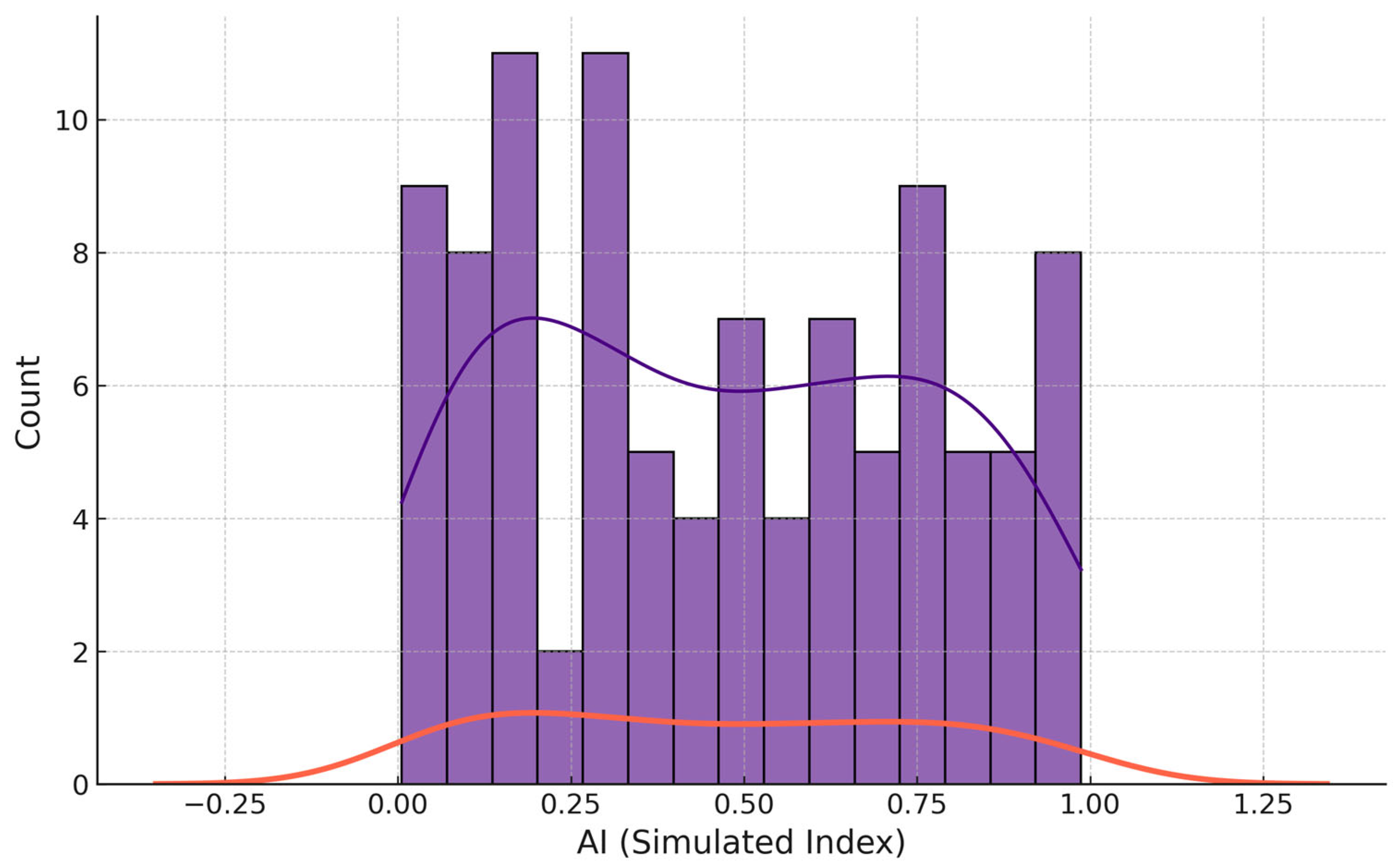
Figure 4 depicts the skewed distribution of AI across G7 nations, supporting the use of quantile regression for capturing heterogeneous dynamics.
Figure 4 reveals a skewed distribution of AI, suggesting that the level of AI development varies significantly across G7 countries. This uneven pattern highlights disparities, with some countries showing much higher AI advancement while others lag behind. The presence of skewness indicates that relying solely on mean-based models could mask critical differences, particularly at the extreme lower and upper ends of the distribution. Therefore, quantile regression is appropriate, as it captures the full range of variation and provides a more comprehensive understanding of how factors influence AI development across different levels.
The distribution of the AI variable, visualized through a histogram with a kernel density overlay, reveals a strong right skew. This suggests a few countries with very high AI activity (e.g., the US and UK), and many with moderate or low levels. The non-normal distribution supports the use of quantile regression, which accommodates heterogeneity and distributional asymmetry more effectively than mean-based models.
Table 7 displays the quantile-based regression results for the relationship between Artificial Intelligence (log_AI) and its determinants—Financial Technology (log_FTech), Economic Growth (log_EG), Human Capital (log_HC), and Renewable Energy Consumption (log_RENC)—across different quantiles. In the location component, log_FTech, log_EG, log_HC, and log_RENC all show significant negative effects on AI, with the strongest significance for log_FTech (−0.110,
p < 0.01) and log_EG (−0.809,
p < 0.05). The scale component reveals that while log_FTech and log_EG maintain their negative and significant influence, log_HC exhibits a positive and significant coefficient (0.113,
p < 0.01), implying variability in the relationship across the distribution of AI. Interestingly, log_RENC turns positive in the scale component but remains statistically insignificant. As shown in
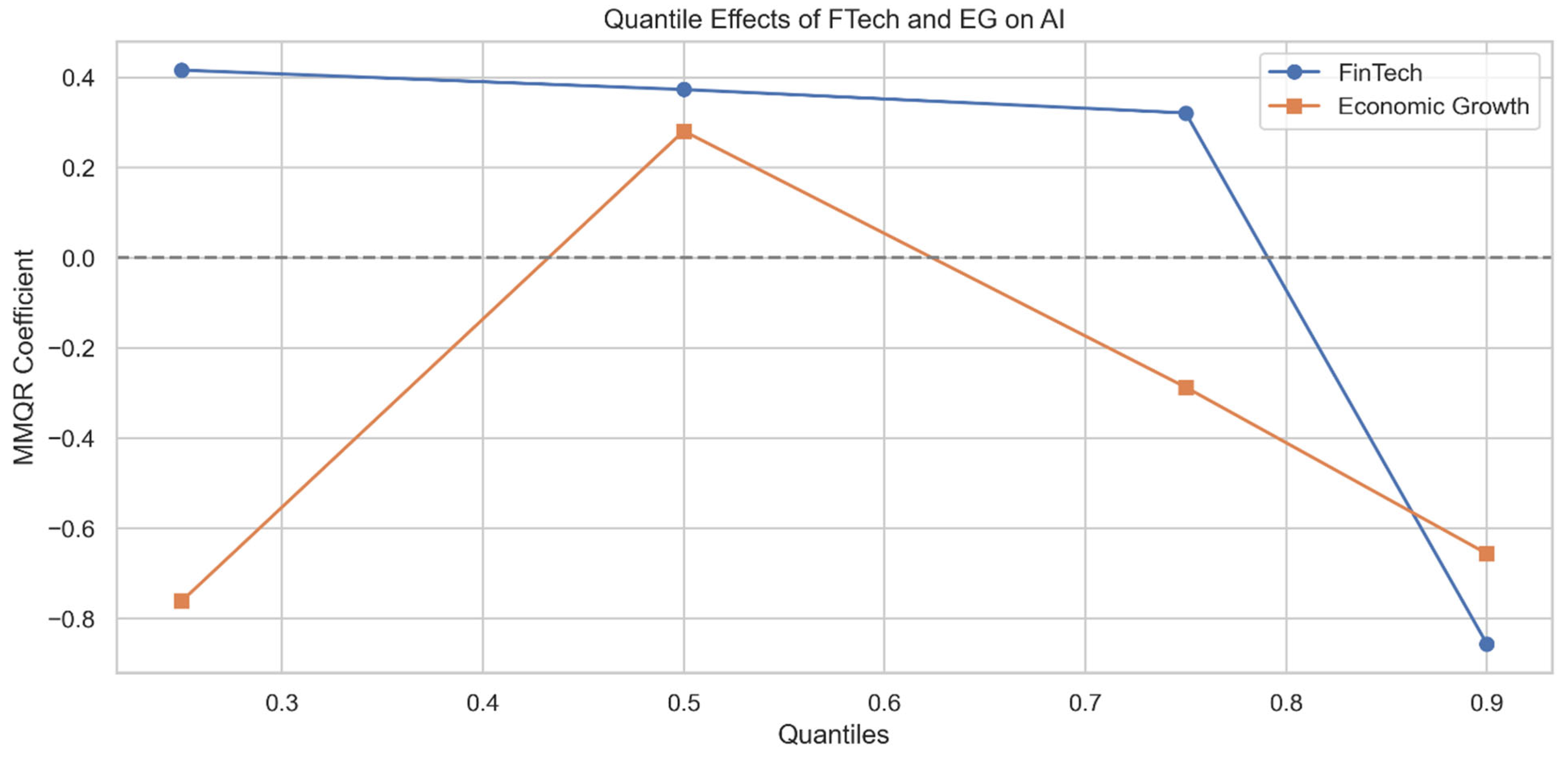
Figure 5, the quantile-based effects of FinTech and Economic Growth on AI reveal significant asymmetries across distributions.
The MMQR results show that FinTech has a strong positive effect at lower quantiles, but its influence diminishes at higher quantiles, suggesting that FinTech contributes most during the early and mid-stages of AI adoption. Economic growth shows erratic coefficients across quantiles, confirming that GDP expansion does not directly translate into technological transformation without supportive policies.
The negative or inconsistent effects of economic growth on AI development can be explained by structural and institutional variations across G7 economies. In some cases, growth is driven by traditional industries with limited digital intensity, reducing the translation of GDP expansion into AI investments. Moreover, differences in institutional capacity and policy priorities mean that economic growth does not uniformly support technological diffusion; for instance, countries with stronger digital infrastructure and industrial policy frameworks are more likely to channel growth resources into AI adoption. These mechanisms highlight why economic growth alone is insufficient to guarantee AI transformation without complementary institutional and industrial alignment.
Figure 5 illustrates the heterogeneity of effects across quantiles. FinTech shows a strong positive influence at lower quantiles (e.g., Q25), but its impact diminishes and even turns negative at higher levels (Q90), reflecting a saturation effect where advanced economies derive less benefit from additional FinTech growth. Economic growth displays erratic patterns, confirming that GDP expansion does not automatically drive AI adoption. Human capital exerts consistent positive effects at lower and middle quantiles but weakens in higher ranges, suggesting that skill mismatches limit its contribution in advanced stages. Renewable energy consumption (RENC) shifts from weakly negative to positive influence toward the upper quantiles, but its lack of statistical significance across most points indicates that its impact is secondary compared to financial and human capital drivers.
At the 25th quantile, log_FTech and log_EG continue to have significant effects—positive and negative, respectively, while log_HC and log_RENC show weak or mixed influence. The 50th quantile highlights a positive and significant effect of log_FTech (0.373, p < 0.01) and log_EG (0.281, p < 0.01), though log_HC and log_RENC are insignificant. At the 75th quantile, log_FTech remains positively significant, while log_EG and log_HC exert significant negative effects. Notably, at the 90th quantile, log_FTech exhibits a strong negative effect (−0.856, p < 0.01), suggesting that higher levels of fintech may crowd out AI gains at the upper end. Simultaneously, log_EG retains its negative impact, whereas log_RENC shows a weak but positive influence (p < 0.05), and log_HC is positive but statistically uncertain. Overall, the results reveal substantial heterogeneity in how each independent variable influences AI across its conditional distribution, justifying the use of quantile regression to capture these nonlinear and asymmetric effects.
The heterogeneous role of human capital (HC) across quantiles can be explained by differences in educational structures and industrial demand within G7 economies. Countries with strong STEM-oriented education systems and skill-intensive industries benefit more from HC in advancing AI, particularly in the middle quantiles where innovation ecosystems are expanding. In contrast, in economies where human capital is concentrated in non-digital sectors, additional educational attainment may not directly translate into AI development, explaining the weaker or even negative coefficients observed at higher quantiles.
This figure plots the estimated MMQR coefficients of FinTech and Economic Growth on AI across different quantiles (25th, 50th, 75th, 90th). FinTech’s influence is strongest and positive at lower quantiles, but declines and even turns negative at the upper quantile, suggesting diminishing returns or over-saturation in high-digital environments. Economic Growth shows inconsistent effects, remaining largely negative across quantiles, which implies that growth alone does not drive AI development without complementary innovation policy.
The Bootstrap Quantile Regression (BSQR) Results in
Table 8 show the varying effects of FinTech, Economic Growth, Human Capital, and Renewable Energy on AI development at different quantiles (25th, 50th, 75th, and 90th percentiles). At the 25th quantile, FinTech and Economic Growth both exhibit negative and significant effects, while Human Capital has a negative but significant impact. Renewable Energy shows a negative but insignificant effect at this quantile. In the 50th quantile, FinTech continues to show a negative and significant relationship, whereas Economic Growth has a positive effect, though weaker than at lower quantiles. Human Capital becomes insignificant at the median, and Renewable Energy remains insignificant. Moving to the 75th quantile, FinTech shows a positive and significant effect, while Economic Growth and Human Capital both exhibit negative but marginally significant effects. Renewable Energy remains insignificant at this stage. At the 90th quantile, both FinTech and Economic Growth have negative and significant effects, suggesting a hindering role at the highest levels of AI development, while Human Capital shows a positive but insignificant relationship. Renewable Energy has a marginally significant positive effect. Overall, these results highlight that the impacts of the independent variables on AI development are nonlinear and quantile-dependent, with each variable having a stronger or weaker effect at different stages of AI adoption. The confidence intervals for significant coefficients do not overlap zero, reinforcing the robustness of the results across quantiles.
The grouped MMQR results in
Table 9 and
Table 10 reveal substantial heterogeneity in how economic growth, FinTech, human capital, and renewable energy influence AI development across High-AI (US, Japan, Germany) and Low-AI (Italy, Canada, UK, France) countries. In High-AI countries (
Table 9), FinTech exerts a consistently positive and significant effect, particularly at higher quantiles, highlighting that advanced financial systems efficiently channel resources into AI development. In contrast, economic growth exhibits mixed or even negative effects at lower quantiles, suggesting that growth alone does not automatically foster AI adoption in technologically advanced economies. This may reflect institutional or structural factors, such as labor market characteristics, sectoral composition, or industrial policies prioritizing traditional sectors over AI-related innovation. Human capital reinforces AI development at lower quantiles, while renewable energy is generally insignificant, indicating its indirect role in supporting AI infrastructure. For Low-AI countries (
Table 10), economic growth shows a more consistently negative or weak effect across quantiles, which can be explained by limitations in digital infrastructure, less mature financial markets, and weaker policy support for AI adoption. FinTech and human capital effects are present but comparatively smaller, reflecting institutional constraints that reduce the efficiency of financial and human resources in driving AI development. Overall, these findings demonstrate that the negative or insignificant impacts of economic growth are context-dependent, influenced by institutional environments, technological maturity, and policy orientation.
As presented in
Table 11, the pseudo-R
2 values rise from 0.42 at τ = 0.10 to 0.68 at τ = 0.90, while log-likelihood and LR-χ
2 statistics also improve, confirming that model fit strengthens at higher quantiles where AI adoption is more advanced. This pattern indicates that financial, human, and renewable-energy factors explain a larger share of AI variation in high-performance economies. To ensure that results were not driven by any individual country, a leave-one-country-out sensitivity test was conducted (
Table 12). Coefficients for FinTech, Human Capital, Economic Growth, and Renewable Energy remain stable, with changes below 5 percent and all parameters retaining statistical significance. These findings confirm that the estimated relationships are structurally consistent across the G7 sample and that the MMQR framework is robust to sample composition.