


Abstract
Conservation tillage (CT) is an agricultural technology for sustainable soil use, and clearing the root-stubble remaining in the seedbed and nursery bed is a core aspect of CT. In this paper, the characteristics and the testing methods of root-stubble and their growth environments were reviewed, which could provide a reference for the setting of parameters in numerical simulations and the design of stubble treatment devices. The methods for the restoration of the environment in CT are described. Moreover, the root-stubble crushing and clearing technologies and the methods for the evaluation of device performance are summarized. Furthermore, the prospects for the physical properties of the root-stubble soil, the reduction of soil adhesion when a cutter crushes the roots, the tracking of the long-term effects of different methods on soil, intelligent devices for the crushing of root-stubble, and challenges and strategies regarding the application of new root-stubble crushing and clearing technologies are discussed. This paper provides a reference for the development of devices for the crushing of root-stubble from the perspective of CT.
1. Introduction
After harvest, significant amounts of the main beam crops, such as rice, corn, wheat root-stubble and straw, remain in the field [1,2]. Root-stubble include both roots and stubble, while straw is the general term for the remaining stems and leaves in the field after harvesting grains. Traditional methods of treating root-stubble primarily include burning, composting and plowing. Burning involves igniting the corn stubble, which produces dense smoke that causes smog, reduces outdoor visibility and affects traffic safety [3]. The emission of carbon dioxide and particulate matter will not only reduce the air quality, but also contribute to global warming. The yields and quality of crops will be impacted by climate change, which will have a great impact on agricultural production by affecting the growth processes of crops, the suitable planting areas and environmental factors [4]. Composting involves mixing root-stubble with other waste materials for anaerobic fermentation, positively impacting environmental preservation [5]. Plowing mixes are used to provide soil inversion, which helps to bury weeds and crop residues, bury the top layer of non-wetting soil and bring to the surface soil that is more suitable for plant growth. However, the degree of soil disturbance is relatively large, and the soil is exposed for a long time; it lacks the coverage or mixing of straw residues and reduces the soil moisture, which is not conducive to the protection of the agricultural and ecological environment to a certain extent [6]. Conservation tillage (CT) is a novel agricultural farming system and technology centered on ensuring soil quality. It primarily incorporates surface root-stubble and straw cover, reduced or no-till planting and pest and weed control [7]. CT can enhance the soil organic matter content and reduce soil erosion. The device for the crushing of root-stubble is one of the main implements used in CT, typically employed in conjunction with no-till planters for root-stubble treatment. This device effectively addresses the issues of root-stubble and straw clogging during sowing by crushing and clearing root-stubble with minimal soil disturbance, thereby accelerating the decomposition process. Additionally, it can clear straw from the ridges, providing an optimal seedbed environment for subsequent sowing operations. The principles of CT emphasize minimal soil disturbance, maximum root-stubble and straw cover and the effective promotion of biological activity. This approach improves the soil properties, enhances the soil fertility, conserves water, retains soil moisture and mitigates wind and water erosion [8]. Additionally, it reduces greenhouse gas emissions, lowers energy consumption and prevents land degradation. For instance, one of the conservation tillage technologies, the straw mulching and returning method, enhances soil moisture retention by covering the soil surface with straw. Additionally, the nutrients released during the decomposition of straw effectively replenish the soil nutrients, increase the organic matter content and promote the growth and activity of soil microorganisms. This creates a more favorable growth environment for plant roots. Compared to traditional methods such as burning, composting, plowing and rotary tillage, CT results in less environmental pollution, offers higher work efficiency, minimizes soil disturbance, positively impacts soil moisture retention and requires less power consumption for machinery. CT has positive effects on the soil, crops and the environment. It can reduce the decrease in the soil pH. Furthermore, CT contributes to the retention and long-term stability of soil organic carbon, which is significant in achieving carbon neutrality in agricultural production. In summary, as a crucial technology for green and low-carbon agriculture, CT not only helps to improve the agricultural production efficiency and economic benefits, but also plays an important role in protecting soil health and environmental sustainability. The promotion and application of CT are significant for the rational utilization of agricultural renewable resources and the advancement of sustainable agricultural development [9].
Root-stubble treatment is a crucial part of CT before no-tillage and reduced-tillage sowing. Improper treatment can lead to problems such as seeding machine clogging, seed sifting and seed bridging [10,11]. The annual global production of straw and root-stubble is approximately 20 billion tons, with more than half remaining in the field. Asia, Africa and Latin America have the largest amounts of straw and root-stubble, where the agricultural production methods are relatively traditional, the utilization rate of straw and root-stubble is low and the root-stubble treatment technology is underdeveloped. Crop root-stubble, consisting of aboveground stubble and underground roots, form a root-soil aggregate as the root system spreads and consolidates the surrounding soil. The combination of thick stubble with soil makes the mechanical treatment of root-stubble challenging [12]. The main methods of crop root-stubble treatment currently include: (1) stubble side throwing, which cuts off the main roots and throws the stubble to the side, causing minimal soil disturbance but not crushing the stubble completely; (2) stubble rotary mixing, which typically mixes and buries the stubble and soil through strip rotary tillage [13,14], causing significant soil disturbances, destroying the ridge platform and potentially leading to soil moisture loss [15]; (3) root-stubble crushing, which uses horizontal tools to crush the surface residual stubble effectively, but requires high tool rotational speeds, consumes a lot of power and may result in missed cuts when the stubble is tall, as the tool does not enter the soil and leaves the root-soil aggregate untreated. Due to the combination of soil and roots, it is difficult to accurately measure the physical properties. Consequently, the design of soil-contacting root-crushing parts and the setting of stubble-crushing simulation parameters cannot be effectively supported. The traditional rotary tillage technique, which mixes root-stubble and soil, and the crushing stubble technique (which does not address underground roots), present problems, such as soil adhering to cutter, significant soil disturbances and a poor root-crushing effect [16,17]. Therefore, the core issue in root-stubble treatment technology is how to achieve the high-quality crushing of aboveground stubble and underground roots with minimal soil disturbance.
The analysis of the soil physical properties is very important for agricultural production, the ecological environment and other aspects. These properties not only affect the soil fertility and soil and water conservation capacity but also can be used to assist the design of soil-engaging components to improve the performance of these components. However, there may be some problems, such as insufficient accuracy and complicated operation in the measurement of the soil physical properties, and there are some errors when measuring them. Affected by the different measurement methods and techniques, some characteristics, such as the soil moisture content, have obvious timeliness. For example, the drying method is more accurate, but it cannot reflect the change in the soil moisture content in time. Sensor technology can monitor the soil moisture content in real time, but it may be affected by factors such as the environment and equipment accuracy. In addition, methods for the analysis of soil properties are not universally applicable to all soil types. For instance, when measuring the soil permeability, conventional methods such as constant head permeability tests can effectively determine the permeability in sandy soils due to their larger particle size and more abundant pore spaces. However, in clay soils, where the particles are fine and the pore structures are complex, applying the same methods may yield inaccurate results. Therefore, in practical applications, it is essential to consider these factors comprehensively to select the most appropriate method. The Northeast Black Soil Protective Tillage Action Plan (2020–2025) has explicitly outlined the scope of physical property application analysis in CT. Utilizing soil parameter measurement methods, it is possible to assess the soil quality and understand the soil fertility status, providing a scientific basis for the implementation of CT. It aims to improve and enhance the monitoring and evaluation mechanism for arable land quality, serving as a foundational reference for the implementation and refinement of CT. Numerous studies on crop root-stubble crushing and clearing technologies have been conducted in China, leading to the innovative design of both active and passive root-stubble crushing devices. Although many data indicate that the performance of these devices could be excellent, research on various factors, such as the operational effect of the device under different environmental conditions, is lacking, which has hindered their further development [18]. In this study, various soil types and characteristics have been summarized, most of which cover the main soils around the world. The related devices are mainly classified and summarized from the perspective of crushing and clearing. The root-stubble crushing and clearing devices are mainly used for staple crops, including corn, rice, wheat and so on. Some economic crops, such as peanuts and sweet tea, and other root-stubble treatment methods need to be reviewed. The effective utilization methods, such as feed, fuel, power generation and anaerobic fermentation, are not considered in this article. The summary of the root-stubble crushing and clearing devices is based on the published literature. The ongoing and unpublished results need to be supplemented later. The purpose of this review is summarized as follows: (1) to explore the characteristics of crop root-stubble and their growth environment and to propose a reference for device innovation; (2) to summarize the mechanical root-stubble treatment technologies and device performance; (3) to summarize the test methods for the evaluation of device performance; and (4) to predict the physical properties of the root-stubble-soil and wear-resistant parts in soil-engaging stubble cutting, describe the reduction in soil adhesion during the root crushing of the cutter and propose an intelligent device for root-stubble crushing. This study can provide a basis for the selection of root-stubble crushing and clearing devices based on different soil types, environments, regions and other factors. It offers a method for the determination of the soil physical properties and the verification of the performance of root-stubble treatment devices. Additionally, it provides technical support for the innovation of CT machine structures and offers scientific and technological assistance in improving CT systems.
2. Study on the Characteristics of Root-Stubble Their Growth Environment
2.1. Study on Morphological Characteristics
The mechanical design for root-stubble crushing is based on the physical property parameters of crop.root-stubble Corn, rice and wheat are considered the three main grains, with a significant amount of stubble left in the field after harvest each year. Mechanized cleaning faces challenges, such as the large quantity of root-stubble as well as the strong bonding of roots to soil, which are difficult to address [1]. Through a survey of 852 farms, we found that the sowing processes of certain plants, such as rice, wheat and soybeans, could be carried out at a shallow depth without encountering obstacles due to their roots. However, maize roots are robust. If the roots are not completely cleared, the seeds sown afterward could come into direct contact with the roots, affecting the yield [19]. The growth environment elements include stubble, roots and soil. The morphological parameters of typical crop root-stubble(corn, rice and wheat) are summarized in Table 1.

Table 1.
Typical crop root-stubble shape parameters of root-stubble.
2.2. Study on Physical Properties
The physical property parameters of soil include the shear modulus, Poisson’s ratio, elastic modulus, static friction coefficient, collision recovery coefficient and so on. Accurate physical property parameters for crops and their environment are crucial in selecting models and setting parameters in numerical simulations of root crop interactions. They also provide a valuable reference for the design of key components. The methods and content involved in determining the physical property parameters of root-stubble and their growth environment are detailed in Table 2.
Table 2.
Study on environmental and physical properties.
The types and physical properties of soil around the world are shown in Table 3.
Table 3.
Types and physical properties of soil around the world.
The physical properties of different types of the soil around the world are presented. There are various soil types in Asia. The angles of internal friction, as well as the dry and wet densities of the black soil in Asia, are low. The cohesion of the soil at the contact points may be weak when the roots are crushed. The cohesion and internal friction angles of peat soils in Europe are between 1 and 10 kPa and 5° and 20°, respectively, which are low. For the soil, the rotational speed of the cutter unit should range from 1200 to 1600 r/min, and the power required by the cutter unit should be relatively low at 14.7–29.4 kW [50]. In contrast, the cohesion and internal friction angles of rocky soils in the Americas range from 50 to 300 kPa and 30° to 60°, respectively, indicating high values. The density and cohesion of rocky soils are also high. Consequently, the higher power of the driven stubble crushing unit would be necessary. A higher rotational speed in the cutter unit, between 2000 and 2500 r/min, is also required [51], and the power consumption of the unit could reach between 73.5 and 110.25 kW [52]. The cohesion and shear modulus of the loam soils in Oceania exhibit the largest range of variation, with values between 20 and 300 kPa and 10 to 100 MPa, respectively. Therefore, the design of the cutter unit should account for operating parameters that can be maintained within a wide range and are adjustable, ensuring excellent adaptability. The cohesion of the clay soils in Africa ranges from 500 to 1000 kPa and the angle of internal friction is between 15° and 30°. For the soil, the rotational speed of the cutter unit should also be 2000–2500 r/min, and the power of the cutter unit should range from 73.5 to 110.25 kW. In summary, reference values for the design of the operating parameters of the cutter unit in different regions around the world can be provided [53].
The physical properties of the soil, stubble and roots were studied using a mechanical property test instrument. The study of the soil physical properties mainly focused on determining the mechanical properties between the soil and soil-contacting parts. From the perspective of efficiently crushing stubble, the research centered on the cutting force, the shear modulus and the static and dynamic friction forces between the cutting parts, with key mechanical parameters including the cohesive force between the soil and the roots of the underground root-soil complex, the cutting force, the shear stress and the shear strength of roots at different soil depths. The crushing effect of severing the root system, the traction effects of the root-soil complex and the disturbance behavior of the soil were determined by these parameters. Clarifying these parameters is of great significance in constructing an accurate soil simulation environment and for the structural design of stubble treatment components.
2.3. Application of Characteristic Parameters of Crop Root-Stubble and the Environment in Numerical Simulations
Numerical simulation technology has become a primary method in the study of particles in the agricultural field, with the discrete element method (DEM) being a typical representative [54]. EDEM, a widely used type of discrete element software, constructs parametric models of particles’ solid characteristics. The shapes and characteristics of particles are represented by physical and mechanical parameters. By using various particle contact models, the velocities, accelerations and other parameters of particles at different times are calculated to simulate and predict the particle motion behavior [55]. The application model and characteristics are presented in Table 4.
Table 4.
Characteristics and application of model in numerical simulation of root-stubble.
3. Mechanized Treatment Technology for Crop Root-Stubble
3.1. Technology of Passive Crushing and Side Throwing of Root-Stubble
3.1.1. Technology of Crushing and Clearing Root-Stubble
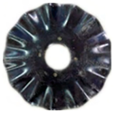
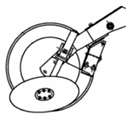
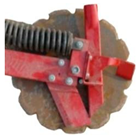
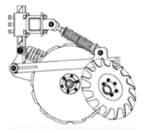
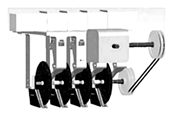
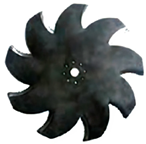
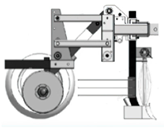
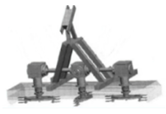
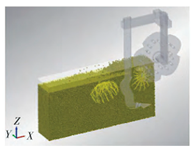
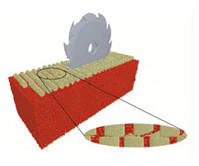
The typical disc cutter is one of the traditional passive tools for the cutting of root-stubble, primarily relying on the machine’s gravity to penetrate the soil and utilizing the friction between the machine and the soil to rotate passively, thus achieving root-stubble cutting and soil crushing [61]. The operational principle of this device for the crushing and clearing of stubble passively is illustrated in Figure 1.
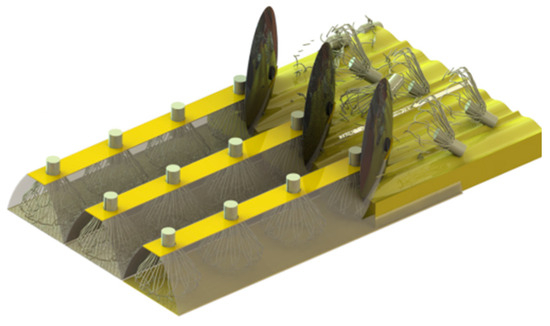
Figure 1.
Operational principle of device for passive crushing of root-stubble.
For the passive root-stubble cutter component, the weight of the machine must be sufficient for the cutter to effectively crush the root-stubble into the soil. Additionally, factors such as the angle of attachment of the operating machine to the power machine, the structural characteristics of the cutting disk [62], the disc cutter mounting angle [63] and the suitable machine operation mode [64] will all impact the soil penetration of the implement. The depth of penetration of the disc cutter can be controlled by an often agronomically appropriate hook-up angle, and the soil penetration of the disc cutter can be improved by selecting a mounting inclination that matches the type of disc cutter, designing the disc cutter edge based on a rent-reducing structure and selecting a suitable angle of penetration gap (usually less than 10°). This method is predominantly used in large no-till planters. The types and characteristics of the typical disc cutter are detailed in Table 5.
Table 5.
Types and characteristics of the typical disc cutter.
Innovative design and research on the traditional disc cutter structure and its parameters have been conducted by many experts and scholars, as shown in Table 6.
Table 6.
Types and characteristics of new disc cutter.
3.1.2. Technology of Side-Throwing Stubble
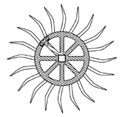
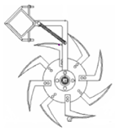
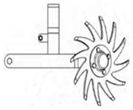
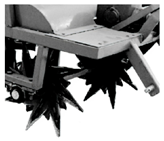
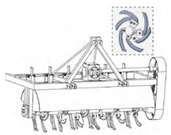
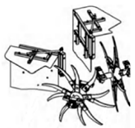
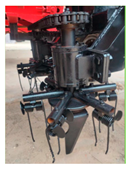
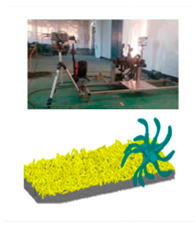
As the device advances, the parts (primarily a staggered arrangement of wheel fingers) are passively operated. The main function of the device is to throw soil and stubble on both sides. Additionally, the stubble also can be crushed to a certain extent during the throwing process. The operational principle of the device for the passive throwing of stubble is shown in Figure 2.
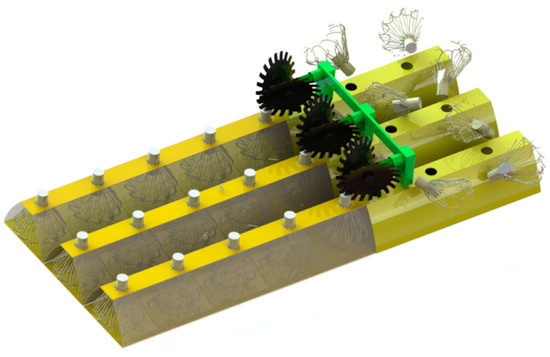
Figure 2.
Operational principle of device for passive throwing of stubble.
The root straw is cut by the key components and diverted to both sides of the seed belt. Many studies have been conducted by experts, and the main findings are shown in Table 7.
Table 7.
Devices for side throwing of stubble.
The passive stubble-crushing device is used to cut or separate root-stubble either by its own weight or by utilizing the structural characteristics of the device. The structure of the device is relatively simple, often comprising a combination of a stubble-crushing cutter and a ridge-clearing wheel. It primarily targets the cutting of stubble on the surface and does not involve the root soil combination. Under certain conditions, the stubble-cleaning effect is satisfactory; however, the effectiveness of stubble cutting can be suboptimal in the presence of soil crusting, field stubble and other challenging conditions.
3.2. Technology of Active Crushing of Root-Stubble
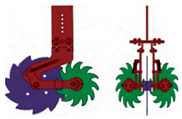
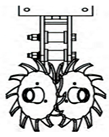
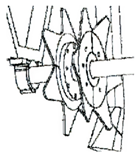
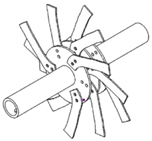
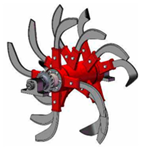
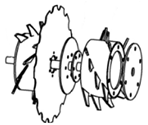
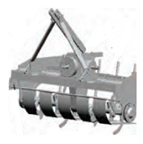
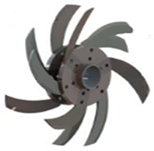
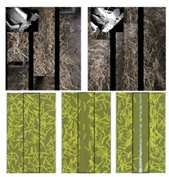
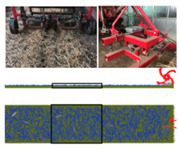
This method primarily employs the high-speed rotation of the stubble-cutting parts to achieve root cutting, using the surface as support. The structure is more complex than that of the passive stubble-crushing device [81]. The operational principle of the device for the active crushing of root-stubble is shown in Figure 3.
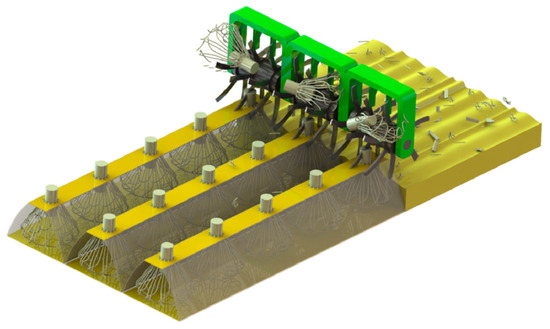
Figure 3.
Operational principle of device for active crushing of stubble.
When faced with extensive root straw coverage, the seed belt cleaning effect is superior, and numerous related studies have been conducted by experts and scholars. The main findings are shown in Table 8.
Table 8.
Devices for active crushing of root-stubble.
Active units generally rely on power from sources such as tractor rear output shafts, electric motors or hydraulic motors, which are driven through a power transmission system to cut the root-stubble and clear them to the sides of the seedbed. Improving the effectiveness of crushed root-stubble can be achieved through the innovative design of the structure and the arrangement of the cutters. When the cutters do not engage the soil, they can maintain effective performance. However, if the cutting parts contact the soil and continue to work, soil adhesion to the tool may occur. This issue highlights the need for an innovative breakthrough in the technology for the crushing of stubble in combination with soil.
For the comparative study of different root-stubble treatment methods, it is crucial to investigate not only their abilities in terms of root-stubble fragmentation and soil disturbance but also the effects of various practices on the soil physicochemical properties, particularly the long-term adverse impacts. For instance, Li et al. found that long-term no-tillage operations led to increased soil bulk density and decreased pH values. The former can result in soil compaction, affecting crop emergence and the increasing subsequent tillage resistance, while the latter can cause soil acidification, accelerating organic matter decomposition [99]. Rotary tillage operations, compared to no tillage, cause greater soil disturbance, thus exerting larger impacts on the soil. For example, Lal et al. discovered that rotary tillage led to the loss of soil organic carbon, and the disturbance of the surface soil exacerbated soil erosion by wind and water [100]. Bronick et al. summarized extensive research data indicating that rotary tillage disrupts the soil structure, reduces the soil aggregate stability and affects the soil permeability and aeration [101]. Malik et al. found that rotary tillage results in nutrient loss in the surface soil layers, likely due to soil mixing caused by tillage [102]. Therefore, considering all aspects to minimize the impact on the soil’s physical and chemical properties and exploring different root-stubble treatment methods in suitable areas can provide a theoretical basis for the improvement of the soil quality and seedbed quality.
3.3. Methods to Test the Performance of the Root-Stubble Crushing Device
The performance test is conducted using various methods and test types. The structural parameters of the tool and the working parameters of the device are carefully selected to enhance the quality of stubble crushing, reduce the soil disturbance and lower the power consumption. Numerous experts and scholars have conducted studies in this area, with the main findings presented in Table 9.
Table 9.
Methods to test the performance of the root-stubble crushing device.
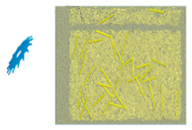
Discrete element numerical simulations, soil bin tests and field experiments are crucial in assessing the performance of stubble-crushing devices and have been developed significantly. These methods are primarily used to evaluate the wear resistance, stubble-crushing rate, soil disturbance rate and power effect of the device. Research on stubble-crushing devices typically relies on experimental methods. DEM could be employed to simulate the process of crushing and clearing root-stubble. The single-factor test is designed to investigate the effects of the key parameters of the cutter on its performance, while the multi-factor simulation test is conducted to obtain the optimal parameter combinations for the cutter. The optimized cutters could be processed into new machines independently or combined with no-tillage planters, such as active root-stubble crushing and clearing machines, strip no-tillage planters and corn wheat rotation no-tillage planters. Typically, the simulation results are verified using two methods. The first method involves utilizing a high-speed camera test to track the trajectory of the stubble ejected by the cutter and comparing the results with the simulation data. The accuracy of the simulation results can be validated based on a comparison. The second method entails conducting a field experiment, during which indicators such as the power consumption, the rate of root-stubble clearing and the rate of root-stubble crushing are measured. These measurements are then compared with the simulation data to verify the accuracy of the simulation results. To evaluate whether the performance of the new machine is improved, its field experiment performance is compared with that of the original machine, using the rates of root-stubble clearing and root-stubble crushing as indexes. According to references [33,60,64] and [103], the rate of root-stubble clearing, the rate of root-stubble crushing and the rate of root-stubble returning for the cutter optimized by numerical simulation could be increased by 3.7% to 19.38%, 14.7% and 24.23%, respectively. It can be observed that the discrete element method has been widely applied in the study of the structural design and performance of units for the crushing and throwing of root-stubble [108]. This method could significantly shorten the development cycle of the unit and accomplish scientific research with lower cost consumption.
4. Prospects
4.1. Strengthening the Analysis of the Physical Properties of the Root-Stubble Soil
The crop root-stubble soil combination is complex, forming a composite soil consisting of the root-stubble and the tillage soil layer. The inconsistency in the stubble height leads to differences in the nodule diameters and the characteristics of cutting failure in the aboveground stubble. Furthermore, the roots are distributed across various soil layers [109]. The ‘locking effect’ caused by the soil root connection, along with the physical characteristics in different soil layers, such as the water content, shear modulus and other factors [110], complicates the study of root failure characteristics. Understanding the physical and mechanical properties of the root-stubble soil is essential. Such knowledge will provide significant reference value in enhancing the accuracy of numerical simulations of stubble crushing and in optimizing and developing stubble-crushing components.
4.2. Application of Wear-Resistant Parts in Soil Engaging and Crushing of Roots
The continuous high-speed operation of seeders creates high demands for the reliability of stubble-cleaning devices, especially regarding wear resistance. The bottleneck issues of new material and technology requirements are becoming increasingly apparent [111]. Traditional materials like 65 Mn steel and conventional quenching processes are becoming inadequate for the needs of high-performance, cost-effective agricultural machinery. Alternative treatment processes, such as laser phase transformation and flame spraying [112], should be considered. Improving the application materials and process selection standards for soil-engaging parts that correspond to different soil environments, clarifying the reliability test bench for soil-engaging parts under actual conditions and enhancing the failure assessment and evaluation system for parts are crucial steps forward.
4.3. Application of the Reduction of Soil Adhesion to the Cutter during Root Crushing
Reducing the power consumption has always been a critical issue in the field of agricultural machinery. The power consumption of cutting parts is influenced by the robustness of stubble and the consolidation between the roots and soil. It is inevitable that the tool will contact the soil when the root is crushed. During the continuous operation of the machinery, the cutter will adhere to the soil, especially when the soil moisture content is high, which can even prevent the machine from operating normally [113]. To optimize the surface of the cutter [114,115,116,117], methods such as bionic micro-electroosmotic anti-adhesion and mechanical vibration desorption [118] can be employed. In terms of reducing the power consumption of the cutting parts, self-excited vibration, electroosmotic, spring profiling [72], inflatable liquid filling methods, external magnetic fields and other methods could be explored. These methods could not only reduce the power consumption of the cutting tool but also minimize soil adhesion, thus ensuring the optimal performance of the cutter when it contacts the soil and crushes the roots consecutively.
4.4. Tracking the Long-Term Effects of Different Methods on the Soil Physicochemical Properties in Various Regions
Currently, the research on the influence of different root-stubble treatment methods on the soil physicochemical properties is still incomplete [119]. The main deficiencies include the insufficient coverage of the soil physicochemical properties and root-stubble treatment methods studied, a lack of comparative studies under specific climatic and soil conditions [120] and the absence of quantitative evaluation methods to resolve contradictions regarding the superiority of different soil physicochemical properties after the operation of two methods. Addressing these issues is crucial in determining the optimal root-stubble treatment methods under varying geographical and climatic conditions. However, conducting such research requires substantial manpower, material and time, necessitating effective coordination among global researchers for comprehensive and systematic deployment planning.
4.5. An Intelligent Device for Root-Stubble Crushing
The primary challenge for stubble-crushing devices is to achieve the high-quality crushing of both stubble (aboveground) and roots (underground) with minimal soil disturbance. The accurate prediction and acquisition of the depth and distribution range of the target stubble are essential to reduce the disturbance of non-root-involved soil and to precisely sever and destroy the underground soil root junction. However, the sub-surface location of roots adds complexity to the application of intelligent visual monitoring systems. Constructing a big data platform could be a solution [111], where crop information such as the variety and row spacing is recorded during sowing. Collecting stubble samples before the cutting process could help to estimate the distribution of underground roots, providing a reference for the depth and disturbance range of root cutting components. Implementing tracking control technology to plan and deduce the root cutting operation path can increase the operational efficiency [121]. Real-time adjustments to the scheme can be made by the device when deviations occur, enabling efficient root cutting [122]. After harvesting, variations in the stubble length, posture and row spacing require a visual monitoring system at the front end of the power machine to identify the stubble characteristics. Through the sensor device, the information is sorted out and fed back to the cutting tool posture intelligent control efficient crushing system. According to the working environment and operation situation, the operation plan is adjusted in real time to achieve the accurate identification and efficient crushing of the stubble on the ground [123].
4.6. Challenges and Strategies in Promoting the Application of New Root-Stubble Crushing and Clearing Technologies and Machinery
While striving to develop new technologies and machinery for the crushing and clearing of root-stubble, the promotion and application of these innovations face certain challenges. Firstly, farmers’ acceptance of new technologies and equipment is a significant issue. To address this, relevant research and development personnel should conduct demonstrations and moderate publicity in the local area before promoting the machinery. If necessary, they should also perform humanistic inspections [124]. Secondly, due to differences in the natural environments and farming patterns worldwide, it is challenging to comprehensively promote a single type of machinery [125]. Therefore, modular and serial design should be emphasized during the machinery design process to adapt the equipment to different operating environments through machinery selection or simple standardized modifications [126]. Finally, the timeliness of machinery troubleshooting during operation is crucial. For new equipment, especially that with higher levels of intelligence, farmers often struggle to diagnose and repair faults that occur during operation. This situation imposes higher demands on the overall system optimization and after-sales service of new machinery.
Author Contributions
Project administration, X.F.; conceptualization, Y.G., B.W. and L.W.; methodology, Z.Y. and L.Z.; writing—original draft preparation, J.Y.; writing—review and editing, X.F. and J.Y. All authors have read and agreed to the published version of the manuscript.
Funding
This work was supported by the National Natural Science Foundation of China (Grant No. 52205253), the National Natural Science Foundation of Heilongjiang Province of China (Grant No. LH2022E007), the Young Talents Project of Northeast Agricultural University (Grant No. 54970112) and the Key Laboratory of High Efficient Seeding and Harvesting Equipments, Ministry of Agriculture and Rural Affairs of the People’s Republic of China, Northeast Agricultural University, Harbin 150030, China (Grant No. 55200412).
Data Availability Statement
The data presented in this study are available on request from the corresponding author.
Acknowledgments
Thanks to the National Natural Science Foundation of China, the National Natural Science Foundation of Heilongjiang Province of China, the Young Talents Project of Northeast Agricultural University and the Key Laboratory of High Efficient Seeding and Harvesting Equipments for the financing of this research.
Conflicts of Interest
The authors declare no conflicts of interest.
References
- Govardhan, G.; Ambulkar, R.; Kulkarni, S.; Vishnoi, A.; Yadav, P.; Choudhury, B.A.; Khare, M.; Ghude, S.D. Stubble-burning activities in north-western India in 2021: Contribution to air pollution in Delhi. Heliyon 2023, 9, e16939. [Google Scholar] [CrossRef] [PubMed]
- Del Valle, T.M.; Yang, X.; Jiang, P. Evaluation of straw and agricultural policy impacts on the sustainability of the straw-based bioeconomy with an agent-based model. Biomass Bioenergy 2024, 184, 107177. [Google Scholar] [CrossRef]
- Parshad, J.; Kumar, R.; Chhokar, V.; Partil, N.; Beniwal, V.; Singh, N.; Kumar, A.; Singh, N.; Rajesh, Y.O.G.I.; Kemar, M.; et al. Paddy straw management: Alternative strategies and emerging technology for sustainable ecosystem. Pedosphere, 2024; in press. [Google Scholar] [CrossRef]
- Guo, J.P. Advances in impacts of climate change on agricultural production in China. Journal of applied meteorological science. J. Appl. Meteorol. Sci. 2015, 26, 1–11. [Google Scholar]
- Röder, M.; Thornley, P.; Jamieson, C. The greenhouse gas performance and climate change mitigation potential from rice straw biogas as a pathway to the UN sustainable development goals. Biomass Bioenergy 2024, 182, 107072. [Google Scholar] [CrossRef]
- He, J.; Li, H.W.; Chen, H.T.; Lu, C.Y.; Wang, Q.J. Research progress of conservation tillage technology and machine. Trans. CSAM 2018, 49, 1–19. [Google Scholar]
- Wang, L.J.; Liu, T.H.; Feng, X.; Gao, Y.P.; Wang, B.; Zhang, S. Research progress of the restitution coefficients of collision of particles in agricultural and food fields. Trans. CSAE 2021, 37, 313–322. [Google Scholar]
- Rhofita, E.I.; Ouaret, R.; Montastruc, L.; Meyer, M. Mapping analysis of farmers’ perceptions of rice straw valorization in Indonesia. Environ. Dev. 2024, 51, 101021. [Google Scholar] [CrossRef]
- Roper, M.M.; Ward, P.R.; Keulen, A.F.; Hill, J.R. Under no-tillage and stubble retention, soil water content and crop growth are poorly related to soil water repellency. Soil Tillage Res. 2013, 126, 143–150. [Google Scholar] [CrossRef]
- Roper, M.M.; Kerr, R.; Ward, P.R.; Micin, S.F.; Krishnamurthy, P. Changes in soil properties and crop performance on stubble-burned and cultivated water-repellent soils can take many years following reversion to no-till and stubble retention. Geoderma 2021, 402, 115361. [Google Scholar] [CrossRef]
- Jiang, S.; Wang, Q.J.; Zhong, G.Y.; Tong, Z.W.; Wang, X.H.; Xu, J. Brief review of minimum or no-till seeders in China. AgriEngineering 2021, 3, 605–621. [Google Scholar] [CrossRef]
- Zhu, D.Q.; Shi, M.H.; Yu, C.Y.; Yu, Z.Y.; Kuang, F.M.; Xiong, W.; Xue, K. Tool-straw-paddy soil coupling model of mechanical rotary-tillage process based on DEM-FEM. Comput. Electron. Agric. 2023, 215, 108410. [Google Scholar] [CrossRef]
- Matin, M.A.; Fielke, J.M.; Desbiolles, J.M.A. Torque and energy characteristics for strip-tillage cultivation when cutting furrows using three designs of rotary blade. Biosyst. Eng. 2014, 129, 329–340. [Google Scholar] [CrossRef]
- Aikins, K.A.; Barr, J.B.; Antille, D.L.; Ucgul, M.; Jensen, T.A.; Desbiolles, J.M. Analysis of effect of bentleg opener geometry on performance in cohesive soil using the discrete element method. Biosyst. Eng. 2021, 209, 106–124. [Google Scholar] [CrossRef]
- Guan, C.S.; Fu, J.J.; Xu, L.; Jiang, X.Z.; Wang, S.L.; Cui, Z.C. Study on the reduction of soil adhesion and tillage force of bionic cutter teeth in secondary soil crushing. Biosyst. Eng. 2021, 213, 133–147. [Google Scholar] [CrossRef]
- Kešner, A.; Chotěborský, R.; Linda, M.; Hromasová, M.; Katinas, E.; Sutanto, H. Stress distribution on a soil tillage machine frame segment with a chisel shank simulated using discrete element and finite element methods and validate by experiment. Biosyst. Eng. 2021, 209, 125–138. [Google Scholar] [CrossRef]
- Yan, D.Q.; Xue, Y.H.; Xu, Z.Y.; Sun, Y.F.; Sun, R.H.; Hu, X.F. Current utilization status, technical models and development proposals for direct crop straw returning to field in China. Chin. J. Agric. Resour. Reg. Plan. 2023, 44, 1–14. [Google Scholar]
- Qiu, Z.G.; Wang, Y.X.; Tang, Y.Q.; Luo, W.H.; Ye, Z.L. Analysis of blockage and wrapping by leaves in the cutting mechanism of a sugarcane leaf shredder. Biosyst. Eng. 2021, 211, 152–166. [Google Scholar] [CrossRef]
- Xu, C.; Li, R.; Song, W.; Wu, T.; Sun, S.; Shen, W.; Hu, S.; Han, T.; Wu, C. Integrating straw management and seeding to improve seed yield and reduce environmental impacts in soybean production. Agronomy 2021, 11, 1033. [Google Scholar] [CrossRef]
- Lin, J.; Zhao, D.F.; Hu, Y.Q.; Li, B.F. Analysis on physical and mechanical characteristics of corn residue for no-till planter. J. Agric. Mech. Res. 2012, 34, 162–166. [Google Scholar]
- Lin, J.; Lv, Z.Y.; Li, H.Z.; Wang, X.Y.; Wang, D.R. Design and experiment of passive anti-winding stubble breaking and ridge cleaning device for ridge no-tillage planter. Trans. CSAM 2023, 54, 19–27+37. [Google Scholar]
- Zhao, S.H.; Liu, H.P.; Yang, C.; Yang, L.L.; Gao, L.L.; Yang, Y.Q. Design and discrete element simulation of interactive layered subsoiler with maize straw returned to filed. Trans. CSAM 2021, 52, 75–87. [Google Scholar]
- Sharratt, B.S. Corn stubble height and residue placement in the northern US Corn Belt: Part I. Soil physical environment during winter. Soil Tillage Res. 2002, 64, 243–252. [Google Scholar] [CrossRef]
- Sharratt, B.S. Corn stubble height and residue placement in the northern US Corn Belt: II. Spring microclimate and wheat development. Soil Tillage Res. 2002, 64, 253–261. [Google Scholar] [CrossRef]
- Gu, C.J.; Xi, X.B.; Han, L.J.; Zhang, Y.F.; Zhang, B.F.; Zhang, R.H. Design and experiment research of double-axis rotaty tillage machine for sowing, ditching, and covering soil. J. Chin. Agric. Mech. 2021, 42, 17–22. [Google Scholar]
- Zeng, S.; Tang, H.; Luo, X.; Ma, G.; Wang, Z.; Zang, Y.; Zhang, M. Design and experiment of precision rice hill-drop drilling machine for dry land with synchronous fertilizing. Trans. Chin. Soc. Agric. Eng. 2012, 28, 12–19. [Google Scholar]
- Hu, J.P.; Zhao, J.; Pan, H.R.; Liu, W.; Zhao, X.S. Prediction model of double axis rotary power consumption based on discrete element method. Trans. CSAM 2020, 51, 9–16. [Google Scholar]
- Harrell, D.L.; Bond, J.A.; Blanche, S. Evaluation of main-crop stubble height on ratoon rice growth and development. Field Crops Res. 2009, 114, 396–403. [Google Scholar] [CrossRef]
- Jiang, J.L.; Gong, L.N.; Wang, D.W.; Wang, G.P. Development and experiment for driving double coulters anti-blockage device of no-till planter. Trans. CSAE 2012, 28, 17–22. [Google Scholar]
- He, M.D.; Zhong, X.B.; Zhou, Q.Z.; Cui, N.; Wang, G.F.; Ma, W.J.; Tang, G.X. Effects of nitrogen fertilizer on root morphogenesis and physiological characteristics under drought stress at seedling stage in wheat. J. Nucl. Agric. Sci. 2019, 33, 2246–2253. [Google Scholar]
- Zhang, S.L.; Zhao, H.B.; Wang, X.Z.; Dong, J.X.; Zhao, P.F.; Yang, F.F.; Chen, X.H.; Liu, F.; Huang, Y.X. Discrete element modeling and shear properties of the maize stubble-soil complex. Comput. Electron. Agric. 2022, 204, 107519. [Google Scholar] [CrossRef]
- Zheng, K.; He, J.; Li, H.W.; Diao, P.S.; Wang, Q.J. Research on polyline soil-breaking blade subsoiler based on subsoiling soil model using discrete element method. Trans. CSAM 2016, 47, 62–72. [Google Scholar]
- Chen, G.; Wang, Q.; Li, H.; He, J.; Wang, X.; Zhang, X.; He, D. Experimental research on vertical straw cleaning and soil tillage device based on Soil-Straw composite model. Comput. Electron. Agric. 2024, 216, 108510. [Google Scholar] [CrossRef]
- Wei, J. Experimental Study on Rice Straw Stubble Burying Device in Saline-Alkali. Land. Thesis, Jilin Agricultural University, Jilin, China, 2023. [Google Scholar]
- Zhou, H.; Zhang, J.M.; Zhu, Y.H.; Zhang, C.L.; Tahir, H.M.; Xia, J.F. Design and experiment of combined tillage machine for subsoiling and rotary burying of straw incorporated into soil. Trans. CSAE 2017, 33, 17–26. [Google Scholar]
- Fang, H.M.; Zhang, Q.Y.; Ji, C.Y.; Guo, J. Soil shear properties as influenced by straw content: An evaluation of field-collected and laboratory-remolded soils. J. Integr. Agric. 2016, 15, 2848–2854. [Google Scholar] [CrossRef]
- Ding, Q.S.; Ren, J.; Adam, B.E.; Zhao, J.K.; Ge, S.Y.; Li, Y. DEM analysis of subsoiling process in wet clayey paddy soil. Trans. CSAM 2017, 48, 38–48. [Google Scholar]
- Li, L.; Chan, K.Y.; Niu, Y.; Li, G.; Oates, A.; Dexter, A.; Huang, G. Soil physical qualities in an Oxic Paleustalf under different tillage and stubble management practices and application of S theory. Soil Tillage Res. 2011, 113, 82–88. [Google Scholar] [CrossRef]
- Kemper, W.D.; Rosenau, R.C. Soil cohesion as affected by time and water content. Soil Sci. Soc. Am. J. 1984, 48, 1001–1006. [Google Scholar] [CrossRef]
- Wei, S.Y.; Zhang, Y.L.; Liu, B.H.; Fu, Y. Spatial distribution characteristics of soil physical properties of sloping cultivated land with ridges in the black soil region of northeast China. Res. Soil Water Conserv. 2024, 31, 135–144. [Google Scholar]
- Sui, P.X.; Luo, Y.; Zheng, H.B.; Li, R.P.; Wang, H.; Yuan, Y.; Zheng, J.Y.; Liu, W.R. Effects of long-term tillage practices on the stability of soil aggregates and organic carbon in black soil farmland. J. Appl. Ecol. 2023, 34, 1853–1861. [Google Scholar]
- Robertson, P.K. Interpretation of cone penetration tests—A unified approach. Can. Geotech. J. 2009, 46, 1337–1355. [Google Scholar] [CrossRef]
- Abdullah, N.H.H.; Gofar, N.; Rahman, N.A.A.; Roslan, S.M. Empirical correlation for estimation of unsaturated soil shear strength. In Proceedings of the 2013 IEEE Business Engineering and Industrial Applications Colloquium (BEIAC), Langkawi, Malaysia, 7–9 April 2013; IEEE: New York, NY, USA; pp. 690–694. [Google Scholar]
- Chukka, D.; Chakravarthi, V.K. Evaluation of properties of soil subgrade using dynamic cone penetration index–a case study. Int. J. Eng. Res. Dev. 2012, 4, 7–15. [Google Scholar]
- Bilanski, W.K.; Graham, V.A. A viscoelastic model for forage wafering. Trans. Can. Soc. Mech. Eng. 1984, 8, 70–76. [Google Scholar] [CrossRef]
- Birle, E.; Heyer, D.; Vogt, N. Influence of the initial water content and dry density on the soil–water retention curve and the shrinkage behavior of a compacted clay. Acta Geotech. 2008, 3, 191–200. [Google Scholar] [CrossRef]
- Yong, K.K.; Xian, L.J.; Li, Y.C.; Lee, L.M.; Tanaka, Y.; Zhao, J.J. Shaking table test on dynamic behaviours of tropical residual soils in Malaysia. KSCE J. Civ. Eng. 2017, 21, 1735–1746. [Google Scholar] [CrossRef]
- Hsu, C.H.; Chern, S.G.; Hwang, H. A study on nonlinear dynamic properties of soils. In Proceedings of the 2013 World Congress on Advances in Structural Enginering and Mechanics (ASEM13), Jeju, Korea, 8–12 September 2013. [Google Scholar]
- Vardanega, P.J.; Bolton, M.D. Stiffness of clays and silts: Normalizing shear modulus and shear strain. J. Geotech. Geoenvironmental Eng. 2013, 139, 1575–1589. [Google Scholar] [CrossRef]
- Singh, A.; Dhaliwal, I.S.; Dixit, A. Performance evaluation of tractor mounted straw chopper cum spreader for paddy straw management. Indian J. Agric. Res. 2011, 45, 21–29. [Google Scholar]
- Li, W.X.; Zhang, F.B.; Luo, Z.T.; Zheng, E.L.; Pan, D.C.; Qian, J.; Yao, H.; Wang, X. Straw movement and flow field in a crushing device based on CFD-DEM coupling with flexible hollow straw model. Biosyst. Eng. 2024, 242, 140–153. [Google Scholar] [CrossRef]
- Shi, Y.Y.; Sun, X.; Wang, X.C.; Hu, Z.C.; Newman, D.; Ding, W.M. Numerical simulation and field tests of minimum-tillage planter with straw smashing and strip laying based on EDEM software. Comput. Electron. Agric. 2019, 166, 105021. [Google Scholar] [CrossRef]
- Zhang, Z.Q.; McHugh, A.D.; Li, H.W.; Ma, S.C.; Wang, Q.J.; He, J.; Zheng, K. Global overview of research and development of crop residue management machinery. Appl. Eng. Agric. 2017, 33, 329. [Google Scholar] [CrossRef]
- Zeng, Z.Y.; Chen, Y. Simulation of straw movement by discrete element modelling of straw-sweep-soil interaction. Biosyst. Eng. 2019, 180, 25–35. [Google Scholar] [CrossRef]
- Hang, C.G.; Gao, X.J.; Yuan, M.C.; Huang, Y.X.; Zhu, R.X. Discrete element simulations and experiments of soil disturbance as affected by the tine spacing of subsoiler. Biosyst. Eng. 2018, 168, 73–82. [Google Scholar] [CrossRef]
- Zhang, T.; Liu, F.; Zhao, M.Q.; Ma, Q.; Wang, W.; Fan, Q.; Yan, P. Determination of corn stalk contact parameters and calibration of discrete element method simulation. J. China Agric. Univ. 2018, 23, 120–127. [Google Scholar]
- Wang, L.J.; Zhang, Z.H.; Liu, T.H.; Wang, Y.J.; Jia, F.; Jiang, J.X. Design and experiment of device for chopping stalk of header of maize harvester. Trans. CSAM 2020, 51, 109–117. [Google Scholar]
- Tu, M.; Cao, T.; Wan, Z.H.; Mo, H.T.; Zhang, G.Z. Calibration and shear experiments of discrete element bonding parameters for water caltrop. J. Huazhong Agric. Univ. 2023, 42, 270–278. [Google Scholar]
- Wang, L.J.; Yu, Y.T.; Zhang, S.; Song, L.L.; Feng, X. Motion characteristics of maize mixture on bionic screen based on earthworm motion characteristics. Trans. CSAM 2022, 53, 158–166. [Google Scholar]
- Liao, Q.X.; Xie, H.M.; Zhang, Q.S.; Zhang, J.Q.; Ao, Q.; Wang, L. Design and experiment of driven disc plow and double-edged rotary tillage combined tiller. Trans. CSAM 2023, 54, 99–110+195. [Google Scholar]
- Liu, L.; Wang, X.L.; Zhang, X.C.; Cheng, X.P.; Wei, Z.C.; Zhou, H.; Zhao, K.L. The impact of ‘T’-shaped furrow opener of no-tillage seeder on straw and soil based on discrete element method. Comput. Electron. Agric. 2023, 213, 108278. [Google Scholar] [CrossRef]
- Parihar, D.S.; Dogra, B.; Narang, M.K.; Singh, S.K.; Khurana, R. Development and evaluation of notched concave disc seed drill for direct seeding of wheat in paddy stubble field. J. Agric. Food Res. 2022, 10, 100421. [Google Scholar] [CrossRef]
- Li, M.; Chen, D.; Zhang, S.; Tong, J. Biomimeitc design of a stubble-cutting disc using finite element analysis. J. Bionic Eng. 2013, 10, 118–127. [Google Scholar] [CrossRef]
- Zhang, S.; Jia, X.; Dong, J.; Wang, X.; Zhao, H.; Chen, X.; Zhang, Z.; Huang, Y.; Shi, J. Optimization of operating angles of disc coulters for maize residue management using discrete element method. Comput. Electron. Agric. 2024, 218, 108691. [Google Scholar] [CrossRef]
- Yang, F.; Li, W.; Li, H.; Su, Y. Finite element analysis for gap disc of no-till planter. Trans. CSAM 2010, 41, 53–80. [Google Scholar]
- Zhao, X.; Zhang, Z.L.; Tang, P.; Zhang, G.L.; Zhang, W.Z. Behavior of passive stubble-cutting disc with oblique ripples. Trans. CSAM 2011, 42, 64–67. [Google Scholar]
- Huo, J.; Sun, W.; Chen, J.; Su, P.; Deng, L. Optimal disc cutters plane layout design of the full-face rock tunnel boring machine (tbm) based on a multi-objective genetic algorithm. J. Mech. Sci. Technol. 2010, 24, 521–528. [Google Scholar] [CrossRef]
- Wang, Q.J.; Li, H.W.; He, J.; Li, W.Y.; Rabi, G.R. Design and experiment on concave disc type maize ridge-till and no-till planter. Trans. CSAE 2011, 27, 117–122. [Google Scholar]
- Che, G.; Zhang, W.; Wang, L.; Zou, L.; Liang, Y. Design and experiment of multifunctional tillage machine with driven bent blade by stubble ploughing disk. Trans. CSAM 2012, 42, 64–67. [Google Scholar]
- Zhuang, J.; Jia, H.L.; Ma, Y.H.; Li, Y.; Di, Y.K. Design and experimental of sliding-knife notched disc opener. Trans. CSAM 2013, 44, 83–88. [Google Scholar]
- Lin, J.; Li, B.; Li, B.F.; Niu, J.L.; Qiang, W. Parameter optimization and experiment on archimedes spiral type of gap cutting disc. Trans. CSAM 2014, 45, 118–124. [Google Scholar]
- Wang, J.Y.; Zhao, S.H.; Gao, L.L.; Yuan, Y.W.; Yang, Y.Q. Design and experiment of passive disc cutting blade in corn ridges. Trans. CSAM 2021, 52, 59–67. [Google Scholar]
- Jia, H.L.; Zhao, J.L.; Jiang, X.M.; Jiang, T.J.; Wang, Y.; Guo, H. Design and experiment of anti-blocking mechanism for inter-row no-tillage seeder. Trans. CSAM 2013, 29, 16–25. [Google Scholar]
- Jia, H.L.; Liu, X.; Yu, H.B.; Lu, Y.; Guo, C.J.; Qi, J.T. Simulation and experiment on stubble clearance mechanism with concave claw-type for no-tillage planter. Trans. CSAM 2018, 49, 68–77. [Google Scholar]
- Wang, Q.; Jia, H.L.; Zhu, L.T.; Li, M.W.; Zhao, J.L. Design and test of star-tooth concave disc straw cleaning and anti-blocking device for no-tillage seeder. Trans. CSAM 2019, 50, 68–77. [Google Scholar]
- Cao, X.P.; Wang, Q.J.; Li, H.W.; He, J.; Lu, C.Y. Combined row cleaners research with side cutter and stubble clean disk of corn no-till seeder. Trans. CSAM 2021, 52, 36–44. [Google Scholar]
- Liu, Z.J.; Liu, L.J.; Yang, X.J.; Zhao, Z.B.; Liu, X.Q. Design and experiment of no-till precision planter for corn. Trans. CSAE 2016, 32, 1–6. [Google Scholar]
- Zhu, H.B.; Zhang, X.; Hong, Y.; Bai, L.Z.; Zhao, H.R.; Ma, S.A. Design and experiment of bionic shifting and diffluence straw anti-blocking device. Agric. Res. Arid. Areas 2023, 41, 318–328. [Google Scholar]
- Huang, Y.X.; Gao, P.Y.; Zhang, Q.K.; Shen, H.; Zhu, R.X.; Shi, J.T. Design and experiment of grass soil separation device with combination of stubble cutting and grass guiding used for no-till planter. Trans. CSAM 2020, 51, 67–78. [Google Scholar]
- Yuan, P.P.; Li, H.W.; Jiang, G.J.; He, J.; Lu, C.Y.; Huang, S.H. Design and experiment of straw cleaning device for wide narrow maize no-tillage sowing strip in drip irrigation area. Trans. CSAM 2021, 52, 43–52. [Google Scholar]
- Zhao, H.B.; Li, H.W.; Ma, S.C.; He, J.; Wang, Q.J.; Lu, C.Y.; Zheng, Z.Q.; Zhang, C. The effect of various edge-curve types of plain-straight blades for strip tillage seeding on torque and soil disturbance using DEM. Soil Tillage Res. 2020, 202, 104674. [Google Scholar] [CrossRef]
- Zhang, X.R.; He, J.; Li, H.W.; Li, W.Y.; Li, H. Design and experiment on the driving disc of anti-blocking unit for no-tillage planter. Trans. CSAE 2009, 25, 117–121. [Google Scholar]
- Jia, H.L.; Gou, M.Z.; Guo, C.J.; Zheng, J.; Zhang, C.L.; Zhao, J.L. Design of dynamic bionic stubble cutting device and optimization test of parameters. Trans. CSAM 2018, 49, 103–114. [Google Scholar]
- Shi, Y.P.; Zhai, C.Y.; Zhu, R.X.; Yan, X.L.; Ge, S.Q.; Li, C.X.; Shi, Y. Design and operating performance of a trapezoidal combination cutterhead. Agric. Mech. Res. 2015, 37, 182–187. [Google Scholar]
- Wang, J.Y.; Zhao, S.H.; Yang, Z.J.; Gao, L.L.; Yang, Y.Q. Design and experiment of driving stubble cutter for corn strip with less tillage operation. Trans. CSAM 2021, 52, 51–61. [Google Scholar]
- Zhao, H.B.; He, J.; Zheng, Z.Q.; Zhang, Z.G.; Liu, W.Z. Strip tillage inter-row residue side-throwing device of no/minimum-till seeder for anti-blocking and seedbed-cleaning. Trans. CSAM 2018, 51, 24–34. [Google Scholar]
- Zhao, H.B.; He, J.; Li, H.W.; Liu, C.G.; Zheng, K.; Zhang, Z.Q. Design and experiment of strip rotary-cut-throw anti-blocking implement. Trans. CSAM 2018, 49, 65–75. [Google Scholar]
- Hou, S.Y.; Chen, H.T.; Zou, Z.; Shi, N.Y. Design and test of side-direction straw-cleaning blade for seedbed treatment of original stubble planter. Trans. CSAE 2019, 36, 59–69. [Google Scholar]
- Hou, S.Y.; Chen, H.T.; Zhou, Z.; Wei, Z.P.; Zhang, Y.L. Design and test of lateral stubble cleaning blade for corn stubble field. Trans. CSAE 2020, 36, 59–69. [Google Scholar]
- Gao, N.N.; Zhang, D.X.; Yang, L.; Liu, J.; Shi, S.; Cui, T. Design and experiment of drum-type anti-blocking mechanism of no-till planter for maize. Trans. CSAE 2012, 28, 31–37. [Google Scholar]
- Chen, H.T.; Hou, L.; Hou, S.Y.; Li, Y.; Min, S.Y.; Chai, Y.D. Design and optimization experiment of anti-blocking mechanism of no-tillage planter for grand ridge with raw corn stubble. Trans. CSAM 2018, 49, 59–67. [Google Scholar]
- Zhang, J.C.; Yan, X.L.; Xue, S.P.; Zhu, R.X.; Su, G.Y. Design of no-tillage maize planter with straw smashing and fertilizing. Trans. CSAM 2012, 43, 51–55. [Google Scholar]
- Yu, C.C.; Wang, Q.J.; Li, H.W.; He, J.; Lu, C.Y.; Liu, H. Design and experiment of spiral-split sowing strip Cleaning device. Trans. CSAM 2020, 51, 212–219. [Google Scholar]
- Lu, C.Y.; Li, H.W.; He, J.; Zhu, H.B.; Xu, D.J. Floated support anti-blocking device of wheat no-till seeder. Trans. CSAM 2013, 44, 52–153. [Google Scholar]
- Liu, J.X.; Wang, H.; Wang, Q.J.; Li, S.H.; Li, H.W.; He, J. Design and experiment of strip cleaning device of no and minimum-tillage corn planter. Trans. CSAM 2018, 49, 132–140. [Google Scholar]
- Li, Y.; Guo, C.F.; Yao, D.Y.; He, N.B.; Zhang, X.R. Design and experiment of banana straw crushing and returning machine with anti-wrapping device supported by flailing blade. Trans. CSAE 2021, 37, 11–19. [Google Scholar]
- Liu, X.P.; Du, J.H.; Li, Z.X.; Jiao, J.; Huang, X.H.; Niu, Z.J. Design and experiment of picking up and crushing mechanism of sugarcane leaf round baler. Chin. J. Agric. Mech. 2023, 44, 26–31. [Google Scholar] [CrossRef]
- Zhang, S.L.; Huang, Y.X.; Zhao, H.B.; Fu, Z.L.; Liu, Z.D.; Shi, J.T. Design and experiment of cutting and throwing combined anti-blocking device for wide-seedbed seeding of wheat. Trans. CSAM 2024, 55, 40–52. [Google Scholar]
- Li, Y.; Li, Z.; Cui, S.; Zhang, Q. Trade-off between soil pH, bulk density and other soil physical properties under global no-tillage agriculture. Geoderma 2020, 361, 114099. [Google Scholar] [CrossRef]
- Lal, R. Soil carbon sequestration impacts on global climate change and food security. Science 2004, 304, 1623–1627. [Google Scholar] [CrossRef]
- Bronick, C.J.; Lal, R. Soil structure and management: A review. Geoderma 2005, 124, 3–22. [Google Scholar] [CrossRef]
- Malik, A.A.; Puissant, J.; Buckeridge, K.M.; Goodall, T.; Jehmlich, N.; Chowdhury, S.; Gweon, H.S.; Peyton, J.M.; Mason, K.E.; Agtmaal, M.; et al. Land use driven change in soil pH affects microbial carbon cycling processes. Nat. Commun. 2018, 9, 3591. [Google Scholar] [CrossRef]
- Zhao, S.H.; Wang, J.Y.; Yang, C.; Chen, J.Q.; Yang, Y.Q. Design and experiment of stubble chopper under conservation tillage. Trans. CSAM 2019, 50, 57–68. [Google Scholar]
- Zhu, H.B.; Qian, C.; Bai, L.Z.; Zhao, H.R.; Ma, S.A.; Zhang, X.; Li, H. Design and experiments of active anti-blocking device with forward-reverse rotation. Trans. CSAE 2022, 38, 1–11. [Google Scholar]
- Hou, S.Y. Research on Key Technology and Equipment of Lateral and Multi-Stage Stubble Treatment Based on In-Situ Ridge-Tillage and No-Tillage Seeder. Ph.D. Thesis, Northeast Agricultural University, Harbin, China, 2020. [Google Scholar]
- Yao, W.Y.; Zhao, D.B.; Xu, G.F.; Chen, M.Z.; Miao, H.Q.; Diao, P.S. Design and experiment of anti-blocking device for strip to row active corn no-tillage seeding. Trans. CSAM 2020, 51, 55–62+71. [Google Scholar]
- Yao, W.Y.; Zhao, D.B.; Miao, H.Q.; Cui, P.D.; Wei, M.J.; Diao, P.S. Design and experiment of oblique anti-blocking device for no-tillage planter with shallow plowing stubble clearing. Trans. CSAM 2022, 53, 42–52. [Google Scholar]
- Wu, T.; Ma, X.; Qi, L.; Cheng, X.S.; Cheng, G.R. Roots-soil separating device of corn stubble. Trans. CSAM 2014, 45, 133–139. [Google Scholar]
- Xia, Y.D.; Klinger, J.; Bhattacharjee, T.; Thompson, V. The elastoplastic flexural behaviour of corn stalks. Biosyst. Eng. 2022, 216, 218–228. [Google Scholar] [CrossRef]
- Xing, R.J.; Ling, G.; Li, H.T.; Wang, Q.J.; Zheng, W.Q. Research progress and prospect of ditching disc of no-tillage seeder in China. Res. Agric. Mech. 2023, 45, 1–9. [Google Scholar]
- Sun, H.; Ling, G.; Li, H.W.; Gao, X.L.; Yao, G.C. Influence of scanning interval on microstructure and abrasive wear resistance of 45 Steel by laser melting. Trans. CSAE 2011, 27, 156–160. [Google Scholar]
- Li, C.S.; Tang, Y.L.; McHugh, A.D.; Wu, X.L.; Liu, M.; Li, M.; Xiong, T.; Ling, D.; Tang, Q.; Liao, M.; et al. Development and performance evaluation of a wet-resistant strip-till seeder for sowing wheat following rice. Biosyst. Eng. 2022, 220, 146–158. [Google Scholar] [CrossRef]
- Li, J.W.; Li, X.Y.; Hu, B.; Gu, T.L.; Wang, Z.J.; Wang, H.L. Analysis of the resistance reduction mechanism of potato bionic digging shovels in clay and heavy soil conditions. Comput. Electron. Agric. 2023, 214, 108315. [Google Scholar] [CrossRef]
- Li, B.; Chen, Y.; Chen, J. Modeling of soil-claw interaction using the discrete element method (DEM). Soil Tillage Res. 2016, 158, 177–185. [Google Scholar] [CrossRef]
- Tong, J.; Sun, J.Y.; Chen, D.H.; Zhang, S.J. Geometrical features and wettability of dung beetles and potential biomimetic engineering applications in tillage implements. Soil Tillage Res. 2015, 80, 1–12. [Google Scholar] [CrossRef]
- Sun, J.F.; Chen, H.M.; Wang, Z.M.; Ou, Z.W.; Yang, Z.; Duan, J.L. Study on plowing performance of EDEM low-resistance animal bionic device based on red soil. Soil Tillage Res. 2020, 196, 104336. [Google Scholar] [CrossRef]
- Wu, X.Q. Study on Resistance Reduction Characteristic of the Ripple-Lubrication Surface of Earthworm and Coupling. Bionic. Thesis, Jilin University, Jilin, China, 2019. [Google Scholar]
- Li, H.; Ju, W.L.; Song, Y.M.; Cao, Y.Y.; Yang, W.; Li, M.Z. Soil organic matter content prediction based on two-branch convolutional neural network combining image and spectral features. Comput. Electron. Agric. 2024, 217, 108561. [Google Scholar] [CrossRef]
- Zhang, D.J.; Lu, Z.Y.; Zhang, X.Q.; Jing, Z.J.; Yao, Z.J.; Cheng, Y.C.; Wang, Y.F.; Zhang, J.Z.; Bai, H.; Wei, F. Effects of different tillage methods on maize yield and soil physical and chemical characters of maize field. Chin. Agric. Sci. Bull. 2014, 30, 209–213. [Google Scholar]
- Pan, Y.; Li, S.Y.; Gao, J.; Shen, X.Y.; Liu, L.J. Research progress on effects of straw and its returning methods on soil properties in paddy fields under different rotation pattern. Crops 2024, 1–8. [Google Scholar]
- Gao, Y. Research progress of stubble control deep pine land preparation combined operation machine. Use Maint. Agric. Mach. 2023, 8, 99–102. [Google Scholar]
- Silva, R.D.; Cielniak, G.; Gao, J.F. Vision based crop row navigation under varying field conditions in arable fields. Comput. Electron. Agric. 2024, 217, 108581. [Google Scholar] [CrossRef]
- Wang, J.C.; Zheng, H.; Yu, Y.; He, Y.; Liu, Y.F. Robust multiple obstacle tracking method based on depth aware OCSORT for agricultural robots. Comput. Electron. Agric. 2024, 217, 108580. [Google Scholar] [CrossRef]
- Shang, X.L.; Cao, J.B.; Wang, Y.; Yang, B.N.; Li, D.Y.; Wang, H. Current situation and prospect of conservation tillage technology. J. Chin. Agric. Mech. 2021, 42, 191–201. [Google Scholar]
- Guo, F.; Jin, J.J.; Zhang, C.Y.; He, R.; Qiu, X. A review of farmers’ conservation tillage technology adoption behavior and influencing factors. Prog. Geogr. 2022, 41, 2165–2177. [Google Scholar] [CrossRef]
- Wei, G.J.; Jian, S.C.; Fang, H.M.; Peng, Q.J.; Niu, M.M. Current situation and prospect of conservation tillage technology in dry-farming areas of North China. J. Chin. Agric. Mech. 2019, 40, 195–200. [Google Scholar]









Disclaimer/Publisher’s Note: The statements, opinions and data contained in all publications are solely those of the individual author(s) and contributor(s) and not of MDPI and/or the editor(s). MDPI and/or the editor(s) disclaim responsibility for any injury to people or property resulting from any ideas, methods, instructions or products referred to in the content. |
© 2024 by the authors. Licensee MDPI, Basel, Switzerland. This article is an open access article distributed under the terms and conditions of the Creative Commons Attribution (CC BY) license (https://creativecommons.org/licenses/by/4.0/).