Article

Effects of Different Fertilization Methods on Double-Rice Yield and Bacterial Community in Paddy Soil


Institute of Agricultural Resources and Regional Planning, Chinese Academy of Agricultural Sciences, Beijing 100081, China
*
Author to whom correspondence should be addressed.
Sustainability 2022, 14(23), 16061; https://doi.org/10.3390/su142316061
Submission received: 25 October 2022 / Revised: 27 November 2022 / Accepted: 30 November 2022 / Published: 1 December 2022
(This article belongs to the Special Issue Soil Health Restoration and Environmental Management)

Abstract

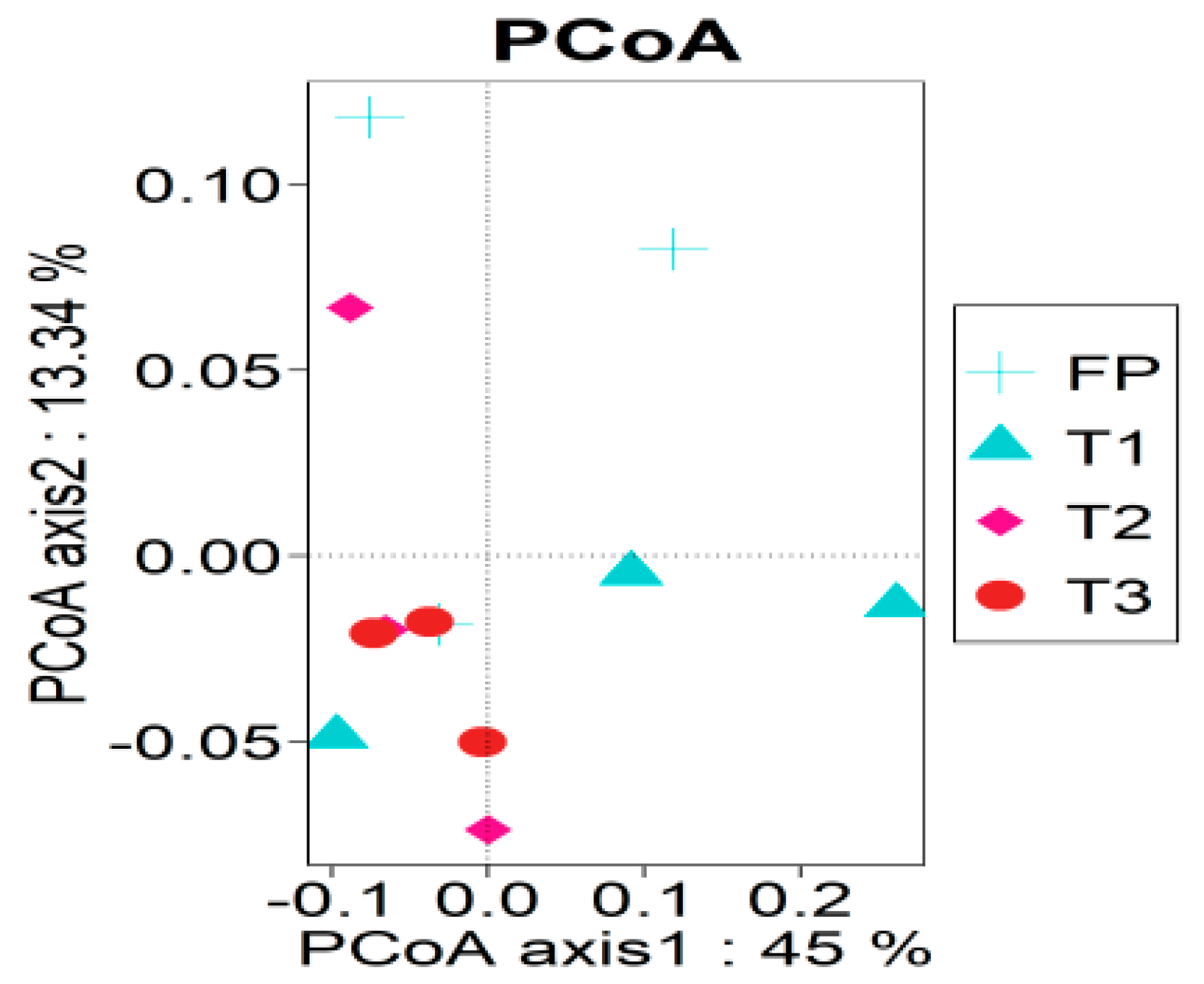
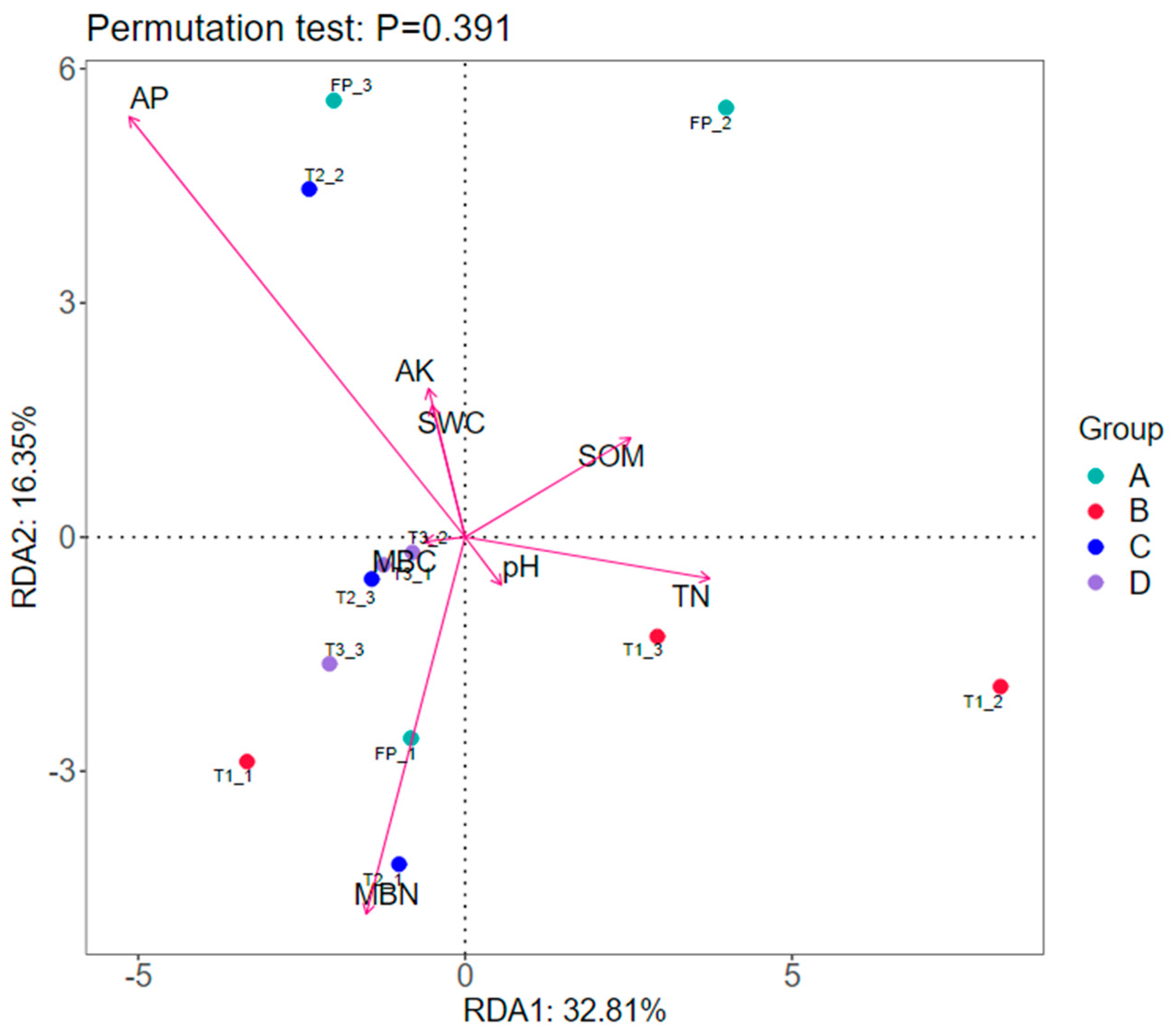
Fertilizer regimes have profound effects on crop yield, soil fertility, and microbial community structure. However, the impacts of partially substituting mineral nitrogen (N) with organic N and/or controlled-release mineral N and combining with micronutrient fertilizers on soil properties and microbial communities are still unclear in double-rice systems. The objective of this study was to compare rice yield, soil nutrient condition, and bacterial alpha and beta diversity in paddy soil that had been subjected to four fertilizer treatments from 2012 to 2016. The treatments were FP: farmers’ practice with 100% urea N; T1: 64% urea N + 16% manure N; T2: T1 + micronutrient fertilizers; and T3: 40% urea N + 24% controlled-release N + 16% manure N + micronutrient fertilizers. The results showed that there were no considerable differences between rice yields under fertilizer treatments, meaning that reducing farmers’ practice N by 20% did not decrease rice yield. Soil organic matter, total N, pH, and microbial biomass receiving manure did not increase significantly compared with FP. Bacterial beta diversities did not alter under the four treatments. Only two (Verrucomicrobia and Aminicenantes) out of eleven dominant phyla considerably varied under manure treatments. These results indicate that 20% reduction and partial substitution of mineral fertilizer with manure can maintain double-rice yield in paddy soil with limited effects on soil properties and bacterial community structure.
Keywords: mineral fertilizer; manure; silicon fertilizer; controlled-release urea; straw return; soil microbiome; zinc fertilizer mineral fertilizer; manure; silicon fertilizer; controlled-release urea; straw return; soil microbiome; zinc fertilizer