A Study on Consumers’ Preferences for the Palace Museum’s Cultural and Creative Products from the Perspective of Cultural Sustainability




Abstract
1. Introduction
1.1. Research Background and Motivation
1.2. Research Purposes and Questions
2. Literature Review
2.1. Current Status of The Palace Museum’s Cultural and Creative Industry
2.2. Cultural and Creative Products
2.2.1. Definition of Cultural and Creative Products
2.2.2. Design of Cultural and Creative Products
2.3. Consumer Preference
2.4. Cultural Sustainability
3. Research Design
3.1. Research Subjects
3.2. Cultural and Creative Product Samples
3.3. Cultural and Creative Product Attributes Projects
3.4. Research Instruments
3.5. Research Method
3.6. Research Architecture and Hypotheses
4. Results and Discussion
4.1. Descriptive Statistics Analysis
4.2. Analysis of Subjects’ Preference in Purchasing Cultural and Creative Products
4.2.1. Analysis of Subjects’ Preferences
4.2.2. Statistics of the Average Preference
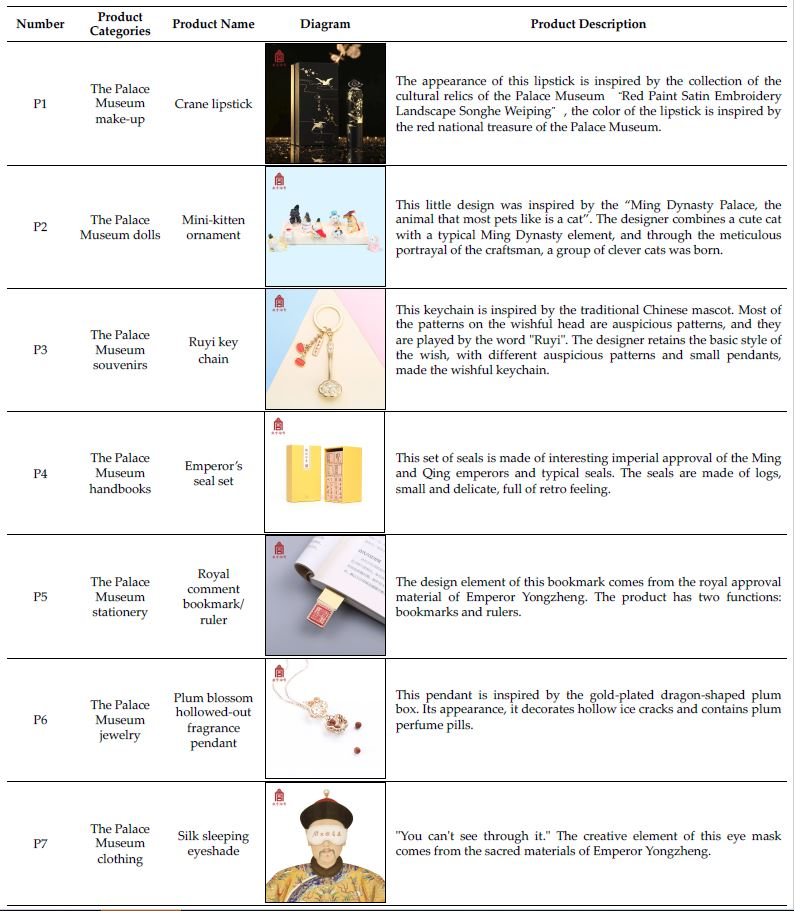
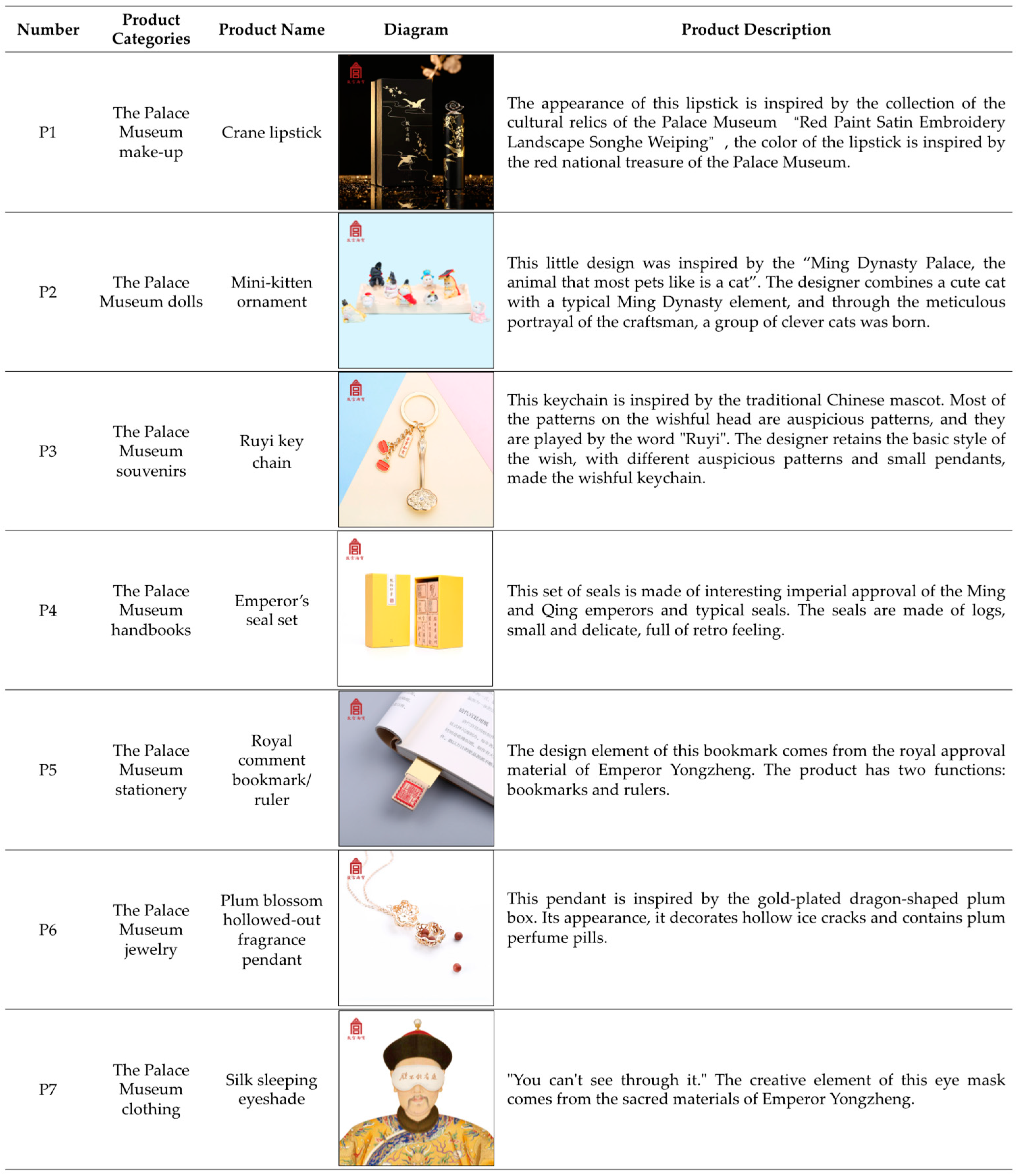
- P1 (crane lipstick): The average value of “cultural meaning” is the highest, indicating that it has the meaning of conveying cultural connotation; the average value of “historical events” is the lowest, indicating that it has a lower function in associating consumers with specific historical events.
- P2 (mini-kitten ornament): The average value of “interestingness” is the highest, indicating that it is interesting; the average value of “cultural image” is the lowest, indicating that it has a lower function in conveying the cultural image of beliefs, ethics, and morality.
- P3 (Ruyi key chain): The average value of “cultural meaning” is the highest, indicating that it has the meaning of conveying cultural connotation; the average value of “historical events” is the lowest, indicating that it has a low function in associating consumers with specific historical events.
- P4 (emperor’s seal set): The average value of “Forbidden City royal culture” is the highest, indicating that it has the characteristics of transmitting Chinese Forbidden City royal culture; the average value of “having a sense of the times” is the lowest, indicating that it has a low function in making consumers feel fashion trends.
- P5 (royal comment bookmark/ruler): The average value of “cultural meaning” is the highest, indicating that it has the meaning of conveying cultural connotation; the average values of “having a sense of the times” and “historical events” are the lowest, indicating that it has a lower function in making consumers feel fashion trends and associating consumers with specific historical events.
- P6 (plum blossom hollowed-out fragrance pendant): The average value of “creating aesthetic feeling” is the highest, indicating that it conveys the feeling of beauty; the average value of “historical events” is the lowest, indicating that it has a low function in associating consumers with specific historical events.
- P7 (silk sleeping eyeshade): The average value of “interestingness” is the highest, indicating that it is interesting; the average value of “cultural image” is the lowest, indicating that it has a low function in transmitting cultural images of belief and ethics.
4.3. Factor Analysis
4.3.1. Reliability Verification and Subjects’ Preference Factor Analysis
4.3.2. The Relationship between Cultural and Creative Product Samples and Factors
4.4. Analysis of the Subjects’ “Cognition of Design Attribute”
4.5. Difference Analysis of the Subjects’ “Cognition of Design Attribute” Factors
4.5.1. Difference Analysis of Cognitive Factors of Design Attributes According to Gender
4.5.2. Difference Analysis of Cognitive Factors of Design Attributes According to Educational Background
4.5.3. Difference Analysis of the Cognitive Factors of Design Attributes According to Age
4.5.4. Difference Analysis of Cognitive Factors of Design Attributes According to Design Background
4.6. Discussions on Results and Impacts
5. Conclusions and Suggestions
5.1. Conclusions
5.2. Suggestions
Author Contributions
Funding
Conflicts of Interest
References
- Shih, B.J. Aesthetic Economic Code, 1rd ed.; Business Week: Taipei, Taiwan, 2009. [Google Scholar]
- Soini, K.; Birkeland, I. Exploring the scientific discourse on cultural sustainability. Geoforum 2014, 51, 213–223. [Google Scholar] [CrossRef] [Scilit]
- Lin, J.; Cai, J.; Han, Y.; Zhu, H.; Cheng, Z. Culture sustainability: Culture quotient (CQ) and its quantitative empirical application to Chinese cities. Sustainability 2016, 8, 1235. [Google Scholar] [CrossRef] [Scilit]
- Zhang, X.B. Suggestions on the market positioning and marketing strategy of the palace museum. Forbid. City J. 2016, 1, 168–181. [Google Scholar]
- Mu, X.D. Research on the development strategy of museum cultural creation in the context of “Internet +”—Taking the Beijing Palace Museum as an example. News Res. Guide 2017, 8, 251–252. [Google Scholar]
- Niu, L.Q. Museum “cultural and creative blue ocean”. New Econ. Guide 2015, 3, 25–29. [Google Scholar]
- Zhu, Y. 600-year-old Forbidden City is also “selling Moe” cultural and creative industry chain has not yet opened. Bus. Sch. 2017, Z1, 27–30. [Google Scholar]
- International Council of Museums. Available online: https://icom.museum/en/activities/standards-guidelines/museum-definition/ (accessed on 15 May 2019).
- Yang, Z. Shan Jixiang Zhou Gongxin dialogue: How cultural and creative to catch the express train museum. Ningbo Commun. 2017, 8, 70–71. [Google Scholar]
- The Palace Museum Official Website. Available online: https://www.dpm.org.cn/About.html (accessed on 13 May 2019).
- Chen, C. Research on the development of cultural and creative industries in the Palace Museum. Guangxi Soc. Sci. 2017, 7, 192–194. [Google Scholar]
- China Capital Network. Available online: http://culture.qianlong.com/2016/0420/550524.shtml (accessed on 20 April 2016).
- People’s Network. Available online: http://media.people.com.cn/BIG5/n1/2019/0220/c40606-30806339.html. (accessed on 20 February 2019).
- Shanxi Cultural Industry Network. Available online: http://www.shaanxici.cn/content/2015-09/29/content_13188430.htm (accessed on 29 September 2015).
- Lin, R.T. Cultural creativity added design value. Art Apprec. 2005, 7, 1–9. [Google Scholar]
- Hsu, C.L. Creative Cultural Products by the National Palace Museum. Master’s Thesis, Department of Visual Communication Design, National Kaohsiung Normal University, Kaohsiung City, Taiwan, 2007. [Google Scholar]
- Chen, Y.H. The Merchandise Design of the Museum—A Case Study of Be-to Hotspring Museum. Master’s Thesis, Master of Arts in the Department of Art and Design, Da-Yeh University, Changhua, Taiwan, 2008. [Google Scholar]
- Huang, Y.C. The Cultural Product Confer Research and Concept Design: From National Museum Old is New to Formosa Plastics Group Museum Souvenir Design. Master’s Thesis, Industrial Design Institute, Chang Gung University, Taoyuan City, Taiwan, 2007. [Google Scholar]
- China Times Art Edition. Available online: http://ccindustry.pixnet.net/blog/post/16827591 (accessed on 22 April 2008).
- Lee, C.Y. The Recollection and Learning Experience of Young Visitors by the Interaction with the Museum Souvenirs. Master’s Thesis, Museum Institute Master’s Program, Taipei National University of the Arts, Taipei City, Taiwan, 2009. [Google Scholar]
- Ho, M.C.; Lin, Q.X.; Liu, Y.J. Cultural and creative concept development and design of the product. J. Des. 1996, 1, 1–15. [Google Scholar]
- Chen, H.J.; Zhang, T. The symbolic transformation of the cultural and creative product design of Taiwan Museum. Art Lit. Masses 2012, 94–95. [Google Scholar]
- Zhang, A.H. Research on the creative development model of museum art derivatives. Hundred Sch. Arts 2015, 31, 210–214. [Google Scholar]
- Chen, J.Z.; Li, Y.J. Applying KANO quality model to explore the charm factor of cultural product design. J. Des. 2008, 13, 25–41. [Google Scholar]
- Tsai, M.S. Convertibility and Application of Culture Symbols in the Process of Cultural Commodities Design—With Cases Studies of the Cultural Commodities Designed by Students of NYUST. Master’s Thesis, Industrial Design Institute, National Yunlin University of Science and Technology, Yunlin, Taiwan, 2007. [Google Scholar]
- Becker, S.G.; Jichu, Z. Interpretation of Preference—To Explore Human Behavior by Economic Methods, 1st ed.; Yuan-Liou Publishing: Taipei, Taiwan, 1999. [Google Scholar]
- Sagoff, M. On the relation between preference and choice. J. Socio-Econ. 2003, 6, 587–589. [Google Scholar] [CrossRef] [Scilit]
- China Economic Net. Available online: http://www.ce.cn/culture/gd/201801/19/t20180119_27812840.shtml (accessed on 18 January 2018).
- Sun, Y.Y.; Wang, F. Research on the design characteristics of museum’s cultural and creative products from the perspective of college students’ needs—Taking the Palace Museum in Beijing as an example. Cult. Ind. Res. 2018, 2, 214–228. [Google Scholar]
- Wang, H.Y.; Li, J. Research on intangible cultural heritage protection strategy based on consumer preference. Intang. Cult. Herit. Prot. 2010, 85–89. [Google Scholar]
- Tu, J.C.; Cui, Y.; Liu, L.X. A Study on the preference of healing products for single office workers of various lifestyles. Sustainability 2019, 11, 2314. [Google Scholar] [CrossRef] [Scilit]
- Connelly, S. Mapping sustainable development as a contested concept. Local Environ. 2007, 12, 259–278. [Google Scholar] [CrossRef] [Scilit]
- Black, A. Pillars, bottom lines, capitals and sustainability: A critical review of the discourses. Int. J. Environ. Cult. Econ. Social Sustain. 2007, 2, 107–117. [Google Scholar] [CrossRef] [Scilit]
- Murphy, K. The social pillar of sustainable development: A literature review and framework for policy analysis. Sustain. Sci. Pract. Policy 2012, 8, 15–29. [Google Scholar] [CrossRef] [Scilit]
- UNESCO. Cultural Column. Available online: http://www.unesco.org/new/zh/culture/ (accessed on 13 February 2017).
- He, S.Z. Bring home the culture of the Forbidden City. China Gold News 2019, 8, 1–2. [Google Scholar]
- Liu, S.J. An Analysis of the network marketing strategy of museum cultural and creative products—Taking the “Forbidden City Taobao” as an example. Audiovisual 2019, 1, 219–220. [Google Scholar]
- Huang, Y. Taobao marketing analysis of museum cultural products—Take “Forbidden City Taobao” as an example. Mus. Res. 2011, 4, 83–87. [Google Scholar]
- Shang, Y. Research and Development of Museum Art Derivatives—Take the Beijing Palace Museum as an example. Master’s Thesis, China Central Academy of Fine Arts, Hangzhou, China, 2018. [Google Scholar]
- Xing, Z.Y. Museum cultural and creative industry model and product research. Hundred Sch. Arts 2014, z1, 18–22. [Google Scholar]
- Wang, M.F. The Research of Symbolism in Local Culture Commodity Developing Mode—A Case Study in Nantou County. Master’s Thesis, Department of Industrial Design, Tunghai University, Taichung City, Taiwan, 2007. [Google Scholar]
- Kuo, P.Y. A Study of Marketing Mechanism of Locally Cultural Industry—The Consumer Psychology Analyses. Master’s Thesis, Architectural and Urban Design Institute, Chaoyang University of Technology, Taichung City, Taiwan, 2003. [Google Scholar]
- Qiang, B.; Ye, C.; Yao, Z.Y. Innovative design and development thinking of museum cultural and creative products. Guangxi J. Light Ind. 2018, 34, 111–112, 114. [Google Scholar]
- Wang, Y. An analysis of the success of the Palace Museum’s cultural and creative products. Times Financ. 2018, 33, 104–105. [Google Scholar]
- Yu, X.X.; Yang, W.J. Analysis of the design of museum cultural and creative products. Packag. World 2017, 4, 27–28. [Google Scholar]
- Lu, J.Z.; Ma, P. Research on the development of museum cultural products from the perspective of design—Based on the analysis of the cultural products of the National Palace Museum in Taipei. Art Lit. Masses 2017, 19, 122–123. [Google Scholar]
- Xiong, Z.Y. Analysis and Research on the Design of Museum Cultural Derivative Products. Master’s Thesis, China Academy of Art, Hangzhou, China, 2010. [Google Scholar]
- Shih, P.Y. Exploring the Innovation of Product Design from International Design Award—Winning Products. Master’s Thesis, Design institute, National Taiwan University of Science and Technology, Taipei, Taiwan, 2006. [Google Scholar]
- Xiao, X.; Wang, Y.N. Historical memory is draped in the new clothes of the times—Discussion cultural and creative programs “On the new, the Forbidden City”. Publ. Wide Angle 2019, 73–75. [Google Scholar]
- Ge, J.Q.; Yu, W.; Wang, T. Forbidden City cultural and creative product design analysis and reference study. Design 2018, 5, 103–105. [Google Scholar]
- Zhao, Y.T. Analysis of the museum cultural and creative integrated marketing strategy in the new economy—A case study of the National Palace Museum. Technol. Econ. Guide 2018, 26, 182–183. [Google Scholar]
- Chen, Z.K. “I got to go with the culture”—The definition and classification of cultural and creative products “3C resonance principle”. Mod. Soc. 2017, 2, 103–105. [Google Scholar]
- Zhang, F.Y. The development of museum cultural products in the context of “Internet +”. Herit. Conserv. Stud. 2016, 1, 22–26. [Google Scholar]
- Jin, Q.M.; Zhang, X. Museum of cultural and creative product development and research. J. Xi’an Univ. Archit. Technol. 2016, 42–46. [Google Scholar]
- Zhang, G.D. Cultural and creative products should be more some less innovation “routine”. China Bus. Times 2019, 3, 1. [Google Scholar]
- Li, B.W. Discussion on the design of cultural creative products based on brand communication. Sci. Technol. Econ. Guide 2019, 27, 167. [Google Scholar]
- China Economic Net. Available online: https://baijiahao.baidu.com/s?id=1619607791536502366&wfr =spider&for=pc (accessed on 12 December 2018).
- Shehata, A.M.A.E.R.; Mostafa, M.M.I. Open museums as a tool for culture sustainability. Procedia Environ. Sci. 2017, 37, 363–373. [Google Scholar] [CrossRef] [Scilit]
- Chaney, D.; Pulh, M.; Mencarelli, R. When the arts inspire businesses: Museums as a heritage redefinition tool of brands. J. Bus. Res. 2018, 85, 452–458. [Google Scholar] [CrossRef] [Scilit]
- Albuquerque, M.H.F.; Delgado, M.J.B.L. Sustainable museographies: The museum shops. Procedia Manuf. 2015, 3, 6414–6420. [Google Scholar] [CrossRef] [Scilit]
- Soini, K.; Dessein, J. Culture-Sustainability Relation: Towards a Conceptual Framework. Sustainability 2016, 8, 167. [Google Scholar] [CrossRef] [Scilit]
- Ceschin, F.; Gaziulusoy, I. Evolution of design for sustainability: From product design to design for system innovations and transitions. Des. Stud. 2016, 47, 118–163. [Google Scholar] [CrossRef] [Scilit]
- Axelsson, R.; Angelstam, P.; Degerman, E.; Teitelbaum, S.; Andersson, K.; Elbakidze, M.; Drotz, M.K. Social and cultural sustainability: Criteria, indicators, verifier variables for measurement and maps for visualization to support planning. Ambio 2013, 42, 215–228. [Google Scholar] [CrossRef] [Scilit] [PubMed]

| Source | Questionnaire Contents |
|---|---|
| (Shang, 2018) [39]; (Xing, 2014) [40]; (Wang, 2007) [41]; (Kuo, 2003) [42] | Q01.This product has a cultural element of faith and ethics. |
| Q02.This product can be presented as allusions of old things. | |
| Q03.This product has the special customs of the place, the customs and other images. | |
| Q04.This product makes me feel the characteristics of the royal culture of the Forbidden City in China. | |
| Q05.This product will make me feel the glory of traditional culture. | |
| (Qiang, Ye and Yao, 2018) [43]; (Wang, 2018) [44]; (Yu and Yang, 2017) [45]; (Lu and Ma, 2017) [46]; (Xiong, 2010) [47]; (Shih, 2006) [48] | Q06.The shape of this product can make me feel beautiful. |
| Q07.This product can make me think of a particular symbol image. | |
| Q08.This product has a unique creativity. | |
| Q09.This product makes me feel a bit interesting. | |
| Q10.This product makes me feel the fashion trend. | |
| (Xiao and Wang, 2019) [49]; (Ge, Yu and Wang, 2018) [50]; (Zhao, 2018) [51]; (Chen, 2017) [52]; (Zhang, 2016) [53]; (Jin and Zhang, 2016) [54] | Q11.This product makes me feel the meaning of its cultural value continuation. |
| Q12.This product makes me feel the historical and cultural memory of the Chinese nation. | |
| Q13.This product makes me feel that it has a certain cultural meaning. | |
| Q14.This product has the meaning of cultural education and teaching. | |
| Q15.This product reminds me of a specific historical event. |
| Questionnaire Classification | Classification Item |
|---|---|
| Part 1. Basic personal data | Gender/Educational background/Age/Design background |
| Part 2. Consumer preferences | Design attribute cognition (1 to 5 points) Cultural and creative product preferences (sorting 1 to 7) |
| Categories | Items | Frequencies | Percentage |
|---|---|---|---|
| Gender | Male | 130 | 43.8% |
| Female | 167 | 56.2% | |
| Educational Background | University and below | 197 | 66.3% |
| Research institute or above | 100 | 33.7% | |
| Age | Under 20 years old | 61 | 20.5% |
| 21–30 years old | 125 | 42.1% | |
| 31–40 years old | 111 | 37.4% | |
| Design Background | With a design background | 166 | 55.9% |
| Without a design background | 131 | 44.1% |
| Product | L1 | L2 | L3 | L4 | L5 | L6 | L7 |
|---|---|---|---|---|---|---|---|
| P1 | 113 | 37 | 31 | 44 | 31 | 26 | 15 |
| 38% | 12.5% | 10.4% | 14.8% | 10.4% | 8.8% | 5.1% | |
| P2 | 36 | 43 | 59 | 39 | 50 | 47 | 33 |
| 12.1% | 14.5% | 19.9% | 13.1% | 16.8% | 15.8% | 11.1% | |
| P3 | 22 | 57 | 49 | 49 | 40 | 44 | 21 |
| 7.4% | 19.2% | 16.5% | 16.5% | 13.5% | 14.8% | 7.1% | |
| P4 | 26 | 47 | 48 | 48 | 55 | 51 | 22 |
| 8.8% | 15.8% | 16.2% | 16.2% | 18.5% | 17.2% | 7.4% | |
| P5 | 31 | 50 | 56 | 47 | 46 | 57 | 10 |
| 10.4% | 16.8% | 18.9% | 15.8% | 15.5% | 19.2% | 3.4% | |
| P6 | 62 | 51 | 40 | 54 | 48 | 37 | 10 |
| 20.9% | 17.2% | 13.5% | 18.2% | 16.2% | 12.5% | 3.4% | |
| P7 | 7 | 12 | 14 | 16 | 27 | 35 | 186 |
| 2.4% | 4% | 4.7% | 5.4% | 9.1% | 11.8% | 62.6% | |
| Total | 297 100% | ||||||
| Preference sort | 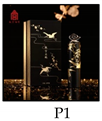 | 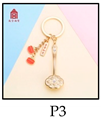 | 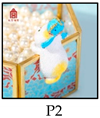 | 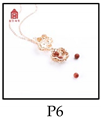 | 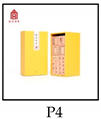 | 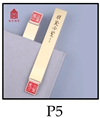 | 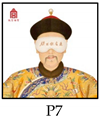 |
| Item | P1 | P2 | P3 | P4 | P5 | P6 | P7 | P1–P7 |
|---|---|---|---|---|---|---|---|---|
| 1. Cultural imagery | 3.36 | 2.97 | 3.68 | 3.79 | 3.70 | 3.65 | 3.14 | 3.47 |
| 2. Allusions of old things | 3.77 | 3.32 | 3.66 | 3.92 | 3.80 | 3.65 | 3.36 | 3.64 |
| 3. Local customs | 3.89 | 3.49 | 3.86 | 3.86 | 3.76 | 3.85 | 3.31 | 3.72 |
| 4. Forbidden City culture | 3.81 | 3.27 | 3.70 | 4.11 | 3.98 | 3.76 | 3.44 | 3.72 |
| 5. The glory of traditional culture | 3.93 | 3.23 | 3.90 | 4.00 | 3.93 | 3.89 | 3.26 | 3.74 |
| 6. Produce beautiful feeling | 3.98 | 3.80 | 3.89 | 3.71 | 3.90 | 4.12 | 3.15 | 3.79 |
| 7. Symbol imagery | 3.87 | 3.78 | 3.95 | 4.05 | 3.98 | 3.85 | 3.40 | 3.78 |
| 8. Unique creativity | 3.78 | 3.85 | 3.75 | 3.87 | 3.84 | 3.93 | 3.65 | 3.81 |
| 9. Interesting | 3.52 | 4.16 | 3.65 | 3.85 | 3.84 | 3.85 | 3.82 | 3.81 |
| 10. Sense of the times | 3.63 | 3.67 | 3.60 | 3.53 | 3.67 | 3.94 | 3.43 | 3.64 |
| 11. Continuation of cultural values | 3.97 | 3.40 | 3.88 | 3.97 | 4.01 | 3.86 | 3.36 | 3.78 |
| 12. National history and cultural memory | 4.02 | 3.30 | 3.94 | 4.05 | 3.99 | 3.84 | 3.37 | 3.79 |
| 13. Cultural meaning | 4.05 | 3.49 | 3.99 | 4.05 | 4.02 | 3.92 | 3.39 | 3.84 |
| 14. Cultural education and teaching | 3.57 | 3.25 | 3.74 | 3.80 | 3.87 | 3.64 | 3.27 | 3.59 |
| 15. Historical events | 3.22 | 3.06 | 3.37 | 3.72 | 3.67 | 3.52 | 3.27 | 3.41 |
| Item | Value | |
|---|---|---|
| Kaiser–Meyer–Olkin Measure of Sampling Adequacy | 0.939 | |
| Bartlett’s Test of Sphericity | Approx. Chi-Square | 12,251.805 |
| df | 1653 | |
| Sig. | 0.000 * | |
| Factor | Name | Item | Contents | Factors Loadings | Cronbach’s α |
|---|---|---|---|---|---|
| Factor 1 | Cultural traits | p4Q01 | This product has a cultural element of faith and ethics. | 0.828 | 0.797 |
| p4Q03 | This product has the special customs of the place, the customs and other images. | 0.801 | |||
| p4Q02 | This product can be presented as allusions of old things. | 0.767 | |||
| p4Q09 | This product makes me feel a bit interesting. | 0.525 | |||
| Factor 2 | Local characteristics | p3Q03 | This product has the special customs of the place, the customs and other images. | 0.794 | 0.868 |
| p3Q01 | This product has a cultural element of faith and ethics. | 0.789 | |||
| p3Q02 | This product can be presented as allusions of old things. | 0.780 | |||
| p3Q07 | This product can make me think of a particular symbol image. | 0.750 | |||
| p3Q04 | This product makes me feel the characteristics of the royal culture of the Forbidden City in China. | 0.686 | |||
| Factor 3 | Forbidden City culture | p5Q04 | This product makes me feel the characteristics of the royal culture of the Forbidden City in China. | 0.832 | 0.881 |
| p5Q02 | This product can be presented as allusions of old things. | 0.814 | |||
| p5Q01 | This product has a cultural element of faith and ethics. | 0.772 | |||
| p5Q07 | This product can make me think of a particular symbol image. | 0.764 | |||
| Factor 4 | Cultural symbol | p7Q01 | This product has a cultural element of faith and ethics. | 0.881 | 0.886 |
| p7Q03 | This product has the special customs of the place, the customs and other images. | 0.856 | |||
| p7Q07 | This product can make me think of a particular symbol image. | 0.788 | |||
| Factor 5 | Shape with aesthetic feeling | p6Q06 | The shape of this product can make me feel beautiful. | 0.916 | 0.812 |
| p6Q10 | This product makes me feel the fashion trend. | 0.815 | |||
| Factor 6 | Cultural identity | p1Q05 | This product will make me feel the glory of traditional culture. | 0.760 | 0.872 |
| p1Q11 | This product makes me feel the meaning of its cultural value continuation. | 0.744 | |||
| p1Q13 | This product makes me feel that it has a certain cultural meaning. | 0.726 | |||
| p1Q02 | This product can be presented as allusions of old things. | 0.702 | |||
| p1Q03 | This product has the special customs of the place, the customs and other images. | 0.699 | |||
| p1Q06 | The shape of this product can make me feel beautiful. | 0.627 | |||
| p1Q04 | This product makes me feel the characteristics of the royal culture of the Forbidden City in China. | 0.611 | |||
| p1Q07 | This product can make me think of a particular symbol image. | 0.533 | |||
| Factor 7 | Unique creativity | p7Q09 | This product makes me feel a bit interesting. | 0.906 | 0.850 |
| p7Q08 | This product has a unique creativity. | 0.835 | |||
| Factor 8 | Sensual interest | p2Q09 | This product makes me feel a bit interesting. | 0.821 | 0.835 |
| p2Q10 | This product makes me feel the fashion trend. | 0.792 | |||
| p2Q08 | This product has a unique creativity. | 0.776 | |||
| p2Q06 | The shape of this product can make me feel beautiful. | 0.708 | |||
| Factor 9 | Fashion trend | p3Q10 | This product makes me feel the fashion trend. | 0.828 | 0.832 |
| p3Q09 | This product makes me feel a bit interesting. | 0.817 | |||
| p3Q08 | This product has a unique creativity. | 0.806 | |||
| Factor 10 | Cultural sustainability | p4Q12 | This product makes me feel the historical and cultural memory of the Chinese nation. | 0.870 | 0.897 |
| p4Q11 | This product makes me feel the meaning of its cultural value continuation. | 0.833 | |||
| p4Q13 | This product makes me feel that it has a certain cultural meaning. | 0.830 | |||
| p4Q05 | This product will make me feel the glory of traditional culture. | 0.766 | |||
| Factor 11 | Traditional culture | p2Q12 | This product makes me feel the historical and cultural memory of the Chinese nation. | 0.822 | 0.931 |
| p2Q04 | This product makes me feel the characteristics of the royal culture of the Forbidden City in China. | 0.799 | |||
| p2Q15 | This product reminds me of a specific historical event. | 0.770 | |||
| p2Q05 | This product will make me feel the glory of traditional culture. | 0.765 | |||
| p2Q11 | This product makes me feel the meaning of its cultural value continuation. | 0.762 | |||
| p2Q14 | This product has the meaning of cultural education and teaching. | 0.757 | |||
| p2Q01 | This product has a cultural element of faith and ethics. | 0.710 | |||
| p2Q02 | This product can be presented as allusions of old things. | 0.706 | |||
| p2Q07 | This product can make me think of a particular symbol image. | 0.692 | |||
| p2Q03 | This product has the special customs of the place, the customs and other images. | 0.673 | |||
| Factor 12 | Cultural connotation | p6Q01 | This product has a cultural element of faith and ethics. | 0.848 | 0.861 |
| p6Q15 | This product reminds me of a specific historical event. | 0.873 | |||
| p6Q14 | This product has the meaning of cultural education and teaching. | 0.796 | |||
| Factor 13 | Cultural inheritance | p5Q09 | This product makes me feel a bit interesting. | 0.876 | 0.796 |
| p5Q10 | This product makes me feel the fashion trend. | 0.818 | |||
| Factor 14 | Historical memory | p1Q15 | This product reminds me of a specific historical event. | 0.793 | 0.752 |
| p1Q09 | This product makes me feel a bit interesting. | 0.712 | |||
| p1Q14 | This product has the meaning of cultural education and teaching. | 0.680 | |||
| p1Q10 | This product makes me feel the fashion trend. | 0.625 | |||
| Overall reliability/Cronbach’s α | 0.969 | ||||
| P1 | P2 | P3 | P4 | P5 | P6 | P7 | |
|---|---|---|---|---|---|---|---|
| Name | Crane lipstick | Mini-kitten ornament | Ruyi key chain | Emperor’s seal set | Royal comment bookmark/ruler | Plum blossom hollowed-out fragrance pendant | Silk sleeping eyeshade |
| Diagram | 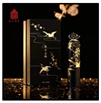 |  | 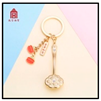 | 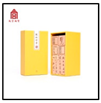 | 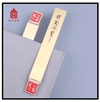 |  | 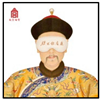 |
| Factor 1 Cultural traits | ● | ||||||
| Factor 2 Local characteristics | ● | ||||||
| Factor 3 Forbidden City culture | ● | ||||||
| Factor 4 Cultural symbol | ● | ||||||
| Factor 5 Shape with aesthetic feeling | ● | ||||||
| Factor 6 Cultural identity | ● | ||||||
| Factor 7 Unique creativity | ● | ||||||
| Factor 8 Sensual interest | ● | ||||||
| Factor 9 Fashion trend | ● | ||||||
| Factor 10 Cultural sustainability | ● | ||||||
| Factor 11 Traditional culture | ● | ||||||
| Factor 12 Cultural connotation | ● | ||||||
| Factor 13 Cultural inheritance | ● | ||||||
| Factor 14 Historical memory | ● |
| Factor | Mean | SD |
|---|---|---|
| Cultural connotation | 4.03 | 0.78 |
| Unique creativity | 4.02 | 0.71 |
| Cultural traits | 3.91 | 0.64 |
| Cultural symbol | 3.87 | 0.71 |
| Fashion trend | 3.86 | 0.78 |
| Sensual interest | 3.85 | 0.68 |
| Shape with aesthetic feeling | 3.77 | 0.75 |
| Cultural sustainability | 3.75 | 0.81 |
| Historical memory | 3.74 | 0.98 |
| Cultural identity | 3.67 | 0.80 |
| Traditional culture | 3.60 | 0.85 |
| Local characteristics | 3.49 | 0.71 |
| Cultural inheritance | 3.28 | 0.95 |
| Forbidden City culture | 3.27 | 0.80 |
| Factor | Male | Female | Levene’s Test for Equality of Variances | Sig. (2-Tailed) | |
|---|---|---|---|---|---|
| 130 | 167 | F | Sig. | ||
| Cultural traits | 3.7298 | 4.0494 | 2.299 | 0.131 | 0.000 * 0.000 |
| Local characteristics | 3.3615 | 3.5868 | 0.536 | 0.465 | 0.007 * 0.007 |
| Forbidden City culture | 3.1469 | 3.3587 | 1.338 | 0.248 | 0.024 * 0.025 |
| Cultural symbol | 3.7173 | 3.9910 | 4.399 | 0.037 | 0.001 0.001 * |
| Shape with aesthetic feeling | 3.6015 | 3.9006 | 2.536 | 0.112 | 0.001 * 0.001 |
| Cultural identity | 3.5641 | 3.7445 | 4.058 | 0.045 | 0.053 0.058 |
| Unique creativity | 3.9231 | 4.0943 | 3.360 | 0.068 | 0.038 * 0.043 |
| Sensual interest | 3.8212 | 3.8802 | 0.342 | 0.559 | 0.459 0.463 |
| Fashion trend | 3.7385 | 3.9626 | 3.803 | 0.052 | 0.014 * 0.017 |
| Cultural sustainability | 3.6038 | 3.8653 | 3.940 | 0.048 | 0.005 0.007 * |
| Traditional culture | 3.4103 | 3.7505 | 0.774 | 0.380 | 0.001 * 0.001 |
| Cultural connotation | 3.8885 | 4.1467 | 0.161 | 0.688 | 0.005 * 0.005 |
| Cultural inheritance | 3.1590 | 3.3792 | 0.158 | 0.691 | 0.048 * 0.049 |
| Historical memory | 3.5346 | 3.8952 | 2.207 | 0.138 | 0.002 * 0.002 |
| Factor | University and below | Research Institute or above | Levene’s Test for Equality of Variances | Sig. (2-Tailed) | |
|---|---|---|---|---|---|
| 197 | 100 | F | Sig. | ||
| Cultural traits | 3.9175 | 3.8938 | 3.092 | 0.080 | 0.763 0.774 |
| Local characteristics | 3.5393 | 3.3875 | 0.362 | 0.548 | 0.083 0.077 |
| Forbidden City culture | 3.3726 | 3.0560 | .228 | 0.633 | 0.001 * 0.002 |
| Cultural symbol | 3.8947 | 3.8250 | 1.370 | 0.243 | 0.428 0.443 |
| Shape with aesthetic feeling | 3.7655 | 3.7780 | 1.470 | 0.226 | 0.892 0.896 |
| Cultural identity | 3.6836 | 3.6300 | 1.096 | 0.296 | 0.586 0.594 |
| Unique creativity | 3.9898 | 4.0775 | 1.364 | 0.244 | 0.312 0.330 |
| Sensual interest | 3.8909 | 3.7825 | 0.313 | 0.576 | 0.195 0.200 |
| Fashion trend | 3.9036 | 3.7875 | 2.008 | 0.157 | 0.227 0.252 |
| Cultural sustainability | 3.8198 | 3.6150 | 0.677 | 0.411 | 0.039 * 0.045 |
| Traditional culture | 3.7005 | 3.4067 | 0.264 | 0.608 | 0.005 * 0.005 |
| Cultural connotation | 3.9924 | 4.1150 | 0.020 | 0.886 | 0.202 0.194 |
| Cultural inheritance | 3.3350 | 3.1800 | 0.017 | 0.897 | 0.186 0.187 |
| Historical memory | 3.6980 | 3.8150 | 2.176 | 0.141 | 0.332 0.349 |
| SS | DF | MS | F | Sig. | Scheffe | ||
|---|---|---|---|---|---|---|---|
| Cultural traits | Between Groups | 0.306 | 2 | 0.153 | 0.372 | 0.690 | |
| Within Groups | 120.996 | 294 | 0.412 | ||||
| Total | 121.303 | 296 | |||||
| Local characteristics | Between Groups | 1.297 | 2 | 0.648 | 1.278 | 0.280 | |
| Within Groups | 149.162 | 294 | 0.507 | ||||
| Total | 150.459 | 296 | |||||
| Forbidden City culture | Between Groups | 8.057 | 2 | 4.029 | 6.512 | 0.002 * | 3 < 1 3 < 2 |
| Within Groups | 181.889 | 294 | 0.619 | ||||
| Total | 189.947 | 296 | |||||
| Cultural symbol | Between Groups | 1.835 | 2 | 0.918 | 1.808 | 0.166 | |
| Within Groups | 149.176 | 294 | 0.507 | ||||
| Total | 151.011 | 296 | |||||
| Shape with aesthetic feeling | Between Groups | 0.612 | 2 | 0.306 | 0.547 | 0.579 | |
| Within Groups | 164.356 | 294 | 0.559 | ||||
| Total | 164.967 | 296 | |||||
| Cultural identity | Between Groups | 1.052 | 2 | 0.526 | 0.824 | 0.440 | |
| Within Groups | 187.725 | 294 | 0.639 | ||||
| Total | 188.777 | 296 | |||||
| Unique creativity | Between Groups | 2.073 | 2 | 1.036 | 2.098 | 0.125 | |
| Within Groups | 145.254 | 294 | 0.494 | ||||
| Total | 147.326 | 296 | |||||
| Sensual interest | Between Groups | 0.430 | 2 | 0.215 | 0.462 | 0.631 | |
| Within Groups | 136.710 | 294 | 0.465 | ||||
| Total | 137.139 | 296 | |||||
| Fashion trend | Between Groups | 0.268 | 2 | 0.134 | 0.219 | 0.804 | |
| Within Groups | 180.340 | 294 | 0.613 | ||||
| Total | 180.608 | 296 | |||||
| Cultural sustainability | Between Groups | 0.671 | 2 | 0.336 | 0.513 | 0.599 | |
| Within Groups | 192.391 | 294 | 0.654 | ||||
| Total | 193.062 | 296 | |||||
| Traditional culture | Between Groups | 3.144 | 2 | 1.572 | 2.196 | 0.113 | |
| Within Groups | 210.486 | 294 | 0.716 | ||||
| Total | 213.630 | 296 | |||||
| Cultural connotation | Between Groups | 1.228 | 2 | 0.614 | 1.004 | 0.368 | |
| Within Groups | 179.935 | 294 | 0.612 | ||||
| Total | 181.163 | 296 | |||||
| Cultural inheritance | Between Groups | 2.039 | 2 | 1.019 | 1.121 | 0.327 | |
| Within Groups | 267.315 | 294 | 0.909 | ||||
| Total | 269.354 | 296 | |||||
| Historical memory | Between Groups | 0.889 | 2 | 0.445 | 0.461 | 0.631 | |
| Within Groups | 283.626 | 294 | 0.965 | ||||
| Total | 284.515 | 296 | |||||
| Factor | With a Design Background | Without a Design Background | Levene’s Test for Equality of Variances | Sig. (2-Tailed) | |
|---|---|---|---|---|---|
| 166 | 131 | F | Sig. | ||
| Cultural traits | 3.9789 | 3.8216 | 0.001 | 0.977 | 0.035 * 0.036 |
| Local characteristics | 3.4729 | 3.5076 | 1.170 | 0.280 | 0.677 0.676 |
| Forbidden City culture | 3.2404 | 3.2985 | 2.826 | 0.094 | 0.536 0.531 |
| Cultural symbol | 3.9367 | 3.7882 | 3.632 | 0.058 | 0.075 0.070 |
| Shape with aesthetic feeling | 3.8361 | 3.6855 | 0.007 | 0.934 | 0.084 0.085 |
| Cultural identity | 3.5723 | 3.7837 | 8.690 | 0.003 | 0.023 0.020 * |
| Unique creativity | 4.0678 | 3.9580 | 0.152 | 0.697 | 0.184 0.187 |
| Sensual interest | 3.8720 | 3.8321 | 1.007 | 0.316 | 0.617 0.613 |
| Fashion trend | 3.9157 | 3.7996 | 0.001 | 0.972 | 0.204 0.210 |
| Cultural sustainability | 3.7771 | 3.7176 | 0.037 | 0.848 | 0.529 0.528 |
| Traditional culture | 3.6084 | 3.5929 | 0.000 | 0.999 | 0.876 0.876 |
| Cultural connotation | 4.0994 | 3.9504 | 1.050 | 0.306 | 0.103 0.102 |
| Cultural inheritance | 3.3092 | 3.2494 | 0.726 | 0.395 | 0.592 0.595 |
| Historical memory | 3.7861 | 3.6756 | 1.379 | 0.241 | 0.335 0.330 |
© 2019 by the authors. Licensee MDPI, Basel, Switzerland. This article is an open access article distributed under the terms and conditions of the Creative Commons Attribution (CC BY) license (http://creativecommons.org/licenses/by/4.0/).
Share and Cite
Tu, J.-C.; Liu, L.-X.; Cui, Y. A Study on Consumers’ Preferences for the Palace Museum’s Cultural and Creative Products from the Perspective of Cultural Sustainability. Sustainability 2019, 11, 3502. https://doi.org/10.3390/su11133502
Tu J-C, Liu L-X, Cui Y. A Study on Consumers’ Preferences for the Palace Museum’s Cultural and Creative Products from the Perspective of Cultural Sustainability. Sustainability. 2019; 11(13):3502. https://doi.org/10.3390/su11133502
Chicago/Turabian StyleTu, Jui-Che, Li-Xia Liu, and Yang Cui. 2019. "A Study on Consumers’ Preferences for the Palace Museum’s Cultural and Creative Products from the Perspective of Cultural Sustainability" Sustainability 11, no. 13: 3502. https://doi.org/10.3390/su11133502
APA StyleTu, J.-C., Liu, L.-X., & Cui, Y. (2019). A Study on Consumers’ Preferences for the Palace Museum’s Cultural and Creative Products from the Perspective of Cultural Sustainability. Sustainability, 11(13), 3502. https://doi.org/10.3390/su11133502