Hyperspectral Prediction Model of Metal Content in Soil Based on the Genetic Ant Colony Algorithm


 ,
,
Abstract
1. Introduction
2. Materials and Methods
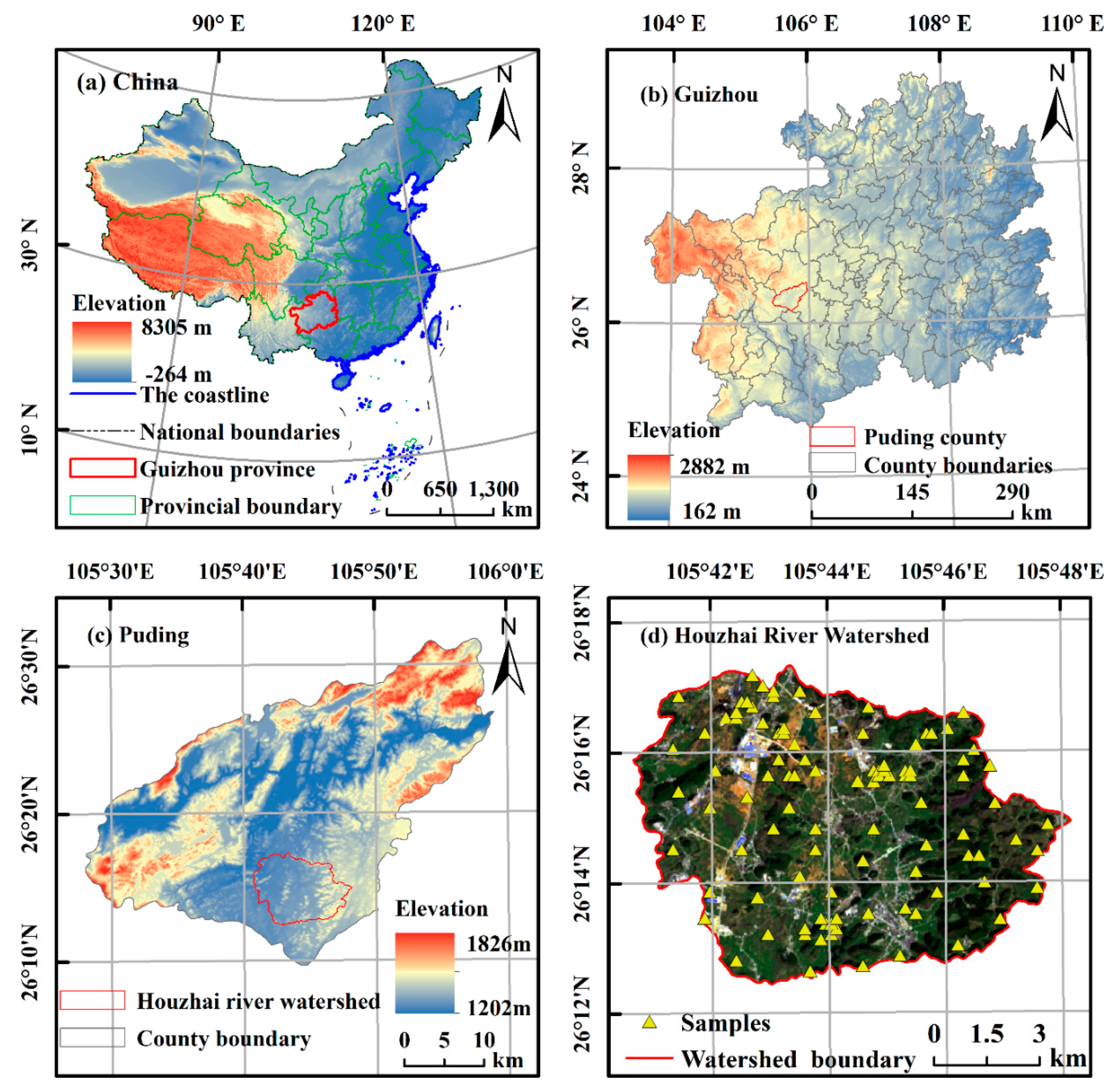
2.1. Study Area and Soil Samples
2.2. Measurement and Analysis of Metal Contents in Soil
2.3. Soil Spectrometry and Data Pre-Processing
2.4. Model Establishment and Accuracy Verification
2.4.1. SPXY Sample Division Method
2.4.2. Establishment of the BP Model
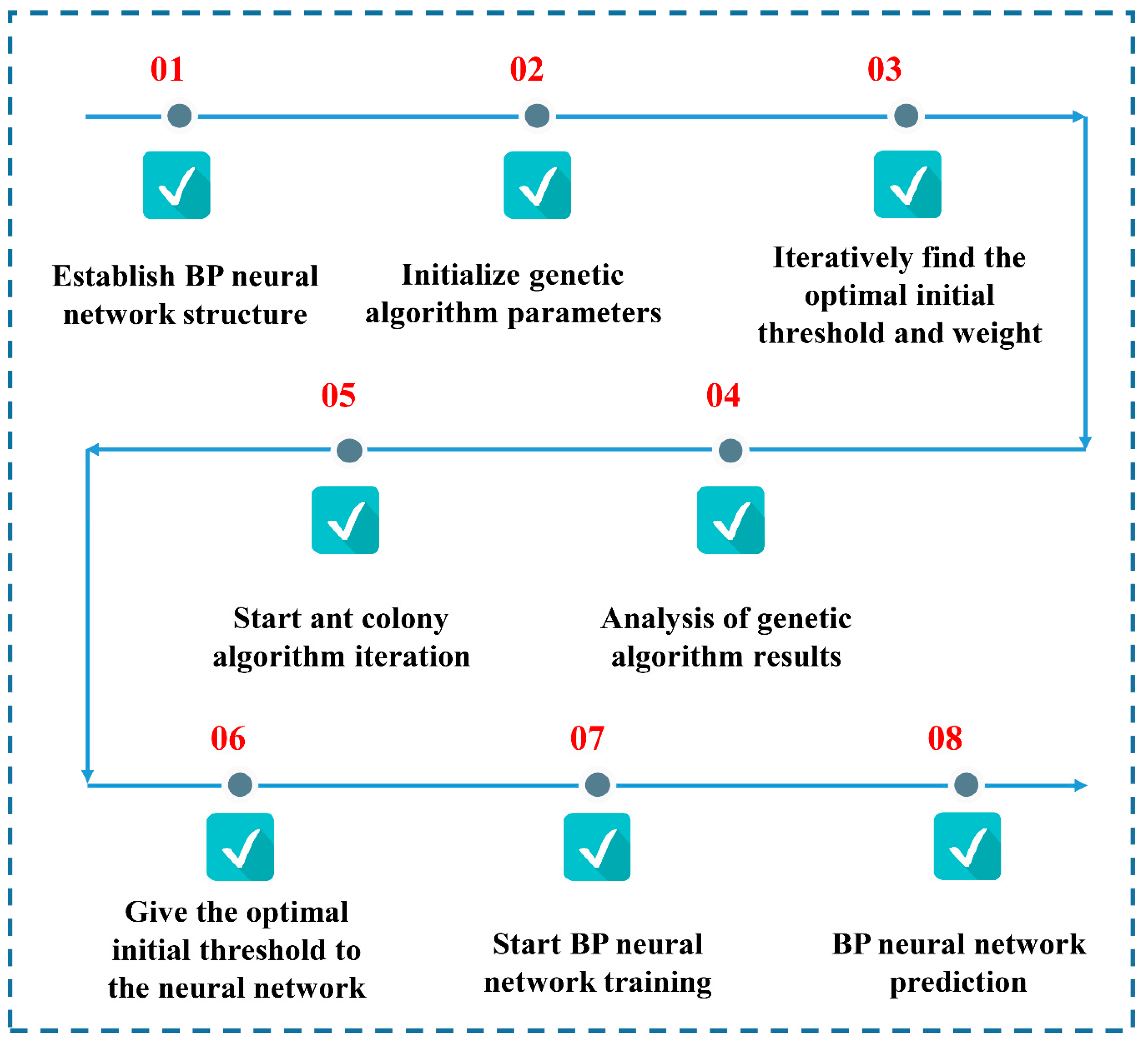
2.4.3. Establishment of the GAACA-BP Model
2.4.4. Accuracy Verification of the Model
3. Results
3.1. Analysis of the Metal Content of Soil
3.1.1. Analysis of the Statistical Characteristics of Soil Metal Content
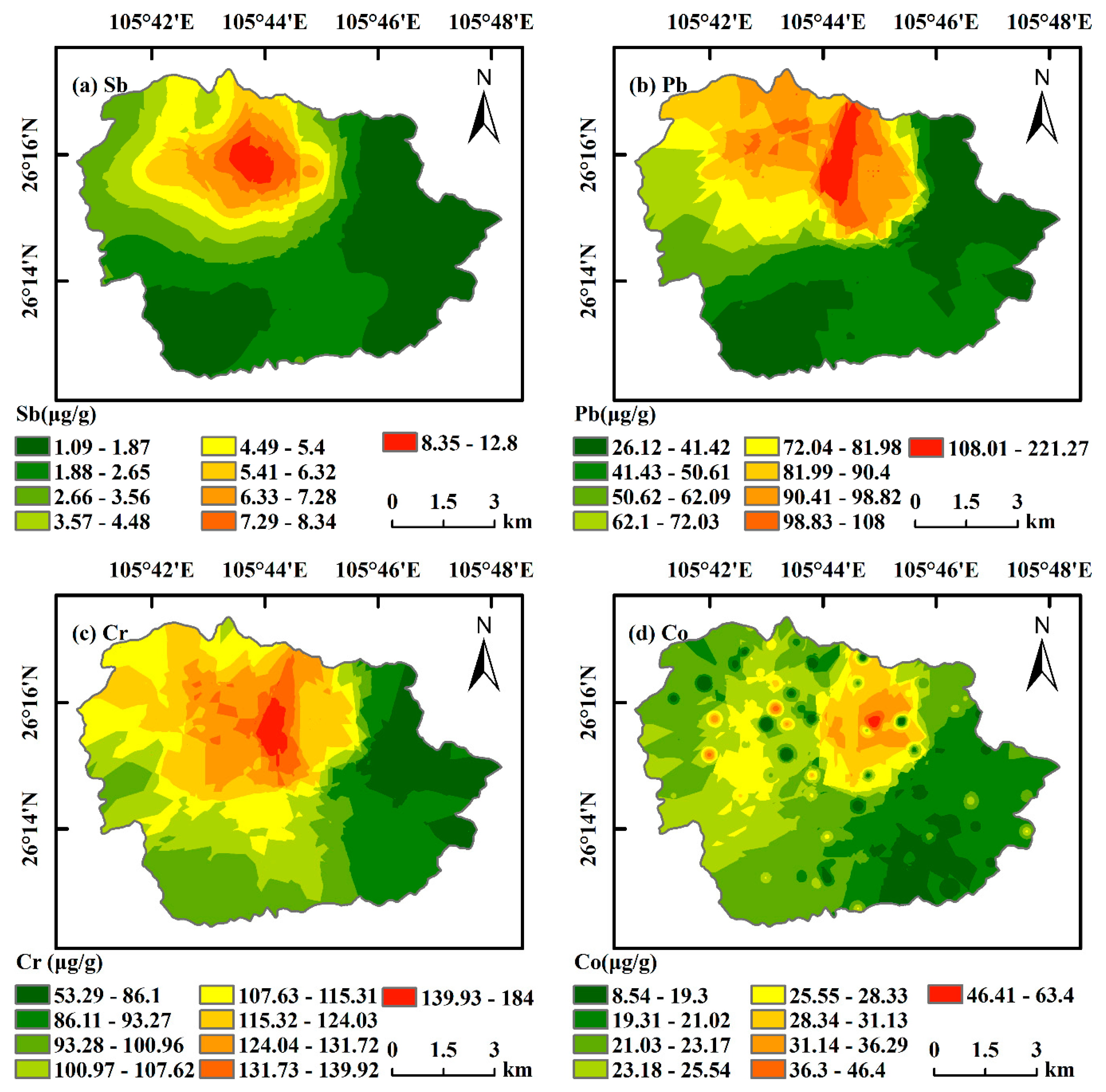
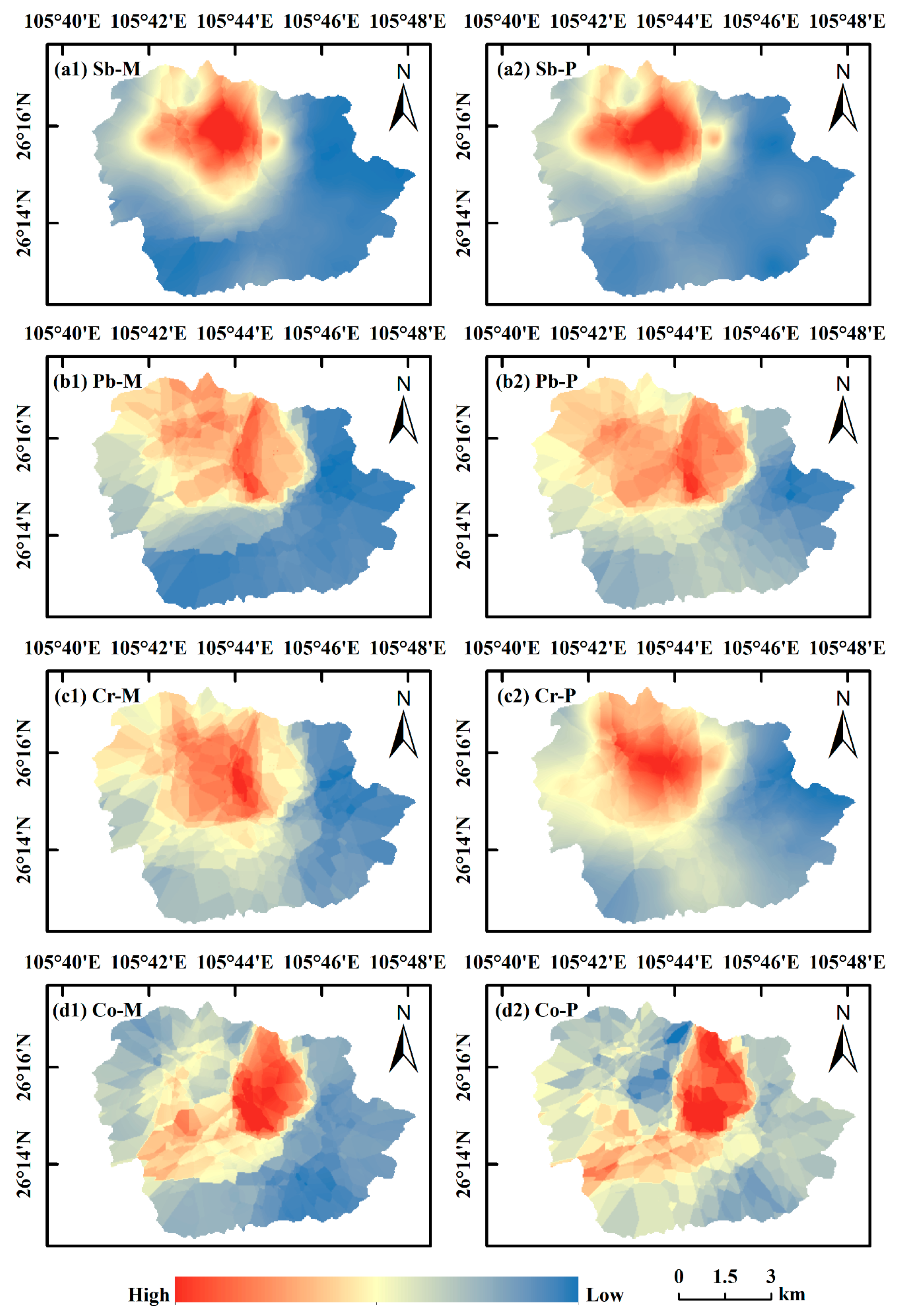
3.1.2. Analysis of the Spatial Distribution Characteristics of Soil Metal Content
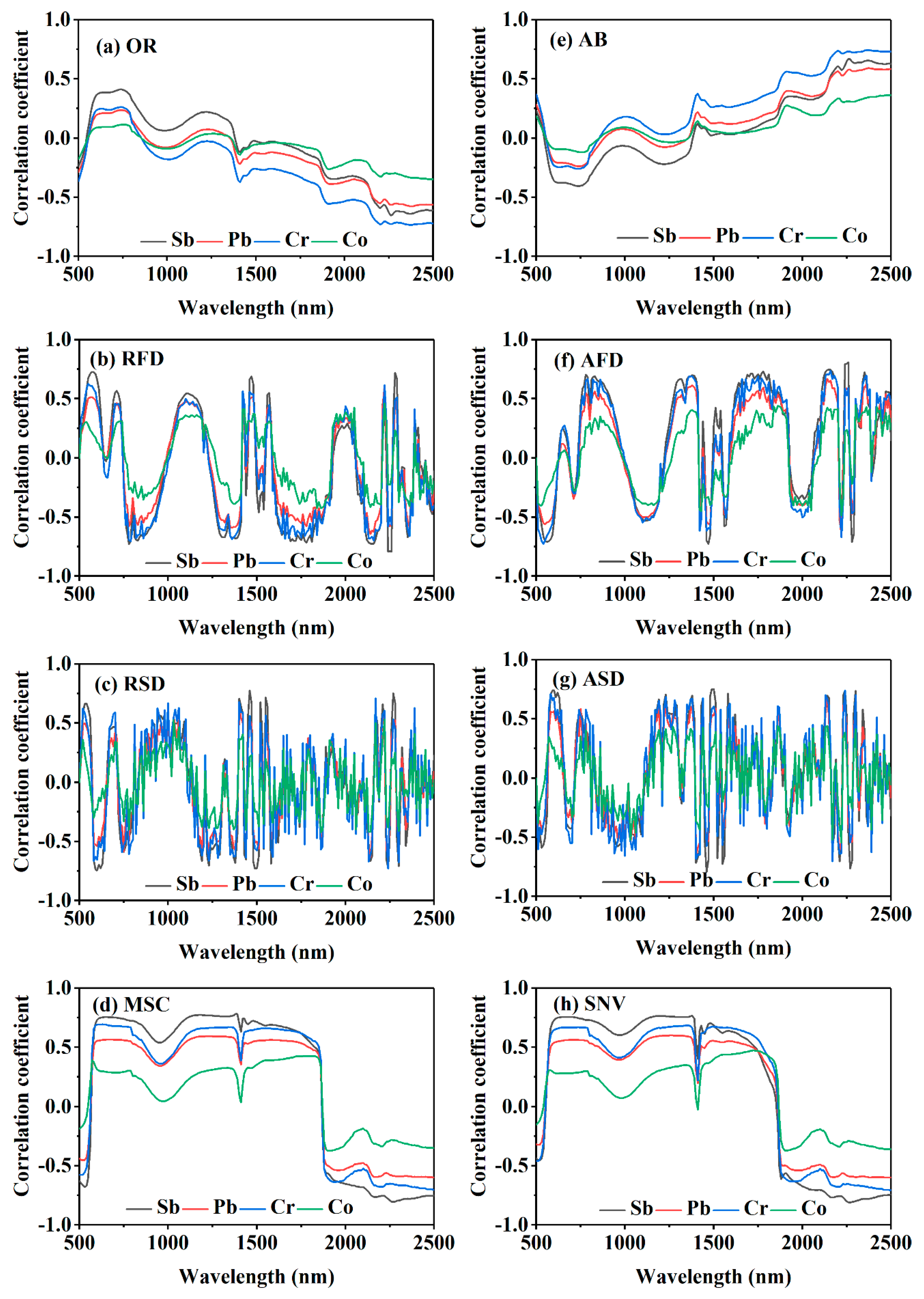
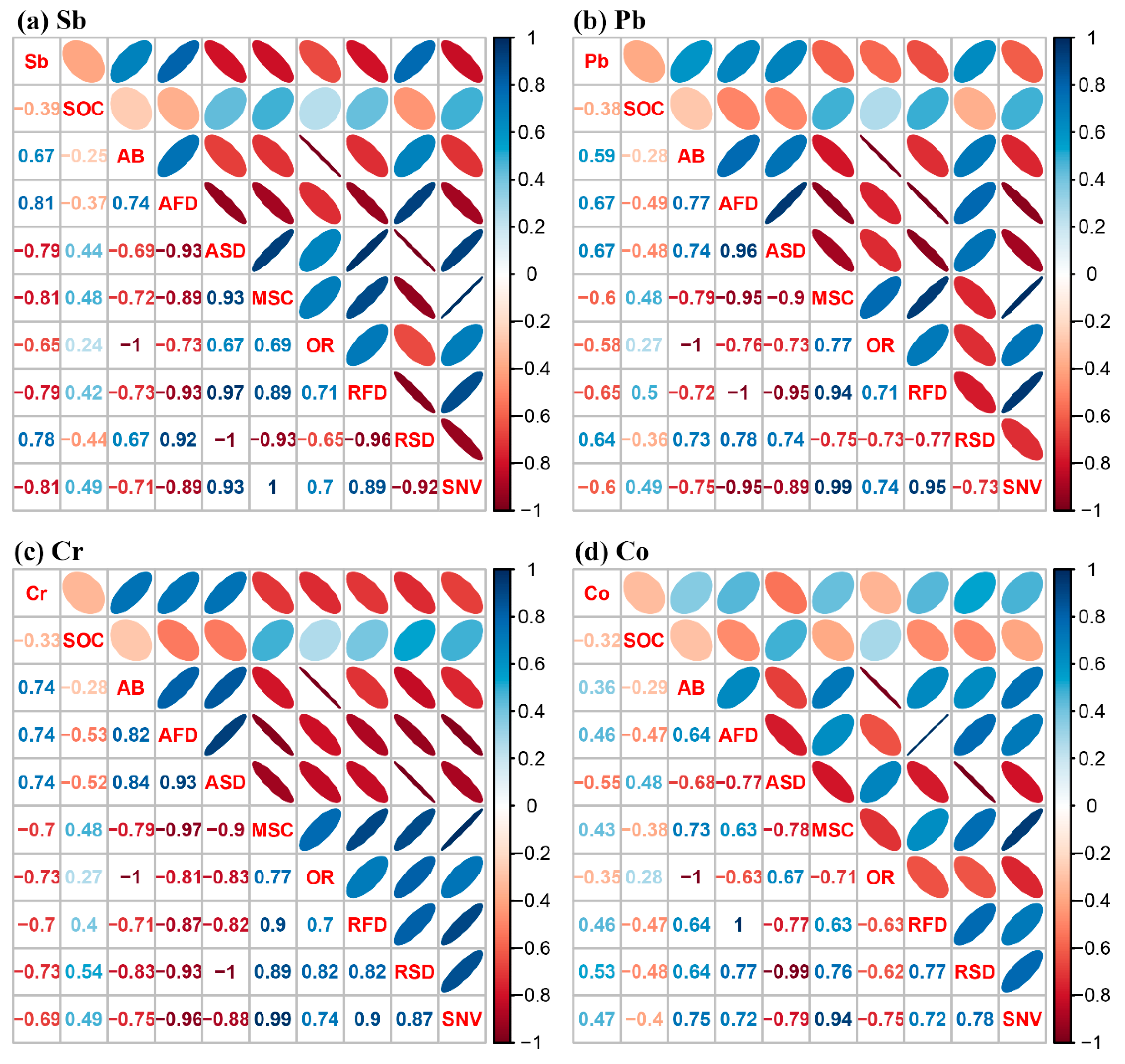
3.2. Screening of Metal Feature Bands
3.3. Hyperspectral Prediction Model of Soil Metal Contents and Accuracy Verification
3.3.1. BP Model Establishment and Verification
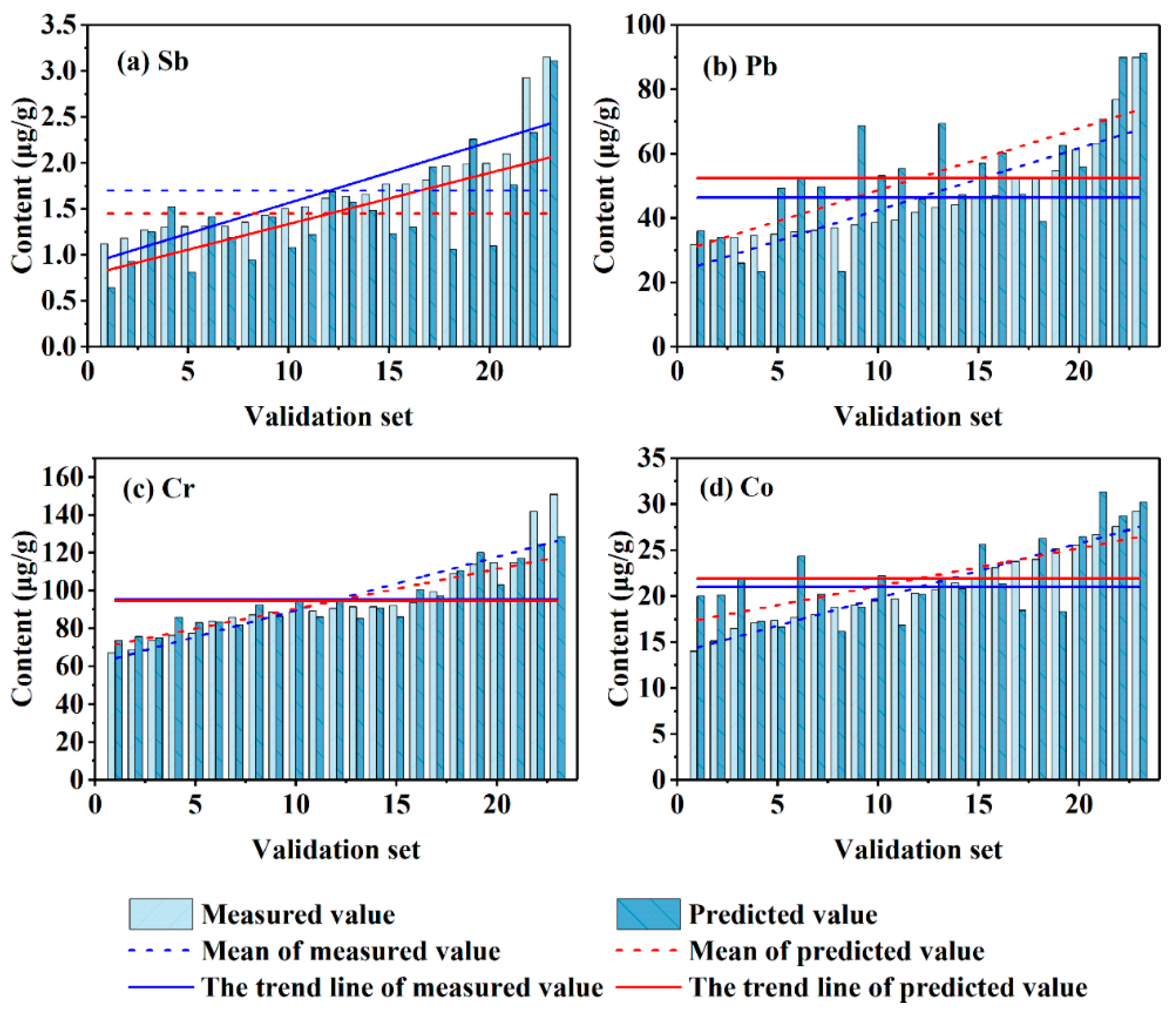
3.3.2. GAACA-BP Model Establishment and Verification
4. Discussion
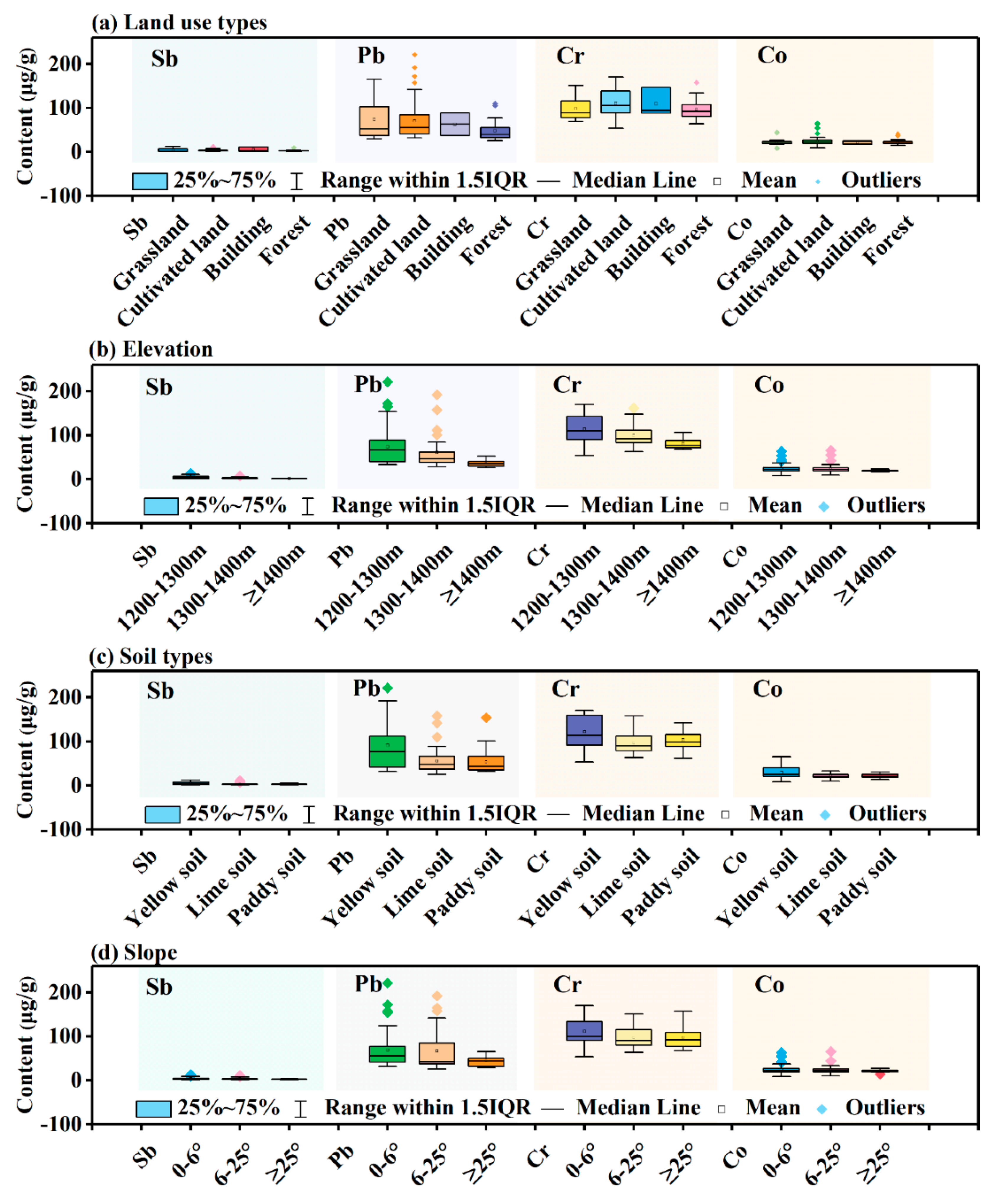
4.1. Factors Affecting the Distribution of the Metal Content
4.2. Prediction Capability Analysis of the GAACA-BP Model
4.3. Insufficient and Prospects of Research
5. Conclusions
Author Contributions
Funding
Conflicts of Interest
References
- Tengbing, H.E.; Lingling, D.O.N.G.; Guangzhi, L.I.; Yuansheng, L.I.U.; Yingge, S.H.U.; Haibo, L.U.O.; Fang, L.I.U. Differences of Heavy Metal Contents in Soils Derived from Different Parent Materials/Rocks in Karst Mountain Area. J. Agro Environ. Sci. 2008, 27, 188–193. [Google Scholar]
- Zhang, D.; Zhou, M.Z.; Xiong, K.N.; Gu, B.Q.; Yang, H. Risk Assessment of Copper and Zinc in Soils and Crops around the Ni-Mo Mining Area of Songlin, Zunyi, China. Earth Environ. 2019, 38, 356–365. [Google Scholar]
- Galán, E.; Romero-Baena, A.J.; Aparicio, P.; González, I. A methodological approach for the evaluation of soil pollution by potentially toxic trace elements. J. Geochem. Explor. 2019, 4, 5. [Google Scholar]
- Obeng-Gyasi, E. Sources of lead exposure in various countries. Rev. Environ. Health 2019, 34, 25–34. [Google Scholar] [CrossRef] [PubMed]
- He, M.C.; Wan, H.Y. Distribution, speciation, toxicity and bioavailability of antimony in the environment. Prog. Chem. Beijing 2004, 16, 131–135. [Google Scholar]
- ATSDR (Agency for Toxic Substances and Disease Registry). Toxicological Profile. Available online: https://www.atsdr.cdc.gov/toxprofiledocs/index.html (accessed on 4 January 2019).
- Gebel, T.; Christensen, S.; Dunkelberg, H. Comparative and environmental genotoxicity of antimony and arsenic. Anticancer Res. 1997, 17, 2603. [Google Scholar] [PubMed]
- Chen, X.D.; Lu, X.W.; Zhao, C.F.; Luo, D.C. The Spatial Distribution of Heavy Metals in the Urban Topsoil Collected from the Interior Area of the Second Ring Road, Xi’an. Acta Geogr. Sin. 2011, 66, 1281–1288. [Google Scholar]
- Jiang, Y.; Chao, S.; Liu, J.; Yang, Y.; Chen, Y.; Zhang, A.; Cao, H. Source apportionment and health risk assessment of heavy metals in soil for a township in Jiangsu Province, China. Chemosphere 2016, 168, 1658–1668. [Google Scholar] [CrossRef] [PubMed]
- Guan, Q.; Wang, F.; Xu, C.; Pan, N.; Lin, J.; Zhao, R.; Luo, H. Source apportionment of heavy metals in agricultural soil based on PMF: A case study in Hexi Corridor, northwest China. Chemosphere 2017, 193, 189–197. [Google Scholar] [CrossRef] [PubMed]
- Hu, H.; Téllez-Rojo, M.M.; Bellinger, D.; Smith, D.; Ettinger, A.S.; Lamadrid-Figueroa, H.; Hernández-Avila, M. Fetal lead exposure at each stage of pregnancy as a predictor of infant mental development. Environ. Health Perspect. 2006, 114, 1730–1735. [Google Scholar] [CrossRef] [PubMed]
- Reuben, A.; Caspi, A.; Belsky, D.W.; Broadbent, J.; Harrington, H.; Sugden, K.; Moffitt, T.E. Association of Childhood Blood Lead Levels With Cognitive Function and Socioeconomic Status at Age 38 Years and With IQ Change and Socioeconomic Mobility Between Childhood and Adulthood. JAMA 2017, 317, 1244–1251. [Google Scholar] [CrossRef] [PubMed]
- Lanphear, B.P.; Rauch, S.; Auinger, P.; Allen, R.W.; Hornung, R.W. Low-level lead exposure and mortality in US adults: A population-based cohort study. Lancet Public Health 2018, 3, e177–e184. [Google Scholar] [CrossRef]
- Obeng-Gyasi, E.; Armijos, R.; Weigel, M.; Filippelli, G.; Sayegh, M. Cardiovascular-Related Outcomes in US Adults Exposed to Lead. Int. J. Environ. Res. Public Health 2018, 15, 759. [Google Scholar] [CrossRef] [PubMed]
- Harari, F.; Sallsten, G.; Christensson, A.; Petkovic, M.; Hedblad, B.; Forsgard, N.; Barregard, L. Blood Lead Levels and Decreased Kidney Function in a Population-Based Cohort. Am. J. Kidney Dis. 2018, 72, 381–389. [Google Scholar] [CrossRef] [PubMed]
- Lin, J.L.; Lin-Tan, D.T.; Hsu, K.H.; Yu, C.C. Environmental Lead Exposure and Progression of Chronic Renal Diseases in Patients without Diabetes. N. Engl. J. Med. 2003, 348, 277–286. [Google Scholar] [CrossRef] [PubMed]
- Obeng-Gyasi, E.; Armijos, R.; Weigel, M.; Filippelli, G.; Sayegh, M. Hepatobiliary-Related Outcomes in US Adults Exposed to Lead. Environments 2018, 5, 46. [Google Scholar] [CrossRef]
- Can, S.; Bağci, C.; Ozaslan, M.; Bozkurt, A.I.; Cengiz, B.; Cakmak, E.A.; Tarakçioğlu, M. Occupational lead exposure effect on liver functions and biochemical parameters. Acta Physiol. Hung. 2008, 95, 395–403. [Google Scholar] [CrossRef]
- Römkens, P.F.A.M.; Guo, H.Y.; Chu, C.L.; Liu, T.S.; Chiang, C.F.; Koopmans, G.F. Enrichment characteristics and risk prediction of heavy metals for rice grains growing in paddy soils with a high geological background. J. Agro Environ. Sci. 2018, 37, 18–26. [Google Scholar]
- Ruan, Y.L.; Li, X.D.; Li, T.Y.; Chen, P.; Lian, B. Heavy Metal Pollution in Agricultural Soils of the Karst Areas and Its Harm to Human Health. Earth Environ. 2015, 43, 92–97. [Google Scholar]
- Wu, F.; Zheng, J.; Pan, X.; Li, W.; Deng, Q.; Mo, C.; Guo, J.Y. Prospect on Biogeochemical Cycle and Environmental Effect of Antimony. Adv. Earth Sci. 2008, 23, 350–356. [Google Scholar]
- Liu, J.; Zhang, Y.; Wang, H.; Du, Y. Study on the prediction of soil heavy metal elements content based on visible near-infrared spectroscopy. Spectrochim. Acta Part A Mol. Biomol. Spectrosc. 2018, 199, 43. [Google Scholar] [CrossRef] [PubMed]
- Shi, T.; Chen, Y.; Liu, Y.; Wu, G. Visible and near-infrared reflectance spectroscopy-an alternative for monitoring soil contamination by heavy metals. J. Hazard. Mater. 2014, 265, 166. [Google Scholar] [CrossRef] [PubMed]
- Ullah, S.; Skidmore, A.K.; Naeem, M.; Schlerf, M. An accurate retrieval of leaf water content from mid to thermal infrared spectra using continuous wavelet analysis. Sci. Total Environ. 2012, 437, 145–152. [Google Scholar] [CrossRef] [PubMed]
- Xu, H.; Qi, B.; Sun, T.; Fu, X.; Ying, Y. Variable selection in visible and near-infrared spectra: Application to on-line determination of sugar content in pears. J. Food Eng. 2012, 109, 142–147. [Google Scholar] [CrossRef]
- McCarty, G.W.; Reeves, J.B.; Reeves, V.B.; Follett, R.F.; Kimble, J.M. Mid-Infrared and Near-Infrared Diffuse Reflectance Spectroscopy for Soil Carbon Measurement. Soil Sci. Soc. Am. J. 2002, 66, 640–646. [Google Scholar]
- Nocita, M.; Stevens, A.; Toth, G.; van Wesemael, B.; Montanarella, L. Prediction of SOC content by Vis-NIR spectroscopy at European scale using a modified local PLS algorithm. In Proceedings of the AGU Fall Meeting Abstracts, Washington, DC, USA, 30 August 2012. [Google Scholar]
- Rossel, R.V.; Walvoort, D.J.J.; McBratney, A.B.; Janik, L.J.; Skjemstad, J.O. Visible, near infrared, mid infrared or combined diffuse reflectance spectroscopy for simultaneous assessment of various soil properties. Geoderma 2006, 131, 59–75. [Google Scholar] [CrossRef]
- Dunn, B.W.; Batten, G.D.; Beecher, H.G.; Ciavarella, S. The potential of near-infrared reflectance spectroscopy for soil analysis--a case study from the Riverine Plain of south-eastern Australia. Aust. J. Exp. Agric. 2002, 42, 607–614. [Google Scholar] [CrossRef]
- Chakraborty, S.; Li, B.; Deb, S.; Paul, S.; Weindorf, D.C.; Das, B.S. Predicting soil arsenic pools by visible near infrared diffuse reflectance spectroscopy. Geoderma 2017, 296, 30–37. [Google Scholar] [CrossRef]
- Sun, W.; Zhang, X. Estimating soil zinc concentrations using reflectance spectroscopy. Int. J. Appl. Earth Obs. Geoinf. 2017, 58, 126–133. [Google Scholar] [CrossRef]
- Ng, W.; Malone, B.P.; Minasny, B. Rapid assessment of petroleum-contaminated soils with infrared spectroscopy. Geoderma 2017, 289, 150–160. [Google Scholar] [CrossRef]
- Yu, X.; Liu, Q.; Wang, Y.; Liu, X.; Liu, X. Evaluation of MLSR and PLSR for estimating soil element contents using visible/near-infrared spectroscopy in apple orchards on the Jiaodong peninsula. Catena 2016, 137, 340–349. [Google Scholar] [CrossRef]
- Bak, J. Retrieving CO Concentrations from FT-IR Spectra with Nonmodeled Interferences and Fluctuating Baselines Using PCR Model Parameters. Appl. Spectrosc. 2001, 55, 591–597. [Google Scholar] [CrossRef]
- Pandit, C.M.; Fieippelli, G.M.; Li, L. Estimation of heavy-metal contamination in soil using reflectance spectroscopy and partial least-squares regression. Int. J. Remote Sens. 2010, 31, 4111–4123. [Google Scholar] [CrossRef]
- Gholizadeh, A.; Borůvka, L.; Saberioon, M.M.; Kozák, J.; Vašát, R.; Němeček, K. Comparing different data preprocessing methods for monitoring soil heavy metals based on soil spectral features. Soil Water Res. 2015, 10, 218–227. [Google Scholar] [CrossRef]
- Ferreira, E.C.; Milori, D.M.; Ferreira, E.J.; Da Silva, R.M.; Martin-Neto, L. Artificial neural network for Cu quantitative determination in soil using a portable Laser Induced Breakdown Spectroscopy system. Spectrochim. Acta Part B At. Spectrosc. 2008, 63, 1216–1220. [Google Scholar] [CrossRef]
- Luce, M.S.; Ziadi, N.; Gagnon, B.; Karam, A. Visible near infrared reflectance spectroscopy prediction of soil heavy metal concentrations in paper mill biosolid- and liming by-product-amended agricultural soils. Geoderma 2017, 288, 23–36. [Google Scholar] [CrossRef]
- Shi, T.; Wang, J.; Chen, Y.; Wu, G. Improving the prediction of arsenic contents in agricultural soils by combining the reflectance spectroscopy of soils and rice plants. Int. J. Appl. Earth Obs. Geoinf. 2016, 52, 95–103. [Google Scholar] [CrossRef]
- Song, L.; Jian, J.; Tan, D.J.; Xie, H.B.; Luo, Z.F.; Gao, B. Estimate of heavy metals in soil and streams using combined geochemistry and field spectroscopy in Wan-sheng mining area, Chongqing, China. Int. J. Appl. Earth Obs. Geoinf. 2015, 34, 1–9. [Google Scholar] [CrossRef]
- Chakraborty, S.; Weindorf, D.C.; Paul, S.; Ghosh, B.; Li, B.; Ali, M.N.; Majumdar, K. Diffuse reflectance spectroscopy for monitoring lead in landfill agricultural soils of India. Geoderma Reg. 2015, 5, 77–85. [Google Scholar] [CrossRef]
- Cambou, A.; Cardinael, R.; Kouakoua, E.; Villeneuve, M.; Durand, C.; Barthès, B.G. Prediction of soil organic carbon stock using visible and near infrared reflectance spectroscopy (VNIRS) in the field. Geoderma 2016, 261, 151–159. [Google Scholar] [CrossRef]
- Galvao, R.K.H.; Araujo, M.C.U.; Jose, G.E.; Pontes, M.J.C.; Silva, E.C.; Saldanha, T.C.B. A method for calibration and validation subset partitioning. Talanta 2005, 67, 736–740. [Google Scholar] [CrossRef] [PubMed]
- Zheng, L.H.; Li, M.Z.; Pan, L.; Sun, J.Y.; Tang, N. Estimation of soil organic matter and soil total nitrogen based on NIR spectroscopy and BP neural network. Spectrosc. Spectr. Anal. 2008, 28, 1160–1164. [Google Scholar]
- Shen, R.; Ding, G.; Wei, G.; Sun, B. Retrieval of soil organic matter content from hyper-spectrum based on ANN. Acta Pedol. Sin. 2009, 46, 391–397. [Google Scholar]
- Lan, Z.Y.; Liu, Y. Research on Indirect Hyperspectral Estimating Model and the Spatial Distribution Characteristics of Heavy Metal Contents in Basin Soil of Lean River. Geogr. Geo Inf. Sci. 2015, 31, 26–32. [Google Scholar]
- Liang-ji, X.; Qing-qing, L.; Xiao-mei, Z.; Shu-guang, L. Hyperspectral Inversion of Heavy Metal Content in Coal Gangue Filling Reclamation Land. Spectrosc. Spectr. Anal. 2017, 37, 3839–3844. [Google Scholar]
- Dorigo, M.; Stützle, T. Ant Colony Optimization: Overview and Recent Advances. In Handbook of Metaheuristics; Potvin, J.-Y., Gendreau, M., Eds.; Springer: Berlin, Germany, 2010; pp. 227–263. [Google Scholar]
- Li, H.M. Overview of Genetic Algorithms. Softw. Guide 2009, 1, 67–68. [Google Scholar]
- Cao, Q.K.; Zhao, F. Port trucks route optimization based on GA-ACO. Syst. Eng. Theory Pract. 2013, 33, 1820–1828. [Google Scholar]
- Dréo, J.; Siarry, P. Continuous interacting ant colony algorithm based on dense heterarchy. Future Gener. Comput. Syst. 2004, 20, 841–856. [Google Scholar] [CrossRef]
- Cao, M.; Huang, Y.F.; Gu, L.Z.; Hu, Z.M.; Yang, Y.X. Construction of S-boxes based on genetic and ant colony algorithm. Appl. Res. Comput. 2008, 25, 1553–1555. [Google Scholar]
- China national environmental monitoring Centre. Chinese Soil Element Background Value; China Environmental Science Press: Beijing, China, 1990. [Google Scholar]
- Wang, J.; Chen, Z.L.; Wang, C.; Ye, M.W.; Shen, J.; Nie, Z.L. Heavy metal content and ecological risk warning assessment of vegetable soils in Chongming Island, Shanghai City. Environ. Sci. 2007, 28, 647. [Google Scholar]
- Sun, Y.; Zhou, Q.; Xie, X.; Liu, R. Spatial, sources and risk assessment of heavy metal contamination of urban soils in typical regions of Shenyang, China. J. Hazard. Mater. 2010, 174, 455–462. [Google Scholar] [CrossRef] [PubMed]
- Wang, J.; Cui, L.; Gao, W.; Shi, T.; Chen, Y.; Gao, Y. Prediction of low heavy metal concentrations in agricultural soils using visible and near-infrared reflectance spectroscopy. Geoderma 2014, 216, 1–9. [Google Scholar] [CrossRef]
- Amini, M.; Khademi, H.; Afyuni, M.; Abbaspour, K.C. Variability of Available Cadmium in Relation to Soil Properties and Landuse in an Arid Region in Central Iran. Water Air Soil Pollut. 2005, 162, 205–218. [Google Scholar] [CrossRef]
- Bai, J.; Yang, Z.; Cui, B.; Gao, H.; Ding, Q. Some heavy metals distribution in wetland soils under different land use types along a typical plateau lake, China. Soil Tillage Res. 2010, 106, 344–348. [Google Scholar] [CrossRef]
- Luo, W.; Lu, Y.; Giesy, J.P.; Wang, T.; Shi, Y.; Wang, G.; Xing, Y. Effects of land use on concentrations of metals in surface soils and ecological risk around Guanting Reservoir, China. Environ. Geochem. Health 2007, 29, 459–471. [Google Scholar] [CrossRef] [PubMed]
- You, D.; Zhou, J.; Wang, J.; Ma, Z.; Pan, L. Analysis of relations of heavy metal accumulation with land utilization using the positive and negative association rule method. Math. Comput. Model. 2011, 54, 1005–1009. [Google Scholar] [CrossRef]
- Mahmoudabadi, E.; Sarmadian, F.; Moghaddam, R.N. Spatial distribution of soil heavy metals in different land uses of an industrial area of Tehran (Iran). Int. J. Environ. Sci. Technol. 2015, 12, 3283–3298. [Google Scholar] [CrossRef]
- Babaeian, E.; Homaee, M.; Montzka, C.; Vereecken, H.; Norouzi, A.A. Towards Retrieving Soil Hydraulic Properties by Hyperspectral Remote Sensing. Vadose Zone J. 2015, 14. [Google Scholar] [CrossRef]
- Zhu, Y.X.; Yu, L.; Hong, Y.S. Hyperspectral Features and Wavelength Variables Selection Methods of Soil Organic Matter. Sci. Agric. Sin. 2017, 50, 4325–4337. [Google Scholar]
- Yang, X.; Yu, Y. Estimating Soil Salinity Under Various Moisture Conditions: An Experimental Study. IEEE Trans. Geosci. Remote Sens. 2017, 55, 2525–2533. [Google Scholar] [CrossRef]
- Ballabio, C.; Panagos, P.; Lugato, E.; Huang, J.H.; Orgiazzi, A.; Jones, A.; Montanarella, L. Copper distribution in European topsoils: An assessment based on LUCAS soil survey. Sci. Total Environ. 2018, 636, 282–298. [Google Scholar] [CrossRef] [PubMed]
- Albanese, S.; Sadeghi, M.; Lima, A.; Cicchella, D.; Dinelli, E.; Valera, P.; Team, T.G.P. GEMAS: Cobalt, Cr, Cu and Ni distribution in agricultural and grazing land soil of Europe. J. Geochem. Exp. 2015, 154, 81–93. [Google Scholar] [CrossRef]
- Lado, L.R.; Hengl, T.; Reuter, H.I. Heavy metals in European soils: A geostatistical analysis of the FOREGS Geochemical database. Geoderma 2008, 148, 189–199. [Google Scholar] [CrossRef]
- Guan, Q.; Zhao, R.; Wang, F.; Pan, N.; Yang, L.; Song, N.; Lin, J. Prediction of heavy metals in soils of an arid area based on multi-spectral data. J. Environ. Manag. 2019, 243, 137–143. [Google Scholar] [CrossRef] [PubMed]
- Xia, F.; Peng, J.; Wang, Q.L.; Zhou, L.Q.; Shi, Z. Prediction of heavy metal content in soil of cultivated land: Hyperspectral technology at provincial scale. J. Infrared Millim. Waves 2015, 34, 593–598. [Google Scholar]
- Zhang, S.; Shen, Q.; Nie, C.; Huang, Y.; Wang, J.; Hu, Q.; Chen, Y. Hyperspectral inversion of heavy metal content in reclaimed soil from a mining wasteland based on different spectral transformation and modeling methods. Spectrochim. Acta Part A: Mol. Biomol. Spectrosc. 2011, 211, 393–400. [Google Scholar] [CrossRef] [PubMed]
- Hong, Y.; Shen, R.; Cheng, H.; Chen, Y.; Zhang, Y.; Liu, Y.; Liu, Y. Estimating lead and zinc concentrations in peri-urban agricultural soils through reflectance spectroscopy: Effects of fractional-order derivative and random forest. Sci. Total Environ. 2019, 651, 1969–1982. [Google Scholar] [CrossRef]


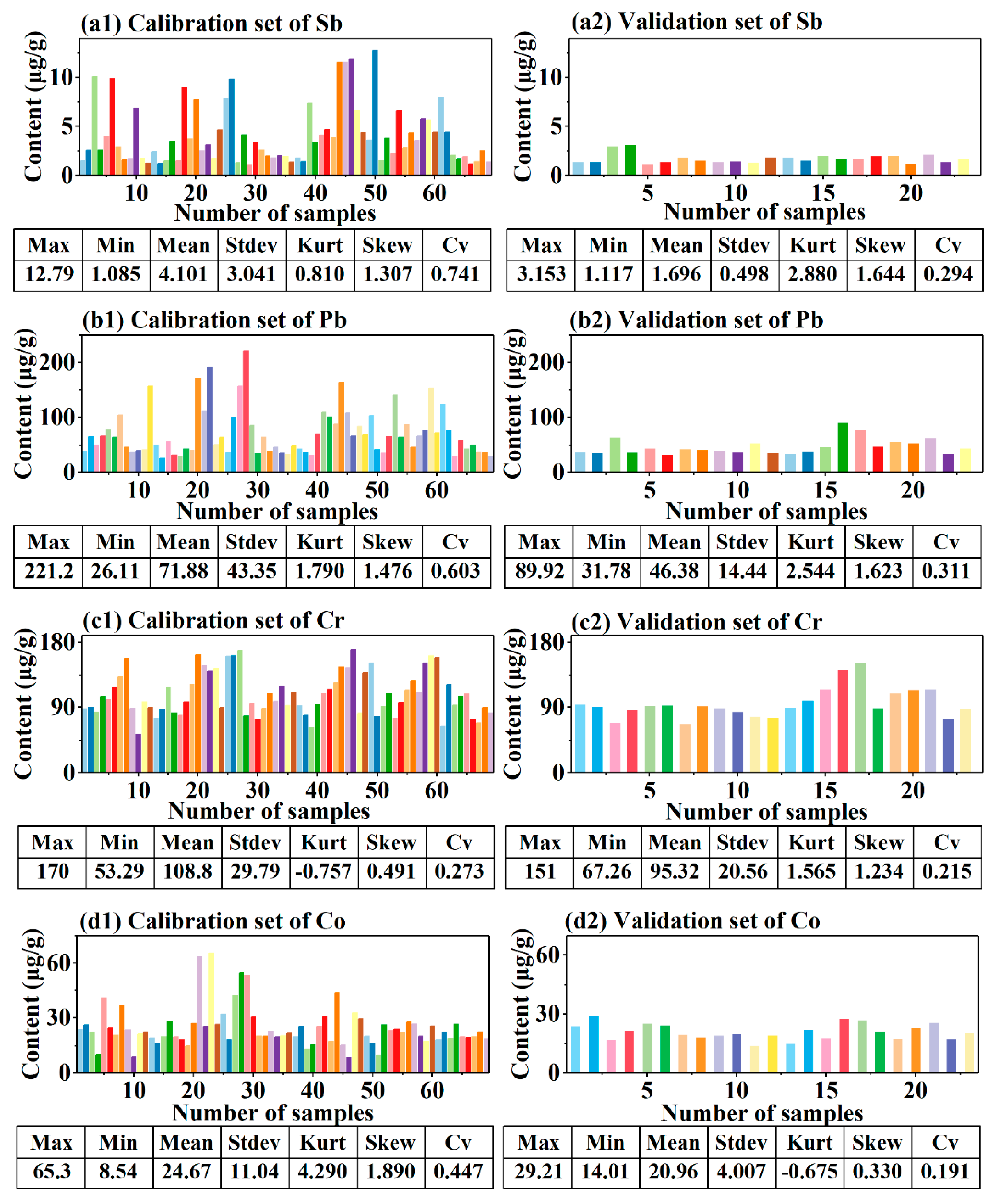



| Descriptive Statistics | Sb | Pb | Cr | Co |
|---|---|---|---|---|
| Max | 13 | 221.3 | 170 | 65.3 |
| Min | 1.1 | 26.12 | 53.29 | 8.54 |
| Mean | 3.5 | 65.51 | 105.44 | 23.74 |
| Stdev | 2.8 | 39.8 | 28.39 | 9.9 |
| Kurt | 2.1 | 3.15 | −0.46 | 6.2 |
| Skew | 1.7 | 1.8 | 0.68 | 2.19 |
| Cv | 0.8 | 0.61 | 0.27 | 0.42 |
| Background | 2.2 | 35.2 | 95.9 | 19.2 |
| Excessive multiples | 1.6 | 1.86 | 1.1 | 1.24 |
| Over-standard rates/% | 56 | 86 | 10 | 24 |
| R-Sb | 1 | - | - | - |
| R-Pb | 0.8 | 1 | - | - |
| R-Cr | 0.6 | 0.612 | 1 | - |
| R-Co | 0.4 | 0.694 | 0.555 | 1 |
| Models | Calibration Set | Validation Set | Mean | |||
|---|---|---|---|---|---|---|
| Rc | RMSEc | Rv | RMSEv | R | RMSE | |
| BP-Sb | 0.89 | 2.82 | 0.21 | 1.40 | 0.55 | 2.11 |
| BP-Pb | 0.70 | 63.50 | 0.28 | 27.24 | 0.49 | 45.37 |
| BP-Cr | 0.76 | 35.49 | 0.34 | 26.03 | 0.55 | 30.76 |
| BP-Co | 0.44 | 28.89 | 0.19 | 14.82 | 0.32 | 21.85 |
| GAACA-BP-Sb | 0.92 | 0.41 | 0.82 | 2.16 | 0.87 | 1.285 |
| GAACA-BP-Pb | 0.76 | 49.28 | 0.76 | 13.21 | 0.76 | 31.25 |
| GAACA-BP-Cr | 0.80 | 31.02 | 0.94 | 7.91 | 0.87 | 19.47 |
| GAACA-BP-Co | 0.79 | 12.52 | 0.67 | 3.51 | 0.73 | 8.016 |
| Elements | Calibration Set | Validation Set | ||
|---|---|---|---|---|
| Rc | RMSEc | Rv | RMSEv | |
| Sb | 0.03 | −2.41 | 0.61 | 0.76 |
| Pb | 0.06 | −14.22 | 0.48 | −14.03 |
| Cr | 0.04 | −4.47 | 0.60 | −18.12 |
| Co | 0.35 | −16.37 | 0.48 | −11.32 |
| MRE | Accuracy | |||||
|---|---|---|---|---|---|---|
| Elements | BP | GAACA-BP | MRE Reduction | BP | GAACA-BP | Accuracy Increase |
| Sb | 79% | 15% | 64% | 21% | 85% | 64% |
| Pb | 50% | 15% | 35% | 50% | 85% | 35% |
| Cr | 21% | 9% | 12% | 79% | 91% | 12% |
| Co | 50% | 6% | 44% | 50% | 94% | 44% |
| The Sampling Area | Metals | N | Content Range (mg/kg) | Model | Prediction Accuracy | References |
|---|---|---|---|---|---|---|
| An arid area in Jiuquan, Gansu | Cr | 394 | 30.49–73.59 | SLMR/PLSR (H) | R = 0.481/0.479 | [68] |
| Major agricultural production areas in Zhejiang Province | Cr | 643 | 10–126 | PLSR (H) | R2 = 0.7 | [69] |
| The middle of Gulin County, Sichuan | Cr | 39 | 103–397 | RBF (H) | R2 = 0.73–0.86 | [70] |
| 26 European countries | Cr | 1588 | 1–2340 | RK(T) | R2 = 0.21 | [67] |
| The Houzhai River Watershed in Guizhou | Cr | 92 | 53.29–170 | GAACA-BP (H) | R = 0.94 | This study |
| The southeast part of Wuhan City, Hubei | Pb | 170 | 22.90–61.90 | PLSR (H) | R2 = 0.56–0.77 | [71] |
| Major agricultural production areas in Zhejiang Province | Pb | 643 | 14–69 | PLSR (H) | R2 = 0.33 | [69] |
| 26 European countries | Pb | 1588 | 1.5–5200 | RK (T) | R2 = 0.35 | [67] |
| The Houzhai River Watershed in Guizhou | Pb | 92 | 26.12–221.3 | GAACA-BP (H) | R = 0.76 | This study |
© 2019 by the authors. Licensee MDPI, Basel, Switzerland. This article is an open access article distributed under the terms and conditions of the Creative Commons Attribution (CC BY) license (http://creativecommons.org/licenses/by/4.0/).
Share and Cite
Tian, S.; Wang, S.; Bai, X.; Zhou, D.; Luo, G.; Wang, J.; Wang, M.; Lu, Q.; Yang, Y.; Hu, Z.; et al. Hyperspectral Prediction Model of Metal Content in Soil Based on the Genetic Ant Colony Algorithm. Sustainability 2019, 11, 3197. https://doi.org/10.3390/su11113197
Tian S, Wang S, Bai X, Zhou D, Luo G, Wang J, Wang M, Lu Q, Yang Y, Hu Z, et al. Hyperspectral Prediction Model of Metal Content in Soil Based on the Genetic Ant Colony Algorithm. Sustainability. 2019; 11(11):3197. https://doi.org/10.3390/su11113197
Chicago/Turabian StyleTian, Shiqi, Shijie Wang, Xiaoyong Bai, Dequan Zhou, Guangjie Luo, Jinfeng Wang, Mingming Wang, Qian Lu, Yujie Yang, Zeyin Hu, and et al. 2019. "Hyperspectral Prediction Model of Metal Content in Soil Based on the Genetic Ant Colony Algorithm" Sustainability 11, no. 11: 3197. https://doi.org/10.3390/su11113197
APA StyleTian, S., Wang, S., Bai, X., Zhou, D., Luo, G., Wang, J., Wang, M., Lu, Q., Yang, Y., Hu, Z., Li, C., & Deng, Y. (2019). Hyperspectral Prediction Model of Metal Content in Soil Based on the Genetic Ant Colony Algorithm. Sustainability, 11(11), 3197. https://doi.org/10.3390/su11113197