Evaluating the Self-Sensing Ability of Cement Mortars Manufactured with Graphene Nanoplatelets, Virgin or Recycled Carbon Fibers through Piezoresistivity Tests

 ,
,  ,
,  ,
,  and
and 
Abstract
1. Introduction
2. Materials and Methods
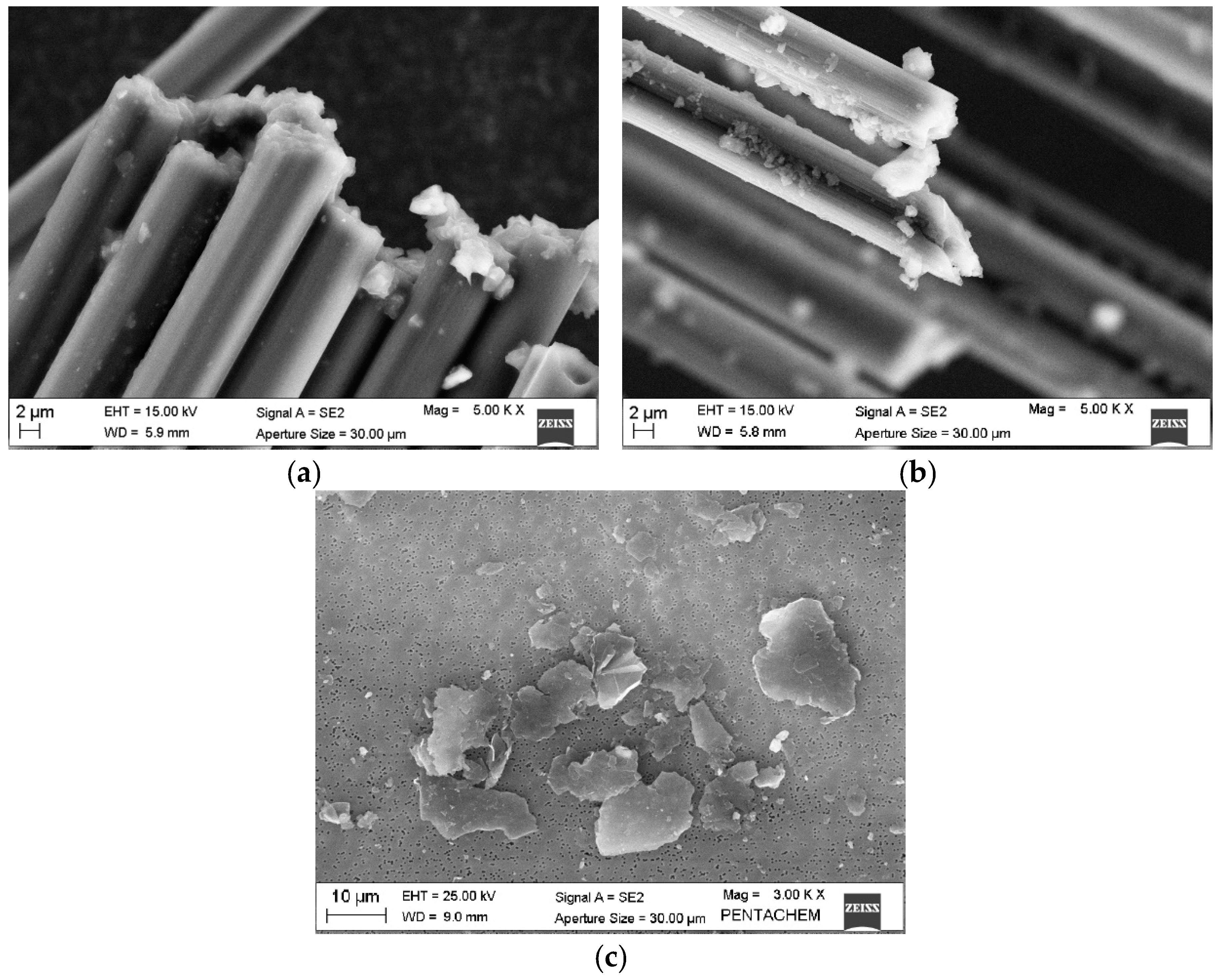
2.1. Preparation of Mortars
2.2. Mechanical Tests of Mortars
2.3. Electrical Tests of Mortars
2.3.1. Electrical Resistivity Measurements
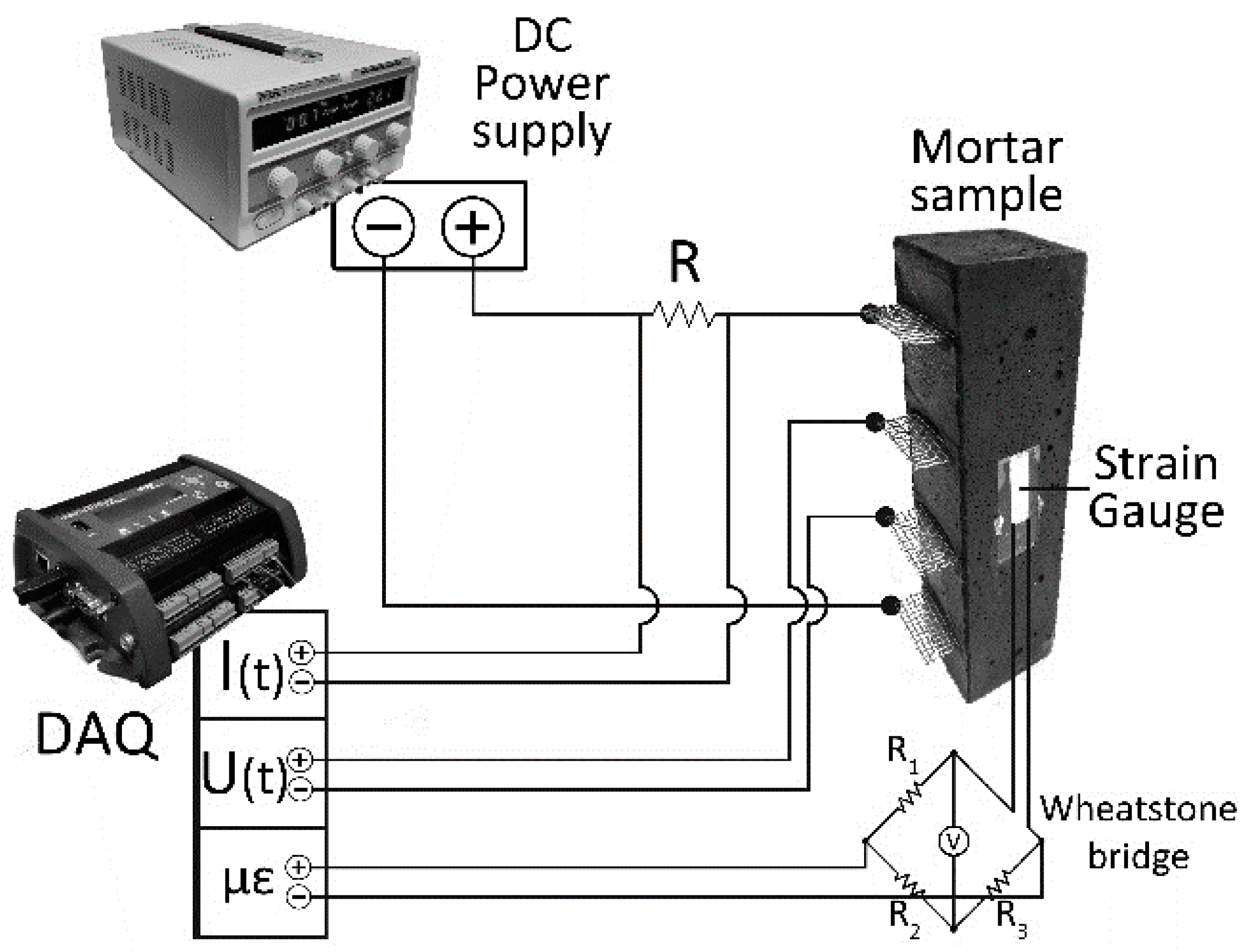
2.3.2. Piezoresistivity Measurements
3. Results and Discussion
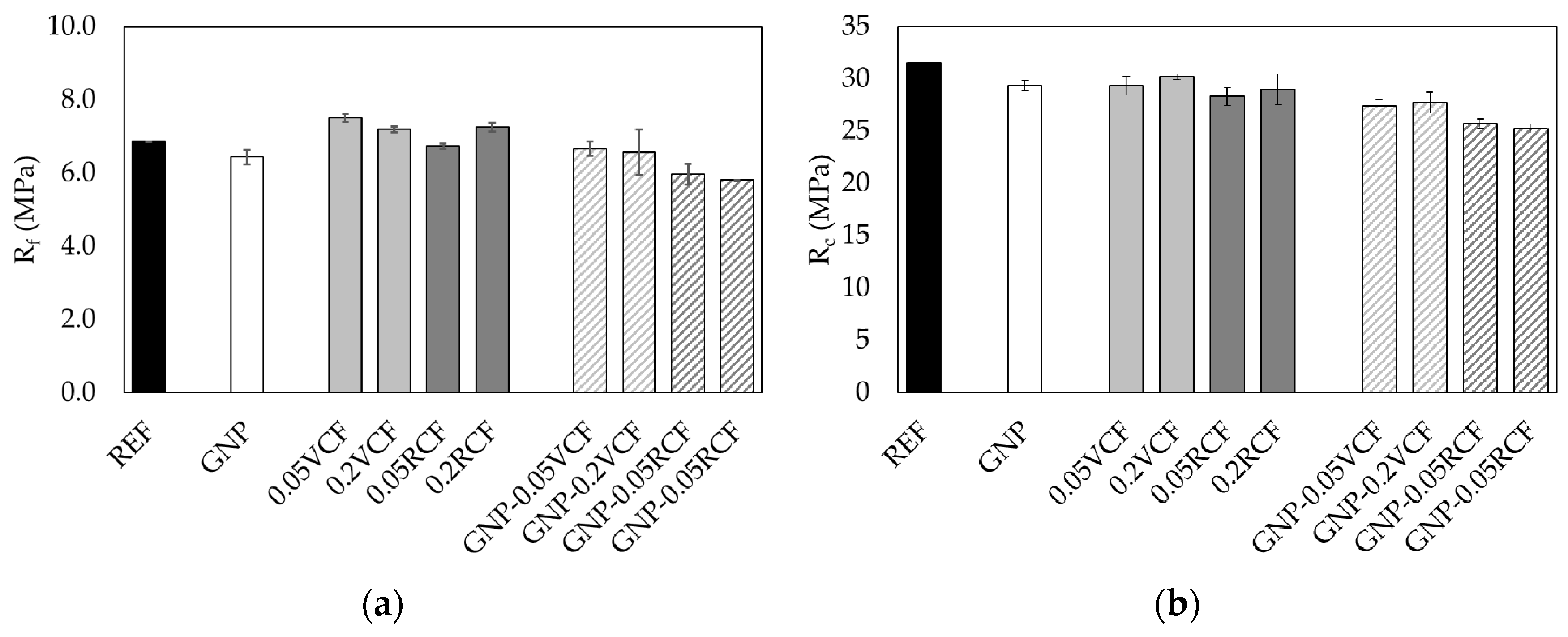
3.1. Mechanical Properties of Mortars
3.2. Electrical Properties of Mortars
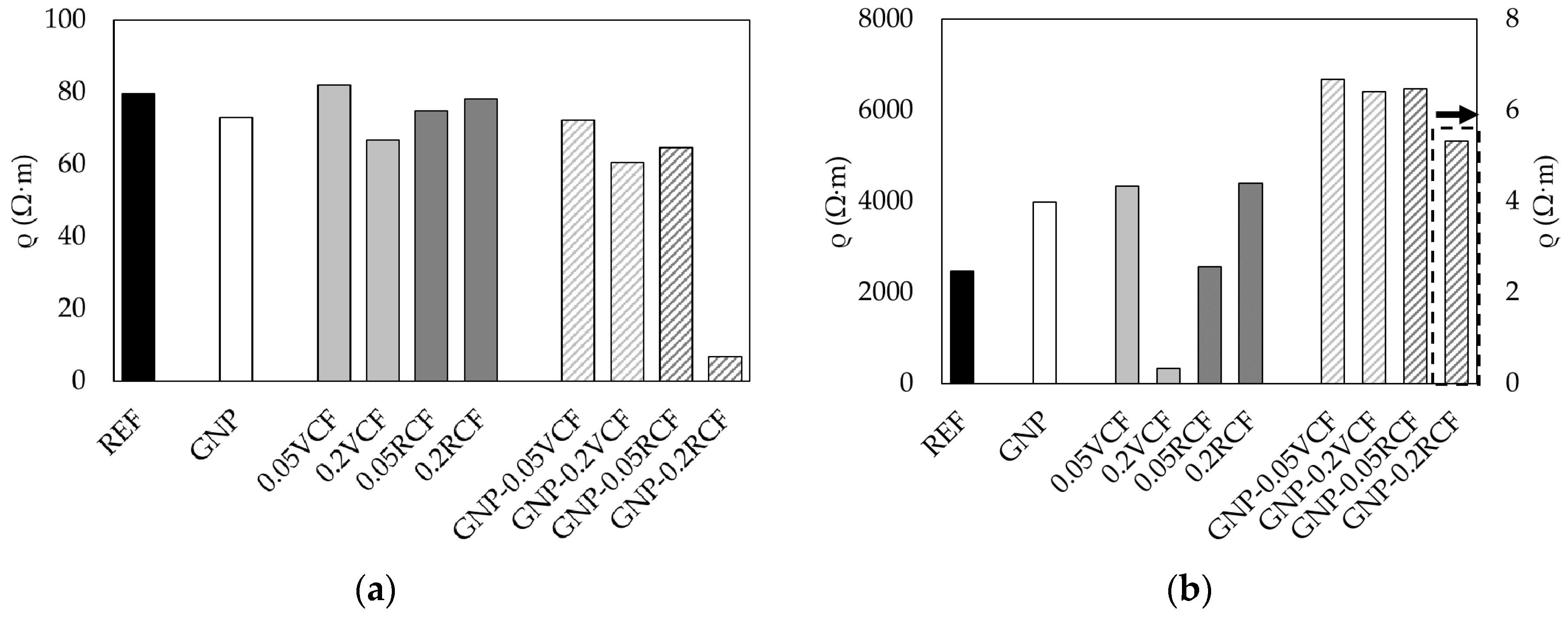
3.2.1. Electrical Resistivity
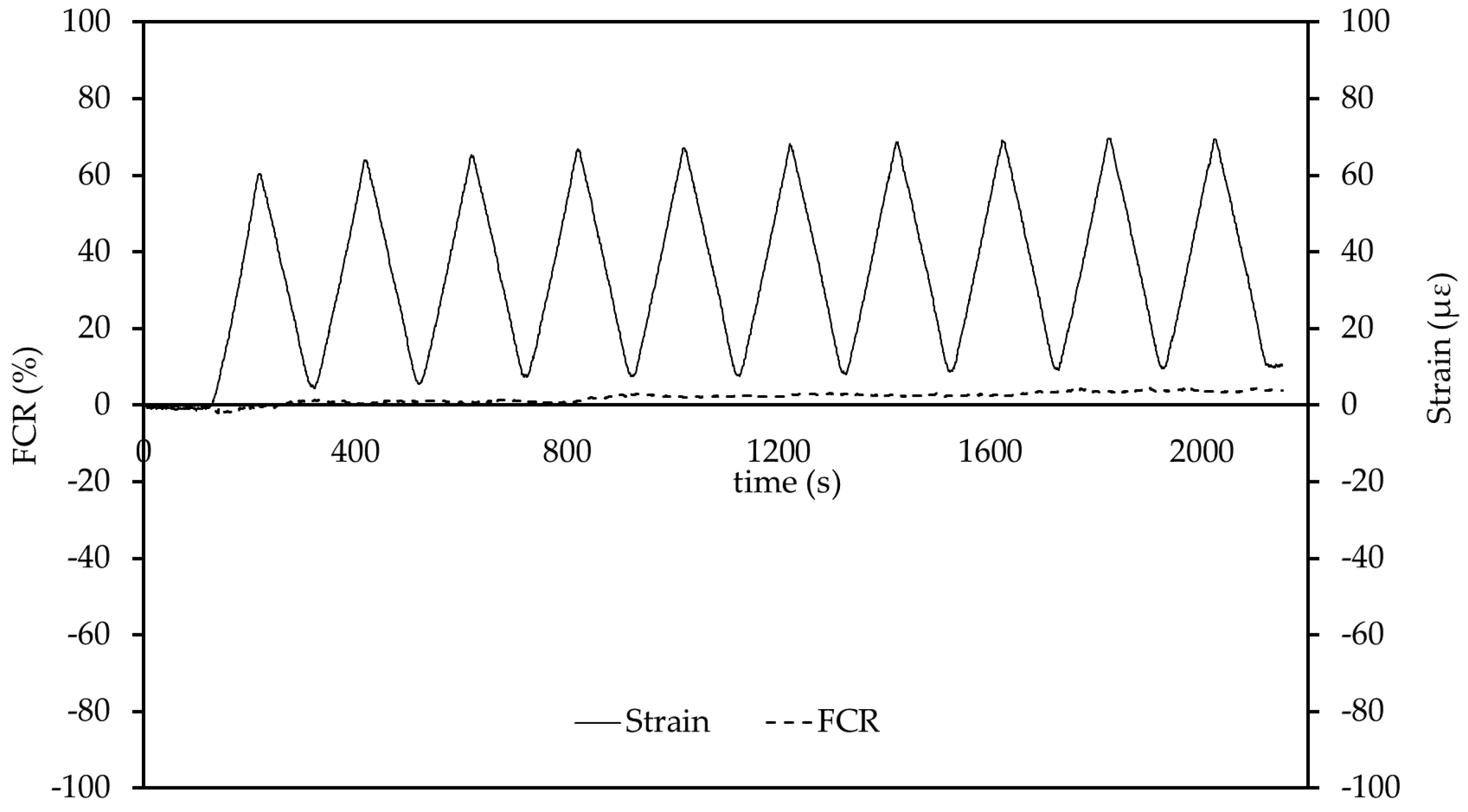
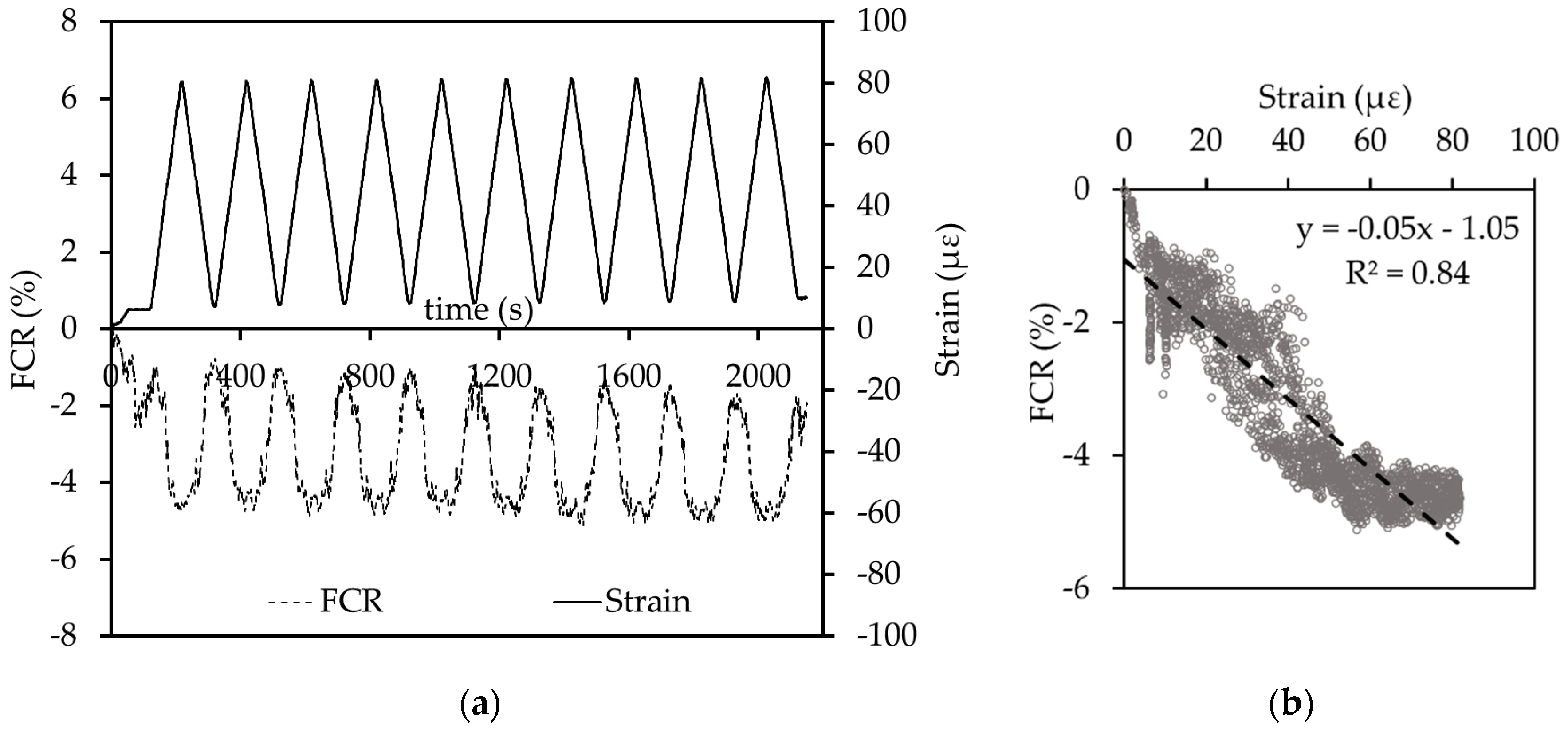
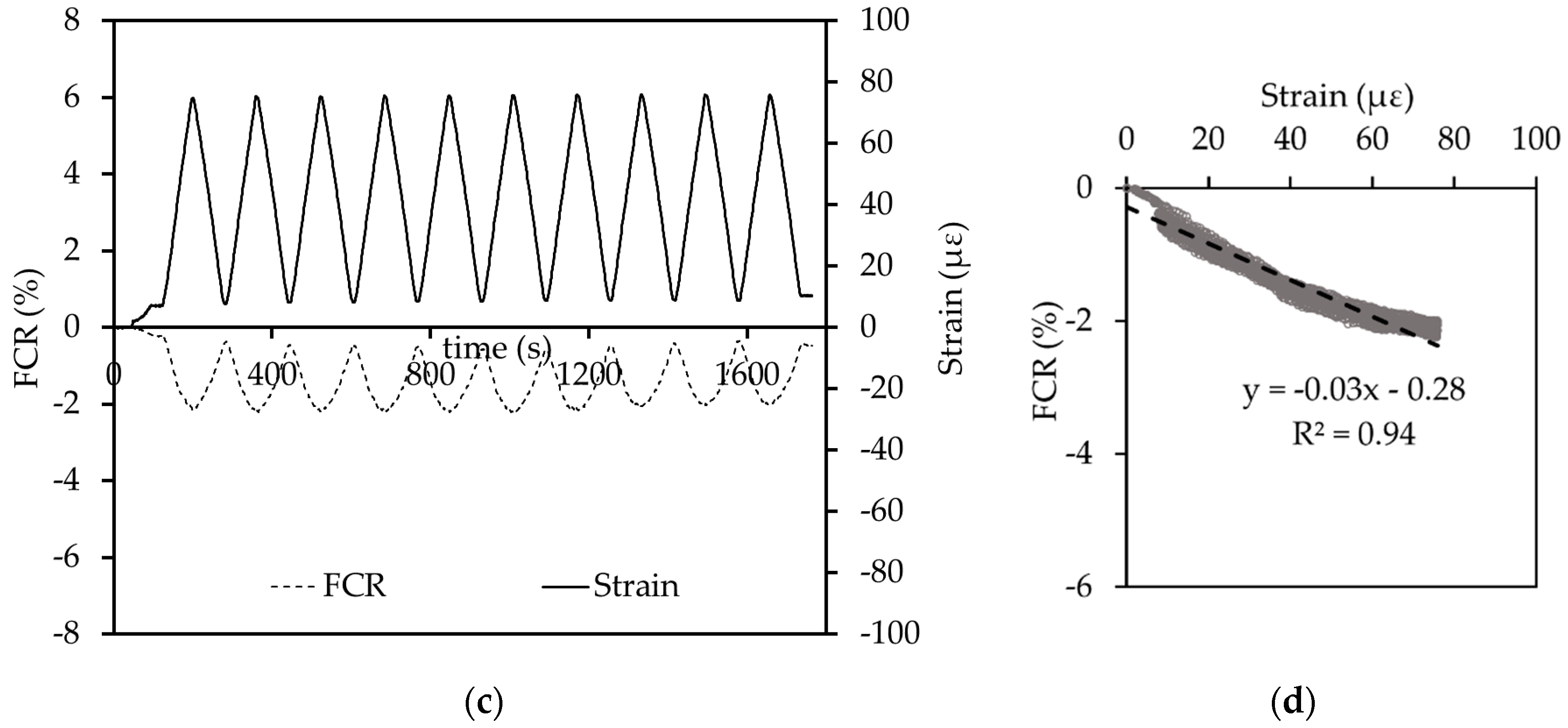
3.2.2. Piezoresistivity
4. Conclusions
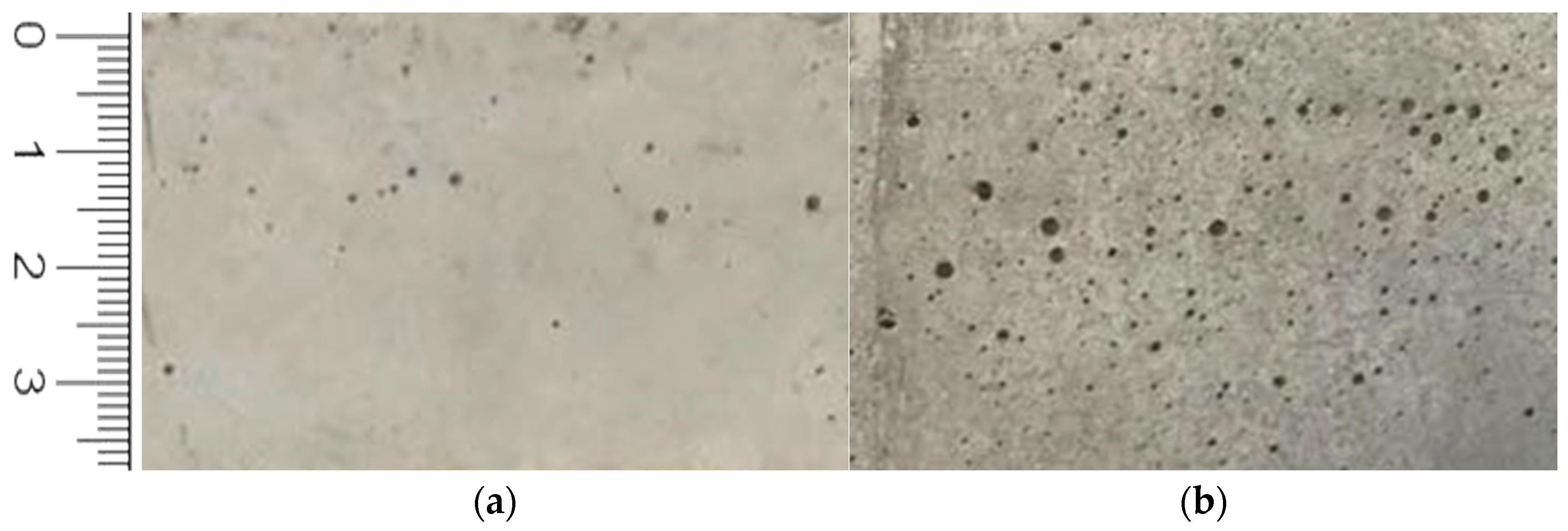
- GNP leads to a decrease in mechanical strength and an increase in electrical resistivity due to the increased content of voids as a consequence of the difficult compaction of the mortar;
- In order to show piezoresistive behavior, after curing, specimens should be dried;
- VCF addition at 0.2 vol.% and the combined use of GNP and RCF at 0.2 vol.% entail a very high electrical conductivity and clear piezoresistive properties.
Author Contributions
Funding
Conflicts of Interest
References
- Tittarelli, F.; Giosuè, C.; Mobili, A.; Ruello, M.L. Influence of binders and aggregates on VOCs adsorption and moisture buffering activity of mortars for indoor applications. Cem. Concr. Compos. 2015, 57, 75–83. [Google Scholar] [CrossRef]
- Giosuè, C.; Belli, A.; Mobili, A.; Citterio, B.; Biavasco, F.; Ruello, M.L.; Tittarelli, F. Improving the Impact of Commercial Paint on Indoor Air Quality by Using Highly Porous Fillers. Buildings 2017, 7, 110. [Google Scholar] [CrossRef]
- Giosuè, C.; Mobili, A.; Toscano, G.; Ruello, M.L.; Tittarelli, F. Effect of Biomass Waste Materials as Unconventional Aggregates in Multifunctional Mortars for Indoor Application. Procedia Eng. 2016, 161, 655–659. [Google Scholar] [CrossRef]
- Li, Z.; Ding, S.; Yu, X.; Han, B.; Ou, J. Multifunctional cementitious composites modified with nano titanium dioxide: A review. Compos. Part A Appl. Sci. Manuf. 2018, 111, 115–137. [Google Scholar] [CrossRef]
- Giosuè, C.; Pierpaoli, M.; Mobili, A.; Ruello, M.L.; Tittarelli, F. Influence of Binders and Lightweight Aggregates on the Properties of Cementitious Mortars: From Traditional Requirements to Indoor Air Quality Improvement. Materials 2017, 10, 978. [Google Scholar] [CrossRef] [PubMed]
- Giosuè, C.; Yu, Q.L.; Ruello, M.L.; Tittarelli, F.; Brouwers, H.J.H. Effect of pore structure on the performance of photocatalytic lightweight lime-based finishing mortar. Constr. Build. Mater. 2018, 171, 232–242. [Google Scholar] [CrossRef]
- D’Alessandro, A.; Pisello, A.L.; Fabiani, C.; Ubertini, F.; Cabeza, L.F.; Cotana, F. Multifunctional smart concretes with novel phase change materials: Mechanical and thermo-energy investigation. Appl. Energy 2018, 212, 1448–1461. [Google Scholar] [CrossRef]
- Coppola, L.; Coffetti, D.; Lorenzi, S. Cement-Based Renders Manufactured with Phase-Change Materials: Applications and Feasibility. Adv. Mater. Sci. Eng. 2016, 2016. [Google Scholar] [CrossRef]
- Donnini, J.; Bellezze, T.; Corinaldesi, V. Mechanical, electrical and self-sensing properties of cementitious mortars containing short carbon fibers. J. Build. Eng. 2018, 20, 8–14. [Google Scholar] [CrossRef]
- Chung, D.D.L. Carbon materials for structural self-sensing, electromagnetic shielding and thermal interfacing. Carbon N. Y. 2012, 50, 3342–3353. [Google Scholar] [CrossRef]
- Ubertini, F.; Alessandro, A.D.; Materazzi, A.L.; Laflamme, S.; Downey, A. Novel nanocomposite clay brick for strain sensing in structural masonry. In Proceedings of the Environment and Electrical Engineering and 2017 IEEE Industrial and Commercial Power Systems Europe (EEEIC/I&CPS Europe), Milan, Italy, 6–9 June 2017; pp. 1–4. [Google Scholar]
- Chung, D.D.L. Electrically conductive cement-based materials. Adv. Cem. Res. 2004, 4, 167–176. [Google Scholar] [CrossRef]
- Brownjohn, J.M. Structural health monitoring of civil infrastructure. Philos. Trans. R. Soc. Lond. A Math. Phys. Eng. Sci. 2007, 365, 589–622. [Google Scholar] [CrossRef] [PubMed]
- Wen, S.; Chung, D.D.L. Piezoresistivity-based strain sensing in carbon fiber-reinforced cement. ACI Mater. J. 2007, 104, 171–179. [Google Scholar]
- Rajabipour, F.; Weiss, J. Electrical conductivity of drying cement paste. Mater. Struct. 2007, 40, 1143–1160. [Google Scholar] [CrossRef]
- Han, B.; Ding, S.; Yu, X. Intrinsic self-sensing concrete and structures: A review. Measurement 2015, 59, 110–128. [Google Scholar] [CrossRef]
- Wen, S.; Chung, D.D.L. Partial replacement of carbon fiber by carbon black in multifunctional cement-matrix composites. Carbon N. Y. 2007, 45, 505–513. [Google Scholar] [CrossRef]
- Chung, D.D.L. Carbon Fiber Composites; Butterworth-Heinemann: Newton, MA, USA, 1994; Volume 9. [Google Scholar]
- Qiang, Z.; Gurkan, B.; Ma, J.; Liu, X.; Guo, Y.; Cakmak, M.; Cavicchi, K.A.; Vogt, B.D. Roll-to-roll fabrication of high surface area mesoporous carbon with process-tunable pore texture for optimization of adsorption capacity of bulky organic dyes. Microporous Mesoporous Mater. 2016, 227, 57–64. [Google Scholar] [CrossRef]
- Deng, G.; Qiang, Z.; Lecorchick, W.; Cavicchi, K.A.; Vogt, B.D. Nanoporous nonwoven fibril-like morphology by cooperative self-assembly of poly(ethylene oxide)-block-poly(ethyl acrylate)-block-polystyrene and phenolic resin. Langmuir 2014, 30, 2530–2540. [Google Scholar] [CrossRef] [PubMed]
- Chuah, S.; Pan, Z.; Sanjayan, J.G.; Wang, C.M.; Duan, W.H. Nano reinforced cement and concrete composites and new perspective from graphene oxide. Constr. Build. Mater. 2014, 73, 113–124. [Google Scholar] [CrossRef]
- Singh, V.; Joung, D.; Zhai, L.; Das, S.; Khondaker, S.I.; Seal, S. Graphene based materials: Past, present and future. Prog. Mater. Sci. 2011, 56, 1178–1271. [Google Scholar] [CrossRef]
- Le, J.-L.; Du, H.; Pang, S.D. Use of 2D Graphene Nanoplatelets (GNP) in cement composites for structural health evaluation. Compos. Part B Eng. 2014, 67, 555–563. [Google Scholar] [CrossRef]
- Gupta, A.; Sakthivel, T.; Seal, S. Recent development in 2D materials beyond graphene. Prog. Mater. Sci. 2015, 73, 44–126. [Google Scholar] [CrossRef]
- Du, H.; Pang, S.D. Mechanical Response and Strain Sensing of Cement Composites Added with Graphene Nanoplatelet Under Tension. In Nanotechnology in Construction; Sobolev, K., Shah, V., Eds.; Springer: Cham, Switzerland, 2015; pp. 377–382. [Google Scholar]
- Liu, Q.; Xu, Q.; Yu, Q.; Gao, R.; Tong, T. Experimental investigation on mechanical and piezoresistive properties of cementitious materials containing graphene and graphene oxide nanoplatelets. Constr. Build. Mater. 2016, 127, 565–576. [Google Scholar] [CrossRef]
- Chen, P.-W.; Chung, D.D.L. Carbon fiber reinforced concrete as an intrinsically smart concrete for damage assessment during static and dynamic loading.pdf. ACI Mater. J. 1996, 93, 341–350. [Google Scholar]
- Monteiro, A.O.; Cachim, P.B.; Costa, P.M.F.J. Self-sensing piezoresistive cement composite loaded with carbon black particles. Cem. Concr. Compos. 2017, 81, 59–65. [Google Scholar] [CrossRef]
- Han, B.; Guan, X.; Ou, J. Electrode design, measuring method and data acquisition system of carbon fiber cement paste piezoresistive sensors. Sens. Actuators A Phys. 2007, 135, 360–369. [Google Scholar] [CrossRef]
- Du, H.; Pang, S.D. Enhancement of barrier properties of cement mortar with graphene nanoplatelet. Cem. Concr. Res. 2015, 76, 10–19. [Google Scholar] [CrossRef]
- Mastali, M.; Dalvand, A. The impact resistance and mechanical properties of self-compacting concrete reinforced with recycled CFRP pieces. Compos. Part B Eng. 2016, 92, 360–376. [Google Scholar] [CrossRef]
- Shamsaei, E.; de Souza, F.B.; Yao, X.; Benhelal, E.; Akbari, A.; Duan, W. Graphene-based nanosheets for stronger and more durable concrete: A review. Constr. Build. Mater. 2018, 183, 642–660. [Google Scholar] [CrossRef]
- Li, X.; Liu, Y.M.; Li, W.G.; Li, C.Y.; Sanjayan, J.G.; Duan, W.H.; Li, Z. Effects of graphene oxide agglomerates on workability, hydration, microstructure and compressive strength of cement paste. Constr. Build. Mater. 2017, 145, 402–410. [Google Scholar] [CrossRef]
- Al-Dahawi, A.; Öztürk, O.; Emami, F.; Yildirim, G.; Şahmaran, M. Effect of mixing methods on the electrical properties of cementitious composites incorporating different carbon-based materials. Constr. Build. Mater. 2016, 104, 160–168. [Google Scholar] [CrossRef]
- Mobili, A.; Belli, A.; Giosuè, C.; Pierpaoli, M.; Bastianelli, L.; Mazzoli, A.; Ruello, M.L.; Bellezze, T.; Tittarelli, F. Enhancing the mechanical, durability, depolluting and electrical properties of multifunctional lime mortars by commercial or waste carbonaceous fillers addition. Cem. Concr. Compos. 2017. submit for publication. [Google Scholar]
- Chung, D.D.L. Dispersion of Short Fibers in Cement. J. Mater. Civ. Eng. 2005, 17, 379–383. [Google Scholar] [CrossRef]
- Han, B.; Yu, X.; Ou, J. Multifunctional and smart nanotube reinforced cement-based materials. In Nanotechnology in Civil Infrastructure; Gopalakrishnan, K., Birgisson, B., Taylor, P., Attoh-Okine, N.O., Eds.; Springer: Berlin/Heidelberg, Germany, 2011; pp. 1–47. [Google Scholar]
- Chung, D.D.L. Piezoresistive Cement-Based Materials for Strain Sensing. J. Intell. Mater. Syst. Struct. 2002, 13, 599–609. [Google Scholar] [CrossRef]
- Fan, X.; Fang, D.; Sun, M.; Li, Z. Piezoresistivity of carbon fiber graphite cement-based composites with CCCW. J. Wuhan Univ. Technol. Mater. Sci. Ed. 2011, 26, 339–343. [Google Scholar] [CrossRef]
- Ou, J.; Han, B. Piezoresistive cement-based strain sensors and self-sensing concrete components. J. Intell. Mater. Syst. Struct. 2009, 20, 329–336. [Google Scholar] [CrossRef]



| Properties | GNP | VCF | RCF |
|---|---|---|---|
| Carbon content (%) | >99.5 | >99.5 | 94 (>92) |
| Density (g/cm3) | 2.00 | 1.78 | 1.85 |
| Bulk density (g/cm3) | 0.03–0.10 | - | - |
| Length (mm) | - | 6.0 | 6.0 |
| Thickness (µm) | 0.006–0.008 | 7 | 7 |
| Tensile strength (GPa) | - | 4 | 3.5 |
| Modulus (GPa) | - | 230–250 | 230 |
| Color | Black | Black | Black |
| Surface coating | - | Epoxy | Glycerol |
| Mixture | Cement (g/L) | Water (g/L) | Sand (g/L) | SP (g/L) | GNP (g/L) | VCF (g/L) | RCF (g/L) | Slump (mm) |
|---|---|---|---|---|---|---|---|---|
| REF | 512 | 256 | 1535 | - | - | - | - | 185 |
| GNP | 512 | 256 | 1535 | 1.0 | 20 | - | - | 173 |
| 0.05VCF | 512 | 256 | 1535 | 0.2 | - | 0.9 | - | 177 |
| 0.2VCF | 512 | 256 | 1535 | 0.5 | - | 3.4 | - | 170 |
| 0.05RCF | 512 | 256 | 1535 | 0.3 | - | - | 0.9 | 205 |
| 0.2RCF | 512 | 256 | 1535 | 0.6 | - | - | 3.7 | 177 |
| GNP-0.05VCF | 512 | 256 | 1535 | 1.1 | 20 | 0.9 | - | 200 |
| GNP-0.2VCF | 512 | 256 | 1535 | 1.9 | 20 | 3.4 | - | 177 |
| GNP-0.05RCF | 512 | 256 | 1535 | 1.8 | 20 | - | 0.9 | 193 |
| GNP-0.2RCF | 512 | 256 | 1535 | 2.4 | 20 | - | 3.7 | 177 |
| Properties | 0.2VCF | GNP-0.2RCF |
|---|---|---|
| ρ0 (Ω·m) | 327.8 | 5.3 |
| Max. FCR (%) | 4.9 | 2.2 |
| Sensitivity (MPa−1) | 613.5 | 295.4 |
© 2018 by the authors. Licensee MDPI, Basel, Switzerland. This article is an open access article distributed under the terms and conditions of the Creative Commons Attribution (CC BY) license (http://creativecommons.org/licenses/by/4.0/).
Share and Cite
Belli, A.; Mobili, A.; Bellezze, T.; Tittarelli, F.; Cachim, P. Evaluating the Self-Sensing Ability of Cement Mortars Manufactured with Graphene Nanoplatelets, Virgin or Recycled Carbon Fibers through Piezoresistivity Tests. Sustainability 2018, 10, 4013. https://doi.org/10.3390/su10114013
Belli A, Mobili A, Bellezze T, Tittarelli F, Cachim P. Evaluating the Self-Sensing Ability of Cement Mortars Manufactured with Graphene Nanoplatelets, Virgin or Recycled Carbon Fibers through Piezoresistivity Tests. Sustainability. 2018; 10(11):4013. https://doi.org/10.3390/su10114013
Chicago/Turabian StyleBelli, Alberto, Alessandra Mobili, Tiziano Bellezze, Francesca Tittarelli, and Paulo Cachim. 2018. "Evaluating the Self-Sensing Ability of Cement Mortars Manufactured with Graphene Nanoplatelets, Virgin or Recycled Carbon Fibers through Piezoresistivity Tests" Sustainability 10, no. 11: 4013. https://doi.org/10.3390/su10114013
APA StyleBelli, A., Mobili, A., Bellezze, T., Tittarelli, F., & Cachim, P. (2018). Evaluating the Self-Sensing Ability of Cement Mortars Manufactured with Graphene Nanoplatelets, Virgin or Recycled Carbon Fibers through Piezoresistivity Tests. Sustainability, 10(11), 4013. https://doi.org/10.3390/su10114013