Article

Optimizing Market Scenarios for Battery Electric Vehicles Through a Machine Learning-Based Manufacturer Agent †

Institute of Vehicle Concepts, German Aerospace Center (DLR), Pfaffenwaldring 38-40, 70569 Stuttgart, Germany
*
Author to whom correspondence should be addressed.
This article is an improved version of our paper presented at 38th International Electric Vehicle Symposium and Exhibition (EVS38), Gothenburg, Sweden, 15–18 June 2025.
World Electr. Veh. J. 2026, 17(6), 295; https://doi.org/10.3390/wevj17060295
Submission received: 23 April 2026 / Revised: 18 May 2026 / Accepted: 26 May 2026 / Published: 2 June 2026

Abstract

To meet climate goals, the automotive industry is transitioning to electromobility, reshaping vehicle model variants, market composition and therefore influencing purchasing decisions. To cover the full range of possible vehicle models for the German passenger vehicle market, a machine learning-based manufacturer agent was developed, incorporating a comprehensive technology database and historical vehicle data. Over 3000 new BEV models were generated and evaluated for possible year of market entry. Relevant models were integrated into the VECTOR21 vehicle technology scenario model to assess their market potential against competing drivetrains. The scenario results for Germany show that LFP vehicles can capture more than 18% overall market share in 2030, while Ni-rich cells remain competitive in long-range variants with up to 53% market potential by 2035. On the other hand, BEVs powered by sodium-ion batteries could reach up to 9% market potential by 2030, potentially exceeding 17% if cell prices fall below 50 EUR/kWh. However, sensitivity analysis reveals So-Ion market potential is highly sensitive to model availability, dropping to 6% or 2% in constrained scenarios, primarily replaced by LFP variants. These findings suggest that alongside cost reductions, sufficient model availability can also play a significant role in realizing the market potential of next-generation battery technologies.

1. Introduction

The shift towards electromobility presents a significant challenge for the automotive industry. For decades, internal combustion engines have been the dominant powertrain technology in the global passenger vehicle market due to their high energy density, cost-effectiveness and widespread fuel availability. However, as environmental concerns and stricter EU emission regulations mount, manufacturers are accelerating their transition to battery electric vehicles (BEVs) in order to meet the EU’s goal of achieving climate neutrality by 2050. By 2035 at the latest [1], the European Union plans to ban new registrations of combustion-engine-powered passenger cars and light commercial vehicles. Furthermore, scenario analyses suggest that over 55% of the new passenger vehicle registrations could already be battery electric by 2030, underscoring the rapid growth of electric mobility [2]. This aligns with recent projections of the International Energy Agency (IEA) showing comparable electrification trajectories under their Stated Policies Scenario [3].
With the shift to BEVs, vehicle requirements are also changing [4]. Customers are now focusing on different key performance indicators (KPIs) such as range, charging speed, and vehicle weight, but also factors like carbon footprint, specific resource needs, and supply chain dependencies are becoming more important. As a result, the industry is facing a critical juncture in terms of vehicle design and supply chain management. To recognize and assess potential risks such as battery capacity shortages early on, detailed scenario analyses are needed for future vehicle and material demand. However, due to fast-developing battery technologies [5], these scenarios can only make meaningful predictions if they also consider possible future vehicle models.
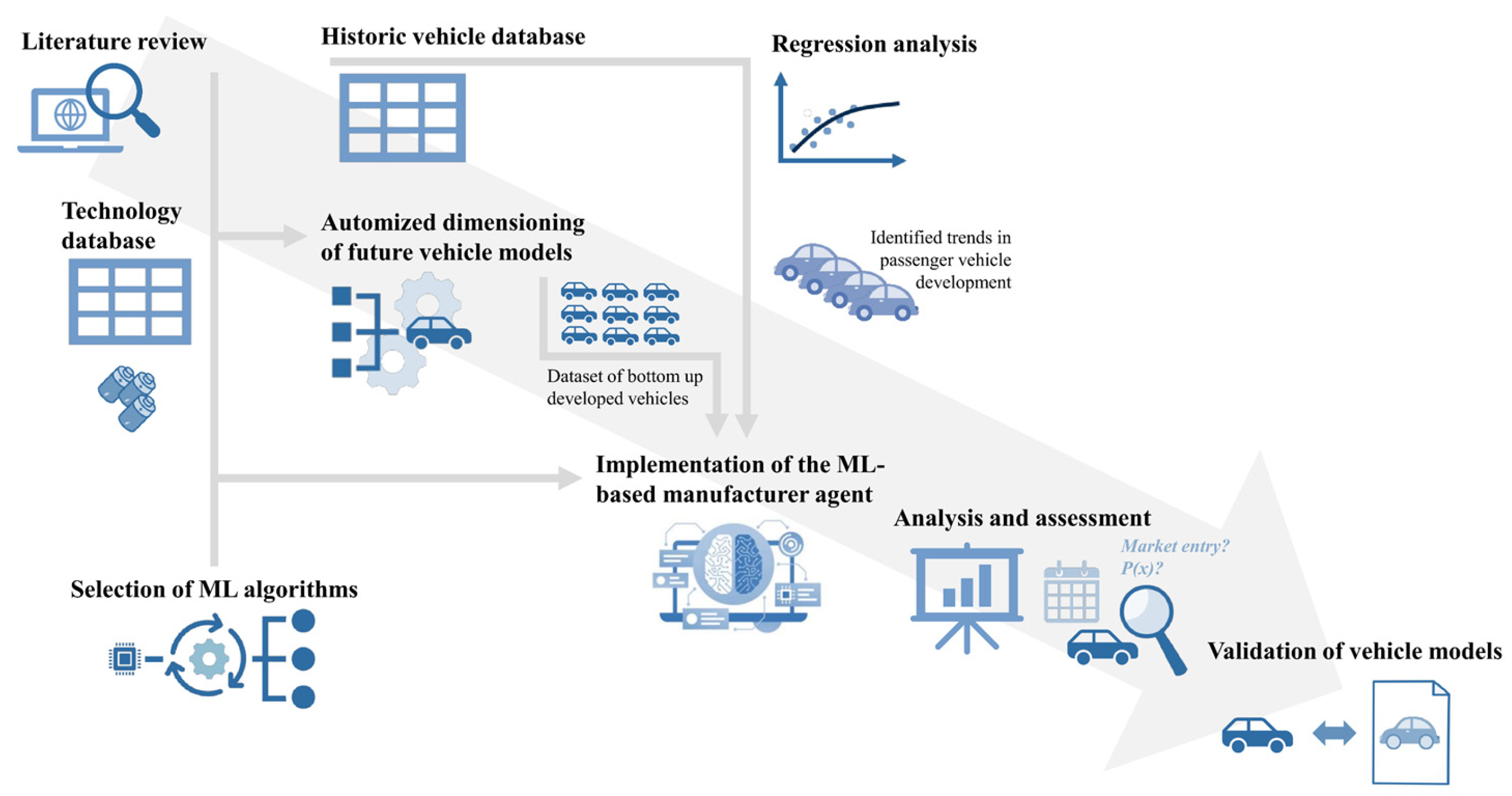
In order to analyze and project future vehicle models, a machine learning-based manufacturer agent was developed whose neural network was trained using historical vehicle data and an extensive technology database. This enables the extrapolation of current trends through a regression analysis, considering the technological advancements of various battery chemistries with a specific focus on different automotive manufacturer clusters. As a result, over 3000 new bottom-up calculated vehicle models are generated, with the manufacturer agent assessing their probability of market entry for different market entry years in 5-year increments. The most relevant models are then implemented in our DLR-internal vehicle technology scenario model VECTOR21.
This paper is an improved version of our paper presented at the 38th International Electric Vehicle Symposium and Exhibition (EVS38) in Gothenburg, Sweden on 17 June 2025 [6]. The journal version includes an extended market potential assessment, a description of the novel methodology for modeling model availability and a sensitivity analysis of Sodium-Ion (So-Ion) market potential under varying model availability scenarios.

2. Implementation of the Manufacturer Agent

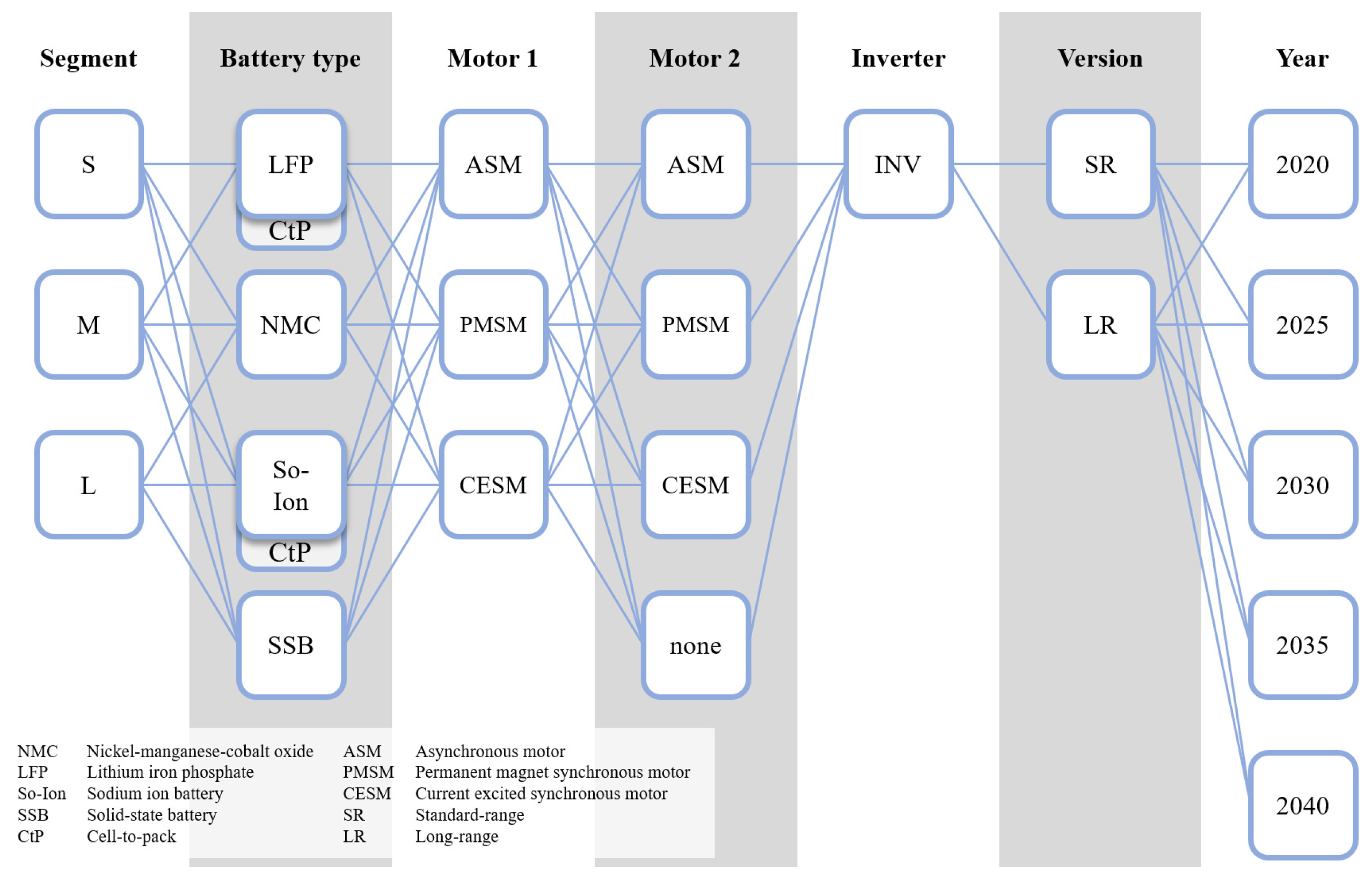
The high amount of technological options and components available presents a multitude of design possibilities for future battery electric vehicles. Figure 1 illustrates the diverse configurations across various vehicle segments, battery chemistries, pack technologies, electric motor types, and potential market entry years. Current ongoing research in inverters utilizing advanced materials like silicon carbide or gallium nitride [7] will further expand this matrix, resulting in over 3000 unique vehicle combinations with distinct characteristics that need to be evaluated in terms of their probability of market entry.
This is why we developed the manufacturer agent which combines these extensive datasets of bottom-up developed possible vehicle configurations and evaluates them with regard to current and historically available vehicle models in Germany [8]. As shown in Figure 1, the possible vehicle configurations are combined on the basis of a technology database covering the years 2020 to 2040, and corresponding key performance indicators such as energy consumption, range and vehicle costs are calculated automatically. Over 3000 different vehicle variants with varying cell chemistries, battery technologies, electric motor types and quantities as well as different segments and range classes (short- and long-range) are taken into account. These are then combined with the identified historical trends from the processed historic vehicle data and transferred to the multi-layer, feedforward neural network for training as shown in Figure 2 and described in further detail in [8]. The neural network architecture consists of an input layer (20 neurons, linear activation), one hidden layer (20 neurons, linear activation), and an output layer (sigmoid activation) for market entry year probability calculation. Training is performed using the Adam optimizer with binary cross-entropy loss function over 200 epochs. The dataset is split into 80% training and 20% test data. The following input parameters are used: vehicle segment, weight, capacity, range and price. The selected output is the potential year of market entry. For detailed methodology and hyperparameter optimization, see [8].
Model training on this combined dataset achieves a 64% classification accuracy with regard to the estimated year of potential market entry. This accuracy refers to exact year classification; however, the distinction between existing and future vehicle models is significantly more precise. This is mainly due to the greater similarity between currently existing models, which makes it harder for the model to distinguish them (e.g., the e.Go Life misclassified as 2020 instead of 2019, see Figure 4 in [8]). In contrast, bottom-up generated future vehicles exhibit more significant differences in their KPIs, largely due to the longer time period, making them easier to differentiate. A possible misclassification of 1–2 years is therefore not considered critical, as the corresponding vehicle models are still correctly identified as current or future models respectively.

3. Modeling of Newly Identified Relevant Future Vehicle Models

The results of the manufacturer agent’s assessments indicate that vehicle models with different cell chemistries and battery technologies will be relevant to the market in the future. Lithium iron phosphate (LFP) and lithium nickel manganese cobalt (NMC) batteries are highly relevant to the market across all vehicle segments. Vehicles with LFP cells benefit from the possibility of using them in the cell-to-pack (CtP) configuration [9]. So-Ion cells offer high potential in the medium term, but their market relevance is mainly in the small vehicle segment due to their short range [10]. Assuming that solid-state batteries (SSBs) are ready for the market from 2030, this battery option is a relevant option for long-range versions in particular. In general, a look at the results shows that the future market potential for different cell chemistries depends heavily on market dynamics; if the technology development does not increase as strongly as the trends from the regression analysis fed to the agent, the market potential for all cell chemistries will decrease as the assumed future market requirements would no longer be possible with these technologies.
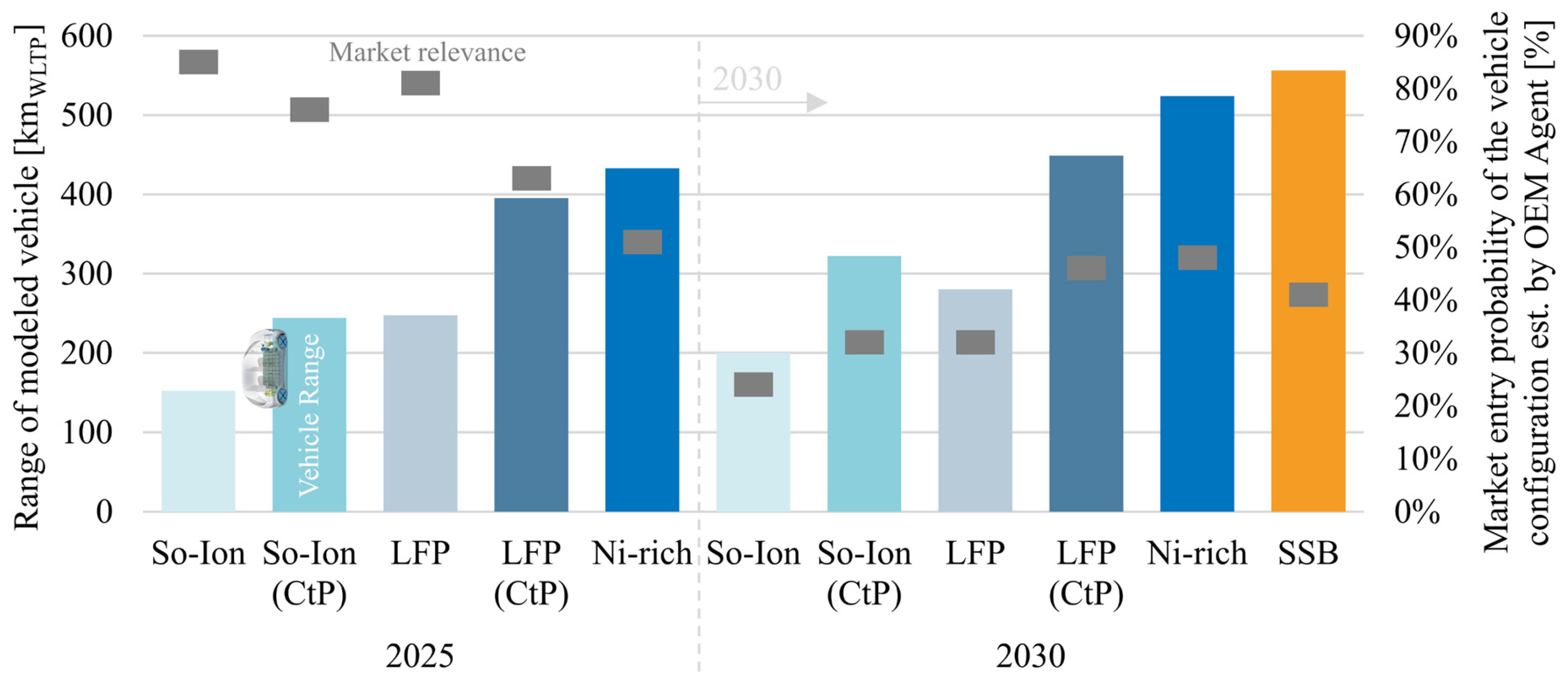
Figure 3 shows exemplary results for future standard-range vehicle models in the small vehicle segment for the scenario years 2025 and 2030. The range and the probability of market entry determined by the manufacturer agent for the model year under consideration are shown. The latter should only be compared within the same year due to the effect of the changing market dynamics described above. It can be seen that So-Ion and LFP cells are currently highly relevant to the market due to their low costs and (today) sufficient range. However, if the development of corresponding vehicles is considered in the light of the changing vehicle market in 2030, the probability of market entry for cell chemistries with low energy density is reduced. Instead, LFP CtP and Ni-rich cell chemistries appear to be gaining relevance, as will all solid-state batteries, assuming that they reach technological maturity and can be manufactured at competitive prices [11].
For subsequent segments and the other baseline years, possible future vehicle configurations were also generated and assessed by the manufacturer agent as described in further detail in [8]. These serve as an input for the market potential analysis utilizing the vehicle technology scenario model VECTOR21.

4. Assessment of Market Potential

To enhance our analysis, we integrate the most promising of the estimated BEV models into the VECTOR21 framework. This integration allows us to assess the market potential of these models compared to other powertrain types, like conventional vehicles or hybrids.

4.1. Vehicle Technology Scenario Model: VECTOR21

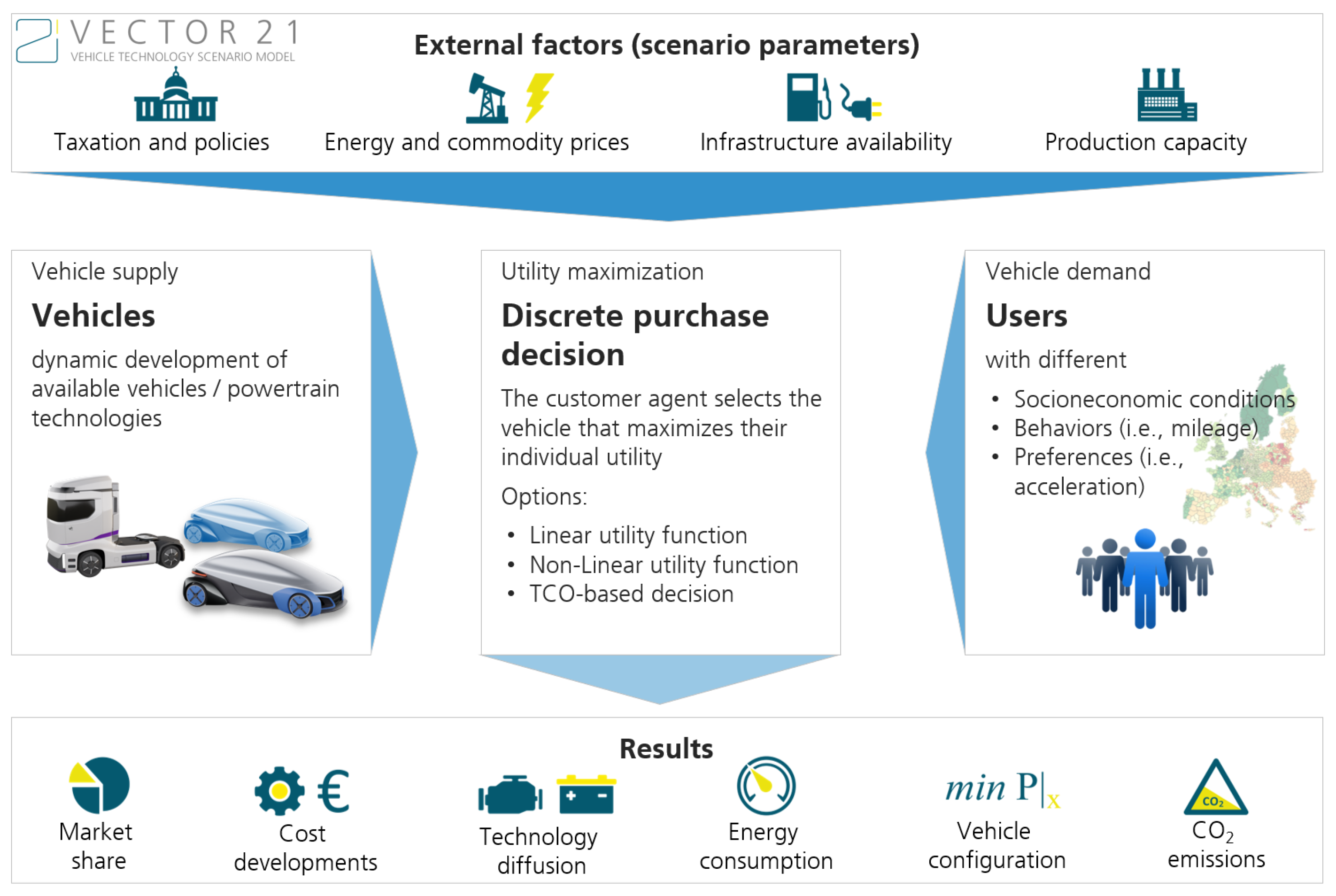
VECTOR21 [12], a technology scenario model, was designed to simulate the purchasing behavior of customers (agents) in the context of new vehicle acquisitions, considering complex market conditions in Germany and Europe [13]. The model aims to capture the details of agent decision-making processes by creating personalized profiles that incorporate factors such as annual mileage, location, income, vehicle size, and other specific requirements. Agents are categorized into different adopter groups based on their inclination to embrace innovation and willingness to pay for environmentally friendly vehicles. The model weights purchase price, operational cost as well as performance-relevant factors like acceleration or range requirements differently for each agent based on their specific customer group (e.g., private or company vehicle) and personalized profile.
As shown in Figure 4, VECTOR21 includes multiple vehicle options that differentiate by segment and powertrain concept, assigning specific energy consumption and component costs to each vehicle. Within this project we focused on passenger vehicles which are modeled in three different vehicle segments (small, medium, and large) for various powertrain concepts:
  • Internal combustion engine vehicle (ICEV);
  • (Full-)hybrid electric vehicle (HEV);
  • Plug-in hybrid electric vehicle (PHEV);
  • Battery electric vehicle (BEV);
  • Fuel cell electric vehicle (FCEV).
Figure 4. Structure of the VECTOR21 vehicle technology scenario model [12].
Wevj 17 00295 g004
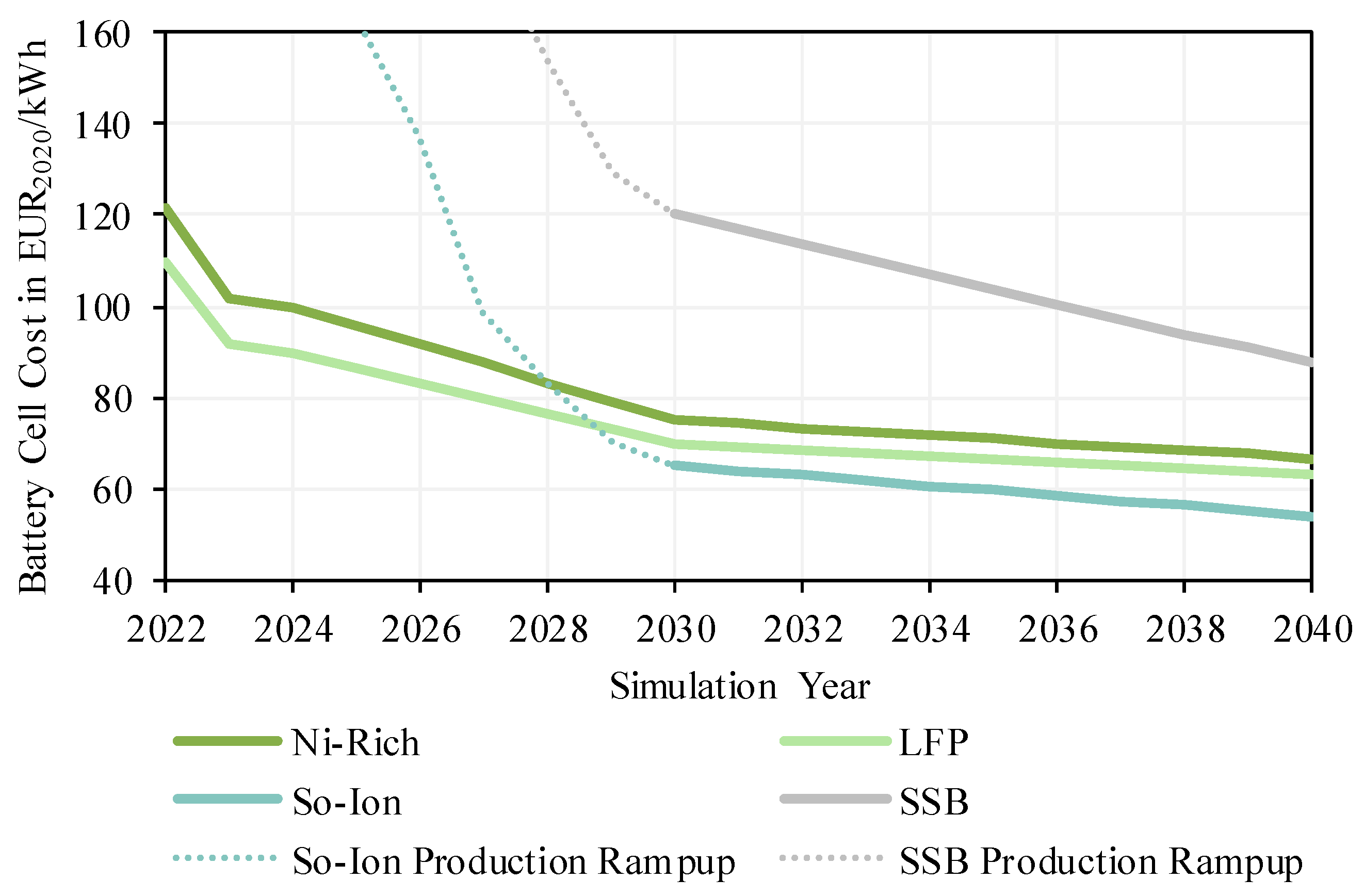
The model also allows for differentiation between various fuel types, including conventional fossil fuels (gasoline, diesel, compressed natural gas) and synthetic fuels. Furthermore, VECTOR21 now features the possibility to differentiate between different battery chemistries. As shown in [11], we have included NMC622, NMC811 and NCA as Nickel-rich (Ni-rich) chemistries, as well as LFP, So-Ion and even featured solid-state batteries with the assumption that they are market-ready from 2030 at cell costs of 120 EUR2020/kWh [5]. Based on the estimations of the manufacturer agent, as shown exemplarily in Figure 3, more than 30 new battery electric vehicle model variants have been included. For future LFP and So-Ion vehicle models, due to their higher received market entry probability estimated by the manufacturer agent, only cell-to-pack vehicle variants were implemented.
For each agent, the model generates vehicles with these different powertrain configurations and fuel or battery chemistry types on an annual basis, taking into account technological and cost-related developments. The purchase decision of each agent is then uniquely simulated based on a maximization of their individual utility values for each vehicle in an environment characterized by political decisions (e.g., fuel taxation, CO2 fleet limits, purchase subsidies) and global developments (e.g., energy costs). As the utility calculation also considers factors such as range, CO2 emissions and acceleration in addition to the purchase price and operational costs, this approach enables the identification of market potential even for vehicles with higher total costs of ownership but better CO2 emissions, such as hybrid or electric vehicles.
This study introduces a new model availability module within VECTOR21 to address limitations in previous analyses [11], where treating market entry as a binary state resulted in unrealistic discontinuities by ignoring the lag between technological readiness and model availability. To mitigate these artificial jumps and ensure a continuous transition in market penetration, we implement a stochastic sampling approach based on order statistics. As explicitly modeling every individual model variant (e.g., more than 70 different BEV models available within the medium segment) is computationally unreasonable, we use the model availability count N for each powertrain option to proxy the unobserved variety within a segment. To reach full model availability, it is assumed that it is sufficient to have half of the available gasoline reference model availability. This method scales the effective utility of a specific powertrain based on the number of available vehicle models, reflecting the probability that at least one variant aligns with the agent’s specific preferences. The effective utility is defined as the maximum utility U among the N available models:
U e f f = m a x U 1 , U 2 , , U N   w h e r e   U i N ( μ , σ )
Here, μ represents the sum of part-worth utility factors, and σ is set to 3 as standard deviation. This value was empirically calibrated through iterative testing against historical market penetration data, yielding the best fit for observed vehicle adoption curves. This approach follows discrete choice simulation practices where the probability of finding a fitting option (or vehicle model) increases with the number of alternatives [14]. By varying the number of vehicle models N, the model simulates how limited model availability constrains the maximum achievable utility. Consequently, scenarios with fewer available models result in lower Ueff values, reducing the market potential of those powertrains relative to alternatives with higher model availability.

4.2. Key Scenario Assumptions of the Battery Diversification Scenario

Due to better comparability, we based the battery diversification scenario presented in this study on similar framework conditions as used in previous studies: With regard to the political framework such as the CO2 fleet reduction quota and infrastructure assumptions this paper builds on the “Structural Study BW 2023” [2], whilst the assumptions of the battery price development are based on our own techno-economic analysis [5] and the first developed battery diversification scenario as described in [11]. CO2 and energy prices are taken from the Ariadne Project [15]. Here, the authors focus on how Germany can reach climate neutrality and also model the interactions between the energy and the transport system. An increase in the CO2 price and a necessary drop-in of synthetic fuels is assumed, which means that the price of gasoline at the fuel station, as shown in Table 1, will rise by up to 55% until 2035.
These parameters describe a progressive development of the passenger vehicle market in line with the European Fit-for-55 policy target [1]. Consequently, a 100% CO2 emission reduction target for new passenger cars by 2035 and a stricter 55% target by 2030 are implemented. Between these base years, the model assumes a linear decrease in CO2 fleet targets. If these targets cannot be achieved with the resulting vehicle fleet of that year, VECTOR21 calculates a CO2 penalty of 95 Euro per gram of CO2/km above the fleet emission target, which is added to the vehicle’s purchase price and therefore passed on to the customer. As a result, vehicles with internal combustion engines may incur additional costs, making them more expensive and less attractive for customer agents.
Vehicle costs are calculated bottom-up, incorporating the costs of individual components. For BEVs, this starts with the different battery cells and costs as specified in Figure 5 which were derived through an in-house techno-economic analysis based on the literature review, product datasheets, expert interviews, and teardown review reports as described in [3]. In comparison to the previous battery diversification scenario shown in [11], slightly higher battery cell costs were assumed due to the increased raw material prices which have led to an increase in recent battery prices [18]. This is followed by the other relevant parts of the battery assembly, the battery management system, the thermal management system, DC/DC converter, electric motor, power electronics, vehicle chassis, the manufacturer’s contribution margin and OEM as well as dealer margins (cf. Table 2 in [11]). A high-energy to high-power factor of 1.65 is assumed for high-power HEV-, PHEV-, and FCEV-batteries, as corresponding batteries have different cell and pack designs and requirements. The cost of fuel cells and hydrogen storage is derived from a US Department of Energy study by James et al. [16,17].
When modeling the passenger vehicle market with VECTOR21, the charging infrastructure is taken into account by comparing the needs of customer agents with the defined availability of infrastructure in their different residential situations. Customer agents with sufficient infrastructure, such as private parking with the possibility to install a wallbox, are compared with those that rely heavily on public charging station expansion. Leaning on the “Master Plan Charging Infrastructure II” of the German government, the expansion of the infrastructure is assumed to occur at a sufficient rate by 2030, based on the various clusters as described in [2].
As indicated in the results presented in Figure 3 for the small vehicle segment, the manufacturer agent identified approximately 30 promising vehicle model variants out of over 3000 options analyzed, which were subsequently implemented in detail as powertrain options within the VECTOR21 vehicle technology model. The model range does not only distinguish between different cell chemistries but also between standard- and long-range vehicles and vehicles with two- or four-wheel-drive. Notably, only one electric motor was considered for small vehicles, while a performance-oriented version was applied to medium and large vehicle models, which results in better acceleration. Furthermore, a gradual rollout of model availability is assumed, which means that even if certain models, such as those with sodium-ion batteries, become available in 2025, the initial market potential remains limited due to an initial low number of available vehicle models in comparison to existing gasoline vehicle models or other battery electric alternatives. However, based on the historical development of the availability of LFP vehicle models, it is assumed that a comparable range of available models will be on the market within 5 years.
Please note that the scenario results presented in the following chapter are based on several assumptions, including unlimited production capacity of new technologies and unrestricted access to raw materials. As such, these results should be viewed as a simulation of market potential rather than a reflection of actual market expectations in the real world. Market scenarios in this context refer to calculated outcomes under specific framework conditions (e.g., energy prices, battery costs, model availability). Specifically, a battery diversification scenario was modeled based on the cost trajectories shown in Figure 5. If these cost reductions are delayed, it could result in lower market penetration, for example, of So-Ion vehicles. The gap between potential and actual market share depends on manufacturing scale-up speed, supply chain resilience, and OEM strategic decisions.

4.3. Results of VECTOR21 Battery Diversification Scenario

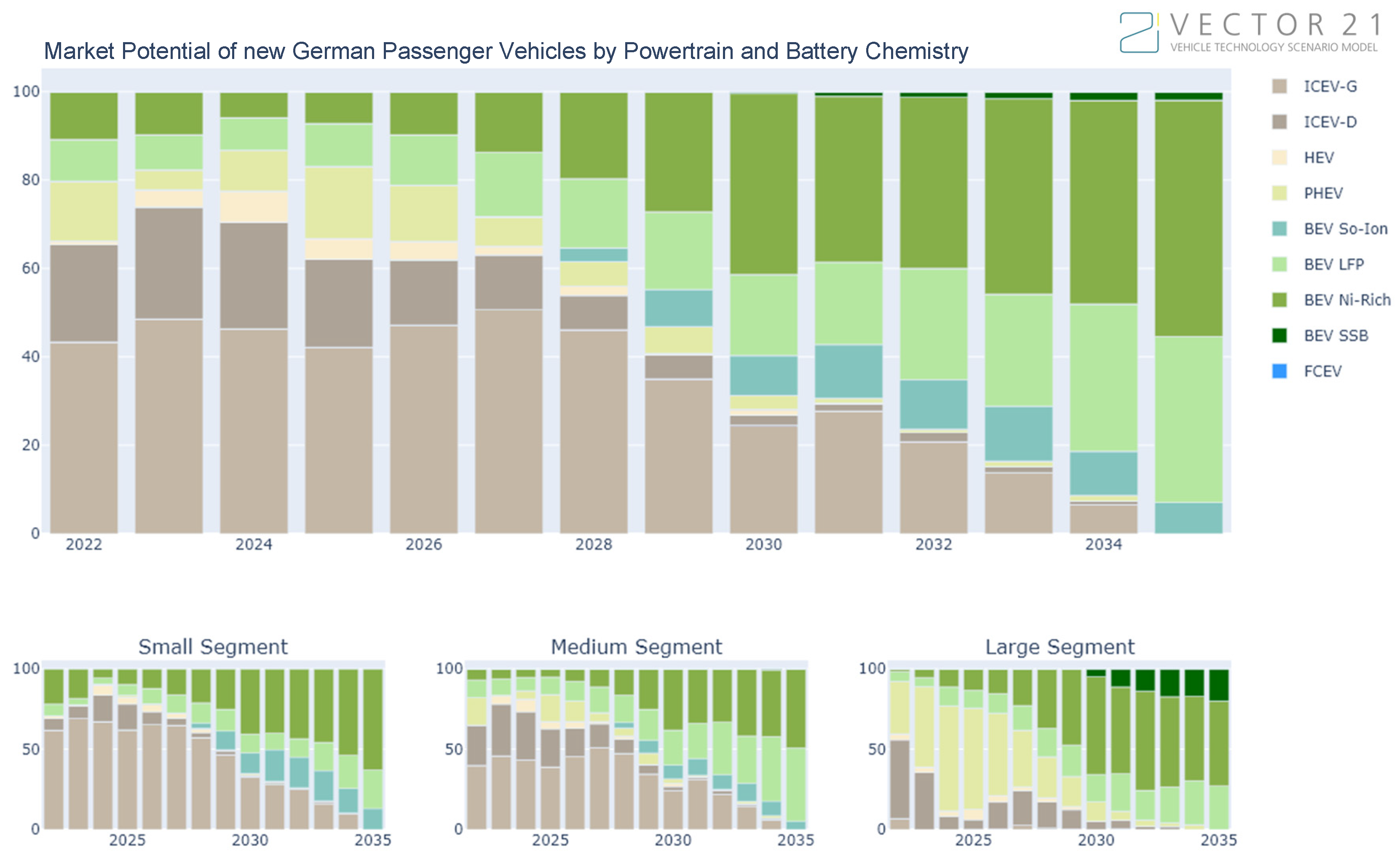
The battery diversification scenario results show that there is a growing market potential for all currently available and partly also for future cell chemistries. Generally, a trend towards the electrification of the new passenger vehicles can be observed as shown in Figure 6. However, due to slightly higher battery prices assumed, the transition to purely electric vehicles in this scenario occurs slightly later than in the previous one described in [11]. Instead, the market potential for PHEVs is higher, particularly among agents in the large vehicle segment with high range and also environmental requirements.
In the short term, vehicles with Ni-rich and LFP cells continue to dominate the battery electric vehicle market. However, agents with high range requirements tend to prefer vehicles with Ni-rich cell technology, while agents who are environment-conscious and more purchase-price-sensitive tend to opt for LFP vehicle models. What is also apparent, particularly for the transition years up to 2030, is that the long-range option of plug-in hybrids will take market share away from long-range Ni-rich vehicle models, resulting in greater market potential for LFP in the near future. But this will change as the CO2 fleet limits are being tightened, which will make PHEVs more expensive, allowing long-range BEV models to gain market share.
As soon as the costs for So-Ion production cells fall below or equal those of automotive Li-Ion cells (as shown in Figure 5), they will also gain market share. So-Ion vehicles in the medium vehicle segment were also assumed in this case due to the positive assessment of the manufacturer agent. If there is sufficient model availability, this results in a market potential of 9% in 2030. In the small vehicle segment, however, the market potential is even higher at 13%. Should the prices for So-Ion cells fall below the 65 EUR/kWh assumed for 2030, this would result in an even higher market potential. In fact, a decrease to 50 EUR/kWh in 2030 could lead to a market share of over 17%. This would primarily take market share away from LFP technology which, assuming unchanged price development as shown in Figure 5 (70 EUR/kWh in 2030), would then only end up at 14.7% instead of 18.4% overall market share.
Due to the high vehicle ranges that are possible with Ni-rich cell chemistries, which are sufficient for everyday use, there is continued market potential exceeding 40% in 2030, up to more than 53% when the combustion engine is phased out in 2035. For vehicles with all solid-state batteries, due to the high purchase prices, there is only relevant market potential in the large vehicle segment with agents that are less purchase-price-sensitive but have a higher focus on vehicle performance like acceleration. However, with target prices of around 104 EUR/kWh in 2035, this could even amount to around 20% market share in the large vehicle segment. Overall, within the VECTOR21 battery diversification scenario, as long as there is no disruptive increase in energy density or a noticeable reduction in production costs, the market potential for solid-state batteries in the German passenger car market as a whole is only 2% in 2035.

4.4. Sensitivity Analysis: Impact of So-Ion Model Availability

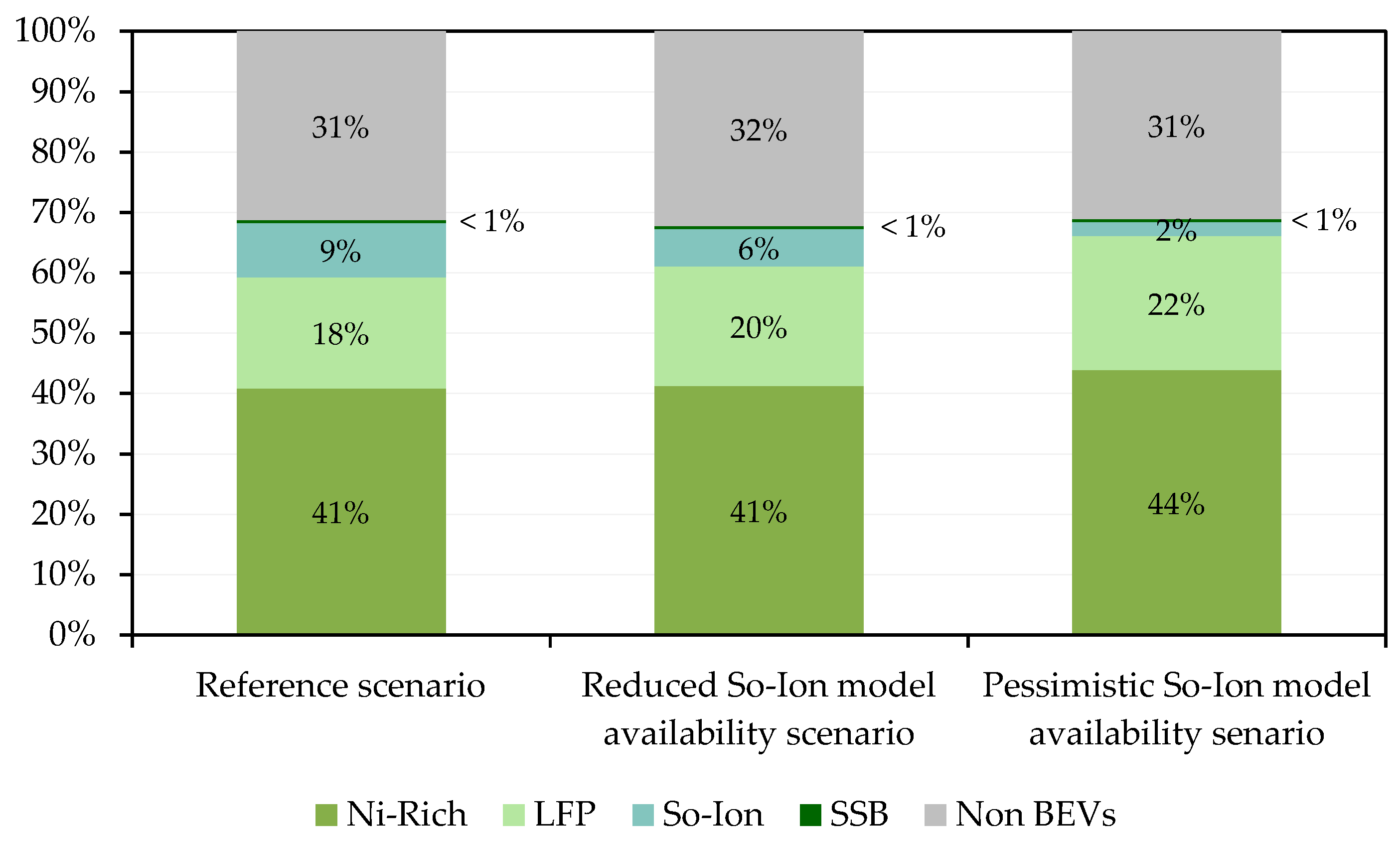
In the reference scenario, shown in Figure 6, it was assumed that model availability for emerging chemistries follows historical adoption curves. However, supply chain constraints or strategic hesitancy of OEMs could limit the number of available So-Ion vehicle models. To assess this risk for the So-Ion market potential shown, a sensitivity analysis was conducted comparing three scenarios: the reference scenario (11 available So-Ion vehicle models in the small segment, approximately matching current LFP availability), a reduced scenario (five models, a 50% reduction), and a pessimistic scenario (only two available So-Ion vehicle models in the small segment).
The result of the sensitivity analysis shown in Figure 7 indicate that the market potential is highly sensitive to the amount of vehicle models available in Germany. With constrained availability, the simulated 9% market potential for So-Ion vehicles in 2030 drops to 6% in the reduced scenario and further to 2% in the most pessimistic scenario with just two So-Ion vehicle models available in the small segment. This gap is primarily filled by LFP vehicles rather than Nickel-rich cells, suggesting that cost-sensitive customers view LFP and So-Ion as direct substitutes. This highlights that cost reductions alone are insufficient; manufacturers must also ensure a diverse model portfolio to unlock the potential of next-generation battery technologies.

5. Conclusions

The automotive industry is shifting its focus towards electric mobility due to stricter CO2 emission regulations and the planned phase-out of vehicles with internal combustion engines by 2035. As vehicle prices and range are key factors in purchasing decisions, manufacturers are investing heavily in optimizing and developing future battery technologies and cell chemistries.
Our vehicle technology scenario model, VECTOR21, assesses various BEV model variants based on purchase price, operating costs, range, CO2 emissions, and acceleration. With the help of the developed manufacturer agent, we could reduce the more than 3000 different possible battery electric vehicle variants in the future to around 30 which were implemented in the model based on the estimations of the manufacturer agent. In the small segment especially, vehicles with just one electric motor are considered relevant, while we also implemented performance models for the medium and large vehicle segments that feature an all-wheel drive system. With regard to future possible cell chemistries, as indicated in Figure 3, Ni-rich and LFP cell-to-pack vehicle models in particular show high market entry probability, followed by SSBs and So-Ion batteries.
Considering these vehicles within the VECTOR21 scenario model environment, the results show that the cheaper cell chemistries like LFP or So-Ion can get a reasonable market share particularly in the small and medium vehicle segment. In contrast, Ni-rich cell chemistries like NMC or NCA will be more competitive in the larger vehicle segments or for long-range vehicle variants within the small and medium segment. Their market share shows a positive trend up to 2035 due to the tightening of the CO2 fleet limits as long-range vehicle alternatives such as plug-in hybrids are gradually pushed out of the market.
While our scenario results align with general electrification trends reported in the recent literature [3,20,21,22,23], our assumptions on battery cost development and fuel prices are oriented towards achieving climate targets, which may result in more optimistic electrification rates compared to business-as-usual projections. However, several limitations should be noted. The scenario results represent market potential under idealized conditions, assuming unlimited production capacity and unrestricted raw material access. Actual market outcomes depend critically on manufacturing scale-up speed, supply chain resilience, and OEM strategic decisions on model portfolios. The assumption that So-Ion model availability follows LFP’s historical adoption curve may not hold given different supply chain structures and manufacturing challenges. However, our sensitivity analysis in Section 4.4 addresses this uncertainty by testing constrained model availability scenarios. Furthermore, the development of the electric vehicle market may be limited by current global conflicts and access to energy or domestic cell production capacity [24]. Recent analysis suggests European domestic cell production capacity may face challenges meeting future demand, affecting raw material supply chains and production capacity [25].
Major OEMs like Volkswagen, Stellantis, Tesla, and Mercedes-Benz are already adopting a diversified market strategy, featuring lower cost, less energy-dense cell chemistries like LFP for the small and entry level segments especially with the option to package the cells with higher density by using cell-to-pack technology [5,26,27]. However, it is crucial to consider the environmental impact of these developments, including reduced repairability and recyclability due to strong bonding within the packs. For this reason, the development of battery electric vehicles should not only focus on reducing costs and increasing range, but also on ecological factors.

Author Contributions

S.H.: Writing—review and editing, writing—original draft, visualization, methodology, formal analysis, data curation, conceptualization. M.S.: Writing—review and editing, methodology. J.R.: Writing—review and editing, visualization, methodology, formal analysis, data curation. All authors have read and agreed to the published version of the manuscript.

Funding

This research was funded by the MoDa project of the German Aerospace Center.

Data Availability Statement

The data presented in this study is not publicly available due to its size and complexity, but is available on request from the corresponding author.

Conflicts of Interest

The authors declare no conflicts of interest.

References

  1. Europäischer Rat. Erste Maßnahme zu “Fit für 55” Beschlossen: EU Verschärft CO2-Emissionsziele für neue Personenkraftwagen und Leichte Nutzfahrzeuge. Available online: https://www.consilium.europa.eu/de/press/press-releases/2022/10/27/first-fit-for-55-proposal-agreed-the-eu-strengthens-targets-for-co2-emissions-for-new-cars-and-vans/ (accessed on 9 March 2023).
  2. Strukturstudie BWe Mobil 2023: Transformation der Automobil- und Nutzfahrzeugindustrie in Baden-Württemberg durch Elektrifizierung, Digitalisierung und Automatisierung; e-mobil BW: Stuttgart, Germany, 2023; Available online: https://www.e-mobilbw.de/fileadmin/media/e-mobilbw/Publikationen/Studien/e-mobil_BW_Strukturstudie_BW_2023.pdf (accessed on 13 November 2023).
  3. IEA. Global EV Outlook. 2025. Available online: https://iea.blob.core.windows.net/assets/7ea38b60-3033-42a6-9589-71134f4229f4/GlobalEVOutlook2025.pdf (accessed on 3 April 2026).
  4. Rosenberger, N.; Deininger, S.; Koloch, J.; Lienkamp, M. Holistic Electric Powertrain Component Design for Battery Electric Vehicles in an Early Development Phase. World Electr. Veh. J. 2025, 16, 61. [Google Scholar] [CrossRef]
  5. Hasselwander, S.; Meyer, M.; Österle, I. Techno-Economic Analysis of Different Battery Cell Chemistries for the Passenger Vehicle Market. Batteries 2023, 9, 379. [Google Scholar] [CrossRef]
  6. Hasselwander, S.; Rettich, J. Optimizing Market Scenarios for Battery Electric Vehicles through a Machine Learning based Manufacturer Agent. In Proceedings of the 38th International Electric Vehicle Symposium and Exhibition (EVS38), Götheborg, Sweden, 15–18 June 2025. [Google Scholar]
  7. e-mobil BW (Ed.) Transformations-Factsheet. In Technologische Trends Leistungselektronik; Institute of Vehicle Concepts: Stuttgart, Germany, 2025; Available online: https://www.hub-edrive.de/fileadmin/media/Dashboard/10_Technologische_Trends_Leistungselektronik/Transformations-Factsheet_10_Technologische_Trends_Leistungselektronik.pdf (accessed on 3 April 2026).
  8. Hasselwander, S.; Rettich, J.; Schmid, S.; Siefkes, T. How will future BEV models develop? Market potential of different battery technologies assessed by a ML-based manufacturer agent. J. Energy Storage 2025, 131, 117195. [Google Scholar] [CrossRef]
  9. Koloch, J.; Heienbrok, M.; Kasperek, M.; Lienkamp, M. From Cell to Pack: Empirical Analysis of the Correlations Between Cell Properties and Battery Pack Characteristics of Electric Vehicles. World Electr. Veh. J. 2025, 16, 484. [Google Scholar] [CrossRef]
  10. S&P Automotive Insights. Sodium-Ion Battery Technology: So Near and Yet So Far. 5 June 2025. Available online: https://www.spglobal.com/automotive-insights/en/blogs/2025/06/sodium-ion-battery-technology (accessed on 18 May 2026).
  11. Hasselwander, S. Prospects for Next-Generation Battery Technologies in the German Passenger Vehicle Market. In Antriebe und Energiesysteme von Morgen 2024: 18. Internationaler MTZ-Fachkongress Zukunftsantriebe. 14–15 May 2024; Heintzel, A., Ed.; Springer: Wiesbaden, Germany, 2025. [Google Scholar] [CrossRef]
  12. Deutsches Zentrum für Luft- und Raumfahrt e.V. (DLR). VECTOR21: Scenario and Market Analysis Software for Simulating Future Vehicle Markets. Available online: https://vector21.de/ (accessed on 25 October 2023).
  13. Möring-Martínez, G.; Senzeybek, M.; Jochem, P. Clustering the European Union electric vehicle markets: A scenario analysis until 2035. Transp. Res. Part D Transp. Environ. 2024, 135, 104372. [Google Scholar] [CrossRef]
  14. Train, K. Discrete Choice Methods with Simulation, 2nd ed.; Cambridge University Press: Cambridge, NY, USA, 2009. [Google Scholar]
  15. Luderer, G.; Kost, C.; Sörgel, D. Ariadne-Report: Deutschland auf dem Weg zur Klimaneutralität 2045-Szenarien und Pfade im Modellvergleich; Potsdam Institute for Climate Impact Research: Potsdam, Germany, 2021. [Google Scholar] [CrossRef]
  16. James, B.; Huya-Kouadio, J.; Houchins, C.; DeSantis, D. Mass Production Cost Estimation of Direct H2 PEM Fuel Cell Systems for Transportation Applications: 2018 Update; Strategic Analysis INC.: Arlington, VA, USA, 2018. [Google Scholar]
  17. Houchins, C.; James, B. Hydrogen Storage System Cost Analysis: Summary of FY 2017 Activities; Strategic Analysis INC.: Arlington, VA, USA, 2017. [Google Scholar]
  18. BloombergNEF. Lithium-Ion Battery Pack Prices Rise for First Time to an Average of $151/kWh. 2022. Available online: https://about.bnef.com/blog/lithium-ion-battery-pack-prices-rise-for-first-time-to-an-average-of-151-kwh/ (accessed on 6 February 2024).
  19. Leyland, A.; Wunderlich-Pfeiffer, F. Sodium-Ion Review: SC Insights Takes a Deep Dive into Sodium-Ion Batteries. Available online: https://www.youtube.com/watch?v=qTiZVuX5WRs (accessed on 18 May 2026).
  20. S&P Automotive Insights. The Evolution of Electric Vehicle Battery Technology. Available online: https://www.spglobal.com/automotive-insights/en/blogs/2024/11/the-evolution-of-electric-vehicle-battery-technology (accessed on 18 May 2026).
  21. Schulthoff, M.; Anstett, P.; Scherzinger, M.; Lange, J.; Kaltschmitt, M. Future projections of Germany’s car fleet-Development of a stock-flow cohort model under CO2 performance standards and effects on annual fleet composition, energy demand and emissions. Transp. Policy 2026, 179, 103994. [Google Scholar] [CrossRef]
  22. Luderer, G.; Bartels, F.; Brown, T.; Aulich, C.; Benke, F.; Fleiter, T.; Frank, F.; Ganal, H.; Geis, J.; Gerhardt, N.; et al. Die Energiewende Kosteneffizient Gestalten: Szenarien zur Klimaneutralität 2045; Potsdam Institute for Climate Impact Research: Potsdam, Germany, 2025. [Google Scholar] [CrossRef]
  23. Gnann, T.; Speth, D.; Krail, M.; Wietschel, M. Langfristszenarien für die Transformation des Energiesystems in Deutschland 3.-045-Szenarien-. Modul Verkehr. 2024. Available online: https://publica.fraunhofer.de/entities/publication/0daff2b3-4db9-4d97-a675-cfd29bc60705/details (accessed on 18 May 2026).
  24. Alshahapy, H.; Bozeman, J.F.; Carley, S.; Nock, D.; Matisoff, D. Modern challenges facing electric vehicle adoption: A review of barriers to adoption, supply chain challenges, and equity. Environ. Res. Lett. 2025, 20, 23002. [Google Scholar] [CrossRef]
  25. Link, S.; Schneider, L.; Stephan, A.; Weymann, L.; Plötz, P. Feasibility of meeting future battery demand via domestic cell production in Europe. Nat. Energy 2025, 10, 526–534. [Google Scholar] [CrossRef]
  26. Mercedes-Benz. Strategy Update 2026. 2026. Available online: https://group.mercedes-benz.com/dokumente/investoren/praesentationen/mercedes-benz-group-2026-strategy-update.pdf (accessed on 18 May 2026).
  27. Ampere.cars. Electric Batteries: New Chemistry for Electric Vehicles. Available online: https://www.ampere.cars/en/new-batteries-for-electric-vehicle-performance/ (accessed on 18 May 2026).
Figure 1. Automized dimensioning of future vehicle models by manufacturer agent [8].
Wevj 17 00295 g001
Figure 2. Methodology of machine learning (ML)-based manufacturer agent model [8].
Wevj 17 00295 g002
Figure 3. Range and market relevance of different bottom-up calculated vehicle configurations in the small vehicle segment estimated by the manufacturer agent.
Wevj 17 00295 g003
Figure 5. Battery cell costs assumed in the battery diversification scenario (based on [5,11,18,19]).
Wevj 17 00295 g005
Figure 6. Market potential of different powertrain options as part of the battery diversification scenario done with VECTOR21 for the German passenger vehicle market until 2035.
Wevj 17 00295 g006
Figure 7. Comparison of simulated market potential of battery chemistries in 2030 under varying So-Ion vehicle model availability scenarios. The reference scenario assumes So-Ion model availability comparable to current LFP availability (e.g., 11 models in the small vehicle segment). The reduced model availability scenario assumes a 50% reduction in availability (5 models), while the pessimistic scenario assumes a restriction to only 2 available models.
Wevj 17 00295 g007
Table 1. Main assumptions and inputs for the passenger car BEV diversification scenario simulated with VECTOR21.
Scenario ParameterUnit2022202520302035Source
EU CO2 fleet reduction quota compared to 2021%01555100[1]
CO2 priceEUR/tCO269111207312[15]
Gasoline price at fuel stationEUR/l1.862.252.572.89[15]
Diesel price at fuel stationEUR/l1.952.482.843.19[15]
H2 price at fuel stationEUR/kg9.610.910.910.1[15]
Electricity price EUR/kWh0.340.310.310.28[15]
H2 infrastructure%1146[2]
Charging infrastructure%2063100100[2]
Fuel cell costEUR/kW1511247661[16]
H2 storage costEUR/kgH211051048916801[17]
Battery cell costEUR/kWhShown in Figure 5 [5,11,18,19]
Disclaimer/Publisher’s Note: The statements, opinions and data contained in all publications are solely those of the individual author(s) and contributor(s) and not of MDPI and/or the editor(s). MDPI and/or the editor(s) disclaim responsibility for any injury to people or property resulting from any ideas, methods, instructions or products referred to in the content.