Article

System-Level Modeling and Integration of Al–Air Batteries in Dual-Energy-Storage Electric Vehicles

Department of Chemical Engineering, University of Waterloo, Waterloo, ON N2L 3G1, Canada
*
Author to whom correspondence should be addressed.
World Electr. Veh. J. 2026, 17(6), 296; https://doi.org/10.3390/wevj17060296
Submission received: 23 March 2026 / Revised: 16 May 2026 / Accepted: 26 May 2026 / Published: 2 June 2026
(This article belongs to the Section Storage Systems)

Abstract

Electric vehicles (EVs) relying solely on lithium-ion (Li-ion) batteries face limitations related to range, mass, charging time, and battery downsizing. This study develops a dynamic system-level modeling framework for integrating an aluminum–air (Al–air) battery with a Li-ion traction battery within a MATLAB/Simulink electric vehicle platform. Two integration strategies were evaluated: (i) Al–air operation as a range extender activated through SOC-based control logic, and (ii) Al–air operation as an auxiliary power unit supplying non-traction loads. The Al–air subsystem was implemented using an experimentally informed polarization-based model coupled with aluminum consumption tracking and DC–DC converter integration. Vehicle performance was evaluated under UDDS, HWFET, WLTP, and FTP-75 drive cycles. Results show that coupling a 24.6 kWh Al–air pack with a downsized 20.3 kWh Li-ion pack enabled driving ranges of 379 km (UDDS), 523 km (HWFET), and 450 km (WLTP), exceeding the baseline full-capacity Li-ion configuration while reducing total battery-system mass by more than 50%. When operated as an auxiliary power unit under a constant 3 kW auxiliary load, the Al–air system increased the vehicle range by 44–96 km depending on the drive cycle. The results demonstrate the feasibility of Al–air-assisted dual-energy-storage architectures for extending the EV range while reducing dependence on large Li-ion battery packs.

1. Introduction

1.1. Motivation and Limitations of Li-Ion-Only EVs

The rapid adoption of electric vehicles has been driven by the need to reduce greenhouse gas emissions, improve urban air quality, and decrease dependence on fossil fuels [1,2]. Lithium-ion (Li-ion) batteries have emerged as the dominant onboard energy-storage technology due to their high round-trip efficiency, favorable power capability, and rapidly declining costs [3]. Continuous improvements in cathode chemistry, cell engineering, and battery management systems have enabled steady gains in energy density and cycle life, supporting the commercialization of long-range battery electric vehicles across multiple market segments [4,5,6]. Despite these advances, the Li-ion-only architecture faces intrinsic limitations when scaled for extended driving range and diverse operating conditions. Achieving long range requires large battery packs, which increase the vehicle mass, reduce the payload capacity, and impose diminishing returns on efficiency [7]. The added weight also exacerbates structural requirements and braking demands, while increasing material intensity and manufacturing emissions. Furthermore, Li-ion batteries exhibit trade-offs among energy density, fast-charging capability, thermal stability, and lifetime, making it difficult to optimize a single pack for all cases without compromise [8,9,10,11]. From a systems perspective, Li-ion-only EVs are further constrained by the charging infrastructure availability, charging time, and resource sustainability. High-power fast charging places significant stress on both the grid and the battery, accelerating degradation and complicating thermal management [12,13,14]. In parallel, concerns related to critical material supply chains, recycling scalability, and cost volatility motivate the exploration of complementary energy storage concepts [15,16]. These challenges collectively highlight the need for alternative or auxiliary energy solutions that can alleviate range anxiety, reduce reliance on oversized Li-ion packs, and enhance overall vehicle system robustness [17]. Beyond individual vehicle performance, advanced EV energy-storage architectures are also relevant to smart-city and sustainable transportation development. Hybrid systems incorporating high-specific-energy technologies such as Al–air batteries may help reduce the charging dependency, improve operational flexibility, and support future connected and autonomous electric mobility systems within intelligent urban transportation infrastructures [18,19].

1.2. Rationale for Metal–Air Batteries as Secondary Energy Sources

Metal–air batteries have attracted sustained interest as auxiliary energy systems due to their exceptionally high theoretical specific energy and the decoupling of energy storage from the onboard oxidant supply [20]. By utilizing oxygen from the ambient air as the cathodic reactant, metal–air systems store energy primarily in the metal anode, enabling gravimetric energy densities that substantially exceed those of conventional rechargeable batteries [21]. This intrinsic advantage makes metal–air chemistries particularly attractive for applications where extended energy availability is required without a proportional increase in onboard mass [22]. When integrated as secondary energy sources rather than primary traction batteries, metal–air systems can complement Li-ion packs by supplying sustained low-to-moderate power over extended durations [23]. In such hybridized architectures, the metal–air battery functions as an energy reservoir that offsets the Li-ion depth of discharge, reduces peak power demands, and mitigates capacity oversizing. This division of roles allows each energy-storage technology to operate closer to its optimal regime, with Li-ion batteries delivering a high power and dynamic response, while metal–air systems provide high energy throughput over long driving intervals [24,25]. Beyond performance considerations, metal–air batteries offer potential system-level benefits related to modularity, serviceability, and material utilization. Many metal–air chemistries are mechanically rechargeable or replaceable, enabling rapid energy replenishment through metal anode replacement rather than electrochemical charging [26,27]. This feature opens alternative pathways for range extension, reduced downtime, and the decoupling of vehicle energy replenishment from grid charging constraints. As a result, metal–air batteries present a compelling case as secondary onboard energy sources within next-generation electric vehicle architectures [28]. Among metal–air chemistries, aluminum–air (Al–air) batteries are particularly attractive for EV range extension due to their high theoretical specific energy, material abundance, and intrinsic safety [29]. Aluminum offers a favorable combination of low cost, high volumetric availability, and an established recycling infrastructure compared to alternatives such as zinc or lithium-based systems [30]. In addition, Al–air batteries operate under ambient conditions and eliminate concerns related to oxygen storage, further supporting their suitability for onboard integration as secondary energy sources. From a vehicle systems perspective, Al–air batteries are well suited for energy-dominant roles rather than high-power traction applications [31]. Their characteristics align naturally with range-extender and auxiliary power functions, where sustained energy delivery is prioritized over a fast transient response. This operational niche distinguishes Al–air systems from other metal–air batteries that may face greater challenges related to rechargeability, material logistics, or power scalability [32]. As a result, Al–air batteries represent a practical and strategically relevant choice for hybrid energy-storage architectures in electric vehicles [33]. To realistically assess such architectures, system-level modeling is essential. MATLAB/Simulink (R2023b) provides a widely adopted, modular, and control-oriented environment for vehicle powertrain simulation, enabling dynamic interactions among energy storage systems, power electronics, and driving cycles [34]. Integrating Al–air battery models within a Simulink-based virtual vehicle framework allows an evaluation of power sharing, state-of-charge (SOC) evolution, and energy-management strategies under transient conditions. This approach bridges the gap between electrochemical performance and vehicle-level behavior, offering a reproducible and extensible platform for assessing Al–air batteries as secondary onboard energy sources.

1.3. Gaps in Existing Metal–Air Electric-Vehicle-Integration Studies

Prior research on metal–air batteries for electric vehicle applications has largely focused on comparative potential rather than detailed system-level integration. Several studies have evaluated different metal–air chemistries, including Al–air, zinc–air (Zn–air), and iron–air systems, as range extenders by benchmarking their theoretical energy densities, material requirements, and projected vehicle-level benefits. For example, a study from 2025 [35] systematically analyzed multiple metal–air battery technologies as onboard range extenders, highlighting their potential to supplement Li-ion batteries and extend driving ranges without significantly increasing the vehicle mass. While such analyses provide valuable high-level insights, they are often based on assumptions and static energy balance calculations. A common limitation in existing literature is the lack of dynamic vehicle modeling that captures the interaction among metal–air systems, Li-ion batteries, and powertrain components under realistic driving conditions. Many studies treat metal–air batteries as idealized energy sources with fixed voltage or power output, neglecting transient behavior, control strategies, and coupling with vehicle energy management systems. As a result, the implications of power limits, efficiency losses, and operational constraints on overall vehicle performance remain insufficiently explored. Furthermore, current studies rarely address how metal–air batteries can be systematically embedded within established electric vehicle modeling frameworks [36]. There is limited discussion on architecture selection, control logic for energy sharing, or scalability from cell-level behavior to vehicle-level performance. This gap is particularly evident in the context of commercially relevant simulation environments, where reproducibility and extensibility are critical for technology assessment. Consequently, there is a clear need for modeling approaches that bridge electrochemical characteristics with system-level vehicle simulations to enable realistic evaluation of metal–air batteries as secondary onboard energy sources.
Accordingly, the present study is guided by the following research questions: (i) can Al–air batteries be effectively integrated within a dual-energy-storage EV architecture under realistic drive-cycle operation? (ii) To what extent can Al–air integration compensate for aggressive Li-ion battery downsizing while maintaining vehicle range and operational stability? and (iii) How does Al–air operation as a range extender or auxiliary power unit influence vehicle-level energy consumption, battery utilization, and overall system performance? To address these questions, the study first develops a MATLAB/Simulink-based dual-energy-storage EV framework incorporating experimentally informed Al–air battery behavior, SOC-based control logic, and DC–DC converter integration. The framework is then evaluated under standard drive cycles to analyze vehicle range, SOC evolution, energy consumption, mass reduction, and system-level operational behavior for multiple Li-ion battery capacity scenarios.

1.4. Objective and Contributions of the Present Work

The objective of this study is to establish a system-level modeling framework that enables a realistic evaluation of Al–air batteries as secondary energy sources in electric vehicles. Rather than treating Al–air systems as idealized energy reservoirs, this work focuses on their dynamic integration with a Li-ion battery pack within a virtual vehicle environment. The emphasis is placed on capturing power flow, energy-sharing behavior, and operational feasibility under transient driving conditions using a modular and extensible simulation approach.
The key contributions of the present work are summarized as follows:
  • Development of a modular Al–air battery subsystem suitable for integration within a MATLAB/Simulink virtual vehicle platform
  • System-level coupling of Al–air and Li-ion batteries through a controlled energy-sharing architecture
  • Dynamic evaluation of Al–air-assisted vehicle operation under realistic drive cycles, moving beyond static or steady-state assumptions
  • Demonstration of Al–air batteries as practical range extenders and auxiliary energy sources at the vehicle-system level rather than as standalone electrochemical devices
Together, these contributions address a critical gap between Al–air electrochemical research and vehicle-level performance assessment. While previous studies have largely focused on theoretical comparisons, static energy balance calculations, or conceptual discussions of metal–air-assisted EVs, the present work develops a dynamic system-level integration framework capable of evaluating power flow, SOC evolution, auxiliary load interaction, and control-driven operation under realistic drive-cycle conditions. Accordingly, the primary novelty of this work lies in translating Al–air batteries from a largely conceptual range-extender technology into a dynamically integrated vehicle subsystem within a reproducible MATLAB/Simulink EV environment.

2. Modeling Methodology

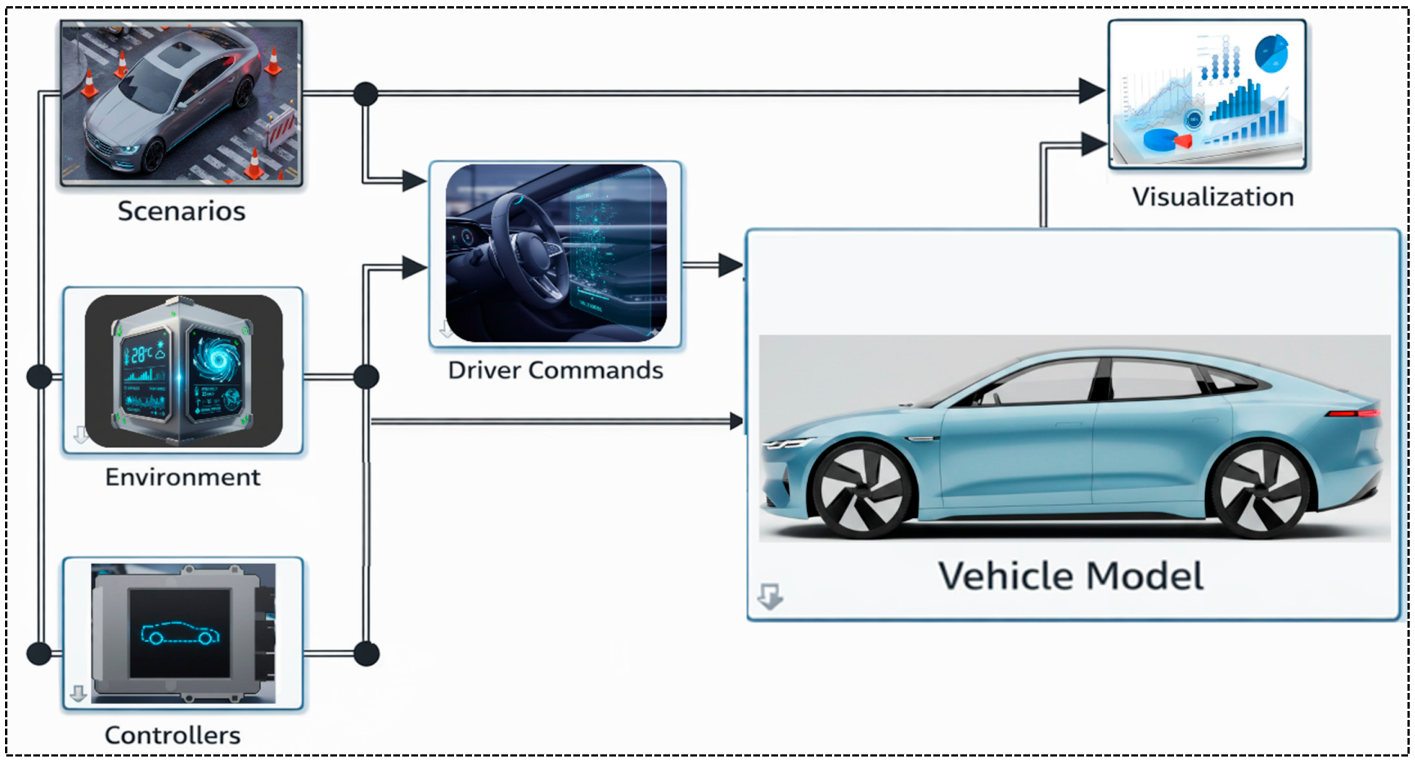
The present study employs a system-level modeling and comparative evaluation methodology to investigate the integration of Al–air batteries within dual-energy-storage electric vehicle architectures. The methodological approach combines an analysis of vehicle energy flow, the synthesis of Li-ion and Al–air subsystem interactions within a MATLAB/Simulink environment, and a comparative assessment of multiple battery-capacity and operating scenarios under standard drive cycles. Deductive and comparative approaches are further used to evaluate the influence of Al–air integration on vehicle range, energy consumption, battery utilization, and system-level performance. The framework therefore enables systematic investigation of hybrid energy-storage behavior under realistic operating conditions [37,38]. Figure 1 illustrates the structure of the baseline BEV modeling framework adopted in this work. The simulation begins with predefined driving scenarios, which specify reference speed profiles and operating conditions [39]. Environmental inputs, such as ambient effects and external disturbances, are processed alongside scenario data to inform the driver command module, which generates throttle and braking requests based on the prescribed driving task. These commands are interpreted by the vehicle controllers, which regulate powertrain operation and enforce system-level constraints. The model represents a mid-size passenger BEV and follows conventional single-energy-storage architecture, where a Li-ion battery pack supplies all traction and auxiliary power demands [40,41]. Key performance metrics, including vehicle speed, power demand, and energy consumption, are collected and routed to the visualization module for analysis. This baseline configuration serves as the reference architecture against which the proposed dual-energy-storage and Al–air -assisted configurations are evaluated and provides a modular and physics-based representation of the powertrain, enabling consistent system-level analysis under standardized driving cycles. The simulated vehicle represents a mid-size battery electric passenger vehicle (Tesla Model 3 Long Range AWD, Fremont, CA, USA) implemented using the MATLAB/Simulink virtual vehicle framework. The baseline configuration employs a single electric traction motor powered by a 106s lithium iron phosphate battery pack with an initial total energy capacity of approximately 58 kWh under the full-capacity configuration. The vehicle model includes longitudinal vehicle dynamics, regenerative braking, drivetrain losses, wheel–road interaction, and auxiliary electrical loads. Standard vehicle subsystems, including the traction motor, inverter, transmission, battery pack, thermal management system, and driver controller are integrated within the simulation environment to enable dynamic vehicle-level analysis under transient driving conditions. The same baseline vehicle platform is retained throughout all simulations to ensure that the impact of Al–air integration can be isolated from underlying vehicle parameter variations.
The baseline architecture consists of interconnected modules for driving scenarios, environmental inputs, driver commands, vehicle control, and the vehicle model. The system includes a Li-ion battery pack, traction motor, inverter, drivetrain, longitudinal dynamics, and auxiliary loads. Energy flows from the battery to the motor via power electronics, with regenerative braking incorporated. The battery is modeled using an SOC-dependent mapped model with voltage and internal resistance, enabling realistic transient behavior prediction [42]. Vehicle-level dynamics are captured using a forward-facing simulation approach, in which the driver model follows a prescribed speed profile and the powertrain responds to meet torque and power demands. This structure enables a direct assessment of battery power, energy consumption, and SOC evolution under realistic operating conditions. The baseline model serves as a reference against which the proposed dual-energy-storage configurations are evaluated, ensuring that the impact of Al–air integration is isolated from underlying vehicle and powertrain assumptions.
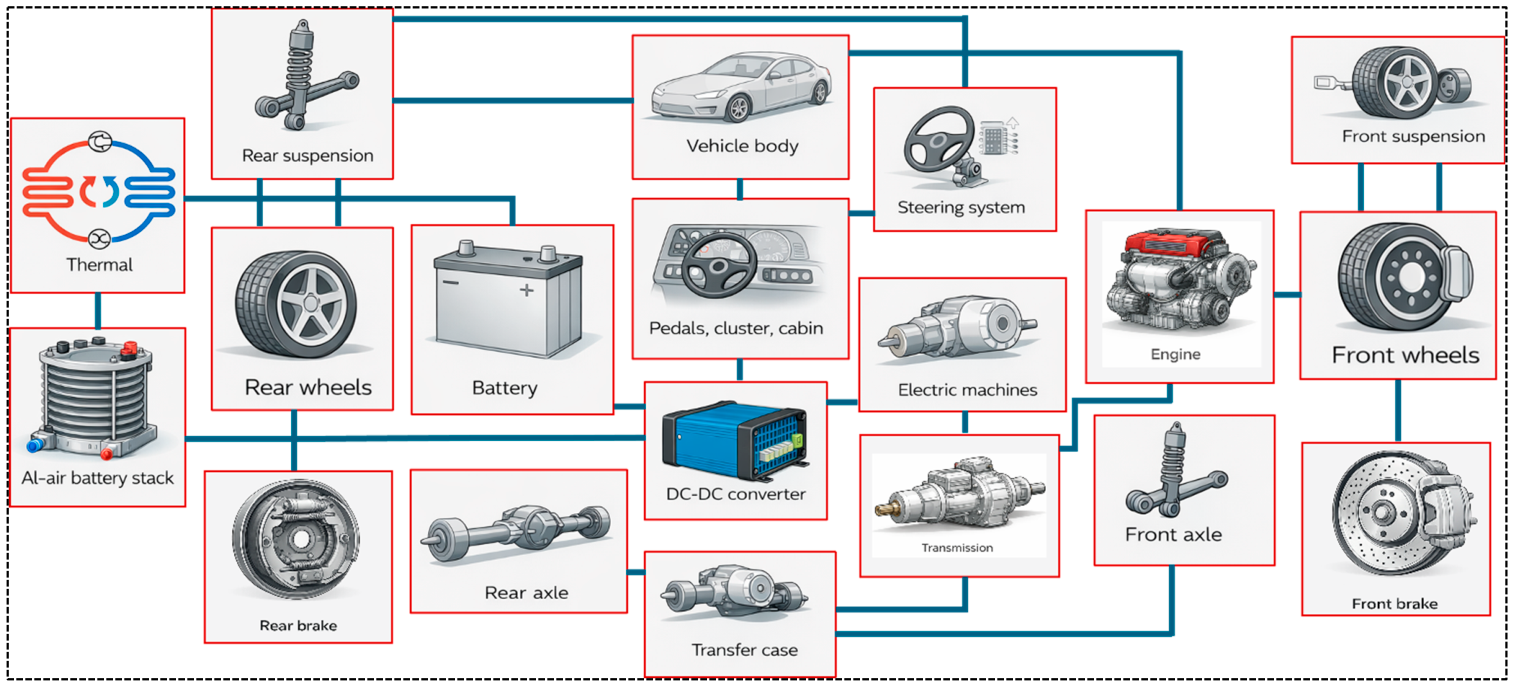
Figure 2 expands upon the high-level architecture shown in Figure 1 by detailing the internal structure of the vehicle model subsystem. At this level, the vehicle is decomposed into interacting powertrain, chassis, and control-related components that collectively govern longitudinal vehicle behavior. The Li-ion battery supplies electrical energy to the electric machine through the DC–DC converter and power electronics, enabling torque generation at the drivetrain. Mechanical power is transmitted through the transmission and axle assemblies to the front and rear wheels, while braking systems at each axle provide deceleration and energy dissipation [43]. In parallel, vehicle body dynamics, suspension systems, and wheel–road interactions are represented to capture realistic load transfer and road response effects. The steering system interfaces with the driver command layer to regulate directional control, while auxiliary subsystems, including thermal management, monitor and regulate the operating temperatures of key components. Control signals originating from the driver and vehicle controllers propagate through this subsystem hierarchy to coordinate propulsion, braking, and stability functions [44]. This subsystem-level representation enables the consistent tracking of energy flow, torque distribution, and vehicle response under transient driving conditions. By explicitly modeling the interactions among electrical, mechanical, and control domains, the framework provides a physics-based foundation for evaluating modifications to the baseline architecture. In subsequent sections, this vehicle model serves as the reference configuration against which the integration of the Al–air battery as a secondary energy source is introduced and assessed.

2.1. Dual-Energy-Storage-System

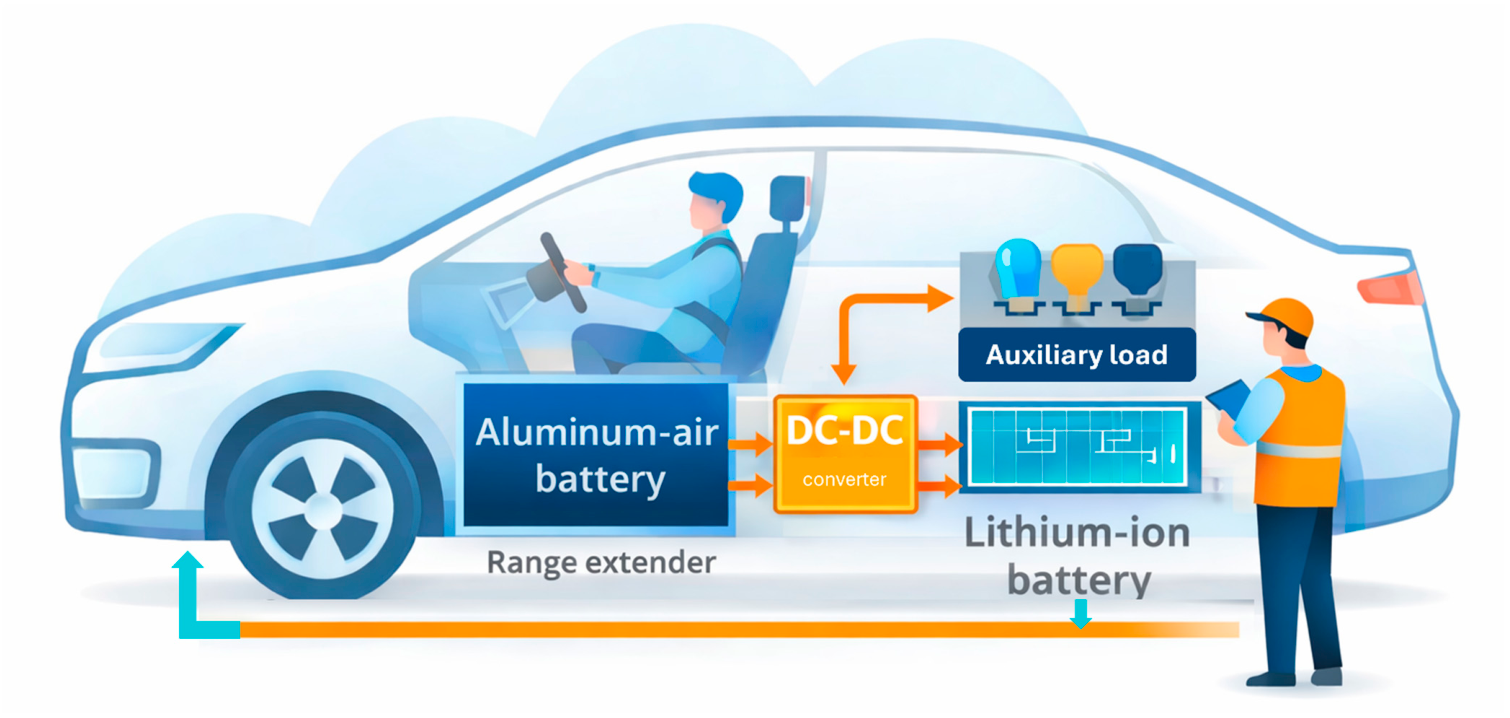
The proposed architecture (Figure 3) integrates an Al–air battery as a secondary energy source alongside the primary Li-ion traction pack. The Li-ion battery supplies all propulsion power, while the Al–air system is connected to the high-voltage bus via a unidirectional DC–DC converter, enabling controlled energy transfer without direct traction coupling. Two operating modes are considered. In Concept A, the Al–air system functions as a range extender, activating below a predefined SOC threshold to recharge the Li-ion battery. In Concept B, it operates as an auxiliary power unit, supplying non-traction loads and reducing the burden on the Li-ion pack. Both configurations are evaluated under identical vehicle and drive cycle conditions to isolate the impact of Al–air integration on energy flow, SOC evolution, aluminum consumption, and overall vehicle performance.

2.2. Traction Battery and Al–Air Cell-Level Modeling

2.2.1. Baseline Traction Battery Description

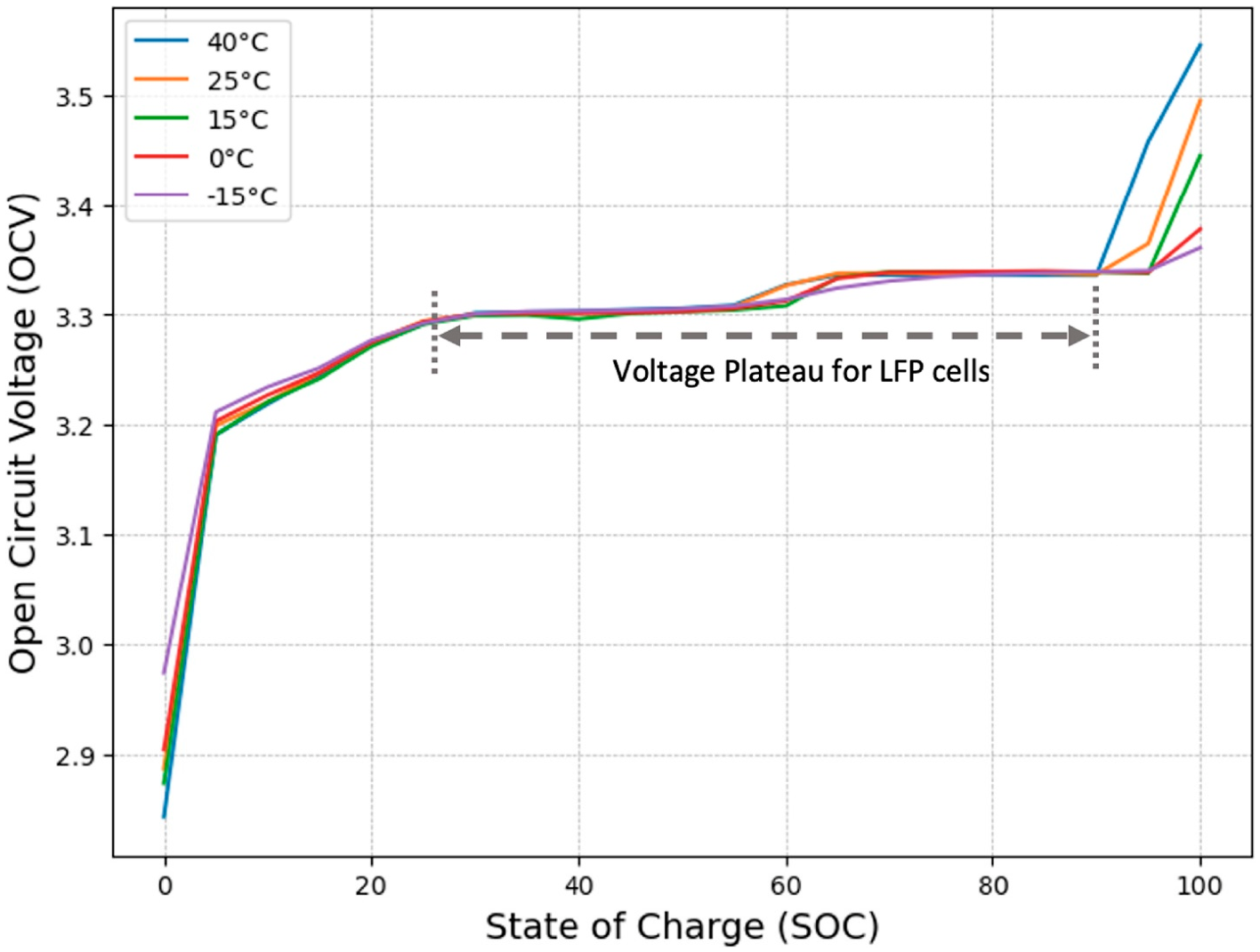
The baseline traction battery is modeled using lithium iron phosphate (LFP) chemistry to reflect recent trends in commercial electric vehicle deployment. LFP cells typically exhibit a nominal voltage of approximately 3.2–3.3 V per cell, lower than nickel manganese cobalt (NMC) chemistries, but offer improved thermal stability, enhanced safety characteristics, extended cycle life, and reduced material cost due to the absence of cobalt and nickel [45,46]. The cells also have a nominal capacity of 161 Ah. A defining feature of LFP chemistry is its relatively flat open-circuit voltage (OCV) profile across a broad mid-SOC range, with steeper voltage gradients near the upper and lower SOC limits (Figure 4). This flat voltage plateau influences SOC estimations and results in stable voltage behavior within moderate operating windows [47,48,49].
In the present study, the LFP battery pack is implemented in MATLAB/Simulink using a mapped battery model incorporating an SOC-dependent open-circuit voltage table representation. The pack voltage is determined by the number of cells connected in series (106s), while the energy capacity is scaled through a parallel (1p) cell configuration. The model captures the terminal voltage, pack current, internal power loss, and SOC evolution under dynamic load conditions. Under typical operating conditions, the pack current responds directly to the traction power demand and auxiliary loading, with voltage deviations governed by internal resistance and polarization effects. Reduced-capacity configurations are implemented by scaling the parallel cell count, thereby preserving nominal pack voltage while proportionally reducing available energy and peak power capability. This approach enables an investigation of power-limited behavior and energy downsizing scenarios while maintaining consistency with realistic LFP electrochemical characteristics.

2.2.2. Cell-Level Polarization-Based Representation

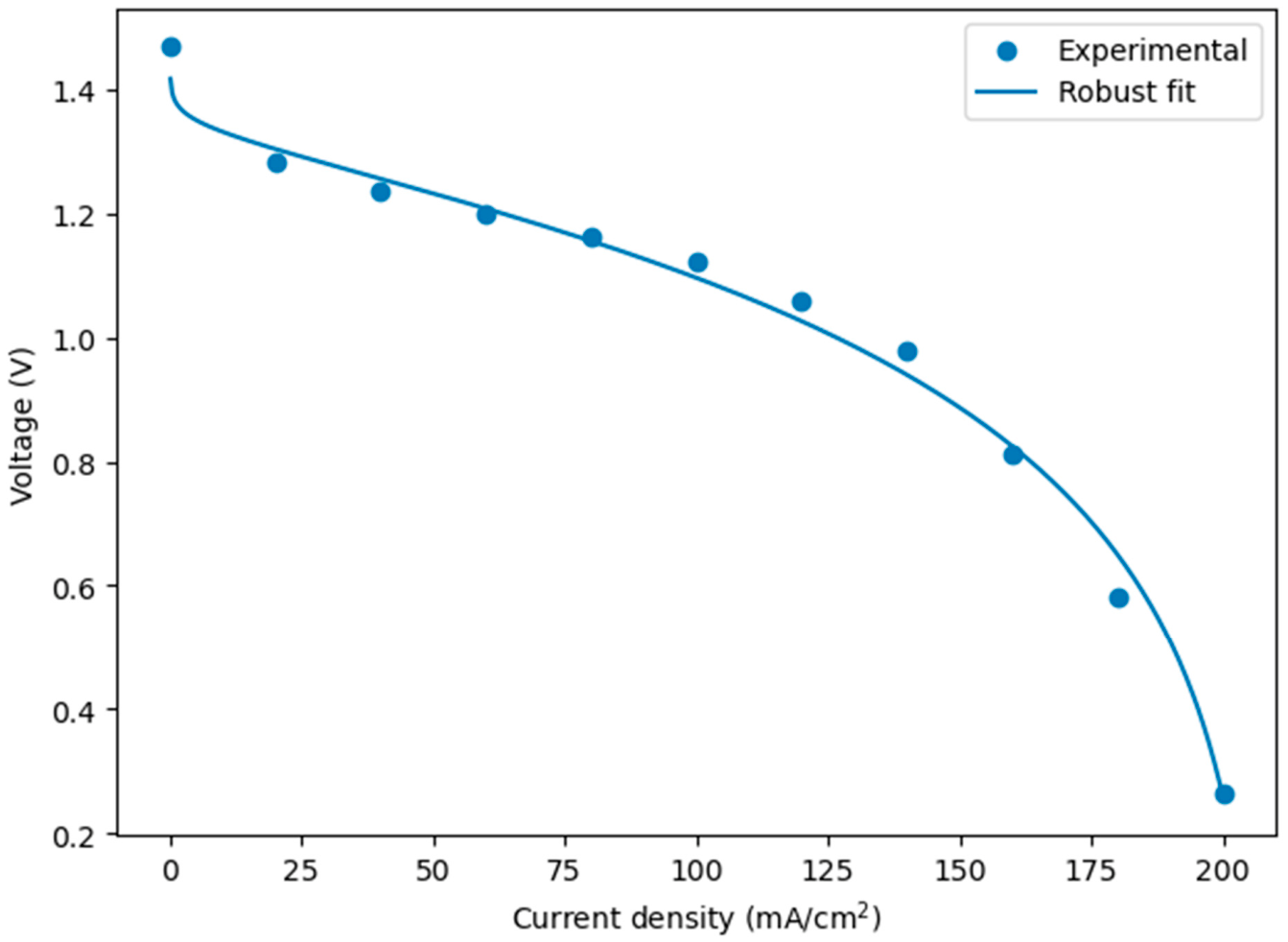
The steady-state polarization behavior of the Al–air cell was modeled using a semi-empirical voltage loss formulation, calibrated against experimentally measured polarization data. The polarization behavior of the Al–air cell was experimentally characterized using a custom-built electrochemical test setup. The cell consisted of an aluminum anode and an air-breathing cathode separated by a fixed anode–cathode gap of 1.5 mm. The geometric electrode area was 44.18 cm2. A circulating alkaline electrolyte of 6 M KOH was used and maintained at a constant temperature of 40 °C to ensure stable operating conditions. To enhance mass transport and mitigate surface passivation, the aluminum anode was operated in a rotating configuration under continuous electrolyte circulation. Prior to testing, the aluminum surface was mechanically cleaned to remove native oxide layers and ensure consistent initial conditions. Polarization measurements were conducted under quasi-steady-state galvanostatic conditions. The current density was incrementally increased from open-circuit conditions to a maximum of 200 mA cm−2. At each current step, the cell was allowed to stabilize before recording the corresponding cell voltage, ensuring that transient effects were minimized and steady-state behavior was captured. The resulting current–voltage data were used to construct the polarization curve. All measurements were repeated to ensure reproducibility, and the recorded voltage response reflects the combined effects of activation, ohmic, and mass transport losses under controlled operating conditions. For further details of the experimental procedure, the reader is referred to [51]. The experimentally measured polarization data were used directly to calibrate the voltage–current behavior implemented within the Al–air subsystem of the MATLAB/Simulink vehicle model. Accordingly, while the overall vehicle architecture and energy-management strategy were evaluated through simulation, the underlying Al–air electrical response was experimentally informed and grounded in laboratory-scale electrochemical measurements.
The experimental polarization curve exhibits three distinct regimes. First, an abrupt voltage drop occurs immediately upon application of the load, with the cell voltage decreasing from an open-circuit value of 1.469 V to 1.282 V at 20 mA cm−2. This behavior indicates the presence of instantaneous losses associated with mixed electrode potentials, contact resistances, interfacial film formation, and the rapid activation of parasitic reactions, which are not captured by classical activation or ohmic terms alone. Second, a near-linear voltage decrease is observed over the intermediate current density range of approximately 20 to 140 mA cm−2, indicating that the dominant losses in this regime are well represented by a combination of activation overpotential and ohmic resistance. Finally, a sharp voltage collapse occurs beyond approximately 160 mA cm−2, with the voltage falling to 0.263 V at 200 mA cm−2 [52,53,54]. This high-current behavior is characteristic of mass-transport and surface-coverage limitations in Al–air systems, arising from hydroxide depletion, aluminate accumulation, and hydrogen bubble coverage at the anode surface (Figure 5).
To accurately reproduce all three regimes within a single continuous formulation, the cell voltage was modeled as in [55],
V ( j ) = V O C V loss , 0 a l n ( j ) j R 0 B l n 1 j j L
where j is the current density in A cm−2. The individual terms represent distinct physical contributions:
  • V O C is the experimentally measured open-circuit voltage.
  • V loss , 0   is an instantaneous voltage loss term accounting for mixed potential effects, contact resistances, and rapid interfacial changes that occur immediately upon current drawing.
  • a l n ( j ) represents an effective activation overpotential in Tafel form, capturing the logarithmic dependence of kinetic losses on current density.
  • j R 0 is the baseline area-specific ohmic loss, encompassing electrolyte resistance across the anode–cathode gap and electronic resistances.
  • B l n 1 j / j L is a concentration overpotential term that captures the rapid voltage decline as the current density approaches a limiting value j L .
The model parameters were obtained through nonlinear least-squares regression of the polarization data ( j > 0 ), using a multi-start strategy with a robust loss function to ensure physically consistent solutions. The open-circuit voltage was fixed at 1.47 V from an experimental measurement, and model accuracy was assessed using the coefficient of determination ( R 2 ). As summarized in Table 1, the fitted parameters accurately capture the observed behavior. The instantaneous loss term (0.19 V) reproduces the initial voltage drop, the activation coefficient (0.015 V) describes intermediate kinetic losses, and the area-specific resistance (0.05 Ω·cm2) corresponds to an effective electrolyte conductivity of ~3.0 S cm−1, consistent with highly conductive alkaline conditions.
The concentration overpotential parameters ( B = 0.33 V, j L = 209 mA cm−2) accurately capture the high-current voltage collapse, yielding an excellent fit ( R 2 = 0.99 ). The model reproduces activation, ohmic, and transport-limited regimes within a single continuous formulation. The inclusion of instantaneous loss and concentration overpotential terms enables accurate prediction of the voltage drop and high-current behavior without piecewise fitting, making the model well suited for system-level simulations requiring robust voltage prediction across a wide operating range.

2.2.3. Cell and Stack Scaling Methodology

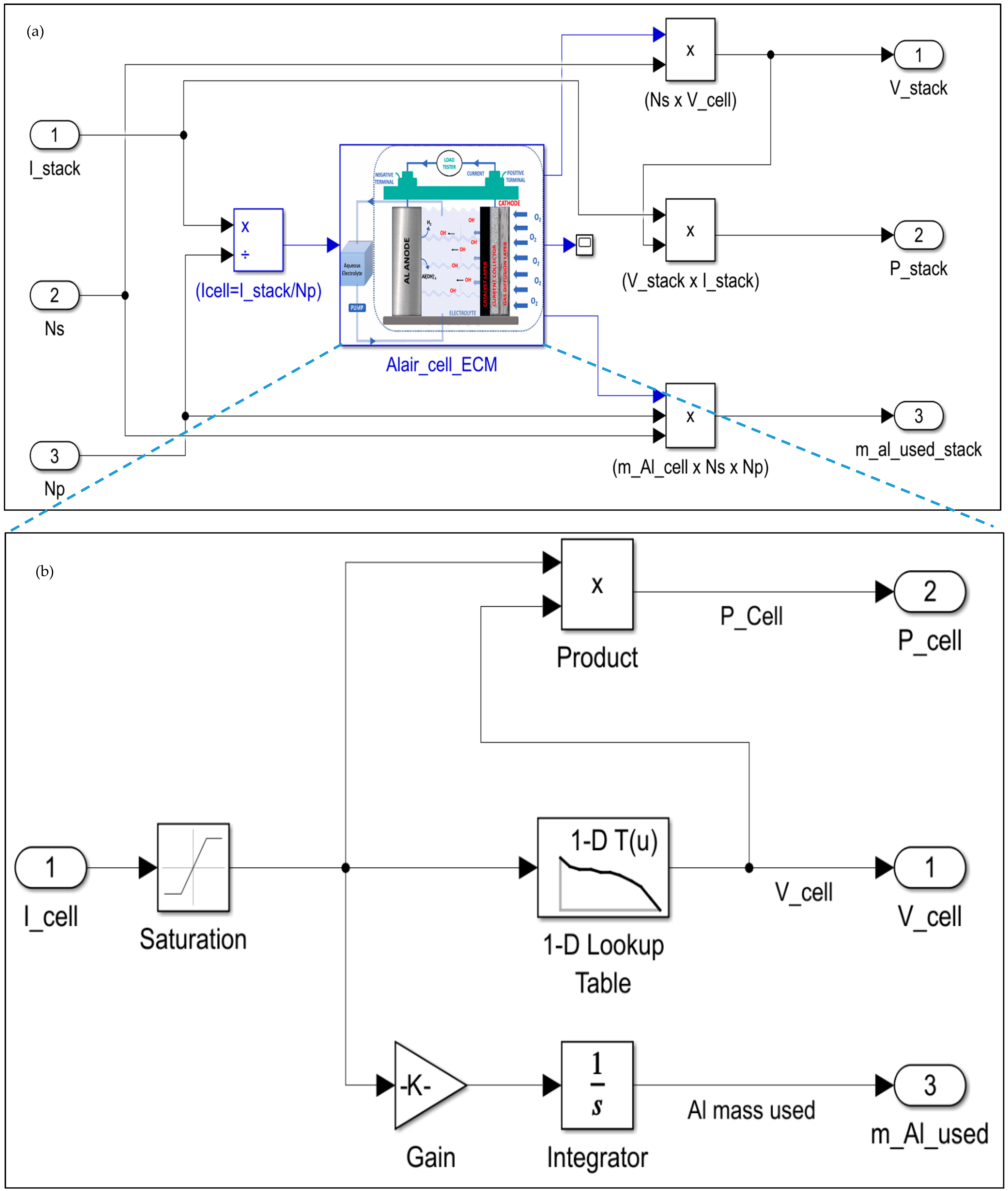
The sub-block (Figure 6) implements a first-pass, polarization-based equivalent circuit representation of a single Al–air cell, coupled with a physically consistent aluminum consumption tracking model. The input to the block is the cell current, I cell , which is first passed through a saturation block to enforce physically meaningful operating limits corresponding to the experimentally characterized current density range of the 38 cm aluminum disk. This prevents extrapolation beyond the validated polarization data and ensures numerical robustness.
The saturated current is then supplied to a one-dimensional lookup table that represents the experimentally measured polarization behavior of the Al–air cell. The lookup table maps cell current directly to cell voltage, V cell , implicitly capturing activation, ohmic, and mass-transport losses at a fixed electrolyte concentration and temperature. This approach mirrors the simplifications commonly adopted in metal–air system-level studies, where voltage is assumed to be a function of current (or current density) and independent of SOC over a restricted operating window.
The instantaneous electrical power delivered by the cell is computed using a product block as
P cell = V cell I cell
and is provided as an output for subsequent pack-level scaling and energy flow calculations. This structure allows the same single-cell model to be reused for different series and parallel configurations by simple algebraic scaling at the pack level. The pack-level energy capacity of the Al–air system is estimated from the specific energy of aluminum, taken as 2.299 kWh kg−1, corresponding to the theoretical electrochemical energy associated with the three-electron oxidation reaction [56]. To account for system-level losses, including polarization losses, DC–DC conversion inefficiencies, and incomplete aluminum utilization, a net electrical efficiency factor of 0.7 is applied. The effective usable energy is therefore calculated as
E usable = m Al × 2.299 × 0.7   kWh
where m Al is the initial aluminum mass in kilograms. This assumption yields an effective system-level specific energy of approximately 1.61 kWh kg−1, which is used to size the Al–air pack and to estimate achievable range extension under each drive cycle. The 70% efficiency factor reflects conservative integration losses and ensures that the projected vehicle range remains physically realistic rather than based on ideal electrochemical limits [57,58]. The adopted 70% system-level efficiency value represents a conservative aggregate estimate that accounts for polarization losses, parasitic corrosion reactions, incomplete aluminum utilization, and DC–DC conversion losses. While the effective efficiency of practical Al–air systems may vary depending on the operating conditions, electrolyte management, and stack design, the selected value falls within the range commonly considered for non-ideal metal–air system integration studies and is intended to avoid an overestimation of achievable vehicle performance.
For the selected 100s1p configuration, each aluminum disk has a diameter of 38 cm and a thickness of 0.5 mm. The mass of a single disk is calculated from its geometric volume and the density of aluminum. The disk radius is 0.19 m, and the thickness is 0.5 mm, giving a volume per disk of
V = π r 2 t = π ( 0.19 ) 2 ( 0.0005 ) 5.67 × 10 5   m 3
Using an aluminum density of 2700 kg m−3, the mass of one disk is
m disk = 2700 × 5.67 × 10 5 0.153   kg
For 100 disks in series, the total initial aluminum mass is therefore approximately 15.3 kg. This corresponds to an effective system-level specific energy of approximately 1.61 kWh kg−1. The resulting Al–air stack therefore provides roughly 24–25 kWh of usable electrical energy under realistic operating assumptions, which translate to 14–15 kW of power, which is comparable to a mid-sized EV traction battery module and represents a physically plausible range-extension capacity without excessive mass or volume.

2.2.4. Aluminum Consumption Tracking

In parallel with the electrical calculations, the model tracks aluminum consumption based on Faraday’s law, implemented in an equivalent specific-capacity form that is convenient for system-level simulation. The aluminum mass consumption rate is computed as
m ˙ Al = I cell Q theory   η util   3600
where Q theory 2980   Ah   kg 1 is the theoretical specific capacity of aluminum for a three-electron oxidation reaction, and η util is an effective utilization factor that accounts for parasitic corrosion, incomplete utilization, and non-ideal electrochemical efficiency. This formulation is mathematically equivalent to the classical Faraday expression m ˙ = I M / ( n F η ) , but is more convenient for implementation in time-domain battery models.
The gain block converts the electrical current directly into a mass flow rate, m ˙ Al (kg s−1), which is then integrated over time to yield the cumulative aluminum mass consumed,
m Al , used ( t ) = 0   t m ˙ Al ( τ )   d τ
The utilization factor is calibrated using experimentally measured aluminum mass loss under constant-current discharge, ensuring consistency between the model and laboratory observations. This enables the Al–air system to be treated as a fuel-limited energy source whose remaining capacity is directly linked to the available aluminum mass, rather than to an abstract electrochemical SOC [31].

2.3. Energy Management and Control Strategy

2.3.1. Al–Air Enable Control Logic

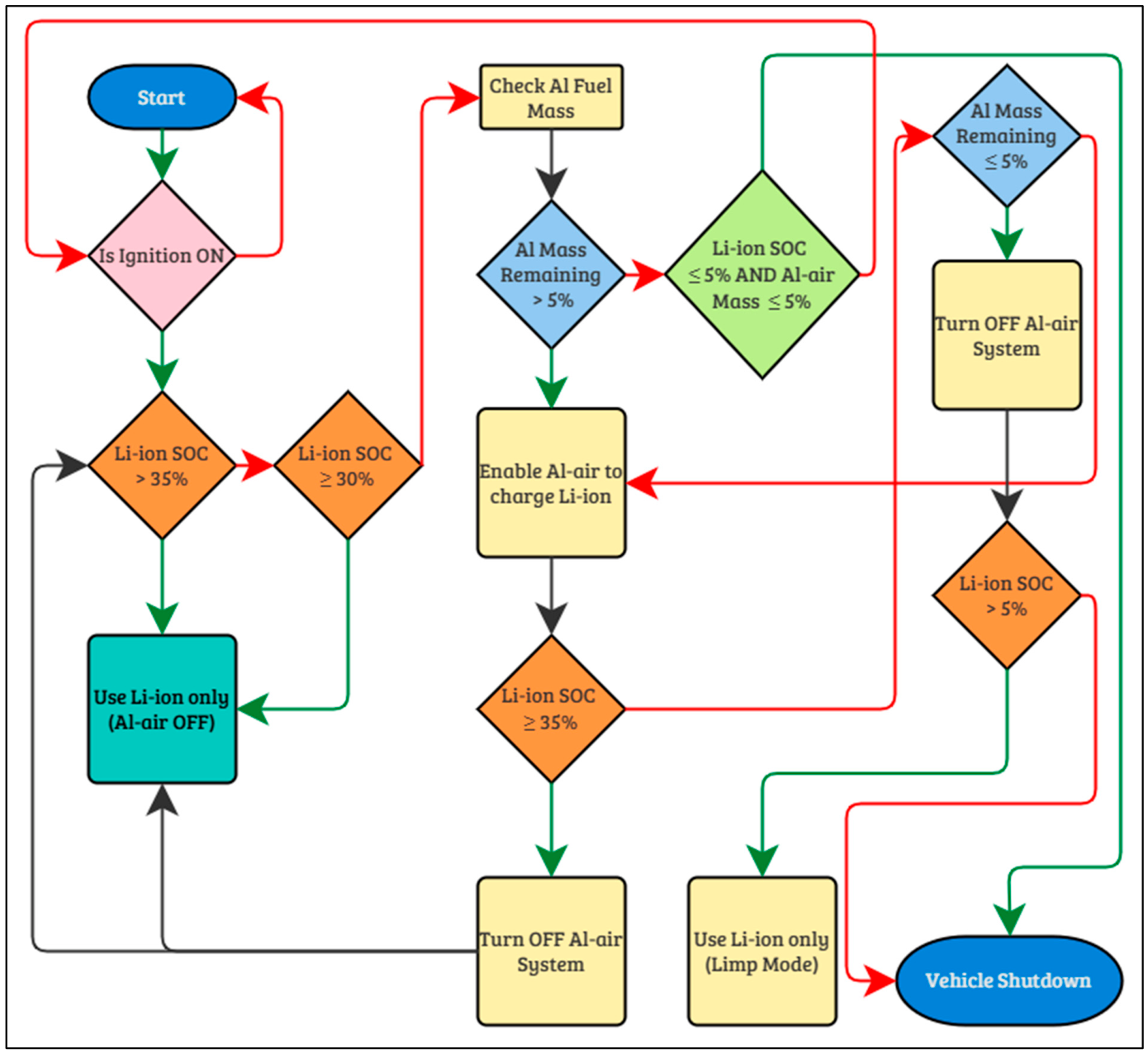
Under Concept A of using the Al–air battery as a range extender, the Al–air battery is activated only when the Li-ion battery SOC falls below a lower threshold, and it remains active until the SOC recovers beyond an upper threshold. This hysteresis-based strategy prevents frequent on–off switching and provides stable power flow through the DC–DC converter. The control logic and operational flow chart used is shown in Figure 7.
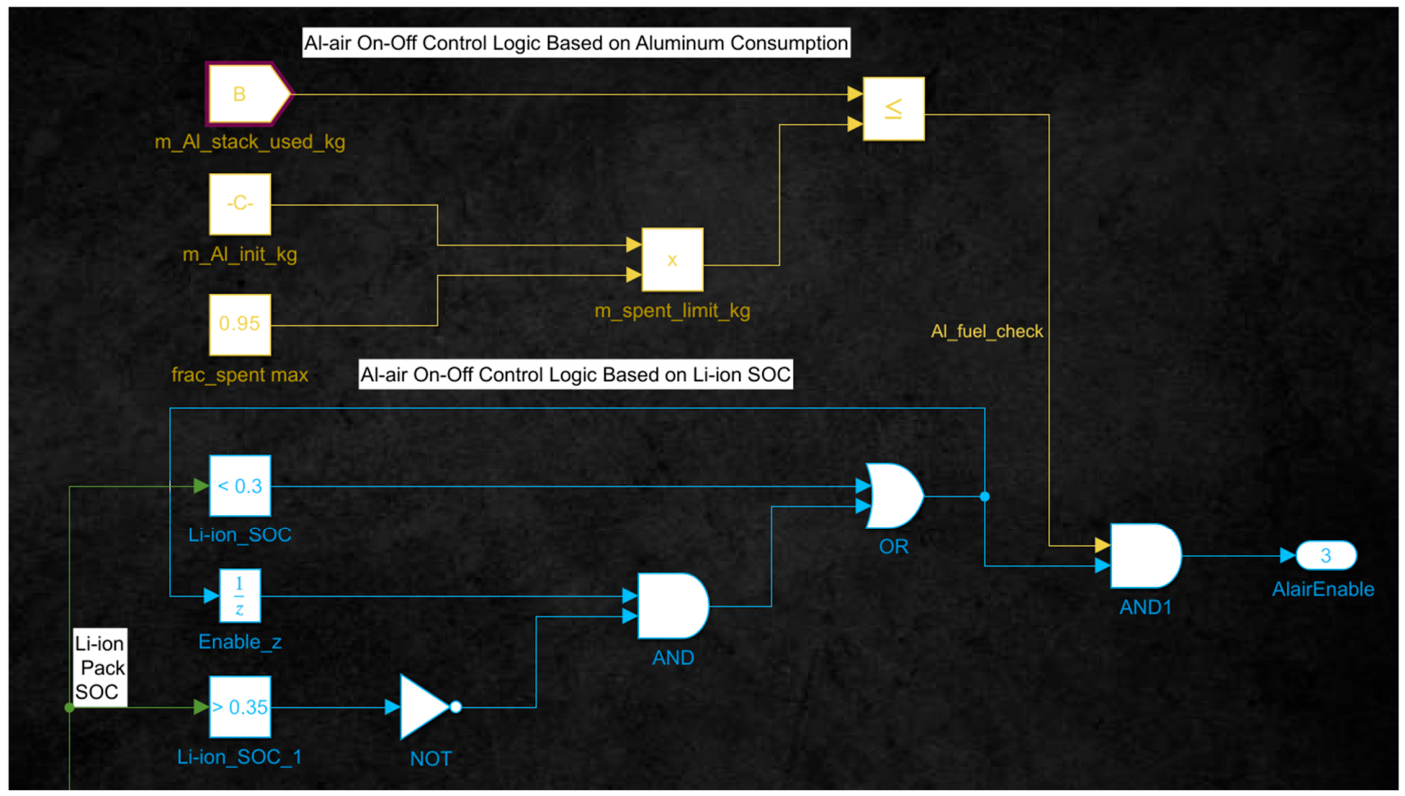
In the present study, the Li-ion SOC threshold is selected as 30% for activation and 35% for deactivation. These values are chosen to represent a conservative lower operating region of the Li-ion battery, ensuring that the range-extender engages before significant depth-of-discharge (DOD) is reached, while allowing sufficient recovery before disengagement. The hysteresis band of 5% balances responsiveness and stability, particularly under transient driving conditions such as urban dynamometer driving schedule (UDDS) and highway fuel economy test (HWFET) cycles. SOC-based logic is implemented in Simulink using a latch-type structure composed of relational operators, logical operators, and a unit delay block. As illustrated in the lower portion of the attached Simulink control diagram (Figure 8), the Al–air enable signal is set high when the Li-ion SOC falls below 0.30. Once enabled, the signal is latched and maintained until the SOC exceeds 0.35, at which point the Al–air system is disabled. This structure ensures deterministic behavior and avoids chattering near the threshold values.
Unlike electrochemically rechargeable batteries, Al–air systems are mechanically rechargeable, with energy replenishment achieved through physical replacement of the aluminum anode and replenishment of the electrolyte. Recent industrial developments, inspired by systems such as those proposed by Alumapower [59,60], suggest rapid disk-replacement mechanisms and simplified electrolyte-handling processes that significantly reduce service downtime. These advances motivate a control philosophy in which aluminum is treated as a consumable fuel rather than as a permanently embedded electrode. Accordingly, the Al–air enable logic is augmented with a fuel-availability constraint based on the cumulative aluminum mass consumed during operation. Aluminum consumption is calculated directly from Faraday’s law within the Al–air cell model and is scaled by the number of series and parallel cells to represent total pack-level consumption. The remaining aluminum mass is then inferred from the initial aluminum inventory. To ensure realistic operation, the Al–air system is disabled once the remaining aluminum mass falls below 5% of the initial available mass. This reserve margin avoids numerical instability near complete depletion and reflects practical considerations associated with mechanical disk replacement. The resulting fuel availability signal is implemented using a relational operator that compares the cumulative aluminum mass consumed with a predefined consumption limit corresponding to 95% utilization. The final Al–air enable signal is obtained by logical AND Boolean and the SOC-based enable signal with the aluminum fuel availability flag. This structure ensures that Al–air operation is permitted only when both conditions are satisfied, namely when the Li-ion SOC is within the activation window and when sufficient aluminum fuel remains. The combined logic is clearly depicted in the attached control diagram, where the SOC-based latch is gated by the aluminum mass-based fuel check.

2.3.2. DC–DC Integration and Power Flow Logic

The Al–air battery is interfaced with the Li-ion battery through a unidirectional DC–DC converter operating under power-controlled mode. When enabled, the Al–air system supplies electrical power to the DC–DC converter, which regulates the charging current delivered to the Li-ion battery based on the instantaneous battery voltage. This approach decouples the Al–air operating voltage from the Li-ion pack voltage and ensures compatibility across varying states of charge. In the Simulink implementation, the Al–air-enabled signal directly gates the current command applied to the Al–air stack. When disabled, the commanded stack current is forced to zero, resulting in zero electrical power output and zero aluminum consumption. This gating strategy guarantees internal consistency across the electrochemical, electrical, and mass-balance models and prevents unphysical aluminum consumption when the range-extender is inactive. Power limits imposed by the DC–DC converter are explicitly enforced through saturation blocks, ensuring that the Al–air system operates within converter rating constraints. The resulting power flow logic reflects realistic vehicle-integration scenarios and allows a systematic evaluation of Al–air contribution under different auxiliary and traction load conditions.

2.3.3. Auxiliary-Load-Driven Operation (Concept B)

Under Concept B, the Al–air battery operates as an auxiliary power unit (APU), supplying power to the Li-ion pack via a DC–DC converter to offset auxiliary loads without directly contributing to traction. A 104s1p configuration provides a bus-compatible voltage and delivers up to ~15 kW, sufficient for high auxiliary demand. With an initial aluminum mass of ~16 kg and an effective specific energy of ~1.61 kWh kg−1, the usable energy is ~26 kWh. To ensure realistic operation, the system is disabled when aluminum depletion reaches 95%. This configuration enables the Al–air battery to function as a fuel-limited auxiliary source while maintaining consistent energy accounting. The vehicle-level impact of this APU configuration was then evaluated under standard regulatory drive cycles. Vehicle performance was evaluated under standard regulatory drive cycles (UDDS, FTP-75, HWFET, WLTP), which capture urban, highway, and mixed driving conditions. Detailed descriptions of these cycles and the associated energy-calculation methodology are provided in the Supplementary Information. Battery energy consumption, distance, and range were computed using standard energy-integration approaches widely adopted in vehicle simulation studies.

2.4. Auxiliary Power Demand

Auxiliary power demand in electric vehicles arises from non-traction electrical consumers, including cabin heating, ventilation, and air-conditioning systems, thermal management of the battery and power electronics, cooling pumps and fans, lighting, infotainment, sensors, and onboard control electronics. In contrast to traction power, which scales strongly with vehicle speed and driving dynamics, auxiliary loads are primarily time-dependent and persist regardless of vehicle motion. As a result, auxiliary power consumption can impose a disproportionate penalty on vehicle energy use, particularly during low-speed or stop-and-go operation and plays a critical role in determining the effective driving range [61]. In conventional internal combustion engine vehicles, auxiliary electrical loads are supplied by an alternator driven by the engine, effectively decoupling auxiliary power demand from traction energy storage. In battery electric vehicles, however, all auxiliary loads are typically supplied via a DC–DC converter from the traction battery, directly reducing the energy available for propulsion. Reported values in the literature indicate that baseline non-HVAC auxiliary loads, comprising electronics, control units, pumps, and lighting, generally fall in the range of 0.2–0.5 kW. Cabin air-conditioning under moderate to hot ambient conditions typically requires 1–3 kW on average, while cabin heating can impose substantially higher demands of approximately 2–6 kW, particularly for vehicles employing resistive heating in cold climates as listed in Table 2. Consequently, many system-level EV studies represent auxiliary power demand using an equivalent constant load to capture its cumulative impact on energy consumption and range [62,63,64].
Motivated by this architectural coupling between auxiliary power demand and traction energy in battery electric vehicles, this study proposes an alternative system-level concept in which a metal–air battery, specifically an Al–air battery, is employed as a dedicated auxiliary power unit. In this configuration, the Al–air system supplies electrical power exclusively to non-traction loads through a dedicated DC–DC interface, thereby offloading auxiliary energy demand from the Li-ion traction battery. This approach leverages the high specific energy and fuel-like characteristics of metal–air batteries while avoiding the need for high transient power capability, which is not required for auxiliary loads. To examine a conservative and practically relevant operating condition, a constant auxiliary load of approximately 3 kW is adopted. This value lies at the upper end of reported average HVAC cooling demands and within the lower bound of heating-dominated scenarios, representing a high-end but realistic average auxiliary load rather than a transient peak. Although auxiliary loads in practical electric vehicles vary dynamically with the ambient temperature, cabin conditioning demand, and vehicle operating state, the use of a constant auxiliary load in the present study provides a conservative and reproducible basis for a system-level comparison across different vehicle architectures and drive cycles. The selected 3 kW value represents a sustained high-demand operating condition intended to evaluate the upper-bound impact of auxiliary energy consumption on vehicle range and battery utilization.
Urban, highway, and WLTP drive cycles are therefore simulated under the assumption that all auxiliary power demand, fixed at 3 kW, is supplied by the Al–air auxiliary power unit rather than the traction battery, and their respective electrical response of the battery pack is shown in Supplementary Figure S3. This framework enables a direct assessment of how decoupling auxiliary loads from the Li-ion battery influences energy consumption and the driving range under contrasting driving conditions. In particular, the urban cycle highlights the sensitivity of range to time-dependent auxiliary loads at low average speeds, while the highway cycle illustrates the reduced relative impact of auxiliary energy consumption due to higher distance traveled per unit time. By treating the metal–air system as a dedicated auxiliary energy source rather than a traction range extender, this study introduces and quantitatively evaluates a distinct integration pathway for metal–air batteries in electric vehicles, offering new insight into their potential role as onboard auxiliary power units under high-auxiliary-demand conditions.

3. Results and Discussion

The baseline BEV performance and reduced-capacity scenarios were evaluated to establish reference conditions for assessing Al–air integration. Vehicle range, energy consumption, and speed tracking performance were quantified across standard drive cycles. Detailed descriptions of the simulation setup, drive-cycle behavior, and battery-response characteristics are provided in the Supplementary Information. Table 3 summarizes the energy consumption and achievable range for baseline and reduced-capacity configurations, while Table 4 reports the corresponding speed tracking errors (RMSEs), highlighting the onset of power-limited operation under downsized battery conditions. To evaluate the maximum achievable driving range and long-duration behavior of the proposed dual-energy-storage architecture, each standard drive cycle was repeated continuously until the vehicle reached the defined termination condition associated with either Li-ion battery depletion or aluminum fuel depletion. Consequently, the reported simulation durations extend substantially beyond the original duration of a single drive-cycle realization. For example, although the WLTP cycle itself lasts approximately 30 min, the cycle was repeated iteratively within the simulation framework to evaluate the cumulative range, SOC evolution, and long-term interactions between the Li-ion and Al–air subsystems under sustained operation.
The introduction of a constant 3 kW auxiliary load significantly accelerates SOC depletion and reduces the achievable range across all drive cycles. The penalty is most pronounced in UDDS, where auxiliary power represents a larger fraction of total power demand during low-speed operation. Consequently, energy consumption per 100 km increases substantially under auxiliary loading due to the very low total distance covered (Table 3), particularly for the smaller pack configuration. These results underscore the importance of supplemental energy strategies such as the proposed Al–air range extender and auxiliary configurations.
The RMSE results reveal a clear and systematic degradation in speed tracking performance as Li-ion capacity is reduced and auxiliary loading is introduced. Downsizing the traction battery increases RMSE across all driving cycles, indicating that a reduced parallel configuration limits peak power capability and results in larger deviations from the prescribed speed trace. The effect is most pronounced under HWFET conditions, where sustained high-speed operation imposes continuous propulsion demands and exposes power limitations more severely than in UDDS or WLTP. The introduction of a constant 3 kW auxiliary load further amplifies this degradation, particularly in the reduced-capacity cases. For the 65% reduced energy configuration under HWFET, RMSE exceeds 50 km h−1, signifying substantial and sustained speed deficit relative to the reference cycle. These results demonstrate that battery downsizing not only reduces the stored energy and achievable range but also induces a power-constrained operating regime, especially under highway and combined traction-auxiliary loading conditions.

3.1. Impact of Al–Air Integration

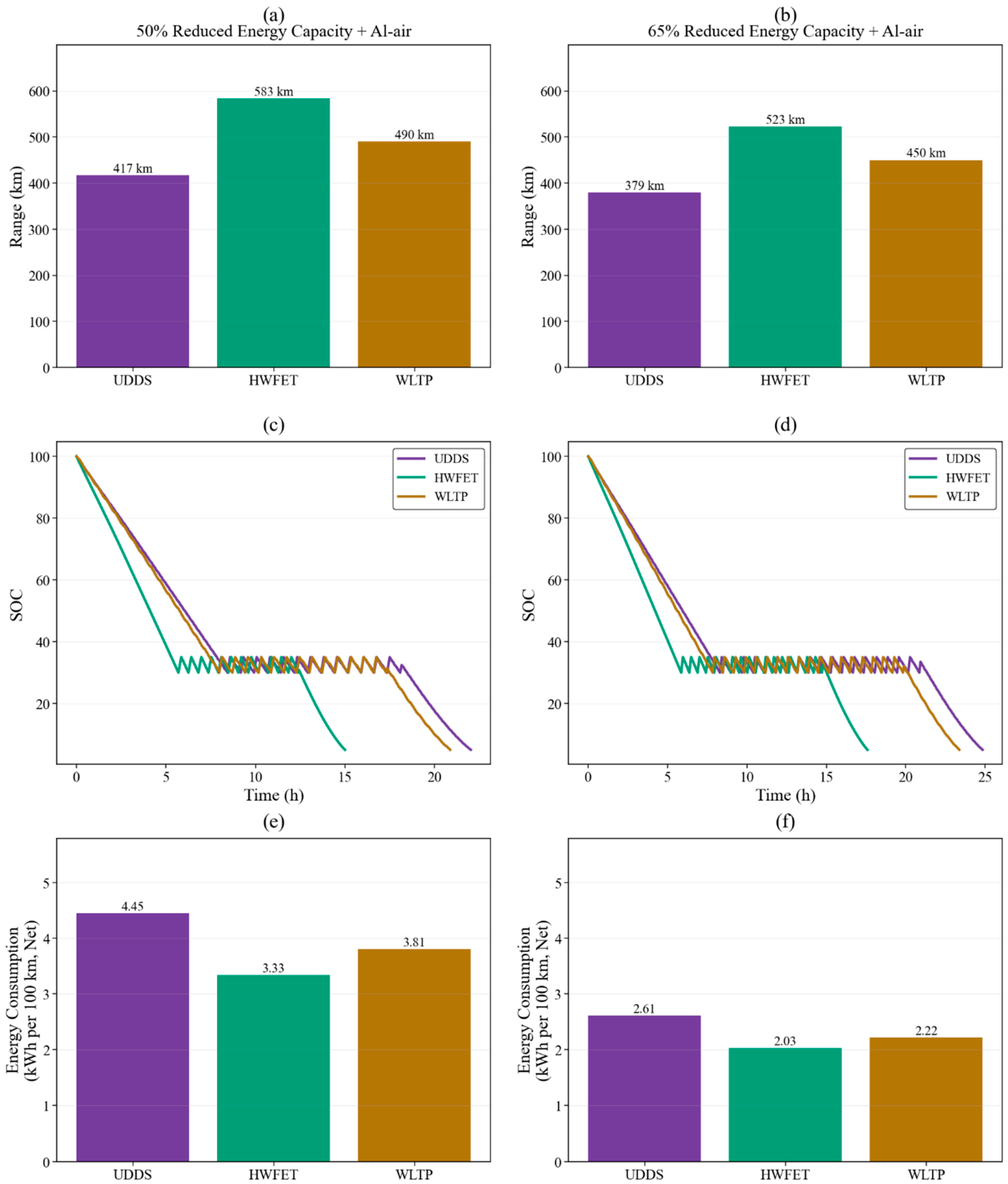
Figure 9 presents a comprehensive comparison of the 50% and 65% reduced Li-ion energy capacity configurations integrated with the Al–air range extender across three standardized driving cycles. Figure 9 combines range performance (Figure 9a,b), SOC evolution (Figure 9c,d), and net energy consumption (Figure 9e,f), enabling a simultaneous evaluation of performance, efficiency, and operational behavior. The addition of the Al–air range extender enables substantial range recovery in both reduced-capacity configurations. For the 50% reduced case, the achieved ranges are approximately 417 km (UDDS), 583 km (HWFET), and 490 km (WLTP). For the 65% reduced case, ranges of approximately 379 km (UDDS), 523 km (HWFET), and 450 km (WLTP) are obtained. Notably, even with a 65% reduction in Li-ion energy capacity, the hybrid system surpasses the baseline full-capacity Li-ion range in all drive cycles. This demonstrates that Al–air integration effectively compensates for aggressive Li-ion downsizing while significantly reducing system mass. The HWFET cycle consistently yields the highest range due to its steady-speed profile and lower transient power demand, whereas UDDS produces the lowest range because of frequent accelerations and higher dynamic load fluctuations. The SOC profiles clearly illustrate the role of the Al–air system as a range extender. In both configurations, the Li-ion SOC decreases initially, after which it stabilizes within a narrow operating window. This stabilization indicates that the Al–air module actively supplements the power demand, preventing deep Li-ion discharge. The oscillatory behavior observed during mid-range SOC reflects charge-sustaining operation under varying load conditions. In the 65% reduced case, the SOC plateau occurs earlier compared to the 50% reduced case, confirming stronger reliance on the Al–air subsystem due to the smaller Li-ion capacity. Importantly, deep Li-ion discharge is avoided until the later stages of operation, suggesting reduced Li-ion stress and potential cycle life benefits. The net Li-ion energy consumption values decrease significantly with Li-ion downsizing. In the 50% reduced configuration, net consumption ranges between 3.33 and 4.45 kWh per 100 km, while in the 65% reduced case, it further decreases to 2.03–2.61 kWh per 100 km (Table 5). This reduction reflects the increasing contribution of the Al–air system to propulsion energy. HWFET again shows the lowest energy consumption, consistent with its smoother velocity profile. The reduced Li-ion energy throughput in the 65% configuration suggests that Li-ion degradation mechanisms associated with deep cycling may be mitigated, which is advantageous for long-term durability. The reduced Li-ion energy throughput observed in the hybrid configurations also has important lifecycle implications. By maintaining the Li-ion battery within a narrower SOC operating window and reducing deep discharge events, the Al–air-assisted architecture may help mitigate degradation mechanisms associated with high depth-of-discharge cycling and elevated electrochemical stress. From a system-level perspective, this suggests that Al–air integration could not only extend the driving range but also contribute to improved long-term durability and a reduced replacement frequency of the primary traction battery.
Overall, the results confirm that aggressive Li-ion downsizing coupled with Al–air augmentation enables substantial mass reductions without sacrificing long-range capability. Among the evaluated configurations, the 65% reduced Li-ion integrated with the Al–air range extender provides the most favorable balance among range extension, reduced Li-ion utilization, and overall system efficiency.
Figure 10 validates the SOC-based activation strategy of the Al–air range extender. As the Li-ion battery discharges and reaches the lower SOC threshold (~30–35%), the Al–air system periodically activates, producing short charging pulses that maintain the battery SOC within the control window. Correspondingly, the Al–air stack delivers positive power during these intervals, reducing the net discharge demand on the Li-ion battery. Aluminum consumption increases stepwise during each activation event, reflecting electrochemical fuel utilization. Once the aluminum fuel limit is reached, the fuel-availability signal deactivates the system, confirming correct implementation of the SOC-based control and fuel-constraint logic.
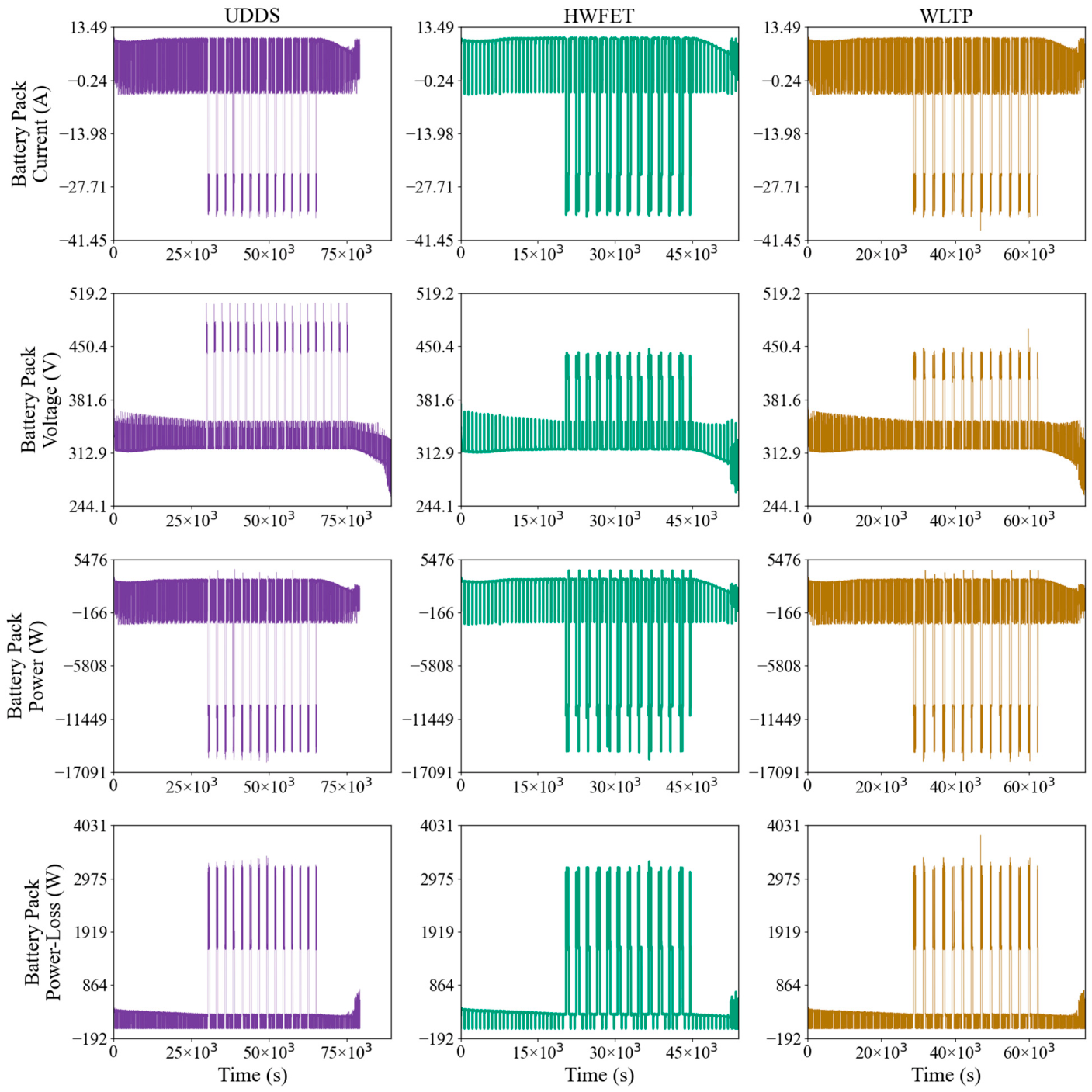
Figure 11 presents the temporal profiles of the battery pack current, voltage, power, and power loss for the 50% reduced Li-ion energy capacity configuration assisted by the Al–air range extender under the UDDS, HWFET, and WLTP driving cycles. These results provide insight into the dynamic interaction between the Li-ion battery and the aluminum–air system during vehicle operation. Across all three drive cycles, the Li-ion battery remains the primary traction energy source, as indicated by the predominantly negative battery current and power values corresponding to discharge. However, once the Li-ion SOC approaches the predefined lower control threshold, the Al–air range extender is periodically activated. These activation events manifest as distinct transient pulses in the battery current and power profiles, corresponding to short-duration charging intervals supplied by the Al–air stack. During these intervals, the battery current momentarily shifts toward stronger negative peaks, indicating increased electrochemical activity associated with the charging process. Concurrently, the battery voltage profile exhibits noticeable upward excursions during these charging pulses, reflecting the temporary increase in pack voltage due to the additional charging contribution from the Al–air system. The magnitude and frequency of these pulses vary with the driving cycle. The UDDS cycle, characterized by frequent accelerations and decelerations typical of urban driving, produces more irregular power fluctuations but relatively moderate charging pulses from the Al–air stack. In contrast, the HWFET cycle, which represents steady highway driving conditions, shows more pronounced and consistent charging pulses due to the smoother and more sustained load profile. The WLTP cycle, which contains a mix of low-, medium-, and high-speed phases, exhibits intermediate behavior, combining steady traction demand with periodic dynamic load changes. The battery power-loss profiles further reveal the electrochemical implications of these charging events. During Al–air activation periods, the internal resistive losses of the Li-ion battery increase significantly, resulting in pronounced peaks in the power-loss plots. These peaks correspond to the elevated transient currents experienced during the charging pulses. Nevertheless, outside of these activation windows, the battery operates within a relatively stable loss regime, suggesting that the system effectively limits the duration of high-current events. Overall, the results demonstrate that the SOC-window control strategy successfully stabilizes the Li-ion battery operation despite the 50% reduction in available energy capacity. The Al–air range extender compensates for the reduced battery energy by providing periodic charging support, thereby preventing rapid SOC depletion and maintaining vehicle operability across all driving cycles. Importantly, the relatively moderate magnitude of the current and power pulses indicates that the Li-ion battery is not excessively stressed under this configuration, suggesting that the 50% reduced capacity case represents a feasible balance between battery downsizing and range-extender utilization.
Figure 12 illustrates the corresponding battery response for the 65% reduced Li-ion energy capacity configuration assisted by the Al–air range extender. This scenario represents a more aggressive reduction in the primary battery energy storage and therefore provides insight into the operational limits of the dual-energy-storage architecture. Compared with the 50% reduction case, the Li-ion battery exhibits noticeably stronger dependence on the Al–air system. The battery current and power profiles reveal larger and more frequent transient charging pulses, indicating that the Al–air stack must operate more intensively to maintain the SOC within the control window. Because the Li-ion battery stores less total energy in this configuration, the SOC approaches the lower threshold more rapidly, triggering more frequent activation of the range extender. This behavior is particularly evident in the HWFET cycle, where the steady highway power demand causes the Li-ion SOC to decline more rapidly in the absence of supplemental energy input. Consequently, the Al–air system produces repeated high-amplitude charging pulses to restore the SOC toward the upper boundary of the control window. These pulses appear as pronounced spikes in both the battery current and power plots. Similar patterns are observed in the UDDS and WLTP cycles, although the transient load fluctuations inherent to those cycles lead to more irregular pulse timing. The voltage profiles provide further evidence of this increased interaction between the two energy systems. During each charging interval, the battery voltage rises sharply as the Al–air stack injects electrical energy into the Li-ion pack. Because these charging events occur more frequently in the 65% reduction scenario, the voltage oscillations become more pronounced and periodic throughout the simulation. The battery power-loss profiles also reflect the increased operational burden imposed on the Li-ion battery. Higher and more frequent current transients lead to larger peaks in internal resistive losses, indicating elevated electrochemical stress during charging events. While the system remains stable and operational across all drive cycles, the increased magnitude and frequency of these loss peaks suggest that further reductions in Li-ion capacity could lead to diminished efficiency or accelerated battery degradation if not carefully managed. Despite these challenges, the results demonstrate that the Al–air range extender effectively compensates for the substantial reduction in Li-ion energy capacity, allowing the vehicle to maintain continuous operation across all evaluated driving cycles. However, the increased reliance on the range extender highlights the importance of appropriately balancing Li-ion battery capacity and range-extender capability. From a system-level perspective, the 65% reduction case illustrates the operational limits of aggressive battery downsizing, where the benefits of mass reduction must be weighed against increased power fluctuations, higher internal losses, and greater dependence on the auxiliary energy source. Together, Figure 10 and Figure 12 confirm that the proposed control strategy enables stable dual-energy operation across a range of battery capacity reductions. At moderate reductions (50%), the Al–air system provides supplementary energy with limited impact on battery stress, whereas deeper reductions (65%) significantly increase the reliance on the range extender, highlighting important design trade-offs for hybrid metal–air BEV architectures. These results (Table 6) further demonstrate that aggressive Li-ion downsizing shifts a larger fraction of the vehicle energy burden onto the Al–air subsystem, increasing dependence on sustained auxiliary energy delivery. While this enables substantial reductions in traction battery mass, it also highlights practical limitations associated with transient charging intensity, converter loading, and system-level efficiency. Consequently, optimal hybridization requires balancing the Li-ion power capability with Al–air energy capacity to avoid excessive electrochemical stress and maintain stable vehicle operation under dynamic driving conditions.
From a purely mass-based perspective, the optimal configuration in each driving cycle depends on the required target range. The lightest architecture overall is the 65% reduced energy capacity Li-ion configuration, with a total pack mass of 114 kg. However, this configuration provides a limited driving range, achieving approximately 172 km under UDDS, 232 km under HWFET, and 204 km under WLTP conditions. Therefore, while it is the minimum-mass solution, it is only suitable for short-range applications. When extended range is required, the 65% reduced energy capacity combined with the Al–air range extender emerges as the most mass-efficient high-range configuration across all drive cycles. This configuration results in a total system mass of approximately 148 kg, which is still significantly lower than the baseline 58 kWh Li-ion pack mass of 326 kg. Despite the reduced Li-ion capacity, the addition of the Al–air pack enables ranges of approximately 379 km (UDDS), 523 km (HWFET), and 450 km (WLTP). Notably, this configuration achieves comparable or superior range relative to the baseline vehicle while reducing the total system mass by more than 50%. The 50% reduced energy capacity combined with the Al–air range extender provides the highest absolute range in all cycles, reaching approximately 417 km (UDDS), 583 km (HWFET), and 490 km (WLTP). However, this comes at a higher total mass of approximately 197 kg. While still substantially lighter than the baseline configuration, it does not offer the same mass efficiency as the 65% reduced plus Al–air option when range-to-mass performance is considered. Overall, if the objective is to maximize driving range while minimizing total system mass, the 65% reduced energy capacity Li-ion pack integrated with the Al–air range extender represents the optimal configuration across UDDS, HWFET, and WLTP cycles. It delivers substantial range recovery with minimal mass addition and consistently outperforms the baseline full-capacity Li-ion system in mass efficiency.
Using the assumed low-volume, fully integrated system costs, the baseline full-capacity Li-ion configuration remains the simplest solution but is not cost-optimal when judged purely on pack CAPEX. With a 58 kWh pack cost spanning 10,000 to 25,000 USD, the baseline represents the highest single-component investment among Li-ion-only cases. In contrast, reducing the Li-ion energy capacity to 50% or 65% lowers the estimated Li-ion pack CAPEX proportionally, yielding ranges of approximately 5000 to 12,500 USD and 3500 to 8750 USD, respectively. From a cost-only perspective, the reduced-capacity Li-ion configurations therefore minimize pack CAPEX, although they also reduce the achievable driving range. When Al–air is introduced as a range extender, the total pack CAPEX increases due to the additional Al–air module, assumed here to span 5000 to 12,000 USD for the 24.6 kWh system including stack, balance-of-plant, and power electronics. Under these assumptions, the combined 50% reduced Li-ion plus Al–air configuration results in a total pack CAPEX of approximately 10,000 to 24,500 USD, overlapping with the baseline full Li-ion cost range. As a result, this configuration is not consistently cost-advantaged relative to the baseline when CAPEX alone is considered, even though it enables a substantially higher driving range than the reduced Li-ion-only case. In comparison, the 65% reduced Li-ion plus Al–air configuration provides the most favorable cost balance among the hybrid options. Its total pack CAPEX is estimated at 8500 to 20,750 USD, which is lower than the baseline full-capacity Li-ion pack across most of the assumed range while still offering large range recovery relative to the reduced Li-ion-only case. This makes the 65% reduced plus Al–air configuration the most cost-efficient hybrid architecture under the adopted system-level pricing assumptions, as it achieves substantial range extension without exceeding the baseline CAPEX envelope. If the objective is to obtain extended driving range while maintaining total pack CAPEX at or below the baseline cost envelope, the 65% reduced Li-ion plus Al–air range extender provides the best cost-based trade-off. When both total system mass and pack capital expenditure are considered simultaneously, the 65% reduced energy capacity Li-ion configuration integrated with the Al–air range extender emerges as the most balanced option. This architecture results in a total system mass of approximately 148 kg, which is substantially lower than the baseline full-capacity Li-ion system at 326 kg and also lower than the 50% reduced plus Al–air configuration at approximately 197 kg. Despite the significant reduction in Li-ion capacity, the addition of the Al–air module restores and extends the driving range beyond the baseline vehicle in all evaluated drive cycles. In the UDDS cycle, the 65% reduced Li-ion-only configuration achieves approximately 172 km, whereas the addition of the Al–air range extender increases the range to approximately 379 km, corresponding to an additional 207 km of driving range. Under HWFET conditions, the range increases from approximately 232 km to 523 km, yielding an additional 291 km. Similarly, in the WLTP cycle, the range improves from approximately 204 km to 450 km, providing an additional 246 km. Notably, these values also exceed the baseline full-capacity Li-ion ranges (358 km for UDDS, 469 km for HWFET, and 401 km for WLTP), demonstrating that substantial range recovery is achieved with a significantly lighter system. From a cost perspective, assuming system-level pack costs of 10,000 to 25,000 USD for the 58 kWh Li-ion baseline and 5000 to 12,000 USD for the 24.6 kWh Al–air pack, the total CAPEX of the 65% reduced plus Al–air configuration spans approximately 8500 to 20,750 USD. This range generally remains within or below the baseline cost envelope while delivering large range gains relative to the reduced Li-ion-only case. Accordingly, when evaluated on combined mass, cost, and range criteria, the 65% reduced Li-ion pack supplemented with the Al–air range extender represents the most favorable trade-off among the configurations studied. It reduces system mass by more than 50% relative to the baseline, controls total pack CAPEX (Table 7) within the baseline range, and adds between approximately 207 and 291 km of additional driving range depending on the drive cycle.

3.2. Techno-Economic Considerations and TCO Implications

To assess the practical viability of the proposed Al–air-assisted architecture, a first-order techno-economic analysis was conducted to estimate system cost and total cost of ownership (TCO). The capital cost of the Li-ion battery was approximated using a representative range of 120–150 $ kWh−1, while the Al–air system cost was separated into stack hardware and consumable aluminum fuel. Based on the modeled configuration, the Al–air system contains approximately 16–22 kg of aluminum, corresponding to ~25–35 kWh of usable energy at an effective specific energy of ~1.61 kWh kg−1. Assuming an aluminum cost of ~2–3 $ kg−1, the equivalent fuel cost is approximately 1.3–1.9 $ kWh−1, which is higher than grid electricity (~0.10–0.15 $ kWh−1) but offers significantly greater onboard energy density. Operating costs were evaluated by combining electricity consumption for the Li-ion battery and aluminum consumption for the Al–air system, expressed on a per-distance basis. While the hybrid configuration reduces Li-ion energy throughput and may extend battery lifetime by mitigating deep cycling, it introduces recurring fuel costs associated with aluminum replacement, as Al–air batteries are primary (non-rechargeable) systems. From a TCO perspective, the economic viability of the proposed architecture therefore depends strongly on the aluminum price, utilization efficiency, and the availability of recycling infrastructure. Compared with existing literature on metal–air and fuel cell range extenders, which often neglect detailed cost modeling, the present framework provides a transparent basis for linking system-level performance with economic considerations. These results indicate that while Al–air integration offers clear advantages in range extension and mass reduction, its competitiveness in vehicle applications will ultimately depend on improvements in material utilization, system efficiency, and cost-effective aluminum supply and recycling pathways. In addition to direct cost considerations, the practical deployment of Al–air assisted EV architectures depends strongly on infrastructure and operational logistics. Unlike conventional rechargeable battery systems, Al–air batteries operate through aluminum consumption and therefore require periodic aluminum replacement, together with electrolyte maintenance and the recycling of reaction products. While this fuel-like operational strategy may enable rapid energy replenishment without long charging times, it also introduces challenges related to supply-chain management, recycling integration, service infrastructure, and long-term operational cost. The effective fuel cost associated with aluminum consumption is currently higher than the direct grid-based electricity charging for conventional Li-ion EVs, and therefore, the long-term economic competitiveness of Al–air-assisted systems depends strongly on the aluminum price, utilization efficiency, recycling effectiveness, and replacement logistics over the vehicle lifespan. Consequently, the present work represents a preliminary system-level cost assessment rather than a complete lifecycle economic evaluation, and future studies should incorporate a comprehensive total cost-of-ownership analysis, including battery degradation, aluminum replacement frequency, recycling recovery, maintenance requirements, infrastructure costs, and long-term operational energy expenditure.

3.3. Aluminum–Air as an Auxiliary Power Unit

To further investigate the system-level integration of Al–air technology, the Al–air subsystem was evaluated as an APU supplying vehicle auxiliary loads, while the Li-ion battery remained the primary traction energy source. In this configuration, auxiliary electrical demands were supported by the Al–air stack, reducing the load imposed on the traction battery during vehicle operation. Simulations were conducted using the MATLAB/Simulink virtual vehicle framework under the UDDS, HWFET, and WLTP drive cycles. The electrical response of the Li-ion battery, including the current, voltage, power, and power loss, was analyzed to assess the influence of auxiliary load support (Figure 13). The resulting vehicle range and battery SOC evolution were also examined to quantify the impact of the Al–air auxiliary power (Figure 14).
The baseline configuration with a constant 3000 W auxiliary load places a continuous electrical demand on the Li-ion battery, requiring it to supply both propulsion and auxiliary power throughout the drive cycle. As shown in Figure 13, this results in sustained discharge currents and elevated battery power output across the UDDS, HWFET, and WLTP cycles. The increased current demand leads to higher internal resistive losses, reflected in the battery power-loss profiles. Correspondingly, the battery voltage gradually decreases over time as the state of charge declines, while the SOC curves exhibit a nearly linear depletion throughout the driving duration. Under this baseline configuration with a 50% reduced battery energy capacity, the achievable vehicle ranges are 68 km for UDDS, 110 km for HWFET, and 84 km for WLTP, with the longest range observed in the HWFET cycle due to its relatively steady driving conditions and lower transient load fluctuations. When the auxiliary load is supplied by the Al–air APU, the electrical burden on the Li-ion battery is significantly reduced. As shown in Figure 13, the battery current and power profiles exhibit lower sustained discharge levels compared with the baseline case, indicating that a portion of the auxiliary energy demand is offloaded to the Al–air subsystem. This reduction in battery load decreases internal power losses and moderates the voltage drop during operation, resulting in a slower rate of SOC depletion across all drive cycles. The reduced auxiliary load on the traction battery allows a larger portion of the stored Li-ion energy to be dedicated to propulsion. The system-level benefit of this configuration is reflected in the substantial improvement in vehicle range. Compared with the baseline case, the Al–air APU configuration increases the achievable range from 68 km to 112 km in UDDS, from 110 km to 206 km in HWFET, and from 84 km to 138 km in WLTP (Figure 14). These correspond to absolute improvements of 44 km, 96 km, and 54 km, respectively, representing relative range increases of approximately 64.7%, 87.3%, and 64.3%. The largest improvement occurs in the HWFET cycle, where the longer driving duration amplifies the energy savings associated with auxiliary load offsetting. Overall, these results demonstrate that integrating an Al–air subsystem as an auxiliary power unit can significantly mitigate auxiliary load penalties, improving energy utilization and substantially extending the achievable driving range of the vehicle.

3.4. Comparison with Literature Metal–Air Range Extenders

Earlier vehicle-level work on metal–air range extenders has focused predominantly on Zn–air systems, largely because Zn–air is the most mature aqueous metal–air chemistry and is one of the few systems that can be electrically regenerated. Sherman et al. [67] presented one of the clearest dual-energy-storage EV studies in this area by coupling a small Li-ion pack with a larger Zn–air secondary pack in a full vehicle model. In that work, the Zn–air battery was not used for direct traction support, but rather as a reserve energy source that extended the range while limiting cycling of the metal–air pack. Their study showed that a properly controlled Zn–air-assisted architecture could outperform a single-pack BEV in range while also reducing cost pressure on the Li-ion system, thereby establishing the dual-ESS concept as a practical pathway for metal–air integration in vehicles. A key feature of the Zn–air vehicle literature is that it consistently treats the metal–air battery as an energy-dominant but power-limited device. Sherman et al. [67] explicitly emphasized the low power density and limited cycle life of Zn–air batteries as the main reasons they are unsuitable as standalone EV traction batteries, while still identifying them as attractive range extenders because of their lower expected cost and higher energy density relative to Li-ion batteries. The same study also noted that metal–air systems generally face low voltage, low current density, self-discharge, and side reactions and further pointed out that Al–air batteries, although highly energy dense, are not electrically rechargeable and would require replacement or off-board recycling rather than conventional charging. This framing is important because it closely aligns with the present work, where the Al–air battery is likewise assigned a secondary energy role rather than a primary propulsion role.
The broader comparative review by Shabeer et al. [35] reinforces this distinction between Zn–air and Al–air. That review identifies aluminum as an attractive anode because of its very high theoretical specific energy and volumetric energy density, as well as its abundance, safety, and low cost, but it also highlights corrosion and parasitic reactions in aqueous electrolytes as major barriers to practical implementation. In contrast, the review notes that Zn–air has lower theoretical specific energy than Al–air but retains a critical practical advantage in that zinc-based aqueous metal–air systems can be electrically recharged, whereas aqueous Al–air systems remain mechanically rechargeable. Thus, the literature positions Zn–air as the more mature rechargeable chemistry, but Al–air as the more compelling candidate when the objective is maximum onboard energy storage in a fuel-like range-extender role. From a modeling perspective, Clark et al. [68] reviewed the wider toolbox available for a metal–air battery design, with particular emphasis on Zn–air systems. Their review showed that most established modeling work has concentrated on Zn–air because of its relative maturity, and that the main technical challenges remaining are electrolyte instability, hydrogen evolution, electrode shape change, passivation, air–electrode degradation, and the need for suitable continuum models to bridge materials behavior and cell-level performance. This is an important observation for the present study. Much of the existing metal–air literature has advanced either at the material scale or at the cell scale, whereas vehicle-level integration studies remain comparatively limited. Relative to previous metal–air EV studies, the proposed architecture offers several system-level advantages. First, the present framework explicitly integrates experimentally informed Al–air behavior within a dynamic MATLAB/Simulink vehicle environment, enabling an evaluation of transient power flow, SOC evolution, and drive-cycle-dependent operation rather than relying solely on static energy-balance calculations. Second, the architecture incorporates SOC-window-based control logic and DC–DC converter coupling, allowing controlled interactions between the Li-ion and Al–air subsystems under realistic operating conditions. Third, the study evaluates two distinct operational roles for the Al–air system, namely range-extension and auxiliary-power support, whereas many earlier studies focus only on simplified range-extender concepts. Finally, the framework enables an assessment of system-level trade-offs associated with aggressive Li-ion downsizing, including impacts on the vehicle range, battery utilization, mass reduction, and operational stability. These capabilities provide insights beyond theoretical energy-density comparisons and help bridge the gap between conceptual metal–air battery studies and practical EV system integration.
The present work addresses that gap by embedding an experimentally informed Al–air model within a full MATLAB/Simulink EV framework and by explicitly evaluating control logic, SOC evolution, power flow, and drive-cycle-dependent operation. Taken together, the attached literature suggests clear progression. Sherman et al. [67] established the feasibility of dual-ESS metal–air-assisted EVs using Zn–air as a secondary pack. Clark et al. [68] clarified that multi-scale modeling is essential for capturing the coupled electrochemical and transport limitations of metal–air systems. Shabeer et al. [35] then positioned Al–air as a particularly promising range-extender chemistry because of its superior theoretical energy potential, despite its mechanical recharge requirement and corrosion-related challenges. Relative to these studies, the present work advances the literature by translating Al–air from a largely conceptual or comparative candidate into a dynamically integrated vehicle subsystem and by assessing both range-extender and auxiliary-power-unit roles within a reproducible system-level EV simulation environment.

3.5. Practical Implications and Limitations

While the results demonstrate the potential of Al–air batteries as supplemental energy sources, several practical constraints must be considered. Al–air systems have low power density relative to Li-ion batteries and are therefore unsuitable for high transient loads, requiring architectures in which Li-ion supplies all propulsion and Al–air provides only sustained energy. Even under these conditions, high current operation can induce polarization losses, electrode passivation, and performance degradation. System efficiency is further limited by polarization losses, parasitic reactions such as hydrogen evolution, and electrolyte evolution due to aluminate accumulation, which affects conductivity and mass transport. These factors necessitate electrolyte management and gas-handling systems, increasing system complexity. Importantly, Al–air batteries are primary (non-rechargeable) systems, implying a fuel-like operation based on aluminum consumption. This introduces practical challenges related to the refueling infrastructure, material logistics, and total cost of ownership. Overall, while Al–air batteries offer high specific energy and effective range extension, their practical deployment depends on advances in electrochemical stability, system design, and operational management, including electrolyte control, gas handling, and aluminum recycling. Unlike rechargeable Li-ion systems, Al–air batteries operate through aluminum consumption and therefore require the periodic replacement of aluminum plates together with electrolyte maintenance and the recycling of reaction products. Recent industrial developments, such as the cartridge-based aluminum replacement approach proposed for galvanic-generator Al–air systems by AlumaPower, demonstrate the potential for simplified and rapid aluminum replenishment through removable cartridge-style modules. The primary byproducts are typically aluminum hydroxide or aluminate precipitates within the electrolyte rather than airborne metallic particle emissions, although long-term operation would still require appropriate filtration, electrolyte management, and recycling strategies.
The present work should therefore be interpreted as a system-level feasibility and integration study rather than a fully resolved electrochemical or commercial deployment model. The Al–air subsystem was represented using a polarization-based formulation in which cell voltage primarily depends on operating current under fixed electrolyte and temperature conditions and therefore does not explicitly capture SOC-dependent voltage variation, transient thermal behavior, electrolyte depletion, passivation-layer growth, cathode degradation, hydrogen evolution dynamics, or long-term performance decay. In practical Al–air systems, these phenomena may influence power capability, efficiency, aluminum utilization, electrolyte conductivity, parasitic corrosion behavior, and operational stability during extended operation. Consequently, while the framework captures the dynamic interaction between Li-ion and Al–air systems under realistic drive cycles and provides a useful foundation for evaluating vehicle-level energy-management behavior and hybrid architecture feasibility, additional work is required to incorporate higher-fidelity electrochemical, thermal, degradation, balance-of-plant modeling, and parasitic load analysis for real-world deployment assessments.


4. Conclusions

The results of this study confirm that Al–air batteries can be effectively integrated within a dual-energy-storage EV framework to provide both range extension and auxiliary-power support under realistic drive-cycle conditions. The findings further demonstrate that Al–air integration can substantially compensate for Li-ion battery downsizing while maintaining or exceeding the baseline driving range, although increased dependence on the Al–air subsystem introduces important trade-offs related to the system complexity, operational strategy, and long-term practical feasibility. In conclusion, this detailed simulation study shows that incorporating a high-specific-energy Al–air battery alongside a Li-ion pack can substantially improve EV performance at the vehicle level. Operating the Al–air battery as a range extender (Concept A) enabled a 65% downsized Li-ion pack to surpass the driving range of a full-capacity Li-ion baseline, while reducing total battery system mass by more than half and keeping capital costs within the baseline range. Likewise, using the Al–air system as an APU (Concept B) to supply auxiliary loads relieved the Li-ion pack of parasitic demands, translating into range increases of 44–96 km (up to ~87% improvement) under standard cycles. More importantly, the study demonstrates the value of system-level integration frameworks for evaluating metal–air-assisted EV architectures beyond purely conceptual or theoretical analyses. By incorporating dynamic control logic, drive-cycle-dependent operation, auxiliary load interaction, and experimentally informed Al–air behavior within a unified simulation environment, the work provides new insight into the operational feasibility and design trade-offs of hybrid Li-ion/Al–air vehicle systems. These results confirm that high-energy-density but mechanically rechargeable chemistries like Al–air can be effectively harnessed as secondary energy sources in dual-storage architecture. By bridging the gap between the Al–air battery’s theoretical energy advantage and real-world vehicle integration, the proposed hybrid configuration overcomes key Li-ion pack limitations. It thus offers a viable path toward dramatically extending EV range and efficiency without incurring prohibitive weight or cost, underlining the promise of Al–air integration in next-generation electric vehicle designs.

5. Future Work

While this study demonstrates the feasibility of integrating Al–air batteries as secondary energy sources in electric vehicles, several directions remain for further development. A key priority is the incorporation of higher-fidelity electrochemical models that capture reaction kinetics, electrolyte transport, aluminum passivation, and air–cathode degradation, enabling a more accurate prediction of performance under varying operating conditions. Experimental validation of the proposed architecture is also required. Although the model is calibrated using experimental polarization data, system-level interactions have been assessed only through simulation. Controlled testing of Al–air stacks under drive-cycle-representative conditions would provide the validation of aluminum consumption, hydrogen evolution, and overall energy conversion efficiency. Future work will additionally focus on a techno-economic assessment and system optimization. This includes quantifying total cost of ownership by accounting for aluminum consumption, Li-ion degradation, component lifetimes, and energy costs, as well as evaluating practical deployment factors such as refueling logistics and aluminum recycling. In parallel, the optimization of pack sizing and energy management strategies will be explored to identify configurations that balance range, mass, and efficiency across different driving conditions. Future studies should additionally incorporate systematic sensitivity analyses to quantify the influence of auxiliary load variation, converter efficiency, aluminum utilization efficiency, and control-threshold selection on vehicle-level performance. Such analyses would provide further insight into the robustness of the proposed architecture under varying real-world operating conditions. Collectively, these efforts will help bridge the gap between system-level modeling and practical implementation, advancing Al–air batteries toward viable integration in next-generation electric vehicle architectures.

Supplementary Materials

The following supporting information can be downloaded at: https://www.mdpi.com/article/10.3390/wevj17060296/s1, Figure S1: Comparative performance of baseline and auxiliary electric vehicle configurations under standard driving cycles: range, SOC evolution, and energy consumption; Figure S2: Baseline Li-ion battery pack electrical response under standard driving cycles (UDDS, WLTP, HWFET, FTP-75); Figure S3: Baseline Li-ion battery pack response under constant 3000 W auxiliary load (UDDS, HWFET, WLTP); Figure S4: Performance comparison of reduced-capacity Li-ion packs (50% and 65%) under baseline (a,b,c,g,h,i) and under constant 3000 W auxiliary load (d,e,f,j,k,l) across standard driving cycles; Figure S5: Electrical response of the baseline Li-ion battery pack with 50% reduction in total energy capacity under UDDS, HWFET, AND WLTP driving cycles; Figure S6: Electrical response of the baseline Li-ion battery pack with 65% reduction in total energy capacity under UDDS, HWFET, AND WLTP driving cycles; Figure S7: Electrical response of the baseline Li-ion battery pack with 50% reduction in total energy capacity under constant 3000 w auxiliary load (UDDS, HWFET, WLTP); Figure S8: Electrical response of the baseline Li-ion battery pack with 65% reduction in total energy capacity under constant 3000 w auxiliary load (UDDS, HWFET, WLTP) [69,70,71,72,73,74,75,76,77,78].

Author Contributions

Y.S. was responsible for conceptualization, methodology, and major investigation. Y.S. and S.S.M. contributed to writing, original draft preparation. Y.S. performed major manuscript revisions, editing, and formal review formatting. M.F. and S.P. contributed supervision, funding acquisition, project administration, and writing, review, and editing. All authors have read and agreed to the published version of the manuscript.

Funding

This research was funded by the University of Waterloo, Canada Research Chair Tier I—Zero-Emission Vehicles and Hydrogen Energy Systems, Grant number 950-232215, and the Natural Sciences and Engineering Research Council of Canada (NSERC) Discovery Grants Program [RGPIN-2020-04149].

Data Availability Statement

The original contributions presented in this study are included in the article. Further inquiries can be directed to the corresponding author.

Conflicts of Interest

The authors declare no conflicts of interest.

Abbreviations

Al–airAluminum–air
APUAuxiliary power unit
BEVBattery electric vehicles
DODDepth-of-discharge
FTP-75Federal Test Procedure
HWFETHighway Fuel Economy Test
HEVsHybrid electric vehicles
LFPLithium iron phosphate
Li-ionLithium-ion
NMCNickel manganese cobalt
OCVOpen-circuit voltage
PHEVsPlug-in hybrid electric vehicles
REEVRange-extended electric vehicle
SOCState-of-charge
TCOTotal cost of ownership
UDDSUrban Dynamometer Driving Schedule
WLTPWorldwide Harmonized Light Vehicles Test Procedure
Zn–airZinc–air

References

  1. Singh, M.; Yuksel, T.; Michalek, J.J.; Azevedo, I.M.L. Ensuring Greenhouse Gas Reductions from Electric Vehicles Compared to Hybrid Gasoline Vehicles Requires a Cleaner U.S. Electricity Grid. Sci. Rep. 2024, 14, 1639. [Google Scholar] [CrossRef]
  2. Madani, S.S.; Shabeer, Y.; Fowler, M.; Panchal, S.; Ziebert, C.; Chaoui, H.; Allard, F. Digital Twin Technologies for Battery Systems: Advancements, Applications, and Future Directions. Front. Batter. Electrochem. 2026, 5, 1764210. [Google Scholar] [CrossRef]
  3. Alfaro-Algaba, M.; Ramirez, F.J. Review of Upstream Processes for Li-Ion Batteries Recycling: Safety and Economic Concerns. J. Clean. Prod. 2025, 501, 145327. [Google Scholar] [CrossRef]
  4. Yang, X.; Zhang, H.; Liu, Q.; Jiang, G. The Li-Ion Battery Industry and Its Challenges. Nat. Rev. Chem. 2025, 9, 497–498. [Google Scholar] [CrossRef] [PubMed]
  5. Madani, S.S.; Shabeer, Y.; Nair, A.S.; Fowler, M.; Panchal, S.; Ziebert, C.; Chaoui, H.; Dou, S.X.; See, K.; Mekhilef, S.; et al. Advances in Battery Modeling and Management Systems: A Comprehensive Review of Techniques, Challenges, and Future Perspectives. Batteries 2025, 11, 426. [Google Scholar] [CrossRef]
  6. Madani, S.S.; Shabeer, Y.; Fowler, M.; Panchal, S.; Chaoui, H.; Mekhilef, S.; Dou, S.X.; See, K. Artificial Intelligence and Digital Twin Technologies for Intelligent Lithium-Ion Battery Management Systems: A Comprehensive Review of State Estimation, Lifecycle Optimization, and Cloud-Edge Integration. Batteries 2025, 11, 298. [Google Scholar] [CrossRef]
  7. Maghsoudi, R.; Ghezi, A.; Jamalpour, S.; Tamsilian, Y.; Tohidian, M.; Shahebrahimi, Y. Advantages, Limitations, and Industrial Applications of Lithium-Ion Batteries. In Nanostructured Materials for Energy Storage I–IV; Wiley: Hoboken, NJ, USA, 2024; pp. 793–820. [Google Scholar] [CrossRef]
  8. Khan, M.I.; Gilani, R.; Hafeez, J.; Ayoub, R.; Zahoor, I.; Saira, G. Advantages and Disadvantages of Lithium-Ion Batteries. In Nanostructured Lithium-Ion Battery Materials: Synthesis, Characterization, and Applications; Elsevier: Amsterdam, The Netherlands, 2025; pp. 47–64. [Google Scholar] [CrossRef]
  9. Guo, Y.; Guo, C.; Li, P.; Song, W.; Huang, W.; Yan, J.; Liao, X.; He, K.; Sha, W.; Zeng, X.; et al. Improving the Fast-Charging Capability of NbWO-Based Li-Ion Batteries. Nat. Commun. 2025, 16, 2441. [Google Scholar] [CrossRef]
  10. Teng, Z.; Lv, C. Detection toward Early-Stage Thermal Runaway Gases of Li-Ion Battery by Semiconductor Sensor. Front. Chem. 2025, 13, 1586903. [Google Scholar] [CrossRef]
  11. Mevawalla, A.; Shabeer, Y.; Tran, M.K.; Panchal, S.; Fowler, M.; Fraser, R. Thermal Modelling Utilizing Multiple Experimentally Measurable Parameters. Batteries 2022, 8, 147. [Google Scholar] [CrossRef]
  12. Geng, S.; Zhang, Y.; Xie, B.; Shi, A.; Ning, Y.; Lou, S.; Yin, G. Challenges and Opportunities for Fast-Charging Batteries. J. Phys. Chem. C 2023, 127, 15021–15034. [Google Scholar] [CrossRef]
  13. Madani, S.S.; Shabeer, Y.; Fowler, M.; Panchal, S.; Ziebert, C.; Chaoui, H.; Allard, F. Physics-Informed Temperature Prediction of Lithium-Ion Batteries Using Decomposition-Enhanced LSTM and BiLSTM Models. World Electr. Veh. J. 2025, 17, 2. [Google Scholar] [CrossRef]
  14. Madani, S.S.; Shabeer, Y.; Allard, F.; Fowler, M.; Ziebert, C.; Wang, Z.; Panchal, S.; Chaoui, H.; Mekhilef, S.; Dou, S.X.; et al. A Comprehensive Review on Lithium-Ion Battery Lifetime Prediction and Aging Mechanism Analysis. Batteries 2025, 11, 127. [Google Scholar] [CrossRef]
  15. Dixit, M.; Witherspoon, B.; Muralidharan, N.; Mench, M.M.; Kweon, C.B.M.; Sun, Y.K.; Belharouak, I. Insights into the Critical Materials Supply Chain of the Battery Market for Enhanced Energy Security. ACS Energy Lett. 2024, 9, 3780–3789. [Google Scholar] [CrossRef]
  16. Miao, Y.; Liu, L.; Xu, K.; Li, J. High Concentration from Resources to Market Heightens Risk for Power Lithium-Ion Battery Supply Chains Globally. Environ. Sci. Pollut. Res. 2023, 30, 65558–65571. [Google Scholar] [CrossRef]
  17. Chakraborty, P.; Parker, R.; Hoque, T.; Cruz, J.; Du, L.; Wang, S.; Bhunia, S. Addressing the Range Anxiety of Battery Electric Vehicles with Charging En Route. Sci. Rep. 2022, 12, 5588. [Google Scholar] [CrossRef]
  18. Peráček, T.; Kaššaj, M. Strategic Management of Urban Services Using Artificial Intelligence in the Development of Sustainable Smart Cities—Managerial and Legal Challenges. Sustainability 2026, 18, 582. [Google Scholar] [CrossRef]
  19. Prawa, R.F.-K. Automated Driving and Data Protection: Some Remarks on Fundamental Rights and Privacy. Kryt. Prawa 2021, 13, 106–118. [Google Scholar] [CrossRef]
  20. Qahtan, T.F.; Alade, I.O.; Rahaman, M.S.; Alansi, A.M.; Saleh, T.A. Trends in Metal-Air Battery Research: Clusters, and Future Directions. J. Alloys Compd. 2025, 1022, 179617. [Google Scholar] [CrossRef]
  21. Wang, Y.J.; Fan, H.; Ignaszak, A.; Zhang, L.; Shao, S.; Wilkinson, D.P.; Zhang, J. A Comprehensive Review of Metal-Air Batteries: Mechanistic Aspects, Advantages and Challenges. Catal. Today 2025, 451, 115229. [Google Scholar] [CrossRef]
  22. Park, J.; Son, Y. Recent Progress of Materials Design and Engineering of Aqueous Metal-Air Batteries. Korean J. Chem. Eng. 2025, 42, 1491–1505. [Google Scholar] [CrossRef]
  23. Nsanzimana, J.M.V.; Cai, L.; Jiang, Z.; Xia, B.Y.; Maiyalagan, T. Engineering Bifunctional Catalytic Microenvironments for Durable and High-Energy-Density Metal–Air Batteries. Nano-Micro Lett. 2025, 17, 294. [Google Scholar] [CrossRef]
  24. Meng, N.Q.; Fan, Y.X.; Cai, J.S. Zn–Air Batteries for Electric Vehicles. Tungsten 2022, 6, 164–173. [Google Scholar] [CrossRef]
  25. Yan, L.; Chen, J.; Yang, C.; Ning, J.; Hu, Y. Achieving High Energy Efficiency: Recent Advances in Zn-Air-Based Hybrid Battery Systems. Small Sci. 2024, 4, 2300094. [Google Scholar] [CrossRef]
  26. Han, X.; Li, X.; White, J.; Zhong, C.; Deng, Y.; Hu, W.; Ma, T. Metal–Air Batteries: From Static to Flow System. Adv. Energy Mater. 2018, 8, 1801396. [Google Scholar] [CrossRef]
  27. Aremo, B.; Oyinseye, S.I.; Akinwole, I.E.; Ayodeji, S.A.; Abass, G.F. Mechanically Rechargeable Zinc-Air Battery for off-Grid and Remote Power Applications. Future Batter. 2025, 5, 100029. [Google Scholar] [CrossRef]
  28. Li, Y.; Lu, J. Metal–Air Batteries: Will They Be the Future Electrochemical Energy Storage Device of Choice? ACS Energy Lett. 2017, 2, 1370–1377. [Google Scholar] [CrossRef]
  29. Dilshad, M.; Li, T.; Lee, S.L.; Qin, L. Next-Generation Aluminum-Air Batteries: Integrating New Materials and Technologies for Superior Performance. ACS Appl. Energy Mater. 2025, 8, 3248–3275. [Google Scholar] [CrossRef]
  30. Zhang, Y.; Lv, C.; Zhu, Y.; Kuang, J.; Wang, H.; Li, Y.; Tang, Y. Challenges and Strategies of Aluminum Anodes for High-Performance Aluminum–Air Batteries. Small Methods 2024, 8, 2300911. [Google Scholar] [CrossRef]
  31. Rani, B.; Yadav, J.K.; Saini, P.; Pandey, A.P.; Dixit, A. Aluminum–Air Batteries: Current Advances and Promises with Future Directions. RSC Adv. 2024, 14, 17628–17663. [Google Scholar] [CrossRef] [PubMed]
  32. Ryu, J.; Park, M.; Cho, J. Advanced Technologies for High-Energy Aluminum–Air Batteries. Adv. Mater. 2019, 31, 1804784. [Google Scholar] [CrossRef] [PubMed]
  33. Haruna, K.; Musa, A.; Olabintan, A.B.; Saleh, T.A. Emerging Frontiers in Aluminum–Air Batteries: Advances, Challenges, and Prospects for Lightweight, High-Energy-Density Storage. J. Energy Storage 2026, 149, 120152. [Google Scholar] [CrossRef]
  34. Soni, Y.; Katake, V.; Mullapudi, D.; Chaskar, M. Automated Evaluation of Drive File Simulation Accuracy. SAE Tech. Pap. 2026. [Google Scholar] [CrossRef]
  35. Shabeer, Y.; Madani, S.S.; Panchal, S.; Mousavi, M.; Fowler, M. Different Metal–Air Batteries as Range Extenders for the Electric Vehicle Market: A Comparative Study. Batteries 2025, 11, 35. [Google Scholar] [CrossRef]
  36. Ramasubramanian, B.; Dalapati, G.K.; Reddy, M.V.V.; Zaghib, K.; Chellappan, V.; Ramakrishna, S. Progress and Complexities in Metal–Air Battery Technology. Energy Technol. 2024, 12, 2301375. [Google Scholar] [CrossRef]
  37. Shin, J.; Kim, W.; Yoo, K.; Kim, H.; Han, M. Vehicular Level Battery Modeling and Its Application to Battery Electric Vehicle Simulation. J. Power Sources 2023, 556, 232531. [Google Scholar] [CrossRef]
  38. Detailed Battery Electric Vehicle (BEV) Model—MATLAB & Simulink. Available online: https://www.mathworks.com/help/sps/ug/detailed-battery-electric-vehicle-model.html (accessed on 11 March 2026).
  39. Bin Ahmad, M.S.; Pesyridis, A.; Sphicas, P.; Mahmoudzadeh Andwari, A.; Gharehghani, A.; Vaglieco, B.M. Electric Vehicle Modelling for Future Technology and Market Penetration Analysis. Front. Mech. Eng. 2022, 8, 896547. [Google Scholar] [CrossRef]
  40. Ahmed, S.; Imtiaz, M.A.; Ahmad, B.; Ahmed, J.; Soomro, A.A.; Majeed, M.K.; Anjam, F.; Rafique, M. Next-Level System Design: Advanced and High-Performance System Architectures for the Future of Electric Vehicles. Spectr. Eng. Sci. 2025, 3, 262–282. [Google Scholar] [CrossRef]
  41. El Hadraoui, H.; Zegrari, M.; Hammouch, F.E.; Guennouni, N.; Laayati, O.; Chebak, A. Design of a Customizable Test Bench of an Electric Vehicle Powertrain for Learning Purposes Using Model-Based System Engineering. Sustainability 2022, 14, 10923. [Google Scholar] [CrossRef]
  42. Wang, Y.; Tian, J.; Sun, Z.; Wang, L.; Xu, R.; Li, M.; Chen, Z. Attention-Based Two-Level Architecture for Electric Vehicle Battery Capacity Prediction with Condition Standardization. J. Energy Storage 2026, 152, 120720. [Google Scholar] [CrossRef]
  43. Nikzadfar, K.; Stone, T.; Caine, J.; Abbasian, M.; Babaie, M.; Goswami, R.; Ghanami, N.; Sheikh, M.; Azadi, M. Battery Electric Vehicles: Technologies, Challenges and Future Prospects for Sustainable Transportation. In Battery Electric Vehicles, E-Fuel Powered Hybrids and Fuel Cell Powertrains; Energy, Environment, and Sustainability; Springer: Singapore, 2025; pp. 99–185. [Google Scholar] [CrossRef]
  44. Chandran, M.; Palanisamy, K.; Benson, D.; Sundaram, S. A Review on Electric and Fuel Cell Vehicle Anatomy, Technology Evolution and Policy Drivers towards EVs and FCEVs Market Propagation. Chem. Rec. 2022, 22, e202100235. [Google Scholar] [CrossRef]
  45. Shen, H.; Wang, H.; Li, M.; Li, C.; Zhang, Y.; Li, Y.; Yang, X.; Feng, X.; Ouyang, M. Thermal Runaway Characteristics and Gas Composition Analysis of Lithium-Ion Batteries with Different LFP and NCM Cathode Materials under Inert Atmosphere. Electronics 2023, 12, 1603. [Google Scholar] [CrossRef]
  46. Wang, R.; Liu, G.; Wang, C.; Ji, Z.; Yu, Q. A Comparative Study on Mechanical-Electrical-Thermal Characteristics and Failure Mechanism of LFP/NMC/LTO Batteries under Mechanical Abuse. eTransportation 2024, 22, 100359. [Google Scholar] [CrossRef]
  47. Kim, N.; Shamim, N.; Crawford, A.; Viswanathan, V.V.; Sivakumar, B.M.; Huang, Q.; Reed, D.; Sprenkle, V.; Choi, D. Comparison of Li-Ion Battery Chemistries under Grid Duty Cycles. J. Power Sources 2022, 546, 231949. [Google Scholar] [CrossRef]
  48. Meng, E.; Sun, J.; Huang, Y.; Tang, H. Morphology Evolution and Improved Electrochemical Properties of LiFePO4 Cathode Materials for Li-Ion Batteries. Int. J. Electrochem. Sci. 2022, 17, 221225. [Google Scholar] [CrossRef]
  49. Steger, F.; Krogh, J.; Meegahapola, L.; Schweiger, H.G. Calculating Available Charge and Energy of Lithium-Ion Cells Based on OCV and Internal Resistance. Energies 2022, 15, 7902. [Google Scholar] [CrossRef]
  50. Li, Y.; Hu, P. Addressing the OCV-SOC Flat Region in LFP Cells for SOC Estimations Using EIS Measurements. J. Electrochem. Soc. 2026, 173, 020503. [Google Scholar] [CrossRef]
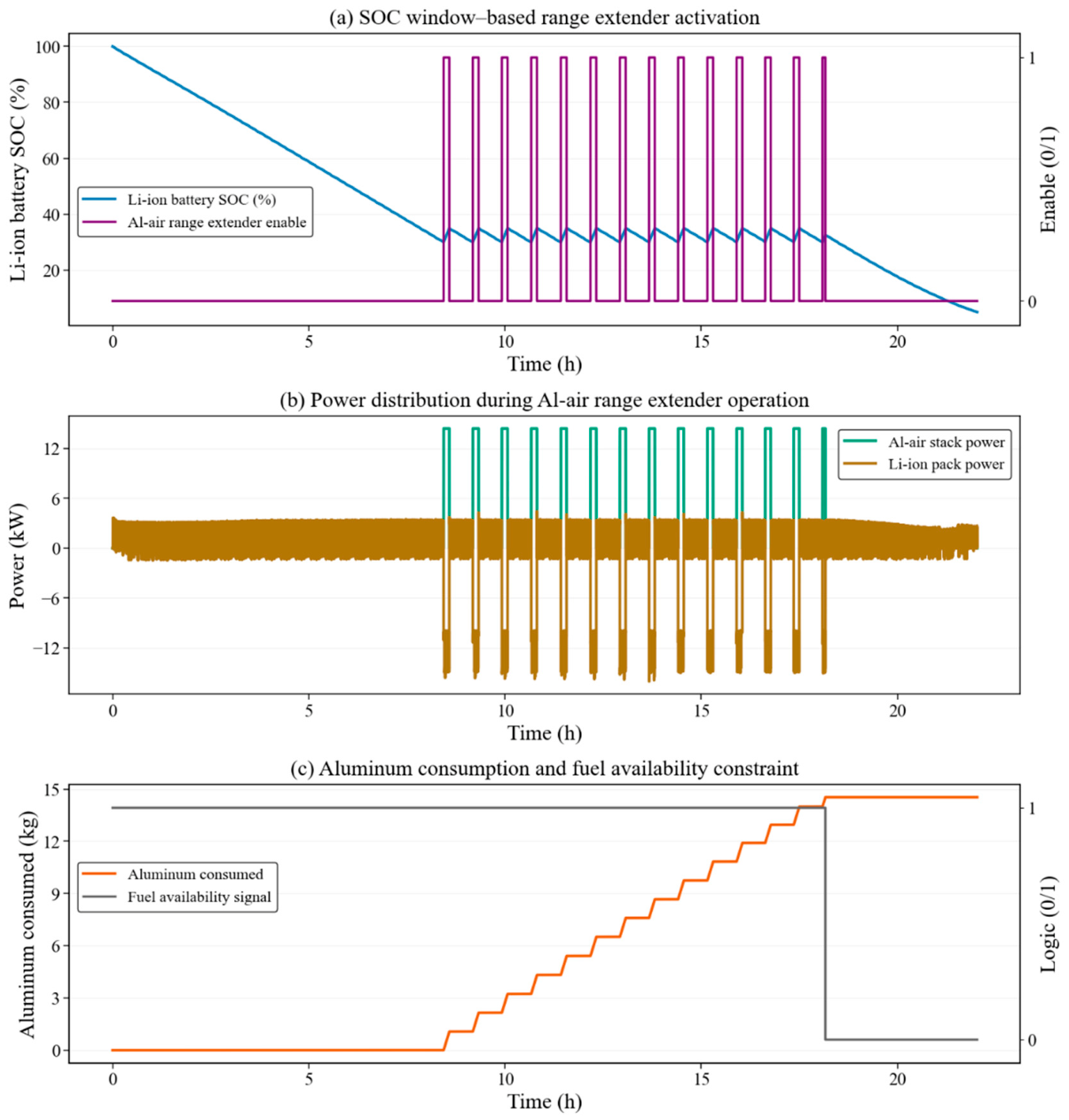
  51. Shabeer, Y.; Madani, S.S.; Panchal, S.; Fowler, M. Performance Optimization of High Energy Density Aluminum-Air Batteries: Effects of Operational Parameters and Electrolyte Composition. Future Batter. 2025, 6, 100082. [Google Scholar] [CrossRef]
  52. Liu, Z.; Zhao, J.; Cai, Y.; Xu, B. Design and Research on Discharge Performance for Aluminum-Air Battery. AIP Conf. Proc. 2017, 1794, 40006. [Google Scholar] [CrossRef]
  53. Katsoufis, P.; Katsaiti, M.; Mourelas, C.; Andrade, T.S.; Dracopoulos, V.; Politis, C.; Avgouropoulos, G.; Lianos, P. Study of a Thin Film Aluminum-Air Battery. Energies 2020, 13, 1447. [Google Scholar] [CrossRef]
  54. Cai, Y.; Tong, Y.; Liu, Y.; Li, X.; Chen, B.; Liu, F.; Zhou, B.; Liu, Y.; Qin, Z.; Wu, Z.; et al. Study on Thermal Effect of Aluminum-Air Battery. Nanomaterials 2023, 13, 646. [Google Scholar] [CrossRef]
  55. Xie, J.; He, P.; Zhao, R.; Yang, J. Numerical Modeling and Analysis of the Performance of an Aluminum-Air Battery with Alkaline Electrolyte. Processes 2020, 8, 658. [Google Scholar] [CrossRef]
  56. Egan, D.R.; Ponce De León, C.; Wood, R.J.K.; Jones, R.L.; Stokes, K.R.; Walsh, F.C. Developments in Electrode Materials and Electrolytes for Aluminium–Air Batteries. J. Power Sources 2013, 236, 293–310. [Google Scholar] [CrossRef]
  57. Mori, R. Recent Developments for Aluminum–Air Batteries. Electrochem. Energy Rev. 2020, 3, 344–369. [Google Scholar] [CrossRef]
  58. Xue, Y.; Yuan, J.; Yu, X.; Sun, S.; Zhang, H.; Zhou, W.; Zhang, J.; Xia, Y. Air-Breathing Cathode for Aluminum–Air Battery: From Architecture to Fabrication and Evaluation. Mater. Sci. Eng. R Rep. 2025, 163, 100942. [Google Scholar] [CrossRef]
  59. Sheerin, G.T. Air Metal Battery Having a Rotating Anode and a Cathode Assembly. U.S. Patent 10,978,758, 13 April 2021. [Google Scholar]
  60. Sheerin, G.; Alexander, R.; D’Silva, W.T. Control System and Design for Adynamic Adaptive Intelligent Multi-Cell Air Battery. U.S. Patent App. 18/043,361, 5 October 2023. [Google Scholar]
  61. Li, J.; Wang, Y.; Chen, J.; Zhang, X. Study on Energy Management Strategy and Dynamic Modeling for Auxiliary Power Units in Range-Extended Electric Vehicles. Appl. Energy 2017, 194, 363–375. [Google Scholar] [CrossRef]
  62. Badin, F.; Le Berr, F.; Briki, H.; Dabadie, J.C.; Petit, M.; Magand, S.; Condemine, E. Evaluation of EVs Energy Consumption Influencing Factors, Driving Conditions, Auxiliaries Use, Driver’s Aggressiveness. In 2013 World Electric Vehicle Symposium and Exhibition, EVS 2014; IEEE: New York, NY, USA, 2014. [Google Scholar] [CrossRef]
  63. Unni, K.; Thale, S. Influence of Auxiliary Loads on the Energy Consumption of Electric Vehicle—A Case Study. In Proceedings of the 2021 IEEE Transportation Electrification Conference, ITEC-India 2021, New Delhi, India, 16–19 December 2021. [Google Scholar] [CrossRef]
  64. Yang, X.; Niu, D.; Sun, L.; Wang, K.; De, G. Participation of Electric Vehicles in Auxiliary Service Market to Promote Renewable Energy Power Consumption: Case Study on Deep Peak Load Regulation of Auxiliary Thermal Power by Electric Vehicles. Energy Sci. Eng. 2021, 9, 1465–1476. [Google Scholar] [CrossRef]
  65. Liu, K.; Wang, J.; Yamamoto, T.; Morikawa, T. Exploring the Interactive Effects of Ambient Temperature and Vehicle Auxiliary Loads on Electric Vehicle Energy Consumption. Appl. Energy 2018, 227, 324–331. [Google Scholar] [CrossRef]
  66. Wang, C.; Zheng, P.; Bauman, J. A Review of Electric Vehicle Auxiliary Power Modules: Challenges, Topologies, and Future Trends. IEEE Trans. Power Electron. 2023, 38, 11233–11244. [Google Scholar] [CrossRef]
  67. Sherman, S.B.; Cano, Z.P.; Fowler, M.; Chen, Z.; Sherman, S.B.; Cano, Z.P.; Fowler, M.; Chen, Z. Range-Extending Zinc-Air Battery for Electric Vehicle. AIMS Energy 2018, 6, 121–145. [Google Scholar] [CrossRef]
  68. Clark, S.; Latz, A.; Horstmann, B. A Review of Model-Based Design Tools for Metal-Air Batteries. Batteries 2018, 4, 5. [Google Scholar] [CrossRef]
  69. Yang, J.D.; Millichamp, J.; Suter, T.; Shearing, P.R.; Brett, D.J.L.; Robinson, J.B. A Review of Drive Cycles for Electrochemical Propulsion. Energies 2023, 16, 6552. [Google Scholar] [CrossRef]
  70. Lee, S.; Eom, I.; Lee, B.; Won, J. Driving Characteristics Analysis Method Based on Real-World Driving Data. Energies 2023, 17, 185. [Google Scholar] [CrossRef]
  71. Masri, J.; Ismail, M.; Obaid, A. Power Flow Simulation and Thermal Performance Analysis of Electric Vehicles Under Standard Driving Cycles. Energies 2025, 18, 3737. [Google Scholar] [CrossRef]
  72. Yong, J.Y.; Ramachandaramurthy, V.K.; Tan, K.M.; Mithulananthan, N. Component-Level Energy Consumption and Range Analysis of Battery Electric Vehicles under Urban and Highway Driving Conditions. Appl. Therm. Eng. 2025, 274, 126797. [Google Scholar] [CrossRef]
  73. Lee, G.; Park, J.; Park, S.; Yoon, S.H. Study on the Necessity of Real-World Driving Tests for Passenger Electric Vehicles. Int. J. Automot. Technol. 2024, 25, 1323–1330. [Google Scholar] [CrossRef]
  74. Fiori, C.; Ahn, K.; Rakha, H.A. Power-Based Electric Vehicle Energy Consumption Model: Model Development and Validation. Appl. Energy 2016, 168, 257–268. [Google Scholar] [CrossRef]
  75. Gołȩbiewski, W.; Lisowski, M. Theoretical Analysis of Electric Vehicle Energy Consumption According to Different Driving Cycles. IOP Conf. Ser. Mater. Sci. Eng. 2018, 421, 022010. [Google Scholar] [CrossRef]
  76. Donkers, A.; Yang, D.; Viktorović, M. Influence of Driving Style, Infrastructure, Weather and Traffic on Electric Vehicle Performance. Transp. Res. D Transp. Environ. 2020, 88, 102569. [Google Scholar] [CrossRef]
  77. Larminie, J.; Lowry, J.; Wiley, J. Electric Vehicle Technology Explained; Wiley: Hoboken, NJ, USA, 2012; ISBN 0-470-85163-5. [Google Scholar]
  78. Ehsani, M.; Gao, Y.; Longo, S.; Ebrahimi, K. Modern Electric, Hybrid Electric, and Fuel Cell Vehicles; CRC Press: Boca Raton, FL, USA, 2018. [Google Scholar]
Figure 1. High-level architecture of the baseline BEV modeling framework.
Wevj 17 00296 g001
Figure 2. Subsystem-level representation of the baseline BEV model, illustrating the internal powertrain, chassis, and control components implemented within the vehicle model.
Wevj 17 00296 g002
Figure 3. Conceptual architecture of the dual-energy-storage electric vehicle integrating Al–air battery through a DC–DC converter for range-extender and auxiliary power operation.
Wevj 17 00296 g003
Figure 4. Open circuit voltage–SOC curves of lithium iron phosphate battery at different temperatures (reprinted from Ref. [50]).
Wevj 17 00296 g004
Figure 5. Comparison of experimental polarization data and semi-empirical robust model fit for the Al–air cell (6 M KOH, 40 °C).
Wevj 17 00296 g005
Figure 6. Al–air stack model (a) and the single-cell model (b) with aluminum consumption tracking.
Wevj 17 00296 g006
Figure 7. Control logic and operational flowchart for the Al–air range extender integrated with the Li-ion battery system based on SOC thresholds and aluminum fuel availability.
Wevj 17 00296 g007
Figure 8. Simulink implementation of the Al–air enable-disable control logic based on Li-ion SOC thresholds and aluminum fuel availability constraints.
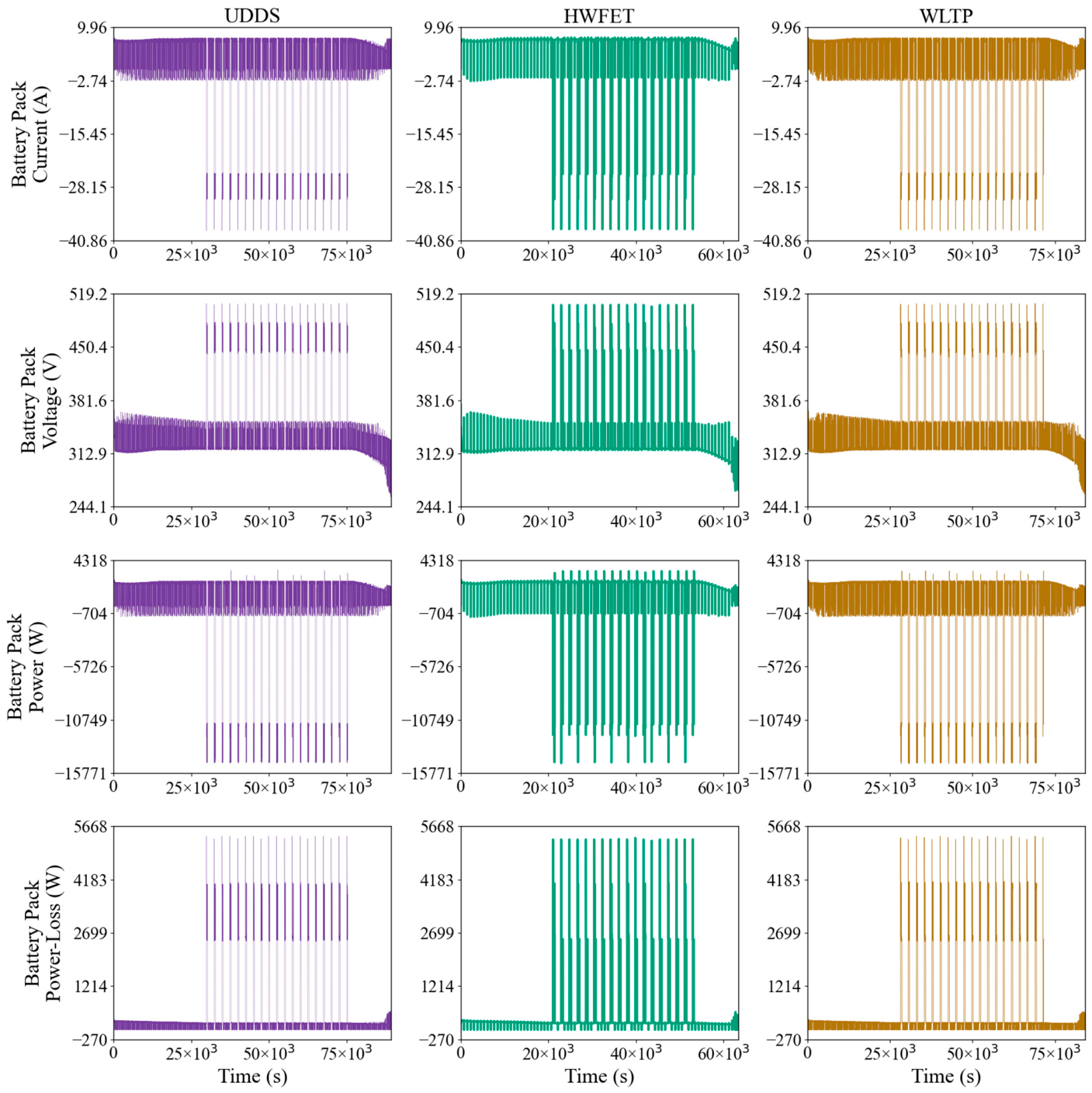
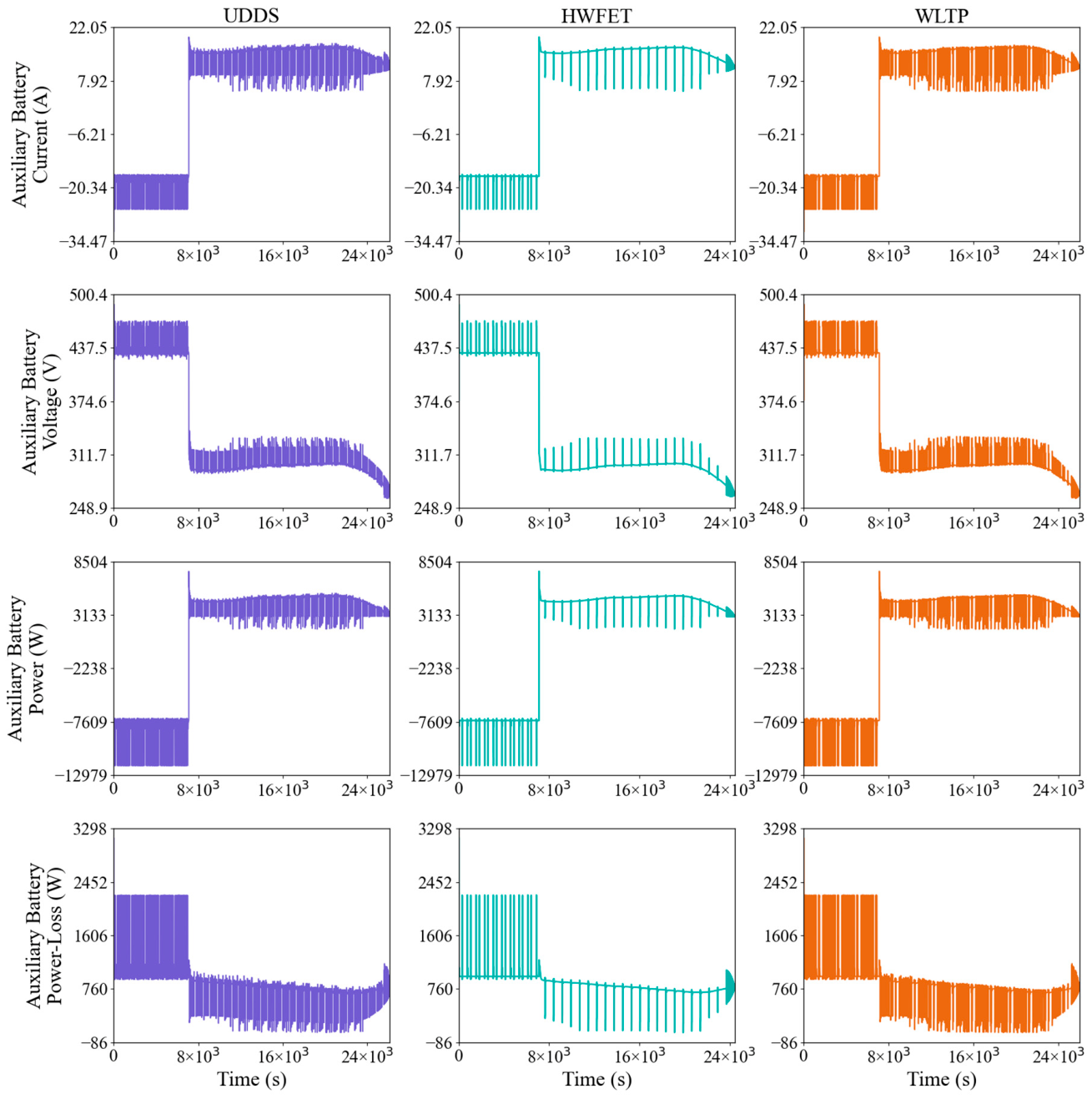
Wevj 17 00296 g008
Figure 9. Range performance, state-of-charge evolution, and net energy consumption for reduced Li-ion energy capacity configurations integrated with an Al–air range extender under UDDS, HWFET, and WLTP drive cycles. Range performance (a,b), SOC evolution (c,d), and net energy consumption (e,f).
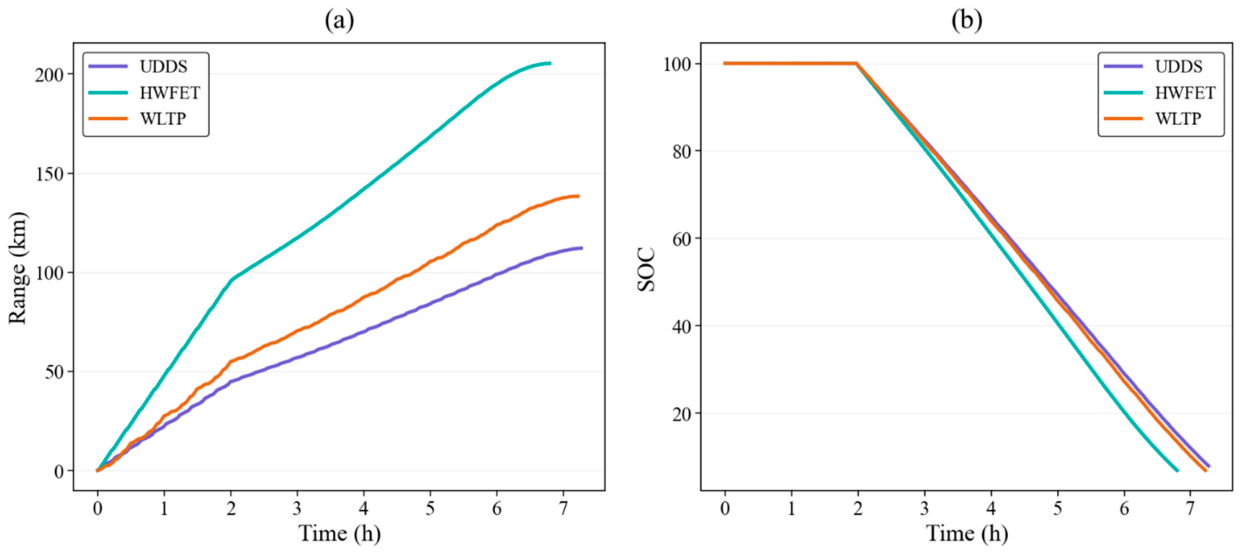
Wevj 17 00296 g009
Figure 10. Operational validation of SOC-window-controlled aluminum–air range extender and fuel-consumption behavior.
Wevj 17 00296 g010
Figure 11. Battery pack current, voltage, power, and power loss profiles under Al–air assisted operation with 50% reduced Li-ion energy capacity.
Wevj 17 00296 g011
Figure 12. Battery pack current, voltage, power, and power loss profiles under Al–air assisted operation with 65% reduced Li-ion energy capacity.
Wevj 17 00296 g012
Figure 13. Lithium-ion battery electrical response when auxiliary loads are supplied by the aluminum–air auxiliary power unit under UDDS, HWFET, and WLTP drive cycles, showing battery current, voltage, power, and power loss profiles.
Wevj 17 00296 g013
Figure 14. Vehicle range (a) and lithium-ion battery state-of-charge evolution (b) for the aluminum–air auxiliary power unit configuration under UDDS, HWFET, and WLTP drive cycles.
Wevj 17 00296 g014
Table 1. Parameters for Al–air polarization curve model (6 M KOH, 40 °C, rotating anode, circulating electrolyte).
ParameterSymbolUnitValue
Open-circuit voltage(VOCV)V1.46
Universal gas constant(R)J·mol−1·K−18.31
Temperature(T)K313.15
Faraday constant(F)C·mol−196,485
Instantaneous voltage loss (mixed potential, contact, initial IR)(Vloss,0)V0.19
Activation coefficient (logarithmic term)(a)V0.01
Baseline area-specific resistance(R0)Ω·cm20.05
Anode–cathode distance(L)cm0.15
Effective electrolyte conductivity (σ)S·cm−13.00
Concentration loss coefficient(B)V0.32
Limiting current density(jL)mA·cm−2208.66
Electrode geometric area(A)cm244.18
Coefficient of determination(R2)-0.99
Table 2. Representative auxiliary power demands reported in the literature [65,66].
Auxiliary Load CategoryTypical Reported RangeRepresentative Use Case
Non-HVAC electronics and controls0.2–0.5 kWECUs, sensors, lighting, pumps
Cabin air-conditioning (cooling)1–3 kW (average)Moderate to hot ambient conditions
Cabin heating2–6 kWCold climates, resistive heating
Common values in system-level EV studies0.5–2 kWNominal operating assumptions
Adopted value in this study3.0 kWHigh-end, worst-case average auxiliary load
Table 3. Energy consumption and achievable range of baseline and reduced-capacity Li-ion configurations under standard drive cycles.
Drive CycleDistance (km)Net Energy (kWh)Discharge (kWh)Regen (kWh)Net (kWh/100 km)Discharge-Only (kWh/100 km)
Baseline—Full Capacity
UDDS358.20047.89150.4222.53113.37014.07
WLTP400.84647.86449.7951.93111.94112.42
HWFET469.41647.87448.3430.46910.19910.29
FTP-75338.47145.35947.6732.31413.40114.08
Baseline—Full Capacity + 3 kW Auxiliary Load
UDDS183.98947.24047.2400.00025.67525.67
HWFET302.15946.56146.5610.00015.40915.40
WLTP217.28847.12047.1200.00021.68521.68
50% Energy Capacity Reduced
UDDS218.99324.12624.5010.37511.01711.18
HWFET300.64724.03624.0990.0637.9958.01
WLTP256.46224.09324.4930.4019.3949.55
65% Energy Capacity Reduced
UDDS172.44716.96817.0620.0949.8399.89
HWFET232.43516.89616.9170.0217.2697.27
WLTP203.64516.91217.0360.1248.3048.36
50% Reduced + 3 kW Auxiliary Load
UDDS68.12322.35622.3560.00032.81832.81
HWFET110.47622.19322.1930.00020.08820.08
WLTP83.90022.38522.3850.00026.68126.62
65% Reduced + 3 kW Auxiliary Load
UDDS30.68514.28014.2800.00046.53846.53
HWFET45.87014.34414.3440.00031.27131.27
WLTP38.31114.42014.4200.00037.64037.64
Table 4. Root-mean-square error between reference and simulated vehicle speed under reduced-capacity Li-ion configurations and auxiliary loading.
ConfigurationUDDS (km h−1)HWFET (km h−1)WLTP (km h−1)
Baseline Li-ion pack with 50% reduction in total energy capacity11.8420.7613.63
Baseline Li-ion pack with 65% reduction in total energy capacity15.1329.6518.88
Full-capacity Li-ion + 3 kW auxiliary12.2719.8815.36
50% reduced energy Li-ion + 3 kW auxiliary25.3545.3831.48
65% reduced energy Li-ion + 3 kW auxiliary28.4452.4134.66
Table 5. Energy consumption and performance metrics for Al–air enabled range-extender configurations with reduced Li-ion energy capacity.
Drive CycleDistance (km)Net Energy (kWh)Discharge (kWh)Regen (kWh)Net (kWh/100 km)Discharge-Only (kWh/100 km)
50% Reduced Energy Capacity + Al–air Range Extender
UDDS417.0318.5742.1823.614.4510.11
HWFET583.3019.4539.7420.283.336.81
WLTP490.0918.6641.8923.233.808.54
65% Reduced Energy Capacity + Al–air Range Extender
UDDS379.299.8834.1124.222.608.99
HWFET522.7010.6032.7622.162.026.26
WLTP450.219.9833.8023.822.217.50
Table 6. Mass breakdown and total range for reduced-energy Li-ion configurations with and without Al–air range extender.
Drive CycleLi-Ion Pack Mass (kg)Al–Air Pack Mass (kg)Total System Mass (kg)Total Range Achieved (km)
Baseline, full energy capacity (58 kWh)
UDDS3260326358.20
HWFET3260326469.41
WLTP3260326400.84
50% reduced energy capacity (29 kWh)
UDDS1630163218.99
HWFET1630163300.64
WLTP1630163256.46
65% reduced energy capacity (20.3 kWh)
UDDS1140114172.44
HWFET1140114232.43
WLTP1140114203.64
50% reduced energy capacity + Al–air range extender
UDDS16334197417.03
HWFET16334197583.30
WLTP16334197490.09
65% reduced energy capacity + Al–air range extender
UDDS11434148379.29
HWFET11434148522.70
WLTP11434148450.21
Table 7. Pack capital cost assumptions and total CAPEX for configurations evaluated.
ConfigurationLi-Ion Energy (kWh)Al–Air Energy (kWh)Li-Ion Pack Cost (USD)Al–Air Pack Cost (USD)Total Pack Cost (USD)
Baseline, full energy capacity Li-ion58.00.010,000 to 25,000010,000 to 25,000
50% reduced energy capacity Li-ion29.00.05000 to 12,50005000 to 12,500
65% reduced energy capacity Li-ion20.30.03500 to 875003500 to 8750
50% reduced energy capacity Li-ion + Al–air range extender29.024.65000 to 12,5005000 to 12,00010,000 to 24,500
65% reduced energy capacity Li-ion + Al–air range extender20.324.63500 to 87505000 to 12,0008500 to 20,750
Disclaimer/Publisher’s Note: The statements, opinions and data contained in all publications are solely those of the individual author(s) and contributor(s) and not of MDPI and/or the editor(s). MDPI and/or the editor(s) disclaim responsibility for any injury to people or property resulting from any ideas, methods, instructions or products referred to in the content.