Article

Organ-Specific Gene Expression and Metabolite Accumulation in Fargesia rufa in Response to an Altitudinal Gradient

1
Sichuan Academy of Giant Panda, Chengdu 610000, China
2
College of Life Science and Agri-Forestry, Southwest University of Science and Technology, Mianyang 621000, China
*
Authors to whom correspondence should be addressed.
Forests 2026, 17(2), 167; https://doi.org/10.3390/f17020167
Submission received: 2 December 2025 / Revised: 24 January 2026 / Accepted: 25 January 2026 / Published: 27 January 2026

Abstract

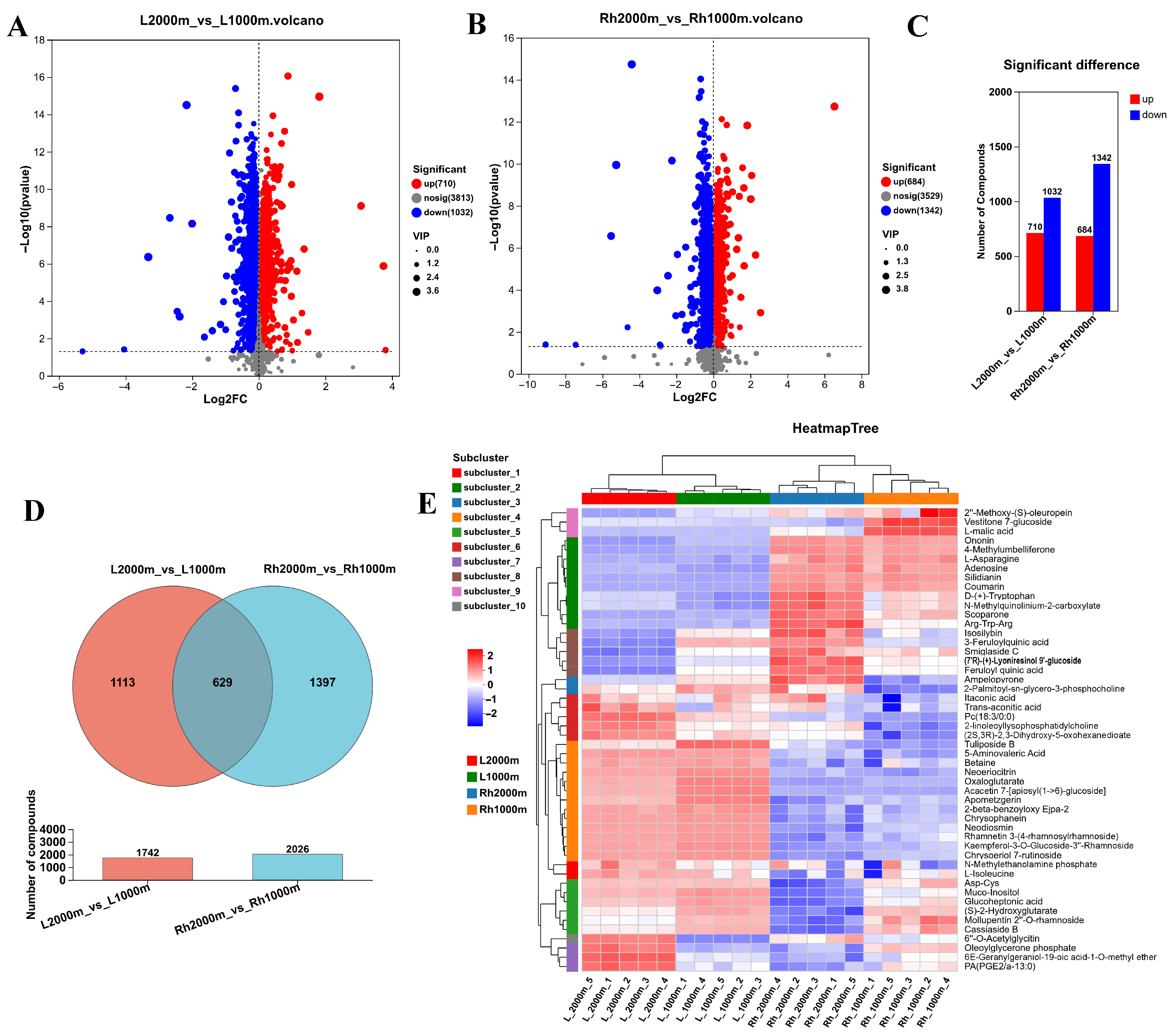
Fargesia rufa, one of the main food bamboo species for giant pandas, exhibits significant changes in nutritional composition with altitudinal gradient. However, the molecular mechanisms underlying this adaptation and its impact on the foraging behavior of giant pandas remain unclear. In this study, metabolomic and transcriptomic analyses were integrated to compare gene expression and metabolite profiles in leaves and rhizomes of F. rufa collected from 1000 m and 2000 m altitudes. With increasing altitude, 710 metabolites were up-regulated and 1032 were down-regulated in the leaves of F. rufa, whereas 684 metabolites were up-regulated and 1342 were down-regulated in the rhizomes; only 629 differential metabolites were shared between the two organs. Further analyses revealed that F. rufa responds to altitudinal changes through organ-specific metabolic reprogramming: leaves adopt a “metabolic conservation” strategy, downregulating the majority of flavonoid and phenylpropanoid metabolites, while rhizomes take an “active storage” strategy, significantly enhancing secondary metabolite synthesis and starch accumulation. This functional differentiation is consistent with the biological roles of the organs: the metabolic simplification of leaves may enhance the palatability of high-altitude leaves, while the nutritional reserves in rhizomes support bamboo shoot emergence. This study reveals the molecular mechanisms of bamboo’s altitudinal adaptation at the organ level, clarifies the intrinsic link between plant metabolism and animal diet, and provides a theoretical basis for giant panda habitat conservation.

1. Introduction

Fargesia rufa, as one of the main food bamboo species for giant pandas, is widely distributed in the mountainous areas surrounding the Sichuan Basin [1]. As a typical shallow-rooted, sympodial bamboo species, F. rufa possesses a relatively shallow root system, exhibiting high sensitivity to environmental factors such as soil moisture, temperature, and light. Consequently, its growth and development, population regeneration, and physiological metabolism are highly susceptible to micro-environmental changes within its habitat [2,3]. Notably, the sprouting pattern of F. rufa shows a distinct altitudinal gradient effect, that is, it sprouts successively from low to high altitudes. Furthermore, distinct differences exist in shoot growth rates, lignification processes, and nutrient accumulation across different altitudinal zones [4]. This unique ecological characteristic provides a natural and ideal study system for systematically investigating the regulatory mechanisms of altitudinal gradients—which integrate multiple environmental factors such as low temperature, intense UV radiation, atmospheric pressure, and diurnal temperature fluctuations—on the bamboo metabolome and transcriptome [4,5].
The giant panda, a rare and endangered species endemic to China and a flagship species for global biodiversity conservation, has developed a highly specialized bamboo-dependent diet over its long evolutionary history, with bamboo constituting up to 99% of its natural diet [6]. This unique dietary specialization is not only a key adaptive strategy to its ecological environment but also tightly binds its survival status to the distribution, quality, and dynamic changes in bamboo resources. In its natural habitat, the giant panda exhibits refined selective foraging behavior: on one hand, it switches between bamboo species or different organs (shoots, leaves, culms) of the same species according to seasonal shifts; on the other hand, to track high-quality bamboo resources, it undertakes regular vertical migrations along altitudinal gradients for foraging, forming a distinctive ecological adaptation pattern [7,8]. Field telemetry observation data further confirm that the giant panda’s feeding preferences show marked seasonal characteristics—prioritizing nutrient-rich shoots of different bamboo species in spring and summer, shifting to nutritionally stable leaves in autumn, and relying on fiber-rich culms for energy maintenance in winter. This series of feeding strategy adjustments is highly synchronized with changes in bamboo growth status induced by altitudinal variation [9]. In-depth analysis suggests that the essence of this specific foraging behavior is the giant panda’s active adaptation to differences in the intrinsic nutritional components (such as proteins, soluble sugars) and metabolites (e.g., secondary metabolites) of bamboo driven by environmental changes, indicating a close ecological linkage between the two [10,11]. A metabolomics study based on 12 bamboo species revealed that high-altitude environments significantly increased the accumulation of flavonoids, while low-altitude environments increased the content of cinnamic acid derivatives, especially chlorogenic acids (CQAs) [12]. These metabolic changes may directly affect the nutritional value and palatability of bamboo, thereby guiding the feeding choices of giant pandas [13,14]. Previous studies have primarily focused on physiological responses and single-organ analyses. However, current research predominantly focuses on the overall physiological responses of bamboo or metabolic analyses of single organs (such as leaves). There remains a lack of systematic elucidation regarding the organ-specific regulatory mechanisms underlying altitude adaptation—particularly the synergistic and differential regulation between functionally distinct organs such as the photosynthetic organs (leaves) and the nutrient storage/propagation organs (rhizomes)—and the related molecular mechanisms are still unclear.
The impact of environmental factors on bamboo metabolism may be closely related to gene expression regulation [15,16]. Studies in Phyllostachys heterocycla var. pubescens have found that environmental factors regulate the biosynthesis of secondary cell walls by affecting the expression of key genes (such PAL, C4H) in the phenylpropanoid metabolic pathway [17]. Altitude changes, as comprehensive environmental alterations including low temperature, strong UV radiation, low oxygen, and temperature fluctuations, cause bamboo to precisely alter its metabolism to adapt to these changes [18,19]. For example, altitude changes affect flavonoid biosynthesis and plant hormone signal transduction in Zanthoxylum planispinum (Z. planispinum) var. dintanensis, with higher altitudes leading to more terpenoids and lower altitudes to more flavonoids and polyphenols [20]. Furthermore, studies have indicated that increasing altitude promotes the accumulation of soluble sugars (glucose, fructose, sucrose) within bamboo while reducing starch content. This shift in carbohydrate metabolism is likely an important strategy for bamboo to cope with low-temperature stress and maintain cellular osmotic pressure [21]. Transcriptome analysis of plants at different altitudes on the Tibetan Plateau shows that the phenylpropanoid biosynthesis pathway is significantly enriched across all altitudinal gradients, accompanied by the upregulation of secondary metabolites such as flavonoids and alkaloids, indicating that altitude changes activate this pathway to cope with strong UV radiation and low-temperature stress [22]. Although existing research has partially uncovered the patterns of how altitude affects bamboo metabolism and gene expression, the precise correlative mechanisms between gene expression patterns and metabolite synthesis in F. rufa—a core staple bamboo for giant pandas—across different altitudinal gradients remain unclear. There is a particular lack of systematic, multi-organ correlative analyses that integrate transcriptomic and metabolomic multi-omics data, making it difficult to comprehensively decipher its molecular regulatory network for altitude adaptation.
Based on this, the present study utilized the metabolomics and transcriptomics data of F. rufa leaves and rhizomes at altitudes of 1000 m and 2000 m to thoroughly elucidate the characteristics of gene expression changes in F. rufa caused by altitudinal differences; the impact of altitude on the accumulation of primary and secondary metabolites in F. rufa; and the relationships between metabolites and gene expression. This study will reveal the molecular mechanisms underlying the quality formation of the staple bamboo for giant pandas, providing a theoretical basis for the genetic breeding, habitat protection, and food resource management of the main food bamboo of giant pandas.

2. Materials and Methods

2.1. Plant Materials

F. rufa samples were collected from two distinct altitudes in the Tangjiahe Nature Reserve, Qingchuan County, Sichuan Province: 1000 m (the temperature at the time of sampling was 26 °C) and 2000 m (the temperature at the time of sampling was 20.8 °C) above sea level (a.s.l.). Sampling was carried out in mid-August 2025, the average air temperature within the region this month was 20 °C, the soil temperature at 10 cm depth was 17 °C, and the soil moisture content was approximately 65% (The mean annual temperature of the region is 16 °C, the average relative humidity is 72%, the annual frost-free period averages 243 days, and the mean annual precipitation is 1021.7 mm). Both bamboo leaves and rhizomes were sampled at each altitude, during sampling, individual samples were separated by at least 10 m; rhizomes from the same bamboo clump were collected 10–20 cm outward from the base of the culm to avoid resampling the same ramet. A total of 20 samples were collected, with five biological replicates for each tissue type at each altitude, ensuring a comprehensive representation of the natural variation. Samples were immediately frozen in liquid nitrogen and stored at −80 °C until further processing.

2.2. RT-qPCR

Total RNA was extracted from bamboo leaves and rhizomes using the TRIzol reagent according to the manufacturer’s instructions, through sample lysis, phase separation, RNA precipitation, washing, and resuspension steps, followed by quality assessment for reverse transcription. cDNA synthesis and subsequent quantitation reverse transcription-PCR (RT-qPCR) were performed following the aforementioned protocol [23]. Taking UBQ (TRINITY_DN1489_c0_g1) as the internal reference, primers for the validation genes were designed with Primer 5.0. All samples were analyzed in three biological replicates. Gene expression in different leaves and rhizomes of F. rufa was quantified by RT-qPCR on the Applied Biosystems 7500 Real-Time PCR System. Target genes and their specific primers are listed in Supplementary Table S3. Relative expression levels were calculated using the 2(−ΔΔCt) method with UBQ as the internal control [24].

2.3. RNA Sequencing and Data Analysis

Total RNA was extracted from leaf and rhizome samples of F. rufa collected at 1000 m and 2000 m a.s.l. with the RNAprep Pure Plant Kit (Tiangen, Beijing, China) following the manufacturer’s instructions; three biological replicates were prepared for each group. RNA concentration and purity were checked with a NanoDrop-2000 spectrophotometer, integrity was verified by 1% agarose-gel electrophoresis, and RQN (RNA Quality Number) values were determined on an Agilent 5300 Fragment Analyzer (Agilent Technologies, Santa Clara, CA, USA). For library construction, ≥1 µg of RNA with a concentration ≥ 30 ng µL−1, RQN > 6.5 and OD260/280 between 1.8 and 2.2 was required. Strand-specific RNA-seq libraries were prepared and sequenced on an Illumina platform by Majorbio Bio-Pharm Technology Co., Ltd. (Shanghai, China).
After sequencing, raw reads were filtered to remove adapters, poly-N stretches and low-quality sequences; all downstream analyses were based on the resulting high-quality clean data. Trim low-quality bases (Phred < 20) from the 3′ end; if any remaining base has a quality value < 10, discard the entire read. Remove reads with >10% ambiguous (N) bases. Discard sequences shorter than 20 bp after adapter clipping and quality trimming. Base-composition and quality-distribution statistics were calculated for every cycle to provide an overall view of sequencing and library quality. Clean reads from all samples were pooled and de novo assembled with Trinity (https://github.com/trinityrnaseq/trinityrnaseq/wiki, accessed on 16 October 2025). The assembly pipeline integrates three independent modules that process and splice large RNA-seq data sets; the primary contigs were subsequently filtered, optimized and re-evaluated. Finally, all unique transcripts were aligned against six public databases (NR, Swiss-Prot, Pfam, COG, GO and KEGG) to obtain comprehensive functional annotations, and the annotation results for each database were summarized.
To pinpoint the genes that are differentially expressed between distinct sample sets or groups, the abundance of each transcript was gauged utilizing the transcripts per million (TPM) metric. The RSEM tool [25] was employed to ascertain the levels of gene expression. The DESeq2 [26] and DEGseq methodologies [27] were subsequently applied to discern genes with notable expression disparities. Genes exhibiting a log2 fold change magnitude of 1 or greater, coupled with a false discovery rate (FDR) below 0.05 when using DESeq2, or beneath 0.001 for DEGseq, were categorized as significantly differentially expressed. Moreover, to elucidate the biological significance of these findings, functional enrichment analyses were conducted. These analyses, incorporating both Gene Ontology (GO) and Kyoto Encyclopedia of Genes and Genomes (KEGG) annotations, aimed to highlight the GO terms and metabolic pathways that were significantly overrepresented among the differentially expressed genes, with a Bonferroni-adjusted p-value threshold of less than 0.05 relative to the entire transcriptome. The GO enrichment analysis was executed using the Goatools package, while the KEGG pathway analysis was facilitated by Python 3.13.2’s scipy library.

2.4. Metabolite Measurement and Analysis

The leaves and rhizomes of F. rufa were ground in liquid nitrogen and subsequently immersed in the extraction solvent for the extraction process. The metabolic profiling was performed using an ultra-performance liquid chromatography-tandem mass spectrometry system (UPLC-MS), and metabolites were identified based on the information from tandem mass spectrometry. The LC-MS analysis was performed on a Thermo Scientific UHPLC-Q Exactive HF-X system (Thermo Scientific, Waltham, MA, USA), consisting of an ultra-high-performance liquid chromatograph coupled to a Fourier-transform mass spectrometer. C18 column chromatographic conditions: ACQUITY UPLC BEH C18 column (100 mm × 2.1 mm i.d., 1.7 µm; Waters, Milford, MA, USA); mobile phase A: 2% acetonitrile in water (0.1% formic acid); mobile phase B: acetonitrile (0.1% formic acid); injection volume: 1 µL; column temperature: 40 °C. MS conditions: samples were ionized by electrospray and mass signals were acquired in both positive- and negative-ion modes. The acquired mass spectrometry data were subjected to principal component analysis (PCA) and sample correlation analysis to evaluate the reproducibility and degree of variation among samples. Following Worley & Powers (2016), we validated the use of VIP > 1 and p < 0.05 and further imposed a |FC| ≥ 2 cut-off to highlight metabolites with biologically relevant changes. Orthogonal partial least squares discriminant analysis (OPLS-DA) was employed to analyze the metabolites and identify significantly different metabolites. The KEGG database was utilized for functional analysis of the differential metabolites to determine the specific biological pathways involved.

2.5. Statistical Analysis

Metabolomic analyses were carried out with five biological replicates; all other experiments were performed using three independent biological replicates. The presented values represent the mean ± standard error (S.E.) of at least three replicates. One-way analysis of variance (ANOVA) was performed to evaluate overall differences among groups. When the ANOVA revealed a significant effect (p < 0.05), Tukey’s Honestly Significant Difference (HSD) post hoc test was applied for pairwise comparisons. Adjusted p-values < 0.05 were considered statistically significant. All analyses were conducted using GraphPad Prism 9.0.

3. Results

3.1. Metabolic Phenotype of F. rufa in Response to Altitude

To investigate how altitude shapes the metabolic composition of F. rufa—a key food source for giant pandas—we performed untargeted metabolomic profiling on leaves and rhizomes collected from 1000 m and 2000 m elevations. The rhizome, being the primary storage organ responsible for shoot germination (Supplementary Figure S1), was included to assess below-ground metabolic adaptation. Liquid chromatography-mass spectrometry (LC-MS) detected 2396 annotated secondary metabolites across all samples. Flavonoids constituted the most abundant class terpenoids (730 compounds, 30.45%), (704 compounds, 29.37%), followed by phenolic acids and derivatives (9.8%), and coumarins/lignans (3.67%). Minor yet ecologically relevant classes included tannins (0.71%), stilbenes (1.13%), and alkaloids (1.71%) (Figure 1A). The predominance of flavonoids and phenolic acids aligns with the high UV-B exposure and herbivore pressure typical of montane bamboos and establishes the first quantitative inventory of defensive chemistry in F. rufa.
Principal component analysis (PCA) of the metabolome clearly separated samples into four distinct groups: L-1000 m, L-2000 m, Rh-1000 m, and Rh-2000 m (Figure 1B). The first two principal components explained 62.7% and 8.36% of the total variance, respectively. Separation along PC1 was driven primarily by altitude, indicating that elevation exerts a stronger influence on metabolic profile than tissue type. Leaves clustered more tightly than rhizomes, suggesting that aerial organs maintain a more conserved metabolic architecture, whereas below-ground organs exhibit higher plasticity. A sample correlation heatmap confirmed strong reproducibility within biological replicates and clear metabolic divergence between altitude-organ groups (Figure 1C). Venn diagram analysis further identified a core set of 3951 metabolites common to all groups, alongside numerous altitude- and organ-specific metabolites (such as 28 unique to L-1000 m; 4198 shared between Rh-2000 m and Rh-1000 m) (Figure 1D). This pattern supports a hierarchical regulatory model in which altitude is the primary factor shaping metabolism, followed by tissue-specific modulation.
Collectively, these results indicate that F. rufa undergoes extensive metabolic reorganization in response to altitude, with rhizomes—particularly at high elevation—shifting resource allocation toward flavonoid and stilbene biosynthesis. This adjustment may enhance oxidative stress tolerance while concurrently altering tissue palatability, potentially influencing foraging behavior of giant pandas during their seasonal vertical migration.

3.2. Analysis of Differentially Expressed Metabolites in Bamboo Leaves and Rhizomes at Altitudes of 1000 m and 2000 m

To identify metabolites responsive to altitudinal variation, we conducted a differential abundance analysis comparing leaves and rhizomes from 1000 m and 2000 m. Metabolites with a variable importance in projection (VIP) > 1.0 and a p-value < 0.05 were considered significantly altered; fold-change (FC) thresholds were not pre-applied to capture broad trends. Volcano plots revealed a pronounced bidirectional shift in metabolite abundance in both leaves and rhizomes with increasing altitude (Figure 2A,B). Quantitative analysis showed that in leaves (L2000 m vs. L1000 m), 710 metabolites were upregulated and 1032 were downregulated. In rhizomes (Rh2000 m vs. Rh1000 m), 684 metabolites increased and 1342 decreased (Figure 2C). The greater number of altered metabolites in rhizomes suggests a higher degree of metabolic reprogramming below ground, consistent with the role of rhizomes as integrated nutrient reservoirs and stress-responsive organs.
Venn analysis further highlighted the organ specificity of these responses (Figure 2D). While 629 differentially expressed metabolites were common to both leaves and rhizomes, 1113 were unique to leaves and 1397 were unique to rhizomes. This indicates that altitude regulates a core set of metabolic adaptations shared across tissues, superimposed upon extensive organ-specific adjustments. Together, these data underscore that altitude-driven metabolic remodeling in F. rufa is both profound and organ-preferential, with rhizomes undergoing particularly extensive reconfiguration—a pattern that is likely tied to their dual role in storage and stress tolerance.
A hierarchical clustering heatmap of the 50 most significantly altered metabolites further illustrated the structured reorganization of the F. rufa metabolome along the altitudinal gradient (Figure 2E). Metabolites with related biological functions or shared biosynthetic pathways clustered into distinct branches, indicating co-regulated metabolic modules. For instance, flavonoids—including neodiosmin, chrysoeriol 7-rutinoside, and alpha-hydrojuglone-4-glucoside—formed a coherent cluster, as did amino acid derivatives such as D-(+)-tryptophan and L-phenylalanine. Samples clustered primarily by altitude and secondarily by organ type. Leaves collected at 2000 m (L2000 m) grouped separately from their low-altitude counterparts (L1000 m), and a similar clear division was observed between rhizome samples from different elevations (Rh2000 m vs. Rh1000 m). This clustering pattern reinforces that altitude exerts a stronger organizing influence on metabolic variation than tissue identity, highlighting the specificity of altitudinal regulation in shaping the overall metabolomic landscape.

3.3. KEGG Pathway Enrichment Highlights Organ-Specific Metabolic Reprogramming

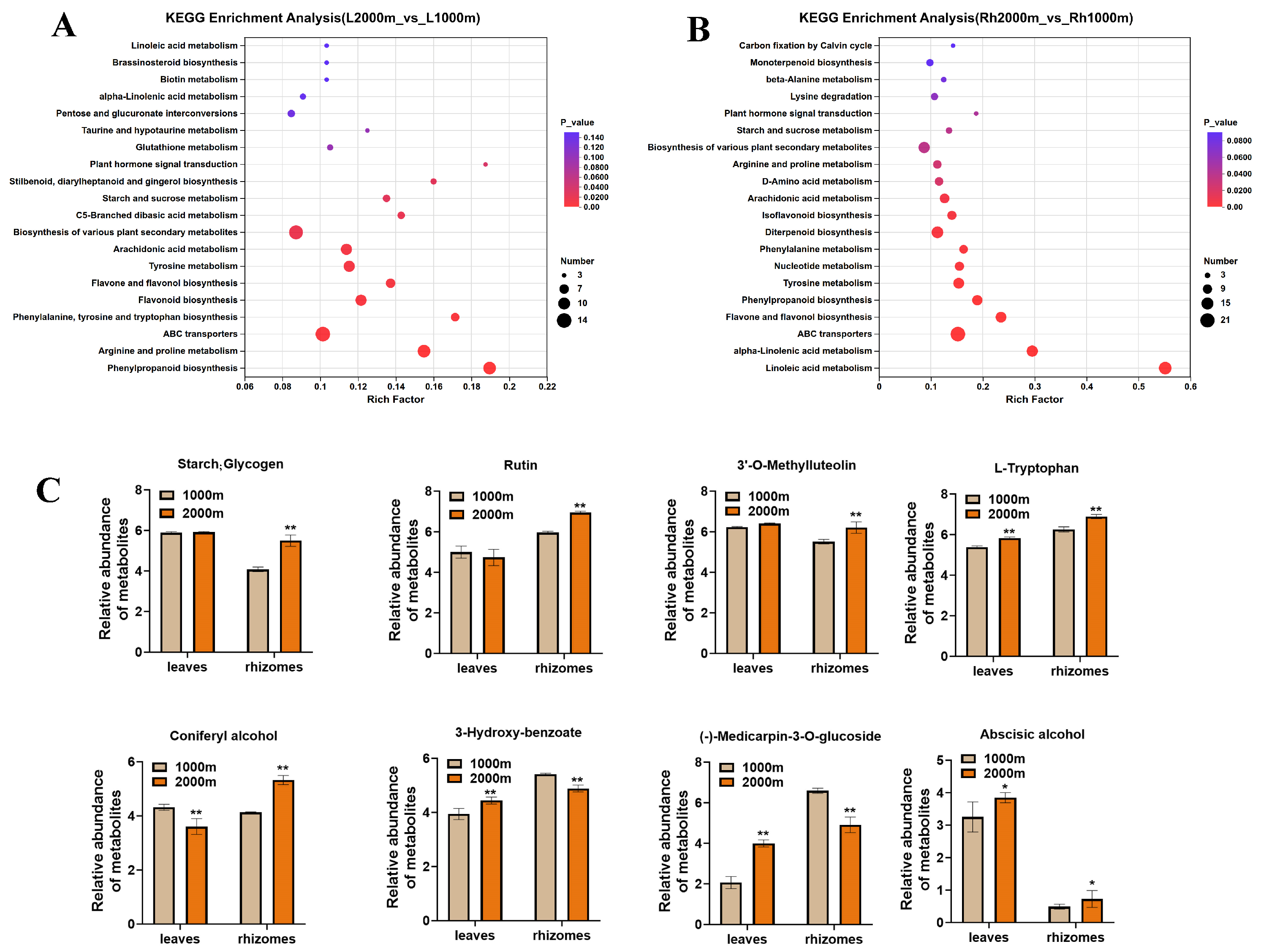
KEGG pathway enrichment analysis of altitude-responsive metabolites revealed distinct metabolic priorities in leaves and rhizomes of F. rufa (Figure 3A,B). In both organs, secondary metabolic pathways were prominently enriched, including “Phenylpropanoid biosynthesis,” “Flavonoid biosynthesis,” and “Flavone and flavonol biosynthesis.” In leaves, significant enrichment was also observed in primary metabolic pathways such as “Phenylalanine, tyrosine and tryptophan biosynthesis” and “Starch and sucrose metabolism,” suggesting an altitude-mediated trade-off between nutritional provision and stress adaptation. In contrast, rhizomes showed marked enrichment in pathways related to lipid-based signaling and defense, including “α-Linolenic acid metabolism,” “Linoleic acid metabolism,” and “Stilbenoid, diarylheptanoid and gingerol biosynthesis.”
Corresponding to these pathway signatures, targeted analysis of key metabolites showed pronounced organ-specific accumulation patterns (Figure 3C). In leaves, the majority of phenylpropanoid and flavonoid derivatives, along with sucrose-related metabolites, were significantly lower at 2000 m compared to 1000 m. Only a limited set of stress-linked compounds—such as (3S)-3-Hydroxy-cyclocitral, specific iron-chelating deoxymugineic acids, the phytoalexin (−)-medicarpin-3-O-glucoside, and hydroxycinnamic acid amides (coumaroyl-agmatine and feruloyl-agmatine)—were upregulated. Conversely, rhizomes at high altitude exhibited a coordinated upregulation of the linoleic acid pathway (such as lecithin, crepenynate, arachidonate) and a broad suite of phenylpropanoid and flavonoid compounds (such as rutin, luteoloside, caffeic acid, caffeoyl quinic acid). This was accompanied by a metabolic shift from soluble monosaccharides toward significant starch accumulation. Collectively, these metabolite profiles reflect a functional division that supports both plant adaptation and consumer foraging: leaves reduce investment in generalized chemical defense at high altitude, potentially increasing their palatability to migrating giant pandas, whereas rhizomes enhance storage and stress-resilient compound biosynthesis, securing perennial survival and shoot vigor. This integrated response illustrates how metabolic plasticity in F. rufa supports ecological coexistence with a specialized herbivore through spatially structured resource allocation.

3.4. Transcriptome Analysis of F. rufa Leaves and Rhizomes at Different Altitudes

To elucidate the transcriptional basis of altitude adaptation in F. rufa, we performed RNA-seq analysis on leaves and rhizomes collected from 1000 m and 2000 m (Supplementary Table S1). Sequencing of the 12 samples generated an average of 5.41 Gb clean data per sample, with Q30 scores exceeding 95.63%. De novo assembly using Trinity yielded 375,166 unigenes (530,488 transcripts) with an average N50 of 851 bp. Read mapping rates to this transcriptome reference ranged from 71.39% to 86.48%.
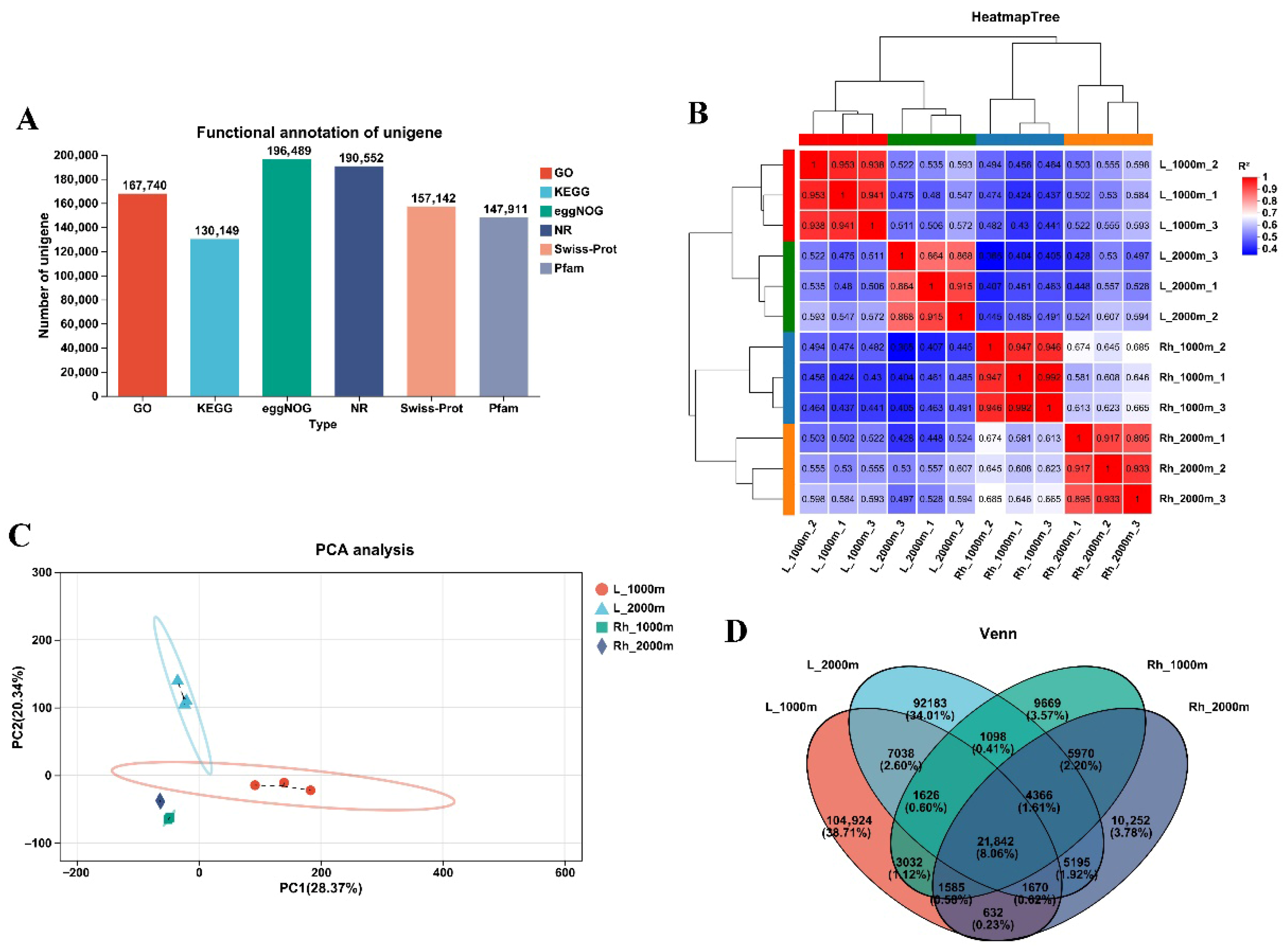
Functional annotation against GO, KEGG, EggNOG, NR, Swiss-Prot, and Pfam databases successfully assigned putative roles to 369,695 unigenes (Figure 4A). Sample correlation heatmap and principal component analysis confirmed high reproducibility among biological replicates and clear separation by both tissue type and altitude (Figure 4B,C). Venn analysis of expressed genes further highlighted distinct transcriptional landscapes: while 21,842 genes were constitutively expressed across all conditions, a substantial number exhibited tissue- and/or altitude-specific expression, underscoring pronounced transcriptomic plasticity in response to both developmental and environmental cues (Figure 4D). These foundational analyses establish a robust transcriptomic framework for subsequent investigation of altitude-responsive gene regulation in F. rufa.

3.5. Differential Expression Analysis of Transcriptomes of Bamboo Leaves and Rhizomes of F. rufa at Different Altitudes

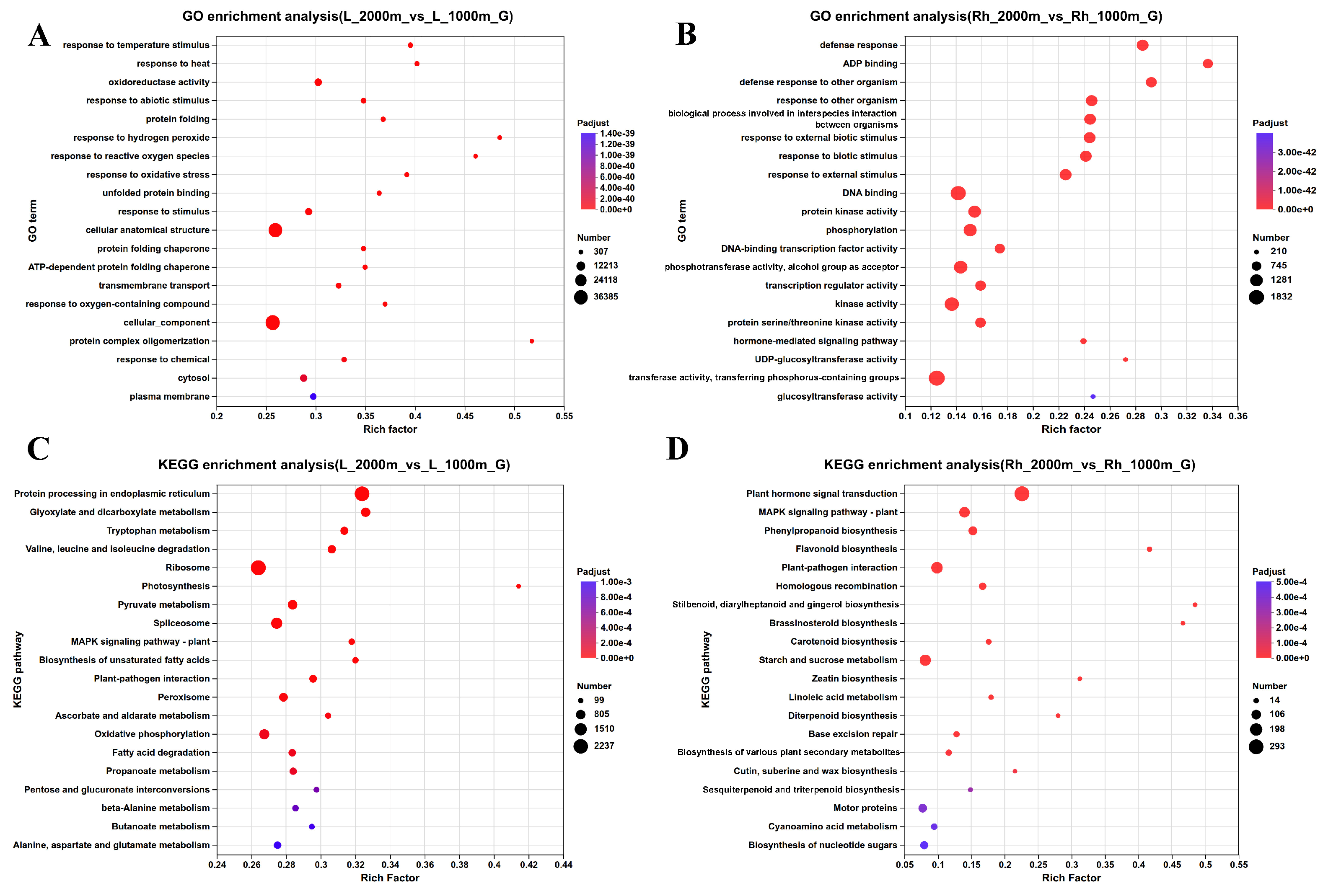
To decipher the key transcriptional changes underlying altitudinal adaptation in F. rufa, we identified differentially expressed genes (DEGs) between 1000 m and 2000 m in leaves and rhizomes, followed by functional enrichment analysis. GO and KEGG classification of all DEGs revealed pronounced organ-specific functional signatures (Supplementary Figure S2). In leaves, GO terms were dominated by “cellular anatomical entity” and “cellular component,” whereas rhizome DEGs were broadly enriched in “transferase activity,” “kinase activity,” and “protein kinase activity” (Figure 5A,B). KEGG pathway analysis further highlighted distinct metabolic priorities: leaf DEGs were notably enriched in “Protein processing in endoplasmic reticulum,” “Pyruvate metabolism,” “Oxidative phosphorylation,” and “Biosynthesis of unsaturated fatty acids,” reflecting active stress acclimation and energy remodeling. In rhizomes, the most significantly enriched pathways included “Biosynthesis of unsaturated fatty acids,” along with other routes linked to nutrient assimilation and secondary metabolism (Figure 5C,D). These enrichment patterns align closely with the known physiological roles of each organ: leaves prioritize structural integrity and energy-dependent stress responses, while rhizomes enhance catalytic and biosynthetic capacity, supporting storage and defense. The clear divergence in enriched pathways underscores that altitude adaptation in F. rufa is mediated through highly tissue-specific transcriptional reprogramming, fine-tuned to the distinct functional demands of aerial and below-ground organs.

3.6. Coordinated Transcriptional Regulation Underpins Organ-Specific Metabolic Adaptation

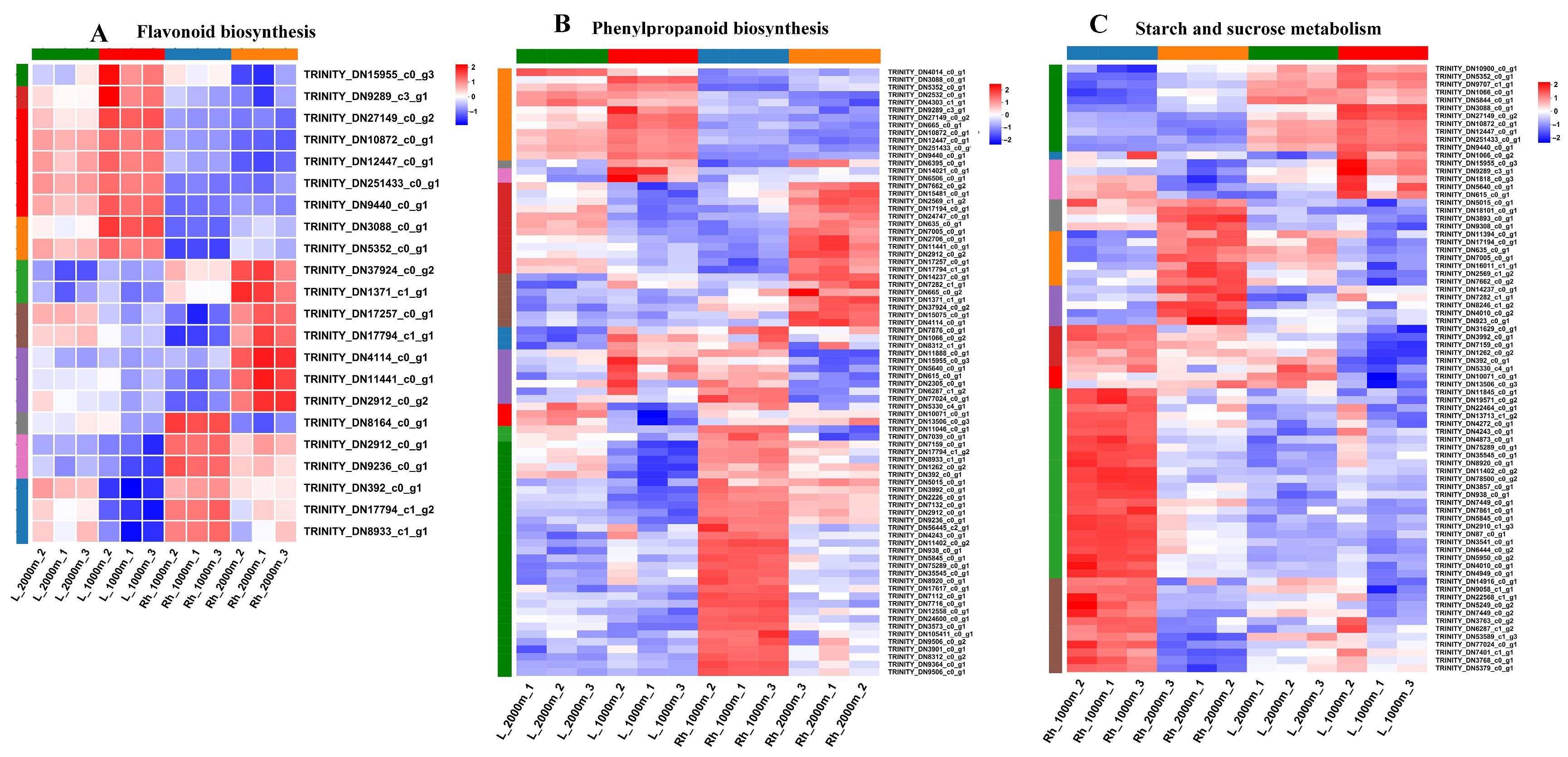
To resolve the transcriptional drivers of the observed metabolic shifts, we analyzed the expression of DEGs within three key altitude-responsive pathways: flavonoid biosynthesis, phenylpropanoid biosynthesis, and starch and sucrose metabolism (Supplementary Figure S3). Heatmap visualization revealed pronounced organ-specific expression patterns that aligned with our metabolomic data (Figure 6). In high-altitude leaves, most genes associated with flavonoid biosynthesis were downregulated, whereas their homologs were predominantly upregulated in high-altitude rhizomes (Figure 6A). This transcriptional divergence mirrored the organ-specific accumulation patterns of flavonoid metabolites. Similarly, genes in the upstream phenylpropanoid biosynthesis pathway were largely suppressed in high-altitude leaves but strongly induced in rhizomes (Figure 6B), directing metabolic flux differentially between organs. For starch and sucrose metabolism, expression of related genes was downregulated in leaves but markedly upregulated in rhizomes at high altitude (Figure 6C), consistent with the observed reallocation of carbon resources toward storage in below-ground tissues.
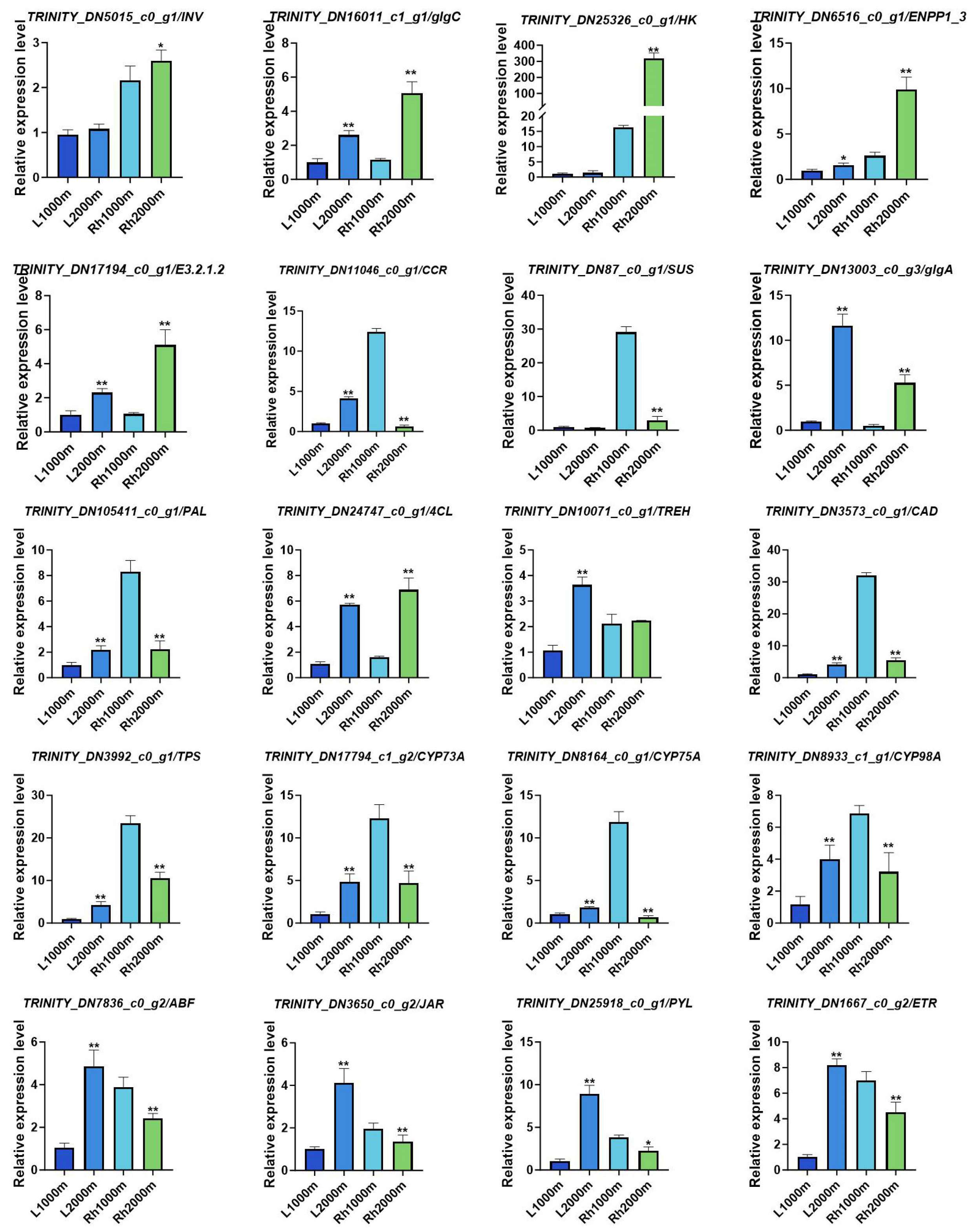
We further validated these expression trends using RT-qPCR on selected key genes from each pathway (Figure 7) and illustrated the interaction relationships between these genes and their corresponding metabolites (Supplementary Figure S4). The results confirmed that altitude induces opposite expression changes in leaves and rhizomes for flavonoid biosynthesis and stress hormone signaling genes, whereas some phenylpropanoid biosynthesis genes were upregulated in both organs. Genes involved in starch synthesis were preferentially enhanced in rhizomes but repressed in leaves at higher elevations. Collectively, these transcriptomic profiles demonstrate that altitude adaptation in F. rufa is orchestrated through complementary, organ-defined gene regulatory programs: leaves attenuate pathways for secondary metabolism and nutrient storage, while rhizomes activate them, thereby optimizing the dual needs of stress tolerance and resource sequestration in a vertically stratified environment.

4. Discussion

This study reveals that F. rufa employs an organ-specific functional differentiation strategy to cope with altitudinal gradients, a mechanism that aligns with the seasonal foraging migration of the giant panda [28,29]. Integrated metabolomic and transcriptomic analyses demonstrate that at high altitude (2000 m), leaves shift toward a metabolically streamlined phenotype: sucrose metabolism and its key genes (such as SUS) are downregulated, and most phenylpropanoid/flavonoid pathway genes and metabolites are reduced, with only core stress-responsive compounds such as 3-hydroxybenzoate remaining elevated; these compounds enhance the fundamental stress tolerance of leaves by scavenging reactive oxygen species and stabilizing cellular structures [30]. In contrast, rhizomes adopt a resource-enhancing and defense-priming strategy, marked by accumulation of flavonoids (such as rutin, luteoloside), linoleic acid derivatives (such as lecithin), and starch, coupled with coordinated upregulation of the corresponding biosynthetic genes (Figure 2E and Figure 3) [31]. This “leaves for foraging, rhizomes for survival” division of labor closely mirrors the giant panda’s vertical foraging migration behavior. Giant pandas preferentially consume nutrient-rich leaves and shoots with low levels of defensive compounds in lower-altitude areas to meet their energy needs for growth and reproduction. In contrast, they rely on bamboo tissues with stronger chemical defenses but greater persistence in higher-altitude regions to sustain survival. This adaptive relationship clearly reveals the metabolic-genetic foundation of their long-term co-evolution.
Compared to traditional bamboo studies mentioned in the Introduction—which often focus on the physiological responses of single organs and lack integrated multi-omics analysis—this research achieves a dual breakthrough in both perspective and evidential support, thereby precisely addressing the research gap regarding the organ-specific molecular mechanisms of bamboo adaptation to altitude [3]. As noted in the Introduction, previous work has primarily examined physiological indicators (such as soluble sugar accumulation and flavonoid synthesis) in single organs of bamboo species like P. heterocycla var. pubescens and Chimonobambusa quadrangularis, or has only explored the correlation between flavonoid content in F. rufa and giant panda diet, without clarifying the molecular regulatory mechanisms driven by altitudinal gradients or the synergistic strategies across multiple organs [32,33]. Through comparative analysis of leaves and rhizomes, this study expands and refines the model of bamboo adaptation to altitude. While earlier research found that high-altitude leaves of P. heterocycla var. pubescens accumulate soluble sugars to enhance stress tolerance [33], it did not address the coordinated responses of belowground organs. In contrast, this study reveals for the first time an organ-specific regulation pattern of the phenylpropanoid pathway in F. rufa: downregulation in leaves to reduce metabolic costs, and upregulation in rhizomes to strengthen defense and storage. This pattern stands in sharp contrast to the organ-convergent adaptation observed in plants such as Arabidopsis thaliana and alpine rhododendrons [34,35,36], highlighting the unique altitudinal adaptation logic of the staple bamboo species for giant pandas (Figure 3, Figure 5 and Figure 6). Furthermore, the shift from monosaccharides to starch in rhizomes, supported by upregulated biosynthetic genes, corroborates the general plant strategy of converting soluble sugars to storage polysaccharides under stress [37,38], while specifying its role in below-ground resource allocation. These key genes—such as PAL, CHS, and INV—represent prime targets for future functional validation (Figure 7). Notably, enriched linoleic acid metabolism in high-altitude rhizomes, including elevated lecithin, provides new molecular insight into membrane stability and stress resilience in underground storage organs.
Ecologically, the organ-specific metabolic reprogramming of F. rufa is essentially a molecular adaptation to the “shooting altitudinal gradient effect” described in the Introduction, while also serving as a key signal regulating giant panda foraging decisions and habitat selection [8]. In conjunction with the giant panda’s seasonal preferences for “shoots in spring/summer and leaves in autumn/winter” mentioned in the Introduction, we hypothesize that the reduced content of defensive secondary metabolites (such as flavonoids, phenolic acids) in high-altitude leaves not only enhances palatability and lowers digestive costs for giant pandas but also complements the stable levels of crude protein and amino acids characteristic of high-altitude leaves during summer and autumn. This provides an explanation for the panda’s behavior of migrating to higher altitudes to feed on leaves during these seasons [39,40]. Conversely, the simultaneous accumulation of defensive metabolites and starch in high-altitude rhizomes serves a dual purpose: on one hand, it reserves energy and defensive substances for next year’s shoot sprouting, ensuring population continuity; on the other hand, the low temperature and reduced light at high altitudes delay shoot emergence, creating a spatiotemporal pattern of “shoots emerging earlier at low altitudes and later at high altitudes.” This aligns closely with the observed foraging pattern of giant pandas, which preferentially consume early-emerging shoots at lower altitudes before migrating to higher elevations, further supporting their co-evolutionary relationship. Of course, this hypothesis requires validation through field telemetry monitoring and controlled experiments [39]. As noted in the Introduction, altitude adaptation strategies vary among plants. This study also finds that orchids adapt to altitude through specific morphological and alkaloid-synthesis strategies [41], which differ markedly from the organ-functional differentiation strategy of F. rufa, reflecting the diversity of altitude adaptation across plant taxa. This tight coupling between tissue-specific metabolite landscapes and herbivore foraging behavior highlights a refined co-evolutionary adjustment: F. rufa optimizes its own altitudinal fitness through divergent organ strategies while generating a spatiotemporal gradient in food quality that guides panda resource use [42]. Future research should focus on addressing the “gap in integrated multi-omics studies” highlighted in the Introduction by pursuing two main avenues: first, conducting controlled feeding experiments to clarify the effects of specific metabolites (such as rutin, lecithin) on giant panda feeding preferences; second, utilizing tools such as gene editing and overexpression to validate the functions of key genes, thereby bridging molecular mechanisms with macro-foraging ecology. This will provide precise theoretical support for giant panda habitat conservation and staple bamboo resource management, ultimately fulfilling the research objective proposed in the Introduction: elucidating the “molecular mechanisms underlying the quality formation of the staple bamboo.”

5. Conclusions

This study systematically elucidates that F. rufa employs an organ-specific metabolic reprogramming strategy to adapt to altitudinal variation. Specifically, leaves adopt a “metabolic economy” mode, downregulating the synthesis of phenylpropanoids and flavonoids, whereas rhizomes enhance the accumulation of phenylpropanoids and starch, forming an “active storage” pattern. This strategy not only ensures the plant’s own altitudinal adaptation but also provides a molecular-level explanation for the vertical foraging migration of giant pandas. The metabolic simplification in high-altitude leaves may improve their palatability, while the accumulation of nutrients and defensive compounds in rhizomes likely influences bamboo shoot quality. Together, these factors shape the seasonal foraging preferences of giant pandas. These findings reveal a novel mechanism by which plant metabolic plasticity drives “plant–animal” interactions, offering important theoretical insights for understanding species coevolution and informing targeted conservation strategies for giant panda habitats.

Supplementary Materials

The following supporting information can be downloaded at https://www.mdpi.com/article/10.3390/f17020167/s1, Figure S1: Observations on F. rufa at different altitudes; Figure S2: Functional annotation of differentially expressed genes in bamboo leaves and rhizomes at different altitudes; Figure S3: KEGG pathway maps; Figure S4: Interaction network between metabolites and key genes; Table S1: Sequencing data statistics of F. rufa leaves and rhizomes at different altitudes; Table S2: Metabolite expression table across different samples; Table S3: Pathway gene annotation and expression matrix; Table S4: Primers for key genes in the study; Table S5: PCA analysis data table.

Author Contributions

Conceptualization: Q.L., W.F., M.T. and X.Z.; methodology: Q.L., W.F., M.T., X.Z. and Z.L.; software: M.C., X.S., L.W. and X.Z.; validation: Q.L., X.Z. and Z.L.; formal analysis: Q.L., X.Z. and Z.L.; investigation: Q.L., X.Z. and Z.L.; resources: Q.L., X.Z. and Z.L.; data curation: Q.L., X.Z. and Z.L.; writing—original draft preparation: X.Z. and Z.L.; writing—review and editing: X.Z. and Z.L.; visualization: Q.L., X.Z. and Z.L.; supervision: X.Z. and Z.L.; project administration: Q.L., X.Z. and Z.L. All authors have read and agreed to the published version of the manuscript.

Funding

This research was funded by the “14th Five-Year” National Key Research and Development Program, High-efficiency Cultivation Technology of Bamboo Shoot Forest with Southwest Characteristics (2023YFD220120302), Sichuan Forestry and Grassland Technology Innovation Team (CXTD2025009), and the National Natural Science Foundation of China (32501608).

Data Availability Statement

The RNA-seq data are available in the database resources of the national genomics data center, China National Center for Bioinformation (GSA: CRA034565). The data presented in this study are available on request from the corresponding author.

Conflicts of Interest

The authors declare that there are no conflicts of interest regarding the publication of this paper.

References

  1. Xiao, M. The Effect of Elevation on Population Characteristics and Agronomic Traits of Fargesia rufa. Master’s Thesis, Xihua Normal University, Nanchong, China, 2024. [Google Scholar]
  2. Liu, C.; Wang, Y.; Pan, K.; Jin, Y.; Liang, J.; Li, W.; Zhang, L.J. Photosynthetic carbon and nitrogen metabolism and the relationship between their metabolites and lipid peroxidation in dwarf bamboo (Fargesia rufa Yi) during drought and subsequent recovery. Trees 2015, 29, 1633–1647. [Google Scholar] [CrossRef]
  3. Liu, C.; Wang, Y.; Pan, K.; Jin, Y.; Li, W.; Zhang, L.J. Effects of phosphorus application on photosynthetic carbon and nitrogen metabolism, water use efficiency and growth of dwarf bamboo (Fargesia rufa) subjected to water deficit. Plant Physiol. Biochem. 2015, 96, 20–28. [Google Scholar] [CrossRef] [PubMed]
  4. Zhou, X.; Wang, J.; Zhang, H.; Wang, J.; Zhang, Y. Effect of elevated CO2 and nitrogen deposition on leaf nutrient quality of Fargesia rufa Yi. Acta Ecol. Sin. 2012, 32, 7644–7653. [Google Scholar] [CrossRef]
  5. Yang, S.H.; Shen, H.; Luo, H.B.; Su, H.S.; Zou, Q.; Yu, Y.H.; Chen, Y.N.; Yu, Y.S.; Hu, T.G.; Dong, X.; et al. The effect of near-freezing temperature storage on delaying postharvest lignification of Dendrocalamus brandisii shoots. Food Sci. 2024, 45, 216–225. [Google Scholar]
  6. Wang, H.; Fu, W.J.; Tian, M.; Zhang, X. A diet diverse in bamboo parts is important for giant panda (Ailuropoda melanoleuca) metabolism and health. Sci. Rep. 2017, 7, 3377. [Google Scholar] [CrossRef]
  7. Zhang, M.; Zhang, Z.; Li, Z.; Hong, M.; Zhou, X.; Zhou, S.; Zhang, J.; Hull, V.; Huang, J.; Zhang, H.J. Giant panda foraging and movement patterns in response to bamboo shoot growth. Environ. Sci. Pollut. Res. 2018, 25, 8636–8643. [Google Scholar] [CrossRef]
  8. Liu, Y.; Liu, X.; Songer, M.; Wang, P.; Jiang, X.; Hong, X.; Chen, Q.J. The effect of elevation on structure and nutrition of staple food bamboo and seasonal distribution of giant pandas. Acta Theriol. Sin. 2016, 36, 24. [Google Scholar]
  9. Jiang, C.; Li, Q.; Liu, L.; Zhou, J.; Chen, F.; Yang, Y.; Zhang, X.; Guo, A.J. Seasonal variation in nutritional components of ten potential edible bamboos for giant panda. J. Nanjing For. Univ. 2018, 42, 148–154. [Google Scholar]
  10. Zhang, S.J. Technology, coupling mechanism between reproductive strategies and foraging behavior of giant pandas: Energy-nutrition-temperature correlation effect. J. Sichuan For. Sci. Technol. 2021, 42, 21–28. [Google Scholar]
  11. Huang, G.; Wang, L.; Li, J.; Hou, R.; Wang, M.; Wang, Z.; Qu, Q.; Zhou, W.; Nie, Y.; Hu, Y.J. Seasonal shift of the gut microbiome synchronizes host peripheral circadian rhythm for physiological adaptation to a low-fat diet in the giant panda. Cell Rep. 2022, 38, 110203. [Google Scholar] [CrossRef]
  12. Chitiva, L.C.; Lozano-Puentes, H.S.; Londoño, X.; Leão, T.F.; Cala, M.P.; Ruiz-Sanchez, E.; Díaz-Ariza, L.A.; Prieto-Rodríguez, J.A.; Castro-Gamboa, I.; Costa, G.M.J. Untargeted metabolomics approach and molecular networking analysis reveal changes in chemical composition under the influence of altitudinal variation in bamboo species. Front. Mol. Biosci. 2023, 10, 1192088. [Google Scholar] [CrossRef]
  13. Chen, L.; Zhang, L.; Zhao, Y.; He, M.; Wu, H.; Wang, J.; Chen, Z.; Zhao, Y.; Shen, F.; Zhang, X. Impact of DNA methylation on digestive and metabolic gene expression in red pandas (Ailurus fulgens) during the transition from milk to bamboo diet. BMC Genom. 2025, 26, 404. [Google Scholar] [CrossRef] [PubMed]
  14. Lin, D.; Jia, J.; Zhao, Z. Relationship between feeding tendency of giant panda and cellulose of edible bamboo. J. Northeast For. Univ. 2020, 48, 67–70. [Google Scholar]
  15. Qian, Y.; Jia, J.; Chen, Z.; Wang, K.; Li, P.; Gao, P.; Ying, Y.; Shi, W.J. Environmental drivers and transcriptomic variations shaping Lei bamboo shoots across cultivation regions. Front. Plant Sci. 2025, 16, 1565665. [Google Scholar] [CrossRef]
  16. Muhamed, A. RNA-seq Transcriptome Profiling of Ethiopian Lowland Bamboo (Oxytenanthera abyssinica (A. Rich) Munro) Under Drought and Salt Stresses and SSR Based Genetic Diversity Analysis of Ethiopian Highland Bamboo (Arundinaria alpina K. Schum). Ph.D. Thesis, Addis Ababa University, Addis Ababa, Ethiopia, 2019. [Google Scholar]
  17. Peng, Z.; Lu, Y.; Li, L.; Zhao, Q.; Feng, Q.; Gao, Z.; Lu, H.; Hu, T.; Yao, N.; Liu, K.; et al. The draft genome of the fast-growing non-timber forest species moso bamboo (Phyllostachys heterocycla). Nat. Genet. 2013, 45, 456–461. [Google Scholar] [CrossRef]
  18. Jing, X.; Cai, C.J.; Fan, S.H.; Liu, G.L.; Li, X.J. Research advances in ecological adaptability of bamboo under environmental stresses. World For. Res. 2018, 31, 36–41. [Google Scholar]
  19. Pan, H.L.; Tian, Y.; Liu, X.L.; Cai, X.H.; He, F.; Li, M.H. Ecological responses of Fargesia nitida to altitude in the wolong nature reserve. Ecol. Environ. 2010, 19, 2832. [Google Scholar]
  20. Wang, J.; Yang, M.; Huang, X.; Yu, Y.; Liao, S.; Yang, X.J. Response of leaf blade in Zanthoxylum planispinum var. dintanensis to different altitudes through integrated metabolomics and transcriptomics analysis. S. Afr. J. Bot. 2023, 162, 41–51. [Google Scholar] [CrossRef]
  21. Xu, S.; Yang, L.T.; Chen, S.L.; Guo, Z.W.; Gu, R.; Zhang, C. Review on the formation of bamboo shoot palatability and its main influencing factors. J. Zhejiang A F Univ. 2021, 38, 403–411. [Google Scholar]
  22. Chen, F.F.; Ji, Y.L.; Chen, Z.H.; Liu, T.L.; Liu, X. Transcriptome sequencing and expression analysis of Batrachium bungei (Steud.) L. liou at different altitudes based on RNA-seq in the Qinghai-Tibet plateau. J. Plant Sci. 2021, 16, 50–58. [Google Scholar]
  23. Wang, P.; Guo, Y.; Chen, X.; Zheng, Y.; Sun, Y.; Yang, J.; Ye, N.J. Genome-wide identification of WOX genes and their expression patterns under different hormone and abiotic stress treatments in tea plant (Camellia sinensis). Trees 2019, 33, 1129–1142. [Google Scholar] [CrossRef]
  24. Livak, K.J.; Schmittgen, T.D.J. Analysis of relative gene expression data using real-time quantitative PCR and the 2−ΔΔCT method. Methods 2001, 25, 402–408. [Google Scholar] [CrossRef]
  25. Li, B.; Dewey, C.N.J. RSEM: Accurate transcript quantification from RNA-Seq data with or without a reference genome. BMC Bioinform. 2011, 12, 323. [Google Scholar] [CrossRef]
  26. Love, M.I.; Huber, W.; Anders, S.J. Moderated estimation of fold change and dispersion for RNA-seq data with DESeq2. BMC Biol. 2014, 15, 550. [Google Scholar] [CrossRef]
  27. Wang, L.; Feng, Z.; Wang, X.; Wang, X.; Zhang, X.J. DEGseq: An R package for identifying differentially expressed genes from RNA-seq data. Bioinformatics 2010, 26, 136–138. [Google Scholar] [CrossRef]
  28. Wang, M.; Nie, Y.G.; Swaisgood, R.R.; Wei, W.; Zhou, W.L.; Zhang, G.M.; Wei, F.W.J. Stable seasonal migration patterns in giant pandas. Zool. Res. 2023, 44, 341. [Google Scholar] [CrossRef]
  29. Zeng, Y.; Han, H.; Gong, Y.; Qubi, S.; Chen, M.; Qiu, L.; Huang, Y.; Zhou, H.; Wei, W.J. Feeding habits and foraging patch selection strategy of the giant panda in the Meigu Dafengding National Nature Reserve, Sichuan Province, China. Environ. Sci. Pollut. Res. 2023, 30, 49125–49135. [Google Scholar] [CrossRef]
  30. Nehela, Y.; Taha, N.A.; Elzaawely, A.A.; Xuan, T.D.; Amin, M.A.; Ahmed, M.E.; El-Nagar, A.J. Benzoic acid and its hydroxylated derivatives suppress early blight of tomato (Alternaria solani) via the induction of salicylic acid biosynthesis and enzymatic and nonenzymatic antioxidant defense machinery. J. Fungi 2021, 7, 663. [Google Scholar] [CrossRef]
  31. Jiang, Y.; Liu, Q.; Feng, S.G.; Zhou, D.Y.; Yu, Q. Effects of Environmental Factors on the Content of Flavonoids and Chlorogenic Acid in Chrysanthemum morifolium Ramat. Chin. J. Mod. Appl. Pharm. 2018, 35, 225–230. [Google Scholar]
  32. Peng, X.; Teng, L.; Yan, X.; Zhao, M.; Shen, S.J. The cold responsive mechanism of the paper mulberry: Decreased photosynthesis capacity and increased starch accumulation. BMC Genom. 2015, 16, 898. [Google Scholar] [CrossRef] [PubMed]
  33. Wang, H.; Guo, L.; Zha, R.; Gao, Z.; Yu, F.; Wei, Q.J. Histological, metabolomic and transcriptomic analyses reveal mechanisms of cold acclimation of the Moso bamboo (Phyllostachys edulis) leaf. Tree Physiol. 2022, 42, 2336–2352. [Google Scholar] [CrossRef]
  34. Nong, M.L.; Luo, X.H.; Zhu, L.X.; Zhang, Y.N.; Dun, X.Y.; Huang, L.J. Insights into the adaptation to high altitudes from transcriptome profiling: A case study of an endangered species, Kingdonia uniflora. Genes 2023, 14, 1291. [Google Scholar] [CrossRef]
  35. Ye, L.J.; Möller, M.; Luo, Y.H.; Zou, J.Y.; Zheng, W.; Liu, J.; Li, D.Z.; Gao, L.M.J. Variation in gene expression along an elevation gradient of Rhododendron sanguineum var. haemaleum assessed in a comparative transcriptomic analysis. Front. Plant Sci. 2023, 14, 1133065. [Google Scholar] [CrossRef]
  36. Qi, X.; Zhang, Q.; He, Y.; Yang, L.; Zhang, X.; Shi, P.; Yang, L.; Liu, Z.; Zhang, F.; Liu, F.; et al. The Transcriptomic Landscape of Yaks Reveals Molecular Pathways for High Altitude Adaptation. Genome Biol. Evol. 2019, 11, 72–85. [Google Scholar] [CrossRef]
  37. Dong, S.; Beckles, D.M. Dynamic changes in the starch-sugar interconversion within plant source and sink tissues promote a better abiotic stress response. J. Plant Physiol. 2019, 234–235, 80–93. [Google Scholar] [CrossRef]
  38. Keller, I.; Rodrigues, C.M.; Neuhaus, H.E.; Pommerrenig, B. Improved resource allocation and stabilization of yield under abiotic stress. J. Plant Physiol. 2021, 257, 153336. [Google Scholar] [CrossRef] [PubMed]
  39. Wang, L.; Yuan, S.; Nie, Y.; Zhao, J.; Cao, X.; Dai, Y.; Zhang, Z.; Wei, F. Dietary flavonoids and the altitudinal preference of wild giant pandas in Fargesia habitats of Foping National Nature Reserve, China. Glob. Ecol. Conserv. 2020, 22, e00981. [Google Scholar]
  40. Wang, D.; Guo, Q.; Wang, X.; Liang, C.; Zhang, Y.J. Effects of different altitudes on the nutrient and amino acid contents of bamboo (Fargesia denudata), staple food of the Giant Panda, in Minshan, Sichuan, China. Acta Ecol. Sin. 2017, 37, 6440–6447. [Google Scholar] [CrossRef][Green Version]
  41. Feizi, F.; Zakizadeh, H.; Mirjalili, M.H. Altitudinal Effects on Morphology and Biochemistry of Native Iranian Orchids in Guilan, Iran: Insights into Adaptive Strategies and Conservation Priorities. Russ. J. Plant Physiol. 2024, 71, 217. [Google Scholar] [CrossRef]
  42. Nie, Y.; Zhang, Z.; Raubenheimer, D.; Elser, J.J.; Wei, W.; Wei, F.J. Obligate herbivory in an ancestrally carnivorous lineage: The giant panda and bamboo from the perspective of nutritional geometry. Funct. Ecol. 2015, 29, 26–34. [Google Scholar] [CrossRef]
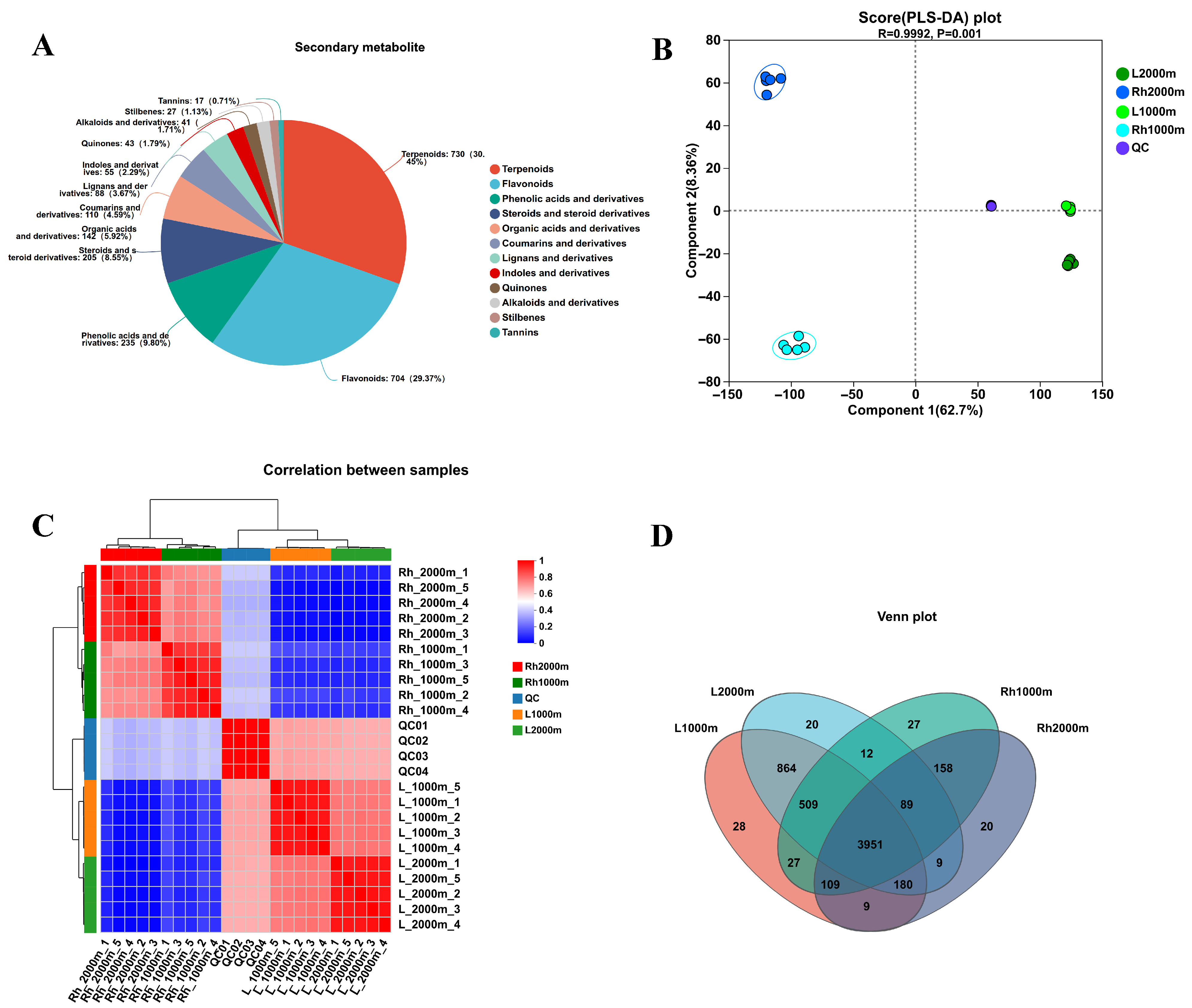
Figure 1. Metabolomic Analysis of F. rufa Leaves and Rhizomes at Altitudes of 1000 m and 2000 m. (A) Classification of secondary metabolites in bamboo leaves and rhizomes. The metabolites are displayed in descending order based on their quantities in the selected classifications (plant compound classification, primary plant classification, and secondary plant classification). The characteristics of the metabolites in each classification and their respective percentages are shown. In the pie charts, different colors represent different classifications, and the areas indicate the relative proportions of metabolites in each classification. (B) The composite PLS-DA score plot of the metabolomics data of F. rufa leaves and rhizomes. (C) The heatmap analysis of the correlation between samples indicates the degree of variation in the composition and abundance of metabolites among samples. The closer the correlation is to 1, the higher the similarity in metabolic composition and abundance between samples. (D) The Venn diagram analysis of the metabolomics data of bamboo leaves and rhizomes.
Forests 17 00167 g001
Figure 2. Analysis of differentially expressed metabolites in bamboo leaves and rhizomes at 2000 m and 1000 m. (A) Volcano plot of differential metabolites in bamboo leaves at different altitudes. (B) Volcano plot of differential metabolites in bamboo rhizomes at different altitudes. (C) Statistics of differentially expressed metabolites in bamboo leaves and rhizomes at different altitudes. (D) Venn diagram of differentially expressed metabolites in bamboo leaves and rhizomes at different altitudes. (E) Cluster analysis of differentially expressed metabolites in bamboo leaves and rhizomes at different altitudes. Each column in the figure represents a sample, and each row represents a metabolite. The colors in the figure indicate the relative expression levels of metabolites in the respective groups of samples. For specific trends in expression levels, please refer to the numerical annotations below the color bar in the lower right corner. The dendrogram on the left represents the clustering of metabolites, while the names of the metabolites are listed on the right. The closer the branches of two metabolites are, the more similar their expression levels are. The dendrogram above represents the clustering of samples, with the names of the samples listed below. The closer the branches of two samples are, the more similar the expression patterns of all metabolites in these samples are, that is, the more similar the trends in metabolite expression levels are.
Forests 17 00167 g002
Figure 3. KEGG pathway enrichment analysis and expression abundance of some metabolites of differentially expressed metabolites in bamboo leaves and rhizomes at different altitudes. (A) KEGG pathway enrichment analysis of differentially expressed metabolites in bamboo leaves. (B) KEGG pathway enrichment analysis of differentially expressed metabolites in bamboo rhizomes. The horizontal axis represents the enrichment rate, calculated as num_in_study/num_in_pop; the vertical axis represents the KEGG pathways. The size of the bubble in the figure indicates the number of metabolites enriched in the pathway, and the color of the bubble represents the significance of the enrichment p-value. (C) Expression abundance of some phenylpropanoids, flavonoids, and sugar metabolism products. Error bars indicate the standard deviation obtained from five biological replicates. Stars indicate the significance of differences (* adjusted p < 0.05, ** adjusted p < 0.01).
Forests 17 00167 g003
Figure 4. Transcriptome sequencing analysis of bamboo leaves and rhizomes of F. rufa at different altitudes. (A) Transcriptome Functional Annotation Results Table Based on Six Databases. (B) Correlation Analysis Among Transcriptome Samples. (C) PCA Among Transcriptome Samples (Supplementary Table S4). (D) Venn Analysis of Expressed Genes Among Transcriptome Samples.
Forests 17 00167 g004
Figure 5. GO and KEGG enrichment analysis of DEGs in bamboo leaves and rhizomes at different altitudes. (A) GO enrichment analysis of DEGs in bamboo leaves of F. rufa at altitudes of 1000 m and 2000 m. (B) GO enrichment analysis of DEGs in bamboo rhizomes of F. rufa at altitudes of 1000 m and 2000 m. (C) KEGG enrichment analysis of DEGs in bamboo leaves of F. rufa at altitudes of 1000 m and 2000 m. (D) KEGG enrichment analysis of DEGs in bamboo rhizomes of F. rufa at altitudes of 1000 m and 2000 m.
Forests 17 00167 g005
Figure 6. Heatmap of differentially expressed key genes in the metabolic pathways of flavonoid biosynthesis, starch and sucrose metabolism, and phenylpropanoid biosynthesis in bamboo leaves and rhizomes at altitudes of 1000 m and 2000 m. (A) Heatmap of key gene expression in the flavonoid biosynthesis pathway in bamboo leaves and rhizomes at different altitudes. (B) Heatmap of key gene expression in the starch and sucrose metabolism pathway in bamboo leaves and rhizomes at different altitudes. (C) Heatmap of key gene expression in the phenylpropanoid biosynthesis pathway in bamboo leaves and rhizomes at different altitudes. Detailed expression data are presented in Supplementary Table S3.
Forests 17 00167 g006
Figure 7. RT-qPCR analysis of key DEGs. key genes include those from the pathways: starch and sucrose metabolism (TRINITY_DN25326_c0_g1, TRINITY_DN6516_c0_g1, TRINITY_DN17194_c0_g1, TRINITY_DN87_c0_g1, TRINITY_DN13003_c0_g3), phenylpropanoid biosynthesis (TRINITY_DN11046_c0_g1, TRINITY_DN105411_c0_g1, TRINITY_DN24747_c0_g1, TRINITY_DN10071_c0_g1, TRINITY_DN3573_c0_g1, TRINITY_DN3992_c0_g1) flavonoid biosynthesis (TRINITY_DN17794_c1_g2, TRINITY_DN8164_c0_g1, TRINITY_DN8933_c1_g1), stress hormone (ABA/JA/ETH) key genes (TRINITY_DN7836_c0_g2, TRINITY_DN3650_c0_g2, TRINITY_DN25918_c0_g1, TRINITY_DN1667_c0_g2), error bars represent the standard deviation obtained from at least three biological replicates. stars indicate significant differences (∗ adjusted p < 0.05, ∗∗ adjusted p < 0.01).
Forests 17 00167 g007
Disclaimer/Publisher’s Note: The statements, opinions and data contained in all publications are solely those of the individual author(s) and contributor(s) and not of MDPI and/or the editor(s). MDPI and/or the editor(s) disclaim responsibility for any injury to people or property resulting from any ideas, methods, instructions or products referred to in the content.