


Abstract
Anthocyanins, key flavonoid-derived secondary metabolites, not only confer diverse pigmentation but also function in photoprotection, antioxidative defense, and cold acclimation. In woody species, bark anthocyanin turnover is tightly linked to environmental adaptation, stress resilience, and ornamental traits, yet its molecular regulation remains largely unresolved. Here, we investigated Salix alba L. bark by integrating anthocyanin quantification, transcriptome profiling, and weighted gene co-expression network analysis (WGCNA) to dissect the temporal dynamics and regulatory architecture of anthocyanin degradation. Anthocyanin content peaked at D2 (late December 2024), declined through D3 (mid-January 2025) and D4 (mid-February 2025), and partially rebounded at D5 (early March 2025), coinciding with peak expression of structural genes LAC1/2, POD1/2, and BGLU10. These enzymes co-expressed with multiple transcription factors, including MYB, bHLH, and WRKY families, forming putative core modules. Functional enrichment indicated that differentially expressed genes were enriched in redox processes, glycoside hydrolysis, flavonoid metabolism, and hormone signaling, suggesting a degradation mechanism mediated by reactive oxygen species, glycosidic cleavage, and hormone–transcription factor interplay. This study provides the first comprehensive framework of bark anthocyanin degradation in white willow, advancing the understanding of pigment dynamics, gene–environment crosstalk, and breeding strategies for ornamental woody plants.
1. Introduction
Anthocyanins, as prominent secondary metabolites within the flavonoid (flavonoids) pathway, are widely accumulated in various plant organs, including leaves, stems, flowers, and fruits, where they impart red, blue, and purple pigmentation [1,2,3]. Beyond their role in coloration, anthocyanins play critical functions in photoprotection, reactive oxygen species (ROS) scavenging, osmotic adjustment, and cold acclimation, thereby contributing substantially to plant growth, development, and environmental adaptation [4,5]. In woody plants, anthocyanins are further implicated in xylem differentiation, bark pigmentation, ultraviolet defense, and pathogen resistance [6,7]. These multifaceted roles are not only indispensable for maintaining the stability of forest ecosystems but also hold significant implications for forestry production, efficient utilization of woody resources, and sustainable forest management.
The biosynthetic pathway of anthocyanins has been systematically elucidated in model plants and fruit crops. Originating from phenylpropanoid metabolism, anthocyanins are synthesized through the sequential actions of structural genes such as CHS, CHI, F3H, DFR, ANS, and UFGT [8]. At the transcriptional level, the MYB–bHLH–WD40 (MBW) complex precisely regulates the expression of these structural genes, enabling tissue-specific and developmental stage-dependent accumulation of anthocyanins [9,10]. In contrast, the molecular basis of anthocyanin degradation remains far less understood. Current evidence suggests that multiple enzymes play pivotal roles in this process: peroxidases (PODs) accelerate breakdown through reactive oxygen species, laccases (LACs) mediate oxidative polymerization, and β-glucosidases (BGLUs) cleave glycosidic bonds to reduce molecular stability, while polyphenol oxidases (PPOs) oxidize o-diphenols to quinone intermediates that subsequently react with anthocyanins [11], ultimately leading to color loss [12]. These enzymatic mechanisms have been experimentally validated in processes such as tomato (Solanum lycopersicum) fruit ripening and blueberry (Vaccinium corymbosum) postharvest storage [13,14]. Nevertheless, studies on anthocyanin degradation in woody plants, particularly in bark tissues, remain scarce.
The genus Salix (willows) comprises typical fast-growing tree species with wide distribution and is frequently used in bioenergy plantations, wetland restoration, and urban greening [15]. Transcriptomic studies in several Salix species have identified key structural genes and transcription factors associated with phenylpropanoid metabolism and flavonoid biosynthesis, such as SaMYB4, SaMYB33, and members of the bHLH family, which play important regulatory roles under environmental stresses including salinity–alkalinity, drought, and high light [16]. In closely related genera such as Populus (poplars) [17] and Betula (birches) [18], similar patterns of anthocyanin and flavonoid metabolism have been reported, with pigment dynamics in bark and leaves closely linked to ecological adaptation. As an important member of the willow genus, Salix alba L. is characterized by rapid growth and high biomass, making it well suited for energy plantations and ecological restoration [19]. Moreover, its bark exhibits seasonal variation in coloration, conferring ornamental value. Anthocyanins and related metabolites in S. alba not only contribute to stress responses and ecological adaptation [20] but may also affect wood quality, antioxidant capacity, and potential medicinal properties [21]. Therefore, a systematic elucidation of anthocyanin accumulation and degradation in S. alba bark will not only advance the understanding of pigment dynamics in woody plants but also provide novel strategies for forestry improvement and efficient utilization of woody resources.
The bark of white willow (Salix alba) exhibits a progressive shift in coloration from light to dark and subsequently to pale again across the growth season (D1–D5, corresponding to late November 2024, late December 2024, mid-January 2025, mid-February 2025, and early March 2025), reflecting a dynamic balance between anthocyanin accumulation and degradation [22]. Pigment degradation not only determines bark appearance and ornamental value but may also be closely linked to environmental adaptability and stress resistance [23]. Previous studies have demonstrated that elevated temperatures can markedly enhance the activities of peroxidases (PODs) and polyphenol oxidases (PPOs) [24], while ultraviolet radiation accelerates anthocyanin oxidation by promoting reactive oxygen species (ROS) accumulation [25]. In contrast, low temperatures suppress degradation and increase pigment stability [26]. Thus, elucidating the dynamic changes in bark pigmentation requires an integrated framework that considers the coordinated effects of enzymatic degradation, transcriptional regulation, and environmental signaling.
Building upon this background, the present study focused on the bark of white willow (Salix alba), integrating anthocyanin quantification, transcriptome sequencing, and weighted gene co-expression network analysis (WGCNA) to systematically identify candidate degradation-related enzyme genes (POD, LAC, PPO, and BGLU) together with their regulatory transcription factors, and to explore their associations with bark pigment dynamics. Through module–trait correlation analysis and functional annotation, this work elucidates the molecular basis of anthocyanin degradation in S. alba bark, providing a new perspective for studies on anthocyanin catabolism in willows and other woody plants. Moreover, these findings offer theoretical foundations for advancing the understanding of gene–environment interactions, constructing regulatory models of pigment dynamics, and supporting stress-resilient breeding as well as the sustainable management of bioenergy, ecological, and ornamental forests.
2. Results
2.1. Differential Anthocyanin Content in Salix alba Bark During Color Transitions
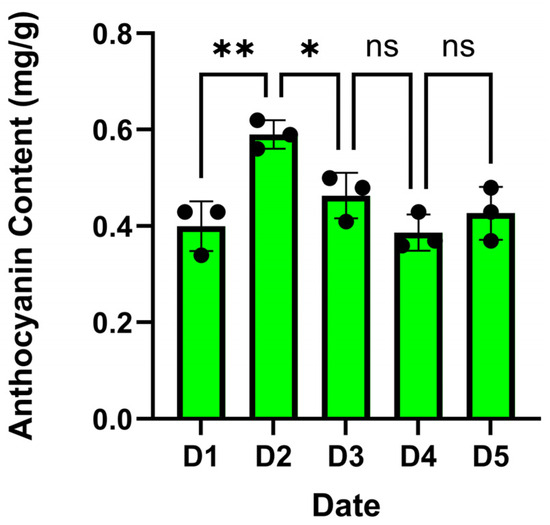
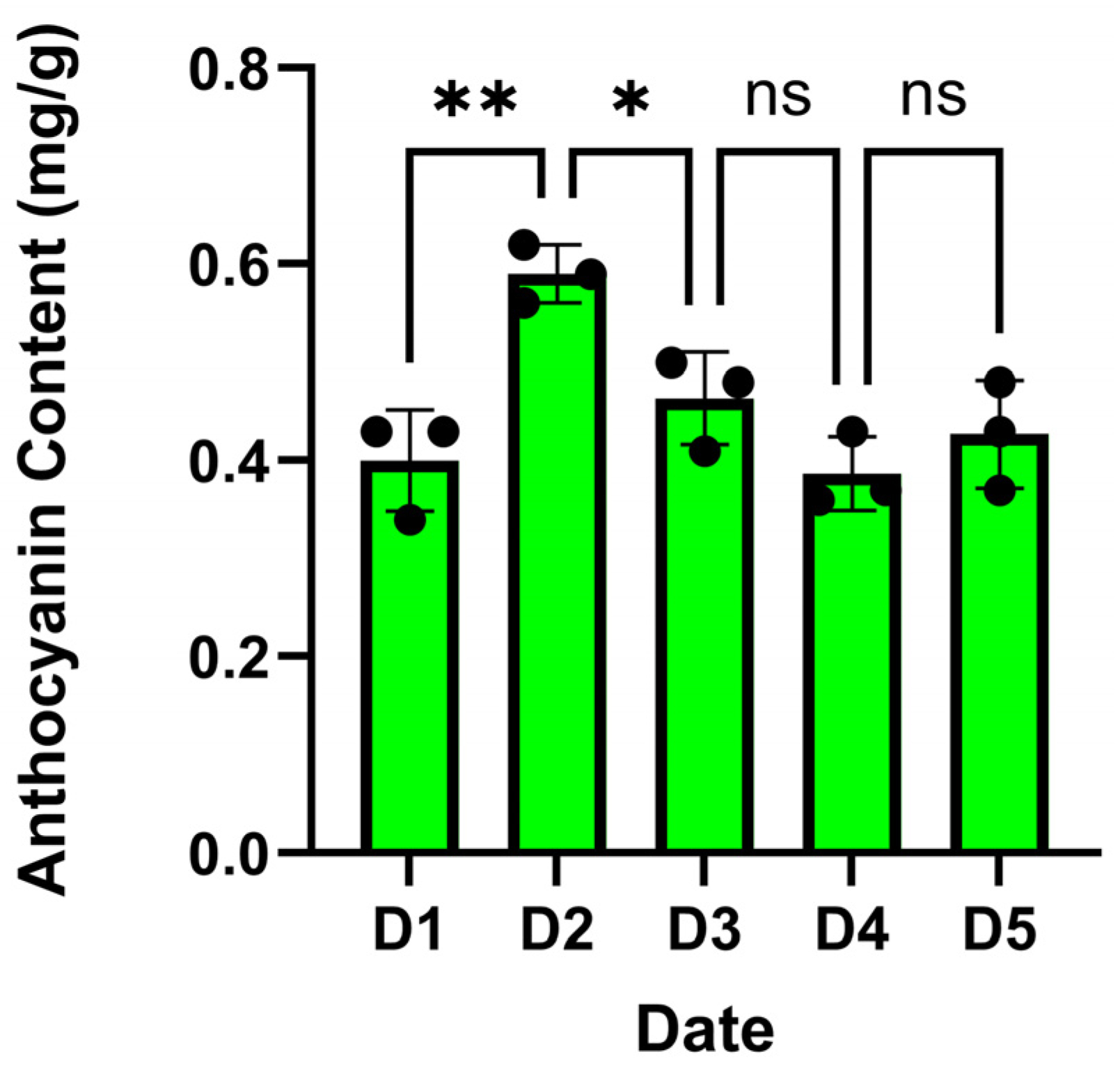
The anthocyanin content in the bark of Salix alba was quantified across five developmental stages (D1–D5). As shown in Figure 1, total anthocyanin levels reached a peak at stage D2, followed by a significant decline at D3, a further decrease to the lowest level at D4, and a slight rebound at D5, displaying an overall stage-dependent attenuation consistent with the phenotypic changes.
Figure 1.
Anthocyanin content in the bark of Salix alba across five developmental stages (D1–D5). Data are presented as mean ± SD of three biological replicates, with individual replicate values shown as scatter points(black dots represent three biological replicates). Significant differences among stages were assessed using one-way ANOVA followed by Tukey’s multiple comparison test (** p < 0.01, * p < 0.05, ns = not significant). Anthocyanin content is expressed as mg per gram of fresh weight (mg/g FW). The results show that anthocyanin content peaked at D2, decreased at D3 and D4, and partially rebounded at D5.
2.2. Transcriptome Sequencing and Assembly
To investigate the molecular mechanisms underlying anthocyanin degradation in Salix alba bark, high-throughput RNA sequencing (RNA-seq) was performed across five developmental stages (D1–D5). Each stage included three biological replicates, with each replicate composed of pooled bark tissues from 10 trees; no technical replicates were applied. Approximately 40.25–43.39 million raw reads were generated per library. After quality control, nearly 100% of clean reads were retained, with Q30 values exceeding 92% and GC contents of ~44%–45% (Table 1), indicating high sequencing quality suitable for subsequent differential expression and gene co-expression network analyses.
Table 1.
Transcriptome sequencing data for the bark of Salix alba. Raw reads and clean reads indicate the number of sequencing reads before and after quality filtering, respectively. Q20 and Q30 represent the percentage of bases with Phred quality scores ≥ 20 and ≥30. GC content denotes the percentage of guanine and cytosine bases in clean reads. D1–D5 correspond to the five sampling stages, each with three biological replicates (e.g., D1-1 to D1-3).
2.3. Differentially Expressed Genes (DEGs) Analysis
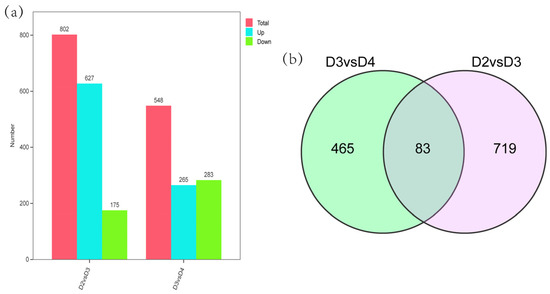
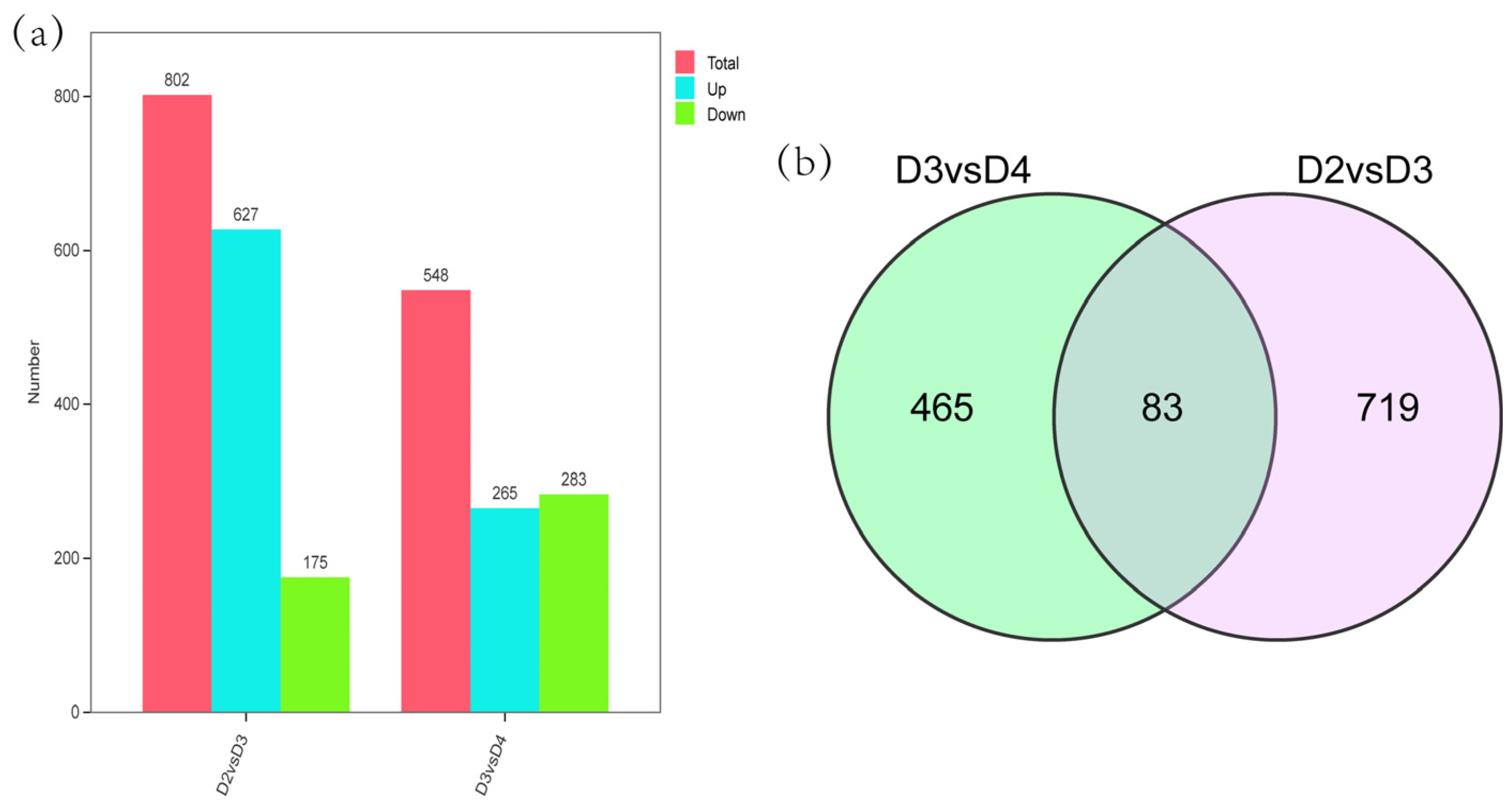
Differentially expressed genes (DEGs) were identified using the DESeq2 algorithm with thresholds of |log2FoldChange| ≥ 1 and adjusted p < 0.05. Although bark samples were collected across five developmental stages (D1–D5), particular attention was given to stages D2–D4, during which anthocyanin levels declined most rapidly, in order to capture transcriptional regulatory changes closely associated with pigment loss. A total of 627 upregulated and 175 downregulated genes were detected in the comparison between D2 and D3, while 265 upregulated and 283 downregulated genes were identified between D3 and D4 (Figure 2a). These findings suggest that bark pigment loss is accompanied by continuous and dynamic transcriptional reprogramming rather than a single discrete event, reflecting the progressive nature of anthocyanin degradation [22]. Venn diagram analysis revealed 83 DEGs shared between the two comparisons (Figure 2b), indicating that a set of common regulatory genes may play central roles in anthocyanin degradation in S. alba bark.
Figure 2.
Differentially expressed genes (DEGs) associated with anthocyanin degradation in the bark of Salix alba. (a) Histogram showing the numbers of up- and down-regulated DEGs during the key degradation stages (D2–D4). (b) Venn diagram displaying the overlap of DEGs among these stages. DEGs were identified using DESeq2 with the thresholds of false discovery rate (FDR) < 0.05 and |log2FoldChange| > 1.
2.4. GO Enrichment Analysis of Common DEGs
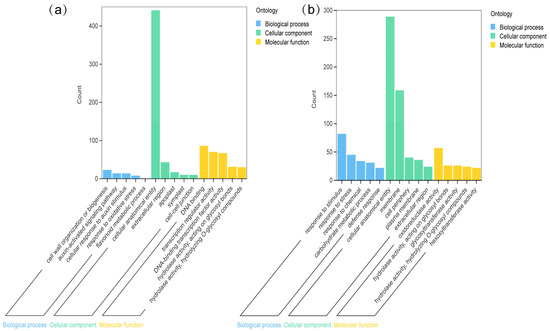
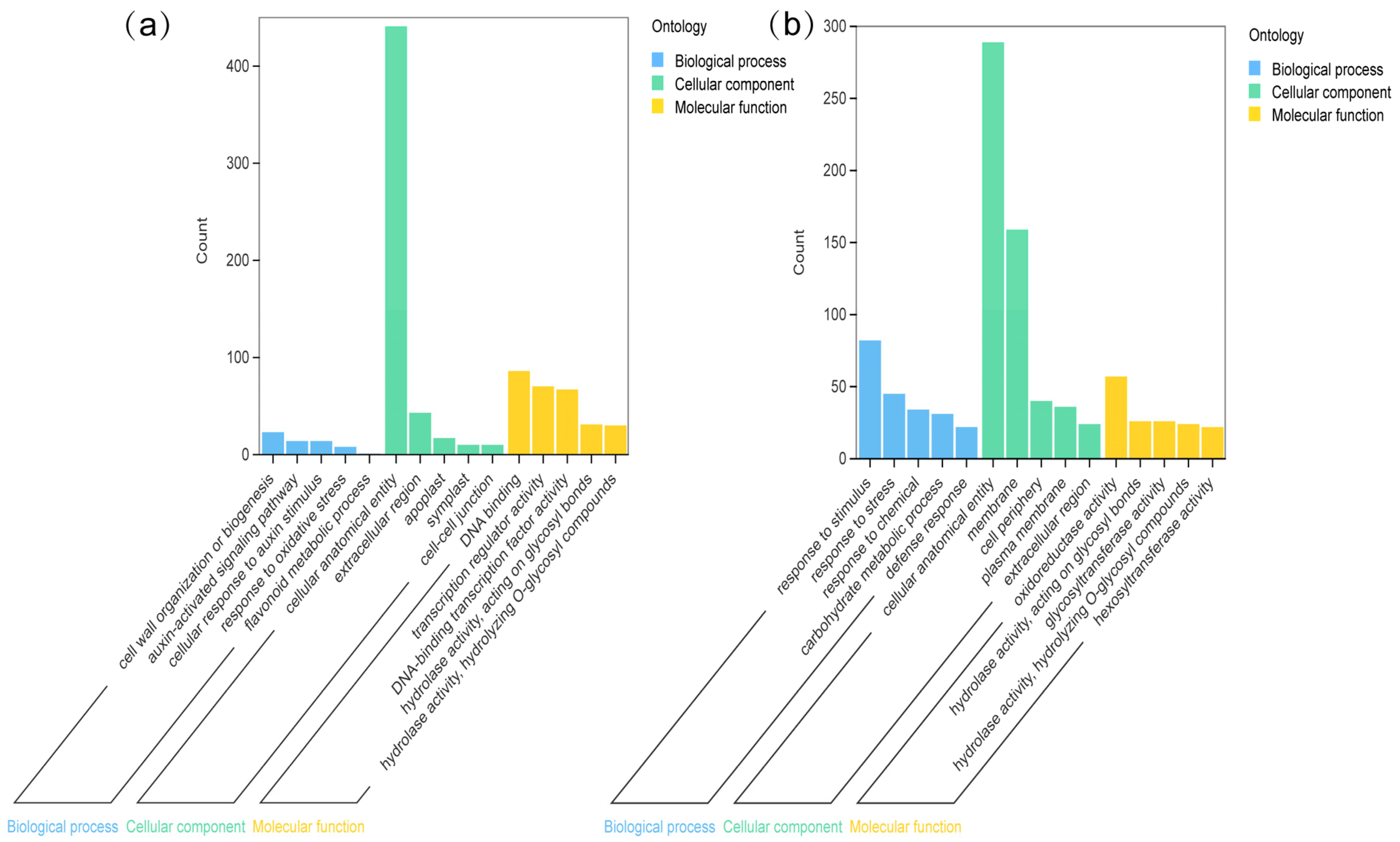
To elucidate the potential functions of the 83 DEGs shared between the two comparisons, Gene Ontology (GO) enrichment analysis was conducted. These genes were predominantly associated with cellular components including the cell wall, apoplast, plasma membrane, and cell–cell junctions. In terms of molecular function, significant categories comprised DNA binding, transcription factor activity, hydrolase activity on glycosyl bonds, and oxidoreductase activity. At the biological process level, enrichment was observed in responses to oxidative stress, flavonoid metabolic process, cell wall organization, auxin-activated signaling, carbohydrate metabolism, and defense responses (Figure 3). Collectively, the GO terms indicated enrichment of the shared DEGs in categories related to cell structural organization, enzymatic activities, and stress- and metabolism-associated processes.
Figure 3.
Gene Ontology (GO) enrichment analysis of differentially expressed genes (DEGs) during anthocyanin degradation in the bark of Salix alba. The top 10 significantly enriched GO terms for each stage comparison are shown. Analyses were conducted for D2 vs. D3 (a) and D3 vs. D4 (b), with enriched terms classified into three categories: biological process (BP), molecular function (MF), and cellular component (CC).
2.5. KEGG Pathway Enrichment Analysis of Common DEGs
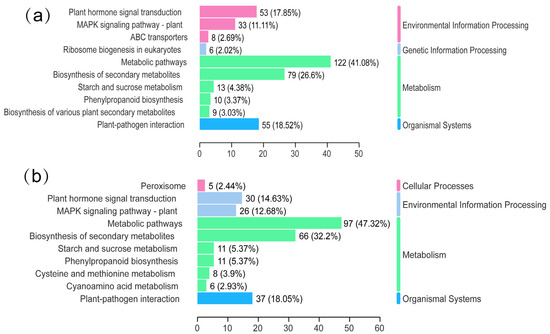
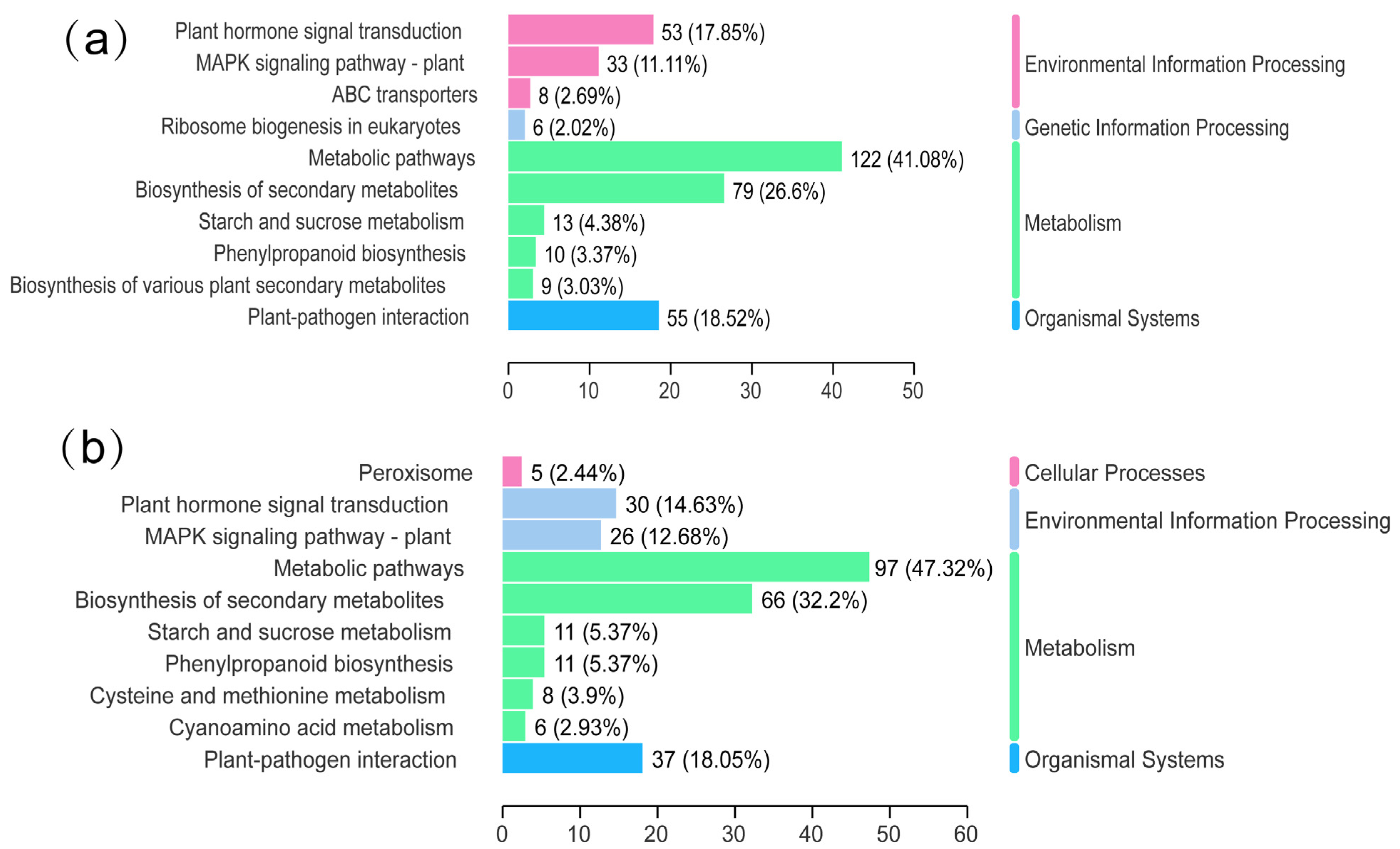
Further KEGG pathway enrichment analysis revealed that the 83 shared DEGs were distributed across multiple metabolic and signaling pathways (Figure 4). In the metabolism category, significant enrichment was observed in phenylpropanoid biosynthesis, cysteine and methionine metabolism, cyanoamino acid metabolism, starch and sucrose metabolism, and glutathione metabolism, as well as in broad categories such as metabolic pathways and biosynthesis of secondary metabolites. In addition, several DEGs were assigned to environmental information processing pathways, including MAPK signaling and plant hormone signal transduction, while others were enriched in ABC transporters and peroxisome-related processes. At the organismal level, plant–pathogen interaction was also significantly represented. Collectively, these enriched pathways spanned primary metabolism, secondary metabolite biosynthesis, stress signaling, and transport processes.
Figure 4.
KEGG pathway enrichment analysis of differentially expressed genes (DEGs) during anthocyanin degradation in the bark of Salix alba. The top 10 significantly enriched pathways for each comparison are shown. Analyses were conducted for D2 vs. D3 (a) and D3 vs. D4 (b), with enriched pathways classified into major functional categories, including metabolism, cellular processes, and environmental information processing.
2.6. Transcription Factor Profiling Associated with Anthocyanin Degradation
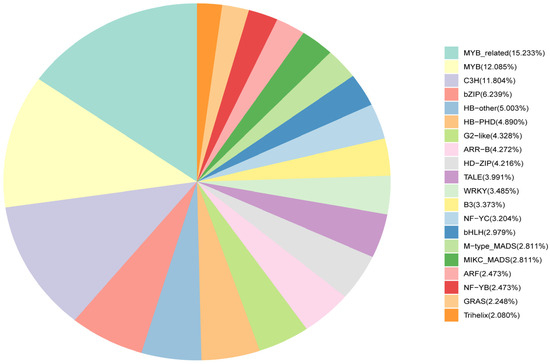
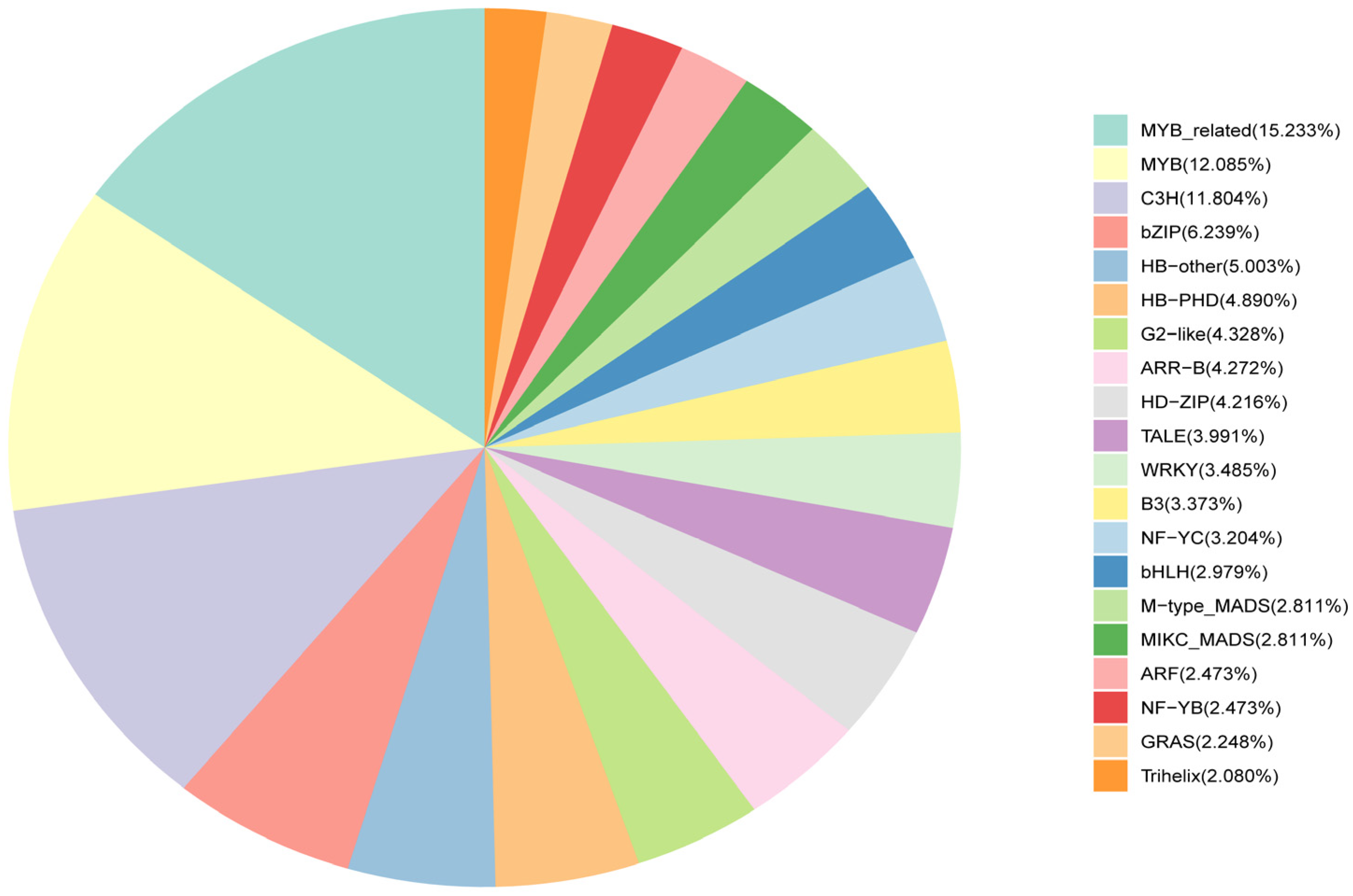
Transcription factors (TFs) are central regulators of gene expression and play pivotal roles in plant growth, development, stress responses, and secondary metabolism. In the bark of Salix alba, a total of 2207 TFs were annotated, classified into 57 families. Among them, MYB-related (271) and canonical MYB (215) were the most abundant, followed by C3H (210), bZIP (111), HB-other (89), HB-PHD (87), and bHLH (53). Together, these results indicate that MYB and C3H families dominate the TF repertoire of S. alba bark, while diverse other families also contribute to transcriptional regulation during bark development (Figure 5).
Figure 5.
Identification and classification of transcription factors (TFs) in the bark of Salix alba. The pie chart illustrates the distribution of major TF families, with MYB-related, MYB, and C3H being the most abundant. Percentages indicate the relative proportion of each family among all identified TFs.The slight deviation from 100% is due to rounding of values and the partial display of top TF families.
2.7. Identification of Candidate Genes Involved in Anthocyanin Degradation
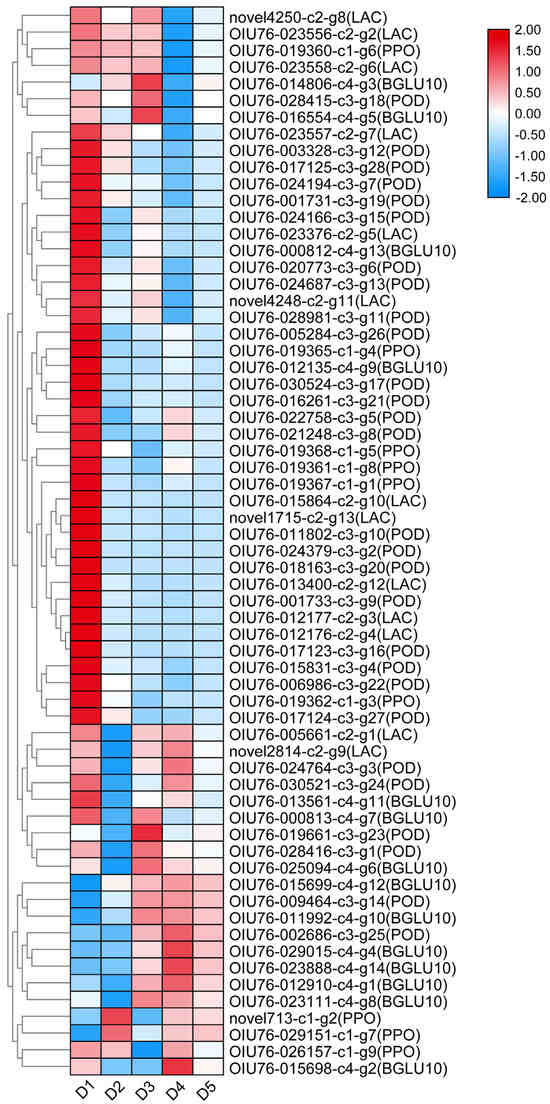
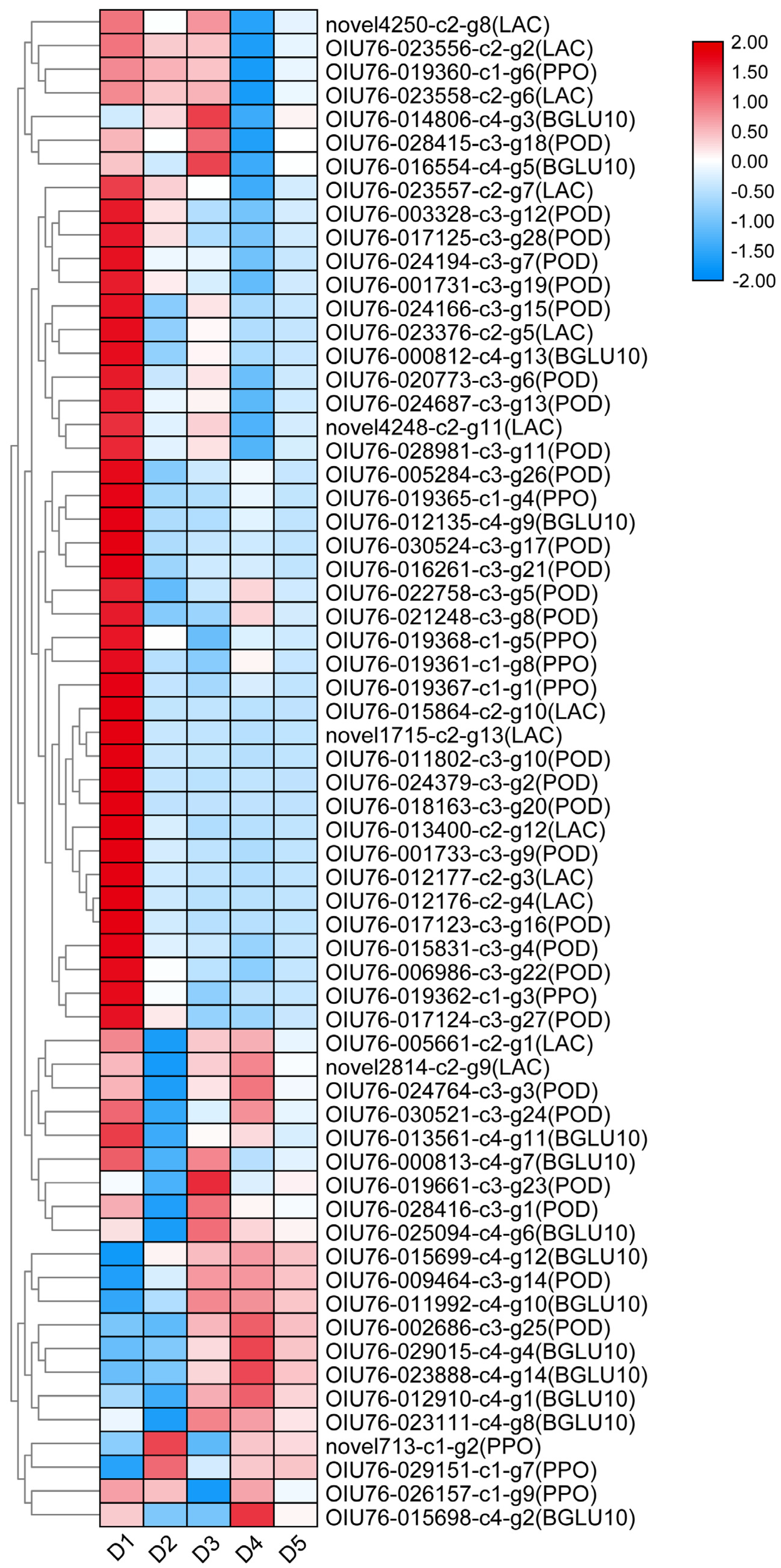
To identify structural enzymes potentially involved in anthocyanin degradation in Salix alba bark, we focused on differentially expressed genes (DEGs) annotated as laccases (LAC), peroxidases (POD), β-glucosidases (BGLU10), and polyphenol oxidases (PPO). Five candidate genes—LAC1 (novel2814_c2_g9), LAC2 (OIU76_005661_c2_g1), POD1 (OIU76_024764_c3_g3), POD2 (OIU76_030521_c3_g24), and BGLU10 (OIU76_013561_c4_g11)—exhibited peak transcript levels at stage D4 (Figure 6). Although PPO did not show significant differential expression, it displayed dynamic transcriptional variation during stages D2–D4, suggesting a possible auxiliary role in anthocyanin metabolism.
Figure 6.
Expression heatmap of candidate anthocyanin-degrading enzyme genes in the bark of Salix alba. The heatmap depicts four enzyme families—laccases (LAC), peroxidases (POD), β-glucosidases (BGLU), and polyphenol oxidases (PPO)—across all samples. Color gradients from blue to red represent low to high expression levels based on FPKM values. Both genes and samples were hierarchically clustered to highlight similar expression patterns and potential co-expression relationships, providing a foundation for candidate gene identification and subsequent network analysis.
2.8. Weighted Gene Co-Expression Network Analysis (WGCNA)
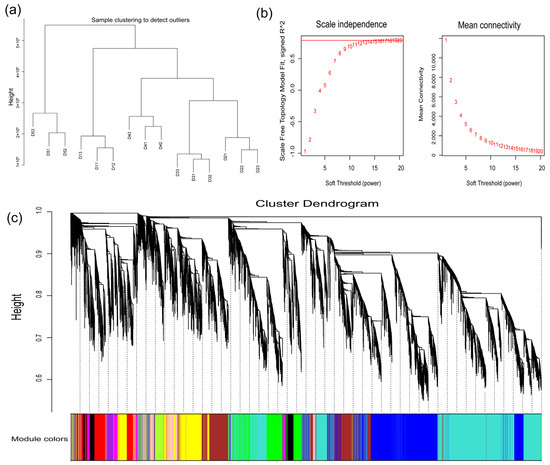
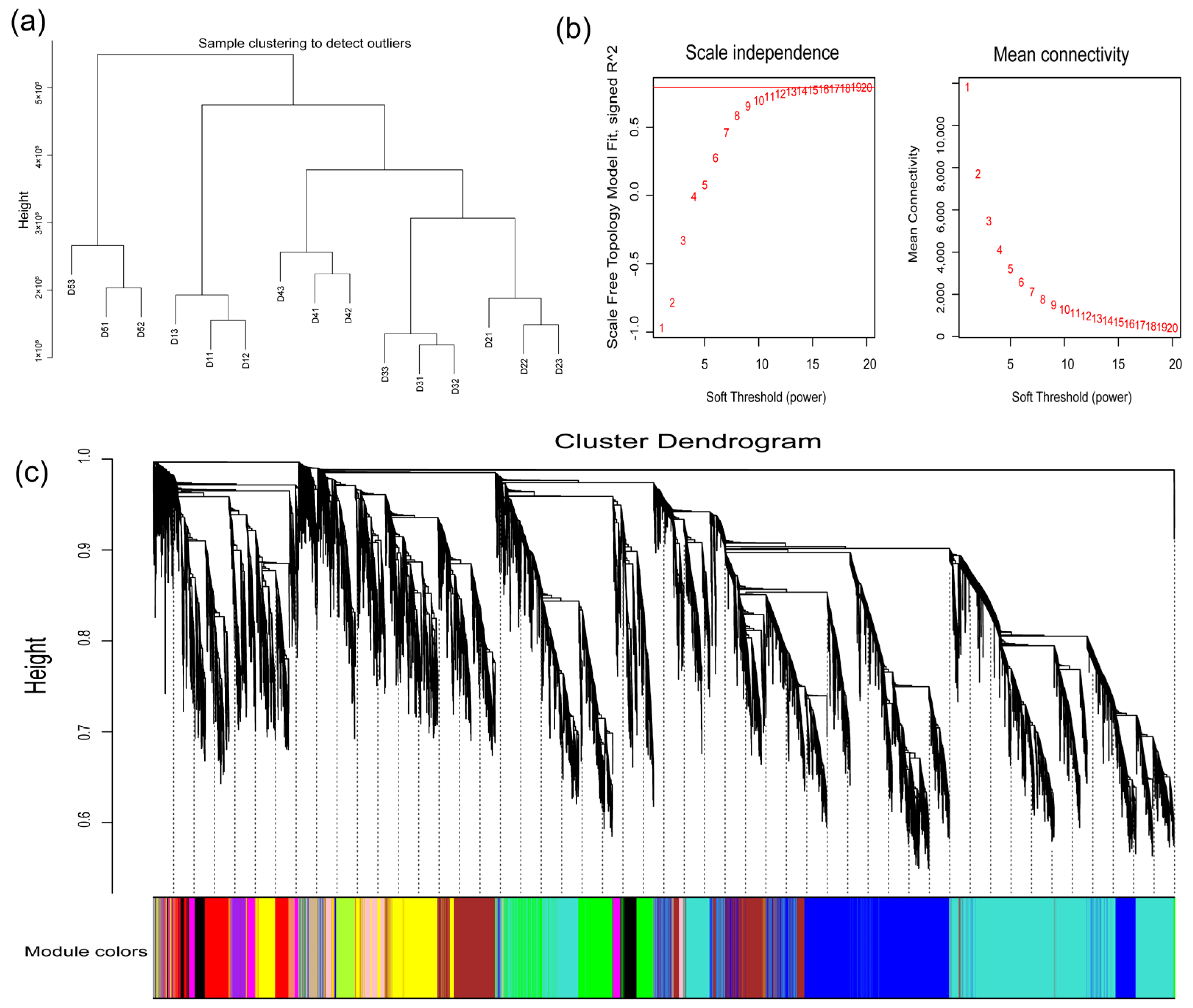
To elucidate the potential regulatory framework underlying anthocyanin degradation in Salix alba bark, weighted gene co-expression network analysis (WGCNA) was conducted based on the RNA-seq dataset [27]. After removing low-variance genes, 20,874 annotated genes were retained by selecting the top 75% ranked by median absolute deviation (MAD) or those with MAD > 0.01, thereby improving network stability. Hierarchical clustering showed that no outlier samples were detected, confirming the consistency of biological replicates (Figure 7a). The optimal soft-thresholding power (β = 16) was determined using the pickSoftThreshold function, which yielded a scale-free topology fit index of R2 > 0.8 and an average connectivity below 100 (Figure 7b), meeting the criteria for constructing biologically meaningful modules. Using the blockwise module detection method, 14 distinct co-expression modules were identified, each represented by a unique color (Figure 7c).
Figure 7.
Construction of a weighted gene co-expression network (WGCNA) in the bark of Salix alba. (a) Sample clustering dendrogram of 15 biological samples used to evaluate sample similarity and identify potential outliers. (b) Soft-threshold analysis for determining the appropriate power value for network construction. (c) Gene clustering and module assignment, showing the grouping of genes into distinct co-expression modules, which serves as the basis for subsequent network analysis and module–trait association.Each color represents a distinct co-expression module identified by WGCNA.
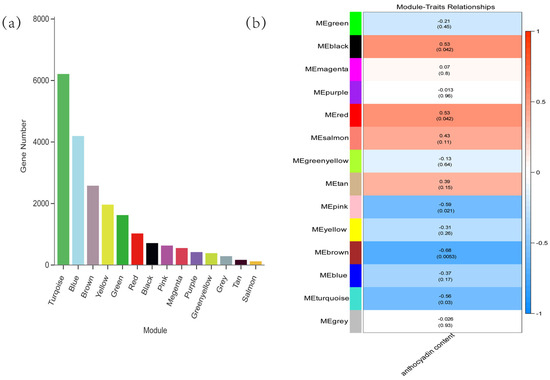
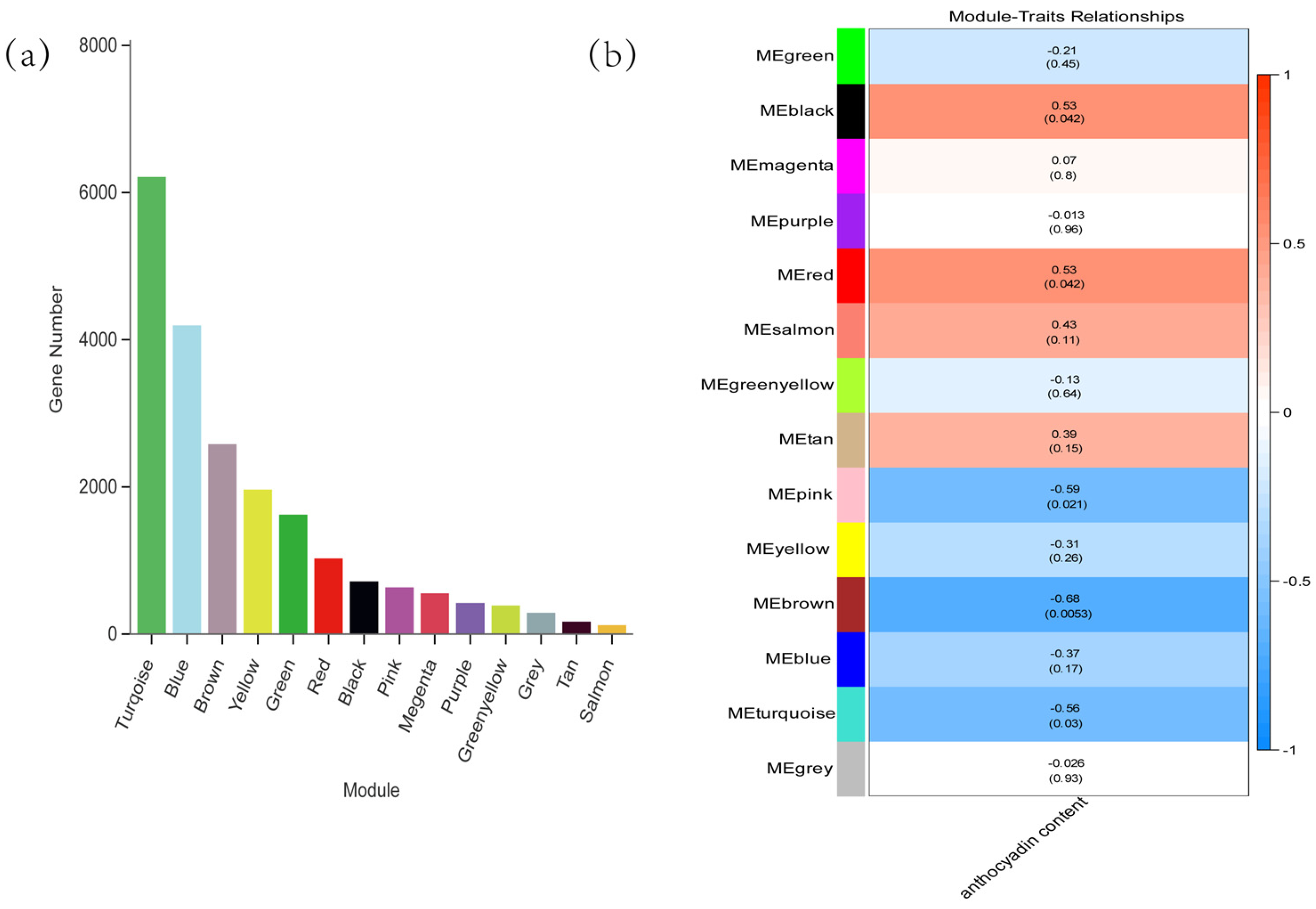
Module sizes ranged from 120 genes in the salmon module to 6210 genes in the turquoise module (Figure 8a). To assess the relationship between gene modules and anthocyanin content, the phenotypic trait was binarized as high (purple stage = 1) and low (red stage = 0). Correlation analysis revealed that the brown module exhibited the strongest negative association with anthocyanin levels (r = –0.68, p < 0.01), indicating its potential involvement in pigment degradation (Figure 8b).
Figure 8.
WGCNA module analysis in the bark of Salix alba. (a) Number of genes in 14 co-expression modules. (b) Module–trait correlation heatmap illustrating the associations between the 14 modules and anthocyanin content. Colors represent the magnitude and direction of Pearson correlation coefficients, with red indicating positive correlations and blue indicating negative correlations. This analysis highlights modules most strongly associated with anthocyanin dynamics, forming the basis for hub gene identification and subsequent co-expression network analysis.
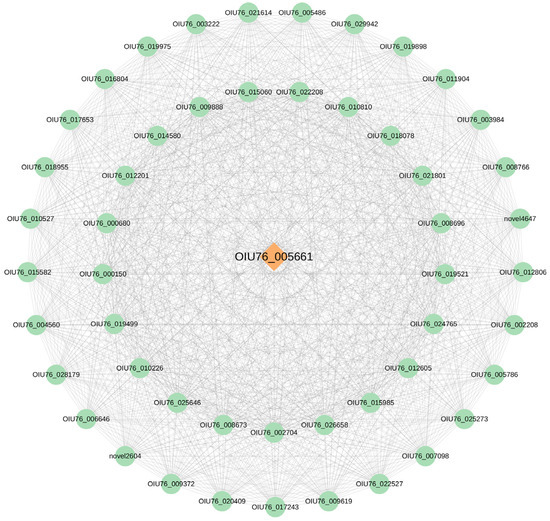
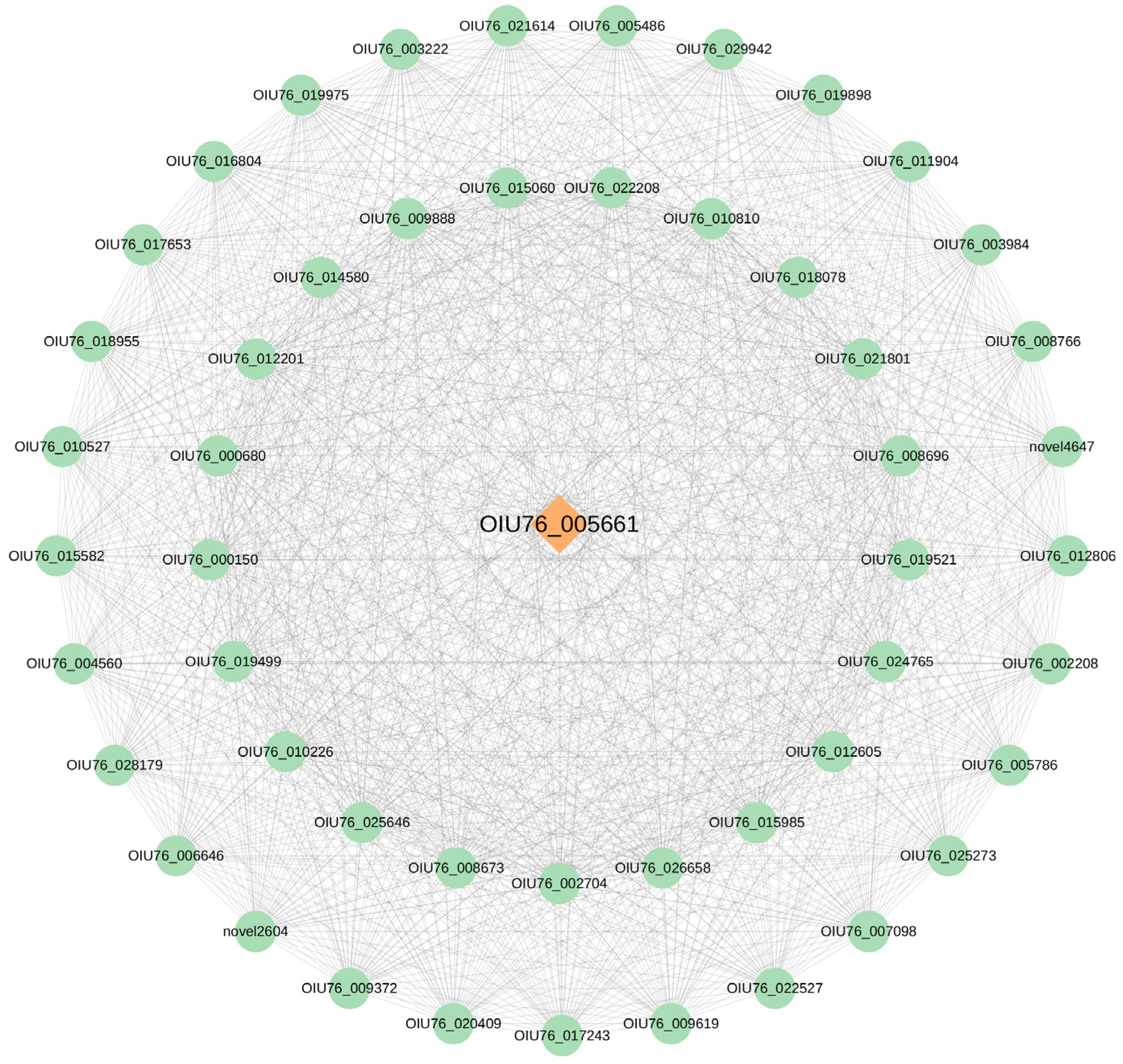
Within the brown module, the gene OIU76_005661 emerged as a hub based on its high intramodular connectivity and an expression pattern closely paralleling the temporal decline in anthocyanin concentration. To visualize the underlying co-expression network, Cytoscape (version 3.10.1) was employed to construct a subnetwork containing 20,874 edges (with weight > 0.2). The top 50 genes ranked by degree centrality were extracted and plotted to highlight putative regulatory hubs (Figure 9).
Figure 9.
Co-expression network of the brown module identified by WGCNA in the bark of Salix alba. The network highlights candidate key genes potentially involved in anthocyanin degradation. The hub gene OIU76_005661 is represented by an orange diamond, showing high intramodular connectivity and a negative correlation with anthocyanin content. The top 50 genes ranked by degree centrality are displayed as green circles, forming a putative regulatory subnetwork. Only edges with weights > 0.2 are shown to emphasize strong co-expression relationships. Network visualization was performed using Cytoscape.
2.9. Transcription Factor–Enzyme Co-Expression and Integrated Regulatory Framework of Anthocyanin Degradation
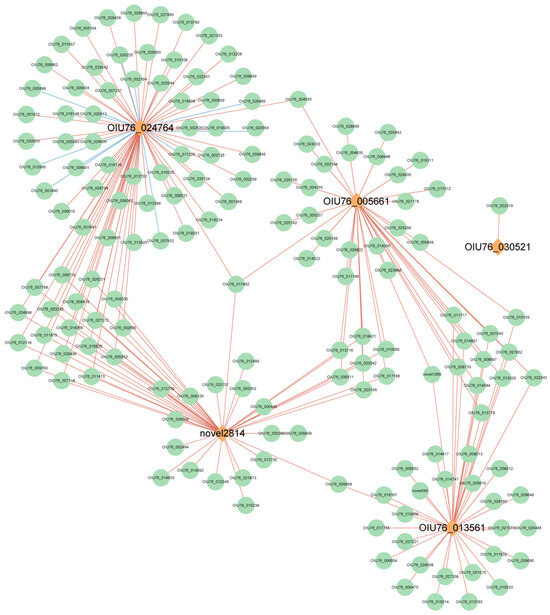
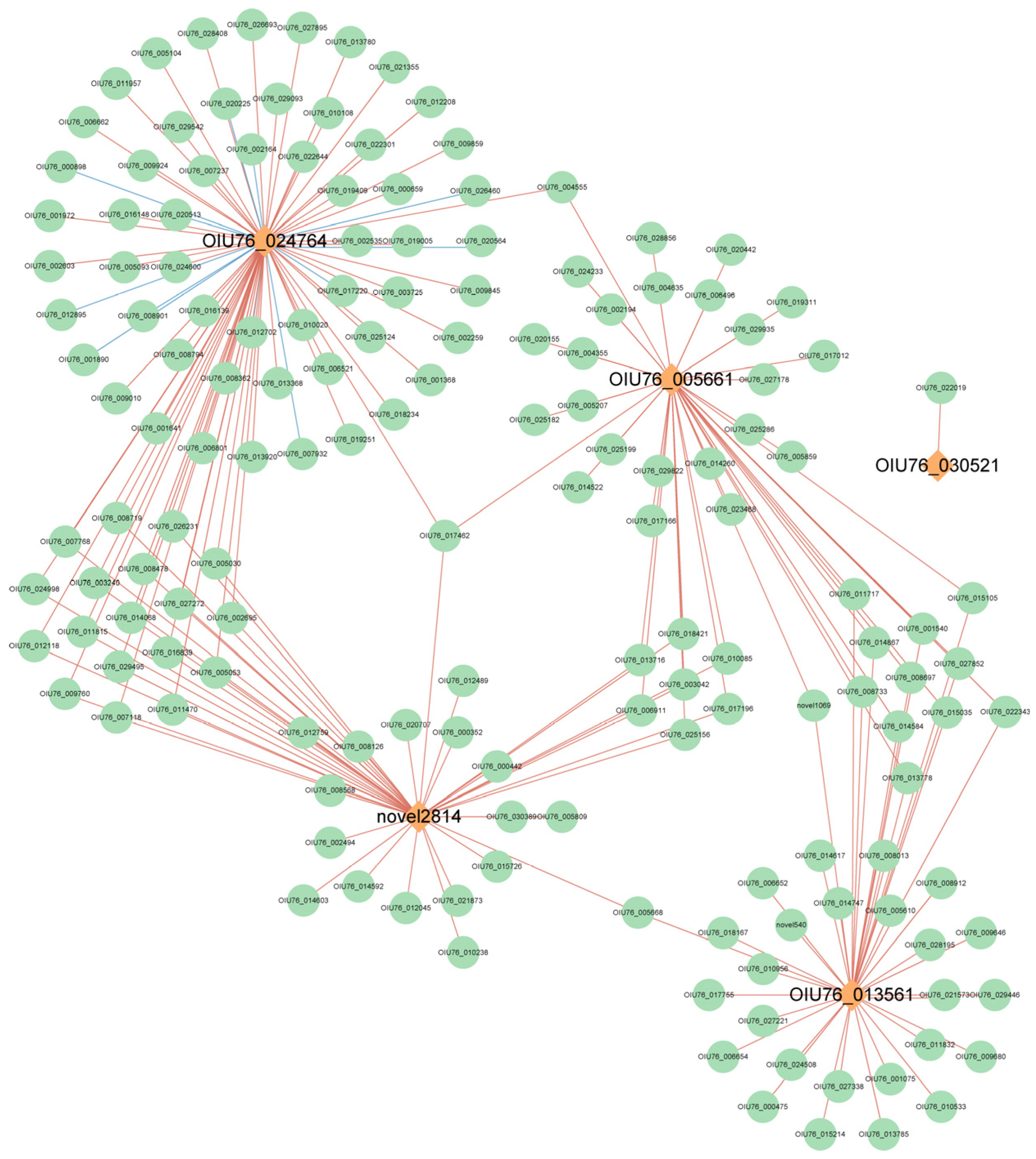
The five candidate genes (LAC1, LAC2, POD1, POD2, and BGLU10) exhibited significant co-expression patterns and, together with multiple transcription factors—particularly members of the MYB, bHLH, and CAMTA families—formed a putative core transcriptional regulatory module. To further dissect the regulatory hierarchy, the expression patterns of TFs identified from the transcriptome were compared with those of the key degradation-related genes, leading to the construction of a TF–target gene co-expression network (Figure 10). Within this network, CAMTA family TFs showed strong positive correlations with LAC1, LAC2, and POD1, suggesting their possible involvement in bark pigment metabolism via calcium signaling pathways. A bHLH TF exhibited a correlation coefficient of 0.91 with POD1, indicating a potentially crucial regulatory role within the TF–enzyme module [28]. In addition, WRKY TFs were also significantly co-expressed with POD1 (r = 0.901), implying a role for WRKYs in the regulation of anthocyanin degradation [29]. Nevertheless, their precise functions and mechanisms of action require further validation through experimental approaches such as yeast one-hybrid (Y1H), chromatin immunoprecipitation (ChIP), or gene editing.
Figure 10.
Co-expression network of anthocyanin degradation-related structural genes and transcription factors in the bark of Salix alba. Five key candidate enzyme genes (LAC1, LAC2, POD1, POD2, and BGLU10) are represented by orange diamonds, while transcription factors are depicted as green circles. Red edges indicate positive correlations and blue edges indicate negative correlations. The network reveals potential co-expression relationships between enzyme genes and transcription factors, including MYB, bHLH, CAMTA, and WRKY, suggesting that multi-level transcriptional regulation may underlie seasonal anthocyanin degradation in white willow bark.
3. Discussion
3.1. Spatiotemporal Dynamics of Anthocyanins in Bark and Ecological Implications
In this study, anthocyanin content in the bark of Salix alba exhibited pronounced stage-specific variation, with the peak and subsequent decline closely aligned with visible pigment fading. Such stage-dependent changes suggest that anthocyanin metabolism is tightly linked to seasonal development and environmental cues. This study demonstrates that anthocyanins in the bark of Salix alba exhibit pronounced spatiotemporal dynamics across developmental stages, indicating that their degradation is not merely a passive loss of pigments but rather a finely regulated metabolic process [30]. The stage-specific decline of anthocyanins during winter likely reflects adaptive strategies to low temperature, light variation, and seasonal stress conditions [31,32,33]. Beyond their conventional roles in photoprotection and antioxidative defense, the accumulation and degradation of anthocyanins may also contribute to the regulation of bark light absorption properties and antioxidant metabolism, thereby providing protective advantages under harsh winter environments [34,35]. Comparable seasonal dynamics of anthocyanins have been documented in other deciduous woody species, including willow (Salix alba spp.) [22], maple (Acer spp.) [34], and birch (Betula spp.) [36], where pigment accumulation and degradation are closely associated with bark light absorption, antifreeze protein activity, and osmotic adjustment. These findings suggest that anthocyanin degradation in bark represents an important metabolic strategy for seasonal environmental adaptation in woody plants. This interpretation also clarifies the biological significance of the observed up- and down-variation in anthocyanin content, linking pigment turnover to adaptive strategies under fluctuating seasonal conditions.
3.2. Candidate Enzyme Genes as Central Mediators of Anthocyanin Degradation
Transcriptome analysis revealed that LAC1, LAC2, POD1, POD2, and BGLU10 were highly expressed during stages D2–D4, with peak levels coinciding with the period of anthocyanin decline, suggesting that these enzymes play central roles in the degradation process [37]. Among them, LAC1/2 are likely to mediate anthocyanin oxidation [38], POD1/2 contribute to oxidative degradation through the regulation of H2O2 and other reactive oxygen species [39], while BGLU10 hydrolyzes anthocyanin glycosides [40], generating substrates that are more readily degraded. The expression of these enzymes may be influenced by environmental signals such as low temperature, light intensity, and spectral composition, thereby enabling functions related to photoprotection and thermal buffering. Similar enzyme-mediated degradation mechanisms have been observed in woody plants such as poplar (Populus spp.) [41], maple (Acer spp.) [42], and tea (Camellia sinensis) [43], indicating that bark anthocyanin degradation may represent a broadly conserved adaptive metabolic strategy. To further clarify the regulatory context of these enzyme genes, functional enrichment analysis was performed.
3.3. Functional Enrichment Reveals Multi-Layered Metabolic Regulation
Functional enrichment analysis indicated that the differentially expressed genes (DEGs) were predominantly associated with redox processes, hydrolase activity, glycosidic bond hydrolysis, flavonoid metabolism, and plant hormone signaling pathways. These enriched categories were broadly consistent with the regulatory patterns revealed by the co-expression networks of structural enzymes and transcription factors, suggesting that anthocyanin degradation is subject to multi-layered regulation. In this process, glycosidic hydrolysis may release substrates susceptible to degradation, while redox-related enzymes influence the progression of degradation by modulating local reactive oxygen species (ROS) levels [44]. In parallel, plant hormone signaling pathways—such as AUX/IAA and ABA—may exert additional control through transcription factor-mediated regulation [45,46]. Similar associations between anthocyanin accumulation/degradation and environmental cues such as light, temperature, and seasonal signals have been reported in woody plants including camphor (Cinnamomum camphora) [47], birch (Betula spp.) [48], and oak (Quercus spp.) [49], highlighting the pivotal role of anthocyanin degradation in seasonal environmental adaptation and carbon allocation in woody species. Furthermore, metabolic reallocation may contribute to carbon storage during dormancy and provide energy during spring bud break, indicating that anthocyanin degradation is not merely a consequence of pigment metabolism but also an integral component of the ecological adaptation strategies of woody plants [50,51,52,53].
3.4. Transcription Factors and Co-Expression Networks in Regulatory Control
Weighted gene co-expression network analysis (WGCNA) revealed that multiple transcription factors (TFs), including MYB, bHLH, WRKY, bZIP, HB-PHD, G2-like, and ARR-B, exhibited co-expression patterns with structural enzymes, indicating that anthocyanin degradation is governed by a complex transcriptional regulatory network [54]. The MYB/bHLH complex within the MBW system may simultaneously regulate both biosynthetic and degradation-related genes, thereby maintaining the dynamic balance of bark coloration [55,56]. WRKY TFs are known to respond to oxidative stress and hormonal signaling [57], while bZIP and HD-ZIP TFs may integrate light and temperature signals to further regulate the expression of LAC, POD, and BGLU genes [58]. Similar phenomena have been reported in larch (Larix spp.) [59] and poplar (Populus spp.) [60], where WRKY TFs and peroxidase genes are co-upregulated during winter or under light stress, thereby coordinating local ROS regulation with anthocyanin degradation. These findings indicate that the dynamic variation in bark anthocyanins reflects not only a metabolic process but also the integrative capacity of woody plants to process environmental information. Building upon these observations, broader integration of transcription factor–enzyme modules highlights the multi-layered regulatory framework of anthocyanin degradation.
Collectively, the results indicate that anthocyanin degradation in Salix alba bark is likely governed by a multi-layered transcriptional regulatory system, encompassing both broad-spectrum transcription factors responsive to environmental cues and key regulators specifically targeting flavonoid metabolism. Comparable WGCNA-based co-expression regulatory networks have been reported in tea (Camellia sinensis) [61], grape (Vitis vinifera) [62], and litchi (Litchi chinensis) [63], suggesting that transcriptional reprogramming associated with pigment fading and senescence may be evolutionarily conserved across plant species. Together, these results suggest that POD, LAC, BGLU10 and hub TFs (MYB, bHLH, CAMTA) form core regulatory modules underlying seasonal bark coloration in S. alba, highlighting anthocyanin degradation as a tightly coordinated and environmentally responsive process. Despite these advances, some important limitations should be acknowledged.
3.5. Limitations and Future Perspectives
It should be noted that although this study incorporated monthly climate background data (temperature and precipitation) from publicly available meteorological datasets, it did not directly measure environmental variables such as light intensity, spectral composition, or endogenous hormone levels. Therefore, the environmental responsiveness of anthocyanin dynamics in Salix alba bark remains to be further validated. Moreover, as this work focused on one-year-old shoots, the applicability of the findings to mature trees requires further confirmation. Nevertheless, by integrating evidence from ROS accumulation, antioxidant enzyme activity, and transcriptomic analyses, we propose that anthocyanin degradation may represent an adaptive strategy regulated through gene × environment interactions. Future research incorporating real-time environmental monitoring, endogenous hormone profiling, and functional validation approaches (e.g., CRISPR/Cas9 or transgenic experiments) will be critical to elucidate the precise roles of specific enzymes and transcription factors under natural conditions. Furthermore, additional studies should explore the potential functions of anthocyanin degradation in cold tolerance, light stress resistance, and pathogen defense of woody plants, thereby providing a robust molecular basis for ornamental tree breeding and sustainable forest management.
In summary, this study advances the current understanding of anthocyanin metabolism in Salix alba bark by linking pigment dynamics with structural enzymes (LAC1/2, POD1/2, and BGLU10), transcription factors, and their regulatory networks. The findings highlight the dynamic balance between anthocyanin biosynthesis and degradation and its potential roles in environmental adaptation, offering valuable insights into seasonal metabolic regulation, stress resilience, and ornamental trait improvement in woody plants. Future research should extend this framework to other deciduous tree species to further elucidate the general functions of anthocyanins in light acclimation, carbon allocation, stress resistance, and defense. Such efforts will provide a solid theoretical basis for forest ecology and functional genomics in woody species.
4. Materials and Methods
4.1. Plant Materials, Experimental Site, and Climate Background
Ten healthy one-year-old Salix alba plants propagated from the same batch of cuttings were cultivated at the Sanfen Experimental Base of Hebei Agricultural University, Baoding, China (115°24′56″ E, 38°48′35″ N). The region has a temperate monsoon climate with a mean annual temperature of ~12.5 °C and an average annual precipitation of ~550 mm, based on records from the Baoding Meteorological Station. To provide environmental context, monthly mean temperature and precipitation during the sampling period (November 2024–March 2025, corresponding to D1–D5) are summarized in Table 2. The soil type was classified as brown loam with a pH of 7.2–7.5. All plants were maintained under uniform silvicultural management, including standardized irrigation, fertilization, and pest control, to minimize confounding environmental variation.
Table 2.
Monthly mean temperature (°C) and precipitation (mm/day) at the experimental site in Baoding, Hebei Province, China, during the sampling period (November 2024–March 2025; stages D1–D5). Climate data were obtained from the NASA POWER Climate Data Service (https://power.larc.nasa.gov) for the grid cell centered at 38.92°N, 115.68°E, and represent model-based reanalysis estimates rather than direct ground observations.
4.2. Sampling Design and Sample Preparation
Sampling commenced on 23 November 2024 (D1) and was conducted every 25 ± 1 days across five stages (D1–D5), thereby covering developmental transitions from late autumn to early spring. The 25-day interval was determined based on preliminary observations of seasonal bark pigment variation to ensure the capture of critical stages of anthocyanin metabolism. At each stage, vigorous branches were collected from the sun-exposed side of current-year shoots (diameter 0.8–1.2 cm, length ~10 cm) of all 10 individuals to reduce intra-plant microenvironmental heterogeneity.
To establish three independent biological replicates at each stage, a pooled sampling strategy was adopted. For each replicate, equal bark segments from a randomly selected subset of the 10 individuals were combined, ensuring proportional representation of all plants. This design minimized individual-level variability while enhancing the robustness of stage-specific comparisons. Each pooled sample was divided into two portions, one for anthocyanin quantification and the other for transcriptomic sequencing. Immediately after harvest, samples were flash-frozen in liquid nitrogen and stored at –80 °C. Prior to analysis, the bark periderm was removed, and the underlying phloem tissue was collected, ground into fine powder under liquid nitrogen, and used for subsequent experiments.
4.3. Anthocyanin Quantification
Total anthocyanin content in bark tissues was quantified using acidified methanol extraction coupled with a modified spectrophotometric method. Approximately 0.1 g of phloem tissue, previously ground in liquid nitrogen, was extracted with 1 mL of acidified methanol (0.1% HCl, v/v) under dark conditions at 4 °C for 48 h to enhance the recovery of anthocyanins, including partially conjugated forms. The extracts were centrifuged at 12,000× g for 10 min at 4 °C, and the supernatant was collected for absorbance measurement at 530 nm and 657 nm using a UV–Vis spectrophotometer (UV-1800, Shimadzu, Kyoto, Japan). The corrected absorbance was calculated as ΔA = A530 − A657.
The total anthocyanin content was determined according to the following equation:
In this formula, 0.005 L represents the extraction volume; 445.2 g·mol−1 corresponds to the molecular weight of cyanidin-3-galactoside; 30,200 L·mol−1·cm−1 is its molar extinction coefficient; 0.1 g denotes the fresh weight of the sample; and 1000 is the conversion factor. The calculation was adapted from the pH differential method described by Giusti and Wrolstad (2001) (Current Protocols in Food Analytical Chemistry, John Wiley & Sons) with modifications to accommodate the experimental conditions, including detection wavelengths, sample mass, and extraction system [64].
4.4. RNA Extraction and Transcriptome Sequencing
Total RNA was extracted from ground phloem tissue using the Plant RNA Kit (Tiangen Biotech, Beijing, China) following the manufacturer’s protocol. RNA quality was evaluated by 1.5% agarose gel electrophoresis, a NanoDrop 2000 spectrophotometer (Thermo Fisher Scientific, Waltham, MA, USA), and an Agilent 2100 Bioanalyzer (Agilent Technologies, Santa Clara, CA, USA). Samples with RNA integrity number (RIN) ≥ 7.0 and OD260/280 between 1.8 and 2.2 were used for library preparation.
RNA-seq libraries were prepared with the NEBNext® Ultra™ RNA Library Prep Kit (New England Biolabs, Ipswich, MA, USA) and sequenced on an Illumina NovaSeq 6000 platform (paired-end 2 × 150 bp) by Benagen Tech Solutions (Wuhan, China).
4.5. Transcriptome Data Processing and Co-Expression Network Analysis
Raw sequencing reads were processed with Fastp v0.23.2 to remove adapters and low-quality sequences. Clean reads were aligned to the Salix alba reference genome (GCA_029030765.1_ASM2903076v1) using HISAT2 v2.2.1. Transcript assembly and expression quantification were performed with StringTie v2.2.0, and expression levels were normalized as fragments per kilobase of transcript per million mapped reads (FPKM).
Differentially expressed genes (DEGs) were identified using DESeq2 v1.30.0 with thresholds of |log2 fold change| ≥ 1 and adjusted p < 0.05. Functional annotation was conducted via BLASTx searches against the NR, SwissProt, Pfam, GO, and KEGG databases. GO enrichment was performed using the topGO R package(version 2.52.0), and KEGG pathway enrichment with KOBAS 3.0.
For weighted gene co-expression network analysis (WGCNA), genes with FPKM < 1 in all samples were excluded. A soft-thresholding power (β) of 16 was chosen to approximate scale-free topology. Gene modules were identified using the blockwiseModules function with dynamic tree cutting, and Pearson correlation analysis was applied to assess module–trait associations using anthocyanin content as a quantitative trait. Hub genes were defined as those with module membership (kME) > 0.8.
4.6. Transcription Factor Annotation and Co-Expression Analysis
To identify transcription factors (TFs) potentially involved in anthocyanin degradation, all assembled unigenes were searched against the Plant Transcription Factor Database (PlantTFDB v5.0) using BLASTX with an E-value cutoff of 1 × 10⁻⁵. In total, 2207 TFs were identified across 57 families, with MYB (n = 468) being the most abundant, followed by bHLH, WRKY, C3H, and CAMTA—families previously linked to flavonoid metabolism and abiotic stress responses.
For TF–target co-expression network construction, Pearson correlation coefficients were calculated between the expression profiles of TFs and differentially expressed genes (DEGs). Pairs with |r| ≥ 0.8 and p < 0.01 were retained, and networks were visualized in Cytoscape v3.9.1. TFs co-expressed with candidate structural genes (peroxidases, laccases, β-glucosidases) or WGCNA-identified hub genes were prioritized as strong candidates for regulating anthocyanin catabolism in Salix alba bark.
4.7. Statistical Analysis
All experiments were performed with three biological replicates unless otherwise specified. Data are expressed as mean ± standard deviation (SD). Differences in anthocyanin content among developmental stages (D1–D5) were analyzed using one-way analysis of variance (ANOVA), followed by Tukey’s honest significant difference (HSD) test for multiple comparisons at a significance level of p < 0.05. All statistical analyses were conducted using GraphPad Prism 9 (GraphPad Software, San Diego, CA, USA).
5. Conclusions
In conclusion, this study systematically elucidated the dynamics of anthocyanin degradation in the bark of Salix alba across different developmental stages. The results suggest that key structural enzymes, including LAC1/2, POD1/2, and BGLU10, together with multiple transcription factors such as MYB, bHLH, and WRKY, are potentially involved in this process, in close association with redox reactions, glycoside hydrolysis, flavonoid metabolism, and plant hormone signaling pathways. These findings provide important insights into the dynamic regulation of bark pigmentation and its underlying molecular networks in woody plants, although their precise functions still require further validation under natural environmental conditions. Overall, this study offers a scientific basis and preliminary clues for exploring the molecular mechanisms of anthocyanin degradation, as well as for advancing research on stress resilience and ornamental traits in woody species.
Author Contributions
Conceptualization, H.-Y.W.; formal analysis, H.-Y.W.; methodology, H.-Y.W.; investigation, H.-Y.W., M.-Z.Y. and S.-J.C.; resources, X.-J.L. and H.-Y.L.; data curation, H.-Y.W.; writing—original draft preparation, H.-Y.W.; writing—review and editing, H.-Y.L.; project administration, H.-Y.L. and Z.-H.X.; Funding acquisition, Z.-H.X. All authors have read and agreed to the published version of the manuscript.
Funding
This research was funded by Research and Application of Key Technology of Willow Flying Flocs Treatment (13000024P00141410178C).
Data Availability Statement
Data are contained within the article.
Conflicts of Interest
The authors declare no conflicts of interest.
References
- Xu, L.; Wang, X. A Comprehensive Review of Phenolic Compounds in Horticultural Plants. Int. J. Mol. Sci. 2025, 26, 5767. [Google Scholar] [CrossRef]
- Kuang, L.; Chen, J.; Bao, X.; Zhang, D.; Liu, J.; Wang, W.; Wei, Y.; Zong, C. Environmental and Phytohormonal Factors Regulating Anthocyanin Biosynthesis in Fruits. Horticulturae 2025, 11, 681. [Google Scholar] [CrossRef]
- Câmara, J.S.; Locatelli, M.; Pereira, J.A.M.; Oliveira, H.; Arlorio, M.; Fernandes, I.; Perestrelo, R.; Freitas, V.; Bordiga, M. Behind the Scenes of Anthocyanins—From the Health Benefits to Potential Applications in Food, Pharmaceutical and Cosmetic Fields. Nutrients 2022, 14, 5133. [Google Scholar] [CrossRef] [PubMed]
- Cheaib, A.; Mahmoud, L.M.; Vincent, C.; Killiny, N.; Dutt, M. Influence of Anthocyanin Expression on the Performance of Photosynthesis in Sweet Orange, Citrus sinensis (L.) Osbeck. Plants 2023, 12, 3965. [Google Scholar] [CrossRef] [PubMed]
- Ashikhmin, A.; Bolshakov, M.; Pashkovskiy, P.; Vereshchagin, M.; Khudyakova, A.; Shirshikova, G.; Kozhevnikova, A.; Kosobryukhov, A.; Kreslavski, V.; Kuznetsov, V.; et al. The Adaptive Role of Carotenoids and Anthocyanins in Solanum lycopersicum Pigment Mutants under High Irradiance. Cells 2023, 12, 2569. [Google Scholar] [CrossRef] [PubMed]
- Mohammed, H.A.; Khan, R.A. Anthocyanins: Traditional Uses, Structural and Functional Variations, Approaches to Increase Yields and Products’ Quality, Hepatoprotection, Liver Longevity, and Commercial Products. Int. J. Mol. Sci. 2022, 23, 2149. [Google Scholar] [CrossRef]
- Dabravolski, S.A.; Isayenkov, S.V. The Role of Anthocyanins in Plant Tolerance to Drought and Salt Stresses. Plants 2023, 12, 2558. [Google Scholar] [CrossRef]
- Duan, X.; Wang, K.; Tang, R.; Liu, J.; Cheng, K.; Gao, G.; Wang, Y.; Qin, G. Recent advances in biosynthesis and regulation of strawberry anthocyanins. Hortic. Res. 2025, 12, uhaf135. [Google Scholar] [CrossRef]
- Zhao, G.; Xiang, F.; Zhang, S.; Song, J.; Li, X.; Song, L.; Zhai, R.; Yang, C.; Wang, Z.; Ma, F.; et al. PbLAC4-like, activated by PbMYB26, related to the degradation of anthocyanin during color fading in pear. BMC Plant Biol. 2021, 21, 469. [Google Scholar] [CrossRef]
- Wu, Y.; Han, T.; Lyu, L.; Li, W.; Wu, W. Research progress in understanding the biosynthesis and regulation of plant anthocyanins. Sci. Hortic. 2023, 321, 112374. [Google Scholar] [CrossRef]
- Zhao, Y.W.; Wang, C.K.; Huang, X.Y.; Hu, D.G. Anthocyanin stability and degradation in plants. Plant Signal. Behav. 2021, 16, 1987767. [Google Scholar] [CrossRef] [PubMed]
- Sun, T.; Wang, M.; Ren, H.; Xiong, Q.; Xu, J.; Yang, X.; Chen, Y.; Zhang, W. Comprehensive analysis of the physiological, metabolome, and transcriptome provided insights into anthocyanin biosynthesis and degradation of Malus crabapple. Plant Physiol. Biochem. 2025, 223, 109821. [Google Scholar] [CrossRef] [PubMed]
- Ha, H.; Thuy, N. Kinetic study on peroxidase inactivation and anthocyanin degradation of black cherry tomatoes (Solanum lycopersicum cv. OG) during blanching. Herba Pol. 2021, 67, 60–69. [Google Scholar] [CrossRef]
- Adhikari, J.; Araghi, L.R.; Singh, R.; Adhikari, K.; Patil, B.S. Continuous-Flow High-Pressure Homogenization of Blueberry Juice Enhances Anthocyanin and Ascorbic Acid Stability during Cold Storage. J. Agric. Food Chem. 2024, 72, 11629–11639. [Google Scholar] [CrossRef]
- Achim, F.; Dinca, L.; Chira, D.; Raducu, R.; Chirca, A.; Murariu, G. Sustainable Management of Willow Forest Landscapes: A Review of Ecosystem Functions and Conservation Strategies. Land 2025, 14, 1593. [Google Scholar] [CrossRef]
- Xin, Y.; Huang, R.; Xu, M.; Xu, L.A. Transcriptome-Wide Identification and Response Pattern Analysis of the Salix integra NAC Transcription Factor in Response to Pb Stress. Int. J. Mol. Sci. 2023, 24, 11334. [Google Scholar] [CrossRef]
- Yang, Y.; Chen, M.; Zhang, W.; Zhu, H.; Li, H.; Niu, X.; Zhou, Z.; Hou, X.; Zhu, J. Metabolome combined with transcriptome profiling reveals the dynamic changes in flavonoids in red and green leaves of Populus × euramericana ‘Zhonghuahongye’. Front. Plant Sci. 2023, 14, 1274700. [Google Scholar] [CrossRef]
- Guo, S.; Wang, S.; Zhao, S.; Zhang, X.; Ji, X.; Yun, C.; Wu, S.; Takayoshi, K.; Wang, W.; Wang, H. Plant species richness regulated by geographical variation down-regulates triterpenoid compounds production and antioxidant activities in white birch bark. Flora 2023, 305, 152343. [Google Scholar] [CrossRef]
- Almuktar, S.A.A.A.N.; Abed, S.N.; Scholz, M. Biomass Production and Metal Remediation by Salix alba L. and Salix viminalis L. Irrigated with Greywater Treated by Floating Wetlands. Environments 2024, 11, 44. [Google Scholar] [CrossRef]
- Bajraktari, D.; Bauer, B.; Zeneli, L. Antioxidant Capacity of Salix alba (Fam. Salicaceae) and Influence of Heavy Metal Accumulation. Horticulturae 2022, 8, 642. [Google Scholar] [CrossRef]
- Piątczak, E.; Dybowska, M.; Płuciennik, E.; Kośla, K.; Kolniak-Ostek, J.; Kalinowska-Lis, U. Identification and accumulation of phenolic compounds in the leaves and bark of Salix alba (L.) and their biological potential. Biomolecules 2020, 10, 1391. [Google Scholar] [CrossRef]
- Zhou, J.; Guo, J.; Chen, Q.; Wang, B.; He, X.; Zhuge, Q.; Wang, P. Different color regulation mechanism in willow barks determined using integrated metabolomics and transcriptomics analyses. BMC Plant Biol. 2022, 22, 530. [Google Scholar] [CrossRef]
- Zheng, L.; Jacquier, J.-C.; Harbourne, N. Preparation of Polyphenol-Rich Herbal Beverages from White Willow (Salix alba) Bark with Potential Alzheimer’s Disease Inhibitory Activity In Silico. Beverages 2024, 10, 75. [Google Scholar] [CrossRef]
- Rehman, R.N.U.; You, Y.; Zhang, L.; Goudia, B.D.; Khan, A.R.; Li, P.; Ma, F. High Temperature Induced Anthocyanin Inhibition and Active Degradation in Malus profusion. Front. Plant Sci. 2017, 8, 1401. [Google Scholar] [CrossRef]
- Schumaker, B.; Mortensen, L.; Klein, R.R.; Mandal, S.; Dykes, L.; Gladman, N.; Rooney, W.L.; Burson, B.; Klein, P.E. UV-induced reactive oxygen species and transcriptional control of 3-deoxyanthocyanidin biosynthesis in black sorghum pericarp. Front. Plant Sci. 2024, 15, 1451215. [Google Scholar] [CrossRef]
- Enaru, B.; Drețcanu, G.; Pop, T.D.; Stǎnilǎ, A.; Diaconeasa, Z. Anthocyanins: Factors Affecting Their Stability and Degradation. Antioxidants 2021, 10, 1967. [Google Scholar] [CrossRef]
- Langfelder, P.; Horvath, S. WGCNA: An R package for weighted correlation network analysis. BMC Bioinform. 2008, 9, 559. [Google Scholar] [CrossRef]
- An, J.P.; Wang, X.F.; Zhang, X.W.; Xu, H.F.; Bi, S.Q.; You, C.X.; Hao, Y.J. An apple MYB transcription factor regulates cold tolerance and anthocyanin accumulation and undergoes MIEL1-mediated degradation. Plant Biotechnol. J. 2020, 18, 337–353. [Google Scholar] [CrossRef] [PubMed]
- Tao, H.; Gao, F.; Linying, L.; He, Y.; Zhang, X.; Wang, M.; Wei, J.; Zhao, Y.; Zhang, C.; Wang, Q.; et al. WRKY33 negatively regulates anthocyanin biosynthesis and cooperates with PHR1 to mediate acclimation to phosphate starvation. Plant Commun. 2024, 5, 100821. [Google Scholar] [CrossRef] [PubMed]
- Liu, Y.; Tikunov, Y.; Schouten, R.E.; Marcelis, L.F.M.; Visser, R.G.F.; Bovy, A. Anthocyanin Biosynthesis and Degradation Mechanisms in Solanaceous Vegetables: A Review. Front. Chem. 2018, 6, 52. [Google Scholar] [CrossRef] [PubMed]
- Zhang, Q.; Zhai, J.; Shao, L.; Lin, W.; Peng, C. Accumulation of Anthocyanins: An Adaptation Strategy of Mikania micrantha to Low Temperature in Winter. Front. Plant Sci. 2019, 10, 1049. [Google Scholar] [CrossRef]
- Li, Z.; Ahammed, G.J. Plant stress response and adaptation via anthocyanins: A review. Plant Stress 2023, 10, 100230. [Google Scholar] [CrossRef]
- He, Q.; Ren, Y.; Zhao, W.; Li, R.; Zhang, L. Low Temperature Promotes Anthocyanin Biosynthesis and Related Gene Expression in the Seedlings of Purple Head Chinese Cabbage (Brassica rapa L.). Genes 2020, 11, 81. [Google Scholar] [CrossRef] [PubMed]
- Zhao, S.; Blum, J.A.; Ma, F.; Wang, Y.; Borejsza-Wysocka, E.; Ma, F.; Cheng, L.; Li, P. Anthocyanin Accumulation Provides Protection against High Light Stress While Reducing Photosynthesis in Apple Leaves. Int. J. Mol. Sci. 2022, 23, 12616. [Google Scholar] [CrossRef] [PubMed]
- Hughes, N.M.; Neufeld, H.S.; Burkey, K.O. Functional role of anthocyanins in high-light winter leaves of the evergreen herb Galax urceolata. New Phytol. 2005, 168, 575–587. [Google Scholar] [CrossRef]
- Yang, L.; Zhang, D.; Qiu, S.; Gong, Z.; Shen, H. Effects of environmental factors on seedling growth and anthocyanin content in Betula ‘Royal Frost’ leaves. J. For. Res. 2017, 28, 1147–1155. [Google Scholar] [CrossRef]
- Zhang, A.; Yang, H.; Ji, S.; Tian, C.; Chen, N.; Gong, H.; Li, J. Metabolome and Transcriptome Analyses of Anthocyanin Accumulation Mechanisms Reveal Metabolite Variations and Key Candidate Genes Involved in the Pigmentation of Prunus tomentosa Thunb. Cherry Fruit. Front. Plant Sci. 2022, 13, 938908. [Google Scholar] [CrossRef]
- Fang, F.; Zhang, X.L.; Luo, H.H.; Zhou, J.J.; Gong, Y.H.; Li, W.J.; Shi, Z.W.; He, Q.; Wu, Q.; Li, L.; et al. An Intracellular Laccase Is Responsible for Epicatechin-Mediated Anthocyanin Degradation in Litchi Fruit Pericarp. Plant Physiol. 2015, 169, 2391–2408. [Google Scholar] [CrossRef]
- Zhang, Z.; Pang, X.; Xuewu, D.; Ji, Z.; Jiang, Y. Role of peroxidase in anthocyanin degradation in litchi fruit pericarp. Food Chem. 2005, 90, 47–52. [Google Scholar] [CrossRef]
- Yuan, K.; Li, X.; Zeng, Y.; Liu, C.; Zhu, Y.; Hu, J.; Sun, J.; Bai, W. Chemical stability of carboxylpyranocyanidin-3-O-glucoside under β-glucosidase treatment and description of their interaction. Food Chem. 2024, 447, 138840. [Google Scholar] [CrossRef]
- Tallis, M.J.; Lin, Y.; Rogers, A.; Zhang, J.; Street, N.R.; Miglietta, F.; Karnosky, D.F.; De Angelis, P.; Calfapietra, C.; Taylor, G. The transcriptome of Populus in elevated CO2 reveals increased anthocyanin biosynthesis during delayed autumnal senescence. New Phytol. 2010, 186, 415–428. [Google Scholar] [CrossRef]
- Wu, K.; Liu, Y.; Liu, J.; Ren, Y.; Liu, Y.; Sun, F.; Abozeid, A.; Tang, Z.; Mu, L. Comparison of Seasonally Adaptive Metabolic Response Strategies of Two Acer Species. Forests 2022, 13, 2141. [Google Scholar] [CrossRef]
- Maritim, T.K.; Masand, M.; Seth, R.; Sharma, R.K. Transcriptional analysis reveals key insights into seasonal induced anthocyanin degradation and leaf color transition in purple tea (Camellia sinensis (L.) O. Kuntze). Sci. Rep. 2021, 11, 1244. [Google Scholar] [CrossRef] [PubMed]
- Zoclanclounon, Y.A.B.; Rostás, M.; Chung, N.J.; Mo, Y.; Karlovsky, P.; Dossa, K. Characterization of Peroxidase and Laccase Gene Families and In Silico Identification of Potential Genes Involved in Upstream Steps of Lignan Formation in Sesame. Life 2022, 12, 1200. [Google Scholar] [CrossRef] [PubMed]
- Huang, L.; Lin, B.; Hao, P.; Yi, K.; Li, X.; Hua, S. Multi-Omics Analysis Reveals That Anthocyanin Degradation and Phytohormone Changes Regulate Red Color Fading in Rapeseed (Brassica napus L.) Petals. Int. J. Mol. Sci. 2024, 25, 2577. [Google Scholar] [CrossRef]
- Gao, C.; Sun, Y.; Li, J.; Zhou, Z.; Deng, X.; Wang, Z.; Wu, S.; Lin, L.; Huang, Y.; Zeng, W.; et al. High Light Intensity Triggered Abscisic Acid Biosynthesis Mediates Anthocyanin Accumulation in Young Leaves of Tea Plant (Camellia sinensis). Antioxidants 2023, 12, 392. [Google Scholar] [CrossRef]
- Wu, X.; Li, Y.; Du, T.; Kang, L.; Pei, B.; Zhuang, W.; Tang, F. Transcriptome sequencing and anthocyanin metabolite analysis involved in leaf red color formation of Cinnamomum camphora. Sci. Rep. 2024, 14, 31470. [Google Scholar] [CrossRef]
- Sirgedaitė-Šėžienė, V.; Čėsnienė, I.; Vaitiekūnaitė, D. Temporal Variations in Enzymatic and Non-Enzymatic Antioxidant Activity in Silver Birch (Betula pendula Roth.): The Genetic Component. Forests 2024, 15, 1262. [Google Scholar] [CrossRef]
- Yang, X.; Yang, N.; Zhang, Q.; Pei, Z.; Chang, M.; Zhou, H.; Ge, Y.; Yang, Q.; Li, G. Anthocyanin Biosynthesis Associated with Natural Variation in Autumn Leaf Coloration in Quercus aliena Accessions. Int. J. Mol. Sci. 2022, 23, 12179. [Google Scholar] [CrossRef]
- Pei, Z.; Huang, Y.; Ni, J.; Liu, Y.; Yang, Q. For a Colorful Life: Recent Advances in Anthocyanin Biosynthesis during Leaf Senescence. Biology 2024, 13, 329. [Google Scholar] [CrossRef]
- Fermaniuk, C.; Fleurial, K.G.; Wiley, E.; Landhäusser, S.M. Large seasonal fluctuations in whole-tree carbohydrate reserves: Is storage more dynamic in boreal ecosystems? Ann. Bot. 2021, 128, 943–957. [Google Scholar] [CrossRef]
- Bowling, D.R.; Schädel, C.; Smith, K.R.; Richardson, A.D.; Bahn, M.; Arain, M.A.; Varlagin, A.; Ouimette, A.P.; Frank, J.M.; Barr, A.G.; et al. Phenology of Photosynthesis in Winter-Dormant Temperate and Boreal Forests: Long-Term Observations From Flux Towers and Quantitative Evaluation of Phenology Models. J. Geophys. Res. Biogeosci. 2024, 129, e2023JG007839. [Google Scholar] [CrossRef]
- Acharya, T.P.; Malladi, A.; Nambeesan, S.U. Sustained carbon import supports sugar accumulation and anthocyanin biosynthesis during fruit development and ripening in blueberry (Vaccinium ashei). Sci. Rep. 2024, 14, 24964. [Google Scholar] [CrossRef]
- Xu, C.; Huang, H.; Tan, C.; Gao, L.; Wan, S.; Zhu, B.; Chen, D.; Zhu, B. Transcriptome and WGCNA Analyses Reveal Key Genes Regulating Anthocyanin Biosynthesis in Purple Sprout of Pak Choi (Brassica rapa L. ssp. chinensis). Int. J. Mol. Sci. 2024, 25, 11736. [Google Scholar] [CrossRef] [PubMed]
- Broucke, E.; Dang, T.T.V.; Li, Y.; Hulsmans, S.; Van Leene, J.; De Jaeger, G.; Hwang, I.; Wim, V.d.E.; Rolland, F. SnRK1 inhibits anthocyanin biosynthesis through both transcriptional regulation and direct phosphorylation and dissociation of the MYB/bHLH/TTG1 MBW complex. Plant J. 2023, 115, 1193–1213. [Google Scholar] [CrossRef] [PubMed]
- Cappellini, F.; Marinelli, A.; Toccaceli, M.; Tonelli, C.; Petroni, K. Anthocyanins: From Mechanisms of Regulation in Plants to Health Benefits in Foods. Front. Plant Sci. 2021, 12, 748049. [Google Scholar] [CrossRef] [PubMed]
- Zhang, Z.; Chen, C.; Jiang, C.; Lin, H.; Zhao, Y.; Guo, Y. VvWRKY5 positively regulates wounding-induced anthocyanin accumulation in grape by interplaying with VvMYBA1 and promoting jasmonic acid biosynthesis. Hortic. Res. 2024, 11, uhae083. [Google Scholar] [CrossRef]
- Gai, S.; Du, B.; Xiao, Y.; Zhang, X.; Turupu, M.; Yao, Q.; Wang, X.; Yan, Y.; Li, T. bZIP Transcription Factor PavbZIP6 Regulates Anthocyanin Accumulation by Increasing Abscisic Acid in Sweet Cherry. Int. J. Mol. Sci. 2024, 25, 10207. [Google Scholar] [CrossRef]
- Wang, C.; Zhao, Q.; Zhang, L.; Zhang, H. Expression Pattern Analysis of Larch WRKY in Response to Abiotic Stress. Forests 2022, 13, 2123. [Google Scholar] [CrossRef]
- Levée, V.; Major, I.; Levasseur, C.; Tremblay, L.; MacKay, J.; Séguin, A. Expression profiling and functional analysis of Populus WRKY23 reveals a regulatory role in defense. New Phytol. 2009, 184, 48–70. [Google Scholar] [CrossRef]
- Xia, P.; Chen, M.; Chen, L.; Yang, Y.; Ma, L.; Bi, P.; Tang, S.; Luo, Q.; Chen, J.; Chen, H.; et al. Deciphering the Anthocyanin Metabolism Gene Network in tea plant(Camellia sinensis) through Structural Equation modeling. BMC Genom. 2024, 25, 1093. [Google Scholar] [CrossRef]
- Fu, G.; Ren, Y.; Kang, J.; Wang, B.; Zhang, J.; Fang, J.; Wu, W. Integrative analysis of grapevine (Vitis vinifera L) transcriptome reveals regulatory network for Chardonnay quality formation. Front. Nutr. 2023, 10, 1187842. [Google Scholar] [CrossRef]
- Hu, B.; Li, J.; Wang, D.; Wang, H.-C.; Yonghua, Q.; Hu, G.; Zhao, J. Transcriptome profiling of Litchi chinensis pericarp in response to exogenous cytokinins and abscisic acid. Plant Growth Regul. 2018, 84, 437–450. [Google Scholar] [CrossRef]
- Giusti, M.M.; Wrolstad, R.E. Characterization and Measurement of Anthocyanins by UV-Visible Spectroscopy. Curr. Protoc. Food Anal. Chem. 2001, 1, F1.2.1–F1.2.13. [Google Scholar] [CrossRef]

Disclaimer/Publisher’s Note: The statements, opinions and data contained in all publications are solely those of the individual author(s) and contributor(s) and not of MDPI and/or the editor(s). MDPI and/or the editor(s) disclaim responsibility for any injury to people or property resulting from any ideas, methods, instructions or products referred to in the content. |
© 2025 by the authors. Licensee MDPI, Basel, Switzerland. This article is an open access article distributed under the terms and conditions of the Creative Commons Attribution (CC BY) license (https://creativecommons.org/licenses/by/4.0/).