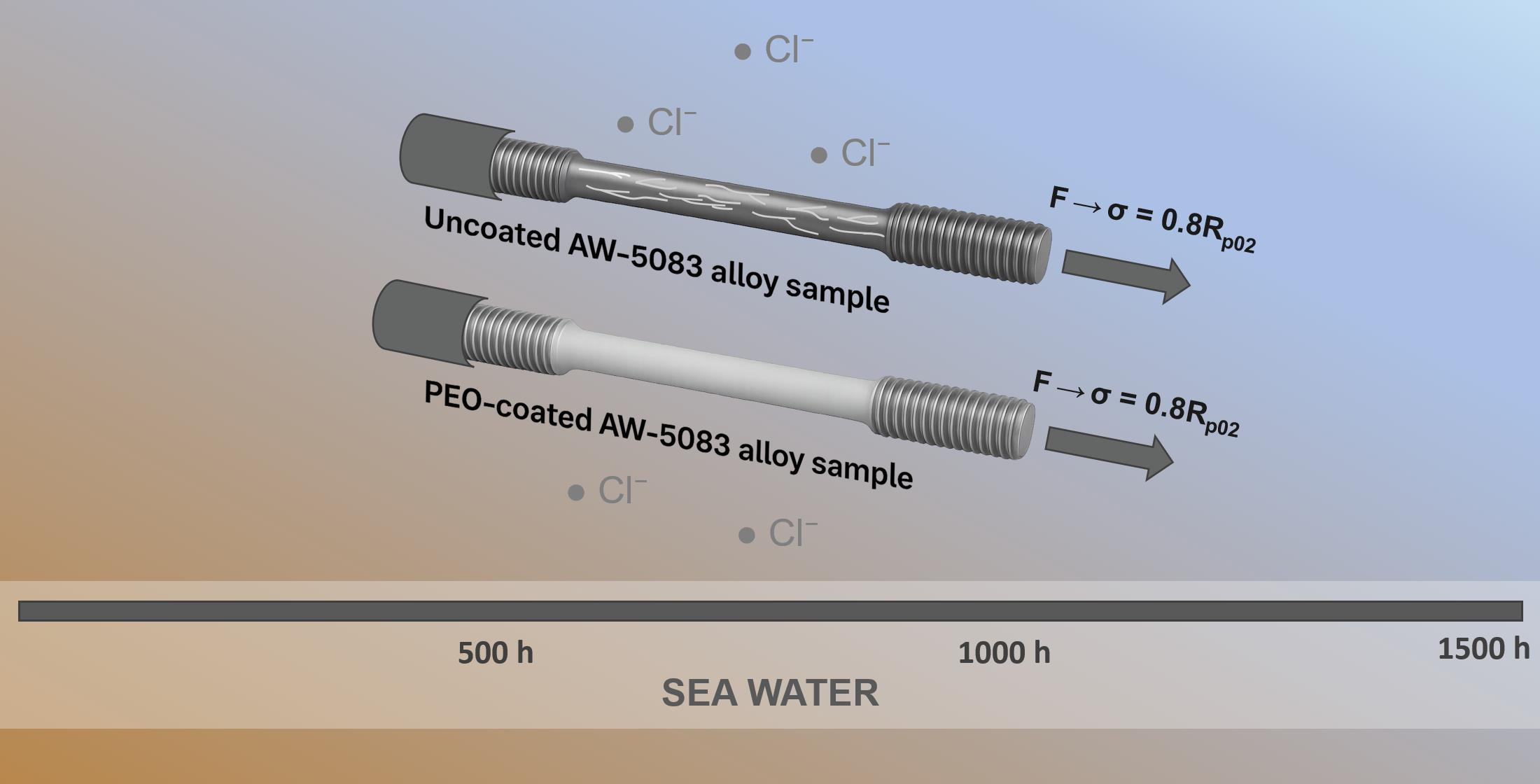
Stress Corrosion Cracking (SCC) Resistance of the AW-5083 Alloy with a Plasma Electrolytic Oxidation (PEO) Coating in the Presence of Chloride (Cl−)


Abstract
1. Introduction
2. Materials and Methods
2.1. Characteristics of the Material and Preparation of the Samples
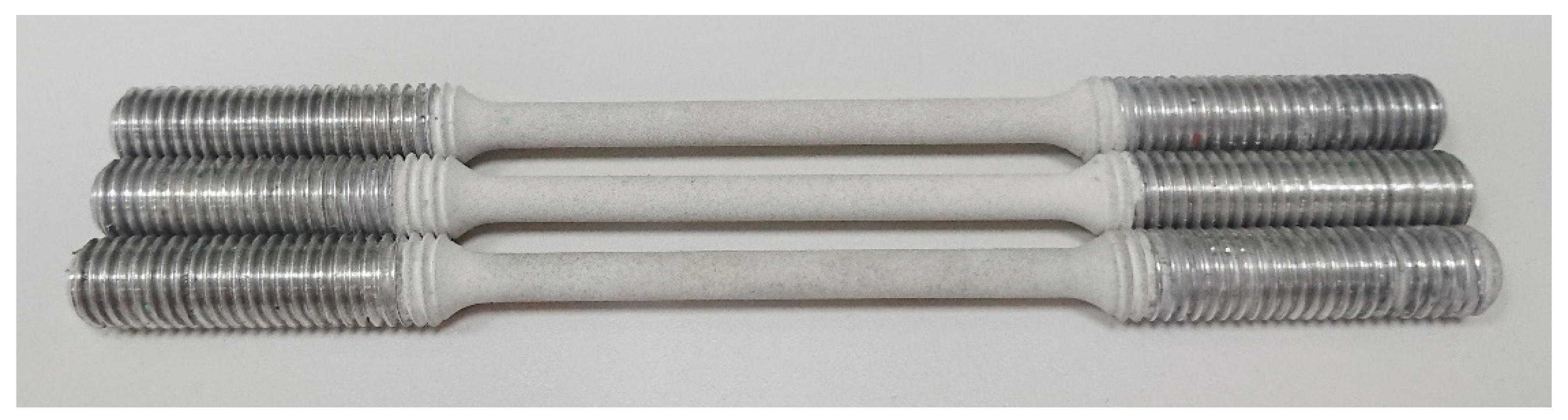
2.2. PEO Coating Production
- Next, they were PEO coated in the electrolyte solution consisting of 2 g KOH and 5 g Na2SiO3 per liter of distilled water.
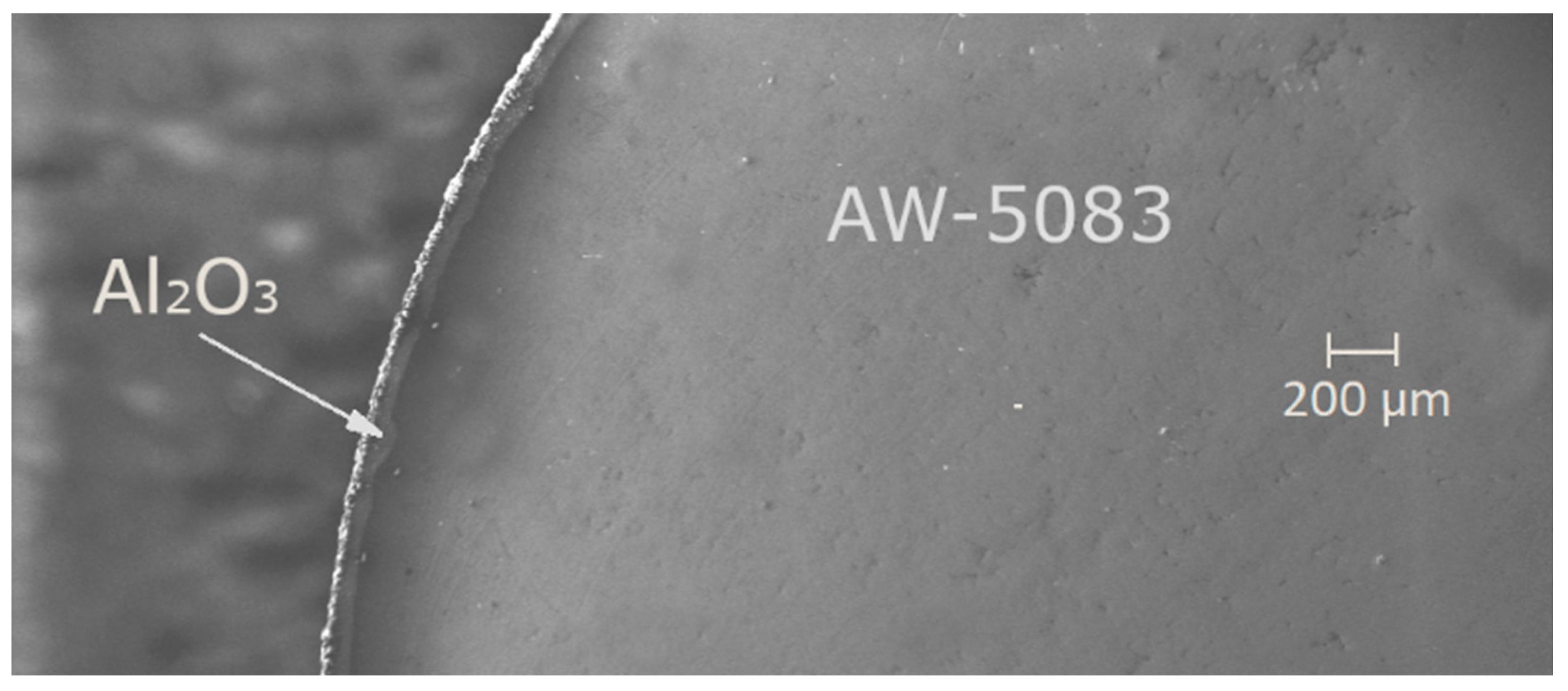
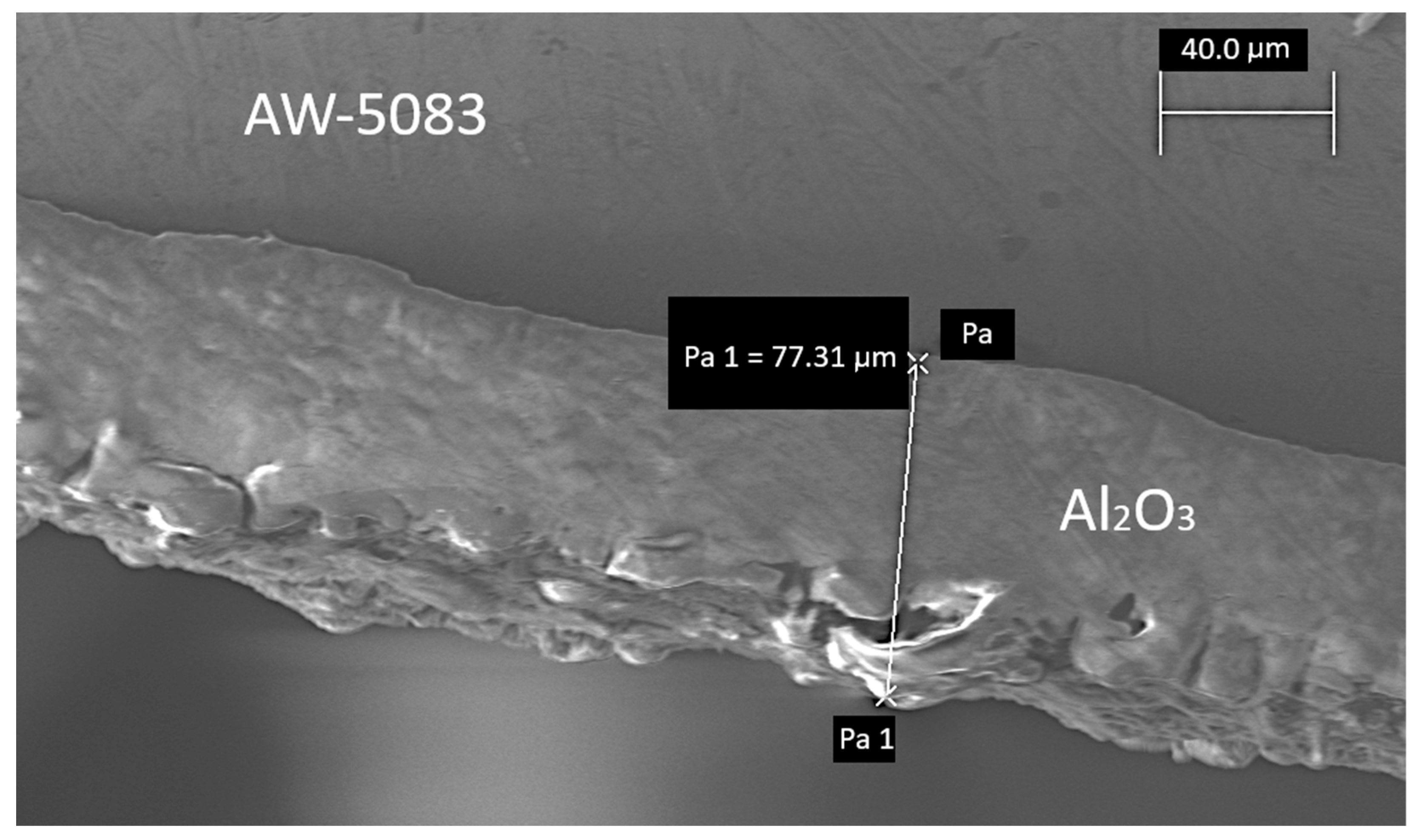
- The parameters of the process were decided based on the total surface area of the submerged samples, initially set to U = 290 V, I = 40 A (30.8 A/dm2). The process parameters were established after their quality had been previously confirmed by microscopic examination of the metallographic cross-sections.
- After the initial phase (5 min), the parameters were stabilized at U = 280 V, I = 35 A (26.9 A/dm2).
- The process of coating lasted for 90 min for each input.
2.3. Determination of the PEO Coating Properties
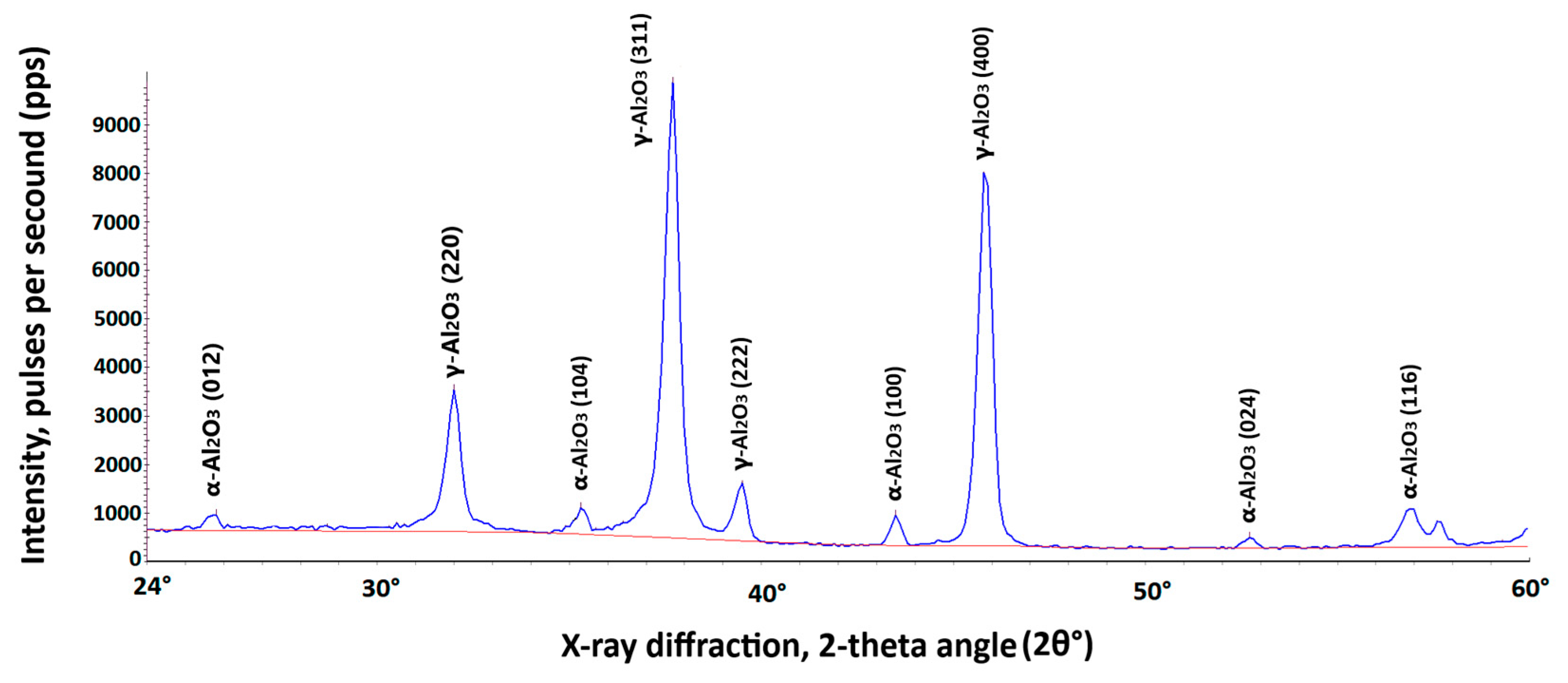
- α-Al2O3 ~ 5.68%;
- γ-Al2O3 ~ 94.32%.
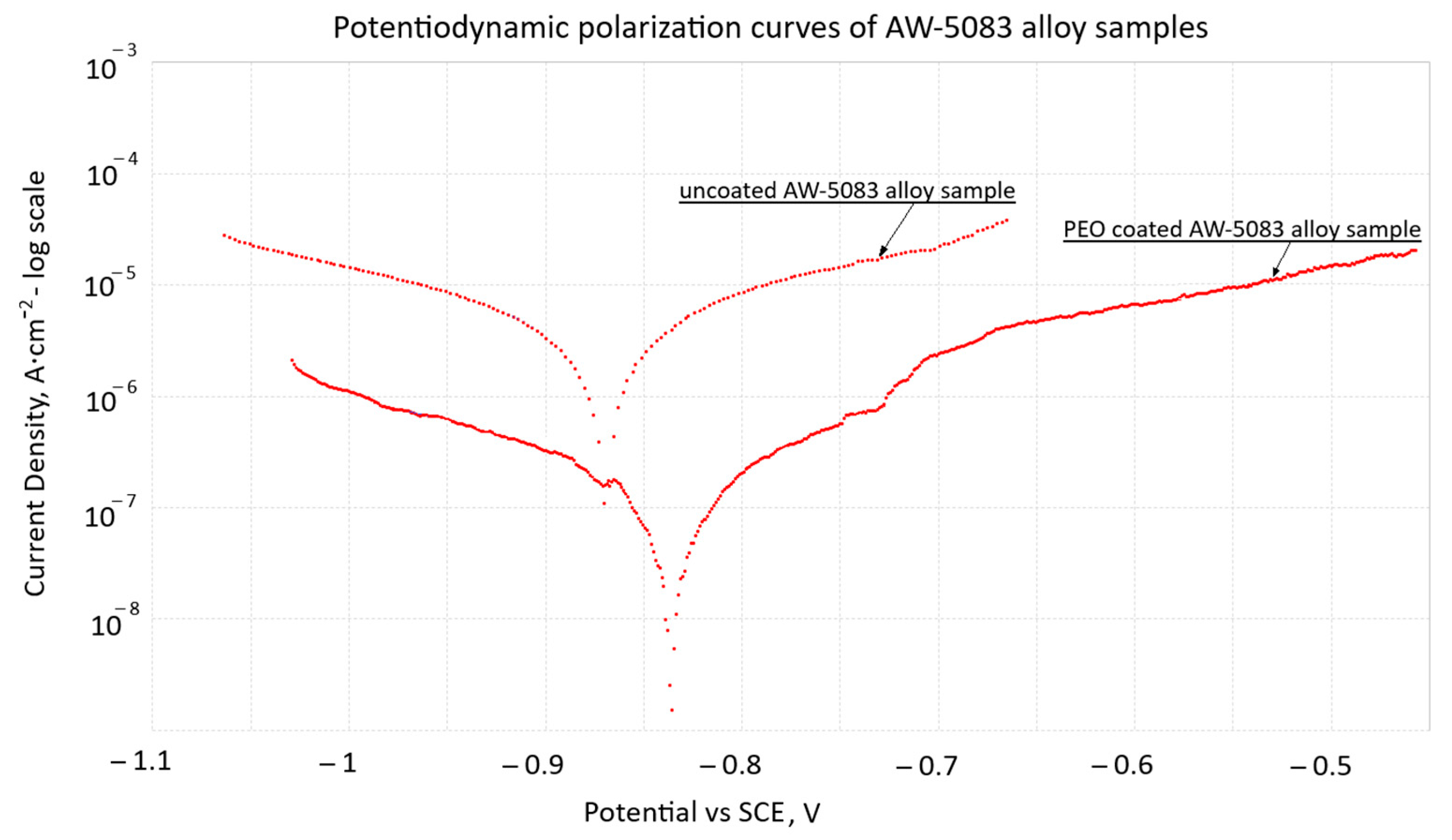
2.4. Potentiodynamic Testing
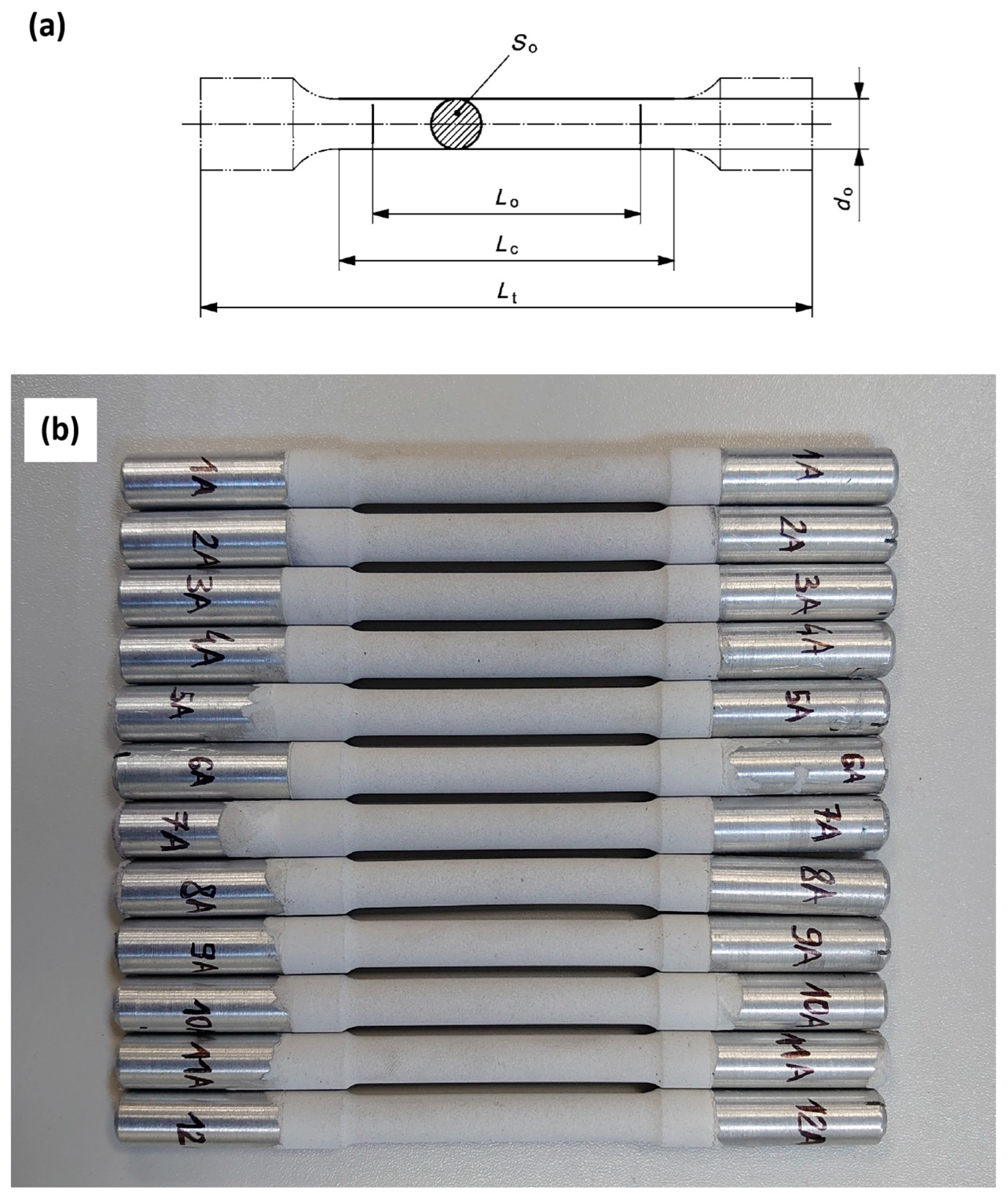
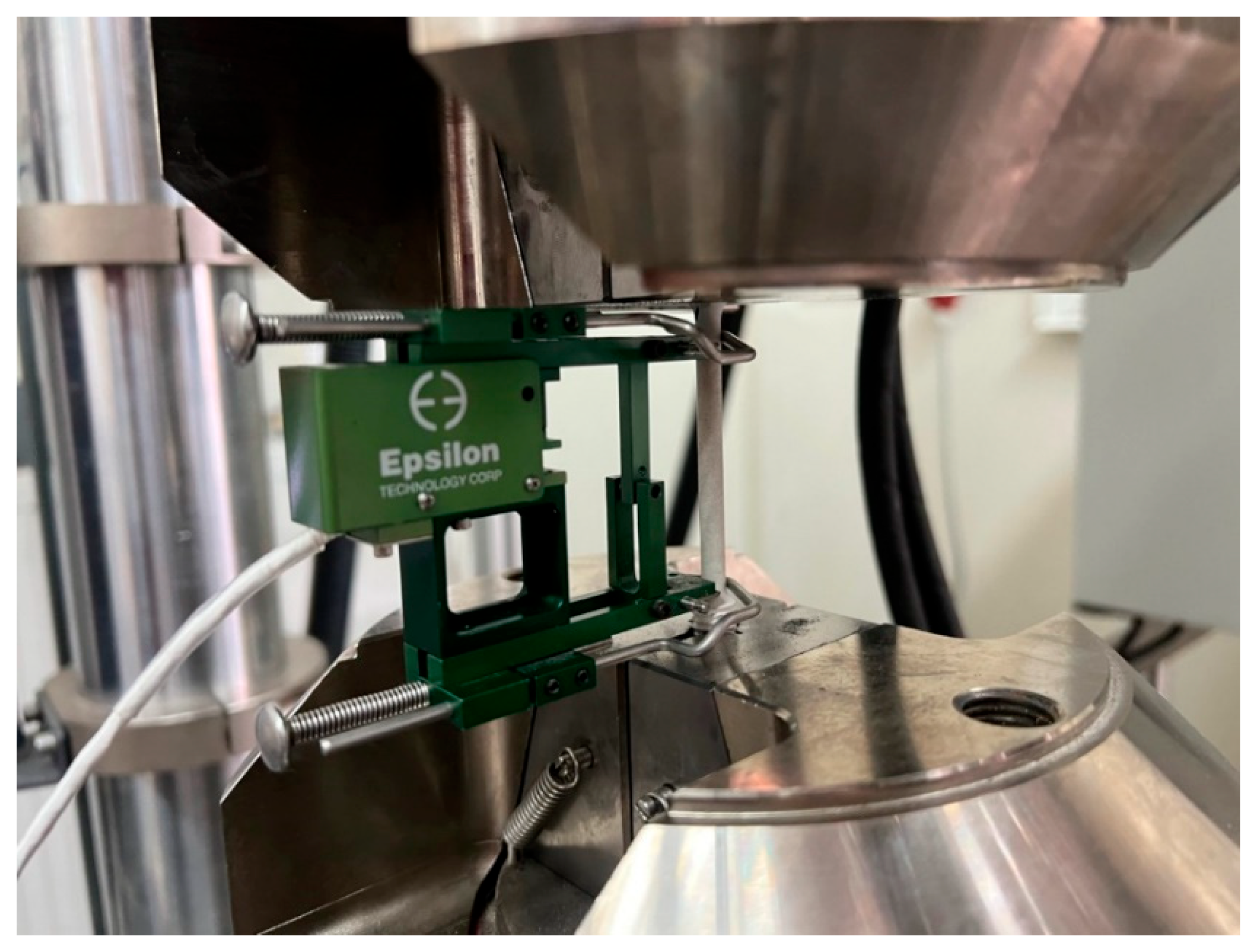
2.5. Stress Corrosion Cracking (SCC) Testing
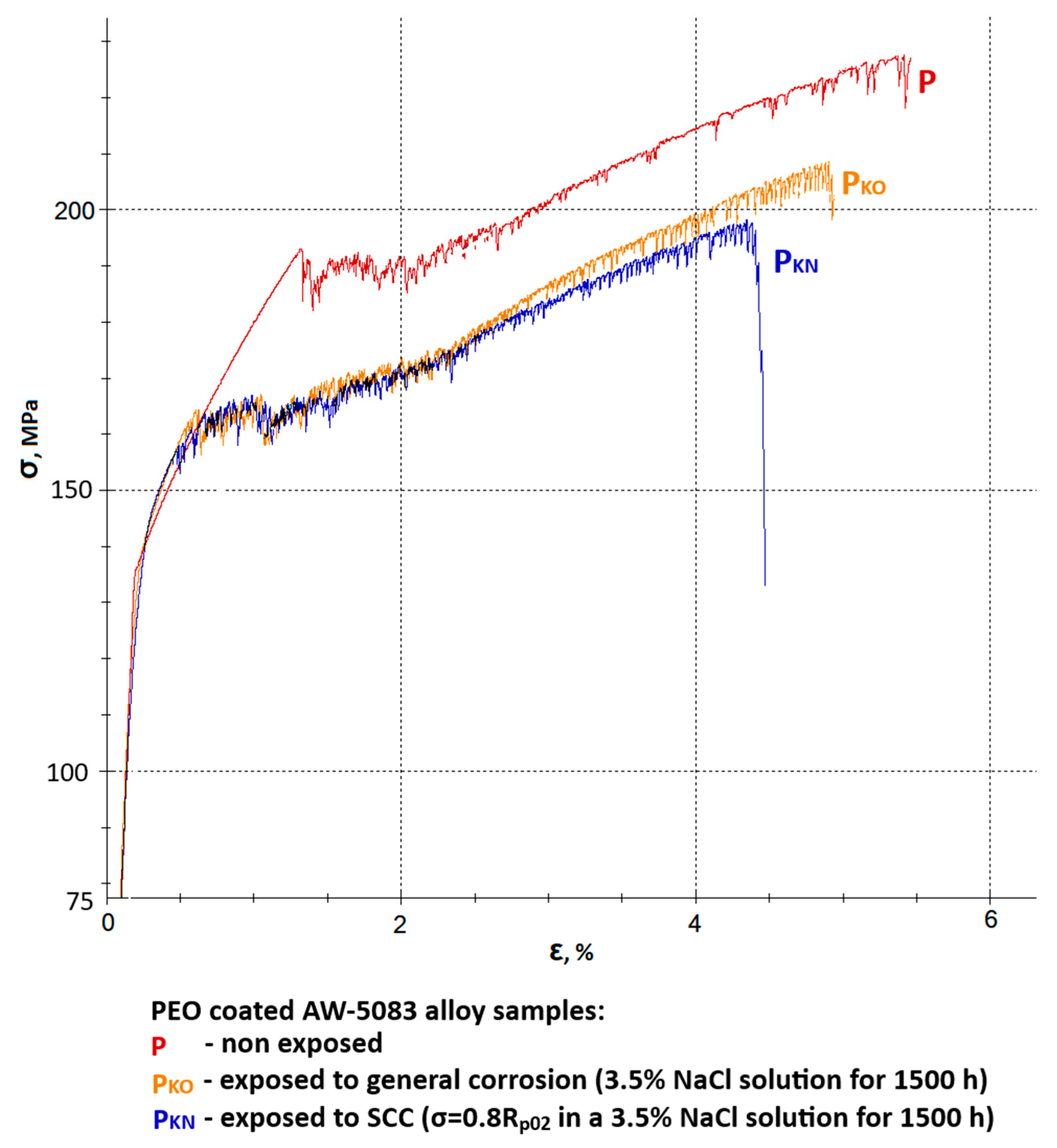
- The first group was used for static tensile testing–the mean Rp0.2 value was calculated to be 146 MPa;
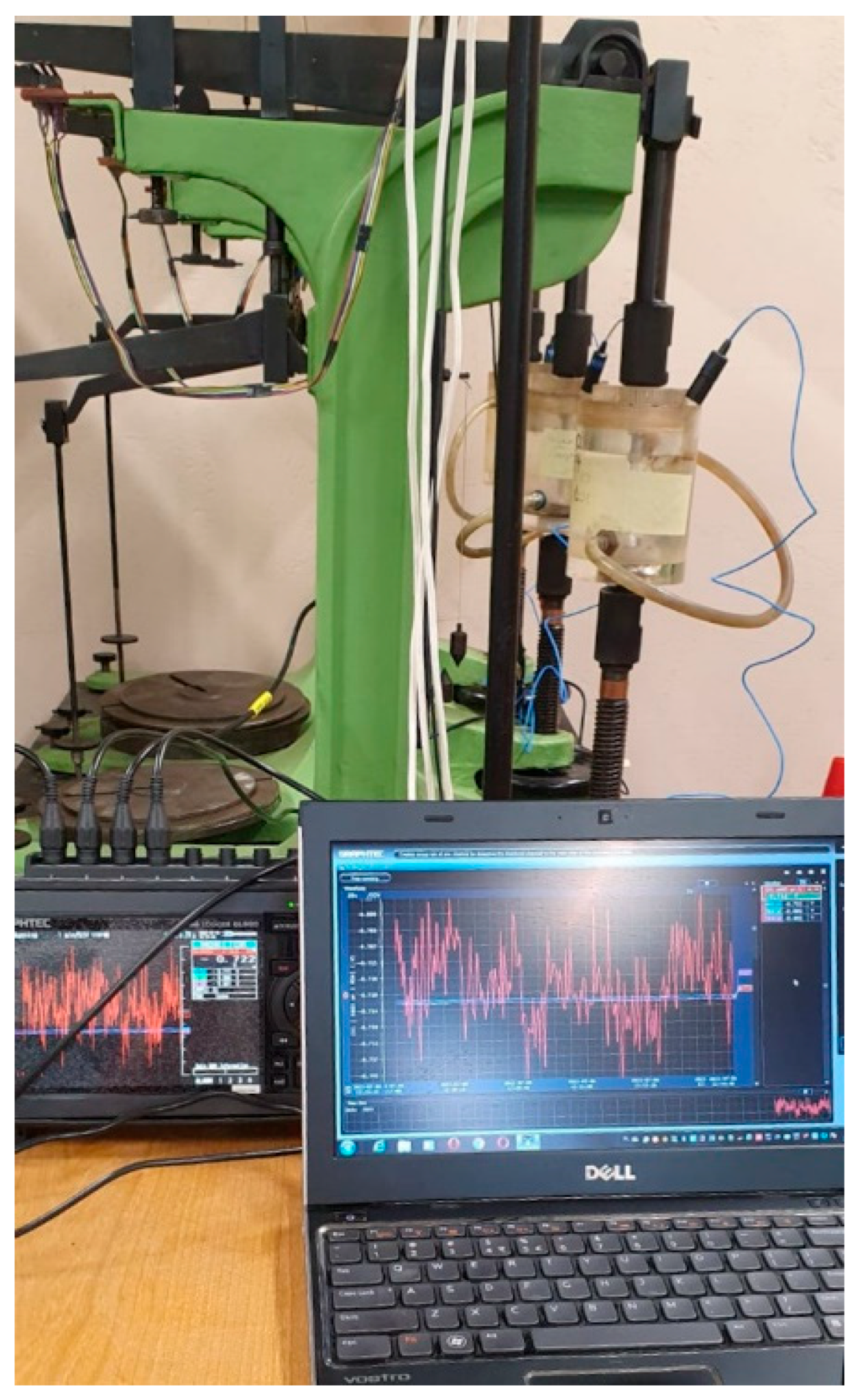
- The second group was used for SCC testing in 3.5 wt.% NaCl solution, at 20 °C and at the constant tensile stress value equal to 80% of Rp0.2 (116.8 MPa) for the duration of 1500 h, after which static tensile testing was performed;
- The third group was exposed to 3.5 wt.% NaCl solution, at 20 °C for the duration of 1500 h without tensile stress, after which static tensile testing was performed.
3. Results
3.1. Results of the Potentiodynamic Testing
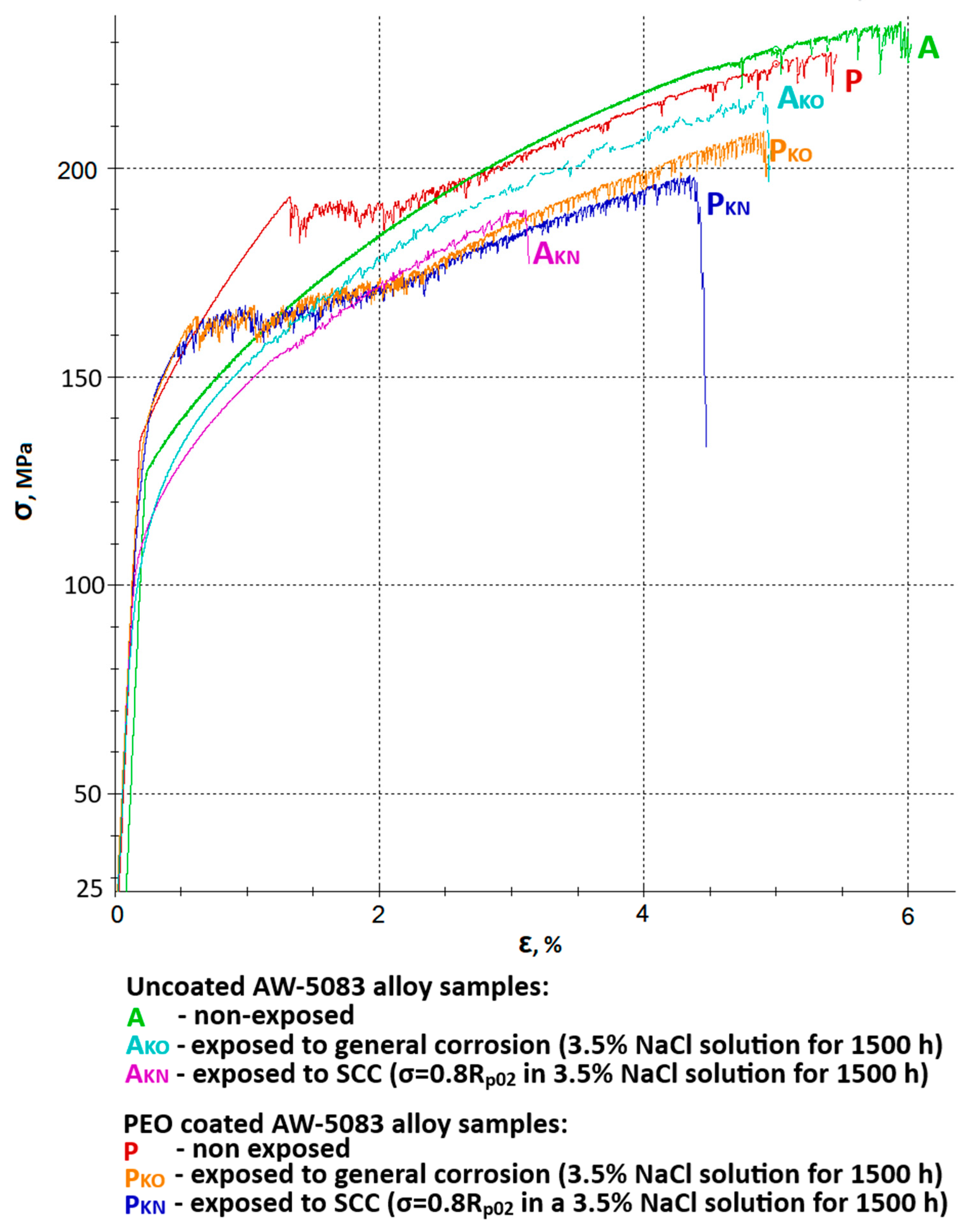
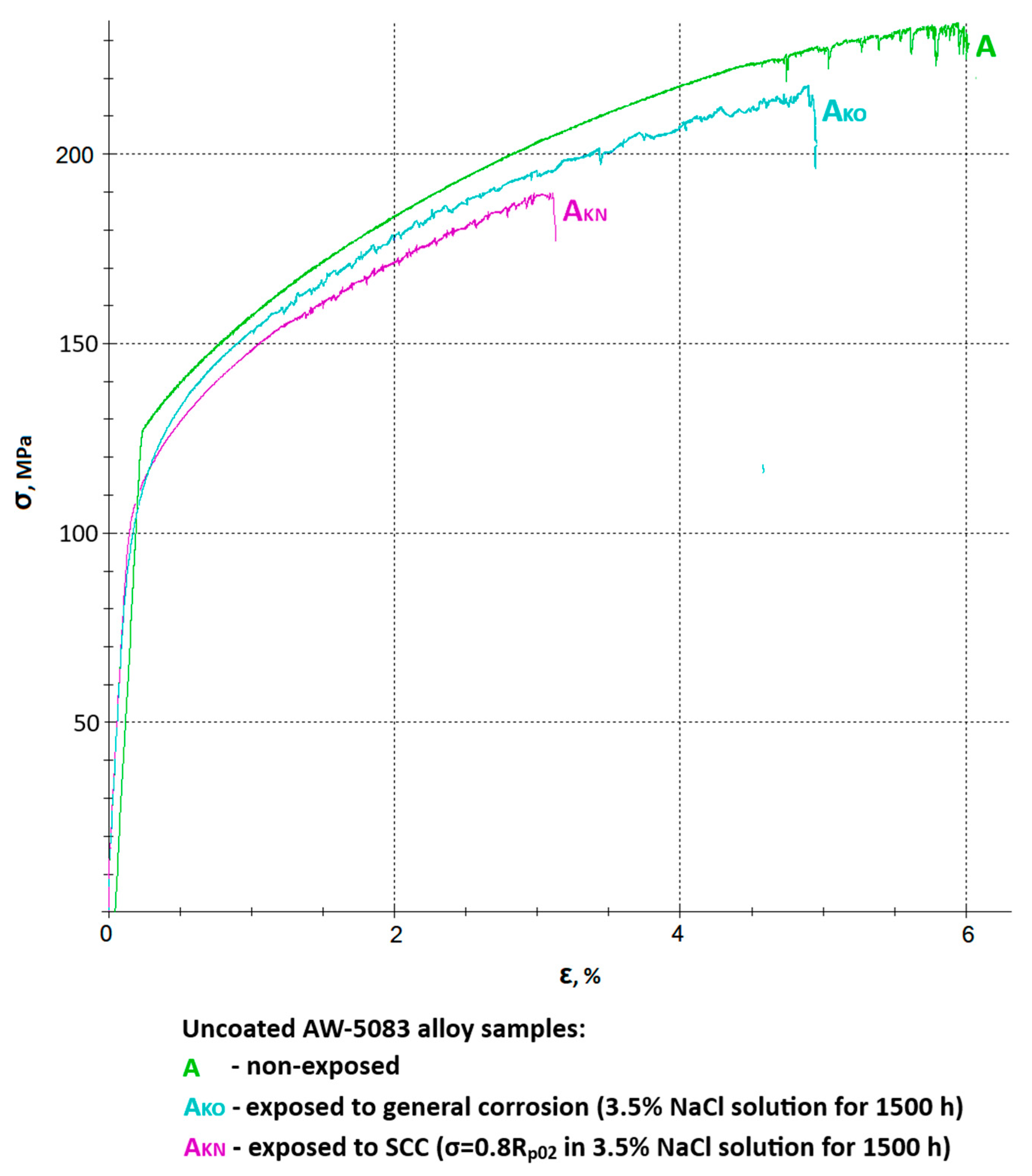
3.2. Results of the SCC Testing
- —ultimate tensile strength before corrosive exposure (MPa);
- —ltimate tensile strength after corrosive exposure (MPa);
- —longation before corrosive exposure (%);
- —longation after corrosive exposure (%);
- —number of samples (3 of each kind).
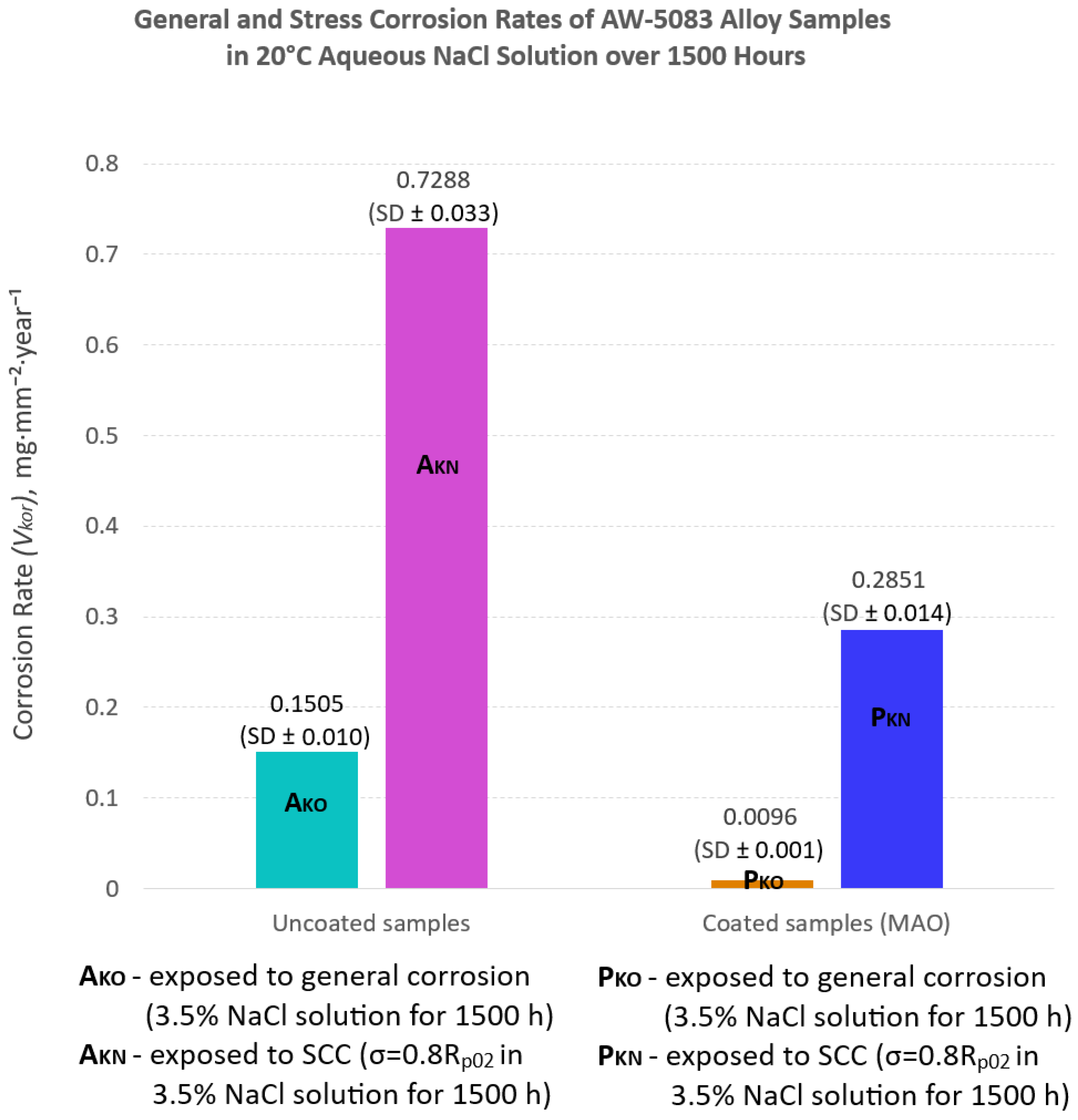
- —initial mass of the sample (g);
- —mass of the sample after corrosive exposure (g);—active surface area of the sample (mm2);
- —corrosive exposure time (year, equivalent to 8760 h).
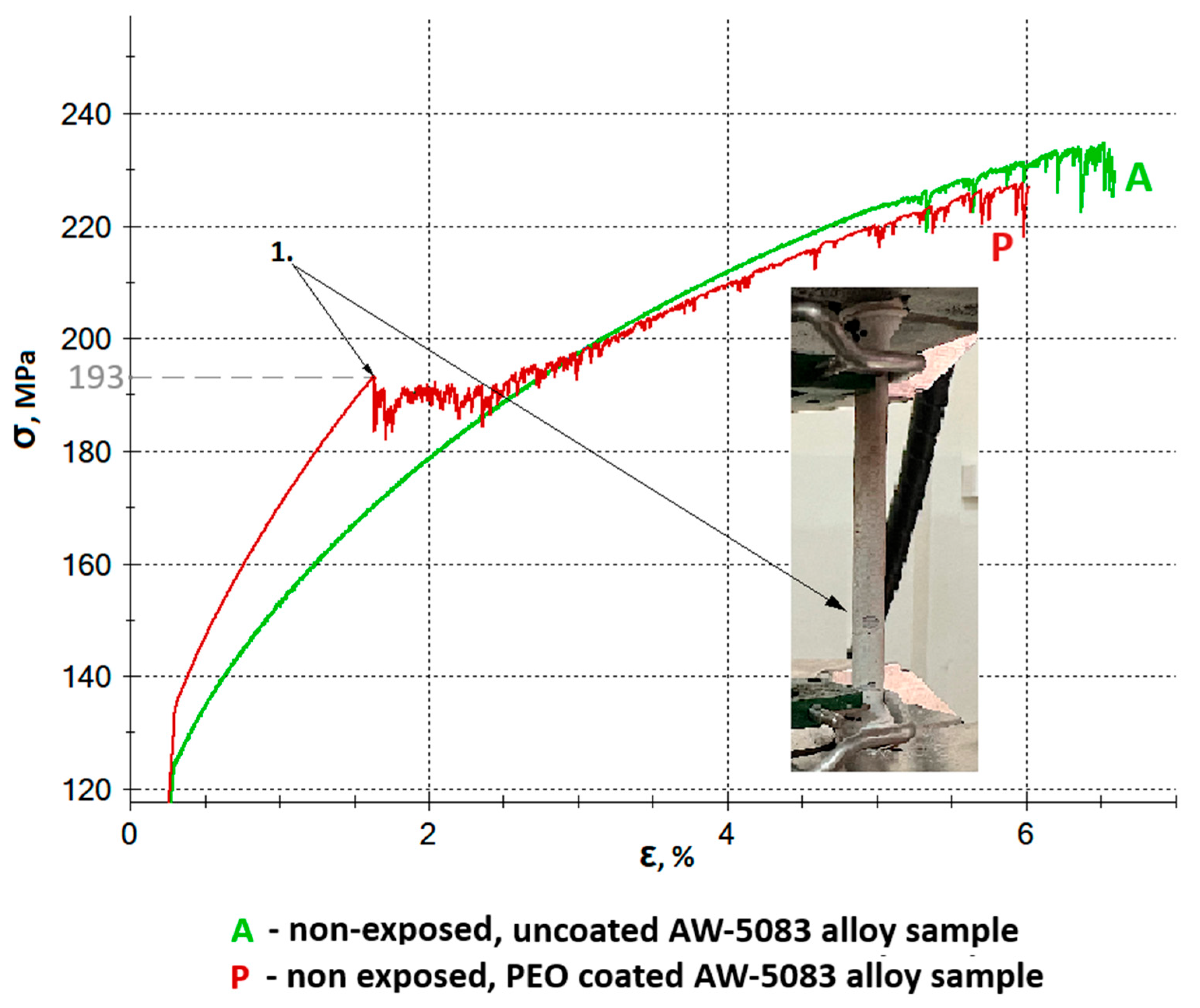
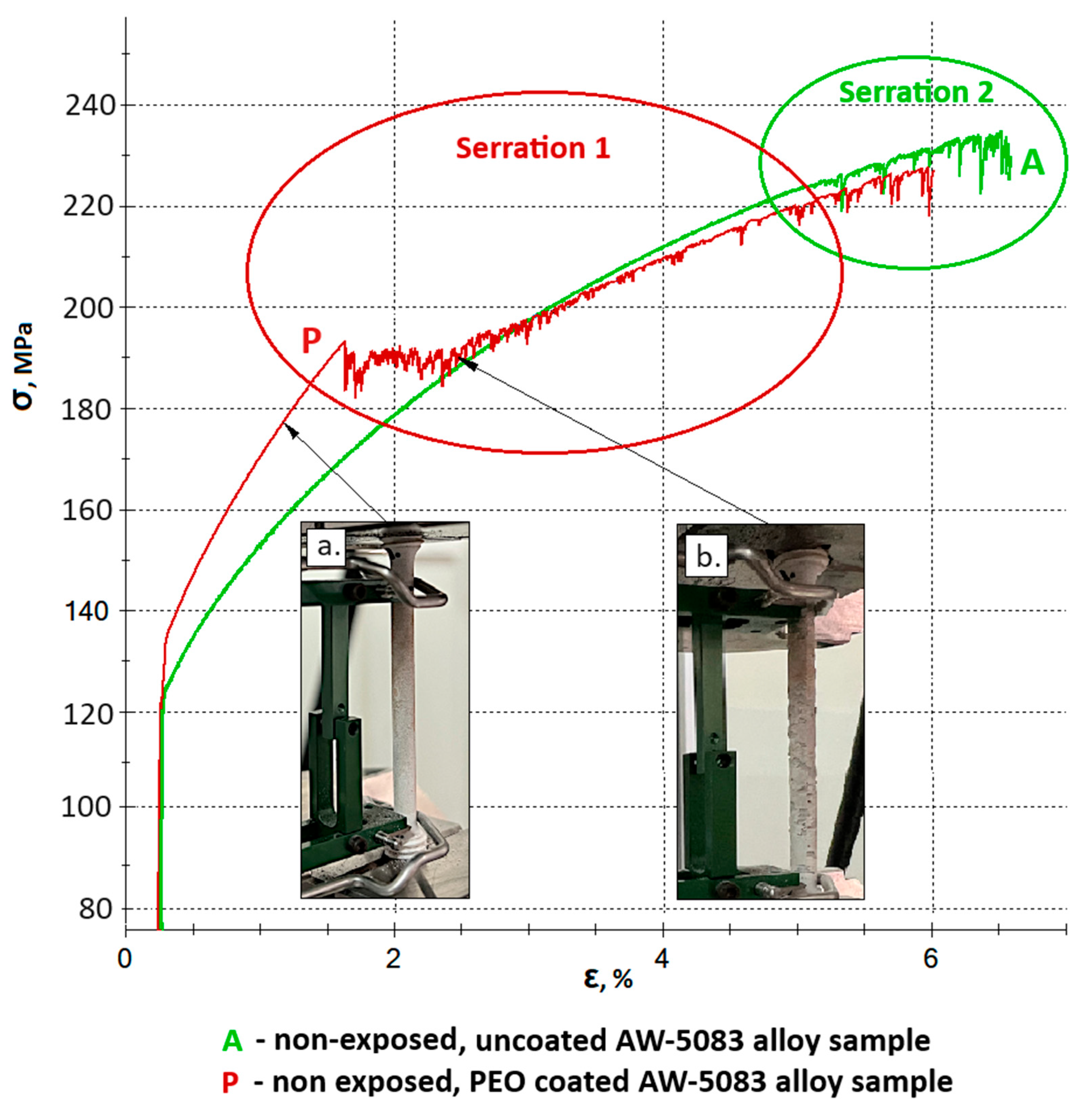
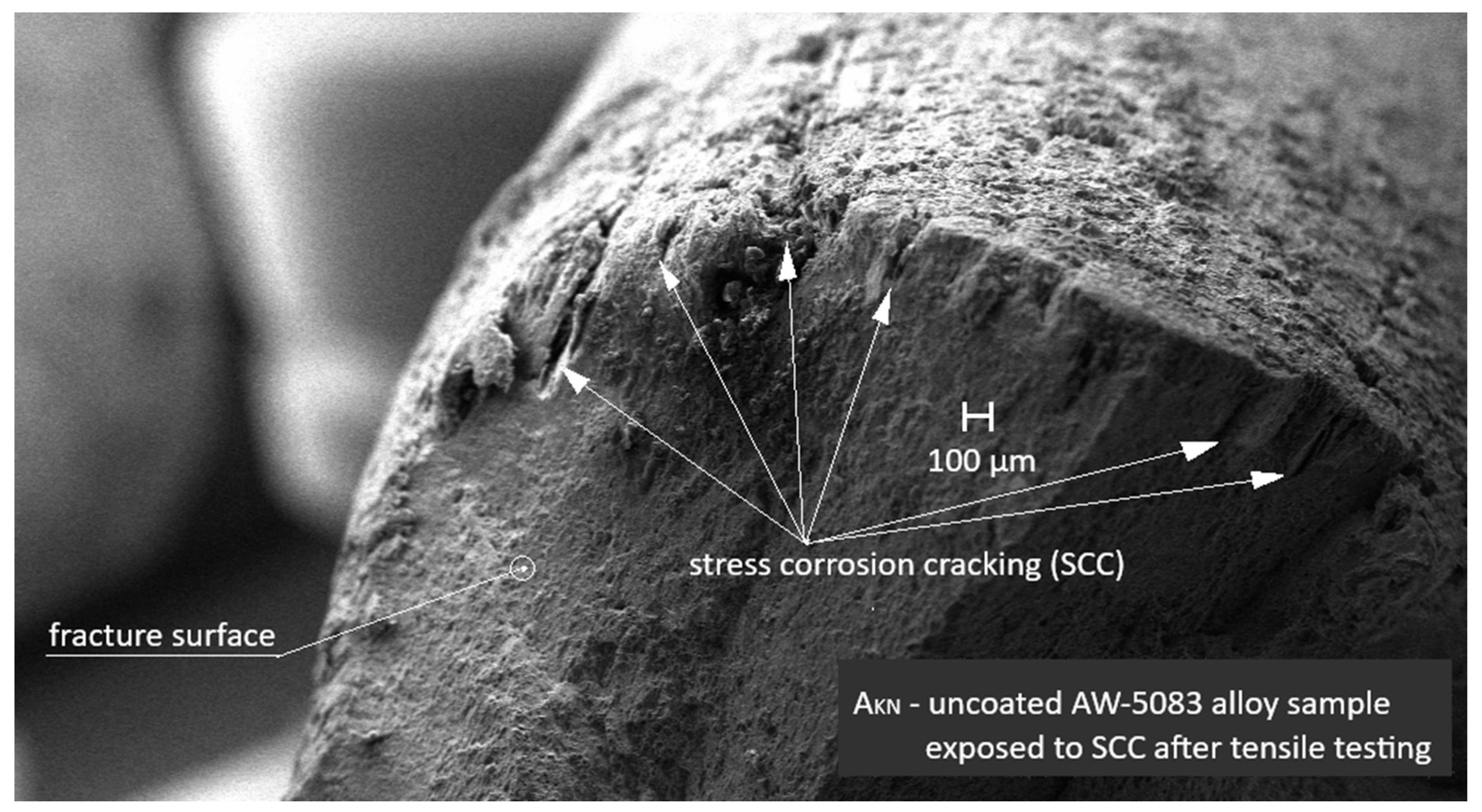
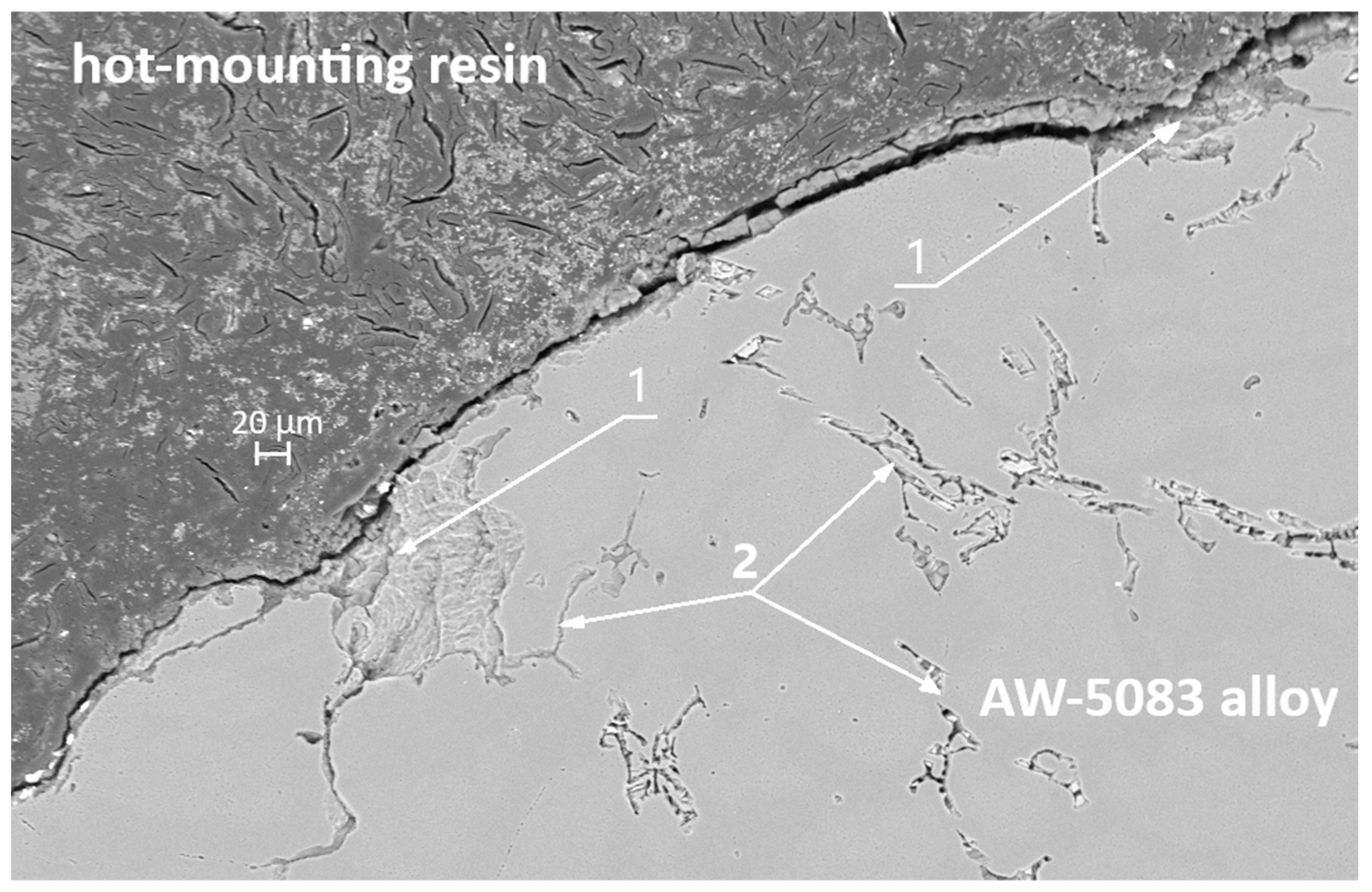
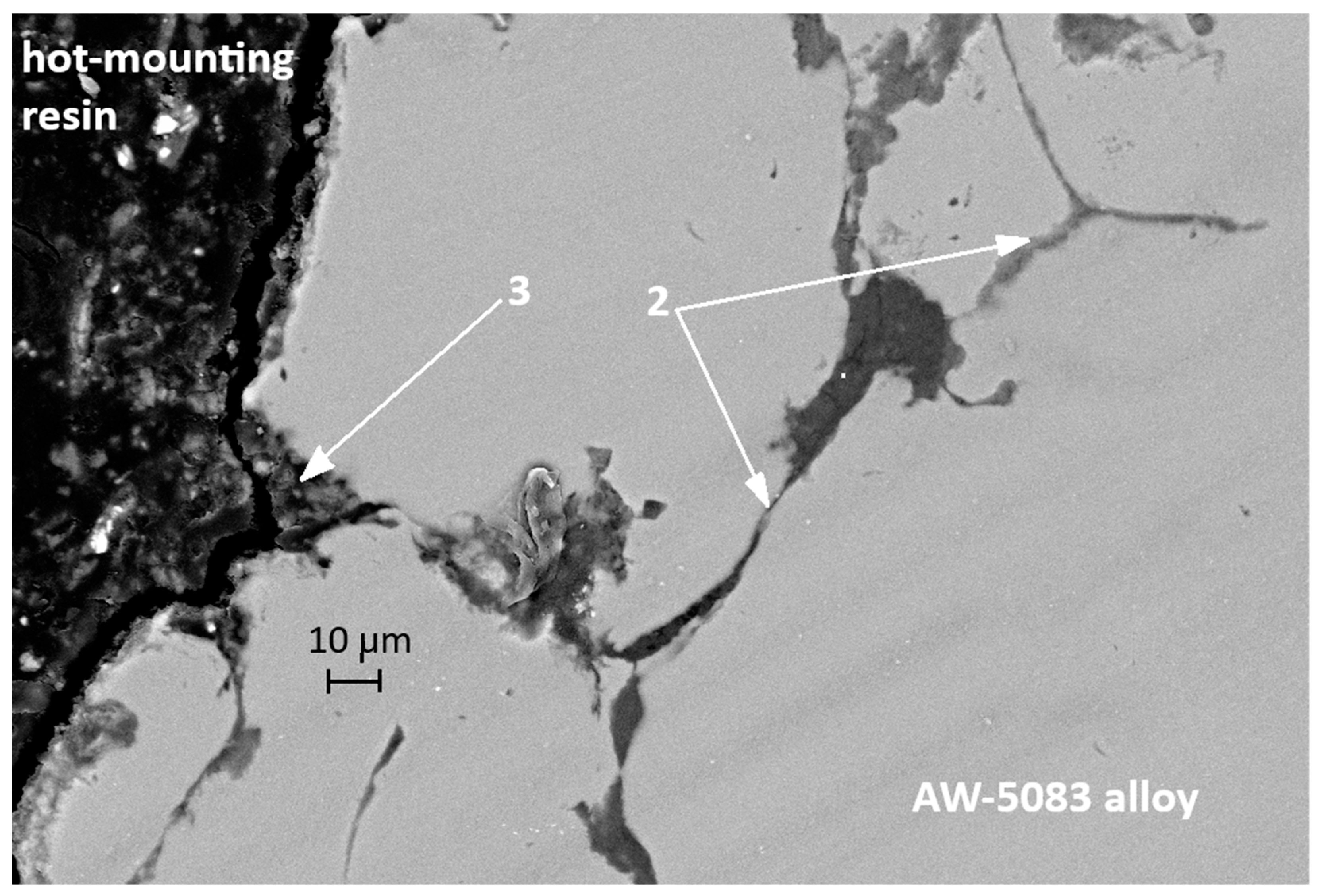
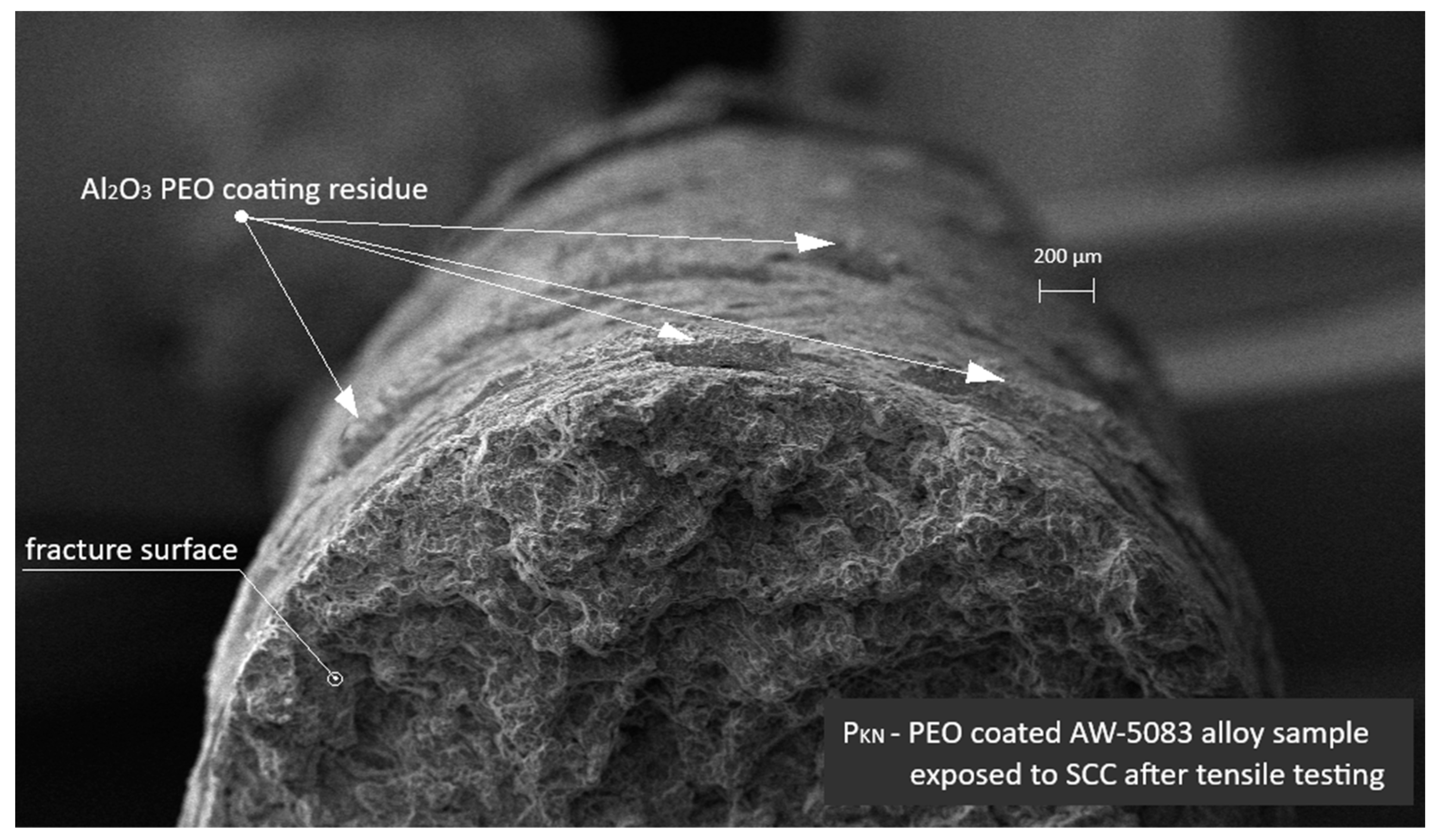
3.3. Mechanics of the PEO Coating Cracking
4. Discussion
4.1. Polarization Curves
4.2. Mechanical Behavior and Stress Corrosion Cracking (SCC)
5. Conclusions
Future Directions
- A detailed analysis of the PEO coating microstructure after SCC exposure to identify damage sites and crack propagation mechanisms within the coating;
- Optimization of PEO process parameters (electrolyte composition, current density, oxidation time) to further enhance the coating’s protective performance;
- Long-term SCC testing under variable environmental and stress conditions to fully assess coating durability;
- Investigation of the PEO coating’s influence on other forms of local corrosion under stress, such as corrosion fatigue;
- Studies of PEO coatings on the AW-5083 alloy after corrosive exposure, including SCC, using electrochemical impedance spectroscopy (EIS).
Author Contributions
Funding
Data Availability Statement
Conflicts of Interest
Abbreviations
| SCC | Stress Corrosion Cracking |
| PEO | Plasma Electrolytic Oxidation |
References
- Davis, J.R. Aluminum and Aluminum Alloys; ASM International: Materials Park, OH, USA, 2004. [Google Scholar]
- Kaufman, J.G.; Rooy, E.L. Aluminum Alloy Castings: Properties, Processes and Applications; ASM International: Materials Park, OH, USA, 2004. [Google Scholar]
- Jurczak, W. Właściwości mechaniczne i korozyjne stopu AlZn5Mg1 po modyfikacji pierwiastkami stopowymi. Zesz. Nauk. Akad. Mar. Wojennej 2006, 47, 21–32. [Google Scholar]
- Kyzioł, L. Effect of Heat Treatment on Stress Corrosion Cracking Resistance and Corrosion Fatigue Strength of AlMg6 and AlZn5Mg1ZrCr Alloys Intended for Ship Hulls. Ph.D. Thesis, Polish Naval Academy, Gdynia, Poland, 1990. [Google Scholar]
- Kyzioł, L.; Czapczyk, K. Influence of Heat Treatment on Stress-Corrosion Resistance of EN AW-AIZn5Mg1,5CuZr Alloy. Solid State Phenom. 2013, 199, 424–429. [Google Scholar] [CrossRef] [Scilit]
- Xiang, N.; Song, R.G.; Li, H.; Wang, C.; Mao, Q.Z.; Xiong, Y. Study on Microstructure and Electrochemical Corrosion Behavior of PEO Coatings Formed on Aluminum Alloy. J. Mater. Eng. Perform. 2015, 24, 5022–5031. [Google Scholar] [CrossRef] [Scilit]
- Biestek, T.; Weber, J. Powłoki Konwersyjne; WNT: Warsaw, Poland, 1968. [Google Scholar]
- Prasad, A.; Prakash, S. A Review on Anodizing Process of Aluminum and Non-Aluminium Alloys. In Proceedings of the National Conference on Recent Advances in Mechanical, Robotics & Technology, Mangalore, India, 28–29 June 2022. [Google Scholar]
- Feng, J.; Yuan, S.; Shi, Z.; Li, X.; Zhao, Y.; Atrens, A.; Zhao, M.-C. Micro-Arc Oxidation (MAO) Synthesized MgAl2O4 Spinel-Integrated Coatings on Mg Alloys: Multidimensional Exploration of Biodegradation, Biocompatibility, and Osseointegration. J. Mater. Res. Technol. 2025, 36, 6486–6498. [Google Scholar] [CrossRef] [Scilit]
- Aissi, M.; Tayyaba, Q.; Er-Ramly, A.; Hermawan, H.; Merzouk, N. Improving the Clinical Performance of Dental Implants through Advanced Surface Treatments: The Case of Ti and ZrO2 Coatings. Metals 2025, 15, 320. [Google Scholar] [CrossRef] [Scilit]
- Hajdukiewicz, G. Investigation of the Properties of Protective Coatings Obtained by Plasma Electrolytic Oxidation (PEO) on AW-7020 and AW-5083 Aluminum Alloys. Ph.D. Thesis, Gdynia Maritime University, Gdynia, Poland, 2022. Available online: https://bip.umg.edu.pl/sites/default/files/zalaczniki/badanie_wlasciwosci_powlok_ochronnych_uzyskanych_metoda_mao_na_stopach_aluminium_aw-7020_i_aw-5083_-_20220512.pdf (accessed on 1 January 2025).
- Simchen, F.; Sieber, M.; Kopp, A.; Lampke, T. Introduction to Plasma Electrolytic Oxidation—An Overview of the Process and Applications. Coatings 2020, 10, 628. [Google Scholar] [CrossRef] [Scilit]
- Careri, F.; Sergi, A.; Shashkov, P.; Khan, R.H.U.; Attallah, M.M. Plasma Electrolytic Oxidation (PEO) as Surface Treatment for High Strength Al Alloys Produced by L-PBF: Microstructure, Performance, and Effect of Substrate Surface Roughness. Surf. Coat. Technol. 2024, 489, 131122. [Google Scholar] [CrossRef] [Scilit]
- Samadi, P.; Witonska, I.A. Plasma Electrolytic Oxidation Layers as Alternative Supports for Metallic Catalysts Used in Oxidation Reaction for Environmental Application. Catal. Commun. 2023, 181, 106722. [Google Scholar] [CrossRef] [Scilit]
- Searles, J.L.; Gouma, P.I.; Buchheit, R.G. Stress Corrosion Cracking of Sensitized AA5083 (Al-4.5Mg-1.0Mn). Metall. Mater. Trans. A 2001, 32, 2859–2867. [Google Scholar] [CrossRef] [Scilit]
- Wernick, S.; Pinner, R.; Sheasby, P.G. The Surface Treatment and Finishing of Aluminium and Its Alloys; ASM International: Materials Park, OH, USA, 1987. [Google Scholar]
- Cudny, K.; Puchaczewski, N. Metal Alloys for Ship Hulls and Ocean Engineering Structures; Gdańsk University of Technology Press: Gdańsk, Poland, 1995. [Google Scholar]
- Barnes, A.J.; Raman, H.; Lowerson, A.; Edwards, D. Recent Application of Superformed 5083 Aluminum Alloy in the Aerospace Industry. Mater. Sci. Forum 2012, 735, 361–371. [Google Scholar] [CrossRef] [Scilit]
- Chen, M. Warm Forming Processes for High-Performance Aluminum Alloys for the Automotive Industry. Master’s Thesis, Politecnico di Torino, Torino, Italy, 2021. [Google Scholar]
- Thomas, K.K.; Zafar, M.N.; Pitt, W.G.; Husseini, G.A. Biodegradable Magnesium Alloys for Biomedical Implants: Properties, Challenges, and Surface Modifications with a Focus on Orthopedic Fixation Repair. Appl. Sci. 2023, 14, 10. [Google Scholar] [CrossRef] [Scilit]
- Zerres, P.; Bruening, J.; Vormwald, M. Crack Growth Behaviour of the Aluminium Alloy AlMg4.5Mn at Proportional and Non-Proportional Fatigue Loading. Mater. Test. 2011, 53, 109–117. [Google Scholar] [CrossRef] [Scilit]
- Gamba, M.; Cristoforetti, A.; Fedel, M.; Ceriani, F.; Ormellese, M.; Brenna, A. Plasma Electrolytic Oxidation (PEO) Coatings on Aluminum Alloy 2024: A Review of Mechanisms, Processes, and Corrosion Resistance Enhancement. Appl. Surf. Sci. Adv. 2025, 26, 100707. [Google Scholar] [CrossRef] [Scilit]
- Kaseem, M.; Min, J.H.; Ko, Y.G. Corrosion Behavior of Al-1 wt% Mg-0.85 wt% Si Alloy Coated by Micro-Arc Oxidation Using TiO2 and Na2MoO4 Additives: Role of Current Density. J. Alloys Compd. 2017, 723, 448–455. [Google Scholar] [CrossRef] [Scilit]
- Olesiński, A.; Bugla, A.; Babilas, D.; Stolarczyk, A.; Simka, W.; Sowa, M. Corrosion Performance of 6061 Aluminium Alloy Protected by Plasma Electrolytic Oxidation Coatings Modified by Acrylic Acid. Corros. Sci. 2024, 237, 112322. [Google Scholar] [CrossRef] [Scilit]
- Sieber, M.; Simchen, F.; Morgenstern, R.; Scharf, I.; Lampke, T. Plasma Electrolytic Oxidation of High-Strength Aluminium Alloys—Substrate Effect on Wear and Corrosion Performance. Metals 2018, 8, 356. [Google Scholar] [CrossRef] [Scilit]
- PN-EN ISO 6892-1:2020-05; Metale Próba Rozciągania. Część 1: Metoda Badania w Temperaturze Pokojowej. PKN: Warsaw, Poland, 2020.
- Suminov, I.V.; Belkin, P.N.; Epelfeld, A.V.; Lyudin, V.B.; Krit, B.L.; Borisov, A.M. Plazmenno-Elektroliticheskoe Modifitsirovanie Poverkhnosti Metallov i Splavov; Tekhnosfera: Moscow, Russia, 2011. [Google Scholar]
- Huang, X. Plasma Electrolytic Oxidation Coatings on Aluminum Alloys: Microstructures, Properties, and Applications. Mod. Concepts Mater. Sci. 2019, 2, 000526. [Google Scholar] [CrossRef] [Scilit]
- Zwick&Roell. Podręcznik Obsługi Maszyny Wytrzymałościowej MPMD P10B v. 09.2015; Zwick&Roell: Ulm, Germany, 2015. [Google Scholar]
- Zwick&Roell. Podręcznik Obsługi Ekstensometru Epsilon 3542; Zwick&Roell: Ulm, Germany, 2015. [Google Scholar]
- Snizhko, L.O.; Yerokhin, A.L.; Pilkington, A.; Gurevina, N.L.; Misnyankin, D.O.; Leyland, A.; Matthews, A. Anodic Processes in Plasma Electrolytic Oxidation of Aluminium in Alkaline Solutions. Electrochim. Acta 2004, 49, 2085–2095. [Google Scholar] [CrossRef] [Scilit]
- Metrohm Autolab. Calculation of Corrosion Parameters with NOVA. Application Note AN-COR-002, July 2018. Available online: https://www.metrohm.com (accessed on 29 November 2025).
- Sundararajan, G.; Rama Krishna, L. Mechanisms Underlying the Formation of Thick Alumina Coatings through the MAO Coating Technology. Surf. Coat. Technol. 2003, 167, 269–277. [Google Scholar] [CrossRef] [Scilit]
- Ikram, M.; Tao, Z.; Ye, J.; Qayyum, H.A.; Sun, X.; Xu, J. Enhanced Physical Properties of γ-Al2O3–rGO Hybrids Prepared by Solvothermal and Hot-Press Processing. RSC Adv. 2018, 8, 8329–8337. [Google Scholar] [CrossRef] [Scilit] [PubMed]
- Klose, F. Experimental and Numerical Studies on the Portevin-Le Châtelier Effect in Cu-Al and Al-Mg in Strain and Stress Controlled Tensile Tests. Ph.D. Thesis, Technische Universität Braunschweig, Braunschweig, Germany, 2004. [Google Scholar]
- Holroyd, N.J.H.; Burnett, T.L.; Seifi, M.; Lewandowski, J.J. Improved Understanding of Environment-Induced Cracking (EIC) of Sensitized 5XXX Series Aluminium Alloys. Mater. Sci. Eng. A 2017, 682, 613–621. [Google Scholar] [CrossRef] [Scilit]
- Berardi, A.; Gamba, M.; Paterlini, L.; Ceriani, F.; Ormellese, M. Potentiostatic Plasma Electrolytic Oxidation (PEO) of Aluminum Alloy AA6082: Effect of Electrical Input on Coating Microstructure and Corrosion Resistance. Coatings 2025, 15, 653. [Google Scholar] [CrossRef] [Scilit]
- Egorkin, V.S.; Vyaliy, I.E.; Gnedenkov, A.S.; Kharchenko, U.V.; Sinebryukhov, S.L.; Gnedenkov, S.V. Corrosion Properties of the Composite Coatings Formed on PEO Pretreated AlMg3 Aluminum Alloy by Dip-Coating in Polyvinylidene Fluoride–Polytetrafluoroethylene Suspension. Polymers 2024, 16, 2945. [Google Scholar] [CrossRef] [Scilit] [PubMed]
- Komarova, A.I.; Komarov, V.I.; Rud, A.D.; Kuskova, N.I. Intensification of Microplasma Discharges in the Formation of Ceramic Coatings on Aluminum Alloys Exposed to Carbon Nanoparticles. Surf. Eng. Appl. Electrochem. 2011, 47, 18–22. [Google Scholar] [CrossRef] [Scilit]
- Elliott, J.; Cook, R. Novel Corrosion Inhibitors to Address Stress Corrosion Cracking of 5XXX Aluminum. In Proceedings of the DoD Virtual Corrosion Conference, Houston, TX, USA, 16–17 September 2013. [Google Scholar]
- Revie, R.W.; Uhlig, H.H. Corrosion and Corrosion Control: An Introduction to Corrosion Science and Engineering; Wiley: Hoboken, NJ, USA, 2008. [Google Scholar]
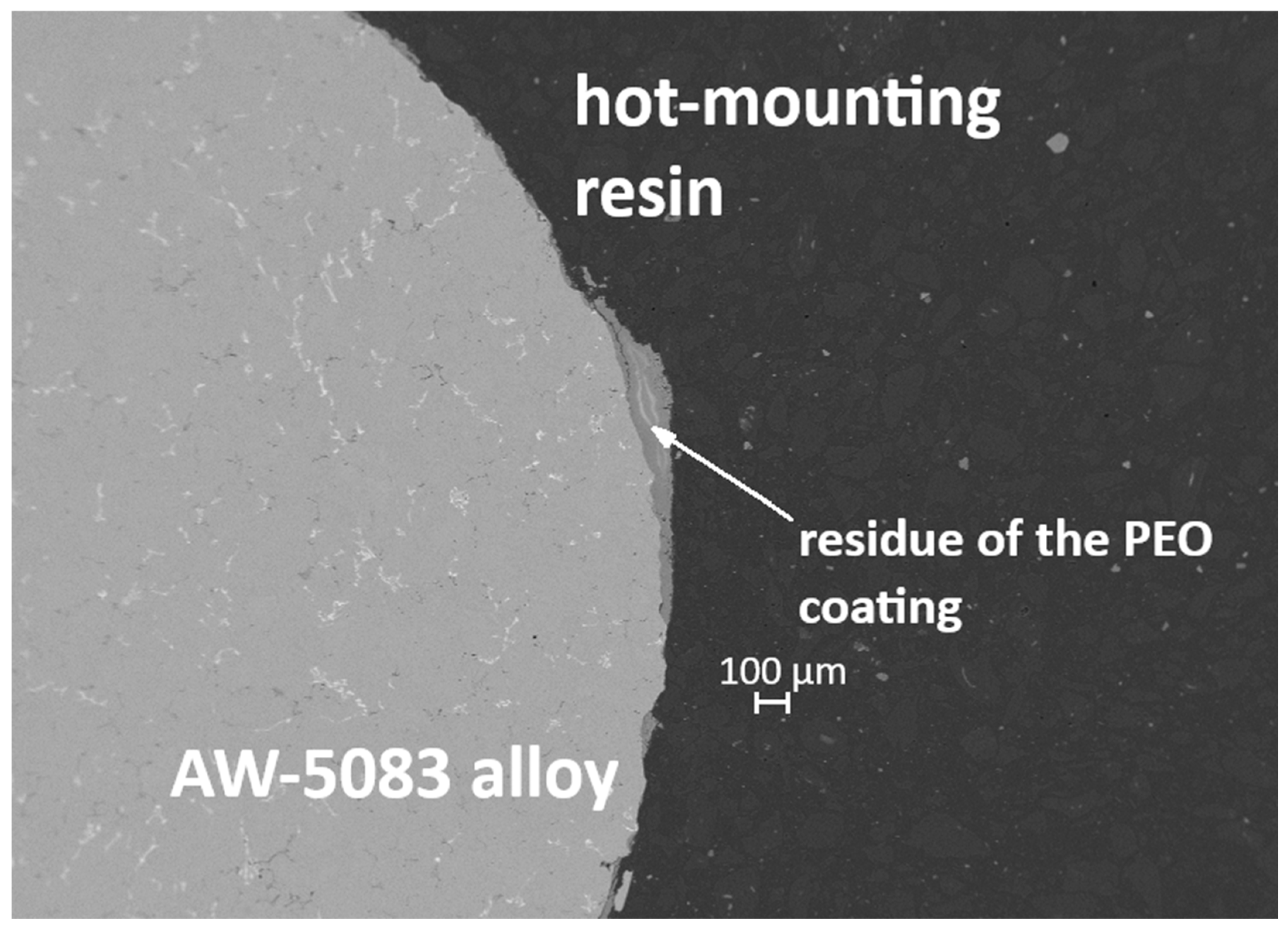
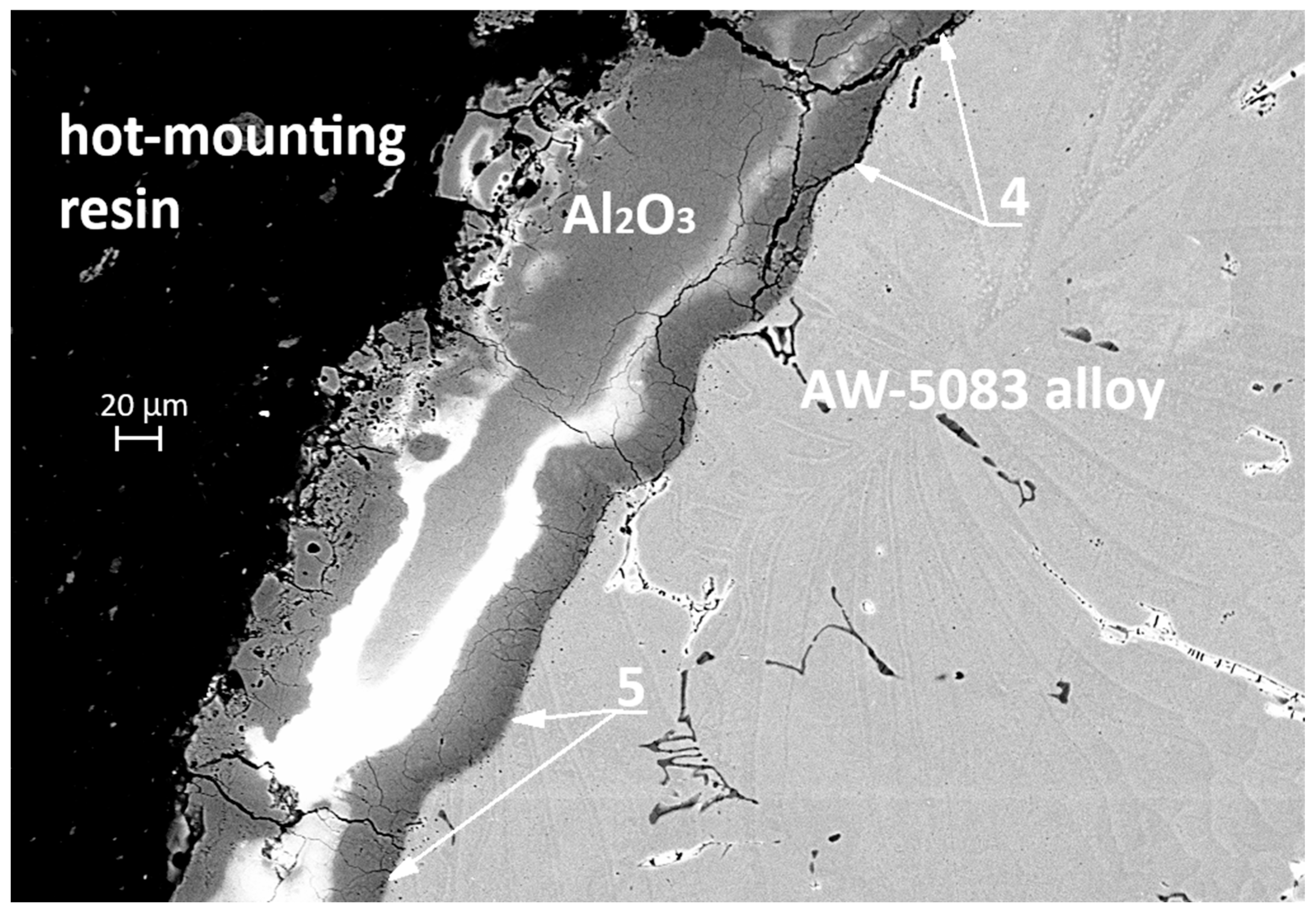

| Alloy | Chemical Composition [%] | Declaration of Conformity | Norm | |||||||||
|---|---|---|---|---|---|---|---|---|---|---|---|---|
| 5083 | Mg | Mn | Fe | Si | Cu | Cr | Zn | Ti | Ga | Al | 1141807/55125/ 2018 | EN AW-5083 |
| 4.27 | 0.31 | 0.35 | 0.28 | 0.04 | 0.06 | 0.01 | 0.02 | 0.03 | the rest | |||
| Alloy | Corrosion Type | Sample Group | E [GPa] | Rp0.2 [MPa] | Rm [MPa] | A50 [%] | Change in Mass Due to Corrosive Factors |
|---|---|---|---|---|---|---|---|
| AW-5083 | Mechanical properties of the samples that have not been exposed to corrosive factors | ||||||
| n/a | A—uncoated | 70 ± 0 | 137 ± 2 | 234 ± 3 | 5.6 ± 0.1 | n/a | |
| P—PEO-coated | 71 ± 0 | 146 ± 3 | 229 ± 3 | 5.3 ± 0.1 | n/a | ||
| Mechanical properties of the uncoated samples after exposure to 3.5 wt.% NaCl solution for t = 1500 h | |||||||
| SCC σ = 0.8 Rp0.2 | AKN | 68 ± 1 | 122 ± 4 | 190 ± 4 | 2.9 ± 0.2 | −0.0914 ± 0.0042 g | |
| General corrosion σ = 0 | AKO | 69 ± 0 | 124 ± 3 | 218 ± 3 | 4.7 ± 0.2 | −0.0189 ± 0.0012 g | |
| Mechanical properties of the PEO coated samples after exposure to 3.5 wt.% NaCl solution for t = 1500 h | |||||||
| SCC σ = 0.8 Rp0.2 | PKN | 68 ± 1 | 146 ± 3 | 199 ± 4 | 4.5 ± 0.2 | −0.0358 ± 0.0018 g | |
| General corrosion σ = 0 | PKO | 69 ± 0 | 146 ± 2 | 209 ± 3 | 5.0 ± 0.1 | −0.0012 ± 0.0001 g | |
| Material (Alloy) and Coating | Mechanical Properties Before Corrosive Exposure | Mechanical Properties After Corrosive Exposure in 3.5 wt.% NaCl Solution for 1500 h at 20 °C | ||||||||||||||
|---|---|---|---|---|---|---|---|---|---|---|---|---|---|---|---|---|
| General Corrosion σ = 0 | Stress Corrosion Cracking at the Constant Tensile Stress Value Equal to 80% of Rp0.2 | |||||||||||||||
| Rm [MPa] | Rp0.2 [MPa] | A50 [%] | Rm [MPa] | Rp0.2 [MPa] | A50 [%] | KRm [%] | KA [%] | Vkor [mg·mm−2·year−1] | Rm [MPa] | Rp0.2 [MPa] | A50 [%] | KRm [%] | KA [%] | Vkor [mg·mm−2·year−1] | ||
| AW-5083 PEO-coated | 229 ± 3 | 146 ± 3 | 5.3 ± 0.1 | 209 ± 2 | 153 ± 2 | 5 ± 0.1 | 5 ± 0.1 | 8.73 | 5.7 | 0.0096 ± 0.001 | 199 ± 2 | 153 ± 1.5 | 4.5 ± 0.1 | 13.1 | 15.1 | 0.2851 ± 0.014 |
| AW-5083 uncoated | 234 ± 3 | 137 ± 3 | 5.6 ± 0.1 | 218 ± 3 | 124 ± 3 | 4.7 ± 0.1 | 6.8 | 16.1 | 0.1505 ± 0.010 | 190 ± 3.5 | 122 ± 3.3 | 2.9 ± 0.1 | 18.8 | 48.2 | 0.7288 ± 0.033 | |
Disclaimer/Publisher’s Note: The statements, opinions and data contained in all publications are solely those of the individual author(s) and contributor(s) and not of MDPI and/or the editor(s). MDPI and/or the editor(s) disclaim responsibility for any injury to people or property resulting from any ideas, methods, instructions or products referred to in the content. |
© 2025 by the authors. Licensee MDPI, Basel, Switzerland. This article is an open access article distributed under the terms and conditions of the Creative Commons Attribution (CC BY) license.
Share and Cite
Hajdukiewicz, G.; Komarov, A.I.; Jurczak, K.; Orda, D.V. Stress Corrosion Cracking (SCC) Resistance of the AW-5083 Alloy with a Plasma Electrolytic Oxidation (PEO) Coating in the Presence of Chloride (Cl−). Materials 2026, 19, 39. https://doi.org/10.3390/ma19010039
Hajdukiewicz G, Komarov AI, Jurczak K, Orda DV. Stress Corrosion Cracking (SCC) Resistance of the AW-5083 Alloy with a Plasma Electrolytic Oxidation (PEO) Coating in the Presence of Chloride (Cl−). Materials. 2026; 19(1):39. https://doi.org/10.3390/ma19010039
Chicago/Turabian StyleHajdukiewicz, Grzegorz, Aleksander I. Komarov, Kamil Jurczak, and Dmitry V. Orda. 2026. "Stress Corrosion Cracking (SCC) Resistance of the AW-5083 Alloy with a Plasma Electrolytic Oxidation (PEO) Coating in the Presence of Chloride (Cl−)" Materials 19, no. 1: 39. https://doi.org/10.3390/ma19010039
APA StyleHajdukiewicz, G., Komarov, A. I., Jurczak, K., & Orda, D. V. (2026). Stress Corrosion Cracking (SCC) Resistance of the AW-5083 Alloy with a Plasma Electrolytic Oxidation (PEO) Coating in the Presence of Chloride (Cl−). Materials, 19(1), 39. https://doi.org/10.3390/ma19010039