Topology Optimization of the Clutch Lever Manufactured by Additive Manufacturing

 ,
,  ,
, 
 , ,
, ,  ,
, 
Abstract
1. Introduction
2. Materials and Methods
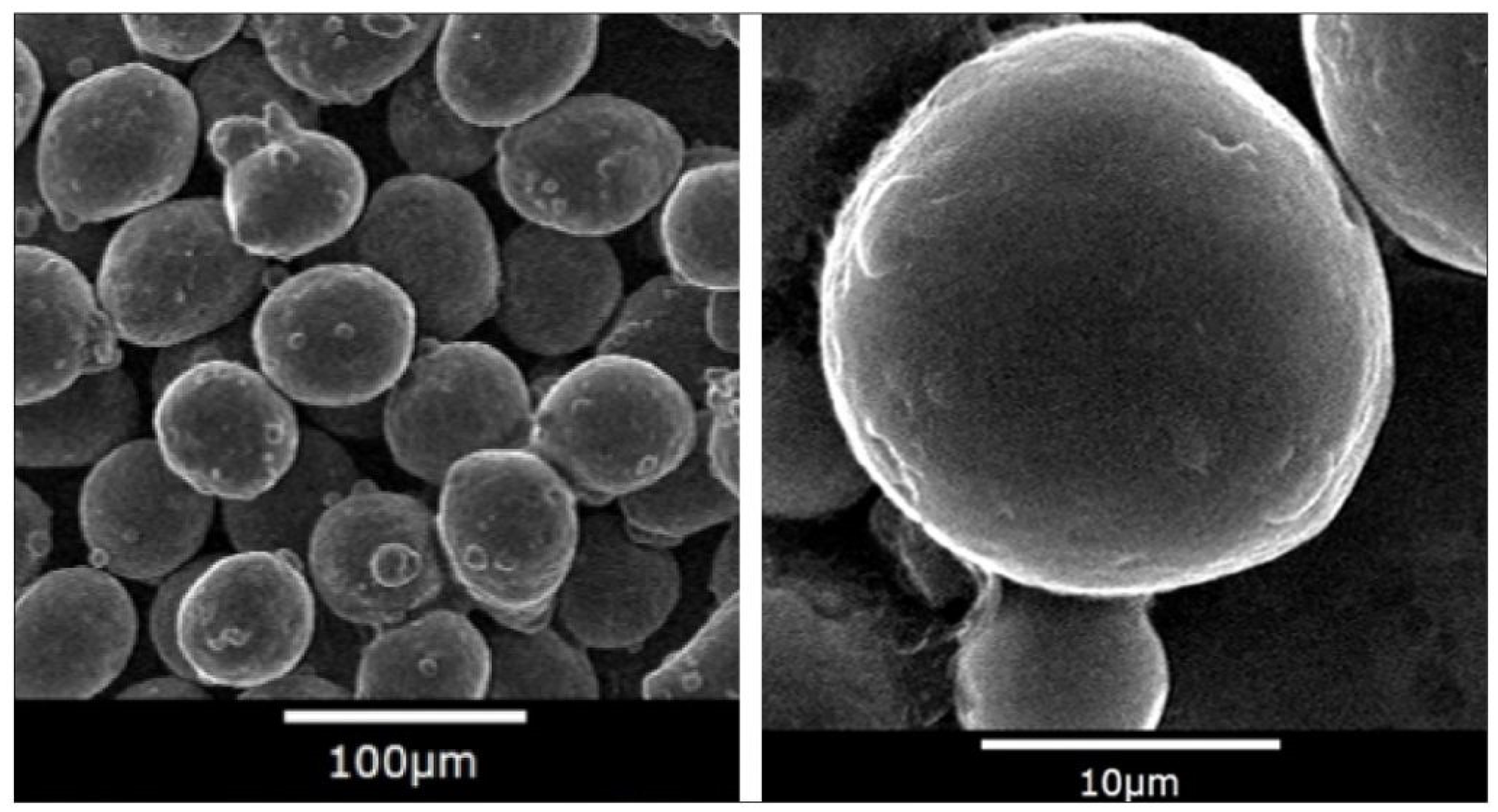
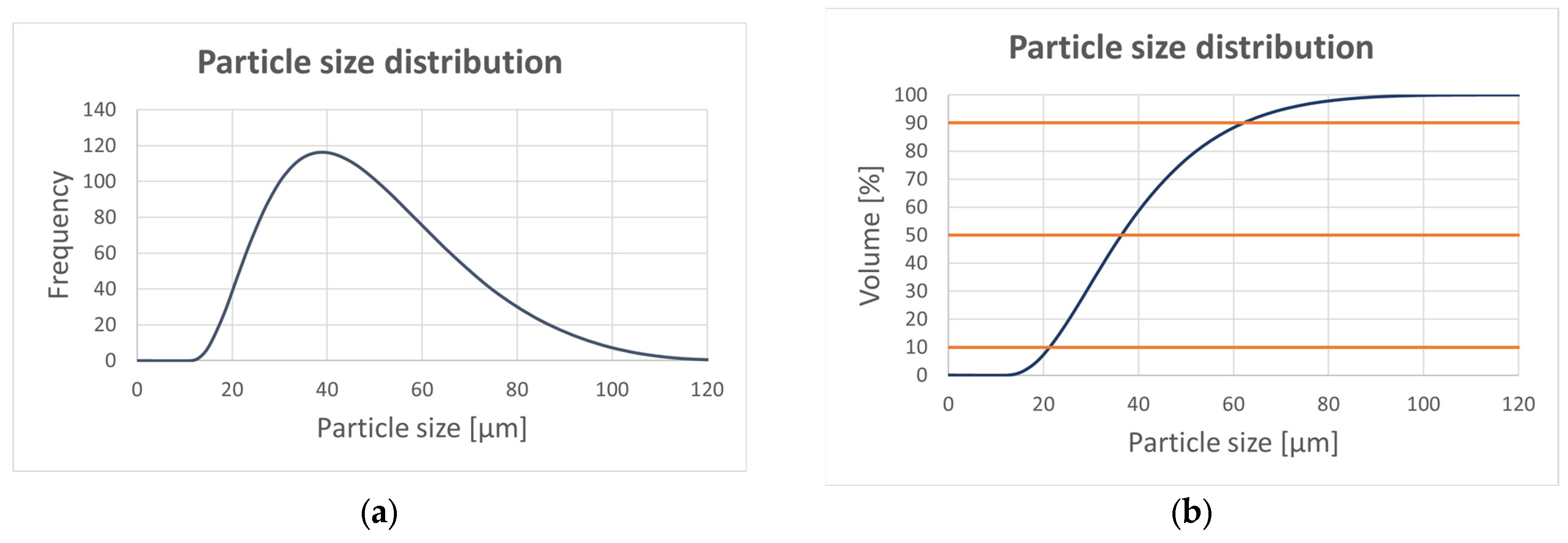
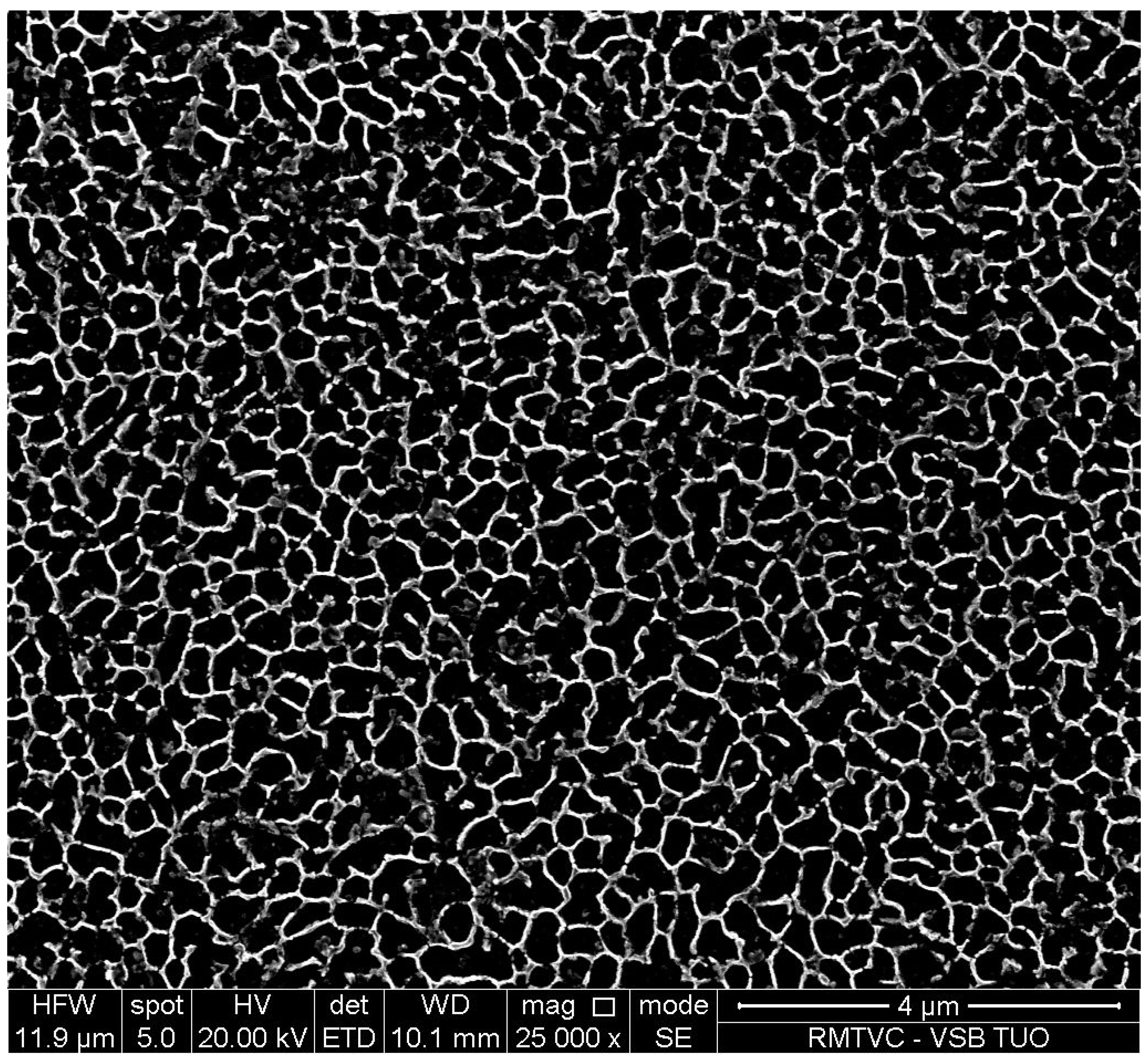
2.1. Material
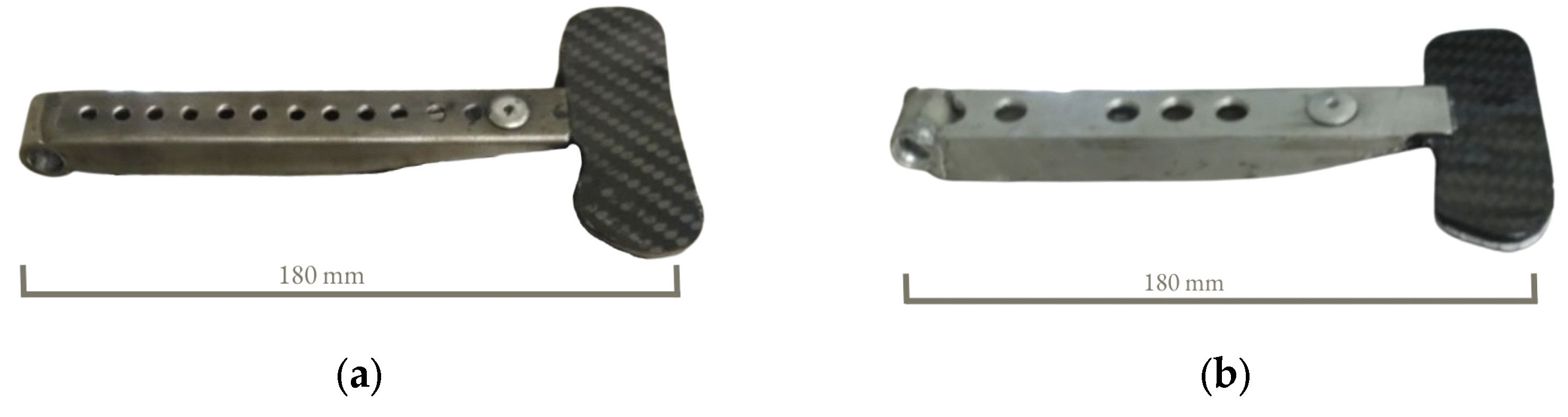
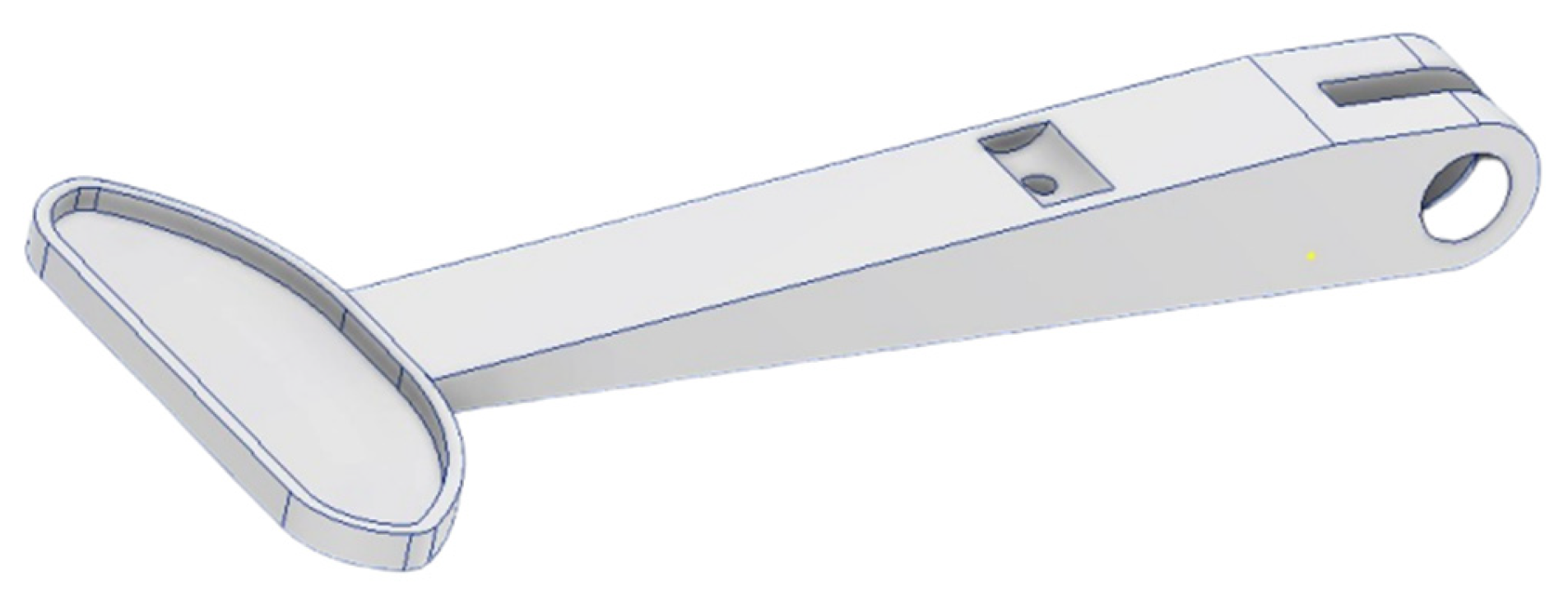
2.2. CAD Model
- to reduce the mass while maintaining acceptable strength and stiffness using TO;
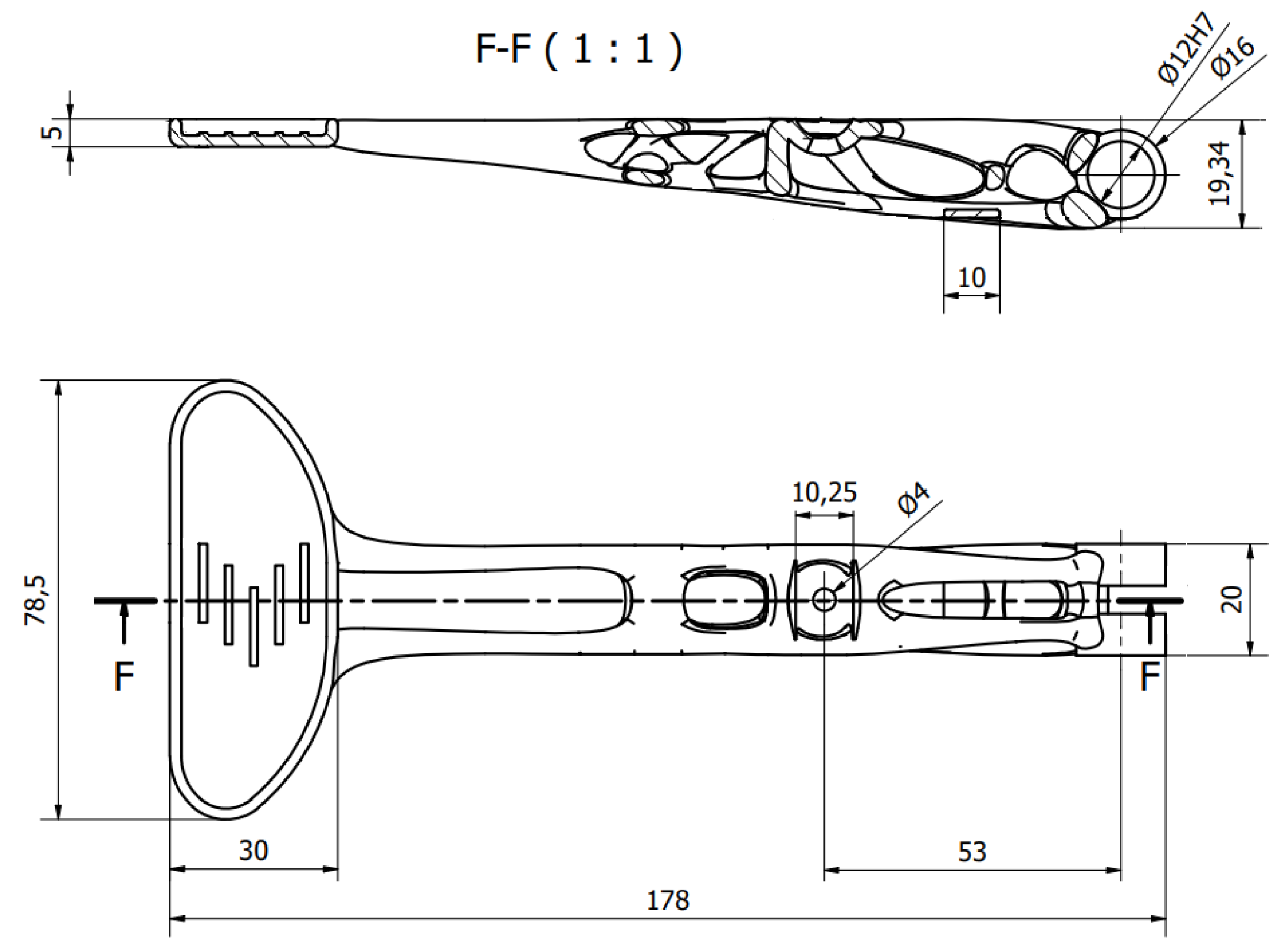
- to keep the main dimensions;
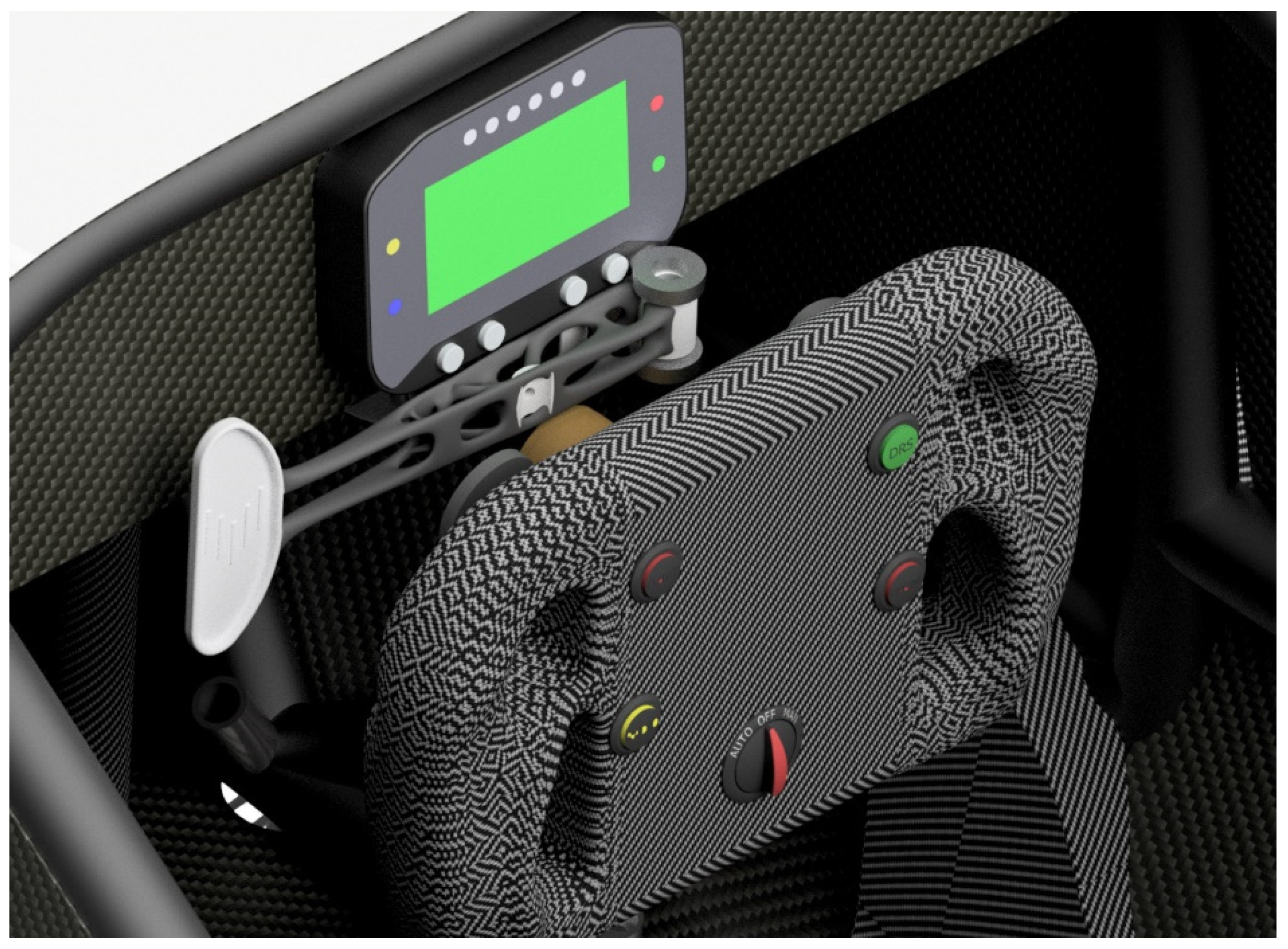
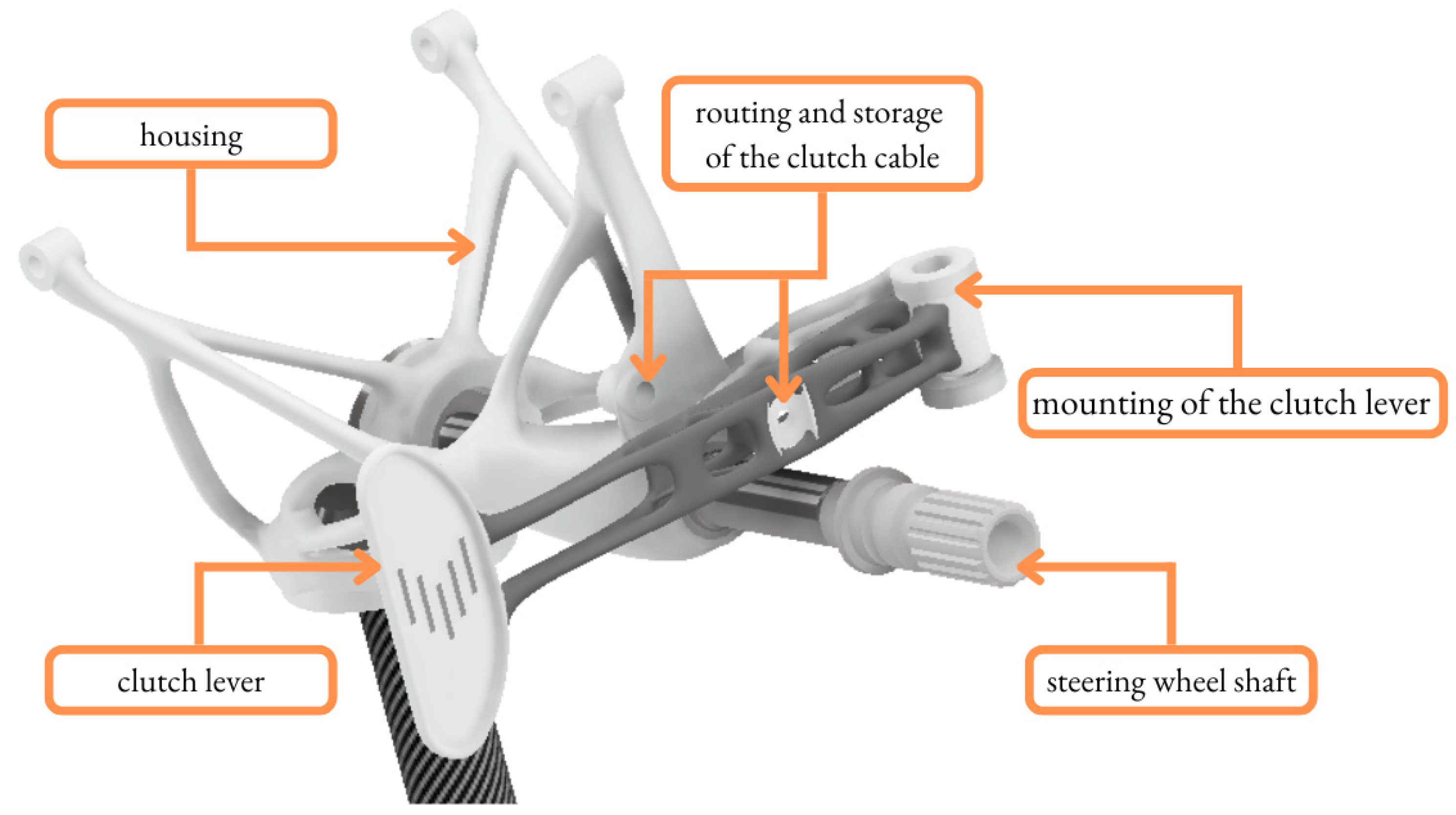
- to design a clutch lever as a single component;
- to ensure attractive design;
- to obtain smooth surface without burrs;
- to keep minimum safety factor above 3;
- to manufacture the component by AM.
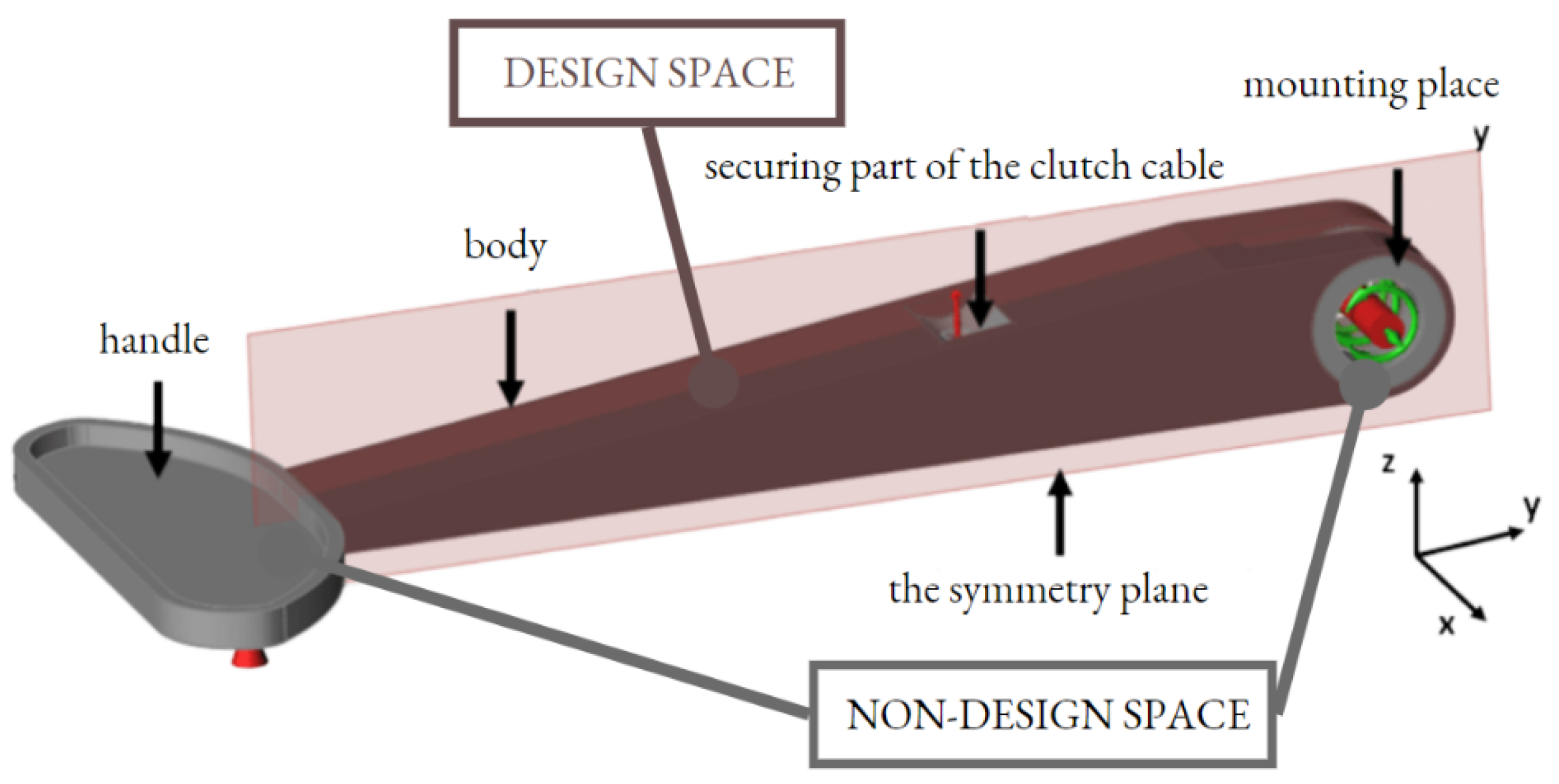
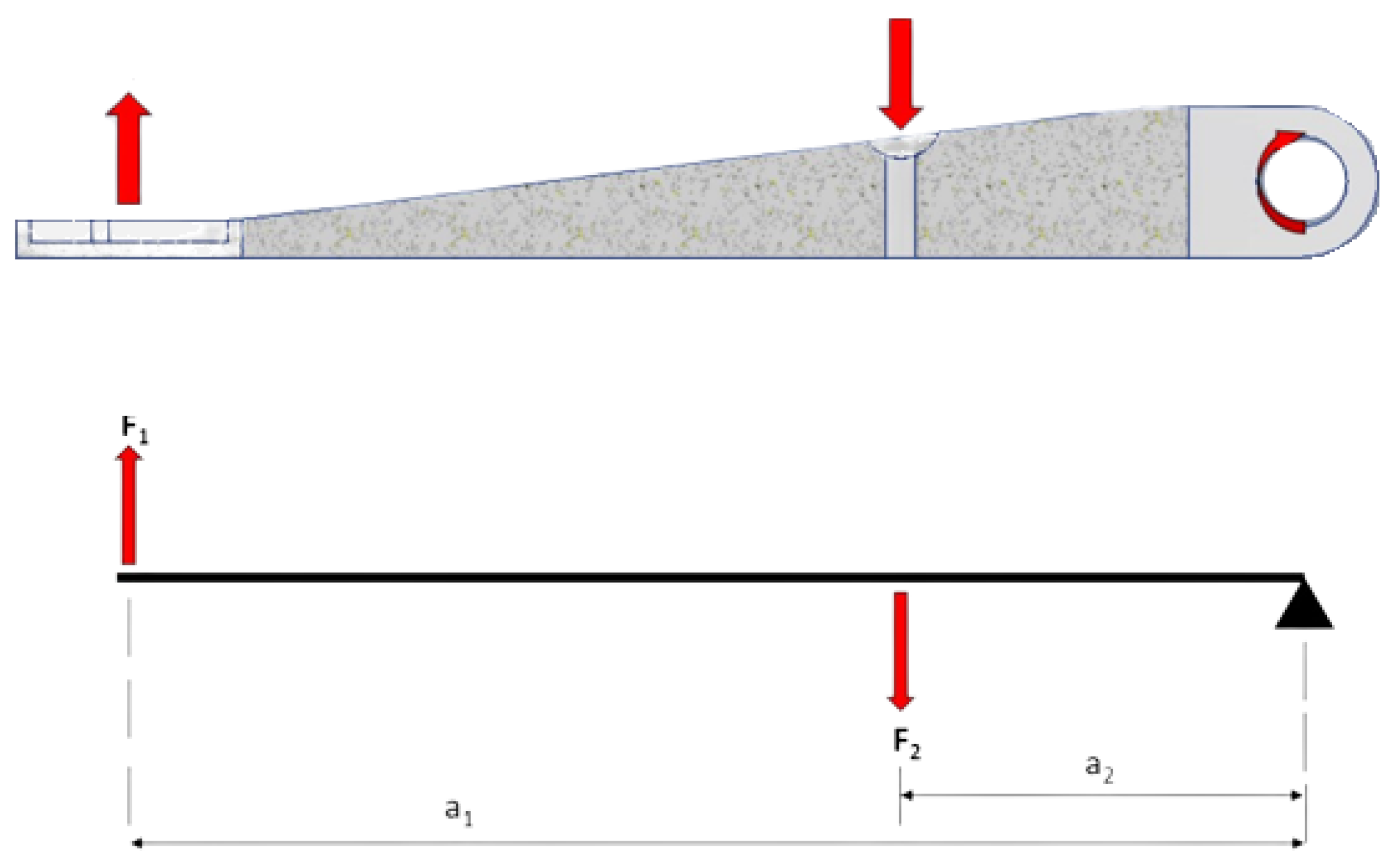
2.3. Load Cases
2.4. Topology Optimization
2.5. Technical Verification
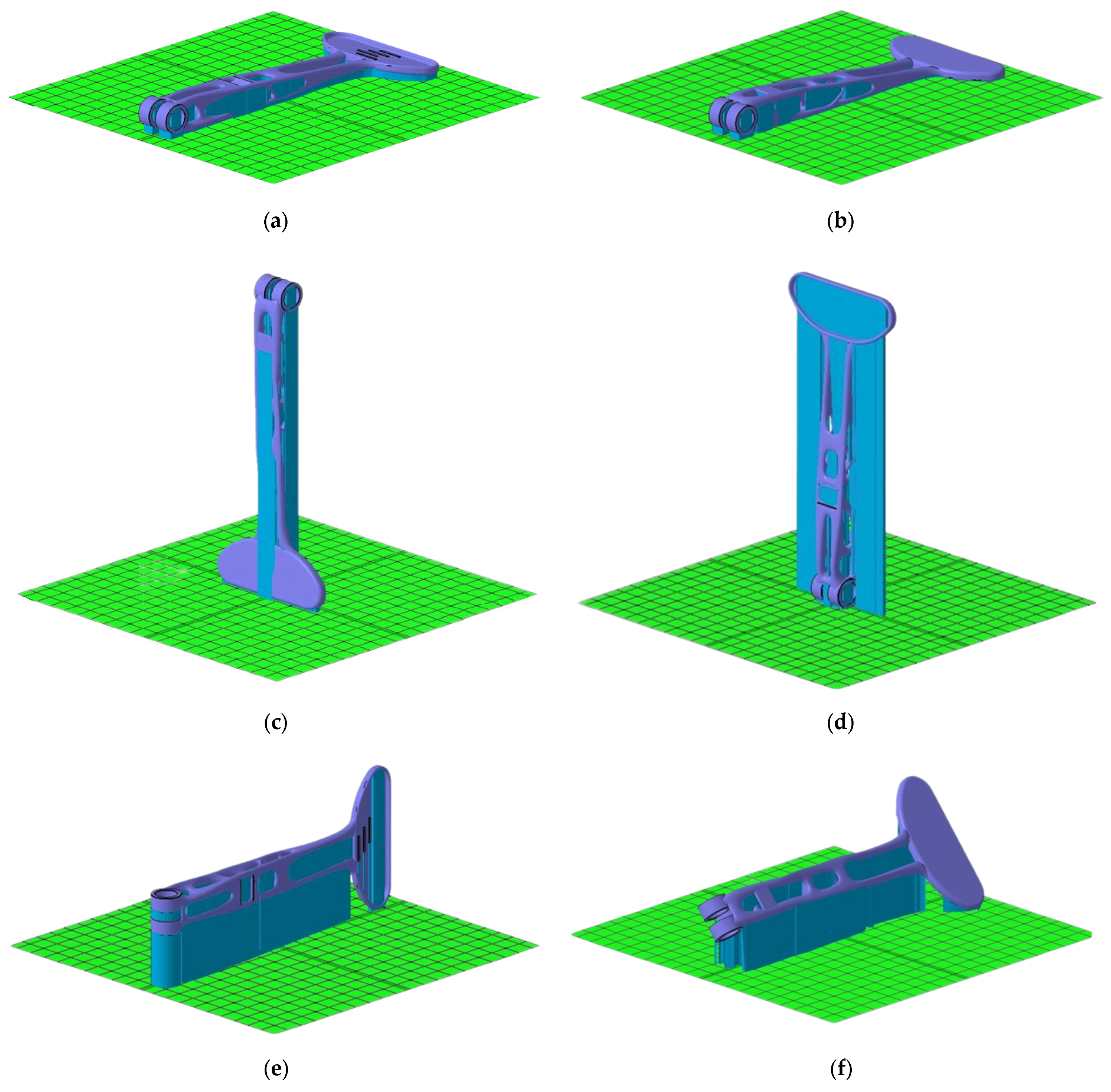
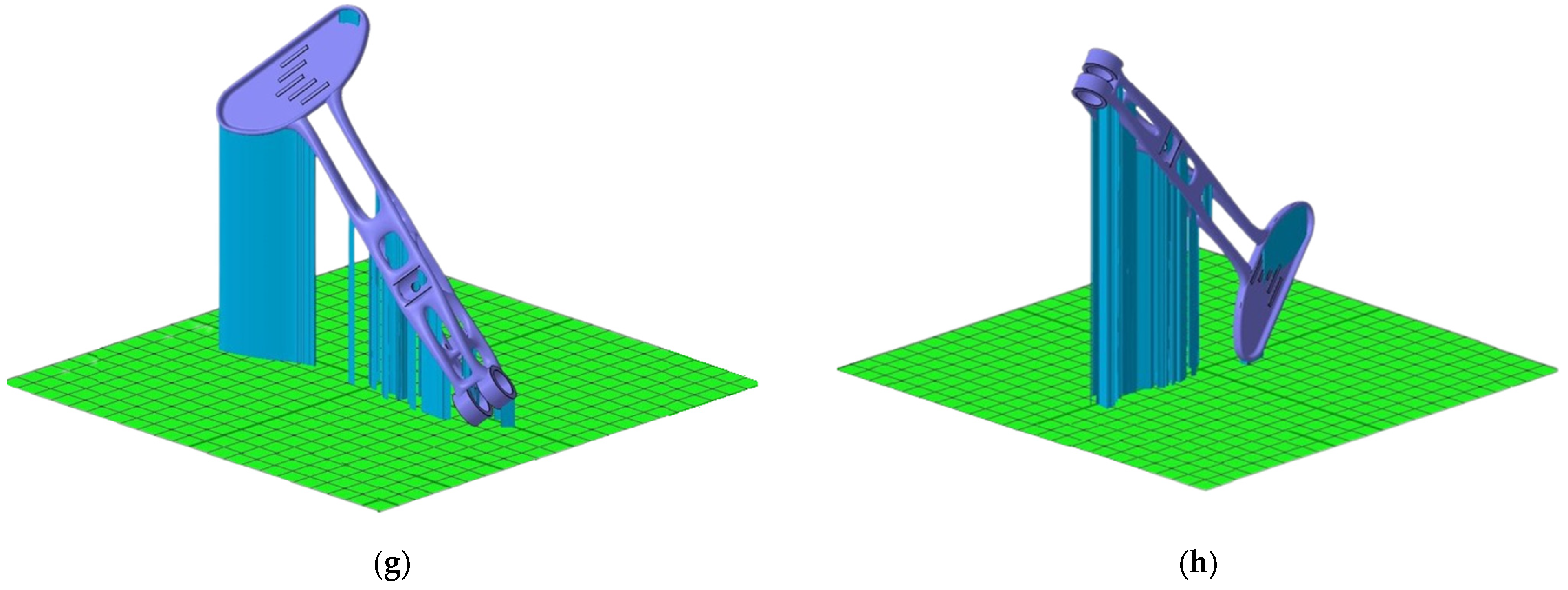
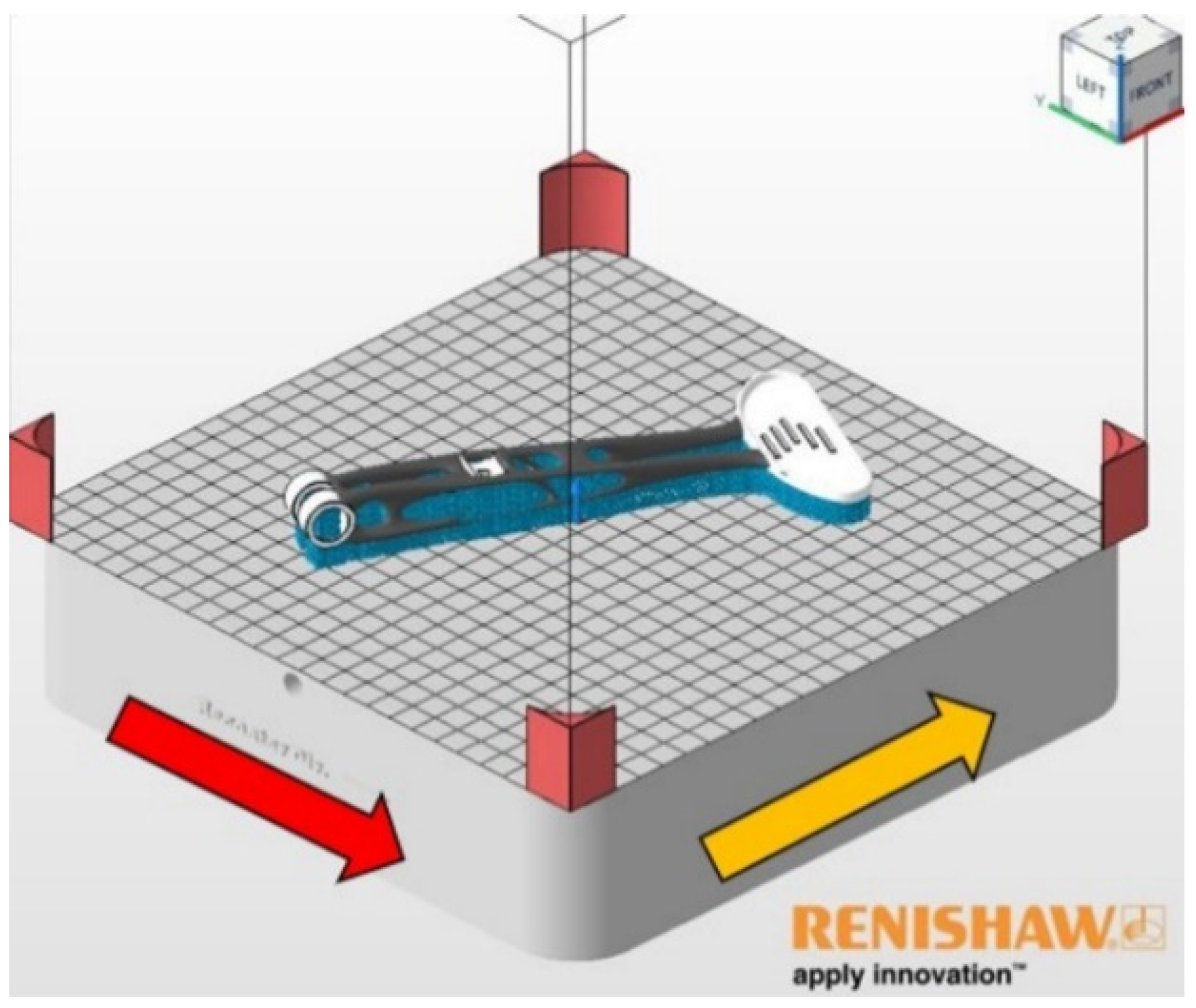
2.6. Additive Manufacturing
2.7. Mechanical Analysis of the Printing Process
2.8. Postprocessing
2.9. Experimental Study
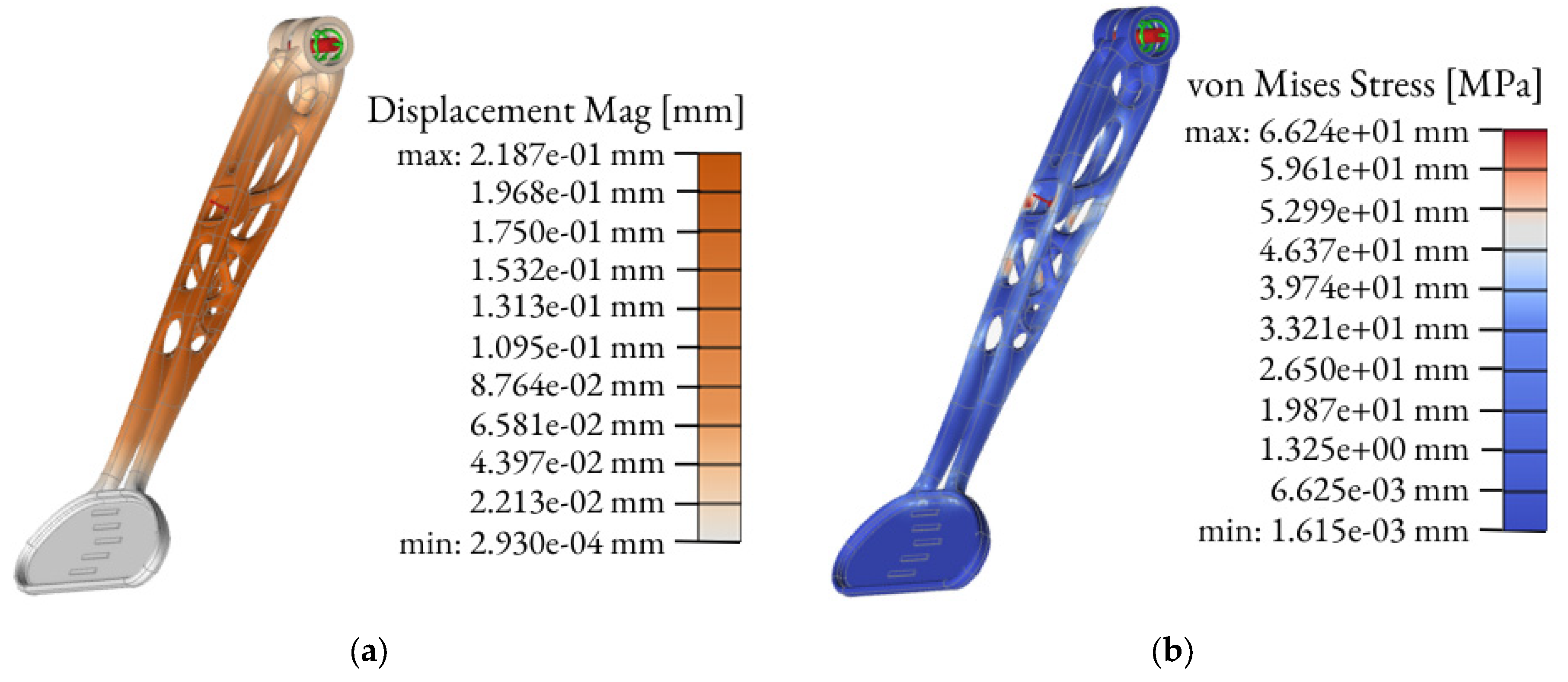
3. Results
4. Discussion and Conclusions
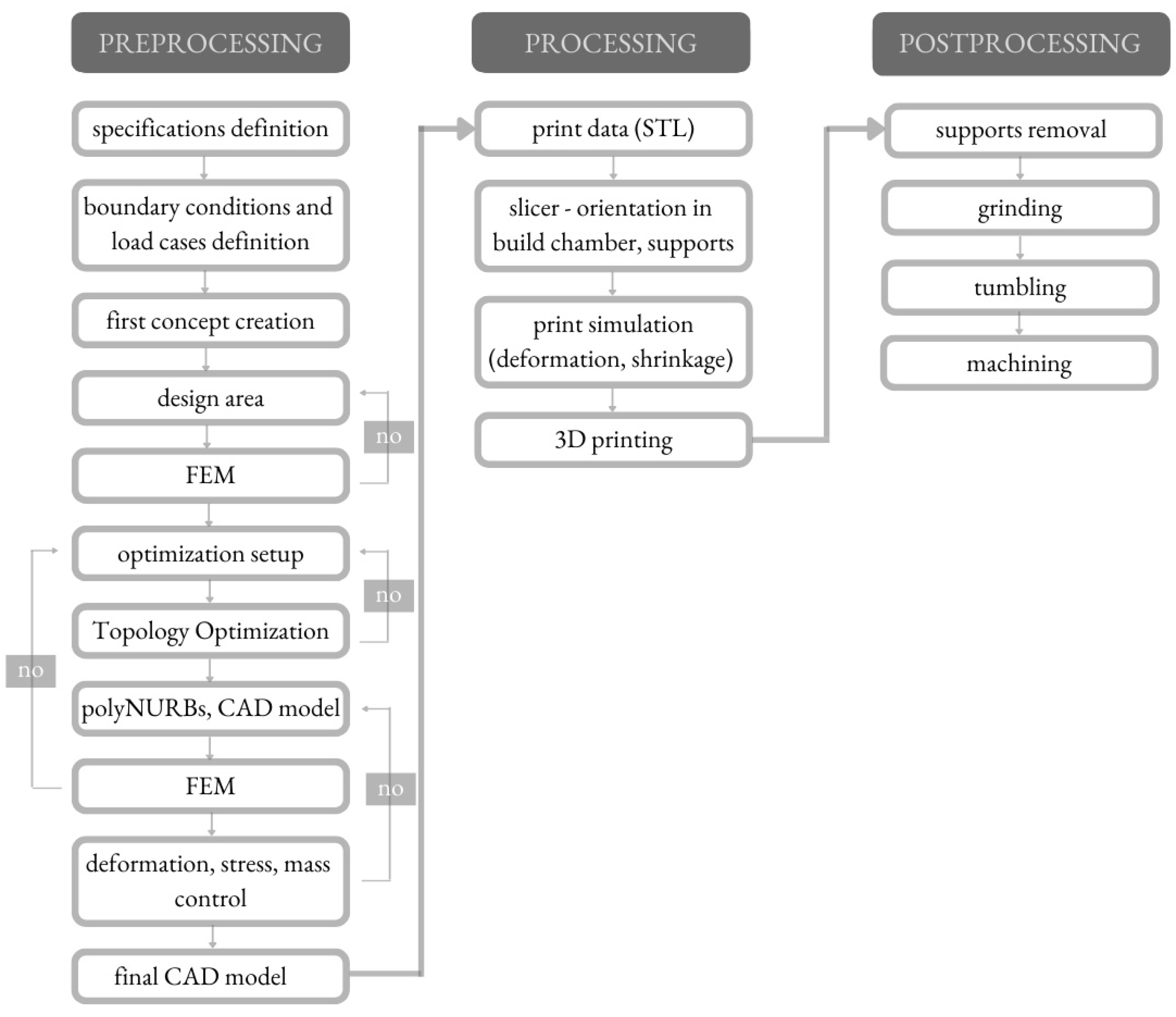
- The TO process and 3D printing give new possibilities to the engineers to create many possible solutions with new original shapes in the designing and manufacturing process;
- The role of TO and 3D printing is crucial in the redesigning process, which aims to reducing the mass of the component;
- Using the symmetry boundary during TO made the process shorter;
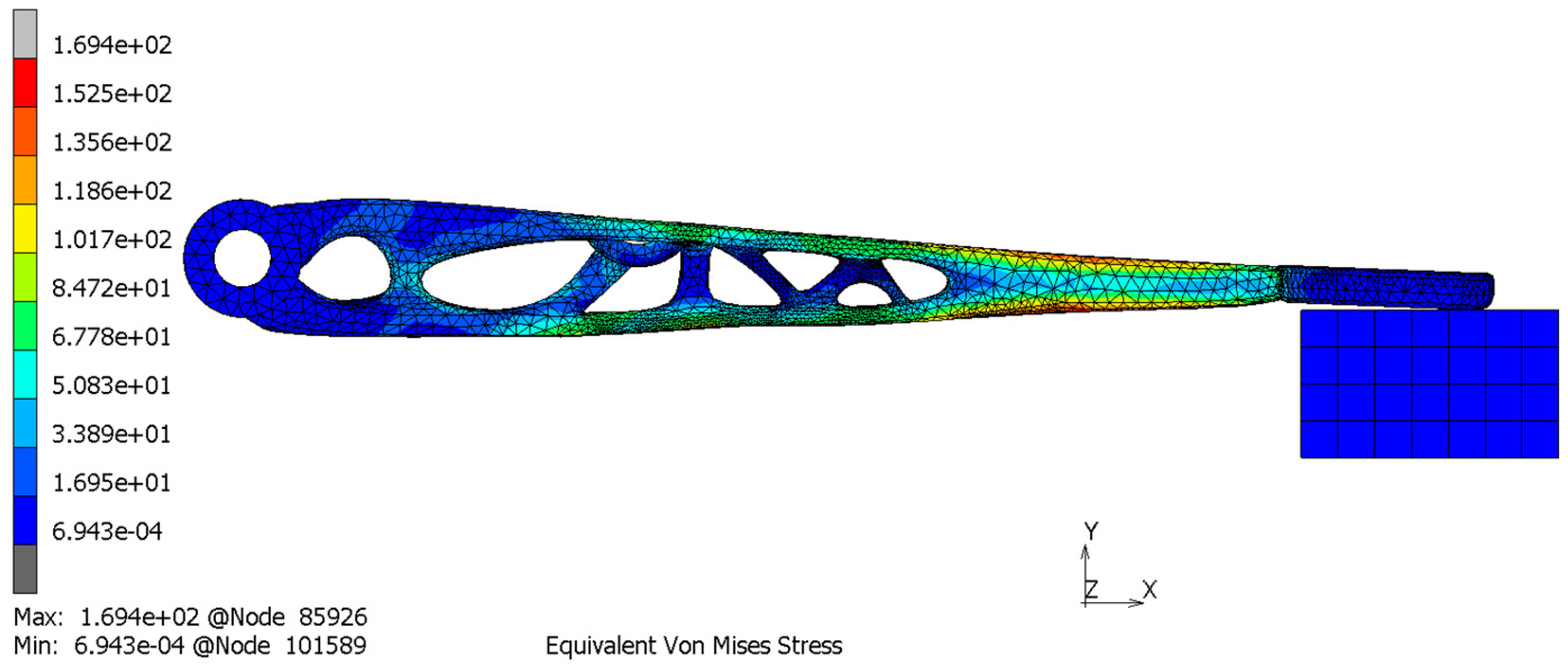
- Performing the mechanical simulation of the entire build process helped to predict distortions and defects before printing a part;
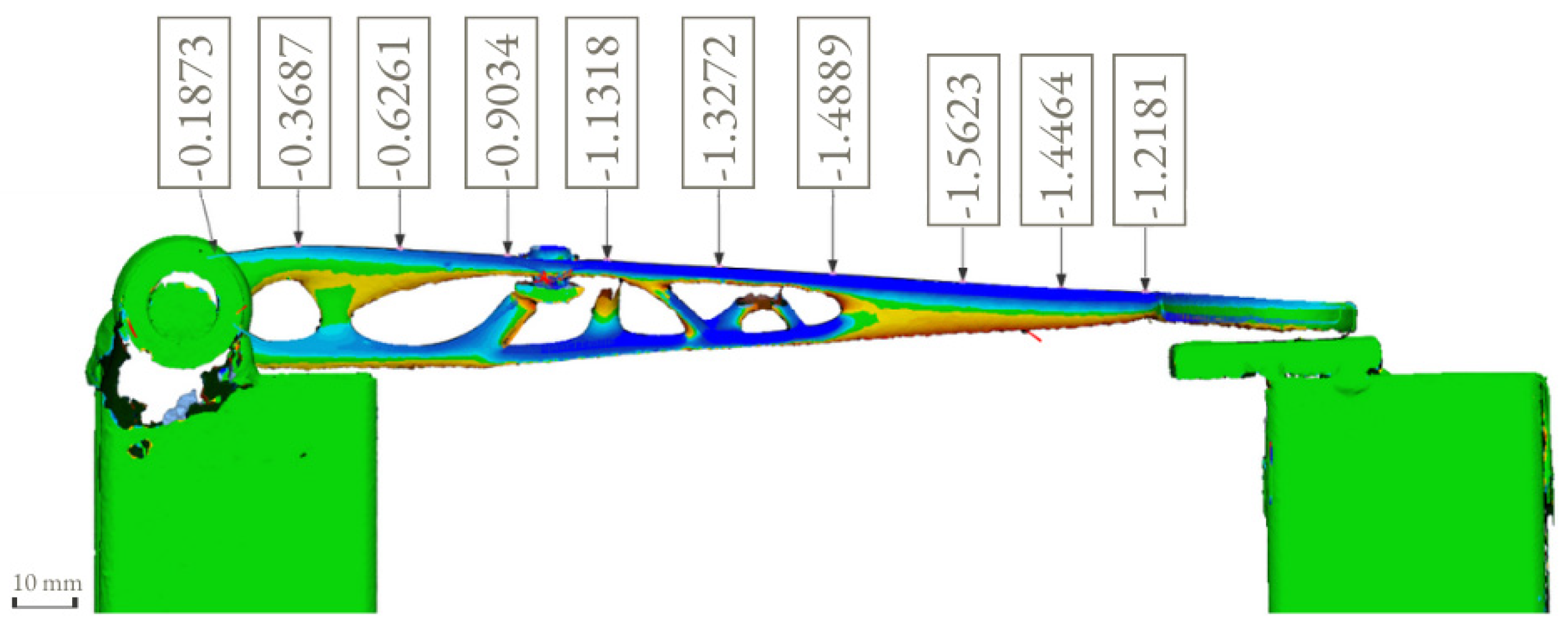
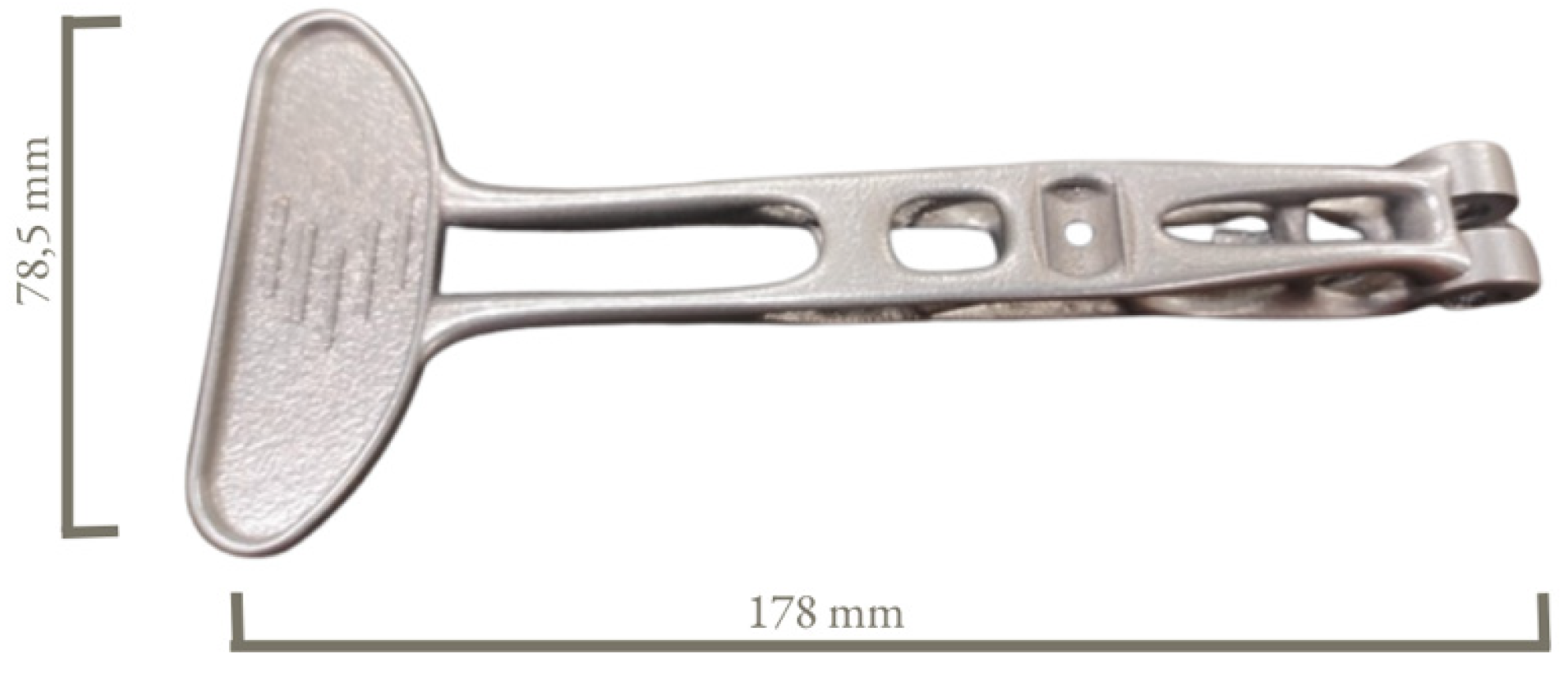
- The redesigned and optimized clutch lever has a reduced mass (10% less), unique design with smooth surfaces without burrs and it is manufactured as a single component in one manufacturing process, which reduced the production time;
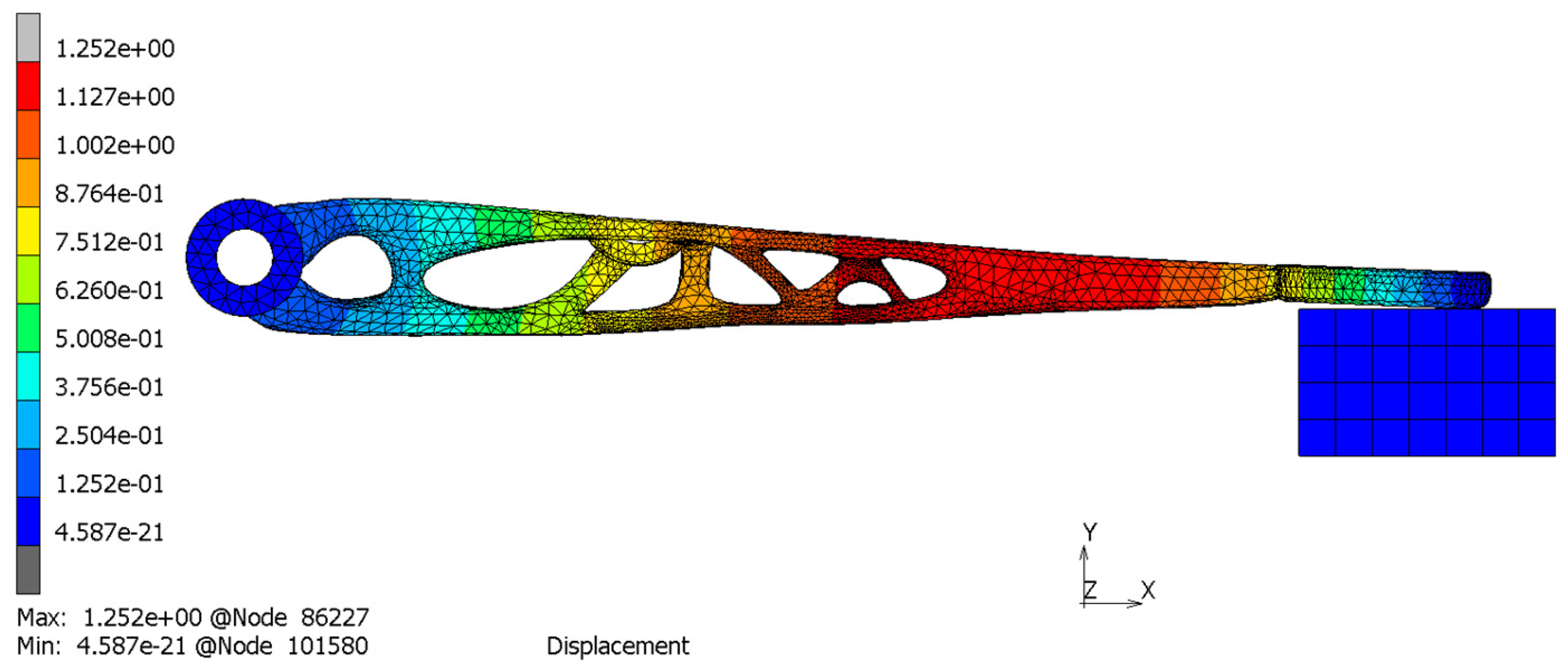
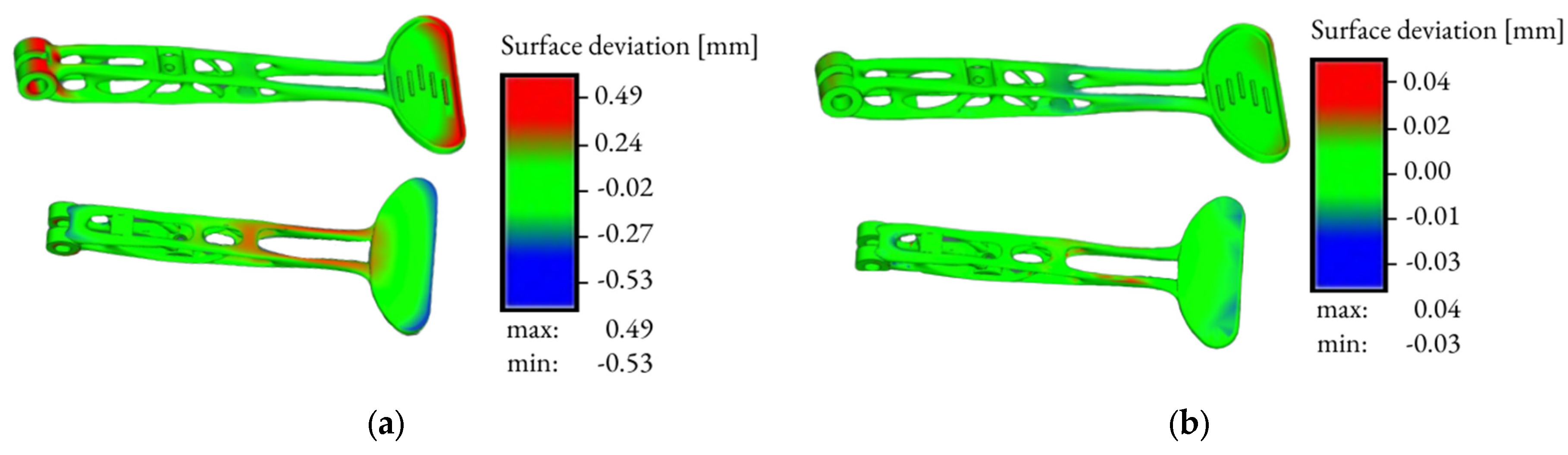
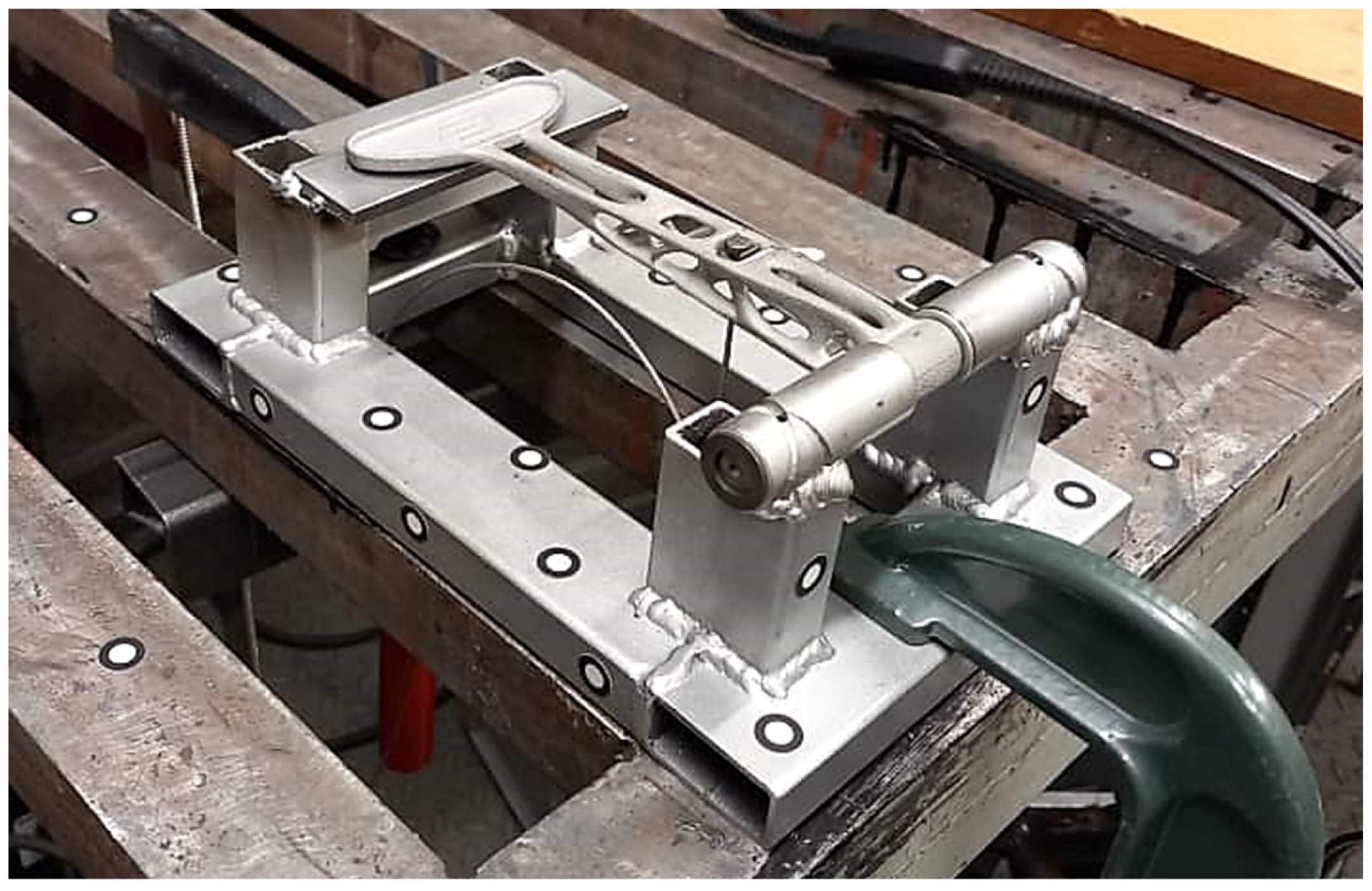
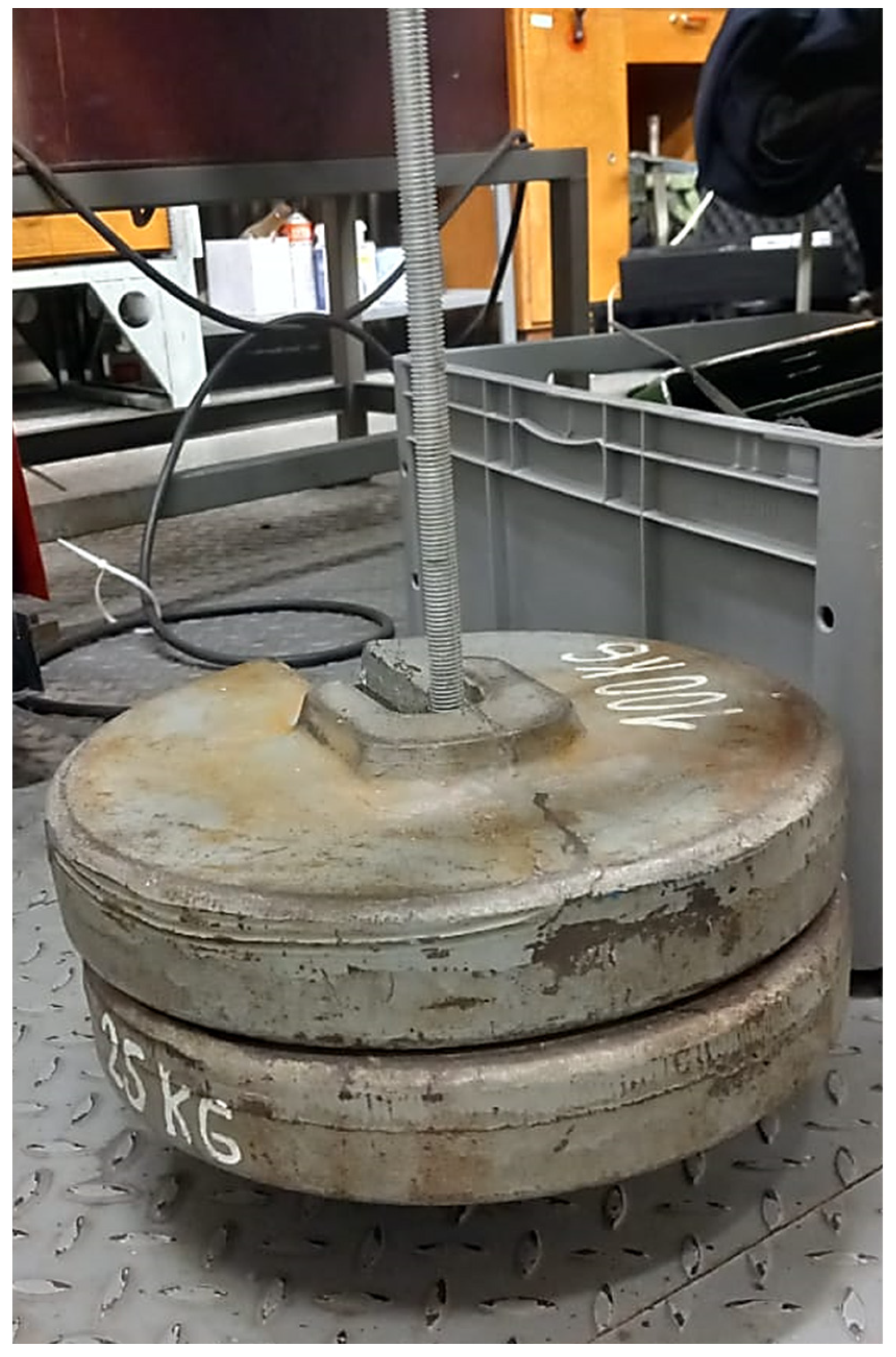
- Simulation results are justified by the experimental analysis, which was conducted by applying a 1.5× higher load than the calculated one;
- The set of the designing steps including TO could change the traditional paradigm of the designing process and could be applied to any other similar study as standard designing procedure.
Author Contributions
Funding
Institutional Review Board Statement
Informed Consent Statement
Data Availability Statement
Acknowledgments
Conflicts of Interest
References
- Bendsoe, M.P.; Sigmund, O. Topology Optimization: Theory, Methods and Applications; Springer: Berlin, Germany, 2003; pp. 1–68. [Google Scholar]
- Sotola, M.; Marsalek, P.; Rybansky, D.; Fusek, M.; Gabriel, D. Sensitivity Analysis of Key Formulations of Topology Optimization on an Example of Cantilever Bending Beam. Symmetry 2021, 13, 712. [Google Scholar] [CrossRef] [Scilit]
- Zhu, J.H.; Zhang, W.H.; Xia, L. Topology Optimization in Aircraft and Aerospace Structures Design. Arch. Comput. Methods Eng. 2016, 23, 595–622. [Google Scholar] [CrossRef] [Scilit]
- Hanush, S.S.; Manjaiah, M. Topology optimization of aerospace part to enhance the performance by Finite manufacturing process. Mater. Today Proc. 2022, 62, 7373–7378. [Google Scholar] [CrossRef] [Scilit]
- Prathyusha, A.L.R.; Babu, G.R. A review on additive manufacturing and topology optimization process for weight reduction studies in various industrial applications. Mater. Today Proc. 2022, 62, 109–117. [Google Scholar] [CrossRef] [Scilit]
- Jankovics, D.; Barari, A. Customization of Automotive Structural Components using Additive Manufacturing and Topology Optimization. IFAC-Pap. 2019, 52, 212–217. [Google Scholar] [CrossRef] [Scilit]
- Bao, D.W.; Yan, X.; Snooks, R.; Xie, Y. Bioinspired Generative Architectural Design Form-Finding and Advanced Robotic Fabrication Based on Structural Performance 2020. In Architectural Intelligence, Selected Papers from the 1st International Conference on Computational Design and Robotic Fabrication; Yuan, P., Xie, M., Leach, N., Yao, J., Wang, X., Eds.; Springer: Singapore, 2019; pp. 147–170. [Google Scholar] [CrossRef] [Scilit]
- Li, Y.; Lai, Y.; Lu, G.; Yan, F.; Wei, P.; Xie, Y.M. Innovative design of long-span steel–concrete composite bridge using multi-material topology optimization. Eng. Struct. 2022, 269, 114838. [Google Scholar] [CrossRef] [Scilit]
- Reis, P.; Volpini, M.; Maia, J.P.; Guimarães, I.B.; Evelise, C.; Monteiro, M.; Rubio, J.C.C. Resting hand splint model from topology optimization to be produced by additive manufacturing. Rapid Prototyp. J. 2022, 28, 216–225. [Google Scholar] [CrossRef] [Scilit]
- Muzalewska, M. Methodology of Multicriterial Optimization of Geometric Features of an Orthopedic Implant. Appl. Sci. 2021, 11, 11070. [Google Scholar] [CrossRef] [Scilit]
- Zhang, W.; Zhu, J.; Gao, T. Topology Optimization in Engineering Structure Design; Elsevier: Amsterdam, The Netherlands, 2016. [Google Scholar] [CrossRef] [Scilit]
- Xia, L. Multiscale Structural Topology Optimization; Elsevier: London, UK, 2016. [Google Scholar] [CrossRef] [Scilit]
- Wylezol, M. Topological Optimization in Mechanical Constructions—An Example of Application. In Proceedings of the 5th International Scientific and Business Conference—Future Engineering, Oltarzew, Poland, 29–30 May 2019. [Google Scholar] [CrossRef] [Scilit]
- Skarka, W.; Pabian, T.; Wąsik, M. Topology Optimization Approach in a Process of Designing of Composite Shell Structures. In Proceedings of the 25th ISPE Inc. International Conference on Transdisciplinary Engineering, Modena, Italy, 3–6 July 2018. [Google Scholar] [CrossRef] [Scilit]
- Korkmaz, M.E.; Gupta, M.K.; Robak, G.; Moj, K.; Krolczyk, G.M.; Kuntoğlu, M. Development of lattice structure with selective laser melting process: A state of the art on properties, future trends and challenges. J. Manuf. Process. 2022, 81, 1040–1063. [Google Scholar] [CrossRef] [Scilit]
- Milewski, J.O. Additive Manufacturing of Metals. In From Fundamental Technology to Rocket Nozzles, Medical Implants, and Custom Jewelry; Springer International Publishing AG: Cham, Switzerland, 2017; pp. 7–33. [Google Scholar]
- 3D Printing Center PROTOLAB. Available online: https://protolab.cz/ (accessed on 22 August 2022).
- Student Racing Competition Rules. Available online: https://formulastudent.de/fileadmin/user_upload/all/2022/rules/FS-Rules_2022_v0.9.pdf (accessed on 22 August 2022).
- Mesicek, J.; Pagac, M.; Petru, J.; Novak, P.; Hajnys, J.; Kutiova, K. Topological optimization of the formula student bell crank. MM Sci. J. 2019, 2964–2968. [Google Scholar] [CrossRef] [Scilit]
- Markovits, T.; Szederkény, B. Investigation of generative design for powder bed fusion technology in case of Formula Student race car components using Ti6Al4V alloy. J. Manuf. Process. 2022, 80, 220–231. [Google Scholar] [CrossRef] [Scilit]
- Jancar, L.; Pagac, M.; Mesicek, J.; Stefek, P. Design Procedure of a Topologically Optimized Scooter Frame Part. Symmetry 2020, 12, 755. [Google Scholar] [CrossRef] [Scilit]
- Mertens, A.; Delahaye, J.; Dedry, O.; Vertruyen, B.; Tchuindjang, J.T.; Habraken, A.M. Microstructure and Properties of SLM AlSi10Mg: Understanding the Influence of the Local Thermal History. Procedia Manuf. 2020, 47, 1089–1095. [Google Scholar] [CrossRef] [Scilit]
- Atomised Aluminium Alloy Powder. Available online: https://www.metal-am.com/articles/selecting-atomised-aluminium-alloy-powders-for-the-metal-3d-printing-process/ (accessed on 25 August 2022).
- Park, T.-H.; Baek, M.-S.; Hyer, H.; Sohn, Y.; Lee, K.-A. Effect of direct aging on the microstructure and tensile properties of AlSi10Mg alloy manufactured by selective laser melting process. Mater. Charact. 2021, 176, 111113. [Google Scholar] [CrossRef] [Scilit]
- Bai, S.; Perevoshchikova, N.; Sha, Y.; Wu, X. The Effects of Selective Laser Melting Process Parameters on Relative Density of the AlSi10Mg Parts and Suitable Procedures of the Archimedes Method. Appl. Sci. 2019, 9, 583. [Google Scholar] [CrossRef] [Scilit]
- Read, N.; Wang, W.; Essa, K.; Attallah, M.M. Selective laser melting of AlSi10Mg alloy: Process optimisation and mechanical properties development. Mater. Des. 2015, 65, 417–424. [Google Scholar] [CrossRef] [Scilit]
- Martin, J.; Yahata, B.; Hundley, J.; Mayer, J.A.; Schaedler, T.A.; Pollock, T.M. 3D printing of high-strength aluminium alloys. Nature 2017, 549, 365–369. [Google Scholar] [CrossRef] [Scilit]
- Muhammad, M.; Nezhadfar, P.D.; Thompson, S.; Saharan, A.; Phan, N.; Shamsaei, N. A comparative investigation on the microstructure and mechanical properties of additively manufactured aluminum alloys. Int. J. Fatigue 2021, 146, 106165. [Google Scholar] [CrossRef] [Scilit]
- Ma, Q.-P.; Mesicek, J.; Fojtik, F.; Hajnys, J.; Krpec, P.; Pagac, M.; Petru, J. Residual Stress Build-Up in Aluminum Parts Fabricated with SLM Technology Using the Bridge Curvature Method. Materials 2022, 15, 6057. [Google Scholar] [CrossRef] [Scilit]
- Pan, W.; Ye, Z.; Zhang, Y.; Liu, Y.; Liang, B.; Zhai, Z. Research on Microstructure and Properties of AlSi10Mg Fabricated by Selective Laser Melting. Materials 2022, 15, 2528. [Google Scholar] [CrossRef] [Scilit]
- Li, W.; Li, S.; Liu, J.; Zhang, A.; Zhou, Y.; Wei, Q.; Yan, C.; Shi, Y. Effect of heat treatment on AlSi10Mg alloy fabricated by selective laser melting: Microstructure evolution, mechanical properties and fracture mechanism. Mater. Sci. Eng. A 2016, 663, 116–125. [Google Scholar] [CrossRef] [Scilit]
- Mesicek, J.; Cegan, T.; Ma, Q.-P.; Halama, R.; Skotnicova, K.; Hajnys, J.; Jurica, J.; Krpec, P.; Pagac, M. Effect of artificial aging on the strength, hardness, and residual stress of SLM AlSi10Mg parts prepared from the recycled powder. Mater. Sci. Eng. 2022, 855, 143900. [Google Scholar] [CrossRef] [Scilit]
- RENISHAW: Materials Catalog (MDS). Wotton-Under-Edg, Great Britain: Renishaw. 2022. Available online: https://www.renishaw.cz/cs/katalogove-listy-aditivni-vyroba--17862 (accessed on 25 August 2022).
- User Guide, Altair OptiStruct. Available online: https://2021.help.altair.com/2021/hwsolvers/os/topics/solvers/os/topology_opt_design_variables_r.htm (accessed on 14 September 2022).
- Koutromanos, I.; McClure, J.; Roy, C. Fundamentals of Finite Element Analysis: Linear Finite Element Analysis; John Wiley & Sons Ltd.: Hoboken, NJ, USA, 2018. [Google Scholar]
- Sefene, E.M. State-of-the-art of selective laser melting process: A comprehensive review. J. Manuf. Syst. 2022, 63, 250–274. [Google Scholar] [CrossRef] [Scilit]
- DebRoy, T.; Wei, H.L.; Zuback, J.S.; Mukherjee, T.; Elmer, J.W.; Milewski, J.O.; Beese, A.M.; Wilson-Heid, A.; De, A.; Zhang, W. Additive manufacturing of metallic components—Process, structure and properties. Prog. Mater. Sci. 2018, 92, 112–224. [Google Scholar] [CrossRef] [Scilit]
- Kruth, J.; Mercelis, P.; Van Vaerenbergh, J.; Froyen, L.; Rombouts, M. Binding mechanisms in selective laser sintering and selective laser melting. Rapid Prototyp. J. 2005, 11, 26–36. [Google Scholar] [CrossRef] [Scilit]
- Brandt, M.; Sun, S.; Leary, M.; Feih, S.; Elambasseril, J.; Liu, Q. High-Value SLM Aerospace Components: From Design to Manufacture. Adv. Mater. Res. 2013, 633, 135–147. [Google Scholar] [CrossRef] [Scilit]
- Venkata, K.A.; Uppaluri, R.; Schob, B.; Zopp, C.; Kordaß, R.; Bohlen, J.; Höfemann, M.; Kasprowicz, M.; Pawlak, A.; Chlebus, E. Accurate numerical prediction of thermo-mechanical behaviour and phase fractions in SLM components of advanced high strength steels for automotive applications. Technol. Lightweight Struct. 2022, 5, 41–50. [Google Scholar] [CrossRef] [Scilit]
- Yadroitsev, I.; Krakhmalev, P.; Yadroitsava, I. Selective laser melting of Ti6Al4V alloy for biomedical applications: Temperature monitoring and microstructural evolution. J. Alloy. Compd. 2014, 583, 404–409. [Google Scholar] [CrossRef] [Scilit]
- Kobir, M.H.; Yavari, R.; Riensche, A.; Bevans, B.; Castro, L.; Cole, K.; Rao, P. Prediction of recoater crash in laser powder bed fusion additive manufacturing using graph theory thermomechanical modeling. Prog. Addit. Manuf. 2022. [Google Scholar] [CrossRef] [Scilit]
- Gogolewski, D.; Bartkowiak, T.; Kozior, T.; Zmarzły, P. Multiscale Analysis of Surface Texture Quality of Models Manufactured by Laser Powder-Bed Fusion Technology and Machining from 316L Steel. Materials 2021, 14, 2794. [Google Scholar] [CrossRef] [Scilit]
- Liang, Z.; Hengzhi, G.; Jingxian, X.; Yang, C.; Chunjiang, S. Research on Simufact simulation data processing system based on QT and MySQL. Appl. Math. Nonlinear Sci. 2021, 6, 291–298. [Google Scholar] [CrossRef] [Scilit]
- Pagac, M.; Hajnys, J.; Halama, R.; Aldabash, T.; Mesicek, J.; Jancar, L.; Jansa, J. Prediction of Model Distortion by FEM in 3D Printing via the Selective Laser Melting of Stainless Steel AISI 316L. Appl. Sci. 2021, 11, 1656. [Google Scholar] [CrossRef] [Scilit]
- Jia, H.; Sun, H.; Wang, H.; Wu, Y.; Wang, H. Size effect in selective laser melting additive manufacturing of 700 mm large component. J. Manuf. Process. 2022, 75, 125–137. [Google Scholar] [CrossRef] [Scilit]
- Xie, D.; Lv, F.; Yang, Y.; Shen, L.; Tian, Z.; Shuai, C.; Chen, B.; Zhao, J. A Review on Distortion and Residual Stress in Additive Manufacturing. Chin. J. Mech. Eng. Addit. Manuf. Front. 2022, 1, 100039. [Google Scholar] [CrossRef] [Scilit]
- Adamczak, S.; Zmarzły, P.; Kozior, T.; Gogolewski, D. Assessment of Roundness and Waviness Deviations of Elements Produced by Selective Laser Sintering Technology. In Proceedings of the 23rd International Conference Engineering Mechanics, Svratka, Czech Republic, 15–18 May 2017. [Google Scholar]




| Element | Al | Si | Mg | Fe | N | O | Ti | Zn | Mn | Ni | Cu | Pb | Sn |
|---|---|---|---|---|---|---|---|---|---|---|---|---|---|
| Mass (%) | Balance | 9–11 | 0.25–0.45 | <0.25 | <0.2 | <0.2 | <0.15 | <0.1 | <0.1 | <0.05 | <0.05 | <0.02 | <0.02 |
| Parameter | D [4;3] | Dv (10) | Dv (50) | Dv (90) |
|---|---|---|---|---|
| Particle size (μm) | 39.5 | 21.3 | 36.4 | 62.4 |
| E (MPa) | Density (g/cm3) | Yield Stress (MPa) | α (10−6 k−1) | λ (W/mK) |
|---|---|---|---|---|
| 69,000 | 2.68 | 220 | 20 | 190 |
| Parameter | Set Value |
|---|---|
| Analysis type | Topology optimization |
| Objective | Maximize stiffness |
| Initial mass target | 15% of design space volume |
| Element size | 4.3 mm |
| Geometry constrain | Plane symmetry (longitudinal plane) |
| Clutch Lever | Mass (g) | Max von Mises (MPa) | Maximal Deflection (mm) | Minimum Safety Coefficient (-) | Number of Components (pcs) |
|---|---|---|---|---|---|
| Steel–carbon fiber | 90 | 27.5 | 0.02 | 7.4 | 6 |
| Al6061–carbon fiber | 52 | 41.6 | 0.09 | 6.0 | 6 |
| AlSi10Mg–oversized model (before TO) | 111 | 34.7 | 0.07 | 6.3 | 1 |
| AlSi10Mg (after TO) | 47 | 66 | 0.22 | 3.3 | 1 |
| No. | Figure | The Area Content of the Supporting Material (cm2) | The Volume of the Supporting Material (cm3) | The Size of the Outbox (cm3) | The Height of the Model Position (mm) | Height of the Center Gravity (mm) |
|---|---|---|---|---|---|---|
| 1 | 14a | 42.699 | 14.363 | 261.762 | 18.7 | 7.3 |
| 2 | 14b | 43.448 | 12.586 | 274.024 | 19.6 | 6.3 |
| 3 | 14c | 9.265 | 19.812 | 264.762 | 178.2 | 84.1 |
| 4 | 14d | 9.256 | 29.049 | 261.762 | 178.2 | 94.1 |
| 5 | 14e | 18.816 | 35.214 | 261.762 | 78.5 | 39.3 |
| 6 | 14f | 14.572 | 31.046 | 589.297 | 61.8 | 30.2 |
| 7 | 14g | 4.564 | 21.218 | 892.628 | 150.3 | 71.3 |
| 8 | 14h | 3.822 | 16.641 | 517.051 | 160.2 | 83.7 |
Disclaimer/Publisher’s Note: The statements, opinions and data contained in all publications are solely those of the individual author(s) and contributor(s) and not of MDPI and/or the editor(s). MDPI and/or the editor(s) disclaim responsibility for any injury to people or property resulting from any ideas, methods, instructions or products referred to in the content. |
© 2023 by the authors. Licensee MDPI, Basel, Switzerland. This article is an open access article distributed under the terms and conditions of the Creative Commons Attribution (CC BY) license (https://creativecommons.org/licenses/by/4.0/).
Share and Cite
Mikulikova, A.; Mesicek, J.; Karger, J.; Hajnys, J.; Ma, Q.-P.; Sliva, A.; Smiraus, J.; Srnicek, D.; Cienciala, S.; Pagac, M. Topology Optimization of the Clutch Lever Manufactured by Additive Manufacturing. Materials 2023, 16, 3510. https://doi.org/10.3390/ma16093510
Mikulikova A, Mesicek J, Karger J, Hajnys J, Ma Q-P, Sliva A, Smiraus J, Srnicek D, Cienciala S, Pagac M. Topology Optimization of the Clutch Lever Manufactured by Additive Manufacturing. Materials. 2023; 16(9):3510. https://doi.org/10.3390/ma16093510
Chicago/Turabian StyleMikulikova, Aleksandra, Jakub Mesicek, Jan Karger, Jiri Hajnys, Quoc-Phu Ma, Ales Sliva, Jakub Smiraus, David Srnicek, Samuel Cienciala, and Marek Pagac. 2023. "Topology Optimization of the Clutch Lever Manufactured by Additive Manufacturing" Materials 16, no. 9: 3510. https://doi.org/10.3390/ma16093510
APA StyleMikulikova, A., Mesicek, J., Karger, J., Hajnys, J., Ma, Q.-P., Sliva, A., Smiraus, J., Srnicek, D., Cienciala, S., & Pagac, M. (2023). Topology Optimization of the Clutch Lever Manufactured by Additive Manufacturing. Materials, 16(9), 3510. https://doi.org/10.3390/ma16093510